
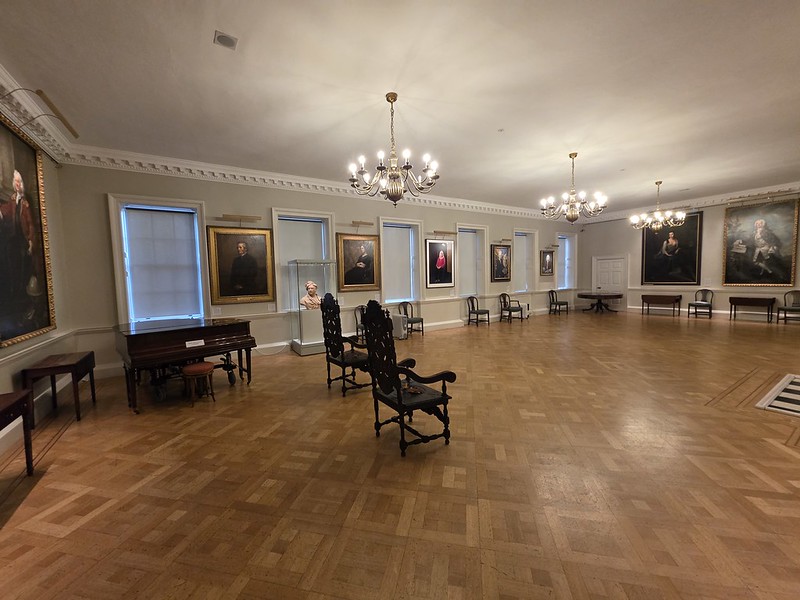
This is the Picture Gallery at the Foundling Museum in London, a rather decadent room with chandeliers, a substantial fireplace and quite a variety of different artworks. There’s plenty of space to stand back and look at the paintings, especially as there were no other visitors in the room to get in my way. I did wonder about the two rather elaborately carved chairs in the middle, but maybe there was about to be some sort of ritual taking place.
The Foundling Hospital was established by Thomas Coram in 1739, with William Hogarth becoming one of its important supporters and I’ve already written about his March of the Guards to Finchley. His portrait of Coram was the first painting donated to the Hospital, and he encouraged other artists to contribute work, helping to establish what the museum describes as Britain’s first public art gallery. These gifts gave fashionable and on-trend visitors another reason to come to the Hospital, and a museum guide told me the hospital was some distance from many of the grander residential properties.
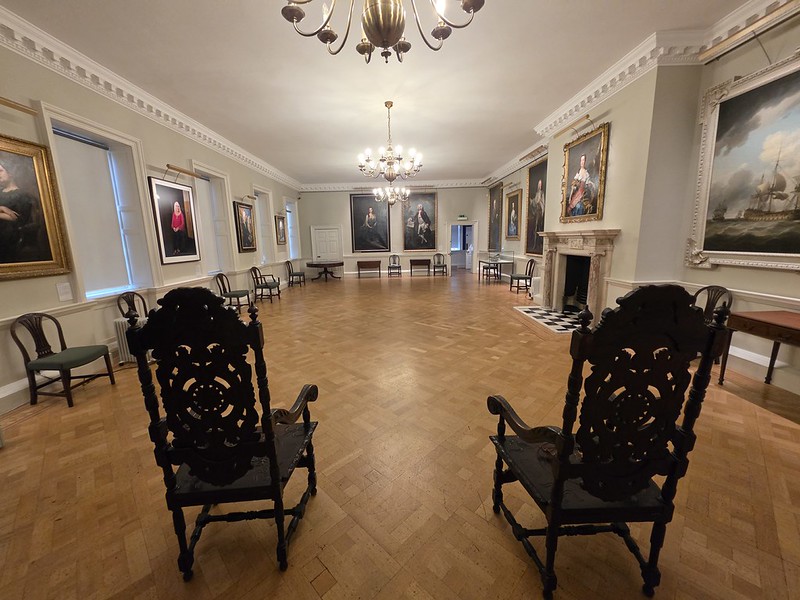
Before the original Picture Gallery was created in the old building, Coram’s portrait and other eighteenth-century portraits hung in the girls’ dining room, although it’s unclear to me how interested the children were in the whole arrangement. The room seen today is a reconstruction of the Hospital’s gallery, incorporating historic interiors preserved when the original building was demolished in 1926 and subsequently installed in the charity’s new London headquarters during the 1930s. A sub-optimal decision to demolish, but there we go.
The portraits record people involved in its work, while the collection itself helped draw attention to the cause of trying to provide a better life to children. My own contribution was largely confined to admiring the room and taking photographs, although I did at least manage to do that without requiring an oil portrait of myself in return. But we all contribute in our own way.