Category: UK

  • Hull – Social

    Hull – Social

    Unfortunately, the nearby Taphouse was full (which is moderately disappointing, as I think I would have liked to write some things about Bone Machine Brewery now I’ve seen how innovative they are, but I’ll go next year instead) but the helpful staff member pointed us towards Social.

    The service was friendly and welcoming, although the only seats available were outside when we arrived. This transpired to be a good thing given the music inside (I can’t be doing with too much loud noise at my age…..) and the service was attentive given that three different staff tried to take our drinks order. But, best to be too attentive than not bothered enough, so it felt a sufficiently comfortable environment.

    I think it’s fair to say that the bar wasn’t entirely aimed at customers like me, but the drinks menu had a decent stab at trying to cater for everyone. Seeing Camden Hells was acceptable to me, and the appearance of Brewdog Punk IPA and Schofferhofer are to the bar’s credit. So, perhaps nothing inspirational, but it’ll do. The bar is located in what is becoming the on-trend area of Hull, the fruit market district, which seems very much on an upward curve with much to be positive about.

    Back to Social though, where the prices were slightly towards the higher end of the scale, but it felt safe and at least had some space for customers, which was useful. It’s probably a decent option for larger groups (well, under normal circumstances) although they don’t seem to do any food (although they do cashew nuts which didn’t surprise and delight Richard when he counted how many he got). I went for the Camden Hells and it was sufficiently adequate for me, but that’s about as far as I’d go there.

  • London – City of London – First Metropolitan Drinking Fountain

    London – City of London – First Metropolitan Drinking Fountain

    OK, so I admit that this isn’t the most interesting content ever, a photo of a water fountain at the junction of Holborn Viaduct and Giltspur Street. But I like it, so here we are….

    It’s the first fountain to be erected by the Metropolitan Drinking Fountain and Cattle Trough Association. It was placed nearby in 1859 and had to be moved to its current site in 1867 when Holborn Viaduct was constructed.

    The association was established in 1859 by Samuel Gurney, a banker from what is now Barclays, as he wanted to ensure that members of the public could access clean water. It was initially known as the Metropolitan Free Drinking Fountain Association, but changed its name in 1867 to show that it was also concerned with animals. During the mid-nineteenth century it had become known that beer was safer to drink than water, which wasn’t going down entirely well with the temperance movement.

    The association still exists, now known as the Drinking Fountain Association, with its original intentions intact, of providing water fountains to encourage water consumption.

  • London – City of London – Museum of London (Ceramic Moulded Frog)

    London – City of London – Museum of London (Ceramic Moulded Frog)

    I’m quite impressed that from this fragment of pot that the Museum of London is able to know that it’s from the cult of Sabazios, a God from the Phrygian period. The pot dates from the second century and would have likely also had imagery of lizards and snakes on, which sounds awful if I’m being honest. It was found in 2010 when they demolished Bucklersbury House, an office building on Cannon Street, noted for incorporating a Roman Temple of Mithras in its cellar.

  • London – City of London – Museum of London (Plate Owned by Samuel Pepys)

    London – City of London – Museum of London (Plate Owned by Samuel Pepys)

    This is a new acquisition for the Museum of London and it belonged to Samuel Pepys, the famous diarist. It’s one of only three items of silver belonging to Pepys that still exists, with the other two now being in the United States. The silver is hallmarked, so it’s known that it was made in 1681 by Mary King in Foster Lane, a street near St. Pauls Cathedral that is still there. The one thing that the museum doesn’t state though is where this plate has been over the centuries (or where they acquired it from), although they note that its importance has only recently come to light.

  • London – City of London – Museum of London (Portrait of King Henry VIII)

    London – City of London – Museum of London (Portrait of King Henry VIII)

    The first thing I’ve discovered from this artwork is that the National Portrait Gallery is closed until the spring of 2023, I just thought that they were being a little slow to re-open after the health crisis. Anyway, this is one of the gallery’s artworks, currently on loan to the Museum of London.

    I’m puzzled that the Museum of London term this as a “portrait bust”, as I don’t know what that means. The National Portrait Gallery don’t use this terminology and it just looks like a portrait to me. It’s also mentioned to be after (ie, a copy of) a painting by Hans Holbein the Younger, with the gallery saying it was painted between 1536 and 1537, but other on-line sources say it might be 1538. Some people can be very precise….

    Anyway, it came into the collections of the National Portrait Gallery in 1871 and Holbein’s studio seemingly produced numerous versions of these paintings. It was painted during the process of the Dissolution of the Monasteries, relevant since the artwork is located within the exhibits on this subject in the Museum of London. I’m not sure that the King looks particularly strong in this image either, his eyes look tired and he doesn’t appear very magisterial. I’m not entirely sure who would have bought this and I don’t think that its provenance is known.

  • London – Westminster (Borough of) – Wallace Collection (The Rainbow Landscape by Peter Paul Rubens)

    London – Westminster (Borough of) – Wallace Collection (The Rainbow Landscape by Peter Paul Rubens)

    I hadn’t realised how many artworks that Peter Paul Rubens (1577-1640) had painted, which was over 1,400, so it’s no surprise how many museums and galleries he appears in. This painting dates to around 1636 and it’s of the land outside Rubens’s country house, Het Steen, near Antwerp. It was painted towards the end of his life and the gallery say, as I hardly knew this, that it was only during this period that he worked on landscapes.

    Fortunately, the Wallace Collection have uploaded a clear version of the painting, one that doesn’t have a bronze animal in front of it. This is one of a pair of paintings, with the other being in the National Gallery in London (although it’s noted as not being on display at the moment), painted for his own enjoyment and to hang on his own walls. It must be handy being one of the greatest artists of the century if you fancy decorating your front room, it gives you some options….

    Anyway, the gallery has placed on its web-site a handy video of how to understand this painting, which is useful as I usually miss everything of note. It’s painted on wooden panels, and it is noticeable on the right-hand side where the artwork may have been extended. It was purchased by Richard Seymour-Conway in 1856 and was given to the nation in 1897 by Lady Wallace.

  • London – City of London – Museum of London (Fourteenth Century Royal Arms from Guildhall)

    London – City of London – Museum of London (Fourteenth Century Royal Arms from Guildhall)

    This rather lovely stone coat of arms is on display at the Museum of London and it dates to around the middle of the fourteenth century. The coat arms is from the Guildhall in London, which was where it was found in the roof during renovations of the building in 1864. The arms were for King Edward III after he claimed France (he claimed to be the heir as the grandson of Philip IV) and put the fleurs-de-lis into the coat of arms, alongside the English three lions. It wasn’t until 1801 that the fleurs-de-lis were finally dropped from the national coat of arms, a perhaps belated acknowledgement that the United Kingdom wasn’t going to include France.

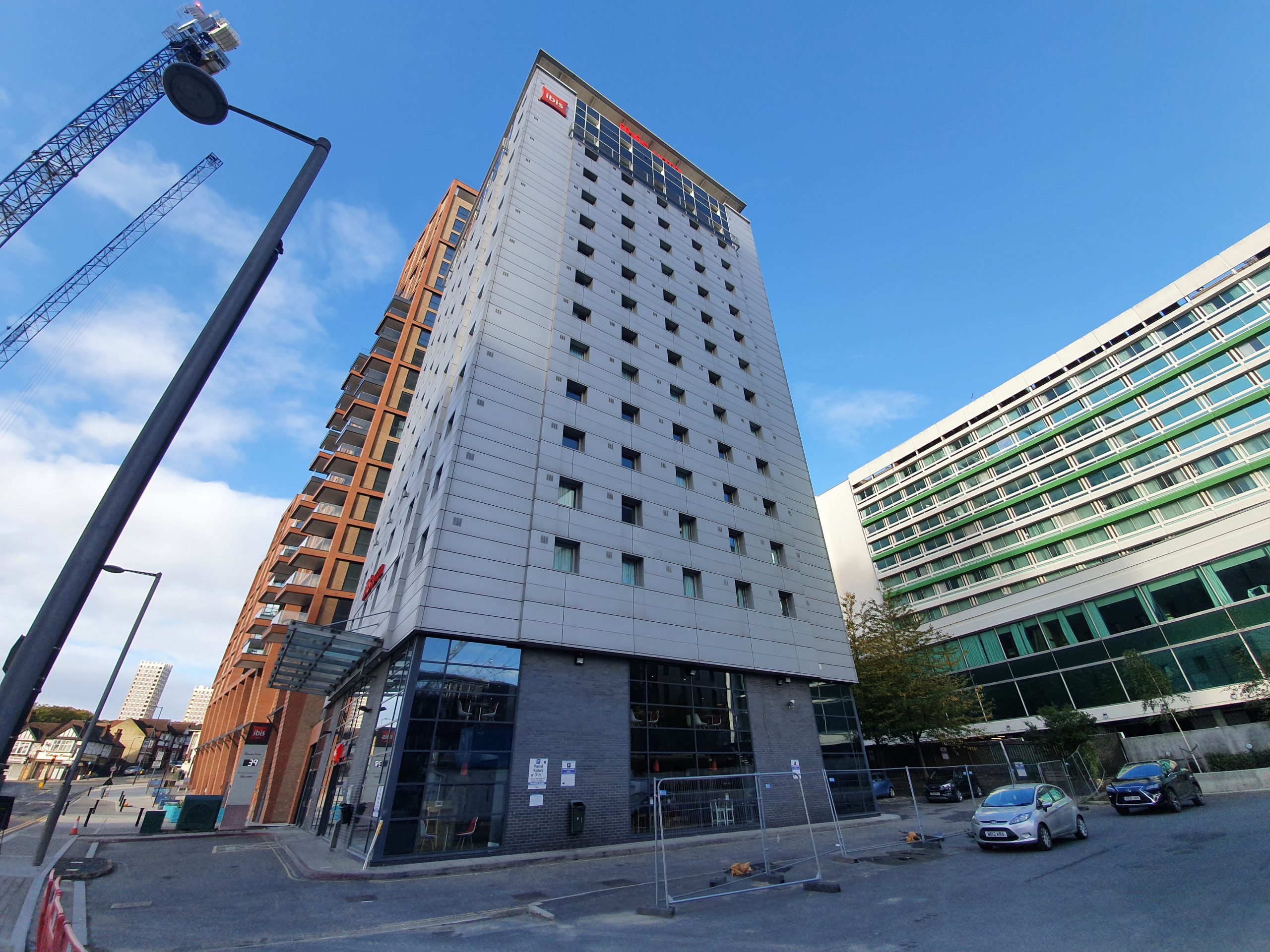
  • London – Ibis Styles – Kensington (Second Visit)

    London – Ibis Styles – Kensington (Second Visit)

    I stayed at this hotel a couple of weeks ago and thought that for the money, it was entirely reasonable. Clearly, as I booked to come back, and I have another reservation here next week and two friends have now booked the hotel as well. On my last visit, the hotel was clean, although there were elements that suggested to me that things hadn’t been checked, such as an empty shower gel dispensers.

    This time the hotel kindly upgraded me to a family room, which was room 16, the Mozart Room.

    Interesting theming on the inside of the door, Ibis Styles remains my favourite of the Accor brands.

    And the room was absolutely spotless, and I had no reservations here about the cleanliness. The bathroom was also clean, although perhaps needed a little modernisation. However, this was a lovely room, although the view was a little limited. Not that that’s a complaint, it was much better than the room I’d paid for.

    My view that more Accor hotels should offer a craft beer option is unchanged, but I was willingly given the Bud as a welcome drink. And, on this note, the staff members I encountered were friendly, engaging and really welcoming. Customer service here isn’t a problem, it’s a comfortable environment to be in.

    The breakfast bag, with coffee available in the basement as it was before. Perfectly acceptable under the current circumstances.

    And, overall, this proved to be excellent value for the money I paid. Especially since I got a bonus 500 points from Accor (worth €10) and with other discounts, this managed to take the room price to just over £20 including the breakfast. Quite marvellous.

  • London – Westminster (Borough of) – Wallace Collection (Prince Baltasar Carlos in the Riding School by Diego Velázquez)

    London – Westminster (Borough of) – Wallace Collection (Prince Baltasar Carlos in the Riding School by Diego Velázquez)

    This painting in the Wallace Collection has its own Wikipedia page, albeit shared with another version of the artwork. It’s not known whether Diego Velázquez (1599-1660) painted this himself, or it was done by his studio. The gallery has traditionally gone for the latter, but Xavier Bray, who is the director of the collection, has featured in a video on their web-site saying that he thinks it might be the work of Velázquez himself. Apparently, the painting needs cleaning and it is that which the director thinks will show the quality of the artwork underneath. And, it would be nicer to have a painting by the artist himself and not just his studio (he didn’t add that, I did).

    The artwork was painted at the riding school in Madrid in 1636, featuring Prince Baltasar Carlos in control of his horse. It was deliberate, to show the young man and future King being able to manage horse-riding and seem competent. I liked that Bray mentioned he thinks there might be figures who have been removed on the right-hand side of the painting, with the artist doing this to direct the eye back to the Prince. There’s a plan for the painting to be X-Rayed and then they will have their answer.

    Unfortunately, this bright new hope for the Spanish Empire died at the age of 16 with smallpox, which was a problem as he was the only son of King Philip IV at the time. However, when Philip’s wife died, he remarried and at the age of 56 he had another son, King Charles II. Who became infamous for a whole host of reasons not entirely relevant here….

  • London – City of London – Monument Pub

    London – City of London – Monument Pub

    We popped to this pub after Des’s rather lovely Great Fire of London walk and it’s located right by the Monument memorial. It’s Greene King, so expectations have to be lowered accordingly.

    The real ale selection on the pump clips was limited to Greene King IPA, so I had Camden Pale Ale. It tasted as it should and all that, perfectly refreshing. But, for a pub in this location, the beer choice is in my view completely inadequate and mostly just generic lagers.

    What the pub did do rather well was customer service, as the staff were fully engaged and keen to help. Welcoming, conversational and polite, the staff had delivered a laid-back and comfortable atmosphere. I’m not entirely sure that the large group crowded around one table were entirely compliant with the current rules, but there we go, that’s Greene King’s problem. They were otherwise dealing with track and trace competently, something which the chain are doing really quite well at the moment. Perhaps they could move the Head Office person responsible for track and trace over to beer selection when this is all over.

    The reviews for the pub on TripAdvisor are pretty dire, to the point that I wonder why Greene King actually link to them on their web-site. Much of the problem appears to be about their food, with the reviews on Google being a little more positive. A few customers complained about children not being allowed in after 18:00, with one customer noting that the pub didn’t understand the law and that the 2003 licensing act removed that limitation. As the pub noted, it did no such thing….

    For those popping in for a drink, this is a clean and organised pub, but I’m not sure that it offers anything particularly exciting beyond that. Decent location though, although I doubt it will be troubling the Good Beer Guide any time soon.