Category: Norfolk

  • Oxborough – Name Origin

    Oxborough – Name Origin

    The spelling of Oxborough is, if I’m being honest, a bloody nuisance as it differs from Oxburgh Hall which uses an old spelling of the village. So, that gives lots of room for error in writing about the National Trust property. Anyway, The Concise Oxford Dictionary Of English Placenames says:

    Oxborough, Norfolk. Oxenburch in Domesday Book, Oxeburg in 1194. Where oxen were kept.

    A burgh, or borough, in this context means a settlement, so a settlement which had oxen. The spelling has varied over the centuries, including Oxburgh, Oxborough, Oxborrow and many others.

  • Oxborough – Oxburgh Hall (Diary of Thomas Marwood)

    Oxborough – Oxburgh Hall (Diary of Thomas Marwood)

    This is the diary of Thomas Marwood (?-1718), a private tutor to Henry Arundell Bedingfield (1689-1760). The diary was written between 1699 and 1703, with the pair often travelling in Europe under the guise of meeting family members. A ruse was needed because Marwood, who went by the alias of Henry Nelson, was a Catholic at a time when providing a child with such a religious education was not permissible.

    The National Trust have noted that the diary is opened out onto September 1700, with the entry of 1 September:

    “I measured the Esquire’s height without his shoes and find him just 4 feet 4/6 English measure, ie, 4 feet 8 inches. And that he has grown a full inch since June 12 last. One inch”.

    Marwood gained a reputation for his theological work and his ability to understand and interpret the Bible, rejecting what he felt were the errors of the Reformation and its impact on the text. It was once thought that the above painting was of Marwood and his charge, the young Henry, although apparently this might not be the case.

    Marwood’s diary was used extensively in the early twentieth century in research papers, so it has been carefully examined and most of it has been published. And Marwood seemed to have had a marvellous time travelling throughout Europe, seeing travel, theatre and culture as part of the whole learning experience.

    The diary entry for 19 November 1700 is for when Marwood went to visit Dunkirk, where he stayed for six weeks. He was particularly taken with the kitchen, which he noted was “the neatest contrived I ever saw; it would roast three spits with a little charcoal and bake small things by two ovens with the same fire”. To be fair, it’s the sort of things that I would have written excitedly about if I had been there then.

    But what a learning experience this was for the young Bedingfield, visiting important political figures around Europe. There were also a couple of meetings with Jacobites, perhaps this is what influenced Henry later on in his life to produce his secret drinking glasses.

  • Oxborough – Oxburgh Hall (Under the Floorboards)

    Oxborough – Oxburgh Hall (Under the Floorboards)

    Oxburgh Hall is going through a substantial restoration programme at the moment, caused by things falling off the building, which means that they’ve been lifting some floorboards. Their discoveries might look mundane, but there’s something quite compelling about the random things that have been found. So far, some masonry, half a plate, a paper money bag, bits of newspaper and a cigarette box.

  • Cockley Cley – Name Origin

    Cockley Cley – Name Origin

    I had a little wander through Cockley Cley yesterday, en route to Oxburgh Hall, and here’s what The Concise Oxford Dictionary Of English Placenames had to say about it.

    Cockley Cley, Norfolk. Claia in Domesday Book, Cochkleye in 1324. Clay, clayey soil. The additional Cockley is obscure, perhaps it is a plural noun meaning cock wood, wood frequented by wild birds.

    And that is about as far as anyone else has got with working out the name origin. The Cockley bit might have been otherwise dropped over time, but there’s another Cley in Norfolk, so perhaps a differentiation made things easier.

  • Drymere – Name Origin

    Drymere – Name Origin

    I walked through Drymere, near Swaffham, yesterday and I have to say, lovely as it was, there wasn’t an abundance of facilities. The Concise Oxford Dictionary Of English Placenames also doesn’t list Drymere as a location, the first such village I’ve come across that isn’t listed.

    And, this is probably why, the map from 100 years ago shows there’s no such place as Drymere. It wasn’t a village, there was just a pit which had the name that just means a ‘dry hole’. So, a handy way of naming a location where there are a few houses, but it seems there’s not much heritage beyond that.

  • Cockley Cley – Church of All Saints

    Cockley Cley – Church of All Saints


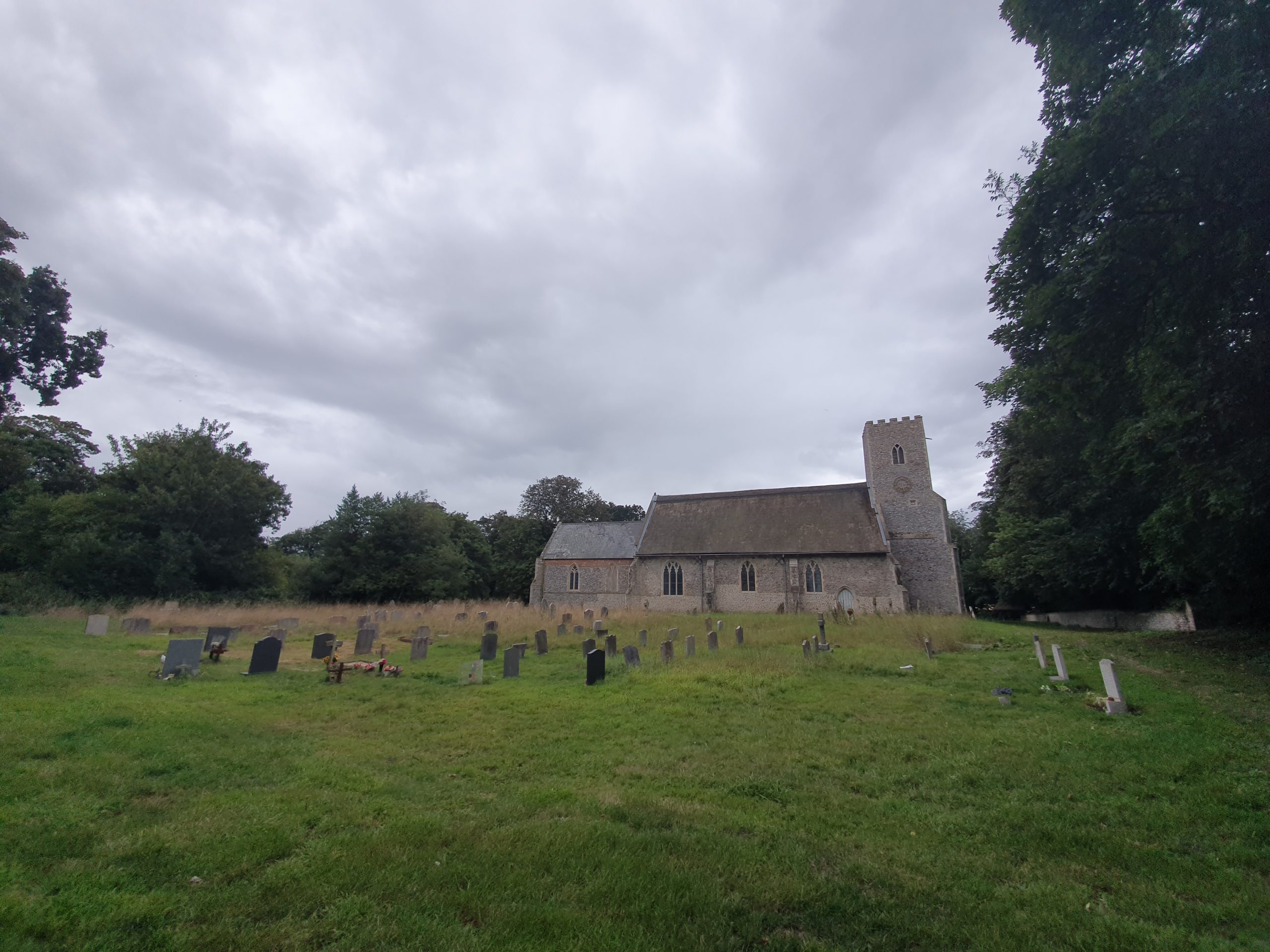
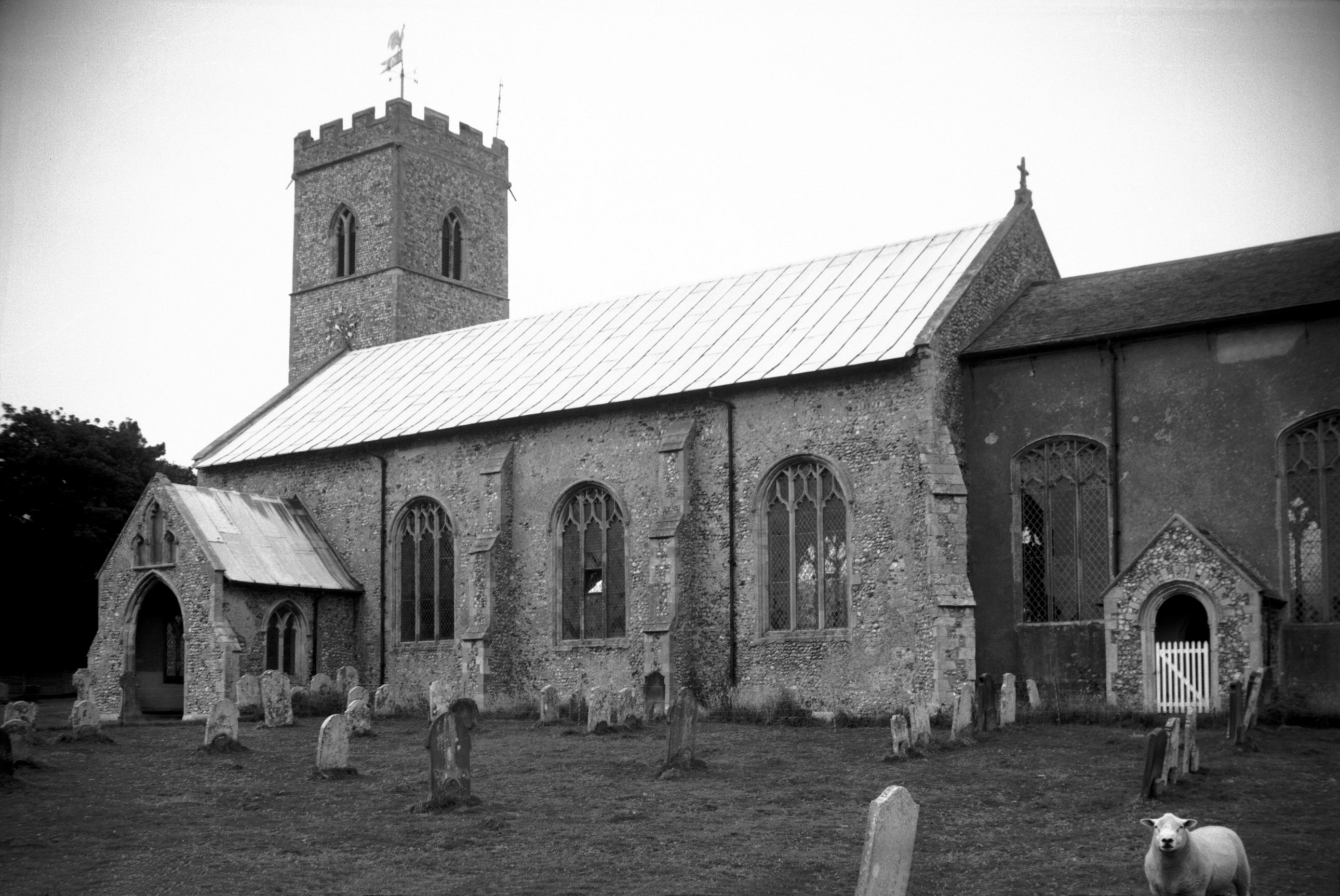
    There has been a church here since probably around the twelfth to thirteenth centuries (and perhaps there was another building from before that), and most of the current exterior dates to that period, albeit with some restorations during the nineteenth century. The roof was also replaced during this time and the interior was refitted, all under the supervision of Richard Phipson.

    The east end of the church, and the neat and tidy churchyard.

    The south porch is a more recent addition, dating from the late nineteenth century, when the interior was also altered and Victorianised.

    A somewhat less than ideal situation developed for the church in August 1991, when the tower fell down. It did though give archaeologists a chance to look in-depth at the stone which had been used in the tower, and they found numerous pieces with masons marks on them.

    There are some photos of what the tower looked like, including one just after it fell down, at https://www.roundtowers.org.uk/cockley-cley-all-saints/. In fairness to the Victorian restoration, it was concluded after an investigation that the tower hadn’t been touched during those works, so this wasn’t anything they’d fiddled about with.

    The interior of the church wasn’t open, but by all accounts, it’s quite a Victorian interior inside and not much pre-dates that.

  • Oxborough – Oxburgh Hall (Secret Jacobite Drinking Glass)

    Oxborough – Oxburgh Hall (Secret Jacobite Drinking Glass)

    This is one of eleven glasses that were commissioned by Sir Henry Arundell Bedingfeld (1689-1760) and the National Trust has done a fair chunk of research on what the glass represented. As an aside, the glasses were all sold in 1908 and all bar this one has gone missing. This particular glass is on temporary loan from the Drambuie Collection and the research conducted received some widespread media attention earlier on in the year.

    It seems that Bedingfield was a supporter of the Jacobite movement, a plot to return the House of Stuart to the British throne. James Francis Edward Stuart (1688-1766), who was for a few months the Prince of Wales and would have been King if it hadn’t been for the Glorious Revolution of 1688 which placed William III on the throne. Bedingfield supported the restoration of the Catholic James Francis Edward Stuart, which meant opposing the Kingship of the Protestant King George II.

    The glasses were probably made in the 1750s, when it was prohibited for anyone in the country to drink to the health of the Stuarts. So, the glasses were made with hidden messages such as the rose and twin buds, which were meant to represent James Francis Edward Stuart, along with the inscribed ‘fiat’, meaning ‘let it come to pass’.

    As for the other ten glasses in this collection? I imagine most people wouldn’t have ever even begun to have recognised the significance of the glasses, so they could be anywhere today, even supposing they’ve survived. It’s a nice find, but without the National Trust offering an explanation and background, I wouldn’t have had a clue what it represented.

  • Oxborough – Oxburgh Hall (Herbaceous Border)

    Oxborough – Oxburgh Hall (Herbaceous Border)

    Just photos here, as I have no knowledge about herbaceous borders or the plants in them. And this most certainly is not going to be a gardening blog…..

    There was once a high hedge on one side of this path and this gave the garden some privacy, making it a peaceful location for Lady Augusta Bedingfeld to walk down when she was pregnant (and likely when she wasn’t pregnant, although the National Trust note she had eleven children, so I’m not sure how much other time she had). There were also doors at either end, but now these have gone and the hedge has been lowered.

  • Caldecote – Bus Stop

    Caldecote – Bus Stop

    This bus stop sign is at least ten years old, although at some stage it has become part of the hedge. The sign helpfully informs anyone walking by looking for a bus stop that there are no buses that serve this area. I’m not sure that the council is generally in the habit of meandering around the countryside putting up signs in remote locations saying there’s no bus stop, so I assume that there was once a service.

    The public transport situation isn’t good around here, especially given that Oxburgh Hall is located near to this closed bus stop. Oxburgh Hall themselves don’t even put walking as an option to get there (quite rightly, very few people would decide to walk there in the way I did), although do suggest cycling. For those getting a train, the advice is “Downham Market, 10 miles, then taxi, no public transport”. Marvellous….

  • Oxborough – Bedingfield Arms

    Oxborough – Bedingfield Arms

    This historic country pub has the benefit of being opposite the entrance to Oxburgh Hall, the large National Trust property. Like the country house, it’s not accessible by public transport, so it’s car-only or by bike. Or you can walk from Swaffham as I did, but this is probably not a common option.

    There’s a well-managed system given the current crisis, which was to wait at a designated area for a member of staff to seat customers. This designated area has a bell to summon staff, which makes entire common sense, but being slightly British I felt it made me look too demanding to press it. Not this proved to be an issue, a staff member came over after ten seconds anyway, resolving that potential dilemma.

    I think that there were tables inside for customers who wanted them, but I was happy in the beer garden. The staff member took the order and then brought the drinks over, all very simple. The pub was asking for customers to pay by card, but since I prefer this payment solution, this didn’t prove to be a problem.

    There was a choice of only two real ales, and no craft beer, but since the pub re-opened yesterday that’s at least better than nothing. The Woodfordes Wherry was well-kept and at the appropriate temperature. I’d have preferred something a little more innovative, but it’s a local beer and I’m sure it’s a popular option. I think it was priced at around £3.60, which is entirely reasonable for a pub in this location.

    The pub’s menu was quite broad, although I felt slightly sorry for the serving staff after three groups in a row asked for sandwiches. The staff politely explained that they weren’t an option at the moment and the three groups then didn’t order any food at all.

    I didn’t order food since I was half-way through what transpired to be a 20-mile walk, and sometimes anything too stodgy at lunchtime can be hard work to walk off. Having said that, if there had been an intriguing dark beer, then I might have ordered the cod and chips. But there wasn’t, so I didn’t.

    I have no idea.

    This is a perfectly pleasant pub, it’s got a charm to it and the owners are quite honest in their responses to TripAdvisor reviews. I like the:

    “One of the chefs has chosen an alternative place to work where the pressure is less and better for his nerves.”

    and:

    “A new chapter has begun with the return of Patron Chef, Giles Cunliffe, who is very personable and often ‘out front’ happy to be in touch with his customers and not hiding in the kitchen!”

    and I like the honesty with this response to one long-winded review:

    “Paragraphs make for easier reading…”

    I appreciate responses that are to the point and answer the question. Some chains insist with posting responses such as ‘all your feedback is really important to us’ and then some bland and dull apology. Anyway, all very relaxing and a peaceful way to spend 45 minutes.