Category: Norfolk

  • Norwich – Earlham Cemetery (Daniel George Hatton)

    Norwich – Earlham Cemetery (Daniel George Hatton)

    This is the grave of Daniel George Hatton, located in the old military cemetery at Earlham Cemetery. He is remembered by a gravestone which was placed here by his family, pre-dating those that were provided by the CWGC. Daniel was born in 1894, the son of Daniel and Emma Hatton. Daniel (the older) had been born on 10 January 1872 and Emma on 21 May 1875, with Daniel working as a shoe finisher.

    At the 1901 census, the family were living at 11 Greyhound Opening in Heigham, a property which has since been demolished. There was Daniel, his parents, and his new-born little brother, John William Hatton. By the time of the 1911 census, Daniel was using his middle name of George, with the family living at 29 Greyhound Opening, another property since demolished. Daniel George’s uncle was also with the family at the time of the census, another John Hatton. The younger Daniel was working as a boot maker and the older Daniel as a boot finisher. As an aside on this, it can only be wondered what people like Daniel would have done as a job in today’s economy, the choice of options that they had back in the early twentieth century was far more limited and many in Norwich worked in the shoe industry.

    At some point after 1911, the family moved to nearby 53 Midland Street, yet another property since demolished. Daniel’s war records seem to have been lost, but he joined the 4th Norfolk Regiment in 1914 (with service number 3659), although I don’t know if he saw any service overseas.

    Daniel died on 17 June 1915, at the age of just 21 after he was killed whilst travelling from London Liverpool Street to Norwich by train. The inquest found that “death was due to injuries to the head from a blow described as a terrific nature. The line had been examined, but no marks found on the bridges or signalposts.” The coroner said that this was “a mystery”, but noted that his service colleagues he was travelling with were entirely free of blame. After having to endure the inquest in Bishop’s Stortford to their son’s death, the family paid for his nice gravestone and I can sort of picture them standing there saying their final goodbyes.

    Daniel’s parents were still living at 53 Midland Street at the time of the 1939 register, so they saw the start of the Second World War and perhaps wondered whether they lost their son in vain. Emma died on 1941 and I can’t find when Daniel senior died. As for John William Hatton, Daniel’s little brother, he was living with his wife Gracie at 5 Lound Road at the time of the 1939 register, dying in 1989. It must have been difficult for John, he lived for 74 years without his younger brother, having lost him when he was aged just 14.

    There’s something sad about all war deaths, but for Daniel (or George, his 1911 census and one of his service records call him that) the three houses he lived in have been demolished, his war records are seemingly lost in the fire and the coroner never worked out how he died.

  • Norwich – Earlham Cemetery (Marsham Elvin Wrench)

    Norwich – Earlham Cemetery (Marsham Elvin Wrench)

    This is the war grave of Private Marsham Elwin Wrench, located in the older military cemetery within Earlham Cemetery. Unfortunately, the age of this soldier are wrong, he died at the age of 48 and not 42. Marsham was born in Kensington on 13 November 1872, the son of Marsham and Margaret Wrench.

    At the 1881 census, the family lived at 43 Monteith Road in Bow where the older Marsham was working as a general dealer. Marsham the younger was the only boy in the family, living with his older sister Susan and his younger sisters Mary, Alice and Maud. As an aside, Martha Elizabeth Land lived in this house during the Second World War and she was one of 173 people killed at Bethnal Green underground station when people fell down the stairs and died in the crush that ensued.

    At the 1891 census, Marsham was 18 years old and he had decided to join the army, where he was listed as being a gunner living at the Woolwich Barracks. He doesn’t appear in the 1901 census, so was likely serving somewhere else in the army. He had by this time got married, hence his move to Norwich, although he had been widowed by the time of the First World War. Fortunately, the war records have survived, which means there’s a story of his expeditions around the world.

    Marsham joined the army in Woolwich on 11 December 1886 at the age of just 14, with his trade being listed as a musician. He signed up for the Royal Artillery, agreed to serve for 12 years and was happy to be vaccinated. He was just 4’6″ tall, weighed 5.8 stone, had brown hair and declared himself as a member of the Church of England.

    Marsham was disabled with haemoptysis in June 1911 in Karachi in what was then India, but is now in Pakistan. He was moved to a hospital in Bombay before returning to England. He rejoined the army reserve on 20 August 1914 as part of the Norfolk Regiment, briefly going to serve in France. On 11 November 1914, a medical report though declared that he was unfit for service, his usual weight of 12 stone 5 lbs had fallen to 9 stone 10 lbs and he had a frequent cough.

    Marsham died on 20 April 1920, and by nature of him having a war grave, he would have died of injuries incurred in the war, although I’m not sure what they were or where he went.

  • Bawburgh – St Mary and St Walstan Church (James Reeve)

    Bawburgh – St Mary and St Walstan Church (James Reeve)

    This is the grave of James Reeve located in the churchyard of St Mary and St Walstan Church. There’s not much of a story I can tell here, but I liked the inscription which reads:

    “LIfe is transitory and fleeting, death uncertain as to his approach”.

    James Reeve was baptised in the church on 27 September 1771, the son of Henry Reeve and Mary Reeve. He married Martha Petchell in the church on 2 December 1802. James died on Wednesday 18 March 1829 at the age of 57 and was buried on Thursday 26 March 1829 at a service overseen by the curate Edward Postle. It’s a reminder though of how important the church was in the lives of communities, where individuals would be baptised, married and buried all at the same location.

  • Bawburgh – St Mary and St Walstan Church (1939 and Now)

    Bawburgh – St Mary and St Walstan Church (1939 and Now)

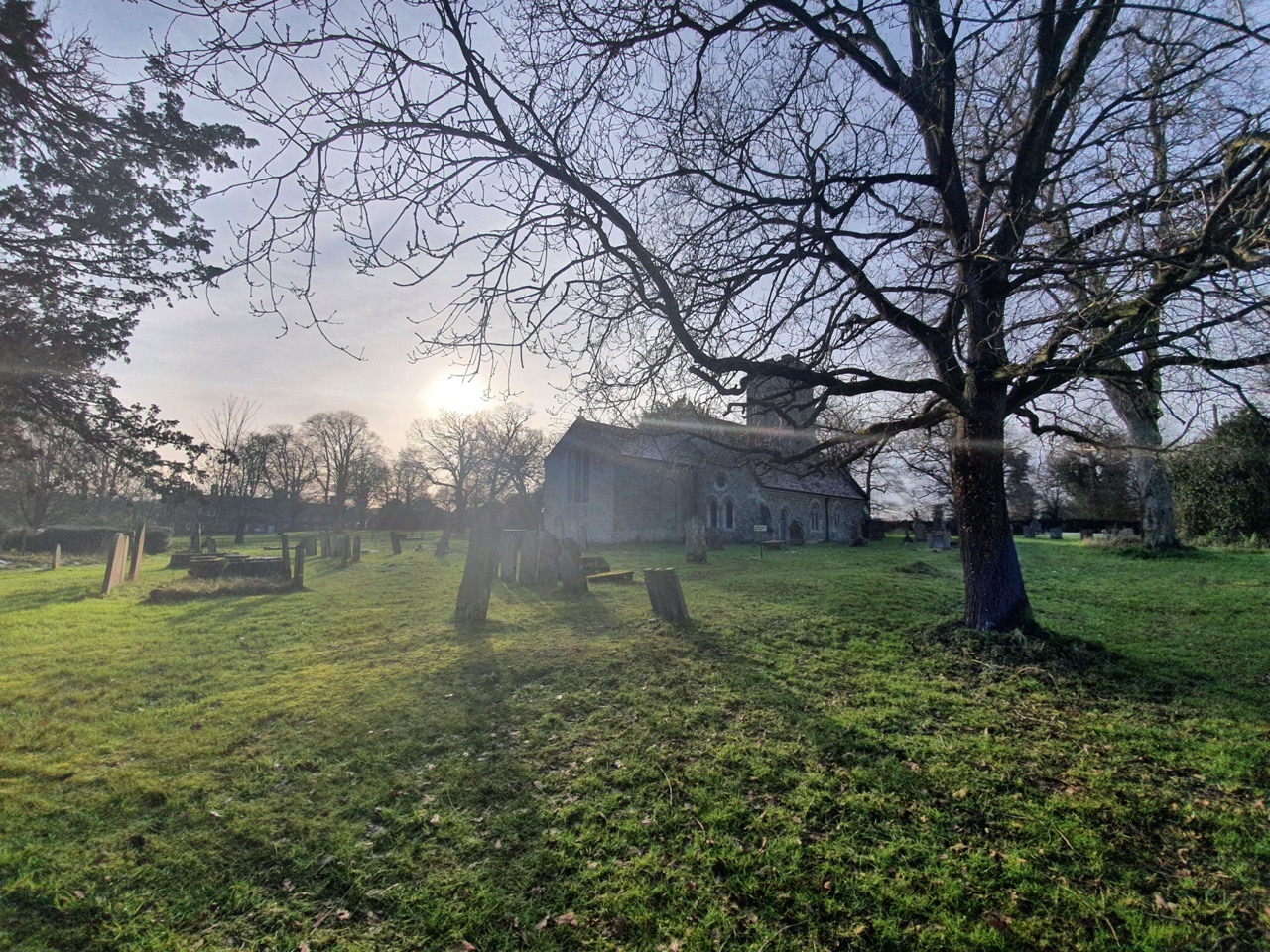
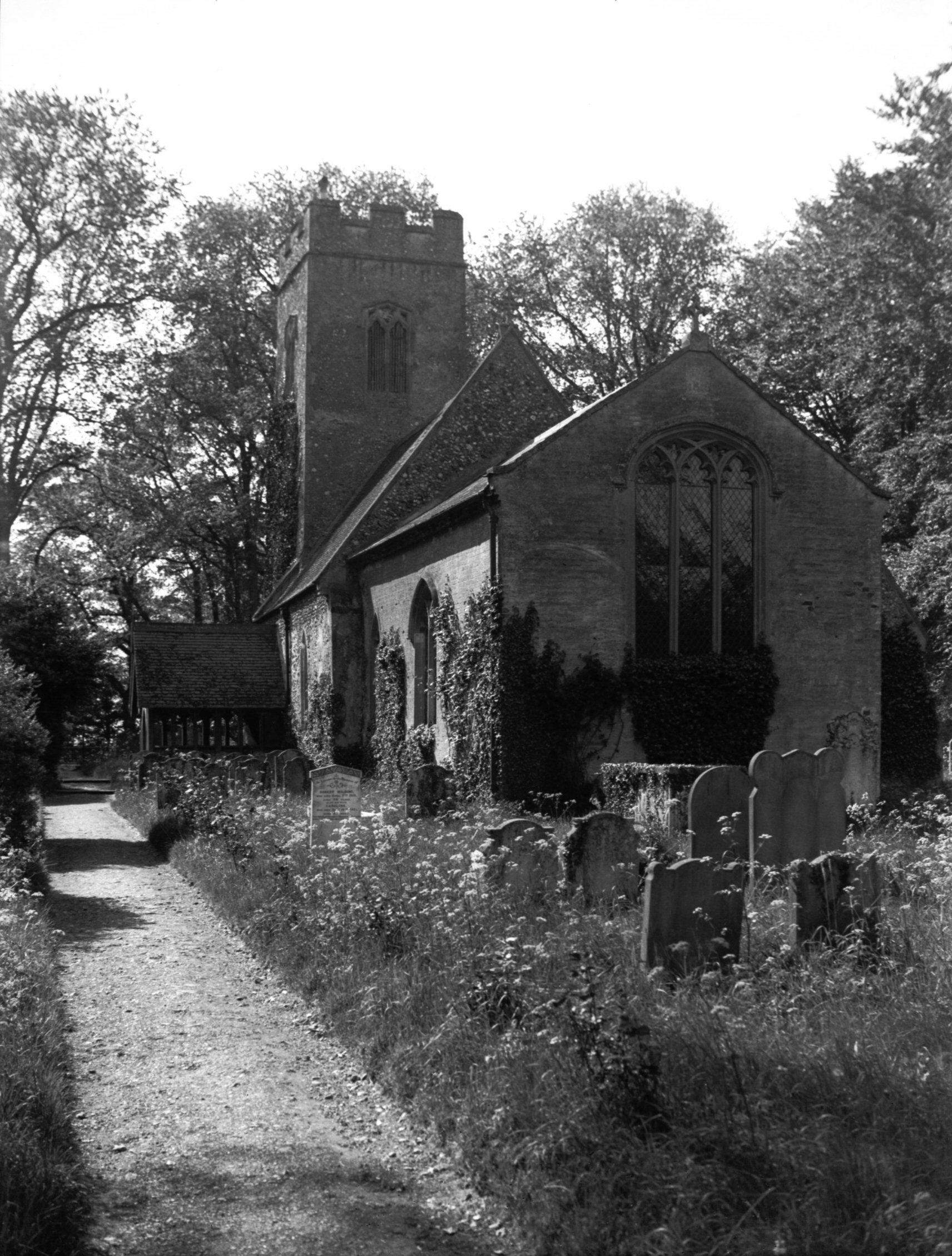
    This is St Mary and St Walstan Church in Bawburgh as it looks in 2020, and as it looked from pretty much the same spot in 1939. Not much has changed, the grave in the bottom left of the photo is new, but in the older photo there’s a grave covered in ivy. That grave is still there, but the ivy has now been removed, although it has destroyed the inscription on the stone. Sometimes I wonder why some graves are badly damaged and illegible in cemeteries, this is one of the reasons why….

    This becomes a bit of a spot the difference puzzle, but I quite like seeing what has changed. The slightly wonky drainpipe in the old photo has gone from where the nave meets the chancel, a tree has been removed in the foreground, but otherwise nearly everything is reassuringly unchanged over the last eighty years.

  • Bawburgh – St Mary and St Walstan Church

    Bawburgh – St Mary and St Walstan Church

    This is the Grade I listed Church of St. Mary and St. Walstan at Bawburgh, one of the few churches which is dedicated to a Norfolk saint. The stepped nave gables give it a distinctive look and these date from 1633, when the building was repaired following some decades of decay.

    There has been a church on this site since around the late tenth century, linked to the miracle of St. Walstan and the well. That well had ensured that the church had become a pilgrimage site and this brought some wealth, all suddenly brought to an end with the Dissolution of the Monasteries and the effective end of such pilgrimages. At one stage during the peak of its wealth, the church had seven Chantry priests and supported six canons.

    The tower of the church dates from the twelfth century, with the chancel being from the beginning of the fourteenth century. The nave is late fifteenth century, likely having been rebuilt given the funds that had come in from the pilgrims.

    This side of the churchyard drops down and the supporting buttresses are visible.

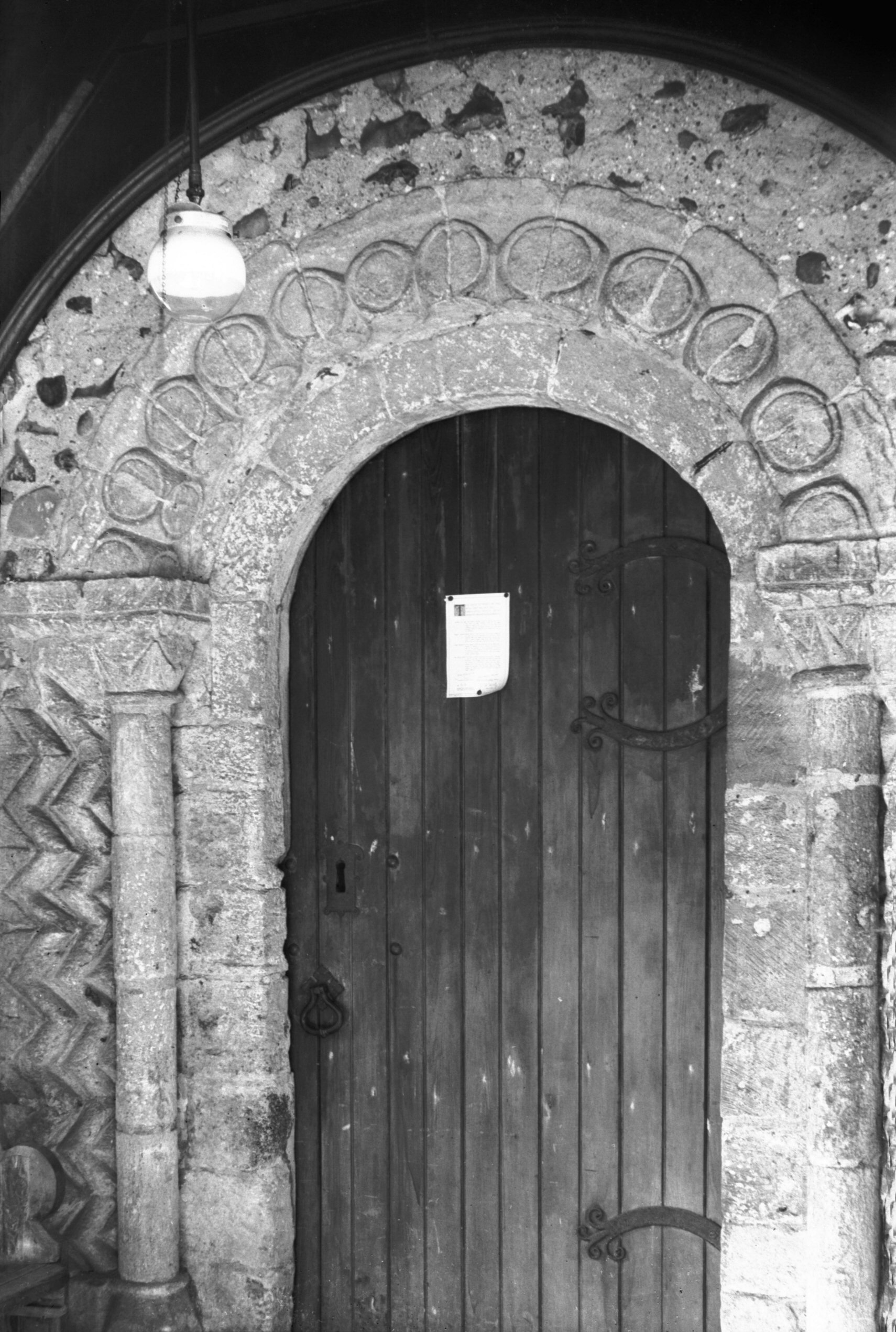
    The ancient north door.

    I have no idea how old this iron support is sticking out of the wall, but the bulging state of the north wall suggests there have long since been problems, even with the buttresses.

    The chancel end of the church.

    The bricked up doorway at the end of the chancel, the reasons for which I’m unsure of.

    There doesn’t seem to have been any excessive repairs from the Victorians, with the Reverend Gabriel Young noting in the early twentieth century that there had recently been a desperate need to raise funds to fix the tower to prevent it from ruin.

    The interior was closed, but apparently there are some notable wall paintings which the church hopes to have professionally restored over the next few years. In 1905, the local press reported that a handsome newly repaired wooden chancel screen had been installed in the church. The same report added that “the parish had the honour of furnishing the first couple who ever won the Dunmow Flitch in 1445”. This meant that a couple who could honestly say that they hadn’t had an argument in the first year of marriage were given a flitch of bacon.

  • Norwich – Earlham Cemetery (Military Graves)

    Norwich – Earlham Cemetery (Military Graves)


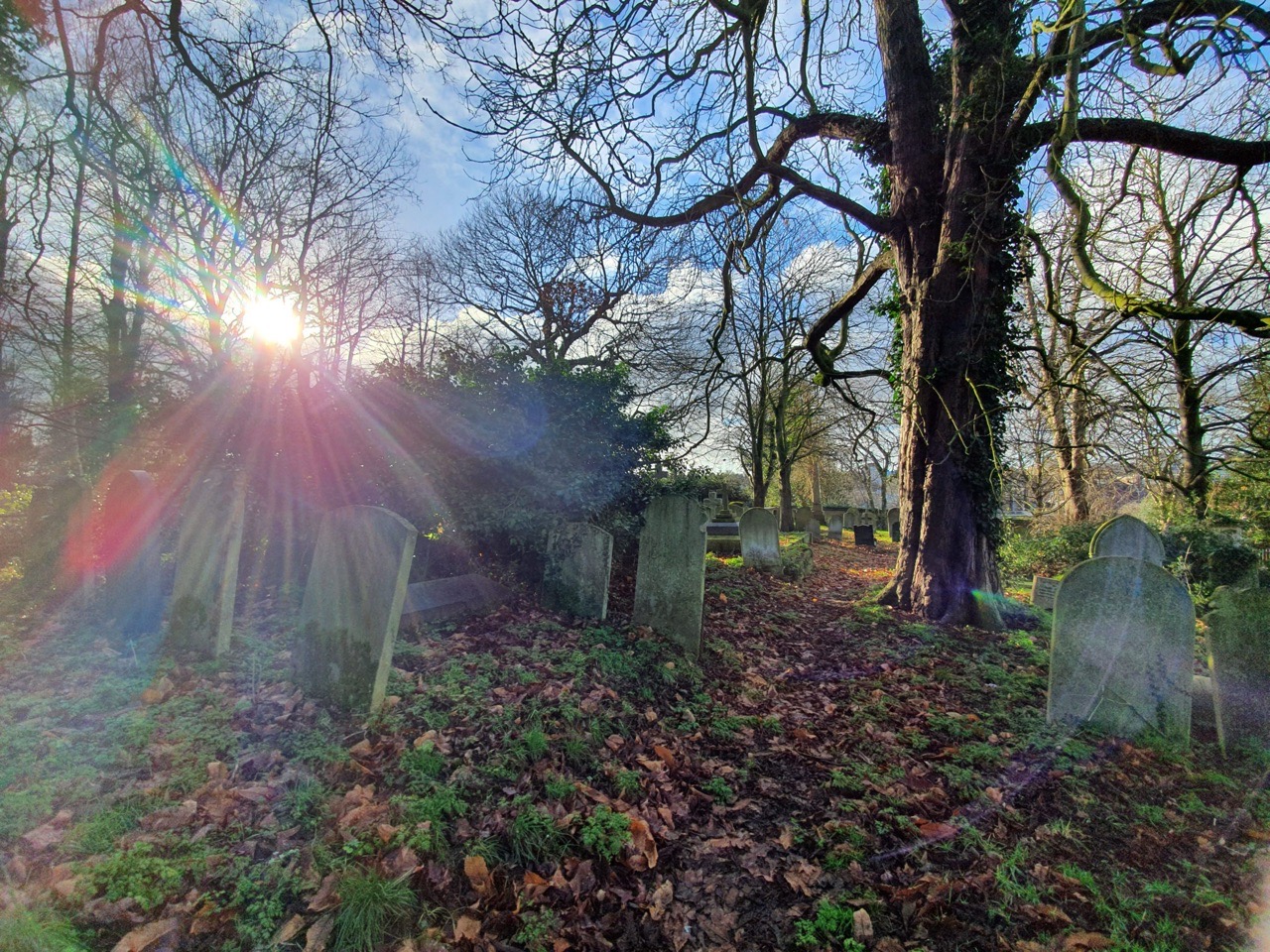
    I hadn’t realised when I visited Earlham Cemetery the other day that there are two separate areas for military graves. One is the most obvious in the centre of the cemetery and this has been in operation over the last century. There is though another which backs onto Helena Road and it’s this one which filled up during the middle of the First World War, hence why another area was created.

    A war memorial commemorating those who died in the 1870s.

    And below are two of the different grave styles in this area of the cemetery, before the standardisation that came following the number of deaths during the First World War.

  • Bawburgh – St Walstan’s Well

    Bawburgh – St Walstan’s Well

    This is St. Walstan’s Well in Bawburgh, which was a pilgrimage site in the medieval period. Walstan was an Anglo-Saxon Prince who would have likely had some wealth, but he decided when aged 12 that he wanted to dedicate himself to a life guided by God. Very pious….Anyway, after a worthy life as a farm worker and servant of God, he received a message that he was going to die within days.

    So, knowing that he was going to die, Walstan decided that he would stop his work and would allow himself to be pulled around East Anglia by two bulls. He must have loved the random, as he decided that the bulls could decide where he should be taken and this would be God’s will. God decided that Walstan’s now dead body would be taken to Taverham and Costessey, which doesn’t sound very exotic. Along this route wells had magically been popping up, which is what happened in Bawburgh. At this well, or spring, there was water which magically healed sick humans and animals. A pilgrimage spot had been created and this did very well indeed (excuse the pun). The Dissolution of the Monasteries saw an end to this little arrangement though.

    The medieval well structure has been replaced by this more modern arrangement. There was a local walk printed by the Norfolk News in 1896 which mentioned that in the river here that believers could still see the print of his foot in the water. Regarding the well itself, the author of the article reported that “it does not look very brilliant nowadays, though a rustic informed us that the water was good”.

    Don’t drink the water…..
    The Church of Bawburgh St Mary and St Walstan is visible in the background.

  • Norwich – Earlham Cemetery (Arthur Edward Buttle)

    Norwich – Earlham Cemetery (Arthur Edward Buttle)

    This is the grave of Private Arthur Edward Buttle which is located in the war graves area of Earlham Cemetery. Unlike some other individuals buried here, there is plenty of information available about Arthur, not least as his war records have survived. Arthur exact birthdate is a slight mystery though (more on this later), it’s not listed on either of his school admission forms (I suspect that his father had forgotten it), even though it was for other children. He was born in 1896, the son of George Buttle and Amber Buttle (nee Bridges).

    At the 1901 census, Arthur lived at 108 Oak Street (unless there has been some renumbering, that house is still there) with his parents, his father working as a shoemaker and his mother working as a shopkeeper. He also lived with his older sister and four brothers, with the girl being the oldest in the family and so I’m not sure what she thought about having five younger brothers. Arthur attended St. Augustine’s School between 22 April 1901 and 30 August 1901, and then again from 28 April 1902 and 18 July 1902, and at this time his family had moved to 8 Gildencroft (this house has since been demolished).

    At the 1911 census, Arthur lived with his father and three of his brothers at 58 Westwick Street (this house has since been demolished as well). Like his older brother, Arthur worked as a heel builder, whereas his father now worked as a fish hawker (someone who sold fish from a cart or similar).

    Then, suddenly, Arthur moved to Oldham and I can only think that this was because of a love interest. He married Sarah Jane on 2 October 1915 in Oldham, living there with her at 156 West Street in the town (another house since demolished). Arthur got a job at Leighs Spinning Company in Oldham, a company which is still trading today, as a cotton spinner and he joined the Textile Trades Union. Unfortunately, it is probably lost to history what Arthur thought of his new home in Oldham compared to Norwich.

    Arthur’s life changed when he was called up to fight in the First World War, going for his medical at Ashton Barracks on 28 June 1916. It was reported that he was 5’3″ in height, he had a chest of 33 inches and he weighed just 6.5 stone. It’s not a great surprise that the medical officer noted “he has a poor physique”, but fortunately, this was no obstacle for the military, the officer had added “will develop”. I don’t want to make assumptions, but I’m doubting whether Arthur had a particularly wealthy lifestyle, so food may not have been easy to find. As an aside, it was noted that Arthur was 19 years and 207 days old on the day of his medical, a somewhat exact figure that someone no doubt had to sit and work out. This does though help with his birthdate, which is something around December 1896.

    After undergoing training Arthur was put on a boat going from Folkestone to Boulogne on 20 January 1917. His was not a pleasant war, his records show that he was sent to the front line, but he suffered from what he himself called frost-bite. The medics had decided nationally that this wasn’t an appropriate term and earlier on in the war it had been renamed trench frost-bite, which then became better known as trench foot, which is what the doctors said Arthur had in April 1917.

    Worse was to come for Arthur, he was wounded on the front line in France on 23 March 1918 and he received some form of operation the day after. He spent time at the 1st General Hospital in Rouen, then the Oakhurst Red Cross Hospital in Erith and then the Royal Herbert Hospital in Woolwich before being moved to Dundee War Hospital on 9 April 1918. He remained in Dundee until 14 June 1918 when he was moved to the 1st Scottish General Hospital in Aberdeen, where he remained until 4 September 1918. His whereabouts between then and 29 September 1918 aren’t known (although more on that later), but he managed to get what I will politely refer to as an STD and won’t dwell on the details. This clearly wasn’t a rare problem, it’s the only illness that he had which the army had a stamp for, to save the disease having to be written out by the doctor. He entered Central Hospital in Lichfield on 29 September 1918 and left there on 7 January 1919.

    On 17 May 1919, Arthur went for a medical and it was said there that his disability was rated at around 50% on the rough scale that they used. It was noted that he was suffering from a scar above his left eye where he had received the gunshot wound on 23 March 1918, which was leaving him with dizziness and eyesight problems. He was also struggling to walk longer distances as the problems with his trench foot hadn’t cleared up. The doctors discharged Arthur from the army at the medical and this was confirmed in his formal papers issued on 19 May 1919.

    I’m not sure what Arthur thought about the army, but probably not much, as he was punished for two unofficial absences, the first on 13 September 1918 when he was fined 4 days pay, then again on 11 January 1919 when he was fined 11 days pay. During the war he had fought with the Manchester Regiment as he was living in Oldham, ending up in the 3rd Battalion, but also fighting with the 2nd and 22nd Battalions.

    Arthur died on 12 December 1920, at the age of 24.

  • Norwich – Earlham Cemetery (Alfred William Slaughter)

    Norwich – Earlham Cemetery (Alfred William Slaughter)

    This is the grave of Alfred William Slaughter located in the war graves area of Earlham Cemetery, although as an aside I’ve now discovered there’s another military burial area (where members of the Britannia Barracks were buried, but this became full by the middle of the First World War) and so I’ll have to pop back at some point.

    One question I have about this grave, if anyone happens to know, is what it’s doing here. The Commonwealth War Graves Commission (CWGC) consider anything after 31 August 1921 to be outside their scope until the Second World War. So, the CWGC list that there are 534 war dead at Earlham Cemetery, of which Alfred is excluded. So, quite why he was buried here I don’t know, although it explains why the format of the text on the gravestone is different to nearly all of the others.

    Alfred William Slaughter was baptised on 29 September 1875 at St. Lawrence’s Church in Norwich, the son of Alfred William Slaughter and Margaret Caroline Slaughter (nee Springall). By the time of the 1911 census, he was living at 28 Rose Lane in Norwich, where he worked as a shopkeeper. He was living with his wife Lilian Maud, and his sons Alfred William and Clifford Henry. For reasons unknown, all of the family had been born in Norwich, but the younger Alfred William was born in Nottingham.

    Alfred died on 8 February 1924 at the age of 48, although I can’t find under what circumstances that happened. His probate was completed on 18 June 1924 and he left £1,251 to his wife, Lilian Maud. His wife had moved to 23 Hastings Avenue in Hellesdon by the time of the 1939 register, where she was listed as living on her own. Her probate was completed later that year, when it was noted that she died at the Post Office at Griston. The details of her death were added to Alfred’s grave, although the written record says that she died on 29 March 1951, nor the 26 March listed on the gravestone.

    So, why Alfred has a grave where he does, I’m not sure. Unfortunately, his military records don’t seem to have survived, making it harder to resolve that little mystery. This is yet another situation where I’m sure that there’s a story here, I just can’t work out what it is.

  • Norwich – Thorpe Marshes

    Norwich – Thorpe Marshes

    Just photos from a little meander today to Thorpe Marshes…. The first is from Lion Wood, the rest are actually in Thorpe Marshes, including the unfortunate incident with the boat. For anyone interested (goodness knows who) the Greater Anglia train was en route from Norwich to Great Yarmouth.