Category: Norfolk

  • Bunwell – St. Michael and All Angels Church (Grave of Jack Montague Smith)

    Bunwell – St. Michael and All Angels Church (Grave of Jack Montague Smith)

    This is the churchyard of St. Michael and All Angels Church in Bunwell.

    Just before my friend Richard and I meandered out to look at some historic churches, I was watching a documentary on tunnelling under the German lines during the First World War. This was a successful tactic deployed primarily by the British military and the Royal Engineers, although they were helped by numerous other companies which included those from Canada, Australia and New Zealand amongst others.

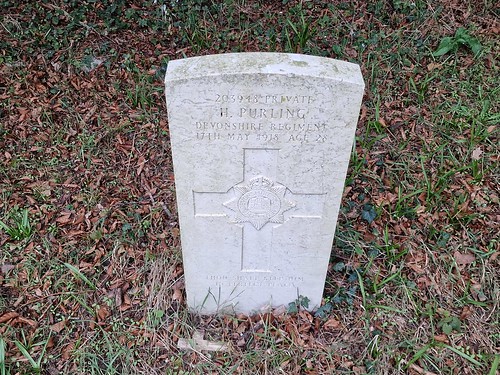
    Which is why I thought that the grave of Jack Montague Smith looked interesting, he’s one of the three war dead who is buried in the churchyard. He was born in Bunwell on 2 November 1892 and was the son of George William Gates Smith and Mary Alice Smith, of The Laburnums, Bunwell. His father was a watchmaker and Jack had three brothers and two sisters at the time of the 1901 census.

    Jack was a member of the 1st Canadian Tunnelling Company, part of the Canadian Engineers. They were sent to France in early 1916 and worked on the Bluff area, in Flanders, until early 1917 when the Australians took over. Their role was primarily in tunnelling under enemy lines, a dangerous and difficult occupation.

    Jack was a sapper with service number 501337 and he signed up in Ontario in December 1915. There’s an obvious question of what Jack was doing in Canada, but it wasn’t uncommon for younger men to go and find employment there, so that’s my best guess. Unfortunately, as Jack’s surname is Smith, I can’t identify which of the many Jack Smiths it might have been on the passenger lists.

    After being sent to fight on the front line he was injured on 26 April 1916. He was admitted to the 51st Field Ambulance, which was a front line medical unit which treated those with injuries. He was evacuated back to the United Kingdom, being sent to the Yarrow Hospital in Broadstairs where Canadian troops were cared for. Sadly, Jack died of his injuries at the hospital on 1 June 1916 at the age of 23 years old. His body was then returned to Norfolk for burial at Bunwell on 2 June 1916.

  • Bunwell – St. Michael and All Angels Church

    Bunwell – St. Michael and All Angels Church

    Richard and I were on one of our meanders around churches in Norfolk, rather more challenging with it getting dark quite so early on in the day. This Grade I listed grand church is located a little outside of the rather spread out village of Bunwell and it was primarily built in the mid to late fifteenth century on the site of an earlier structure. It’s thought that the location of the church was chosen as it was the highest land in the area which was once home to an early stone cross.

    The tower dates from the early sixteenth century and there are six bells inside. The helpful history guide in the church notes that these are from 1699, 1699, 1732, 1732, 1832 and 1884 (the most recent, but a recast of a bell from 1612).

    The porch.

    Quite a small priest’s door.

    The end of the chancel, looking a little plain because of the rendering.
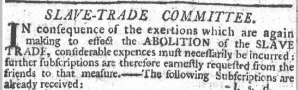
    I’ll stop my little tour of the exterior here to add in a news report from Easter Sunday in 1894, which doesn’t appear in the church’s history inside the building. What happened caused quite a sensation in the area, as there was an attempt to blow the church up (or at least badly damage it) with explosives. Fuses had been placed in the ground with gunpowder, but they had failed to ignite and so no damage was done. The police were bemused and said they weren’t sure that they would find the culprit.

    The story continues though, as the police arrested someone on some rather loose evidence, a Lambert Johnson who was aged 41 and who had done work on the church that he claimed that the previous rector hadn’t paid for. The trial ended in chaos, with the local newspaper reporting:

    “His Lordship said to the jury: You will find a verdict of not guilty. There is not a particle of evidence against the prisoner. I don’t hesitate to say that this is a most improper prosecution – one brought without the slightest conceivable grounds. It is too bad that this man should be five or six weeks in gaol awaiting trial”.

    Although if I’m being honest, Johnson does seem like a prime candidate here.

    Only one side of the chancel has the large perpendicular windows, this side is rather more barren. My knowledge of churches isn’t sufficient to say what has gone on here, nor what those three bits of stone on the left are supporting. The rendering has also made it difficult to see what is underneath.
    This former window or door has been uncovered, perhaps leading to another structure at some stage in the building’s history. If anyone knows, please do contact me….

    The porch way and I wasn’t expecting that we’d be able to get into the church. It was though open, which was something of a surprise. It was dark inside and we decided against finding the lights, but fortunately my phone in night mode actually made it look quite bright internally.

    This is a spacious church, but it was constructed without any aisles, which seems a little unusual for such a grand project.

    The choir seating, with these stalls first used at the memorial service for King Edward VII which was held on 29 May 1910.

    The pulpit, which is just over 100 years old, dating from a similar period to the choir stalls following a period of a very leaky roof damaging some of the interior.

    The chancel end.

    Looking back towards the church tower.

    That’s quite an impressive roof, stripped back and partly replaced in 1908 as it was leaking badly. The church then had to turn its attention to the tower, which was in “a very dangerous condition”.

    Above the North Door are the Royal Arms of Queen Anne.

    The font is from the fifteenth century.

    One of the old oak panelled chests which would have once stored important church documents.

    A really rather lovely church and it does the parish great credit that they’ve made an effort to open the building up. I also liked that they had produced a history of the church for visitors, it all felt really quite welcoming even though we didn’t see anyone during the visit. The churchyard, of which more in another post, is relatively large and has had at least two separate extensions added to it.

  • Saxlingham Thorpe – Duke of Delhi (formerly The Mill Inn)

    Saxlingham Thorpe – Duke of Delhi (formerly The Mill Inn)

    After some meandering around some historic churches (although, not very many since it’s nearly winter solstice and it’s dark at what seems like mid-day) we thought that we’d get a little snack to reward our history research. I found a pub option that seemed suitable, but then we noticed on-line that they seemed to have a Sunday menu and it all seemed a bit complex. Given that, there was an Indian nearby, and I rarely turn down a chance to have my favourite cuisine, so the Duke of Delhi it was.

    This was until a few years ago the Mill Inn, a roadside pub which was previously known as the West End and had been trading since the 1850s. I’m not usually thrilled to see pubs turned into restaurants, but I really don’t see that there was much choice here. There’s a limited amount of residential properties nearby and since driving after drinking alcohol isn’t an option for customers, a pub’s trade would be limited. There was a friendly welcome offered when we entered, although we were the only customers which wasn’t perhaps surprising since we arrived one minute after they opened. We were enthusiastic (and, well, hungry as well).

    The staff member took the drinks order immediately after we were seated, which was perhaps a little swift, and he suggested Cobra. I wanted mango lassi really, but they didn’t have that, so I went for half a pint of Cobra. I don’t like that they sell half pints at disproportionately more than pints and although this is a restaurant and not a pub, so they won’t get an angry comment from CAMRA, it does slightly annoy me. Anyway, weak drinks choice from my perspective and annoying pricing policy aside, everything else was comfortable and organised in the restaurant so my first impressions were positive.

    Whilst I’m here, it is possible to do Indian food and craft beer as I’ve had that combination at the Indian Brewery in Snowhill, Birmingham a few months ago. Now that would be an exciting concept for Norfolk….

    I was quite happy with this choice of chutneys with the poppadoms, there was perhaps nothing exceptional, but they were entirely acceptable and I enjoyed them all.

    I went for the Murgh Jeera, a curry that was brought over sizzling away nicely, packed with the flavour of cumin and with a generous amount of chicken. I really liked this, there wasn’t the depth of flavour that would have surprised and delighted me, but the chicken was tender and full of flavour, with the curry sauce being tasty and rich. This felt a little Anglicised, but it was better than I expected and absolutely met my expectations. They didn’t have lemon rice, but the coconut rice made up for that.

    For the record, Richard had chicken passanda, which he said was enjoyable and generously portioned, although he marginally preferred the one that he had last week at Shapla Tandoori in Wymondham.

    All told, I liked this restaurant and felt that the service was attentive and polite, with the food being of a decent quality. The drinks pricing policy isn’t one that is unique to the Duke of Delhi, so I won’t mutter about that too much, although what is it with a lack of lassi options? That’d be much more exciting than Cobra. Anyway, all that to one side, I’d happily recommend the restaurant to others.

  • Norwich – Brewdog Visa

    Norwich – Brewdog Visa

    I picked up my new Beer Visa from Brewdog in Norwich yesterday, which I thought I’d be interested in given my attempt to visit every Brewdog in the country. I have to say that I don’t really quite get what they’ve done here, I had hoped it was something like just getting it stamped at each Brewdog. Instead they’re introduced something really quite complex which seems to involve having certain drinks to get stickers and then also repeating the same process at different Brewdog venues. I can’t see whether they’re trying to promote visiting different bars or drinking their mainstream beers, so they’re got some hybrid thing going on.

    It’s actually so complex that I really don’t understand it despite reading the instructions on numerous occasions. Although, to be fair, I’m often easily confused by things. For anyone who wants to read the rules then they’re at https://www.brewdog.com/uk/beer-visa-2.

    Given that I don’t tend to drink Brewdog’s own beers when in their bars, as I’ve had them all, I’m not that interested in the whole process so I’m going to bin the visa. Not the loyalty scheme that I had expected, but apparently they’re relaunching it again in 2023. I’ll wait until then and hope they get something a little more exciting.

  • Norwich – Dhaba at Fifteen

    Norwich – Dhaba at Fifteen

    In an attempt to work through some of the restaurants in Norwich that I’ve neglected to visit over the last couple of years, my friend James and I popped to Dhaba at Fifteen last night. I wasn’t entirely surprised and delighted by Spice Valley last week, but this one came recommended. The welcome was immediate and helpful and we were asked to provide track and trace details. I’ve lost track now of what the actual rules are, but I thought the restaurant was being careful which is always good.

    The menu which I thought was well laid out. There are the traditional Anglo-Indian dishes shoved at the bottom, so they’re there as a choice but the restaurant isn’t going to shout about them. There were numerous really quite innovative dishes there that I haven’t experienced before as well as plenty of vegetarian options.

    The restaurant is perhaps a little plain its decoration, but it was clean and comfortable. It got much busier during the evening, with a number of smaller groups coming in. The restaurant also seemed to be doing a decent amount of takeaways and deliveries, so it seems a popular location.

    I’m always disappointed at any Indian restaurant that doesn’t offer my drink of choice, namely mango lassi. They had it here and it was thick, slightly sweet and very delicious. I approved.

    This is much better from the chutneys and the staff member explained what they were. There was a minced carrot almost like coleslaw (I clearly wasn’t listening when they told me exactly what it was called) and a mint raita which both had a depth of flavour and some care put into them. I’m going to have to e-mail the restaurant so they can tell me exactly what these were.

    [I have e-mailed them and they promptly replied saying that, from left to right, they were a sweet carrot & onion chutney, mint raita and spicy mango chutney.]

    I went for the Kolkatta Kasundi Chicken which is a mustard based curry, something that I’ve never had before. I was suitably surprised and delighted by the arrangement, the chicken was tender and moist with flavour from the sauce, the curry itself had a strong mustard taste without being over-powering and it was served as a generous portion. James had gone for the Peshwari Chicken Pasanda which he thought was equally good, with a similar flavour of almond running through the curry. The rice was fluffy and as expected, with everything being at the appropriate hot temperature.

    The service was always polite and engaging, but without being overbearing or fake. The staff seemed keen to help, which was evident in the way they were offering other customers the option to change dishes to suit their tastes or to make starters into mains. Although the restaurant was getting busy, we were never rushed or hurried, so the environment was comfortable. The prices were perhaps a little towards the higher end of the scale, although the quality justified that.

    The reviews for the restaurant are generally very positive, although I’m bemused by the negative review that complained about the large pieces of chicken. I’m not entirely sure that this is a negative for a restaurant, but there we go….. I’d say that this is one of the best Indian restaurants that I’ve been to in Norfolk, suitably decadent and I think I’ll likely come back here. All very lovely.

  • Morley St. Botolph – St. Botolph’s Church (Stanhope William Howard Sholto Douglas-Willan Memorial)

    Morley St. Botolph – St. Botolph’s Church (Stanhope William Howard Sholto Douglas-Willan Memorial)

    Inside St. Botolph’s Church in Morley St. Botolph is a memorial to Captain Stanhope William Howard Sholto Douglas-Willan, a name which suggests some substantial aristocratic pedigree.

    Sholto, which appears to be the name that he went with, was born in December 1897 was living with Ferdinand Howard and Agnes Hilda Louise Douglas-Willan, residing in Bexhill at the time of the 1901 census, although he was born in Dover. The family had three servants at the time of the census, so there certainly seems to have been some money, with numerous members having served in the armed forces during the nineteenth century. He was though the son of Reverend John Alfred Douglas-Willan, Rector of Morley.

    He was a leader in the 4th Battalion of the South Staffordshire Regiment and as the plaque notes, he was mentioned in Despatches, although his medal card doesn’t give an exact date for that or what he did, but it appears to have been awarded posthumously.

    His photo appeared in the Daily Mirror on 6 March 1917 as a missing soldier, with anyone with information encouraged to write to his father at Morley Rectory, although the press reported the week later that details of his death had been confirmed. Sadly, he had been killed in action on 17 February 1917 and his name is commemorated at the Thiepval Memorial.

  • Morley St. Botolph – St. Botolph’s Church

    Morley St. Botolph – St. Botolph’s Church

    This was our final church visit of the afternoon and Morley St. Botolph is certainly very different to the church at Morley St. Peter.

    There is some evidence of a Norman church on this site and it’s possible that they constructed on a pre-conquest building. The church that stands today is mostly from the thirteenth and fifteenth centuries, although there was an extensive Victorian restoration. And a more recent disaster that I’ll come to a moment.

    This illustration is from the middle of the nineteenth century, before the church was restored.

    The chancel window, likely put in here quite early, perhaps in the thirteenth century.

    The three stage tower, likely from the later part of the fifteenth century.

    The blocked up priest’s door.

    The vestry was a medieval addition, although it was in ruins by the nineteenth century and subsequently needed rebuilding by the Victorians.

    The porch, probably thirteenth century, but heavily restored.

    It was getting dark and as part of their festive celebrations, the church turned the lights on.

    And another photo of after we had left the church’s interior, I thought that this was rather lovely.

    The interior of the church was accessible as there’s a Christmas tree competition going on and the community had been invited to come and visit.

    The interior of the church is mostly modern as there was a devastating fire in 1959 which destroyed most of the nave. The building was left derelict for a few years, but it was needed by the community and so a reconstruction project was started. The architect was James Fletcher Watson and he has ensured that the church has retained its medieval feel, with some quite attractive new wooden pews. I haven’t yet found any photos of the church in ruins, but the chancel section survived, albeit heavily fire damaged.

    Nicely decorated and there’s the selection of raffle prizes to one side. As an aside, Richard paid £1 to enter and he’s hoping to win the slime.

    Some of the Christmas trees from the competition, all from local community organisations.

    A friendly volunteer turned on the main lighting after we said that we were looking around and he gave us a brief history to the history of the building. The lighting before this though was minimal, but the glow from the heating gave it a strangely warm feel. There was a warm welcome offered by the volunteers, with free hot drinks available which Richard partook in. Members of the community had come to look at the Christmas trees and I liked the enthusiasm of the volunteer at the little desk near to the door who was encouraging people to join in some fund raising projects next year.

    It appears that this church is something of a hub for a number of local congregations and it has a welcoming feel to the whole arrangement. If it hadn’t of been that important cluster church then it might never have been rebuilt in the early 1960s and it could have been left to fall into ruins.

  • Deopham – St. Andrew’s Church

    Deopham – St. Andrew’s Church

    Deopham is a Norfolk village with just over 500 people and it’s fair to say that it has a church which speaks more to past wealth and prosperity.

    St. Andrew’s is a Grade I listed church, but it’s not in the best of condition following thefts and attacks on the building over recent decades. It was constructed between the late fourteenth century and the early sixteenth century, with the four stage tower literally towering over the area. There was though a church here before that date, of which nothing visibly remains.

    This explained why some of the churchyard was taped off like it was a crime scene, bits of the masonry are falling off.

    It’s a grand building, but it felt damp everywhere. The chancel used to be thatched until the Victorian modernisation, although the main nave had long since been roofed with lead.

    Unfortunately there have been some relatively recent lead thefts from the roof and it is some need of general repair.

    The boarding-up clerestory windows, clearly not ideal.

    However, going back to a book written in 1858, the church has been in this position before, although it’s not entirely evident from the illustration in the publication. The author Raphael Brandon noted:

    “The noble tower of this church is perhaps not excelled by any in Norfolk. Both within and without, this church is in a sad state of decay: most of the windows in the tower are blocked up, also those in the porch, and the east window of the Chancel, a fine piece of Perpendicular tracery”.

    The chancel window issue is fixed now, although it’s been visibly altered. There was a major restoration by the Victorians about twenty-five years after the book was written which restored the church to its former glory. That was a hard fought battle though, it took until 1882 and by then “a sadly dilapidated church” before finance was found to fix the issues. The Ecclesiastical Commissioners had fixed the chancel and opened the window in the 1860s, but they weren’t responsible for fixing the nave. Some of the windows are still filled in, but the church was given a comprehensive makeover and a new hammerhead roof during these changes. One slight disgrace to the process was that they discovered numerous murals and medieval wall paintings during the renovation, but they decided that they wouldn’t bother keeping them.

    The porch, which was open, although the church itself wasn’t. There was though keyholder information for those who wanted to access the building.

    The once grand porch which now just feels damp.

    Oh well, what’s classy, let’s go and scratch some initials into the church’s stone….. Grrrr.

    It’s not a perfect repair on the porch.

    The churchyard is sizeable and it’s still generally well maintained and cared for.

    And rather an attractive grave, with the church in the background.

    This was clearly once a magnificent church and it still is something special, but it’s in desperate need of funding to fix the problems. Having windows boarded up in the clerestory is hopefully a relatively short-term issue, a church of this stature deserves the decadence of at least being intact. But, at least the windows weren’t mostly bricked up as they had been in the eighteenth century, the current situation is relatively easy to reverse.

    Protecting the church from crime is also clearly going to be a challenge as it’s relatively remote and it has been targeted before. The last twenty years might not have been favourable for the church, but with some good fortune and positive input from the authorities, maybe I’ll return here in a few years to a very different building. There remains the challenge though, which was evident in the mid-nineteenth century as well as today, that the church is a very substantial building for such a small congregation and village.

  • Morley St. Peter – St. Peter’s Church (William Henry Beaumont)

    Morley St. Peter – St. Peter’s Church (William Henry Beaumont)

    The graveyard at St. Peter’s Church in Morley St. Peter.

    Richard noticed this, which was of interest as it named William Henry Beaumont was killed in action in 1916. However, there was no record on the CWGC web-site of a war grave at the church and no-one from a local regiment of that name. Fanny (nee Burrows) had been born on 1 August 1891 and she died on 9 April 1985, just under 70 years after her husband.

    William was the son of Kate Beaumont of 21 Huntsworth Terrace in Marylebone in London, located near to Baker Street. William was in the 8th Battalion of the Royal Fusiliers and his service number was 18864. He died on Friday 7 July 1916 at the age of 25 and his name is recorded on the Thiepval Memorial, although his military records seem to have been amongst those which have been lost. He died in the Mash Valley area during the bloody battle to capture Ovillers.

    The neighbouring grave gave something of a clue, what appears to be the son of Fanny and William, namely William Henry James Beaumont, who was born in Marylebone on 16 January 1917 after his father’s death. By the time of the 1939 register, mother and son were still living at 30 Caithness Road in Mitcham, which was where William and Fanny had been living before he went to war. Of relevance primarily only to me, I’m fairly sure that I haven’t walked down that road at any point in the past, although I’ve been very near to it.

    The younger William lived until 30 November 2003. Which doesn’t really solve why any of the three have gravestones in this church, but I assume that the younger William moved up to Norfolk at some stage after the end of the Second World War (or the decades after it). Fanny’s death records are from near to Morley, so I assume she moved with her son and settled in this area.

    It’s hard to imagine what it must have been like having a husband die nearly 70 years before in such tragic circumstances, although it’s a shame that I can’t find William’s military records.

  • Morley St. Peter – St. Peter’s Church

    Morley St. Peter – St. Peter’s Church

    St. Peter’s Church in Morley St. Peter (it’s by the Y of Morley in the above map from 1900) stands pretty much alone at the corner of a field, with no evidence of the village that perhaps once stood nearby. The wooded areas in the above map have mostly been ripped out over the last century, so it’s a relatively barren landscape.

    St. Peter’s has historically been the chapel of ease to St. Botolph’s Church which is situated nearby and it’s substantially smaller. The stone has been rendered over to protect it and it’s not in the best of condition.

    The tower is medieval and has lost at least one section, likely due to collapse than anything intentional although that event seems to have been lost to history. It now has a pyramid roof over the top, although the steps inside remain. There is apparently a traditionally held view that the church is pre-conquest, dating from around the late tenth century, although all of the current structure is medieval or later. The local church seem less convinced judging from their web-site and they believe that the church was constructed as a chapel at ease in the thirteenth century.

    The east window of the chancel, which was all reconstructed during the Victorian period.

    The porch is from the early sixteenth century and has seen better days.

    The dilapidation of the porch is more visible from the side.

    The church was locked, but to be fair, the keyholder details were provided on the noticeboard.

    An extension to the side chancel, likely from the nineteenth century. I suspect the Victorian renovators hoped for something of a religious revival to boost the attendance in the church, but the congregation size around here is highly limited.

    The repairs aren’t what I would call invisible.

    The churchyard is relatively substantial and there is a small section of recent burials.

    This path ploughs through the middle of the cemetery and then stops dead, but old maps suggest that it connected into an old path which has long since gone.

    The church is clearly in a bit of a state, but also seems well loved and peering in it seemed reasonably well maintained internally. It dips down quite a bit though, which means that the ground outside and the chancel are a little higher. The nave is aisleless and other than for the Victorians renovations, the church seems relatively untouched since it was built in the medieval period. All really quite charming.