Category: Warsaw

  • Wizz Air Flight from Warsaw Chopin to Malta

    Wizz Air Flight from Warsaw Chopin to Malta

    Conscious that I’m once again getting behind with this blog, I had better make some progress, as they say in the House of Commons. I’ll hopefully return to more of the Warsaw trip, but for now it’s time to wave goodbye to what I consider one of the world’s greatest cities.
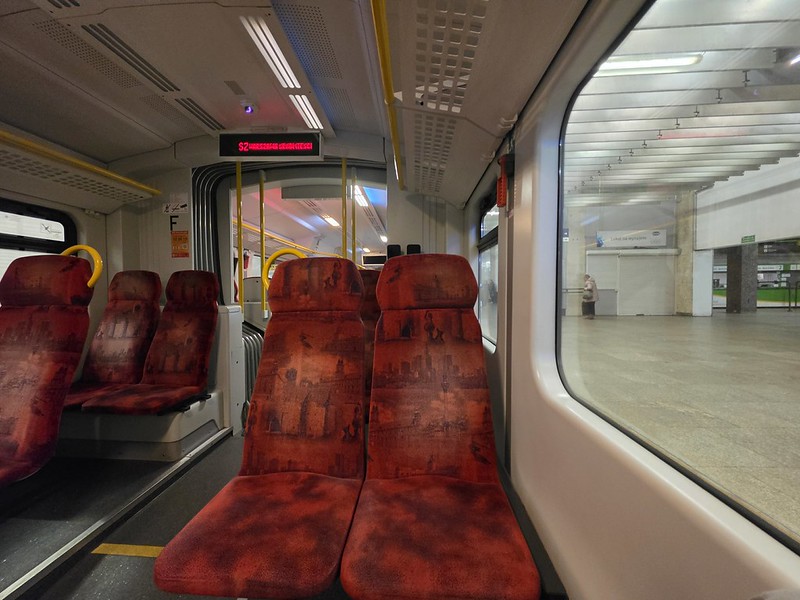
    I’ve still never quite lost the excitement of seeing these seats when arriving in Warsaw and the slight sadness when leaving it. The seats have images of Warsaw on them, I know I’ve arrived when I see them.
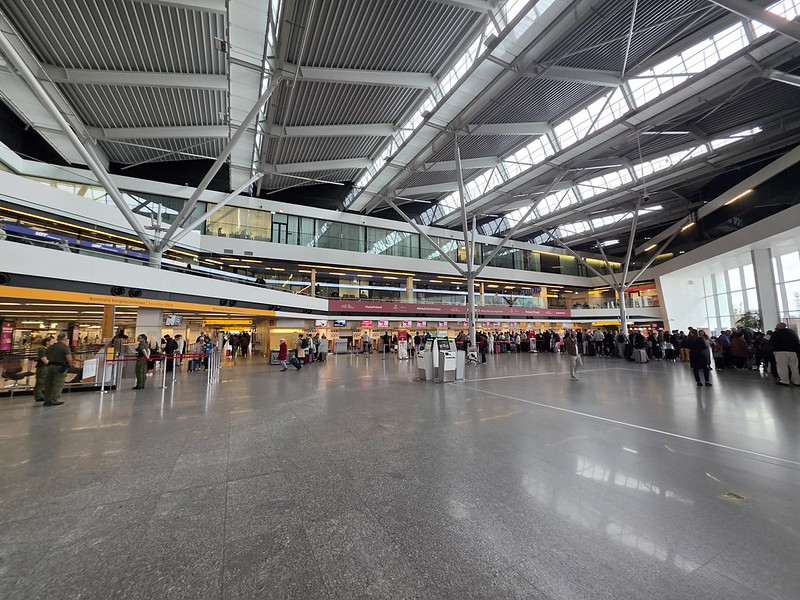
    Warsaw Chopin airport felt relatively quiet and there was virtually no line for security which was handy. There was some excitement as the passenger in front of me was having to empty out all of her belongings. She was asking why and the security guard, who was speaking in Polish so I didn’t capture a lot of the detail, was saying there was a problem. A little distressed, she asked her husband to come over and then the penny dropped. He had a coat that had a knife in it, which is sub-optimal. I’m guessing that it was just an error and the knife was immediately confiscated and more questions asked, but I had to leave at that point as I was already deliberately taking overly long to put my belt back on so I could watch the drama. I left reassured at the careful nature of Polish security.
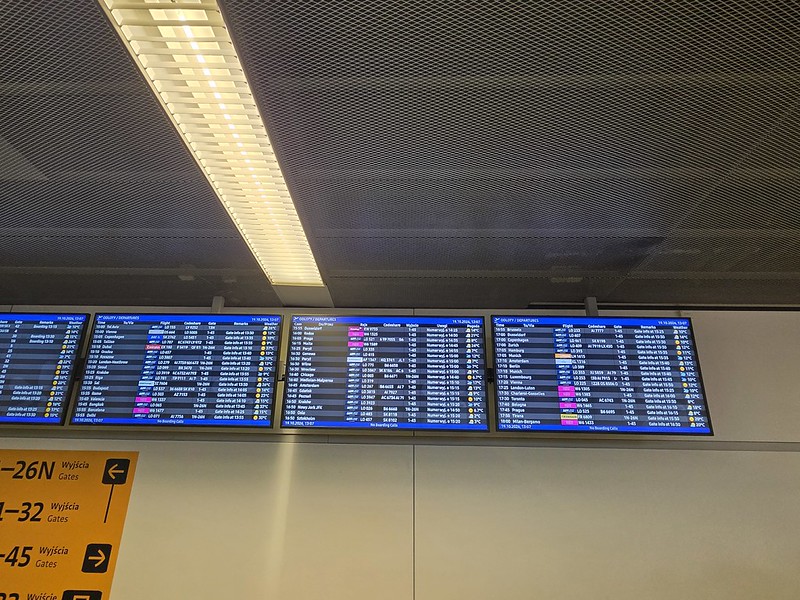
    Mine was the 16:15 Wizz Air flight to Malta. The reason I was going via Malta is that my flight there was £8.99 and there was a £14.99 flight the next morning from Malta to Norwich Airport. This is an ideal set-up as I don’t have to faff about getting back from Luton Airport, which isn’t always the quickest.
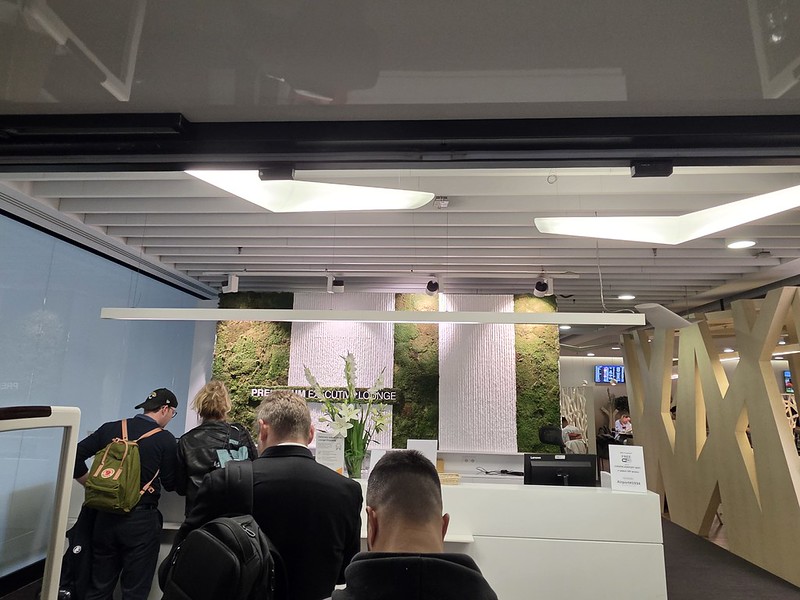
    The Preludium Lounge is getting ever busier and although I’ve never had a problem getting access, there are relatively few seats available.
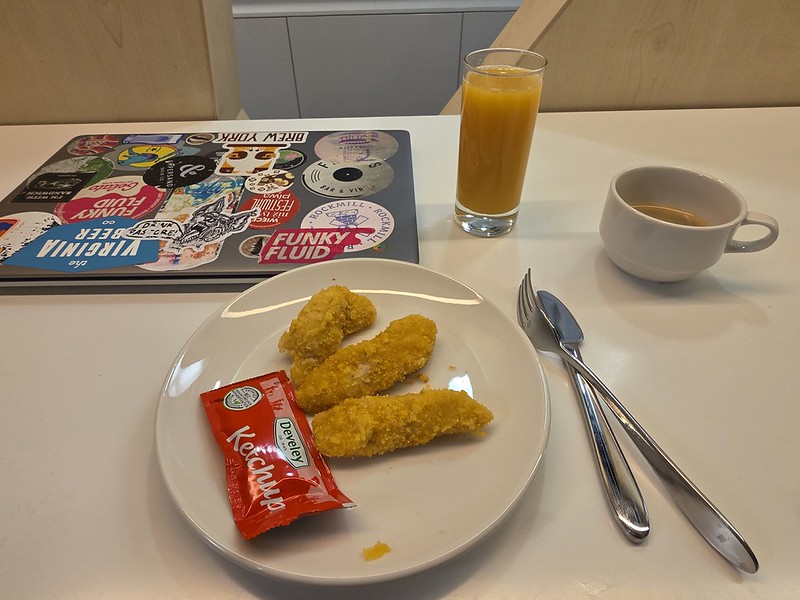
    The hot food option was chicken strips. To be honest, I’ve had worse news in my life.
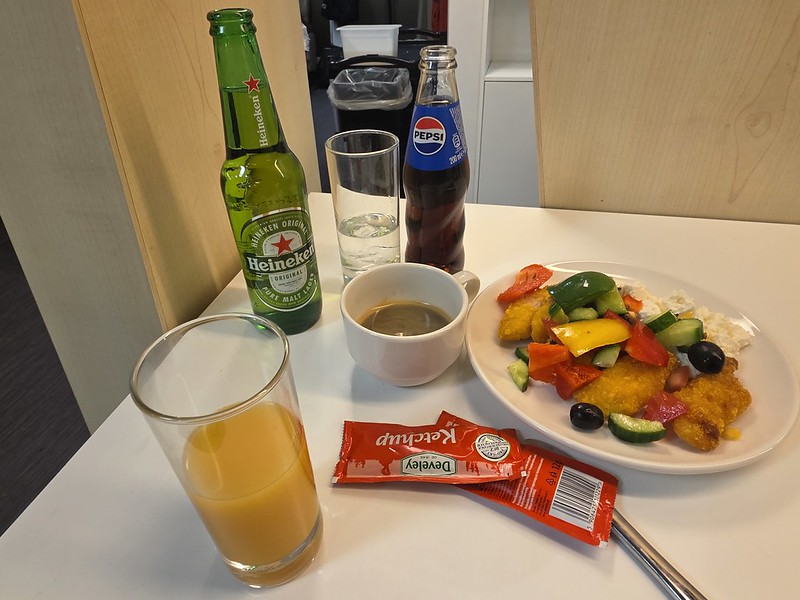
    Indeed, I embraced the chicken strips and had more, but paired them with some salad the second time. Apologies for the Heineken, it was the only beer at the time and I sometimes need to lower my average Untappd score. Fortunately, some Polish beer was brought out soon afterwards. I also fuelled up on chocolates and coffee for the flight, as it’s important to have a balanced diet.
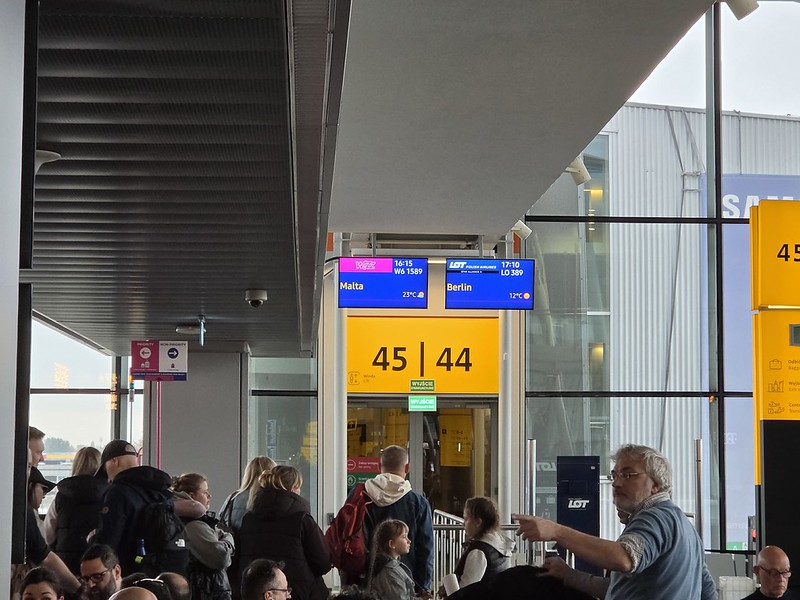
    They were a bit heavy on the bag checks again, but mine was waved through as usual. The boarding process was all well managed and, as usual, it was clear where to go.
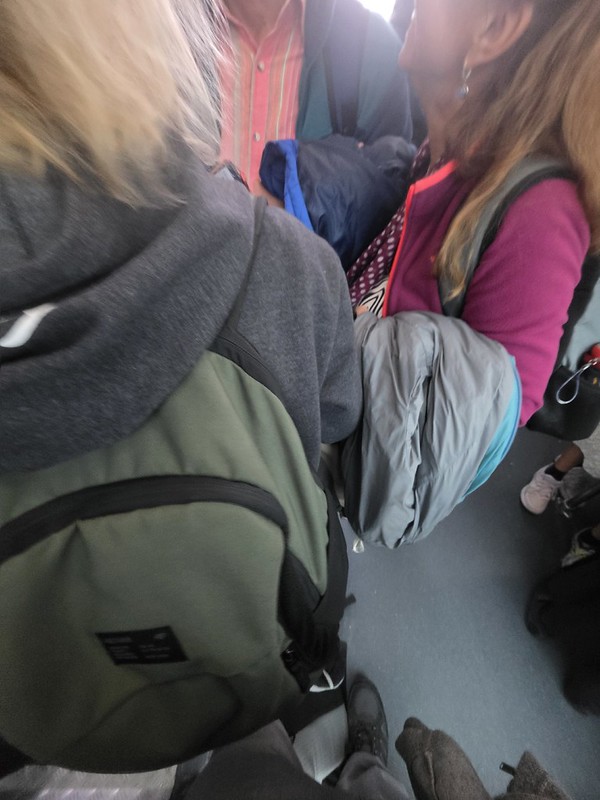
    It was a bus gate and, far be it for me to criticise, but it never ceases to amaze me how many people leave backpacks on and nearly knock people over when they turn. Her travelling partner suggested she take it off. There is some sanity in the world, although I sometimes think it’s in limited supply when flying.
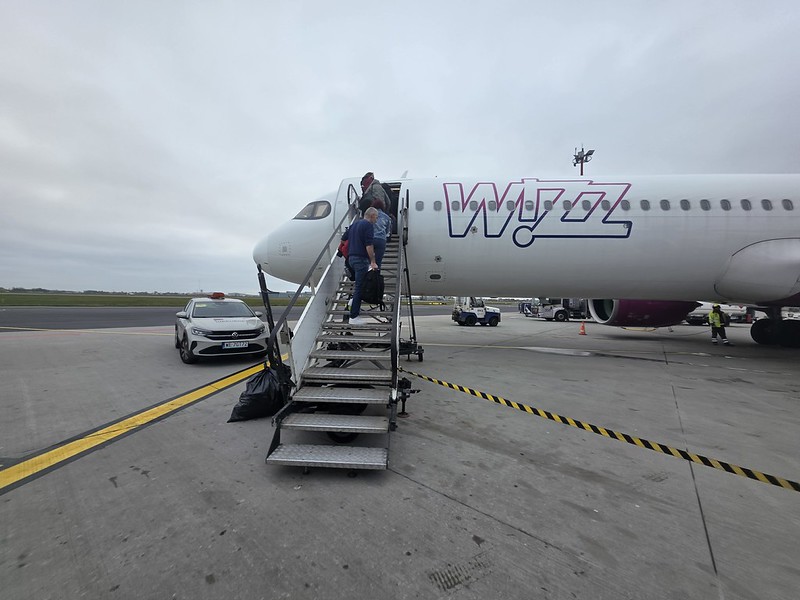
    The seating Gods had given me a middle seat, but it transpired not to be too problematic and the journey was peaceful and quiet once again.
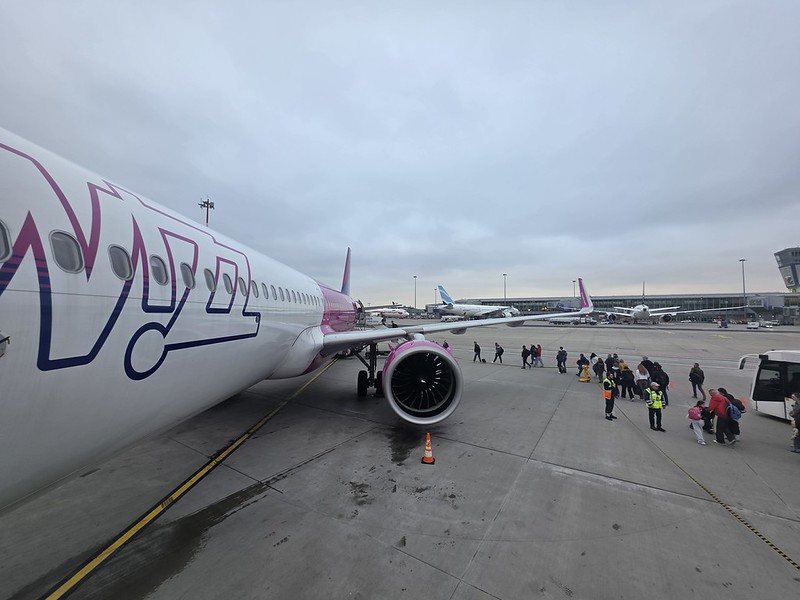
    The aircraft was 9H-WBF, one that I hadn’t been on before. The Polish crew were efficient and suitably intolerant of passengers faffing about in the aisle when boarding. I always appreciate it when they’re like that. I’m conscious that I often write very little about these flights, but a combination of Wizz Air efficiency and my falling asleep usually ensures there’s not much to report, so I might as well focus on the chicken strips.
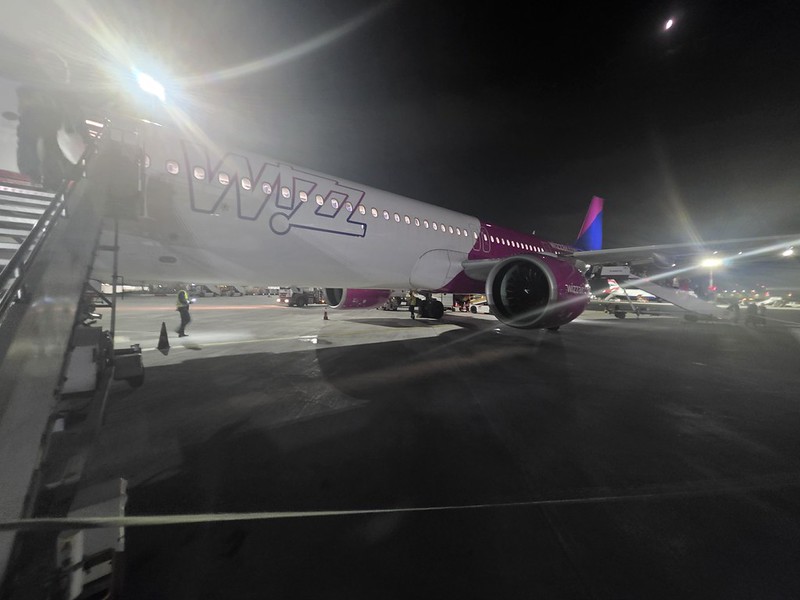
    And safely into Malta, where I’ve spent many happy weeks in the past. My plan was to visit Valletta for the evening, then get the night bus back and wait at the airport until my early morning flight. I seem to be making a habit of staying up at airports, it’s both thrifty and oddly exciting. I should probably get out more.
  • Warsaw – Bar Mleczny Rusałka

    Warsaw – Bar Mleczny Rusałka

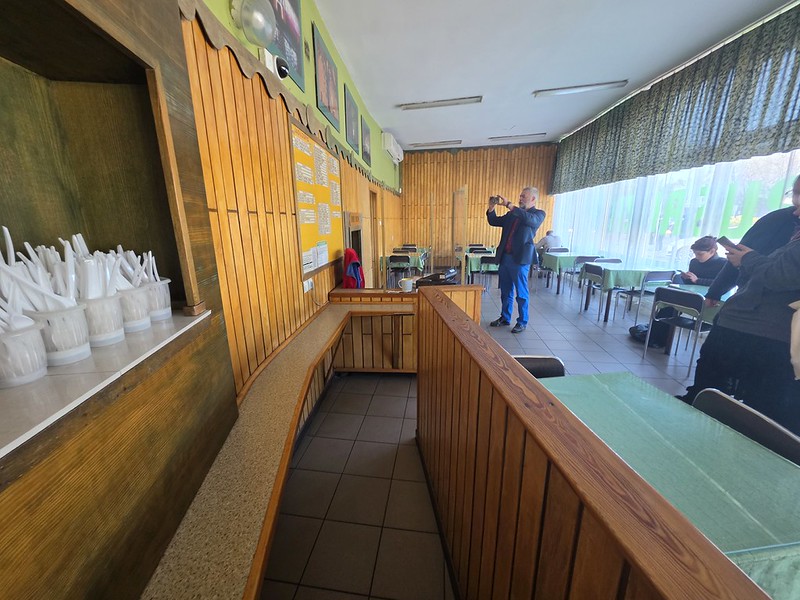
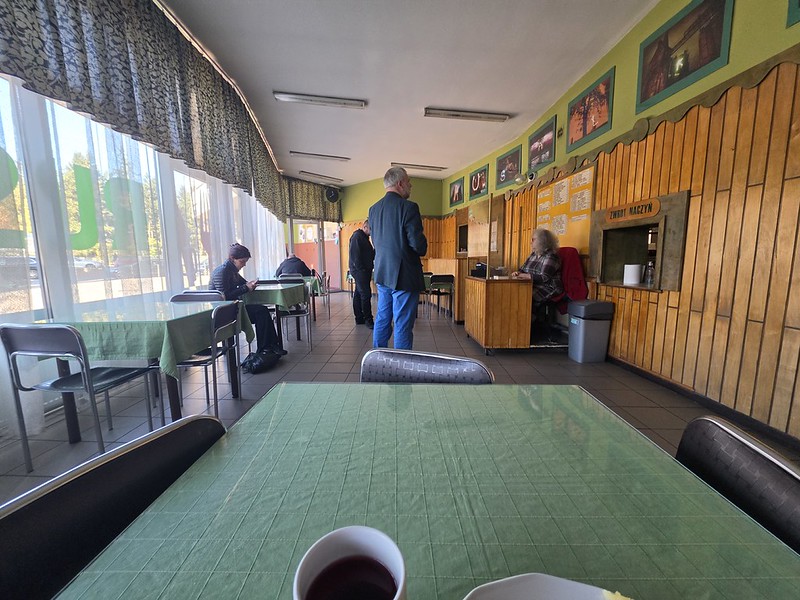
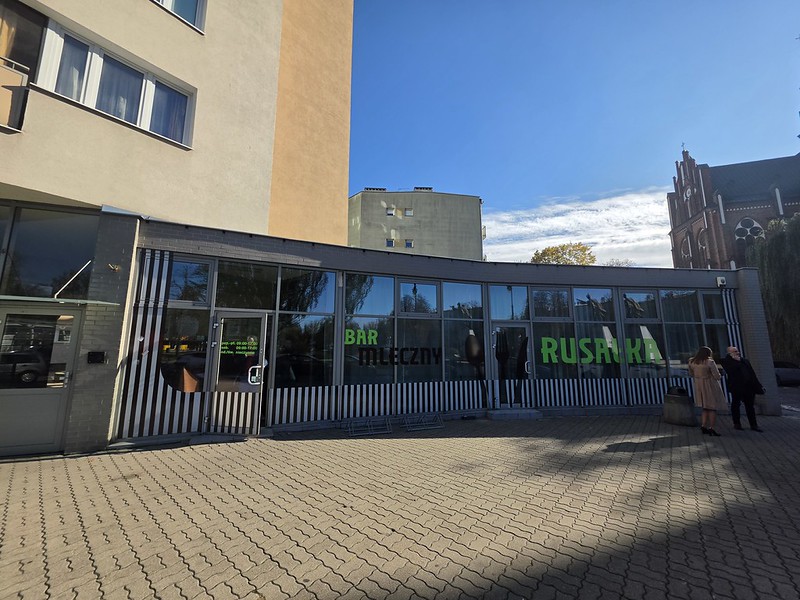
    Roy had an idea to visit a milk bar in Warsaw and I’m not sure that I was entirely thrilled and delighted about this. A Polish milk bar, or bar mleczny, is an inexpensive cafeteria serving traditional home-style dishes such as stews, soups and potato pancakes. They were commonplace during the communist years when they offered cheap food to workers.

    I decided to go in first as I’m very brave and orders were taken at that little desk, with the food then collected from the counter to the left of this photo. I managed to order entirely in Polish and the cashier obviously was impressed at that as she just responded in English. Here’s Richard taking another selfie.

    With my food and drink safely received, I could watch Richard still waiting to order while the cashier studiously looked the other way. Roy and Jen had already collected theirs, assisted by Jen’s excellent Polish. I was already pre-annoyed that I would probably not like the food and would have to go to KFC.

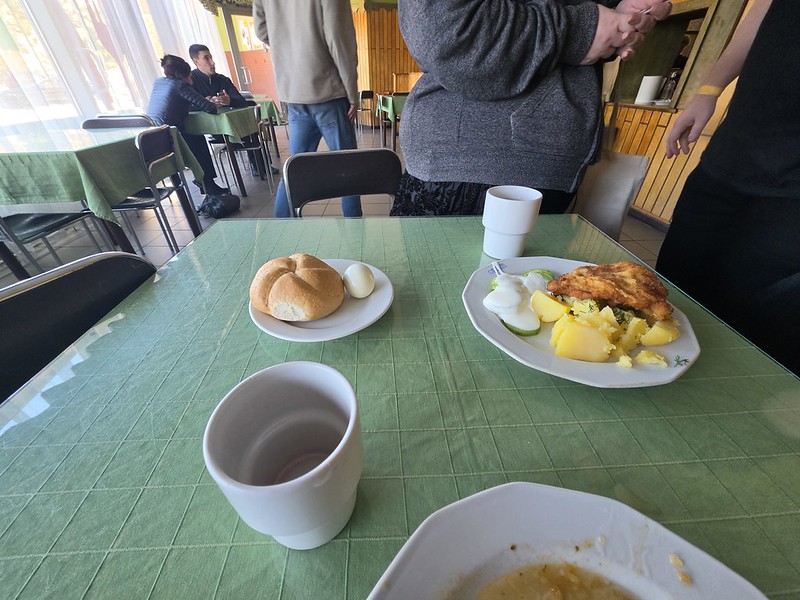
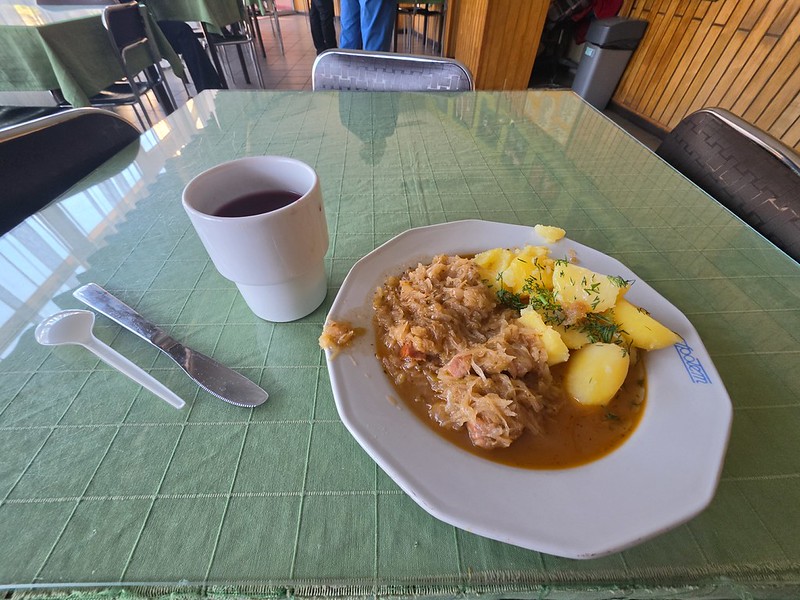
    It was bloody delicious. I had ordered the bigos with potatoes and a drink of kompot, which is a traditional, non-alcoholic fruit drink made by simmering fresh fruit with water and a small amount of sugar or honey. The bigos was rich, flavourful and full of savoury depth, with tender cabbage and little pieces of unknown, but not fatty, meat that made my advance complaints seem rather poorly researched. The whole arrangement cost about £4, from memory, and was reassuringly hearty. Roy had made a good decision here.

    Roy went for what looks like kotlet schabowy, a breaded pork cutlet, with boiled potatoes and mizeria, a cucumber and sour cream salad. A reassuringly substantial arrangement from the man responsible for bringing us here.

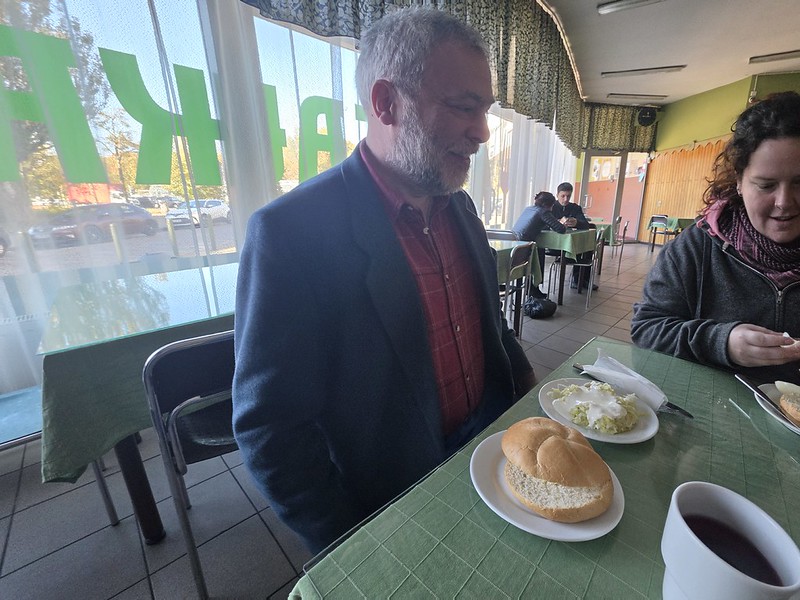
    About ten minutes later, Richard arrived with his food which appeared to be some leek with cream served alongside a roll. I’m not entirely sure if this is a traditional Polish meal, but Richard maintained that he liked it.

    Anyway, I was sold on this place, which felt authentic and was actually used by locals rather than just tourists. The service was friendly, the ordering process was easy, the venue was clean, the food was served quickly and it tasted delicious. All very lovely.

  • Warsaw – PINTA Nowogrodzka

    Warsaw – PINTA Nowogrodzka

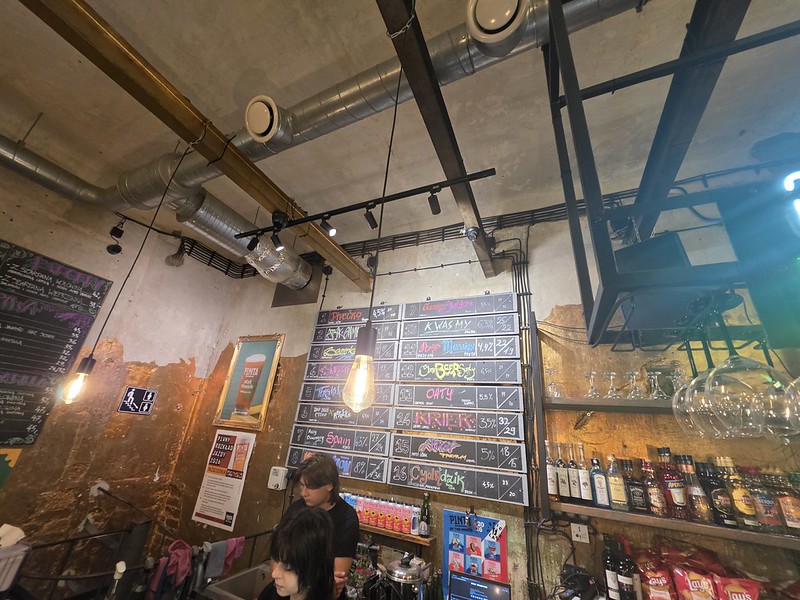
    When selecting some suitable bars to visit, as selecting suitable bars is one of the few areas of my life where I’m prepared to undertake advance planning, I noticed that PINTA had a new outlet on ul. Nowogrodzka in the city centre. I didn’t realise at the time, but they had opened the former Drugie Dno bar on 14 June 2025 as their second venue in Warsaw. The beer list was suitably interesting with a decent range of beer styles.

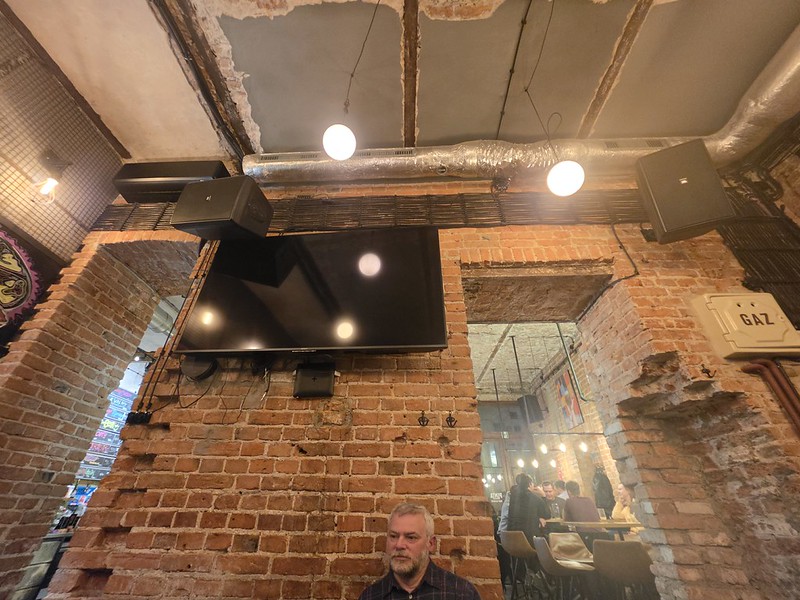
    It’s a handy thing for craft beer bars that they can look rustic with raw brick and undecorated ceilings and that still fits in with their branding.

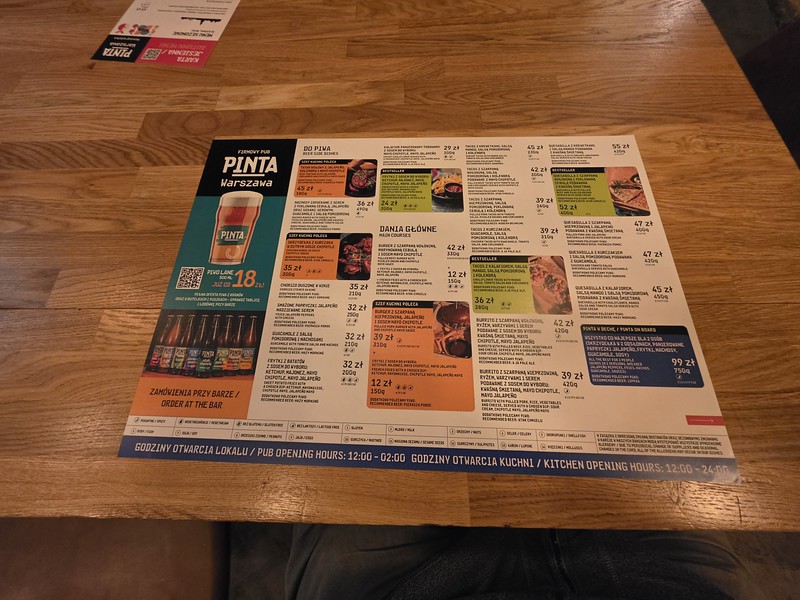
    The food options were agreeable to me and I conducted my usual thorough assessment of whether I could order chicken with some form of potato.

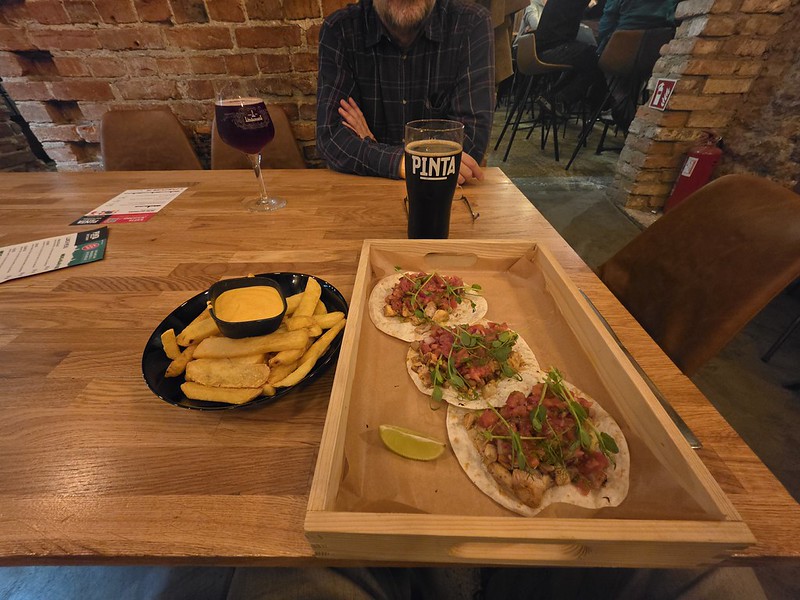
    When writing this, I realised that I had forgotten to upload the beer onto Untappd, which was a highly sub-optimal error and Roy would be appalled. I ordered chicken tacos with a side of fries, which were all rather agreeable. Collecting them involved a little meander around the venue before I discovered that the kitchen was two metres from where I’d been sitting

    The beer, which I’ve now added to Untappd, was the Oaty from Trzech Kumpli, a roasted and dry little number. That’s all I can remember, so that’ll have to do as my tasting notes become considerably more concise when written several weeks after the tasting.

    I liked the latest reincarnation of this bar and note that they still have the slightly challenging spiral staircase with limited headroom to get to the toilets. But the prices were reasonable, the team members were friendly and I enjoyed the food and drink. So all rather lovely.

  • Warsaw – Warsaw Beer Festival Autumn 2026 (COYPU)

    Warsaw – Warsaw Beer Festival Autumn 2026 (COYPU)

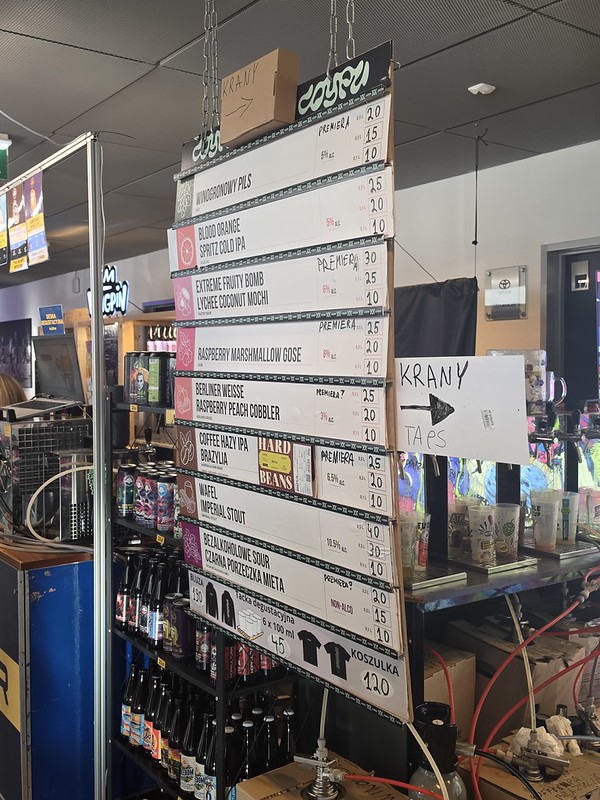
    Another brewery that was new to me at Warsaw Beer Festival was COYPU, a Polish contract brewery with a taste for experimentation, ranging from hazy IPAs and New Zealand pilsners to fruit sours and substantial imperial stouts. Its debut beer, Nonsense, was a double IPA brewed with Nelson Sauvin and Motueka hops alongside Phantasm, a grape-derived ingredient used to intensify fruity aromas. The same ingredient also appeared in Båe, its New Zealand pilsner, while other creations have included a lychee sour and a coffee and salt double black IPA. They sound like my kind of brewery.

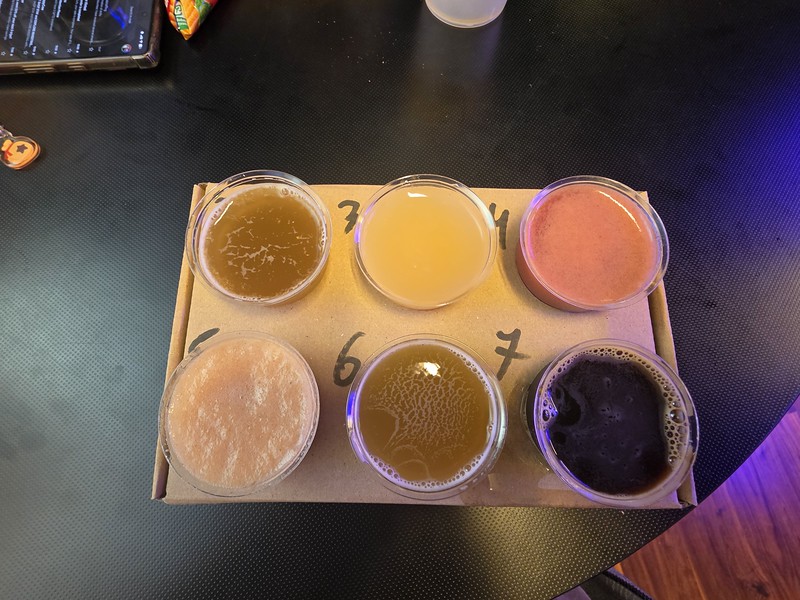
    I was pleased with this colour palette, my first impressions were very positive given the vibrancy. So, from top left to top right and then from bottom left to bottom right.

    (i) Blood Orange Spritz Cold IPA – fruity, bitter, slightly sweet, flavours of apricot and orange. I rated this 4.3 on Untappd.

    (ii) Extreme Fruity Bomb Lychee Coconut Mochi – coconut, stonefruit and punchy, I rather liked this and it was pushing towards being decadent. I’m becoming increasingly comfortable with beers that require more explanation than the lunch menu. 4.4 on Untappd.

    (iii) Gose Raspberry Marshmallow – sweet, flavour of raspberry, fruity and with a decent mouthfeel. I rated this 4.5 on Untappd.

    (iv) Berliner Weisse Raspberry Peach Cobbler – quirky. Flavours of peach, it was sweet, lumpy and pleasant. I appreciate that ‘lumpy’ rarely appears in a beer recommendation, but I’m prepared to defend it here. I rated this 4.2 on Untappd.

    (v) Coffee Hazy IPA – I very much like this beer style and this was a good version of it with a rich coffee flavour and it was smooth and slightly decadent. I rated this 4.4 on Untappd.

    (vi) Wafelek Czekoladowy – rich, milky, fluffy, flavour of chocolate and once again decadent. By this stage, ‘decadent’ was doing quite a lot of work in my Untappd tasting notes, but I saw little reason to disturb it when the beers were this good. I rated this 4.5 on Untappd.

    Two beers that shared my highest score, but I think it was this final one that I most remember from the brewery. These beers really did surprise and delight me, all towards the higher end of my scoring and they were all delicious and well rounded. I will certainly be looking out for this brewery in the future, as if I don’t already have enough Polish breweries that I’m looking out for.

  • Warsaw – Warsaw Beer Festival Autumn 2026 (Hopkultura)

    Warsaw – Warsaw Beer Festival Autumn 2026 (Hopkultura)

    Hopkultura was another of the breweries at Warsaw Beer Festival which offered taster trays and if I recall correctly, as I get muddled up, Richard and I were tempted by this one following Roy’s recommendations. Hopkultura is a Polish craft brewing operation based near Gdów in the Małopolska region and it’s the first time that I’ve tried any of their beers.

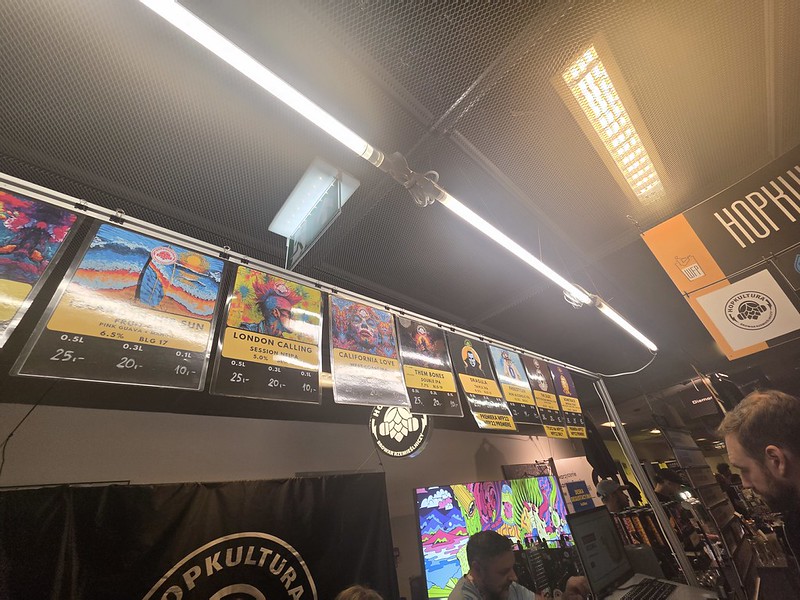
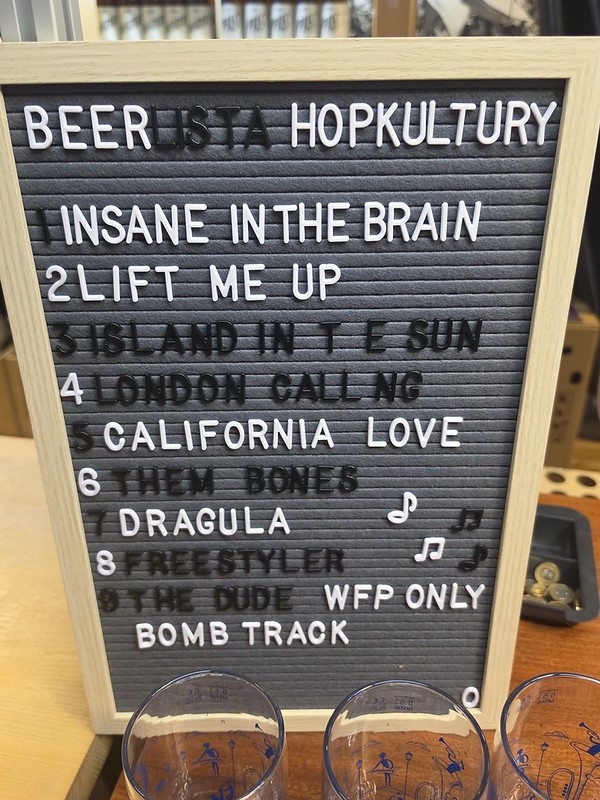
    The beer list which covered a range of different styles and music provides a recurring theme for the brewery.

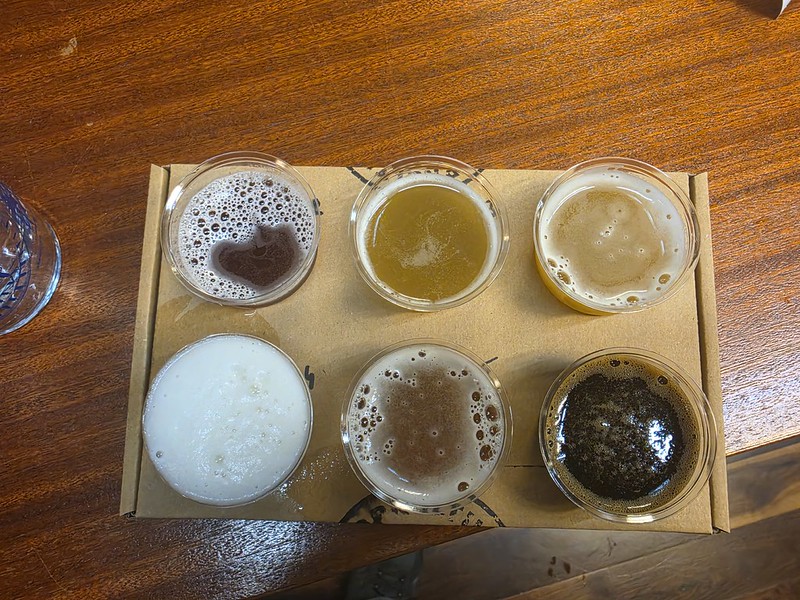
    And the six beers. From top left to top right and then from bottom left to bottom right, the beers are:

    (i) Lift Me Up (fruited gose) – acidic, fruity and slightly dry. 3.8 for me on Untappd.

    (ii) Island in the Sun (fruit beer) – fruity, slightly tart, apricot. 3.9 for me on Untappd.

    (iii) Them Bones (DIPA) – dank, resinous, fruity and a bit of branch. 3.9 for me on Untappd.

    (iv) London Calling (IPA) – hazy, hoppy, fluffy and agreeable. 3.7 on Untappd.

    (v) California Love (IPA) – piney, bitter, resinous, bit heavy on the aftertaste. 3.8 for me on Untappd.

    (vi) Bombtrack (stout) – rich with coffee, dark chocolate, slightly boozy, smooth and a bit decadent. 4.5 for me on Untappd.

    The stout was definitely the standout beer for me here and I also got to try the Dragula TIPA which was punchy, hazy, rich and had a taste of stonefruit. Definitely a brewery that I’ll be trying again and Roy’s recommendation had therefore survived independent scrutiny, which will be reassuring for him.

  • Warsaw – Warsaw Beer Festival Autumn 2026 (Funky Fluid)

    Warsaw – Warsaw Beer Festival Autumn 2026 (Funky Fluid)

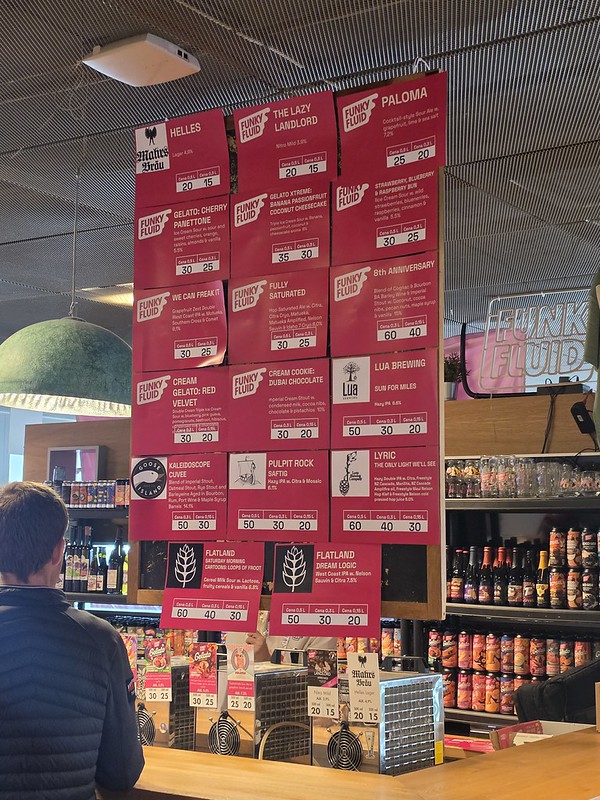
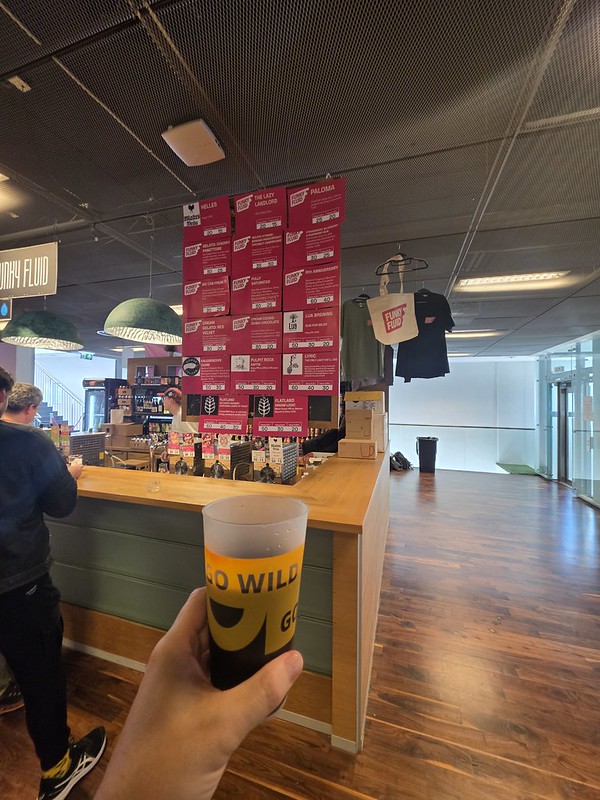
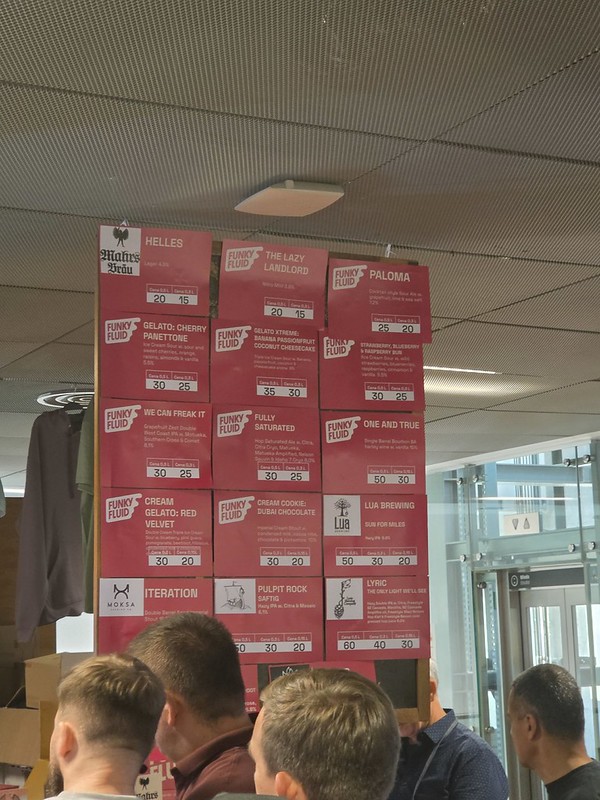
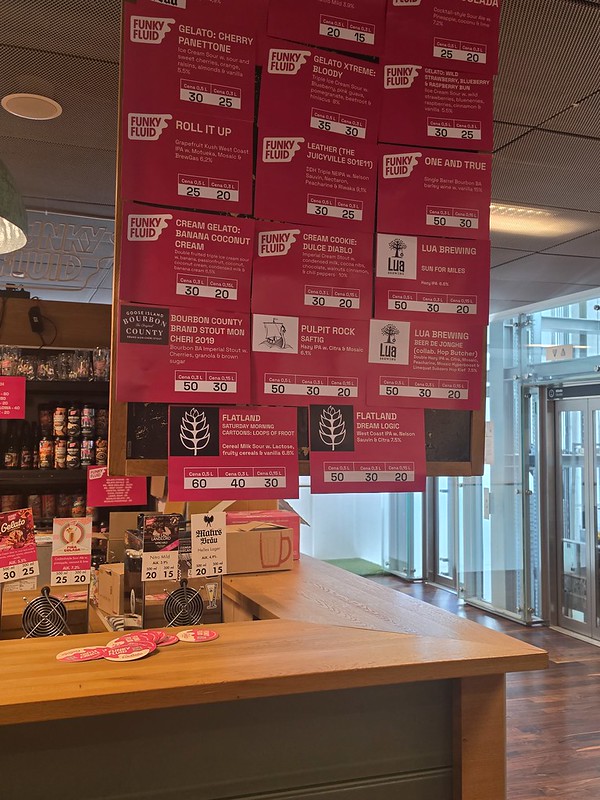
    It is my firm belief that Funky Fluid is the best brewery in Europe, a view that I’ve had for some time but that was also reinforced when I visited Warsaw Beer Festival earlier in the year. This was the selection on the first day of the autumn Warsaw Beer Festival and it’s fair to say that I was surprised, delighted and indeed thrilled. Notice the inclusion of a Goose Island beer, a brewery who I consider to be the best brewery in the world.

    I won’t list every Funky Fluid beer that I tried at the festival as I’ll never finish catching up with this blog, but it would be wrong not to mention a few of them. This is the 8th Anniversary beer and let’s just say it absolutely deserves to be mentioned. A smooth mouthfeel, boozy, slight sweetness, dark chocolate, coconut and a lingering taste and flavour. Decadent, absolutely decadent. It’s 15% ABV, it’s rated 4.45 on Untappd and this is just about as good as beer gets in my eyes. Well, and mouth.

    The selection on the second day of the festival.

    The Gelato XTREME : Banana, Passionfruit and Coconut Cheesecake which is already a fantastic name for a beer. This was suitably sour with a bit of banana, a bit of mango, a bit of tree and lots of juiciness. Richard claimed that I was deliberately getting him in photos, but I thought he would like a permanent record.

    And the third day selection, note the reappearance of a Goose Island beer. I know that I didn’t have to keep coming to see Funky Fluid, but by this point, visiting the stand had become part of my routine and I dislike unnecessary disruption.

    I had to try it, the Bourbon County Brand Mon Cheri Stout, and it had a very rich taste, bourbon, a little sweetness, lingering flavour, liquorice, cherry, marshmallow and chocolate, all very decadent. Note Richard in the photo again. I also slightly regret not getting a more transparent glass as the beers aren’t always entirely visible here, but there we go as, fortunately, I was able to establish that there was beer in it by other means.

  • Warsaw – POLIN Museum (Rola Newspaper and the Promotion of Antisemitism)

    Warsaw – POLIN Museum (Rola Newspaper and the Promotion of Antisemitism)

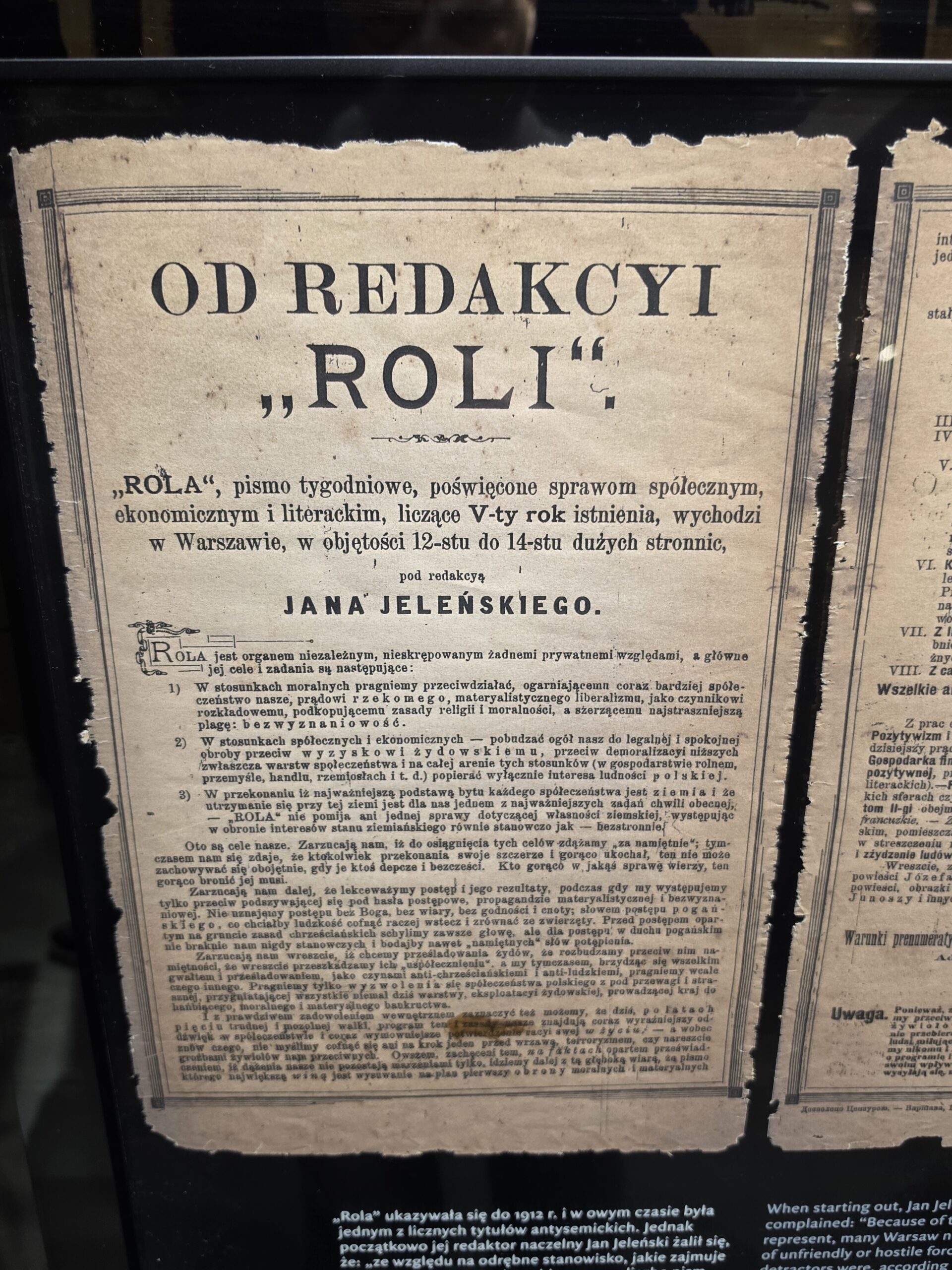
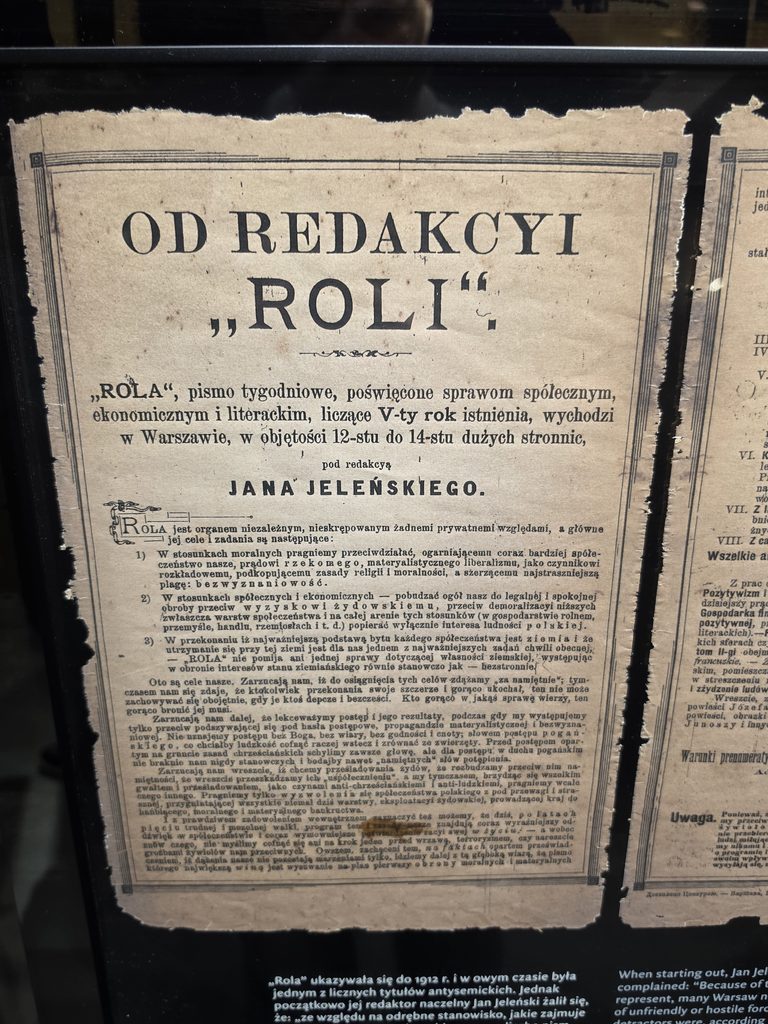
    These two pages on display at Warsaw’s POLIN Museum set out the aims of Rola, a weekly publication first published in 1883 and edited by Jan Jeleński. Its introduction sounds conventional enough, describing a periodical covering society, economics and literature. Reading further, however, reveals an explicitly antisemitic programme, presented alongside fiction, agricultural advice and commercial information. The following extracts are translated from the Polish, retaining the publication’s prejudiced language.

    “Rola”, a weekly periodical devoted to social, economic and literary matters, now in its fifth year, is published in Warsaw, comprising twelve to fourteen large pages, under the editorship of Jan Jeleński.

    Rola is an independent organ, unconstrained by any private considerations, and its principal aims and tasks are as follows.

    1. In moral matters, we seek to counteract the increasingly pervasive current of supposedly materialistic liberalism in our society, as a disintegrating force undermining the principles of religion and morality and spreading the most terrible plague — religious unbelief.
    2. In social and economic matters, to encourage our society towards lawful and peaceful defence against Jewish exploitation, against the demoralisation of especially the lower strata of society, and throughout these relations — in agriculture, industry, trade, crafts and so on — to support exclusively the interests of the Polish population.
    3. In the conviction that land is the most important foundation of every society’s existence, and that retaining possession of that land is one of our most important tasks at the present moment, “Rola” neglects no matter concerning landed property, defending the interests of the landowning estate as firmly as it does impartially.

    It’s not hard to see here the equivalents used in politics today and also the persistent undercurrent of hatred that was directed at the Jewish community. The editors presented their campaign as a response to a supposed threat, inviting readers to understand discrimination as protection of their own community. The distinction between Jewish interests and those of the “Polish population” also placed Jewish residents outside the national community as the publication defined it. A later passage, translated approximately, develops the same argument.

    Finally, we are accused of wishing to persecute Jews, of inciting hatred against them, and ultimately of obstructing their “social integration”; yet, abhorring above all violence and persecution as anti-Christian and anti-humanitarian acts, we desire nothing other than the liberation of Polish society from the crushing predominance and terrible exploitation which enslaves almost all its classes and leads to shameful moral and material bankruptcy.

    Having denied promoting hatred or persecution, the editors immediately repeated sweeping accusations against Jews as a group. They described their own position as Christian and humanitarian while depicting Jewish economic activity as a source of national degradation. Still today there are politicians who talk about their Christianity whilst espousing views that don’t appear very Christian to me.

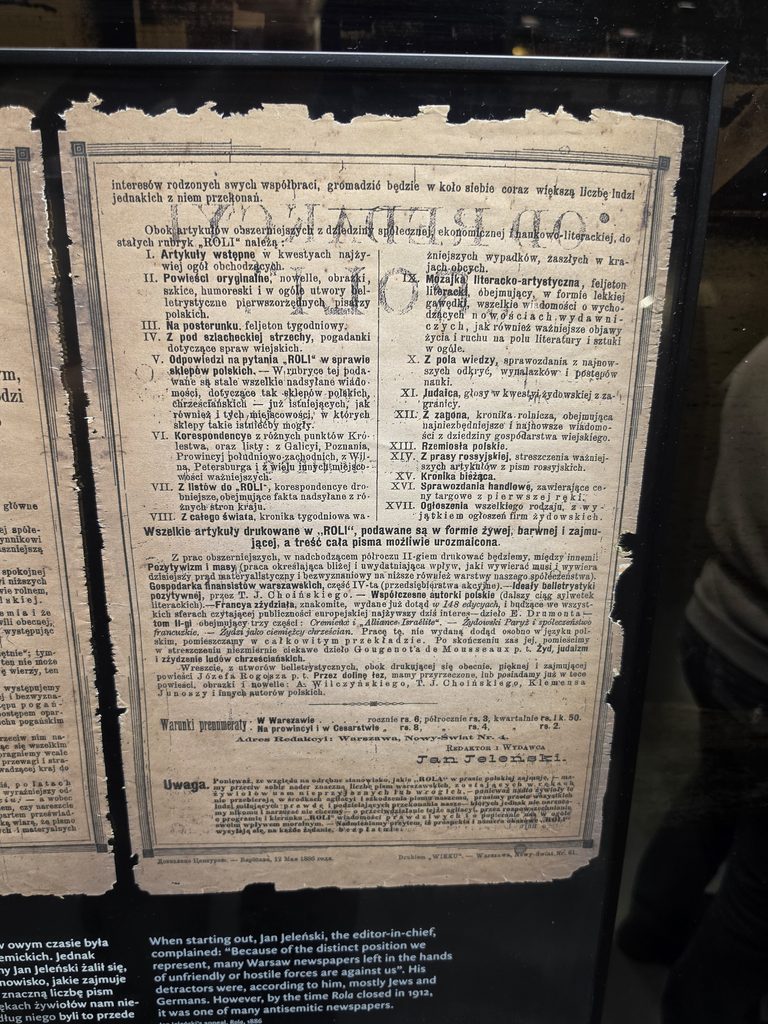
    The publication’s programme also extended beyond arguments on the printed page into decisions about where readers should spend their money. Among its regular features were leading articles, fiction, a weekly column called “On Guard”, rural affairs, correspondence, foreign news, literature, art, scientific developments and commercial reports. Alongside these came a section encouraging the development of specifically Christian businesses, while the advertising policy excluded Jewish firms altogether.

    V. Answers to questions addressed to “Rola” concerning Polish shops. This section regularly publishes all information received concerning both existing Polish, Christian shops and places where such shops might be established.

    XVII. Advertisements of every kind, with the exception of advertisements from Jewish firms.

    It also advertised forthcoming publication of antisemitic works, including Édouard Drumont’s La France juive, or “Jewish France”, and a work by Gougenot des Mousseaux.

    Subscription terms
    In Warsaw — six roubles annually, three roubles for six months, one rouble fifty kopecks quarterly.
    In the provinces and the Empire — eight roubles annually, four roubles for six months, two roubles quarterly.
    Editorial address — Warsaw, Nowy Świat No. 4.
    Editor and publisher — Jan Jeleński.

    POLIN places the document within the subsequent growth of the antisemitic press, explaining how Jeleński initially presented himself as facing hostile opposition.

    When starting out, Jan Jeleński, the editor-in-chief, complained: “Because of the distinct position we represent, many Warsaw newspapers left in the hands of unfriendly or hostile forces are against us”. His detractors were, according to him, mostly Jews and Germans. However, by the time Rola closed in 1912, it was one of many antisemitic newspapers.

    These pages preserve the choices made by an editor who helped give that prejudice a regular place in his readers’ lives and the publication clearly had an audience as it lasted for 29 years, with its final issue published in 1912.

  • Warsaw – POLIN Museum (Jewish Rights in Medieval Warsaw)

    Warsaw – POLIN Museum (Jewish Rights in Medieval Warsaw)

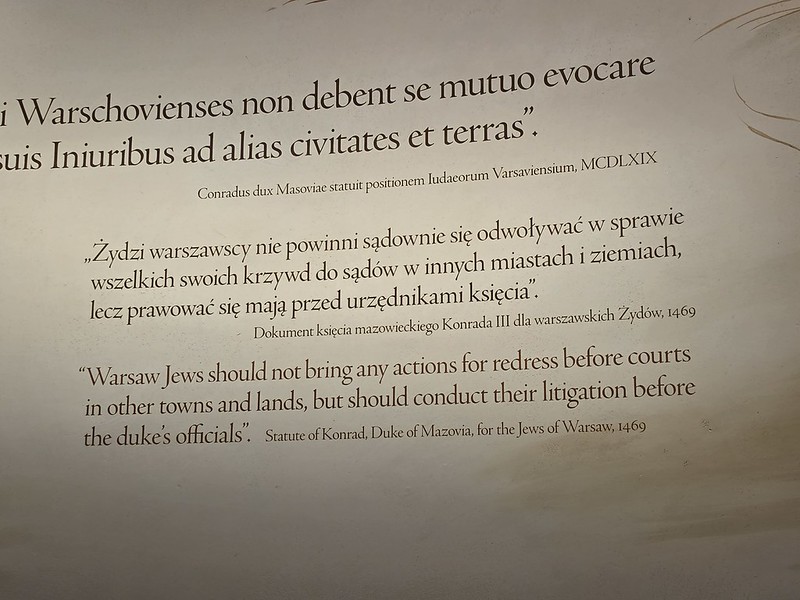
    “Warsaw Jews should not bring any actions for redress before courts in other towns and lands, but should conduct their litigation before the duke’s officials.”

    I photographed this quotation at Warsaw’s POLIN Museum, where it is attributed to a 1469 statute of Konrad III, Duke of Mazovia. In practical terms, it forced Warsaw’s Jews to seek justice through the duke’s officials rather than taking their grievances to courts in other towns and territories. This did not deny the Jewish community access to justice altogether, and ducal jurisdiction could offer protection against hostile local authorities. However, the wider provisions restricted Jewish communal rights, reinforcing the duke’s control over how the community managed its affairs. It is perhaps best understood as a restriction on Jewish rights within a system where protection depended heavily on the ruler, rather than on equal rights shared by all inhabitants.

    The quotation belongs to a history in which coexistence and exclusion existed alongside one another in the city. Jewish and Christian residents of fifteenth-century Warsaw traded, conducted business and appeared in court together, but economic rivalry and religious hostility increasingly strained those relationships. In 1527, a royal privilege prohibited Jewish residence in Old and New Warsaw and their suburbs, formally excluding a community that had already been part of the town’s life for generations.

    Jews were still permitted into Warsaw while the Sejm (the Polish parliament) was in session, and some secured temporary stays by other means, such as a ticket allowing a fortnight in the city. It meant that permanent residence wasn’t a right for the Jewish community and controls were tight. By the middle of the eighteenth century the community had built their own self-governing structures, although the authorities did not formally recognise a Jewish community in Warsaw before the Prussian takeover and recognised the one in Praga only in 1775 and in the main part of the city on the west bank after 1795. The situation remained strained to say the least. There were partial expulsions accompanied by street attacks in 1775 and 1790, and in 1792 the town’s burghers had Jews driven out as the Sejm went into recess.

    It’s a reminder that anti-Jewish prejudice had a long history before the twentieth century. That history was neither uniform nor an inevitable progression towards the Holocaust which ultimately nearly entirely destroyed the Jewish community in Warsaw, but it repeatedly meant that Jewish residents had to negotiate rights and protections that their neighbours could more routinely take for granted.

  • Warsaw – POLIN Museum (Three Men on Krakowskie Przedmieście)

    Warsaw – POLIN Museum (Three Men on Krakowskie Przedmieście)

    As we were in Warsaw on a Thursday, it seemed a sensible time to take Roy, Jen and Richard to some museums as it was free admission day. One of those was the POLIN Museum which I’ve visited numerous times before, which is the museum of the history of Polish Jews.

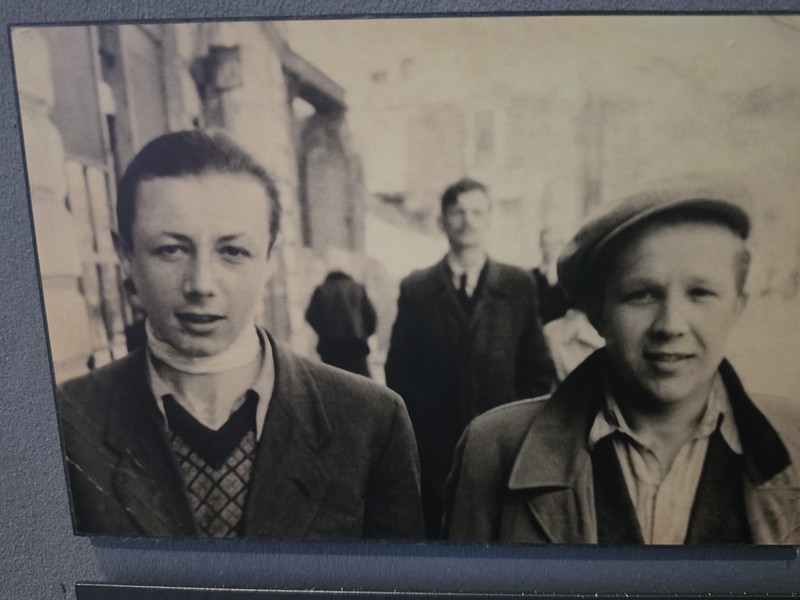
    At first glance, this photograph at Warsaw’s POLIN Museum looks like a fairly ordinary street scene, with two young men close to the camera and another walking behind them. It was taken on Krakowskie Przedmieście in May 1943, however, placing it during the destruction of the Warsaw ghetto. On the left is the Jewish resistance fighter Simcha Rotem, known as “Kazik”, with the Polish Stefan Sawicki, also known as Siewierski, on the right. Behind them is Yitzhak Zuckerman, known as “Antek”, another important figure in the Jewish underground.

    Anyway, this all interests me as Rotem has a fascinating talk which is available on Youtube.

    In the video he talks of being in Warsaw when the Germans entered the city and he mentioned that for a while there was some sort of normality. Then the attacks on the Jews came with considerable force, but he says that some of the community thought that it would pass, as they remembered the respectful way that the German forces treated Jews in the First World War. He talks about how the ghetto was about breaking their spirit and their will of resistance.

    He then talks about the bravery shown all around the ghetto in smuggling in food, in maintaining education, securing weaponry and trying to hold things together. Then in July 1942 the Germans promised three kilograms of bread and one kilogram of marmalade for anyone who met at what transpired to be a deportation point. Enough people believed them to make the transportation easy for the occupiers and Rotem talks about how it became known in the ghetto about what was happening at Treblinka concentration camp which is where the transportation was going. He said that despite this, there was still a feeling amongst some that surely the Germans wouldn’t kill everyone. There was then a debate about a revolt, even though this would likely mean the death of everyone in the ghetto due to reprisals. It was a moral quandary, but they felt that they had to revolt and this began on 19 April 1943.

    I won’t recount all of Rotem’s story about how he bravely fought in the uprising, but in short, as German forces burnt the ghetto, Rotem helped organise an escape for surviving fighters. He reached the city outside the walls and made contact with Zuckerman, before returning through the sewers in an effort to find people still alive. On 10 May, several dozen fighters emerged through a manhole on Ulica Prosta and were taken by lorry towards Łomianki, outside Warsaw. Incredible bravery and a story that I wouldn’t have known without the POLIN museum photo.

    Rotem was one of the last two surviving fighters of the Warsaw Ghetto Uprising and he died in 2018 at the age of 94.

  • Warsaw – Eter Vegan Bakery

    Warsaw – Eter Vegan Bakery

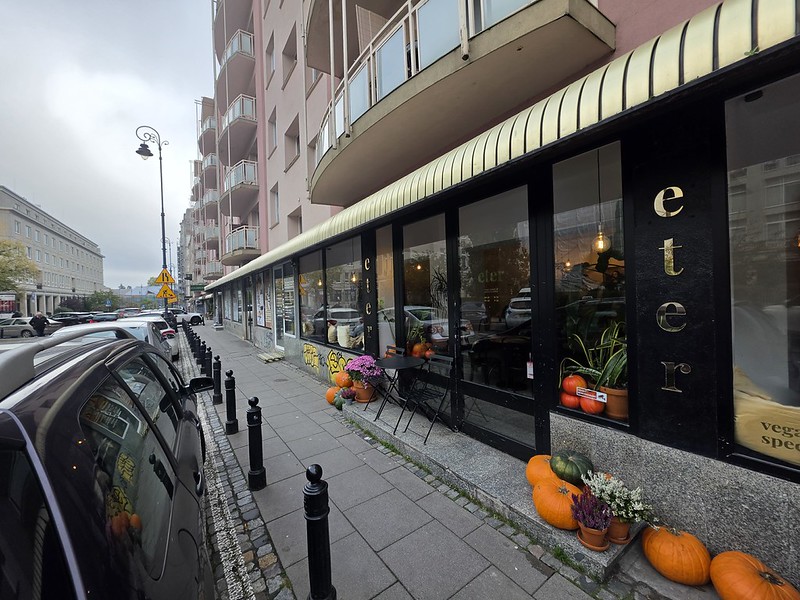
    With all four of us safely in Warsaw, one of the options that Jen mentioned that she would like was a vegan cafe. We willingly decided to go along to Eter Vegan with only minor concerns raised about the arrangement.

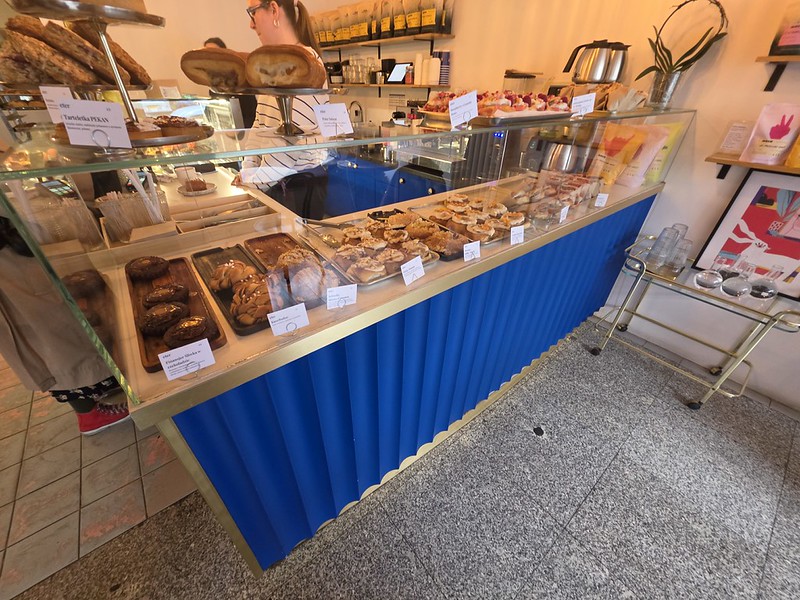
    There’s a visible bakery area at the rear of the shop where customers can see the baked items being prepared and presentation is evidently important to the cafe as the whole arrangement looked tempting.

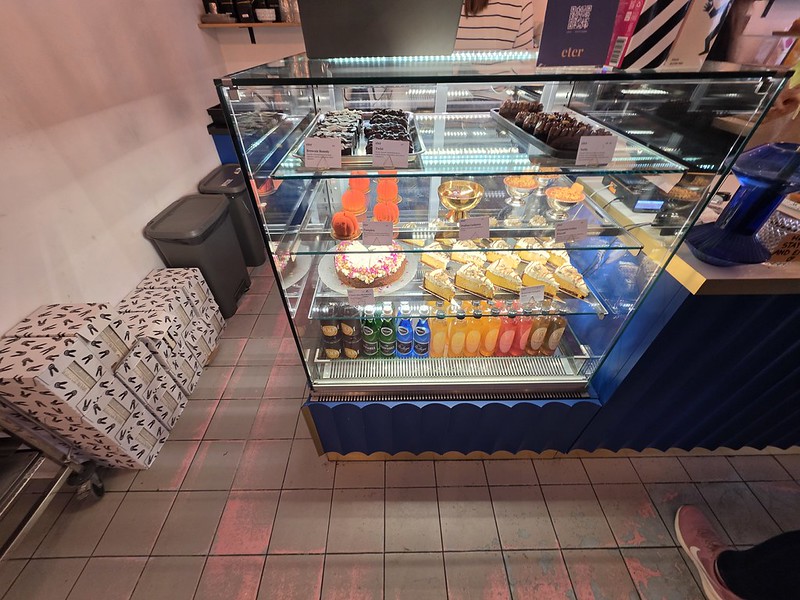
    There was a wider selection than I was anticipating and everything was clearly labelled. I had arrived with an open mind, which became considerably more focused once I saw the almond buns.

    The interior was perhaps a little rustic and looked like I had cobbled it together, but it was cosy enough although I would have preferred some more actual tables at an appropriate height. There was a friendly welcome from the team members who were helpful and knowledgeable when I heard them being asked questions.

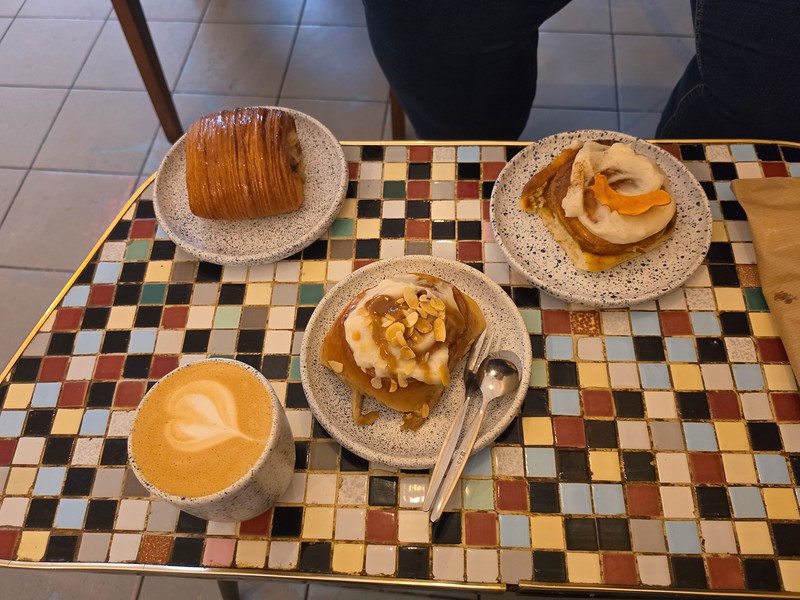
    I ordered a coffee and pastry and they were well presented and looked suitably tempting. The range of milks was limited to two, which I felt was a little sparse. I raised this with nobody, which is how I prefer to conduct my complaints. I’m an advocate of coconut milk, but the selection didn’t include anything that decadent although the coffee was rich and smooth. My food was an almond bun with flaked almonds and a caramel sauce on top. In all honesty, I wouldn’t have known that the pastry was vegan, it had a depth of flavour, a firm texture and a pleasant taste.

    I actually quite liked it here and Richard and Jen enjoyed it so much that they went back the next day, although that visit had some payment problems when the venue’s card machine broke. The price of the food and drink was firmly towards the higher end of the scale, but I’d note that the quality was high and there was a feeling of social purpose here. Sometimes smaller venues need to charge more to maintain the quality and standards, so I agreed with Jen that it was all really rather lovely and she made a good recommendation.