Just photos in this post, these are views of the city taken from the top of the tower at the Palazzo Vecchio.
Author: admin
-

Florence – Palazzo Vecchio (Hall of Geographical Maps – Cornwall)
This is a photo of the sixteenth century UK map of Cornwall in the Hall of Geographical Maps.
Not the clearest of photos, my camera zoom struggled a little when taking these images. Anyway, there are some geographical errors in the coastline of Cornwall, but it’s near enough there. Tintagel and Padstow are visible on the northern tip of the county, up to Bideford a little further north. Okehampton and Launceston are in the centre of the map, with St. Germans on the southern coast. Further to the west, there’s Bodmin and St. Columb, with Truro below them. I can’t make out some of the other locations, primarily as the photograph quality isn’t perfect, but again, it’s an interesting overview of what an Italian thought was here many centuries ago.
-

Dictionary of the Vulgar Tongue – Day Five
The Dictionary of the Vulgar Tongue was first published at the end of the eighteenth century, and given that the Coronavirus crisis is giving too much time to read books, I thought I’d pick a daily word from it until I got bored…..
Ark Ruffians
The dictionary defines this as “rogues who, in conjunction with watermen, robbed, and sometimes murdered, on the water, by picking a quarrel with the passengers in a boat, boarding it, plundering, stripping, and throwing them overboard.”
I’m unsure whether the author simply made this up, as there is no mention of this in any UK or US newspaper that I can find. Nearly every Internet search of the term just brings up the dictionary itself, so if this was a phrase then it wasn’t very widespread. It would be interesting though if this practice did take place, something akin to highwaymen on the rivers.
-

Florence – Palazzo Vecchio (Hall of Geographical Maps – UK)
This is a photo of the sixteenth century UK map in the Hall of Geographical Maps.
Following on from my last post about Norfolk, this is why it’s hard to work out exactly what is going on, as the mapping isn’t what I would call perfect. Understandable though since I struggle to map anything without Google Maps.
-

Florence – Palazzo Vecchio (Hall of Geographical Maps – Norfolk)
This is a photo from the sixteenth century UK map in the Hall of Geographical Maps.
It’s interesting to see the names that the Italians at the time thought were the main places in Norfolk, we have Lyn (King’s Lynn), Cromer (I assume that’s Cromer, even though it’s in the wrong place) and Brandonferi (which I’m assuming is Brandon). Ah, since writing this, I’ve realised that the old name for Brandon is Brandon Ferry, so that’s what that is….
I don’t know what Pienan is, maybe Dereham, but there’s no Norwich on the map. There is a Norduico to the right-hand side and that appears a few times in medieval texts, but it doesn’t seem to be Norwich.
-

Florence – Palazzo Vecchio (Hall of Geographical Maps – Poland 1)
This is a photo from the sixteenth century Polish map in the Hall of Geographical Maps.
I was struggling to place this part of the map, until I saw Thorn, which is the old Germanic name for one of my favourite cities which is Torun. Then like a puzzle, things started to fit together, there’s Bromberg to the left of that, which is now the wonderful city of Bydgoszcz. Then to the north of Torun is Graudenz, which is the glorious city of Grudziądz.
The rest is quite hard to place even with modern maps, Rosenburg is Susz, which is somewhere that I haven’t been. I don’t know where Deutschenland is, and I think that’s a place name and not a region, perhaps it’s what is now Iława and was once Deutsch Eylau. Chojnice is the new name for what on the map is for what the Germans call Konitz, or the Pomeranians called Chònice. Which is confusing as there’s a Conitz on the map, just to the north of Bydgoszcz.
Anyway, of limited interest I know, but for anyone who knows the layout of modern-day Poland, it’s an interesting historic map, although the river placements don’t seem entirely accurate.
-

Florence – Palazzo Vecchio (Hall of Geographical Maps)
This was my favourite room in the Palazzo Vecchio, it’s the Hall of Geographic Maps, which is located on the second floor of the building.
Work on the room started in 1563 in what was previously a courtyard, with the external arches of the windows which once faced outwards still being visible at the rear.
The globe was designed for the room and there were originally meant to be two, with the other being hung from the ceiling and which would have been a celestial globe. Unfortunately, this globe is no longer in particularly good condition due to a decision made long ago to place it in an exposed position at the Uffizi.
The aim of the room’s design was to show everything that was known in the universe at that time and there were also meant to be 300 paintings of individuals around the top of the room. 200 of these were painted, but they’re now at the nearby Uffizi. There was also a planetary clock designed by Lorenzo della Volpaia located in the room and although this was destroyed during the seventeenth century, there’s a copy at the Galileo Museum.
There’s a marvellous artist’s recreation of how the room was designed to look at https://wtfarthistory.com/post/57615356623/sala-del-mappamondo-florence.
These are the maps on the wall, much more on these in later posts….. There were 57 of them, all hand-painted, with 53 of them surviving today. Behind the frontage there was cabinet space and they would have included items from the geographical location that was painted on the front.
-

Dictionary of the Vulgar Tongue – Day Four
The Dictionary of the Vulgar Tongue was first published at the end of the eighteenth century, and given that the Coronavirus crisis is giving too much time to read books, I thought I’d pick a daily word from it until I got bored…..
Apple-Pye Bed
This is of course an expression still in use today, the practice of doubling up sheets so that someone can’t get into bed. The dictionary notes that “it’s a common trick played by frolicsome country lasses on their sweethearts, male relations or visitors”.
I was also intrigued at the spelling of the word pye, I thought that had gone out of use earlier than it had, it was still persisting in the nineteenth century given the above graph. For those fascinated by the evolution of language, there are two distinct possibilities of how this term came about. Some thing that it’s from an apple pie turnover, where the pastry is folded over. Others say it’s from the French nappe pliee, which is a folded sheet.
-

London – Ibis Budget London City Airport
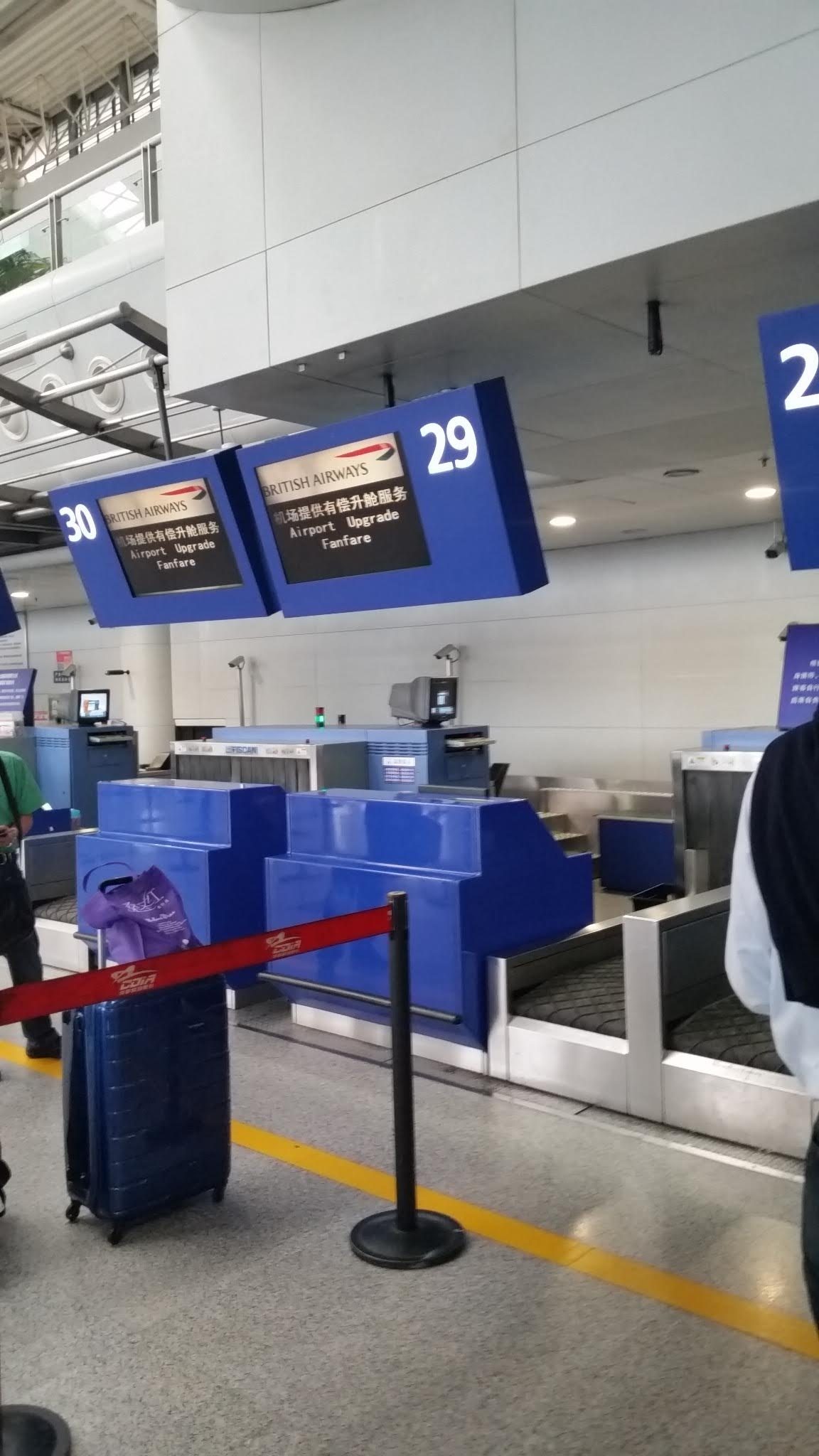
I stayed at this hotel near to London City airport following my flight back with British Airways from Florence. For a time it looked like my flight would be cancelled, or at best, it would have arrived too late to land at London City and so would have been diverted to Southend Airport. I sent the hotel an e-mail asking if I could check-in late and they responded quickly saying that they’d do the check-in there and then on-line, so I could just pick up my keycard which they had put under the desk for the night porter. All very professional.
I got there in good time in the end, thanks to British Airways, and the receptionist was the friendly and helpful staff member who had sent the e-mail to me. This is a relatively cheap hotel, but the welcome seemed authentic and I was pleased with the bargain price of £33 including breakfast. It’s only an eleven-minute walk from London City Airport, so convenient for these late arriving flights.
The room was clean and to brand standard, perfectly sufficient for a one-night stay.
I went down to breakfast and I was the only one there, so at least it was peaceful. There were cereals, pastries, yoghurts and a selection of meats. This was sufficient before my train journey back to Norwich, with the orange juice and coffee being helpful as well, particularly the coffee for that little energy burst. When I checked-out at around 09:00 the breakfast area had around thirty people in, so it was either a coach party or perhaps a flight load of passengers who were on one of the cancelled flights from the previous day from London City airport. I imagine that the breakfast experience for them wasn’t quite as relaxed as mine was.
Anyway, I thought I’d have a little look at TripAdvisor to see what people thought about this 81-room hotel and the reviews are quite reasonable. I mentioned above that I walked this in eleven minutes, but some reviews complained it was a long walk, people managed to take 15, 20 and 35 minutes. I don’t know what the one taking 35 minutes was doing.
One person didn’t like their toilet and must have been told to use the one on the ground floor, which isn’t ideal, although certainly isn’t illegal. I don’t like the comparison with easyHotel, which is one of the few hotel chains that I hold in entire contempt. Which might be unfair since I’ve never stayed with them….
“Im sure prisoner’s get better service better breakfast. Rooms more then basic think easyhotel – class customer service. First room toilet didnt work fully booked normaly by law a hotel would have to reacomerdate u somewhere else at there cost. Not here so no toilet facility apart from going down three floors in lift.”
Another guest was pleased:
“One member of staff in particular was aggressive and combative”.
I never manage to find aggressive staff in hotels (well, bar that one in Los Angeles a few years ago, which I must write about at some point), but it’d certainly liven the check-in experience up.
“In my 36 years alive on this earth, this hotel has to be in the top 3 worst stays ever, in fact i would have rather have slept in my car and woke up and jumped in the Thames had i known it was that bad.”
Hmmm, sounds like they didn’t find this their perfect stay….
Another guest complained that the place was “full of builders” and there are lots of problems with noise, which I can imagine must be a problem at weekends. Having lived near to this hotel a few years ago, the area isn’t the most salubrious, but I thought that the staff did well to manage everything. To be honest, I was just pleased to be able to get back to London before the curfew at City Airport and get to the hotel.
-

Chesterfield – Church of St Mary and All Saints (The Crooked Spire)
For reasons I haven’t yet worked out, the cover image on these blog pages is automatically cropped, but I’m dealing with that.
For this post, it kind of makes sense to have the whole photo, so here’s the church including its twisted spire. There’s a local poem about this church which is:
“Whichever way you turn your eye,
It always seems to be awry.
Pray can you tell the reason why?
The only reason known of weight,
Is that the thing was never straight”.
The church is also known as the Crooked Spire church, for reasons which are self-evident. The problem occurred when the spire was being built as there was a shortage of trained men due to the Black Death, and a mistake was made by using unseasoned wood and also too much lead. The spire twisted over the centuries, which isn’t entirely uncommon in churches from this period, and it was nearly taken down in the early nineteenth century. Wiser heads prevailed and the church is today one of the most infamous in the area because of its quirky spire.
There also can’t be many football teams who have their nickname derived from the local church, but Chesterfield FC do, they are often called the Spireites. They were offering tours of the church tower until relatively recently, but it has been decided that it is currently unsafe to do so.
I don’t like grave stones being reused in this manner, they’re losing their relevance like this and slowly being destroyed. This is inside the church’s porch.
Looking towards the altar of the thirteenth century medieval church, which was comprehensively restored (or mauled about, depending on your view of Victorian architects) by George Gilbert Scott in 1843.
Looking back towards the west end of the church which mostly dates to the period of Henry VII, they’ve built a shop area at the back (the shop is recent, that wasn’t a Tudor installation….).
The intricately carved pulpit dates back to 1620. A large fire in the church started near to this pulpit in 1961, but although this fine wooden structure survived, the church’s grand old Snetzler organ was destroyed.
The Foljambe family tombs in the Lady Chapel.
The stained glass in St. Catherine’s Chapel.