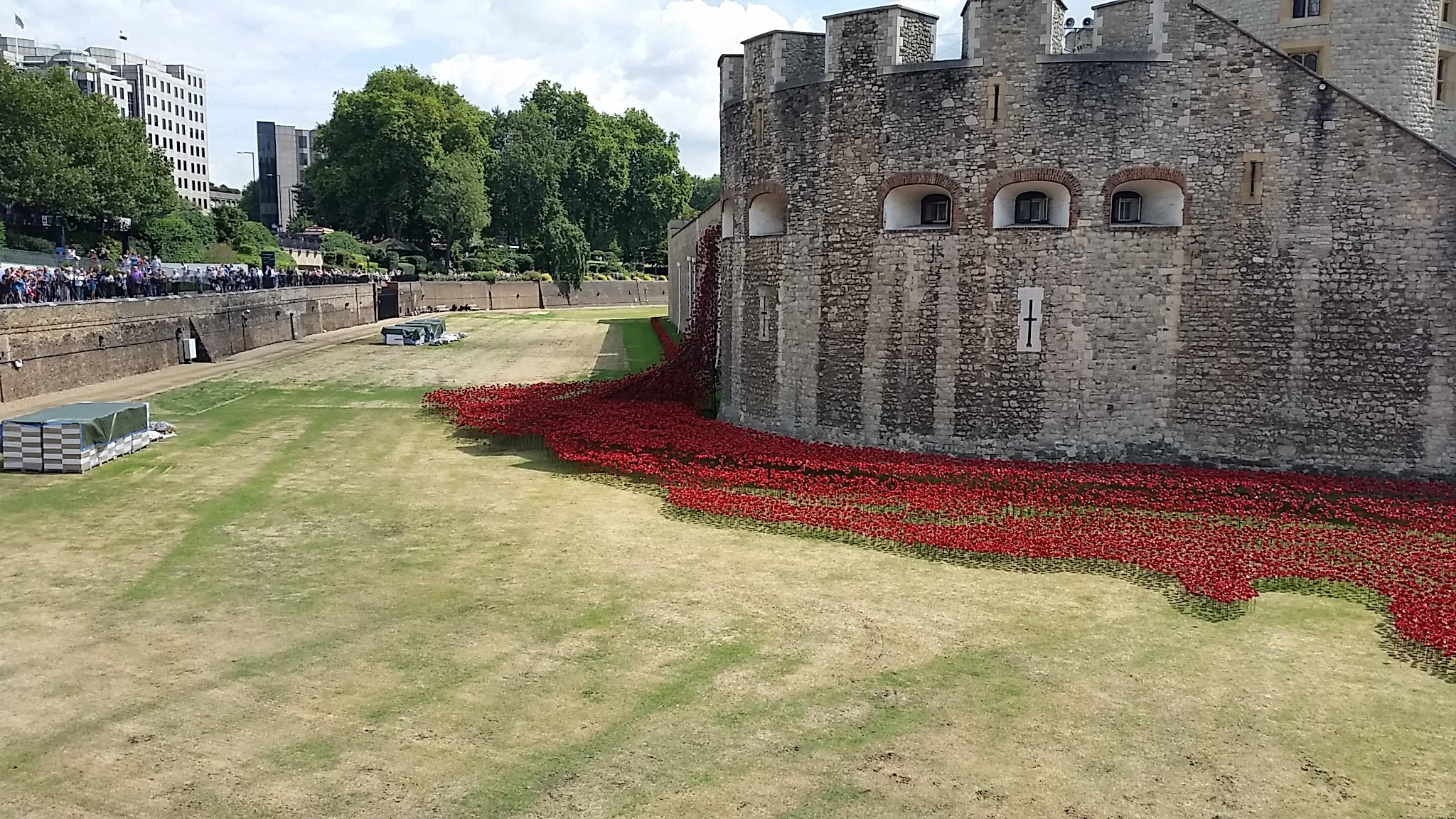
This is how the Tower of London’s moat looked when I visited back in August 2014, a sea of poppies to mark the centenary of the start of the First World War.
The installation was called ‘Blood Swept Lands and Seas of Red’ and it remained in place between July and November 2014. Paul Cummins was the artist and Tom Piper designed the concept behind it, which was a magnificent sight in the Tower’s moat.
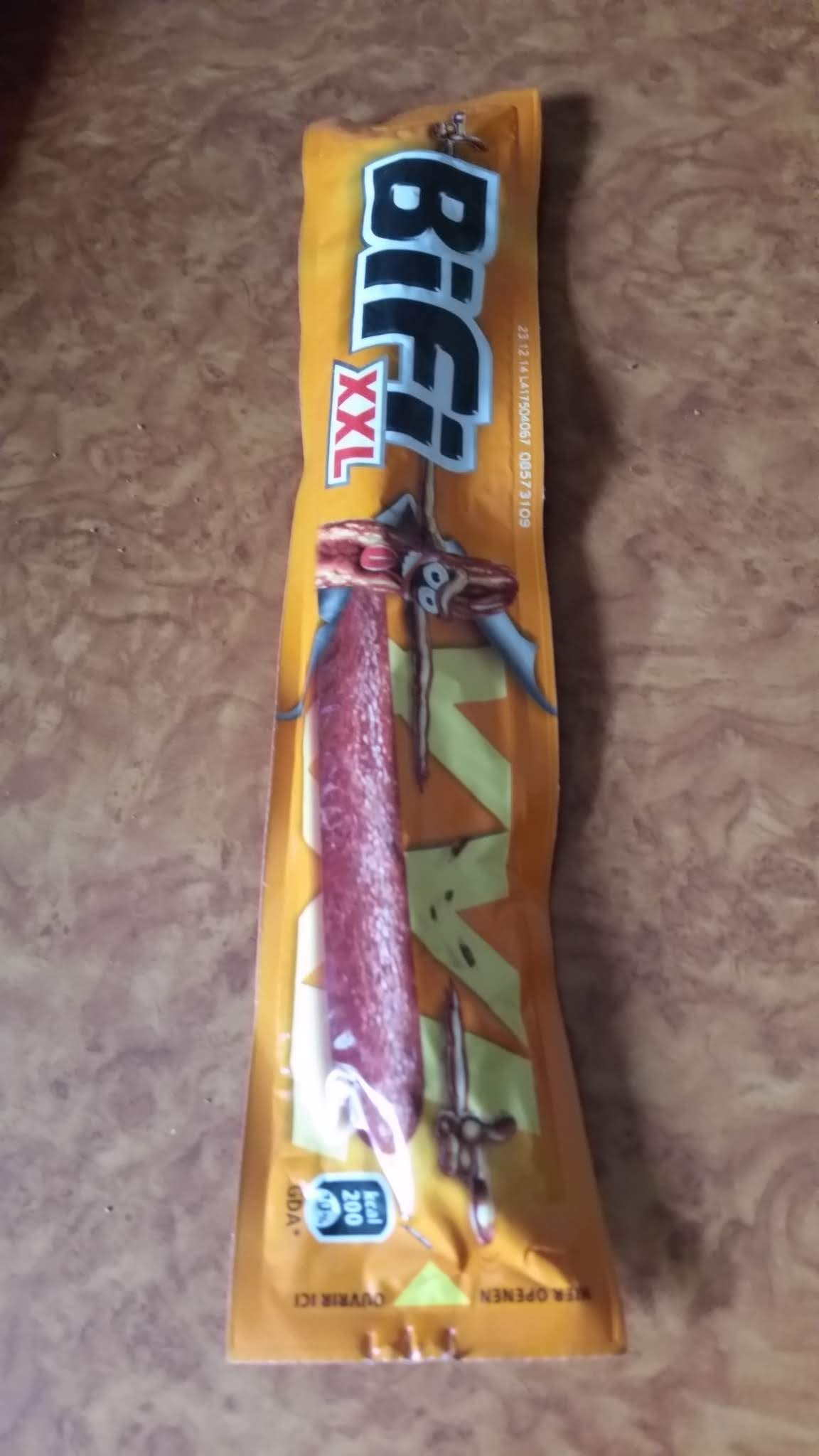
These snacks don’t have much to do with Luxembourg, other than this is where I first encountered them. They’re also sold in other northern European countries and particularly in Germany, where they’re made. They’re effectively just Peperamis (which are only sold in the United Kingdom and in Ireland to my knowledge), but nonetheless, they’re in a different branding and therefore exciting to me.
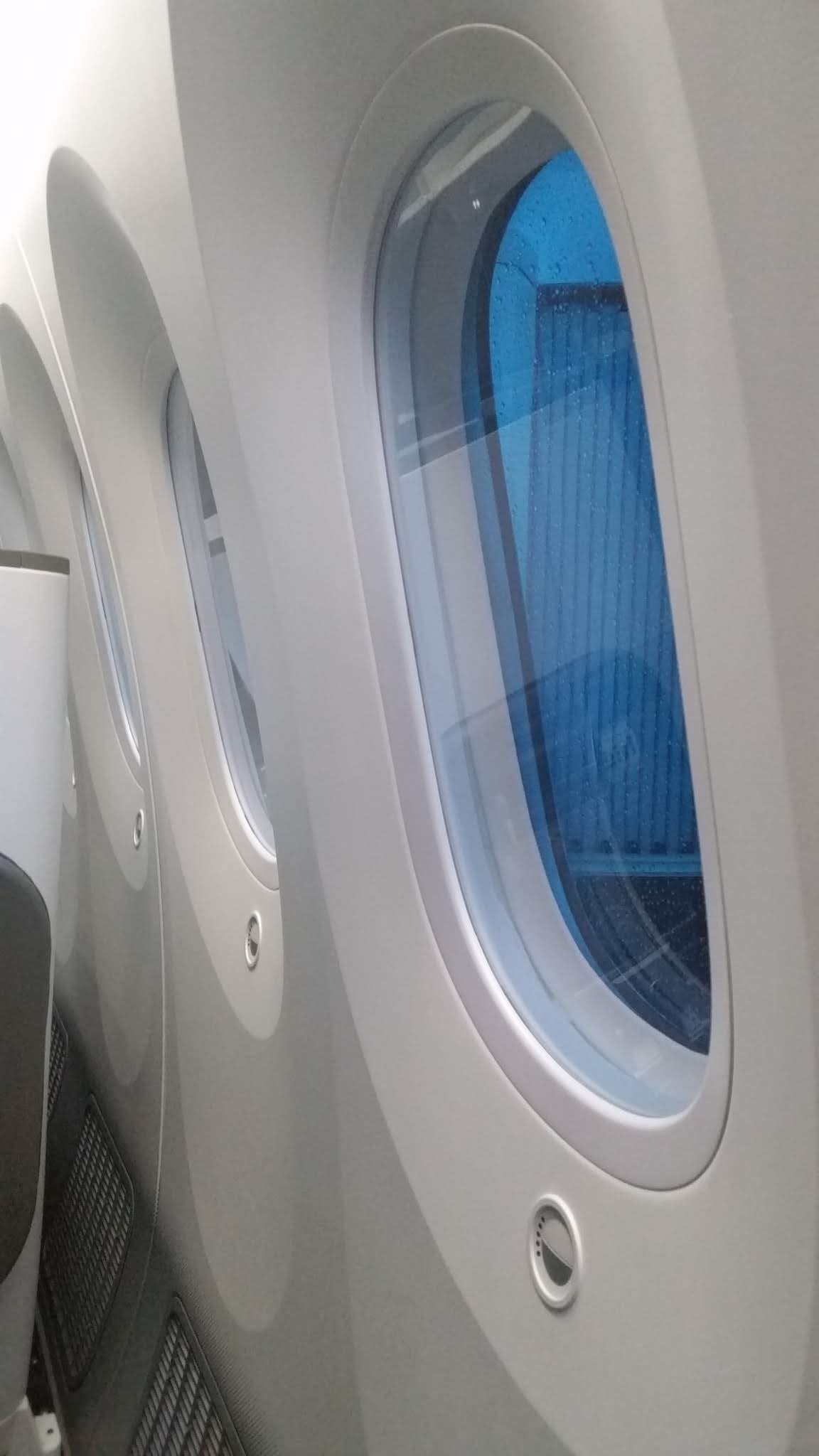
The current Coronavirus means that I can’t write about any recent flights on British Airways, so here’s one from six years ago. As a rider at this stage, I wasn’t intending to post these photos when I took them, so they’re not really a very complete set covering the aircraft’s exterior or interior. But, I took a photo of all the food, which is something I rarely neglect my obligations towards….
Back in 2014, British Airways decided that China was their future and they started a flight to Chengdu as their third destination in the country, as they already flew to Shanghai and Beijing (as well as Hong Kong). There was a documentary at the time where BA management, including their boss then Willie Walsh, said how important China was to them, although their enthusiasm waned and Chengdu was dropped a few years later, in early 2017. This flight was in Club World, or business class, with the aircraft being the Boeing Dreamliner.
The screen for the IFE.
The foldable foot rest, which then joined together with the main part of the seat to form a bed. BA have recently announced a new Club Suite, which looks amazing, so the days of having to step over someone else will soon be firmly in the past.
The menu.
The watermelon, feta and cucumber salad.
The Szechuan braised pork with bean curd, an appropriate dish as this was the area of China that we were flying to.
The summer berry cheesecake with mascarpone cream.
The breakfast menu.
Fresh fruit and the mango fruit smoothie. The smoothies on BA are world class and I always tried to get refills if they had enough.
The continental breakfast option.
I took these items from the Club Kitchen on board to nibble on between meals.
I can’t remember much about these meals, primarily because I ate them six years ago, but I was rarely disappointed with BA’s food. I also know that I got my first choice for all meals on this flight, which is always a bonus. Unfortunately, I didn’t note the registration number of the aircraft or much else.
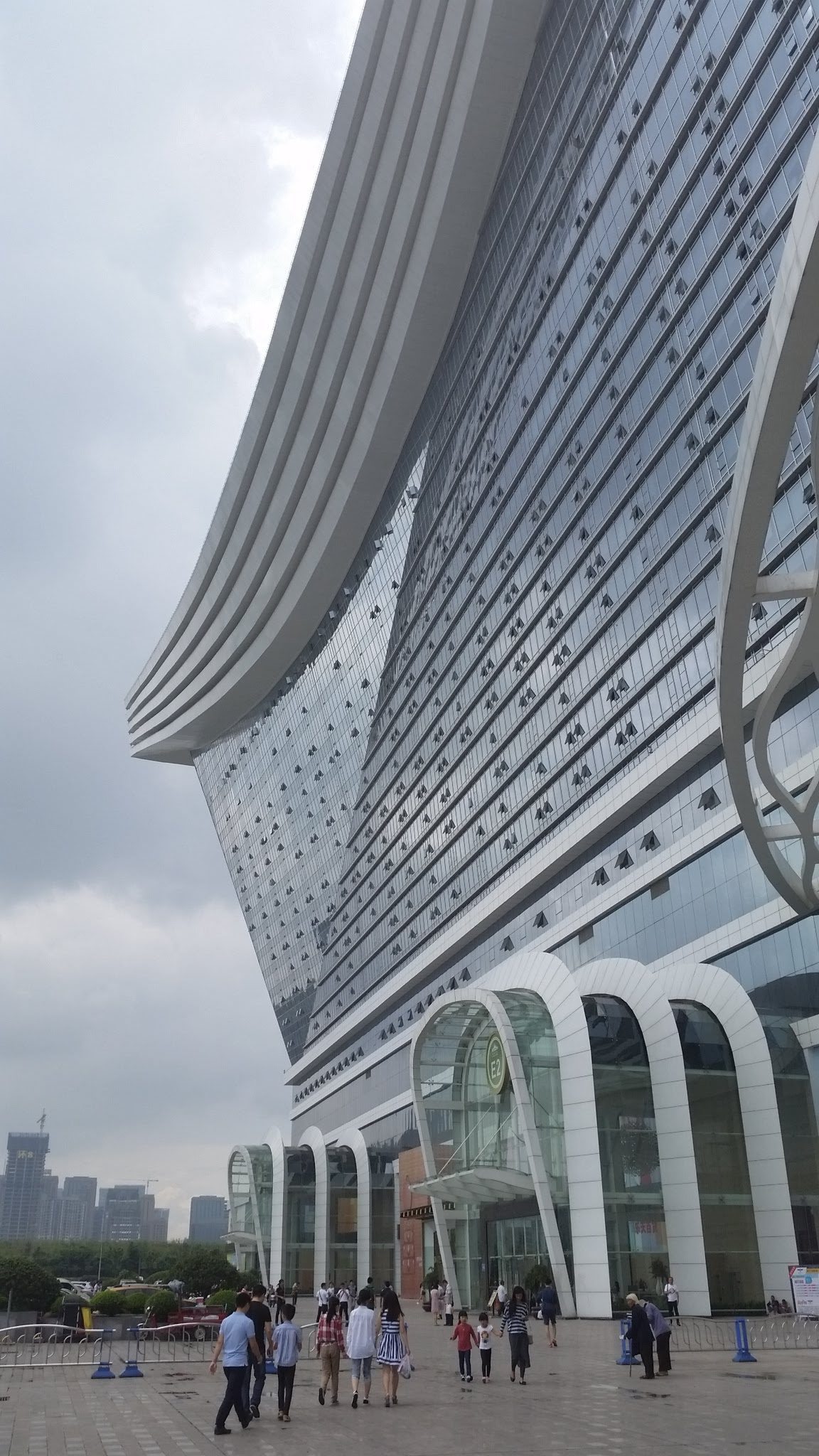
When I was in Chengdu, back in 2014, I thought it would a good idea to get the Metro to go and see what was the largest building in the world in terms of floor space.
This was my view when I got off the Metro, a building so big that it was almost impossible to photograph it in one go. I’ve never seen anything so substantial before, a crazy piece of commercialism.
It’s a sprawling building, with 18 million square feet of floor space.
This is the mall’s official photo, they probably had to go back about half a mile to take this and get the whole building in.
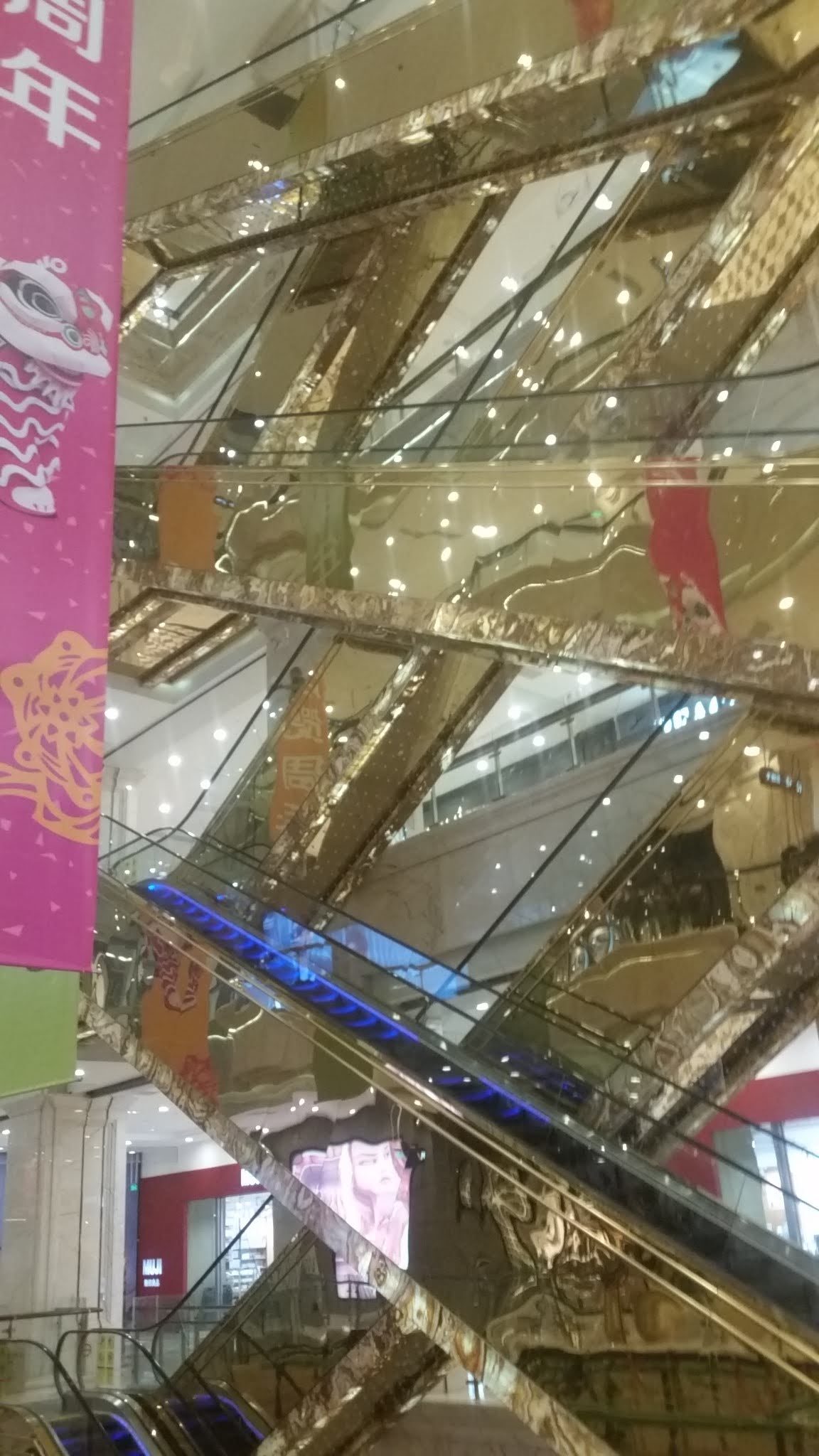
Some photos of the interior, which I remember wasn’t all finished when I went. It also wasn’t particularly busy and many shops weren’t let. There are two 1,000 room hotels at the shopping mall, as well as a water park, ice-skating rink and cinema. But, although it may have felt just a bit too big, it was nonetheless still quite marvellous to see the largest shopping mall in the world and I did enjoy my Subway experience here.
And going back to 2014 now. The New Century Global Center is one of the largest buildings in the world and I visited it around one year after it was constructed. More on this in another post….
And this was the first time that I tried to order a Subway in China. I find the ordering process difficult enough in English if I’m being honest, but I bravely decided that I could get away with pointing. So, I go in and there was a friendly member of staff who spoke hardly any English, but she excitedly got on the phone to tell them about my arrival. A manager appeared from nowhere about thirty seconds later and she spoke nearly perfect English, she was thrilled as I was the first English speaking customer she’d served in months and she wanted to practice the language. At the time, and indeed probably now, Chengdu city centre doesn’t attract huge numbers of English visitors.
I don’t go to Subway much, primarily as I’m moderately obsessed with Quiznos, although I don’t get to visit there very often. But, this was one of the better Subways that I’ve visited and the menu at the time was near identical to the US menu (unlike when I visited a Subway India, which is more of a different set-up) and the food tasted fine. I didn’t really take photos in the same way back then, although at least I have a picture of my American looking Sub, which is also in American looking branding of subway.com that I don’t think I thought about at the time. I say that it was the first time that I ordered a Subway in China, it was also the last, I never got round to going to another one after this.
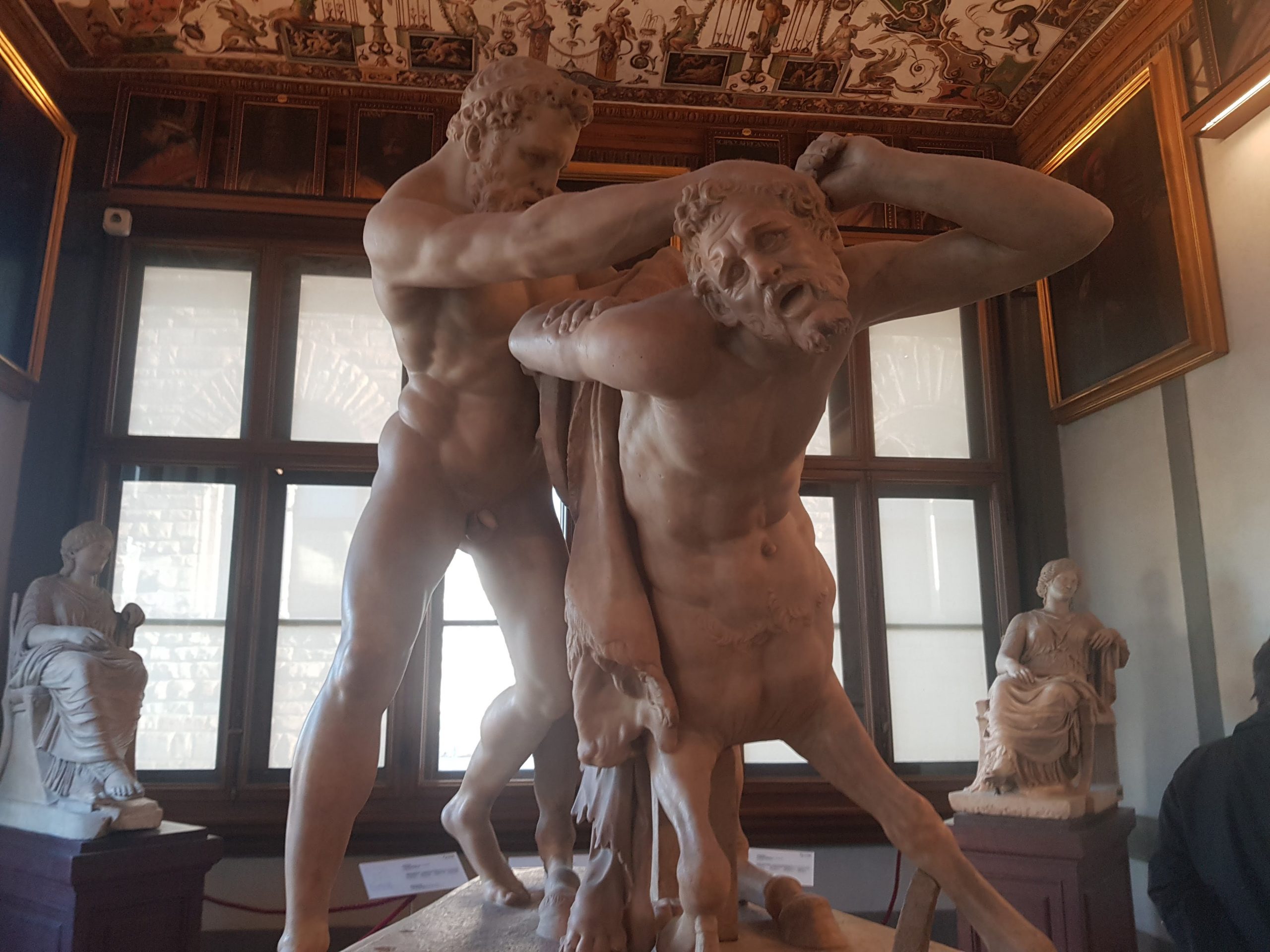
I thought at first that this sculpture was Roman, but only the torso of the centaur (half man, half horse) remained and so the rest, including the head and legs of the centaur and the entirety of Hercules, was added in the sixteenth century. Well, other than the feet of Hercules, they’re mostly original Roman as well. It depicts Hercules slaying Nessus who had tried to kill Deianira, the wife of Hercules.
The element that I liked most about this sculpture is that it has been on display in this corridor since 1595 and it’s near the main entrance to the upper floors of the gallery, which is where visitors start their tour. There must have been countless millions who have looked at this sculpture and there can’t be many artworks in the world that have had this uninterrupted period of being on public display.
The sixteenth century additions to the sculpture were made by Giovanni Caccini, but over the last few years there has been a restoration of it and they’ve been able to see exactly where the joins in the sculpture have been made, the merging of the old and new. They also discovered that the stance of the centaur was changed slightly and that more work was done on the foot of Hercules than had previously been realised. The same recent re-examination of the sculpture also found that the original marble is from Asia, whereas Caccini used marble from Tuscany.
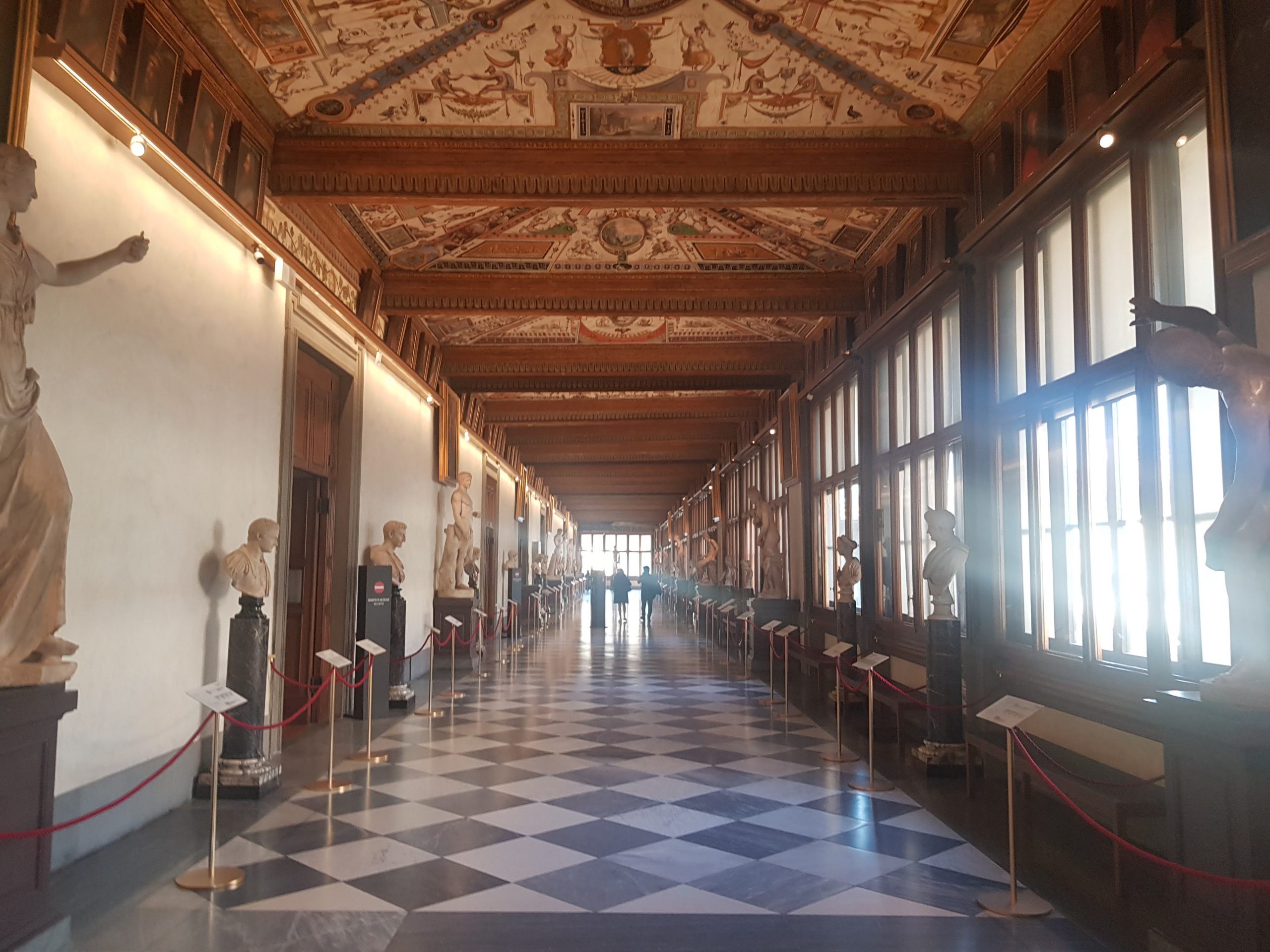
The corridors of the Uffizi are iconic and they form the base of the gallery’s large collections, with rooms leading off them. And what is interesting is that the word ‘gallery’ in the sense of displaying artworks or artefacts may derive from here, when the word originally meant an area at the side of a building.
This is the view towards the Palazzo Vecchio from the crossing gallery, with the top floor windows on each side containing the corridors.
The frescoes on the ceiling date to the late sixteenth century and the early seventeenth centuries. There would have been tapestries on the walls, but these have now been removed as the light was damaging them. As an introduction to the museum, these corridors are an exciting sight as they stretch off into the distance.
The Dictionary of the Vulgar Tongue was first published at the end of the eighteenth century, and given that the Coronavirus crisis is giving too much time to read books, I thought I’d pick a daily word from it until I got bored…..
Bay Fever
Defined by the dictionary as “a term of ridicule applied to convicts who sham illness, to avoid being sent to Botany Bay”. I’m impressed by just how many people the British Government shipped out to Australia for breaking various laws, it totalled 162,000 convicts between 1788 and 1868. I’m moderately surprised that being able to fake an illness was a reason to avoid transportation, as ships at this time were riven with people who had cholera and typhoid.
Incidentally, the journey to Australia took four months and I can’t begin to imagine what a bloody hassle that must have been, sailing along with hundreds of seasick convicts who had cholera or typhoid. The rate of death on the transportation ships was usually relatively low, but in around 1800 the system changed to pay more to crews and masters who got convicts safely (well, alive) to Australia. Which means I imagine that they didn’t want ill convicts on board, and perhaps that’s why bay fever became a thing. Another nice phrase though.
12 passengers in four hours? Surely it must be worth just using buses for these routes now, that’s on average fewer than one person per train (plus the guard and the driver)….. But impressive that so many people aren’t travelling and are obeying instructions.
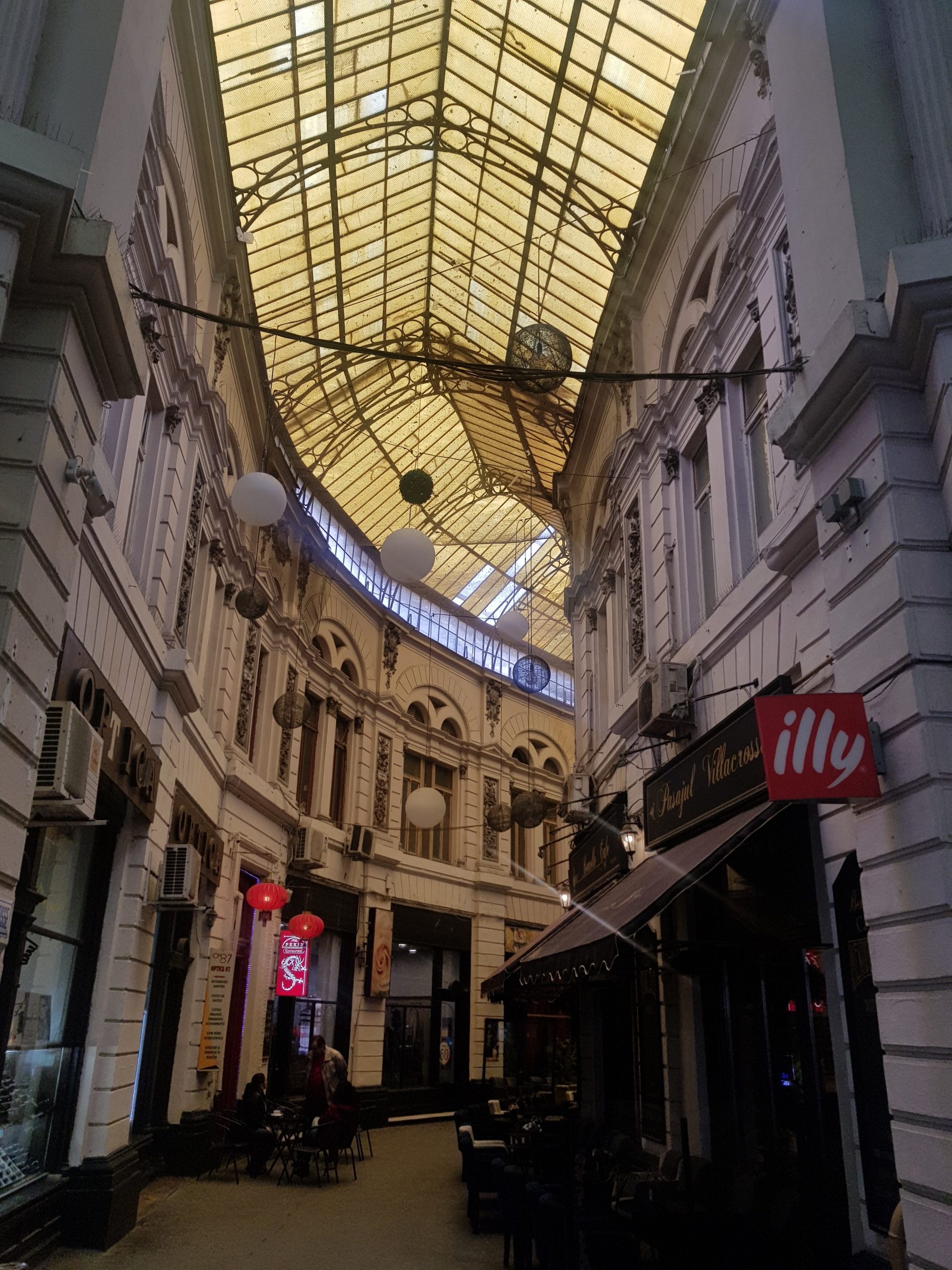
This shopping centre is perhaps the earliest surviving in Bucharest, constructed in 1891 and named after Xavier Villacrosse, a former city architect.
There’s a grand entrance portal to the centre, which is in a fork shape as the owner of the central area, the Pesht Hotel, didn’t want to sell. That must have been slightly annoying for the developers at the time, but at least they got to build their street in some form.
It’s a stunning interior, but it needs repair and I wasn’t really that excited by any of the premises inside. This was primarily due to most being closed when I visited in the afternoon, with some others having a rather seedy look, even if perhaps they weren’t.
With some money and the introduction of a few innovative tenants, this could once again be quite a grand shopping street given its central location. During the communist period from 1950 until 1989, the centre was renamed Pasajul Bijuteria, or the jewellery street. Many of the shops along the street during this time were jewellers, although this has now changed to mostly being restaurants and bars.
The main dome isn’t in too bad a condition and it ensures that the shopping is well lit and bright. There are offices above the retail units and for a while this was home to the first Stock Exchange in the country.