Author: admin

  • Dictionary of the Vulgar Tongue – Day Thirty

    Dictionary of the Vulgar Tongue – Day Thirty

    The Dictionary of the Vulgar Tongue was first published at the end of the eighteenth century, and given that the Coronavirus crisis is giving too much time to read books, I thought I’d pick a daily word from it until I got bored…..

    Black Book

    The dictionary defines this as “he is down in the black book, ie, has a stain in his character. A black book is kept in most regiments, wherein the names of all persons sentenced to punishment are recorded”. It seems that this was also true on a wider scale, court books and punishment books in academia were also often black.

    Today, the phrase seems to have shifted somewhat, normally being used to refer to a list of secret contacts, rather than a list of people who should be punished. I prefer the old meaning, there’s something more sinister about having a book full of people who have committed misdemeanours. Perhaps Hike Norfolk should have one….

  • Norwich – West Cornwall Pasty (Railway Station)

    Norwich – West Cornwall Pasty (Railway Station)

    There are two West Cornwall Pasty outlets in Norwich, one in the Haymarket and the other at the railway station.

    These photos are from their Christmas selection, since the outlet is currently shut due to this bloody virus. At this precise moment in time I could well do with a lovely pasty from here though…. Incidentally, I think their best two options are the chicken & chorizo pasty and the Thai green vegetable curry, with the potato wedges being rather less exciting.

    It’ll be open again soon enough no doubt…..

  • Streets of Norwich – White Lion Street

    Streets of Norwich – White Lion Street

    Part of my Streets of Norwich project….

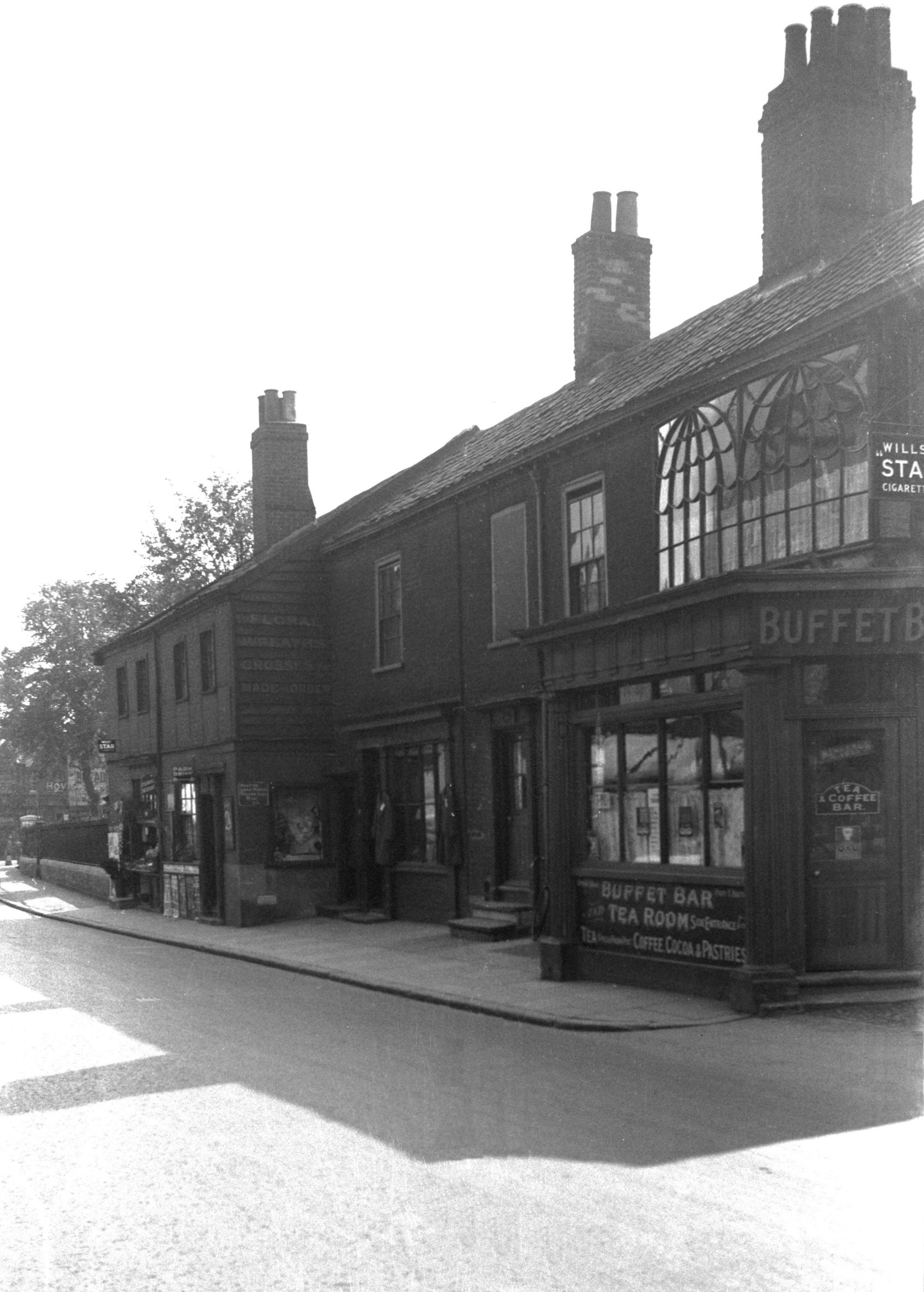
    White Lion Street runs from Gentlemans’ Walk and bends into Orford Hill and Red Lion Street, all very much unchanged over the last 150 years. The street takes its name from the former White Lion pub, but was originally called Sadelere Rowe in the thirteenth century due to the saddle-making industry here, and later Lorimers Rowe due to the harness strap makers that were located along the street.

    Although it’s relatively short, there used to be a few pubs down this street, with the Adelphi (13 White Lion Street), the Fruiterers Arms (2-4 White Lion Street) and the White Lion / Haymarket Stores (10 White Lion Street).

    The end of the street, which is all now pedestrianised, which joins Gentlemans’ Walk.

    Looking along the road to the Castle Quarter shopping centre. WH Smiths is on the left, this is the former Fruiterers Arms and is a real loss to the city centre as this would be a rather lovely setting for a pub. The building dates to the seventeenth century and was a pub from the mid-nineteenth century until 1989.

    Looking back towards to the market place area. The building to the left of Ladbrokes was Costa, but they closed in early 2020, so it’s up for rental, with this being the former Haymarket Stores pub. The Haymarket Stores, which was once known as the White Lion, closed in 1974.

    Back in 1912, the businesses along the street were:

    NORTH SIDE

    1 – Pearks, grocers

    1A – Albert Turner, confectioner

    3 – Cozen Randall, hairdresser

    5 – Sam Ellis, fruit merchant

    7 – W. Fletcher, butchers

    9 – Eastern Counties Rubber Company

    11 – London & Norwich Cycle & Rubber Company

    13 – Back’s, wine and spirits merchants

    15 – Back’s, tobacconists

    17 – Henry Moore William, wine and spirits store

    19-21 – Grix William, dining rooms

    SOUTH SIDE

    2-4 – Fruiterers Arms, pub

    6 – Edward Richard Pooley, shoe warehouse

    10 – White Lion, pub

    12 – E. Reeve & Son, grindery


    The 1939 register had the following residents living on the street:

    1A – Rosetta Clarke, Douglas Clarke, Frances Webster, Olive Johnson

    6 – Norah Sage

    10 – Edward Thaxton, Emmeline Thaxton, Leonard Thaxton

    13 – William G Gerry, Lily Gerry, William J Gerry

  • Dictionary of the Vulgar Tongue – Day Twenty-Nine

    Dictionary of the Vulgar Tongue – Day Twenty-Nine

    The Dictionary of the Vulgar Tongue was first published at the end of the eighteenth century, and given that the Coronavirus crisis is giving too much time to read books, I thought I’d pick a daily word from it until I got bored…..

    Bishop

    This is a cocktail of sorts according to the dictionary, “a mixture of wine and water, into which is put a roasted orange”. It’s a drink that Samuel Johnson enjoyed, so it dates back to at least the seventeenth century. Interestingly, the drink still seems to exist today, although rum has been added into the concoction of red wine, water and an orange. I can’t see it catching on at JD Wetherspoons, but it’s right up Nicholson’s street…..

  • Dictionary of the Vulgar Tongue – Day Twenty-Eight

    Dictionary of the Vulgar Tongue – Day Twenty-Eight

    The Dictionary of the Vulgar Tongue was first published at the end of the eighteenth century, and given that the Coronavirus crisis is giving too much time to read books, I thought I’d pick a daily word from it until I got bored…..

    Birds of a Feather

    The meaning given by the dictionary is “rogues of the same gang”, so this is one of those phrases that has for some reason remained in usage over the centuries, although it’s not just about rogues and criminals now. Although, perhaps, the TV comedy Birds of a Feather perhaps did revert to the rogues usage. The phrase dates back to at least the sixteenth century and it was used widely and commonly in print, unlike some of the other phrases in this dictionary which I still wonder if the author made up.

    The Bath Chronicle posted a long epistle (their word, not mine) to ‘a friend in the country’ in December 1774, which included the lines:

    “What a strange revolution – we us’d all together, to flock to one place, like birds of a feather. And pass the long evening, in chat or at play, when a thousand soft amorous things one might say”.

  • LDWA 100 – Previous Events

    LDWA 100 – Previous Events

    The LDWA have an excellent collection of route descriptions from past 100 events and they can all be found at https://www.ldwa.org.uk/library/hundreds/hundreds.php. There are also the results and for the recent couple of events, the very useful GPX files. I like this, I’m a GPX person, route descriptions tire me out….

    Note for the first event in 1973 that Guinness supplied stout for the entrants, which is a marvellous idea. I’ll add some photos to the later events at some stage over the next few months….. The main image for this page is the photo I took at the Vermuyden checkpoint at the 2018 event. I wasn’t walking that year, I was visiting local pubs and marshalling….

    1973 – Downsman
    1974 – Peakland
    1975 – Downsman
    1976 – Cleveland
    1977 – Downsman
    1978 – Cleveland
    1979 – Dartmoor
    1980 – Downsman
    1981 – Cumbrian
    1982 – Pilgrims
    1983 – Snowdonia
    1984 – Dartmoor
    1985 – Yorkshire Dales
    1986 – Downsman
    1987 – Snowdonia
    1988 – White Peak
    1989 – Brecon Beacons
    1990 – Chiltern
    1990 – Marches
    1991 – Lancastrian
    1992 – Invicta
    1993 – Cleveland
    1994 – Dartmoor
    1995 – Shropshire
    1996 – Yorkshire Dales
    1997 – Downsman
    1998 – White Peak
    1999 – Durham Dales
    2000 – Millennium
    2001 – Cancelled
    2002 – Lakeland
    2003 – White Rose
    2004 – Exmoor
    2005 – Chiltern
    2006 – Northumberland
    2007 – Cant Canolbarth
    2008 – Yoredale
    2009 – Wessex
    2010 – Heart Of Scotland
    2011 – Housman
    2012 – Games
    2013 – Camel-Teign
    2014 – Valleys
    2015 – Red Rose
    2016 – Dorset
    2017 – North York Moors
    2018 – Cinque Ports
    2019 – Hadrian
    2020 – Cancelled

  • LDWA 100 – Simon Hodgin

    LDWA 100 – Simon Hodgin

    Part of my series of motivational messages from those who have done the 100, those who might do the 100 and those who won’t do the 100 but have an opinion on it. This is from Simon Hodgin, who has completed a few 100s. I did suspect that he was cheating, but I’ve checked the evidence and it does appear he walked them.

    “”Walking 100 miles in 48 hours, that isn’t possible, is it?” That was the response I received from family & friends when I got ‘lured’ into the world of walking the LDWA 100, only a few years ago.

    Far too old to continue playing football with the inevitable damaged knees I had been ‘introduced’ to the world of long distance walking by my partner & her father as a great way to get fit, whilst enjoying some great camaraderie and the benefits of some stunning countryside views.

    Initially happy to walk the ‘socials’, and 26 mile routes I was soon lured into walking 50 mile circuits. It was only a matter of time before ‘the 100’ would appear on my horizon.

    For many in the LDWA ‘fraternity’ the challenge and ‘enjoyment’ of the 18, 26 and even 50 mile routes provides more than enough challenge and satisfaction, but for some ‘the 100’ provides the annual pilgrimage.

    I’m still a relative newcomer to the 100. What is clear from my relatively recent experience is that even with the required 50 mile ‘qualifier’ under their belts the range of entrants (both age & fitness) differs markedly. In many ways that is the great thing about the 100, everyone has their personal goal, be it a best time or just getting around the course in one piece in 48 hours.

    Is it mental toughness as well as physical fitness? Absolutely, but do others, whether fellow participants, marshalls or spectators encourage you every step of the way to achieve your personal goal? Absolutely.

    You will experience many emotions during the walk, many even hallucinate through lack of sleep. That all said, despite the all the pain, emotions, hallucinations and all types of weather the satisfaction of completing the challenge gives a ‘high’ that is hard to replicate. Why else do we return to participate year after year?

  • Hamburg – Hamburger Kunsthalle (Bildelf by Georg Baselitz)

    Hamburg – Hamburger Kunsthalle (Bildelf by Georg Baselitz)

    And another post in Julian’s seemingly endless photos of artworks of which he understands very little, but comments anyway.

    This delicate little thing is called “paintingeleven” which isn’t the most revealing title. Painted in 1992 and purchased in 1997, this artwork is by Georg Baselitz who was born in 1938 and is still alive today. Wikipedia note that this artist “is seen as a revolutionary painter as he draws the viewer’s attention to his works by making them think and sparking their interest”. I can spend some time looking with my unexpert eye at a painting and try to put some meaning to it, but it’s fair to say that I didn’t understand this at all.

    However, the Kunsthalle is prepared for this, and has made an huge effort to add narrative to artworks for those who want to get some understanding of them. So, Baselitz started in 1991 to paint large canvasses and the painting name is simply the order in which he created his works. I like that sense of order. The gallery seem to struggle from here, they describe the red and white fields on which two figures (the black lines) are painted. I’m not convinced, although apparently he painted them with his fingers. Anyway, from here the four green lines are dripped from a higher platform, with the paint transferred to them by Baselitz getting into a tub of green paint with his shoes on.

    I still have no idea, although it occurs to me that this would fit into the Five Guys red and white background style….

  • Dictionary of the Vulgar Tongue – Day Twenty-Seven

    Dictionary of the Vulgar Tongue – Day Twenty-Seven

    The Dictionary of the Vulgar Tongue was first published at the end of the eighteenth century, and given that the Coronavirus crisis is giving too much time to read books, I thought I’d pick a daily word from it until I got bored…..

    Billingsgate Language

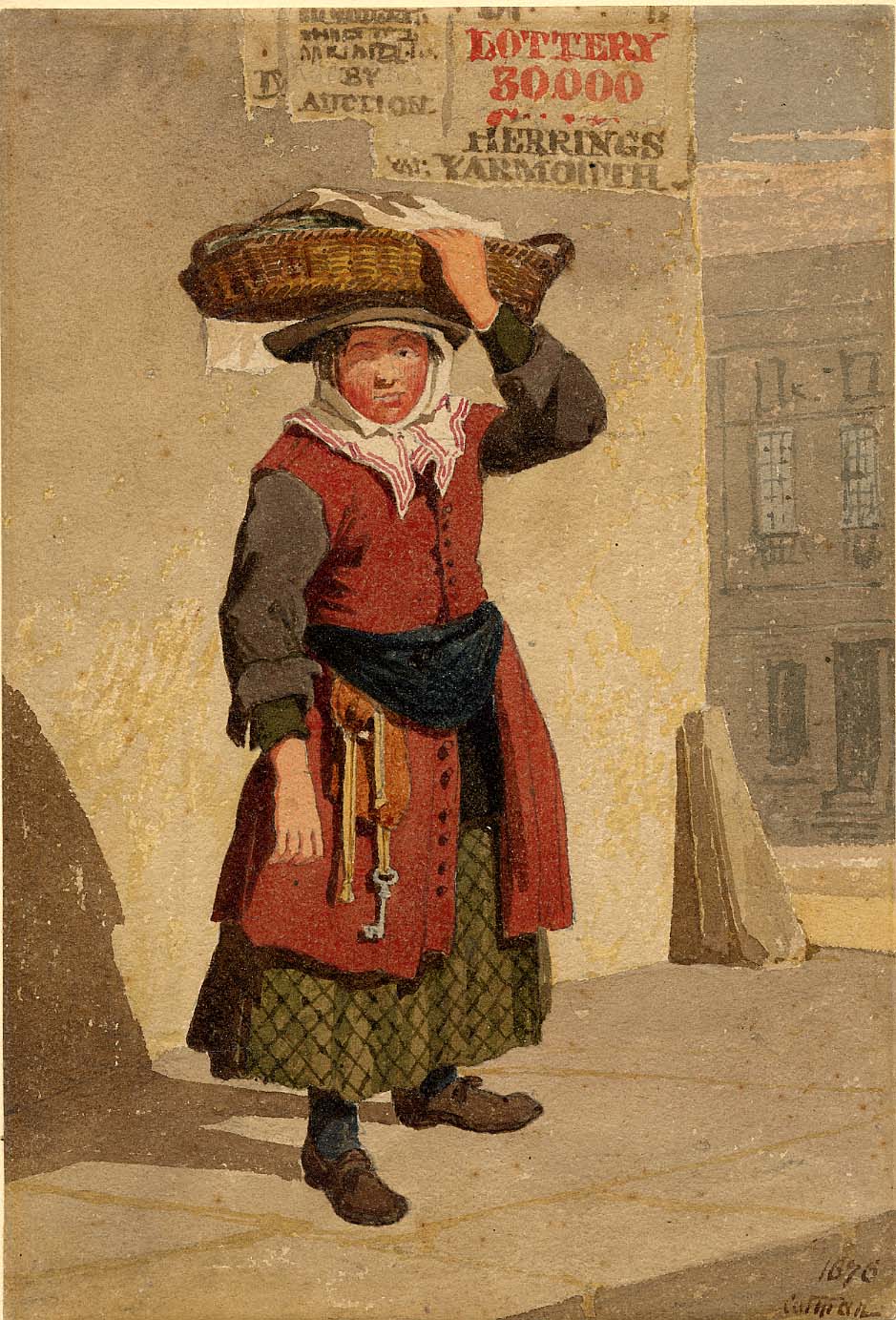
    This is according to the dictionary, “foul language or abuse from the market where the fish(er)women assemble to purchase fish; and where, in their dealings and disputes, they are somewhat apt to leave decency and good manners a little on the left hand”. There was historically another similar term, although it had the same meaning, of ‘Billingsgate Discourse’.

    Billingsgate Market was once the fish market which was in operation near to the Tower of London from around the sixteenth century until 1982. At that stage it was moved to a site near to Canary Wharf, although the area only became built up as a commercial district later on. The term Billingsgate for offensive language persisted throughout the eighteenth and nineteenth centuries, although I’m not sure it’s very common today.

    Although this reminds me of the fisherwomen who came to Lowestoft over the last few decades, who received a reputation in parts for their direct language. The same principles no doubt applied back in Billingsgate…

  • Hamburg – Hamburger Kunsthalle (Forgery by Óscar Domínguez)

    Hamburg – Hamburger Kunsthalle (Forgery by Óscar Domínguez)

    The gallery has now made a little exhibit about this painting, which is a forgery that they managed to accidentally buy. I suppose it’s easier for galleries to do this in retrospect, they can blame a previous curator more easily…

    The gallery purchased this painting in 1957, which was meant to be ‘Mystery and Melancholy of a Street’ by Giorgio de Chirico. Now, this shouldn’t have been too difficult, as de Chirico (1888-1978) was still alive, but there was a little problem and that was that he had seemingly got a bit confused. This had led to him painting artworks and dating them incorrectly to a previous date, as well as declaring perfectly authentic works as fakes. Anyway, he declared this painting as fake in 1970, which I can imagine moderately irritated the curators.

    On this occasion though, he was correct, he hadn’t painted it. Someone called Óscar Domínguez had faked it, but that was only discovered after the gallery had conducted numerous tests. Perhaps those tests might have been better before they bought it, but I imagine scientific advances made that much easier in the 1980s. Anyway, now the gallery has a different story to tell, which is that through careful analysis they are able to prove that some works are fakes and not as they might seem. And since every artwork has a story, this made this perhaps more interesting than it would have been if de Chirico had actually painted it.