Tag: National Railway Museum

  • Tuesday – Second Railway Museum of the Day, Locomotion at Shildon (Part Two)

    Tuesday – Second Railway Museum of the Day, Locomotion at Shildon (Part Two)

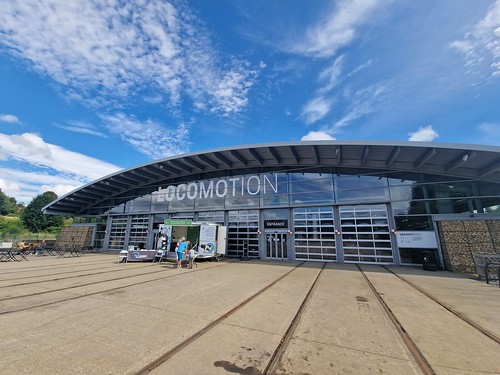
    One railway museum is likely enough for one day, but in addition to visiting the Head of Steam in Darlington, it seemed worthwhile to get off the train en route to Bishop Auckland to have a look around the Locomotion museum. This name change confused me slightly (actually quite a lot), I thought that it was known as the National Railway Museum at Shildon, which seems rather more appropriate to me, but there we go. There are more photos at https://flickr.com/photos/julianwhite-uk/albums/72177720302071941 should anyone be catatonically bored.

    Shildon Railway Museum

    It’s a short walk along the track (not literally along it, there’s a path to the side) from Shildon railway station to the museum and I thought I’d visit for an hour before catching the next train that would take me to Bishop Auckland.

    Shildon Railway Museum

    The museum, opened by the then local MP and Prime Minister Tony Blair in 2004. They’re undergoing a large modernisation project which will see more exhibition space given how popular the museum has become. I very much like how easy it is to access by rail and as part of the modernisation project they’re restoring some of the other station buildings. There’s more about this project at https://www.locomotion.org.uk/about-us/our-future-vision-2025.

    Shildon Railway Museum

    At the moment the museum is effectively a large shed full of locomotives, carriages and some other related items. They have very few smaller items relating to railway history, they’re mostly at the National Railway Museum in York.

    Shildon Railway Museum

    This is Lyon, the Hetton colliery locomotive, although I feel that I’ve introduced it as if it’s something from Thomas the Tank Engine. It was probably built in 1852 and improved a bit in 1882 when they rebuilt it, remaining in service until the early twentieth century. It was an important part of the 1925 centenary of the Stockton and Darlington Railway, an event organised by LNER, but I think they thought at the time that it was older than it was. The museum is hedging its bets by having both dates on there, the 1820s and the 1850s, with a possibility that this is a genuine George Stephenson locomotive.

    Shildon Railway Museum

    A Maglev railway car from 1984 which glided from Birmingham International Airport to Birmingham Exhibition Centre and it’s hard to think of anywhere more glamorous that they could have installed it. Quite excitingly, this was the first Maglev railway in the world, although it was a bit rickety and expensive to repair so they decommissioned it in 1995. As an aside, I’ve been on the Shanghai Maglev train, which is quite phenomenal at 268 mph (431 kmph) and is so fast that by the time it reaches full speed it has to start slowing down again. If that train fell off the track, it would launch itself hundreds of metres away. Well, that’s my best guess, I’m not an engineer to make such calculations, but as a journey I remember it being very smooth. I digress though, I don’t think the Birmingham one went as quickly.

    Shildon Railway Museum

    I hadn’t planned to take so many photos, although that is usually the case, but there were plenty of shiny things to distract me in the museum. This is a Waterloo & City carriage from when the line opened in 1898, which is handily my favourite London Underground line. This carriage was constructed in Woolwich by Siemens Brothers, relations of the founders of the German company. It remained in use on the line until May 1968 and it was only retired then because of electrical burnout. It then apparently went to Brighton, for reasons I’m unaware of but perhaps they just thought it deserved a little holiday, before becoming part of the national railway collection.

    Shildon Railway Museum

    Here’s a nice red fire engine, dating from 1880 and this was used by the staff at Gateshead Railway Works.

    Shildon Railway Museum

    Composite 31, which sounds like a discussion point at Labour’s party conference, dates from 1846 and there’s a first and second class section. The board notes that anyone in third class would have a much worse journey, as the carriage often didn’t have a roof, didn’t have seats and was packed full of people. Perhaps I won’t moan quite so much when Greater Anglia put the Stansted Express rolling stock on the London to Norwich mainline. Although I probably will.

    Shildon Railway Museum

    Timothy Hackworth, who lived locally and who was important in building the local railway (more at https://en.wikipedia.org/wiki/Timothy_Hackworth), with what is left of his Sans Pareil original locomotive. This was presented to the Patent Office Museum in 1864, which in turn became the Science Museum and then it went to the National Railway Museum. It’s interesting how these things evolve, there was a lack of foresight in creating a national railway museum in the late nineteenth century and they were partly inspired by Nuremberg’s railway museum which had just opened. GWR got bored of waiting and after having saved their early North Star locomotive for display, they instead cut it up in 1906. They realised this wasn’t ideal when a museum opened, so in 1925 they stuck some bits of the original they found back together as part of a replica. That replica is now in the Great Western Railway museum in Swindon and I can’t remember if I even knew there was such a thing, but I now want to go there.

    Shildon Railway Museum

    A prettier version of Sans Pareil, a replica which shows how colourful the original might have been. The locomotive means “without equal” and the original dates from 1829 whilst the replica is from 1980.

    Shildon Railway Museum

    A good old Intercity branded British Railways Mark 1 carriage, although it dates from 1964 which predates that branding.

    Shildon Railway Museum

    I don’t like corridor trains and I’m glad British Rail got rid of them and there aren’t any on services today in the UK (other than on heritage, preservation and private railways). They still have them in some European countries, including Poland and Ukraine, although I think they’re being phased out in Poland. I think the Ukrainians are busy with other things at the moment to be fair.

    Shildon Railway Museum

    This is an early tilting train, the APT-E (Advanced Passenger Train Experimental) produced in 1972. ASLEF were horrified at it and their drivers were banned from using it. British Rail decided they’d test it for a few years, which they did and in 1976 they sent it to the National Railway Museum for preservation. But, they didn’t stop there and didn’t give up, the engineers then developed APT-P (Advanced Passenger Train Prototype) which was tested until the mid 1980s when it was scrapped due to a lack of money in British Rail. They did sell some of their technology to Fiat Ferroviaria for use in their development of the Pendolino train, so we helpfully supported another country’s tilting train technology.

    Shildon Railway Museum

    TC (Trailer Car) which was attached to the APT-E, more of which at http://www.apt-e.org/onthemove/tc2.htm.

    Shildon Railway Museum

    I mentioned that earlier in the day I had been to the Head of Seam Museum at Darlington North Road railway station and there was some sadness when they lost the Locomotion No. 1 locomotive which had been there between 1975 and 2021. I thought it was a little unnecessary of this museum to call it back from loan so they could put it on display here, as they’ve got rather enough trains of their own to play with. It did though mean I still got to see this early steam locomotive which was built by George Stephenson and Robert Stephenson in 1825. It’s heavily restored now (I often wonder how much of the original I’m ever looking at with these things), but some bits of it are original and from when it pulled the first train on the Stockton and Darlington Railway, making it the first locomotive on a public railway anywhere in the world. I think that’s some claim to fame. It sped along at 15 mph, which I think is about the speed that the Greater Anglia train manages on the East Suffolk line today.

    Shildon Railway Museum

    I was of course impressed at this historic piece of metal, but the museum has just placed it amongst their other trains and I don’t think they’ve made much of it. The Locomotion museum seemingly upset a fair few residents of Darlington over this and they’ve promised to lend it back to the Head of Steam museum in the run-up to 2025 when it’s 200 years old. Anyway, enough of my stirring up a local argument about where to store an old train….

    Shildon Railway Museum

    As it was very hot, yet again, I decided to go to the museum’s cafe where they have reclaimed train seats to get a Feast. Such decadence….

    Anyway, I very much enjoyed this museum, although I only had less than an hour there, although that was enough to see a good selection of locomotives and other exhibits. There’s no admission charge, a policy in common with the Science Museum and the National Railway Museum, so that was a bonus. I took far more photos than I had expected and there was certainly enough to see to make a visit last a couple of hours. BTW, the Feast was delicious if anyone wondered.
  • York – National Railway Museum (Stephenson’s Rocket)

    York – National Railway Museum (Stephenson’s Rocket)

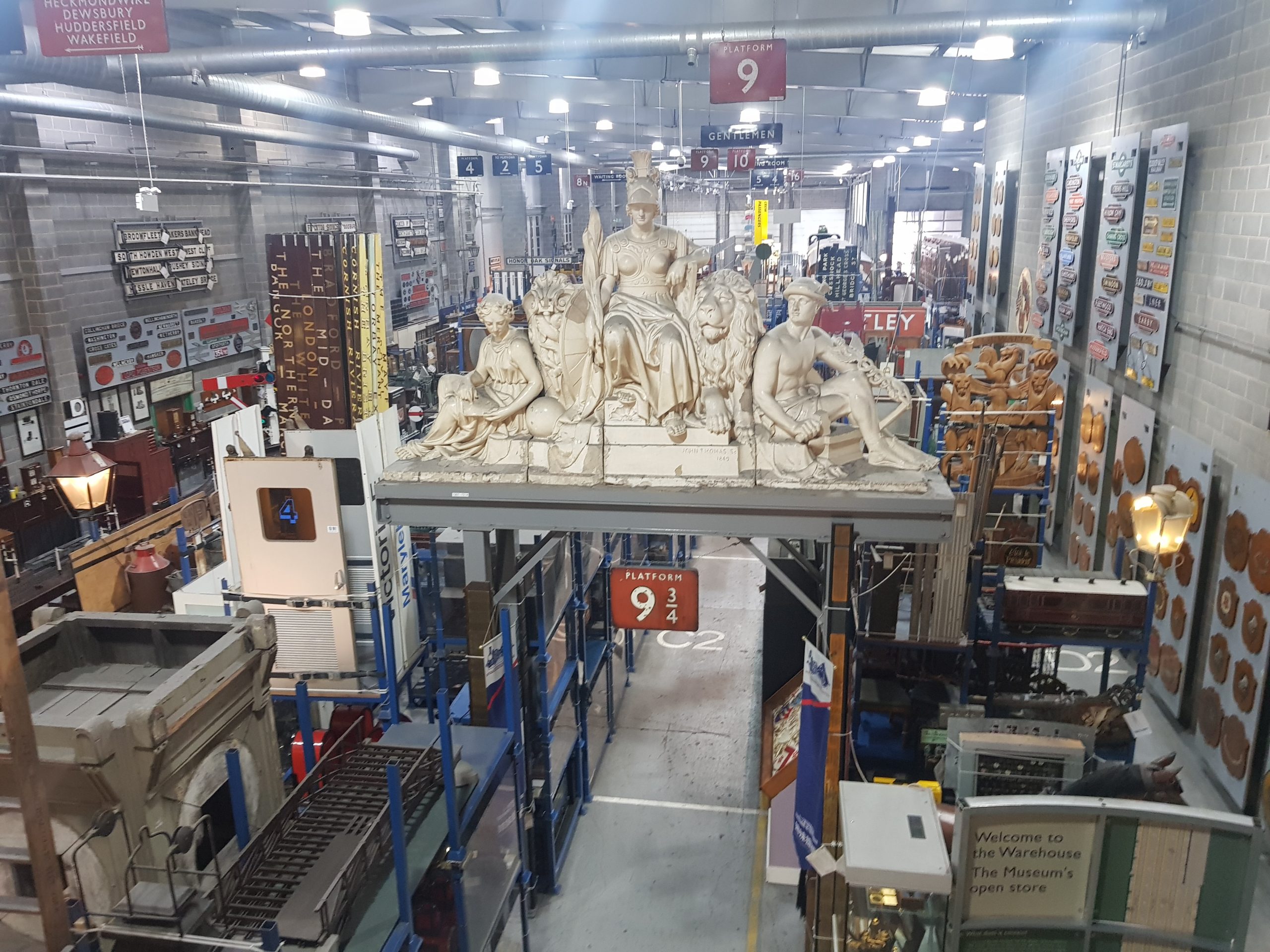
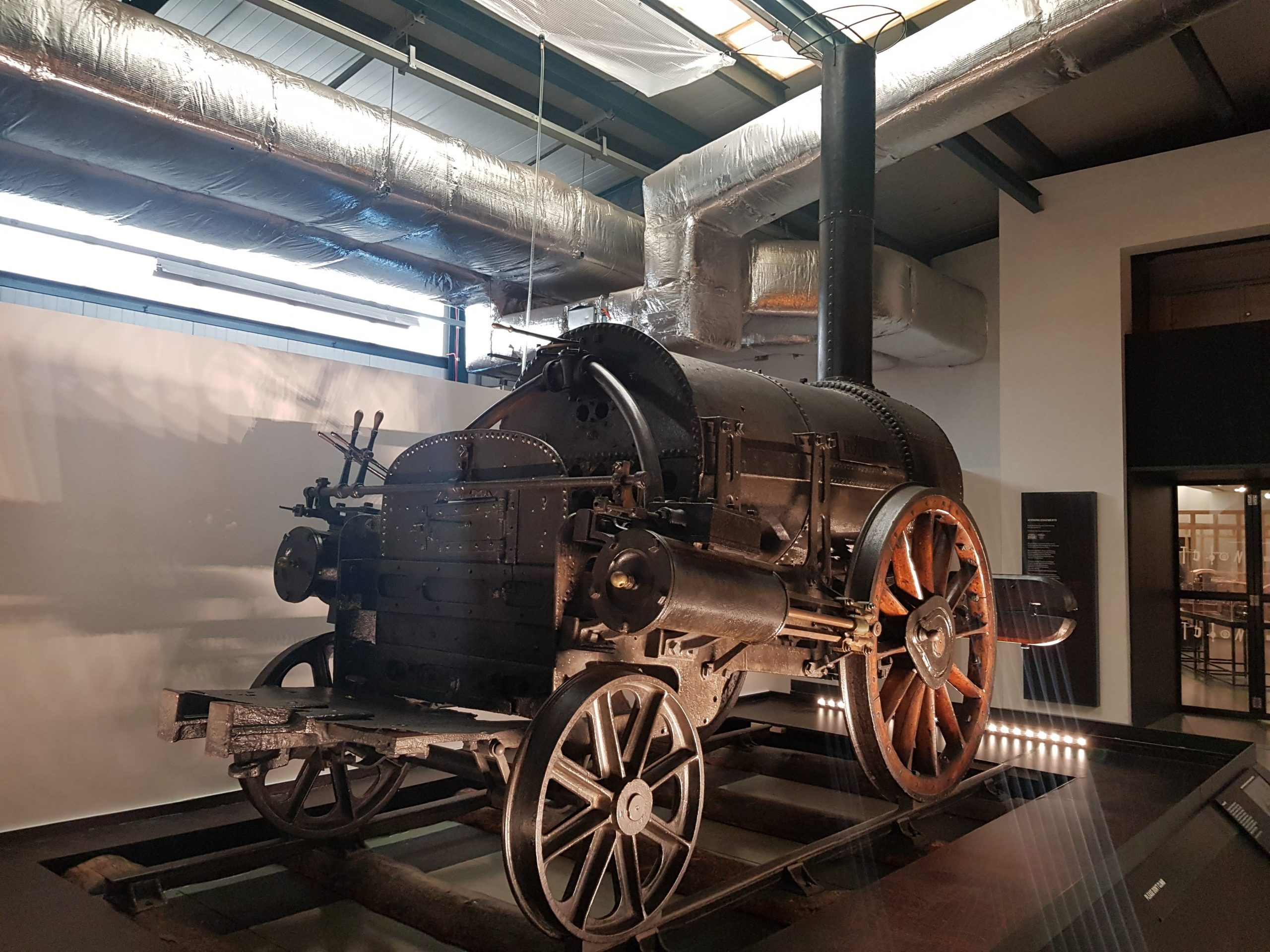
    I’ve posted about numerous more peripheral exhibits that intrigued me in the National Railway Museum’s store, but it’s the original Stephenson’s Rocket that must be one of the museum’s most important in historic terms.

    I haven’t seen this locomotive at the museum before, as it only arrived here in 2019 after it spent a period at the Science and Industry Museum in Manchester and before that, the Newcastle Discovery Museum. Prior to that, it was at the National Science Museum in London (other than for a short spell in Japan and York) and I’m sure I must have seen it there, but like most things, I’ve forgotten.

    The locomotive has been well cared for most of its history, although it has also been modified and knocked about a bit since it was originally built in 1829. It was given to the Patent Office Museum in London in 1862, which later became the South Kensington Museum and much of their collection was taken over by the National Science Museum. It’s there that the locomotive remained until 2018.

    It is a thing of beauty, designed by Robert Stephenson and it was the winner at the Rainhill Trials when five different locomotives were entered into a competition to be used on the Liverpool & Manchester Railway. The other four locomotives didn’t finish the 1.75 mile length of track that had been laid out, so the contract went to Robert and George Stephenson. It must have been an exciting day, the Liverpool Mercury went into some detail about the locomotives, treating the five competitors like it had been some grand horse race.

    The first day of the locomotive’s use was a grand affair, attended by none other than the Prime Minister of the time, the Duke of Wellington. The first day wasn’t an entire success as the locomotive ran over, and killed, William Huskisson, the then MP for Liverpool. This gave him the unwanted honour of being the first person to be killed in a railway accident on the publicly operated rail network.

    Not much is known about what happened to the locomotive during its working life, the initial excitement in the newspapers tailed off somewhat. It’s moderately surprising that the locomotive wasn’t just scrapped given that railway heritage couldn’t have been much of a thing in the 1850s. But, here it remains today, on display at the National Railway Museum until at least 2030.

  • York – National Railway Museum (Keystone from Stockton & Darlington Railway)

    York – National Railway Museum (Keystone from Stockton & Darlington Railway)

    And another item in the National Railway Museum’s stores…..

    This might not seem exciting at first (or perhaps at all), but it’s a keystone from a decorative arch on the Stockton & Darlington railway. On one side there’s a human head and on the other are grapes. The notes for this item state that it comes from Stockton railway station, now known as Thornaby railway station. The Stockton & Darlington railway was the first public network in the world to use steam locomotives and it opened in 1825, so the 200th anniversary isn’t that far away.

  • York – National Railway Museum (Early Ascom Ticket Machine)

    York – National Railway Museum (Early Ascom Ticket Machine)

    And another in what I consider interesting items located at the store of the National Railway Museum in York.

    This is why having a large store at the National Railway Museum is such a marvellous idea, it allows them to display items which most people probably have little interest in, but they’re still a reminder of the history of the rail network. Unfortunately, the museum don’t seem to know which station this particular machine was from, but it does state that it’s a B8050 ‘Quickfare’ machine. Wikipedia mention that there are none of these left on the network, other than on the Isle of Wight where a few remain in use. I have no knowledge of railway ticket machines but I liked looking at it  🙂

  • York – National Railway Museum (McCorquodale Printers)

    York – National Railway Museum (McCorquodale Printers)

    And another item in the stores of the National Railway Museum in York.

    This was presented in 1980 by the printers, McCorquodale, to the British Railways Board to mark the 150th anniversary of the opening of the Liverpool to Manchester railway service.

    There’s a fascinating amount of detail here, this is a railway timetable from the days of Monotype, all before computerised printing…. There’s also a route map, British Railways logo and printing equipment as part of the set-up.

  • York – National Railway Museum (Memorial Plaque – Midland Railway Company)

    York – National Railway Museum (Memorial Plaque – Midland Railway Company)

    And another exhibit in the stores of the National Railway Museum in York.

    This is a memorial tablet which was presented by St. Leonard’s Church in Chapel Le Dale, commemorating those who lost their lives building the railway between Settle and Dent Head. I did ponder at first whether it was appropriate to remove it from its original location, but all is well as the sign says that a new one was installed as this one was damaged. Looking at a few photos of the church, it’s nice to see that the new tablet is visible and that the memories of those who lost their lives aren’t entirely forgotten.

    The number of people who died isn’t known, although over eighty people died from a smallpox epidemic at Batty Green, which was almost a shanty town for railway construction workers. Many others died during work on the line, a spectacular piece of railway engineering which required the construction of several viaducts.

  • York – National Railway Museum (Oak Carving from Pontypridd Railway Station)

    York – National Railway Museum (Oak Carving from Pontypridd Railway Station)

    This is another exhibit in the store of the National Railway Museum in York.

    It was a little hard to get a clear photo of this oak carving of an eagle and deer, but I thought it was interesting to know that it had been used in Pontypridd railway station’s refreshment rooms. It had become a bit battered over the years, so the museum conservators have repaired some of the missing pieces with wax, to show what’s original and what’s new. I vaguely hoped to see an old photo of the refreshment rooms to catch a glimpse of where this was once placed, but I haven’t come across anything yet.

  • York – National Railway Museum (Shrub Hill Road Level Crossing)

    York – National Railway Museum (Shrub Hill Road Level Crossing)

    And another from the stores of the National Railway Museum.

    This handy and overly complex sign was once at Shrub Hill Road level crossing, which I think was in Worcester. I can’t see where this would have been located, as the crossings at this railway station now go under the tracks. They also went under the tracks though in the 1880s, although this sign could have been earlier, but the NRM don’t know the date of it. But in any event, it does require some reading to understand when it would have been safe to cross.

  • York – National Railway Museum (Interactive Display)

    York – National Railway Museum (Interactive Display)

    Another item from the National Railway Museum’s store.

    This is a broken machine, or at least it is no longer switched on, but I am delighted that the museum has kept it. That’s proper curatorship, because this type of item could easily be discarded by an idiot.

    The machine was on display in the Main Hall at the museum between 1975 and 1988. It would have engaged and delighted a generation (and I’m fairly sure I visited the museum during this time, so I would have likely seen it), a few of whom might remember it today. The above photo isn’t very clear, but it’s a map of the UK which lit up to show the growth of the network between 1830 and 1860. This is the type of exhibit that it would be easy to throw out, but it is in itself part of the museum’s history.

  • York – National Railway Museum (Last Cheeseburger)

    York – National Railway Museum (Last Cheeseburger)

    As I mentioned elsewhere, the Collections Store at the National Railway Museum is my favourite part of the institution.

    Not least because of exciting displays such as this, a little piece of culinary history. It’s the last microwaved burger container that was served on the Great North Eastern Railway line, the end of an era on 31 May 1999. Sounds rather nice (although I’m sure it wasn’t), a beef burger with cheese, Chinese leaf, dill pickle, onion, mustard and tomato sauce in a sesame seed bun.

    The decision to give this to the National Railway Museum did make the news at the time, it was a bit of a PR stunt to advertise GNER’s new deli range. It was such a success two years later there was an announcement, GNER said that the burger was back. This time though, they didn’t microwave it, although I’m unsure how they did cook it. The York Press reported that the new premium burger and a can of coke would cost £3.50…… I don’t know how it went, but GNER lost their franchise a few years later, one of the few rail companies who had really focused on the culinary offering.