[I originally posted this in July 2018, but have reposted it to fix some broken image links]
It’s Sunday morning and it’s too hot. Again. The excitement for the locals of seeing their national football team win yesterday evening in the World Cup thing must have also caused a few headaches this morning.
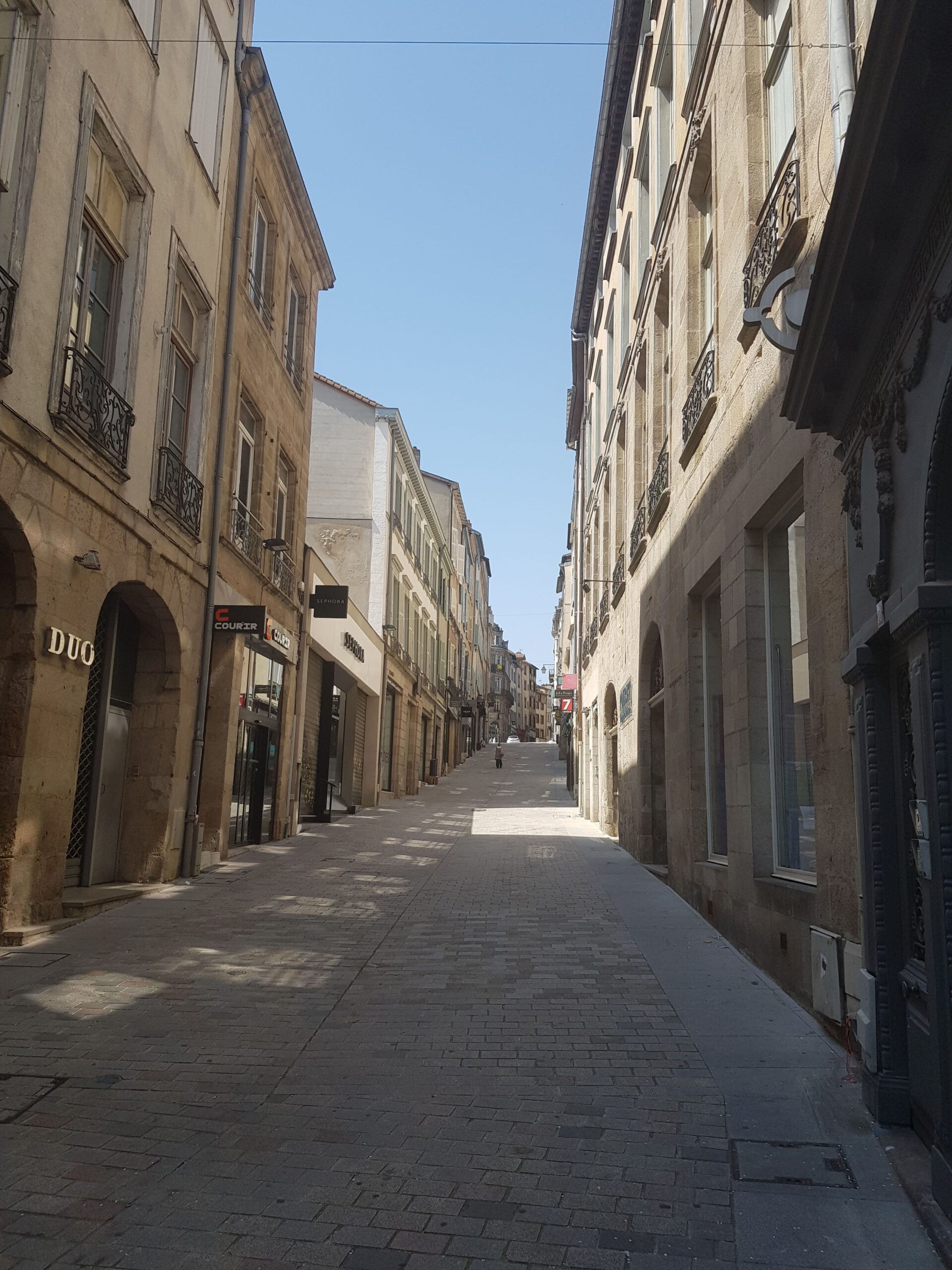
Like most parts of France, it’s very quiet on Sunday mornings, primarily because nearly everything is shut. It does though have the advantage of meaning the streets aren’t busy and there are few cars on the road.
[I originally posted this in June 2018, but have reposted it to fix some broken image links]
The city’s Cathedral is Saint-Etienne (or St. Stephens in English) which was constructed between the thirteenth and nineteenth centuries. The building is Gothic in design and the only other section of the Cathedral built outside this period is the Romanesque crypt, although this isn’t accessible to visitors.
The bell tower of the cathedral was separated from the main part of the building until the late nineteenth century.
There was an event taking place, so the external view was partly blocked by seating. The part of the building is from the late thirteenth century, the section in the middle is from the sixteenth century and the section on the right (excluding the bell tower which is late fourteenth century) is from the nineteenth century. It’s a complex building, but at least, and unlike Narbonne Cathedral, they completed it.
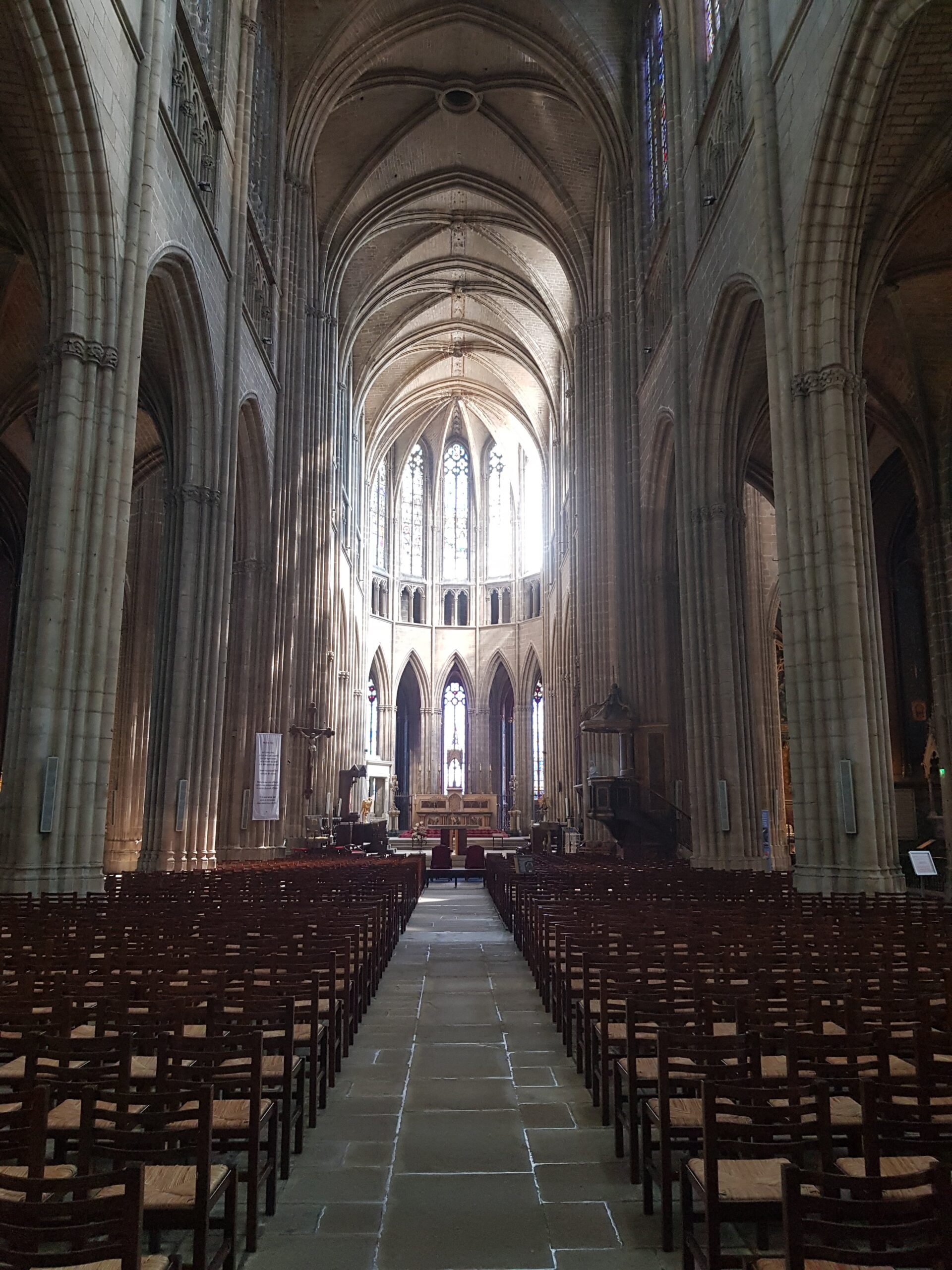
The glorious nave of the cathedral.
The choir section of the cathedral dates from the late thirteenth and early fourteenth century, although this is where the earlier eleventh century construction started.
The Chapel of Sainte-Germaine, which also has some original wall paintings from the thirteenth century.
The cathedral’s main organ and the impressive sculpted rood screen, which has been moved from its usual place in the building.
Statues missing from the rood screen.
Both the detailed stonework and the missing sculptures and general damage can be seen on the rood screen.
So colourful….
The east transept, which is a little narrower than the west.
The Chapel of Sainte Philomene.
The Chapel of Saint Martial.
More stained glass.
There’s evidence above this arch, visible by the change in the stonework, of how initially it was going to have a squarer design.
The tomb of Jean de Langeac, an important sixteenth century diplomat and church official. He was the individual who commissioned the rood screen and he also spent a little time in England in the court of King Henry VIII.
The tomb of Bernard Brun, a former bishop of Limoges.
After an interesting hour in the cathedral, which was nearly empty, I ventured back out into the hot, bright sun. It was a particularly non-touristy cathedral with no shop, no parts were chargeable and that made it feel just that bit more authentic. There was plenty of signage around the building, although it was all in French, with the exception of a useful and information leaflet in English.
[I originally posted this in June 2018, but have reposted it to fix some broken image links]
Limoges is the first airport that I can remember visiting that has managed to provide no bus, rail or tram link for its passengers. There is a bus link, but there are only three a day and they’re not at all timed to the movement of the aircraft. The taxi drivers at the airport must be very pleased indeed at the local bus company, as that’s the only option to get around for those who aren’t hiring cars.
Well, other than for those people who walk. I’m getting the impression that there aren’t many who do that, as no-one from my flight seemed to feel the need to walk the six miles into the city centre. Anyway, what’s the point of being a member of the LDWA (long distance walkers) if I don’t walk from time to time?
So, I walked.
Although there isn’t much pavement for the first two miles, there also isn’t really much traffic. The first part of the walk is alongside a busy road, but they’ve carefully added an area to walk on the grass, so it’s safe.
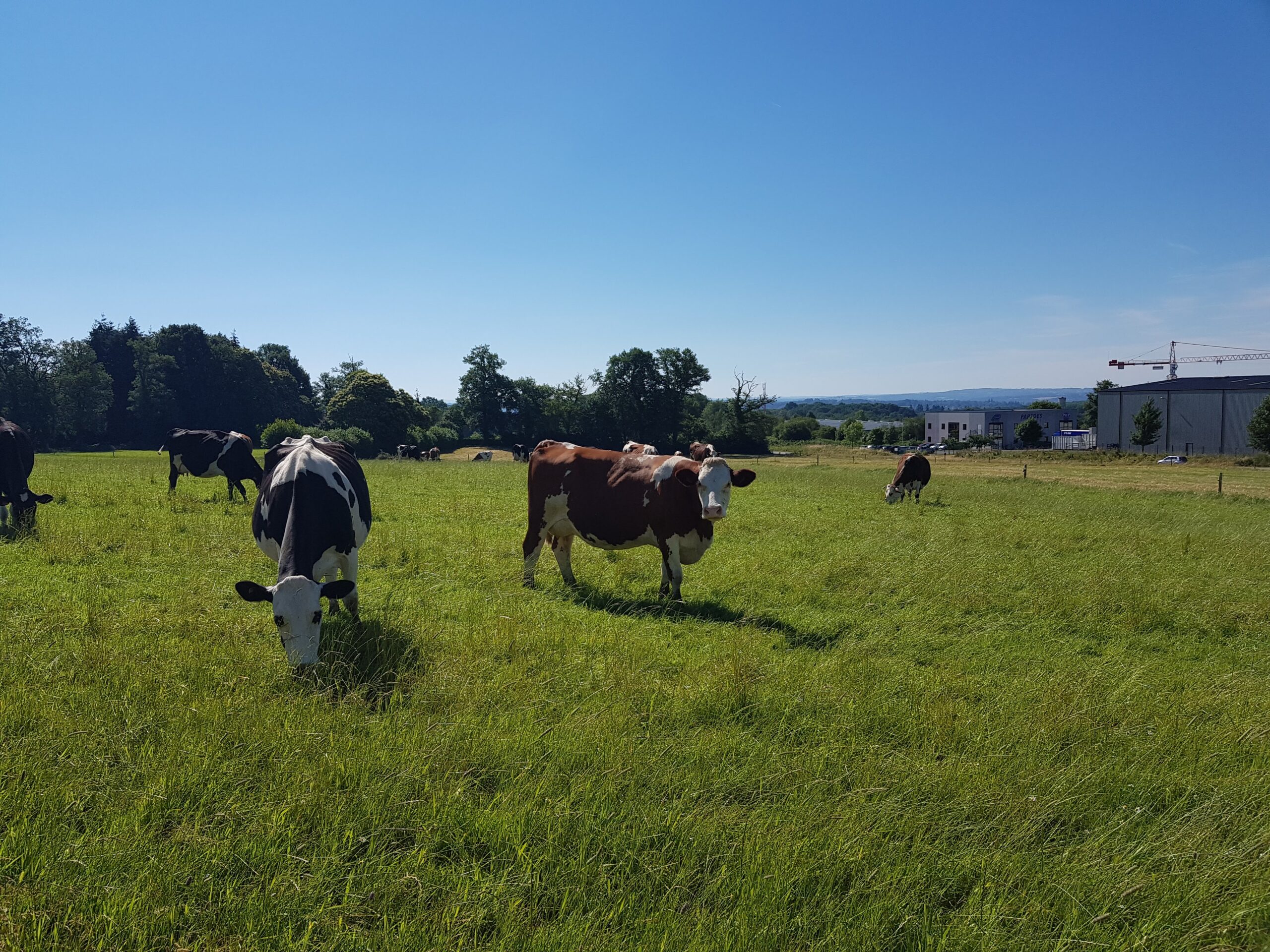
There were lots of cows in the fields.
The view on the walk was certainly rather pleasant, lots of countryside and some lakes.
And some streams, all very lovely. Just under half-way through the walk is a town where there are numerous small shops. There was also a church which I would have visited, but there was a funeral going on when I was there, so it didn’t feel entirely appropriate.
When reaching the city, one of the first sites that it’s necessary to cross is one of the city parks.
And after going through a park there’s a woodland walk, which given the hot temperature, was very welcome indeed. As can be seen from the photo, it was sunny.
A look back at the woodland area, which is surprisingly dense for such a relatively central area in a city.
This is the last photo before I arrived at the hotel, a view of the main railway line which goes into Limoges. The entire walk takes around two hours, although I took a little longer as I decided to sit down every now and then to cool down from the heat. It’s not the most sheltered of walks from the sun in places….
For those not in a rush, it’s a very walkable route into Limoges, especially for those who don’t want to pay the €24 taxi fare.