
I’m just placing the history of the Lidgate Star pub in Suffolk here so that it doesn’t get lost.
History of the Lidgate Star (in .pdf format)
I’m just placing the history of the Lidgate Star pub in Suffolk here so that it doesn’t get lost.
History of the Lidgate Star (in .pdf format)
[I’ll come back and add more to this post as I find out more….]

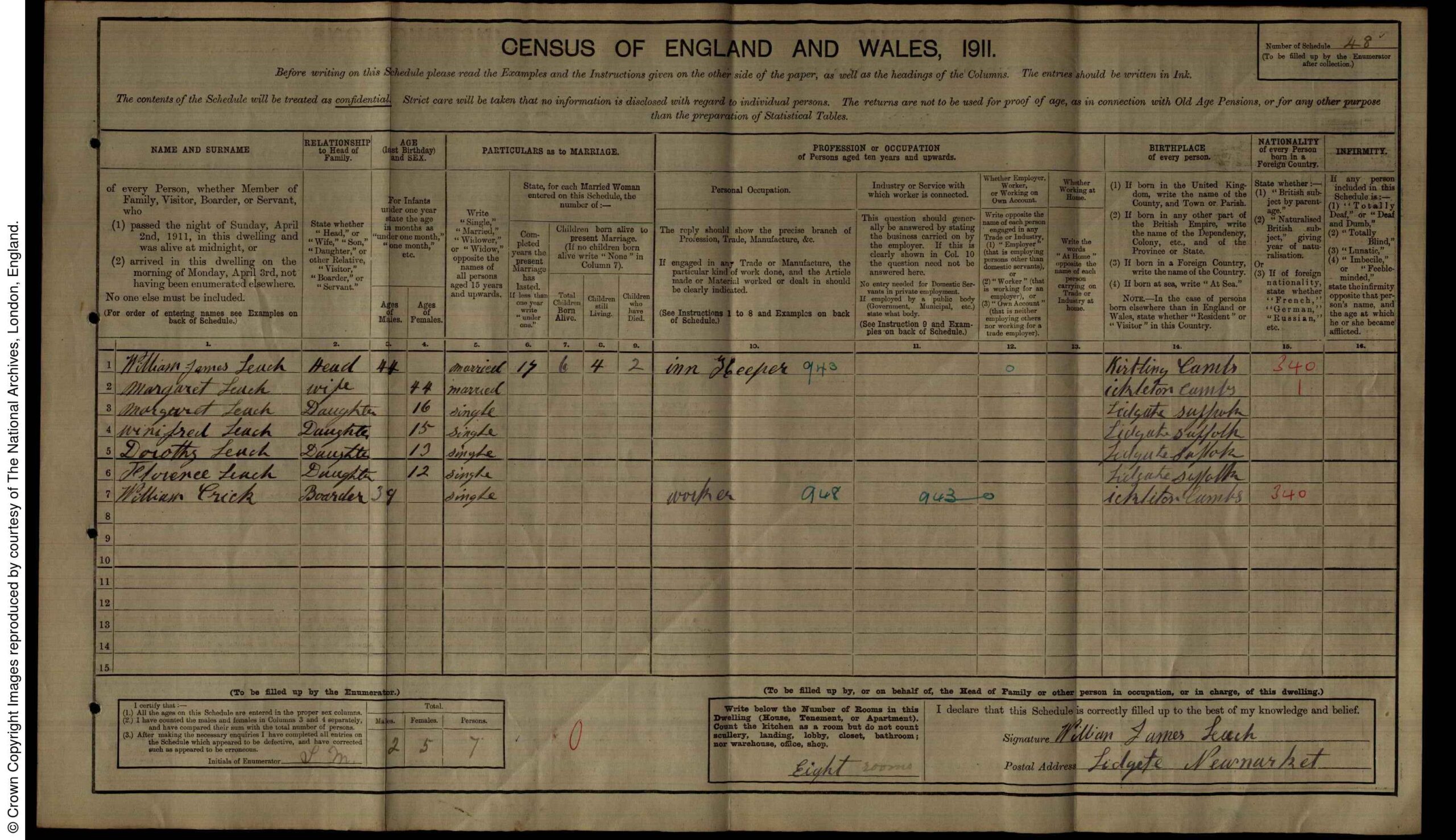
Old census returns are fascinating things, this one is from the Lidgate Star in 1911. It’s the Leach family, who were a couple who had four children, all female, although two children had already died. William and Margaret had married in Newmarket in the final quarter of 1893.
William James Leach (born in 1867)
Margaret Leach (born in 1867)
Margaret Leach (born in 1895)
Winifred Leach (born in 1896)
Dorothy Leach (born in 1898)
Florence Leach (born in 1899)
William Crick (born in 1874)
William and his family had also been at the pub at the 1901 census, with William Crick being Margaret’s brother.
William James Leach died on 6 August 1947 at the age of 81.
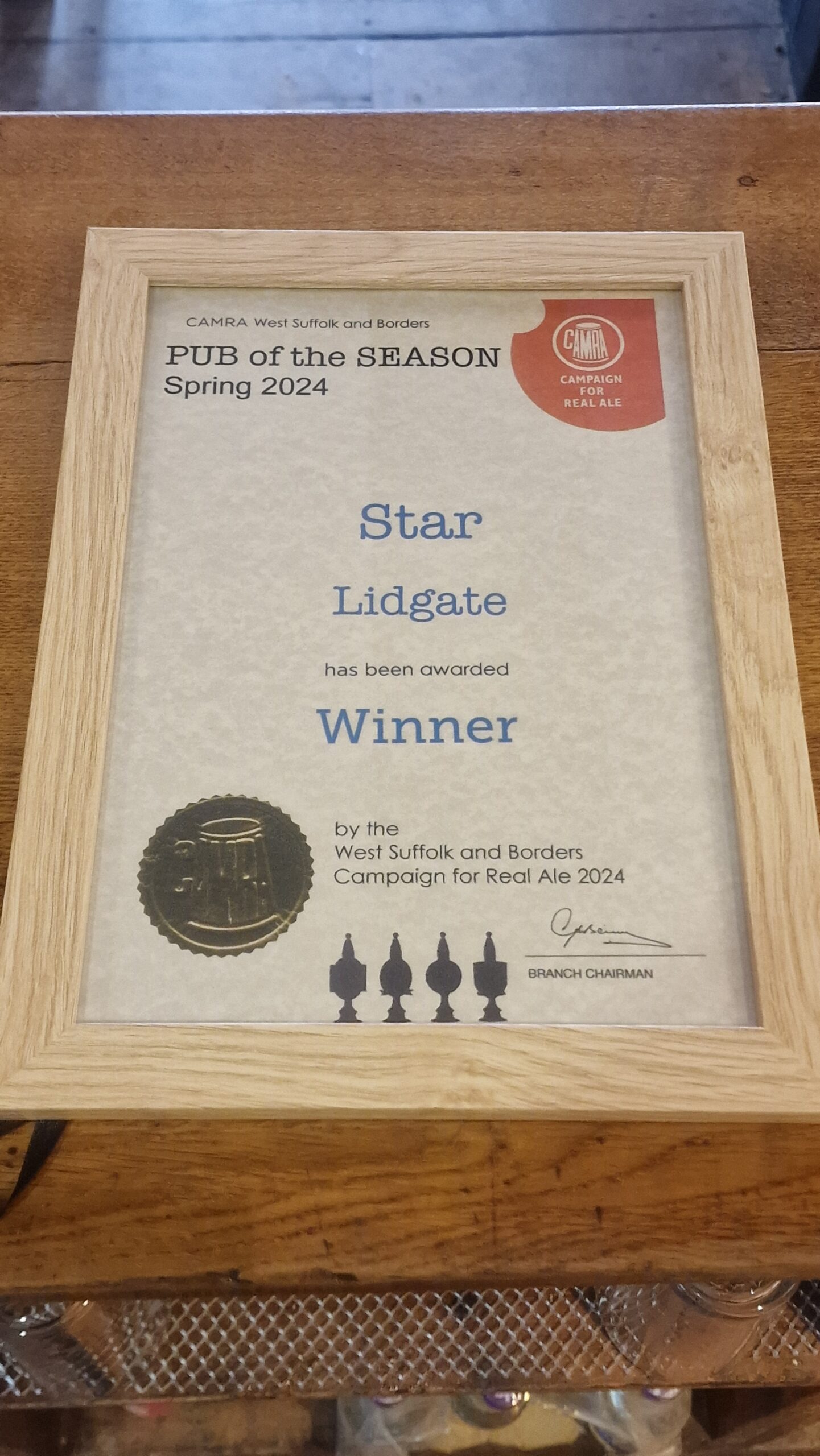
This means a lot. Thanks to customers and breweries. No more words are needed, love you all!

How lovely.

The marvellous Simon from CAMRA.
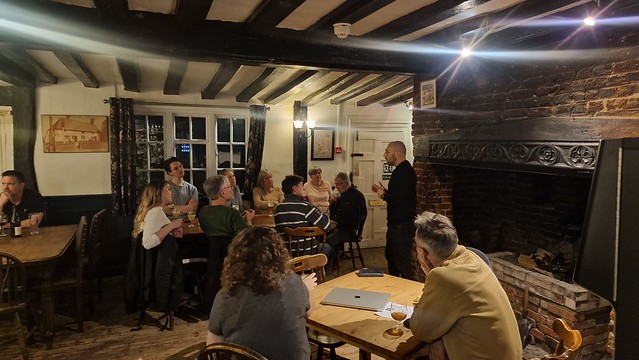

The latest in the series of ‘meet the brewer’ events at the Star was with Adam from Lacons. Although not the brewer himself, he was still knowledgeable and enthusiastic about beer and the history of Lacons. There was also a tasting of three beers from the brewery, Encore, Old Nogg and Yarmouth Strong.
Lacons was founded in 1760 and started in the sunlit uplands of Great Yarmouth in Norfolk. It has some longer origins even than that, beginning in 1640 as a brewery which was owned by the Ward family, passing by marriage into the hands of Paul Lacon. The brewery was a large employer in the nineteenth century with a large estate of pubs particularly in Great Yarmouth, but also across East Anglia. All was well, or mostly well, until Whitbread decided that they would acquire Lacons in 1965, paying £3.2 million for it and they acquired 354 pubs into the bargain. Excited at their new purchase and keen to do more with it, they promptly shut it in 1968. Sub-optimal. However, this amalgamation of brewing had been happening for some time and Lacons themselves had purchased the Diss Brewery in 1897 and shut it down.
But, back to the more recent past, the brewery was brought back in 2009 and the new owners were able to use yeast samples from the National Collection of Yeast Cultures (there’s some forward planning there, setting that up in the first place) to recreate some of the beers. That was useful with the introduction of the brewery’s heritage range, including Old Nogg (a beer name that has been brought back) and Yarmouth Strong. On which point, I thought for reasons of professional research that I should try both of these beers.

Starting with the Old Nogg, this recipe is from 1926 and let’s just say that they evidently knew how to brew beer back then. There’s a bit of chocolate and liquorice to the taste, with a rich aftertaste. This is my favourite beer from the Lacons range so far, I was suitably impressed.

This is the Yarmouth Strong and my beer writing skills were rather limited on Untappd as all I could note is that it was like a strong bitter. I’m not likely to win any beer writing awards soon I’m afraid with that sort of description, although apparently my description wasn’t inaccurate. It’s quite a weighty number at 7% ABV and it’s based on a recipe from 1916.
It was an enjoyable evening to watch proceedings, and I was impressed at how some others remembered some trivia from the evening and won themselves some drinks.
Finally, as part of my riveting blog content, I’ll see if Adam will do a little Q&A for the blog as well, watch this space.
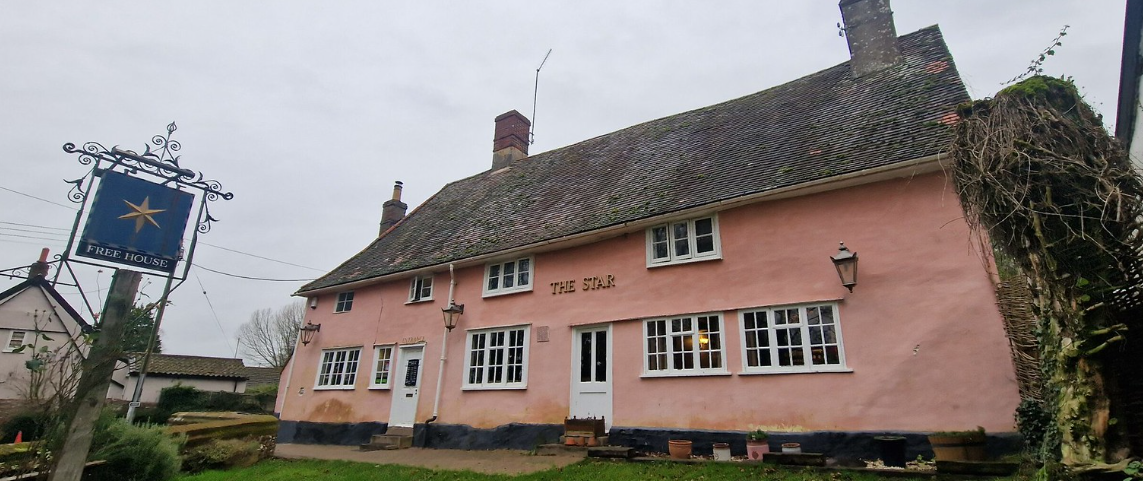
I’m always intrigued as to news articles about the Star and in the Bury Free Press on 21 June 1957 it was reported:
“History was made in Lidgate on Thursday when a panel of parsons visited the Star Inn in Lidgate to conduct an “Any Questions” session. This was quite an innovation in the village and the room in which it was held was well filled. The questions referred to the difference between the denominations, varying dates of Easter, the right age for confirmation and the untidyness of some graveyards. Major General RH Dewing was questionmaster”.
I’m not sure which room they were in, but I like the idea of the religious debate that would have taken place in the pub. Major General RH Dewing (1891-1981) was an interesting character and his service history was:
1931-09-05 – 1933-10-01 General Staff Officer 2 Southern Command
1934-XX-XX – 1935-XX-XX Attending the Imperial Defence College
1936-04-03 – 1937-09-30 General Staff Officer 1, War Office
1937-10-01 – 1939-09-04 Instructor at Imperial Defence College
1939-09-05 – 1940-10-26 Director of Military Operations & Plans, War Office
1940-10-27 – 1941-06-20 Chief of Staff Far East Command
1941-11-14 – 1941-12-19 Specially employed
1942-02-22 – 1942-07-26 Head of the British of Army Mission Washington
1942-07-27 – 1942-10-21 Senior Army Liaison Officer in Australia
1942-10-22 – 1944-09-01 Head of Army-RAF Liaison Staff Australia
1945-XX-XX Head Supreme Headquarter Allied Expeditionary Force in Denmark
1945-XX-XX Member British Military Commission in Berlin
1946-05-06 Retired
There’s a much longer detail of his life at http://www.badwellashheritage.co.uk/badwell-ash-soliders/dewing-richard-henry/, I imagine that he would have been an interesting chair and questionmaster of the meeting. I doubt that the Easter question will ever be settled, the complexity of it is explained well at https://en.wikipedia.org/wiki/List_of_dates_for_Easter. Even at a location as auspicious as the Star, it would be unlikely to get any agreement on changing the current system.
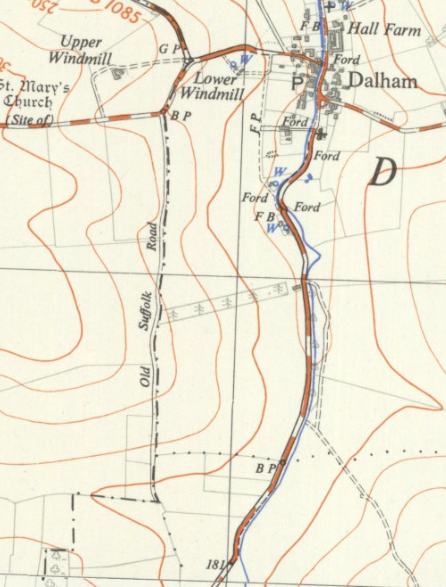

My posting frequency, and indeed plan to restore a heap of the missing images on this blog, has been a little sub-optimal recently if I’m being honest. I hope to fix that a little now, so riveting content will come pouring out. And what more fascinating place to start than the Old Suffolk Road? It’s the straight line through the middle of the above map, whilst the road had evolved to go through the village of Dalham. It intrigued me as the initial route is a far more sensible one and it also appeared to be higher up, suggesting an ancient route. There are also Roman roads in the area and this track is certainly fairly straight, even though it’s now just grass and there’s no firm surface.

It’s more evident from this more recent Ordnance Survey map from the 1950s (this is out of OS copyright, I’m not randomly stealing their maps).

There’s the northern entrance to it, the width of a road but no evidence that it has even been a firm surface.

It’s certainly a sizeable trackway.

The view over the local countryside, including the windmill at Dalham.

It started to become evident from this that the pathway was an ancient route.

And then it suddenly stops dead and walkers have to cross the field to rejoin the road. It says that it’s a permissive path (well, permitted path here), although there appears to be evidence that this was a footpath and should perhaps be registered before the 2026 deadline, but there don’t appear to be any access issues here anyway.

The tree line to the right is where I walked, straight ahead is where the path stops and to the left there’s still some evidence from the ground where the track went, although it’s hard to see in this photo. What’s also interesting (well, to me anyway) is that this stretch of track is the border between Suffolk and Cambridgeshire, so there must be some historic element for this route for that to be the case.
This route is very near to the Icknield Way, the ancient trackway that went from Norfolk to Wiltshire, much of which is today the Ridgeway and Peddar’s Way. I can’t find out anything in detail yet about the origins of this route, but I’ve decided that for the moment I’m placing it as a pre-Roman road which was an ancient route that has just happened to survive in part in today’s landscape. Quite why much of it hasn’t been ploughed up, I’m not entirely sure, although that’s what has happened to the southern end of it nearer to Lidgate. As usual, I’m over-thinking this no doubt, but I find it all rather intriguing to think that I walked along a route that has been in use for thousands of years.
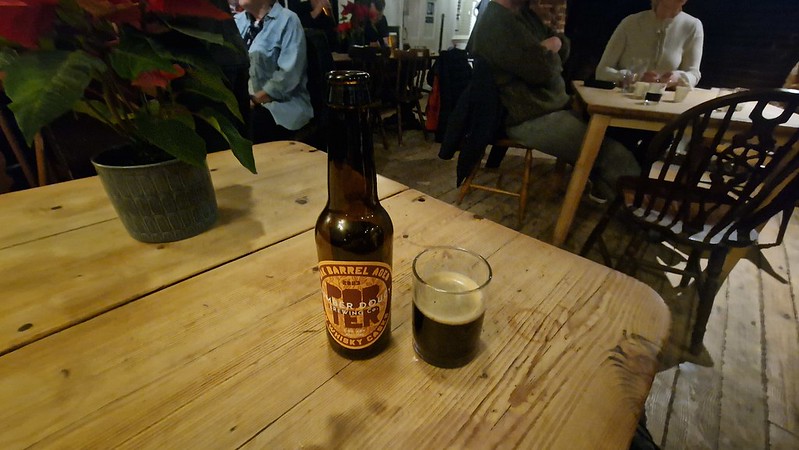

Meet the Brewer events are some of my favourite things and I’m delighted that the Lidgate Star has two a month of them. We have a lot of very lovely and supportive brewers in the area who are really keen to engage with pubs. John from Humber Doucy brewery was at the Star talking through six of his beers. One of the nicest brewers you could imagine, the brewery are a father and son team based in Bacton in Suffolk. Their brewery, which I’m going to get to soon I hope, is in a former 1950s MOT garage and it all looks very smart from the photos. The brewery name is inspired Our name is inspired by a road in Ipswich, said to have been named by French prisoners of war in the 1800s.

My favourite beer of the evening was the oak barrel aged porter, a rich and decadent little number with plenty of richness. They also have a more usual porter, a nettle & elderflower saison, a red ale and a bitter, all intriguing and interesting. John talked through each beer, spoke about the brewery which all proved entertaining. Their web-site is at https://humberdoucybrew.co/ and their Instagram is at https://www.instagram.com/humberdoucybrew/. The pub’s next two meet the brewers are Mauldons and Three Blind Mice.