
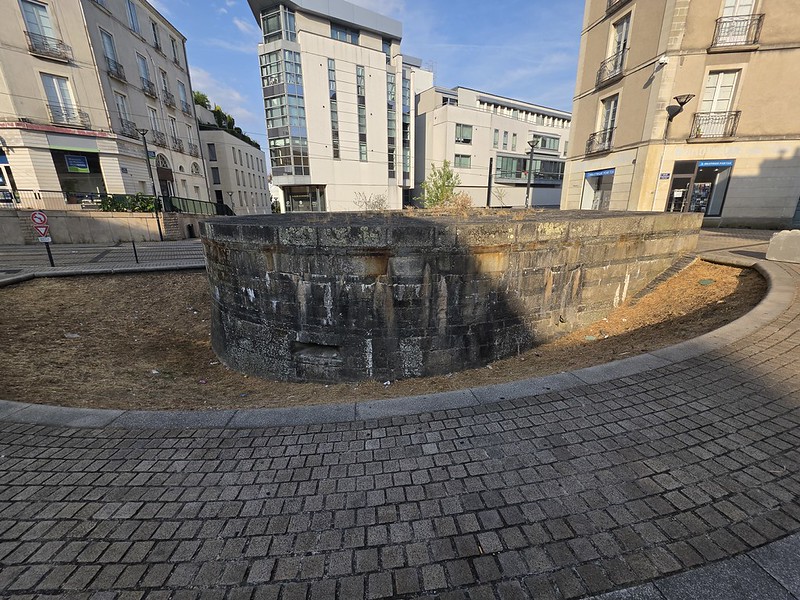
These rather modest remains belonged to Porte Sauvetout, once one of the principal entrances through the medieval walls of Nantes. Situated on the north-western side of the city, the gate controlled the routes towards Vannes and Rennes, so anyone arriving from that direction would have been required to pass through it rather than simply wandering into Nantes in search of craft beer. Thank goodness for freedom of movement is all I can note….
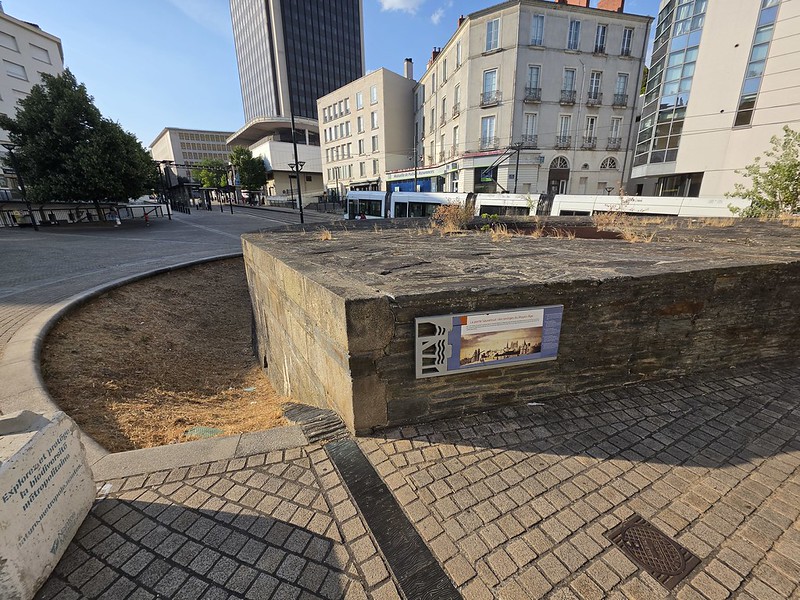
Porte Sauvetout was far more substantial than the remaining masonry arrangement might suggest. The main gateway stood between the Haut-le-Pied and Erdre towers, with a drawbridge and additional defensive works protecting the approach. The towers were rebuilt in 1482 and 1483 to accommodate gunpowder artillery, as medieval military technology had advanced beyond merely dropping unpleasant objects onto people from above.
Like most of Nantes’s medieval fortifications, the gate was largely dismantled from the mid-eighteenth century onwards as the city expanded and reshaped itself, with the last stretches disappearing in the early nineteenth century. Its base survived, and was properly investigated archaeologically around 1999, ahead of construction work for Nantes’s third tramway line. The dig, lasting a couple of months, confirmed that the tower was in remarkably good condition below ground. It has a horseshoe-shaped plan, still measuring around 14 metres by 12.6 metres, and is preserved to a height of about 3.5 metres on its northern side.
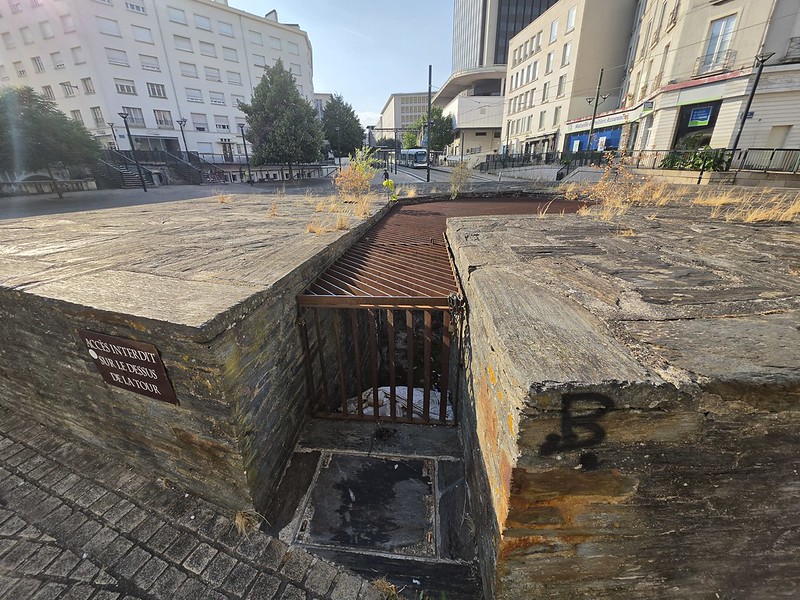
As the photograph shows, steps lead down into the heart of the tower, although access is closed. This is perhaps fitting for what was once a defensive structure, as the original policy of discouraging casual entry appears to remain in force. It was still pleasing to see such a substantial fragment of medieval Nantes preserved among the modern streets and I liked that it had a little information board so I knew what I was looking at.