Category: UK

  • Thetford – Good Woman Public House

    Copyright of Google Streetview

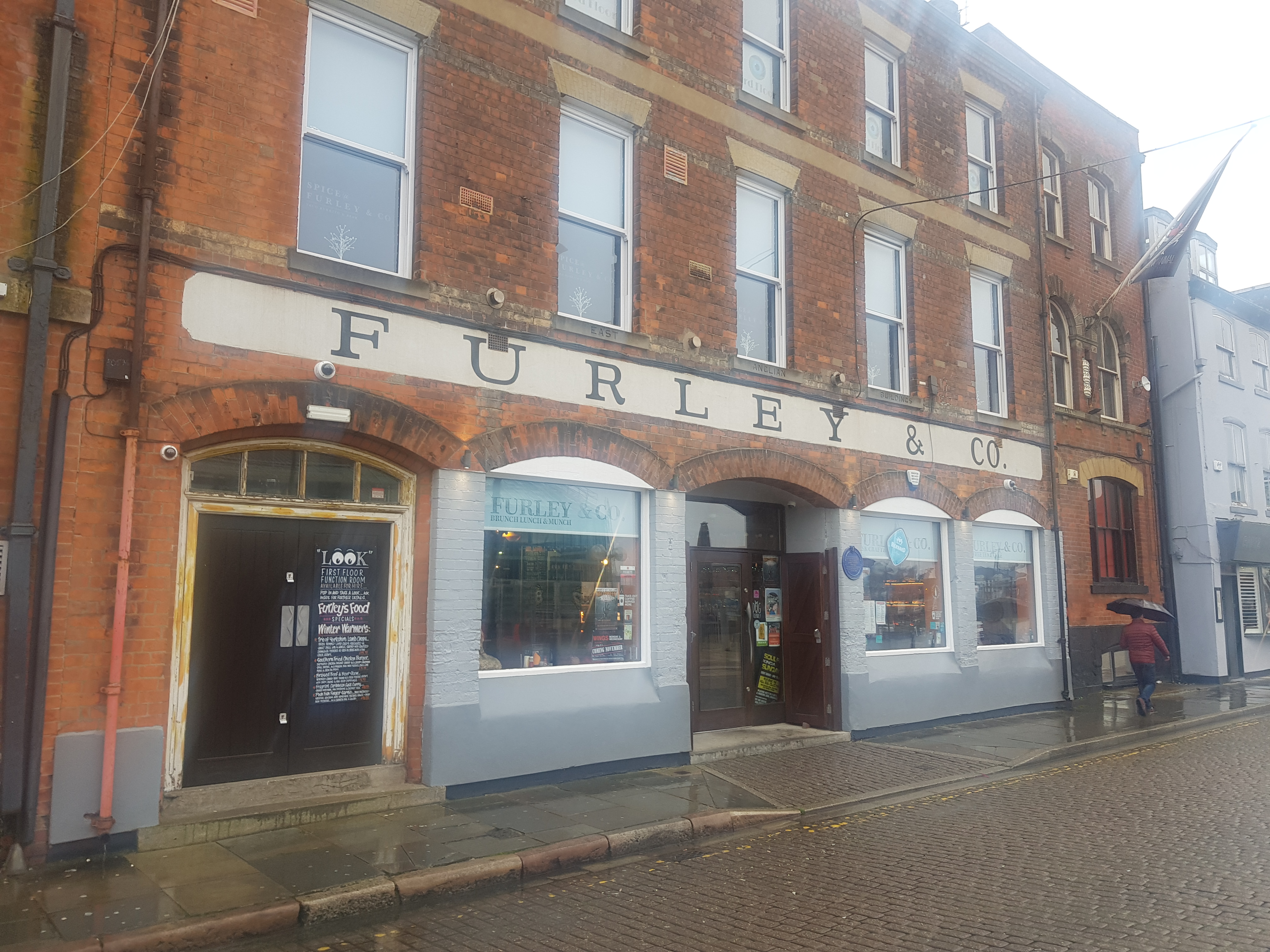
    This building at 51/53 Old Market Street in Thetford was once the Good Woman public house from the mid-nineteenth century to 1909 when it lost its license. The pub was owned by Greene King and today the building is residential and is Grade II listed. The core of the building dates to the sixteenth century, with many later additions. The section of the property on the right of the photo was formerly an outhouse and has now been turned into a garage.

    But, back to the license issue. The beginning of the twentieth century was when the Government decided that there were too many pubs in the UK, so they decided to shut down thousands of them by making it easier to end their licenses. The Good Woman was one of the pubs that was closed, with the Government having to pay compensation to the brewery.

    The compensation payable to the Good Woman public house was contested by Greene King and their managing director of the time, EW Lake, went to the Norfolk Licensing Committee to state his case. Greene King wanted £702 3s 6d because in the previous years they had been selling an average of 86.5 barrels and 486 dozen of bottled beers. The tenant of the pub, John Clarke, thought that he should get more than the 10% usually payable to him, and the committee agreed to that, meaning he would get £85 of the £702 3s 6d.

    Incidentally, this is a ridiculous sum of money in compensation, especially given how many pubs were refused licenses. In today’s money that’s around £55,000 and the tenant received the equivalent of £6,700. Much of this money was recovered by charging the remaining pubs more in taxation, with the intention being to close around 35,000 pubs across the country from the 100,000 that existed in 1900.

    This was the last census that took place when the building was in use as a pub, in 1901. At that time the licensee was Charles John Pear and he also worked as a house painter. The only other occupant in the pub was his wife Adelaide. By 1911, he was working as a plumber and had moved to Norwich, living at 42 Trafalgar Street in the city.

  • Thetford – Henry Balaam

    On 24 July 1835, Henry Balaam was sentenced to seven years imprisonment at Thetford Court. It was the prison which he was sent to that interested me, as Balaam was imprisoned at York Convict Hulk at Portsmouth.

    The hulk was formerly the ship HMS York which had been turned into a prison in a bid to alleviate space in other prisons around the country. The ship was converted for use as a prison ship in 1819 and it remained in use for this purpose until 1848.

    There were a number of prison hulks around the country and they were usually moored up near dockyards, where the prisoners could be rowed ashore to work during the day. This whole process was hardly efficient and proved to be rather challenging during inclement weather. The ships often weren’t split into separate cells, so the prisoners could meander around the deck as they pleased at night, making for a different sort of prison environment.

    This convict hulk got something of a reputation at the time, with one newspaper calling it “the theatre of some of the most bloodthirsty attempts at violence and successful escapes on the part of the convicts confined therein”. The Scotsman noted in 1848 that fifty prisoners had to be removed from the ship due to their violence, and they were marched through Gosport under guard. The paper wrote that “their ribaldry and yells were the most filthy and revolting human ears could be insulted with” and the accompanying soldiers had to charge at the prisoners to regain control.

    The ship was broken up in 1854, but primarily because it was about to fall apart rather than for any other reason. The initial decision to use military ships as prisons was made in 1776 and this was meant to be for a maximum of two years. Politicians got a little behind with this schedule and rather than two year it transpired to be nearly 80 years, finally being banned in 1857.

    One thing that the prison ship didn’t do is steer Henry Balaam away from a life of crime. A decade later he’s showing up in the records of the Brixton House of Correction, which is still in operation today as HM Prison Brixton.

  • Arminghall – Robert Breeze

    I haven’t spent much time looking at this data set before, but they’re the lists of habitual criminals during the nineteenth century. I’m focused on Arminghall at the moment (for anyone wondering why there is a flurry of posts about Bixley and Arminghall, it’s because I’m leading a walk there), so Robert Breeze caught my eye.

    The document above tells me that he was born in 1847, he worked as a labourer, he was single, he had a fair complexion, he had blue eyes, he was stout in shape, 5″3′ tall and had an oval shape head. For anyone who is doing their family tree then hope for a criminal, there’s certainly lots of information about them and many even have photos.

    Further than that, the document tells me that he was born in Wymondham and that he spent the period from 19 February to 18 June 1891 at Norwich prison. Norwich prison on Mousehold Heath had opened in 1887, replacing the prison within Norwich Castle, so he was located in a more modern building.

    As can be seen above, he also had four previous convictions (and some acquittals) and was planning to live in Trowse, which is near to Arminghall, on his release. Some of this crimes are breaches of the Elementary Education Act, so I assume from this he has children. Incidentally, what on earth was happening in Kenninghall and Mr. Hurrell? Probably best not to know.

    A little digging in the Norwich Mercury covering the assizes (or trials) showed that the judge in charge was Sir Charles Edward Pollock, the Baron of the Court of the Exchequer. He sentenced our (I call him our, I feel I nearly know him now) Robert Breeze to his four months in prison, with hard labour, for stealing fowl in Arminghall on 28 January 1891. Breeze pleaded guilty to the crime, with the fowl belonging to Arthur Stimpson and it was valued at 2s 6d.

    In August 1892, the Norfolk Chronicle reported that a Robert Breeze had been charged with being drunk whilst in charge of a horse and cart on St. Stephen’s Plain in Norwich. At the time this Robert was living at Villa Gardens in Lakenham, a pub which closed in 1895, which might not have been ideal. The newspaper also noted that Robert Breeze was also known as Robert Woods, although our Breeze was definitely his real name as I’ve found his birth records.

    In March 1896, the Norfolk News reported that a Robert Breeze was found in Ber Street in Norwich rather under the influence at just before eleven at night. Police Constable Coleman suggested that he stopped swearing and went home. Our Robert “refused to do anything of the kind and he made use of some disgusting language”, to which he found himself “marched to the police station”. He was fined 15 shillings for his behaviour which is around £65 in today’s money if we use the National Archives currency converter. For someone who was “of no fixed residence” I’m not sure how that was paid.

    The problem with these two drunken cases, and also from here is that there are two men called Robert Breeze in Norfolk who commit crimes in the last few years of the nineteenth century and also into the early twentieth century. They are two men, our Robert and a much younger one. Unfortunately, the records don’t make it clear which individual the court papers and newspaper reports are referring to, so I’d like to think that things went well for our Robert. They probably didn’t given the time and social conditions when he lived, but I can’t find his death details to be able to work out what happened.

  • Arminghall – St. Mary’s Church Arminghall (Wall Paintings)

    The historic record for Arminghall Church notes that there was a sixteenth century wall painting of St. Christopher which was destroyed. I was intrigued to know exactly when this little piece of destruction took place, and I have been able to narrow it down to the summer of 1876.

    It was during late 1876 that a group from the Norfolk and Norwich Archaeological Society decided to take a trip to numerous locations across the county. One of them was a visit to St. Mary’s which they discovered was “undergoing repair”. This was indeed the case, as John Pollard Seddon was leading a large restoration and rebuilding of the church, changing it to reflect Victorian requirements.

    I can imagine the group’s irritation when they discovered that Seddon had done away with what was apparently a beautiful wall painting, replacing it what he must have thought was a delightful white wall. The report from the time says that the group discovered that the painting on the south wall had been “stripped” and added “much to the chagrin of a few of the party”. I’m surprised he managed to only upset a few of the party….

    Fortunately a copy of the murals had been drawn before they had been destroyed, I’ll have to at some point look for that…..

  • Arminghall – St. Mary’s Church Arminghall (Tunnels)

    There is a story in the Norfolk Chronicle in 1898 that an elderly local countryman had told their correspondent that there was a tunnel which led from Caistor camp to Arminghall Church. The correspondent didn’t take that suggestion very seriously, but he noted that the countryman had said that he himself had been in the Caistor end. I still like this story, which is somewhat beyond the realms of possibility, solely because it adds a little extra magic to the church.

  • Bixley – Saint Wandregesilius Church (George Marmaduke Seaman)

    George Marmaduke Seaman was one of the two men from this parish who died in the two world wars. The two men killed were brothers, with George’s elder brother William dying during the First World War.

    George was the son of William Seaman and Catherine Elizabeth Seaman, and was the husband of Marjorie Amy Seaman. During the First World War he served in the Royal Navy, stationed on HMS Royal Oak.

    He died at the age of 58 on Saturday 15 March 1941.

  • Bixley – Saint Wandregesilius Church (Pilgrimage)

    Still on my theme of Bixley Church (I put Bixley as it’s easier to spell than Wandregesilius) I’m intrigued at the scale of the pilgrimages which went on here.

    There are a few references to the pilgrimages which took place to the church, this is the last that I can find before the Reformation. It doesn’t help that generations of locals have managed to spell Wandregesilius in such a wide variety of ways, in this case Wandrede. Although, being honest, that is a lot easier to spell.

    These pilgrimages were made by others to help the soul of the person who had died, helping in their salvation. All a bit of a burden on the living, although if there was a financial contribution in the will then I suppose that made things rather more tolerable.

  • Bixley – Saint Wandregesilius Church (War Dead)

    Further to my main post about Bixley Church, there are burials of two war dead in the churchyard. I haven’t yet found these gravestones, but I will make a renewed effort to locate them. There was one war casualty in each of the two World Wars and they were brothers.

    William Seaman, died aged 35 on Saturday 20 May 1916.

    Lieutenant George Marmaduke Seaman, died aged 58 on Saturday 15 March 1941.

  • Bixley – Saint Wandregesilius Church (George Parker)

    Still on my theme of graves at Bixley Church, the arson hit church near Norwich, below is the grave of George Parker. Unfortunately many of the graves are becoming unreadable, but this one has remained in decent condition.

    George Parker died in January 1864 at the age of 81 years old, having been born in 1783. His death was reported in the Norfolk Chronicle, noting that he “died on Wednesday last, Mr. George Parker, Bixley, many years a resident of that parish, deeply lamented by his family, and much respected by a numerous circle of friends”.

    At the time of the 1851 census, George Parker is listed as living at Bixley Hall in Bixley, along with his wife Mary (born in 1789), his son Charles (born in 1825) and his grand son Edward (born in 1840). There were also two servants, Mary Ann Sandle and Mary Flud (both born in 1826), with George and Charles listed as farmers.

    The family was though bigger than this, as in the 1841 census, there were more children listed, Granville (aged 25), Thomas (aged 20), William (aged 15), Charles (aged 15) and Frederick (aged 14).

    I’m doubting whether the Parkers did live at Bixley Hall itself, as this was a grand house that was owned by the Earls of Rosebery and then later on by the wealthy Colman family. But they likely lived in a building attached to the hall, or nearby. George Parker does appear on the electoral rolls though. This was at a time when not every man (let alone woman) had the vote, so everyone had to qualify. Parker qualified as he was a “£50 occupier” (a property which had the required annual value) and was listed as “living on the road from Norwich to Loddon”.

    In the 1861 census, George Parker is listed as living on Bixley Road and as being a retired farmer, living with his granddaughter Julia Mary Parker and two servants, Elizabeth Walls and John Harn. I’ll have to come back to find out more about George Parker, as he seems to have had some wealth, which should mean there’s plenty more to discover about him.

  • Bixley – Saint Wandregesilius Church (James Betts)

    When I last visited this fire hit church the former churchyard was in a state of dereliction and most of the graves couldn’t be seen. Someone has done a splendid job of cutting down some of the undergrowth so that the graves can be seen, but it hasn’t ruined the tranquillity of the site.

    I have a habit, which I should probably get out of, of looking at a grave stone and wondering about who that person was and what they used to do. It’s a little bit of a random hobby (I say hobby, I don’t do it very often) as there’s no real method of which graves seem interesting to me.

    This is the grave of James Betts who died on 1 August 1877 at the age of 66 years old. Born in 1811 he was married to Elizabeth (born in 1813) and the gravestone notes that he was of the parish of Bixley.

    There he is on the 1871 census, right at the bottom, a gardener who lived on the Loddon Road at Bixley. This doesn’t give a whole amount of useful information, but it becomes apparent there’s more on the next page….

    And here are a few more details, his wife Elizabeth, and mention of his two sons, James who was born in 1849 and Henry who was born in 1850.

    James died in 1877, but the 1881 census has his wife Elizabeth living at Hill Cottages in Bixley, which is just south of the Norwich Southern Bypass in what is now better known as Whitlingham. She’s living with Henry, who is also a gardener, and a female called Mary Betts who is listed as the daughter, but I’m assuming who is Henry’s wife. Also living there is Charles Betts, a nine year old boy who is Elizabeth’s grand-son.

    That’s unfortunately it, no other obvious records exist for James Betts, and I can’t even locate him on some of the earlier censuses.