Of all the pubs that I visited in 2019, I’ve written before about how much I liked the welcome offered by the Hop and Vine in Hull. I compiled my favourite pubs of the year, and the Hop and Vine was the one that stood out for me and I’ve merrily told many people about it. And, I’m looking forwards to returning to Hull in September with a small group of people. If social distancing requires, we’ll take it in turns to go in, quality is worth waiting for. The pub didn’t open immediately when it could have done at the beginning of July, but took a little longer to get things right and re-opened this week.

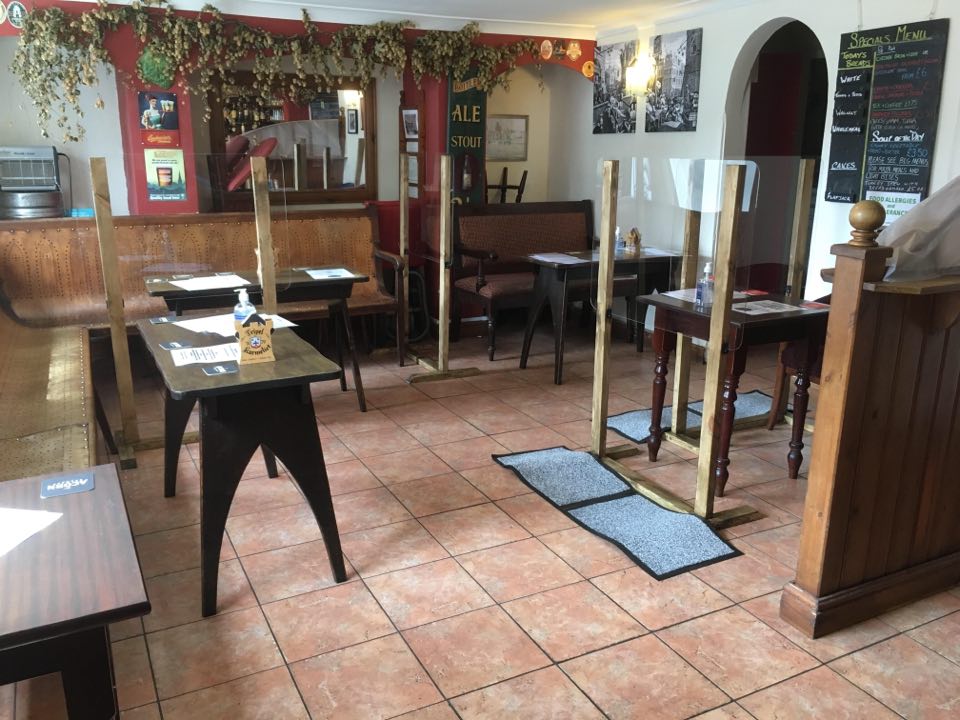
I asked Tony from the pub (with the new social distancing measures visible here) if he’d be willing to answer a few questions about how things are going with the current situation and he kindly agreed. I’m very grateful for the depth of his answers and incidentally, I too am disappointed and have written about several times when a pub offers six pints of the same style, so I’m glad that this was addressed here. But that’s just a little gripe of mine and there’s no fear of having that problem here. Anyway, before I digress too far, onto the questions and Tony’s positive way of looking at the situation.
You’re back open again, was it a successful re-opening for you?
Not bad, considering the restrictions. I managed to develop a collection and delivery service with continental bottled beers during lockdown and so I now have a wider selection of bottles alongside the ales and ciders. The footfall outside is far more limited than usual, so whereas I should have been turning lots of people away on Saturday, only one person did not fit into our restricted space. We have screens between tables less than 2 metres away from each other and our capacity is down from 35 to between 6 and 15 depending on the size of individual groups. Where there is beer, there is hope!
How easy has it been to implement social distancing and have customers been prepared to come back?
We are not the easiest bar to distance in, but the government’s allowance of 1 metre plus mitigating measures has enabled me to open. We now have table service only and screens between the closest of tables, one in; one out for the toilets and hand sanitiser everywhere. It is more difficult to notice when someone requires a further drink when it is “busy” (under the new normal), but customers are patient and generally very accommodating to the new arrangements. As expected, when people have drunk a bit, I have to reiterate the new rules to keep people distanced, but again no problems with compliance and people are sympathetic to my situation.
I was surprised just how accepting people were of giving their contact details to me. Most customers so far have been regulars who are pleased to be back, but I have new customers who live in the same block, who discovered our collection service during lockdown (the leafleting worked!) which is good. Although some regulars have returned, we have a number of regulars who are older or who have health conditions and I am sure some of them are still protecting themselves at home and that seems totally the right thing to do. I look forward to seeing them back when some sort of normality has returned.
What do you see the future being for pubs in Hull, is there cause for optimism?
It is really difficult to know at the moment what the future is. I know of a couple nearby that have closed down due to landlords leaving, but there are others that were due to open during lockdown and have now opened. For me the jury is still out on whether to be optimistic or pessimistic for the time being.
From my past visit, it was clear that you have a real community feel. Were the community and your regulars supportive during the period of closure?
Yes. I had a lot of contact with regulars through social media and texts during lockdown. Some of them were making their own arrangements for home deliveries and some were using it as a time to detox, but all were keen to see the Hop and Vine open again. When I started collection and home deliveries, I had a good response from customers old and new, but this definitely died down a bit when pubs reopened (I didn’t open till the 16th July). This was understandable as many people want to drink in a bar rather than at home.
On the same theme, just how have you managed to deliver such a friendly welcome and atmosphere, something missing from many pubs?
Now, that is an interesting question. Firstly, I am pleased that you found us friendly and welcoming. That has always been my aim and those that have worked for me have always seen a smile and a welcome to be important. I have always taken the view that my main aim is for customers to leave wanting to return. So a smile and “hello” at the beginning and a farewell greeting have always been important – sometimes difficult when very busy – and keeping the place clean and the drinks in good condition are a priority. Esther, Dave, Erika, Erica and John have been integral to keeping the convivial atmosphere at the Hop and Vine as they have worked behind the bar and special mention has to go to Esther who trained me up and still knows everything there is to know about the bar.
Sometimes we get things wrong or maybe a beer turns. In these situations, I always try to ensure the problem is remedied and that the customer leaves happy. Sometimes it is only small things that make the difference and I try to include these in the service. Overall, I try to keep smiling and to engage customers during their visit as much as they wish. Some people just want to sit quietly on their own and it is equally important to recognise this.
Of the cakes that you sell, which is your personal favourite?
We no longer have the cakes, but they may return. Personally, I enjoyed the citrus ones, but I don’t have a sweet tooth and I am sure others might have chosen something like the sticky toffee cake.
Your beer selection, if I may say, seems well balanced and thought through for a small venue. How do you go about choosing new beers, are you guided by wholesalers or customers?
Firstly, my aim is to provide a light/golden ale, a best bitter style and a dark beer at all times (occasionally I have been caught out, when I have misjudged a style!!). I have always been frustrated to enter some pubs and find 6 handpulls of basically one style. We have a good number of drinkers of all styles so it does work well. Most of my purchases are directly from brewers, either of their own beers or of swaps they have received from elsewhere, so it is then the delicate balance of buying a reasonable amount from an individual brewer, but mixing the styles as well. I also generally try to keep 3 separate brewers on the bar at any time, so with my orders, I am often planning several weeks ahead. This caught me out at lockdown and I had more full casks left than I would have liked and sadly had to cancel orders that I expected when lockdown looked likely. This will have had a knock-on effect for the brewers who had orders cancelled, but they understood. The good news is that some of the pre-lockdown untapped beers are ok – strong and dark beers tend to last well, but I don’t expect them all to be in good form and am now ordering in pins rather than firkins as I don’t expect the flow of ale to be as fast as it was previously. As for who guides me on my choice, I have responded to contacts from brewers, I have tried to order beers that customers have requested and also gone back to old favourites that customers have clearly enjoyed. I am a Shropshire lad and I will get Shropshire ales in every so often to showcase God’s own county (oh dear there go all my Yorkshire customers).
Last year, I was down in my home county and popped into Ludlow brewery to collect a couple of pints. There were no complaints and generally you don’t see Ludlow beers in the area. Another time, a customer was in Dorset and brought back a couple of casks of beers he had enjoyed down there (Drop the Anchor brewery I think), while I sorted payment with the brewery (the wonders of the internet). Again, customers lapped up these delicious beers. Obviously price plays its part and I have to consider what the brewer is charging so that I can keep prices reasonable for my customers and occasionally will go above my usual budget to bring in something a bit different.
Would you be willing to name your other favourite pubs, whether in Hull or further afield?
There are pubs in Hull that I would recommend in Hull, but I think it would be unfair on those I don’t name to include them here. Further afield, I do like the atmosphere and beers at Monk’s Walk in Beverley, particularly when they have had a small cave like bar open. A lot of history to see there. Chequers is also my style as I tend to enjoy smaller pubs with a good selection of styles. In Goole, I like the Tom Pudding, named after a type of boat that used to be used in the area. Down in London, I used to make the Bree Louise a must visit pub, but sadly HS2 has required its demolition. There are a lot of great pubs down there to enjoy a pint in. In Shrewsbury, I would make particular note of the Three Fishes and Admiral Benbow. Beyond these shores, I would also mention my particular favourites in Amsterdam of Cafe Belgique and Arendsnest. I could go on, but I will leave you with these select few.
And, finally, do you have a favourite beer or cider?
Now then, now then! That is always a difficult one with so many good ales around. I have rather enjoyed the Top Rope coffee porter (A little press conversation) that we have on the bar at the moment. However, historically I would put Isaac Poad’s Piccadilly Porter and Exit 33’s oatmeal stout as beers that I have particularly enjoyed over my tenure. On a personal level, I favour darker beers, but on the lighter side, Hop Studio’s Mosaic has excellent flavour and body to it. Sometimes my favourite beer just happens to be the one I am drinking at the time!!
Oh, and I did really enjoy Rooster’s Capability Brown on 4th July at our local Head of Steam. We will have to wait and see if that becomes a regular favourite of mine. As for cider, I tend towards the medium Dry and Dry ones. Circle Cider Cats tongue was a favourite of mine, but I think the company is no more. Over the last year or so, I have really enjoyed Mahorall’s medium from Shropshire and Coleman’s Quince Cider from East Yorkshire. At the Hop and Vine, I don’t sell ciders with added fruit, but with quince being from the pear family and being fermented in the process, I was happy to serve it at one of our cider festivals and it was firm favourite with a number of our customers. The quince gave it a slightly different flavour but a very pleasing one, with a slight astringency.
On a final note, thank you for giving me the opportunity to talk about the Hop and Vine’s response to the current situation. It has given me the opportunity to review my own thoughts and obviously, if any of your readers are in the area, they will be very welcome to join us. If travelling some distance though, it may be worth a phone call in advance on a Friday and Saturday (07507 719259) to ensure space is available. Not necessary when normal service is resumed.