Category: UK

  • Swanton Abbott – St. Michael’s Church

    Swanton Abbott – St. Michael’s Church

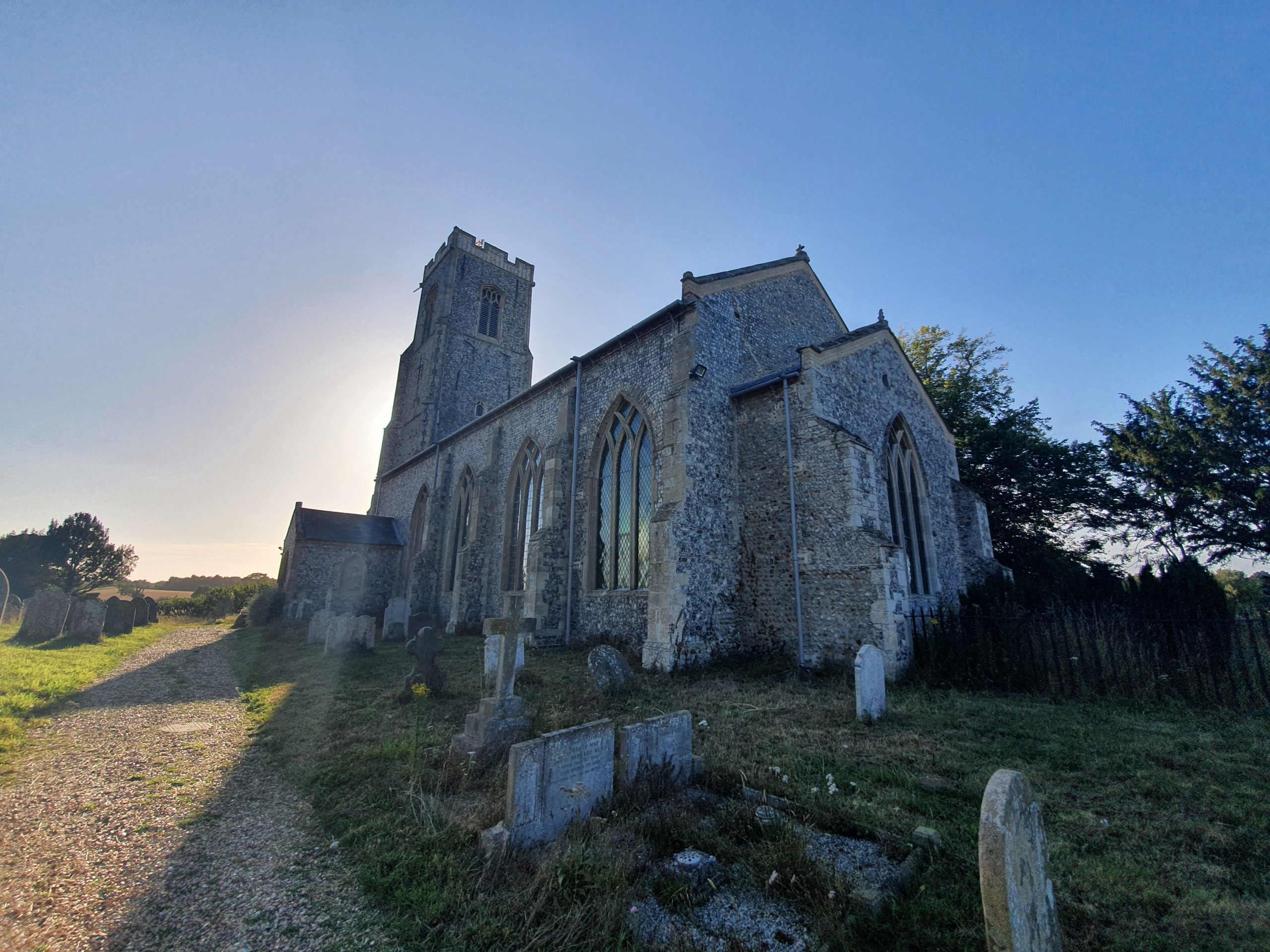
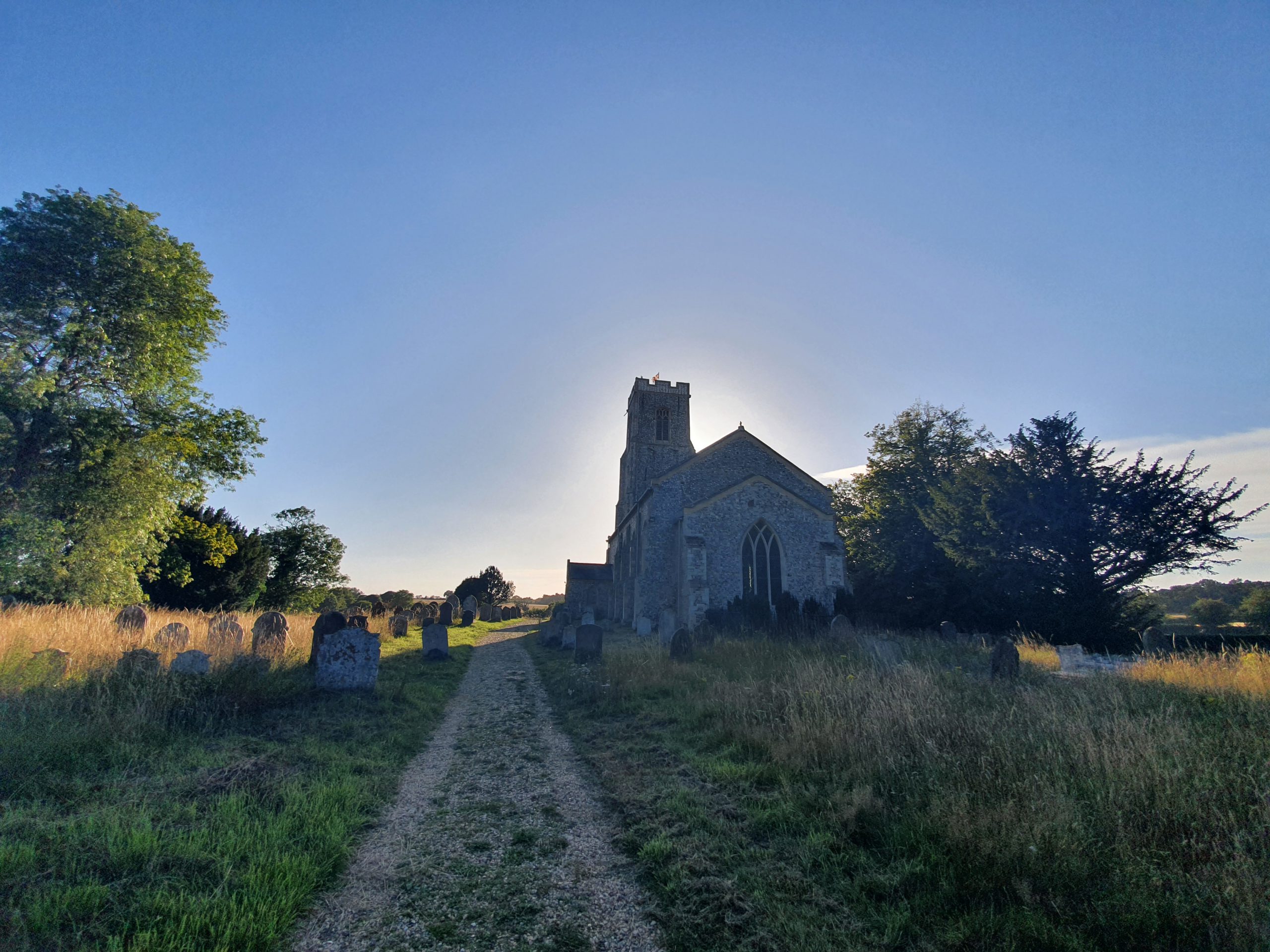
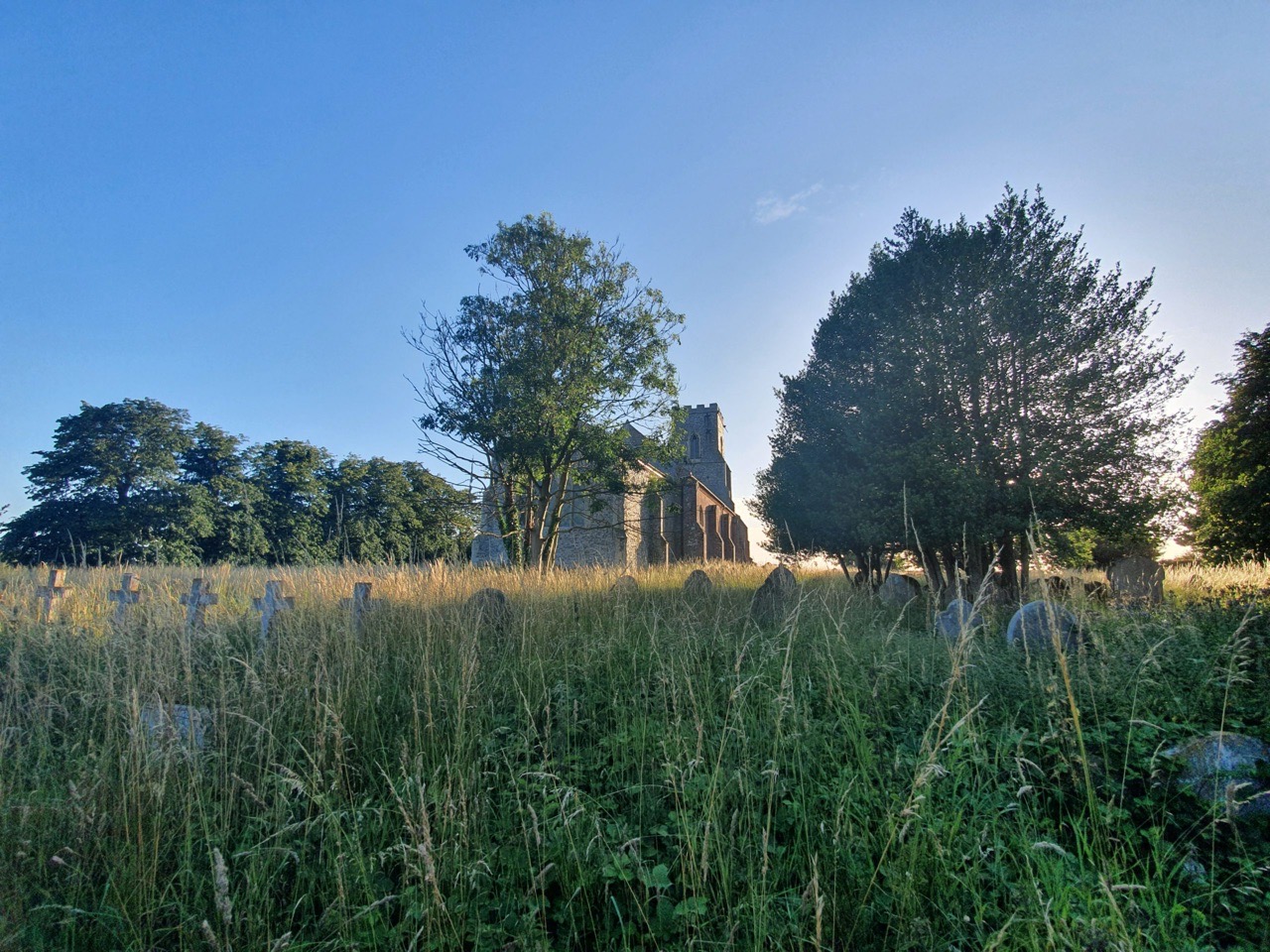
    St. Michael’s Church is strangely detached from the rest of the village, but on this occasion, it’s unlikely that the settlement has moved much, rather the church is on a slightly elevated hill platform.

    The tower, which dates from the early part fourteenth century, is the earliest section of the current church, with the nave being added later on during the fourteenth century and the chancel was constructed in the fifteenth century. There was though likely a Saxon church that existed on the site before work started on the current building.

    The porch was added in the fifteenth century, with the more modern set-up unfortunately masking the medieval wooden door.

    The south side of the church, with the priest’s door visible between the two windows. The church has received a grant in recent months from the Norfolk Churches Trust which will allow for some repairs to the guttering and also work to remove a flock of pigeons that has been causing issues in the tower.

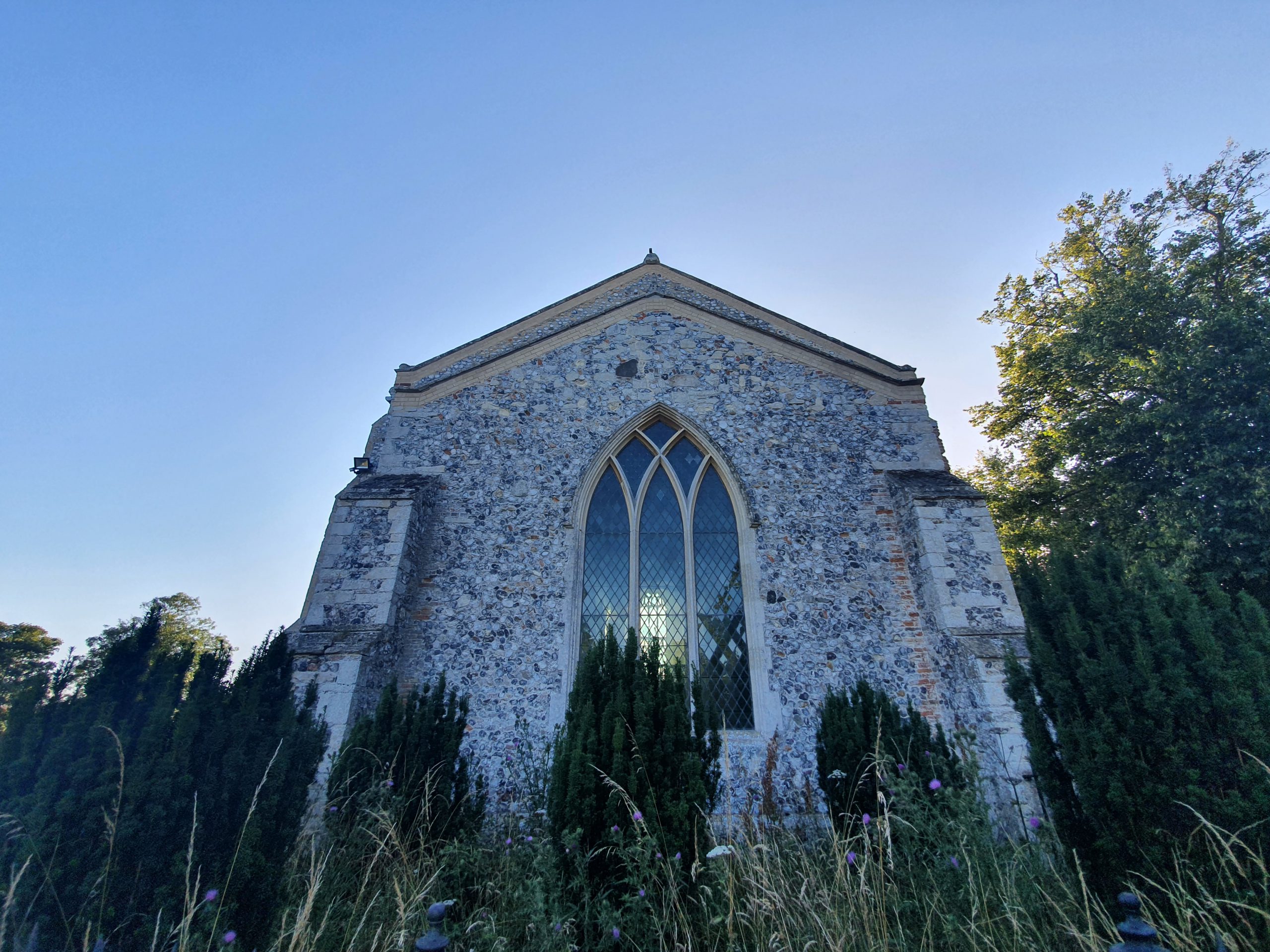
    I’m unsure why the east window has been partly bricked-up, I assume it was for structural reasons.

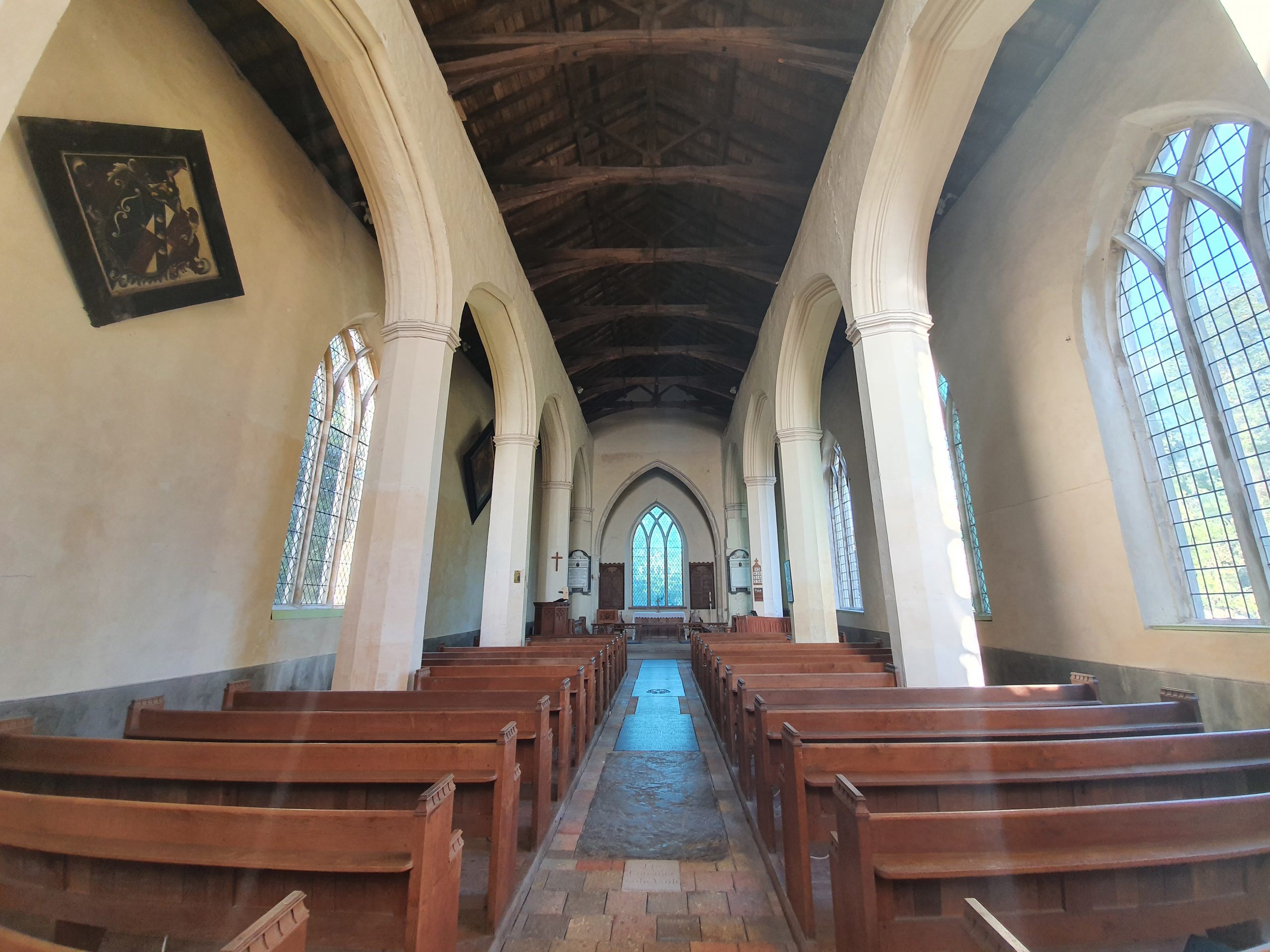
    I’ll return to the church at some point when it’s likely to be open (I’ve been able to do that), with the interior being of note, as there’s a mauled about rood screen which was heavily, and badly, restored at the beginning of the twentieth century which is worth seeing. The pulpit has some medieval carving work to it, there’s fifteenth-century stained glass and the font is of a similar age, all along with numerous memorials of interest.

  • Buxton – Name Origin

    Buxton – Name Origin

    And following on from my visit to Buxton yesterday (the one in Norfolk, not the one in Derbyshire), this is what The Concise Oxford Dictionary Of English Placenames have to say about the origins of the village name.

    Buxton, Norfolk. Buchestuna in Domesday Book, Buxstone in 1254. Bucc’s Tun.

    Short and sweet, ‘tun’ is a farm or village, so it’s the settlement of ‘Bucc’. As an aside, Buxton in Derbyshire has a different word origin, theirs relates to a rocking stone. There is also the possibility that there wasn’t a person called Bucc, but instead the village was named after deer (or bucks) which might have been kept there.

  • Lamas – Name Origin

    Lamas – Name Origin

    Following the walk I went on last night, this is how The Concise Oxford Dictionary Of English Placenames explains the origins of the Norfolk village name of Lamas.

    Lamas, Norfolk. Lamers in Domesday Book, Lammesse in 1044, Lammasse in 1186. Old English lam- or lamb-mersc ‘loam marsh’ or ‘marsh where lambs were kept’. The first alternative seems preferable.

    So, because the word origins of loam and lamb can’t be separated out, the dictionary suggests the two alternatives and thinks loam marsh is more likely. It does seem like fertile soil today, so the dictionary is probably right, but I much prefer the idea that this village name has been in existence for a century and is named from when lambs were grazed here.

  • Swanton Abbott – Name Origin

    Swanton Abbott – Name Origin

    Back to The Concise Oxford Dictionary Of English Placenames to look up the origins of the village name Swanton Abbott. There has been some variance on spelling this village name, some spell it as Swanton Abbot, but I’m in favour of the Swanton Abbott spelling as is on the signs.

    Swanton Abbott, Norfolk. Swaneton in 1044, Suanetuna in Domesday Book, Abbot Swanton in 1451. Old English for Tun of the (swine) herds. Swanton Abbott belonged to Holme Abbey.

    ‘Tun’ is a farm or village, so it’s the farm or village of the swine herds, which explains the Swanton bit, and Abbott is solely because of its religious owner.

  • Walking – Swanton Abbott and Lamas

    Walking – Swanton Abbott and Lamas

    Just photos from tonight’s walk, an area I knew quite well in parts. We also visited the exterior of three churches, so more on those in later posts. The walk was 12.3 miles, walked in just over 4 hours, and it was nice to finish later into the evening and it was still light. Unfortunately, it goes downhill from here with regards to that for the rest of the year.

    Fortunately, despite the sign, we didn’t see any of the adders.


  • South Walsham – Church of St. Lawrence

    South Walsham – Church of St. Lawrence

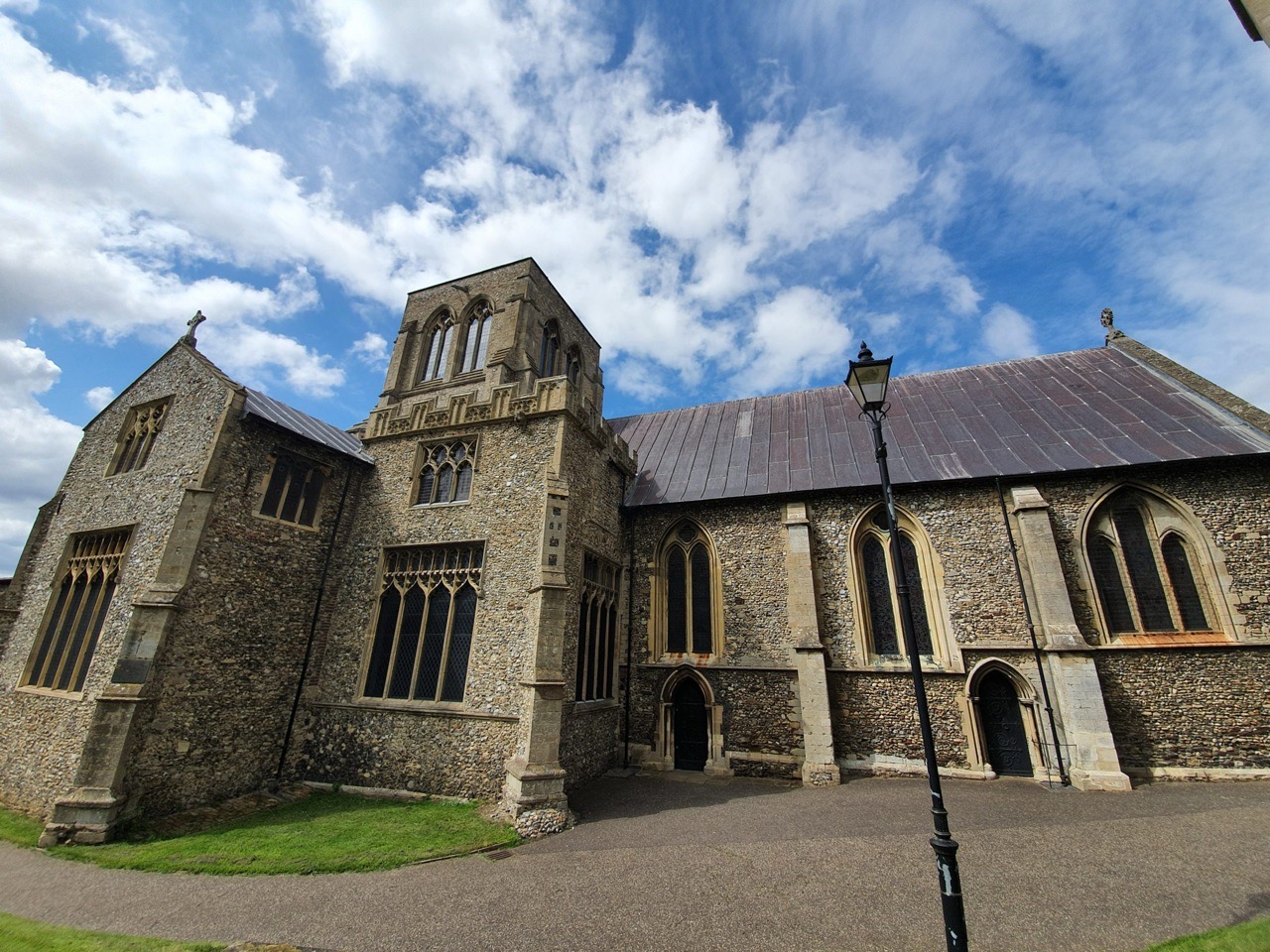
    South Walsham only has three listed buildings, although that’s still a fair number, but all three are located in this one churchyard. The first is the Church of St. Lawrence (in the front of the above photo), the second is the collapsed tower of St. Lawrence (just visible in the middle of the above photo) and the other is the larger Church of St. Mary (at the rear of the above photo).

    The church was originally built in the fourteenth century, likely on the same site as an earlier religious building. The idea of having two churches next to each other seems slightly illogical today, although if you’ve got two different parishes and one particularly decent piece of land, then it does make some sense to have two different buildings at the same site. And, this worked well enough until the fire that destroyed most of the church in 1827.

    The above photo is of the north side of the church, with the central window being bricked up.

    The doors to the church give the appearance of having fire damage to their base, which would be a permanent reminder of 1827. The locals didn’t though merge the churches even when faced with the problem that one of them was burnt out, instead rebuilding much of the former chancel and re-opening in 1832. The two churches then continued separately until 1890, when their congregations were merged.

    This meant that St. Lawrence’s church was left to become derelict, seemingly forever destined to fall under the shadow of St. Mary’s. But, a recent restoration of the building has returned it to use as an arts centre, with photos on their web-site with the scale of the challenge they had.

    The churchyard is well-kept, all very neat.

    This is what is left of the tower of St. Lawrence, badly damaged by fire in 1827 and then what remained collapsed in 1971 (George Plunkett’s archive has a photo of the tower in 1937 as it looked before the collapse). Today, the area is used as the Sacristan’s Garden and contains medicinal herbs and plants and reflects what may have been grown in the medieval period.

    The Sacristan’s Garden, looking towards the main part of St. Lawrence’s Church.

    The flushwork design is still present at the base of the tower.

  • Hemblington – All Saints Church (George Weston and Godfrey Weston War Graves)

    Hemblington – All Saints Church (George Weston and Godfrey Weston War Graves)

    It’s not that common to see Commonwealth War Graves at remote Norfolk churches, but All Saints at Hemblington have two war dead, both marked on one grave. They are the graves of Squadron Leader George Ernest Weston, who died at the age of 23, and Flight Sergeant Godfrey Randal Weston, who died at the age of 22.

    The men were brothers, sons of George and Frances Lesley Weston, of Nelson City, New Zealand and they were buried together, but died in separate air crashes, with George dying on 1 October 1942 and Godfrey dying on 20 April 1944. There’s a photo of Godfrey at https://www.aucklandmuseum.com/war-memorial/online-cenotaph/record/C22286.

  • Hemblington – All Saints Church

    Hemblington – All Saints Church

    The real highlights of this rural church are inside, a medieval wall painting, rood stairs and a spectacular font, so I’ll have to return when they’re able to open internally.

    The church are busy praying for lots of people, seems like a pro-active congregation.

    The round tower is the oldest part of the church, constructed in the twelfth century.

    The bulk of the rest of the church was built in the early fourteenth century, although some dates from the twelfth and thirteenth centuries. There was a sensitive restoration that took place to the church in 1904 and a piscina and niche were discovered, although the wall paintings weren’t noticed until later on in the twentieth century.

    The porchway which was added to the church in the early part of the sixteenth century.

    Part of the churchyard has been turned into a wildlife garden. I’m looking forwards to going back when I can see the interior, this is a beautiful and remote church.

  • Hassingham – St. Mary’s Church

    Hassingham – St. Mary’s Church


    We visited this church at the end of a walk a few days ago, just as the weather started to look a little bleak. Perhaps that added to the majestic beauty of this rather remote church though. There was probably some sort of Saxon religious building here, although the structure now dates primarily to the twelfth and fifteenth centuries.

    Some of the church looks modern, but this is because of a serious fire in the late 1960s which meant that nearly everything inside was lost and the roof was also destroyed. Fortunately, the situation at Bixley was avoided and the church was rebuilt, but this time no longer with a thatched roof.

    The round tower is from the twelfth century if the listed building record is accurate, and they usually are, although it just looks a bit older to me. The top bit of the tower, which I’m not entirely sure fits in, was added in the fifteenth century.

    Wikipedia notes, so it must be true, that William Haslam was the vicar here in the 1860s and he managed to be converted into a more evangelical approach by listening to his own sermon. That’s one persuasive vicar…..

    There is also the beginning of an interesting story which was repeated in the Norfolk News in 1888 from times long past, which is that the notorious criminal Bartholomew de Devonshyre killed Adam Wyre in Hemblington and then rushed to Hassingham to seek sanctuary at St. Mary’s Church. Unfortunately, there was no mass media at the time and details on this story are somewhat hard to find.

    Not relating to the church, but instead to Broad Farm opposite, there was a huge invasion of coypu in 1960. The local farmer, Wesley Key, said “we catch coypus at the rate of fifty a week, but they still multiply as fast as ever”. Fortunately for the farmer, these have now been eradicated from the British countryside, but I have visions of the coypu over-running the church as well…..


  • Norwich – Waterloo Park Area Photos

    Norwich – Waterloo Park Area Photos

    Just photos of the Waterloo Park area, along with Wensum Park and the Marriott’s Way, which is the former rail line between Norwich and Aylsham. It’s a reminder of much green space there is in areas relatively near to the city centre.