Category: UK

  • London – Christ Church Greyfriars

    London – Christ Church Greyfriars

    I haven’t paid much attention to these ruins before, but they have a considerable heritage as they are from a monastic church built in the thirteenth century on what is now Newgate Street. The monastery was dissolved during the Reformation and was turned into a parish church which was given by King Henry VIII to the Mayor of London for the use of the city’s population. This church building was though lost, along with most others in the heart of the city, during the Great Fire of London in 1666. The replacement building was designed by Sir Christopher Wren, but this in turn was unfortunately destroyed in 1940 during the London Blitz.

    The few sections of the remaining church still standing were demolished following the end of the Second World War, with the site turned into public gardens. There are some important people who have been buried at this site over the centuries, including Isabella of France (also the Queen of England), Marguerite of France (another Queen of England) and Joan of England (who was the Queen of Scotland). I’m equally confused as to who was Queen of where, but it’s evidence of the importance of the church.

    Some of the surviving arches and it’s positive that it was decided to keep this as a public park, rather than shoving up another office block on the site.

    The former door into the nave.

    The gardens are impressive and before this health scare meant fewer people came into London, I imagine that this was a busy place for those wanting to eat their lunch.

    The tower, which was completed in 1704, survived the London Blitz and was restored in 1960.

    There are many more photos of how the church used to look at https://thecitizensmemorial.wordpress.com/2012/05/19/11/.

  • London – Chinatown

    London – Chinatown

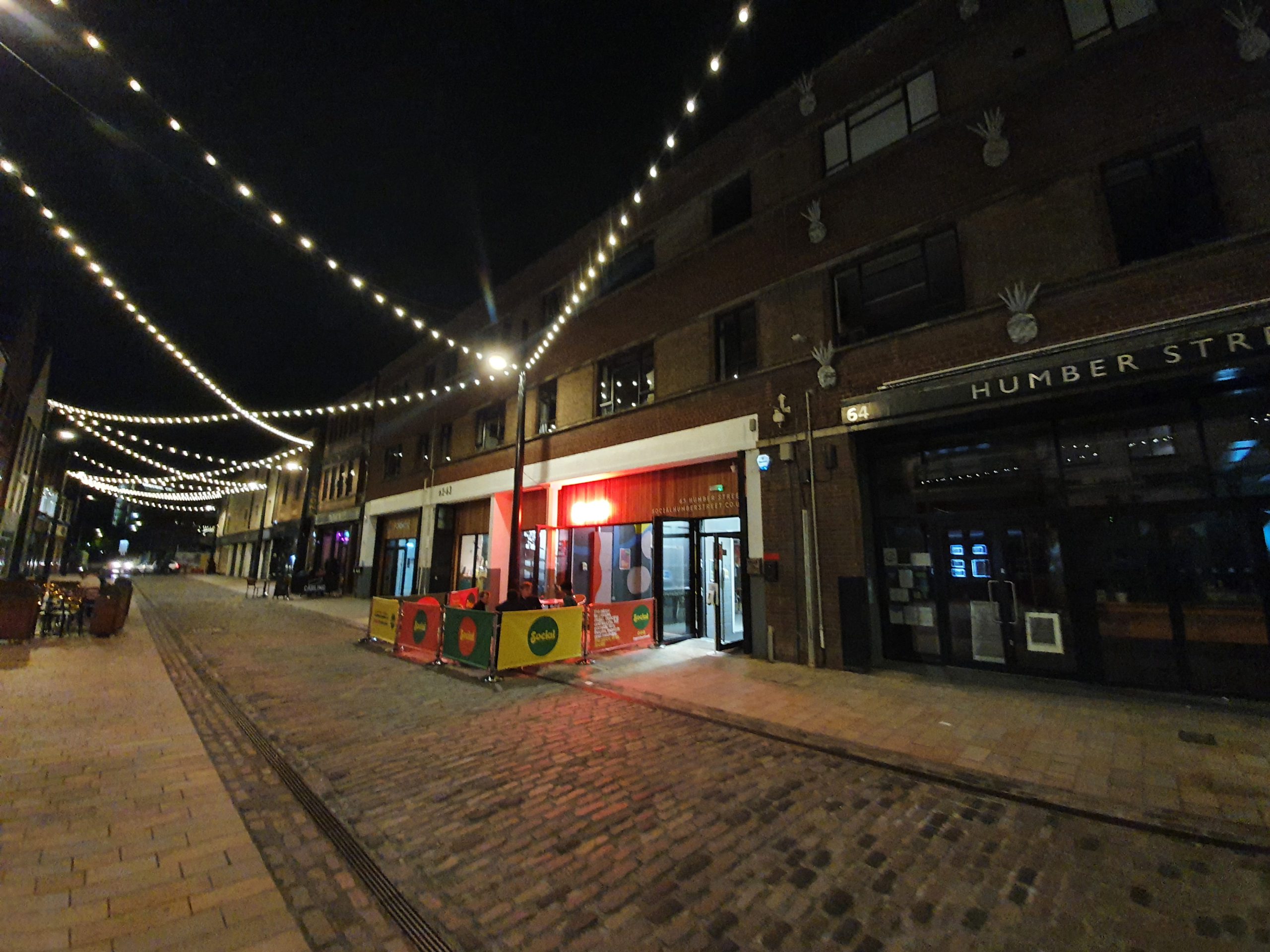
    Some photos from Chinatown in London on Monday evening. Although London had felt quiet all day, there was a bit more vibrancy with people taking part in the Eat Out to Help Out scheme and most restaurants looked pretty full. Within a short distance of Chinatown and Soho though it remained a different matter, numerous restaurants and takeaways not even opening at all this month.

  • London – Quiet on the Underground

    London – Quiet on the Underground

    OK, so Chancery Lane isn’t ever the busiest of London underground stations, but nonetheless, it was eerily quiet this afternoon.

    The packed platform.

    Endless amounts of warnings about social distancing.

    Mind the Gap…. Still quiet at Oxford Street.

    It was a little busier on the Oxford Street platform to get onto the Bakerloo line, but it’s still all rather quiet.

    As for TFL, they’re not doing particularly well at keeping people safe. The first two hand-sanitiser dispensers I tried were empty. So, on a quest to discover how bothered TFL really are, I tried another six more during my journey into Oxford Street. Two worked, another four were empty. I won’t veer into politics, but this really isn’t a particularly good look for TFL and pretty much every other transport operator seems to manage.

    Anyway, I quite enjoyed the quiet network and there was a very high percentage of people wearing masks and lots of social distancing. I did note one man cough and this alarmed a woman who fled the scene but, otherwise, all uneventful.

  • Matlock – Pic Tor War Memorial

    Matlock – Pic Tor War Memorial

    The war memorial in Matlock stands over the town, located at the top of Pic Tor and having one of the best views of any similar memorial I can think of. It’s in the design of a Celtic cross and there are numerous pathways and steps up to reach the memorial, a walk which is worthwhile given the reward of the fine views.

    The memorial was unveiled on 7 August 1921 by FC Arkwright, who had lost a son and a son-in-law during the First World War. The memorial cost £500 and it was designed by William Nathan Statham and constructed by John William Wildgoose. Unfortunately, the process took longer than it probably should have done, with a series of disputes and letters to the local newspapers about just what design should be used for the memorial. The moderate danger of the location was realised a week after the war memorial was unveiled, when a young boy named Kelsey managed to fall down the slopes and render himself unconscious.

    The war memorial commemorates the names of 178 men from Matlock who died during the First World War, with another 47 names being added after the end of the Second World War and another name added later on marking the death of a soldier in Northern Ireland.

  • Greater Anglia : Norwich to London Liverpool Street

    Greater Anglia : Norwich to London Liverpool Street

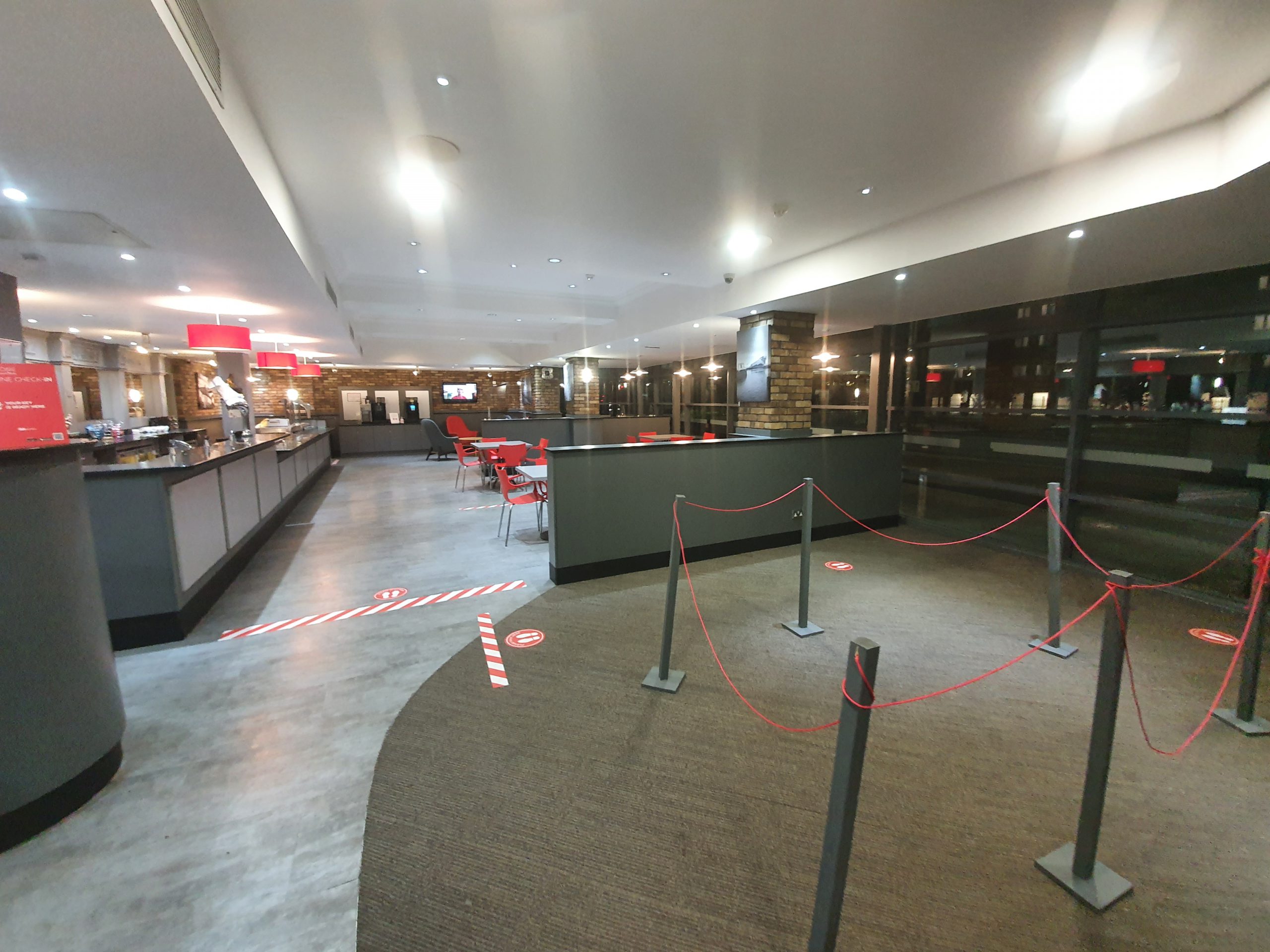
    My last train journey was from Chesterfield to York in March 2020 and I didn’t expect it would take until August 2020 for me to make another. Norwich railway station looks different to when I last used it, with the ticket gates now left open and unmanned. There’s now directional signage around the concourse and a couple of the food outlets, West Cornwall Pasty and Starbucks, haven’t re-opened, nor has Marks & Spencer. It felt moderately busy, but nowhere near what I would have usually expected for a Monday morning.

    Waiting at platform 2, the new style train which serves the Norwich to London line.

    There was plenty of space for customers on board, just a handful of passengers in each carriage. The power points and on-board screens worked on the train, although it wasn’t doing a very good job of air conditioning and not for the first time this week I muttered to myself that it was too hot.

    Safely at London Liverpool Street railway station, the train arrived dead on time.

    The barriers were operating as usual at the station, with revenue protection officers and police questioning a couple of people as I walked by. So, although there’s no ticket barrier at Norwich and tickets aren’t checked on board, there are still mechanisms to ensure people have paid their fares. The concourse was relatively quiet and someone asked me how they could get out of the railway station, something I didn’t think was particularly challenging, but there we go. Once outside, it became evident to me just how quiet London currently is….

  • Matlock – St. Giles’s Church (Thomas Kirwan)

    Matlock – St. Giles’s Church (Thomas Kirwan)

    Thomas Kirwan was the son of Patrick Kirwan and Bridget Kirwan. He married Mary Patricia Kennedy in 1936, at the Roman Catholic Church in Matlock and they moved to 30, Lynholmes Road in the town. He served as a Serjeant in the King’s Regiment (Liverpool) in the 70th Battalion, which was a young soldiers group disbanded in September 1943. Thomas doesn’t appear on the 1939 register, so he was likely already in the military at that point. Thomas and Mary did though have a child, Ann Teresa Kirwan, who was born on 7 April 1939. Unfortunately, Ann Teresa died in the Isle of Wight in 1959, at the age of 21.

    Thomas died on 9 April 1945, aged 44 years. I don’t have a sufficient knowledge of military history to understand what happened here, although the King’s Regiment were involved with the attacks on Kiel in Germany. And on the day of Thomas’s death, there was a heavy bombing on Kiel which destroyed the last two major German warships, the Admiral Hipper and the Admiral Scheer.


  • Matlock – St. Giles’s Church (Edward John Loverock)

    Matlock – St. Giles’s Church (Edward John Loverock)

    Edward John Loverock was born in Uttoxeter, Staffordshire, in 1922, the son of Frederick Loverock and Mabel Victoria Jubilee Loverock (nee Bagshaw), who later moved to Matlock.

    He joined the 61st Squadron of the Royal Air Force Volunteer Reserve as an air gunner, service number 950159. This was a bomber squadron which launched several attacks on targets in Germany. Edward was trained in an Avro Lancaster Mk I aircraft and he would have been based at RAF Syerston, near to Newark in Nottinghamshire.

    Edward died on 18 February 1943, at the age of just 21. A night-time training flight in the Lancaster went wrong and the engines caught fire, causing the aircraft to crash with all seven men killed. The crash site was near to Staunton-in-the-Vale in Lincolnshire and there is a memorial at St. Mary’s Church in the village to commemorate the seven men who died.

    The inscription on Edward’s grave reads:

    “You did your duty, your life you gave. You rest with many who died to save”.

  • Camping – Day 1 (Night Hike)

    Camping – Day 1 (Night Hike)

    Just photos again, these are of our relatively short night hike from the camp-site we were staying at. Fortunately, some people had a stronger headtorch than me, as mine definitely need a battery change. We were politely asked by a land-owner what we were looking for near to the start of the walk and he keenly pointed us towards a pub as he assumed that’s where we’d be heading. We weren’t, but it was useful to get our bearings and he didn’t seem to think we were going to rob his house or pinch his sheep.

    It was a relatively uneventful walk, although the road we were walking along was closed and we discovered why when we found a series of enormous cracks in the surface. These were probably caused by mines underneath and the road could have given way at any time, but we lived to tell the tale. It’s quite relaxing to walk at night-time, although there seemed to be more cars on the road than at a Formula 1 track, and some were going at a similar speed.

    It may have only been a walk of a few miles, and I missed the ideal time to take photos when there was a little more sun out, but it’s another happy memory of Derbyshire.

  • Matlock – St. Giles’s Church (Cyril Walthall)

    Matlock – St. Giles’s Church (Cyril Walthall)

    Cyril Walthall was born on 31 July 1912, in Bakewell, Derbyshire, the son of Harry Walthall and Ada Walthall (nee Britland), of Matlock Bath. Cyril married Phyllis Birch, who had been born on 2 October 1912, in 1937 at the Farley Hill Congregational Chapel. By the time of the 1939 register, Cyril was living in Matlock with Phyllis and he was working as a fine gauge knitting machine operator at a hosiery manufacturer.

    During the war, Cyril was an aircraftman, service number 2202724, in the Royal Air Force Volunteer Reserve. He died on 4 February 1944 and was aged just 31. His estate was worth £1,166 when he died, and this went to Phyllis, who at this time was living at Glen Mona on Jackson Road in Matlock. Phyllis died in Matlock on 8 August 2007, at the age of 95 and 63 years after her husband died.

  • Matlock – St. Giles’s Church (Mary Crossley)

    Matlock – St. Giles’s Church (Mary Crossley)

    This is the grave of Mary Crossley (nee Lovatt), the wife of Thomas Crossley and the couple married on 11 November 1804 in Mickleover, Derbyshire. Mary died on 24 September 1816, aged just 36 and she was buried on 27 September 1816. The other sad story is that Elizabeth, “the daughter of the aforesaid Thomas and Mary” died on 7 November 1816 when just an infant and she was buried on 10 November.

    Thomas Crossley went on to marry Harriet Caithness in Crich, on 9 March 1825. He’s listed on the 1840 census, being 60 years old, whilst Harriet was just 40 years old, so I wonder if that was a controversial marriage. They had several children, including Elisa, John, Edwin, Josiah, Emma, Hannah and Elizabeth. That must have also been an emotional time for Thomas, having another girl named Elizabeth, 25 years after the first died.

    There are so many stories to be told here, but they’re likely lost to time. It’s not clear why Mary died, perhaps complications from childbirth and that might explain the death of the child a few weeks later. Then for the husband to find a young bride and start what turned out to be a large family, it can only be left to the imagination to know how much he missed Mary and what impact her death had on his life.

    But, this gravestone is neatly carved and over 200 years on it remains readable and standing proud in the churchyard.