Category: Norfolk

  • Gorleston – Short Blue

    Gorleston – Short Blue

    The fifth pub in our expedition, and the first one that I’ve visited before, was the Short Blue in Gorleston. Nathan and I visited most of the pubs in Gorleston a few years ago and this one was a disappointment, but I’m pleased to say that matters were much better this time.

    This is a quirky venue in terms of its history, its external feel looks a little like one of the Victorian pubs that have closed, but this is really positive that it’s still going. It first opened in the 1860s and it traded until 1975 when it was sold by Watney Mann and it lost its licence in 1978. That would have normally been the end and it would have become a nice house, but, fortunately it was reopened in 1987 and has traded happily since then.

    The pub’s website has a longer history of the reason for the name of the pub, but in short:

    “In 1795 a young Scrymgeour Hewett left his native Fifeshire to look after some property in Dagenham for an aunt, where he met, courted and married Sarah Whennel—the daughter of a Barking fishing boat owner. This was to be his introduction to fishing, eventually taking over his father-in-law’s two boats—the small beginning of the Short Blue Fleet.”

    From August 1900, there is an early story of tragedy with a tram car in Gorleston that involved the former landlord John Robert Bass. The local newspaper, the Norwich Argus, reported at the time:

    “DEATH IN A TRAM-CAR AT GORLESTON

    An inquest was held at Gorleston on Tuesday on the body of John Robert Bass, aged about 60, of 50, Springfield-road, who died in a tram-car.

    The widow stated that about 6 on Monday morning deceased ate a good breakfast, and left to catch a tram. He appeared in his usual health, and had no occasion to hurry. Generally he had good health, but during the winter suffered from a cough, and he had not had any medical treatment since the spring for this cough.

    John Ward, a tram conductor, said that on Monday, just after he got a car out of the terminus, he saw deceased coming along slowly, and he took a seat in the car. Witness told deceased he had got into the wrong car, and he replied, “All right, old chap.” When he moved the car again he saw deceased sitting in it as if asleep. He shook him, but he did not speak. Another tram employee came and looked at deceased, and said he was dead. He was in quite a natural position in the corner of the car with a box of matches in his hand, and his pipe lay on the floor beneath his feet.

    Dr Tipple said he was called to deceased, and found him reclining on the seat in the tramcar, and just dead. He had ascertained that he had been under the care of Dr Read for cardiac asthma. Dr Read had found that deceased had a fatty heart, and witness had no doubt death was due to heart failure.

    A verdict of “Natural causes” was returned.

    Bass was employed by Mr Richards, boat-builder, of Lowestoft. He was formerly a smack-owner, and afterwards became landlord of the Short Blue Tavern at Gorleston, eventually relinquishing this to work at his trade as a shipwright.”

    There was just one real ale, Old Speckled Hen, which was slightly disappointing, but there seems to be some Greene King tie going on here. The service was though really friendly, there was a welcoming atmosphere here and a laid-back environment.

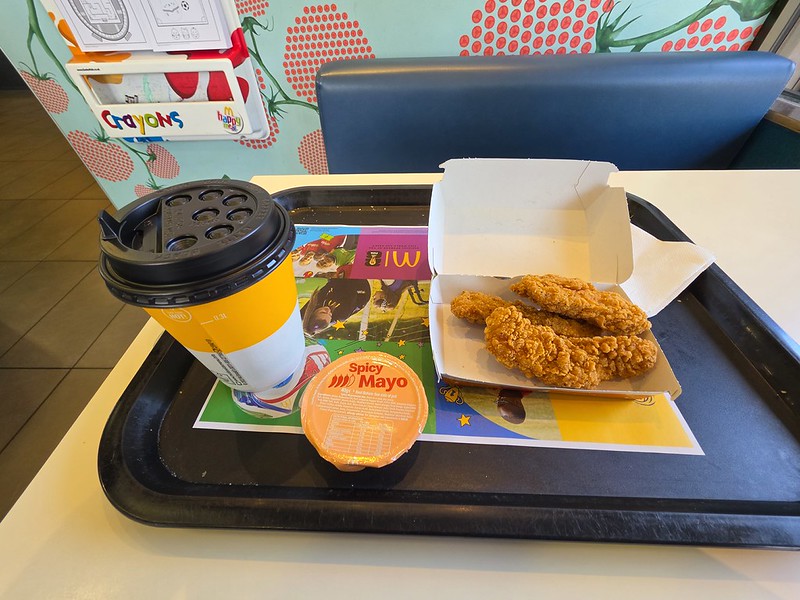
    The crisps helped the excitement of the beer. The venue serves food from 12:00 until 15:30 on Sundays and we had arrived just towards the end of service, although we weren’t looking to eat here. Well, other than crisps. I liked that the team member mentioned when we entered that they had finished serving, that saved an awkward conversation if we had wanted to eat.

    The menus for anyone who might be interested, although they’re mostly only open during lunchtimes. Sometimes less is more though.

    Not wishing to moan, and it’s nothing to do with me really, but I’m not keen on these witty toilet door names, for those who don’t speak English they’re a challenge, it would be nice if they could put the symbol on as well.

    Anyway, I’m glad that we came to this pub as I felt very welcome, it was clean and the staff were all personable and keen to help. It’s only a small bar, but there was at least a real ale available and they have an excellent reputation for food.

  • Gorleston – Mariners Compass Pub

    Gorleston – Mariners Compass Pub

    Our fourth pub of the day was the Mariners Compass public house in Gorleston. The pub was opened in 1934 as the Middleton Arms and it was operated over the years by Steward & Patteson, then Watney Mann, Brent Walker and then Phoenix Inns. In 2007, it was renamed as the Mariners Compass. I don’t know the reason for the name change, there was a pub called the Mariners Compass in Great Yarmouth long ago, but it does seem an odd thing to change.

    That section of the building to the left is now a dog grooming parlour but it was formerly part of the pub. I suspect that it was originally a fish store as this was mentioned in a 1938 newspaper article.

    I also quite liked this newspaper article from February 1935 and this also references that the brewery sacrificed the Earl Grey pub to get a licence for the Middleton Arms.

    “That only eleven people were charged with drunkenness in Yarmouth last year” was revealed at the annual licensing meeting on Friday. The Chief Constable, Mr. S. W. Smith, in his annual report, stated that the Monastery alehouse in Middlegate Street, referred to March as redundant, was closed at the end of last year. The licence of the Earl Grey, High Street, Gorleston, was transferred to a new house, the Middleton Arms, Middleton Road, on December 18th, and the licence of the Lucknow Tavern, St. Peter’s Road, was surrendered on the same date. The Duke of York beerhouse, George Street, was closed last February, making three houses dispensed with in 1934. The Anchor of Hope, St. Peter’s Road, and Victoria Tavern, Victoria Road, were redundant, and from a structural standpoint should be referred. Brewers and owners of licensed property were anxious to meet the suggestions of the licensing justices in acquiring property for remodelling premises not redundant, to give better living accommodation.”

    The real ale selection is visible in this photo, but it was evident they were laying some things out for a raffle so they politely asked us to order from the bar in the other room. And, it’s fair to say that I hadn’t expected the pub to be so busy when we arrived, it was full and that’s rather positive to see. We didn’t realise that this was the time for the weekly meat raffle and there was music and other entertainment, so our timing wasn’t ideal.

    Ordering at the bar took a little while, but the bar staff were friendly and were working as fast as they could. I wasn’t entirely sure why they were selling such large bags of crisps and big bars of chocolate, but I do approve.

    I ordered half of the Woodforde’s Wherry and expected a real ale, but it was served as a keg version. I didn’t even know that they did this, but Roy confirmed that they did, and I decided that I preferred this keg to the cask version. It was very reasonably priced at £1.90 for a half, which I think was the cheapest of the day other than for JD Wetherspoon.

    It was quieter outside, although it wasn’t the most salubrious of drinking locations.

    It was really rather lovely to see a pub that was so busy and so evidently serving its local community so well. They were fund raising and it was bringing the community together, this was very much the sort of place that it would be possible to find new friends if moving to the area. It’s not quite what I expected, but the welcome felt authentic, the atmosphere was welcoming and I was surprised and delighted.

  • Gorleston – Cliff Hotel

    Gorleston – Cliff Hotel

    Third on our list of pubs to visit in the day was the Cliff Hotel in Gorleston as Jen wanted to overheat us in the extreme afternoon heat.

    The hotel was first constructed here in 1897 at a cost of £50,000, but it burnt down in 1915 which was a little sub-optimal, but it was soon rebuilt. The fire was reported in the national press and it was noted that “for fully two hours the hotel was blazing like a gigantic torch and the reflection could be seen 25 miles away.”

    Back to 1899, they were advertising 25 shilling weekend stays where you received Saturday dinner to Monday breakfast, with a pick-up from Great Yarmouth railway station if requested in advance. The hotel noted that they were “luxuriously furnished with every modern improvement, with magnificent sea and harbour views” which all sounds rather nice.

    The signage to the bar area was clear and it all looked well decorated and welcoming. Note that the photo is quite washed out because of how sunny it was, but this is the restaurant area.

    There were a couple of real ales and I went for half a pint of the Woodforde’s Wherry which was reasonably priced.

    The keg options and that Salt beer is at least acceptable.

    The Wherry was well kept, light and tasted as expected.

    And the view over Gorleston. The table we sat at was a little dirty, but the team members were getting around cleaning them and they were all friendly and personable. There was a bit of a sea breeze and the views were quite impressive over the beach and sea.

    The external terrace has been done out really rather nicely and there’s plenty of space. Most people were sitting inside as it was hotter than the centre of the sun outside, but I didn’t say anything.

    It was still too early to eat (well, without needing to eat again) but the prices looked very reasonable and the food being served looked entirely agreeable.

    I had thought that this venue might be a little too decadent for me, but it was accessible, informal and everything was clearly signed. There must have been a significant investment that has been made here into the hotel building generally, it all seemed in good order. I’d come here again for a drink, it was really all quite pleasant.

  • Freethorpe – Rampant Horse

    Freethorpe – Rampant Horse

    Second of the pubs we visited on a sunny Sunday was the Rampant Horse in Freethorpe. This has been a licensed premises since the 1830s and was once part of the Steward & Patteson empire before being taken over by Watney Mann. It then had some perhaps bad fortune by being taken over by Brent Walker, then Pubmaster and then by Punch Taverns, but I suspect that it’s now a free house once again.

    The pub was advertised for sale in 1885 and the auction particulars mentioned that it had stables, yards, a covered skittle ground and a large club room. GP in the above Ordnance Survey map from the 1880s means guide post and it’s evident that there was more space available to the pub then. Today, they have only a small car park and those yards have long since been sold off.

    There was one real ale available which was London Pride and that pump clip arrangement does look a little as though I’ve done it. The beer was £2.15 for a half, which was one of the cheapest of the day, although Roy paid £4.60 for a pint of the same beer so something was going wrong with the pricing.

    I really loved this venue, it was a traditional country pub which didn’t feel formulaic or fake. The welcome was friendly, the surroundings were a little dark but it was all clean and comfortable. These are the kind of pubs that get refurbished and lose quite a lot of their charm, I liked this place just as it was.

    I don’t have much else to add about the history, but I liked this newspaper article from July 1887 to mark Queen Victoria’s Golden Jubilee. It is something of a different world today….

    “The picturesque village of Freethorpe was full of life and rejoicing on Tuesday, the 21st inst., when in commemoration of the Queen’s Jubilee the working men, their wives, and children, were provided with feast and amusement by the farmers and other friends. At three o’clock all the men and boys employed on the farms of Mr. George England were provided with an excellent dinner at the Rampant Horse, together with a shilling, and an ounce of tobacco each, and their half-day’s pay. The labourers’ wives received a present of grocery, and in common with all the women of this parish and Wickhampton, were treated to a substantial tea at 4.30 p.m., in one of Mr. Gilbert’s barns. Mr. Wales had taken all his men and their wives for a day’s excursion to Yarmouth, where he kindly found them a good dinner and tea. Mr. H. C. B. Gilbert’s men had their treat with his other men at Bradestone on Thursday. The farmers of Wickhampton—Messrs. Kerry and J. Riches—provided a good dinner for their men at the Brickmakers’ Arms, when all the other men of the parish—excepting those who had “gone south” for haymaking, and who each had half-a-crown sent them—joined them through the kindness of Mr. J. W. Rose and the Rector. The children and young people generally met at two o’clock in the cricket field, kindly lent for the day, together with the barn adjoining, by Mr. Gilbert, a good tea at 5.30 p.m. affording an agreeable interval between the afternoon and evening sports. During the afternoon the Wickhampton boys beat the Freethorpe boys at cricket, and “Punch and Judy” and various games took up the time; whilst after tea a regular course of sports for prizes came on. Races, tugs of war, in which the boys and girls, men, and women, took part, afforded considerable fun. Hearty cheers were given for the Queen, Mr. England, the Rector, and other friends, and a pleasant day was brought to a close about 9.30 o’clock.”

    The beer was well kept and in good order, so there might have only been a choice of one, but that was sufficient for me and it wasn’t from Greene King.

    There was food being served and the smell from the kitchen was very appealing from whatever they were cooking. The prices were again reasonable and it was tempting to get something, but it was rather early and Jen had already acquired me a chicken bake from Greggs. There were a couple of tables in for Sunday lunch and although it wasn’t busy, it felt as if the pub had a decent atmosphere.

    This is certainly a pub that must be a challenge to make work in the current economic climate, so I’m very impressed that they’ve got the venue open, it’s serving real ale and welcoming customers in. All really rather lovely and this was one of my favourite pubs of the day.

  • Norwich – Closure of St. George’s Brewery in 1864

    Norwich – Closure of St. George’s Brewery in 1864

    Whilst looking into the history of the Goat at Strumpshaw, I found this list of pubs that were being sold when St. George’s Brewery closed in 1864 and its assets were auctioned off. It’s an interesting little snapshot of what the brewery owned at the time.

    And here’s a text transcription of the above:

    “NORWICH AND NORFOLK. THE ST. GEORGE’S BREWERY,

    With Dwelling-houses, Stabling, Malt-houses, and 40 PUBLIC-HOUSES, With Accommodation Lands, in the City of Norwich
    and County of Norfolk.

    MESSRS. Spelman are favored with instructions from the Executors of Charles Weston, Esq., deceased, to Sell by Auction, on Thursday, August 18th, 1864, at Eleven for Twelve o’clock, at the Norfolk Hotel, Norwich.

    The above Old-Established BREWERY and PUBLIC-HOUSES, which will be offered in One Lot, but should no acceptable bidding be made for the entirety, the whole of the Property will be immediately put up in the following lots:—

    IN THE CITY OF NORWICH.

    LOT
    1 { The Brewery ………. } St. George’s
    { Crown …………… }

    2 Jolly Butchers ………. St. John’s Sepulchre
    3 Windmill …………… St. Michael at Thorn
    4 Lion and Castle …….. St. John’s Timberhill
    5 Peacock …………… St. Stephen’s
    6 Prince of Orange …… St. Julian’s
    7 Crown …………….. St. Benedict’s

    8 Queen of Hungary …… St. Margaret’s
    9 Builder’s Arms …….. St. Lawrence
    10 Three Turks ………. Ditto
    11 Blue Bell ………… St. Gregory
    12 Boy and Cup (late) … St. John’s Maddermarket
    13 Fleece …………… St. Andrew’s
    14 Crown ……………. St. Peter Hungate
    15 Jolly Hatters …….. St. James’
    16 Duke of Marlboro’ …. St. Edmund’s
    17 Catherine Wheel …… St. Augustine’s
    18 Angel ……………. St. Martin’s at Oak
    19 Bess of Bedlam ……. Ditto
    20 Cherry Tree ………. St. George’s Colegate
    21 Hen and Chickens ….. St. Mary’s
    22 Red Lion …………. St. Michael’s Coslany
    23 Moon and Stars ……. Ditto
    24 Royal Oak ………… Heigham
    25 Half Moon ………… Ditto
    26 Duke of York ……… Thorpe Hamlet

    IN THE COUNTY OF NORFOLK.

    27 Buck …………….. Thorpe Village
    28 Ram ……………… Brundall
    29 Goat …………….. Strumpshaw
    30 King’s Head ………. St. Faith’s
    31 Crown ……………. Ditto
    32 Chequers …………. Hainford
    33 Bird in Hand ……… Tasburgh
    34 White Horse ………. Ashwellthorpe
    35 Leather Bottle ……. Wymondham
    36 Goat …………….. Ditto
    37 Cross Keys ……….. Ditto
    38 Cherry Tree ………. Seething
    39 Folly ……………. Claxton
    40 Cross Keys ……….. Mattishall”

  • Strumpshaw – The Huntsman Pub (Goat)

    Strumpshaw – The Huntsman Pub (Goat)

    This was the first of ten pubs that Roy, Jen and I visited yesterday as part of our little expedition of Norfolk hospitality venues. There’s a reason for the pub selection which relates to them being in a past Woodforde’s Ale Trail book, but it’s all a bit too complex to explain here.

    The venue first opened in around the 1770s, so this is another of those Norfolk country pubs which has some considerable heritage. It was known as the Goat for over 200 years, but then the name was changed to the Huntsman in 1984. As with many pubs, it went through a number of brewery ownerships, going from Youngs & Co to Youngs, Crawshay & Youngs, then Bullards and then Watney Mann. It was then taken over by Eastern Hotels and then Enterprise Inns bought it and ruined it, leaving it closed for several years. It’s now one of the growing number of pubs in Norfolk which is owned by Marcus Pearcy. The former skittle alley that was here, noted many times in newspapers, has though long gone.

    There was some excitement, although not for the then landlord John Newton, when in August 1905 a local lad called Frank Reeley wanted a beer. As he was already very drunk, the request for a beer was refused. Reeley was thrown out and then he sat outside for a while contemplating life. After some contemplation, he smashed the windows of the pub and caused 5 shillings of damage. His sister went to court to defend Frank, noting that he had now joined the army and so couldn’t attend. The court was obviously not entirely pleased with him as he was fined £1 and had to pay a similar amount in damages.

    Back in March 1918, when people were perhaps a little more focused on other things, a case was brought against the pub by the police for serving at 11:52 in the morning on one day and 11:55 on another day. I’m assuming that their licenseable hours were from 12:00, as the bench just rejected the complaints of the police and there was a conversation about the timing of clocks. I’d suggest that this showed some considerable pettiness from the local police, although the landlord Walter Samuel Read had only taken over in the previous year and maybe there were other issues.

    I’m genuinely not sure how Marcus Pearcy makes venues such as this work financially given that there was a substantial sum spent on the refurbishment and it felt very well staffed for relatively few customers when we were there. But, whatever he’s doing is obviously working and it’s a huge contribution that he’s made to the community by ensuring that the pub has been able to reopen. This one must have been very close to permanent closure, especially as there’s an excellent nearby Good Beer Guide listed pub, the Shoulder of Mutton.

    There were four real ales, all of them visible are Greene King and so I have no interest in those. There was a fourth from Lacons which Roy ordered, but they went to check if there was a problem with the cask. When they returned to pour my half it was murky with a fair amount of sediment going on, with my best guess being that they knocked the cask whilst checking it. Either way, it was both under-poured and not really going to be pleasant to drink, but they didn’t query the return of it.

    I switched instead to a Guinness and this was the most expensive of the ten pubs that we visited in the day, so the pricing is generally towards the higher end of the scale. I’m not sure that there was a two part pour and the choice of glassware is sub-optimal, but it tasted fine.

    On the beer availability, I’m not sure why a free house is so closely linked with Greene King and they’re replicating the offer that a tied house would have. The keg range was a bit generic as well with the Hawkstone beer arrangement, but if that’s what the customers want, who am I to argue?

    We weren’t ordering food, but here’s the menu and the dishes going out looked good and well presented. The pricing here isn’t pushing a bit towards the higher end, but not by much given the current cost base that they must have.

    The staff in the pub were all keen and enthusiastic, so there was a friendly welcome and they were always helpful even when I was quibbling about the beer. I’m pleased to note that there were no further quibbles during the next nine pubs that we visited. The venue was also clean, tidy and well presented, there’s clearly been a lot of money invested here.

    This is a photo I took in May 2020 when Nathan and I were meandering around the area. It all looks a little forlorn back then, so credit is definitely deserved for the reopening of this pub in what are trying times for country pubs. There must have been some challenges to that, but the pub felt like a real community venue and it’s employing several people locally which must be a real bonus to the area.

  • 200 Years Ago in Norwich : Clark Horn Sentenced to Death

    200 Years Ago in Norwich : Clark Horn Sentenced to Death

    Back to my series of articles from the Norwich Mercury 200 years ago, with this being the report of the sentence of death recorded against Clark Horn. Clark had been born in 1802, the son of John Horn and Mary Horn of Methwold.

    There’s something of a brutality about all of this. However, views were changing in 1826 and the death sentence was clearly not working as a deterrent. It was reported in the Norfolk Chronicle of 6 May 1826 that Clark Horn had been removed from Norwich Castle and sent to the Leviathan prison ship.

    Then on 7 October 1826, Clark was put on a ship, the Midas, to New South Wales and he arrived there on 15 February 1827. There were 148 prisoners on that ship and 61 of them had life sentences, although Clark’s punishment had by then been reduced to 16 years imprisonment.

    He didn’t turn up again in the records until 1843 when it appears that he died in the area of Bathurst, New South Wales. His father, John Horn, missed all of this as he had died in 1808, but his mother, Mary Horn, would have known of the transportation as she died in 1830. It must have been a strange world for Clark Horn and I wonder if he lived an isolated life in one of the work camps. I can’t see that he had any descendants and that makes me wonder about just how many people might have thought about the life of Clark Horn since his crime….

  • Norwich – Missing Parish Boundary Marker

    Norwich – Missing Parish Boundary Marker

    There’s good news about the missing parish boundary marker which was located on Princes House and it seems that the building, and indeed the marker, is now in very good hands. Further information about this parish is at https://www.julianwhite.uk/norwich-history-by-parish-st-george-tombland/.

    Andy from Princes House messaged me to say:

    “The original design for Princes House from the early seventies was not the moribund architecture which you see now. The hard economic times saw the design diluted and we have played our part to add some interest and curiosity to our side of Princes Street.

    You will be pleased to know that we are creating some art which will feature the Hungate St. Peter parish boundary marker which we have had professionally cleaned to remove the paint and cement splatter from it, while retaining its patina. We will describe the relevance of 1834 and the Poor Law Amendment Act and the historical boundaries referenced by the parish boundary marker. Along with this we plan on celebrating pictorially the local churches, those that are still with us and those that are not. It is our intention to have this up and displayed this spring.”

    I think I might lead another walk when the work is completed.

  • Norwich – Bar Billiards Update

    Norwich – Bar Billiards Update

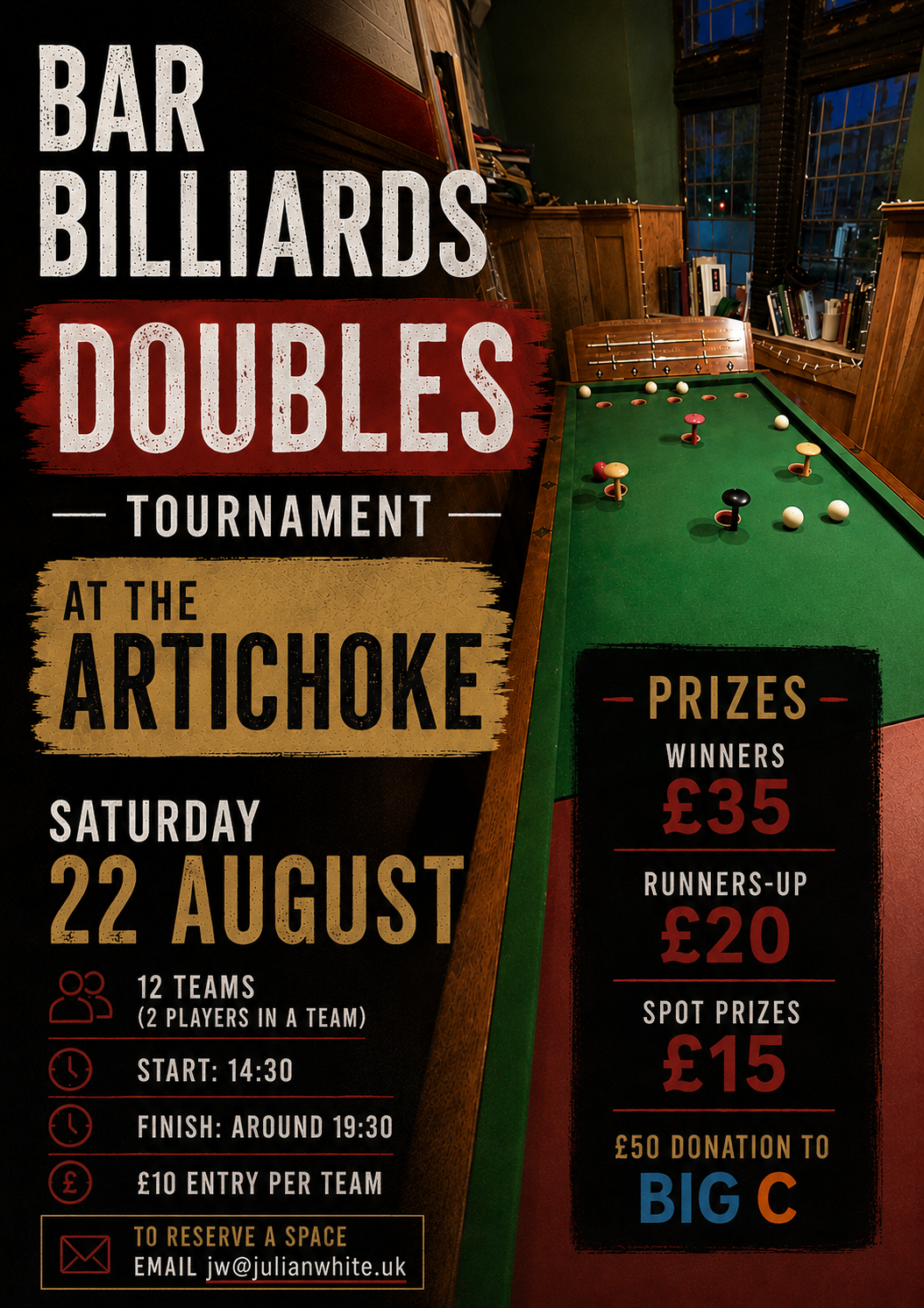
    In a move that serves as a definitive warning against leaving the room during a committee meeting, I have somehow managed to get myself appointed as the captain of the Artichoke Hearts bar billiards team. I am still not entirely sure how the transition from “vaguely reliable middle-order player” to “fearless leader” occurred, but yet here we are.

    It is quite a step for someone who honestly thought they had successfully navigated their way into a quiet retirement from the competitive green baize of bar billiards, indeed, I’ve written about that before. But it seems that the league has a way of pulling you back in just when you think you have escaped the pressure of a tricky final shot.

    The fixtures have just landed with some promptness and the grace of a lead balloon, and they have not exactly eased me into the role. Our opening gambit is against one of the absolute titans of the division, the Black Stars, and, to add a layer of personal drama to the proceedings, our subsequent match is against the quite wonderful Serengeti led by Roy, who is perhaps the most gentlemanly person I’ve ever met. Having spent a couple of seasons playing for them, I now find myself in the awkward position of trying to outmanoeuvre my old teammates while pretending I don’t know all their tactical weaknesses. Although they know my many weaknesses, so all of this might not be useful.

    Despite my own questionable leadership credentials, the Artichoke Hearts are actually really quite good by all accounts. I won’t go overboard here as we’re likely to come last in the league, so no point being overly optimistic. There is a genuine sense of fun that (generally) permeates this league, which is probably why I couldn’t stay away. The social side is of course inevitably compelling, especially with the news that the Red Lion in Coltishall has joined the league this year and we’re playing there in May. I am genuinely excited about the prospect of heading out there, but I don’t get out much.

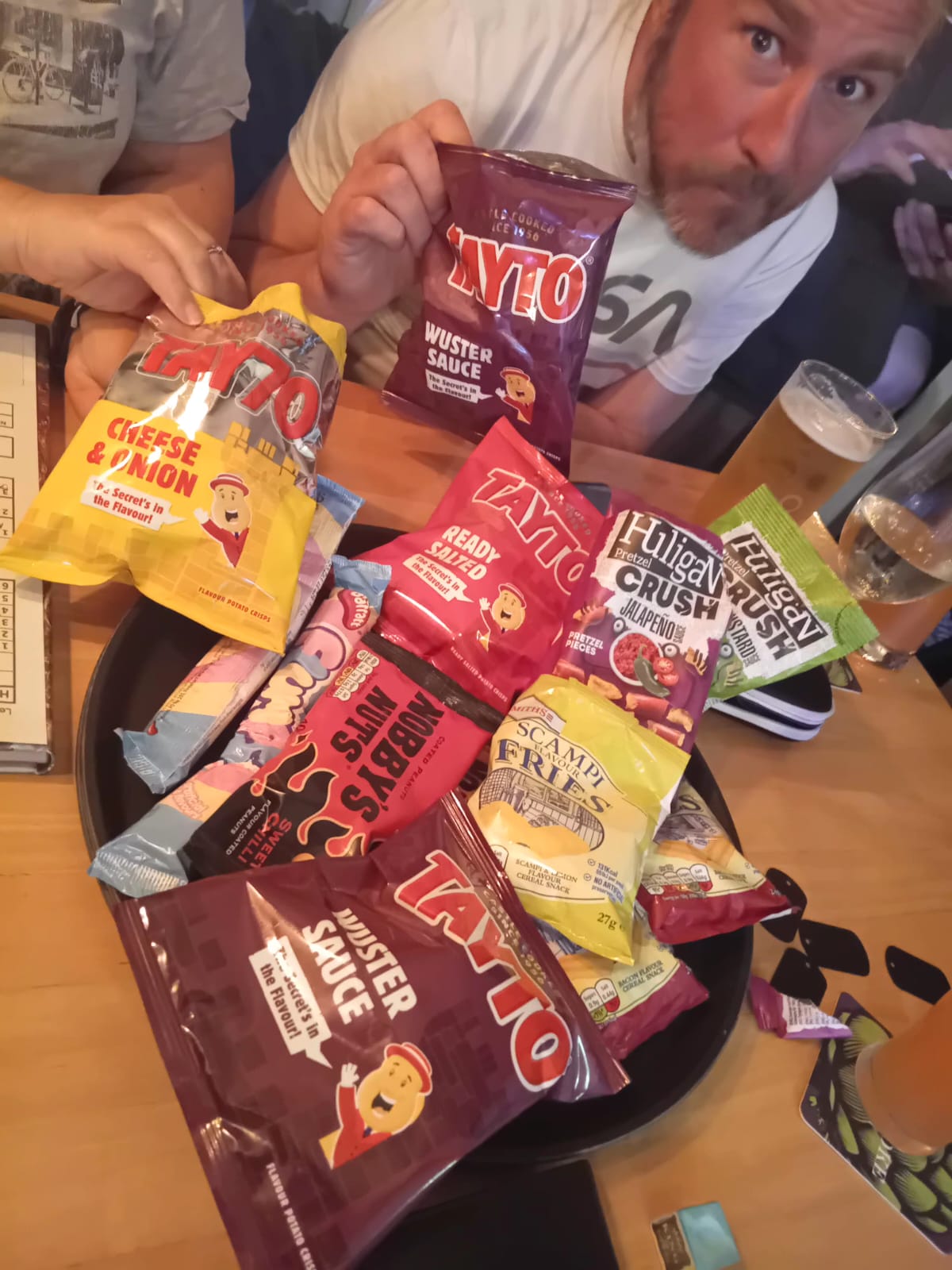
    Home games at the Artichoke are fairly straightforward affairs involving decent beer and a steady supply of Tayto crisps, which remain the undisputed king of the bar snack hierarchy I’ve recently decided, although I can be fickle with these things. It is going to be a long, unpredictable season, but at least the crisps and beer are likely to be good. What could possibly go wrong?

  • Norwich – Anglia Square Demolition (10 March 2026)

    Norwich – Anglia Square Demolition (10 March 2026)

    Some photos from the Anglia Square demolition from 10 March 2026.