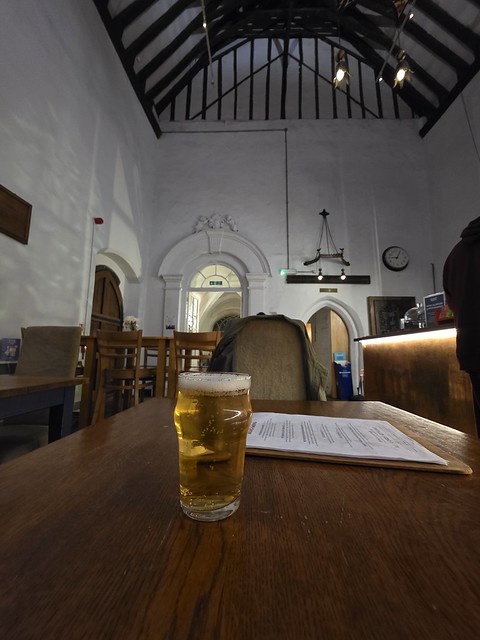
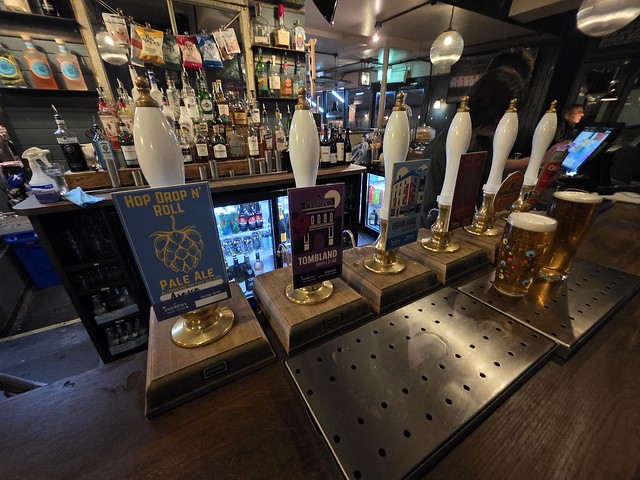
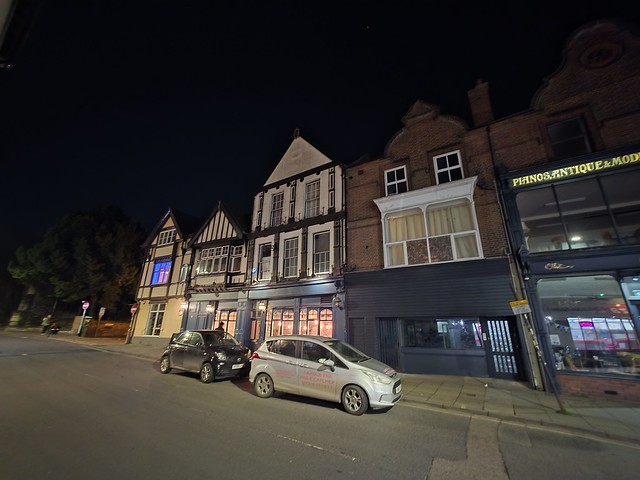
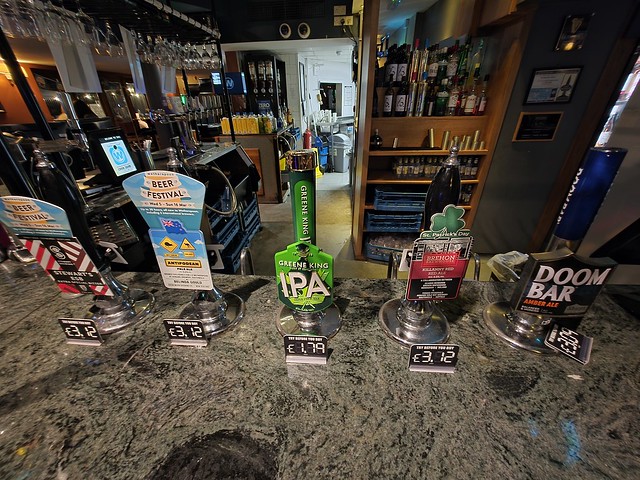
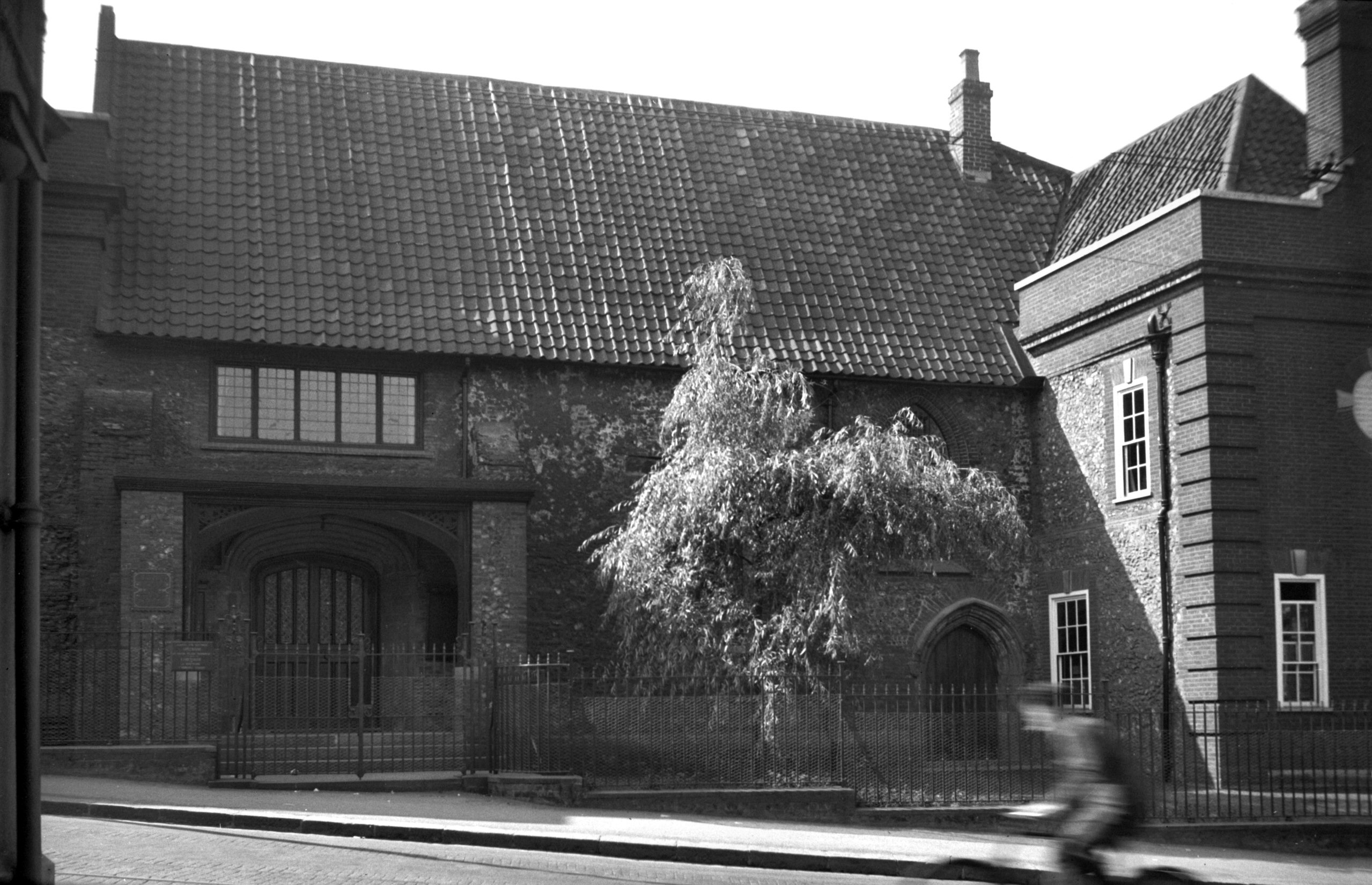
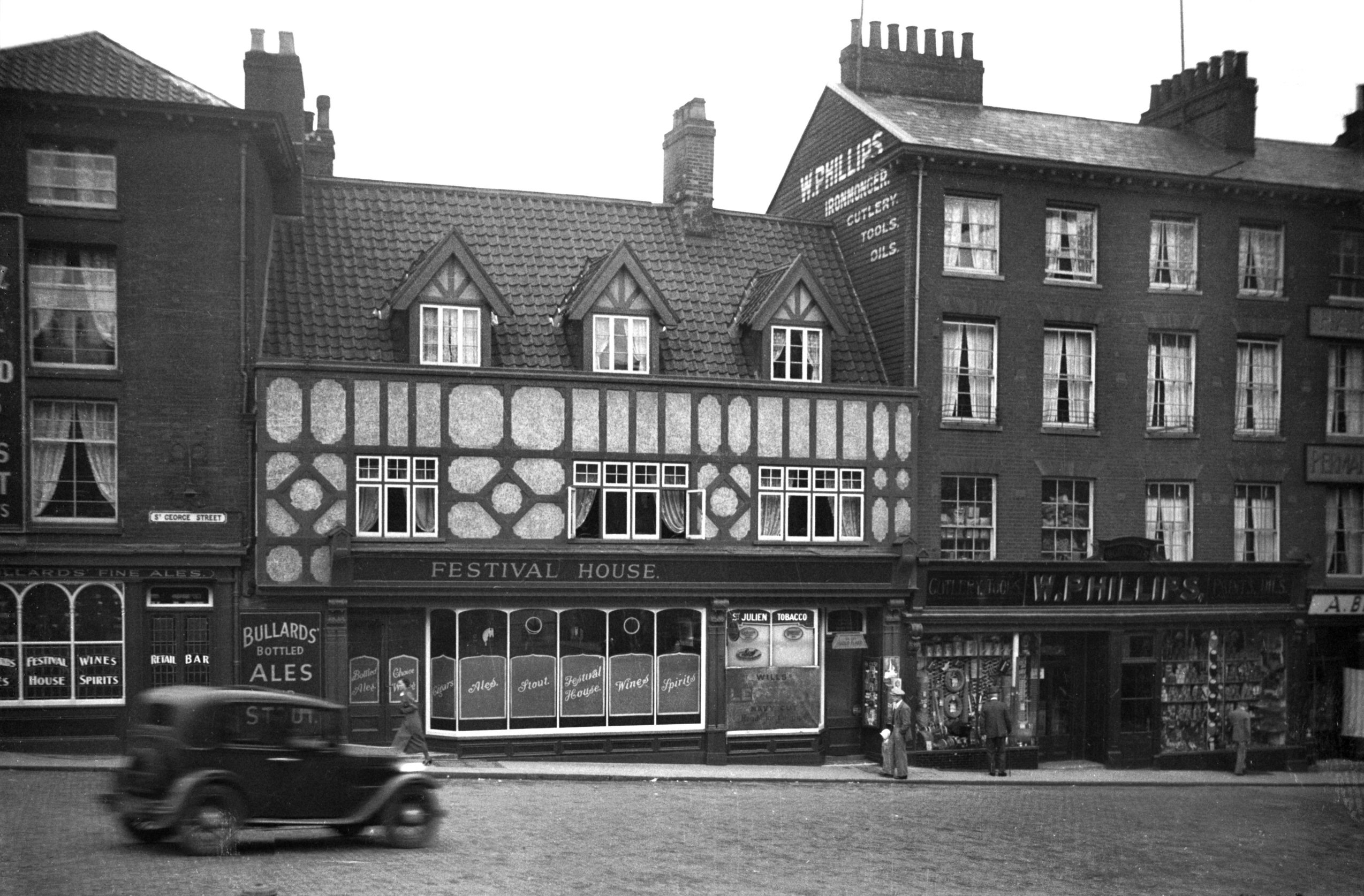
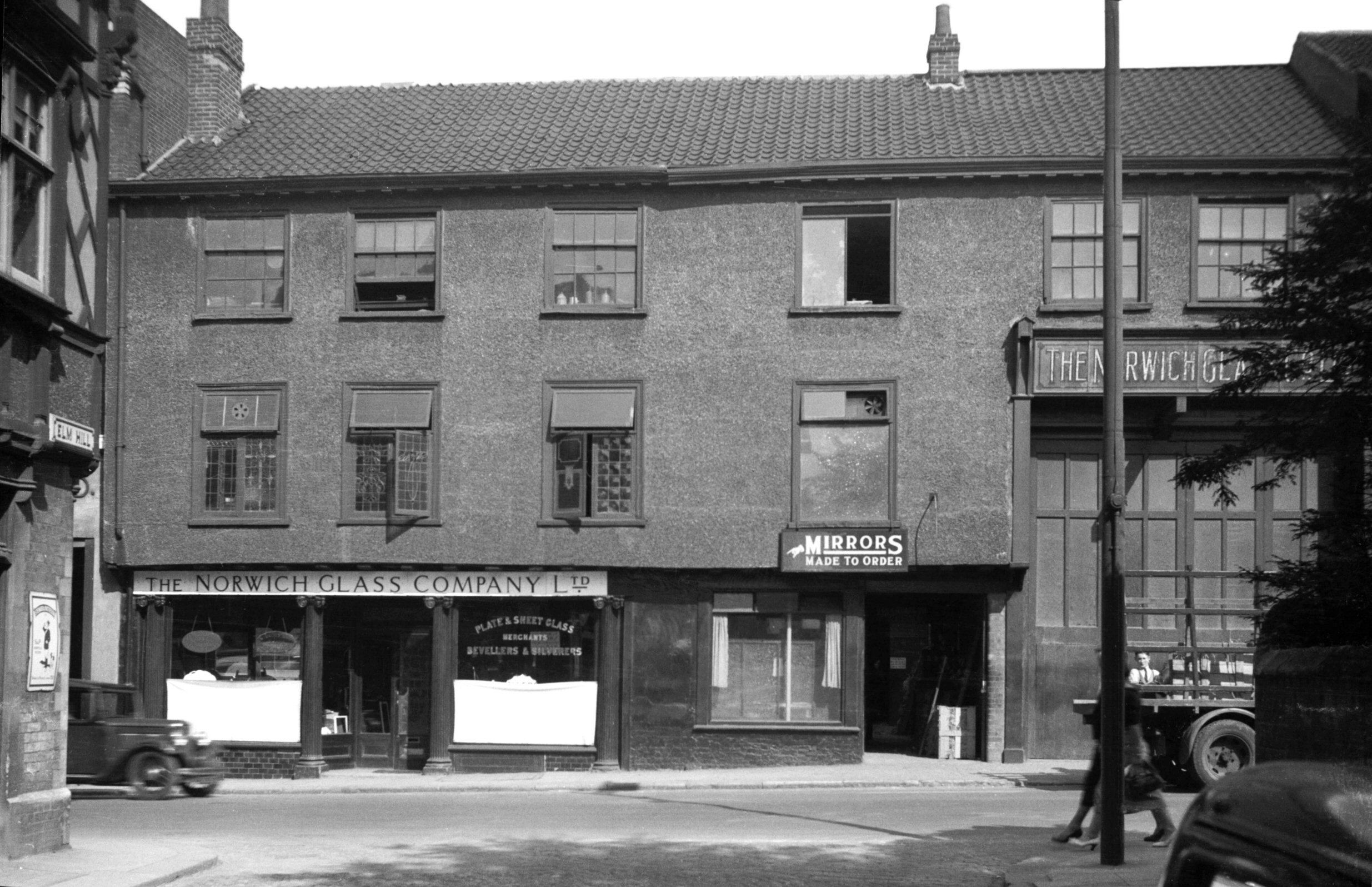
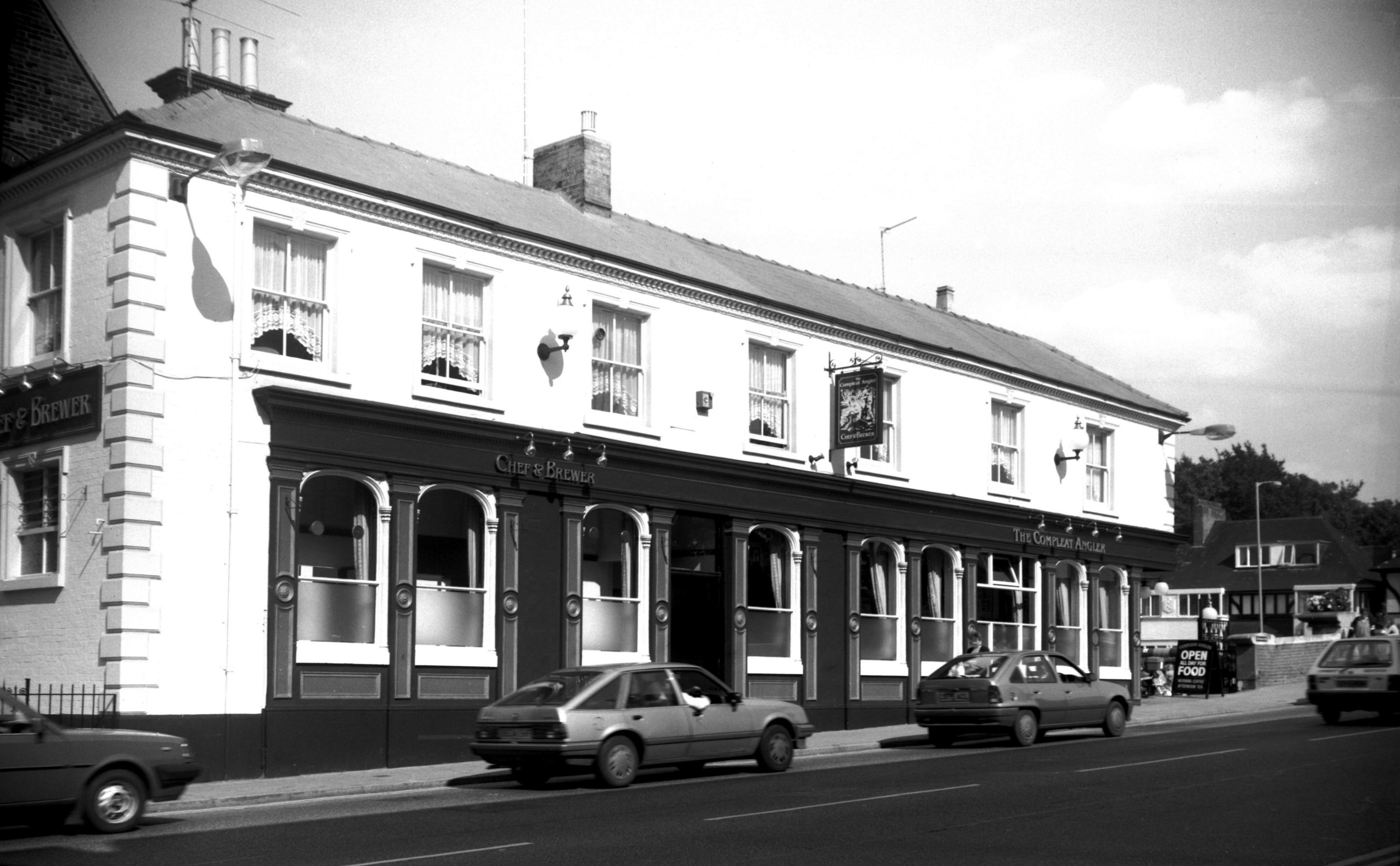
The fourth pub in our perambulation for the evening was the Coach and Horses on Thorpe Road, which also happened to be the third Good Beer Guide pub we visited in a row. We do like to treat ourselves, but that’s not to say that being this thorough in our pub visiting is easy. Before beginning on the history of the pub, these outside canopies have been the end result of some controversy with the council not liking the previous marquee arrangement that the owners put into place.
The building was constructed in 1811 and it became a pub soon afterwards, being operated by brewers including Youngs, Bullards and Watney Mann, before it became free trade. From the middle of the nineteenth century, the pub had the advantage of finding itself near the city’s new railway station, and later on it found itself near Norwich City’s ground, the Nest, until it moved to Carrow Road in 1935. All of this exciting trade must have been positive as the pub advertised for “a respectable boy for after school hours” in the local press in 1907. A news report noted in 1873:
“Before J. BETTS, E. K. HARVEY, and F. BROWN, Esqs. Henry Brewster, smith, Chalk Hill, was summoned for assaulting Detective Wigley, on the 3rd of May.-Mr. Stanley defended.-For the complainant it was stated that on the day in question there was a disturbance at the Coach and Horses, Thorpe-road, and the defendant, who was creating it, was taken into custody by Wigley and handed over to Police-constable Thurston, from whom he managed to escape. In the course of the row, the defendant declared that none of the party should be taken, and struck Wigley with his elbow and kicked him in the leg. Both defendant and his brother also threatened, when at their father’s house, to which they had been pursued, to knock Wigley’s brains out with a linen prop. For the defence it was alleged that the disturbance, which arose over a game of skittles, was not of so great a character as had been stated, and that the complainant’s son was as bad as anybody, and that the complainant was not justified in taking the defendant into custody. The blow and the kick were both denied.-Defendant was sent to gaol for a month, and in default of paying 15s. costs, to be further imprisoned for fourteen days’ hard labour.”
Well, that’s sub-optimal, threatening to knock someone’s brains out with a linen prop. And, it arose over a game of skittles, I’m just glad that bar billiards doesn’t cause such upset and anger. In 1866, there was some counterfeit money doing the rounds:
“Henry Goff, lodging at the Wild Man, St. Andrew’s, commission-man, was charged with attempting to pass a counterfeit shilling at the Coach and Horses public-house, Thorpe-road. It appeared that the prisoner went into the Coach and Horses on Friday afternoon for a pint of beer, and tendered a counterfeit shilling in payment. Mrs. Catermole told him it was a bad one, and he then handed prosecutor a good fourpenny piece. Prosecutor marked the shilling and returned it, and subsequently sent for Detective Wigley, during which time a man, who had entered the house with the prisoner, left. Detective Wigley produced the coin which he had received from the prosecutor, and another counterfeit shilling which he found upon the prisoner when he apprehended him. The coins were similar, but of of the same date, as those found last week, in the process of manufacture. Prisoner told Wigley that he did not know how he became possessed of the money. The room in which the prisoner lodged was searched, but nothing further found. The case was adjourned till Friday, in order that a communication may be made with the Mint authorities.”
And then just weeks later:
“Henry Croft (35), machine maker, was indicted for tendering and uttering to James Cattermole, a counterfeit coin, viz., one shilling, knowing the same to be false and counterfeit, and that he at the same time had in his possession another counterfeit shilling, on the 8th day of June, 1866.—Mr. Cooper prosecuted, and Mr. Mayd defended the prisoner. It was stated in evidence that the prisoner called at the Coach and Horses public-house, kept by the prosecutor, at Thorpe, and tendered a bad shilling in payment for a pint of beer which he ordered. Prosecutor said that the shilling was a bad one, and told the prisoner so. Prisoner said he had no more money with him, but afterwards said he thought he could find a fourpenny piece. Prosecutor took the shilling, which he did not return to the prisoner, to police-constable Wigley, after having put a mark upon it. No surprise was expressed by the prisoner when he was informed that the shilling was a bad one. Wigley soon came to the Coach and Horses, and saw the prisoner, whom he searched, when he found another counterfeit shilling. He then took the prisoner, who said he did not know how the money came into his possession, into custody, and afterwards searched his lodgings, but found nothing suspicious. The spurious coins were taken to Mr. Ralfs’, silversmith, who immediately pronounced them to be base. Mr. Mayd put it to the jury whether the statement of the prisoner, that he did not know how the coins came into his possession, was not true, contending that his conduct was perfectly compatible with its having come into his hands in the ordinary course. He remarked upon the fact that the prisoner had not been found to be dealing with spurious coins elsewhere, and that when searched no silver paper in which bad money was usually wrapped to keep it bright, was found upon him. Mr. Mayd also pointed out to the jury that the dates upon the shillings were “1860,” and “1865,” this being a-other circumstance in his favour; but the Recorder, in summing up, put a different construction upon them. He observed that the coins, although purporting to be made in different years, were remarkably alike in every other respect, the foil upon that dated “1860” being as clearly defined as upon that dated “1865.” That fact weighed heavily against the prisoner. Again, if a man like the prisoner, having but little money, were told that the shilling he was tendering was a bad one, he would have expressed some surprise at the circumstance, and as to how it came into his possession; but the prisoner said nothing at all respecting it. The prisoner was found guilty, and sentenced to twelve calendar months’ imprisonment.”
In 1878, the brewery Youngs decided they wanted to build a rather lovely new building on the corner of Foundry Bridge (now known as Thorpe Road in this section) and Rosary Road and they were willing to forfeit the licence at the Coach and Horses which was nearly next door to their proposed site. It caused something of a scene locally and the newspaper reported in some detail about the matter:
“The proposed house would not be close up to the corner. Whether this application was acceded to or not, Mr. Young intended to build on the land in question. As there was a want of dwellings for artizans in the neighborhood Mr. Youngs intended, if the application were not granted, to build cottages of 10l. rental from the point to the Coach and Horses, and also beyond the public-house, which would still remain. On the other hand, if the application were granted, the cottages would be built between the new public-house and the site of the tea gardens, which would be abolished. Mr. Reeve asked whether if the license were granted, 10l. cottages would be built; and Mr. Burton, the architect, replied that a better class would, in that case, be erected. Mr. Chittock said the question was whether a better public-house should be erected at the corner, or the present inconvenient house should remain. Mr. Bolingbroke asked whether there would be any gardens attached to the new house, and Mr. Chittock replied that there would be none. He then called Mr. Burton, architect, who put in plans of the proposed alterations, and Mr. C. H. Capon, who said that the proposed alteration would be an improvement upon the present condition of the property. Mr. G. A. Stevens opposed the application on behalf of the vicar and churchwardens of St. Matthew, and the principal inhabitants of Thorpe Hamlet, who had placed a memorial in his hands for presentation to the Licensing Justices. The memorial was signed by 63 persons, nearly all residing in the hamlet, representing the rateable value of 3500l., and a gross value of between 70,000l. and 80,000l. The memorialists affirmed that there was no necessity for additional public-house accommodation in the hamlet, and that the proposed transfer of the existing license from the Coach and Horses to a new building on the triangular piece of land would be most objectionable, and seriously depreciate the value of all property in that locality.
The present licensed houses, with the adjacent gardens, were now a considerable nuisance to the neighbourhood, especially on Sunday evenings and general holidays; and if the license was granted to the prominent site proposed, the memorialists urged that the nuisance and annoyance would be increased ten-fold. The Mayor supposed that the memorialists were aware that it was intended to abolish the tea gardens. Mr. Stevens replied in the affirmative, and then backed up his memorial by reading letters from the Revs. G. W. Pierpoint, W. H. Cooke, and G. S. Barrett. The Rev. W. H. Cooke wrote that the chief motive for the alteration must be to entice the frequenters of the road into the proposed public-house. As the road was now almost unfit to traverse on Sunday evenings in consequence of the disgraceful language and rough conduct of many walkers thereon, it might be easily imagined what would be the effect of offering to the public greater temptations for selling refreshments. The Rev. G. S. Barrett submitted that the transfer was unnecessary, and would be prejudicial to the value of the property near the proposed site. Moreover, the present position of the house met all reasonable requirements, and any change would very likely add to the inconvenience and disorders to which the inhabitants of Thorpe were subject on Sunday evenings. Another letter in a similar strain from Mr. S. S. Hill was also read. Mr. Stevens denied that what was asked for was a public improvement. There had not been shown to be any desire on the part of the neighbourhood for any better accommodation than that which existed. Mr. Youngs some time ago bought the public-house and gardens, and afterwards the strip of land at the point. That point had been a great advantage to the neighbourhood, and to the citizens generally because of the beauty of the clump of trees. Of course Mr. Youngs could not be expected to allow the property to remain untouched; but to say that it would be an improvement to have a public-house in lieu of the trees was to state that which was absurd. The object of the transfer was to have a large flaunting public-house at the apex of the triangle, with a convenient plain in front of it, where, beneath the trees, which they were told were to remain, people would sit on holidays and perhaps during Sunday evenings. Such a house he contended would increase the number of people who now swarmed up the Prince of Wales’-road and Foundry-road on Sunday evenings, require the attention of extra policemen, and tend to create more of the annoyance of which complaint bad from time to time been made. In conclusion, he said the people of the hamlet would prefer the cottages to the big public-house Mr. Chittock replied to the long address of Mr. Stevens by stating that even Mr. Youngs would agree with the memorialists that there was no need for further public-houses, and that the tea gardens were a nuisance, for he did not ask for further accommodation, and he proposed to do away with the gardens. As to Mr. Stevens’ picture of the parties under the trees in front of the house, Mr. Youngs would permit nothing of the kind.”
The plan didn’t work out, although I was amused by the “disgraceful language and rough conduct” of the locals. And people swarming up Prince of Wales Road, so this isn’t just a new thing in the evening.

Back to today though, it was busy inside but it was good to see Matt and he mentioned that a large number of people were there as part of a leaving do. Although it was busy, we were served promptly and the team member seemed knowledgeable and engaging. We were also fortunate to see one empty table, so that made matters a little more comfortable than trying to prop ourselves up at the bar. This venue seems to get something of a mix of customers, from those seeking real ale, locals, those planning to get a drink before catching their train or tourists who have just arrived in the city.

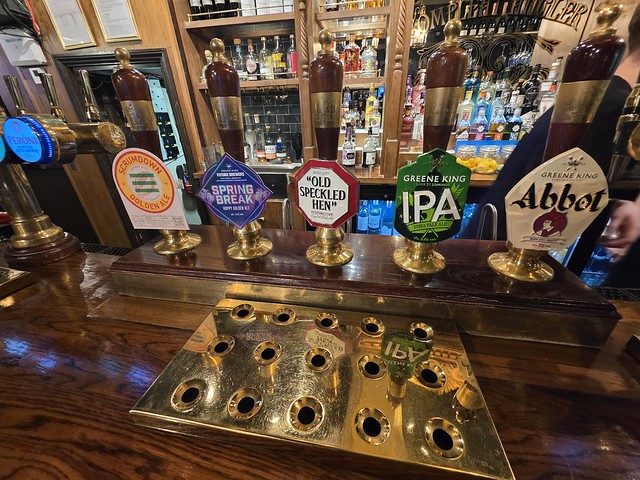
The beer board isn’t necessarily the easiest to see, but it is up there. There is a brewery on-site, the Chalk Hill Brewery, which was formed in 1993 so has been going for some time and the landlord, David and Rosemary Blake, have been here for the same period of time. There was a decent selection of five beers from the on-site brewery and there were a couple of guests as well, with cask and keg options available. They have numerous events here including quizzes and live music, with sports being shown on large screens which are located both inside and outside.

I can’t remember ever eating here so I can’t comment on that, but there is food served during lunchtimes and in the evening. The on-line reviews of the food seem positive, so it all seems entirely agreeable.

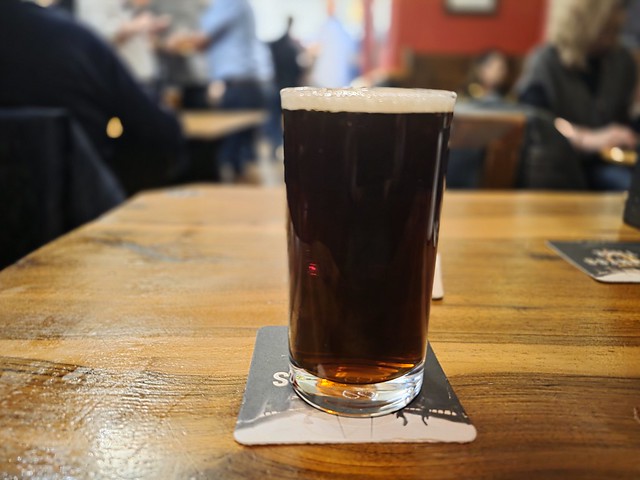
I went for the Ruby Spiced which is brewed by Chalk Hill Brewery and it was a better red ale than I had been anticipating. I like a bit of cinnamon in a beer and it felt like it was Christmas again with the additional flavour of cloves. Julian went for the Chalk Hill Brewery’s CHB session bitter which he seemed satisfied with.
The pub was welcoming and comfortable, with the beer prices being reasonable and the selection of drinks being broad. The service was friendly, the surroundings were laid-back and I’d say that this is a rather good addition to the Good Beer Guide.