The gate was called which meant it was time to traipse off to the furthest part of the airport which is where all my Ryanair flights seem to depart from. I suppose that the airport charges them a cheaper rate per gate for flights that depart from the very boundary of the terminal.
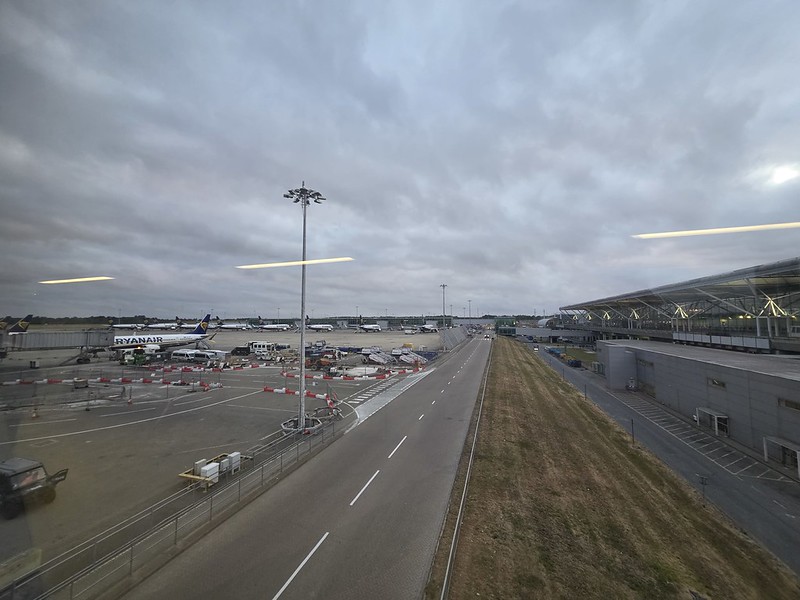
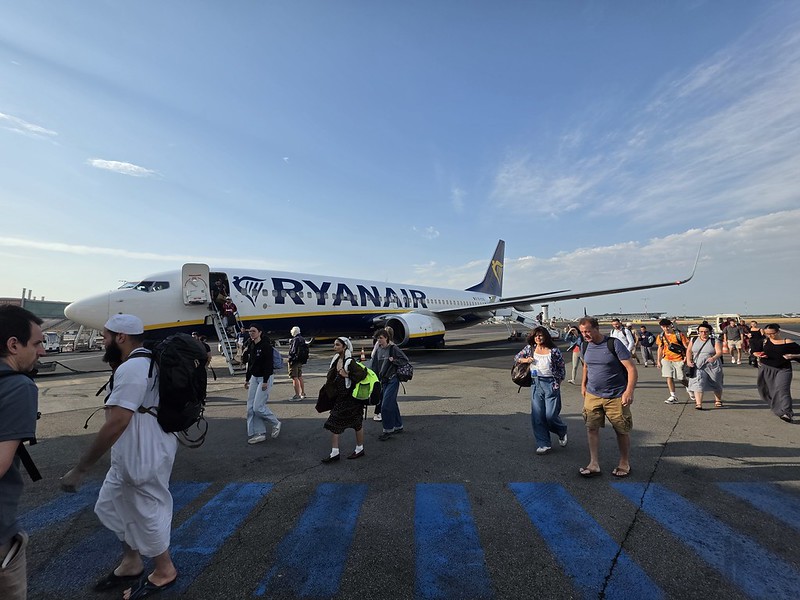
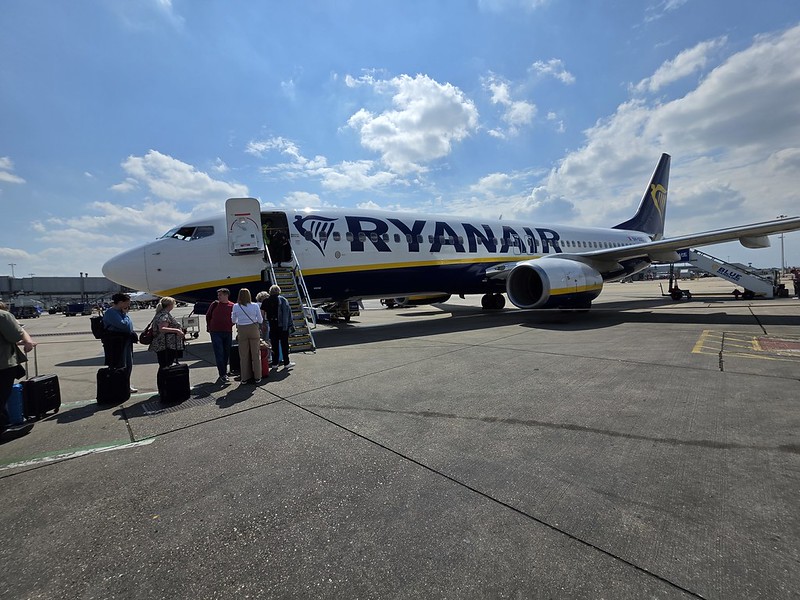
Ryanair aircraft everywhere, waiting patiently to transport people across Europe for less than the cost of buying lunch in the airport.
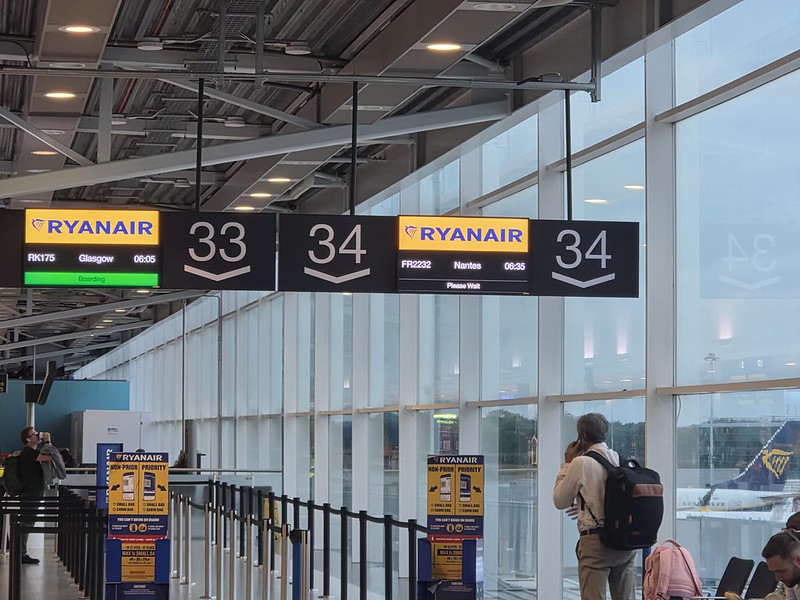
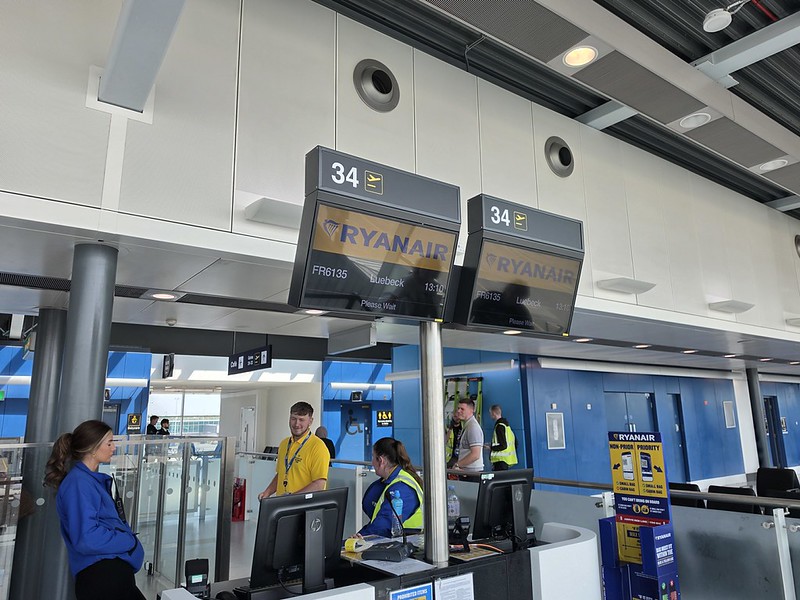
Gate 34, the same gate as I boarded from a couple of weeks ago and I’m not sure it’s possible to get a gate further away from the main terminal with a shuttle bus and an overnight expedition. Boarding was a little muddled, they didn’t put the “boarding” line on the screen and a confused gate agent came over to ask why people weren’t boarding. She said that she had been shouting, but as she was around 20 metres away, it wasn’t entirely a surprise that no-one heard her. A passenger then had an argument with her about the whole arrangement, just to add a little drama to proceedings.
We were then held up as another passenger was trying to take a backpack that looked like she had somehow fitted a hippo into it. The gate staff, who were letting some quite large bags go through, could hardly turn a blind eye to that and so that was another £60 for the airline in fees.
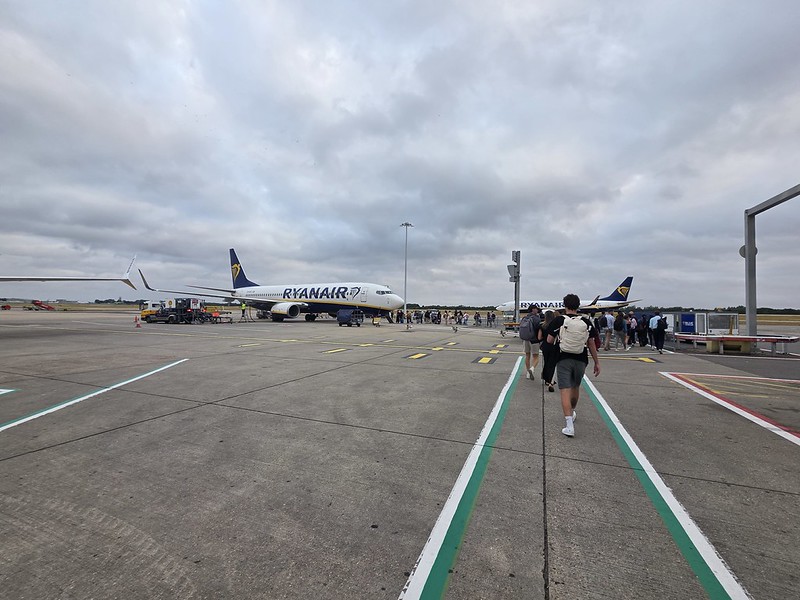
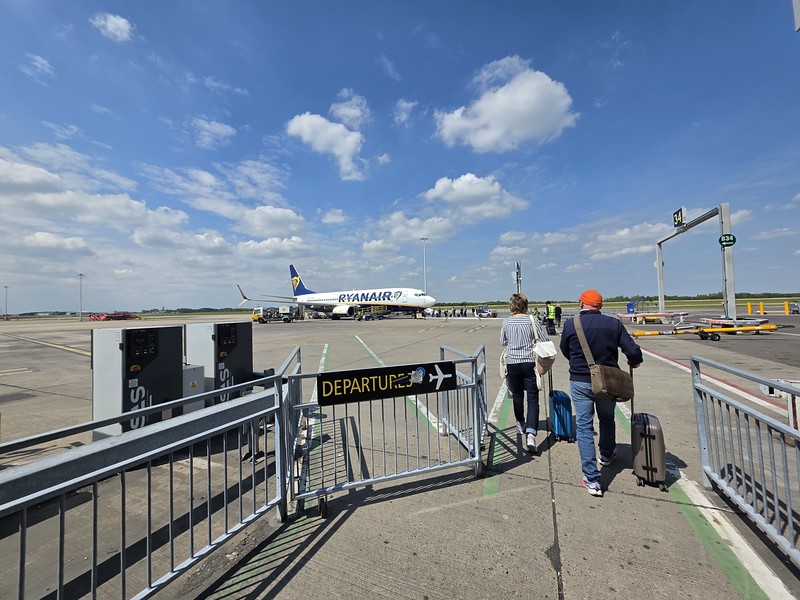
The walk to the aircraft, during which there was ample opportunity to reflect on whether Nantes was actually closer than the departure gate.
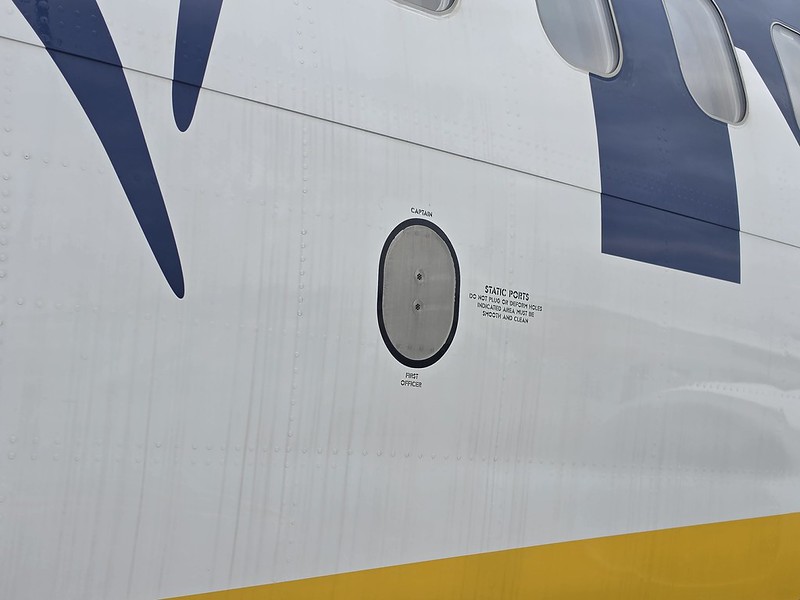
I’d never noticed this on the side of an aircraft before and Wikipedia tells me that “they measure undisturbed ambient atmospheric pressure. It is a vital component of the pitot-static system, supplying static air pressure data to the altimeter, vertical speed indicator (VSI), and airspeed indicator”.
I asked AI to explain this to me as though I were an idiot, which is a setting I have already spent considerable time training it to use. It replied that they were basically measuring altitude, so that was another aviation mystery comprehensively resolved without the inconvenience of obtaining a pilot’s licence.
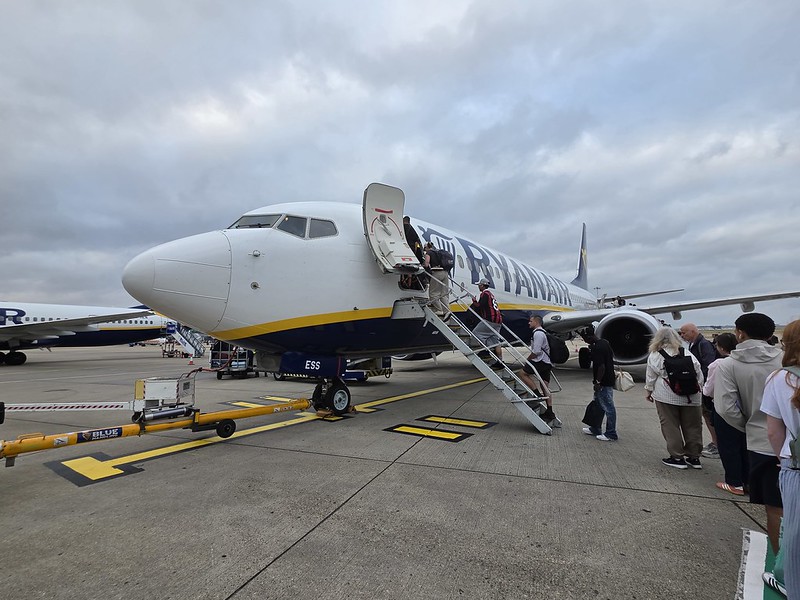
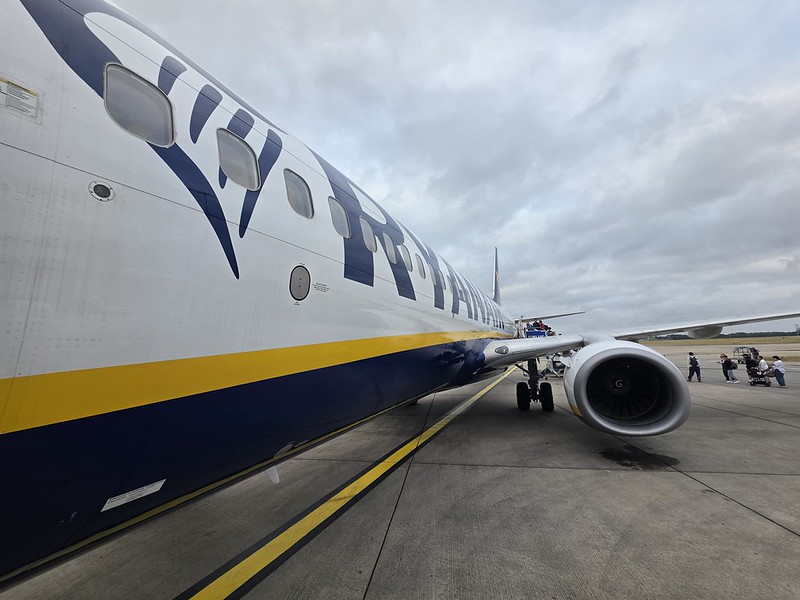
As always, I like these steps that fold into the aircraft before departure. The aircraft is EI-ESS and I looked at how many flights that completed today and it’s eight, which shows considerable efficiency. By comparison, I had managed to get myself from Luton Airport’s waiting area to Gate 34 and already felt that I had achieved enough.
As I hadn’t had any sleep I was getting a little tired by this point and was slightly pre-annoyed that the seating Gods had given me a middle seat.
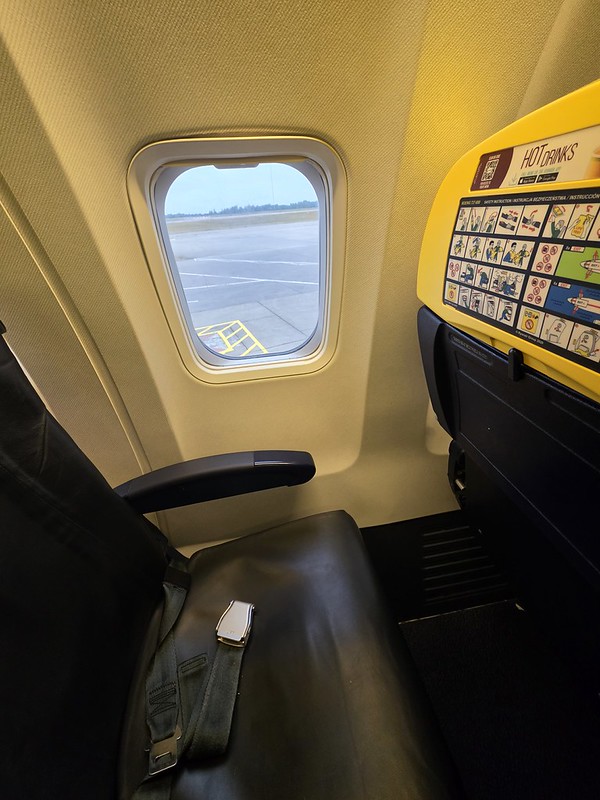
Fortunately, there was no-one in the window seat and so I was able to move across. The flight was around 30% empty and so it seems the only reason I had been allocated a middle seat was to encourage me to pay to move to a window or aisle. In fairness to Wizz Air, they don’t seem to try that tactic on me, which is sensible as it doesn’t work on me at least.
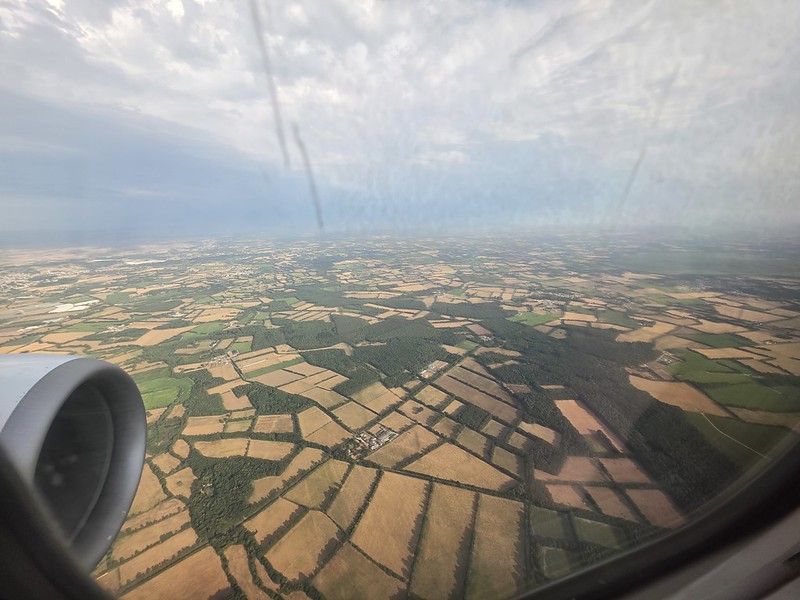
I’m sure that there was a reason that I took this photo, although I can’t now remember what it was. So, here are some fields to look at. They appear to be functioning correctly in that role.
And safely landed on time into a very hot Nantes. The fare was more than I’d usually pay at £15, but the whole arrangement was efficient, the crew members were friendly, the aircraft was clean and everything went as I had expected. A smooth flight gives me less material for this blog, but it is probably best for all concerned and I remain entirely satisfied with Ryanair.
Straight after my day out with Roy and Jen to numerous north Norfolk pubs, but more on that later, it was time for Liam to pick me up on his way to work whilst dropping me off at Stansted Airport ready for an early morning flight. I’m not ideally sure that going straight to the airport straight after visiting several pubs was entirely sensible, but Liam made his car nice and cold for me. Richard still hasn’t got a car with seats which cool passengers down, but I suppose he’s not a VIP like Liam. And many thanks to Liam for his assistance, although he gets the excitement of my company for nearly two hours, so I can see why he’s keen to help.
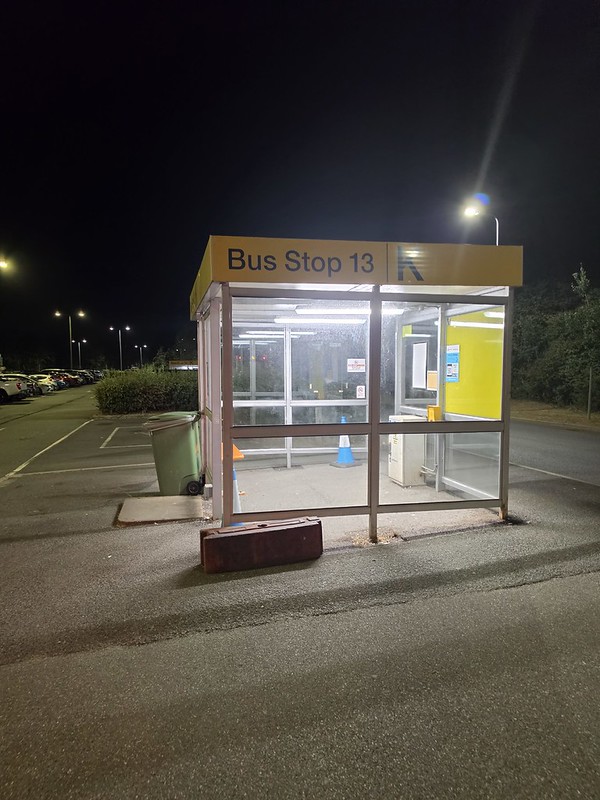
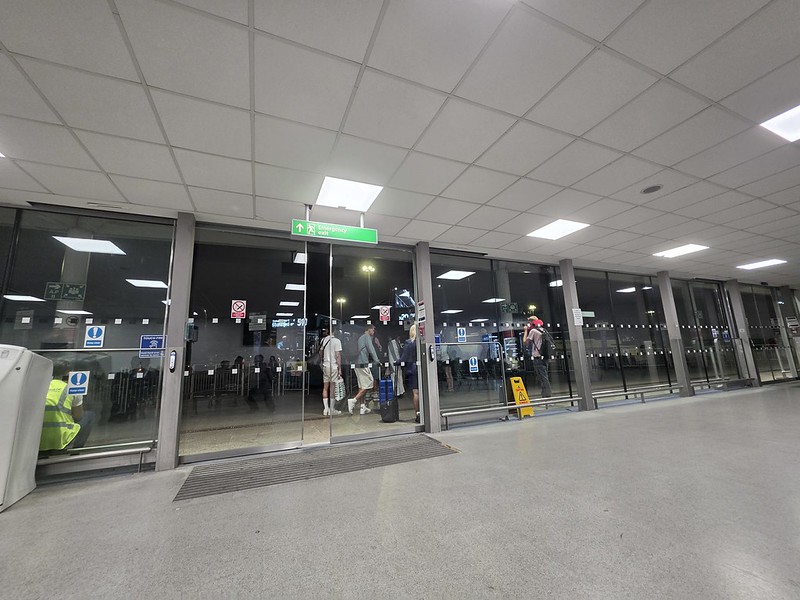
I was the only person on the shuttle bus from Stansted medium-term parking to the main terminal, but that’s not entirely surprising as not many people feel the need to arrive at 01:00.
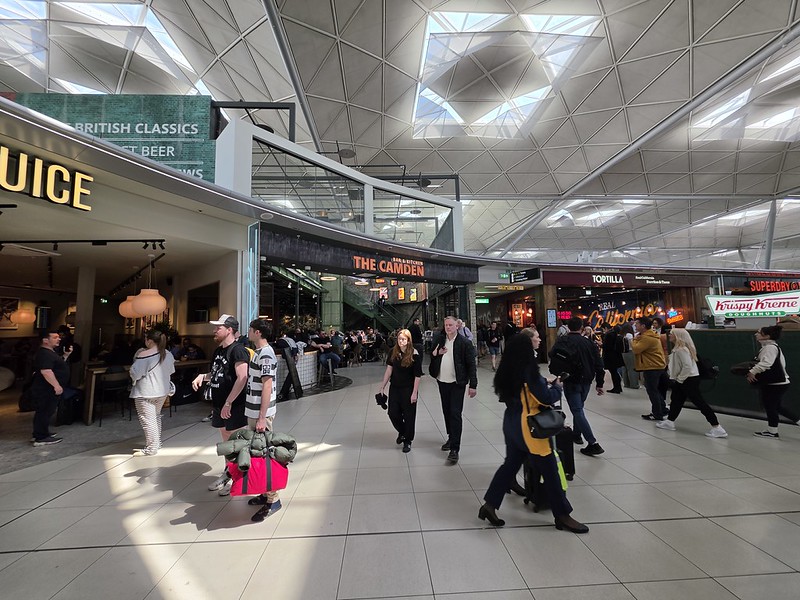
The main terminal effectively closes now at night, other than for a small section at arrivals, but the bus station terminal seems to always have space.
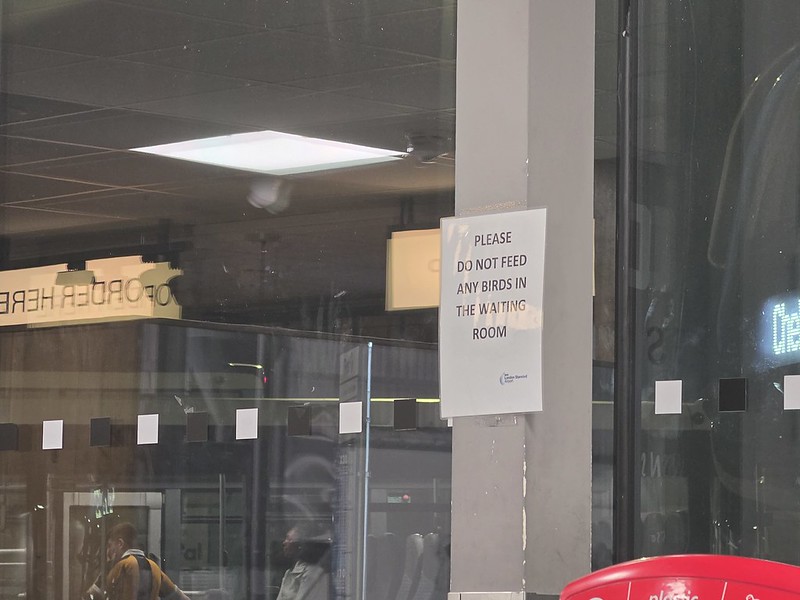
That there were people who thought feeding birds in the waiting room was a good idea annoys me.
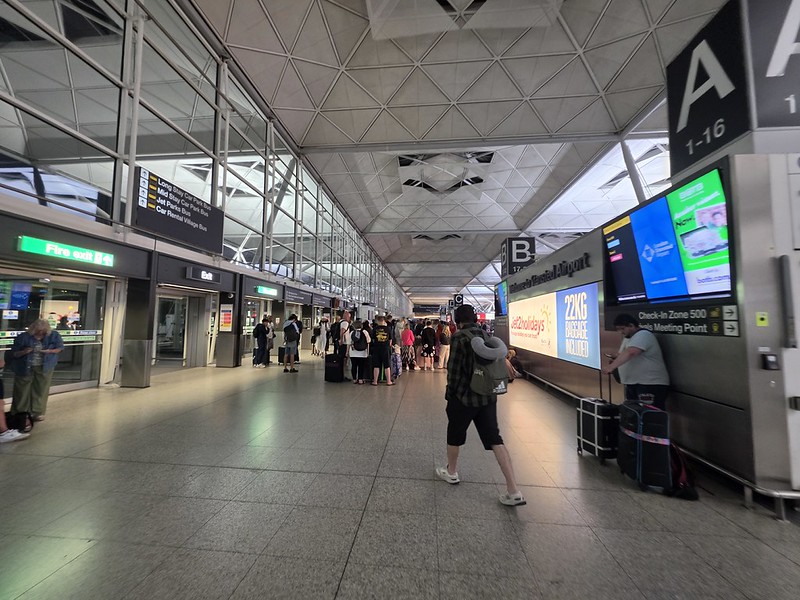
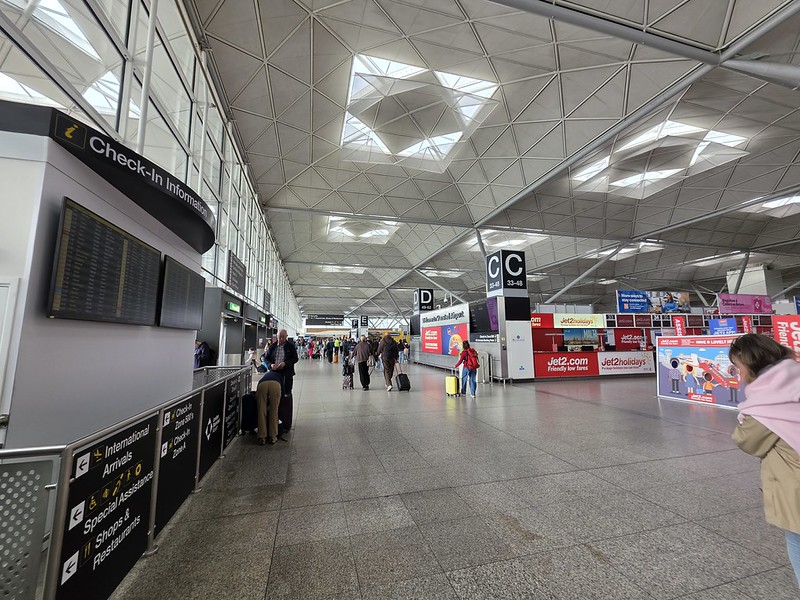
Just before 03:00 I meandered up the main terminal which had just opened. Sleep is something of an optional luxury for me when a cheap air fare is available.
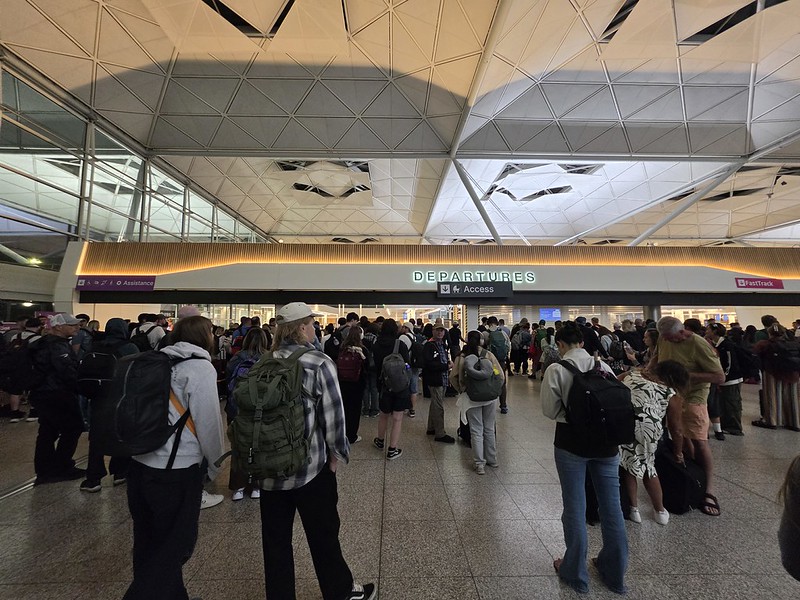
The security area opens at 03:00 and is always well staffed with friendly members of the security team. Despite the number of people queueing here I was able to get through within ten minutes, which was all rather efficient.
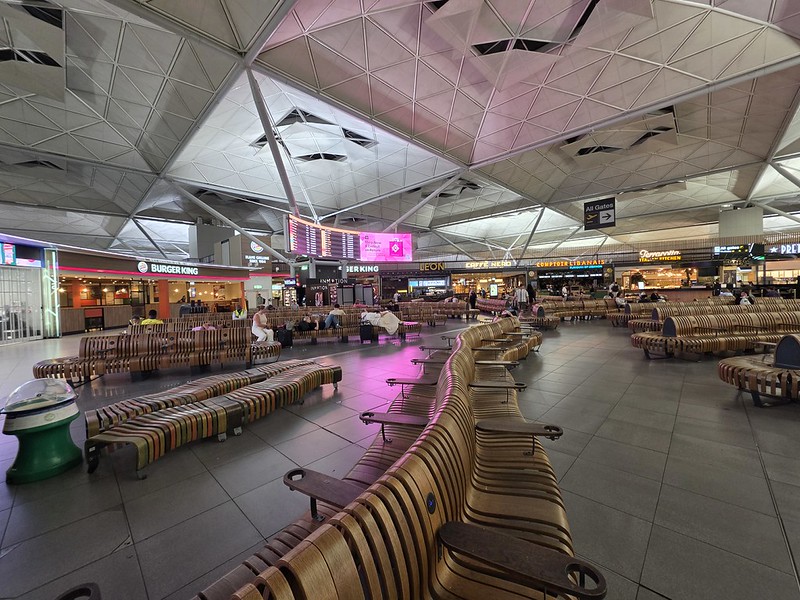
The airside’s main seating area where I took the opportunity to charge my phone.
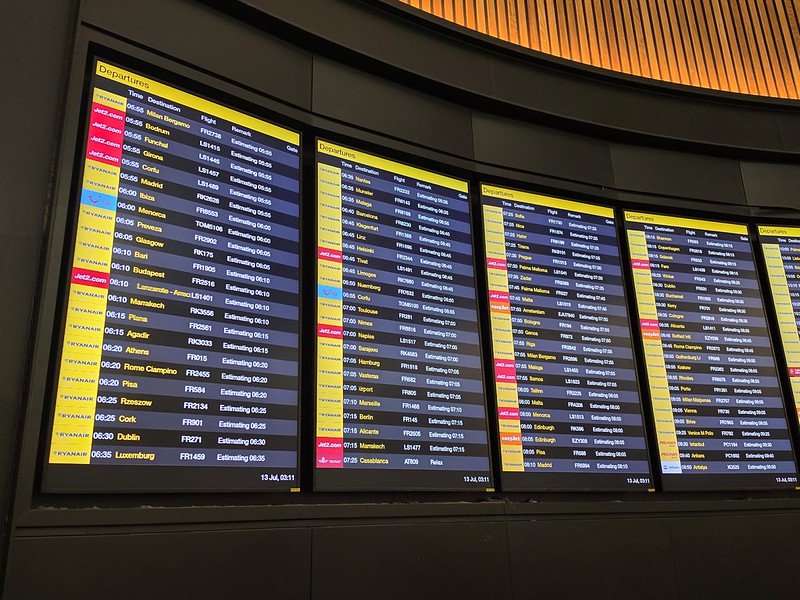
This shows the scale of the Ryanair operation at Stansted Airport.
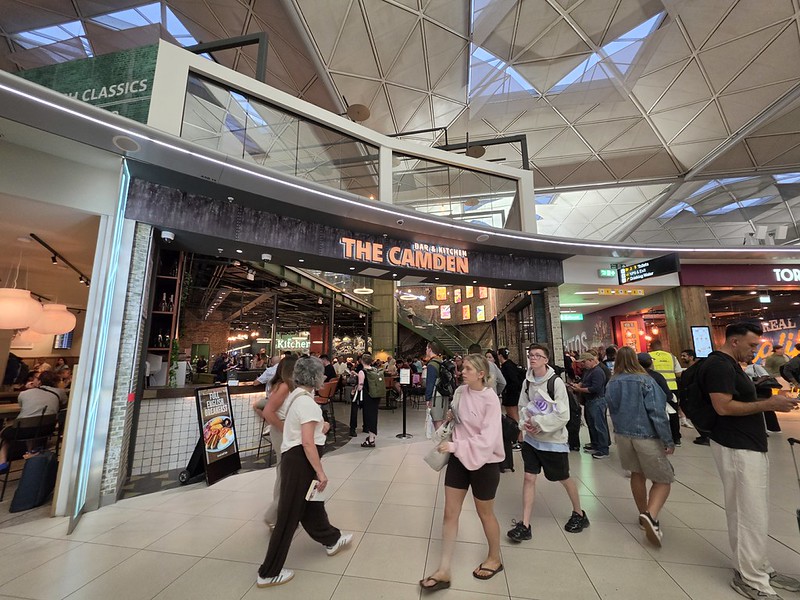
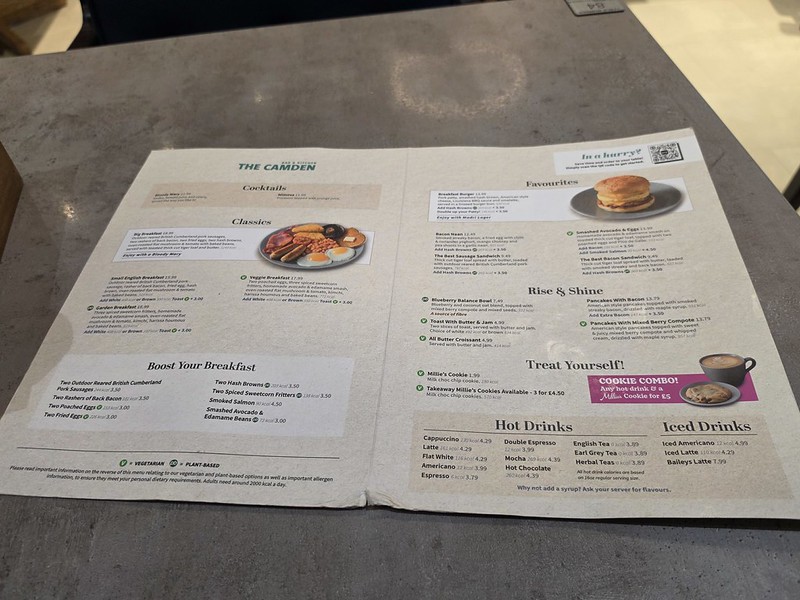
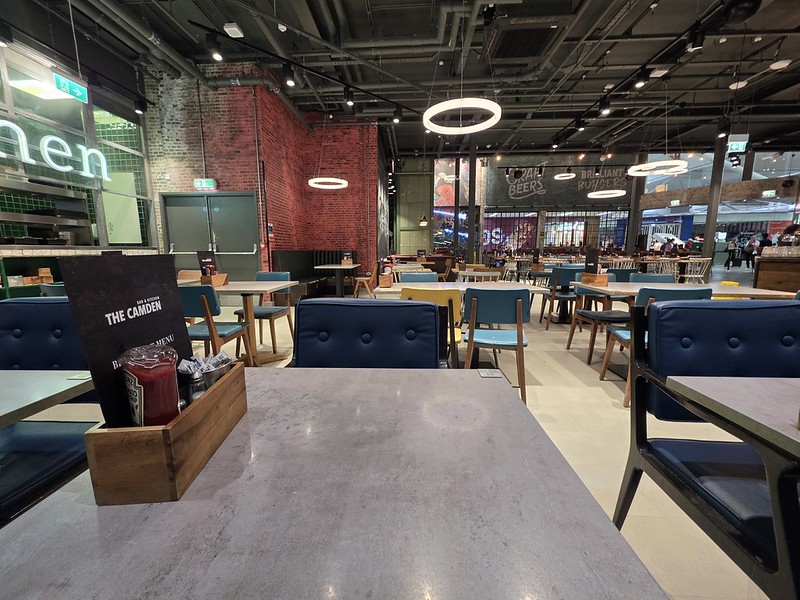
I get £18 to spend at Camden Bar & Kitchen with my Priority Pass. The Escape Lounge is closed at the moment, so this is the only option without spending my own money.
It’s getting more challenging to decide what to get with the £18 as the menu prices keep edging upwards.
The venue opens at 03:30, so I got there at 03:35 so that I didn’t look overly keen. I got a table with a power point, but I knew from past experience that I couldn’t order with Priority Pass until 04:00. This gave me 25 minutes to sit quietly and pretend I had not planned the entire operation around receiving breakfast at the earliest permissible moment.
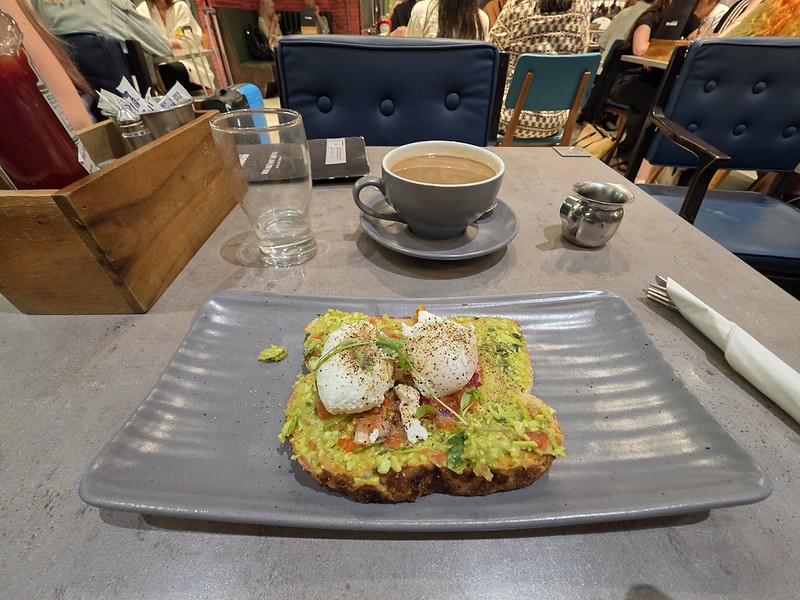
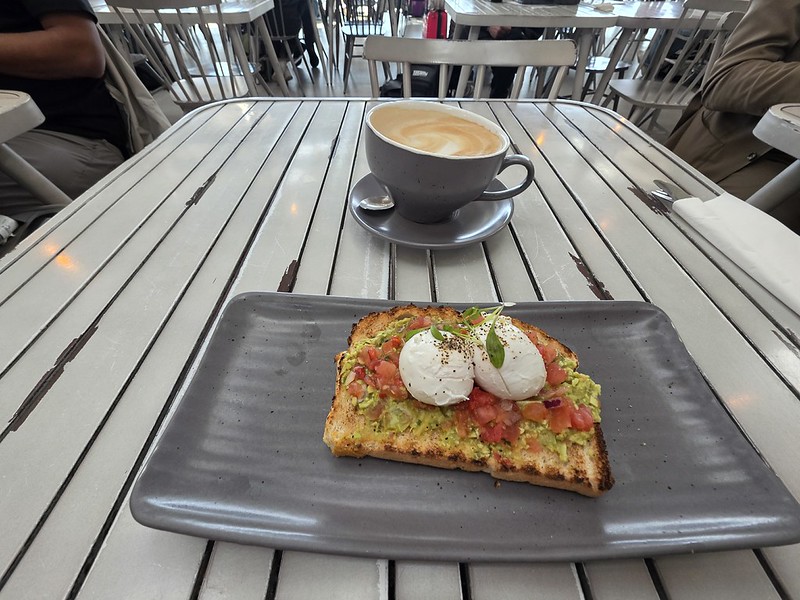
I went for this, the poached eggs on avocado toast with an Americano coffee, coming in a few pence under the allowance. It was suitably delicious, with the eggs being lightly runny, and sufficiently filling for that time in the morning. I’m not sure that I’d spend £18 of my own money, but as it was free with my pass, it was a convenient place to get a little rest before departing for my gate. Airport pricing is much easier to tolerate when somebody else’s accounting system is absorbing the emotional impact.
Anyway, with that I was ready for my flight to Nantes with Ryanair having been allocated the middle seat…..
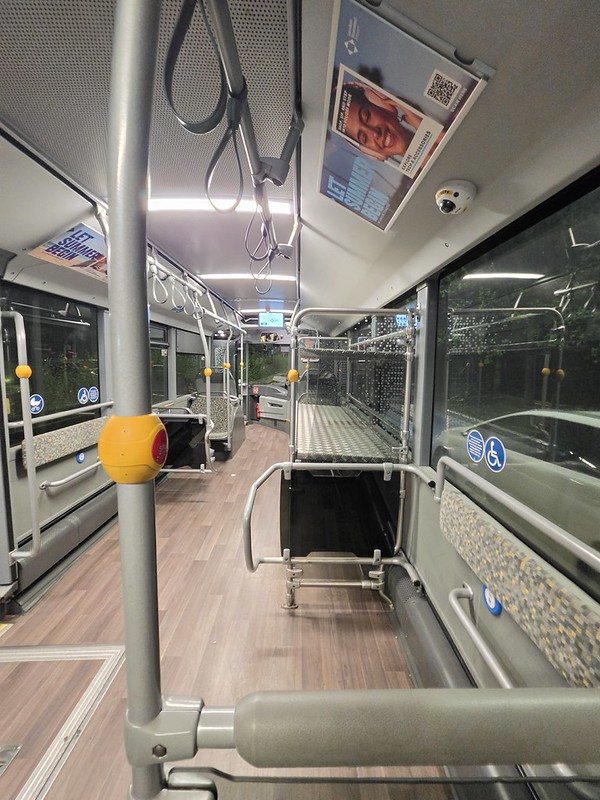
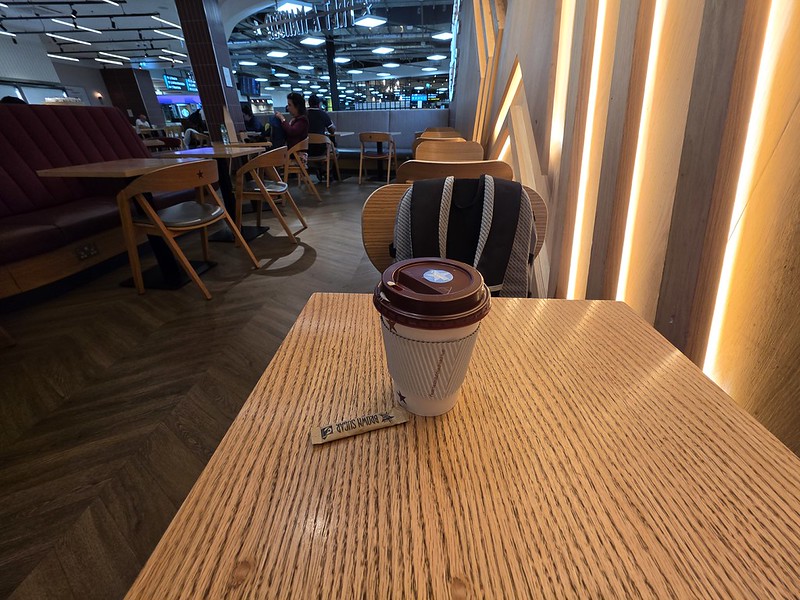
The late night arrival of my flight meant that I knew I’d have to stay at Luton Airport for a couple of hours and then cross over to Stansted Airport by coach before getting a direct train to Norwich. That was the cheapest option and Pret was clean, warm and had power points. Thanks to the staff member for giving me a decadent coffee for a price of a filter coffee, much appreciated.
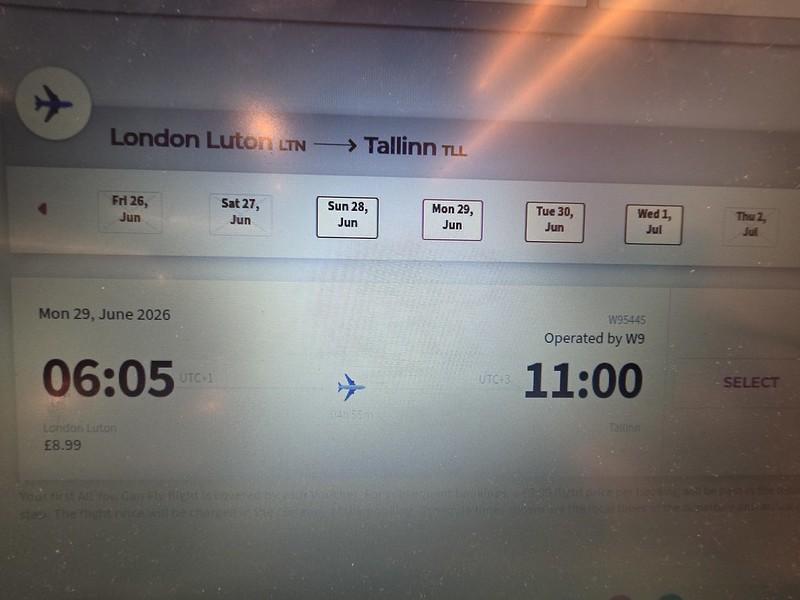
I was very tempted to book this, all I would have to do is go through security and then a few hours later I’d be in the great city of Tallinn. I showed enormous restraint not to book this £8.99 flight as it would have been easy to get muddled up.
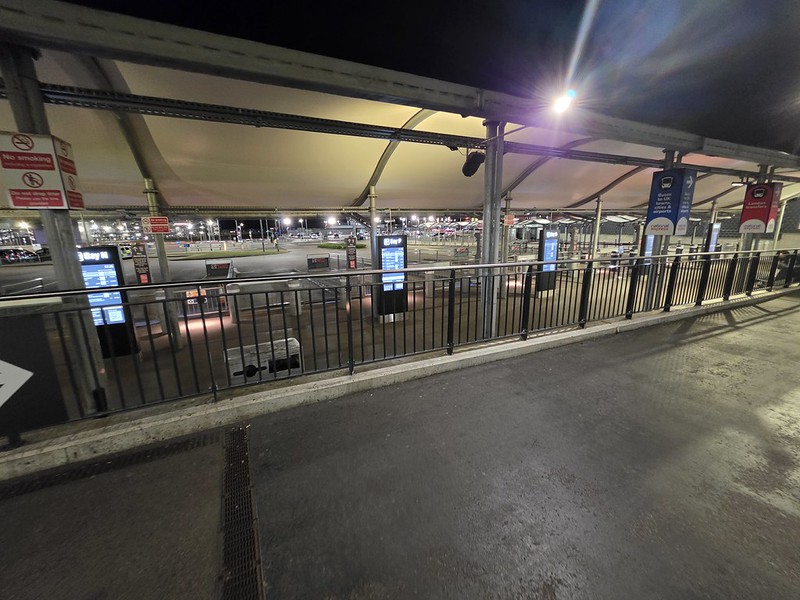
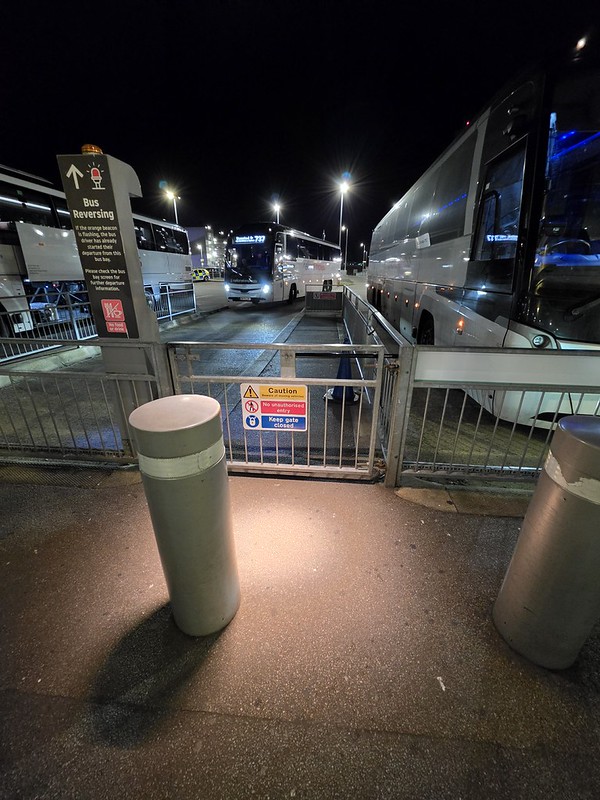
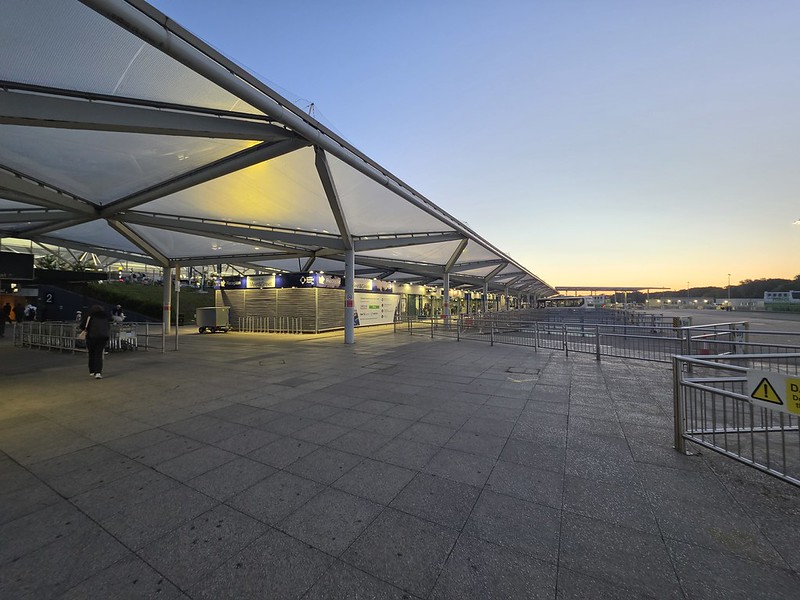
I went outside to look at the coach station and it was still there.
The Stansted Airport coach pulls in.
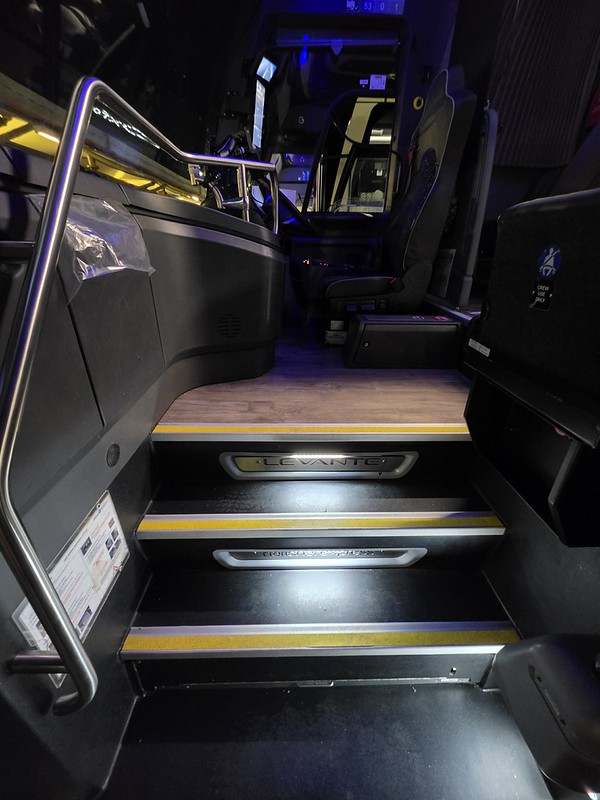
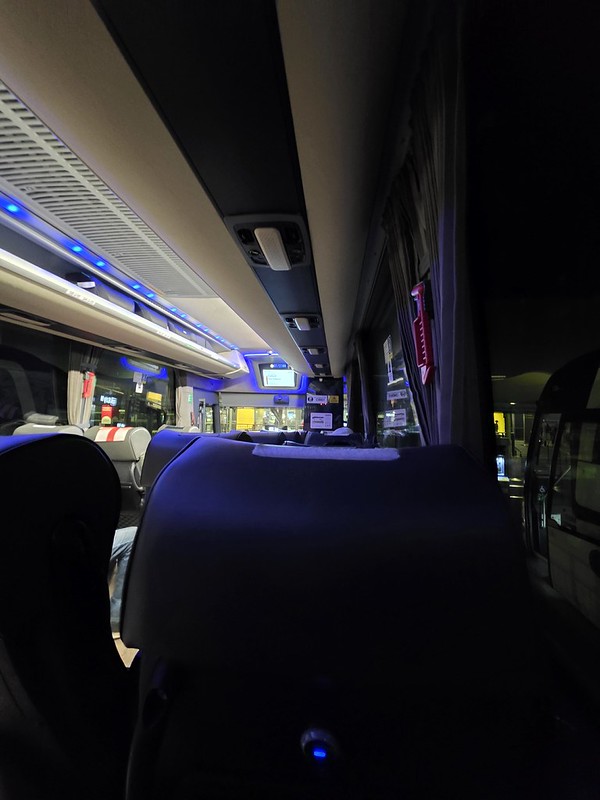
It was a slightly odd arrangement, the driver said hello and disappeared into the coach. He seems surprised I was still obediently waiting at the door a few minutes later and he didn’t bother checking tickets. This rather made the whole operation feel less like formal transport and more like a man with a coach had agreed to take us somewhere broadly useful, but I’m easy going (well, generally) and so I didn’t query him.
I have a theory that National Express is going into a permanent decline, this service was a third full and was one of the busiest I’ve been on in a while. I looked at some of their prices, and they’re charging ridiculous amounts in some cases where they have a monopoly. That’s great for a while, but Flixbus is going to steal that trade and I can’t see how they’ll get it back. National Express also have fiercely uncomfortable seats with very limited leg room, it’s fortunate that they do shuttle about nearly empty a lot of the time. Incidentally, I didn’t get my usual emergency exit row seat here, which is likely why I forgot about how poor the leg room was in the other seats. Nothing says ‘premium national transport network’ like quietly folding a passenger into a seating position not found in nature, but we shall see what the future holds…..
Safely at Stansted Airport.
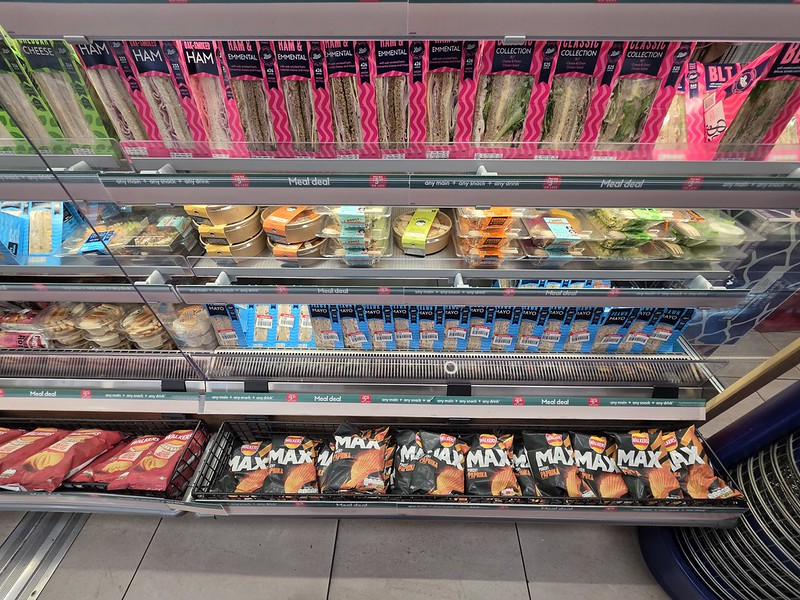
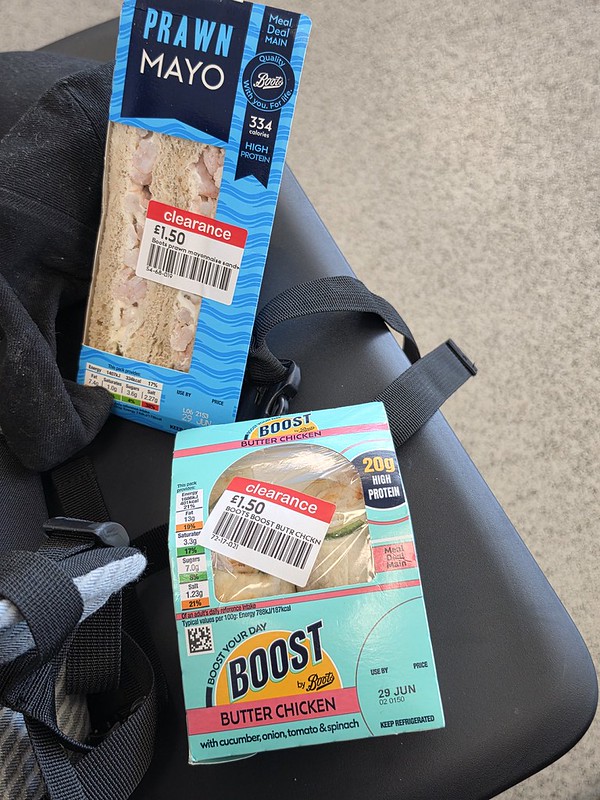
I had a few hours to kill so I went looking for bargains and found some in Boots. Note the number of reduced prawn sandwiches which is either a sign of my impeccable timing or a troubling commentary on airport seafood confidence.
Another breakfast of champions. The quality of Boots Meal Deal has declined a lot over the years, that’s another example of greed and then noticing that rivals have stolen a march on them. Still, it was edible, portable and reduced, which is sometimes the holy trinity of travel catering.
I then went down to Stansted Airport’s railway station to get the direct rail service to Norwich. There were no delays which meant no delay repay, but at least I’d be getting home in a timely manner. Punctuality is good, but it’s also rather lovely to have a little financial gesture when things go slightly wrong.
It was relatively quiet all the way to Norwich.
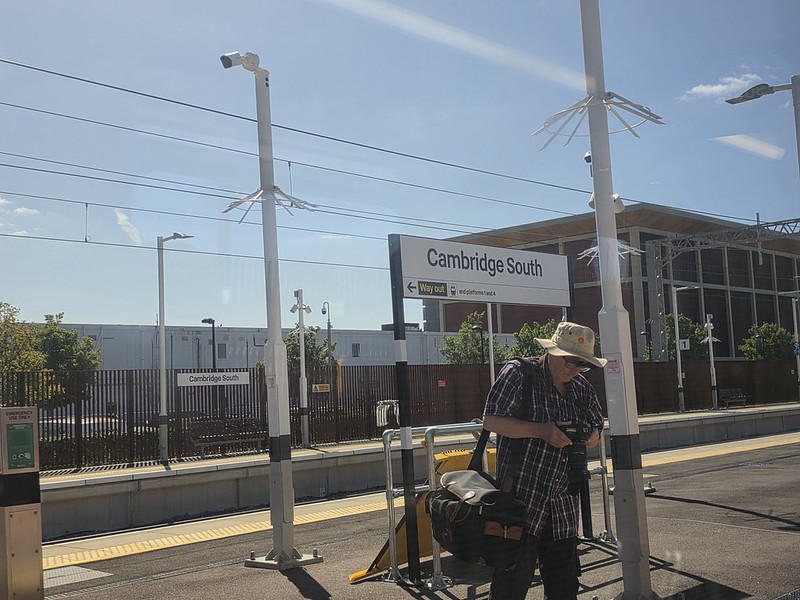
Cambridge South had opened the previous day and it was rather lovely to see it in operation, even if only from the passing train, which is exactly the sort of niche infrastructure excitement that keeps my two loyal blog readers on edge.
I, and the rest of the train, arrived back into Norwich on time and that’s another journey finished. I may or may not post more random stuff about the trip, I’ll leave that as a surprise because suspense is important in travel writing.
Incidentally, it was too hot in Norwich when I arrived.
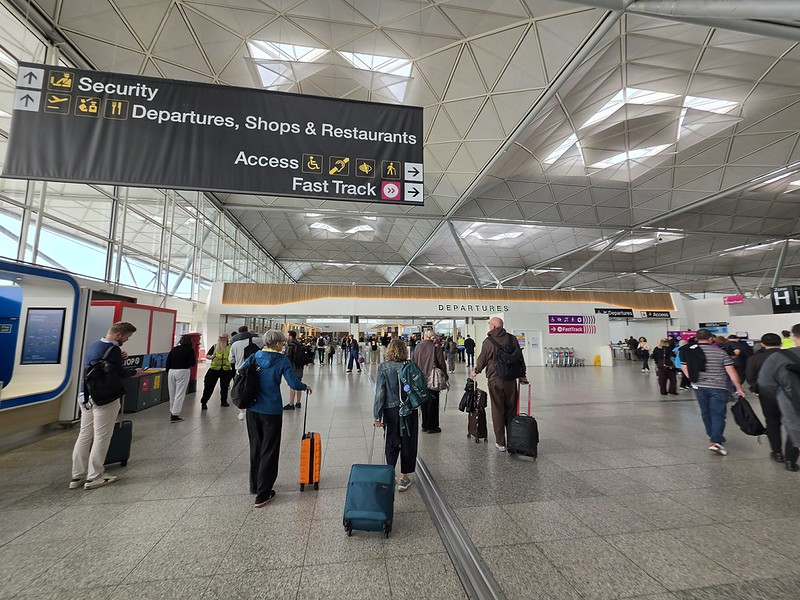
The entrance to the security area at Stansted looked a little more glamorous than when I was last here. It was also a quick process with staff members that looked buoyant and not entirely worn down by life. The security process here means that liquids and laptops don’t need to be removed from bags, so it’s a bit quicker.
There’s currently no lounge available at Stansted Airport, other than for certain flights, as Escape has closed (and I don’t know what is opening in its place). However, my Priority Pass card gives me £18 to spend at Camden Bar & Kitchen, so I popped there.
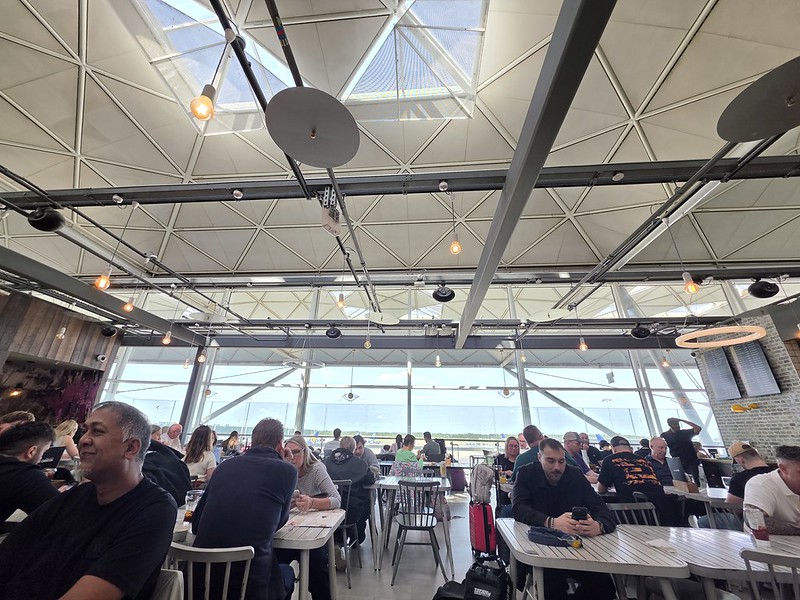
I’ve never been upstairs in here before and it was much busier than I had expected, although that’s true for the entire airport. The team members here were particularly friendly and engaging, despite how busy they all seemed to be.
This cost just under the £18 that I had, which seemed slightly expensive, but the quality was high. The toast was soft, the tomatoes and avocado had a richness of taste and the eggs were runny when I cut into them. The latte had some flavour and it was an enjoyable breakfast all round.
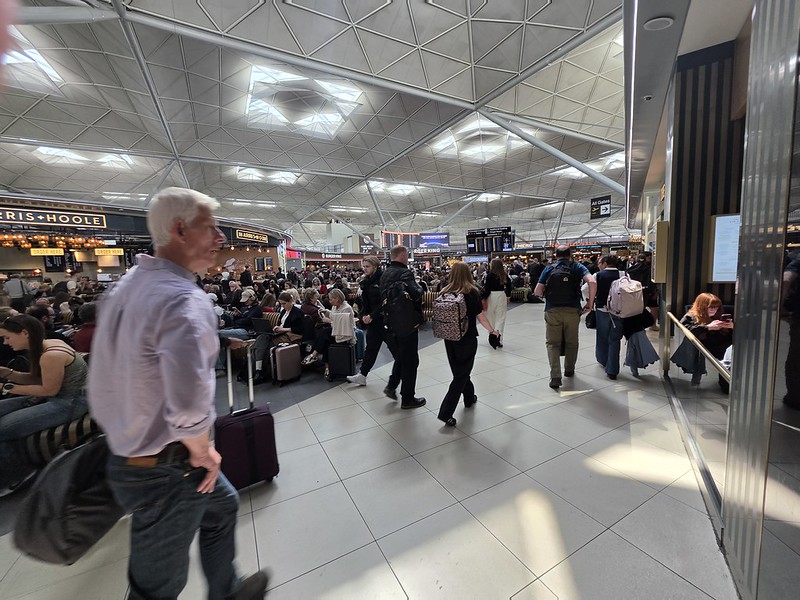
Back in the busy main terminal and there was a shortage of seating. I think they must be adding more as the overflow seating area downstairs is currently closed, so I’m hoping that they have a plan.
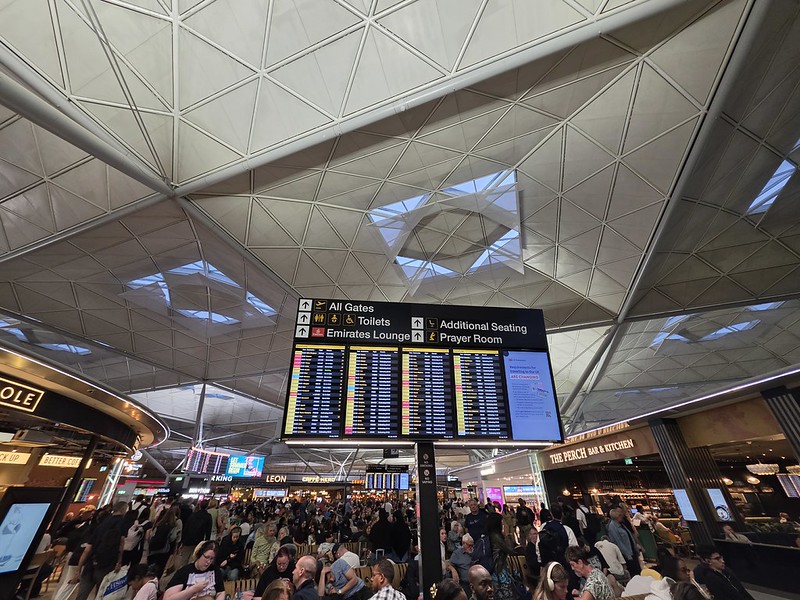
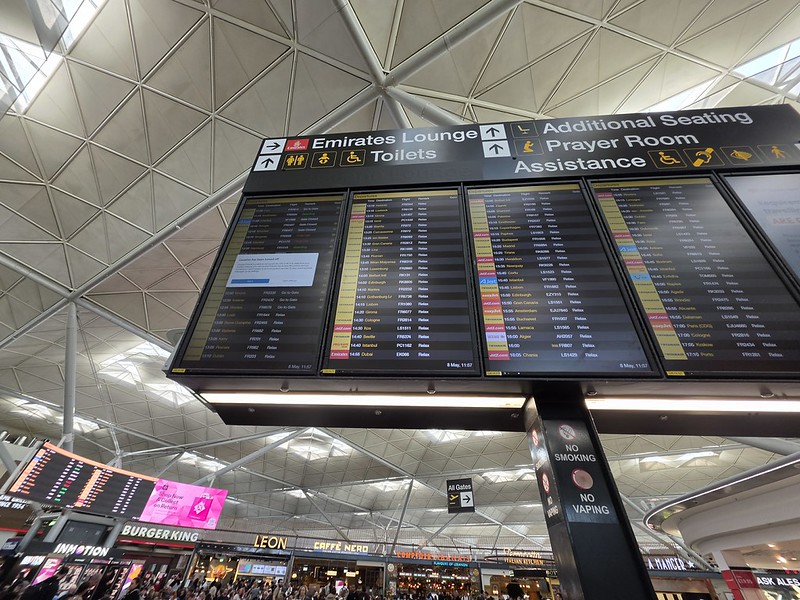
Rather handily all of the screens had this error message on the left hand side, a little sub-optimal for those wanting to see what gate to head to.
Michael O’Leary, the boss of Ryanair, said this week that passengers shouldn’t be allowed to drink alcohol in the morning at airports. I have some sympathy for him on this, there were more drunken passengers than I’ve noted before, some being quite raucous before boarding. Unfortunately, much of this seemed to be facilitated by JD Wetherspoon and they lost a set of Stella glasses from one group who just took their beers to the gate.
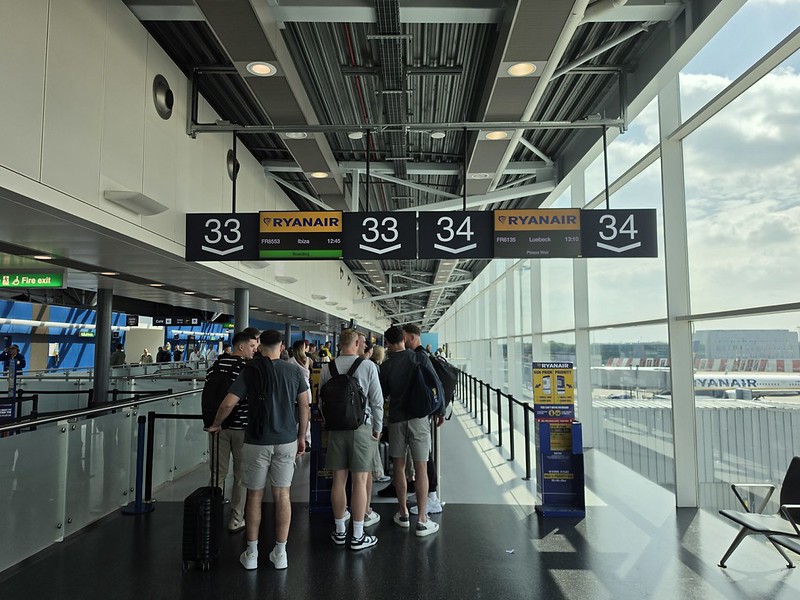
Anyway, there was some certainly some vibrant behaviour from a couple of groups which continued all the way to the gate. It was about a ten minute walk and I wondered why they had so many drunken passengers wanting to get to Lübeck. All became clear here though, the left hand gate lane is for Ibiza, the right hand gate lane is for Lübeck. None of the raucous passengers were going to Lübeck and this felt like something of a relief.
I was the first one to the gate, which was more because the flight was quiet than because I had managed to become quite athletic.
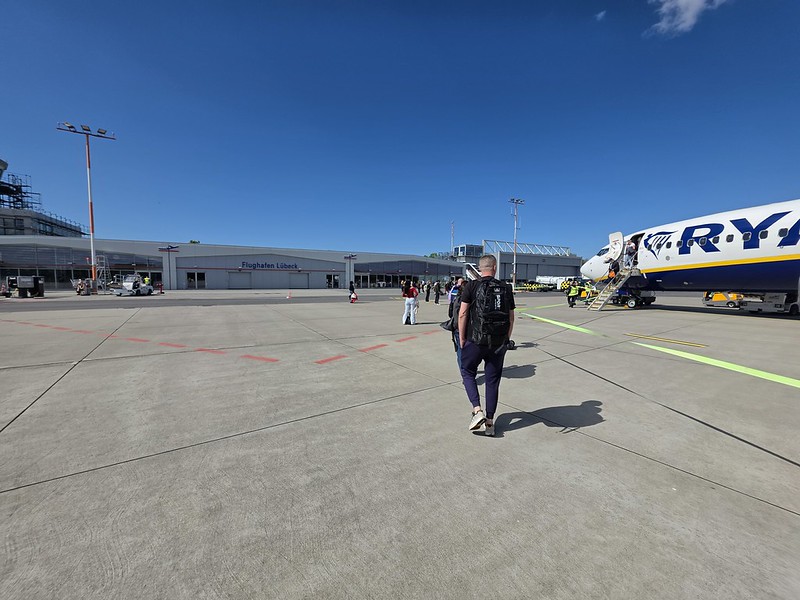
There was then just a short walk to the aircraft.
It’s aircraft 9H-QDD which I don’t think that I’ve been on before, but it’s been part of the Ryanair fleet since 2016. The seating Gods had given me a middle seat, but this was ridiculous as the flight was relatively empty so I had all three seats to myself. I assume Ryanair did that in the hope that I paid extra in advance to move to the window or aisle seat. The crew were friendly and the boarding process was efficient and it felt mostly clean, despite the number of empty cans and bits of paper left from the previous flight. With the quick turnaround, there’s only so much that can be done though.
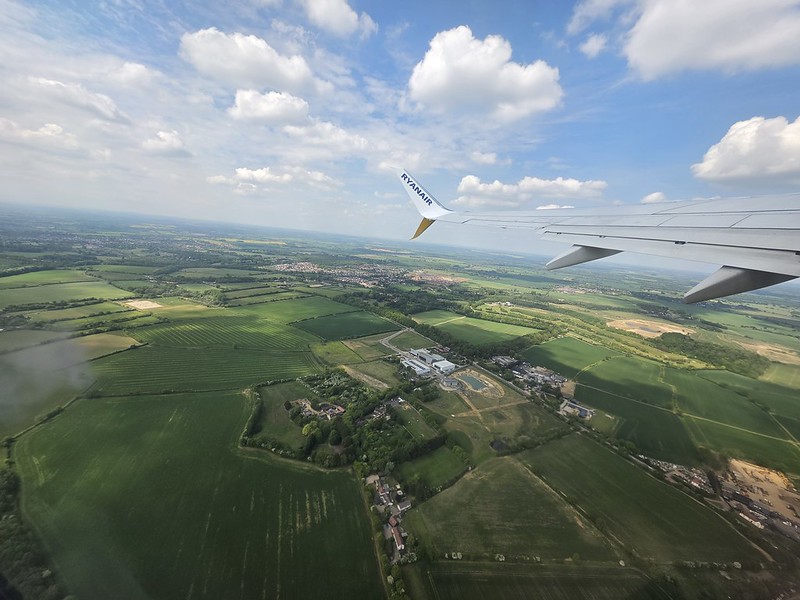
Just after taking off and Liam and I walked the Stansted Stagger a few months ago which went around the airport, so we must have walked somewhere there.
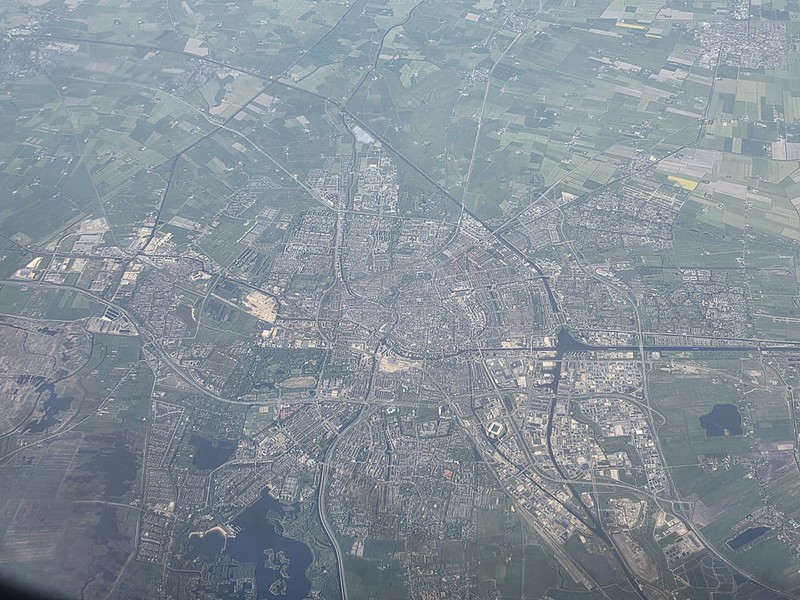
We flew over Groningen.
And safely into Lübeck with the sun still shining so it was still too hot. The flight was only just over an hour and we landed 25 minutes ahead of schedule, although Ryanair do pad their schedules.
The border control process with the new EES was time consuming and took just under 30 minutes and I was towards the front of the queue. The EU passport queue was dealt with quickly, so for those of us without an EU passport it is all a bit sub-optimal.
The flight was £14.99, so more than my usual £8.99 that I pay with Wizz Air, but it’s cheaper for me to get to Stansted than Luton Airport, so it worked out pretty similar. The flight was efficient, the crew were friendly, the pilots were calm, so I thought that I received a bargain flight.
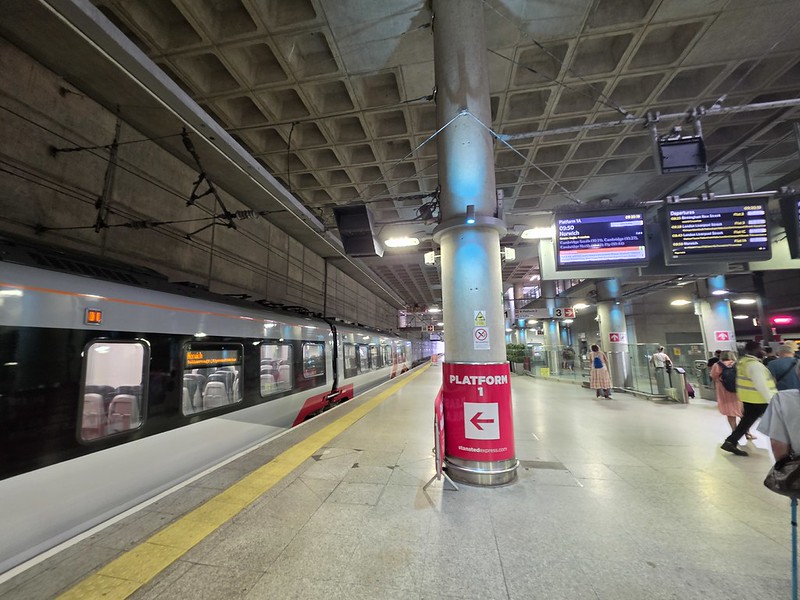
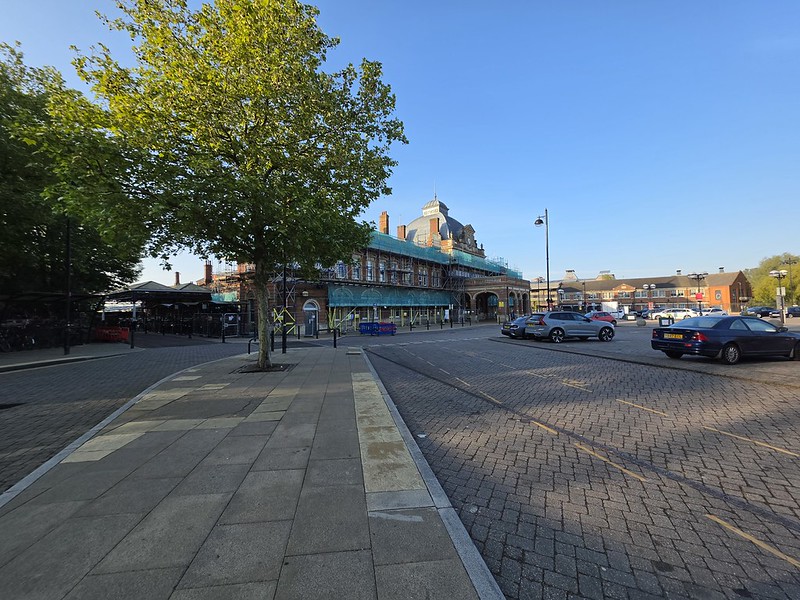
This won’t be the most riveting of posts as there wasn’t really any drama. But, I had the opportunity to pop overseas for the weekend and that’s not something that I was going to deny myself. That meant a train journey from Norwich to Stansted Airport which was a very reasonable £14 booked on a complex ticketing arrangement.
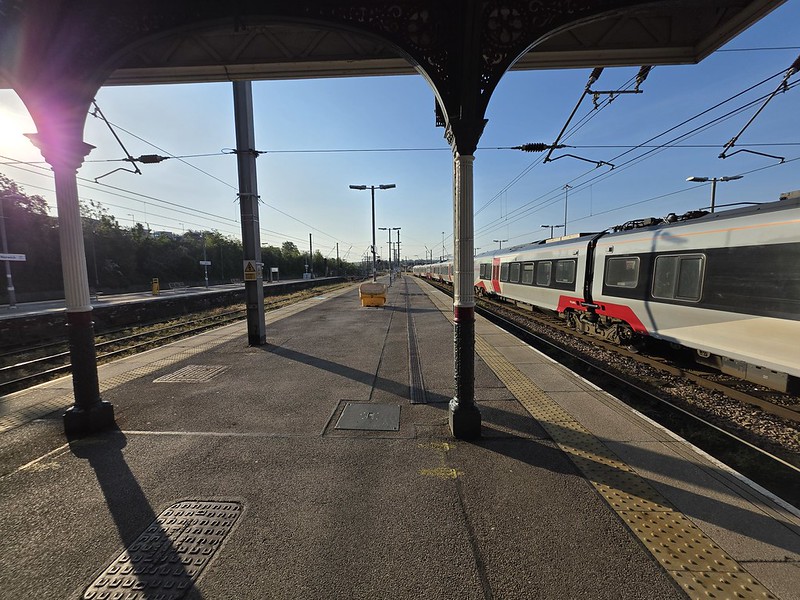
Waiting at the platform on a sunny Friday morning. It was already too hot.
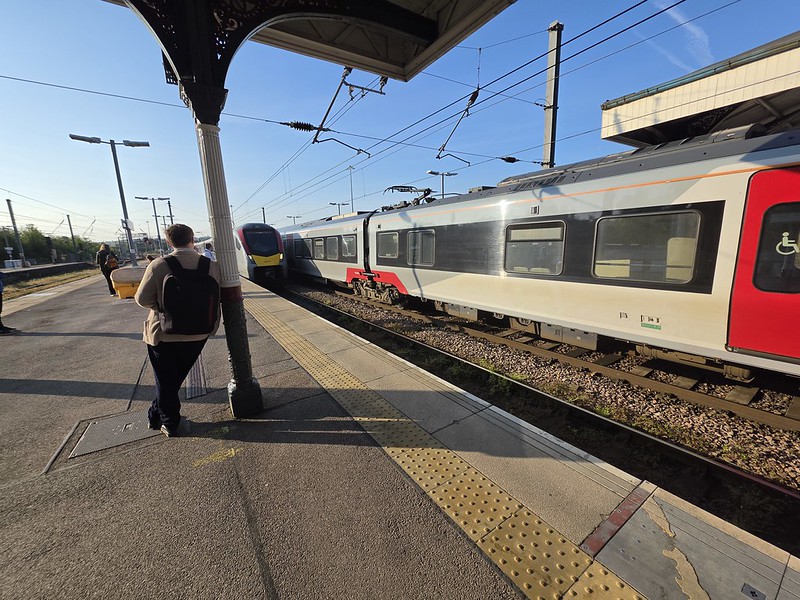
Here comes the train sweeping in and it was clear that there weren’t that many commuters waiting to go to Cambridge, which meant for a quiet journey in.
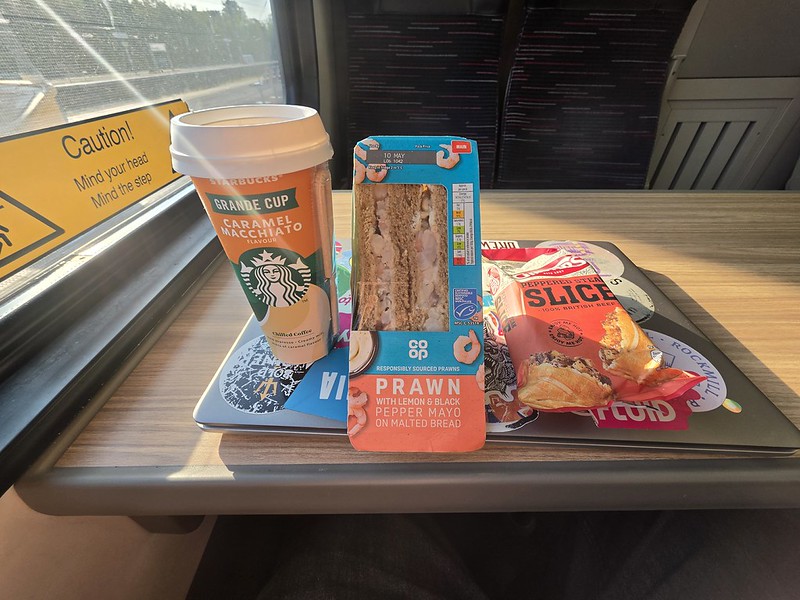
And there’s my meal deal arrangement from the Co-op, very healthy as I’m sure that everyone would agree. Co-op sandwiches are not of the highest quality, the bacon is usually excessively fatty and the chicken has not been lavished with taste, but the prawn sandwich is agreeable enough.
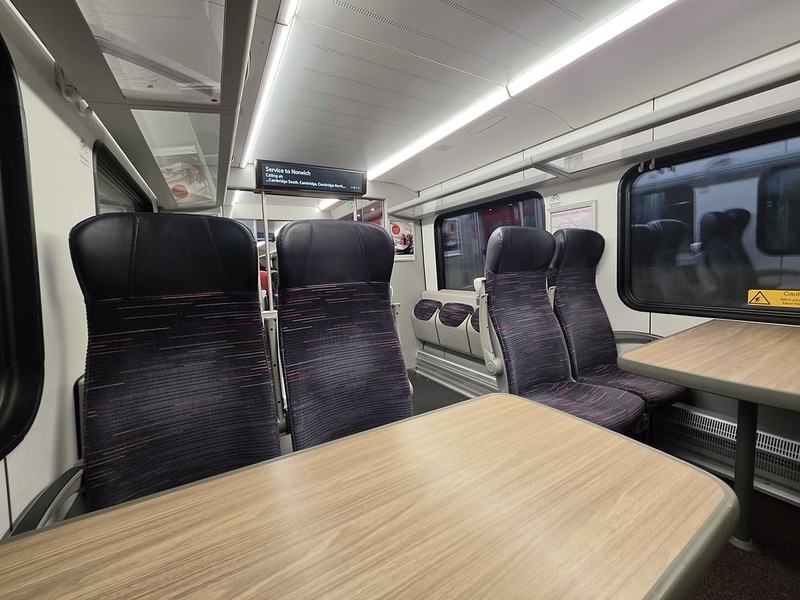
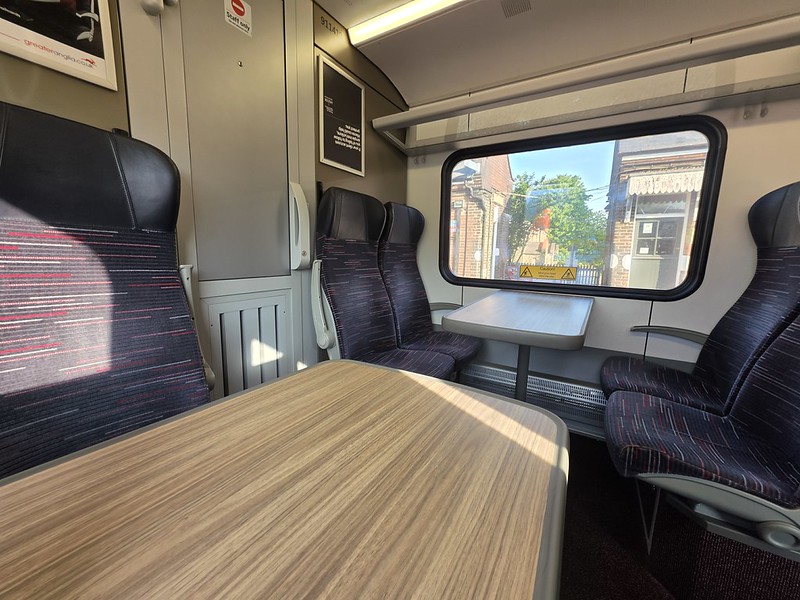
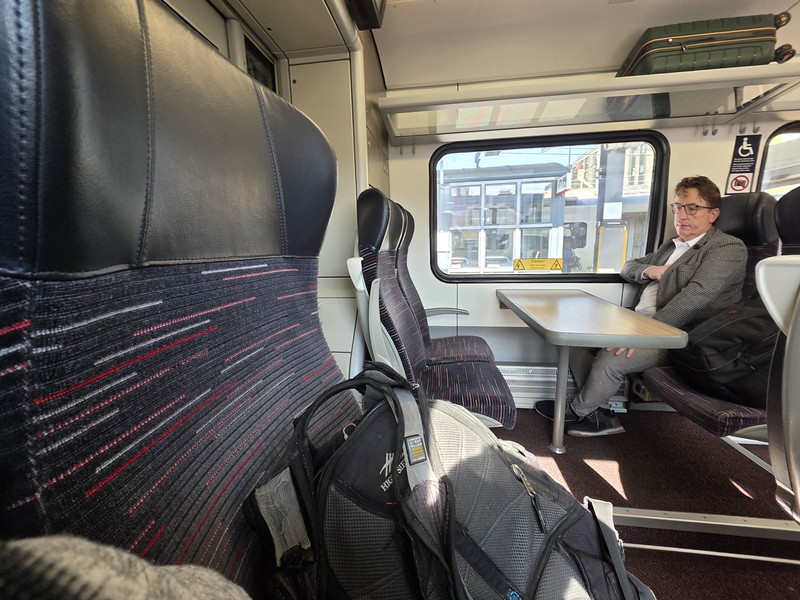
This was my view for most of the journey. Well, specifically I mean the empty seats, I didn’t have my head on the table.
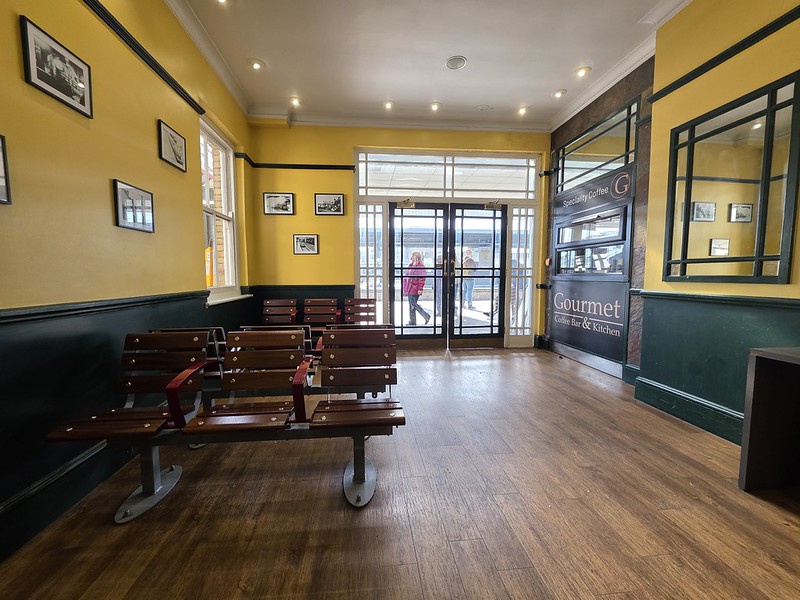
The waiting room at Cambridge railway station where I had a wait for the next train of around thirty minutes. A quick word on my rail ticket which technically required me to get off at Cambridge North and then get onto another operator’s train to take me the short distance to Cambridge. With the guard’s permission, I just stayed on the same train to avoid that change, but it’s that quirky switch to a Great Northern train which is why the ticket was much cheaper than the usual fare even to Cambridge. To be honest, at times it feels that securing agreement for an international treaty would be easier than getting cheap rail fares, the system really is sub-optimal in many ways.
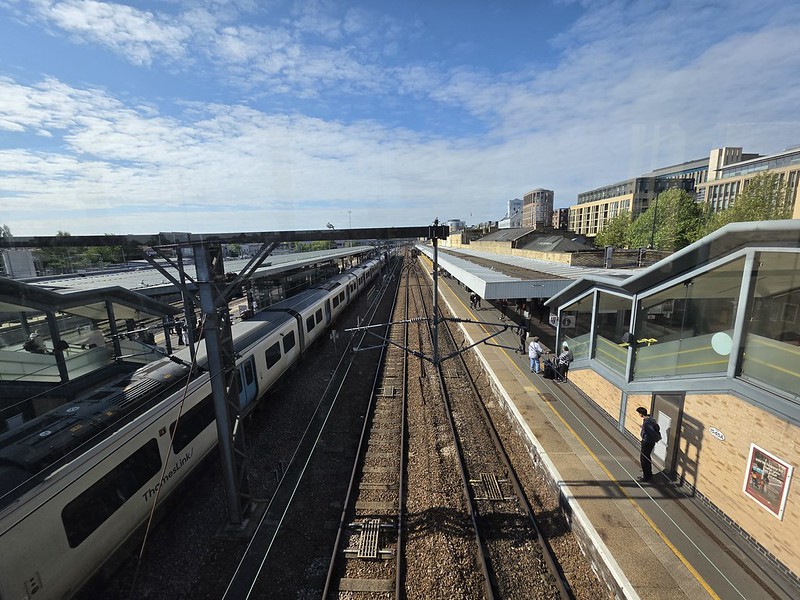
The view over Cambridge railway station from the bridge over the platforms.
The only photo that I have of the second train and it was also relatively quiet. Fortunately, everything was running on time and there were no delays. As a side issue, I note that my bag looks in excellent condition there.
I got muddled up at Stansted Airport railway station and managed to leave the ticket gates at the lift which I’ve never used before. I didn’t expect it to go straight into the terminal, I usually meander around some ramps to get there, so that was some operational efficiency that I hadn’t expected.
With that, I had arrived on time and I could start to think about my flight….
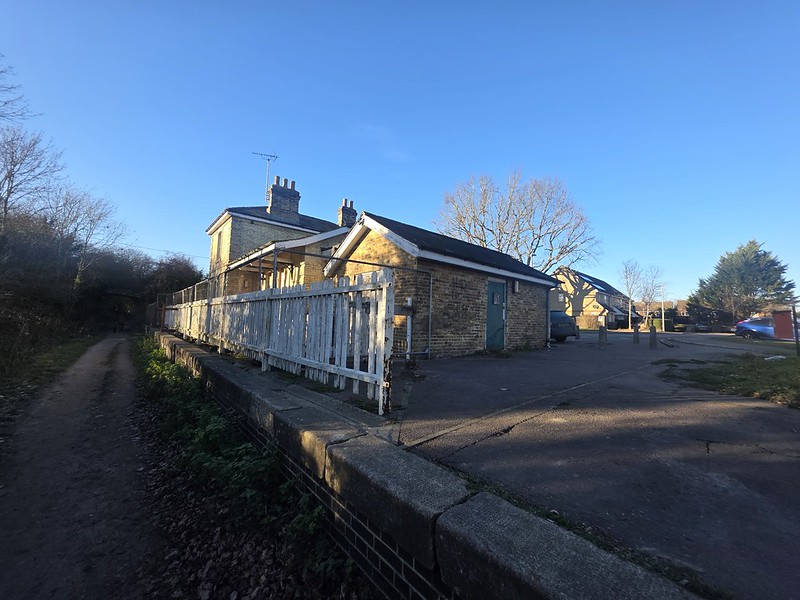
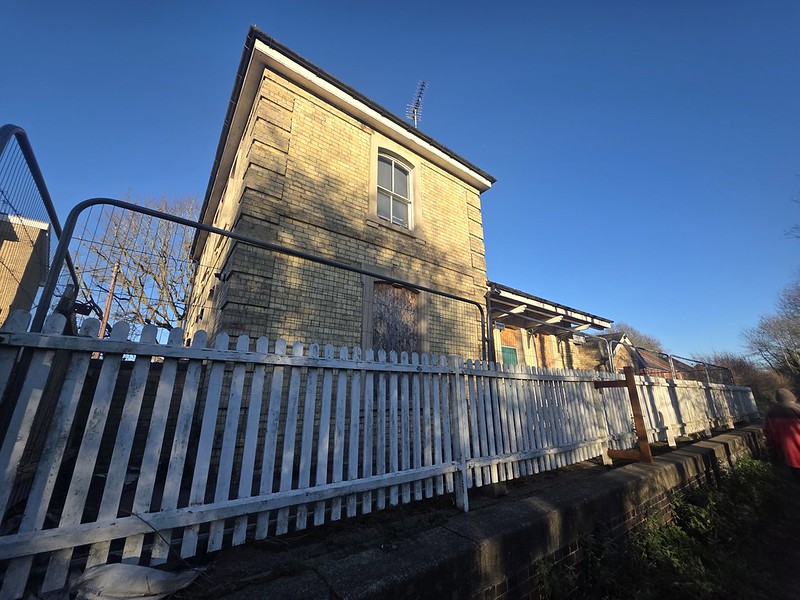
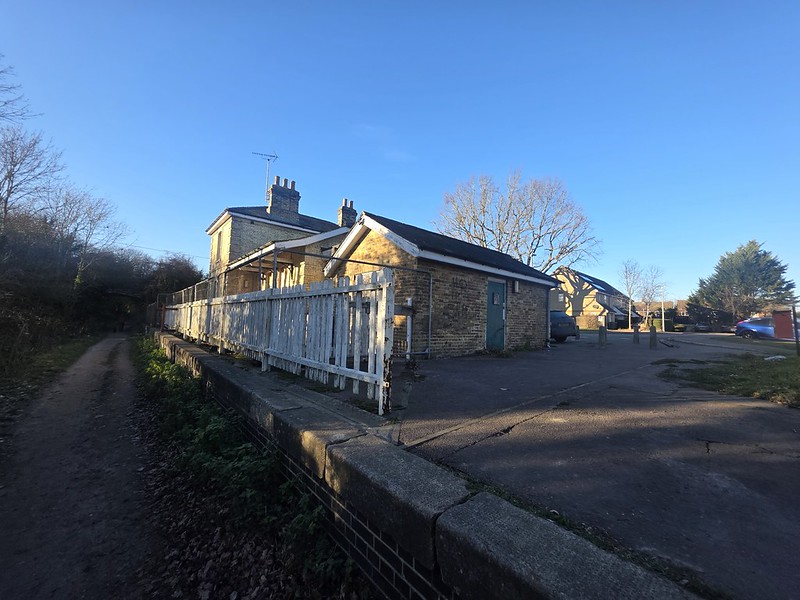
Located near to Stane Street Halt, this is the former Takeley railway station. The railway station first opened its doors on 22 February 1869, part of the Bishop’s Stortford, Dunmow and Braintree Railway.
The railway station welcomed royalty going to Easton Hall, including when the Prince of Wales visited in 1889. They would have likely been greeted by Henry Farnham, the station master, who had been at the station since the mid 1870s. Farnham died in 1893 at the age of just 43, leaving a wife, Mary Jane, and five children. There’s an image of Mary Jane’s grave at https://www.findagrave.com/memorial/178342244/mary-jane-farnham.
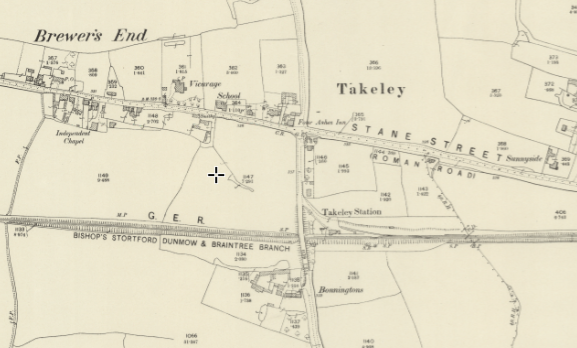
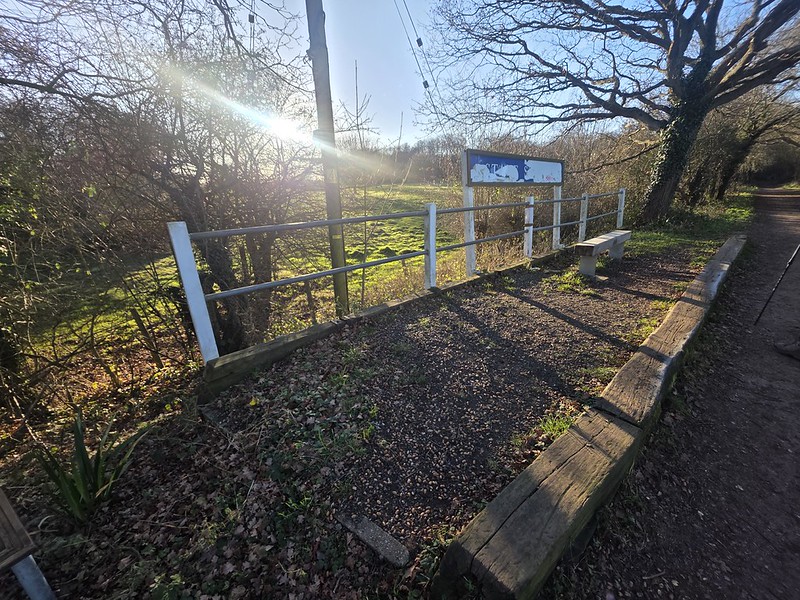
As I mentioned on my Stane Street Halt post, this line never really had enough passengers and so it closed to passenger traffic in the early 1950s. It’s evident from this map from the 1890s that there simply weren’t really enough residents in the local area to support this.
Takeley now has the advantage of having Stansted Airport within its boundaries and so this railway station would have likely been quite useful had it stayed in operation. The station buildings are now used for residential purposes after many decades of being left empty.
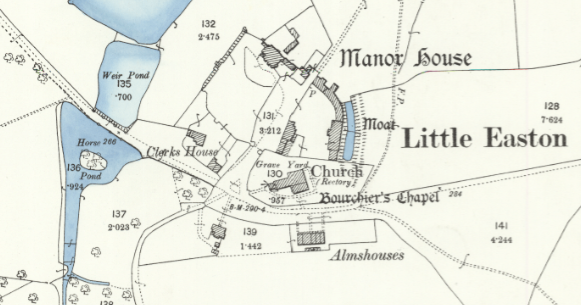
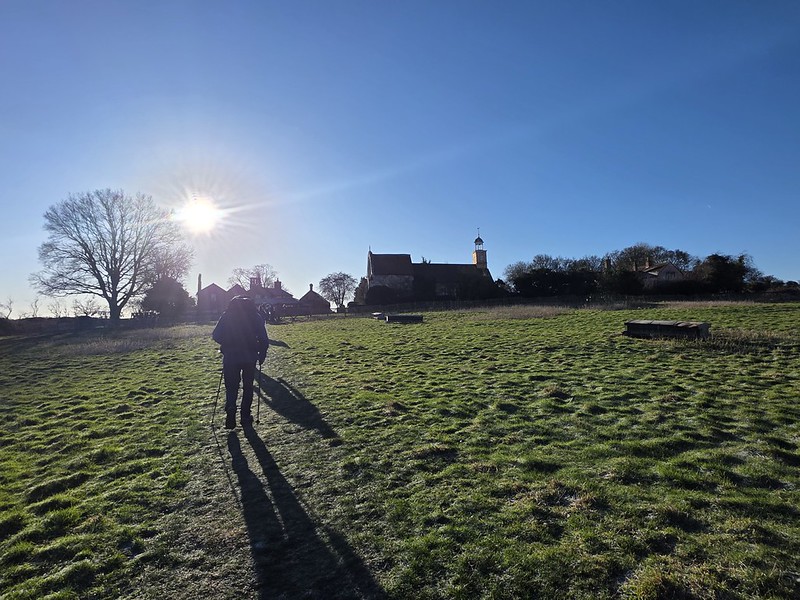
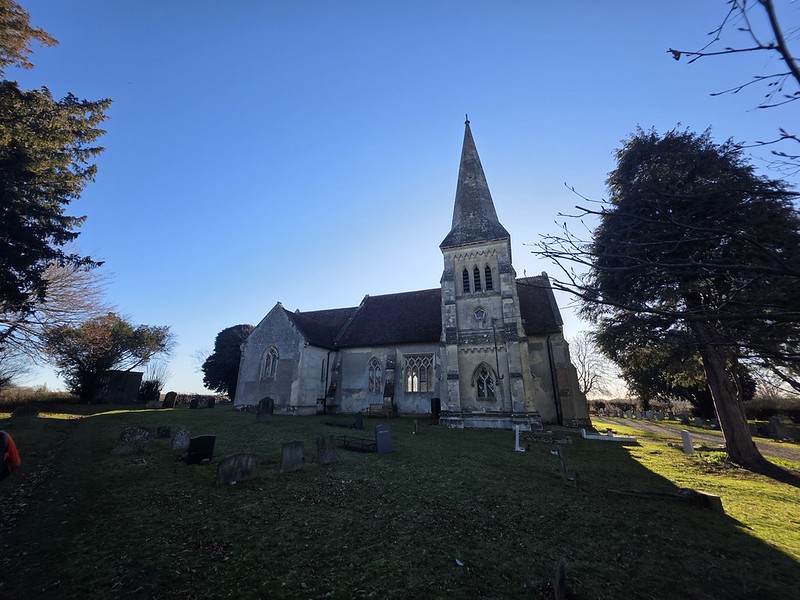
I didn’t have the chance to look inside this church, despite being very tempted, as I was on the Stansted Stagger walk so my opportunity for history meanderings were limited. It’s the Grade I listed church which is located to where the manor house Easton Hall was located, sadly one of the country houses demolished in the early twentieth century.
It’s the manor house which is one of the reasons that the church is so decadent. But, going back, the origins of the church date from the early twelfth century and there was likely a Saxon structure here before that.
For centuries, the story of the church was inextricably linked with the Bourchier and Maynard families, the powerful owners of the manor house. The south chapel, often called the Maynard Chapel, is home to a series of magnificent monuments of which one of the most poignant is the tomb of Sir Henry Maynard and his wife, dating to 1610. Below the main statues, their children are depicted in a line; several carry small skulls, a sobering historical shorthand indicating they died before their parents. If I had known about this, I might have quickly rushed in…..
The 19th and early 20th centuries brought a different kind of glamour and social change to the parish, largely driven by Frances Evelyn Maynard, better known as “Darling Daisy” who was the Countess of Warwick. A celebrated Victorian socialite and mistress (one of many) to the future King Edward VII, Daisy was a frequent presence at the church. One more thing that I would have looked out for if I’d have known is that the comedian and actor Mike Reid is buried in the church’s graveyard.
This is the intriguing bit that we noticed when walking by, there’s clearly been some wealth here to end up with so many chapels attached to the church. The central one here is the chancel, with the North and South chapels on either side.
The South Chapel, largely established in the 14th century and later embellished by the Maynard family, is something of a grand ancestral mausoleum filled with elaborate monuments. It houses the stunning 1610 tomb of Sir Henry Maynard and his wife, marking the long-standing influence of the Easton Lodge estate on the parish.
The North Chapel dates back to the 13th century but gained its most modern significance when it was dedicated as a memorial in 1945. It stands as a solemn tribute to the USAAF 386th Bombardment Group, featuring poignant stained-glass windows that commemorate the airmen stationed nearby during the war.
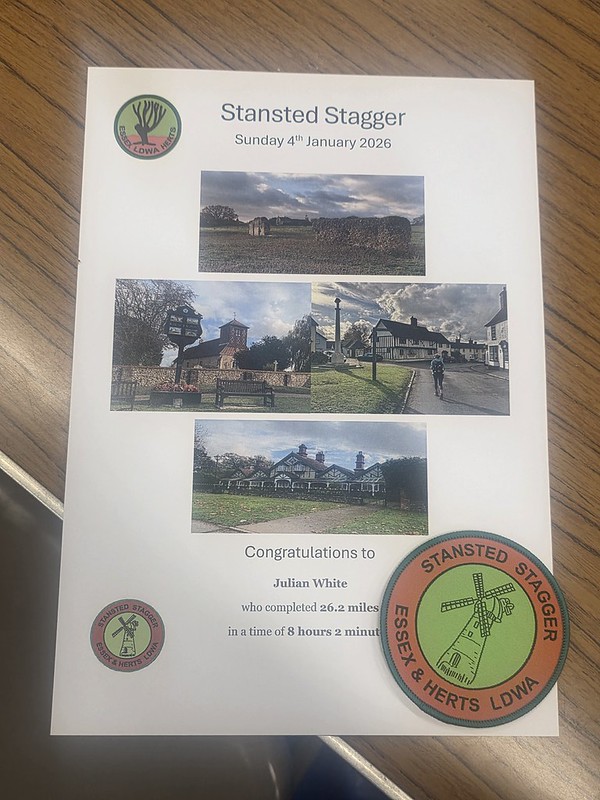
For over a decade, it’s been a tradition now for my friend Liam and myself to take part in the Stansted Stagger, a 26 mile challenge event put on by the Essex & Herts LDWA group. A walk at this time of the year is always a bit of excitement as there is the potential for a lot of mud, a lot of ice, a lot of rain and a lot of complaining from me. The drive there was marked by a series of Greggs being shut when they weren’t meant to be, so that was sub-optimal but I was too tired to be be pre-annoyed.
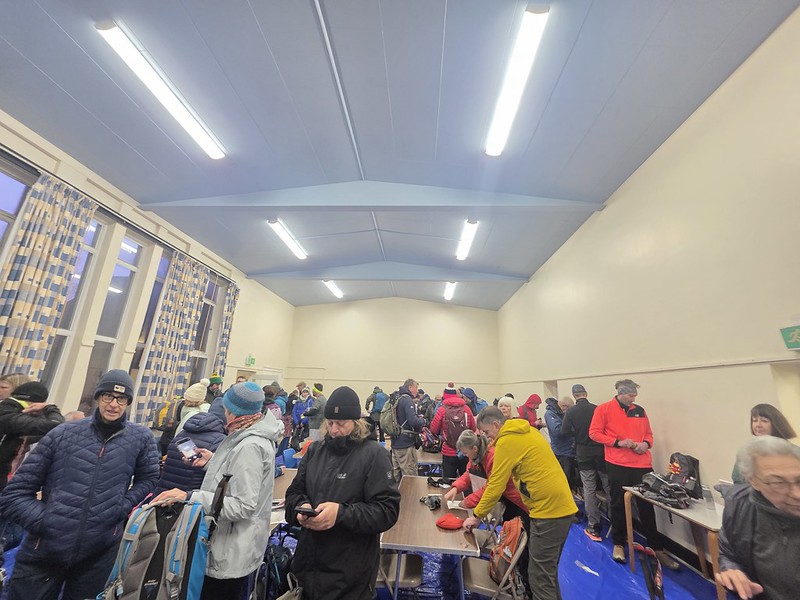
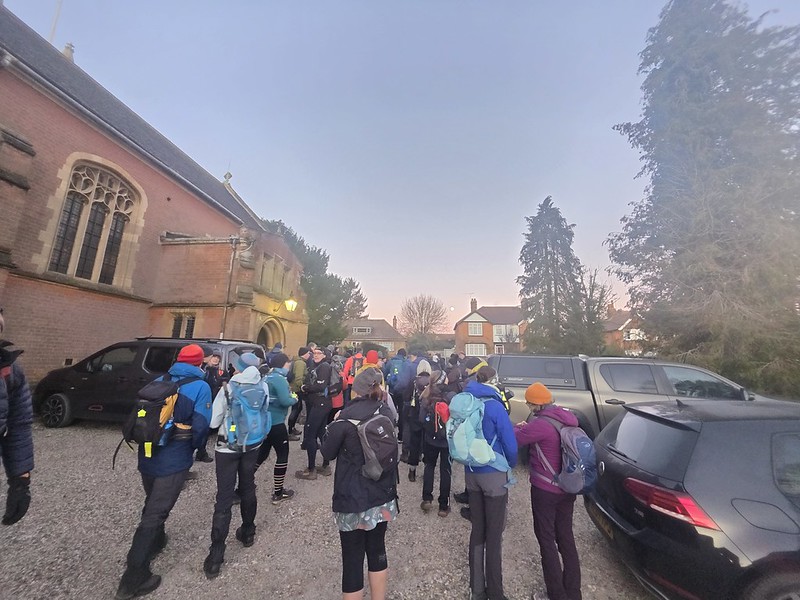
Liam got us safely to Stansted Mountfitchet where the walk starts. There were around 180 people taking part and there was a positive atmosphere whilst I focused on how many biscuits I could eat without looking greedy.
It was time for the walk to start and Liam and I seemed to be at the back, which is where we kept ourselves for much of the day. Some of the Norfolk & Suffolk contingent rushed off, but someone mentioned that it was probably just Simon H showing off. Someone in our group also mentioned that they were hungry, but fortunately, this event has 2.5 checkpoints so there was certainly lots to look forwards to.
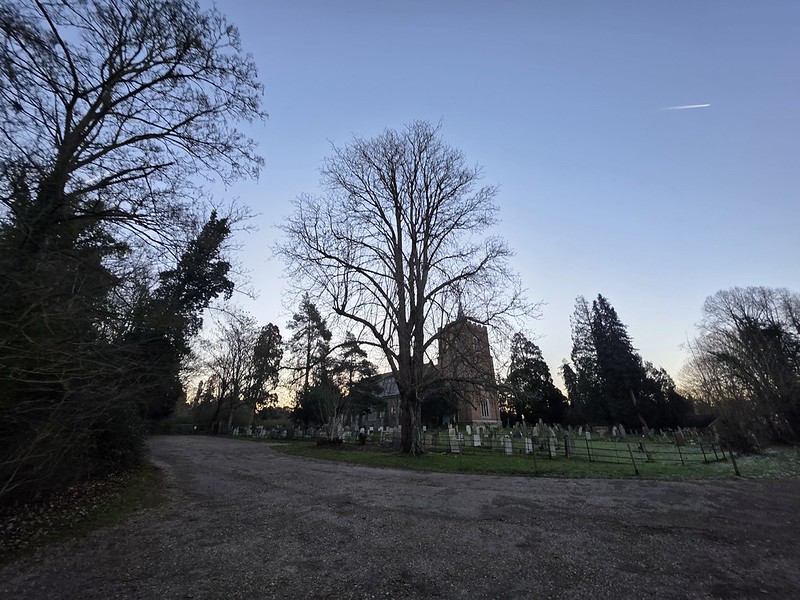
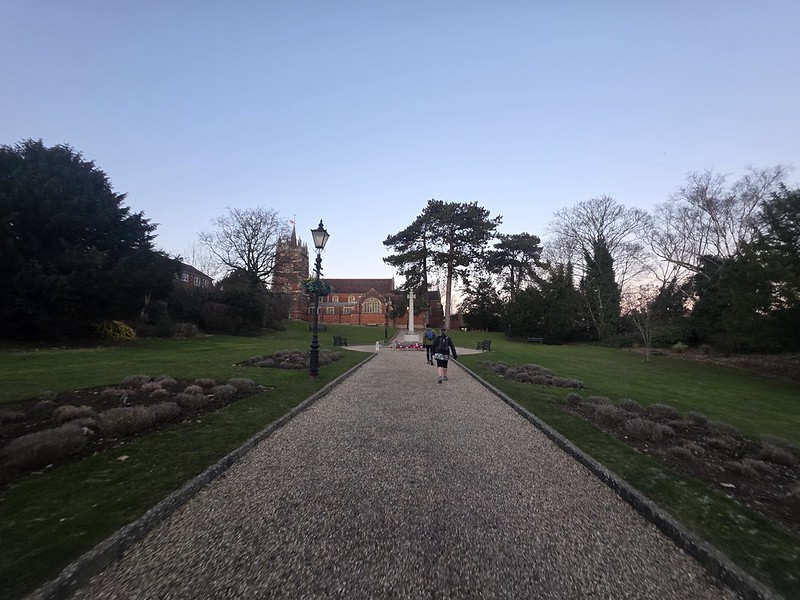
We strolled past St. Mary the Virgin’s Church which is located just outside of Stansted Mountfitchet.
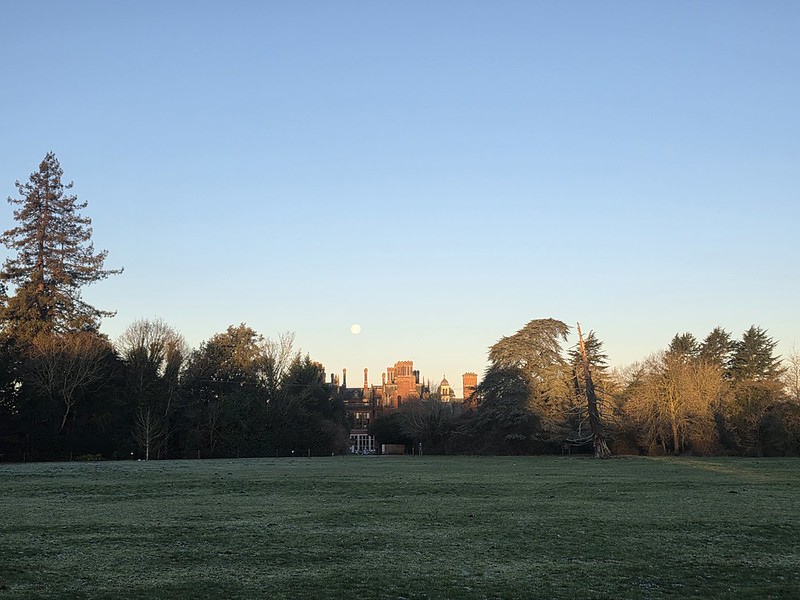
This is Arthur Findlay College, located at Stansted Hall, which is managed by the Spiritualists’ National Union. Arthur Findlay (1883-1964) was a stockbroker who became very involved with the spiritualist movement and he was one of the founders of the Psychic News. Stansted Hall, which is mostly from the late seventeenth century, was purchased by Findlay in 1923 and it was left to the Spiritualist movement in 1964 following his death.
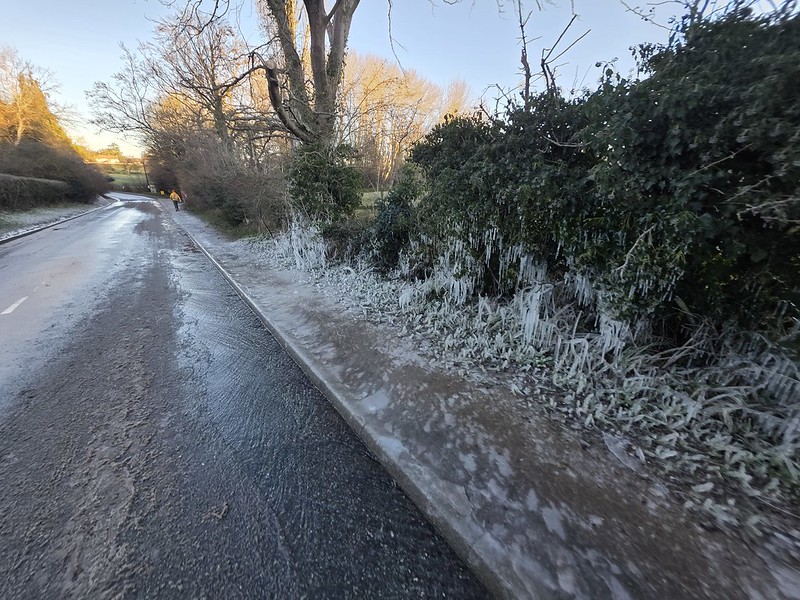
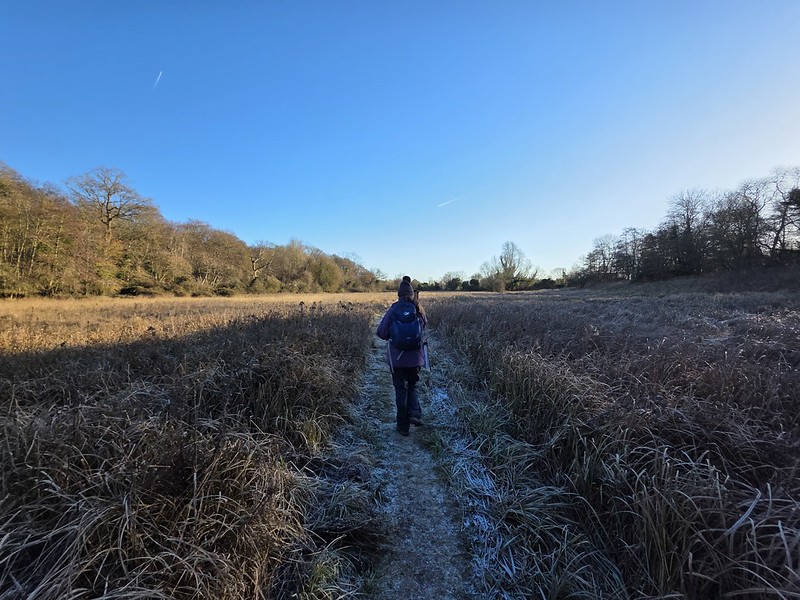
Very pretty ice formations. We were fortunate that there was no snow, unlike the Norfolk we had departed, and relatively little ice. I have near zero ability to walk on ice, so this pleased me greatly. On reflection, this was the least muddy Stansted Stagger I’ve ever taken part in and that suited me on this occasion even as an experienced mud run person.
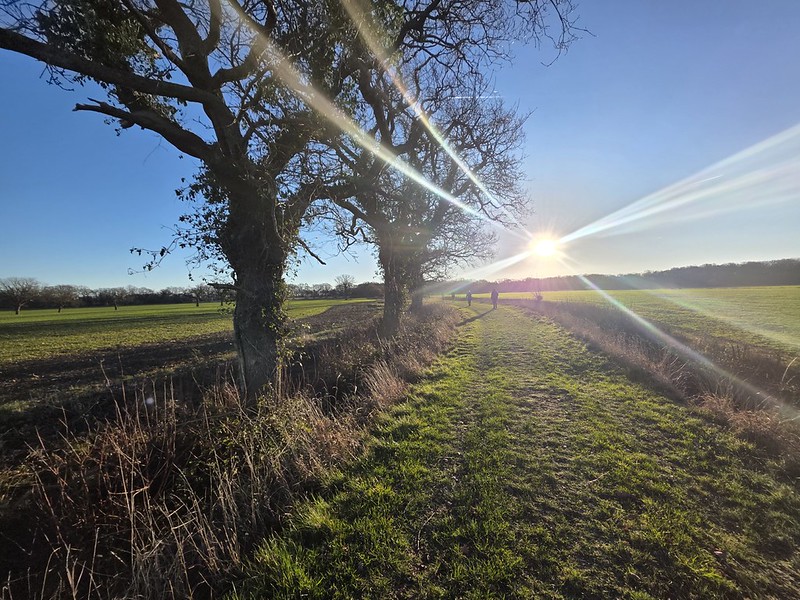
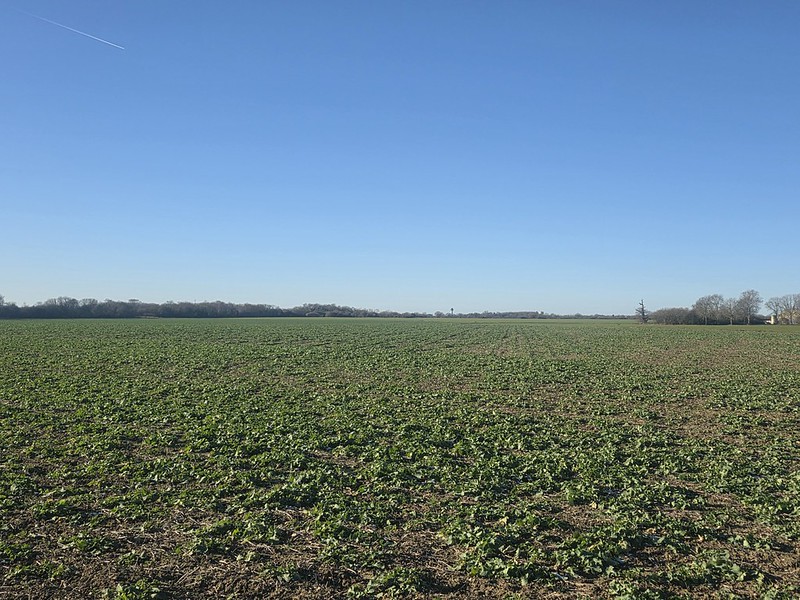
I appeared to be the only one in shirt sleeves as I thought it was getting a bit hot. The sun was quite clearly blazing down at this point, which is a field near to the village of Pledgdon Green.
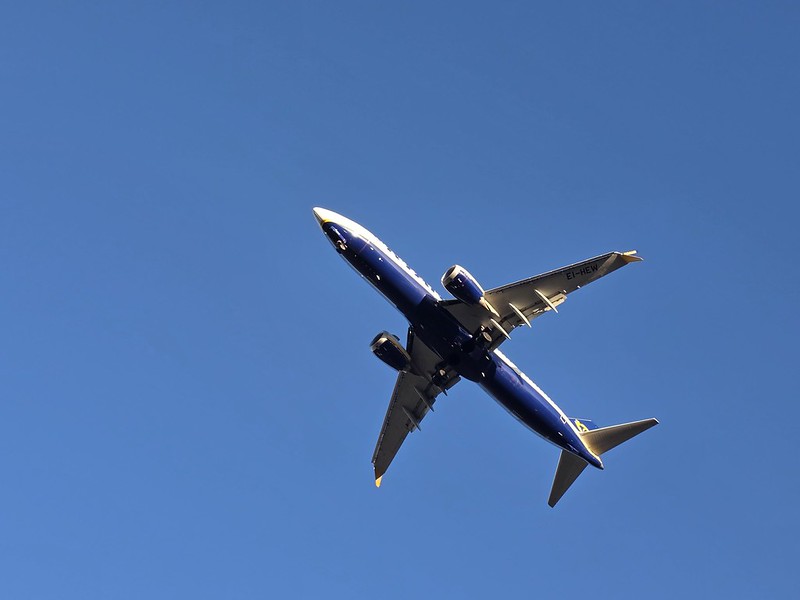
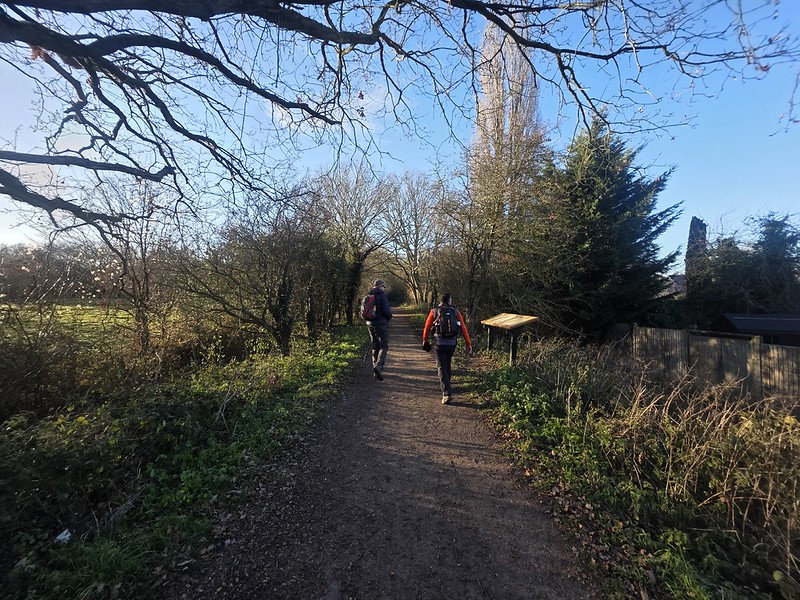
The route that the organisers chose was a new one to me and it circumnavigated Stansted Airport. This was my favourite route that the event has taken, as it changes from year to year, although I was surprised just how little of the airport we saw as it seems to be landscaped away a bit. It was harder for them to blend the aircraft into the background though, so we were able to do some plane spotting.
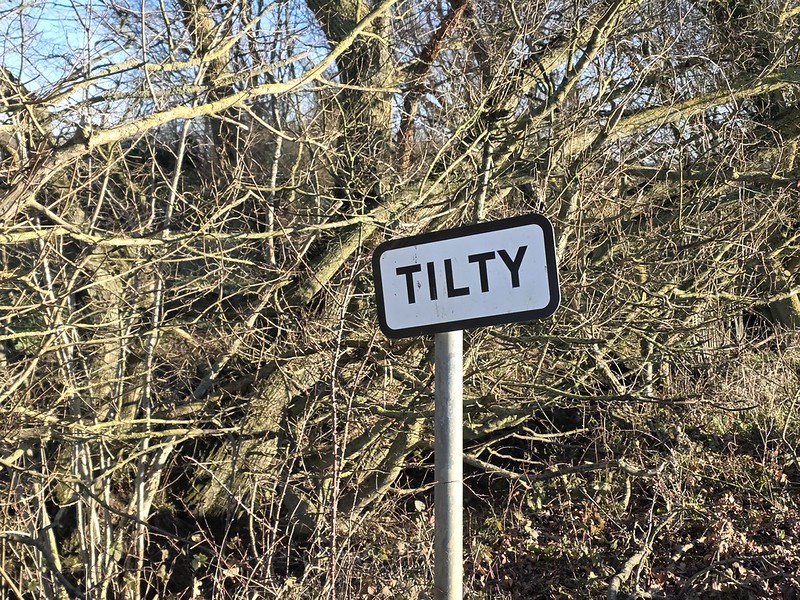
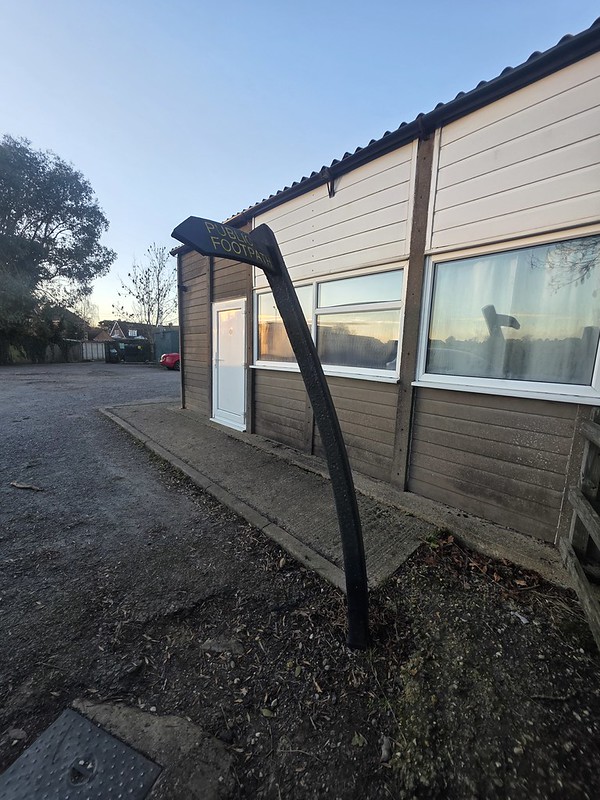
The tilted sign amused me. I don’t get out much.
This was Mill Race, the former water channel for powering the mill at Tilty Abbey.
We then approached the Church of St. Mary the Virgin, which is the former chapel outside the walls of the abbey. When the abbey was suppressed following the Reformation, this became the parish church. But, I’ve written about this separately as well.
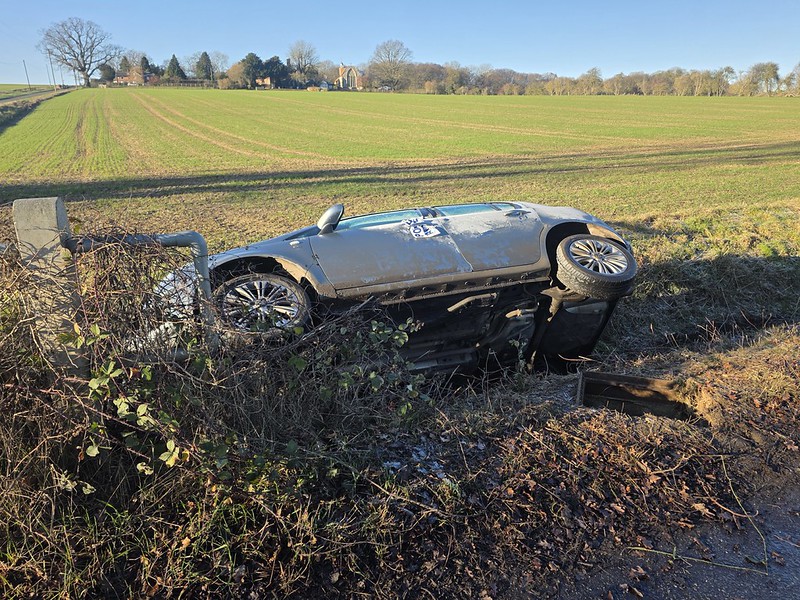
Sub-optimal and a reminder of the dangers of the cold weather. The police were aware of the car, but this looks like it must have been a frightening thing to happen.
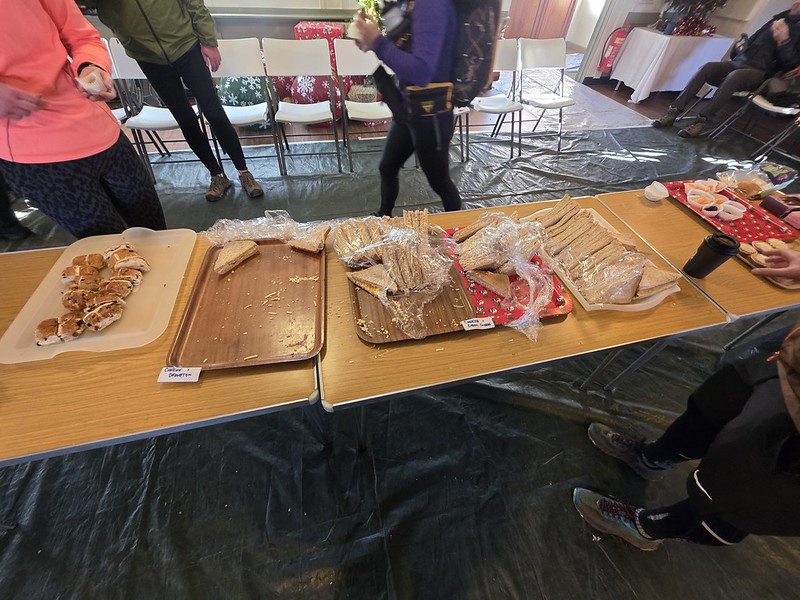
And safely into the first checkpoint at Great Easton. I was surprised and delighted to see that there were some cheese & pickle sandwiches, which are one of my favourite things, so I had several of those. There were also jelly babies, crisps, mince pies, hot cross buns, biscuits and chocolate and so that’s all my main food groups covered. There was some fruit as well I think for those that like that.
The volunteers across the whole event were brilliant, full of enthusiasm and the LDWA is very fortunate to have so many people willing to help. And, from personal experience, it’s a lot of fun volunteering at events as well.
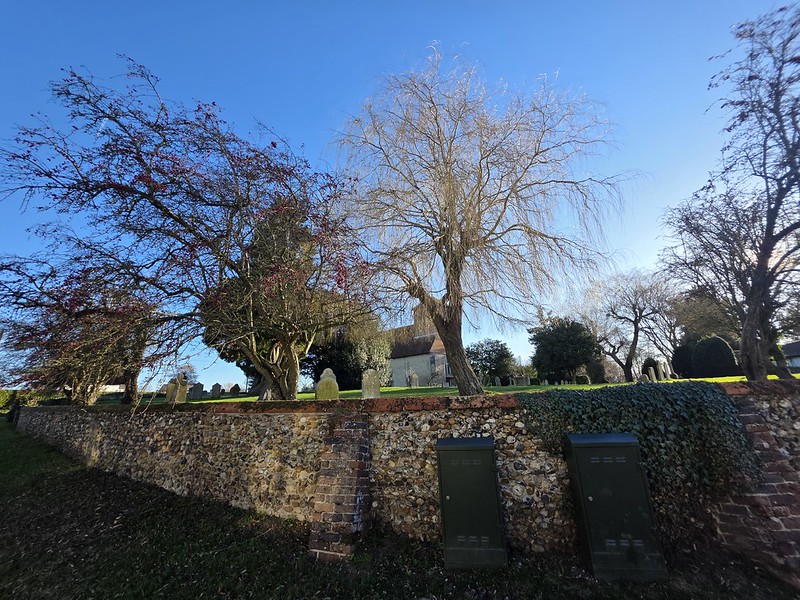
The church of St. John & St. Giles at Great Easton. It’s not a great photo as I was balancing crisps and jelly babies in my hand whilst trying to take a photo.
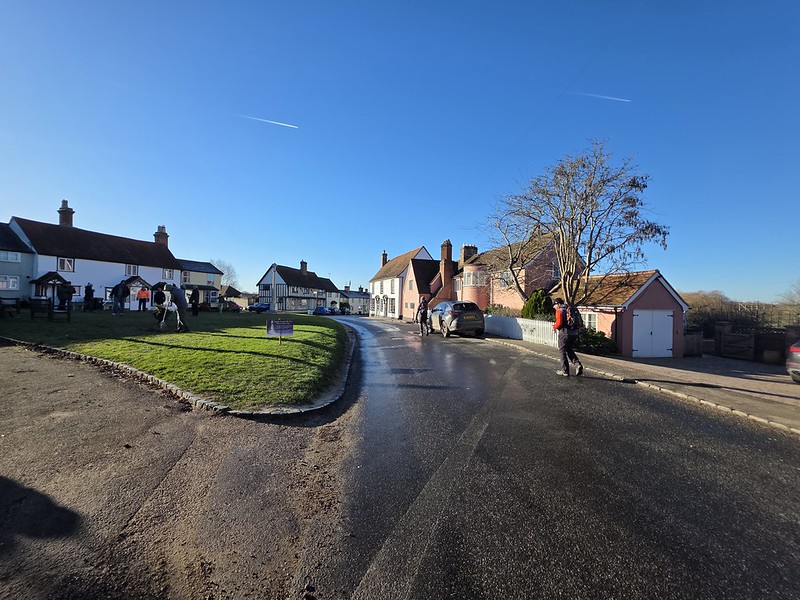
Rob had dropped a bit to walk with Liam and I for the next stage, here there are waiting for me to balance my snacks whilst taking a photo of the village of Great Easton.
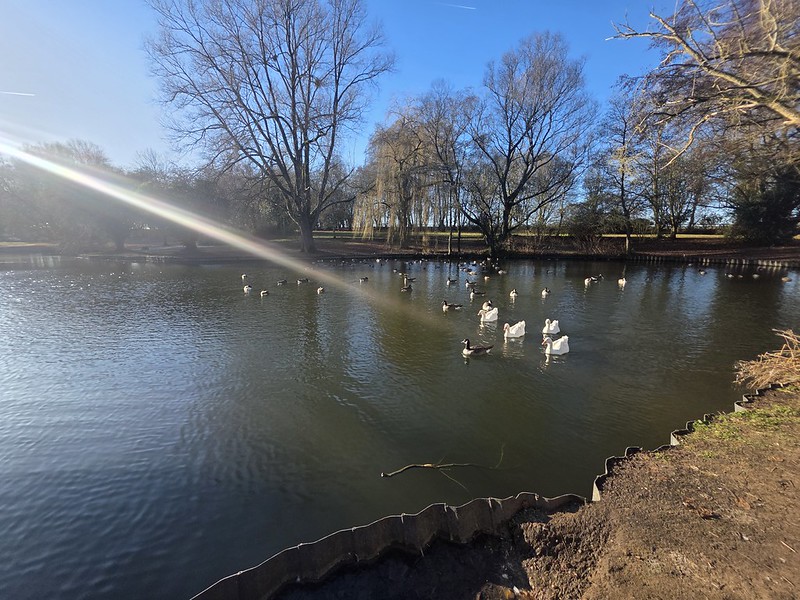
Horse Pond in Little Easton, located opposite from the Great Pond and the manor house.
Despite never being far away from Stansted Airport, it was rarely visible, but the control tower did appear from time to time. We certainly had no shortage of planes taking off and landing to look at during the walk.
This is All Saints Church at Canfield End with the walk going through the churchyard. It wasn’t known who the original dedication of the church was to, so in February 1900 it was dedicated to All Saints by the Bishop Suffragan of Colchester. The nave is from the twelfth century, but the chancel and most of the interior is from the nineteenth century.
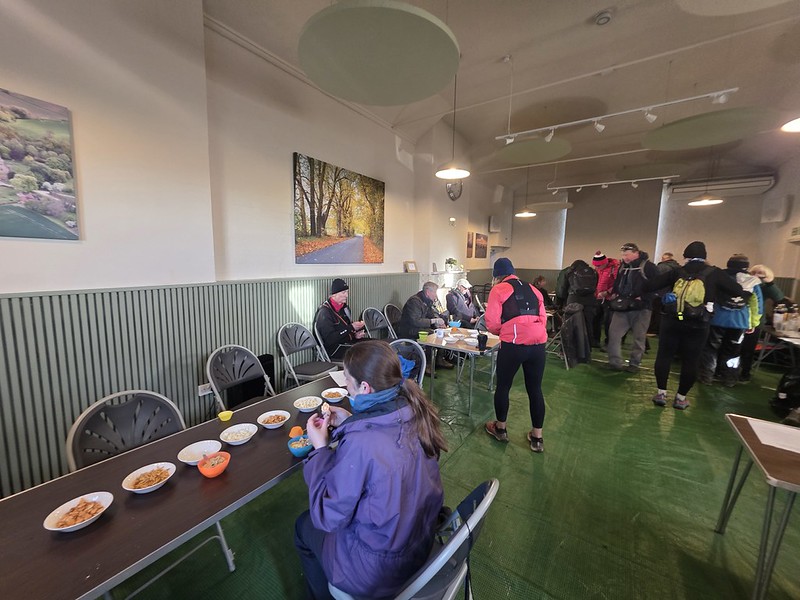
The second checkpoint was located near to Great Canfield and it had plenty of seating for the weary. Obviously, as an athlete I didn’t need a seat.
Well, how lovely.
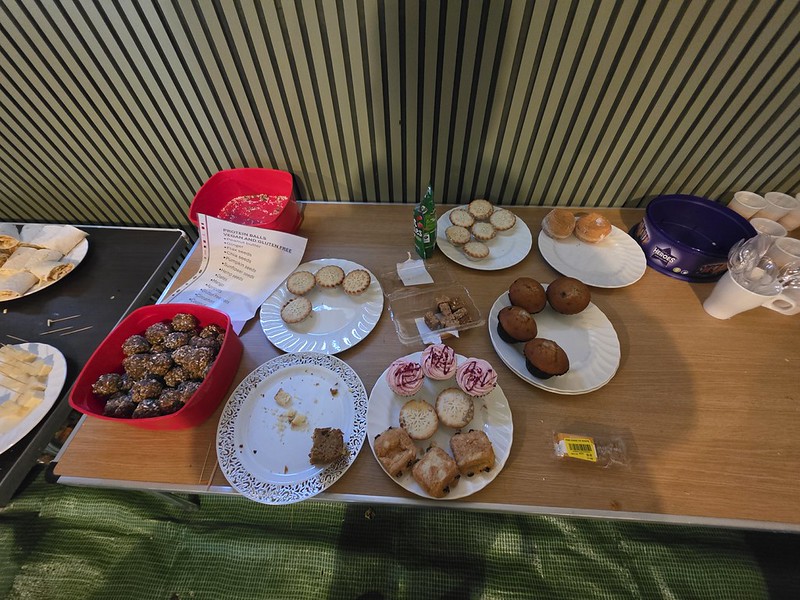
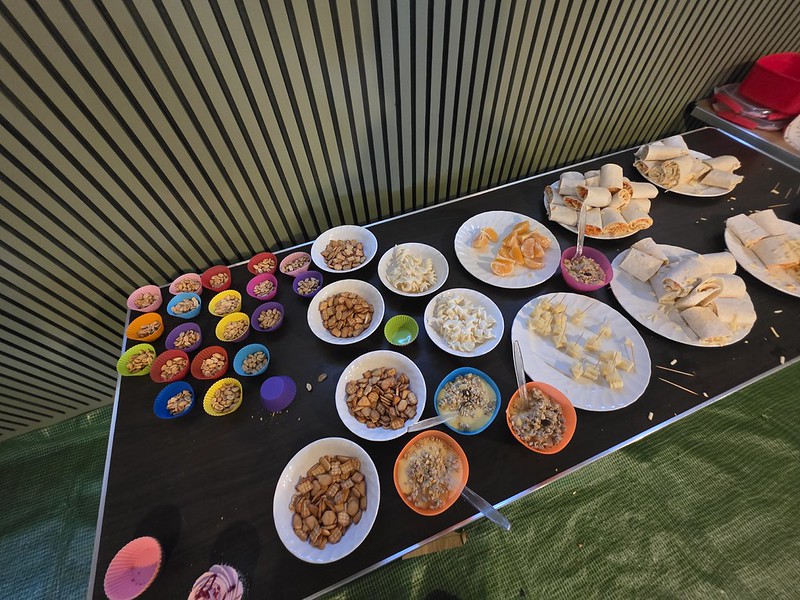
Those warm apple pies with custard towards the front were the standout food item here, and there was a lot of competition. I actually didn’t even notice the wraps until looking at this photo, such was the choice, although I think I was focused on the crisps.
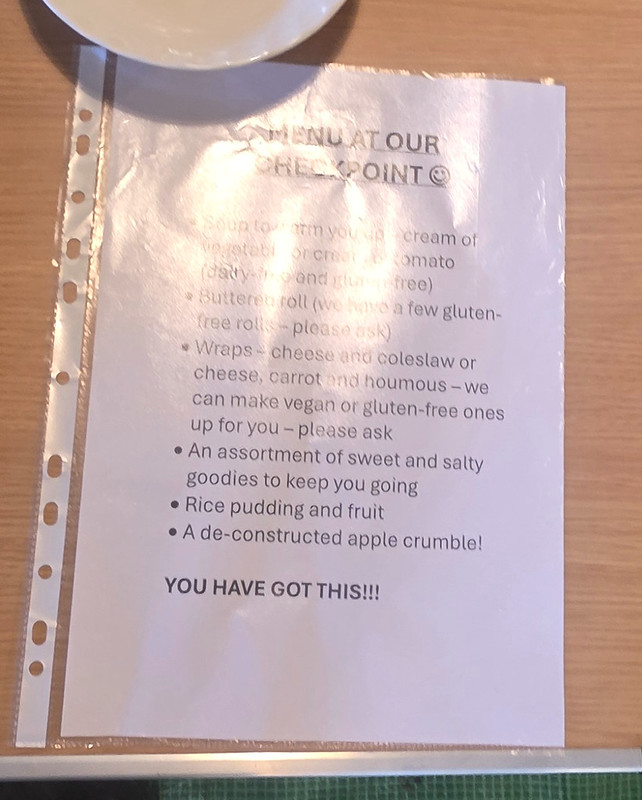
The checkpoint menu. Bear in mind this entire event costs £15 or so for members, we get that much value from the food alone. Well, I do.
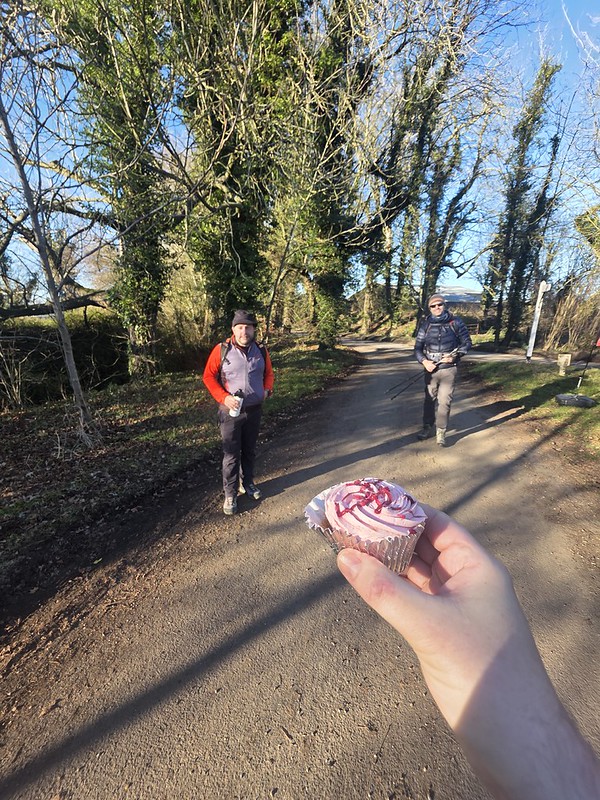
I took a cake to help sustain me for the next part of the walk.
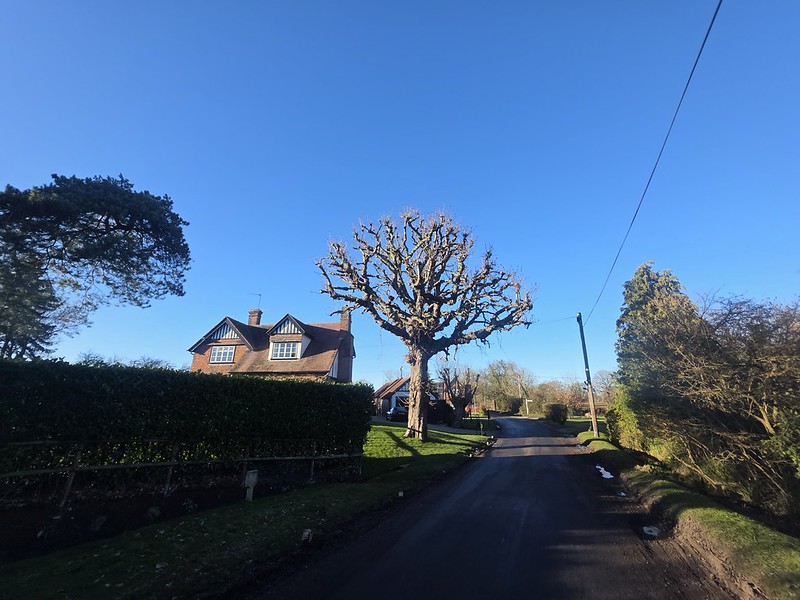
An interesting tree near Great Canfield.
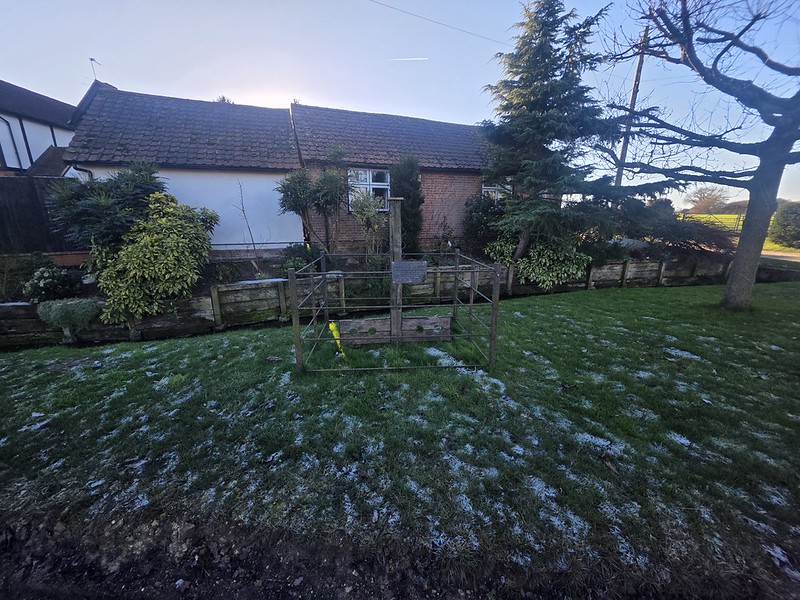
I can think of a few people who could go in these at Hellmans Cross.
The former railway station at Takeley, I’ll write about this separately and drop the link in here later.
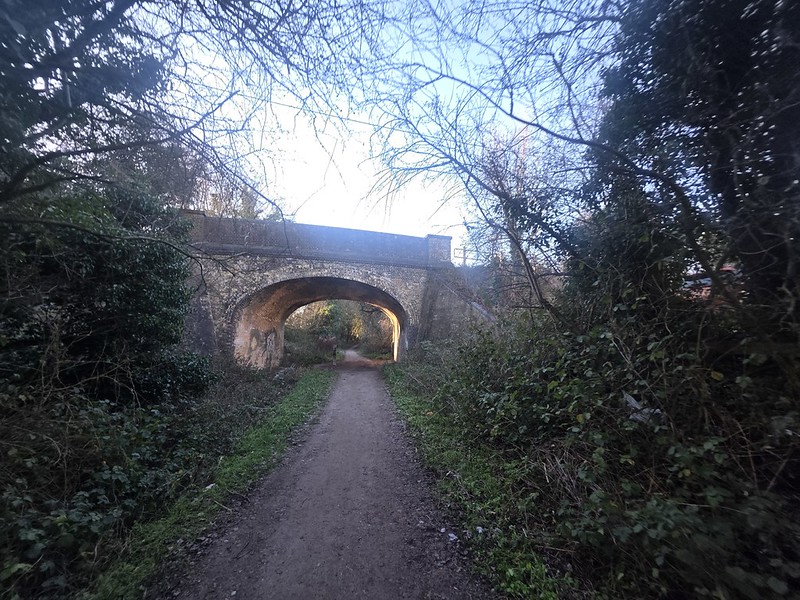
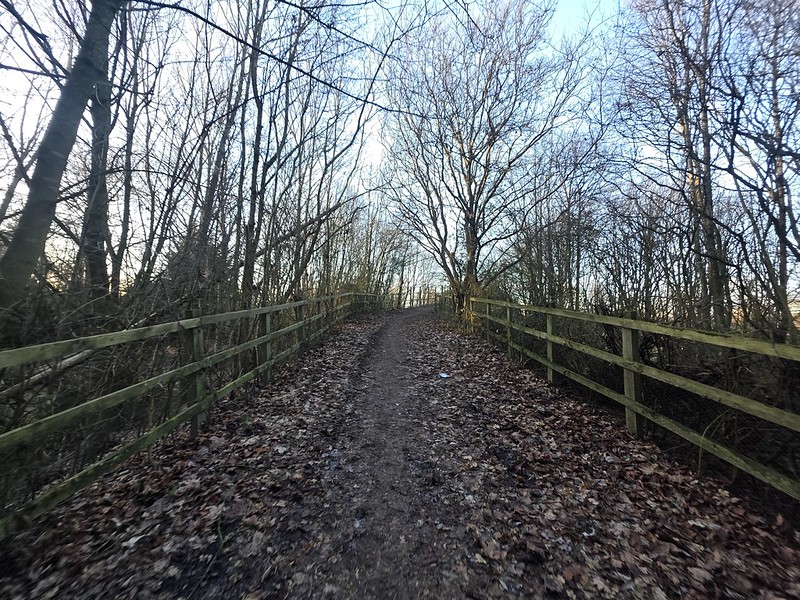
The bridge underneath the appropriately named Station Road, this is the stretch on the former railway line from Braintree to Bishops Stortford which is now known as the Flitch Way.
Rob decided he would rush off at this point, but Liam and I decided we would just amble along. We rushed the Capital Challenge last year and sometimes it’s best to just take it easy.
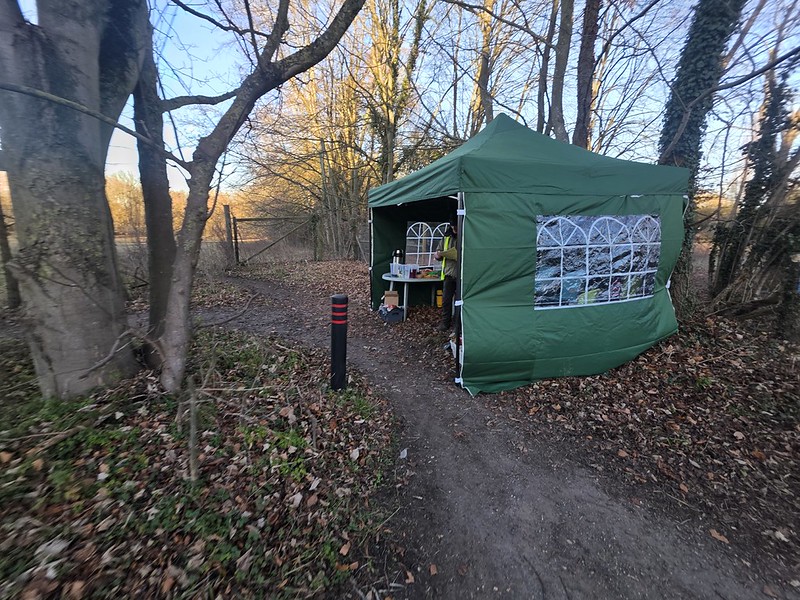
The final checkpoint by the Dunmow Road which was advertised as a water stop but actually had some snacks as well, which pleased me. But my two loyal blog readers would have guessed that.
Then it was a series of bridge and tunnel crossings to get over the M11.
The bendy signage at Birchanger.
And back to the start at Stansted Mountfitchet….
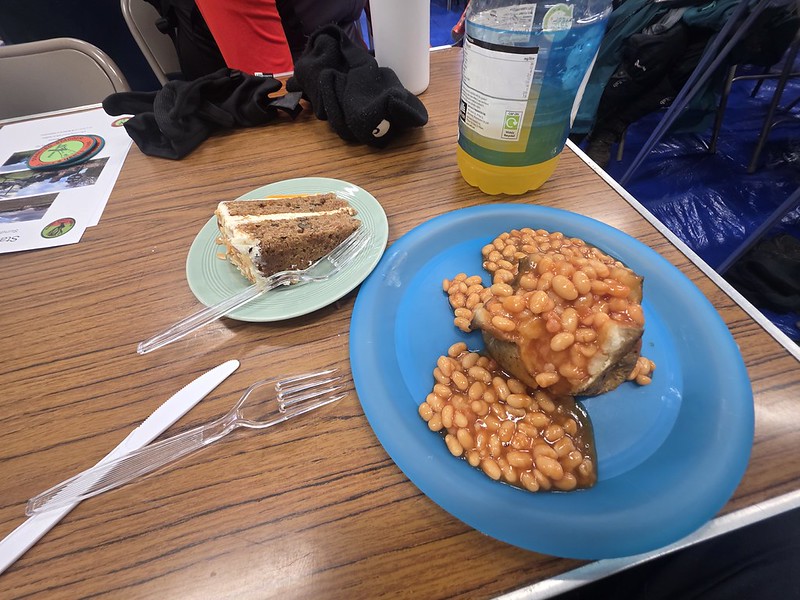
Julian “I’m not very hungry, I likely won’t have anything at the end” White….. That carrot cake was delicious.
I accept that this wasn’t our fastest time, but it’s not a race and we had a really rather lovely day. For anyone tempted to take part, absolutely do, it’s a manageable distance with plenty of food, drink and encouragement at the checkpoints. The volunteers were all wonderful and so many thanks for all the time they put in to planning this event, which really is great value. We’ll be back next year!
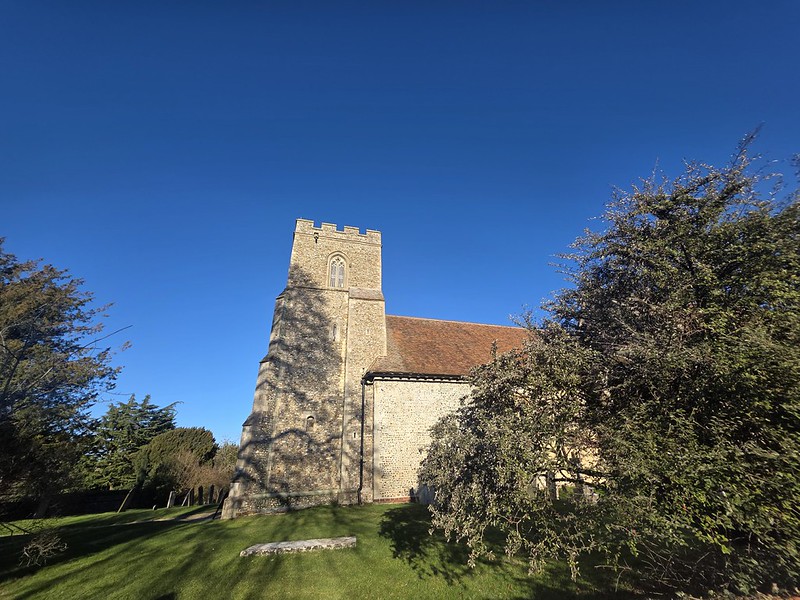
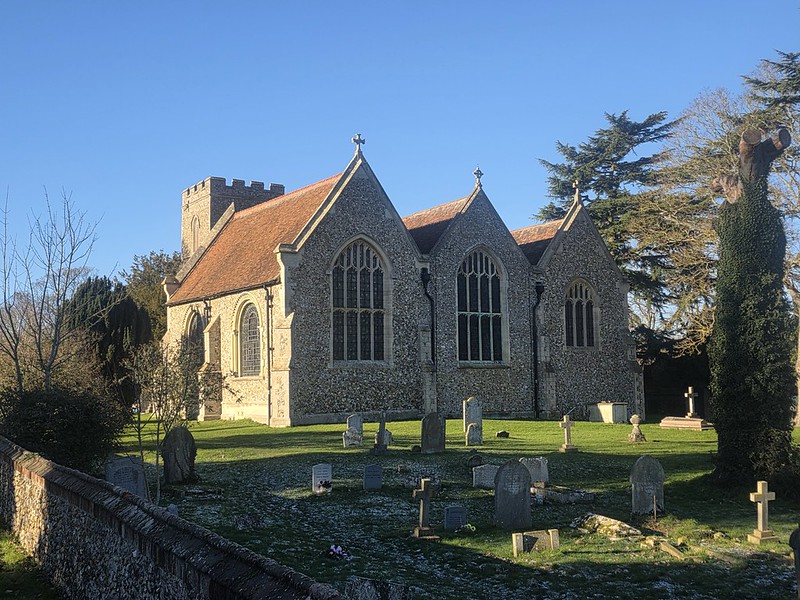
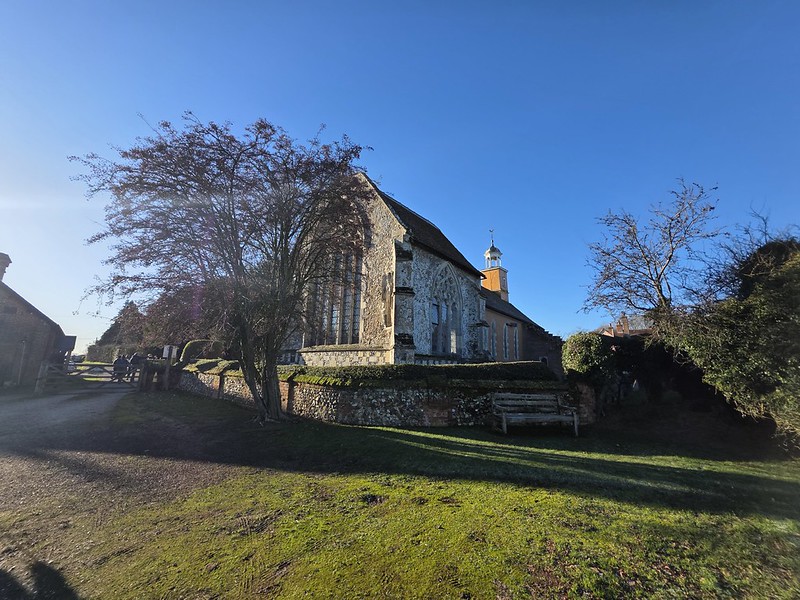
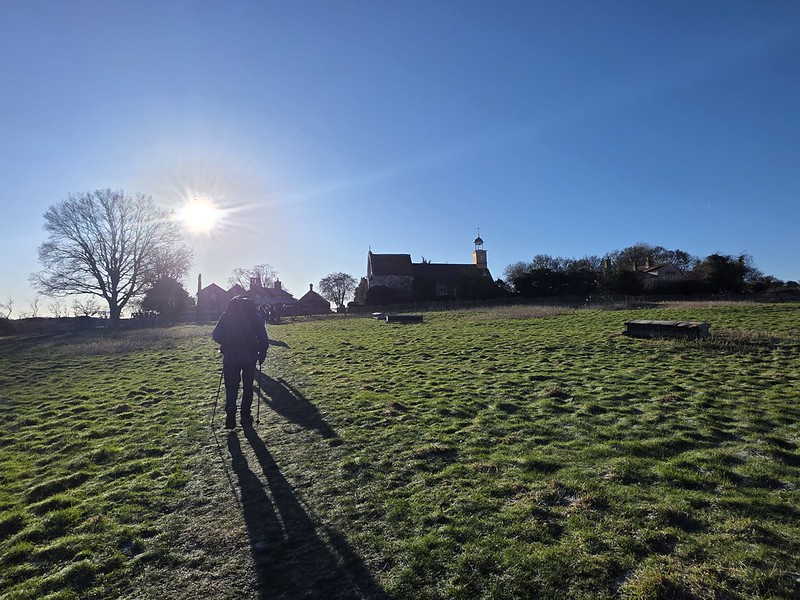
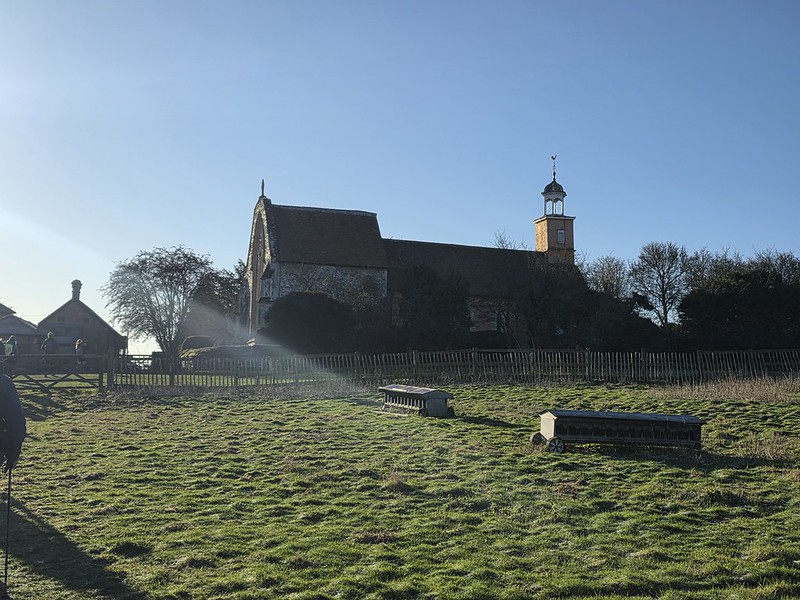
St. Mary the Virgin church in Tilty, a rather fine Grade I religious building that we walked by on the Stansted Stagger. It was once the ‘chapel outside the gates’ that belonged to Tilty Abbey, being used by the locals or travellers who didn’t have permission to worship in the abbey itself. When the Reformation saw the end of the main abbey building and its stone was carted away, this chapel was turned into the village’s new parish church.
The stone section is the former abbey church from the 1220s, the section on the right is from the 1340s. It’s fair to see that they didn’t try and blend the two parts of the buildings together for consistency. Some of the beams supporting the chancel roof still date from the thirteenth century, making them some of the oldest in the country.
The downside of being on the walk was not being able to have time to go inside, but I’ll remember that this is here to try and visit another time.
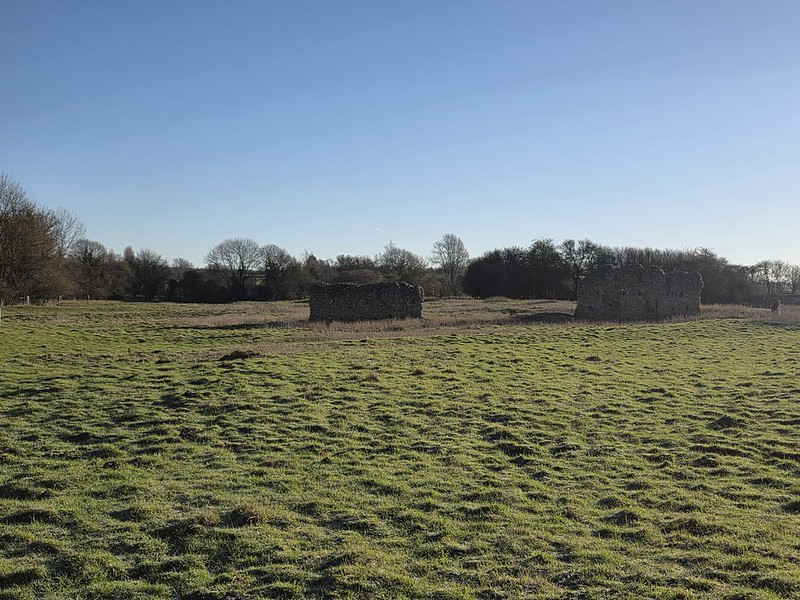
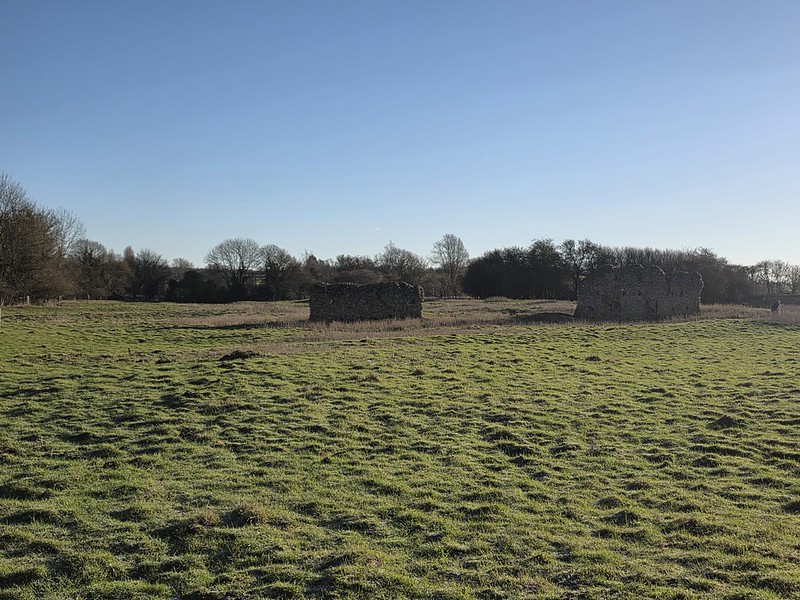
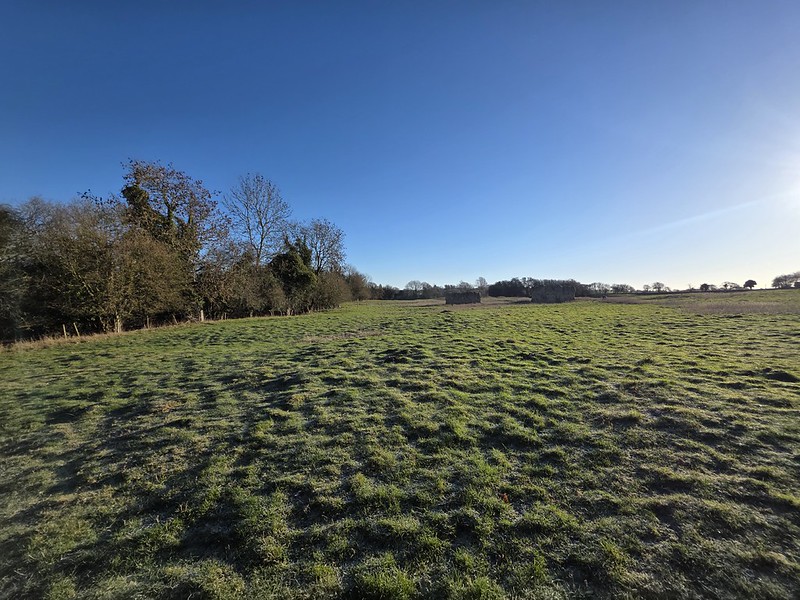
It was an unexpected surprise to walk into a field on the Stansted Stagger and see the remains of a former Cistercian abbey.
To be fair, there isn’t much of this abbey left, but at least there’s something. The bits that remain here are two fragments of the west range of the abbey. I would have explored them more thoroughly but I didn’t want to faff about looking at bits of old stone when I was meant to be on a 26 mile walk. Although I did think about it.
The abbey was founded in 1153 having been established by Maurice fitz Geoffrey and his overlord, Robert de Ferrers, who was the Earl of Derby. The first monks to populate the abbey came from Warden Abbey in Bedfordshire.
The abbey was situated on a tributary of the River Chelmer in north-west Essex and its dedication is believed to have taken place on 22 September 1153, which corresponds with St Maurice’s feast day, chosen in honour of the founder. While founded in the middle of the 12th century, the construction of the entire monastery complex is often credited to the second abbot, Simon, who served from approximately 1188 to 1214.
The site experienced significant hardship on Christmas Day 1215 when it was pillaged by the army of King John. Soldiers reportedly broke into the church during mass, ransacking chests and carrying off valuables, an event that required the monks to spend the next five years reconstructing the church. It’s fair to say that they probably considered this as completely sub-optimal.
The abbey functioned as a Cistercian community until its dissolution on 28 February 1536 under the religious reforms of King Henry VIII. Today, very little of the original monastic buildings remain, except for some stone wall fragments in the above photo and the chapel by the gate. This chapel, known as the capella extra portas, was built around 1220 for the use of visitors and now serves as the Tilty parish church, but a little more about that in the next post.