Category: Random Posts

  • Dictionary of the Vulgar Tongue – Day 220

    Dictionary of the Vulgar Tongue – Day 220

    The Dictionary of the Vulgar Tongue was first published at the end of the eighteenth century, and given that the current health crisis is giving too much time to read books, I thought I’d pick a daily word from it until I got bored….

    Neck Verse

    This phrase is defined by Grose as “formerly the persons claiming the benefit of clergy were obliged to read a verse in a Latin manuscript psalter: this saving them from the gallows, was termed their neck verse: it was the first verse of the fiftyfirst psalm, Miserere mei,&c”. Firstly, as an aside, &c is the archaic version of etc, which I found interesting in its own right. I do need, as I may have mentioned, to get out more….

    This whole concept is fascinating, dating back to the times of when the two great powers in the country were the Church and the Monarchy. Both had their own legal systems, their own lands, their own powers and the Church didn’t like interference from Monarchs, and Kings and Queens were generally respectful of God. But, anyway, to cut a long story short, clergy could be tried in the secular courts, but they could also claim the ‘benefit of the clergy’.

    This claim allowed them to either get off the crime, or for the sentence to be modified (in effect, initially the case was transferred to the Ecclesiastical Courts which were more favourable), but it was also abused. So, the aim was to read Psalm 51, which Grose mentions, to prove that they were a member of the clergy. There were some big flaws in this system, notably that non religious figures could just learn the passage. The courts over time wised up to this, so they could ask the defendant to read another passage from the Bible, a useful mechanism as the clergy could read and write, whereas many others at the time couldn’t. If someone couldn’t read a passage, they could be killed or sentenced as planned.

    King Henry VIII didn’t like this whole set-up (there are plenty of things he didn’t quite like), although he did still respect the principles of the code, although he added more restrictions and limitations. The whole process lingered for longer than might be expected (well, longer than I had expected), although by the eighteenth century, the cases were no longer transferred to the Ecclesiastical Courts and were just treated more leniently in the secular courts.

    So, when Grose wrote about the “neck verse”, the law still favoured anyone at that time who could read that verse from the Bible and it could save their life. The matter was finally dealt with in 1823, and reinforced in 1841, so that this ‘benefit’ was struck from the legal code in the country. It’s a wonderful example of how power waxed and waned between the church and the monarch though over the centuries, and just how long the church’s influence lasted for.

  • Dictionary of the Vulgar Tongue – Day 219

    Dictionary of the Vulgar Tongue – Day 219

    The Dictionary of the Vulgar Tongue was first published at the end of the eighteenth century, and given that the current health crisis is giving too much time to read books, I thought I’d pick a daily word from it until I got bored….

    Neck Stamper

    This is defined by Grose as “the boy who collects the pots belonging to an alehouse, sent out with beer to private houses”. The phrase dates from the early part of the seventeenth century, but the word origins are confused, it’s not known whether the boy stamped about with bottles around his neck or whether the boy stamped about carrying bottles by their neck (I can think of someone who would do that, stamped is a variant of stomped). It’s also interesting to establish why this job was necessary, who were these boys delivering to? There would have been no end of pubs near to where people lived, so maybe it was to the ill, infirm or those who didn’t fancy heading off into a busy pub.

  • Dictionary of the Vulgar Tongue – Day 218

    Dictionary of the Vulgar Tongue – Day 218

    The Dictionary of the Vulgar Tongue was first published at the end of the eighteenth century, and given that the current health crisis is giving too much time to read books, I thought I’d pick a daily word from it until I got bored….

    Nacky

    A short and sweet definition for this word, simply defined by Grose as “ingenious”.

    Google Ngram suggests that there was a surge in the use of the word in the early nineteenth century, but the percentage use is so low that I suspect that it’s picking up Grose’s book. I’ve wondered before whether Grose just made up words in the hope that they were more widely used, something akin to Shakespeare and the words he seemed to create. Either that or it’s some Scottish word, as it sounds Scottish….

  • Dictionary of the Vulgar Tongue – Day 217

    Dictionary of the Vulgar Tongue – Day 217

    The Dictionary of the Vulgar Tongue was first published at the end of the eighteenth century, and given that the current health crisis is giving too much time to read books, I thought I’d pick a daily word from it until I got bored….

    Myrmidons

    This is, at first sight, a rather exotic definition for Grose, which he notes means “the constable’s assistants, watchmen, etc”. I’m not an expert in Greek mythology, nor indeed do I have any real knowledge about it at all, so I’m reliant on Wikipedia to tell me:

    “Myrmidons were an ancient nation of Greek mythology. In Homer’s Iliad, the Myrmidons are the soldiers commanded by Achilles. Their eponymous ancestor was Myrmidon, a king of Phthiotis who was a son of Zeus and “wide-ruling” Eurymedousa, a princess of Phthiotis. She was seduced by him in the form of an ant. An etiological myth of their origins, simply expanding upon their supposed etymology—the name in Classical Greek was interpreted as “ant-people”, from murmekes, “ants”—was first mentioned by Ovid, in Metamorphoses: in Ovid’s telling, the Myrmidons were simple worker ants on the island of Aegina.”

    So, the meaning used by Grose is entirely correct and appropriate, with it being easy to see how it evolved to be used for the police. Given this word isn’t easy to spell, nor actually that easy to pronounce, I’m moderately surprised to see that it lingered on in terms of its usage for quite so long.

    The word does though have a long history in English, meaning a sub-ordinate or loyal follower and it was in usage in the medieval period, so it’s not a new word coming into the language.

  • Dictionary of the Vulgar Tongue – Day 216

    Dictionary of the Vulgar Tongue – Day 216

    The Dictionary of the Vulgar Tongue was first published at the end of the eighteenth century, and given that the current health crisis is giving too much time to read books, I thought I’d pick a daily word from it until I got bored….

    Mumble a Sparrow

    This is another one of Grose’s particularly unpleasant definitions and although I hope it’s derived from a niche practice, I fear that it wasn’t. Anyway, it’s “a cruel sport practised at wakes and fairs, in the following manner: A cock sparrow whose wings are clipped, is put into the crown of a hat; a man having his arms tied behind him, attempts to bite off the sparrow’s head, but is generally obliged to desist, by the many pecks and pinches he receives from the enraged bird”.

    I was puzzled why this would be performed at wakes, but I’ve now realised that ‘wake’ was a word used in some parts of the country at the time for a festival or fair. I’m glad that Grose considered this as cruel in the late eighteenth century, I’m moderately surprised that this was ever seen as a exciting game to play.

  • British Slave Ownership Database

    British Slave Ownership Database

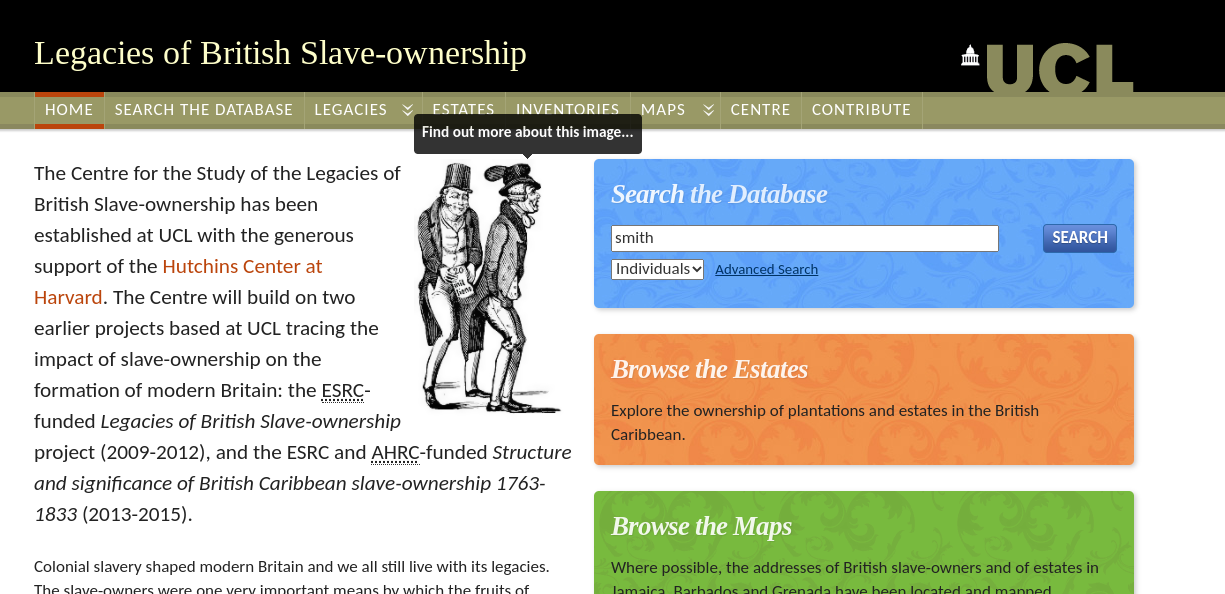
    This is a handy free web-site, run by UCL and located at https://www.ucl.ac.uk/lbs/, which has records of how much slave owners were recompensed for their slaves, as well as names of businesses which gained from the process. Some of the sums of money were enormous that were paid out, Benjamin Caractacus Patey, who once lived in Norwich, got the equivalent of around £250,000 for the loss of his slaves. Companies such as Greene King are listed and there are maps of some of the slave estates.

    It’s an interesting genealogical tool, although at the moment, it’s primarily of interest for finding out more about the slave owners than the slaves themselves. The project co-ordinators are though working on this for the next iteration of the project. It’s all been nicely put together as well.

  • Dictionary of the Vulgar Tongue – Day 215

    Dictionary of the Vulgar Tongue – Day 215

    The Dictionary of the Vulgar Tongue was first published at the end of the eighteenth century, and given that the current health crisis is giving too much time to read books, I thought I’d pick a daily word from it until I got bored….

    Muckworm

    This is another intriguing word, defined by Grose as “a miser”. It retains that meaning today, although it can also mean someone who makes money by the overworking of others. It did also once mean a worm that lived in manure, but that usage seems to have fallen out of favour for not being very scientific.

    Unfortunately, as can be seen from Google Ngram, the word has pretty much fallen out of usage over the centuries, which is a little bit of a shame.

  • Dictionary of the Vulgar Tongue – Day 214

    Dictionary of the Vulgar Tongue – Day 214

    The Dictionary of the Vulgar Tongue was first published at the end of the eighteenth century, and given that the current health crisis is giving too much time to read books, I thought I’d pick a daily word from it until I got bored….

    Mousetrap

    This phrase was used primarily in the eighteenth century, although was first recorded at the end of the seventeenth century. It is defined by Grose as “the parson’s mousetrap, the state of matrimony”. It seems that the trap snaps shut at the moment that the parson confirms that a couple are married. What a lovely way to think of the marriage ceremony….

  • Bargains in Business Traveller Magazine

    Bargains in Business Traveller Magazine

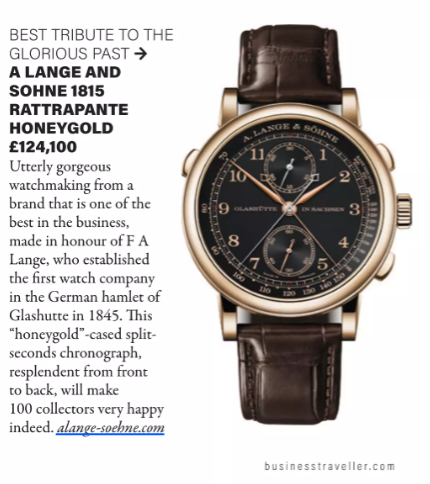
    Business Traveller is one of the magazines I always try and read, even though it’s all a bit expensive for me (the things they mention, not the magazine, I can read that for free).

    Anyway, it strikes me that this level of decadence must be outside a fair number of the magazine readers’ wallets. I’m not sure that even my friend Richard is this decadent. And, how would anyone dare wear one of these? I’d be permanently worried that it’d be stolen or ripped off my wrist. I worry enough about my McCain’s backpack, let alone something of this value. And do people just keep them as investments? Who knows…. And there’s another watch in the magazine which is so expensive they won’t say how much it costs.

    On a different matter, in the same magazine, BA have won the best short-haul airline and the best loyalty scheme, so that’s very well deserved from my favourite airline…. Although all this reading about international travel has reminded me that I’m not expecting to go overseas for another 54 days. Not that I’m counting.

  • Dictionary of the Vulgar Tongue – Day 213

    Dictionary of the Vulgar Tongue – Day 213

    The Dictionary of the Vulgar Tongue was first published at the end of the eighteenth century, and given that the current health crisis is giving too much time to read books, I thought I’d pick a daily word from it until I got bored….

    Moss

    I’m pleased that Grose explained this definition, otherwise it might have bemused me. It’s “a cant term for lead, because both are found on the tops of buildings”, with cant meaning a word used by the criminal fraternity. Although lead theft might be thought of as a modern crime, it has been a problem for centuries, with it being a specific criminal offence (with the threat of the death penalty as this was a capital crime) in the eighteenth century to be found with stolen metal.