
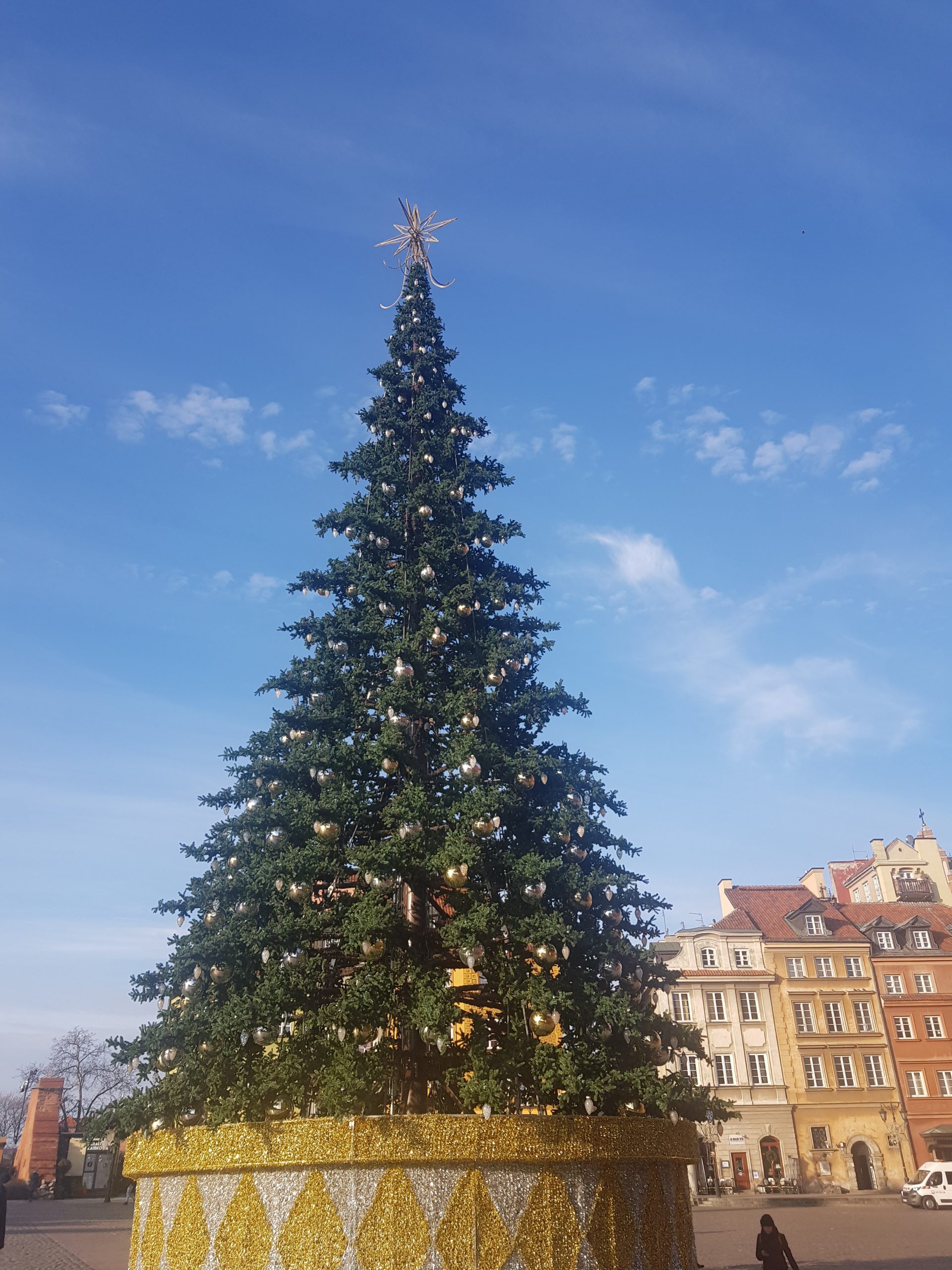
Christmas may be over, which is good for me as a tourist as the city of Warsaw isn’t packed, but the Christmas tree at plac Zamkowy (Castle Square) is still there.
Category: Warsaw
-
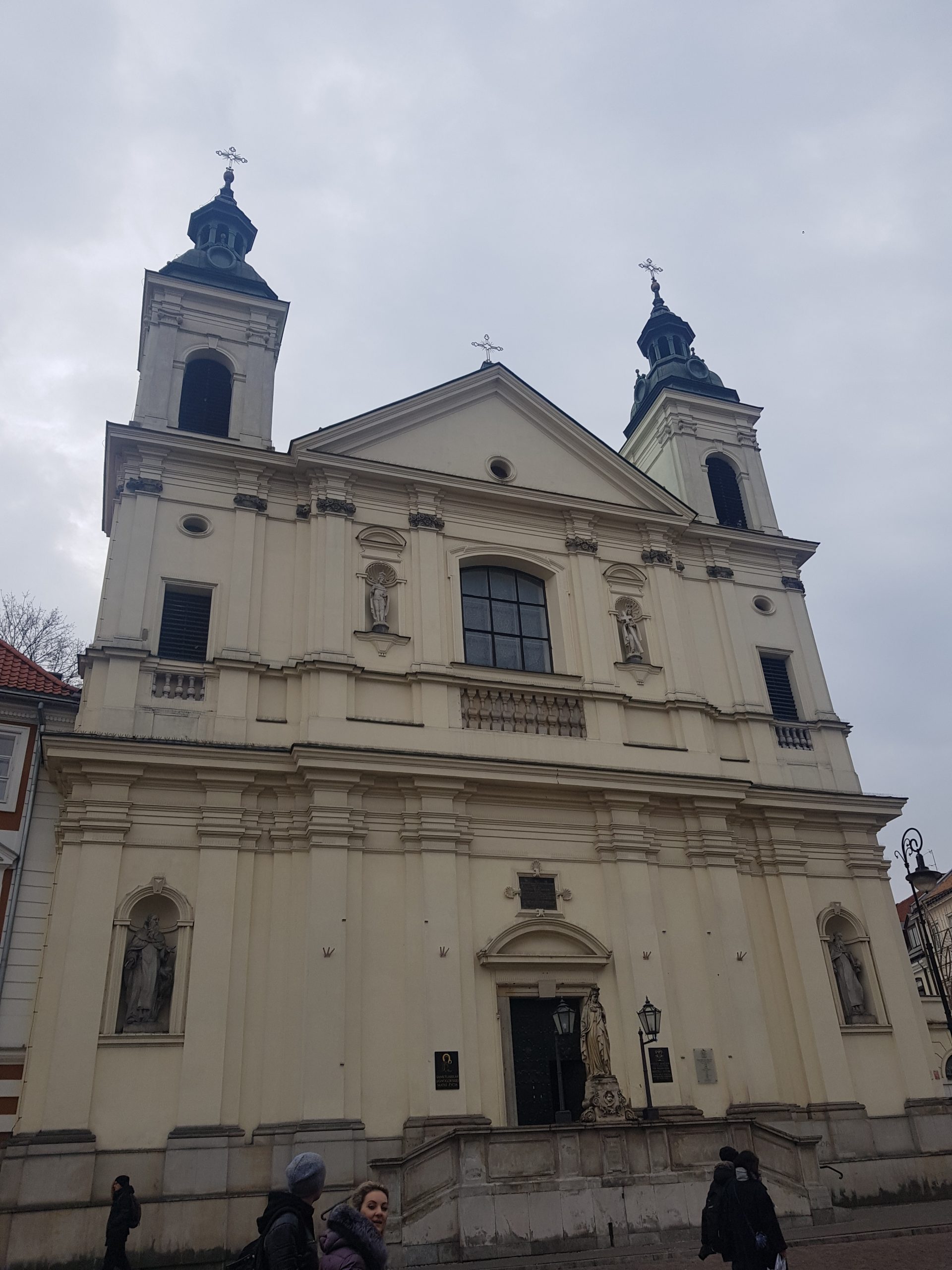
Warsaw – Church of the Holy Spirit
There has been a church on this site since the fourteenth century, although the first building was destroyed in 1655 during the Swedish Wars. The current building dates from 1707 and like the nearby St. Hyacinth’s Church, it had to be repaired after Napoleon’s troops used it as a garrison. Again, like the neighbouring church, it was mostly destroyed during the Second World War.

The nave of the church, which reopened in 1956 following repairs which restored it to its pre-war look.

There was the sound of running water, which in UK churches is normally because some wit has stolen the lead from the roof, potentially destroying centuries of heritage and history. Anyway, here the matter was much more positive, it was a water feature for the church’s crib scene.

And a camel.
Another quiet church, although I’m sure it gets a lot of visitors in the summer, with a measured Baroque style.
-
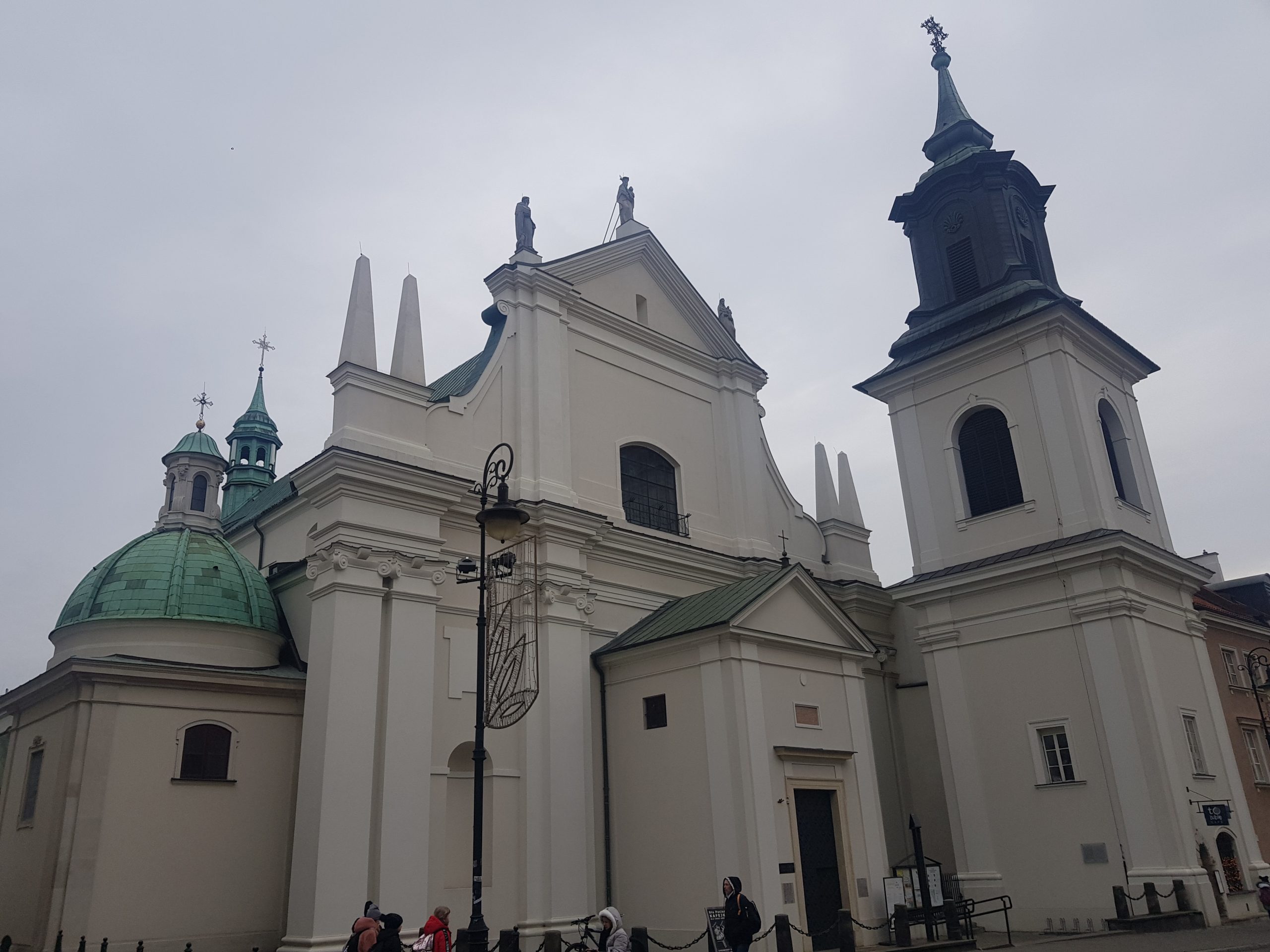
Warsaw – St. Hyacinth’s Church
This Dominican church was constructed in the early seventeenth century and Father Abraham Bzowski arrived here in 1603 with eleven holy brothers. The church was though mostly destroyed during the Swedish War in 1655 and then rebuilt in the early 1660s. There was a reconstruction needed after Napoleon’s soldiers used it as a garrison and the frontage was also redesigned in the 1820s to put a new facade and row of shops in front of the church.
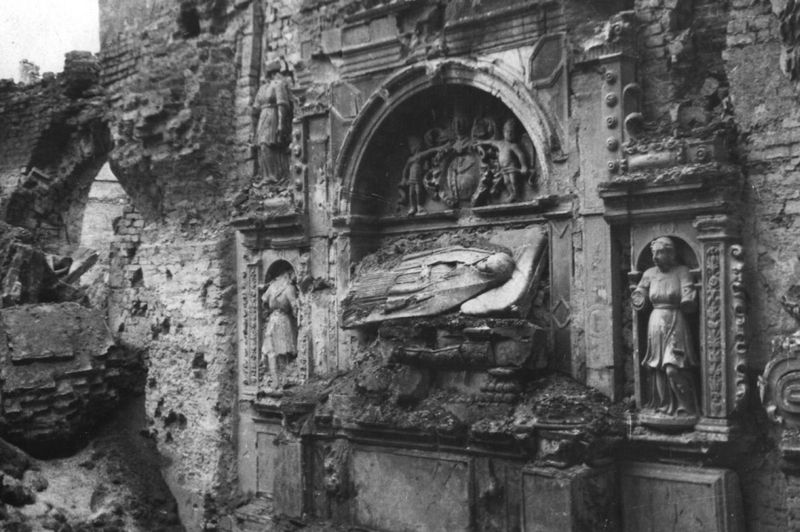
During the Second World War, the church was used as a hospital for insurgents and was badly damaged by the occupying Germans, with over 1,000 people dying here. Some guides mention that some of the bodies of those killed in the vaults of the church couldn’t be removed at the time, so remain there at rest.

The church was restored between 1947 and 1959, but the facade wasn’t put back and so the entrance is set back from the road again.

The nave of the church, which is all relatively plain, perhaps inevitable given the historic damage which has been done to the building over the centuries.

A partially damaged tomb, with the tomb on the left of the above photo being the one below, showing the damage done to the church.
Despite the location in the heart of Warsaw and its somewhat turbulent history, this church was today quiet and peaceful and retained a sense of serenity.
-
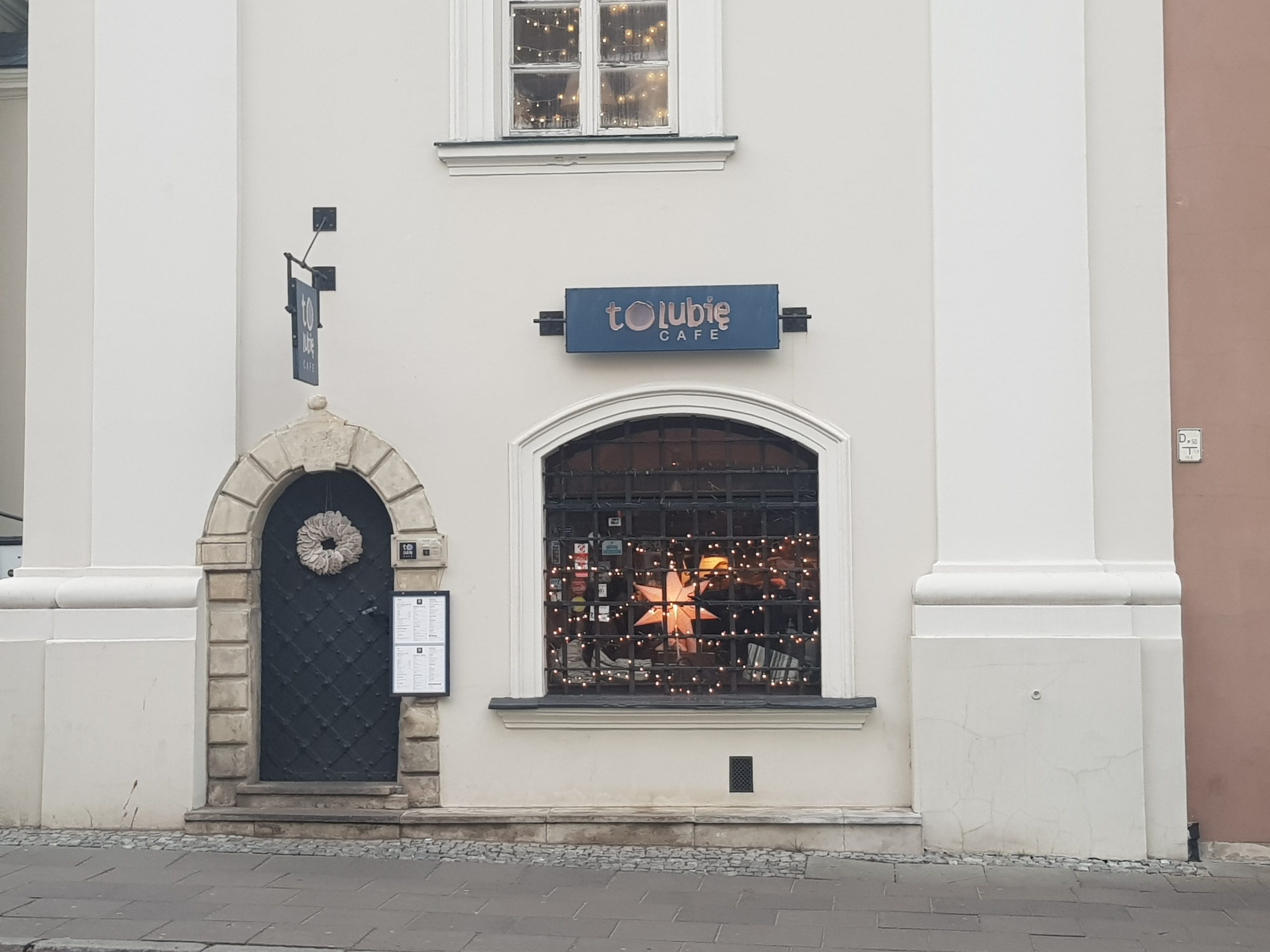
Warsaw – To Lubię
And for an afternoon coffee, I stopped at this cafe, which means “I like it” in English. It looked well reviewed, although I only realised later that it’s one of the best rated cafes in the city. It’s a relatively small cafe with a downstairs which has three tables and a handful more tables are located upstairs. There’s a quite heavy door to open to get into the building, with a curtain behind it to keep in the warmth, which adds something to the historic charm (the door I mean, not the curtain which doesn’t have much history to it).
One thing I’m often confused about is whether a cafe offers table service or whether I’m meant to order at the counter. However, it’s all clear here, there’s a sign explaining that it’s table service, with the staff member having a big smile and seeming friendly. As usual, there was perfect English spoken.

These looked rather lovely and the cafe also sells food such as salads and breakfasts.

The chocolate and hazelnut cookie was indeed lovely, with the latte having a pleasant flavour and being at the drinkable temperature that I like. The prices were reasonable, about £3 for a coffee and cookie, with the environment being clean and comfortable.
There’s not much negative at all about the restaurant on TripAdvisor, just two 1 star reviews in the best part of ten years, which is quite an undertaking. The downside of that is there aren’t any TripAdvisor reviews to amuse me, so it seems this is just a reliably consistent cafe, a quite charming little place. Although it’s not the most spacious of cafes, this situation improves during the summer months when the outside seating can be used.
-
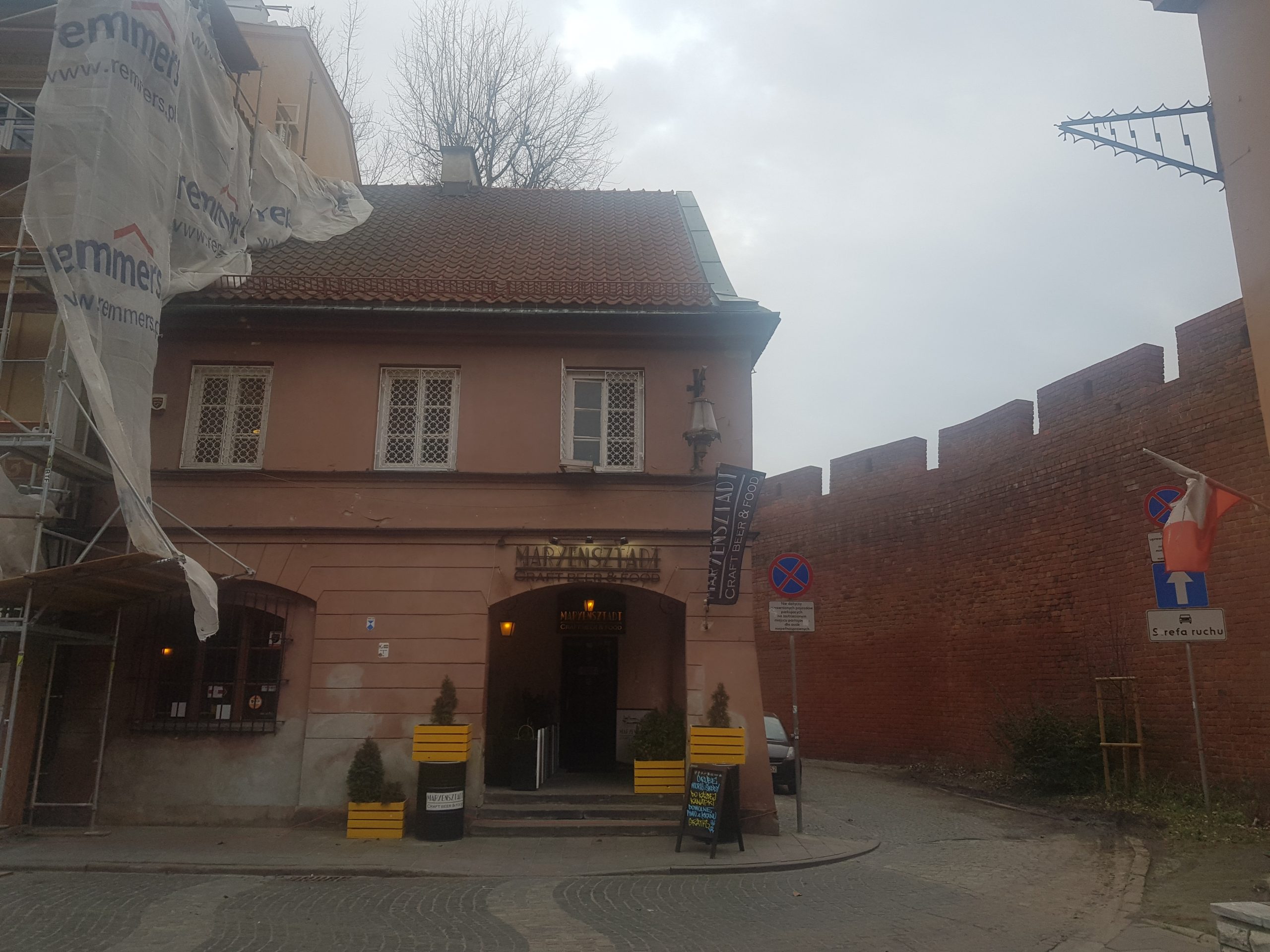
Warsaw – Restauracja Maryensztadt
This old town restaurant specialises in craft beer and food, but it was the former which was the reason for my visit. The restaurant is very well reviewed for its beer, a little less so for its food, although it appears to be a location growing in popularity.

There was a friendly welcome from a staff member who showed me where the bar area was, with the barman being keen to engage about the beer options.

A particularly well presented board displaying all of the beers in a clear manner, a nice touch.

My first drink was the milk stout Sweet Sixteen, which is from the local Maryensztadt Brewery in Warsaw. There was a touch of coffee to the beer, but I thought it was served too cold and that hid a lot of the flavour. Fine, but unexceptional.
So, moving onto the second drink, which I was tempted into after I was offered a sample. It’s the Gwiazda Północy, from the same brewery, but this was quite brilliant. Strong, but not too heavy, with a rich smoky flavour that almost tasted like it had a touch of whisky for some reason that isn’t apparent to me, but perhaps it’s something to do with the barrel. Unless I’m confusing the smoked flavour for whisky somehow, but the aftertaste of the beer was quite decadent (to misquote Jay from the Inbetweeners). A delightful drink, although I had asked for a small rather than large beer, but I was pleased they gave me the latter. Whether it was creative upselling or they knew I’d like it, I was pleased to have this much of it.
It’s perhaps not surprising that the restaurant was otherwise empty on a weekday lunch-time in January, but the atmosphere was comfortable even though I was pretty much the only customer. The prices were towards the higher end of the scale, but given the location and the quality of the beer, they weren’t unreasonable.
-
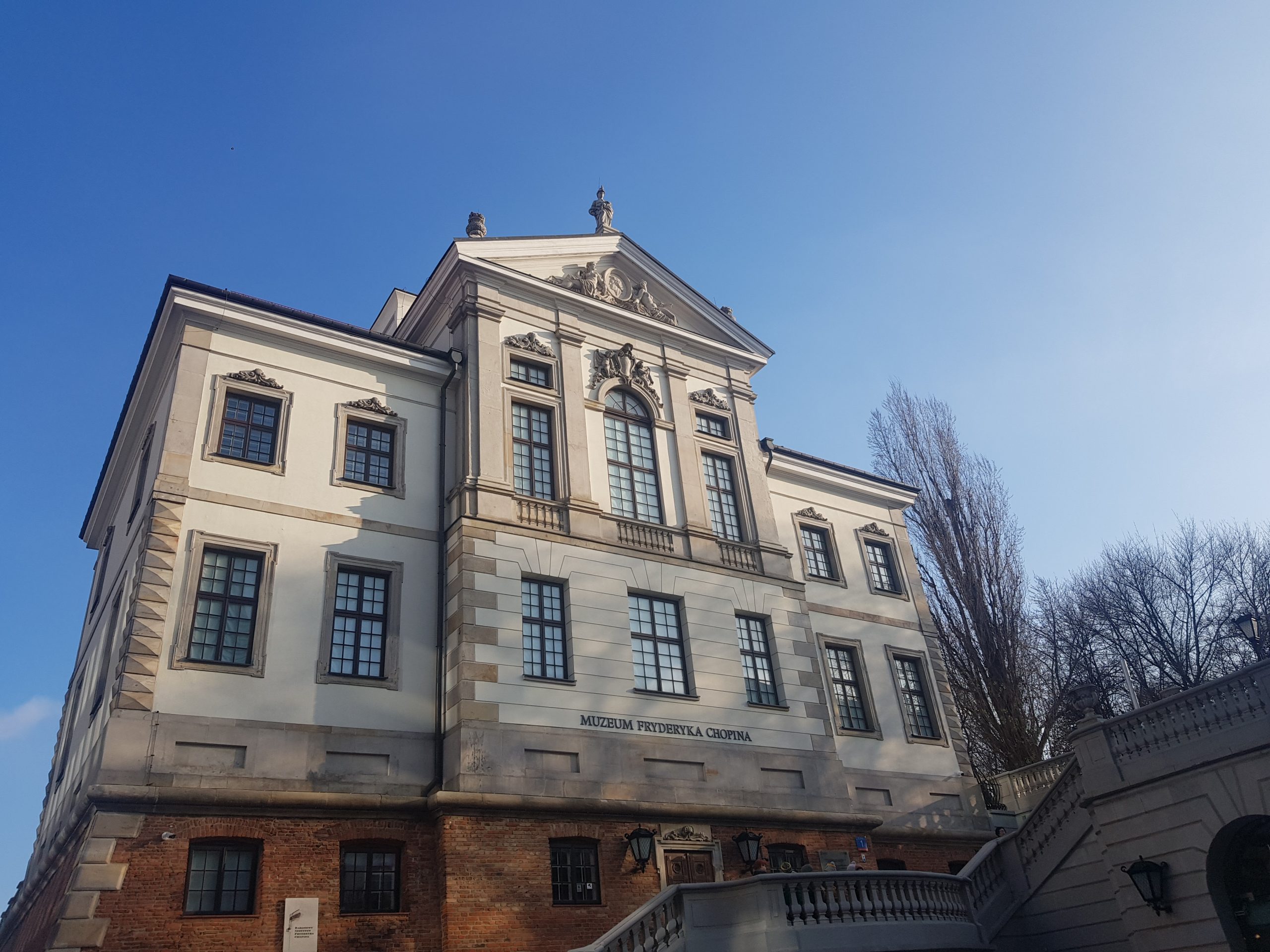
Warsaw – Fryderyk Chopin Museum
I’ve never managed to visit this museum during my previous visits to Warsaw, but it’s a popular tourist destination and it opened in the grand Ostrogski Palace in 1953.
My first impressions weren’t particularly positive as I went to the ticket desk and waited for just over five minutes with some others in a queue. Neither of the two staff acknowledged anyone waiting, and they then just casually threw over some cards. The problem with doing this in a careless manner was that the staff member didn’t give me one and then seemed most put out when I asked for a card, asking what I had done with it. It was an unusually sloppy welcome from a Polish museum.

A staff member at the entrance to the main part of the museum gave a quick introduction, explaining that the card provided operated the multi-media displays throughout the museum. I chose to visit on a Wednesday as there’s free admission for all, so I arrived early before the crowds.

Many of the displays were like this, so they needed the card to operate them. I have no idea why they’re using cards and not just getting visitors to press a button on the display, it seems like technology for the sake of it. I had thought that they were encoded with the preferred language of the visitor, but since the man at the ticket desk just handed them out without checking, that didn’t seem quite as likely.

One of the large rooms full of displays, although I was more interested in the room itself which is mostly obscured. And, unfortunately, I had to be interested in the room as I was struggling to find much else of interest to engage with. One exciting element of curating a museum should be to make it accessible to those with no knowledge of the subject that is being explained. I had little prior knowledge of Chopin and his life and I left the museum with the same lack of knowledge.
This museum to me was like giving a detailed biography in book form to someone who just wanted to find out more about an individual. It’s impractical for them to read something like 300 pages, so there needs to be some flow of information to get the basics out and then build on that for those who are interested. Books can use timelines, summaries or even just a list of contents, whereas I had no idea of what was going on in this museum.
“The exhibits follow no obvious timeline and are hard to follow. If you want to listen to an audio of Chopin telling you what colour he wants his wallpaper this is for you. You will leave the museum having no clue how he died, why he went to Paris, what kind of person he was or why his music is so special. But don’t worry you will have seen several letters and illustrations to his family members none of which readable.”
I do agree with this review, I had no idea what any of the letters were saying or what relevance they had. But there were sweeping amounts of information about trivialities of Chopin’s life and works.
“This museum is absolutely nothing but a collection of miscellaneous facts and pictures presented to visitors without any context whatsoever and unless you devoted a good part of your life to a detailed study of Chopin’s life and biography. none of those pictures, names and dates will mean anything to you and will not be able to piece them together to find any connection to either the museum itself or, indeed, Chopin as a person and as a composer.”
And I agree with another reviewer, the museum had letters by people who seemed to have no link to Chopin at all, or at least, that link wasn’t explained.
“There is absolutely no order to this museum. Usually a museum which showcases a person is ordered chronological from birth to death. In many museums, the direction in which visitors should proceed are clearly marked. In this museum, we first observe an exhibit which explains something about Chopin’s birth, and after that it is like a maze with mass confusion and no sense of direction. Lots of musical scores, old photographs, letters, etc. but little information provided. For example, I am aware that Chopin was born in Poland, but spent most of his life in France. But I have no idea where or if this information was explained. Does the museum assume that we already know that?”
There are hundreds of reviews like this, but I agree again, the museum is assuming that the visitor has a significant prior knowledge of Chopin. But, those with a deep knowledge of Chopin, or a wider understanding of classical museum, will no doubt find the museum a treasure trove of information.

The museum building, the Ostrogski Palace, was the highlight of my visit, although the museum displays did obscure some of it. Work started on the building in the late seventeenth century, although sadly it was destroyed by the Germans during the Second World War. The building was reconstructed between 1949 and 1954, although some of the original cellars appear to have survived. I was mildly disappointed that the museum didn’t make more of the building and its heritage, although it might well have done on some random screen that I didn’t see.

A room full of screens with headphones attached for those who wanted to listen to Chopin’s museum.

Dried flowers from Chopin’s death bed.

Chopin’s death mask.

Chopin’s hair.
I managed to lengthen this visit out to 45 minutes, although I’m sure anyone really engaged with Chopin’s music could make it last much longer. Personally, I thought that the technology in the museum was overdone and made it harder to access information, although the exhibits seemed to be all over the place in any event.
“Lacks coherent and clear narrative from any (musical/biographical/historical) perspective. Almost all information is buried under convoluted and slow interactive gadgety screens for which you have to put on different headphones each time. A lot of handwritten letters on display tell you nothing about Chopin because they are not transcribed into something legible. The music section lacks deep analysis and background of what makes Chopin’s music special. Half an hour on Wikipedia will teach you more about Chopin than this museum.”
Another review sums up what I thought of the museum, which is that Wikipedia is perhaps a better source of information for anyone interested in Chopin. So, in summary, I agree with yet another reviewer, who wrote:
“Only for the most fervent Chopin fans… not recommended for the casual tourist. The museum could definitely be much improved.”
-
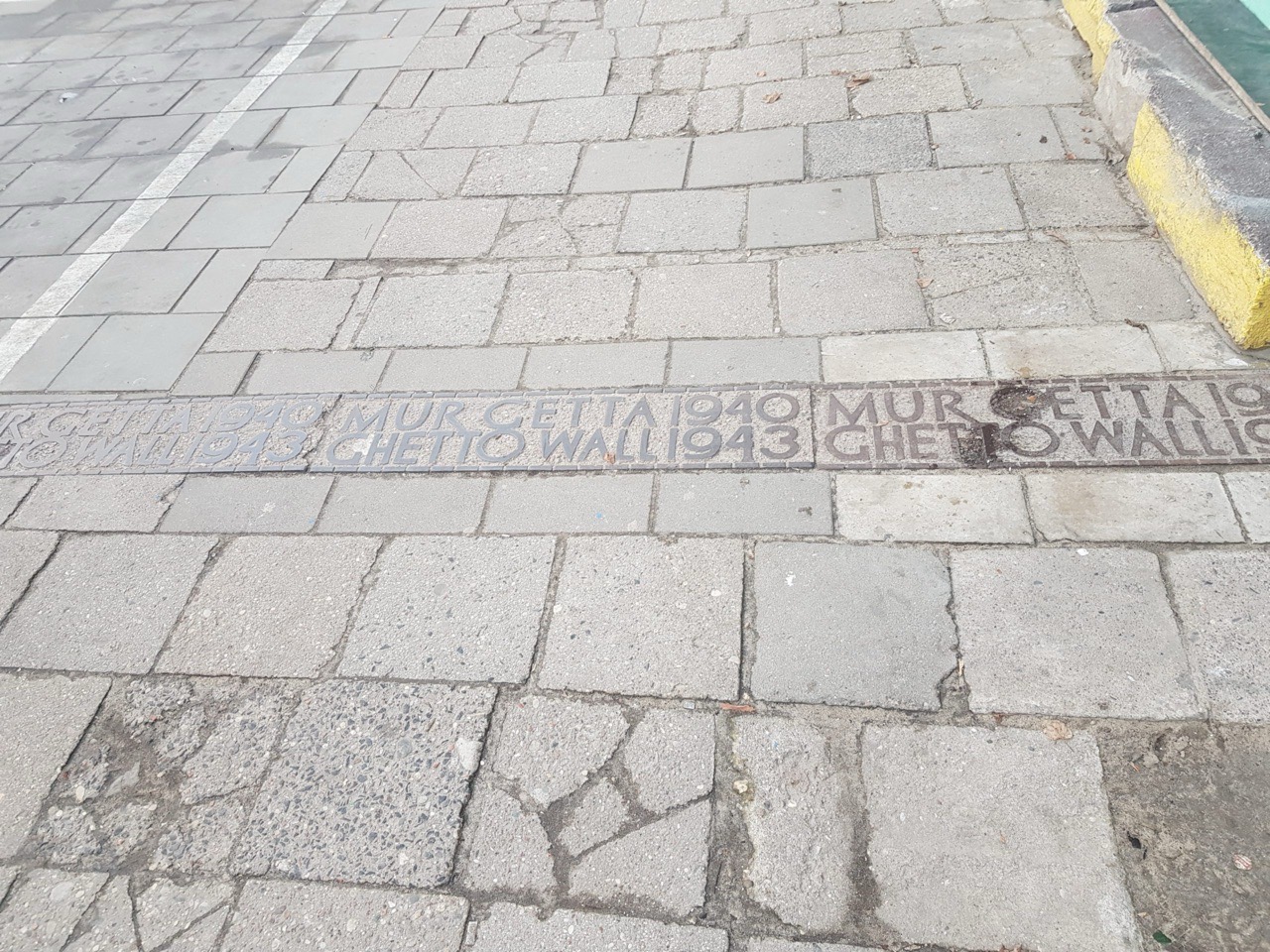
Warsaw – Footprint of Ghetto Wall
There’s little remaining of the city’s former ghetto wall (although more on that later) which was constructed during the Second World War during the period of German occupation. There were over 450,000 people forced to live in the area when the ghetto was established, with nearly 100,000 dying of starvation and hundreds of thousands more dying when the ghetto was liquidated and the residents despatched to concentration camps.

A plan of the ghetto.

It’s easy to follow the remnants of the wall, which stood from 1940 until 1943. A permanent reminder of the atrocities which took place here.
-
Warsaw – Train from Chopin Airport to City Centre
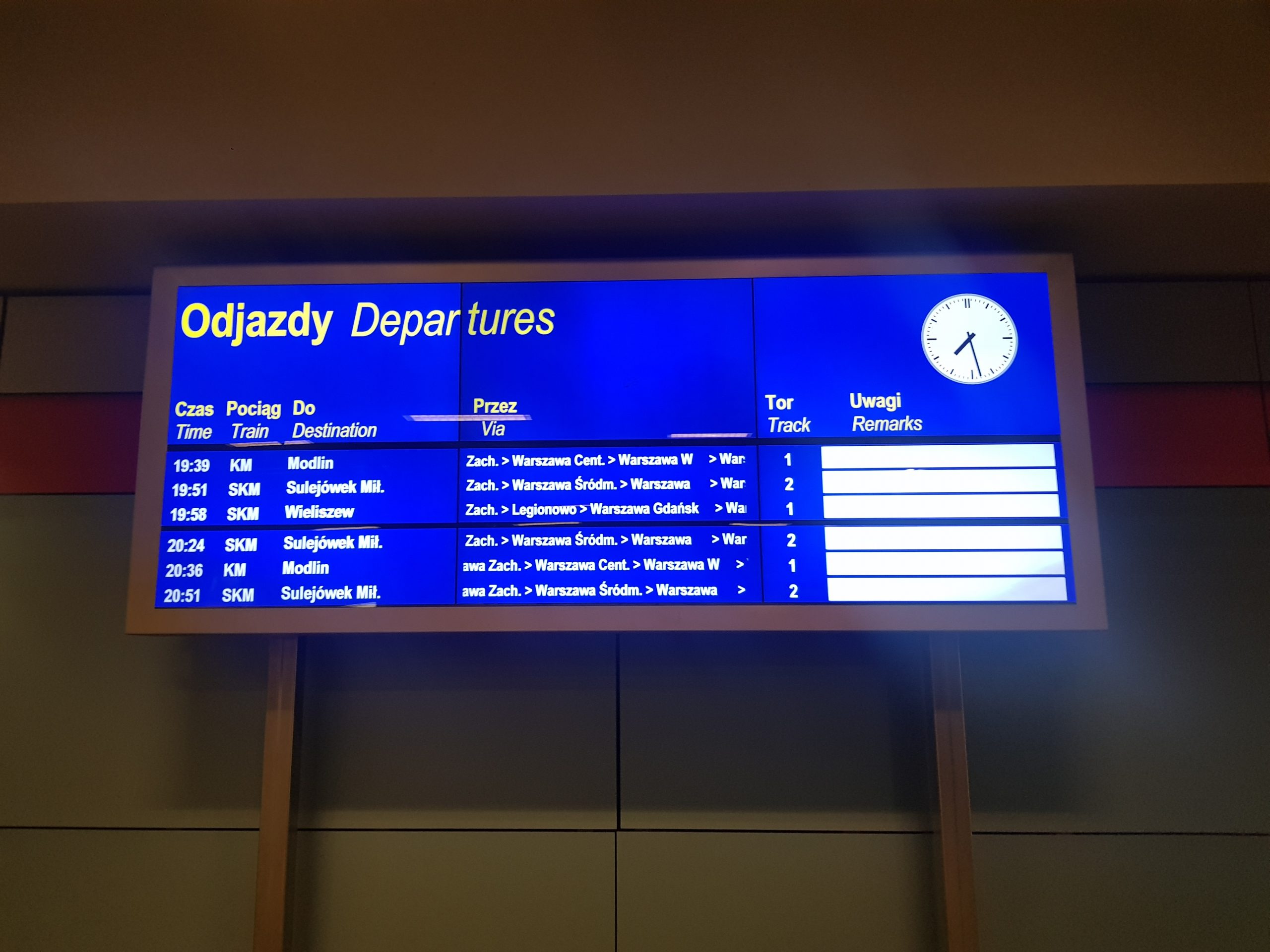
The final part of the journey for today was getting from Warsaw Chopin Airport to the city centre.

Fortunately, the signage is clear throughout the airport, despite it being quite a walk to get to the trains. It irritates me, like many things do, when airports seem to keep these things a secret. Warsaw airport’s green line is easy even for idiots to follow, and I can personally attest to that….

The situation is moderately complex insomuch as there are two ticket machines and two operators to get to the city centre. I just bought a standard ticket and went with KM (Koleje Mazowieckie) as their train was already at the station, but ZTM (Zarząd Transportu Miejskiego) are the main transport providers in the area. There’s pretty much dual acceptance of tickets, although there are some exceptions and I am no expert in what they are. Not much can go wrong with seeing which train is going first and buying a single ticket (or whatever suits) on their machine (KM are green, ZTM are red). The ticket machines have English, and numerous other languages, available.

The platforms, with the signage being clear so that passengers don’t end up getting on the wrong train.

There’s the train, rather lovely.

I won’t mention his name here, but a friend was fined on Warsaw trains last year, on his first visit to the city, for not validating his ticket. Validation is the key 🙂

Inside the train, with the journey to the central railway station in Warsaw taking just under thirty minutes. There are also other stations which the train calls at, with the service never getting that busy. There are regular announcements, in Polish and English, to ensure that customers don’t get confused at any stage. I didn’t have my ticket checked during the journey, but there was a guard visible at one end of the train if customers wanted assistance.

And safely in Warsaw railway station. The ticket costs just under 4.50zl, meaning that the single ticket cost me around 90p. Which I think is a bargain to get from an airport to a city’s central railway station. Very lovely.
-
Flights – Heathrow T5 to Warsaw (British Airways)
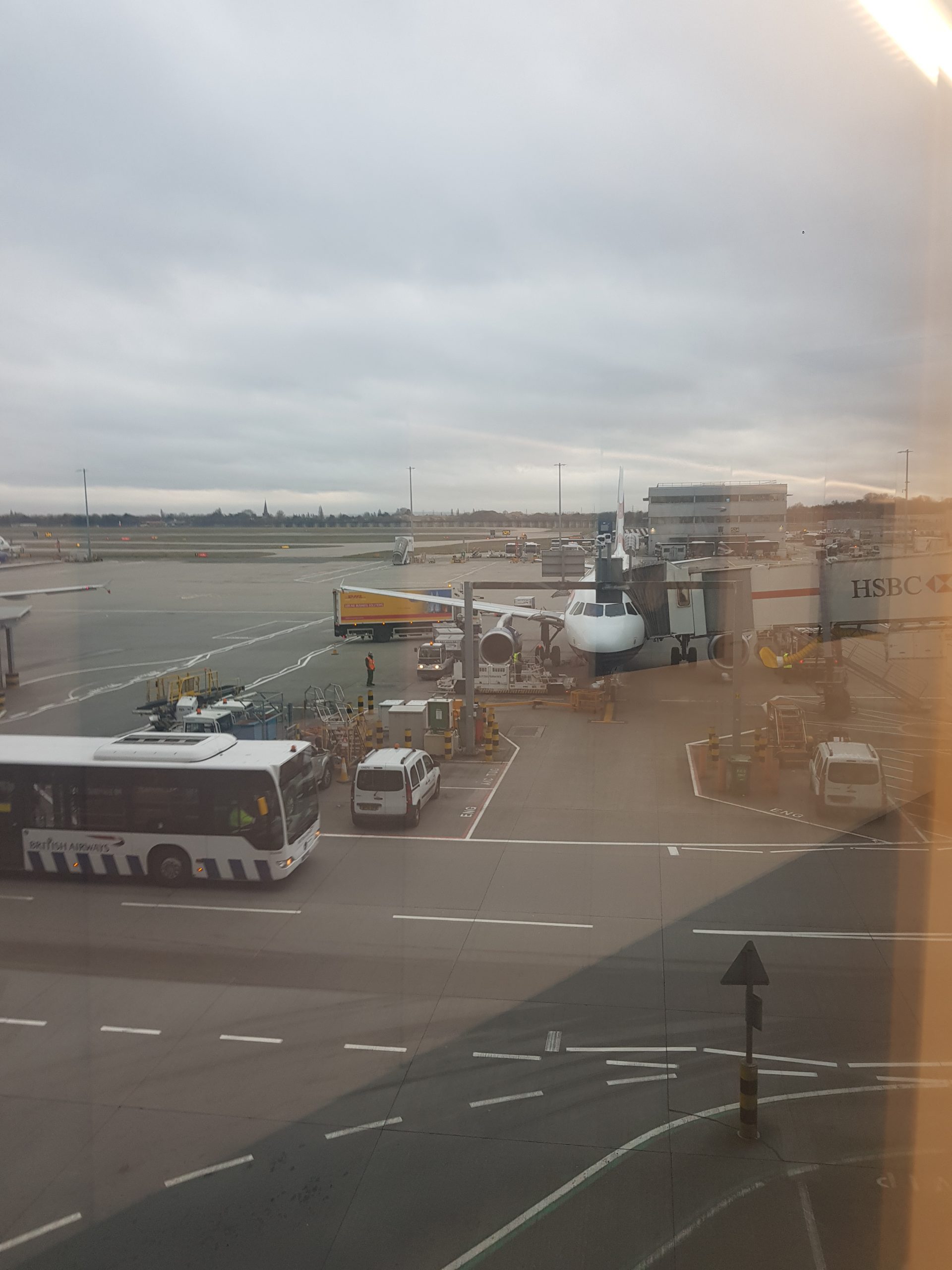
This was the clearest photo that I could get of today’s BA850 service from London Heathrow T5 to Warsaw Chopin Airport in Poland. The aircraft was G-EUPH, an Airbus A319, which British Airways have owned since April 2000 when it was new. These A319 aircraft are gradually being withdrawn from service, but they’ve served the airline well.

As I was at B Gates lounge I asked the staff member if she could see where the flight was departing from before it was announced, to save me walking back if the departure was at B Gates. It was at Gate A23 in the main terminal and I was the first to arrive there, primarily since the gate number hadn’t otherwise been announced.

And here’s the packed waiting area, although it soon got much busier. The staff were pro-active in trying to get customers with two bags to put one of them in the hold, as the flight was nearly full. Some people refused and so a different staff member, who was more forthright to say the least, went round and politely told customers that it wasn’t really an option. The amount of bags that customers are taking on board is becoming ridiculous, something will need to be done at some stage about them.
The boarding process was otherwise orderly and well managed, with groups called forwards carefully and customers were despatched back to the seating area if they tried to jump the queue. I like organisation.

I had an exit row aisle seat and there was no-one next to me, so it was a comfortable flight in terms of the space available.
We were delayed on take-off, partly as the inbound flight had been a few minutes late, but primarily as the crew had problems trying to fit all the bags on. Some customers, mostly those who were trying to bring on a bag the size of a small hippo couldn’t find anywhere to store them. At one stage there were eight customers standing in the aisle of the aircraft with bags not fitting in anywhere, but the crew did their usual jenga tactics of moving and restacking bags, with another going into storage elsewhere.
The flight eventually arrived into Warsaw twenty minutes late, so no real problem, with the crew members being conscientious with their announcements and updates. There was a buy on board service which went up and down the cabin, but I saw only a few customers buy anything from it. The fare was £55 return plus 2,500 Avios, although I get 1,350 Avios back with this flight.
-
Warsaw – Prince Józef Poniatowski Monument
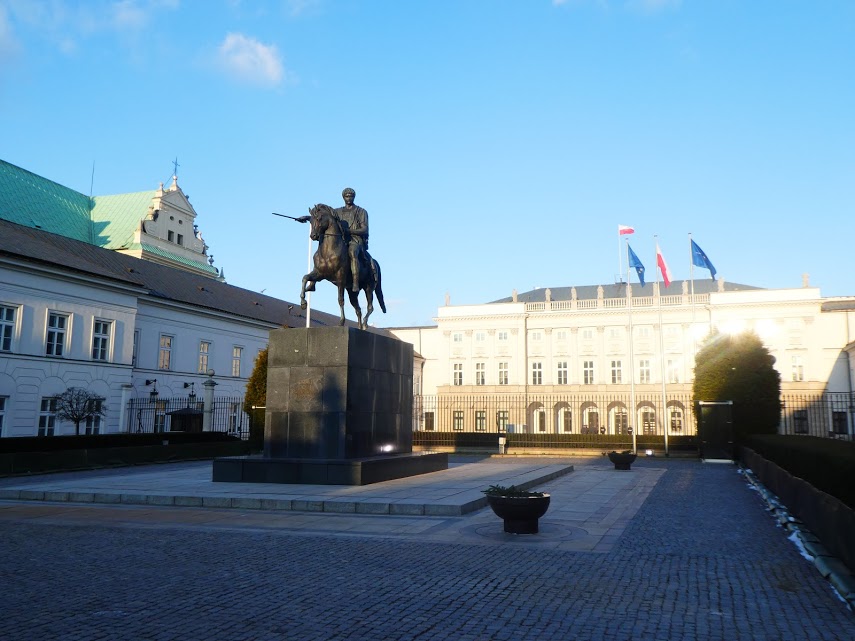
This is a monument to Prince Józef Poniatowski, located within the courtyard of the Presidential Palace in Warsaw.
Józef Poniatowski lived from 1763 until 1813 and although he was born in Austria and initially joined the Austrian army, he later became an important Polish military leader. He must have been good at this military thing, since he was also invited to join the Russian army at the invitation of Tsar Alexander I. He later supported Napoleon in his military efforts, with Poniatowski managing to judge his allies well and ensuring that his actions were in the interests of Poland. He died in action and he became something of a Polish hero for his bravery and courage.
A monument in honour of Poniatowski was designed by the Danish sculptor Bertel Thorvaldsen and installed in Warsaw in 1832. It moved about a bit, primarily due to the Russians not liking it, with the monument being located in what is now Belarus between 1842 until 1922, before it was returned to Warsaw.
Like most things in Warsaw, the monument didn’t survive the Second World War. The Germans initially hid the monument behind scaffolding, before destroying it on 16 December 1944. A copy was made after the war and was unveiled at Łazienki Park in 1952, before taking its current place outside the Presidential Palace in 1965. It seems that some remnants of the original are still on display, I shall hunt them down…..


