Category: Poland

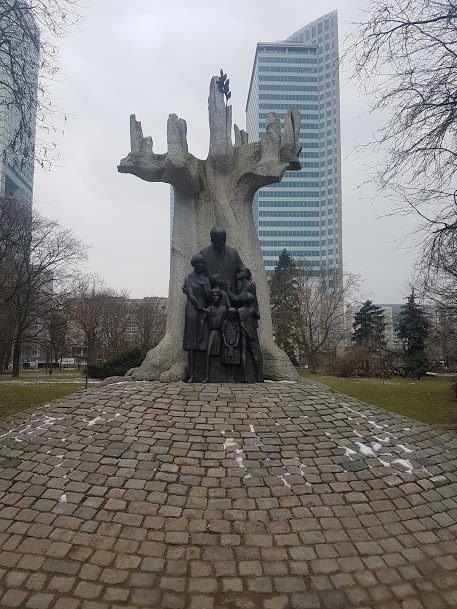
  • Warsaw – Monument to Janusz Korczak

    Warsaw – Monument to Janusz Korczak

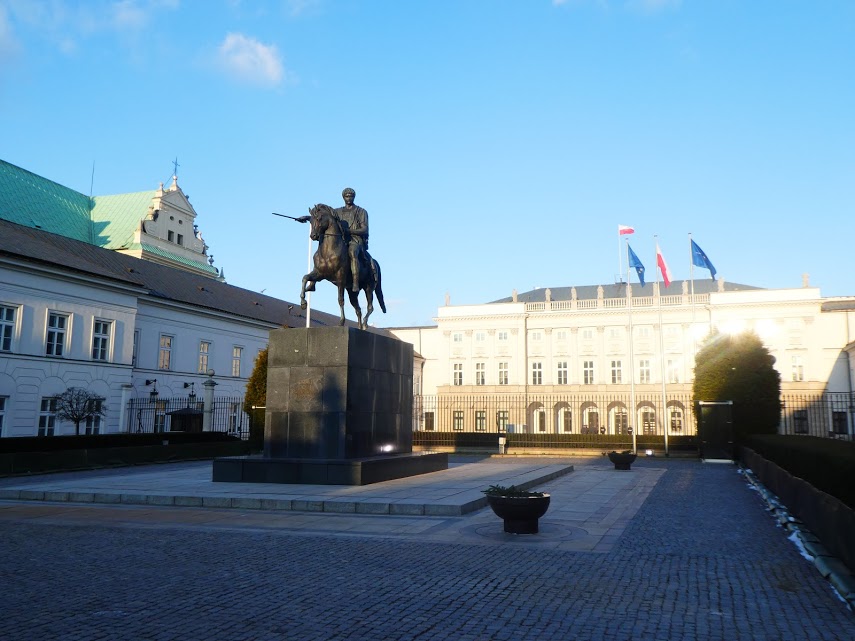
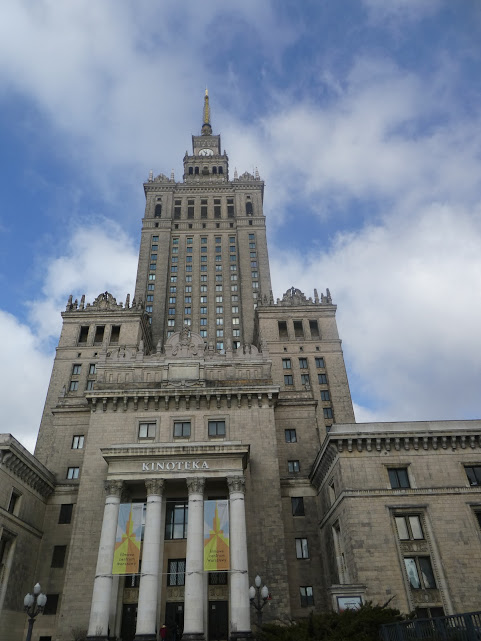
    Located at ul. Świętokrzyska, in the shadow of the ridiculous Palace of Culture and Science, this monument is to the author Janusz Korczak. His real name was Henryk Goldszmit and he was not just an author, but also an educator who was heavily involved with orphanages. Korczak served as a lieutenant in the Polish army during the First World War and he tried to join the army once again at the outbreak of the Second World War, but he was 61 years old and thought to be too old.

    Korczak ran an orphanage when the Second World War began and he went with it when it was moved inside the Warsaw Ghetto, but he did his best to protect the children in his care. When the ghetto was liquidated in August 1942 all of the children, around 192, were rounded up to be sent to concentration camps and Korczak had two opportunities to leave the ghetto, both of which he declined. It’s not known what happened to Korczak and the 192 orphans, but it’s thought that they were all murdered at Treblinka.

    Władysław Szpilman saw Korczak and the children being marched out of the ghetto and wrote:

    “He told the orphans they were going out into the country, so they ought to be cheerful. At last they would be able to exchange the horrible suffocating city walls for meadows of flowers, streams where they could bathe, woods full of berries and mushrooms. He told them to wear their best clothes, and so they came out into the yard, two by two, nicely dressed and in a happy mood.”

    Some of Korczak’s writings in the ghetto survived, and they aren’t in the form of a descriptive diary, but are more of a literary bent. I particularly liked this text, of which there’s no shortage of existentialist meaning. The PDF of his book is available here.

    “I know that many are dissatisfied at my clearing the table after meals. Even the  orderlies seem to dislike it. Surely they can manage. There are enough of them. If there were not, one or two always could be added. Then why the ostentation, the obstinacy, and even maybe I’m nasty enough to pretend to be diligent and so democratic.

    When I collect the dishes myself, I can see the cracked plates, the bent spoons, the  scratches on the bowls. I expedite the clearing of the tables and the side table used for the  little shop, so that the orderlies can tidy up sooner. I can see how the careless diners throw about, partly in a quasi-aristocratic and partly in a churlish manner, the spoons,  knives, the salt shakers and cups, instead of putting them in the right place. Sometimes I watch how the extras are distributed or who sits next to whom. And I get some ideas. For if I do something, I never do it thoughtlessly. This waiter’s job is of great use to me, it’s  pleasant and interesting.”

    The monument was unveiled in 2003 and was jointly funded by the Shalom Foundation and the Janusz Korczak Association. One of the underlying principles of the monument was to ensure the words of Korczak weren’t forgotten:

    “Sorrow is too cold for the children, so they quickly run into the sun of joy”.

    His sacrifice meant that many children had just a little bit of hope in their final days.

  • CNN – Warsaw In List of Best Beer Cities

    Well, how lovely, Warsaw has been listed as one of the 15 best beer cities in the world according to CNN. I haven’t previously given much attention to craft beer in the Polish capital on my previous visits, but I shall fully investigate this matter in a few days when I arrive there…..

  • Flixbus – Opole to Berlin

    So, after a lovely few days in Opole, it was necessary to get back to Berlin and I went back the same way that I went, via Flixbus. I don’t like Flixbus, based on many previous journeys, but my dislike of them is diminishing (since they’re actually generally turning up at the right place now), so this is positive for everyone…..

    On the morning of the bus journey, there was a notification from Flixbus that there would be a white bus instead of their usual green and orange effort. Unfortunately, there was no message within the app, but at least it alerted me as to what to expect, which was useful.

    I arrived at the bus stop early (as usual) and the departure time of the bus came and went. Thirty minutes later I message Flixbus and ask politely where the bus is, as the on-line tracking had stopped about 150 miles away. Two minutes after sending that message, a replacement coach branded with Euro Lines (another company that Flixbus have now bought out) turned up. Flixbus replied about ten minutes later, so I appreciated their efforts in replying quickly.

    I was able to get my preferred seat at the top of the stairs, so there was no-one in front of me. The bus was pretty quiet and not many customers boarded at any stage of the journey. The price of the journey was cheap and I can’t really complain about the value offered. There was very intermittent Internet and no power, although I’ve yet to be on a Flixbus that has delivered everything that they’ve promised, so I was hardly surprised.

    We eventually got into Berlin an hour late, but in the scale of things, that’s not unreasonable. The driving also felt safe throughout the journey, with no real delays along the route other than the wait for the bus to arrive, and then depart, in Opole. Judging solely by my experiences, Flixbus are definitely getting better.

  • Opole – Mercure Opole

    The Mercure in Opole, situated opposite to the central railway station and a short walk to the city centre. Mercure is part of the Accor Group, and so I booked primarily because of that.

    After an exciting overnight coach journey with Flixbus and then a morning breakfast and coffee in Opole, I decided to try to get an early check-in at the hotel. I use the logic that even if they don’t have a room available yet, I could always drop my bag off before coming back later.

    Anyway, they had a room nearly ready, and it’s probably worth mentioning that the receptionist was exceptional. His engagement and friendliness seemed authentic (or I suppose well acted is possible, although unlikely) and the standard of his English was ridiculously good. Here am I trying still trying not to get the Polish words for nine and ten confused (dziewięć and dziesięć) and here was he with a fluency that was, if I’m being honest, better than many native English speakers.

    He suggested that as there was a short wait that I might want to have my welcome drink immediately, which seemed a good idea. So I had my Żywiec and waited for the room to be ready, which only took around two minutes.

    The receptionist (I say receptionist, but he was probably a manager, and if he wasn’t, he should have been) explained that the welcome gift of fruits wasn’t quite ready and it’d be brought to the room later on. Through long experience, these things often never quite arrive, but true to his promise, he brought a plate with fruits on, and a slice of cheesecake. This was far better than a couple of apples, which is what I was unexcitedly expecting.

    The room, which was on the third floor and overlooked the main road into the city centre. I’m clearly not normal, but I do quite the ambient noise from streets, it adds to the whole ambience of a room. There were no noise disturbances either internally or externally though which irritated me.

    A fully stocked collection of tea and coffee supplies, with two bottles of water also included. These were all kept fully stocked during my five-night stay. The room was also spotless and, indeed, was one of the cleanest hotel rooms that I’ve been in. It reached the stage that I went around the room deliberately trying to find dust or grime, but I wasn’t successful in that hunt.

    The breakfast selection. This was also a peaceful process, as although there were always several people eating breakfast, the room was large and so it was easy to find a seat.

    There were some hot breakfast options, but I was content with the breads and cold meats. My only little complaint here is that they had some peppered salami for the first couple of days, which I became quite partial to, but they didn’t have any on the other days (although that was perhaps because I’d eaten it all).

    The cake selection at breakfast.

    Bread, cold meats, vegetable things, all very lovely.

    Apologies for the gratuitous photos of teabags, but this is definitely what I call proper tea. An innovative and interesting selection. The coffee was rather good as well.

    I’ve stayed in a lot of hotels and I’ve long since given up being frustrated with incompetent hotel management. It appears to be a complete mystery to some hotel managers that guests do actually want regular restocking of in-room drinks and soaps, that they might want to know when breakfast is or have a menu for the restaurant in the room.

    This hotel managed to be the entire reverse of that, it gave me the impression of being competent. I couldn’t manage to find any fault with the hotel at any stage, with the exception that the wi-fi was a little slow at times. The room was clean, the staff were friendly, the breakfast was of an excellent quality and the rooms were cleaned and restocked efficiently.

    At check-out, there was a different member of staff who managed to perform the process efficiently and politely. And, once again, with a fluent knowledge of English. Overall, it was about as perfect a stay as I’ve had in a hotel. All very lovely indeed.

  • Opole – Opole Cemetery

    This cemetery, on ul. Wrocławska, was opened in 1813 and burials continued here until 1968. It was opened because of the fear of an epidemic spreading from the city’s existing graveyards and this cemetery was extended numerous times during the nineteenth century.

    Unfortunately, it’s not in the best of shape as there has been vandalism, theft and as the icing on the cake, the cemetery has suffered from extensive flooding. The cemetery records have also been destroyed and so it’s not the tranquil environment that was perhaps once intended.

    The cemetery is still of a large size, although a small section was lopped off the edge when the authorities wanted to build a new road over the river.

    There have been some efforts recently to tidy the area up, so although the gravestones are in a poor state of repair, the graveyard itself is looking better.

    This looks Germanic, so probably late nineteenth century, but there’s no remaining evidence of who was buried here. Opole was German until 1945, albeit with a Polish minority, so many of the burials here were German families. Unfortunately, that later on meant that some people thought it was acceptable to damage and vandalise them. In 1945, the Germans living in Opole were nearly all expelled, so families wouldn’t have been able to tend the graves of their friends and relatives.

    This isn’t my poor camera skills, more some sinking into the ground of a grave.

    The gravestone of Emilie Moebius, who lived from 16 December 1847 until 27 January 1893. Her husband, Paul Moebius, was an important figure in the local council, although his stone isn’t visible and I guess is what was smashed off the wall.

    This is the impressive tomb of Paul Vogt, who lived from 20 February 1855 until 19 May 1905. He was a lawyer and city councillor (and chairman of the council for a time) and there was once a street in the city named after him.

    This was once the decorative metal edge to one of the plots, but it has now fallen and become part of the path.

    Another damaged tomb, this one for the Godt family.

    There are, although unfortunately not marked, thirty military burials of British soldiers at the cemetery. They died, mainly of illness, whilst enforcing the plebiscite which was taking place in 1921 which would determine the future of Silesia. There were 41 burials here of British servicemen, but the Imperial War Graves Commission could only take responsibility for those who died before what was considered the official ending of the First World War, so eleven servicemen were exhumed and given new graves at Stahnsdorf Cemetery near Potsdam whilst the other thirty remained in Opole. The story of this can be found at https://www.ww1cemeteries.com/opole-town-cemetery.html.

  • Opole – St. Michael’s Church

    I don’t have much to write about this church, other than I thought it was an unusual architectural style and made quite a statement for those passing by. I had thought that the church was older than it actually was, as it was only built between 1936 and 1937.

  • Opole – Opole City Walls

    Most of Opole’s city walls were destroyed in the early nineteenth century, primarily because they no longer performed any real useful defensive function. There is though a stretch that has been reconstructed and re-opened near to the city’s cathedral. The project was completed in 2009 at a cost of 1.2 million zloty, with walkways constructed so that visitors can walk alongside the top of the walls.

    There’s just one little problem, which is that the steps have been closed off as the wooden structure has started to fall away. The steps are now barricaded off at the base, but the city is promising to have it all re-opened in 2020.

  • Opole – Veroni Cafe

    This cafe looks out onto a square which is a little dominated by the Solaris Center, which has its own Costa Coffee which seems to be generally busy. I can’t help feel that’s a slight shame, these independent cafes must find trading a challenge against international competition. I’m sure many people like the taste of Costa coffee, although I’m not one. I’ve always thought that the Costa coffees I’ve had in the UK taste insipid and seem just a little pointless. But, each to their own.

    This photo didn’t come out particularly well, it was quite dull and cloudy outside which didn’t help. The seating was all comfortable and the cafe felt clean. Unfortunately, there were no other customers in the cafe when I entered, so the atmosphere was a little muted.

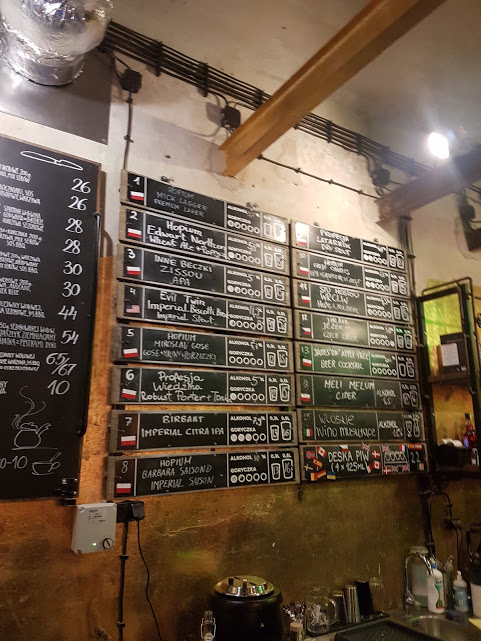
    The service was polite and I liked the clarity of the menu board, which was kept nice and simple with clear pricing. I don’t like menu boards which are so small it requires a camera to zoom in on.

    One of the walls has an historic image of Opole on it, which I think is from the seventeenth century.

    The coffee was excellent, at the right temperature and with a slightly bitter taste which gave it a depth of flavour and a decent aftertaste. Although I think I’ve started to overthink coffee now, my faffing about with craft beer tastes is bad enough without my now starting on coffee.

    It poured with rain whilst I was in the cafe, so I just stayed for a little longer than I probably needed to. A few more people came in, everyone seemed content and there was a pleasant farewell from the staff member as I left. All a little understated, which is just as I like it.

  • Opole – Muzeum Wsi Opolskiej (this went a bit wrong)

    I had a great plan for today, I was going to walk to Muzeum Wsi Opolskiej, which is an open air museum. These are some of my favourite museums, I loved Den Gamle By in Aarhus and also Weald & Downland in West Sussex. The photo above shows where I wanted to go, it’s about a four mile walk from the hotel (the museum is the red circle, the hotel is the blue circle).

    So, off I go. Most people would have got the bus or a taxi, but I’m far too tight for that. And I like walking, with four miles not being far really.

    Then I find a problem. I get really near to the museum and the roundabout was shut to pedestrians. I think the construction engineer was telling me in Polish that it re-opened later, but other people were turning around, so I didn’t progress that plan. I have on good authority that anyone senior in civil engineering sits inside drinking tea and I didn’t want to disturb them.

    I didn’t worry too much about this obstacle as I had already come up with another plan. It was to walk up to the nearly parallel road, going by the left of Sephora Karolinka and then onto the road to the north of the museum, before walking back around.

    I was very pleased with myself about this little plan, even though that was an extra twenty miles of walking each way. Google seemed confident of this route, although it hadn’t been entirely accurate throughout the morning if I’m being honest, so off I merrily plodded. The road I wanted was a little country lane, I checked it on Google Streetview. It looked quite quaint, so I thought that some countryside walking would be nice.

    And then I get to this little quaint country road. It has been replaced by a wider tarmac road, which goes underneath some major new road, which Google didn’t tell me about. And this tarmac road was shut to cars, pedestrians and bikes.

    So, I wasn’t best pleased about this arrangement. I was half tempted to get a taxi for what would have been a two-minute ride, but I don’t like getting taxis as they’re a faff. What I did have was an eight mile round-trip around the Polish countryside, nearly all of which was very lovely.

    However, perhaps it was just meant to be. Just I got back into the centre of Opole, it poured with rain, so I would have got soaked walking around the open air museum and then walking back. Fate is sometimes a marvellous thing. I must say though, the museum reviews are excellent, but it seems they’re struggling with visitor numbers. I can’t imagine many people walk to the museum, but things like this can’t help their numbers…..

  • Opole – Hamburg

    Back to my usual tradition of visiting the highest rated burger restaurant in any city that I go to, this is the interestingly named Hamburg in Opole. It’s a relatively small restaurant, with around ten seats, but it seems popular and there were plenty of takeaway orders completed for customers when I was there.

    The interior had modern decoration and was clean and organised. The service was efficient, although my Polish seemed unintelligible to the staff member (he’s not alone if I’m being honest, indeed he’s in very good company) so we dispensed with that since he spoke English. A very informal atmosphere, it felt welcoming and all rather on-trend.

    The chicken burger, which was larger than the photo suggests, French fries and a drink, which came to just under £5. There’s a choice of buns and I think the default one is sweet, which I went for.

    I liked the burger, which was three pieces of coated chicken, as the meat was tender and had a flavour to it. I wasn’t entirely sure that the coating had that much flavour to it though, it could have perhaps done with something else to give it an extra taste. I was going to use the word “zing”, but I think I’ve ort KFC on the brain there….

    But it was all entirely acceptable, the onion added texture, the tomatoes were flavoursome and the BBQ oozed out nicely. The chips were quite salty, but I liked that, so this was no negative for me, with the chips having a nice firm exterior and a fluffy interior.

    All told, this was entirely fine and I can see why the restaurant is popular, it’s friendly, comfortable and the food is decent. Although, if I come here again, I think I’d try the beefburger instead.