Category: Poland

  • Warsaw – National Museum in Warsaw (Bed from Saint John of God Hospital)

    Warsaw – National Museum in Warsaw (Bed from Saint John of God Hospital)

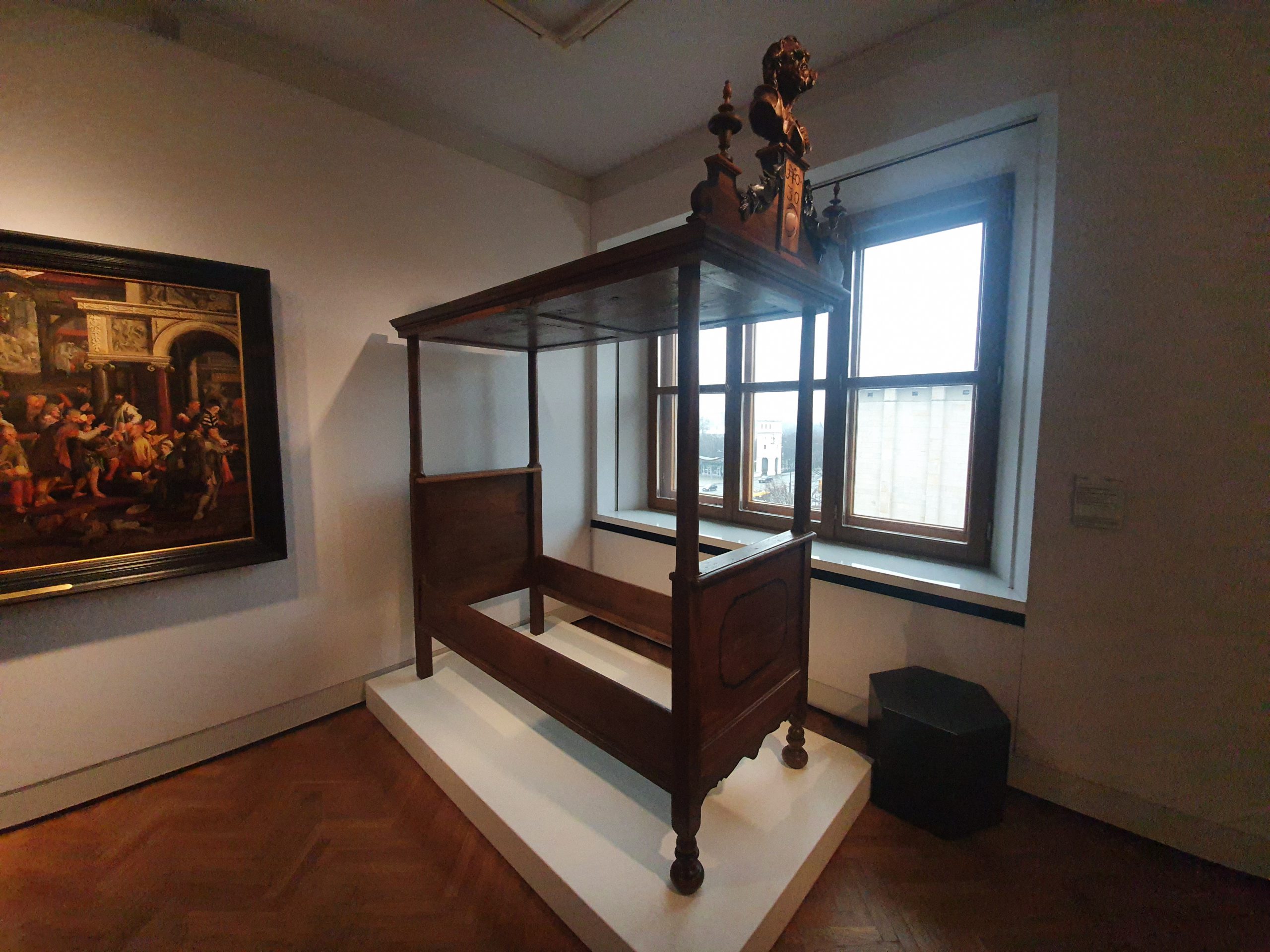
    Fortunately, this isn’t the start of one of my little hotel reviews (I would be annoyed if that was the bed), but from when Richard and I meandered along to the National Museum in Warsaw a few weeks ago. I admit that a photo of a bed might not appear to be riveting blog content, but this oak and birch construction has some charm to it I think. It’s from the Saint John of God Hospital in Warsaw and it dates to between 1757 and 1760. It was donated to the museum in 1931 by the hospital itself, when I assume that it ceased to be needed.

    How on earth this bed survived is a mystery to me, given that nearly everything else in Warsaw was destroyed during the Second World War. And there were likely many more items in the collection that the museum would have focused on saving rather than traipsing a bed around the place during the traumatic war years. I’m going with the answer, as I feel I need a supposition here, that they moved it to the cellars of the museum where it avoided damage and didn’t attract the interest of any Nazi plunderers.

    Back to the hospital itself though, which was first built in 1728 next to the church of Saint John on Bonifraterska Street (which is still named after the Brothers Hospitallers of St. John of God) in Warsaw. It had eight beds, but it was clear that the church could help more patients, so they constructed a new building in 1760 which would support 34 patients. And that’s why they know when this bed was made, as it was made specifically for the new hospital building, all funded by the wealthy August Aleksander Czartoryski.

    The church today, courtesy of Google Street View.

    Like most places in Warsaw, the hospital and church buildings were badly damaged during the Second World War, not least because they were used by the Home Army in the Warsaw Uprising of 1944 when they were fighting back against the German occupiers. It was decided that the hospital wouldn’t be reconstructed following the end of the conflict, although the church was rebuilt.

    And I think there’s some magic here, that a bed constructed for patients in 1760 has managed to survive and is now tucked away in a corner of the country’s national museum. Although, and not wanting to be negative about the arrangements, it does look like quite a small bed which might not have entirely suited any tall patients. It is though perhaps one of the very few objects that remain of a hospital that helped so many people given that even the building itself has now gone.

  • Warsaw – Royal Castle (Canaletto Hall)

    Warsaw – Royal Castle (Canaletto Hall)

    I’ve just realised that another thing I never got around to doing was writing about the Royal Castle in Warsaw (on the left in the above photo), which I’ve visited a few times before on free admission days. Very thrifty…. I visited with Richard when we were in the city a few weeks ago and we had a meander around, although the downside of visiting on free admission days is that it’s very busy. But more on the building in another post.

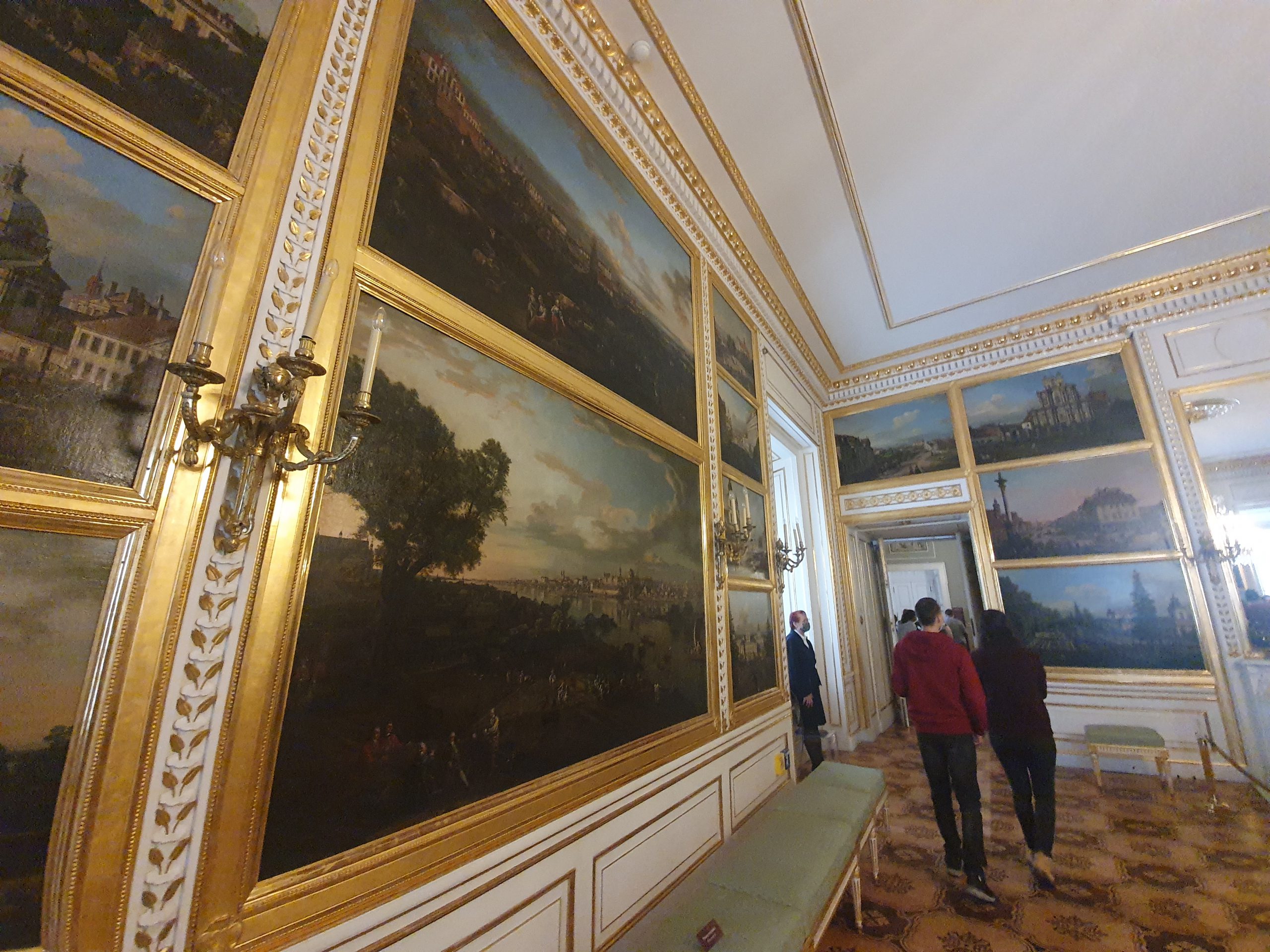
    This post is mostly just photos from one particular room that I’ve managed to misunderstand the importance of before. The paintings are all by Bernardo Bellotto (1721-1780) who was the nephew of Canaletto and he also used his name which confuses things a little. These artworks have had a busy time of it since they were painted between the late 1760s and the early 1780s. They were placed in the castle following their commission by King Stanislaus Augustus, a collection of 22 different street scenes of Warsaw and a canvas showing the King’s election.

    The paintings weren’t here for that long, as Napoleon pinched four of them in 1807, made worse by Tsar Nicholas I stealing the whole lot in 1832. They were recovered and put back in the Royal Castle, but then the Germans pinched the whole collection again in 1939. The Nazis then destroyed the entire castle building in 1945, before it was carefully reconstructed between 1971 and 1984. And then the collection of paintings was put back once again in this recreated room in 1984, an amazing tale of survival. And the paintings have also played a crucial part in the rebuilding of Warsaw, as they were used by the post-war architects to restore the Old Town area back to as it looked in the late eighteenth century.

  • Warsaw – Witold Pilecki

    Warsaw – Witold Pilecki

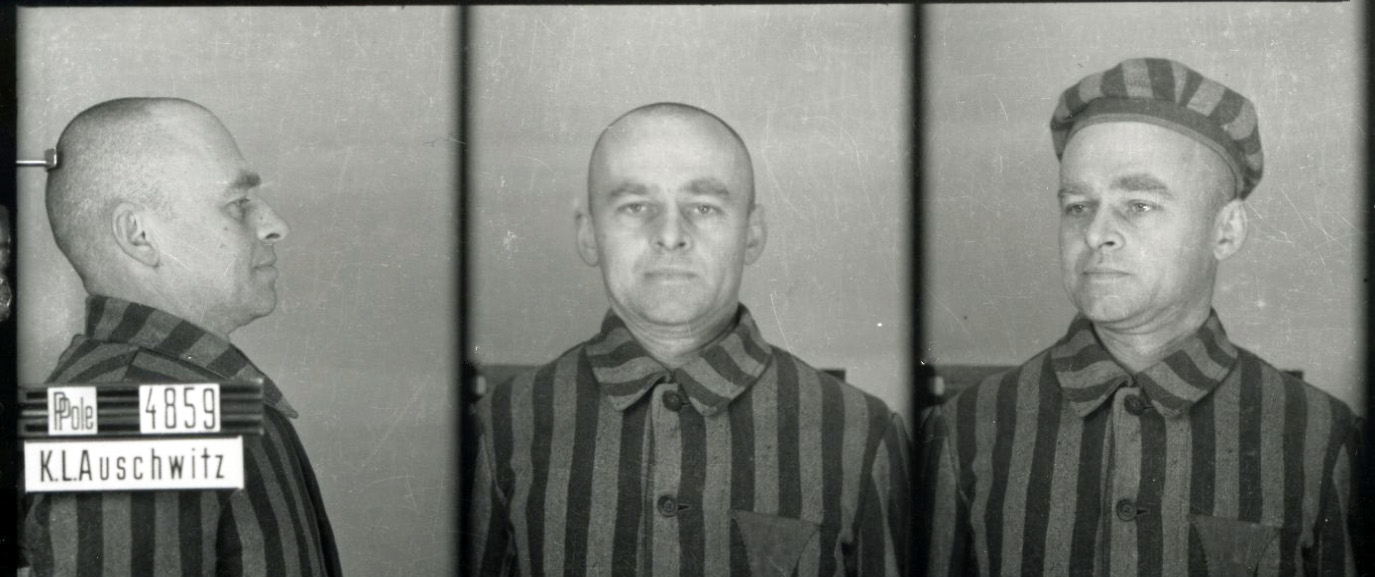
    I wrote about the Polish hero Witold Pilecki a couple of weeks ago, as he was part of the story of the Municipal Tourist House in Warsaw.

    I was pleased and interested to see that the BBC have published this week an episode about his bravery at volunteering to go to Auschwitz and then managing to escape from it.

  • Warsaw – Museum of Warsaw (Early Map of Warsaw)

    Warsaw – Museum of Warsaw (Early Map of Warsaw)

    I’ve decided that I take too many photos, as is apparent when I’m working through my galleries after a visit anywhere, including Poland where I returned back from two weeks ago. But, I doubt I’ll change that little flaw in my character, so I’ll have to just manage the large amount of data I create…..

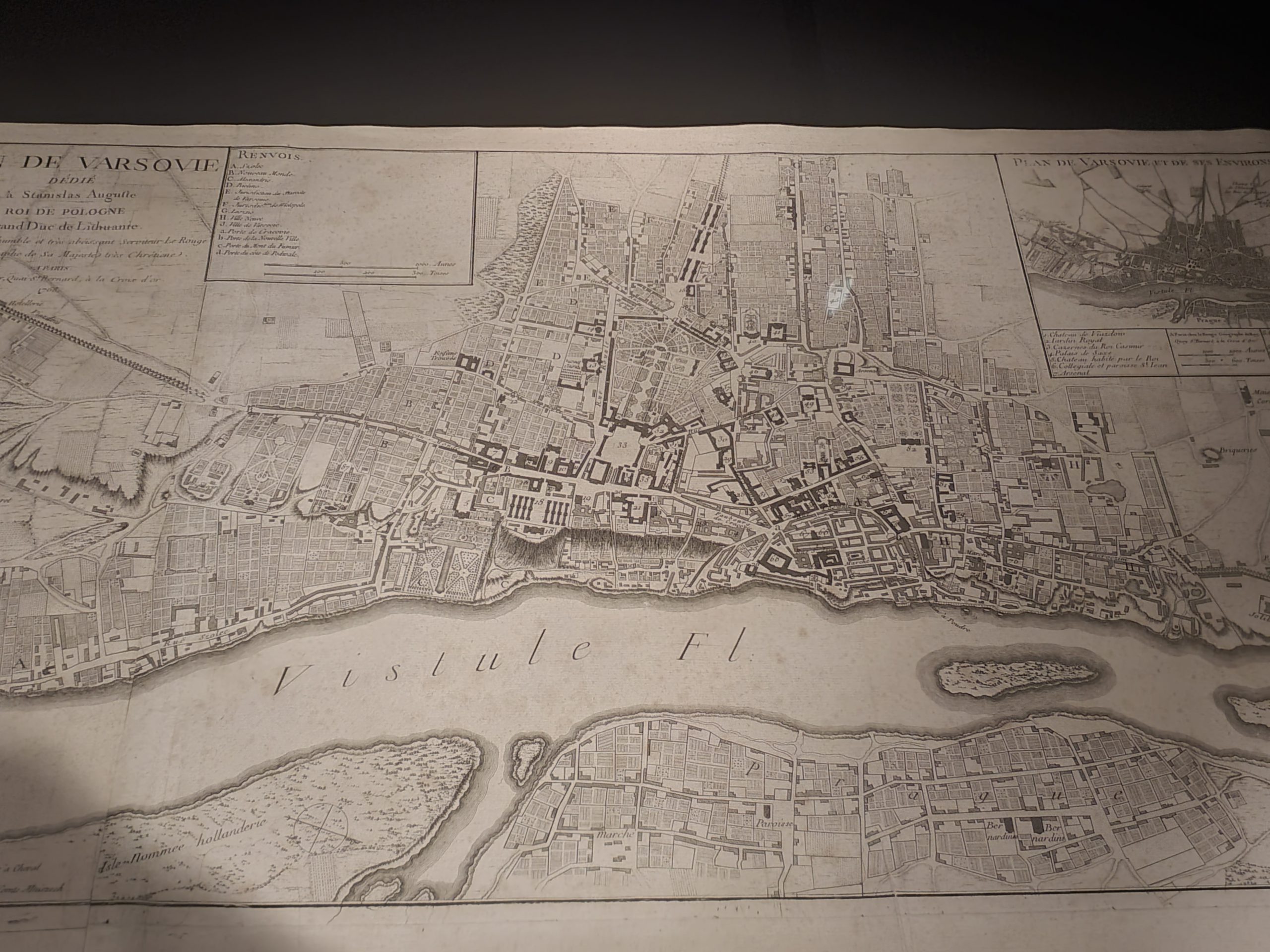
    Anyway, this is one of the many maps which is available in the Maps Room of the Museum of Warsaw. It’s possible to make the map larger by clicking on the image above, which makes it very evident just how much Warsaw has changed. Although it’s possible to make out the Old Town area and a few of the larger streets, so much of the city has changed that it is quite a challenge to tie everything in (or at least, it was for me). I spent quite a while just gazing at this map, fascinated by just how much Warsaw has evolved over the last two centuries, albeit much of it forced because other countries kept damaging it.

  • Częstochowa – Random Photos

    Częstochowa – Random Photos

    This is a slightly random post, mostly just photos with very little supporting text. It’s mainly some of my remaining photos from my trip to Częstochowa in Poland a few weeks ago that I didn’t otherwise do much with.

    I’m not sure if there was a specific reason for this being located at ul. Ogrodowa by the bridge over the railway line.

    Street art.

    The Solidarity imagery at a square, Solidarności, named after the important movement which drove Poland towards independence. In the early 1980s it was illegal in Poland to even wear a badge with this on as the authorities desperately tried to repress the country and they placed it under martial law.

    A memorial to honour textile workers.

    More street art and I thought that this made the otherwise bland Soviet-style building look somewhat better.

    There are no shortage of statues of Józef Piłsudski in Poland, and this is the local one.

    It’s certainly revered judging by the floral arrangement in front of it.

    A walk along the river, this stretched for some distance although was rather muddier in some areas.

    The city’s railway station, which doesn’t in my view look much like a railway station. I think there was a hope it would become a slightly decadent shopping centre as well, but it’s all a bit barren at the moment.

    And two photos of the square in front of the station, where the authorities have seemingly spent some money to improve things somewhat. There are some murals on the neighbouring buildings and the square has been opened up and traffic mostly kept out.

    I wrote about the city elsewhere, it’s a welcoming place which is very much dominated by the presence of Jasna Góra. There are many central areas which are derelict and no shortage of empty shops and offices. It seems that Częstochowa needs more residents so that these units can all be redeveloped and turned into housing which can in turn create economic growth. Investment in the city’s infra-structure is clearly being made, not least with the tram system, but they’re going to need a lot more money to reverse the industrial decline which seems to have blighted at least part of this city. At least though they remain a major pilgrimage site, which must help financially.

  • Warsaw – Warsaw Ghetto Fighters Memorial

    Warsaw – Warsaw Ghetto Fighters Memorial

    Situated on ul. Prosta is this impactful memorial to the Warsaw Ghetto fights during the uprising in 1943. It marks where a sewer entrance was located that allowed around fifty fighters to escape the ghetto on 10 May 1943, avoiding detection by the German military. Although the Jewish ghetto had been hastily walled up above ground, the sewer network still connected the entire city.

    Many of those who escaped through the sewer network also took part in the Warsaw Uprising that took place in 1944, including a local Jewish man Marek Edelman. He was one of the leaders of the Ghetto fighting and and he died in Warsaw in 2009, out-lived only amongst the survivors by Szymon “Kazik” Ratajzer who died in Jerusalem in 2018. Edelman became a doctor after the Second World War and was hated by the Soviets, being interned in 1981 when Poland’s economy was collapsing and martial law was introduced. He is now one of the heroes of the Polish nation and was awarded the Order of the White Eagle, the highest award that the country can bestow on an individual.

    Only nine of those who escaped the sewer network survived the Second World War, Roman Bornstein, Tuwia Borzykowski, Marek Edelman, Chaim Frymer, Masza Glajtman-Putermilch, Pnina Grynszpan-Frymer, Chana Kryształ-Frykszdorf, Szymon “Kazik” Ratajzer and Cywia Lubetkin.

  • Warsaw – Museum of Warsaw (Infant’s Identification)

    Warsaw – Museum of Warsaw (Infant’s Identification)

    And another of my posts about things that interested me in the rather lovely Museum of Warsaw.

    This is another remarkable survival, it’s a hand-written note on linen which was placed in a pouch that was put around the neck of a child during the Siege of Warsaw in September 1939. Warsaw was initially able to defend itself during the invasion of Poland by the Germans, but despite the bravery of the Polish military, they were simply out-numbered. Over 18,000 people died in the city between 8 and 28 September 1939 and this tag was so that the young child could be identified if he was separated from his mother.

    The young child was Witold Zenon Gadomski, the son of Tadeusz and Rozalia Czerna of ul. Grochowska 365, who was born on 21 May 1939. He survived the conflict and kept his identification until it was given to the museum in the late 1970s. I can only begin to imagine what his mother must have been thinking when she wrote that during the aerial bombardments of September 1939, no doubt complete terror for the future. Whether or not his parents survived the war, I don’t know….

  • Warsaw – Prudential Building

    Warsaw – Prudential Building

    I haven’t much thought about this building before when walking about Warsaw, but it’s the Prudential building which was the tallest structure in Poland when it was completed in 1933 after two years of work. At the time of completion it was the second tallest building in Europe, a huge statement of faith in the future of Warsaw, which needed 2 million bricks, 2,000 tonnes of concrete and 1,500 tonnes of steel to construct.

    And here it is on 28 August 1944 when the Germans used huge amounts of explosives to destroy it as part of their destruction of Warsaw. Their engineers couldn’t get the building to collapse, although they did huge damage and it started to lean a bit. This must have considerably annoyed them, as it was an iconic structure that remained standing. And, it survived the Second World War and was repaired and hence why it is still standing. It has spent most of its post-war life as a hotel and is currently the Hotel Warszawa, a decadent accommodation option in a building which is a great survivor.

  • Warsaw – Coctail Bar Max & Dom Whisky

    Warsaw – Coctail Bar Max & Dom Whisky

    When we walked by this bar in Warsaw a couple of weeks ago, I specifically said to Richard, “do not look to your left”. He recklessly ignored my advice and then looked hugely excited at what he saw, so I felt it was only fair to let him go in even though I was heading to a decadent craft beer bar. I am a very good friend…..

    Just some photos of the whole bar arrangement, which is set across two floors with the whisky bar on the top. There’s a variety of seating around the place, including lower tables and bar seats, with the atmosphere being comfortable and relaxing. The venue is open some ridiculous hours, from 10.00 until 05.00 every day of the week, which hardly makes it worth closing. Incidentally, after going in, I remembered that I’d been in here a few years ago with Hike Norfolk, likely one of the very limited number of venues that wasn’t my choice.

    It’s not exactly me is it? Here am I with my decadent and very classy imperial stouts and I’m presented with this shrubbery. OK, it tasted fine, but it’s not the sort of drink I can put on Untappd.

    The drink was individually created by the barman, who was engaging, personable and knowledgeable about the cocktail options, so there was quite a bit of theatre to the whole arrangement. I must admit that whilst Richard was enjoying this piece of theatre, I was pre-annoyed at how much it would cost, although fortunately it was actually not unreasonable at something like £6. Although that’s a high price for Warsaw, I feared that it might be much more.

    Richard then asked a question about whisky and I have to say that the barman was as knowledgeable about these as he was about the cocktails. I consider whisky to be an excellent drink which should be poured out of the barrels which is then replaced by beer so I can get a whisky flavour to my decadent beer. Whisky isn’t a drink I’ve ever grown to like, but Richard said that the selection of whisky options was excellent and he liked the options presented to him.

    Richard suggested that this was one of his favourite bars, not just because of the hundreds of whisky options, but also because of the engagement of the staff member. Service was sometimes a little slow, but I think that was more because the staff member thought that we were trying to have a longer and more relaxed visit. I was obviously focused on going to a bar which served glorious craft beers, but even I had to concede that this was a well-run venue which had a wide appeal. Definitely recommended for those who like whisky, spirits or cocktails.

  • Warsaw – Lemon Bar

    Warsaw – Lemon Bar

    This will be a relatively short post as I only popped into Lemon as it was a convenient stop on the way back to the hotel, but there is little else particularly exciting for me to say about it. The venue was clean, the staff were friendly and the environment was relaxed. The beer choices were though limited, hence the Żywiec, and there were very few other customers. It’s particularly handy for drinkers who want a long Friday or Saturday night, as the bar doesn’t close until 7am in the morning. The pricing was reasonable and it’s a handy spot for those wanting a quick drink, but I’m not sure that I’d go again given that the beer selection wasn’t really quite to my taste.