Category: Gdansk

  • Gdansk – Pułapka

    Gdansk – Pułapka

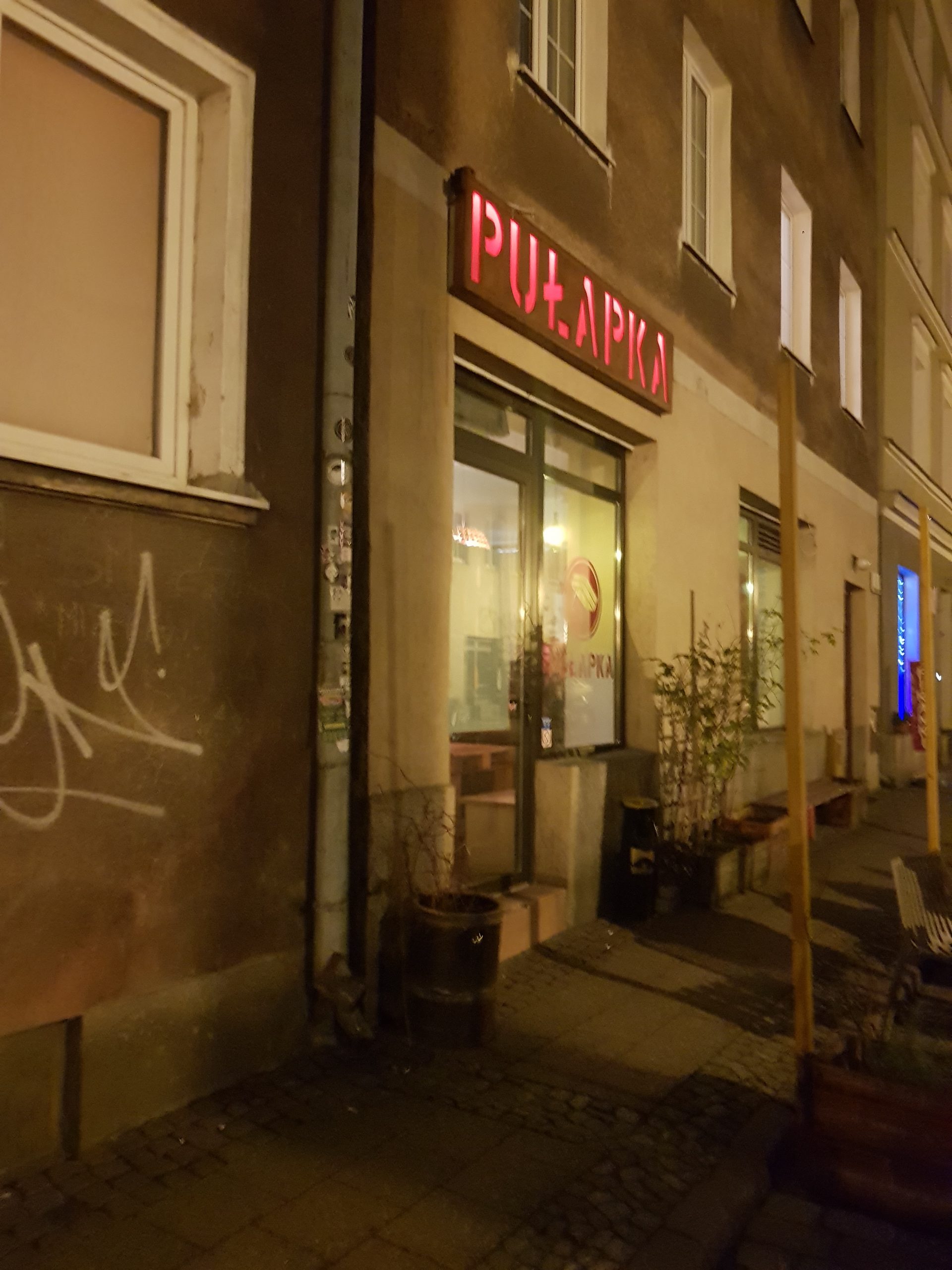
    I’m pleased to see that the number of craft beer bars in Gdansk is continuing to grow, a trend that will no doubt continue as it has in so many other cities. This is a bar that I haven’t been to before on previous visits, although it has been trading for a number of years.

    Not the clearest of photos unfortunately, but there was a decent range of different beer types and they were all clearly displayed.

    This is the Willy Tonka 2020 milk stout from Browar Monsters, which is one of the best of this type of beer that I’ve had. The flavours aren’t immediately obvious, but there are pleasant aftertastes to the beer which I assume are from the tonka beans which its named after. There’s also a taste of coffee and it was all rather moreish. Incidentally, I was impressed that around 30 seconds after I added this beer to my Untappd news feed that the brewery acknowledged it.

    The bar’s interior, all very on-trend, but also clean and comfortable. The service was friendly, engaging and polite throughout, the bar had one of those relaxed vibes which can tempt customers to stay longer. Although that seems deliberate, the word Pułapka means trap, so the patrons can be kept in for longer. The staff member behind the bar was attentive to all customers and it seemed to be primarily locals, with the occasional tourist coming in from time to time.

    It’s not far to walk here from the city centre, but it’s sufficiently tucked away to give it that quiet and detached feel and it’s well worth a little visit.
  • Flixbus – Warsaw to Gdansk

    Flixbus – Warsaw to Gdansk

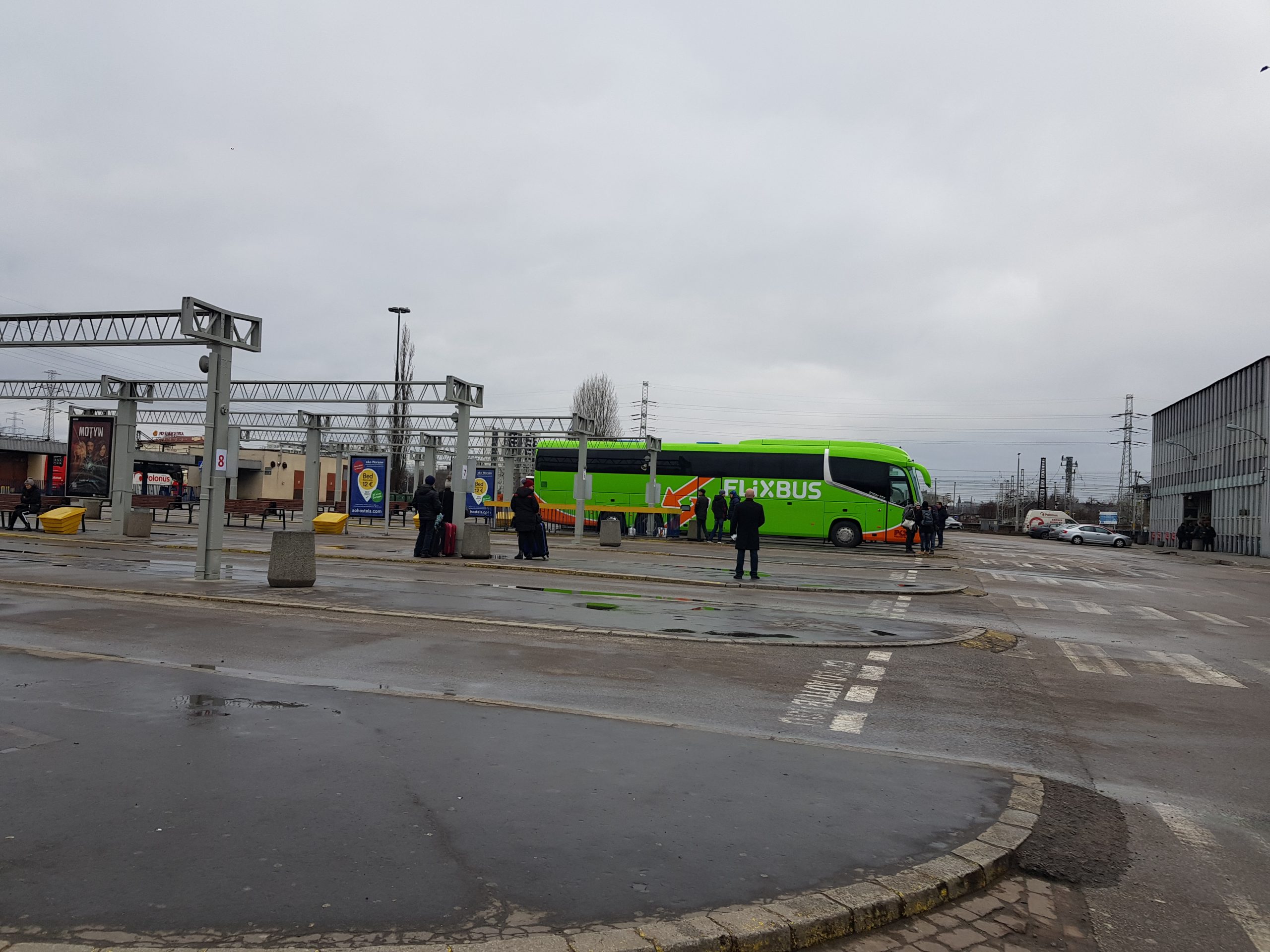
    As a minor confession, not that it much matters, but the coach in the photo above isn’t the one I got from Warsaw to Gdansk, it’s the one that was at the platform before. But, I didn’t get a photo in Warsaw of the actual bus, so it’ll have to do. The coach departed from Warsaw West Coach Station and it turned up on time, which was fortuitous since it was getting cold.

    For anyone who ploughs through the rubbish that I write, I don’t really like Flixbus as they’re generally hopeless in some shape or form. However, things seem to have been improving, whether that’s because they are as a company, or because I’ve just become a little more fortunate.

    Anyway, the bus turns up on time and it’s modern and clean. The coach driver didn’t burden himself with being polite or helpful, but perhaps he was concentrating on his drive ahead. It’s a relatively long journey, we set off at 13:30 and arrived in on schedule at 18:40 in Gdansk. The coach started at Warsaw West, but it went on a little further to Gdynia, with stops en route at Warsaw Młociny and Elblag (somewhere I keep meaning to go at some point).

    The coach, quite amazingly, had working wi-fi and power, which isn’t usually the case. It also doesn’t have those horrible leather seats, but instead fabric seats which were clean and looked modern. I’m not an expert on coaches, but it seemed relatively new and well looked-after. The temperature on board was just right and there was a ten-minute break en route, with everything running according to the timetable. The driver made announcements in Polish, with a pre-recorded safety and welcome audio recording which was in English.

    This isn’t a great photo, but it’s of the actual coach after we arrived into Gdansk coach station, which is centrally located and just a few minutes walk away from my hotel.

    For this journey, I don’t really have any complaints as it cost £5 and it got me safely and on time from Warsaw to Gdansk. It was an easy journey and if the driver had been a little less grumpy to customers, then this would have been my first perfect trip with Flixbus. What a time to be alive….

  • Gdansk – National Independence Day

    Gdansk – National Independence Day

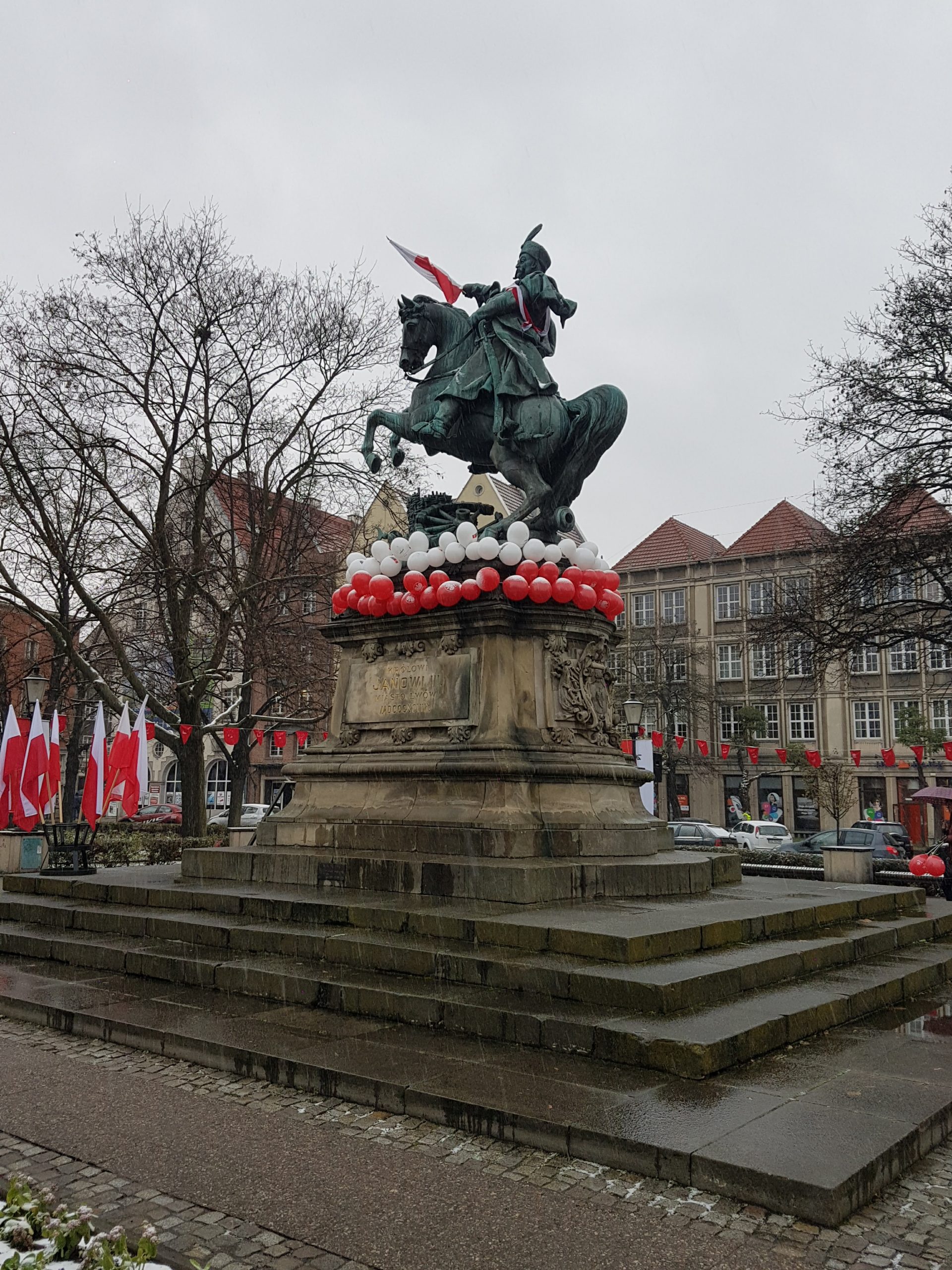
    These photos are from 11 November 2016, my first visit to Gdansk. I hadn’t at the time realised that 11 November is their national independence day, marking the commencement of the Second Polish Republic in 1918. The First Polish Republic, obviously a term used in retrospect, lasted from 1569 until 1795, during the Polish-Lithuanian Commonwealth.

    I wasn’t entirely sure at first what exactly was going on when I was talking through Gdansk, but there was clearly much national pride and there were no shortage of Polish flags around. All very lovely….

  • Gdansk – St. Mary’s Church (Soviet Troops and the Floor)

    Gdansk – St. Mary’s Church (Soviet Troops and the Floor)

    These are tombstones on the floor in St. Mary’s church in Gdansk, lying damaged and smashed. There’s a story that Soviet troops smashed into these tombs during their invasion of the city during the Second World War in an attempt to loot the bodies underneath. I’m unsure whether these stories are true as I can’t find any contemporary mention of that happening, but it’s certainly true that the Soviets did loot the city of Gdansk (or Danzig as it was). It’s also possible that the stones were damaged when parts of the roof collapsed on top of them during the Second World War, but whatever the story, at least some portions of them remain.

  • Gdansk – St. Mary’s Church (Astronomical Clock)

    Gdansk – St. Mary’s Church (Astronomical Clock)

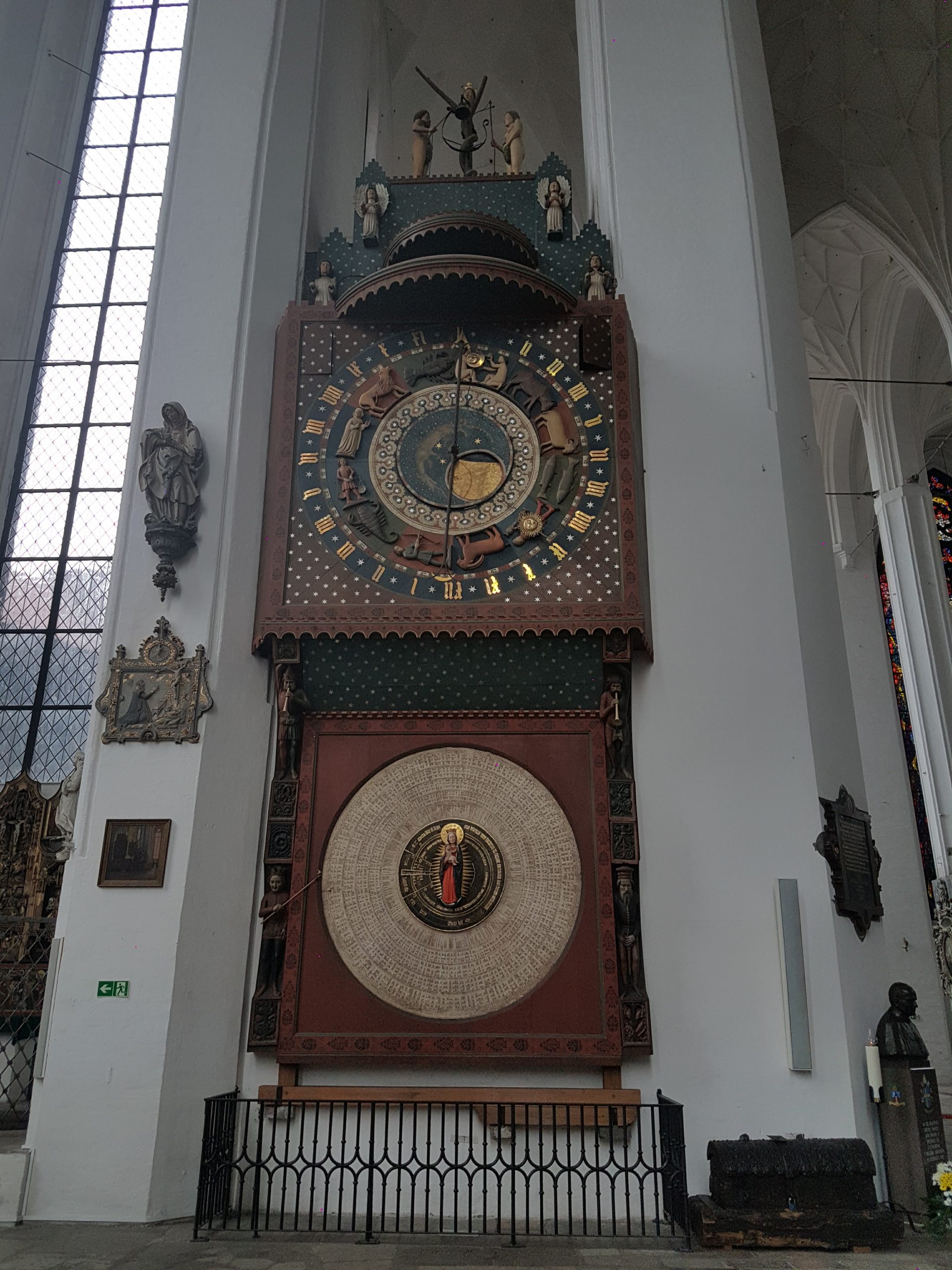
    This impressive clock, located within St. Mary’s Church, was the largest in the world when it was put together between 1464 and 1470. It’s 14 metres in height and was designed by Hans Düringer, a clockmaker who had workshops in Nuremberg. Despite the huge expense lavished on it, the clock had stopped working by 1554, likely because no-one knew how to repair it.

    There is a myth, which is presented as fact in some places, that Düringer was blinded after making the clock as the authorities didn’t want him to make such a beautiful item for any other church. I can’t quite imagine that there’s any truth in this, particularly as he managed to make more clocks after this one was installed.

    The clock was damaged during the Second World War, with efforts made in the 1980s to reconstruct it. It’s a complex item as it doesn’t just tell the time, but it also tracks the position of the sun and the moon, as well as having a saints calendar and zodiac face.

  • Gdansk – St. Mary’s Church

    Gdansk – St. Mary’s Church

    In preparation for my next visit to Gdansk in a couple of weeks, I’m trying to refresh my memory of where I’ve actually been. Unfortunately, the photographs from my visit here four years ago aren’t exactly, well, very good, but they’ll have to do for the moment…..

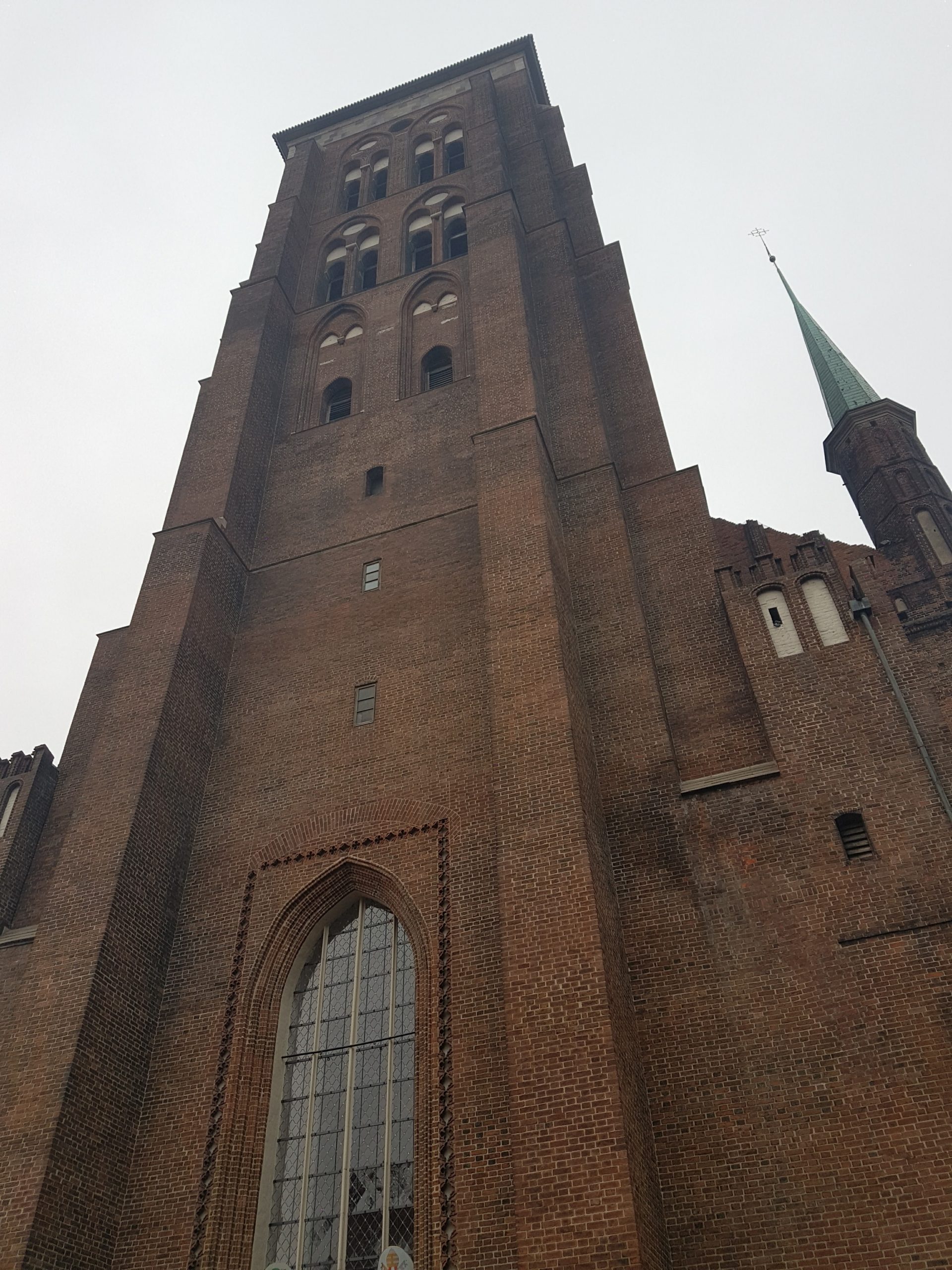
    It’s a grand church and work commenced on it during the mid-fourteenth century. Constructed as a Catholic church, it was used between 1536 and 1572 for both Protestant and Catholic services, although that situation inevitably changed over the following centuries. The building survived relatively intact until March 1945, when the Soviets attacked it, although the church was swiftly reconstructed after the end of the Second World War. There’s also a story that the Soviets smashed tombstones in a bid to loot the bodies underneath, although I’m unsure as to the veracity of that. In 1965, the church was elevated to the status of a minor basilica and it remains the largest church in the city centre of Gdansk.

    There are seven portals, or doors, to the church, which makes it exciting when trying to work out how to get in.

    The interior, which is modern due to the reconstruction necessary after the Second World War. It’s a little plain inside, but the height of the nave adds to the atmosphere and it’s possible to climb the tower. The tower climb was closed when I visited before, although having seen photos of the stairs I think I’m glad that I didn’t try and get to the top.

    The beautiful astronomical clock is also still in the church, a fifteenth century wooden clock which was the largest in the world when it was installed.

    Another highlight of the building is the Maria Coronation Altar, an enormous five metre high altar from the early sixteenth century. It’s located in the presbytery and it weights three tonnes, dominating the space in which it’s housed.

    An impressive building and it’s one of the largest brick churches in the world. The reviews are very positive on-line, other than for the:

    “The churchbells rings all day AND all night. We lived nearby and the bells woke us up several times every night.”

    How inconsiderate of the church, they should perhaps stop ringing bells which they have done for centuries…. And, this one:

    “I appreciate the church is currently undergoing a renovation but I thought the interior was bland and was a bit of a dump.”

    A bit of a dump…. A building with that much heritage, but perhaps they could install something to amuse visitors, such as strobe lighting or maybe some arcade machines if that would help some visitors. I do sometimes suspect that people forget that many old churches are primarily religious buildings used by the congregation rather than historic relics which should cater for the whims of tourists.