Category: Le Mans

  • Le Mans – Musée de Tessé (Un marché by Matheus van Helmont)

    Le Mans – Musée de Tessé (Un marché by Matheus van Helmont)

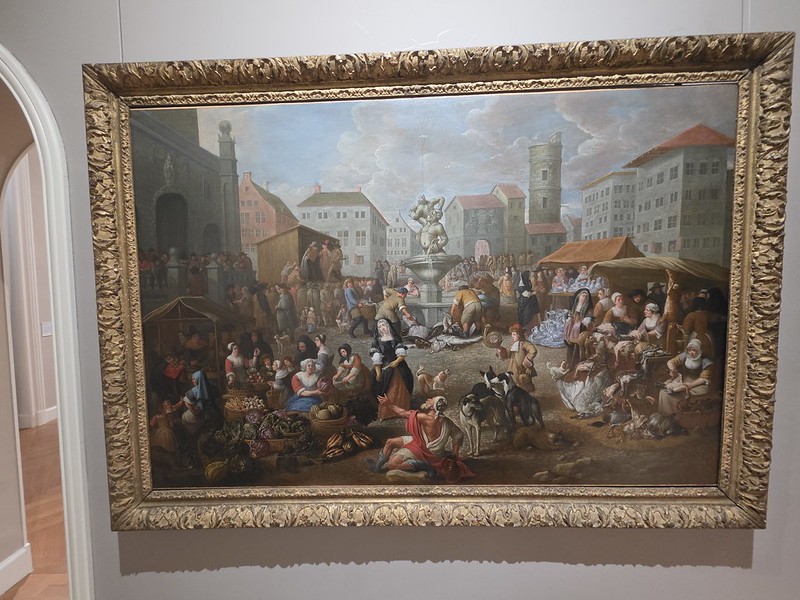
    I still have a blog posting backlog, but that’s nothing new. This painting is effectively a seventeenth-century supermarket, although one with rather more livestock wandering around and considerably less concern about refrigeration. Un marché by the Flemish painter Matheus van Helmont shows a market taking place in an imaginary square, complete with a fountain, Italian-looking buildings and enough food to make it clear that subtlety was not really the objective.

    As an aside, it’s not unusual not to know the precise birth date of an artist from this period, but there’s even uncertainty over when Van Helmont died. He was born in Antwerp in 1623, but sources variously give his death as around 1679 or simply sometime after 1679. I’m used to a little uncertainty in seventeenth-century biography, but that’s still impressively vague.

    Anyway, the produce is everywhere and these were the bad old times before Tesco Express came about. Anyone wanting a chicken apparently had to negotiate with another human being and then take responsibility for carrying it home themselves, which all feels rather sub-optimal. There are baskets of fruit and vegetables, game, poultry and various other things being bought, sold, carried and inspected. There are no aisles, no price labels and no loyalty card scheme, but the basic principle is recognisable enough, namely turn up, find what you want, haggle over it and try not to trip over a dog.

    The abundance is also slightly deceptive. Among all the food and activity, there are poorer figures in the foreground, including a beggar. That stops the scene being simply a cheerful celebration of plenty. Van Helmont is showing a busy commercial world, but not everybody within it is benefiting from that prosperity in the same way. The square itself is imaginary, with its fountain and Italian-influenced architecture, but the people, produce and differences in social status are drawn from the world Van Helmont knew. It is essentially a fictional branch of a seventeenth-century supermarket chain stocked with very real social inequality.

    I like paintings such as this because there’s no obvious point at which you’ve finished looking at them. Every little group seems to contain another argument, transaction, animal or basket of food that I hadn’t noticed before. I’m not sure I learned much about efficient seventeenth-century retail management, but I did establish that Tesco Express has significantly reduced the number of chickens wandering around near the checkout. I sometimes think I think too much about these paintings.
  • SNCF Train from Le Mans to Lyon (Long delays and dangerous dogs)

    SNCF Train from Le Mans to Lyon (Long delays and dangerous dogs)

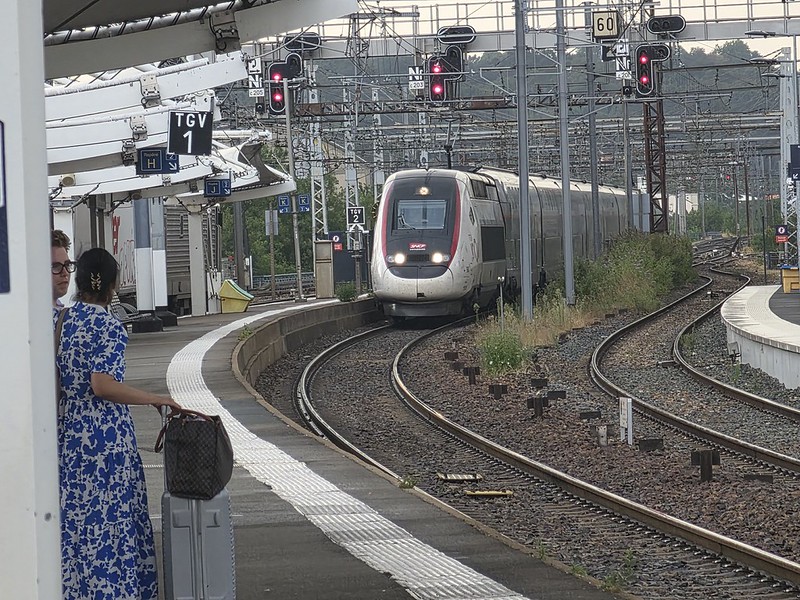
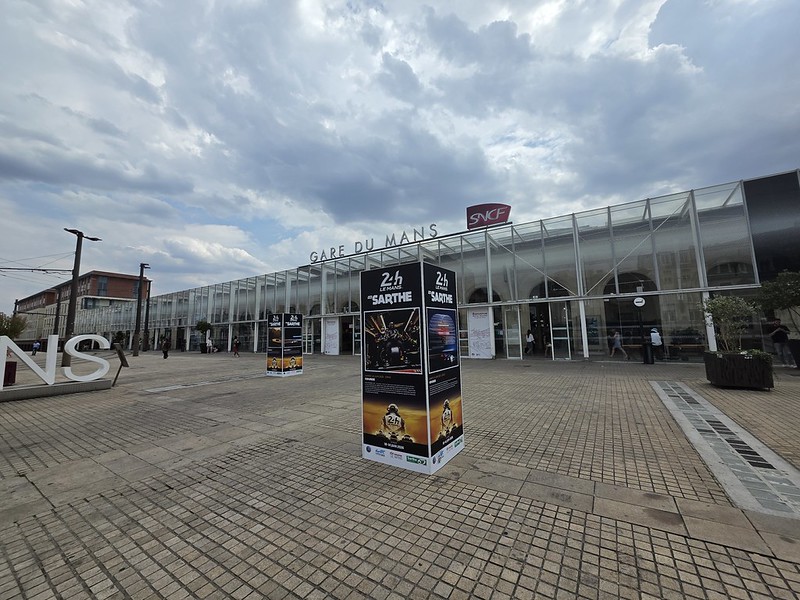
    As my riveting blog is getting behind once again, I feel the need to speed through a few posts. This is Le Mans railway station and I needed to get to Lyon for my flight the following day, and as this was France I confidently assumed the railway would provide a calm and civilised end to the trip.

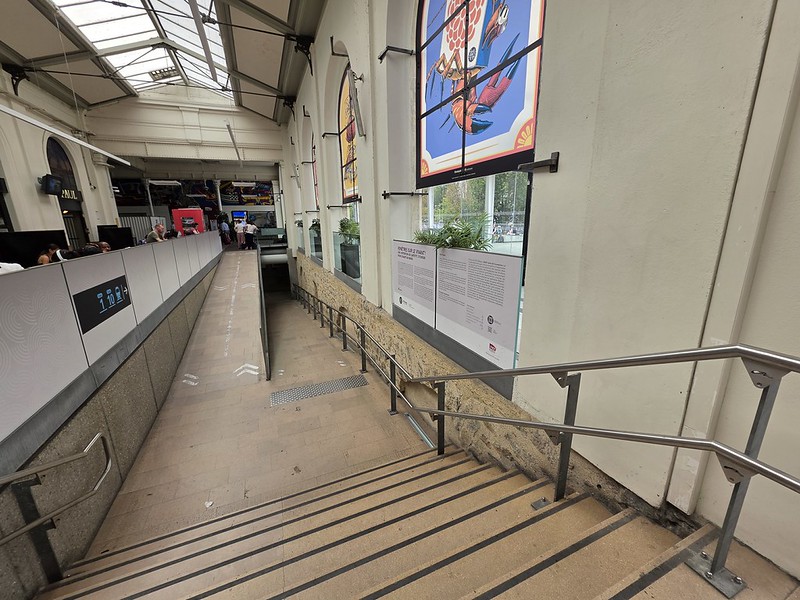
    The railway station is from the late nineteenth century, but this extension has been added to the front to give more space.

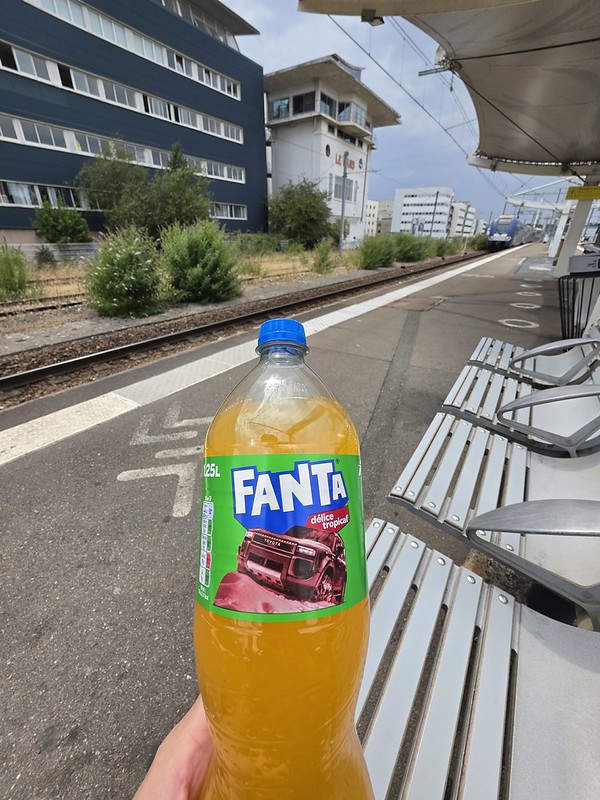
    It was too hot, which I might have mentioned, so I had my tropical Fanta to get me by.

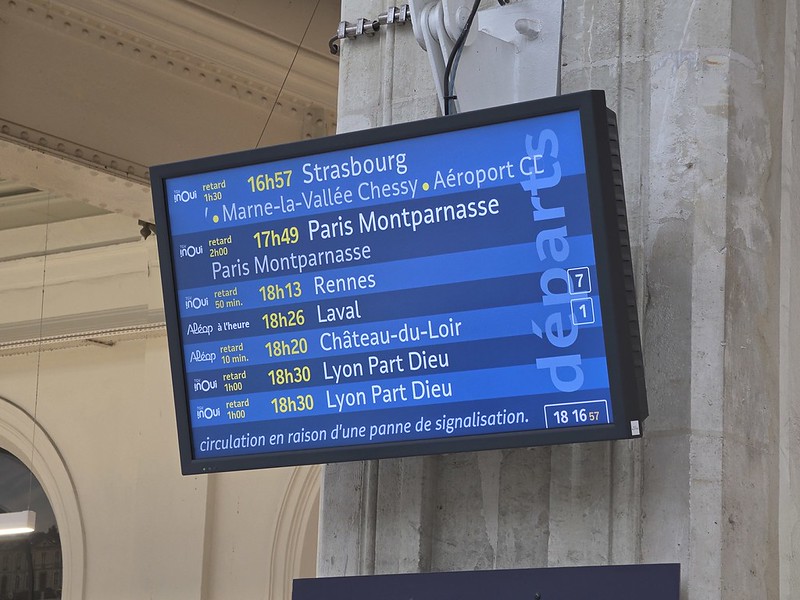
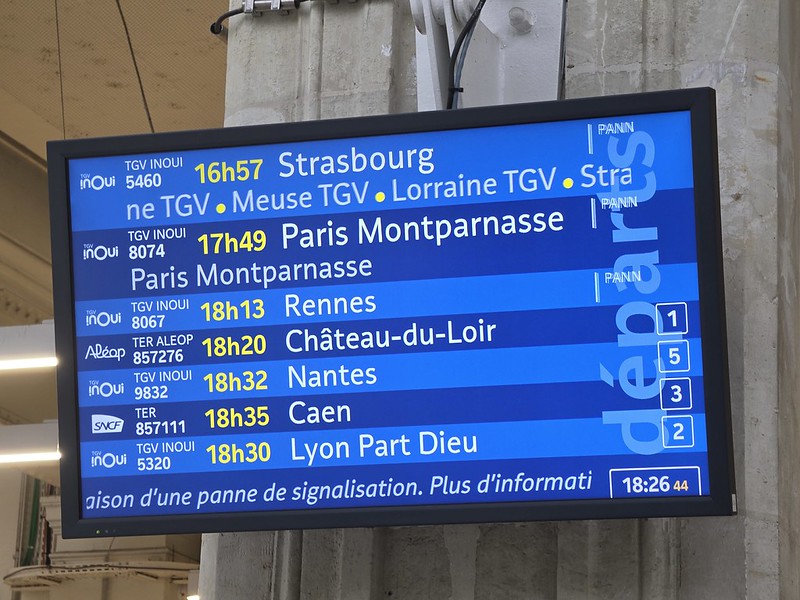
    I didn’t understand this at first, I just noticed that on the left it said that my train was delayed by an hour and it had doubled the number of trains going to Lyon. I went to find a staff member and he helpfully explained that the train was delayed by an hour and that it would be departing from Platform 2 but that I could safely leave the station and return a bit later. The stress levels of that were beyond me, so I took my increasingly warm Fanta to another platform to have a sit down.

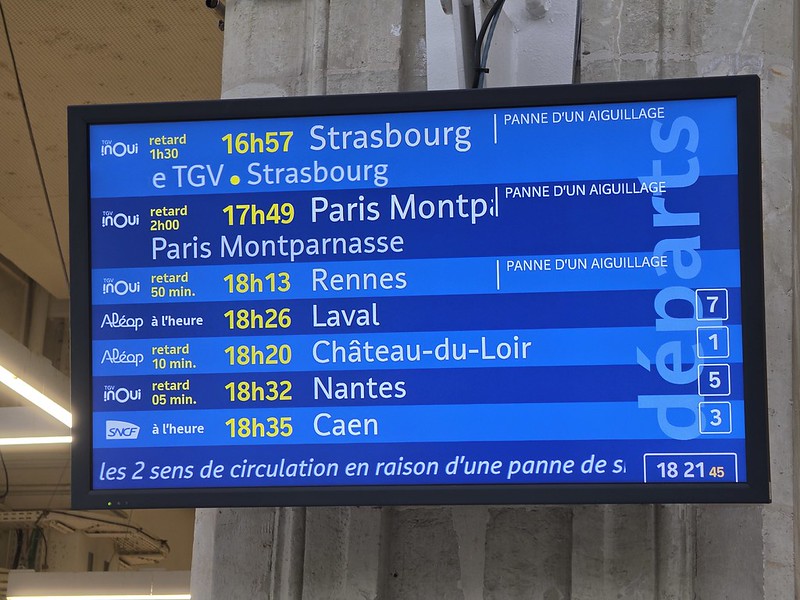
    And then for a few minutes, my train entirely disappeared from the boards. I considered this to be sub-optimal.

    Although I had been told that the train was departing from Platform 2, this was the first time that it appeared on the board. I decided that I’d better go to the platform to see what was happening.

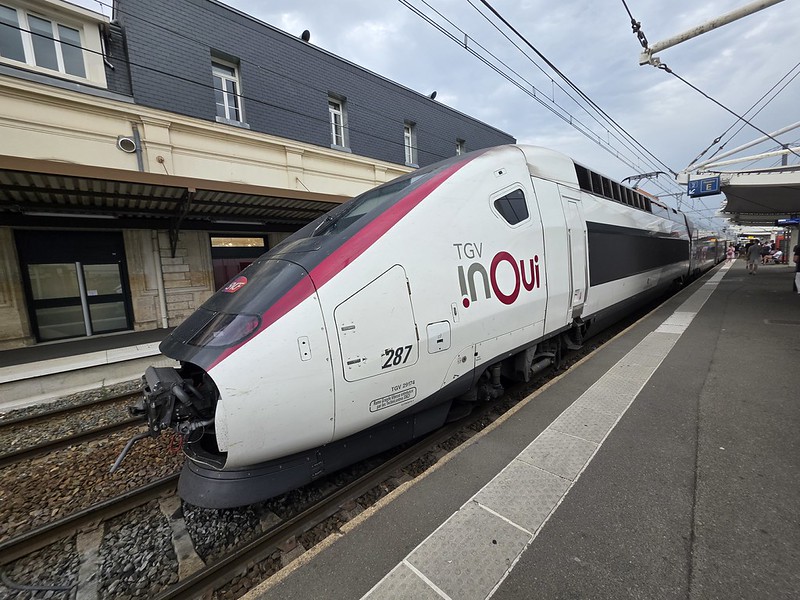
    And the train to Lyon was at Platform 2, so I was most confused.

    It was evident that something strange was happening as there were plenty of passengers who were on the train, but others were milling about. I decided that I needed to find an adult and I located the train guard. The guard explained, in perfect English and with admirable calmness, that only half my train had arrived. The other half was still somewhere in France and would be along in about ninety minutes, which was longer than the boards said, but he said it would definitely be arriving. He mentioned my seat was in the half that hadn’t arrived, so I went to sit in the heat with my Fanta to wait.

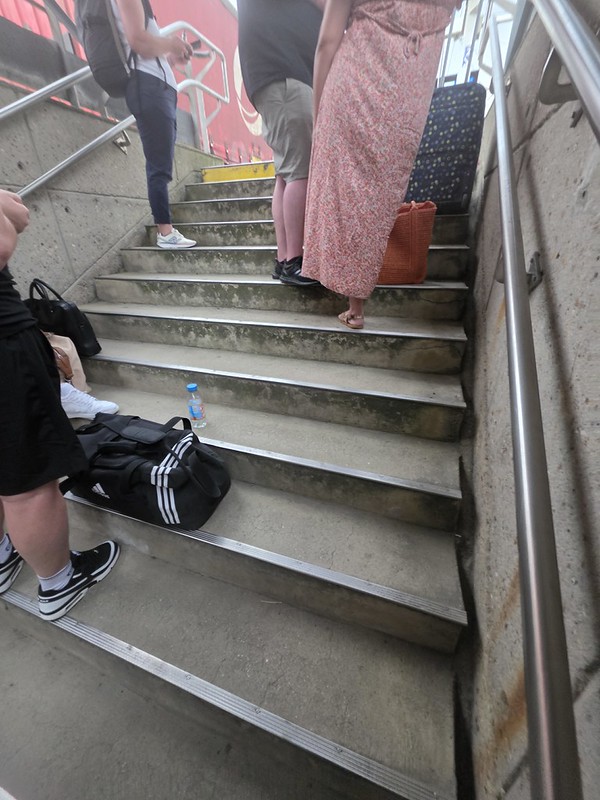
    To my great annoyance, after days of it being too hot and needing to rain, it then started to pour down with rain. So several of us decided to find a dry spot on some steps.

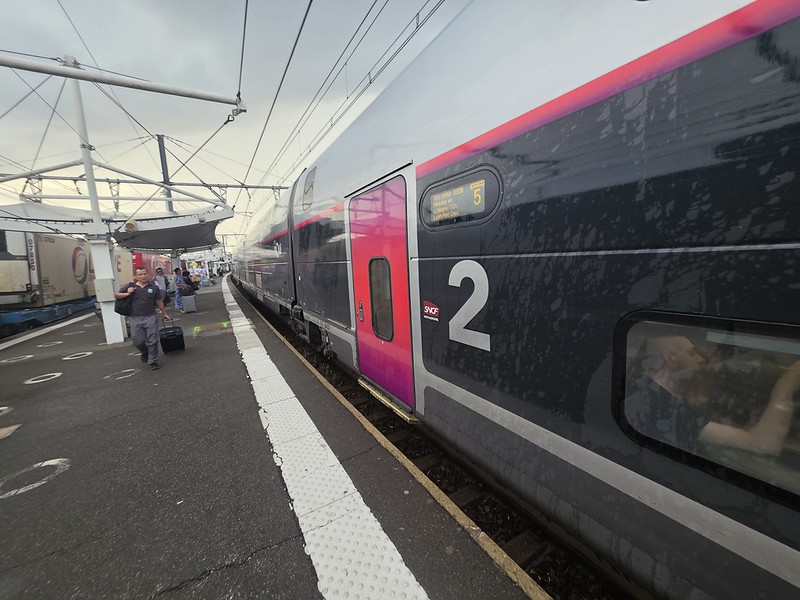
    A little over ninety minutes late, the other half of the train came sweeping into view.

    It’s fair to say that I was pleased to see this train. It meant that I would be getting to my hotel without any further issues.

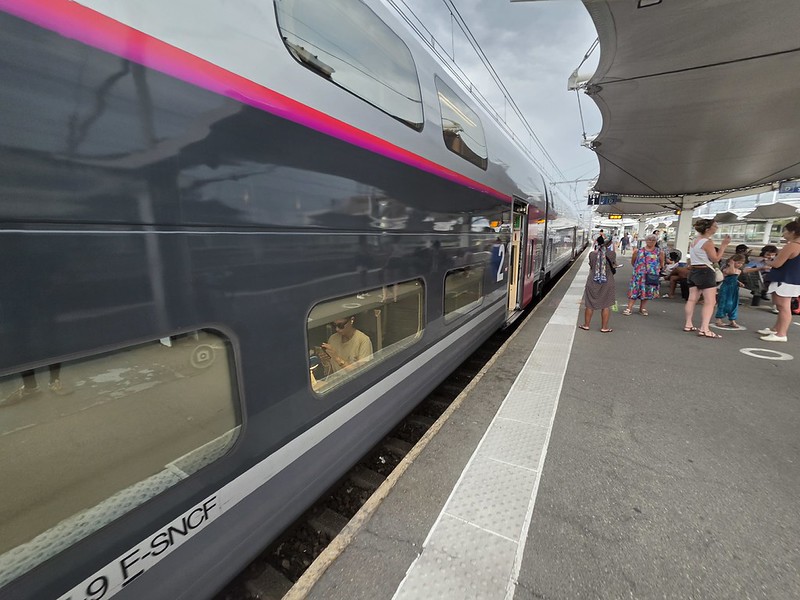
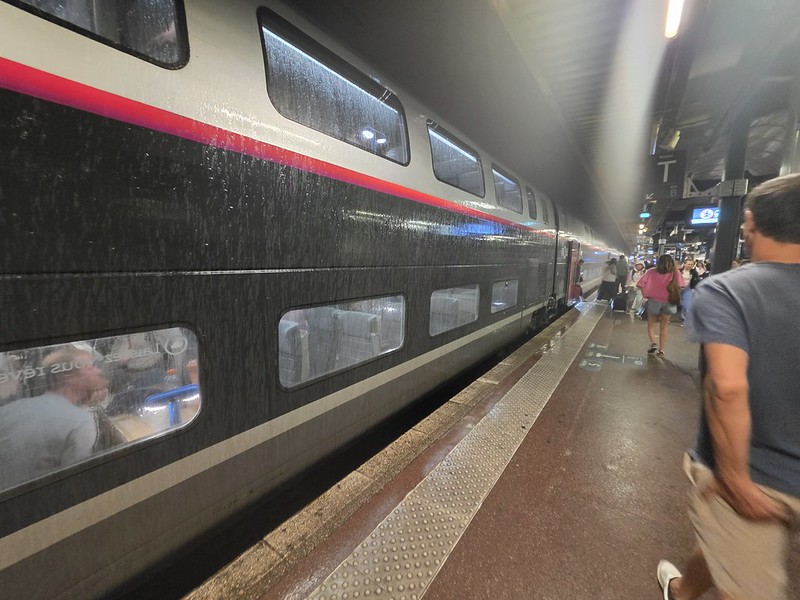
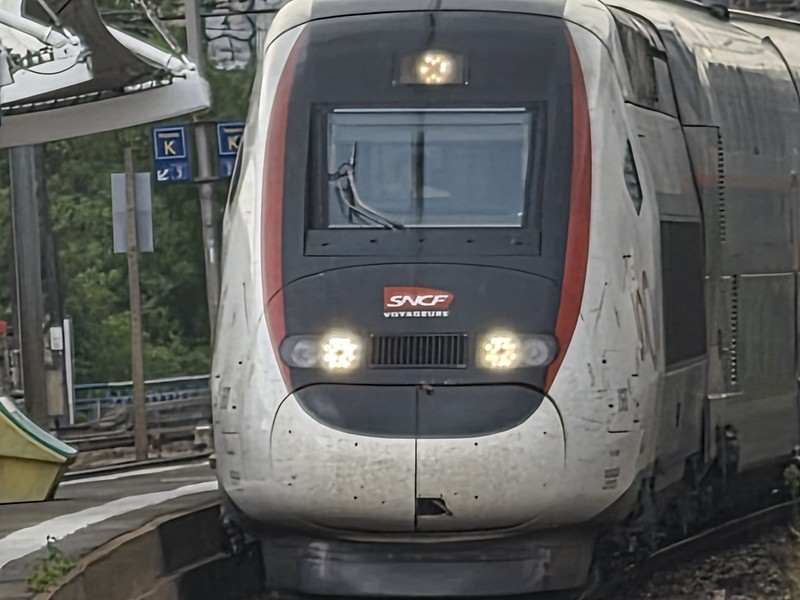
    There’s my carriage and the double decker train looked really rather classy.

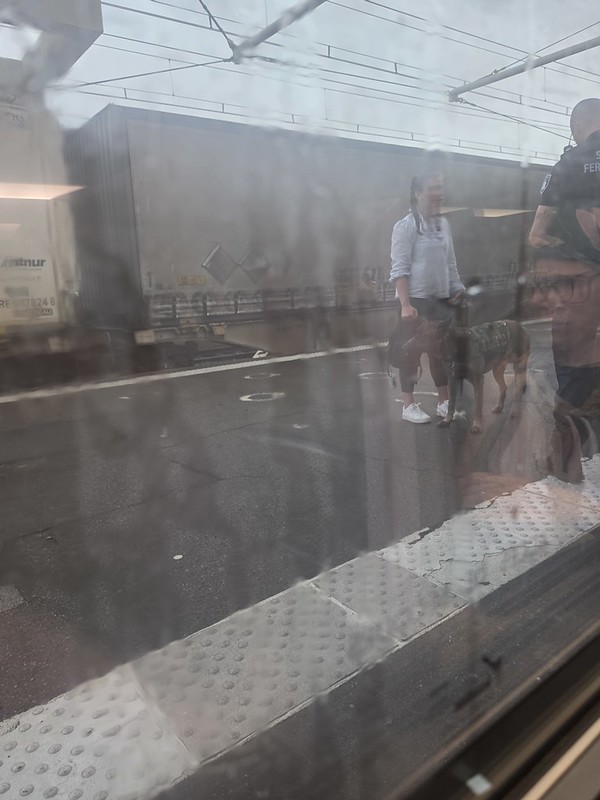
    I was talking to the guard on this part of the train and she checked my ticket and was explaining where to go when a dog jumped up at us. The dog looked bloody vicious, but it was muzzled. The guard looked genuinely furious that a passenger decided it was appropriate to bring such a dog on the train and at this point the dog was out of control, barking and frightening other passengers.

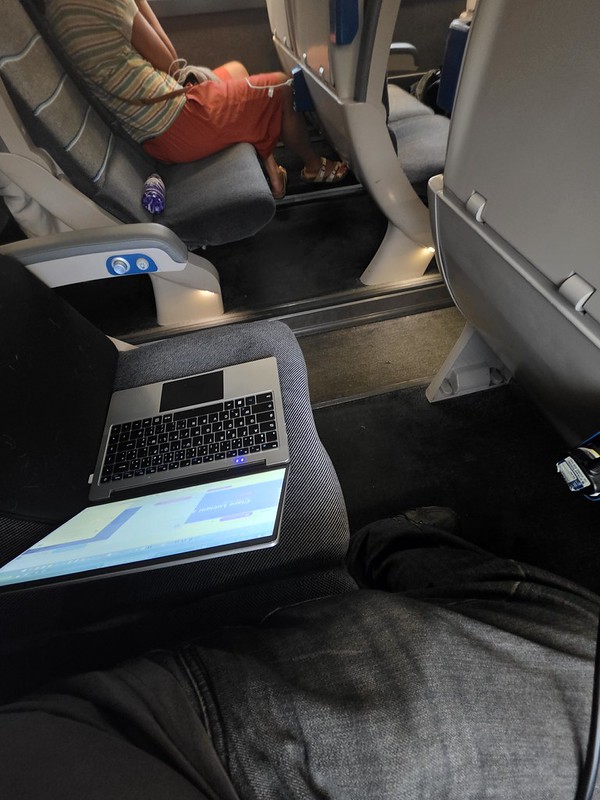
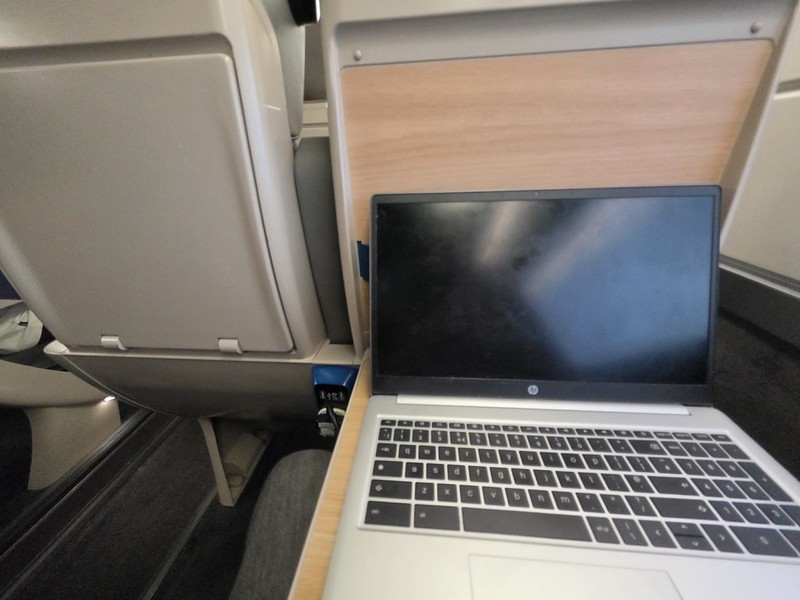
    My seat was a window seat and there was a laptop sitting on the aisle seat and I did wonder whether the dog owner would be seated there. I would have obviously gone to the guard to ask to be moved, but it transpired a passenger sitting nearby had just randomly left it there.

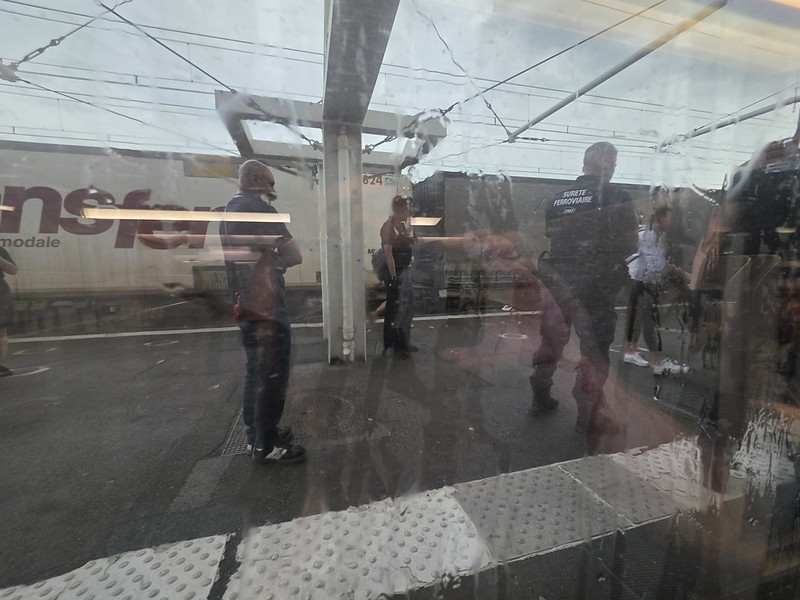
    It soon became evident that the train staff had absolutely no intention of that dog being allowed back onto their train. Transport police, guards and others came to protect the public and there were some cheers when it was evident that the passenger wasn’t being allowed back on. I’m pleased to say that this was last bit of drama of the trip.

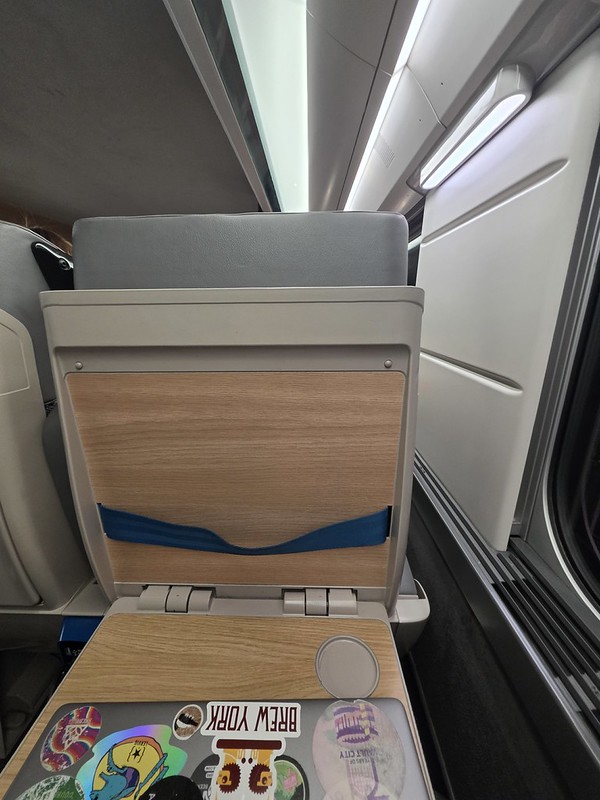
    There’s a lot wrong with SNCF and the prices for rail travel really didn’t seem to be cheaper than the UK. But, the train was clean, there were power outlets, there was plenty of space for my laptop and it was a comfortable environment.

    The train was only at around 65% occupancy and I didn’t have anyone next to me during the journey. The service was fast, efficient and peaceful. One thing I’d never really appreciated before is just how empty much of France is. There were long stretches where the only signs of civilisation were the occasional road, farmhouse or distant village. It’s a reminder of just how densely populated much of England really is.

    Safely into Lyon with my now empty bottle of Fanta.

    And there was torrential rain.

    I was entitled to 25% Delay Repay, which is rather less generous than the UK system. The claim form took me about forty-five minutes to complete, which struck me as an impressively inefficient way of compensating passengers for having already lost time. Still, if it eventually appears in my bank account, I’ll forgive them. Eventually. But, I was pleased to get to Lyon in time as the alternative would have been an overnight Flix Bus and that would have displeased me.

  • Le Mans – Cathedral of Saint-Julien (The North Door)

    Le Mans – Cathedral of Saint-Julien (The North Door)

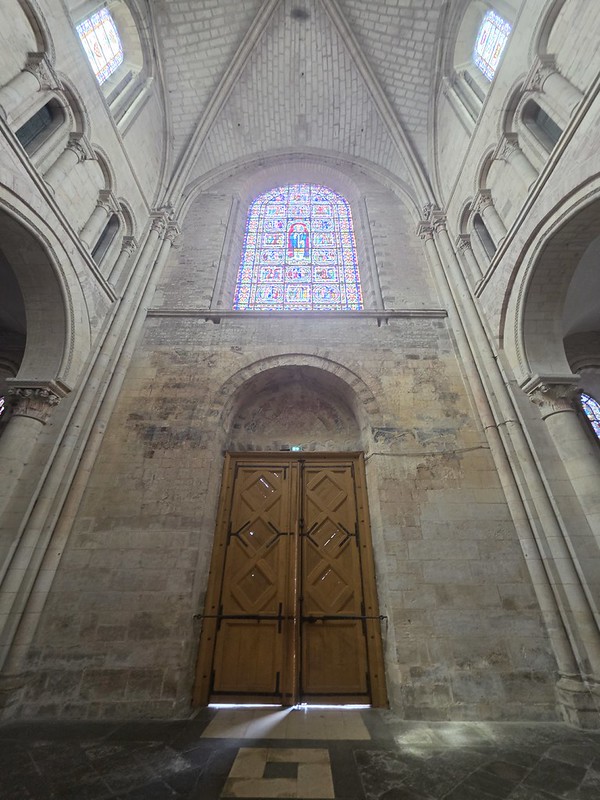
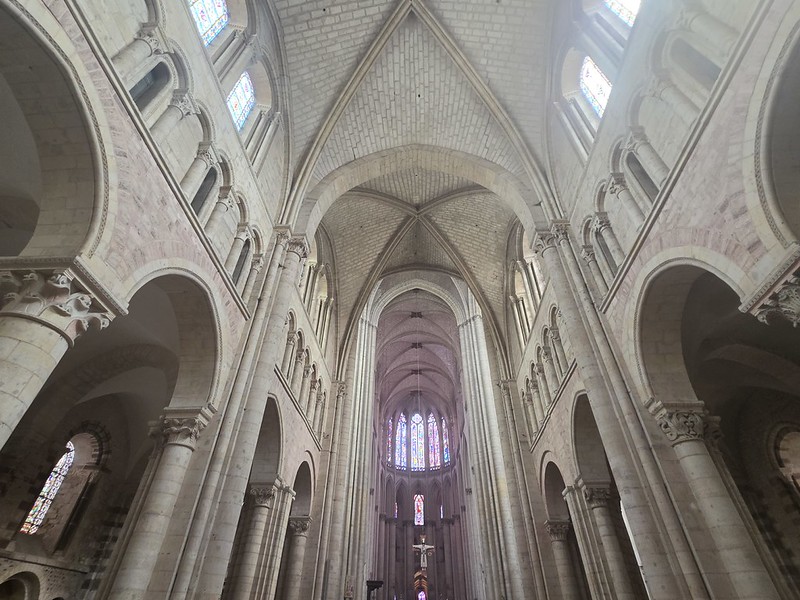
    Just a quick post about the north door at Le Mans Cathedral. It’s hard not to be quite impressed about the architecture and perspective here. I’m not a student of medieval architecture, but those are clean lines with no unnecessary faffing about being added to the whole arrangement. There’s some evidence of former wall paintings still visible which would have made it look a little more artistic, but bearing in mind that this is one of the more minor entrances to the cathedral, it was worth pausing to look at. And, also, it gave me a chance to cool down as it was too hot.

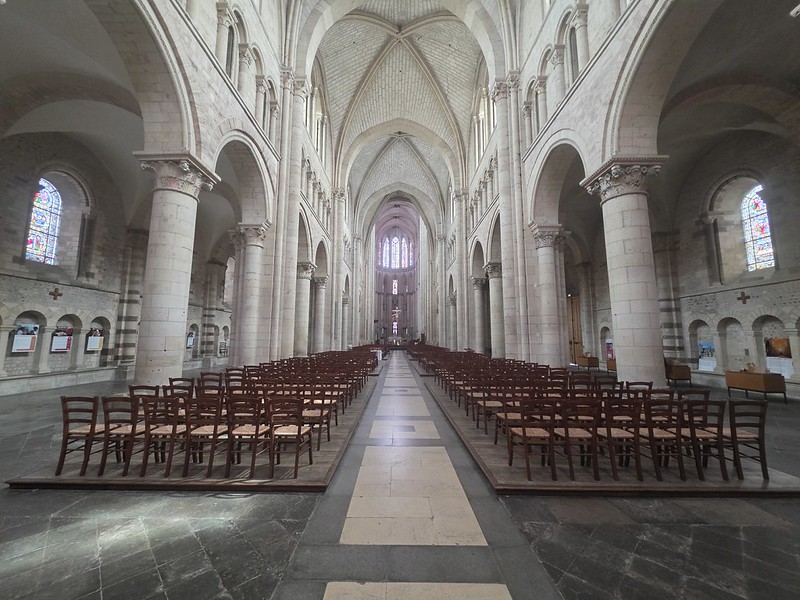
    Although on the subject of perspective, the whole cathedral is beautiful and seems perfectly proportioned.

  • Le Mans – Cathedral of Saint-Julien (The Ascension Window)

    Le Mans – Cathedral of Saint-Julien (The Ascension Window)

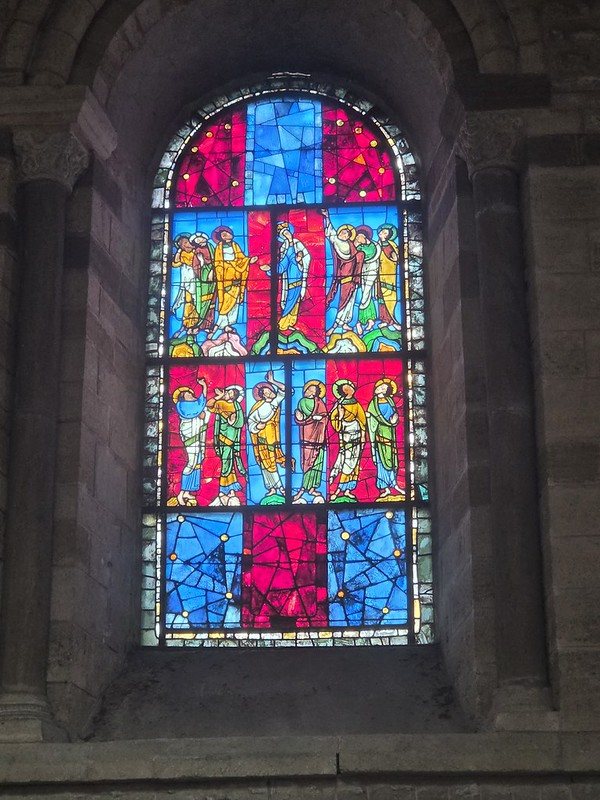
    The Ascension Window in Le Mans Cathedral is rather lovely, but the guidebook told me that it was not simply another attractive piece of medieval stained glass. Dating from the beginning of the twelfth century, it is regarded as one of the oldest stained-glass windows still occupying its original place within a religious building, making it one of the most important surviving examples of early stained glass in France and indeed Europe. Only the two central sections of the original composition survive, showing the Virgin Mary and the Apostles watching Christ ascend into Heaven, although the figure of Christ itself has been lost. The window has therefore survived for roughly nine centuries while retaining enough of its original imagery to remain intelligible, which given the number of wars, arguments, drunken residents and the like is all really quite impressive.

    Later abstract panels were added by Max Ingrand in 1956, allowing the medieval fragments to remain displayed as part of a complete window. The window is therefore not entirely medieval, but it is very much a survivor, preserving enough of its original imagery, colour and setting to give an impression of what the medieval worshippers would have seen. Given that I thought it was quite impressive, and I’ve visited Greggs so I know decadence, it must have been seen as really quite the thing at the time.

  • Le Mans – Cathedral of Saint-Julien (The Pierre Saint-Julien)

    Le Mans – Cathedral of Saint-Julien (The Pierre Saint-Julien)

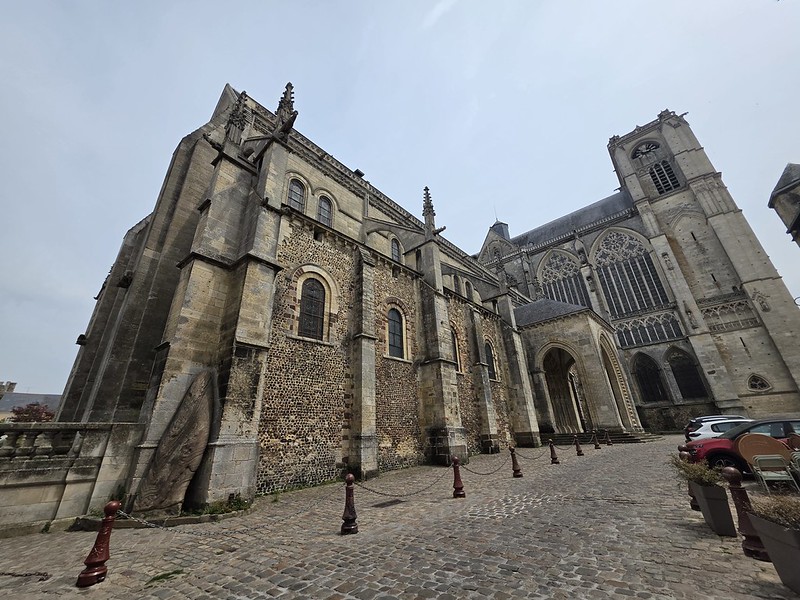
    Standing quietly beside Le Mans Cathedral is a monument that makes even the oldest parts of the church seem like relatively recent additions. The Pierre Saint-Julien is a prehistoric standing stone, or menhir, erected during the Neolithic period around five thousand years ago. It originally stood elsewhere in Le Mans before being moved to its present position in 1778 after its original site was destroyed.

    In the photo, it’s that lump of rock in the bottom left and I didn’t take a better photo at the time as I thought that it was a weathered statue of limited interest. Some impressive archaeological skills on display there…. Over the centuries the stone has acquired a variety of names and legends, including the Pierre au Lait, the Stone of Blood and Gargantua’s Stone, reflecting the layers of folklore that have accumulated around it.

    I think it’s rather lovely that at some stage, someone thought they needed to put this historic stone somewhere, so they popped it in the corner of one of France’s great cathedrals.

  • Le Mans – Cathedral of Saint-Julien (Introduction)

    Le Mans – Cathedral of Saint-Julien (Introduction)

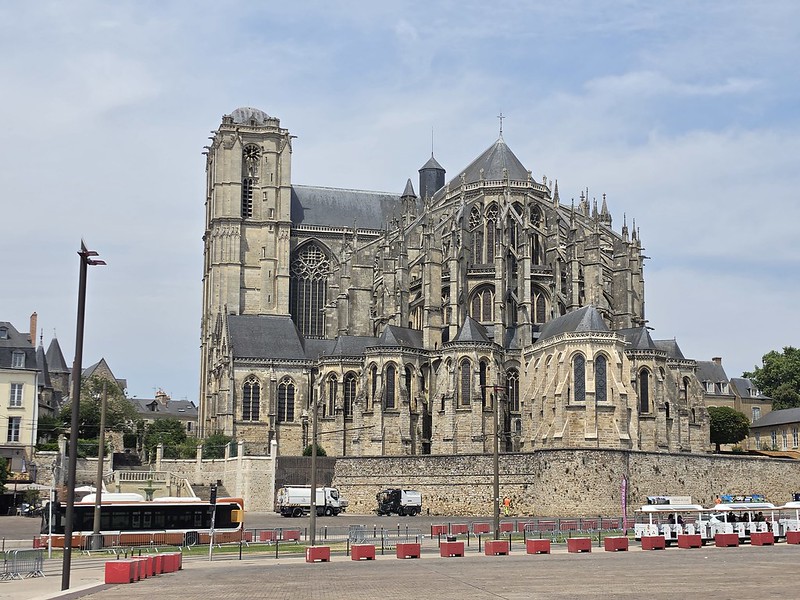
    The beautifully named Cathedral of Saint-Julien is like me, very delicate and subtle. This building very much towers above the medieval streets and is part of the Cité Plantagenêt. It’s one of the finest cathedrals in France and it is dedicated to Saint Julian of Le Mans, traditionally regarded as the city’s first bishop during the third or fourth century. When building the cathedral in the early thirteenth century, the church got the permission of the King to move the city walls to ensure that their new structure surprised and delighted with its size. There are also strong links with the Plantagenets, as Geoffrey and Matilda were married here in 1128 and the baptism of Henry II (the English King between 1154 and 1189) took place in 1133.

    I spent quite some time meandering around the cathedral, partly because there is a great deal to see and partly because it offered some welcome respite from the rather enthusiastic French summer temperatures outside. There will therefore follow, much to the delight of my two loyal blog readers, rather more posts about the cathedral than anyone strictly requested. Fortunately, it turns out that when a building has been evolving for the best part of a millennium, it generally manages to provide enough material to justify that level of enthusiasm. And, I might not have mentioned the heat, but it was so hot that I spent at least fifteen minutes fanning myself with the cathedral’s guidebook.

  • Le Mans – Musée de Tessé (Saint Agatha)

    Le Mans – Musée de Tessé (Saint Agatha)

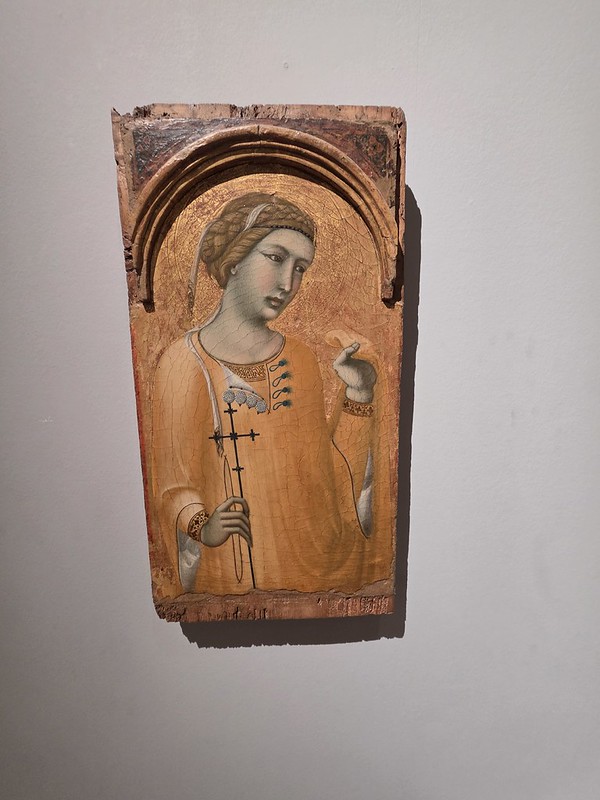
    I rather like medieval religious art and I accept that I should probably get out more. There is often such an intensity of devotion behind these works that even a relatively small panel can carry considerable weight. This painting of Saint Agatha, attributed to the Sienese master Pietro Lorenzetti and dated to around 1315, is considered a work of national importance and has even acquired its own Wikipedia page, which is perhaps the modern equivalent of canonisation. Lorenzetti was one of the great painters of medieval Italy, although the history of this particular panel becomes uncertain after it left Siena. It eventually entered the collection of the Musée de Tessé in 1863, having travelled rather further than most fourteenth-century wooden panels could reasonably have expected.

    Saint Agatha was one of the most widely venerated saints of the Middle Ages. According to tradition, she was martyred in Sicily during the third century after rejecting the advances of a Roman official and refusing to abandon her Christian faith. Here she holds the palm of martyrdom, while her composed expression contrasts with the deeply unpleasant fate described in her legend. Medieval artists often preferred to emphasise a saint’s spiritual victory rather than dwell on the physical details of their suffering, although it is fair to say that restraint was not always a universal feature of medieval religious imagery. Some artists were perfectly willing to ensure that nobody left the church uncertain about what martyrdom involved and there are some rather, er, bloody versions of the beheading of John the Baptist.

    Anyway, I’m not sure if it has been restored, but it’s in decent condition and I thought it rather glistened in the heat of Le Mans.

  • Le Mans – Ibis budget Le Mans Université

    Le Mans – Ibis budget Le Mans Université

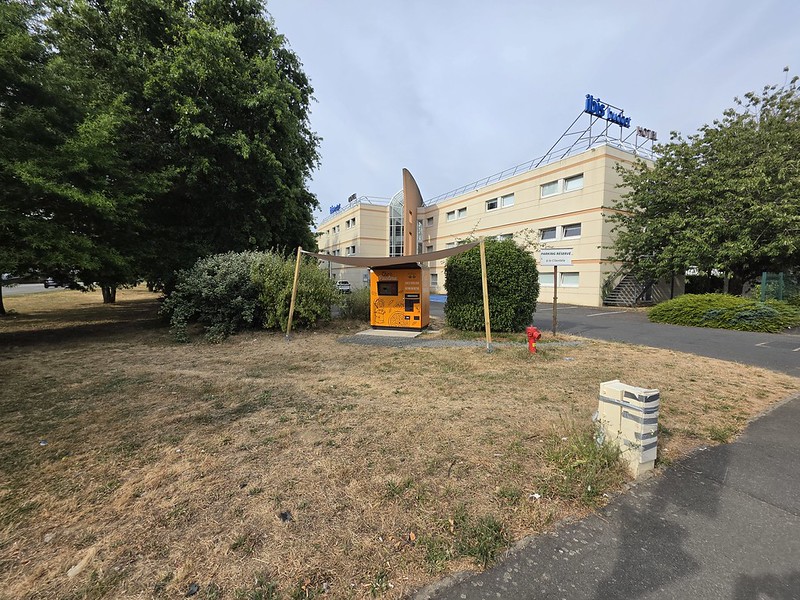
    This is the Ibis Budget located near to the city’s university and it was very keenly priced, just a little above £30 including breakfast. It’s opposite a Carrefour supermarket which pleased me, until I got there and discovered that it was a national holiday. France had once again arranged its calendar without consulting me which is entirely sub-optimal. Anyway, it’s a functional and budget Accor hotel with a shaded and seemingly functional pizza machine at the front. I’m waiting for my friend Richard to get one of those (as in get a pizza, not get an entire pizza vending machine), we nearly did in Germany, as he likes investing in side quests like seeing what pizza from a random kiosk is like.

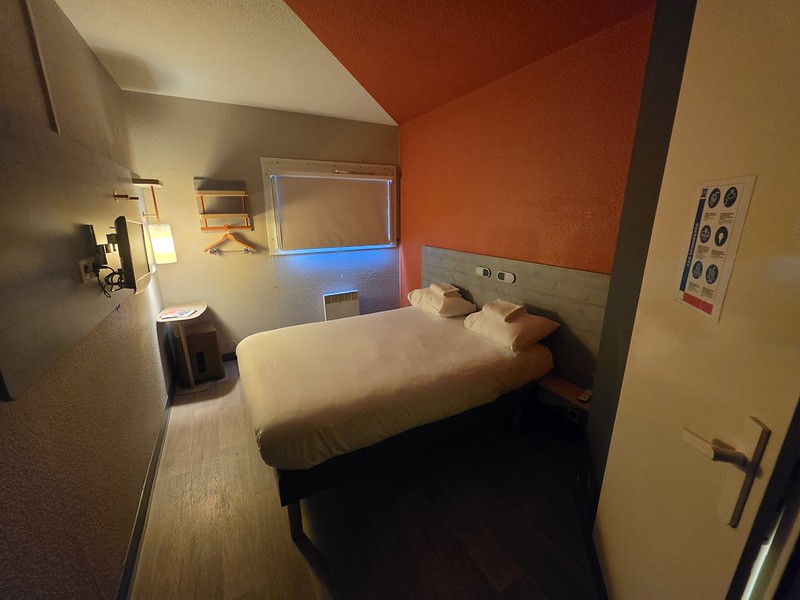
    The staff member at check-in only spoke a little English but with my little French we muddled through. She was keen to tell me that the hotel didn’t have air conditioning and I’d better note that it was exceptionally hot when I was there in mid-July. Anyway, I was very brave and I did mention that, but I think that that was lost in translation. The room was as cold as they could have made it with the shades drawn, but it was still hot.

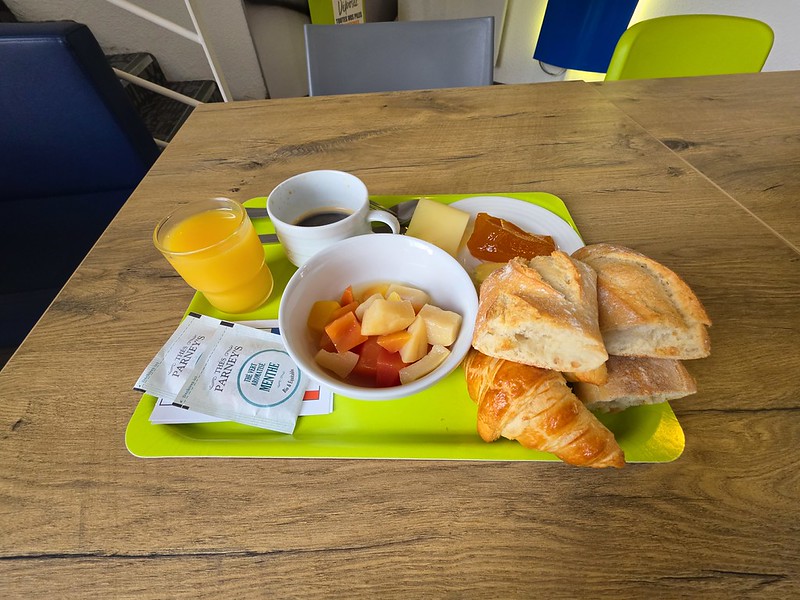
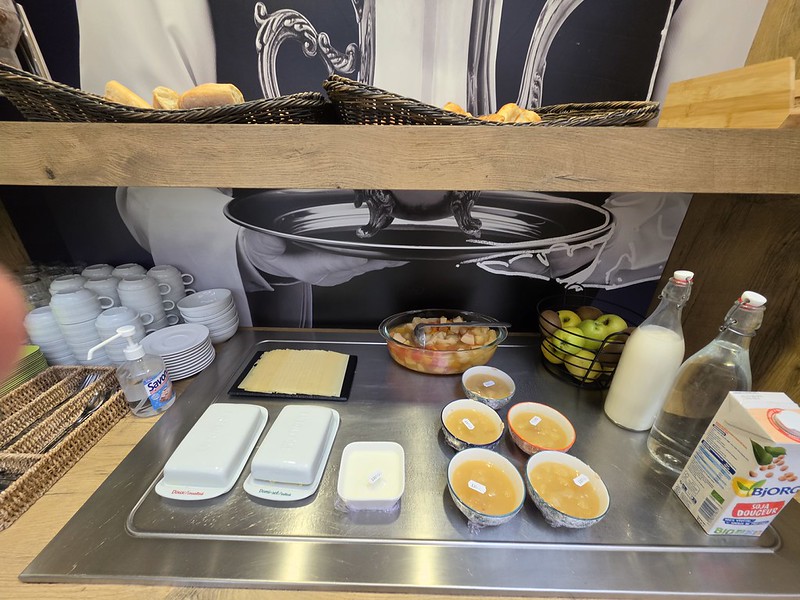
    The breakfast arrangement was basic, but my priority was the option of chilled drinks. They were clearly struggling with the heat to try and keep the food items cold, but they did as good a job as I think they could have done.

    Fruit, bread, jam, some pretty inedible cheese, bread, croissant, orange juice and coffee. I wouldn’t note that it was exceptional, but this was a very cheap stay so I can’t say that I was disappointed.

    Online feedback for the hotel is relatively high, although it’s evident some guests weren’t surprised and delighted by the lack of air conditioning. The team members were friendly, the room was clean and the breakfast was entirely adequate for the price, but I don’t think Richard would have been very impressed. It’s easy to get to the hotel as it’s right by the end of a tram line and I’d stay here again, although perhaps I might wait for the winter months so that the temperature is a little more optimal.

  • Le Mans – Musée de Tessé (Portrait de Famille)

    Le Mans – Musée de Tessé (Portrait de Famille)

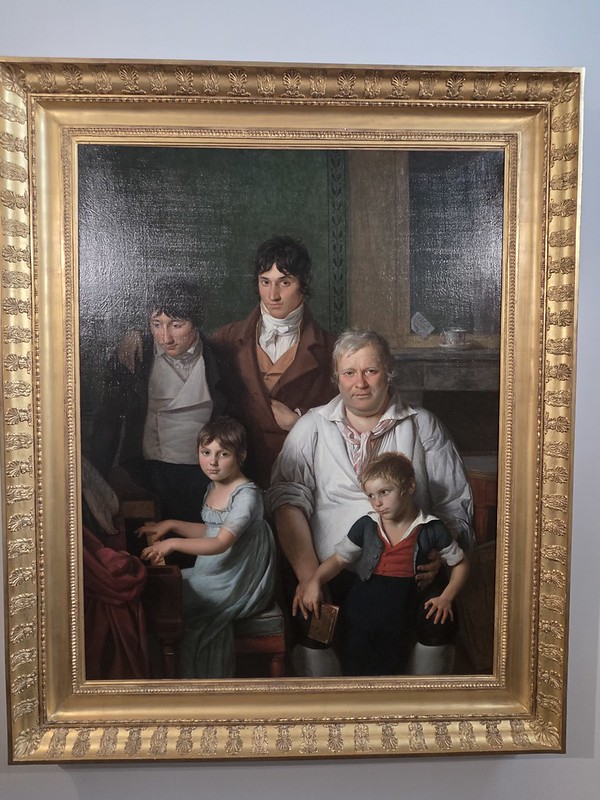
    Although this Portrait de famille, painted around 1805, is attributed to an artist from the circle of Jacques-Louis David rather than to David himself, it reflects the influence of a painter whose political journey was almost as remarkable as his artistic career. A committed revolutionary who was excited and delighted by the French Revolution, he voted for the execution of Louis XVI, became closely associated with Robespierre and produced some of the Revolution’s most iconic images. Following the fall of Robespierre, David himself was imprisoned, yet somehow managed to reinvent his career once again after his release. He’s like Robert Jenrick, but with artistic talent.

    His greatest political transformation (I mean David and not Jenrick) came under Napoleon Bonaparte. Rather than painting revolutionary martyrs, David became the official artist of the new Emperor, producing vast works celebrating Napoleon’s rule, including the famous Coronation of Napoleon. This portrait belongs to that period, when David’s influence dominated French painting. Although depicting an apparently ordinary family, its restrained composition, clarity and quiet dignity reflect the ideals that David had done so much to establish. A country that had gone through turmoil needed some form of normality I suppose.

    David’s political fortunes changed once more after Napoleon’s defeat in 1815. Regarded as too closely associated with both the Revolution and the Empire, he chose exile in Brussels rather than remain in restored Bourbon France, where he spent the rest of his life. The painting itself is rather lovely as well, it’s a warm and convincing family scene produced in the artistic orbit of a man who had painted revolutionaries, emperors and nearly every political settlement in between.

  • Le Mans – Musée de Tessé (John Constable – Malvern Hall)

    Le Mans – Musée de Tessé (John Constable – Malvern Hall)

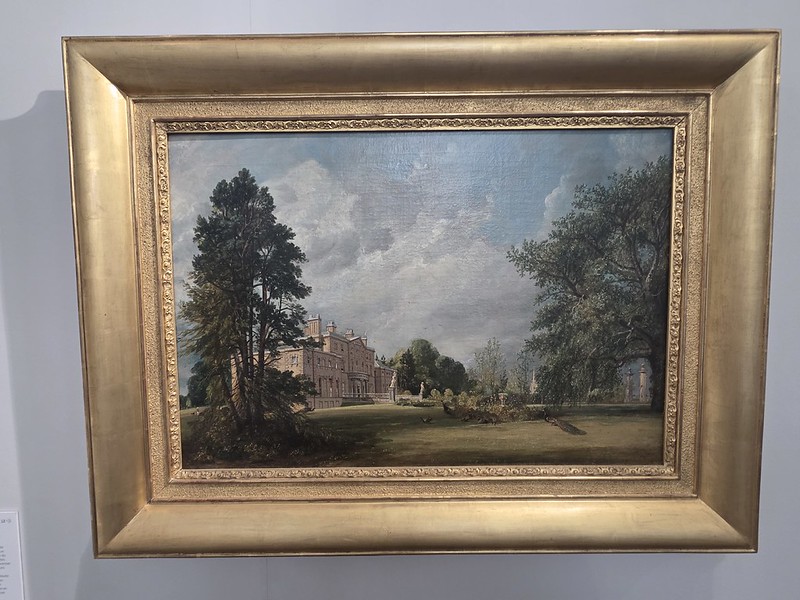
    Whilst walking around this art gallery visibly overheating in the extreme French climate, I had some slight national pride seeing an artwork by John Constable (1776-1837). Painted in 1821, this is Malvern Hall in Solihull, which is now Solihull Prep School, and there are three versions of this artwork. There’s this one, a similar one in the collections of the Clark Art Institute in Williamstown, Massachusetts and a preliminary sketch which is at the Yale Center for British Art in New Haven, Connecticut.

    France appreciated Constable far sooner than Britain did and he sold more here in two years than he did in his entire lifetime in the UK. His work was exhibited at the Paris Salon and proved highly influential on a generation of French artists, who admired the freshness of his brushwork and his willingness to paint the landscape as he observed it rather than as convention dictated. The museum label points out that this was the first Constable painting to enter a French public collection, having been acquired in 1864.

    Friends tried to get Constable to travel to France and other countries to promote his work, but he noted:

    “I would rather be a poor man [in England] than a rich man abroad”.

    To be fair, he largely managed to achieve that ambition. As an interesting aside, The Hay Wain spent its early years in France after being exhibited at the Paris Salon, where it caused quite a stir and helped transform Constable’s reputation on the Continent, even if his fellow countrymen were rather slower to appreciate him.