Category: Bonn

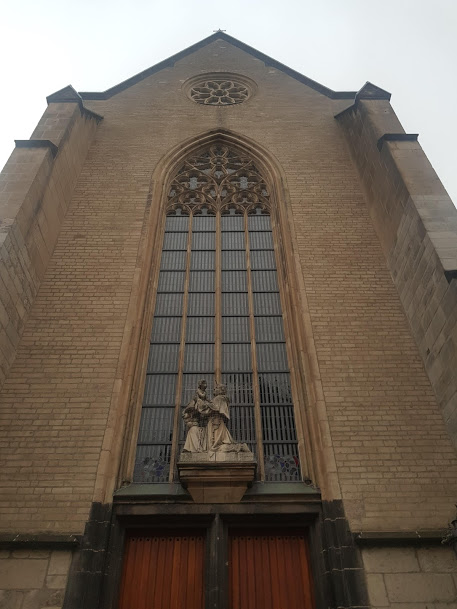
  • Bonn – St. Remigius Church

    Bonn – St. Remigius Church

    This Catholic church was originally a Franciscan monastery, constructed between 1272 and 1317 with its own refectory, bakery, brewery and slaughterhouse. The new church was built on an existing religious site, it’s thought that there was a Merovingian church here which dated from around 795.

    The church was badly damaged by Brandenburg troops in 1689 with most of the interior being destroyed, although it wasn’t fully repaired until the 1730s. There was a large fire in 1888 and bomb damage during the Second World War which have combined together to mean that much of the interior is relatively modern. The Franciscans were forced out by the authorities during the nineteenth century, although they were allowed to return in 1957.

    The church has the honour of being the location where Ludwig van Beethoven was baptised, with the church’s organ at that time being the largest in the city. The font and pulpit are though both survivors from the time of Beethoven, with the church being particularly proud of the font, which dates from 1740.

    The side chapel. The church was all rather peaceful and calm, although there was no shortage of incense running throughout the interior. There’s also a strong student congregation at the church with links to the university.

  • Bonn – The Quiet Man

    Bonn – The Quiet Man

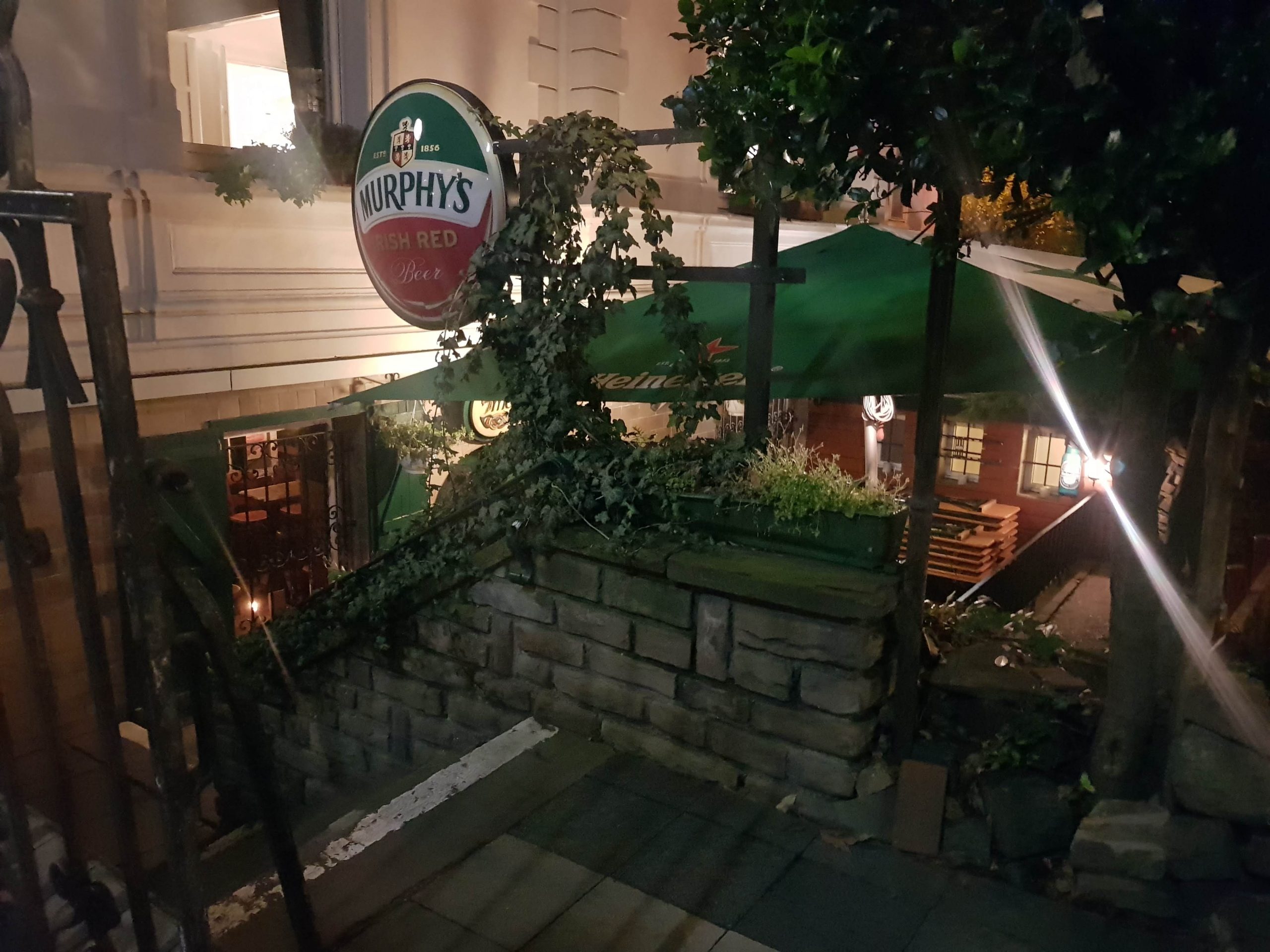
    Before our exciting train journey back to Luxembourg, we had just enough time left in Bonn to visit one more pub and we went for The Quiet Man, just a short walk from the railway station. It’s a cellar bar and it felt like a welcoming environment, with the barman being pro-active and engaging.

    In the Murphy’s versus Guinness debate, I’m a fan of the former as it’s sweeter than Guinness, although I’ll happily drink either of them.

    There was some football on the television and I could hardly take my eyes off it, or something like that….. The barman checked if we wanted more drinks, and showing some considerable restraint and responsibility, we felt that one was probably enough (one each, not one between us) given the long train journey. There was German and English being spoken at the bar and it seemed to be one of those locations that anyone could go who wanted a conversation.

    We didn’t order food, but there was a menu which listed pizza, fish & chips, topped chips, jacket potatoes and the like, with the on-line reviews for this pub looking consistently positive. If I was in Bonn again, I’d happily come here, there was a calm and laid-back feel to the atmosphere and it’s in that sense ideal for a pre-rail journey drink.

  • Deutsche Bahn : Bonn to Luxembourg

    Deutsche Bahn : Bonn to Luxembourg

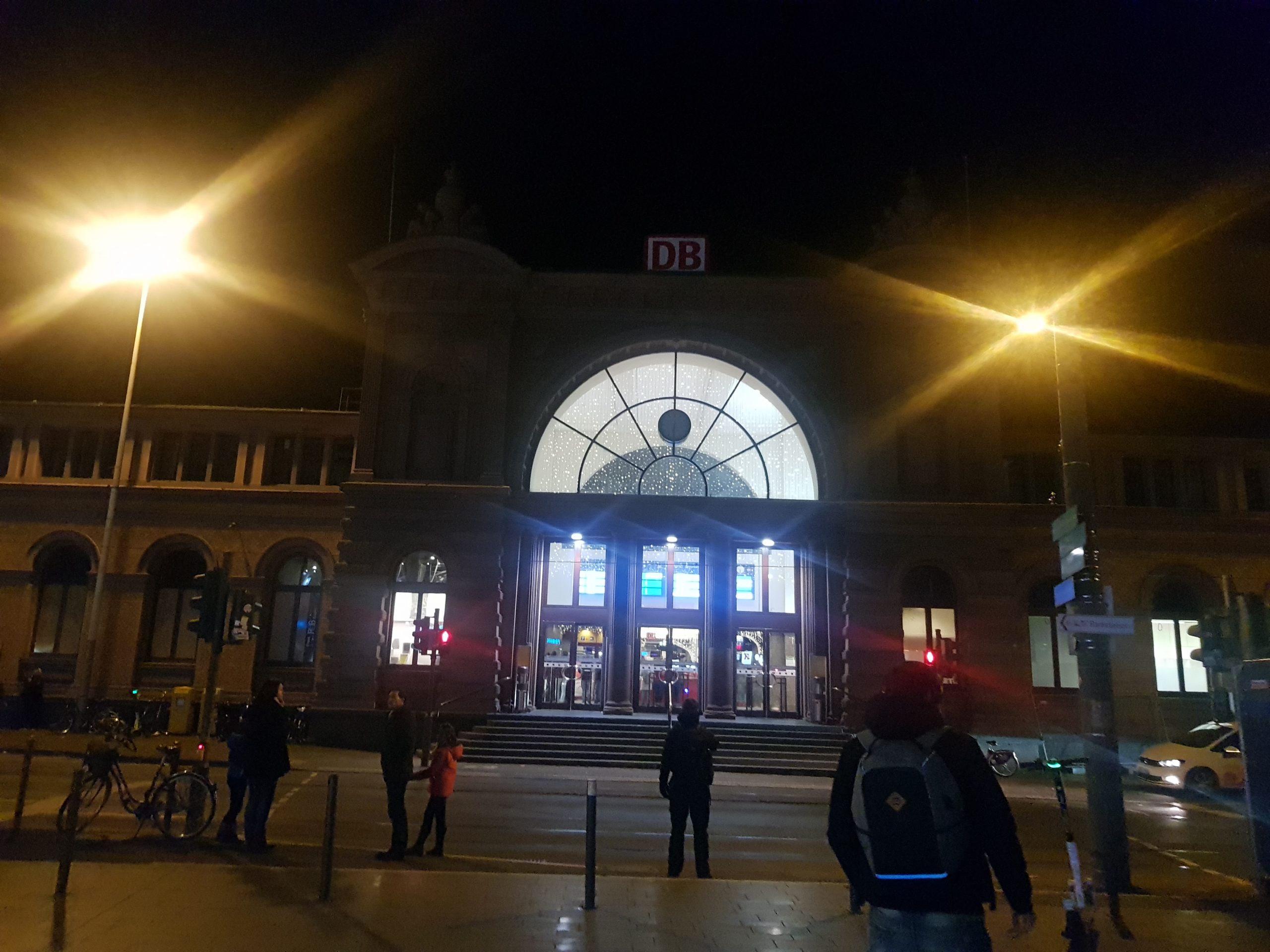
    Above is Bonn railway station (it’s not leaning, that’s my poor walk-by photography effort), but before I get going about this journey, I’d add that I haven’t been much of a fan of Deutsche Bahn before this little expedition. Their trains are frequently late, the services are overly busy and the customer service is diabolical. However, they managed to excel themselves on this journey by exceeding even my low expectations, but, fortunately the Gods were on our side this time……

    So, there were meant to be four parts to our journey. It was essential we caught each component part, as the final leg was on the last train into Luxembourg.

    The journey was meant to be:

    (i) Bonn to Koblenz (20:14 to 20:46)

    (ii) Koblenz to Wittlich (21:40 to 23:05) – bus replacement

    (iii) Wittlich to Trier (23:15 to 23:41)

    (iv) Trier to Luxembourg (23:49 to 00:37)

    Throughout the day, we were aware that our first train from Bonn to Koblenz would be late departing, this was clearly explained in the app and I liked that. We had a 54-minute wait in Koblenz, so a slight delay wouldn’t be a problem, but anything much longer would be. The delay was fifteen minutes at one stage, but throughout the day that dropped to around six minutes, although I became quite addicted to checking this throughout the afternoon.

    The first train turned up around eight minutes late and was nearly full, but we managed to find seats and everything went smoothly into Koblenz. Although, I’d note, that the train was not clean and the toilets were particularly bad. We filled the time in Koblenz with a McDonald’s, which was at the railway station, and Nathan won a chicken burger on the McDonald’s Monopoly game which he kindly gave to me. At this stage, we were relatively confident that this was all going to work out.

    Incidentally, Koblenz is a beautiful city from what we saw of it, that’s Fort Constantin overlooking the railway station.

    The replacement bus service wasn’t well advertised, but we knew where to go as we’d got off here the previous day.

    We got to sit at the front and the replacement bus journey was on time and so we getting really quite confident of the situation, expecting to be at Wittlich for around fifteen minutes whilst waiting to connect onto the third part of our journey. All went well with the journey, but it appeared that the general confusion caused by Deutsche Bahn meant a German passenger had got on the wrong bus and was now being hurtled along to an incorrect destination. It wasn’t clear exactly what was going on, as his long conversation with the driver was in German, but it didn’t look good…..

    Safely into Wittlich railway station.

    The train, operated by CFL, turned up on time in Wittlich and we were now becoming more relaxed at the situation as we knew that we were definitely getting to Trier. Signage was poor, but there were only two trains left to run that day, so it would have been difficult to get on the wrong one, especially as they were both going to Trier.

    The information screens didn’t have the correct times on, which was initially confusing, and the time for Saarbrucken made no sense.

    A friendly conductor came to check our tickets and then revealed that the final train on our schedule didn’t exist. Deutsche Bahn had effectively sold a ticket on a train which wasn’t even operating. Just marvellous. However, the situation wasn’t critical, the conductor, who fortunately spoke good English, told us that there was a service operating to Luxembourg from outside of the railway station. This was a bus replacement, which wasn’t ideal, but we were relieved that there was a solution (every problem needs a solution).

    I need to go back a bit in this story now, as our train was arriving into Luxembourg central railway station at just before 01:00, and it was a one hour forty minute walk to our hotel at the airport as public transport had stopped by that time. We were toying with the idea of either getting a taxi or walking at this stage, although we’d have probably walked as the taxis were expensive.

    However, we noticed that this bus replacement service was not going to the railway station, it went to the park and ride where Flixbus depart from. This is a twenty minute walk from the railway station and I was surprised that Deutsche Bahn thought for one moment that this was acceptable. At least in the UK, the bus replacement actually leaves from the station the train did and gets into the station that the train was meant to. Anyway, that meant we would be facing an even longer walk back to the hotel and there was no guarantee of a taxi being available. Unfortunately, Luxembourg has banned Uber and Bolt, instead using their own service which ran on a particularly clunky and irritating app. This showed that no taxis were available, so there was a dawning realisation that this could become a long night.

    So, we departed the train at Trier and went to the front of the railway station, with the above photo showing our options. I was moderately surprised that there were no staff and the railway station building was closed, a situation which is intolerably unsafe (not necessarily for us, but for a lone female traveller it certainly is). We wandered around looking for a replacement coach service, and there weren’t any. We did have a back-up plan of visiting the Ibis Styles in Trier, where I’ve stayed before, but this was expensive and would have given us a troublesome early morning trip from Trier to Luxembourg before our flight.

    Fortunately, at the very last moment, Nathan noticed that there was a Flibco coach going to Luxembourg. So, I speak to the driver and explained our predicament. It now becomes apparent that this coach, which was about to depart, was the bus replacement service. Instead of operating a proper service, Deutsche Bahn had randomly put passengers on this service. Well, some passengers, Nathan and me weren’t on the list. Quite why there needed to be a list was a mystery, as Deutsche Bahn must have known some customers might have booked late and clearly some people weren’t on it anyway (we weren’t).

    The driver was confused at this whole situation, this was Flibco’s regular service, but he was expecting a few Deutsche Bahn passengers. He was very helpful and after some confusion, and doubt whether he should be accepting us, he let us on. We were immensely grateful at his helpful attitude, but I was conscious that we were actually on the bus we were meant to be on.

    It was at this stage that we realised we were enormously lucky. As this wasn’t a traditional bus replacement service, it was already going to Luxembourg airport as part of its usual route. This was ideally where we wanted to go, as our hotel was located opposite and this meant our planned long walk would no longer be needed. The driver was happy for us to go there and just thirty minutes later, the coach pulled in to the airport and Nathan and I were considerably pleased at the situation. We were the only passengers to embark or disembark and I can confirm it was quite a relief to be there safely.

    Amazingly, we reached the Ibis at 00:40, with just enough time to enjoy our two free drinks from the hotel. A glass of Bofferding beer has never tasted so good….

    I will say though, Deutsche Bahn were pretty appalling. They have an astoundingly low number of customer service staff, their stations close far too early, their app is unreliable and the efficiency was generally inadequate. I’m conscious that things go wrong, but the company had clearly made little effort with its replacement bus services and the facilities for those with disabilities were near zero. Hopefully I won’t be stuck using them again for some time, of all the rail services I’ve used across Europe, they are hands down the worst operator I’ve endured.

  • Bonn – Ibis

    Bonn – Ibis

    There’s only one Accor option in Bonn itself, which is the city centre Ibis, located around a ten-minute walk from the historic town centre.

    The chairs looked a little like I’d made them, but they fitted well into the decor of the ground floor which had a contemporary edge to it.

    The hotel’s bar. I took a photo of this as we had to sit for a few minutes there waiting for a staff member to appear, since we timed our visit badly with the arrival of a coach party. The welcome at the reception desk was though polite and friendly, with the staff member giving us all the information that we needed.

    This is a slightly hopeless drinks voucher which makes no sense at all, with the reverse reading that visitors could have a lemonade or similar non-alcoholic drink. I can only imagine that this voucher is given to children, since there is no such non-alcoholic drink rule, or something has been lost in translation.

    My Accor status gave us each a large Bitburger. It’s not exactly at the top of my list, but it tasted fine, it was at the appropriate temperature and it was free. The free thing was my favourite bit.

    The exciting view from the room. The room felt slightly tired and it’s apparent that this isn’t a new hotel, but equally, nothing was run down or broken. There was no welcome gift, beyond the drink, and I think that’s the first time it hasn’t been provided during a visit to a German Ibis.

    All told, the hotel was organised and there were no noise disturbances either internally or externally. The bathroom was relatively small (I never worked out why they had designed the bathrooms in such a clunky way in a building which didn’t seem to be limited on space), but everything worked as it should. The Germans seem to have no legislation on banning windows from opening, so the window opened out as much as required, which is my personal preference.

    Overall, the room cost around £50, which seemed reasonable given the location.

  • Bonn – McDonald’s McCurrywurst

    Bonn – McDonald’s McCurrywurst

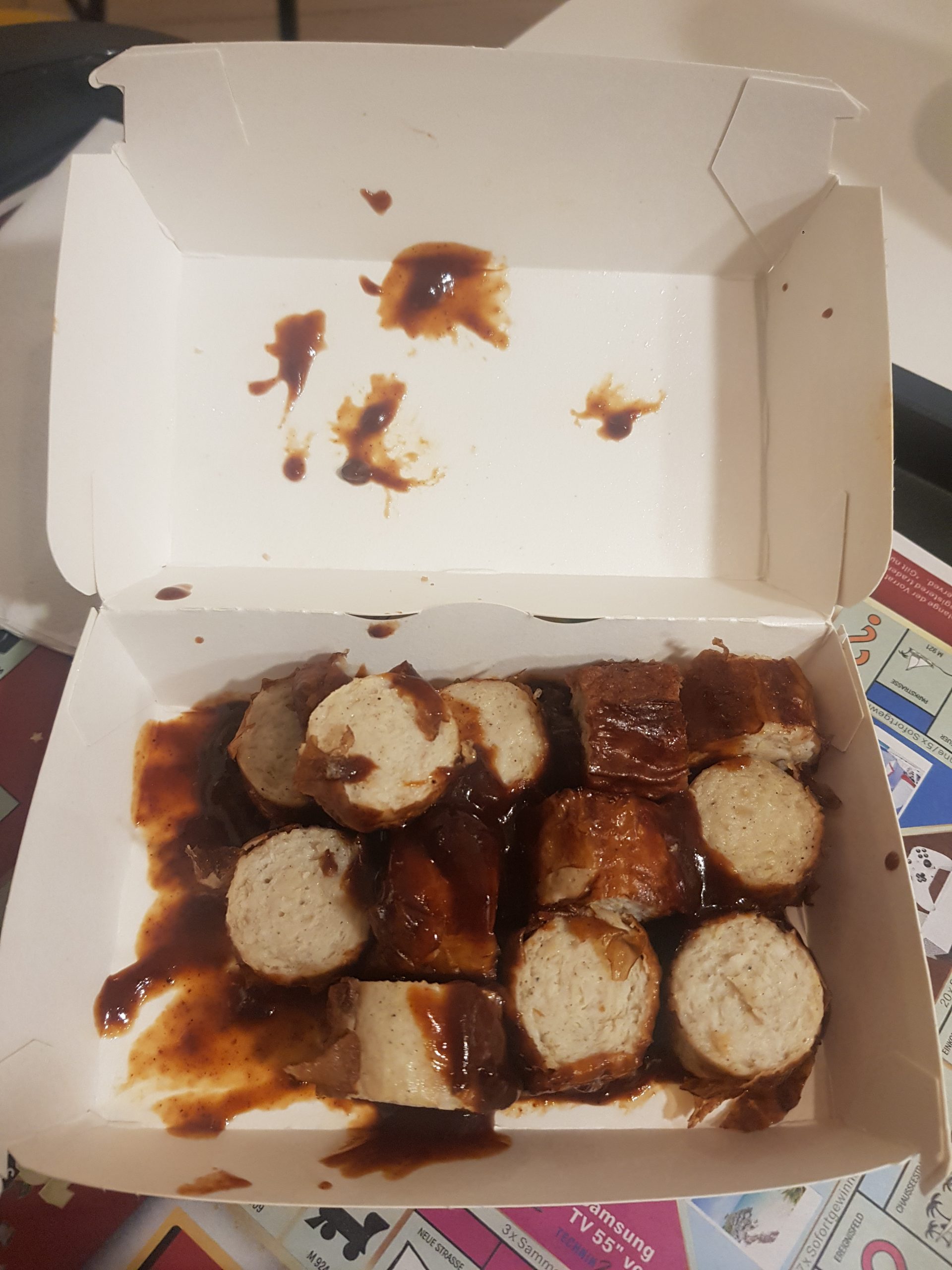
    I ordered this so that I could tell Dylan what it would be like…..

    I accept that it’s not necessarily the most authentic of dishes and it’s about as well presented as the McRib, but it tasted perfectly acceptable to me. The product was introduced into German McDonald’s in 2013 and it must have proved sufficiently popular as it’s still on the menu.

    I must say, this travel thing is very educational…..

  • Bonn – Haus der Geschichte (Covering the Reichstag)

    Bonn – Haus der Geschichte (Covering the Reichstag)

    I remember when an artist wrapped the Reichstag in Berlin, perhaps one of the largest art installations that there has been in Germany. The artist was Christo, who spent 24 years planning this project and being turned down on numerous occasions. His persistence is incredible and he went to speak to every one of the 350 deputies in a bid to convince them to support the project. He was able to win a majority over by promising that it was simply an art project, that it was self-funding and that all of the materials were recyclable.

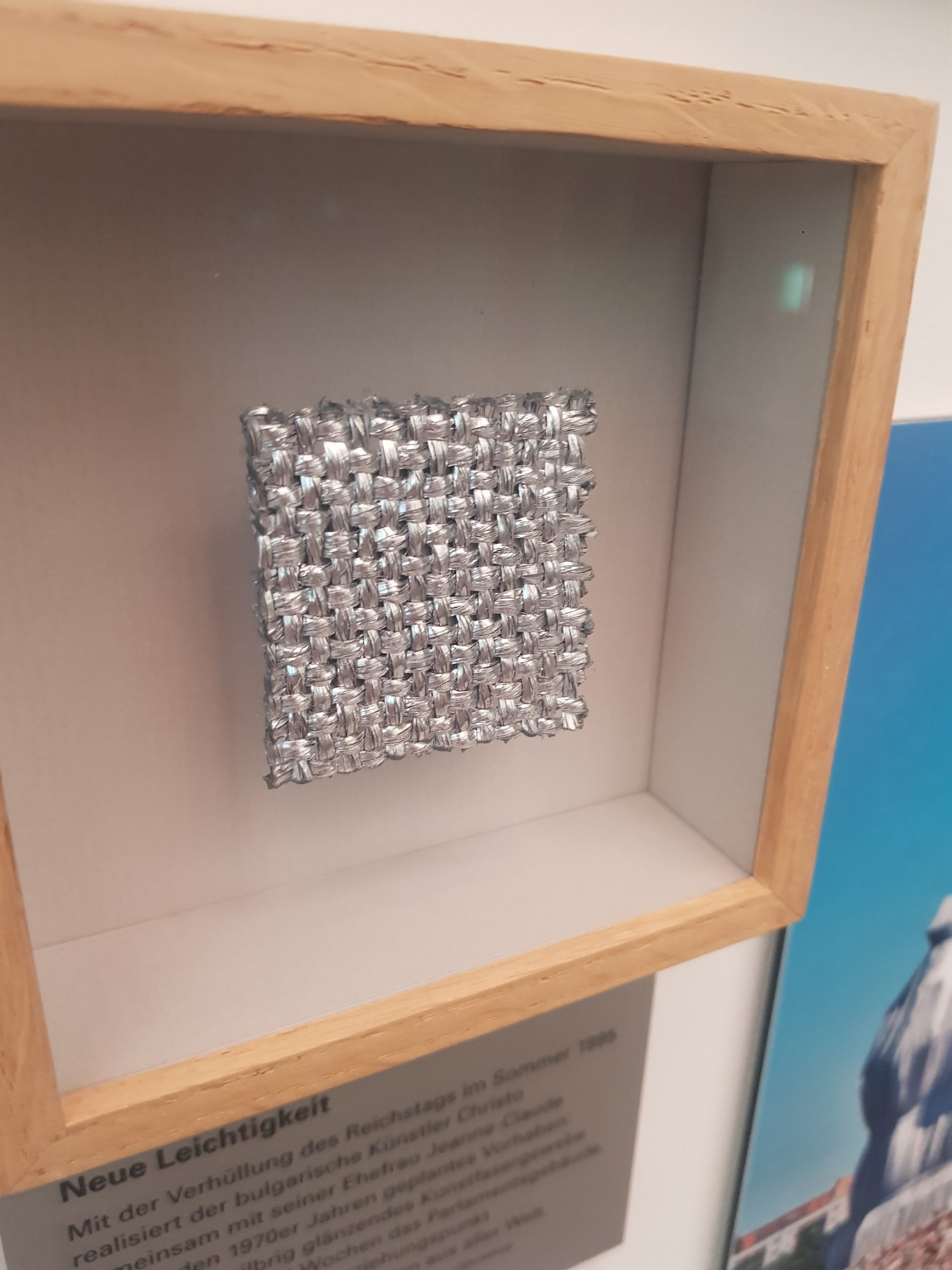
    I’ve never given much thought to this project, but I always thought the covering was something like a thin and lightweight fabric. This though would have likely torn and looked ridiculous, so it was more of a metallic covering that was used. It didn’t come cheaply, as it cost over $15 million at the time, a significant sum of money. The artist has a policy that an artwork is never repeated and it can’t last for more than two weeks, so that was how long the covering remained over the building. The photo above shows a small piece of material which was used in the covering, which is “a thick woven polypropylene fabric with an aluminium surface”.

    The covering was unveiled on 24 June 1995 and it took 90 professional climbers and 120 installation workers to complete the work. The artist funded the project by selling original drawings and models, with no sponsorship money or public funds used. The photos on the artist’s web-site show just how amazing this must have looked.

    And what it looked like….

  • Bonn – Arithmeum

    Bonn – Arithmeum

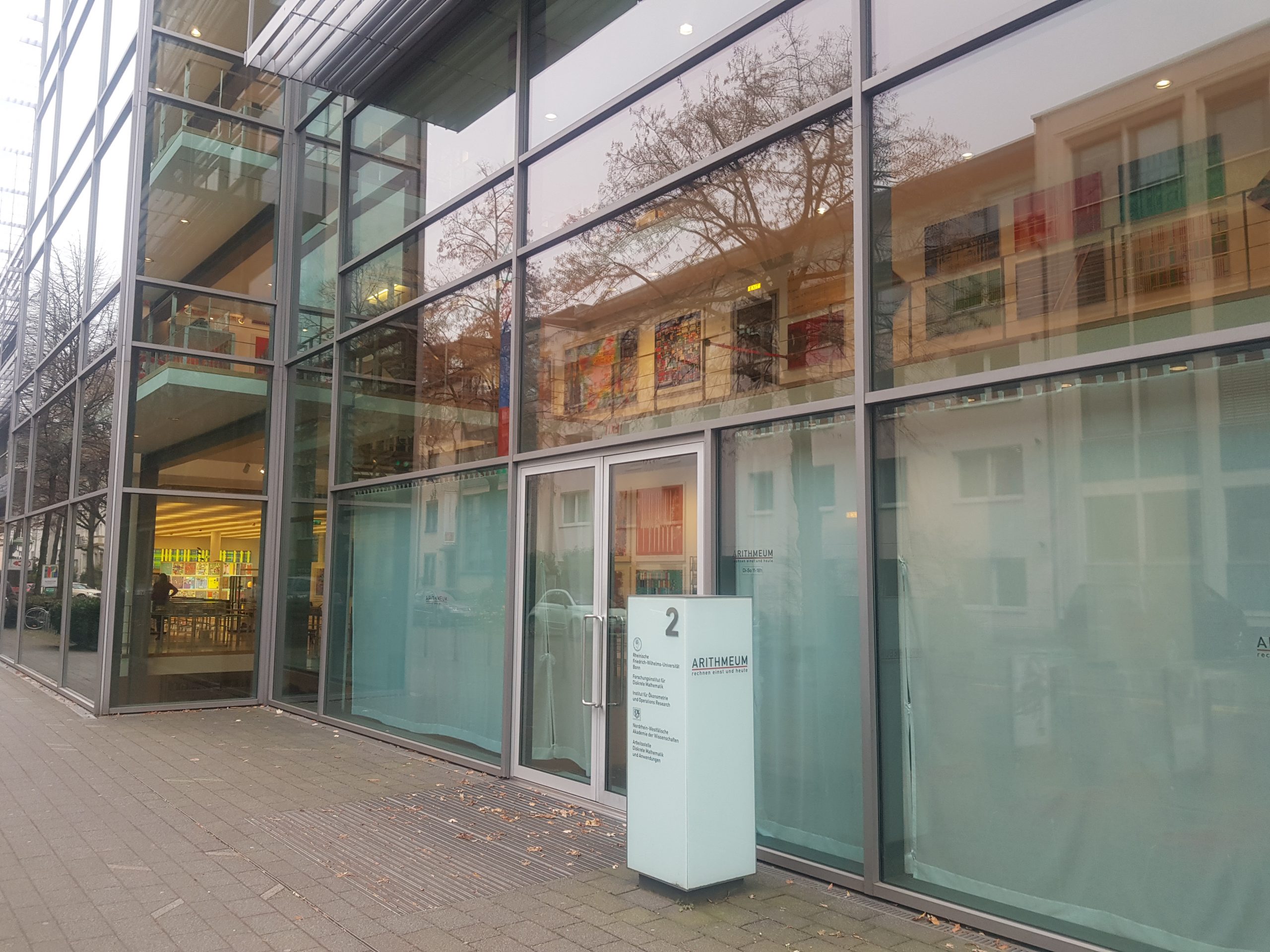
    Imagine the scene during the morning planning meeting of what locations we should visit during the day. Agreement was soon made about a well reviewed museum which was holding a special exhibition on the UK and about food and drinks locations. I then realised there were several other museums and started reading them out.

    Then there was a dialogue something like:

    “There’s a natural history museum, a Beethoven museum, a local history museum, a maths mus……” – Julian

    “A maths museum?!?!?” – Nathan

    “Er, yes, it’s probably awful though and it might be shut” – Julian

    “We’re going anyway” – Nathan

    Just marvellous. Here we are in Bonn, and there’s a plan to go to a bloody maths museum to look at calculators. And it was clear that the museum didn’t even have a cafe. I made a mental note (just quietly to myself to avoid offence) to travel in future only with friends who don’t have a first class honours degree in Maths.

    We entered the museum, which I was hoping was shut, and the welcome there was really engaging from the staff member. I think it’s fair to say that the museum wasn’t exactly packed with other visitors, but it had a really relaxed atmosphere to it. The warm staff member (as in friendly, she wasn’t hot) mentioned that we could go in and out at any time if we wanted to visit a cafe or similar, but I thought one entrance would be enough for me.

    My interest was piqued by being told that we could play with some of the exhibits. I had visions that I could type things in calculators to amuse me, so that seemed quite exciting. Little did I know that Nathan, who is meant to be a married man who has long since gone by childish urges, would nearly screech with excitement at an abacus. This is actually a lie, there was no nearly about it, he ran towards an abacus. I managed to contain my excitement.

    This was my favourite of the machines to play on, it allowed users to work out addition, subtraction, multiplication and division by what seemed a random turning of wheels.

    There were complex instructions, over many pages, on how to use the machine. I didn’t really understand most of it, but Nathan amused himself twirling wheels and getting results using logic that seemed vastly complicated. I pretended I understood it though. We went through every single form of calculation possible on the machine, and it was surprisingly exciting to see the correct answer appearing on the machine.

    There were English translations available for nearly everything, although it occasionally took some effort to find the right sheet from the pile.

    Napier Rods, which made as much sense to me as salad. I was sure there was a use for it, but I couldn’t see how it was relevant to me. Nathan was busy spinning rods and coming up with random numbers, which appeared to be correct. I wouldn’t be surprised to see that he’s built himself some of these for use during the darker winter evenings.

    I was shown how to use a slide rule, which seemed a very complex piece of equipment. When I didn’t understand things I assumed that the machine was broken, but Nathan treated such things as some sort of mental agility challenge and attempted to solve them. This is why I didn’t do a Maths degree though, it’s much easier to meander around the subject when writing about philosophy, politics and economics. Although I got a 2:1, which I claim is the same as a first in Maths. Nathan doesn’t, but mathematicians can be very contrary. I think it’s their binary thinking, rather than my fluid thinking.

    An automatic voting machine (the counting is automatic, not the voting) which was one of my favourite exhibits.

    This is a recreation of part of the difference engine completed by Charles Babbage in 1833.

    A clocking-in machine from the early twentieth century.

    A display of counting machines.

    I like old books, so was intrigued at this. There was a sudden screech of excitement (there had been many of them that I haven’t noted) when Nathan saw an early printing of a book by Isaac Newton. I was glad that there were no other visitors in the museum at this point.

    Not accessible to the public, this is one of the store rooms of the museum.

    So, the museum wasn’t as bad as I had anticipated, especially given just how friendly the welcome was. Indeed, and I won’t tell Nathan this, the museum was actually entertaining and it only cost €2 each to get in. There was a limited amount of information about later calculating machines, so not much into the modern era and the evolution into computing devices.

  • Bonn – Haus der Geschichte (Very British – Brexit Exhibition)

    Bonn – Haus der Geschichte (Very British – Brexit Exhibition)

    Part of the ‘Very British’ special exhibition at the museum, this was the Brexit room, showing the changing British attitudes to the European Union over the years.

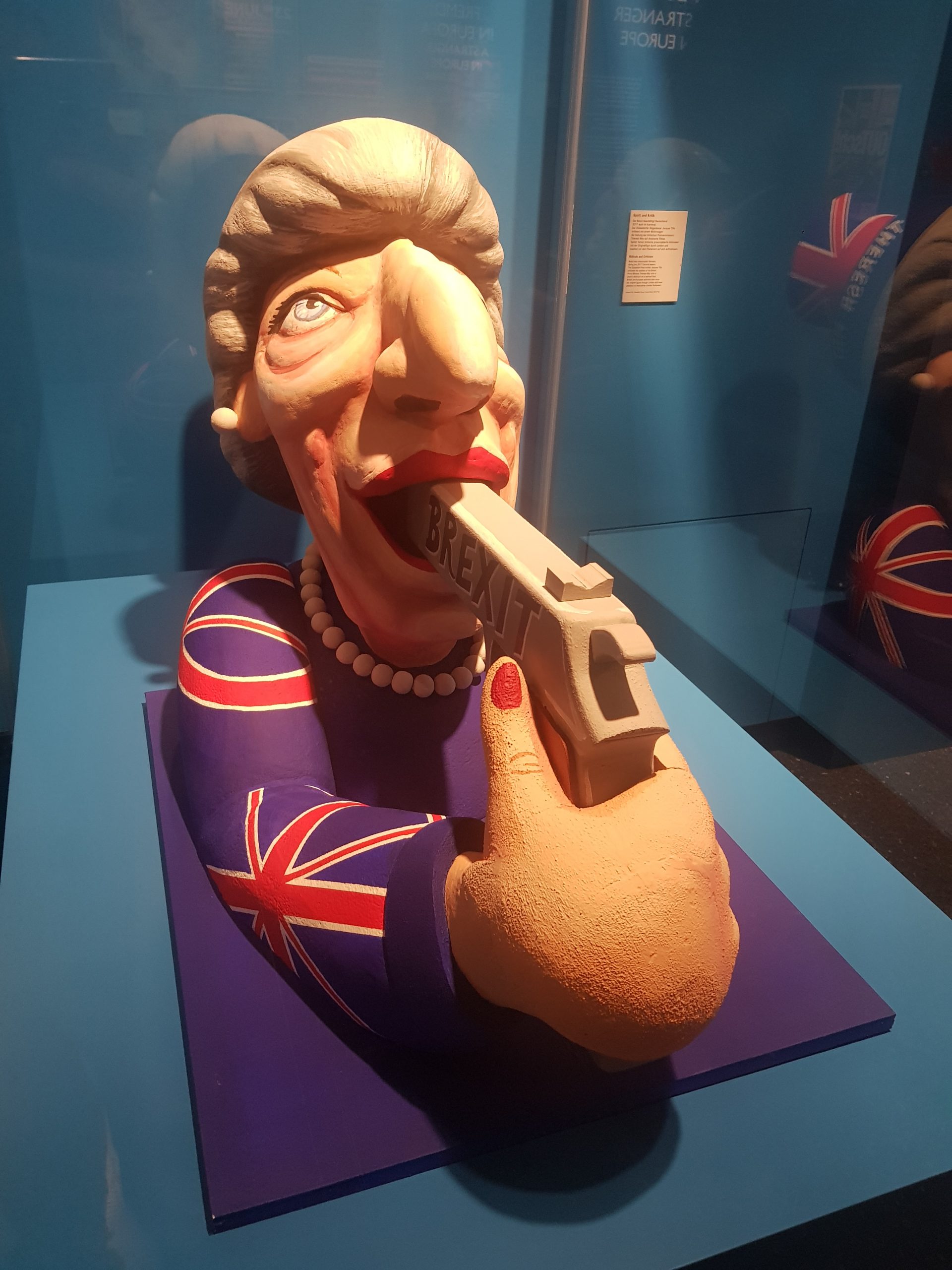
    In the photo above is a depiction of Theresa May which was designed by Jacques Tilly and used on a carnival float in Germany in 2017. It was used again in a pro-EU demonstration in London and has been much seen in images since then.

    The Brexit countdown clock.

    A Daily Mirror newspaper headline from when Ted Heath, the then Prime Minister, led the country into the then European Community, securing victory in the House of Commons by a majority of 112 on 28 October 1971. Ted Heath concluded that night:

    “Throughout my political career, if I may add one personal remark, it is well known that I have had the vision of a Britain in a united Europe; a Britain which would be united economically to Europe and which would be able to influence decisions affecting our own future, and which would enjoy a better standard of life and a fuller life. I have worked for a Europe which will play an increasing part in meeting the needs of those parts of the world which still lie in the shadow of want. I want Britain as a member of a Europe which is united politically, and which will enjoy lasting peace and the greater security which would ensue.”

    And Edward Heath, who I’m sure would have been enormously saddened with the current situation.

    The country entered the EU on the first day of 1973.

    A referendum was held in June 1975 to confirm the decision to enter the European Community, with this plate featuring the faces of Harold Wilson, Margaret Thatcher and Jeremy Thorpe.

    Not everyone agreed with membership.

    The sapphire dress and handbag of Margaret Thatcher. I think it’s fair to say that no-one is entirely sure what she would have thought of the current Brexit situation.

    It wasn’t made entirely clear whether this was the original, although on balance, I think that it was. It’s the letter from Theresa May to Donald Tusk, confirming that the UK were implementing Article 50 and leaving the European Union.

    As a side note to all this, I’m deeply impressed that a German museum managed to tell the story of Britain’s membership of the European Union and its predecessors with such clarity. I haven’t seen any museum in the UK make a similar effort, it was a magnificent exhibition as far as I’m concerned.

  • Bonn – Burgermanfaktur

    Bonn – Burgermanfaktur

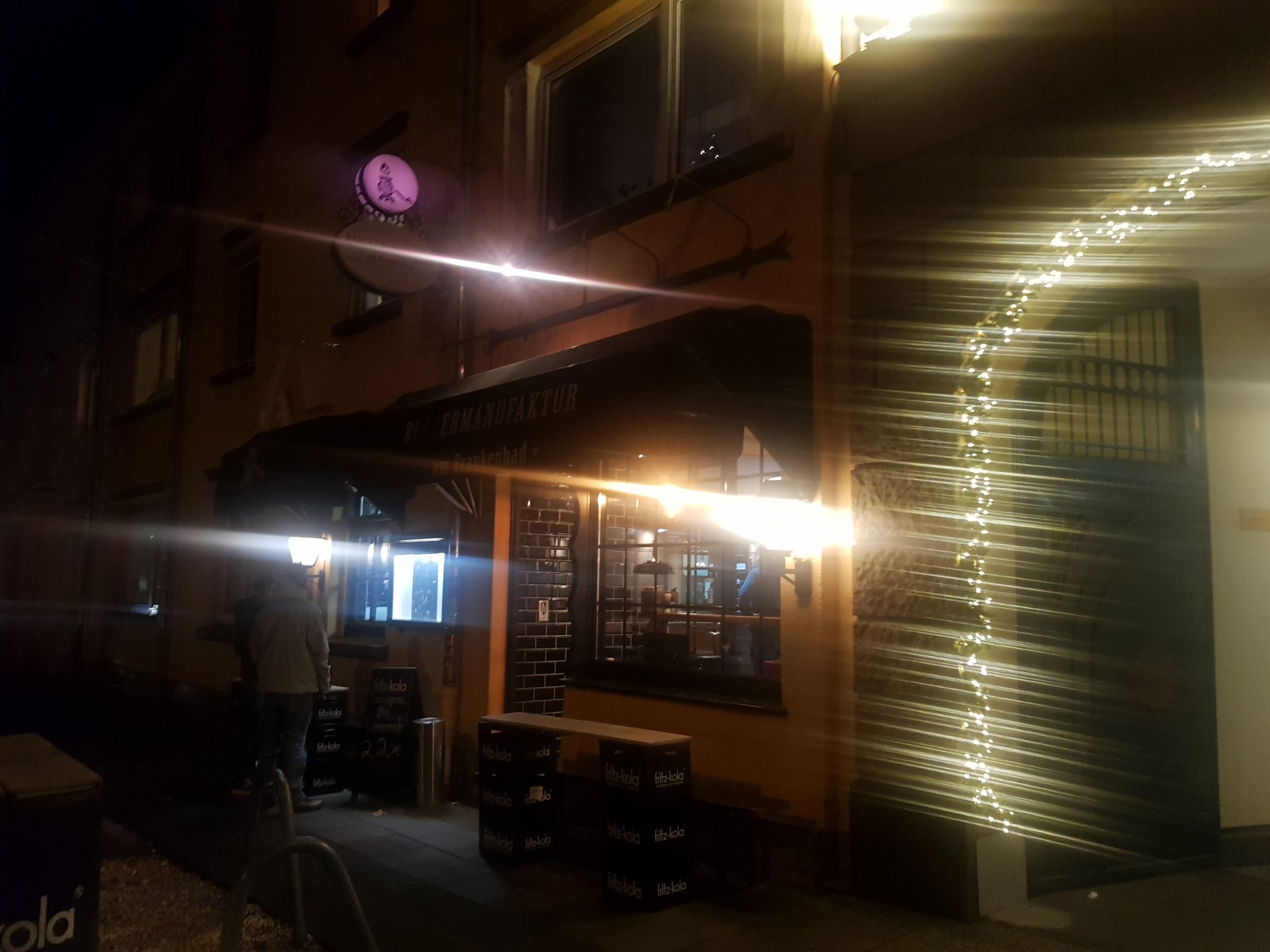
    Not the best of photos of the restaurant’s frontage, it has to be said…. Anyway, this is one of the best rated burger restaurants in Bonn and it is located opposite the Ibis hotel where we were staying, so that proved to be convenient.

    The table decoration. We come all this way to be reminded of Holt……

    The menu was only in German, meaning Google Translate was brought into use….

    The burger itself was fine and at the appropriate hot temperature, but it didn’t have the depth of flavour that it perhaps ideally could have done. The lightly toasted bun added some texture and flavour, as did the mild heat of the other ingredients. Entirely acceptable, although not one of the best burgers that I’ve had this year.

    The chips were much better with a firm exterior and fluffy interior, with the BBQ sauce being particularly decent.

    The ordering process was moderately confusing insomuch as it’s necessary to find a table, order at the counter, wait for the name to be called out, then the staff seem to bring the food over, then go back to the counter and remind them what has been ordered in order to pay.

    The beer selection was fine, although the bottles were quite large and the imperial stout quite strong, so we resisted given the length of the train journey was coming up. This was very responsible indeed.

    All in all, the atmosphere of this restaurant was clean and comfortable, with the staff being friendly and helpful. I was pleased that we came here as the environment was relaxed and we didn’t feel hurried. It was also just a short walk across the road to collect our bags from the Ibis and then have the excitement of the return train journey back to Luxembourg.

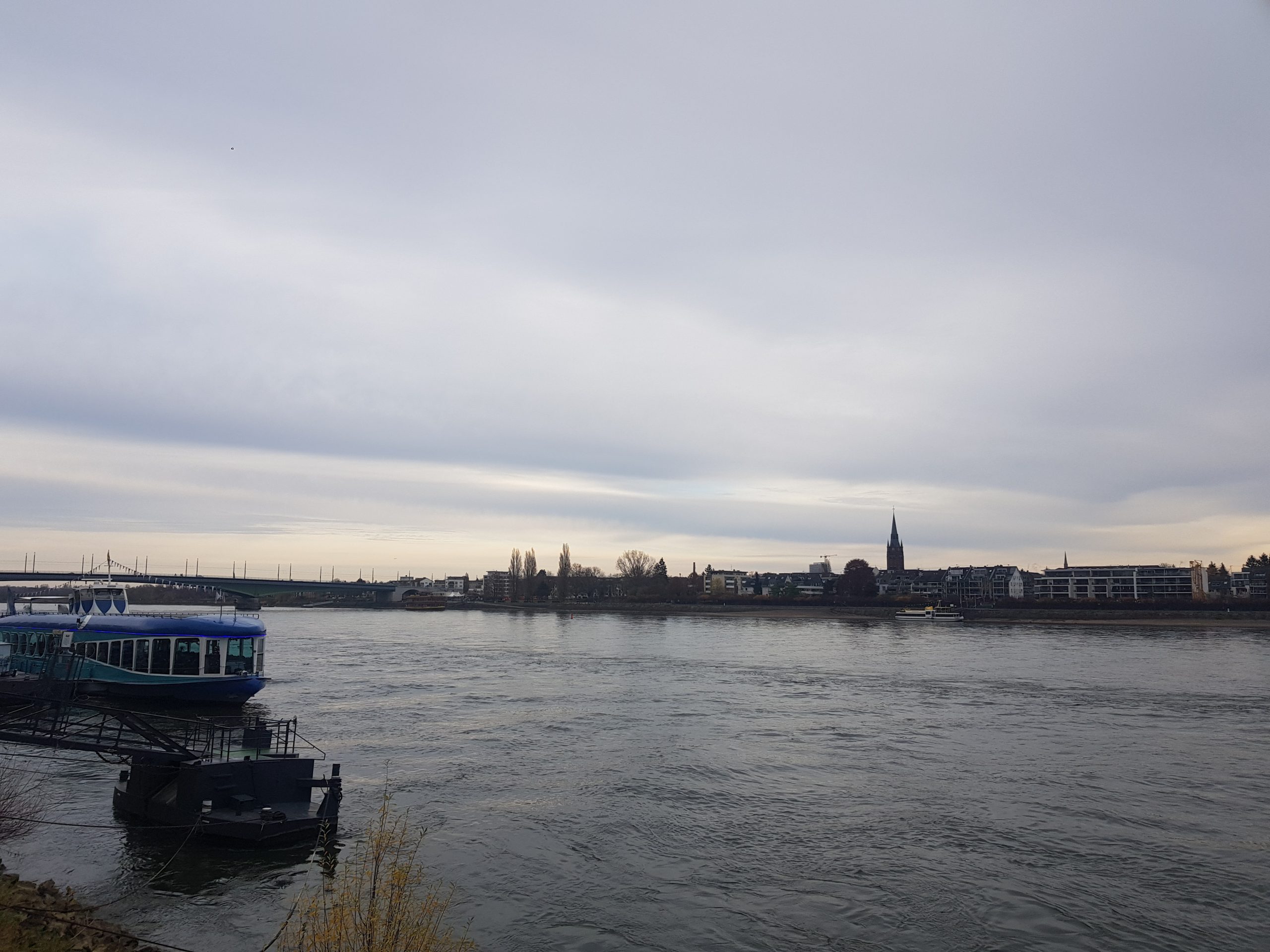
  • Bonn – Walk along the River Rhine

    Bonn – Walk along the River Rhine

    The Saturday morning walk to the museum mile took us along the River Rhine, giving some views along the river and the nearby hills. It didn’t feel like a massively built-up area, indeed it was all rather peaceful. A couple of river cruisers went by on the water, that must be quite a pleasant way to spend a few days.