Blog

  • London – Science Museum (Slide Rule)

    London – Science Museum (Slide Rule)

    I definitely need to get out more, since I now find myself posting about slide rules.

    But, it’s an interesting slide rule, as much as these things can be. It was made by William Cary of The Strand in London in 1815 and is a slide rule for weights, measures and currency conversions. It’s made from wood, but the front is made from paper, with these apparently being popular in the early nineteenth century (I didn’t know that, the Science Museum web-site helpfully told me this little titbit).

    It makes me pleased to have a smartphone though, I can’t imagine having to traipse this sort of thing around and it has limited entertainment value….

  • London – Science Museum (King George III’s Mural Arc)

    London – Science Museum (King George III’s Mural Arc)

    This sizeable instrument was designed to be used in King George III’s private astronomical observatory in Richmond. Designed by Jeremiah Sisson of The Strand in London in 1770, it’s still owned today by the Crown Estate Commissioners. It’s nearly three metres in height and over four metres wide and it was used to make astronomical measurements. Sisson might have been a fine maker of instruments, a skill he had inherited from his father Jonathan Sisson, but he wasn’t as successful financially.

    The museum’s blog mentions that one of the challenges was moving it from storage into the museum itself, as it weighs around 450kgs and needed a sling around it when it was being hoisted into place. It was also restored so that it looked like new and Sisson’s signature could once again be seen, although personally I prefer to see these things in their dilapidated state as it feels that bit more authentic.

    There are some old books which give lots of detail on how the mural arc was originally used, but it’s all a bit complex for me to understand. It’s an impressive piece of apparatus though, with an interesting heritage.

  • Waltham Cross – Moon and Cross

    Waltham Cross – Moon and Cross

    I last came here in May 2004, I remember it as I was staying nearby for my pub licencee training at the Sultan pub at Waltham Abbey. I nearly walked over to see that pub as well but I couldn’t honestly be bothered as it was pouring with rain. I was sure that this pub was called the Moon Under Water, as other Wetherspoon pubs in London are, although the Moon element is from the same derivative, which is from George Orwell’s definition of a perfect pub.

    Quite a warm and homely atmosphere inside, well, as far as these things go.

    I don’t know of many Wetherspoon pubs with rugs on the wall, or tapestries, whatever they’re called.

    And a lovely pint of Guinness, which was poured fine, it was just still cascading when I took this photo.

    And a reasonably priced Chicken Jalfrezi curry club, costing just over £7 including the Guinness, all cooked as it should have been.

    Service was fine, all efficient and friendly, quite a comfortable atmosphere and I was pleased by the number of power sockets as well. Anyway, onto their TripAdvisor reviews….

    “Came in tonight to have dinner and had to wait over 45 mins to get my curry. I know they make big pots of curry so as to why it took do long heaven only knows as it was not even a busy night…..”

    One person complaining earlier in the year about curry club. Although, they really don’t make big pots of it, it’s microwaved and heavily portion controlled. Which is just fine with me, as long as it tastes good, I’m not after an authentic Indian experience here.

    “[I left] after calling them ‘ignorant pigs’. I tried to report it to there head office but they were totally unresponsive to my complaint & totally unintrested neadless to say that we shall Never go there again”.

    One pleased customer who was upset that the staff didn’t respond nicely enough when they told them that their food wasn’t there yet. I’m not surprised that the Head Office ignored anyone who called their staff “ignorant pigs”….. I do like a bit of drama like this though.

    I can’t, if I’m being honest, remember anything of this pub from 2004 (including seemingly even its name), although it’s fair to say that I’ve been in more than a few during the intervening period. Price wise, it’s excellent value for money, and fortunately it wasn’t too busy. All very lovely.

  • Waltham Cross – Eleanor Cross

    Waltham Cross – Eleanor Cross

    I’ve discovered another gap in my historical knowledge, as I had never heard of the Eleanor Crosses before today. These were twelve stone monuments erected by King Edward I in honour of his wife, Eleanor of Castile, which marked where her body laid in rest overnight when being taken to London from Harby in Nottinghamshire. The end point in London was Charing Cross, later named after their cross, although their stone monument was destroyed on the instructions of Parliament in 1647.

    Of the original twelve monuments, only three survive, which are the one in Waltham Cross and at Geddington (in Northamptonshire) and Hardingstone (also in Northamptonshire). The monument here has been repaired many times over the centuries, but it still dominates the entrance to the tower centre. The statues of Eleanor aren’t original, they’re 1950s reproductions which were placed here as the originals were being damaged by the environment. The originals were initially placed on display in the town’s library, but they’re now at the Victoria & Albert museum. It’s probably now been a little over-restored so not much of the original is left, but the town is fortunate that they are one of the locations where the monument has survived at all.

  • Cheshunt – Lee Valley YHA

    Cheshunt – Lee Valley YHA

    Being 43, I’ve decided that I’m too old for youth hostels (although I’m frequently the youngest there if I’m being honest), but they have had some impressively cheap private rooms on offer this year. Lee Valley YHA is conveniently located a two-minute walk from Cheshunt railway station, which is just a £4 fare from London Liverpool Street on the Overground.

    There are a series of lodges in addition to the main building, which are probably much in demand during the summer by cyclists, walkers, canoeists and sociable people. During the winter months there is a different dynamic, but it’s a quiet location which feels like it’s in the countryside.

    My private room, which was basic, but functional. There were sufficient power sockets, although no wi-fi is offered in the lodges, although I didn’t need it. There’s also no television in the rooms, although there is one of the communal area and I never watch it anyway.

    YHA are really not good at communicating on site what they offer in terms of meals and facilities, so I was aware that they did do meals and drinks, but I have no idea what they are, or when they’ve served. In terms of running a bar cafe in the day, it’s a marvellous idea, but I’m unsure why they have to keep these things most secret than they need to. I didn’t see a menu on the wall, on tables, in the rooms or communal areas, although I was told they did breakfast. To be fair, the YHA do though put the menu on their web-site, although not with anything useful such as opening times.

    The welcome was friendly and the staff member seemed keen to help, engaging in a positive manner. The set-up of lodges within the complex is useful, as it means that groups can privately hire one if they like, without disturbing the operation of the rest of the hostel. Each lodge can cater for a maximum of twenty people, with the hire fees being from £199 per night (although this price doesn’t seem to actually ever be available, despite on-line bookings running ahead for fifteen months). There’s also car parking on site, not that this was of much relevance to me.

    The private room, with en suite, that I was in cost £17 per night, which seems very reasonable to me. It’s around a ten-minute walk to the centre of the metropolis that is Cheshunt, with the security at the site seemingly quite tight. At this price, it’s all rather lovely.

  • London – Tower of London (Traitors’ Gate)

    London – Tower of London (Traitors’ Gate)

    This notorious water gate was added to the Tower of London in the 1270s, at the instruction of King Edward I. It takes its current name from around the 1530s, based on the stories that traitors were brought into the Tower via this gate.

    Above is the gate from the River Thames side.

    This is the gate from the inside of the Tower of London, looking out to where the water would have lapped up against the wall. I’m unsure how much of this has been rebuilt relatively recently, the stonework doesn’t quite match that from the late nineteenth century, so there must have been some minor reconstruction over the last century. Not to mention that the stonework here is from different periods anyway.

    The steps down into an area where various machinery relating to the gate has historically been located, although it has since all been removed.

    There was an article in the press in February 1866 which reported that “one of the most famous antiquities in London has just disappeared.The gate, through which condemned prisoners passed from the Thames into the Tower, has for some time past been in the course of demolition, and has in the last few days been entirely removed”. This relates to the element of the gate that still remains walled up, so it is no longer possible to get to the gate from the River Thames.

    The story that the gate was used by Anne Boleyn when she was transported to the Tower of London also appears to be false, she was brought in at the Byward Tower. However, it remains nearly certain that this gate was used for political prisoners and it still has a slightly haunting feel to it.

  • Greenwich – The Gate Clock

    Greenwich – The Gate Clock

    I think this is one of the few Wetherspoons in London that I haven’t previously visited, or at least I can’t remember visiting it. It’s located opposite the Cutty Sark DLR station and is a relatively sizeable pub, with seating on two floors.

    I can’t be doing with change at my time of life, which is 43 years old, so I had my usual chicken wrap and chips. And, it was perfectly acceptable and good value for money, so all was well with the world.

    Not the most inspirational of photos I admit, but I’m pleased to see that this is one of many Wetherspoons where they’ve made a real effort to provide plug sockets for customers to use.

    The pub themselves give some information about their name:

    “This Wetherspoon pub takes its name from the ‘galvano -magnetic’ clock fixed to the gate of the Greenwich Observatory in 1851. One of the first electric public clocks, it shows Greenwich Mean Time, still used as a measure for longitudes and global time zones.”

    Service in the pub was fine, friendly and attentive with the environment being clean throughout. Well, other than the male toilets, I do wonder whether a staff member perhaps skipped a toilet check given the state of them. But, I don’t let such things concern me. This is one of the few Wetherspoons that I’ve visited where the disabled toilets are on the first floor, although there is a lift to get to them, which it seems from reviews was out of action for several weeks earlier in the year.

    Anyway, onto TripAdvisor to amuse myself.

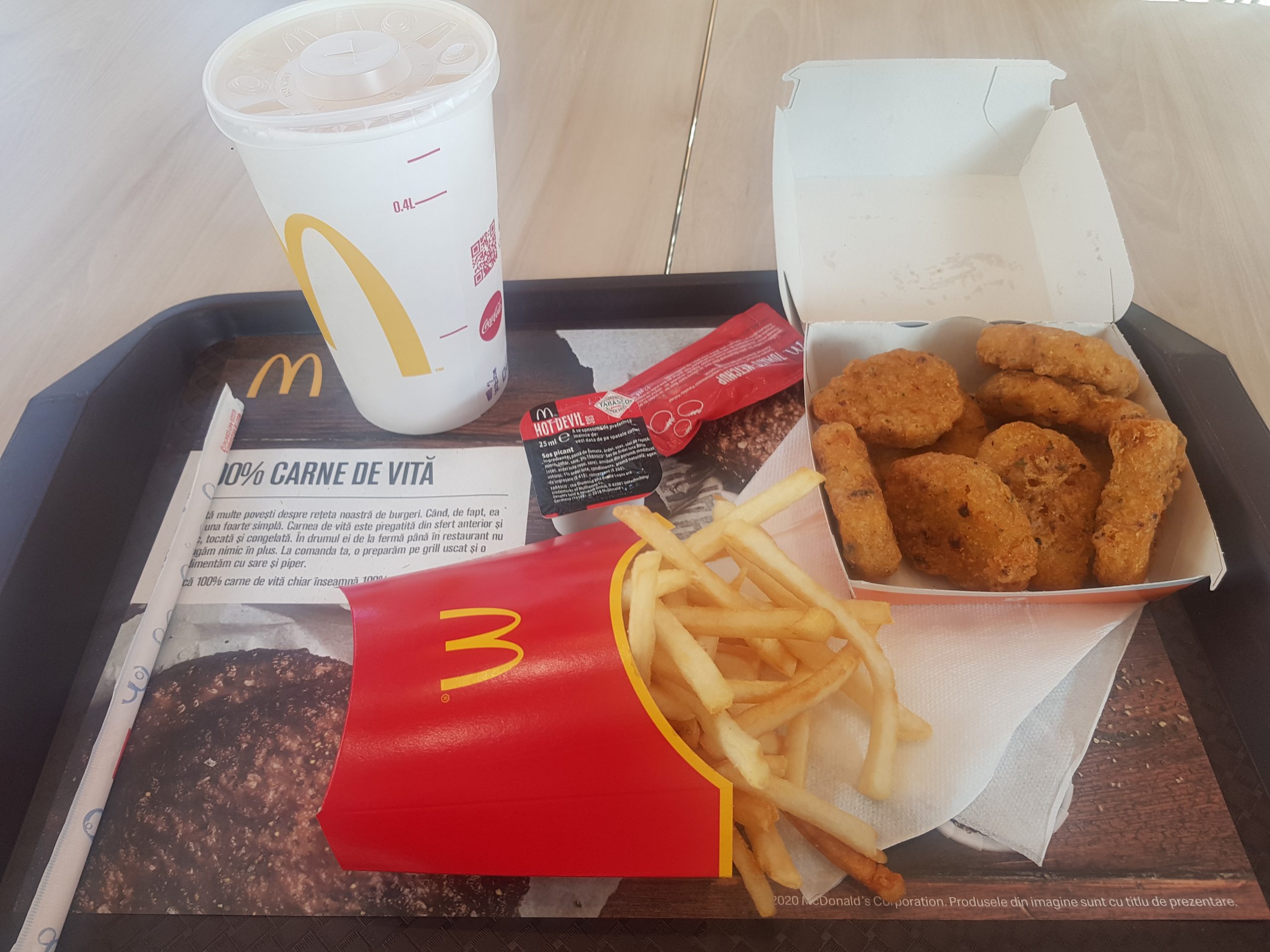
    “We visited this pub on a cold day. We had two young children with us who are fussy eaters and wanted McDonalds. Their mother bought them their lunch and the rest of us went into the Gate Clock to eat. We found a large table and the two children and their mother sat at the table while we went to order our food. We had ordered our food and drinks and paid for them when the mother came over and told us that she had been told to leave as she could not consume other companys food in their restaurant. We have always used Wetherspoons when we have been out as we find them child friendly and have had no comment on the children eating their own type of food before.”

    Some customers never cease to amaze me. They bought their children McDonald’s and then sat in Wetherspoons with it, being surprised when the manager told them not to. And then they give the pub a 1/5 rating on TripAdvisor, as seemingly they’re meant to be a food court in the eyes of some customers….

    “So we are sitting having dinner and my friend is asked to leave because he is wearing his hat after 8pm. He is Finnish and elderly and they proceeded to intimidate him saying they can’t speak to me because their issue wasn’t with me. I’m 32 and speak English well so they decided to pick on him. It was because he never understood them the first time they asked. RACISTS RACISTS RACISTS!”

    Not that it’s anything to do with me, but they always say that gentlemen should take off their hat when entering a pub. I always do, although that’s primarily due to me never wearing a hat in the first place. I don’t rule out that bar staff might have had some race hatred against the Finnish, but I’m not sure they’re the usual group who are targeted in south London….

    “You pay upfront so they have your money and can serve you any old crap”

    I quite liked this reviewer’s turn of phrase.

    Anyway, I liked it here and that’s what mostly matters to me…..

  • London – Tower of London (Salt Tower and Hew Draper Graffiti)

    London – Tower of London (Salt Tower and Hew Draper Graffiti)

    There is quite a lot of graffiti on the walls of the Salt Tower, much of which was created by those who were imprisoned here, although a little unfortunately seems to be rather more recent.

    This is one of the most impressive pieces of graffiti I’ve seen though, credited to the brewer Hew Draper of Bristol, who conveniently dated it to 30 May 1561. By this time Draper had already been imprisoned in the tower for fourteen months, for the alleged crime of sorcery. The information panel notes:

    “The sphere is surrounded by the signs of the zodiac. The grid on the left shows the planetary influence over every hour of every day of the week”.

    A photo of the same graffiti, taken in 1898 by Sir Benjamin Stone, when the tower was used by Yeoman Warders for their accommodation. The fate of Draper isn’t known, with the Tower’s records not giving any information on whether he died or was freed. Missing records are hardly rare, but this hasn’t stopped some people suggesting that Draper managed to spirit himself away to avoid punishment. This graffiti was mentioned in the media as early as 1810, so it appears to have puzzled and intrigued many generations.

  • London – Brewdog Tower Hill

    London – Brewdog Tower Hill

    I’m slowly working my way around Brewdog locations in the UK, although I have some way still to go. I’m a martyr to my completist urges…..

    This is the Tower Hill location, just a short walk away from the Tower of London and Tower Bridge. It’s a large venue, but unfortunately a combination of an early evening visit just before Christmas meant that it was also not inconsiderably busy.

    I opted for half a Jet Black Heart and the staff member had real problems pouring it, some considerable fobbing meant he spent some time trying to get it to settle. He seemed to know what he was doing, but I’ve never seen a bar have sprays of water to clean down the side of glasses from where the beer was overflowing. I don’t know enough about the brewing and dispenses processes, but they seemed to be struggling a little here with some of the beers. The beer also didn’t taste quite right, the flavours were there, but it didn’t seem rich enough.

    Some highlights from the food menu.

    Behind the bar, which at the time was quiet, although that didn’t last long.

    The beer fridge, with some interesting options. Beers can be taken away, or consumed at the bar for a surcharge of around £2 per can or bottle.

    And some more photos of the interior. The service at the bar was friendly and efficient, despite it being relatively busy. I was impressed that customers were being served in turn, so the bar staff seemed aware of what was going on.

    A growler filler on the bar.

    Anyway, onto TripAdvisor to see what drivel people have posted there.

    “I visited Brewdog last week, ordered a pint of Punk EPA. When I got back to the table I realised there was a fruit fly in my beer. Took it back and barman told me it must have flown in there on way to table, put in his finger to scoop it out then offered the same pint back to me!”

    I liked this one, although as a customer I’d have just taken the fly out myself. Although bar staff taking things out of the glass with their finger isn’t ideal…..

    “1) drunken local men peeing in the sink in the bathroom. A sign would be helpful or an attendant to make sure these neanderthals can find their way to the urinal, and to teach them the difference between their backside and their elbow
    2) another drunken man crawling around the floor on all fours wearing a leather BDSM mask. Perhaps part of a stag-do, but it was still off putting when you’re with children.”

    Fortunately my standards are higher than that, goodness knows what was happening in the pub on that night….

    “This is the worst place to drink in the whole of London. Rude, overbearing staff with shocking customer service skills and bad attitudes all round. I would rather gouge my eyeballs out than ever revisit this place.”

    This one is from Google, where the reviews are normally more sensible. I can safely say that very few people would consider this pub to be the worst place to drink in the city. Certainly nobody would who has visited some of the rougher pubs that are in the city.

    All in all, it’s probably a much more sedate and calm environment during other times of the year, but the staff seemed on top of everything even when it was busy. The prices aren’t the cheapest, but the atmosphere was welcoming and comfortable.

  • London – Tower of London (Cradle Tower)

    London – Tower of London (Cradle Tower)

    The Cradle Tower was built between 1348 and 1355 on the instructions of King Edward III, who wanted it to be used as his private water gate to enter the Tower of London. The exterior of the gate is in the photograph above, with two rooms either side of the entrance, where porters were accommodated. The King used the gate frequently and it was protected by a drawbridge and two portcullises, of which the traces of one are still visible in the stonework.

    The gate, from inside the Tower of London.

    A fireplace in one of the porter’s rooms, which had a view to the front so they could see if anyone was trying to enter that they either needed to welcome, or repel.

    The other porter’s accommodation has been turned into a recreation of what the room may have looked like in the late sixteenth century, when it was used to imprison John Gerard. He was a Catholic priest, at a time when this wasn’t acceptable to the Monarchy, who was tortured in a bid to get him to reveal the names of other Catholics, but he never gave anything away. In association with John Arden, who was imprisoned nearby within the Salt Tower, they managed to escape from the Tower in October 1597, in a quite spectacular fashion via the moat and River Thames. Gerard faced intimidation throughout much of his life, and he did well to survive to the age of 72, dying in July 1637.

    Also imprisoned here was Anne Askew, who was punished for being a Protestant, the reverse of what Gerard suffered from just a few decades later. She may have been the only women tortured at the Tower of London for her Protestant beliefs, as well as the only female burned at the stake. The story is enormously gory, she was imprisoned here in June 1546 and was tortured on the rack, with her joints being forced apart, so her shoulders and hips were dislocated. She still didn’t reveal any information and she was burned at the stake at Smithfield, at the age of just 24. She was brave even at that point, screaming only when the flames were nearly at her head, but despite the efforts of others, she refused to recant.

    There was a large fire at the Tower in 1841, with the Cradle Tower used to throw vast amounts of explosives from, in a bid to minimise the damage to the site. The media reported at the time that, “it is stated that no less than 9,084lbs of powder and ball cartridges were thrown into the moat by the tower”.

    The upstairs of the tower is inaccessible to the public, but is less interesting historically as it was entirely rebuilt in the nineteenth century, although the upper portions had been derelict and damaged for at least a century before that. There was a report in the media in 1961 that the tower had been cleared of the armoury that was being stored there, which was being moved to the new armouries museum.