
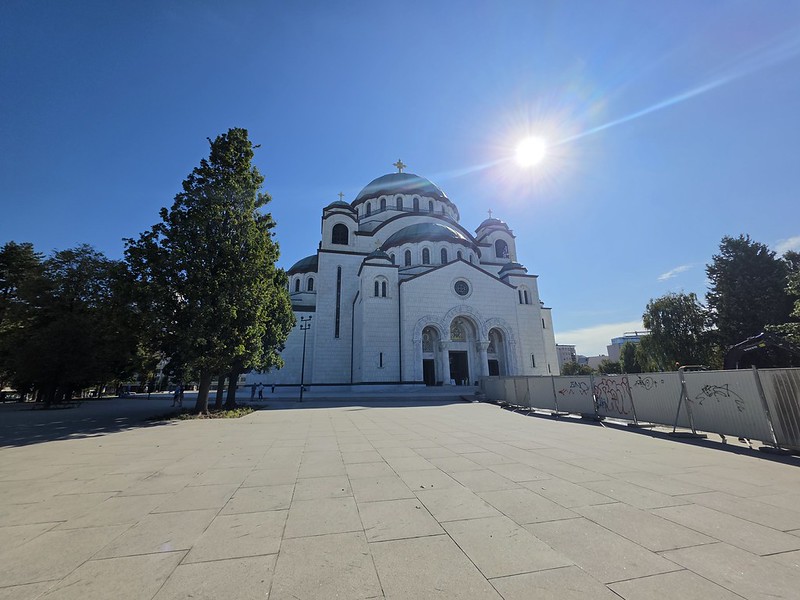
Standing prominently on Belgrade’s Vračar plateau, the Church of Saint Sava rather glistened in the sunshine, much as I did, although the church was managing to look considerably more dignified. It is the largest Orthodox church in Serbia and one of the largest by volume (which is apparently a valid measurement of church size) in the world, with its white marble and granite exterior, great central dome and collection of smaller domes making it one of the city’s most recognisable landmarks. More immediately, it offered the possibility of shade, which was rapidly becoming my principal cultural interest.
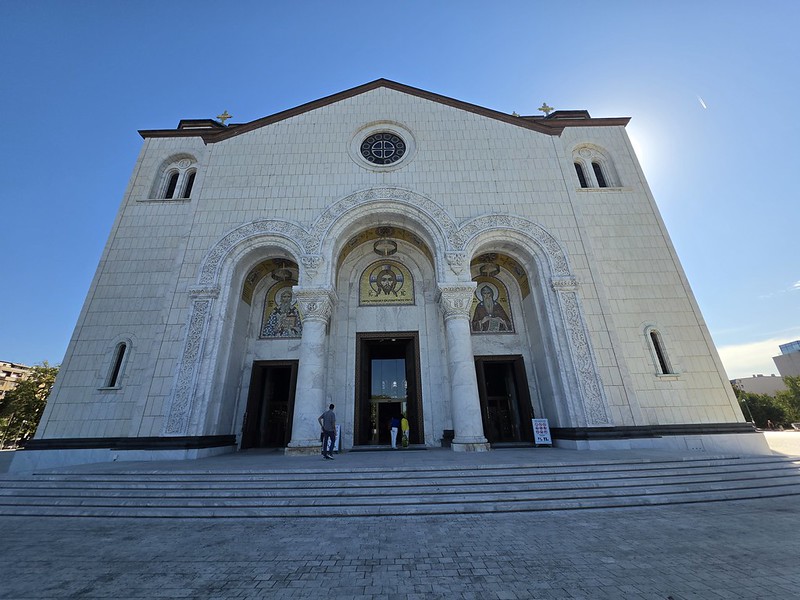
The church’s monumental Neo-Byzantine design was heavily influenced by Hagia Sophia in Istanbul and this building is dedicated to Saint Sava, the first archbishop of the independent Serbian Orthodox Church and one of the country’s most important religious figures. Its location is traditionally associated with the burning of his relics by the Ottoman authorities in 1594, although historians continue to debate precisely where this happened. Plans for a memorial church emerged during the nineteenth century, but construction did not begin until 1935. The main entrance is framed by three grand arches, decorated stonework and mosaics depicting Christ and Serbian saints, so there is little danger of mistaking it for the side door. Apologies, once again, for the slightly skewed photos, that’s me and isn’t a structural problem relating to the building.
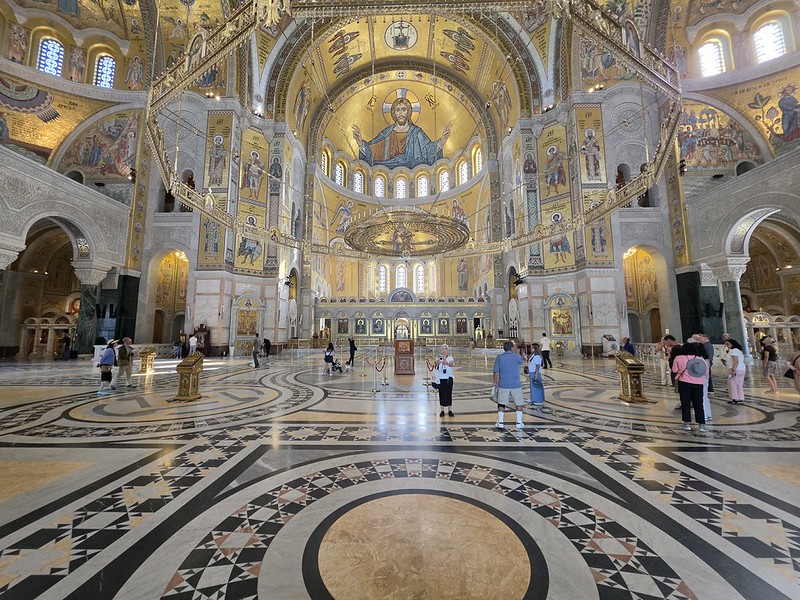
Nothing about the relatively restrained exterior quite prepares visitors for what is waiting inside. The vast central space is covered with golden mosaics, marble, carved stone and elaborate geometric flooring, while an enormous circular chandelier hangs beneath the dome. Construction stopped following the Axis invasion of Yugoslavia in 1941 and the unfinished building was subsequently used for parking military vehicles and for storage. Work remained suspended through much of the communist period before finally resuming in 1985 when much of what had been constructed needed to be reworked.
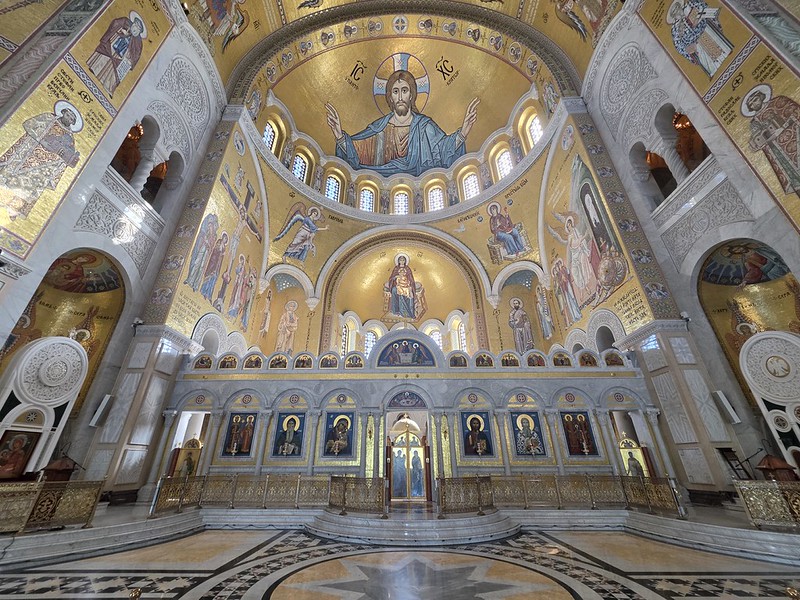
At the eastern end is the sanctuary, separated from the main body of the church by an iconostasis containing a series of richly coloured mosaic icons. Above it, Christ is shown giving a blessing from the golden half dome, with the Virgin Mary represented beneath him and saints, angels and biblical scenes covering almost every remaining surface.
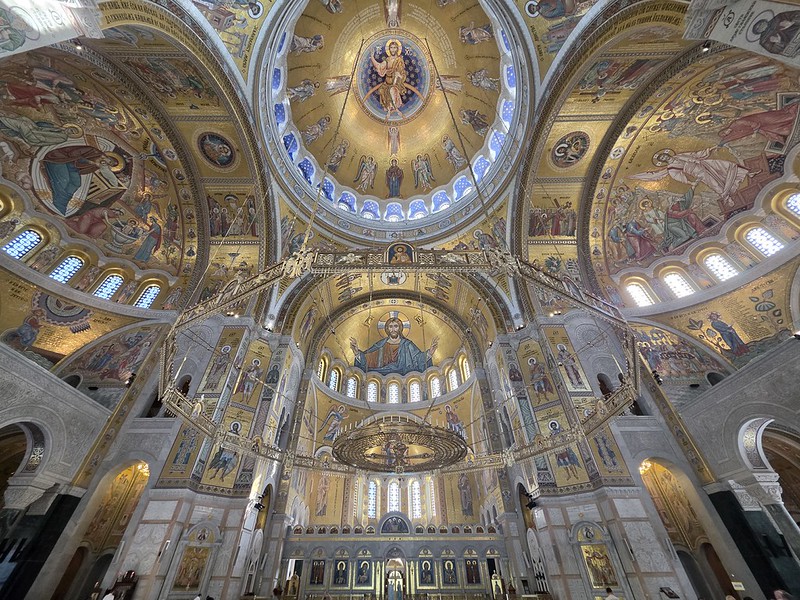
Looking upwards reveals the extraordinary scale of the central dome and surrounding vaults which is anything but understated. The dome’s principal mosaic depicts the Ascension of Christ, surrounded by angels, the Apostles and the Virgin Mary, and covers more than 1,200 square metres. The structural dome itself weighed around 4,000 tonnes and was assembled on the ground before being raised into position during 1989, an operation which took approximately forty days.
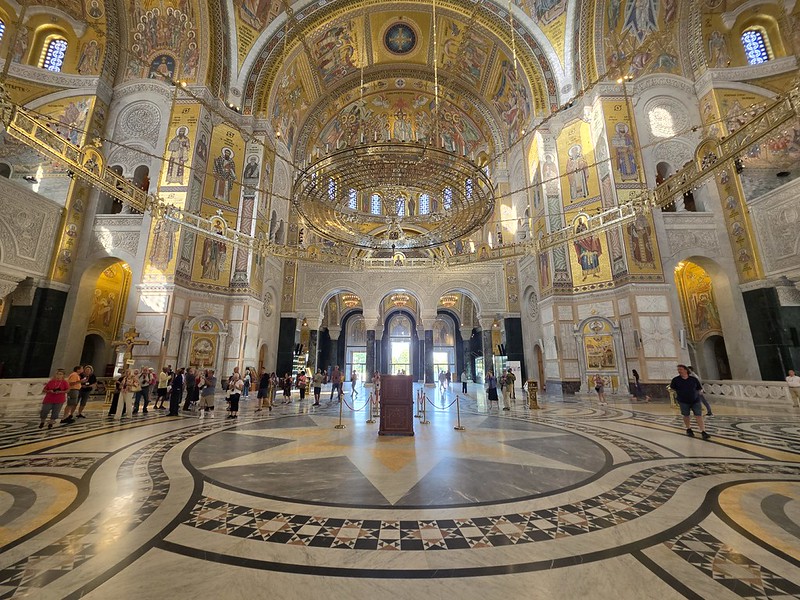
Although the exterior was largely completed in 2004, the work on the mosaics and interior decoration continued for many more years, with a major phase finished in 2020. Whatever one’s religious views, the combination of scale, craftsmanship and shimmering gold is spectacular, with an extraordinary sense of space. The church has 49 bells and I was pleased to be able to hear them ringing when I left, that was rather lovely. Oh, and it was nice and cool, so I liked that as well.