Author: admin

  • Warsaw – Ibis Warsaw Reduta

    Warsaw – Ibis Warsaw Reduta

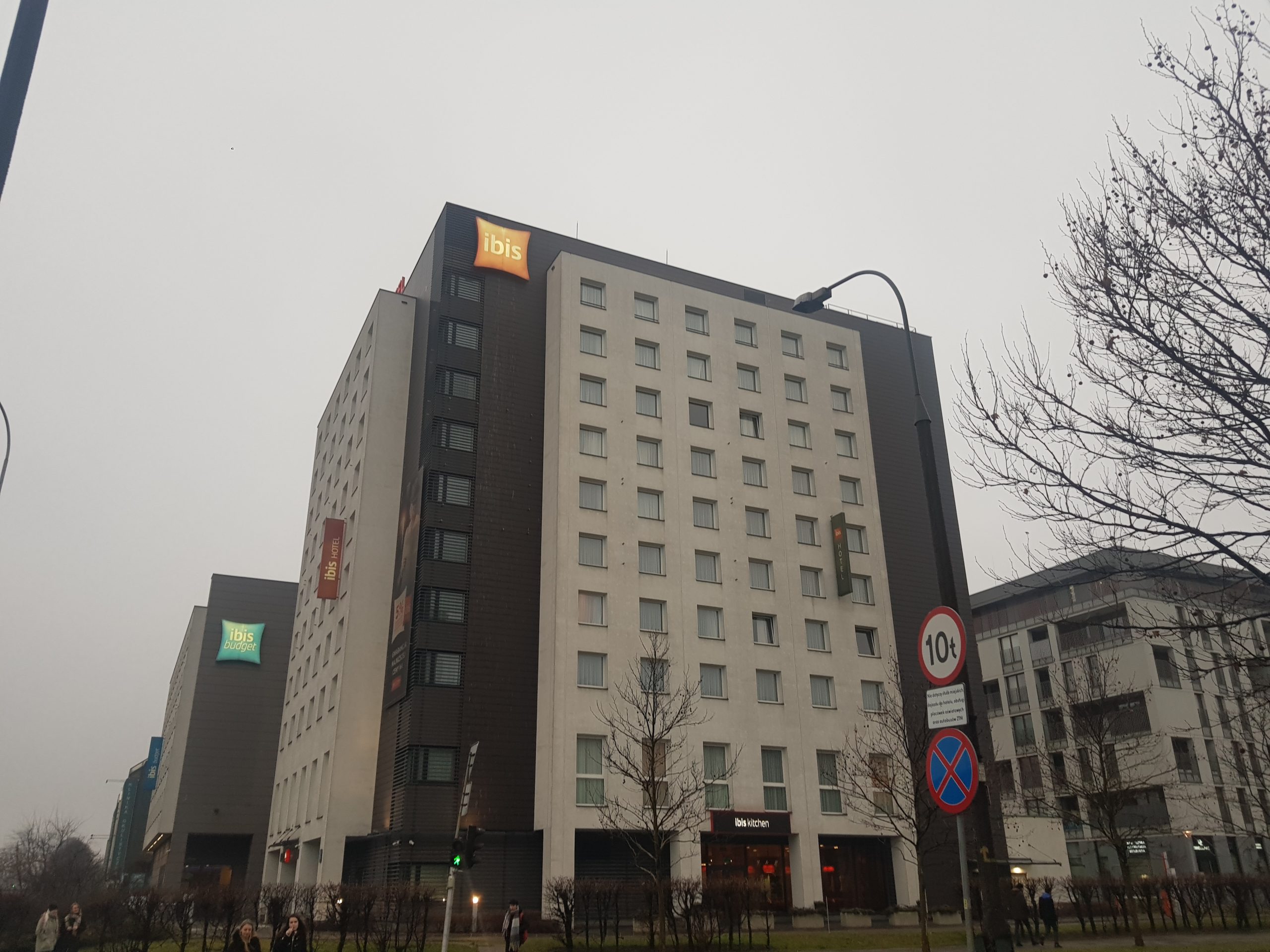
    My second Ibis hotel in Warsaw of this week, this is located around a thirty-minute walk from the city centre, in the Ochota district. There’s also an Ibis Budget on the same site, although on this occasion, I’m in the Ibis itself.

    This is what all the other doors in the corridor looked like.

    I mention that, as this is what the door to my room looked like.

    And, then it became obvious, this room had a travel theme.

    A little globe clock.

    A themed bathroom door.

    A large map on the wall.

    And an explanation of the concept. What a lovely idea.

    The view from the room over the neighbouring Ibis Budget and beyond. My Accor profile is set to ask for a room high up in the building (I’ve decided the views are more important than any minor risk of fires) and away from elevators, which was met perfectly here.

    The drinks voucher.

    Only a small Zywiec was included at this Ibis, but it tasted as it was meant to. The bar area isn’t in my view designed as well as some others in the Ibis chain, with too many low tables, with the restaurant area being busy.

    The breakfast room, which is also used as the hotel’s restaurant later on in the day.

    Apple pie was available for breakfast in the morning.

    The salad and cold meats selection. There were also hot dogs, cereals and pastries available, along with a range of drinks including juices, teas and coffees. Everything was kept well stocked and staff members were wandering around cleaning away empty trays. Everything was clean, tidy and organised, with a staff member diligently checking the room numbers of every guest.

    One thing that I thought was positive was that breakfast was available from 04:00 onwards, with the main food selection being served at 06:30. I didn’t arrive until after that latter time, but I was surprised that they had food ready that early in the morning. Until I saw this review:

    “In the elevator was a notice with the breakfast times, 0400 to 0630 early risers, 0630 to 1000 buffet, 1000 to 1200 late risers. I needed to leave the hotel on my last morning early, so decided that I would go down for the early risers. I realized it would only be coffee, perhaps a roll and some juice. What a surprise when I arrived at 600am, the total breakfast room was in darkness. I asked the front desk clerk where the breakfast was for the early risers. He replied that for the early riser breakfast this had to be pre-arranged the day/night before. What? I told him there was no notice in the elevator explaining this, no communication in the room regarding this or even in the breakfast room.”

    If that’s the case, this guest is entirely right, that was communicated badly by the hotel, as I wouldn’t have thought it required a prior reservation. The hotel’s response was a little vague on the matter as well. Anyway, I didn’t have any problems with breakfast and I liked that it was never too busy, so it was easy to find a seat. The hotel is though otherwise well reviewed, there are very few negative comments about its operation.

    Overall, this hotel was reasonably priced and it is within walking distance of the city centre, or there’s a nearby tram line for those with luggage. All of the staff were friendly and helpful, with absolutely no noise disturbances either internally or externally. The room temperature was also easy to control, primarily as I could open the window, something which seems to be beyond the wit of some hotels….
  • Warsaw – Reduta Kaliska

    Warsaw – Reduta Kaliska

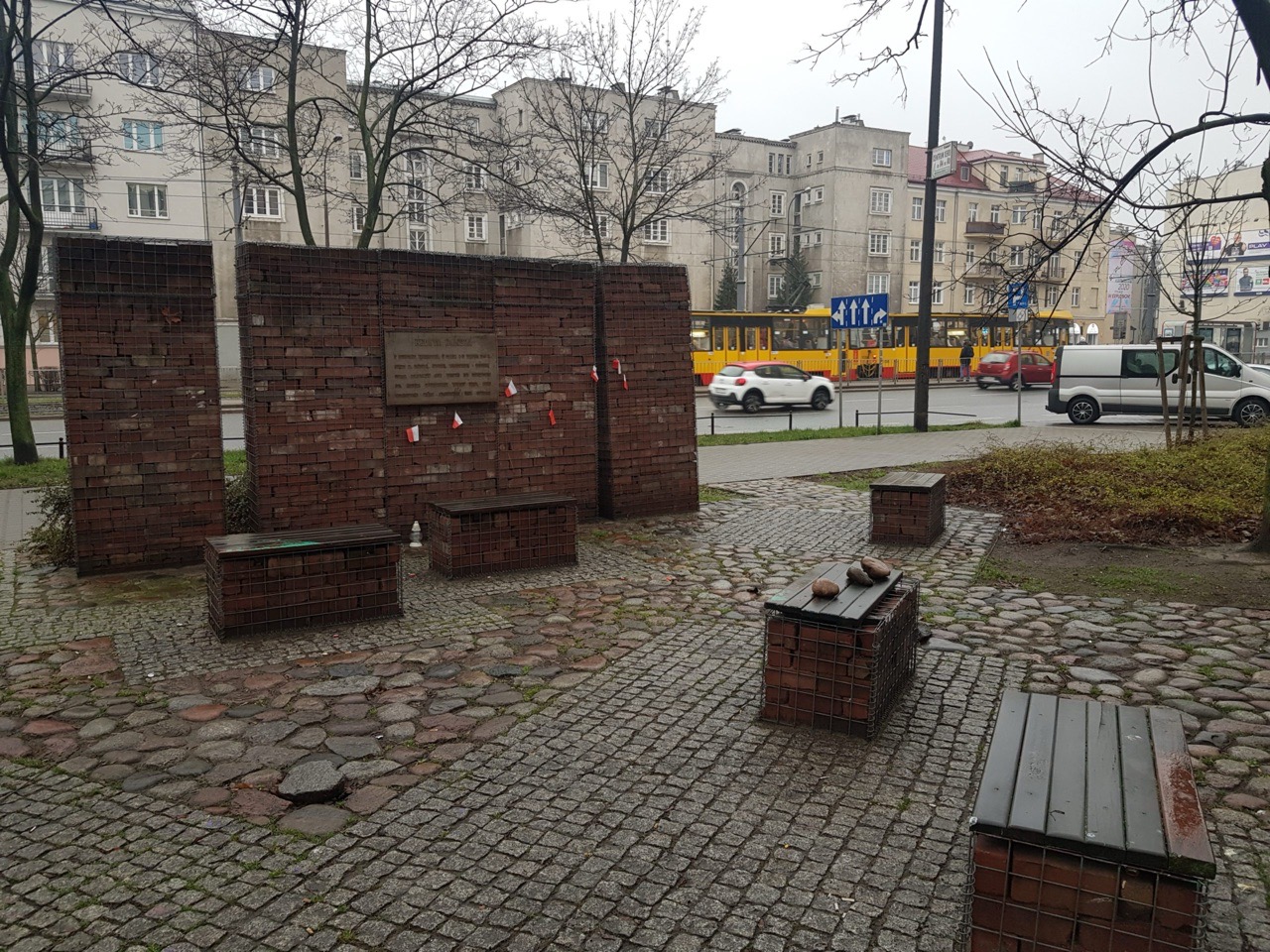
    This little area at the intersection of ul. Grójecka and ul. Kaliska was opened in 2009, to commemorate those who died in the area during the 1944 Warsaw Uprising.

    There are numerous seats to sit and reflect and it’s all neatly presented. Its location is within the Ochota region of Warsaw, where what is known as the Ochota Slaughter took place in August 1944, with Germans responsible for the rape, robbery and murder of the local population.

    A sign noting the contribution of Andrzej Włodzimierz Chyczewski, a military leader in the Polish Home Army, which was effectively an underground movement at this stage of the conflict. His bravery has been noted and he was caught by the Nazis, who sent him to Stalag XB in north-west Germany. He survived the war, deciding to emigrate to Australia, where he died in 1984. His brother, Janusz Chyczewski, was also involved in the fighting and he too made it through the war, living until 1970.

  • Warsaw – Jabeerwocky Craft Beer Pub

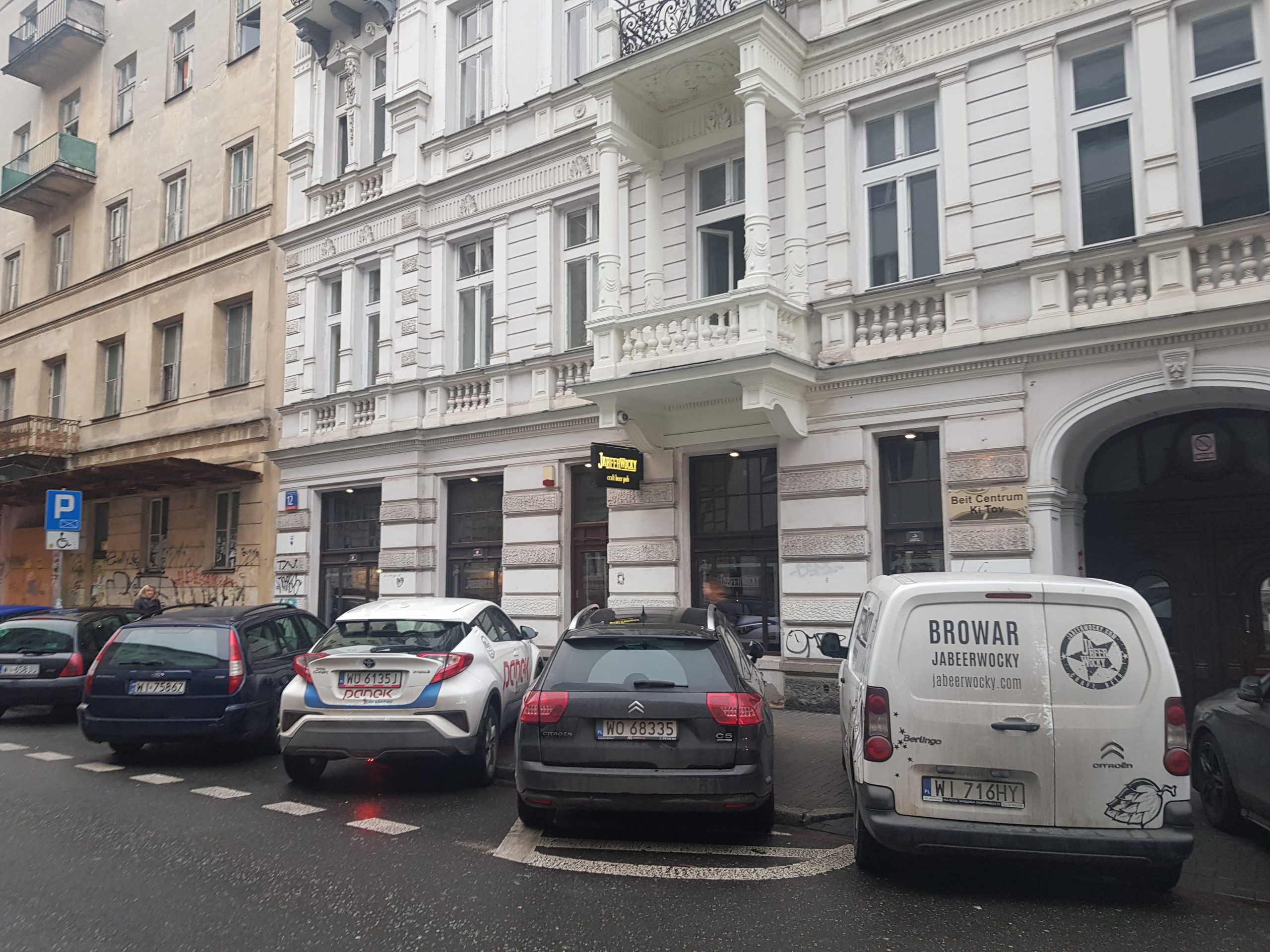
    Warsaw – Jabeerwocky Craft Beer Pub

    I was looking forwards to visiting this bar, as it’s one of the best rated locations in Warsaw and it has a formidable reputation for its beer and offering. It’s a relatively large venue, with a large main room at the front and another at the rear, although I read from reviews that it can get very busy in the evenings.

    My first impressions were positive, the beer selection was well thought through and there were a variety of different styles available. I went for the Oatmeal Stout, which is made in-house by Jabeerwocky, which was served at the appropriate temperature and had a suitable depth of flavour. There were some notes of caramel and it was a smooth beer, with some richness to it.

    The service at the bar was warm and friendly, with the staff member being knowledgeable about the beer options. The atmosphere in the venue was also relaxed and comfortable, it seemed a well managed premises.

    I fear that my problem here was visiting too soon after the pub had opened, as they didn’t feel entirely ready. I asked about food, as they serve some apparently excellent pizzas, but was told that the kitchen wasn’t opening for around fifteen minutes. I was in no rush, so tried to pay in advance, but they weren’t entirely confident when the kitchen would be ready so didn’t want to take the order. That’s all fine, but I returned to the table to wait to discover when the food would be served, either being told verbally or by being given a menu. Neither of those happened, so assuming that food wasn’t being served, I started to explore other food options on-line (hence the review of Hoppiness where I hadn’t intended to eat).

    When I went to pay for my one drink, the staff member did ask if I wanted to order pizza now, which seemed a little late in the proceedings. At that point some other pizzas came out from the kitchen, so they had probably been ready to serve food for some time. Not that the lack of food really mattered, as this is primarily a location known for its excellent beer, but the lack of communication did mean that I considerably shortened my visit.

    I did see this review:

    “Really this place is less that I expected. Beer have not natural taste. We take 7 different beers, and only one was good. So I couldn’t recommend this place.”

    It’s one of the most ridiculous reviews that I’ve seen, I can’t see how anyone can go through that many beers and decide that the beers didn’t have a natural taste given the experience of the owners. This venue, which has a classy name I think, is clearly doing a great deal for craft beer and they also now have an outlet in Poznan. I don’t think that it was open when I last visited Poznan, but I’ll try their outlet there when I next go back.

    The bar also has a marvellous way of showing what beers they have available, which is by having a camera pointed at their beer list behind the bar, which is updated throughout the day. An innovative way of presenting the information and ideal for those planning what to have before they arrive. I did like this bar, but slightly regret not arriving around fifteen minutes later, as I suspect that I’d have stayed for a couple of beers and pizza. But, nonetheless, a rather lovely place to try craft beers.

  • Warsaw – Hoppiness

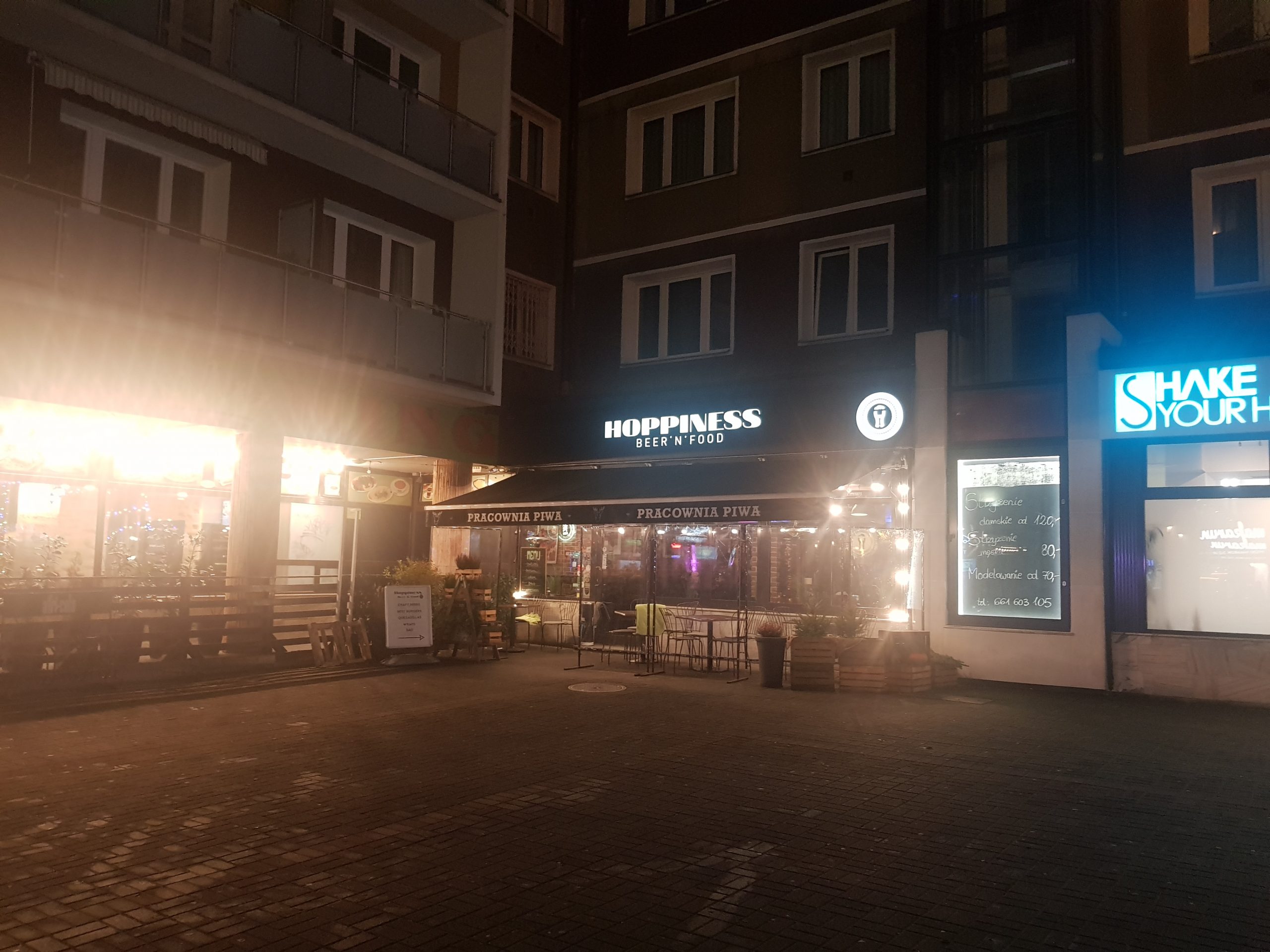
    Warsaw – Hoppiness

    Another pub on my little craft beer tour of Warsaw, this is a centrally located bar which is well reviewed and a little understated, which I like. It wasn’t particularly busy when I arrived, although a Friday afternoon isn’t perhaps really ever going to be a time when venues are packed out. Other than some Wetherspoons, which seem permanently busy and sometimes I’m never sure where all their customers come from.

    The beer menu was clear, with a well balanced choice of options, all nicely curated. The staff member was friendly and engaging, as well as speaking perfect English.

    The first beer I went for the pastry stout, a beer which had a suitably sweet taste, although no real depth to it. The flavour was though pleasant and the ABV is only 2.5%, so the lack of richness wasn’t surprising. Perfectly acceptable though. As a positive, the bar has placed its beer list on-line, so customers can see what’s available before they come in and they can also see when it was made available.

    I’m not entirely sure what the difference is between an imperial stout and a baltic porter and my main source of information isn’t to hand, but I suspect that they’re similar. However, I decided that I didn’t really need a 8.5% ABV beer in the afternoon, so I switched to the lemon tart sour ale from the Pracownia Brewery in Krakow. This was beautiful, a rich and smooth taste of lemon which ran through the beer, with the beer not tasting too sour. Very drinkable and it didn’t feel like it had a 6.2% ABV, very lovely.

    I then thought that I’d better get food, so I went for the Texan burger which had cheese, bacon and onion rings in it. Pleasingly presented, I liked that I was asked how I wanted the burger cooked, since the best way is always medium in my view. I was also offered a choice of bun, with the food being brought out promptly. The burger itself was way above average, indeed one of the best I’ve had. It might not have been the largest burger patty that I’ve had, but it was tender, full of flavour and cooked just perfectly. The bacon had no uncooked fat on it, so I didn’t have to meticulously pick that off, with the cheese adding that extra bit of taste. The onion rings were fine, albeit generic, and the tomato was unexciting, that mushy type which seems to be almost commonplace now. However, those two minor elements apart, this was an accomplished plate of food (well, tray of food) and everything was hot.

    Overall, I liked this bar very much, so it’s my first entrant into the 2020 Pub of the Year award (that I compile to amuse only really myself). The service was friendly, the food was decent and the beer selection was interesting and appealing. The cost was around £11, for two large beers and the burger & chips, which isn’t unreasonable given that I was in the centre of a capital city. I try not to revisit the same place, given how many restaurants and bars there are to choose from, but I may well come back here, especially if there are some tempting beers….

  • Warsaw – National Museum in Warsaw (Polychrome Statue of Saint Barbara)

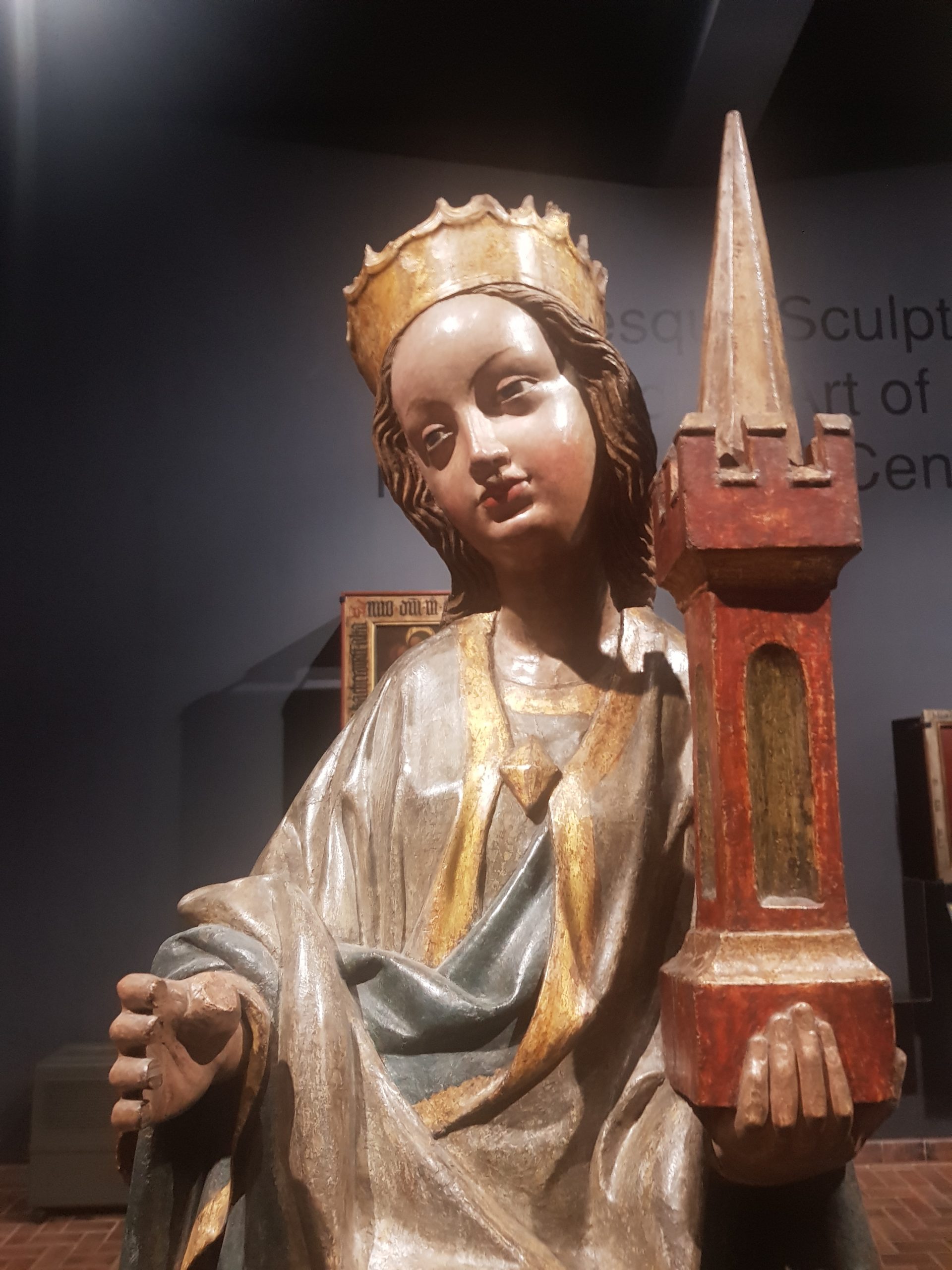
    Warsaw – National Museum in Warsaw (Polychrome Statue of Saint Barbara)

    This polychrome wooden statue comes from St. Elizabeth’s Church in Wrocław (a church I’ve visited) and dates to the early fifteenth century. It’s in a good state of repair and represents Saint Barbara, who is usually presented with a tower or chains.

    The church the statue is from is interesting as it was Catholic from when it was built in the fourteenth century until the Reformation in 1525, then Protestant until 1946 when it became Catholic again. History is full of quirks, if Hitler hadn’t started the Second World War then it’s likely that this statue would still be in the Silesian Museum of Fine Arts in Wrocław and the church from where it once came from would likely still be Protestant.

  • Warsaw – National Museum in Warsaw (Legend of Saint Hedwig of Silesia – Triptych Wings from Wroclaw)

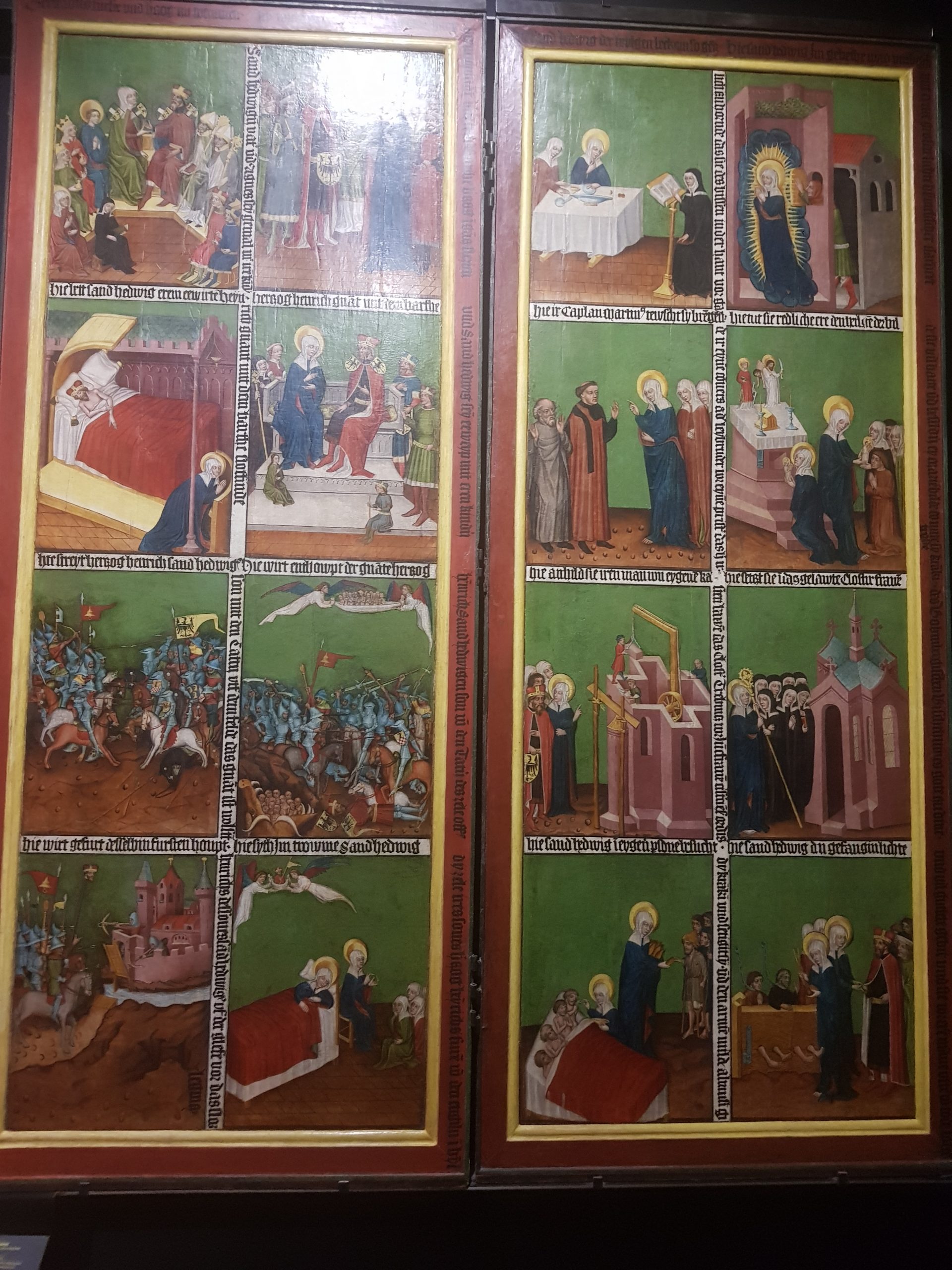
    Warsaw – National Museum in Warsaw (Legend of Saint Hedwig of Silesia – Triptych Wings from Wroclaw)

    These triptych wings are in outstanding condition, given that they were originally painted on wooden panels in the 1430s or 1440s. They were constructed to be placed on an altar at the Church of St. Bernardine of Siena in Wrocław, a church which still survives although has been much modified and is now a museum. The monks were ordered to leave the monastery by the town council in 1522, as this was a city that was influenced by the writings of Martin Luther.

    The construction of a church.

    The caring for the ill.

    What entirely puzzles me is how and why these triptych wings survived. Their survival during the Second World War isn’t surprising as they were likely housed in Silesia, part of German then, but they had already made it through over 400 years since they were removed from the church. I assume that they were kept by a Catholic family, but there’s little obvious provenance other than the wings were probably later on housed at the Silesian Museum of Fine Arts, which closed in 1945.

  • Warsaw – National Museum in Warsaw (Battle of Grunwald by Jan Matejko)

    Warsaw – National Museum in Warsaw (Battle of Grunwald by Jan Matejko)

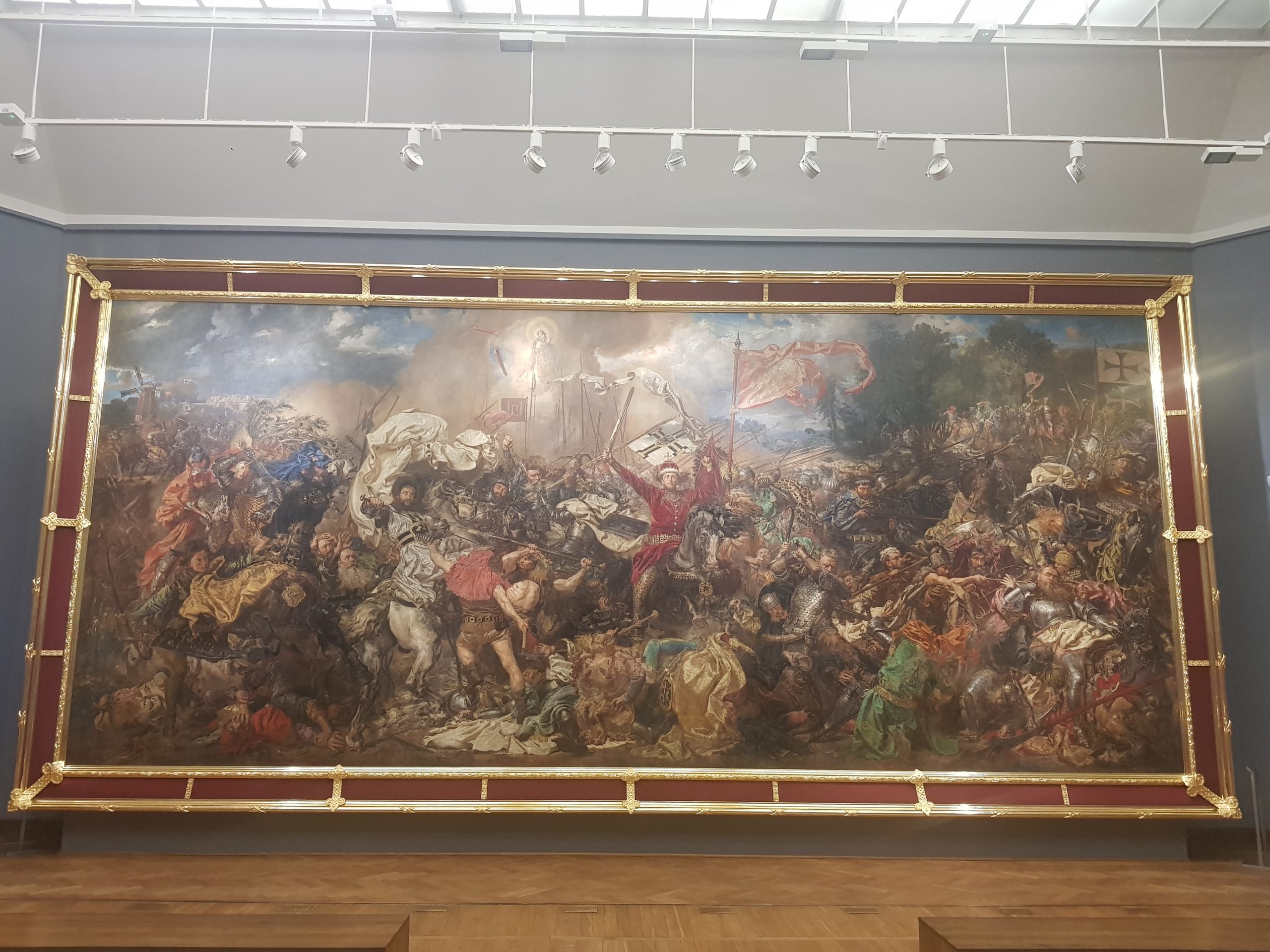
    This is no insignificant painting either in measurement, 10 metres by 4 metres, or in terms of its history and heritage. It was painted by Jan Matejko and is of the battle which took place in 1410 which was seen as an important victory for the Polish-Lithuanian Commonwealth. The artist started work on the painting in 1872 and it wasn’t completed until 1878, with its first owner being the Warsaw banker, Dawid Rosenblum.

    The painting is a significant one in Polish history and so when the Germans took over the city of Warsaw during the Second World War, this was an artwork which they wanted to seize and destroy. Joseph Goebbels offered a reward of 10,000,000 Marks for anyone who could locate it, with some Polish citizens dying rather than admit to where it was hidden. It was actually located in a stable near Lublin (although some reports say it was hidden within a library), successfully making it through the war unharmed, although in need of restoration. The Germans did know that the painting was somewhere near Lublin, but they never received anything more precise than that to help them locate it. After the post-war restoration work had been completed, the artwork was placed in the National Museum in Warsaw, where it has been since, other than periods of time when it has been loaned out to other institutions.

    The painting itself is complex and quite cluttered, it’s beyond my historical knowledge to really understand what’s going on. However, it’s a monumental artwork and someone could perhaps look at it for hours before saying that they could really comprehend it. The history of how it survived is though one of the most intriguing elements about this artwork and its placement on an end wall within the gallery gives almost a sense of theatre to the painting.

  • Warsaw – Tchorek Plaques (Solidarności Avenue)

    Warsaw – Tchorek Plaques (Solidarności Avenue)

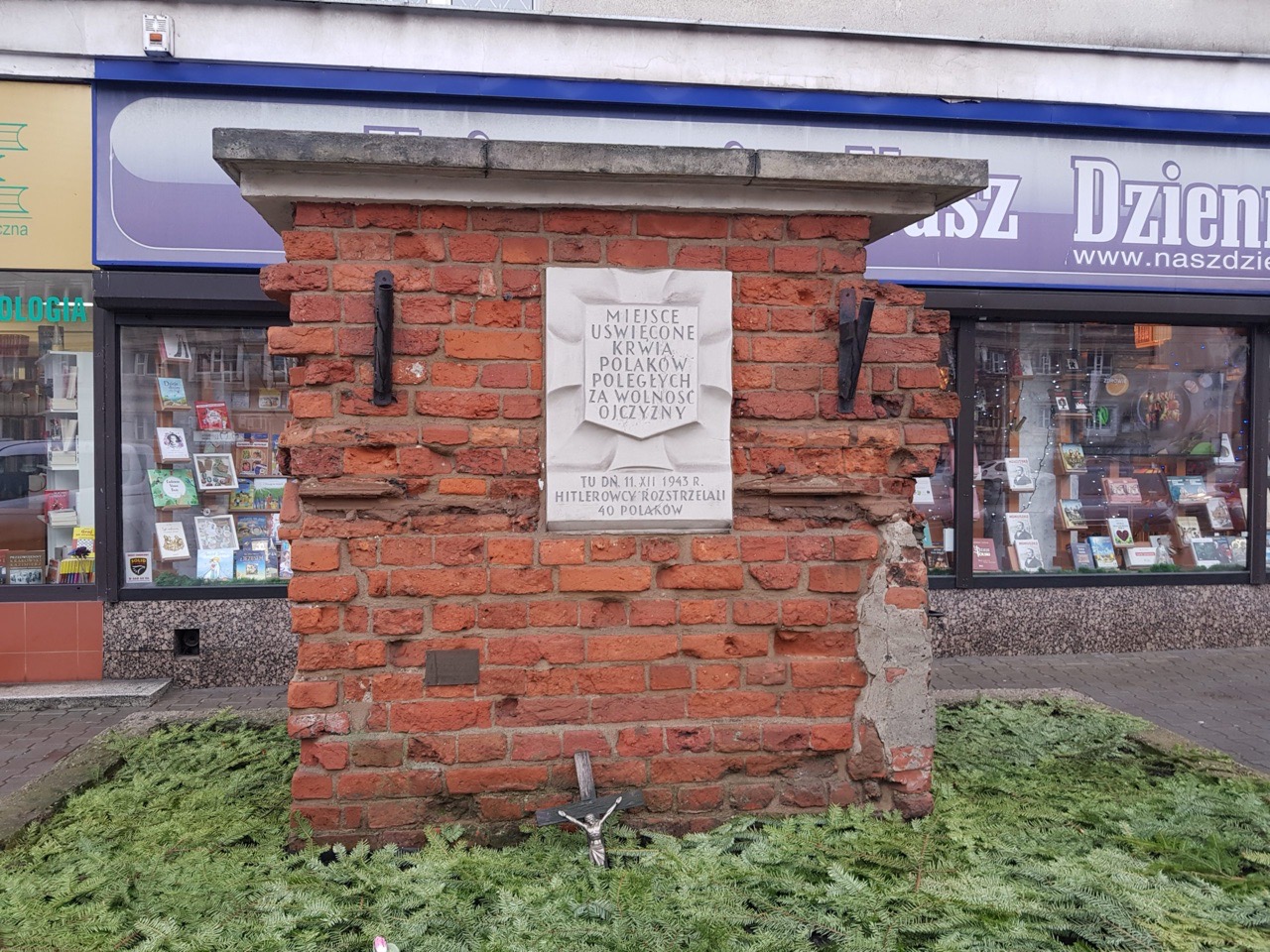
    Tchorek Plaques are memorials around Warsaw which commemorate those who died and were injured in the city during the Second World War. The text on them reads “a place sanctified by the blood of Poles who died for the freedom of their homeland” and there’s further information which explains their relevance. They’re an important reminder of the city’s past and there are literally hundreds of them around the city.

    The memorial in the above photo marks where on 11 October 1943, forty Poles were shot on the street on the orders of the Austrian Franz Kutschera. He had taken up his new role as SS and Police Leader on 22 September 1943, but his evil meant that the Kedyw, a section of the Polish Home Army, assassinated him on 1 February 1944. The Germans killed 400 innocent Polish people, chosen at random, in retaliation for the murder.

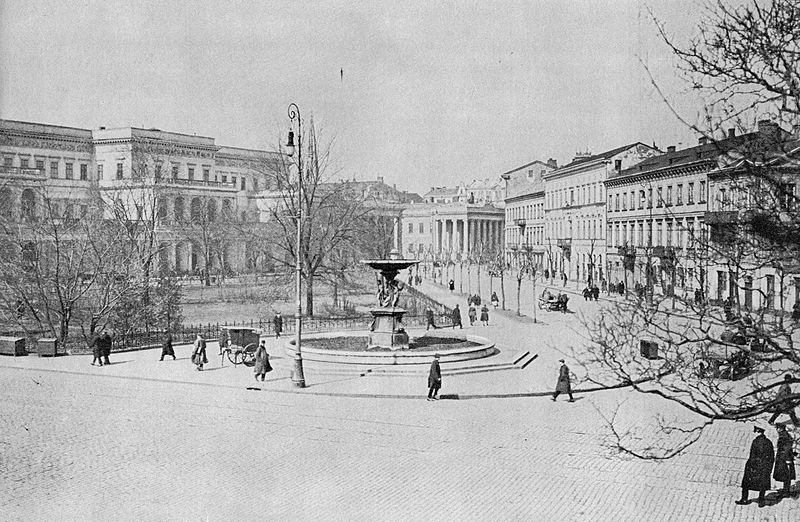
    Located just a few metres away is this memorial, placed on the remainder of a building which once stood here. This memorial also marks killings ordered by Kutschera, with thirty Poles being shot here on 26 October 1943. At the time, this was also the intersection with Rymarska Street, but the road layout has changed and this street no longer exists.

    File:Plac Bankowy w Warszawie przed 1939.jpg

    Rymarska Street, on the right, before the Second World War.

  • Warsaw – Hotel Bellotto

    Warsaw – Hotel Bellotto

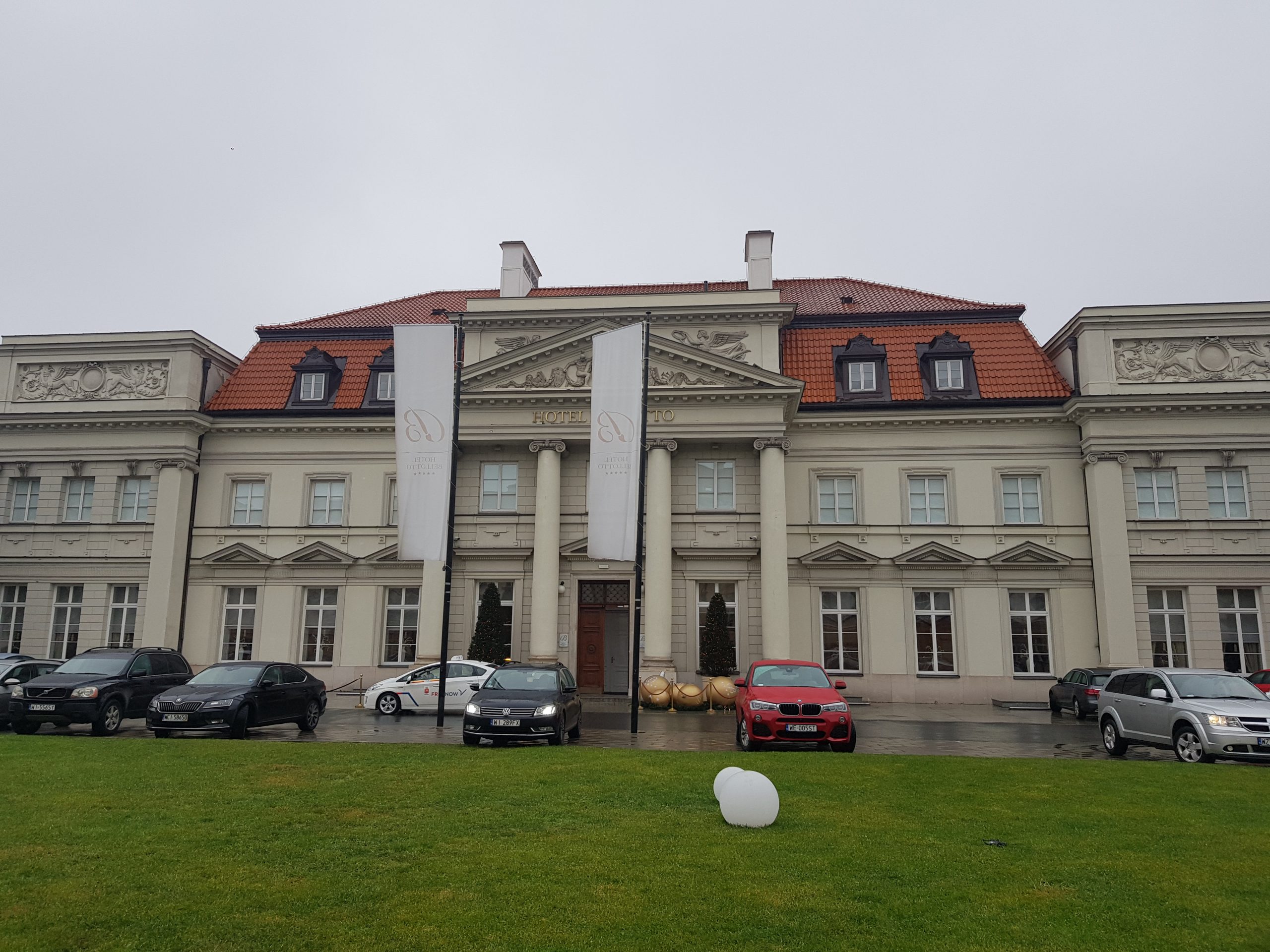
    This isn’t the hotel that I’m staying at, since I’m not made of money, but it’s an interesting building. It was originally built in the late sixteenth century and was designed to be used as the residence of the bishop, hence its current name of the Primate’s Palace. Like many things in the city, it was destroyed during the Swedish Wars in the 1650s and its replacement was also damaged during attacks in the early eighteenth century.

    Wings were added on both sides of the main building in the late eighteenth century.

    The building ceased to be used as a residence for bishops in 1795, thereafter being used by numerous governmental institutions. It was damaged badly early on during the Second World War, in September 1939, but was repaired following the end of the conflict. In the post-war period, the building was initially used for civic purposes, but was then turned into a hotel. The transformation into a hotel was recent, in 2015, with the former offices turned into rooms and minimal interior changes were made. The cellars were cleared out, two elevators were installed and twenty rooms and suites were created, with the hotel being five-star rated.

    More about the hotel here.

  • Warsaw – Swinging Chairs on the Royal Route

    Warsaw – Swinging Chairs on the Royal Route

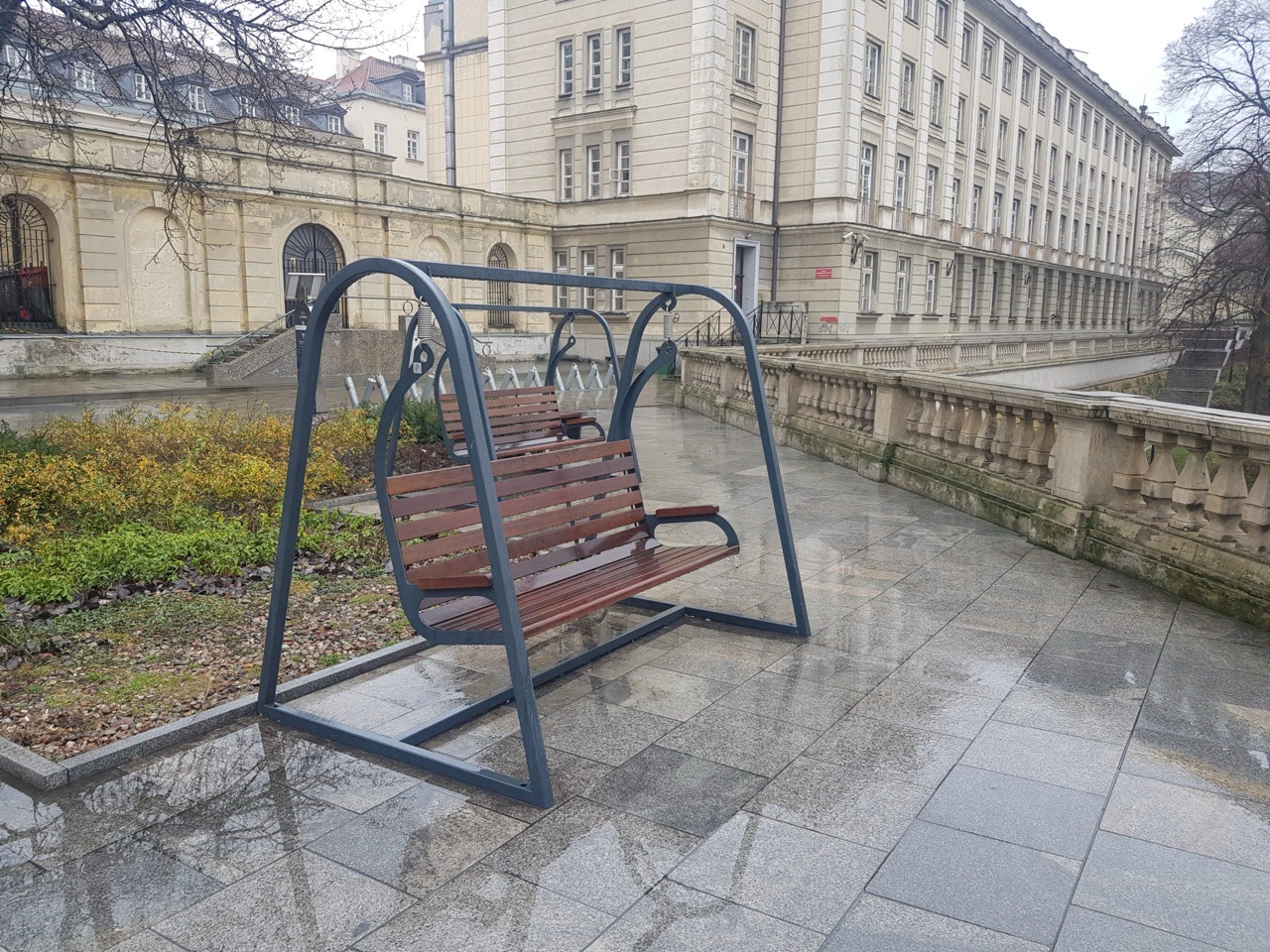
    This is an interesting take on public benches, located along the Royal Route in Warsaw. How very modern.