Author: admin

  • London – British Museum (Bishopgate Bridge by John Thirtle)

    London – British Museum (Bishopgate Bridge by John Thirtle)

    I usually visit the British Museum three or four times a year, something which is a little difficult to do with the current virus situation, primarily because it’s shut. However, they’ve placed hundreds of thousands of images on their web-site, so this will have to do me for the moment. The images can be used non-commercially, as long as the British Museum is credited. So, this is their credit.

    This drawing was made by John Thirtle, likely at the very end of the eighteenth century or the early part of the nineteenth century. The museum purchased the drawing from Andrew Wyld in 1977, a dealer in fine art. Like nearly everything I seem to look up, this artwork isn’t on public display and they don’t seem to have used it in any exhibitions or the like. It’s a pen and grey ink drawing with a grey wash, showing Bishopgate Bridge. Thirtle is buried in the Rosary Cemetery, a reminder to myself that I should go and have another investigation there as I haven’t visited in a while.

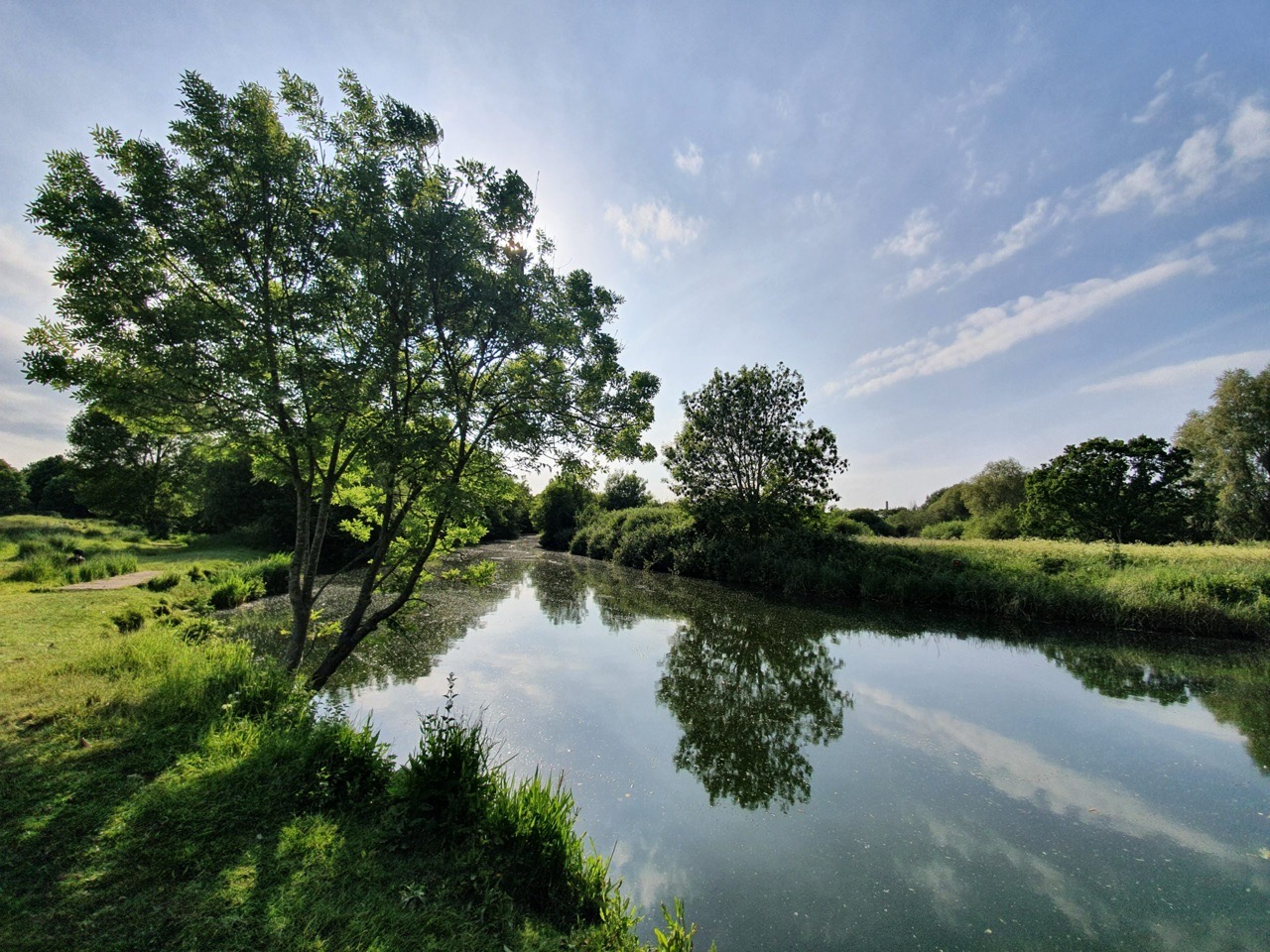
    I think this photo was taken from around the same place as the above drawing was made, I was slightly hampered by three things. One were bushes, one was a big tree and the other was a blasted fence where I wanted to stand to take the photo. I didn’t fancy having any little incidents by climbing over that small fence and falling into the River Wensum, so this is the best that I could safely get.

  • Dictionary of the Vulgar Tongue – Day Fifty

    Dictionary of the Vulgar Tongue – Day Fifty

    The Dictionary of the Vulgar Tongue was first published at the end of the eighteenth century, and given that the Coronavirus crisis is giving too much time to read books, I thought I’d pick a daily word from it until I got bored…..

    Buffle-Headed

    Well, that’s day 50 of this virus thing reached, and I haven’t yet got bored of these words from the dictionary, although I’m surprised that I’m still on the letter B. Anyway, this is one of my favourite phrases so far, the dictionary defines it as “confused or stupid”, so I feel that I can get this into conversation a lot. The word ‘buffle’ used to be an alternate word for buffalo (it’s still the French word), but it also means “to be puzzled”. I can’t find any dictionary link this to the word ‘baffle’, but it’s hard to see that it isn’t linked, given that it means the same.

    There’s not much use of the word buffle-headed today, with the exception of it being used in reference to a bird. The Bufflehead is a small sea duck, and it takes its name as its head looks like a buffalo. Well, I don’t think its head looks anything like a bloody buffalo, but that’s what the OED says. Sadly, it’s now an archaic term, but any word that means “dull, stupid or blundering” should be brought back into use, as we don’t have enough words for that.

  • Dictionary of the Vulgar Tongue – Day Forty-Nine

    Dictionary of the Vulgar Tongue – Day Forty-Nine

    The Dictionary of the Vulgar Tongue was first published at the end of the eighteenth century, and given that the Coronavirus crisis is giving too much time to read books, I thought I’d pick a daily word from it until I got bored…..

    Bufe Nabber

    I’ve found no evidence that this phrase was used in any book or magazine, although it’s marked as criminal slang, so it was likely used informally and verbally. The dictionary defines this as “a dog stealer”, which is interesting insomuch that this was a crime that was clearly a problem in the late eighteenth century, an early version of dognapping. And “bufe nabber” is a more exciting term for the crime than dognapping. Another one to get back in the vernacular.

  • Streets of Norwich – Winecoopers Arms Yard

    Streets of Norwich – Winecoopers Arms Yard

    Part of my Streets of Norwich project….

    This yard is located off of St. Augustine’s Street, visible on the above 1880s map next to the pub from where it takes its name, the Winecoopers’ Arms. The pub traded between the 1830s and 1936, although nearly managed to get itself shut down in 1905 when the police didn’t like that the pub’s back yard opened into the yard where people lived. I suspect some residents would have preferred that for convenience, but, perhaps not all.

    The pub frontage hasn’t changed enormously, it’s the bit sticking out with glass, with George Plunkett having taken a photo of what it looked like in 1938.

    Now a modern building on the site of the yard’s entrance.

    Although the old style street name survives, with four households being registered here when the 1939 Register was completed.

  • Streets of Norwich – Rose Yard

    Streets of Norwich – Rose Yard

    Part of my Streets of Norwich project….

    Rose Yard is located off of St. Augustine’s Street and back in the 1880s, it was more than just a yard and was instead a sizeable street which led onto Edward Street.

    There’s a chunk of lost heritage here, the site is now pretty much just a car park, but George Plunkett has a photo of what it used to look like. It’s a real loss of an area which should still be housing, with the properties being demolished after the Second World War and then the site was just flogged off in bits.

    The building on the right was once the Rose Inn and there had been an inn on the site since the fourteenth century, with space for 100 horses being advertised in the nineteenth century. The window visible on the right is the original nineteenth century pub frontage and the pub carried on trading until 1981. With over 500 years of trading history, it’s sad to see the building in this state, it’d make a fine site for a pub….

  • Streets of Norwich – Nichols Yard

    Streets of Norwich – Nichols Yard

    Part of my Streets of Norwich project….

    This yard is located by the ‘T’ of Street and it used to lead into Barnes’s Yard, although that has now been closed off.

    The frontage of the yard, which is closed off from St. Augustine’s Street.

    As for why its called Nichols Yard, no-one seems quite sure….

  • Streets of Norwich – Hindes Yard

    Streets of Norwich – Hindes Yard

    Part of my Streets of Norwich project….

    Hindes Yard is located off of St. Augustine’s Street, just above where it says ‘free trade tavern’ on the above map from the 1880s.

    It’s one of many yards along this street, many of which have survived in some form, although some of them are closed off. The name of the yard likely comes from the early part of the nineteenth century, after the local Hinde family who ran a nearby manufacturing business.

    Back in 1939, there were three households in the yard, with six people living across the properties.

  • Streets of Norwich – Bakers Road

    Streets of Norwich – Bakers Road

    Part of my Streets of Norwich project….

    Baker’s Road, also known as Baker Road, connects Oak Street and St. Augustine Street, and it’s one that has changed substantially over the last century.

    This is Baker’s Road from the St. Augustine’s Street end, looking very different to 50 years ago as all of the terraced houses on the left hand-side were pulled down in July 1973.

    The pulling down of the houses meant that previously hidden sections of the city wall were uncovered, which were previously in the backyards of the properties along here (and visible in the above map).

    Looking back towards St. Augustine Street.

    Not much remains of this section down towards Oak Street, but the council are looking at the potential of making clear that the wall used to be wider than this suggests.

    The house painted white is number 31, which in 1939 was lived in by 6 people, all from the Hardy family. There was Amos Hardy, a pedlar, and his wife, along with five children, including Benjamin, Joyce, Eric and Douglas. Benjamin’s job was marked as “of national importance”, working as a coil spring operator.

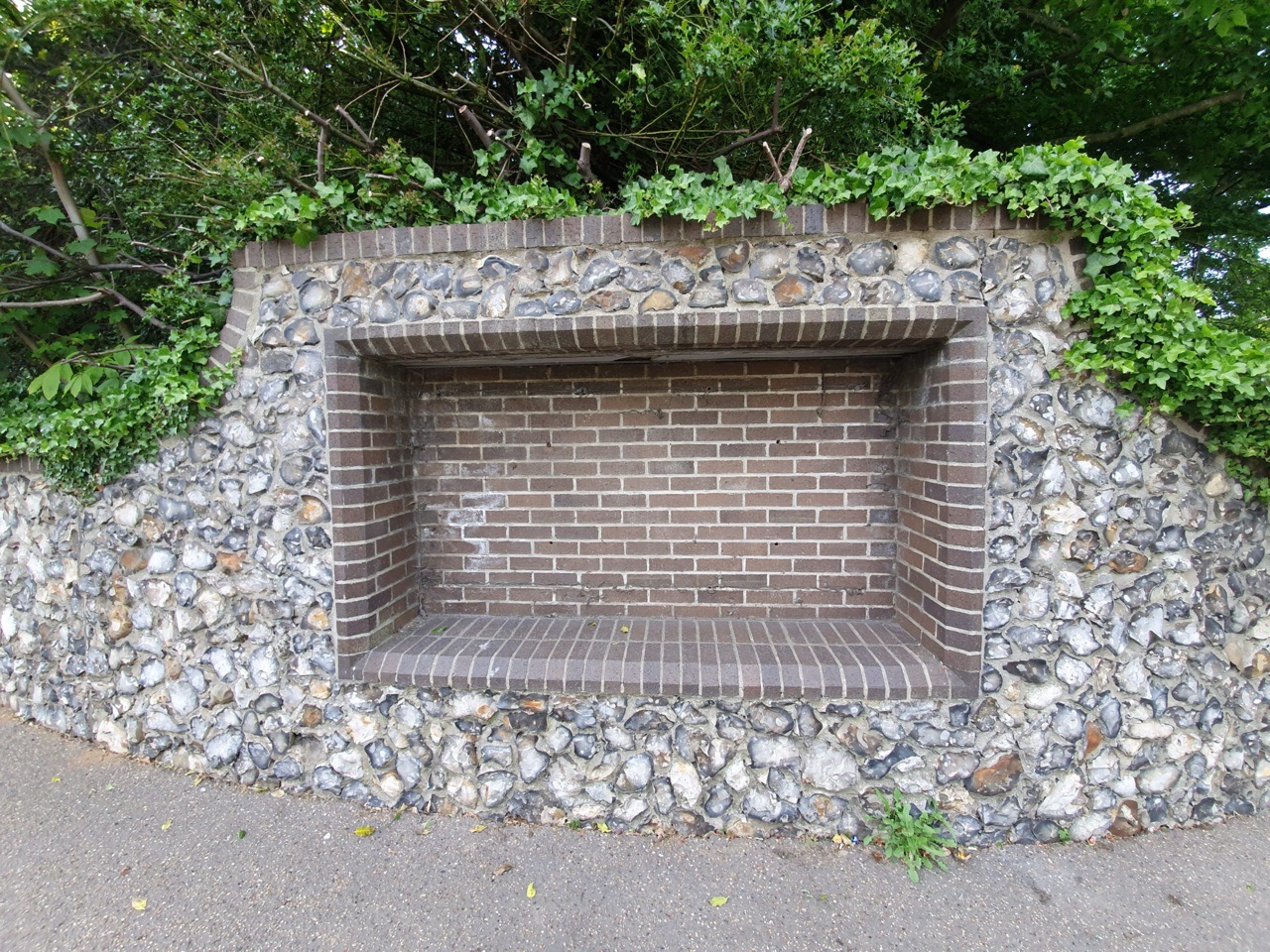
    A green area where the houses stood, with the street being named after the number of bakeries that were once here.

  • Dictionary of the Vulgar Tongue – Day Forty-Eight

    Dictionary of the Vulgar Tongue – Day Forty-Eight

    The Dictionary of the Vulgar Tongue was first published at the end of the eighteenth century, and given that the Coronavirus crisis is giving too much time to read books, I thought I’d pick a daily word from it until I got bored…..

    Budget

    The dictionary defines this as a “wallet”, and also “a term used to signify the notification of taxes required by the Minister for the expenses of the ensuing year”. At the end of the eighteenth century, the phrase “open the budget” with reference to the Chancellor’s monetary decisions had started to come into use, but it wasn’t a widespread word for financial figures and that only came at the end of the nineteenth century when the “open the” fell off the phrase.

    Back to the word wallet, it came into the English language in the fifteenth century from the French word for a leather bag or purse, which was bougette, which in turn had derived from Latin. Shakespeare used the word in reference to meaning a purse and it was used frequently in written and verbal communications.

  • London – British Museum (Great Yarmouth Fisher Girl by John Sell Cotman)

    London – British Museum (Great Yarmouth Fisher Girl by John Sell Cotman)

    I usually visit the British Museum three or four times a year, something which is a little difficult to do with the current virus situation, primarily because it’s shut. However, they’ve placed hundreds of thousands of images on their web-site, so this will have to do me for the moment. The images can be used non-commercially, as long as the British Museum is credited. So, this is their credit.

    A watercolour of a fishwife in Great Yarmouth by John Sell Cotman (1782-1842) which was acquired by the British Museum in 1902 from James Reeve. They don’t know when it was painted, but Cotman lived in Great Yarmouth between 1812 and 1823, so it was probably then. There’s something quite intriguing about this one-eyed lady, standing in front of a lottery sign, with her key at her waist and her fish on her head. I’m not sure that I can think of another painting which is more evocative of Great Yarmouth at that time. I’m equally unsure what that says about Great Yarmouth or me, but there we go….