Author: admin

  • Torun – Church of the Blessed Virgin Mary

    Torun – Church of the Blessed Virgin Mary

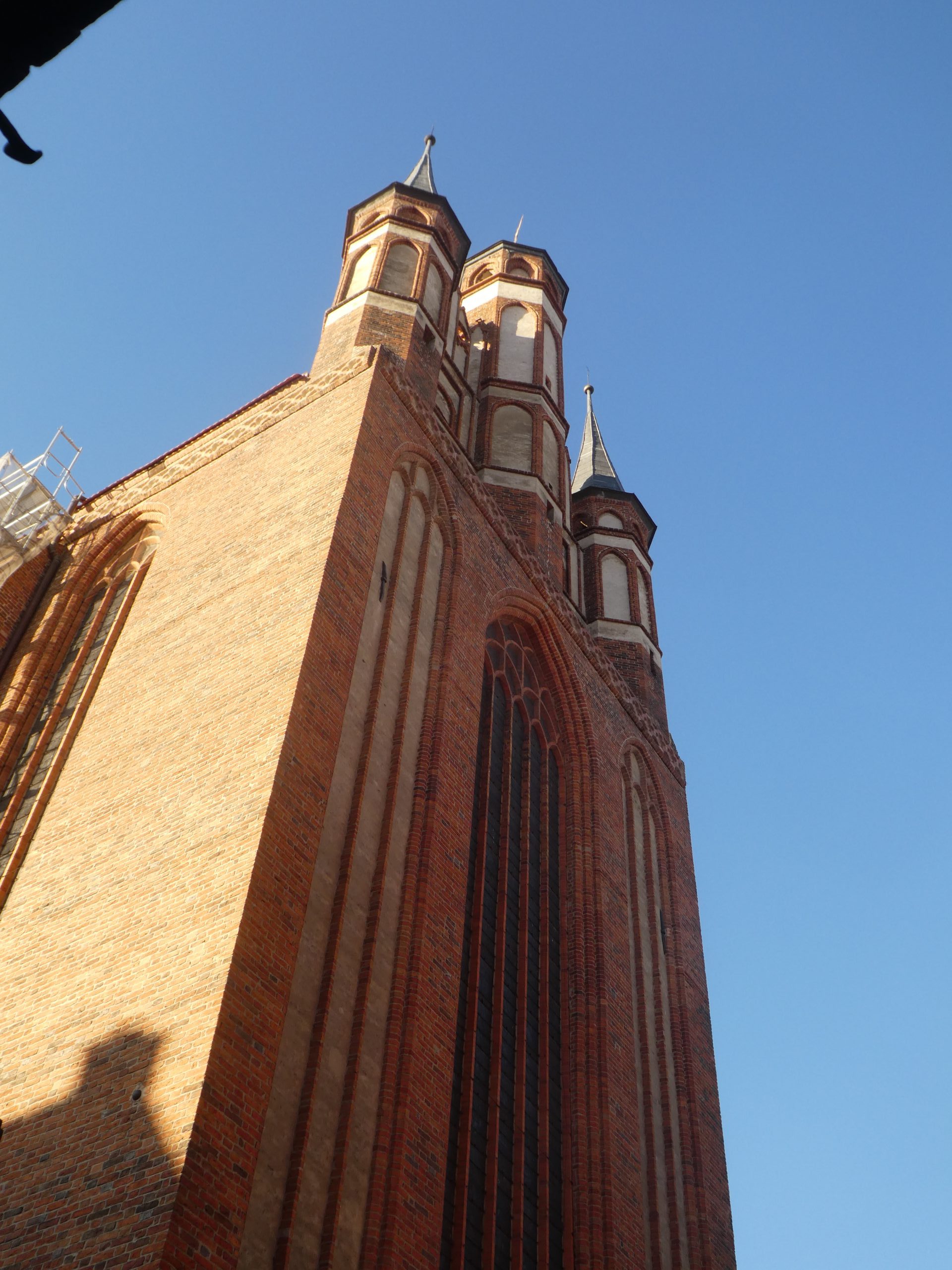
    The Church of the Blessed Virgin Mary (or in Polish, Kościół Wniebowzięcia Najświętszej Marii Panny w Toruniu) is one of the most beautiful historic churches that I’ve visited, although I found it a very challenging building to understand and there is much that I didn’t comprehend. The church is currently undergoing some renovations part-funded by the European Union and there’s not currently any literature to guide visitors.

    The nave of the church and the rood screen, which dates to the eighteenth century. There is some scaffolding visible as well which is either supporting the building, which has had problems before with leaning, or it’s for the renovation.
    The floor is a patchwork of mostly damaged stones, there’s lots of heritage there.

    There are no shortage of wall paintings in the church.

    One of the tombs in the church.

    More wall painting and what I think is a nineteenth century stained glass window. There are three naves in the church, which once all had their own individual roofs, but they were given one large single roof in 1798.

    I couldn’t ascertain the age of this arch, but I assume it’s from the earliest stage of the church’s history. And, this is the fourth church on the site, with the first having been built here in the early thirteenth century. Work started on the current church in the late fourteenth century, with the work overseen by the Franciscan friars. I hadn’t realised that Franciscan buildings don’t have towers, hence why the construction is as it is.

    Things changed somewhat in 1557, when the church was taken over by the Protestants until what is wonderfully known as the Torun Tumult of 1724. The unfortunate consequence of this tumult, which were battles between Catholics and Protestants, were punishments including the death penalty and some buildings were damaged or destroyed. From 1724, the church was given to the Bernardine friars, who looked after it until it was taken over by the parish in 1821 when the order was dissolved. The church had been badly damaged during the sieges of Torun in 1809 and 1813, so necessary repairs were undertaken between 1825 and 1830.

    The Christmas nativity scene, which I’d have thought must be going soon since it’s now the second half of January.

    The architecture of this building is so complex and I was conscious that I didn’t understand it and I’m sure that I missed some interesting and intriguing pieces of history. Nonetheless, it’s a glorious church and it felt like it had some considerable heritage. It was also the coldest church, in temperature terms, that I’ve ever been in, with quite a dark feel in places where the light couldn’t get really permeate. However, that gave the building even more atmosphere, it felt all quite spiritual.

  • Torun – House of Nicolaus Copernicus

    Torun – House of Nicolaus Copernicus

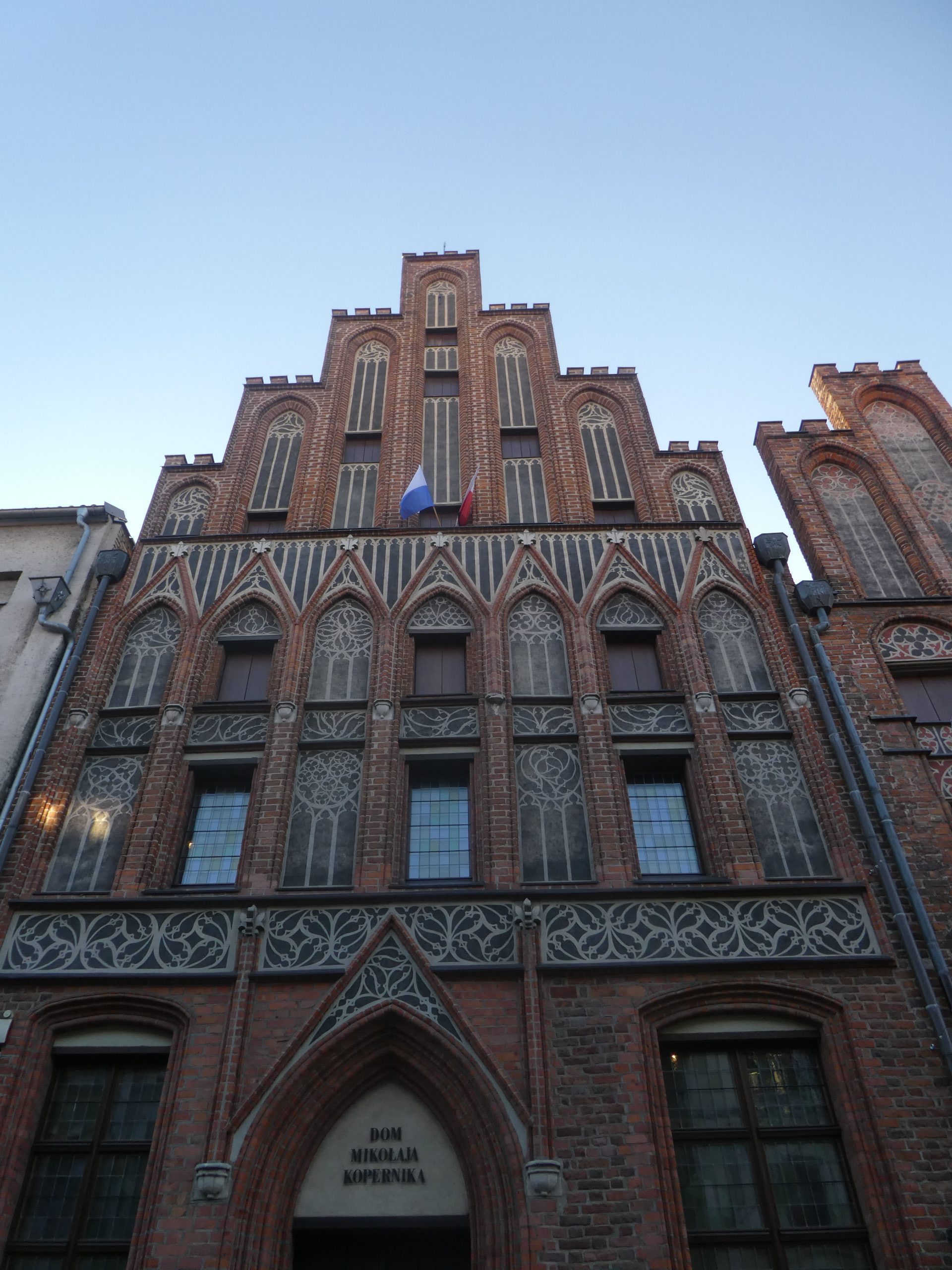
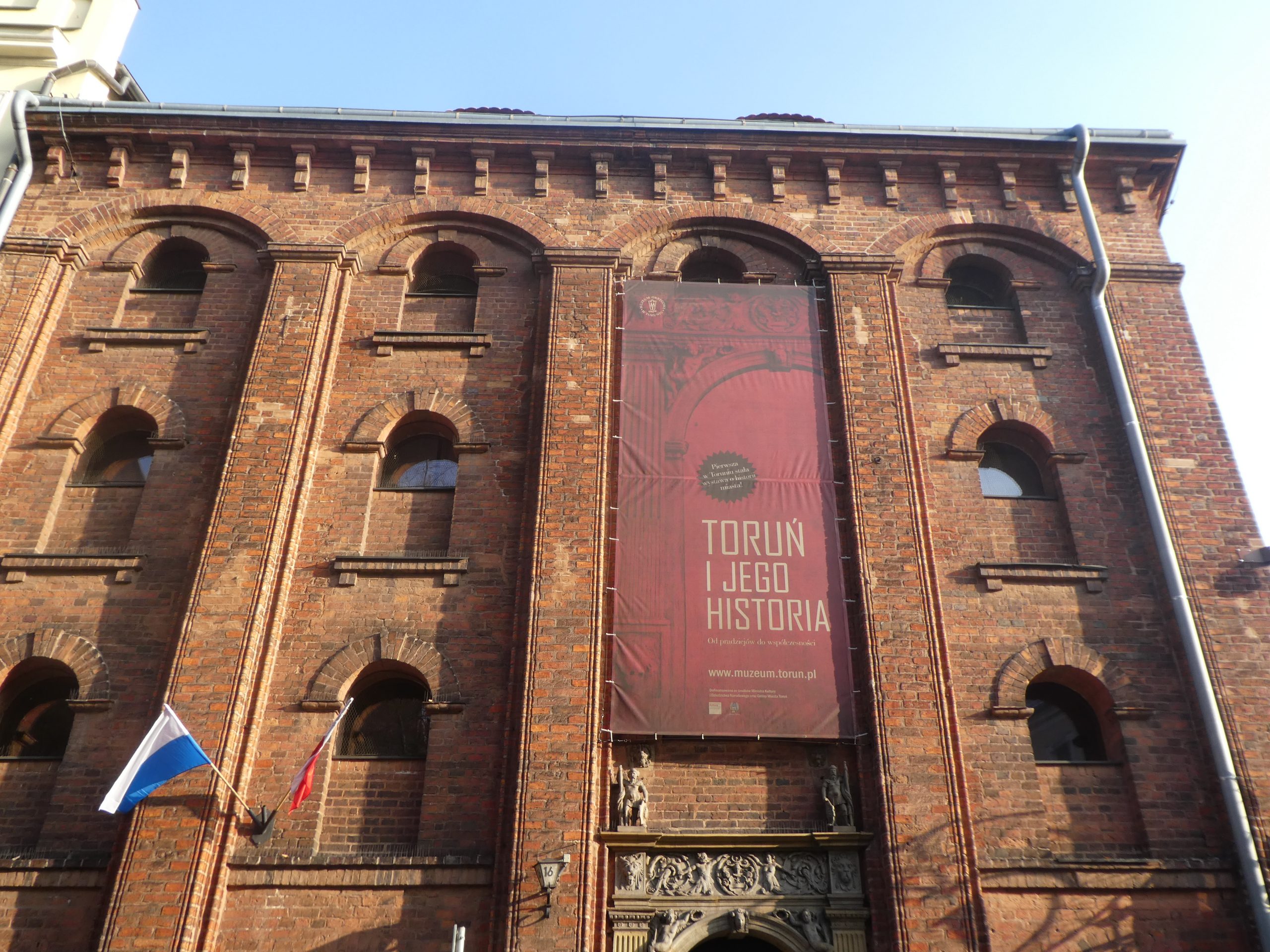
    It’s known that Copernicus lived in Torun, but there’s some doubt about exactly where Nicolaus was brought up as the family owned two homes in the city. Since only one of them remains, it’s best to assume that it’s this one. Either way, the museum is located in a fifteenth century gothic style building that was owned by the family, so there’s a high chance that he at least visited. Nicolaus Copernicus was born in 1473 and was an astronomer and scientist, who was also known for his economic theories.

    The museum starts, confusingly with an exhibition in the cellar primarily in Polish, on astronomy. The astronomy link is understandable, but I’m unsure why they’ve started a tour of the museum without giving any context to Copernicus, or indeed the building. So, after what I felt was a poor use of the space, the tour continued on up the stairs. This was also the only area which was mostly in Polish, so perhaps it’s a temporary exhibit that they’ve replacing.

    There are a series of rooms which are furnished and decorated with furniture contemporary to the period. Understandably, there’s nothing left of the interiors from this property and very few original items relating to Copernicus exist other than in nationally important collections. That means there are a lot of copies of books, documents and paintings, all of which is no doubt inevitable.

    The highlight of the museum, and its strongest element, are the recreated rooms which do give some context to how the building used to look. Above is what the museum term as a kitchenette, which seems an accurate description, as it’s a kitchen set off from the main hall. It is apparently usual for the north-eastern corner of a high hall to be used in this manner, with the chimney visible in the above photo.

    An Hevelius compass from 1638, produced by Johannes Hevelius, who was also the Mayor of Gdansk. This is one of the treasures of the museum’s collection and although there’s no direct link with Copernicus, it’s a piece of astronomical history.

    The museum has become a little obsessed with technology and this room gave the impression of being on fire. I understand these elements are useful for engaging children, but some of the technology and screens in the museum don’t work properly. The screens are also in places nearly entirely pointless, some just contain a few pages of text which the museum might as well have put on the wall. Indeed, there’s a lack of information to read across the museum, with some rooms containing only minimal information.

    A recreation of a tenement house.

    The museum was refurbished a few years ago and an elevator was added to the rear of the building, which is where these were found. A screen next to the knives usefully told me that they are metal knives and there’s a photo of them. To me, this is a ridiculous use of technology, I don’t need a photo of an item that it’s next to, I can look at the actual item. And telling me it’s a metal knife isn’t really informing me of anything. If the museum wants to use technology, it could have given information about how they were excavated or an example of what they might have originally looked like.

    No screen here fortunately, this a tanned leather pouch from the fourteenth century.

    An old sign from when the building was turned into a museum.

    I didn’t really engage with this museum, there wasn’t enough depth to the information provided and the signage in the museum wasn’t entirely clear. I’ve never really understood museums doing this as if I can see people going the wrong way, surely a curator would see the same and put some more arrows up? I think that the museum pre-2017 had information only in Polish, so the screens were perhaps added to allow for information to be provided in German and English. There’s only a certain amount of patience that visitors can have though pushing screens that are only partly responsive, so given the technology didn’t provide much more information, I personally don’t see the point in them. However, the museum isn’t badly reviewed, so it clearly isn’t offending many people.

    My random complaints apart, it’s an interesting enough way to spend an hour, as the interiors are well described and there’s quite a lot of house that can be seen. I would have liked more information about the history of the building between the sixteenth and twentieth centuries though, this seemed to be missing from the museum’s narrative. Although, I suspect that I missed a room because of some signage I didn’t think was clear, so perhaps it was in there. And on another note, the building itself is in excellent condition internally and externally, as well as being clean and well maintained.

  • Torun – Old City Tram Network

    Torun – Old City Tram Network

    I like little pieces of history which are dotted around cities, giving information that might otherwise be lost. In this case it’s a piece of old tramline, a memory of when the trams used to shuttle through the city centre itself. The trams still run in Torun, just not through the old city itself and that’s probably a good idea to preserve some sense of peace and decorum in the centre.

    The remaining piece of tram line and a stone to mark this piece of heritage.

  • Torun – UNESCO City

    Torun – UNESCO City

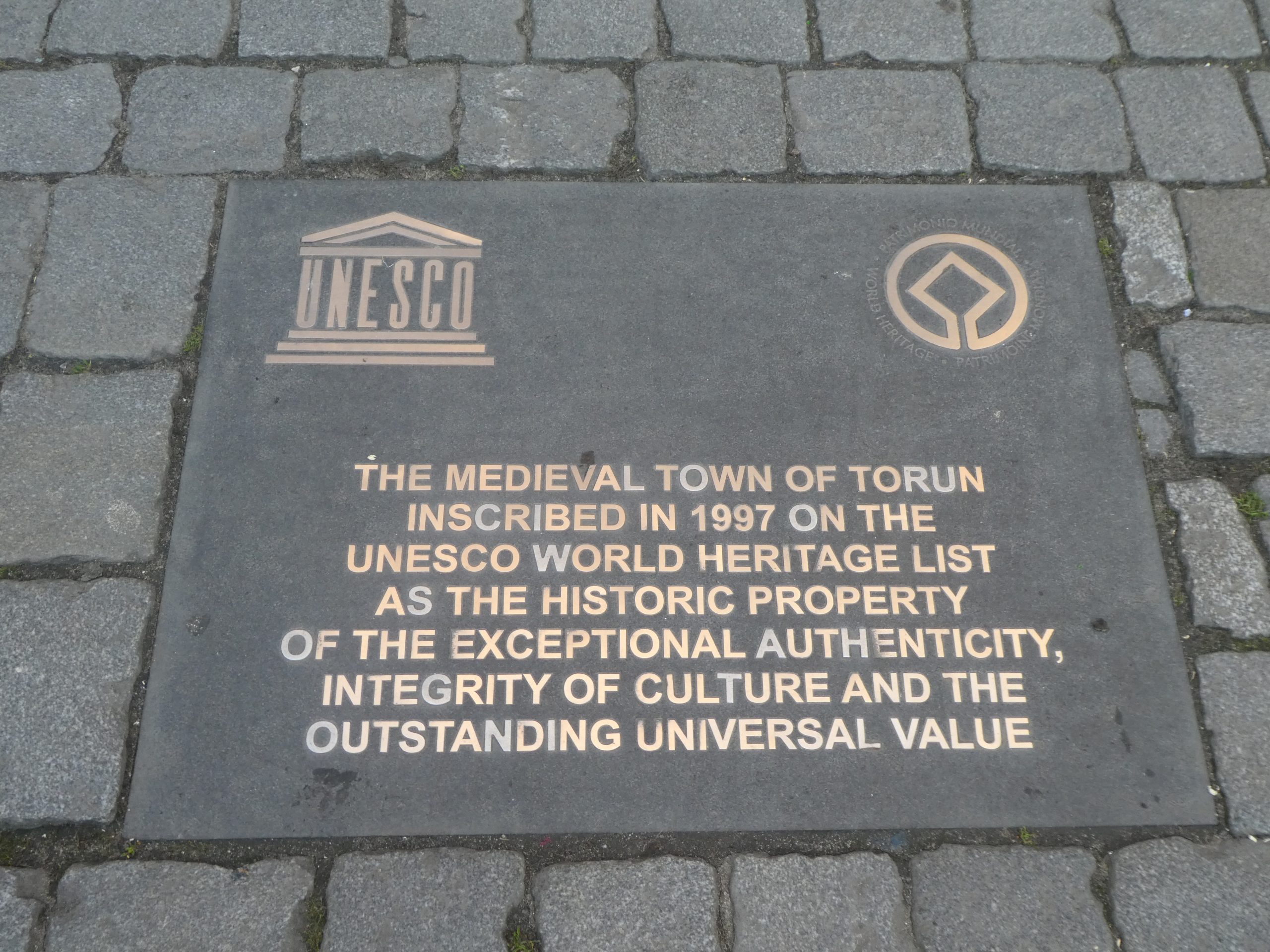
    The medieval town of Torun is undoubtedly beautiful and its heritage was recognised by UNESCO in 1997 when it was added to the official register World Heritage sites. There are 16 such listed sites in Poland and this is the sixth that I’ve visited.

    Pinching UNESCO’s text:

    “Toruń in northern Poland is a remarkably well preserved example of a medieval European trading and administrative centre, located on the Vistula River. Toruń was founded in the period when Christianity was being spread through Eastern Europe by the military monks of the Teutonic Order, and when rapid growth in trade between the countries of the Baltic Sea and Eastern Europe was being spurred by the Hanseatic League. Toruń became a leading member of the Hanseatic League in the territories ruled by the Teutonic Order.

    The Medieval Town of Toruń is comprised of three elements: the ruins of the Teutonic Castle, the Old Town, and the New Town. The combination of the castle with the two towns, surrounded by a circuit of defensive walls, represents a rare form of medieval settlement agglomeration. The majority of the castle – which was built in a horseshoe-shaped plan in the mid-13th century as a base for the conquest and evangelization of Prussia – was destroyed during an uprising in 1454, when the local townspeople revolted against the Teutonic Order. The ruins and the archaeological remains have been excavated and safeguarded. The Old Town was granted an urban charter in 1233, which swiftly led to its expansion as a major commercial trading centre. The adjacent New Town developed from 1264, mainly as a centre for crafts and handiwork. Both urban areas bear witness to the interchange and creative adaptation of artistic experience that took place among the Hanseatic towns.

    An exceptionally complete picture of the medieval way of life is illustrated in the original street patterns and early buildings of Toruń. Both the Old Town and the New Town have Gothic parish churches and numerous fine medieval brick townhouses, many of which have retained their original Gothic façades, partition walls, stucco-decorated ceilings, vaulted cellars, and painted decoration. Many townhouses in Toruń were used for both residential and commercial purposes. A fine example is the house in which Nicolaus Copernicus was reputedly born in 1473; it has been preserved as a museum devoted to the famous astronomer’s life and achievements. The townhouses often included storage facilities and remarkable brick granaries, some of which were up to five storeys high. Because so many houses have survived from this period, the medieval plots are for the most part still preserved, delineated by their original brick boundary walls.

    Criterion (ii): The small historic medieval trading and administrative city of Toruń preserves to a remarkable extent its original street pattern and outstanding early buildings. It set a standard for the evolution of towns in this region during Eastern Europe’s urbanisation process in the 13th and 14th centuries. The combination of two towns with a castle is a rare form of medieval settlement agglomeration that has survived almost intact, and numerous buildings of considerable intrinsic value have been faithfully preserved within the town. In its heyday, Toruń boasted a wide range of architectural masterpieces, which exerted a powerful influence on the whole of the Teutonic state and the neighbouring countries.

    Criterion (iv): Toruń provides an exceptionally complete picture of the medieval way of life. Its spatial layout provides valuable source material for research into the history of urban development in medieval Europe, and many of its buildings represent the highest achievements in medieval ecclesiastical, military, and civil brick-built architecture.”

  • Torun – Rubaru

    Torun – Rubaru

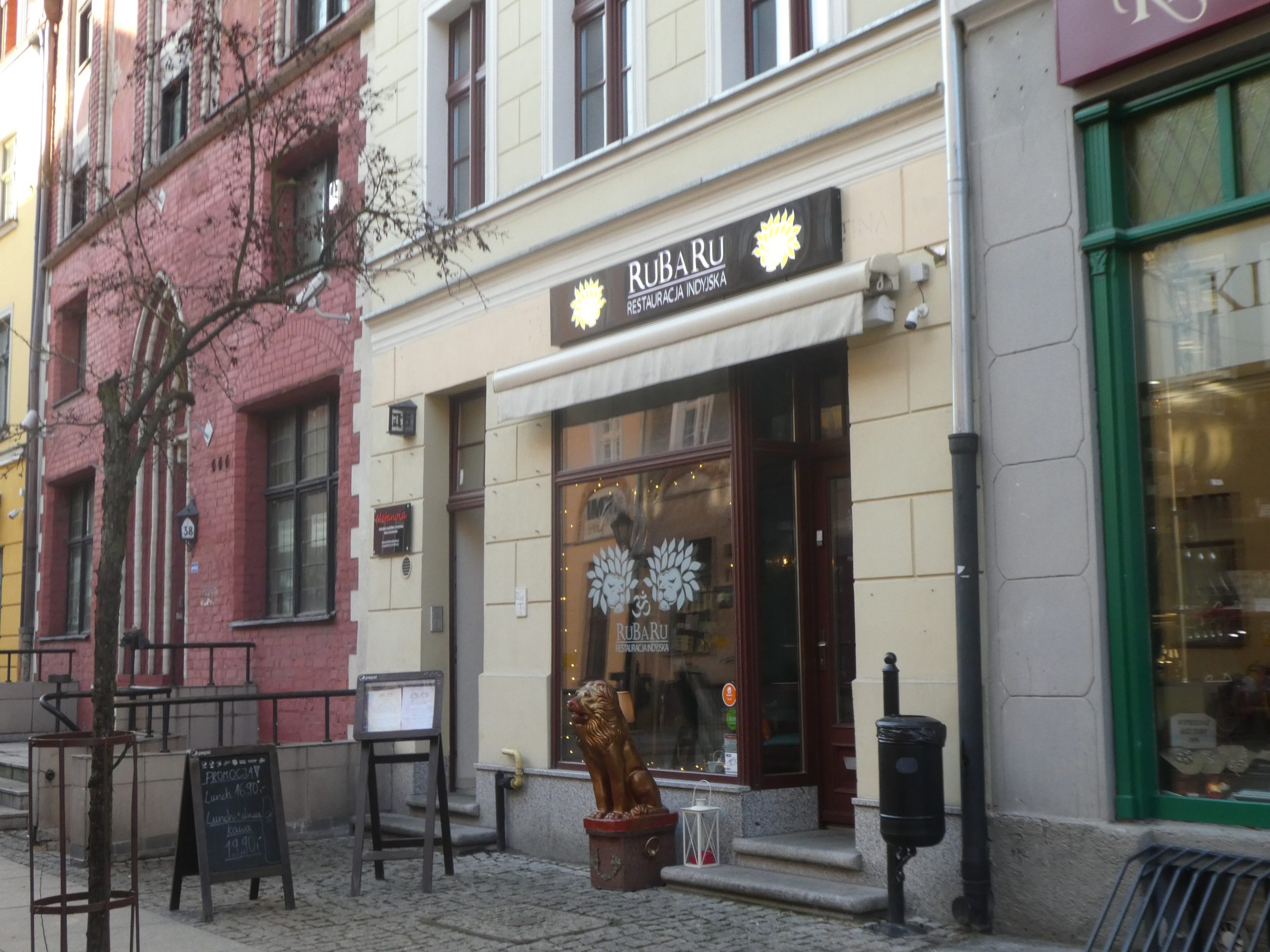
    The actual name of this restaurant is RuBaRu, although I’m unsure of the significance of the capitalisation and the owners have another outlet in Bydgoszcz. There might not be a large number of Indian restaurants in Poland, but those that there are don’t tend to be too bad at all. The welcome was immediate and seemed authentic, with the staff member being attentive and helpful throughout the meal.

    The interior is colourful and bright, with some of the building’s brickwork exposed towards the front of the restaurant. It was all comfortable, clean and welcoming, with an unhurried atmosphere. It wasn’t very busy when I went in, and by not very busy, I mean that I was the only customer. It got a little busier later on and there were also numerous takeaway orders, so it’s clearly not an unpopular location.

    The chicken saag, mixed vegetables, raita, naan bred, rice and salad, which was all part of a thali lunch-time meal deal. The food was well presented and exceeded my expectations, with the portion size being fine for a lunch and everything was at the appropriate temperature. The naan bread was rich and full of flavour, the rice was perfectly cooked and the raita was fine, although lacked texture. The freshly chopped salad might have been sitting for a short while as the lettuce was browning just slightly, but it still seemed relatively fresh. The mixed vegetables were almost the star of this little show, as they were soft and flavoursome. Let’s be fair, anything that can make vegetables taste good should be applauded. The chicken saag also had a richness of taste and the chicken was tender, although it didn’t seem to have a vast amount of the flavour from the sauce. But, nonetheless, this was all a very good meal.

    The prices were very reasonable, even by Polish standards, with the meal costing around £3 and the Żywiec costing around £1.50. The service was welcoming and, although the reviews have been quite mixed, I’d merrily recommend this restaurant to others. The rest of the menu looked well balanced and it contains some standard Indian dishes, as well as some more unique options, with a feeling of some authenticity to the whole operation.

  • Flixbus – Gdynia to Torun

    Flixbus – Gdynia to Torun

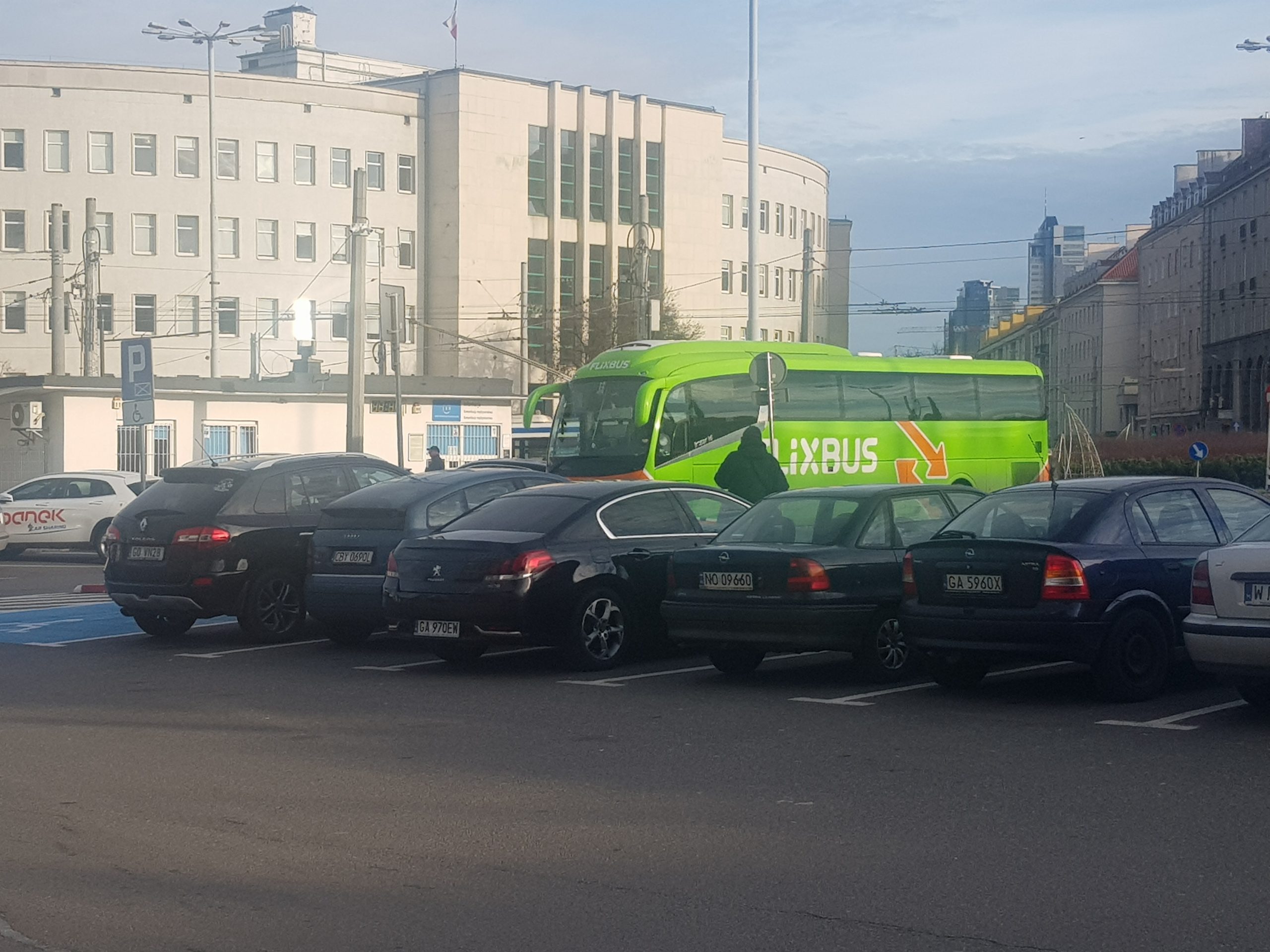
    Fifteen minutes before the scheduled departure time, the Flixbus pulls into the coach station located at the front of Gdynia’s railway station. The Flixbus app provides useful information on not just where the coach station is located, but also which bus stop to wait at. And, also, at the bus stop there’s confirmation that the Flixbus departs from platform 6.

    I think it’s fair to say that I’m not the biggest fan of Flixbus, they have been buying up what seems like most coach operators around Europe and the service offered has been, frankly, inadequate. After tens of journeys, not once have they managed to provide all of the following components:

    (i) A friendly driver

    (ii) Working wi-fi

    (iii) Adequate temperature

    (iv) Working power

    (v) Details of where the coach stop is (accurate information that is)

    Usually at least two or three of these aren’t achieved.

    But, glory be to God, after years of travel and much disappointment, this was my first perfect Flixbus journey. The driver was friendly, the coach was clean, the app was accurate, the power and wi-fi worked, as well as the temperature being appropriate. The coach arrived on time, the whole service was impeccable and excellent value at just £5 for the journey. The driving was safe and either things are getting better on Flixbus, or I’m just becoming lucky, but this was a bargain journey with a company that made everything easy.

  • Gdynia – Mercure Centrum

    Gdynia – Mercure Centrum

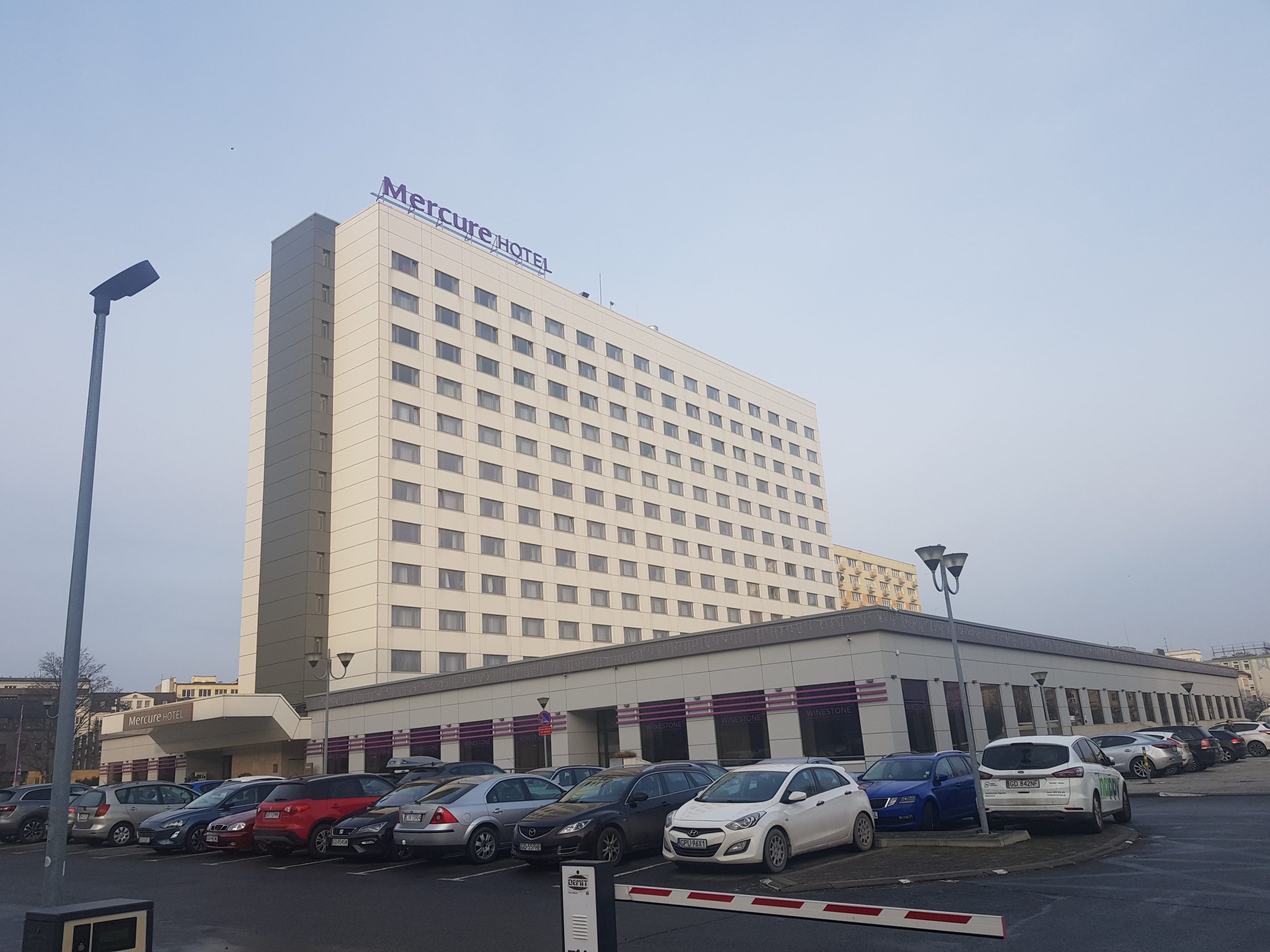
    This subtle little hotel does somewhat dominate the area it’s in, with some cavernous public spaces. Another hotel in the Accor chain, indeed I’m not moving away from them on this trip, it’s a little higher up their hierarchy then my usual Ibis hotels.

    The room, which was spacious and spotlessly clean. The hotel kindly upgraded me to a privilege room, located on the ninth floor of the building.

    The decor was modern and contemporary, with this apparently being one of the room designs chosen by staff.

    I’ve had worse views from a hotel room….

    Ooooh, I love Nespresso machines. Not enough to actually pay for one myself, but I like it when other people or hotels have them. And, as another bonus, the staff were assiduous in their restocking of the room for the second night.

    My welcome gift, a rather lovely local beer. A nice gesture, one I commend.

    The downstairs bar area, spacious and clean.

    My welcome drink of Żywiec, although they did offer an IPA from the barrel. In retrospect, I should probably have had the latter to show that hotels should do more beer such as this. One day there will be a dark beer to choose from, or something a little more unique. Anyway, the service at the bar was friendly and helpful.

    The long corridors of the hotel. As for breakfast, I got lost walking around the ground floor looking for it. I gave up with looking for it and went to ask the staff member at reception. She seemed used to telling people where they’d hidden the breakfast room, and I don’t think anyone else noticed me walking around looking lost.

    There were some hot options at breakfast that I wasn’t too engaged with, but the cold options were excellent and there was plenty of choice across numerous tables. I’d also like to apologise to the hotel, as they probably wondered where the meat on that front plate kept disappearing to. I might have become a little addicted to it as it almost melted in the mouth, one of the best cold cuts I’ve had. They kept bringing more out promptly though and didn’t seem to want to find the culprit.

    A proper breakfast should be like this. Incidentally, I had another little emergency at the hotel breakfast at the fruit juice machine. Customers are meant to press the button once to get the drink, and I’m dead good at this now, having had the same machine at the last four hotels. Here though, on my second refill, the machine went a little berserk and didn’t stop pouring, disgorging gallons of apple juice everywhere. Admittedly the machine’s drip tray caught it all (I once flooded an airport lounge floor in India with about half a bag in box of Pepsi, so I appreciated the lack of flooding here), but probably around 20 or 30 litres went through, it was quite a sizeable loss, so I alerted a staff member. She was one of the few non-English speaking members of staff the hotel had and I didn’t know the Polish for “I’ve flooded your apple juice machine”, so by the time she came over to have a look the machine had stopped and she was none the wiser as to what I wanted. I think she just assumed the British aren’t quite with it, so I left it at that.

    This is the height of sophistication as far as I’m concerned. I couldn’t find the butter, just pots of margarine and I don’t much like the taste of that. I then stumble (not literally) on this machine which is like a little piece of magic. You press the button and a perfectly formed circular disc of butter falls out of the bottom onto a plate. Quite magical and very delicious. No doubt all my posh friends are used to such technology, but I don’t get out much.

    Part of the breakfast room, which was never that busy, so it remained a relaxed and comfortable environment.

    As for the hotel generally, it was as near perfect as I could have wanted. The staff were friendly, the room was clean, there were no noise disturbances and I very much liked the view over the sea. The prices were also very reasonable, under £30 per night including breakfast. During the summer months, this is a much more popular hotel as the tourists flood in, so I imagine the prices are higher then. But, for the time I was there, admirable value for money.

  • Gdynia – Traffic Lights

    Gdynia – Traffic Lights

    I think it’s fair to say that the content I’m writing isn’t necessarily the most enthralling today, but I’m quite pleased at this development in traffic lights at pedestrian crossings….

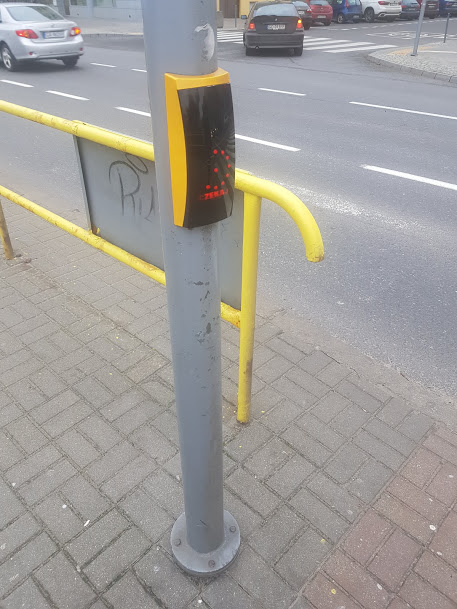
    There are many crossings across Poland where I’m never quite sure when I’ve successfully pressed the button to cross. Not having an engineering mind, I’ve also noted many other British people struggle with their operation, as they don’t make sense to me. However, revolution is here with these, there are lights which flash to show where to press and then they make clear with all manner of shapes (well, a circle) when it’s time to cross the road.

    However, I’ve noticed over the last couple of days that whilst children seem to love pressing them, some of the more slightly mature generation look entirely bemused at them.

    A button for pedestrians using the new crossing, photo: Kamil Złoch

    I think the local authorities are quite pleased with them too….

  • Gdynia – Beach

    Gdynia – Beach

    Gdynia has a beach, although I expect that it’s a lot nicer and more pleasant during the summer months….

  • Gdynia – Pope John Paul II

    Gdynia – Pope John Paul II

    Pope John Paul II, who was the first non-Italian Pope since 1523, was an important figure not just to the Catholic Church, but also in the political reform movement. He came to Gdynia in June 1987 and he made a speech which mentioned the word ‘solidarity’ on several occasions. This was a deliberate reference to the Solidarity movement which had sprung up in Gdansk, and in other Polish cities, wanting reform and modernisation of the country.

    Wojciech Jaruzelski, the Polish head of state at the time, wasn’t best pleased at this speech, as he had been saying quite clearly that Solidarity was finished and had no future. Jaruzelski, who was later fortunate to avoid trial for serious crimes against humanity because of his age, wasn’t entirely correct, as Lech Wałęsa from the Solidarity movement became the democratically elected President of Poland in 1990. Jaruzelski later renounced communism, although his reputation by that time was shattered beyond repair and I do wonder what he thought of Poland by the time he died in 2014.

    Tens of thousands of people turned up to hear Pope John Paul II when he visited and this statue recalls some of the words that he said at the time. The city of Gdynia has also renamed one of its main streets, al. Jana Pawła II, after the Pope.