
Author: admin

  • Simon Roper and his Youtube Videos

    Simon Roper and his Youtube Videos

    For anyone interested in linguistics and the evolution of language, Simon Roper is producing some detailed and accessible videos. Their production quality is perhaps as basic as can be, which absolutely adds to the whole thing, he’s got a very informal style. If they ever brought something like Time Team back, he should present it.

  • Group Walking is Back…..

    Group Walking is Back…..

    At least for me, yesterday was the chance to go on a small group walk for the first time since March. All socially distanced, just a small group of under the maximum allowed and all professionally-led (since I wasn’t leading it).

    An intriguing tree…..

    The walk went around Thorpe marshes at first, which is where most of the photos below are from. I’ve neglected walking this area as I had forgotten about it, which isn’t much of an excuse, but it was peaceful and I’m not sure many people are aware of the walking options around there.

    There’s a photo of a deer drinking on the other side of the river, which I hoped was a Chinese water deer given there are lots around there, which were introduced from China in the nineteenth century. I’ve been told it’s a Muntjac though, but nonetheless, it still looked sweet and innocent.

    Anyway, the photos…..


  • Bath – Smallcombe and Views Over City

    Bath – Smallcombe and Views Over City

    Just photos, of my walk down the hill from Bath University into the city centre a few years ago. There’s a peacefulness that is surprising from being so close to the centre of a city and fortunately, Bath has retained a large amount of greenery around it, without urban sprawl destroying its tranquility.

    The National Trust sign at the entrance to the walk at Smallcombe, which is all part of the Bath Skyline Walk.

    I liked the whole concept of the community nuttery.

  • Dictionary of the Vulgar Tongue – Day Seventy-Eight

    Dictionary of the Vulgar Tongue – Day Seventy-Eight

    The Dictionary of the Vulgar Tongue was first published at the end of the eighteenth century, and given that the Coronavirus crisis is giving too much time to read books, I thought I’d pick a daily word from it until I got bored…..

    Cleymes

    There’s not much to be written about this word, which is defined as “artificial sores, made by beggars to excite charity”, although it’s of note perhaps that this practice has been going on for hundreds of years. The word origins are unknown, one dictionary says that it’s a London slang for ‘claim’, as in to make a claim on someone’s pity. The word was used between at least the mid-sixteenth and early-nineteenth centuries and a similar phrase used during the same period was “sham sores”.

  • Norwich – Name Origin

    Norwich – Name Origin

    Since I’ve been merrily writing about the name origins of numerous villages around Norfolk, it perhaps makes sense to mention the county’s major city. No, not Dereham, it’s Norwich.

    The Concise Oxford Dictionary comments on the origins:

    Norwich, Norfolk. Norowic in 930, Noruic in Domesday Book. North Town.

    This is one of the book’s shorter definitions and Norvic is still used today, not least by the Bishop of Norwich who signs off with this title. The explanation, as the book says, is simple, it just means North Town, so that makes this blog post nice and easy….. The Saxon ‘wich’ meaning settlement or town is relatively frequently seen, including at Ipswich, Harwich, Greenwich and so on.

  • Saxlingham – St. Mary’s Church

    Saxlingham – St. Mary’s Church

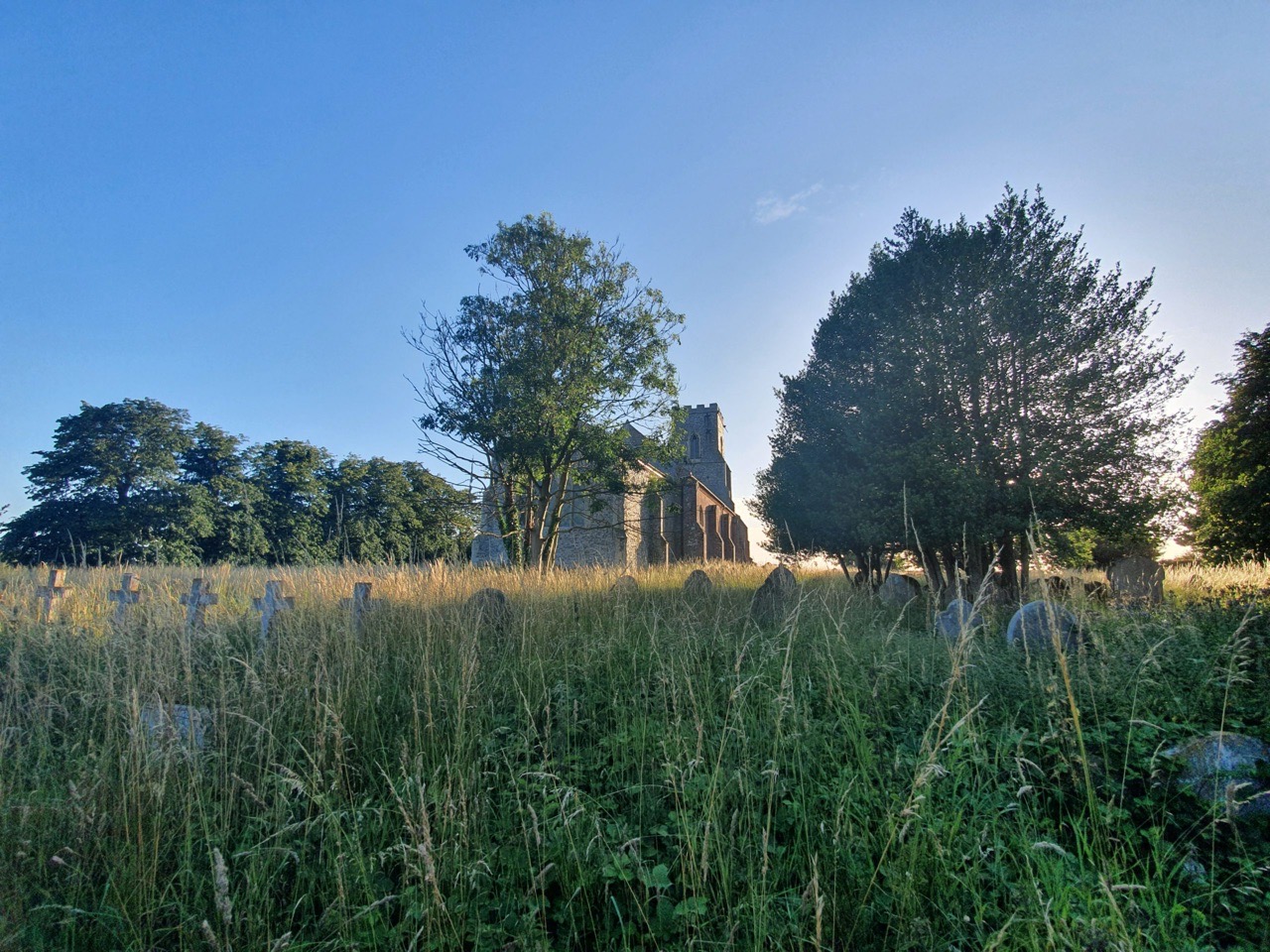
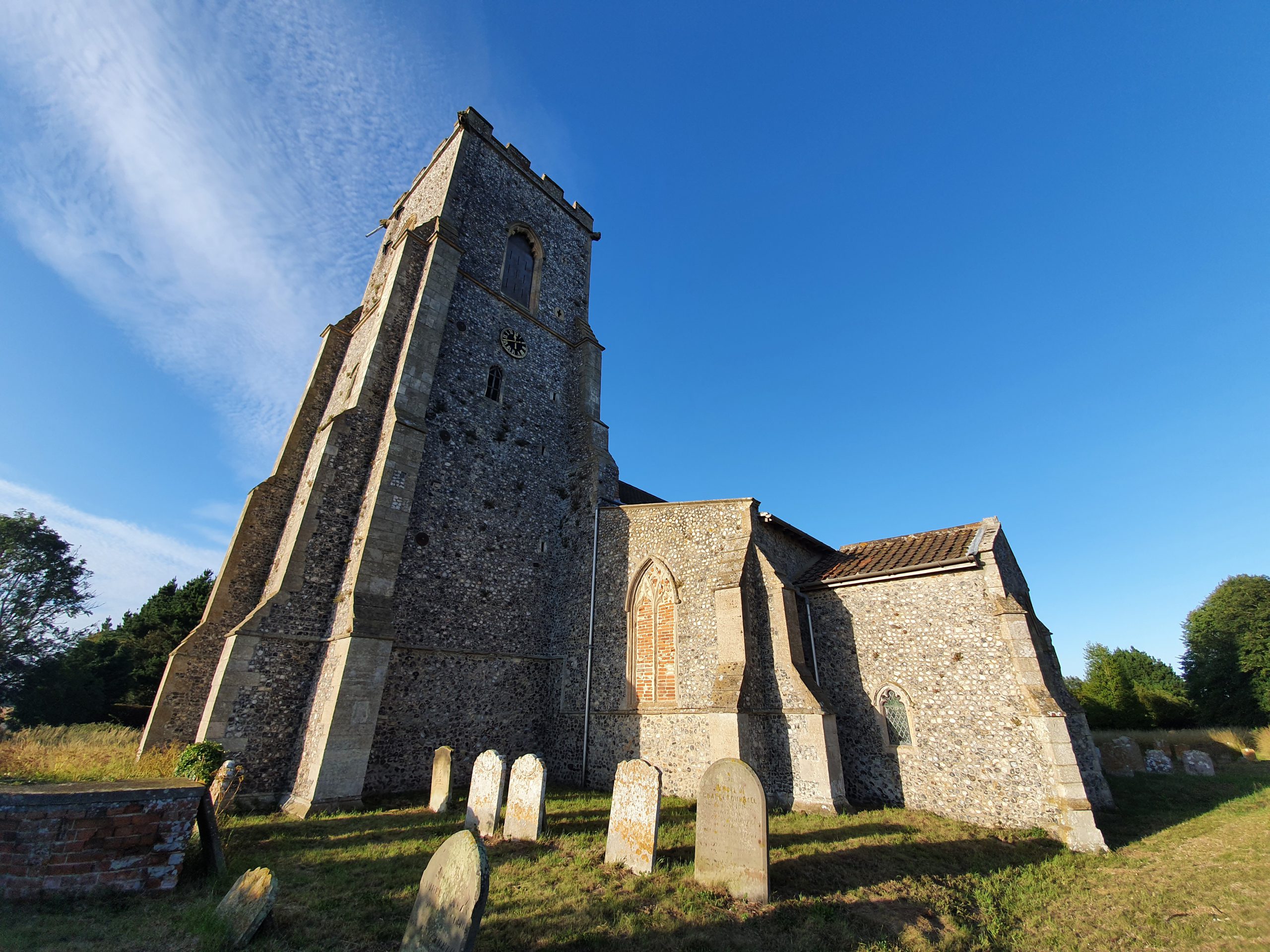
    I’m going to lump the Saxlinghams together for the purposes of this blog, but this ruined church is in Saxlingham Thorpe.

    St. Mary’s was first built in around the tenth century, although the tower dates from the fifteenth century and was one of the last parts to be added. The tower, which once had two bells, retains most of its original height and like the rest of the church is constructed using flint with brick dressing.

    Looking towards the end of the church at the chancel, which was extended in the late medieval ages and it’s still evident where the building was extended by the change of stonework.

    Repairs to the church stopped in 1684 and it soon started to fall down. Some interiors and structural elements were taken to the nearby St. Mary’s Church in Saxlingham Nethergate. Now surrounded by trees, there was a medieval village around here, but people moved away for agricultural needs and it was that population movement that led to the church falling out of use.

  • Streets of Norwich – Drays Yard

    Streets of Norwich – Drays Yard

    Part of my Streets of Norwich project….

    I include this yard mostly for completeness than for any historical interest, as it’s a new yard with a limited amount of heritage. Located off of King Street, it’s located roughly in between the two PH symbols on the above map, on the King Street Old Brewery side of the map.

    As for why its called Drays Yard (the word dray is a beer delivery, or more precisely the cart the beer was carried on) I’m not sure, but I imagine it’s linked to the former nearby King Street Brewery site.

    There are mostly new residential plots in the yard.

  • Streets of Norwich – Scott’s Yard

    Streets of Norwich – Scott’s Yard

    Part of my Streets of Norwich project….

    Scott’s Yard is located off of Ber Street, connecting into Jolly Butchers Yard. It too once had a pub at its entrance, the Old Friends, which opened in the 1860s and was closed down in 1908 as part of the national plan to pay compensation to the owners of licensed properties (and it mostly went to the owners, not much went to the licencees themselves) in a bid to reduce the number of pubs.

    The yard was formerly primarily residential, but became more commercial during the late twentieth-century. This has since changed since planning permission was given in 2016 to demolish a warehouse and to build five residential dwellings.

  • Rail Delivery Group and the Department for Transport

    Rail Delivery Group and the Department for Transport

    As another of my asides, this is an article from Rail magazine this issue, a query regarding rail vouchers which were about to expire. This is the sort of maddening decision which alienates people from the rail network, a decision would have likely been made immediately by the rail operating groups, or indeed the old British Rail, but is caught in a Government department that doesn’t want to answer. Anyway, that’s as political as I’m getting and at least I’m fortunate not to have any rail vouchers.

  • Dictionary of the Vulgar Tongue – Day Seventy-Seven

    Dictionary of the Vulgar Tongue – Day Seventy-Seven

    The Dictionary of the Vulgar Tongue was first published at the end of the eighteenth century, and given that the Coronavirus crisis is giving too much time to read books, I thought I’d pick a daily word from it until I got bored…..

    Chummage

    Another one of the dictionary’s longer definitions, “money paid by the richer sort of prisoners in the Fleet and King’s Bench, to the poorer, for their share of a room. When prisons are very full, which is too often the case, particularly on the even of an insolvent act, two or three persons are obliged to sleep in a room. A prisoner who can pay for being alone, chooses two poor chums, who for a stipulated price, called chummage, give up their share of the room, and sleep on the stairs, or, as the term is, ruff it”.

    A guide at the time the dictionary was published gives great details about Fleet prison, which had 109 rooms and 89 of these could receive chums. Fifteen rooms were given away to the poor or large families (and as an aside, Fleet and King’s Bench had many debtors in who would have had little money), a practice known as Bartholomew Fair, whereas three rooms had no fireplace and were exempt from chummage and two were used for the blind, the mad or those it was probably just easiest to give their space.

    The process was strictly regimented so that new prisoners were placed in turn around the rooms and the concept was that the existing prisoner in a room was the owner, the newcomer was the chum. However, neither could force anything on the other, they could only pay each other out and that process was overseen by the warden. It would cost 4 shillings to buy someone out of a room, with rent then payable to the prison warden and this charge would depend whether it was a furnished or unfurnished room.

    As an aside, it’s far from the free for all I had expected in nineteenth-century prisons…. But, the above rules were for master’s side of the prison, whereas the common side was a different affair. Here people were dumped in larger cells and they didn’t pay fees, but were entitled to sit and beg at the side of the prison from people passing by. This might be handy for those who were debtors and who needed to buy themselves out of prison.

    There were usually around 200 prisoners in Fleet, but there were also another 75 or so who lived in the area of the Liberty of the Fleet, located around the prison. Prisoners could stay here instead, usually choosing accommodation to suit their wealth, but they had to give a deposit to the prison warden as a security against them running off. This was less as the warden was worried they might escape and go on the run, it was solely to ensure that they received their money, as prisons were run privately as profit-making enterprises.

    Another prison where chummage was common, and only debtors didn’t have to pay, was Marshalsea and the going rate in 1818 was half a crown a week to “make the roommate go away”, typically to a cold and bleak part of the buildings. It’s all a sign of how the rich and the poor certainly used to have different prison experiences…..