Much has already been written about this room at Auschwitz-Birkenau, the shoes that were taken from victims when they arrived at the concentration camp. There are around 25,000 pairs of shoes here, this would be about the number of shoes taken every day or two at the camp, to give this some sense of perspective. The leather smell from the shoes is also evident when visitors walk into the room as the shoes very slowly decay.
United States Holocaust Memorial Museum, courtesy of Yad Vashem (Public Domain)
This photo was taken at Auschwitz in May 1944, when the female prisoners were given the task of sorting the shoes that had been taken from mostly Hungarian Jews.
It’s hard to imagine the suffering that would have taken place in this small area, formerly a wooden barracks at Birkenau where children were kept. They were mostly Jewish twins, kept alive for a while so that Josef Mengele could conduct experiments on them.
Mengele would work in his laboratories every morning, before rushing to the ramps where Jewish prisoners were being brought in by train in vast numbers nearly every day. Usually Hungarian Jews, he would monitor the selection process of who would live and die, looking particularly for anyone he considered might be useful for his medical research.
The children would for a while receive sufficient food and drink, and for the twins, it was essential that both stayed alive. If one died, usually due to some experiment initiated by Mengele, then the other would be killed so that there could be a comparable autopsy.
Today, there isn’t much left of this barracks. Like many others on the site, it was only ever a temporary wooden structure and it wasn’t well-built at the time meaning it has since been lost. All that remains now is the bricked area in the centre of the barracks, which was part of a rudimentary and mostly ineffective brick heating duct.
I visited Auschwitz-Birkenau just over four years ago, in 2016, which pre-dates this blog. I’ve never wanted to re-visit the camp, although it’s somewhere that perhaps in an ideal world that everyone would want to go and see, to understand what happened here.
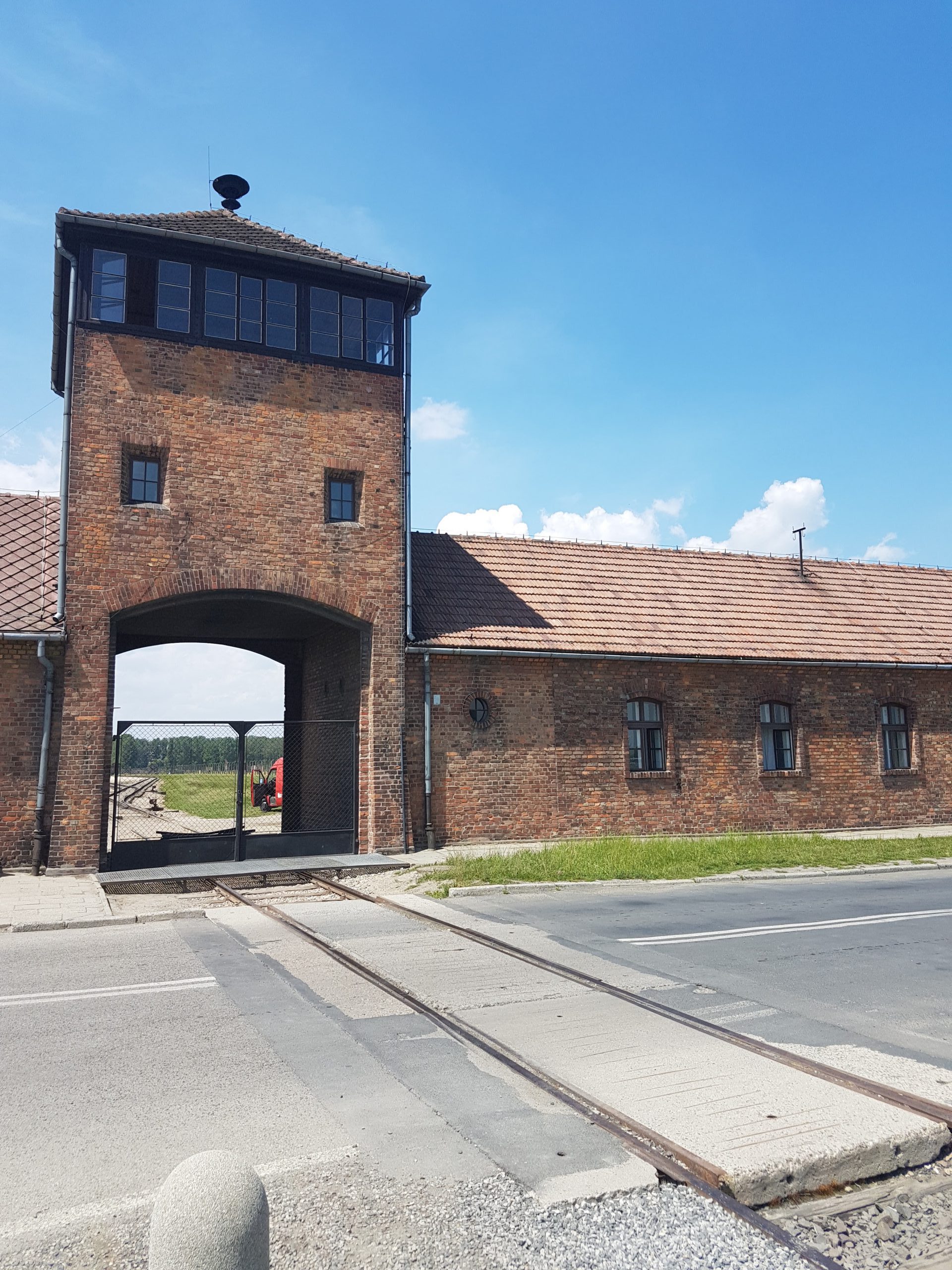
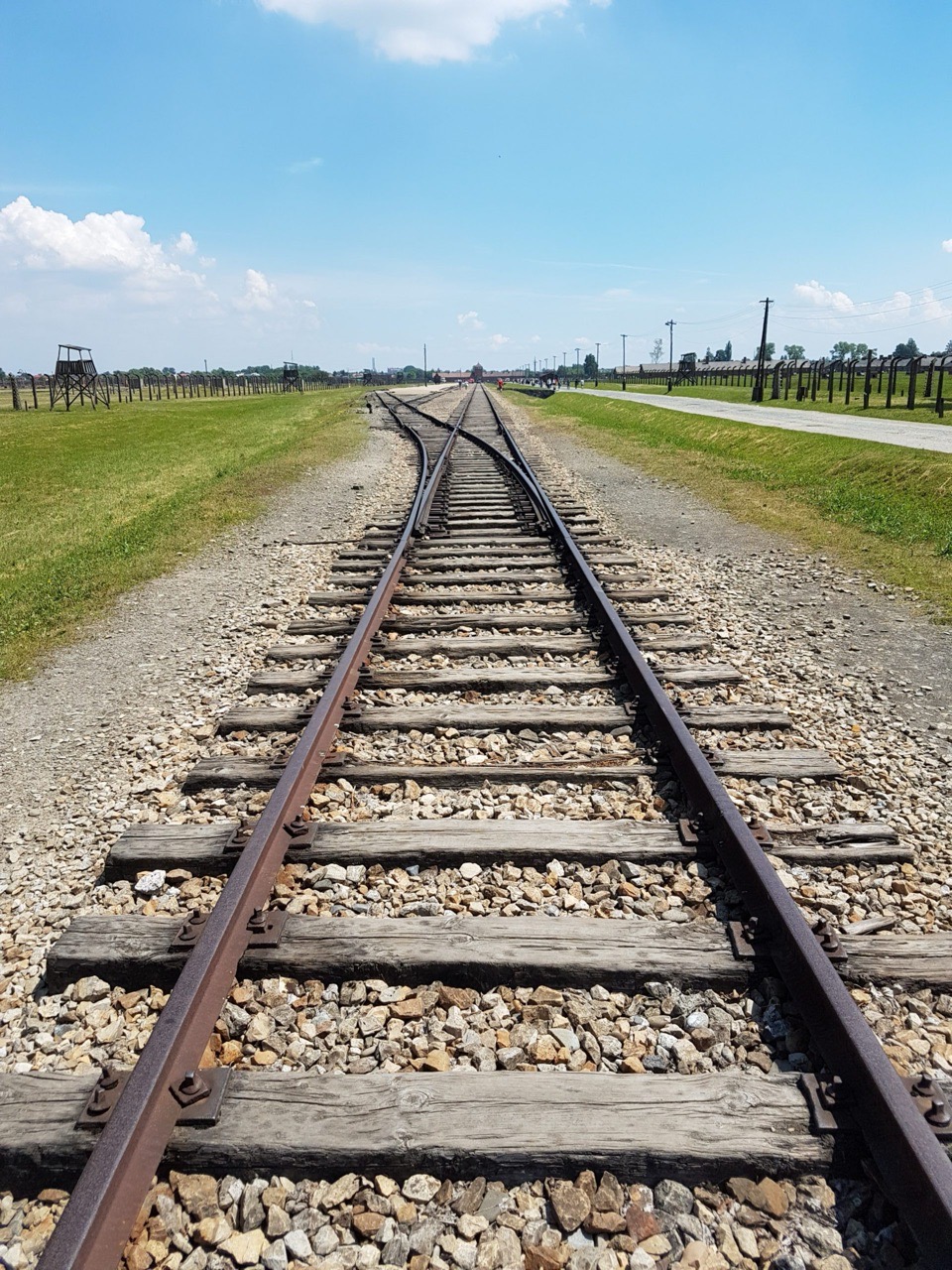
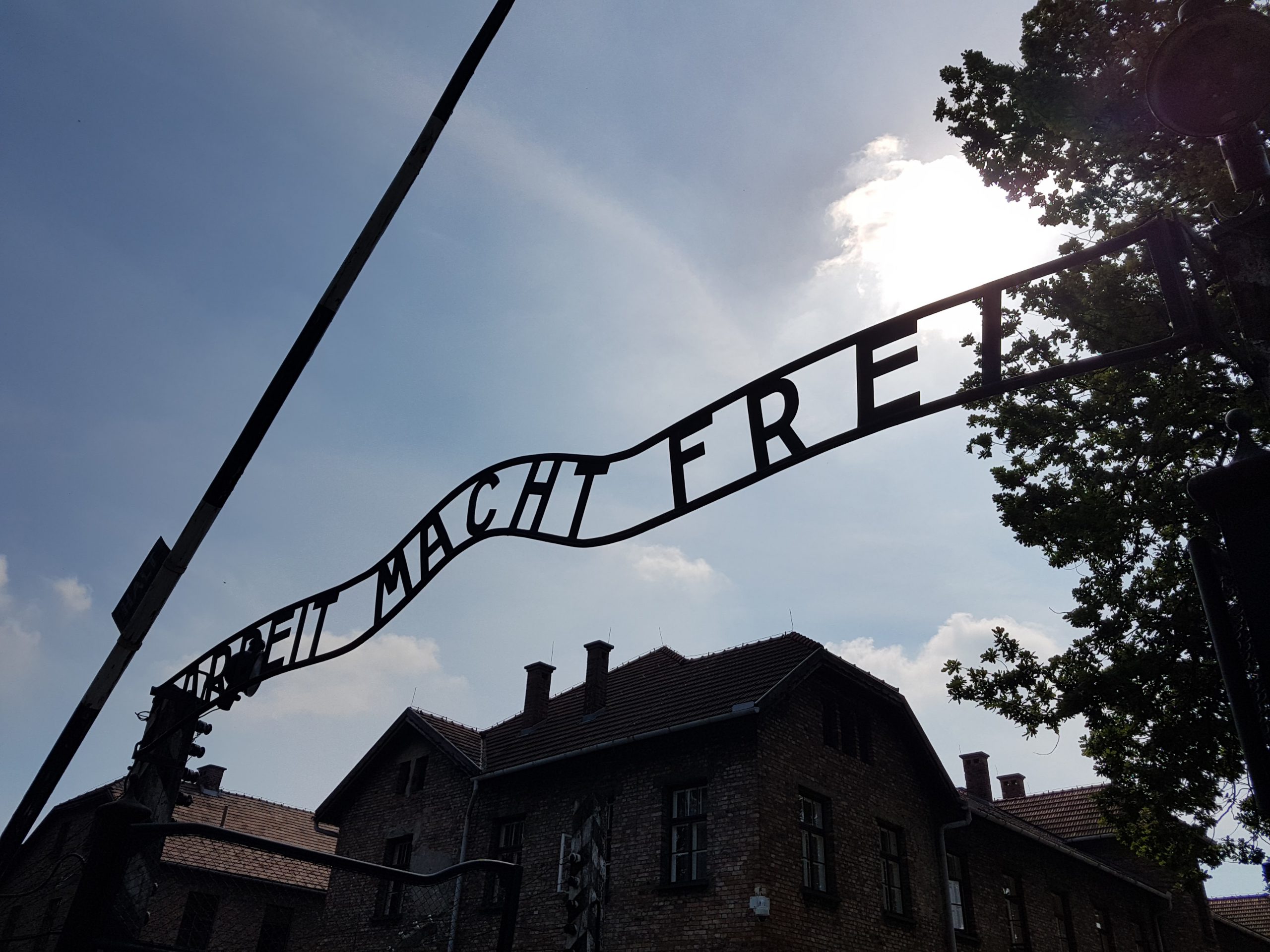
I’ll put more photos up over the next few days in separate posts, but there are three I took that day that are the most memorable to me.
This is a replacement sign as the original one was stolen in 2009. It was recovered, albeit cut into three pieces, but the replacement was left up and the original is now in the camp’s museum. It’s at the entrance to Auschwitz (Auschwitz and Birkenau are two different camps, but are nearby and are grouped together) and it’s one of the first things that visitors see. I had deliberately arrived early on in the morning as I didn’t want to go around in a guided tour, I preferred to walk around on my own. So, there were relatively few people around at this time and the camp felt quiet and still.
This is the railway line that led into Birkenau, the right-hand side is the ramp, where selections would have been made on who would live and who would be killed immediately. Thousands of people would arrive here, 80% would be killed immediately including nearly all the children. For some children, they never realised what was happening. They usually arrived on cattle trucks and parents would often provide reassurance to their children that things would be better here. I’m not sure that many parents thought that it would be, but that gave some hope to the hundreds of thousands of innocent children who were denied the chance to live their life.
Something like 1.1 million people died at Auschwitz-Birkenau, although the true number will never be known. The number is too big to comprehend. Thomas Buergenthal, a child survivor from the camp said about the 6 million Jews killed in the Holocaust:
“One of the problems with the six million number is that nobody can imagine that. You cannot personalize six million. You can personalize one person. I think it expresses a reality. It is true, because each one of those souls was killed, and each one had an individuality of his own, a history, a memory, a life, and that is lost in this whole discussion when we sort of cavalierly go over and speak about six million. It’s important to keep that in mind.”
So, I picked one individual from the many photographs on the walls. Seweryn Głuszecki, with a colourisation of his photo at https://facesofauschwitz.com/gallery/seweryn-gluszecki/. So little is known about him, he was born on 19 June 1925 and arrived at the camp from Krakow on 17 April 1942. He died on 20 June 1942. Seweryn’s father Norbert and his brother Rudolf were also transported to Auschwitz. Norbert died on 13 May 1942 and Rudolf died on 24 June 1942.
It’s only when thinking of one individual, whoever it might be, that the realisation of just how enormous a figure 1.1 million people is then starts to make sense.
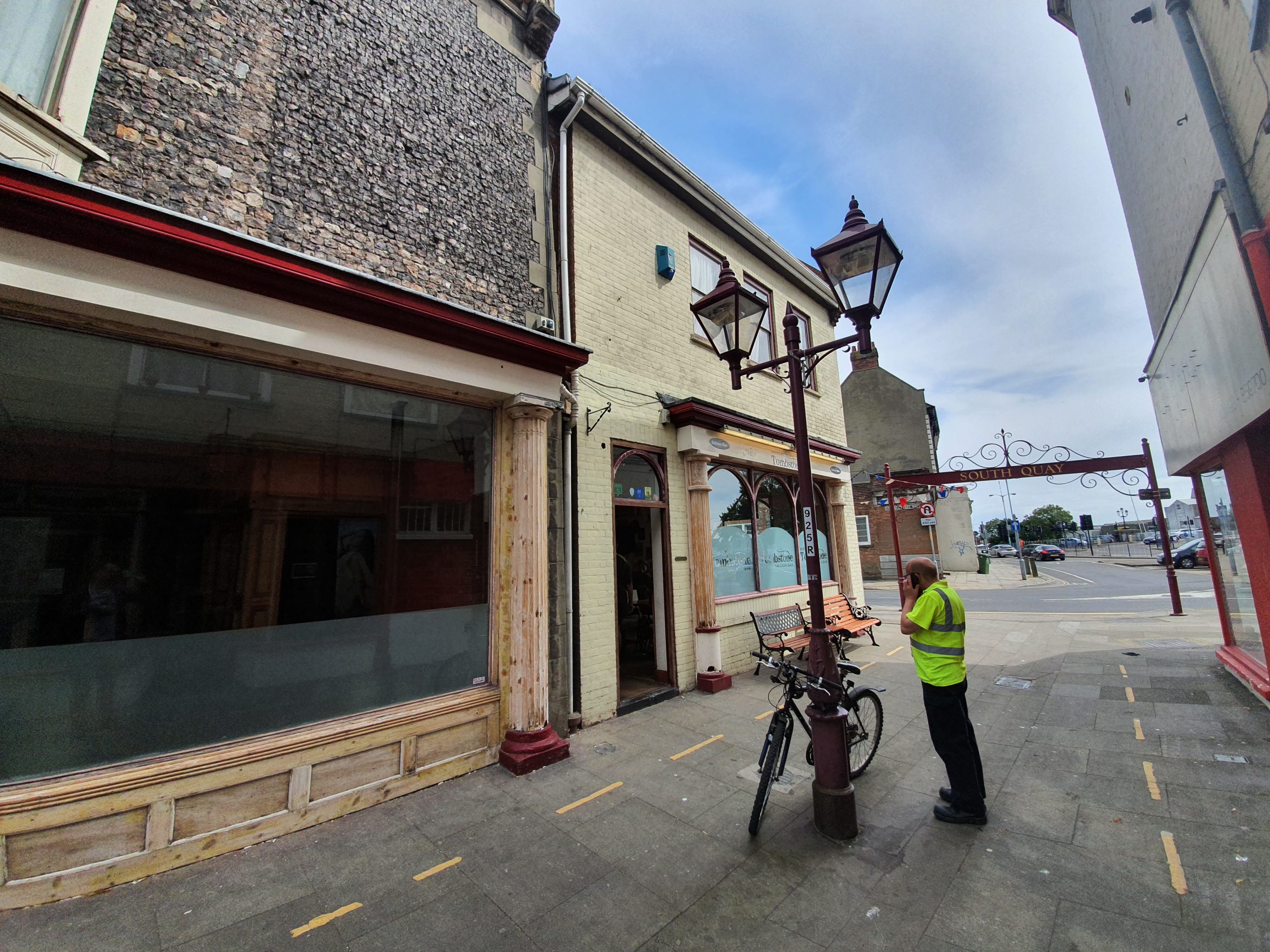
Tucked away a little, although within a short walk of the main market-place is this Good Beer Guide listed pub in Great Yarmouth. Calling itself a saloon, not least because of its American west theme, it’s the bar section of the Tombstone Brewery. It’s an under-stated location from the exterior and until about ten years ago, this was the home of the restaurant Cafe Nova. Indeed, some of the decoration from that period as a tapas restaurant remains today as the bar area.
A decent selection of real ale, particularly given the trading limitations that all pubs currently have. The pub was also busy, with someone at nearly every table, and there was a relaxed atmosphere in the pub. There were numerous tempting options visible at the bar, not least the scampi fries, with a range of different beer types.
I opted for the Tindall Stout, which was reasonably priced at £3.30. There are a couple of stouts produced by the Tindall Brewery, a small–scale local producer from nearby, in Seething, but the board didn’t name which one it was. I’m guessing though that it was the caramel stout and I came to that conclusion because I thought it tasted of caramel…. It seemed a little weak in body at first, but the aftertaste was rich and moreish, so a decent beer.
The wild west theme hasn’t been taken too far, but it adds character and atmosphere to the surroundings. The service was polite and the pub staff were following the current guidelines in terms of taking customer details. A fair few pubs aren’t doing this very well at the moment, and although I can’t say it overly bothers me, it does show a level of professionalism. It’s not the largest of pubs either, so I can imagine that it gets relatively busy during a warm balmy day in summer. Well, I like to think that tourists come here in a reasonable number anyway.
There wasn’t really anything exceptional about my visit that I can add, although that doesn’t mean there was any particular problem. But the customer service didn’t engage beyond the minimum, so there’s not much more I can add about that. I would say though that it felt like the kind of pub where you’d soon be known after visiting a few times, it had that sort of character to it. The selection of beers and ciders, as well as spirits, is also well above the average and so I can see why it’s listed in the Good Beer Guide.
The roll of honour, or the list of people who fought in the First World War, in the Church of St. Peter and St. Paul in Honing. It’s notable just how members of the Flaxman families went to fight in the conflict and there were 54 men in total who served. Sadly, 11 of those died and more about these in some future posts….
Andrew Chamber was born in Walcott on 24 July 1690 and he died on 24 December 1743 and was buried just two days later. The Latin on this tombstone reads ‘The noble human remains, son of Andrew and Susannah Chamber of Walcott. He left three children, Bevill, Andrew and John. Died on 24 December at the age of 53, AD 1743’. I don’t know how Bevill translates, I can’t imagine that’s the correct name I’ve translated there.
It’s evident that as Andrew has this tomb in the centre of the church that he had some money or influence. And indeed, his son who was also known as Andrew, built Honing Hall in 1748 and he had made his money from Worstead weaving. I’m not entirely sure, but I’d imagine the Andrew Chamber buried here would have also been a weaver (and Honing church is near to Worstead), who had managed to build up some wealth.
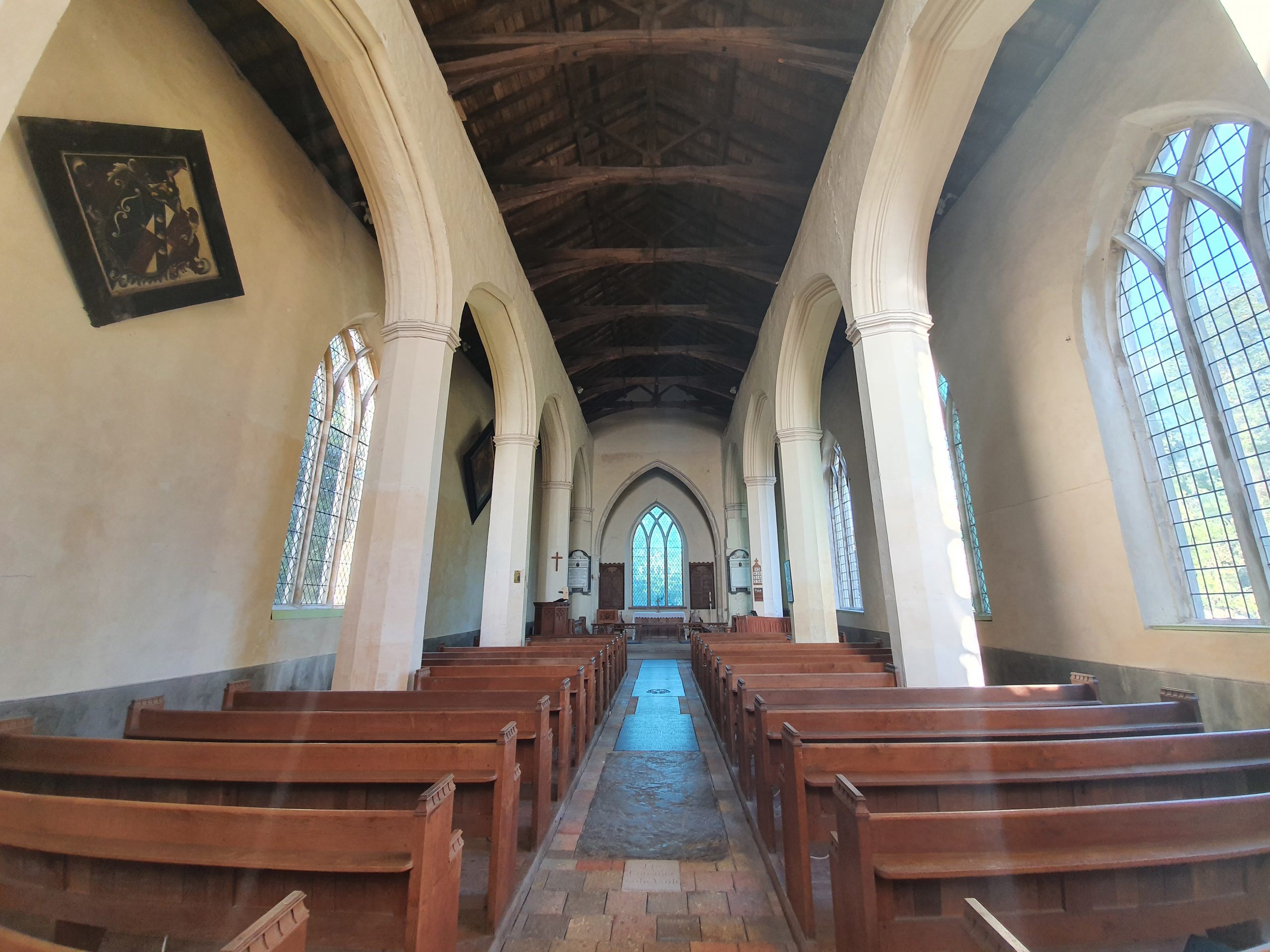
It’s a bright and airy church, although the boxed pews that might have added some extra charm were replaced in the early part of the twentieth century. I accept some people don’t think boxed pews do add character, but there’s something about these almost secretive looking boxes that I find historically attractive.
The chancel was shortened in 1795 when the church was reconstructed, so there is now very little left of it.
Looking back towards the west end of the church. The wooden roof is from 1795, although there was a ceiling underneath it originally, which has since been removed.
I like the flooring, which adds some character, with the tower section closed off with a wooden partition. There was a substantial restoration recently and this does allow members of the public access to the top of the tower, albeit only as part of a pre-arranged guided tour.
The top section of the font is made from Purbeck marble and dates from the thirteenth century, with the lower section dating to the fifteenth century. It’s thought that there has been a church here since the thirteenth century, with the bulk of it being reconstructed during the fifteenth century. That would fit with the dates of the font, so the older part is likely contemporary to the original church that was here and the rest is from the rebuilding.
These are some of the narrowest aisles that I’ve seen in a church and I can’t imagine that this was the original construction plan. It’s likely another one of the changes that were made in the 1795 reconstruction and it does feel out of proportion. There are two possibilities, one is that the walls were rebuilt and pushed inwards and the other is that the arcade has been moved outwards towards the wall.
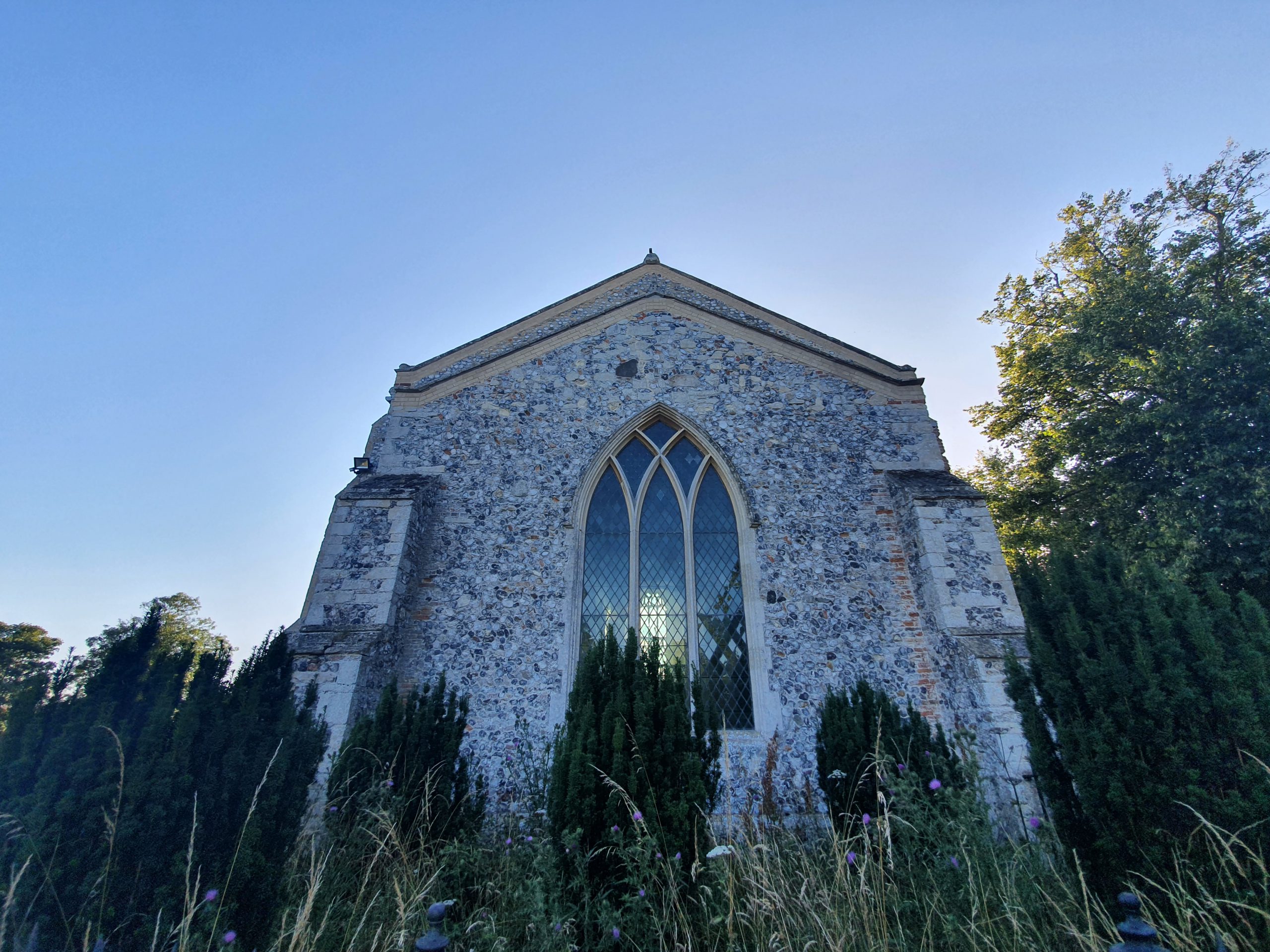
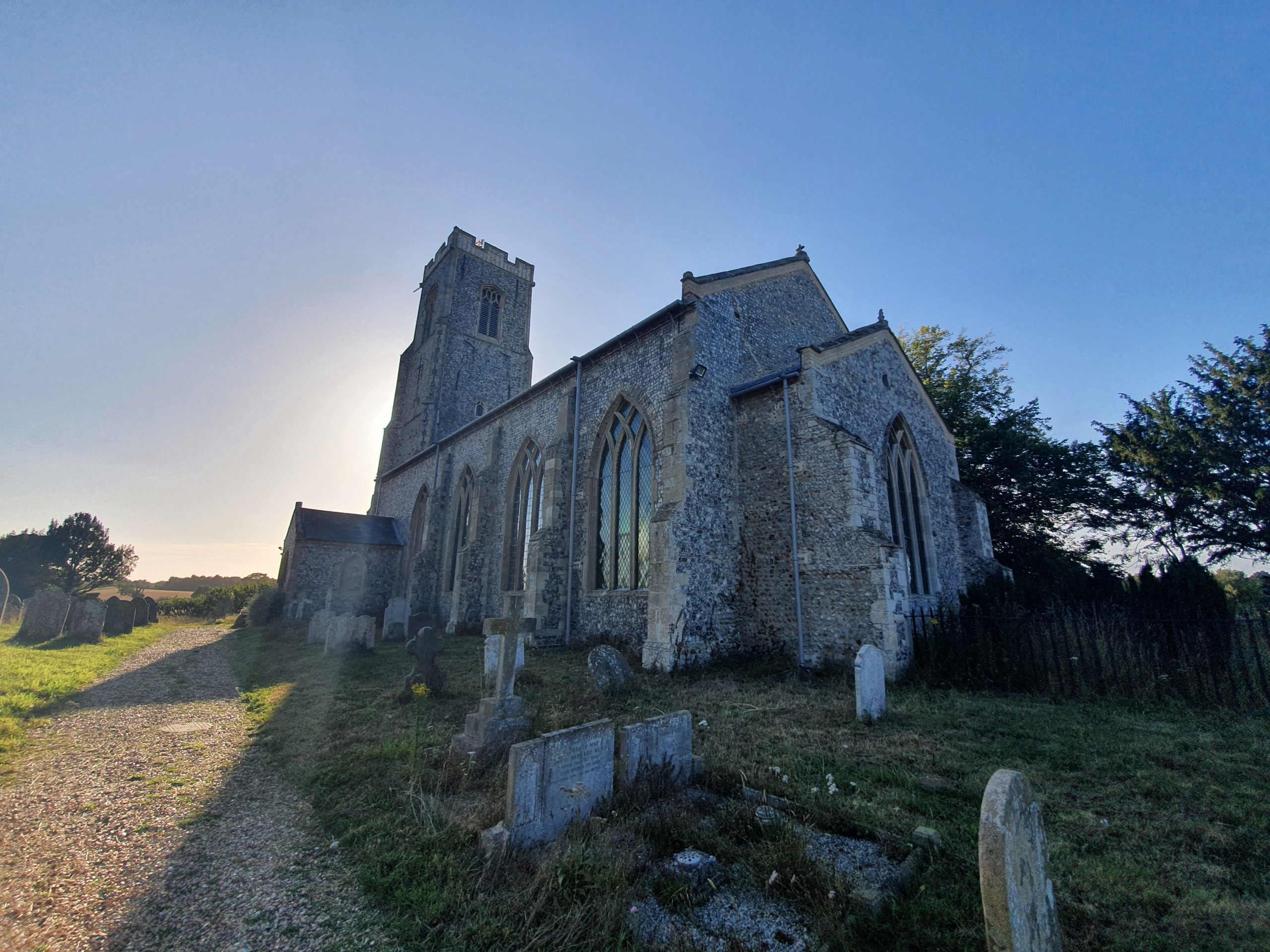
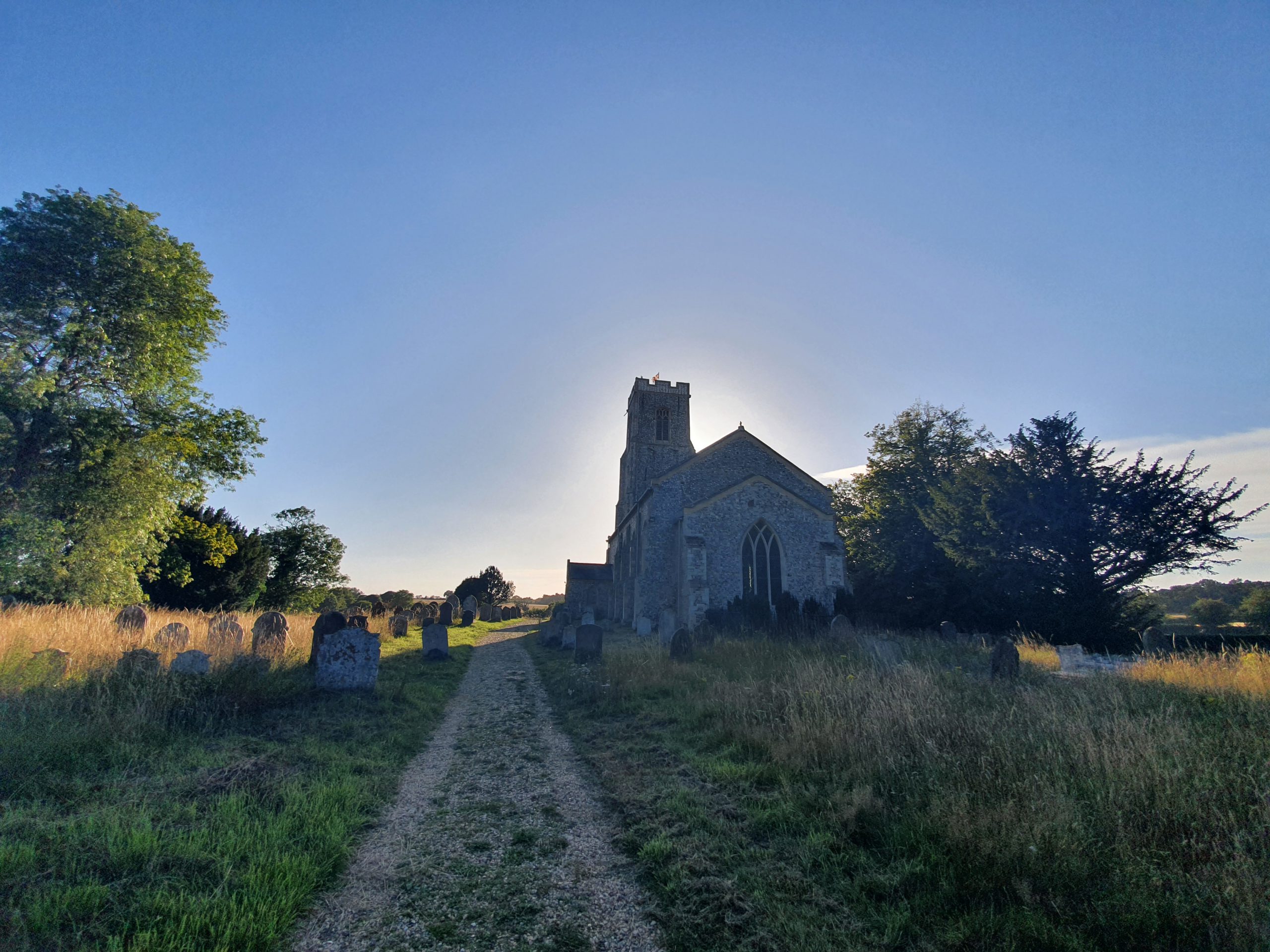
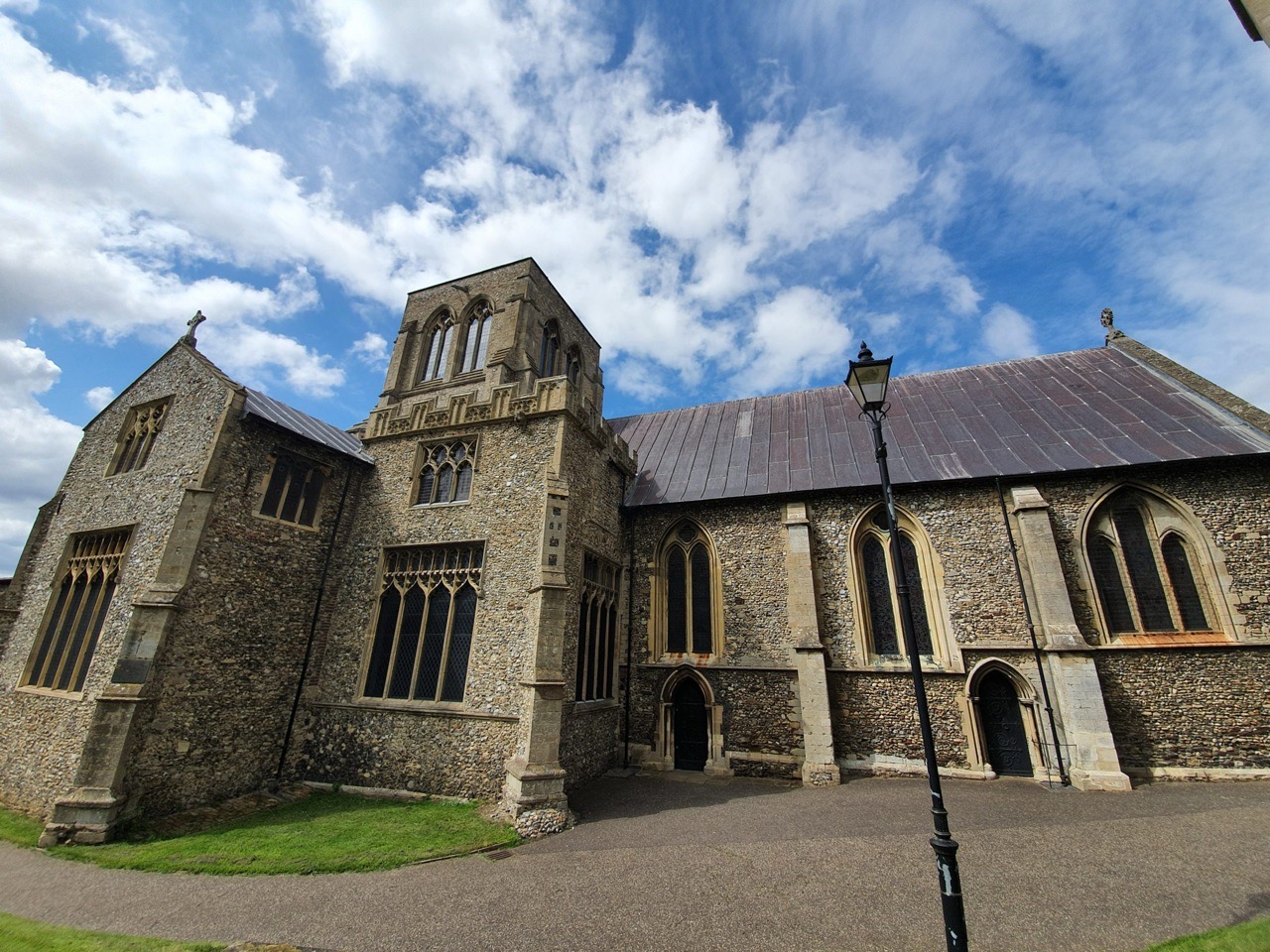
St. Peter and St. Paul is a fifteenth-century church which was substantially changed in 1795, something highly evident both internally and externally. It’s a peaceful location and there’s a long churchyard, which was extended in the early twentieth century. There has though been a church here since at least the thirteenth century, and a few elements of this have been incorporated into the nave.
The most obvious external change to the church is the chancel, which has been almost ludicrously cut short. There is an area with iron railings around it and this marks the consecrated area of where the chancel once stood. It’s not known what caused this rebuilding, but one historian has suggested that the church caught fire and this was the best repair that could affordably be made.
The new chancel end.
The nicely proportioned tower is contemporary in age to the rest of the church. There was a relatively large-scale restoration of the building completed recently, coupled with the hope of encouraging more people to visit the church. The tower is also now climbable, although only as part of a pre-arranged guided tour.
This is the west doorway on the tower, with the original door having been closed off during the 1795 restoration and a window added. The large window half-way up the tower is from the late fifteenth century, so may have been added after the church was originally constructed, but was likely part of the original design.
We were able to have a look inside the church, so more about that in another post.
The Dictionary of the Vulgar Tongue was first published at the end of the eighteenth century, and given that the current health crisis is giving too much time to read books, I thought I’d pick a daily word from it until I got bored….
Flying Pasty
The dictionary is certainly keeping its vulgarness here, this phrase is defined as “sirreverence wrapped in paper and thrown over a neighbour’s wall”. ‘Sirreverence’ is a word no longer in usage, meaning ‘save any reverence’, or a vulgar term, which in this instance is meant to mean defecation. What a wonderful place eighteenth-century Britain must have been……
There was no particular reason that I photographed this gravestone at the Church of St. Nicholas in Dereham, but it’s of George Dunn, who died on 12 December 1861 at the age of 50.
The probate record remains for George, which noted:
“Effects worth under £450. The will of George Dunn, late of East Dereham, in the County of Norfolk. Shoemaker, deceased who died on 12 December 1861 at East Dereham, aforesaid was proved at Norwich by the oath of George Jackson of East Dereham, aforesaid carpenter and sole executor”.
The effects value were in bands, of which £450 wasn’t the lowest, and very roughly (and relying on the National Archives currency calculator), it was probably around £25,000 in today’s money. George wasn’t likely a poor man, although that’s relative in this period, during his life as he was a registered elector due to being a freeholder property owner.
George was born in April 1811, the son of John Dunn, and he was baptised at the Church of St. Nicholas. He married Susan Clarke on 30 October 1844, again at the same church. The 1851 census gives a picture of what life was like for George, when he was living on Norwich Road in Dereham. He was aged 40, working as a shoemaker, married to Susan Dunn (born in Thetford), who was aged 37, as well as living with his children William R (aged 5) and Anna J (aged 4). He was also living with his father, John Dunn, who had been born in 1782 and worked as a tailor, by this time aged 69 and widowed.
By the 1861 census, they lived in the same property as in 1851, with John and Susan still living with William and Anna. William was by this time working as a watchmaker and Anna was still at school. Still teenagers, it must have been a difficult life for the family when George died a few months after the census was taken.
It was evident just how common theft was in Victorian Britain, with George being a victim of crime when in July 1855 a pair of wellington boots was stolen from his shop. Maria Barlow, an eighteen-year old bootmaker, was found guilty of the crime and sent to prison for six months.
The church in Dereham clearly played a great part in George’s life. From when he was baptised with his family present, excited about the future, to when he got married to what I assume was more excitement and then to his funeral service and burial.