Author: admin

  • Norwich – Earlham Cemetery (Thomas Alfred Tyrrell)

    Norwich – Earlham Cemetery (Thomas Alfred Tyrrell)

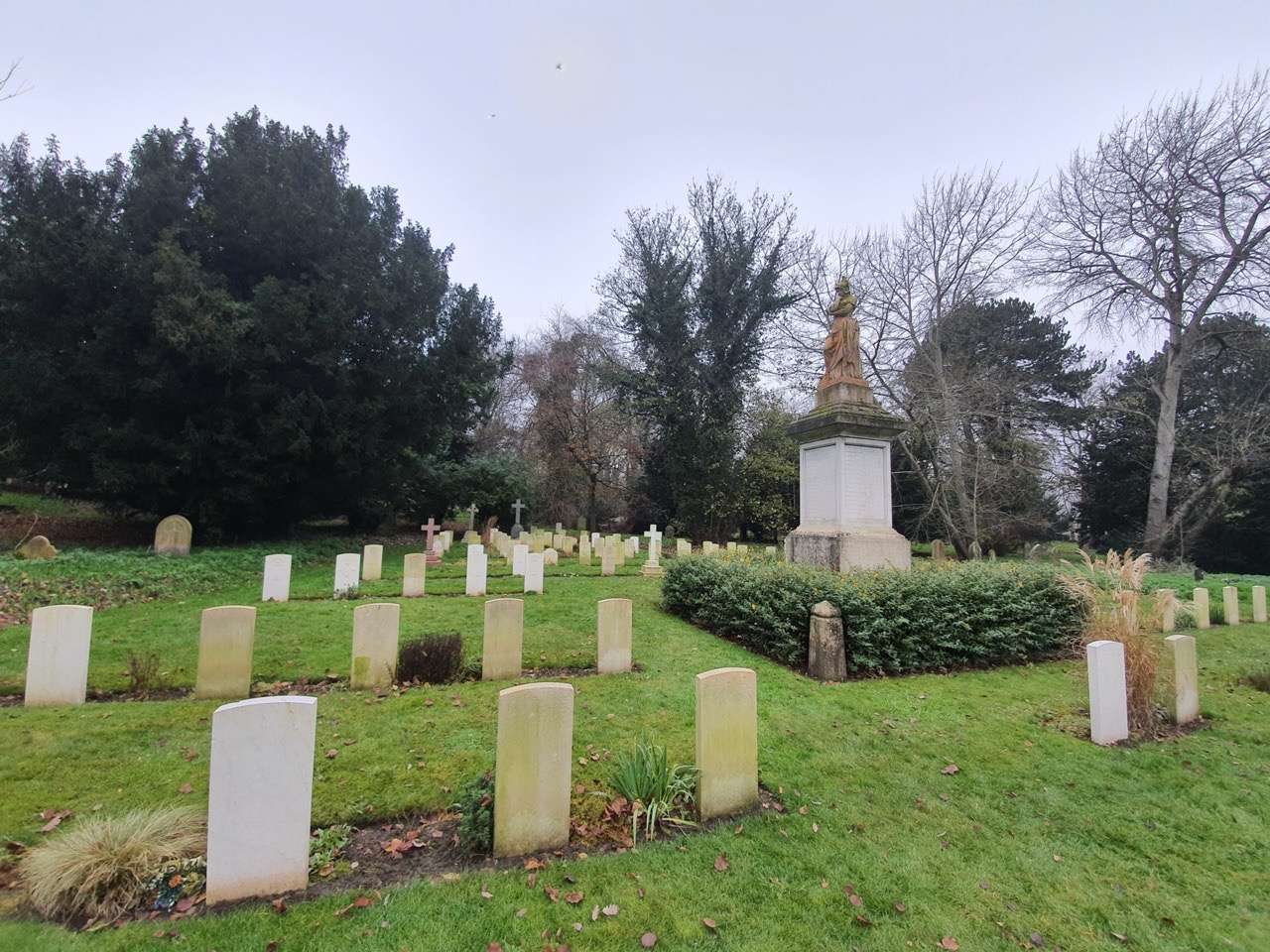
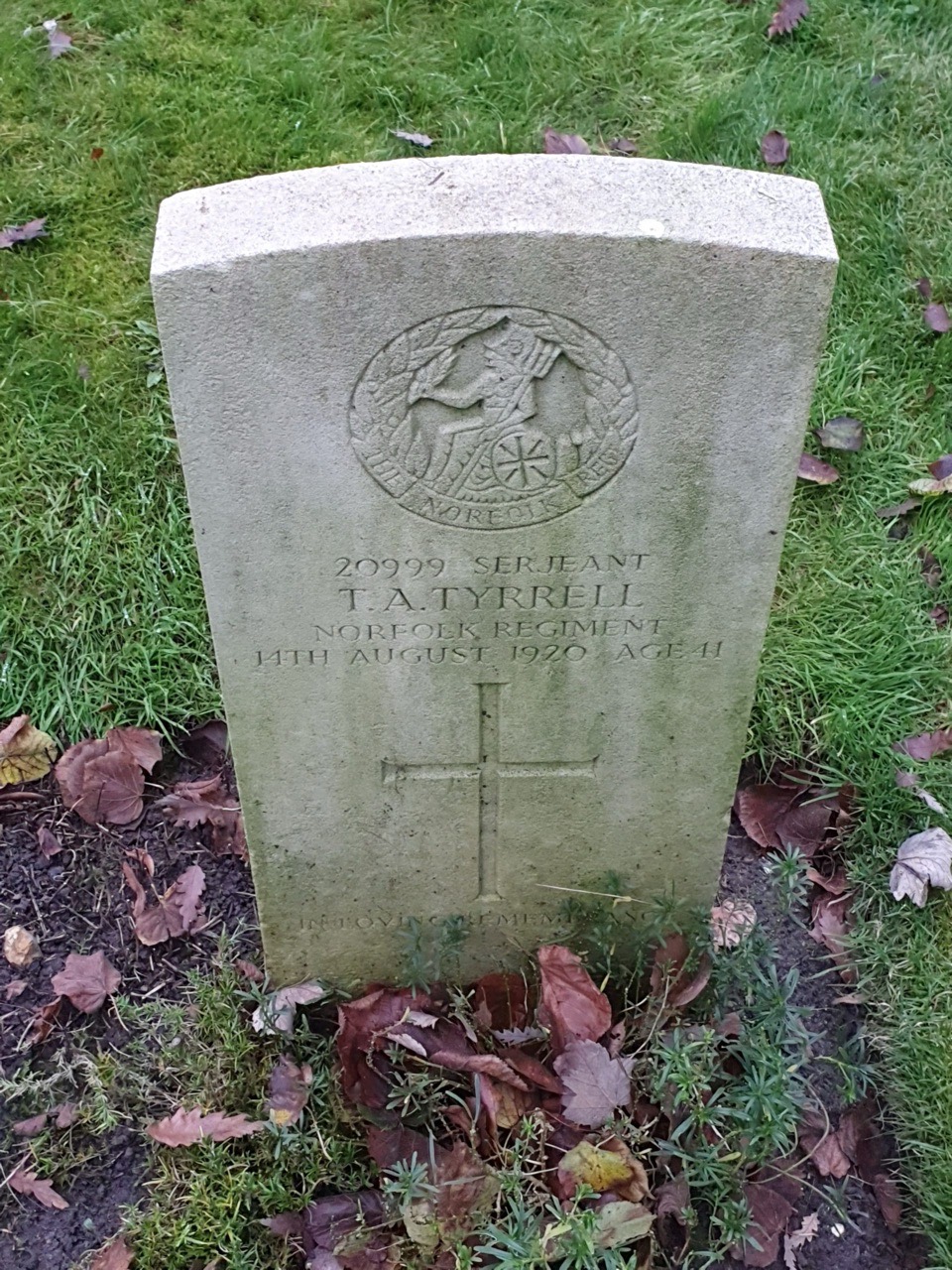
    This is the war grave of Thomas Alfred Tyrrell, buried in the older military graves area of Earlham Cemetery. The volume of records that remain about an individual varies so much, there is nearly nothing on some poor souls, whereas for others the documentation is extensive. And this is so for Thomas, whose military records remain intact from his service during and before the First World War.

    Thomas was born in Dereham in 1877, the son of John Tyrrell and Mary Ann Tyrrell. After briefly working in the shoe industry, he signed up (being given the service number 4080) to join the military on 29 September 1894, opting for a short service option of seven years with colors and five years in the reserves. It was noted at Thomas’s medical that he was 5’4″ in height, he weighed 9.3 stone, had brown eyes and dark brown hair.

    During his service (and he served with the 1st, 2nd and 3rd Norfolk Regiments), Thomas served in Calcutta (now Kolkata) and Barrackpore in India, amongst many other locations. I’m fascinated by what he and other soldiers would have made of that experience, but as an adventure, I think it must have been one of the most exciting possible for someone without any other financial means at the time. Otherwise, for those from Norfolk, it would likely be employment as an agricultural labourer or in the shoe industry.

    Thomas left the military in early 1907, but he signed up again to serve in Section D of the Army Reserves on 1 July 1907. He had married on 24 June 1907, although this was pre-planned and he didn’t hate the situation so much that he immediately to enlist again. He married Ethel Georgina (born on 31 December 1889) at St. Paul’s Church in Norwich, now sadly demolished, and she was ten years younger than him. Their first child was born on 18 February 1908, Alfred Thomas.

    At the 1911 census, Thomas, his wife and his son were all living at 2 White Entry Yard, which was located just off Bull Close. As a little aside, this would have been very convenient for the Leopard and Plasterer’s, as well as three other nearby pubs which were open when Thomas was living there.

    Thomas was discharged on 26 January 1915, being declared as “physically unfit for war service” and he had experienced numerous illnesses and ailments during his time in the military. This included a period at the Cliff Hospital in Felixstowe between 17 and 27 November 1914, suffering with rheumatism.

    More of a technicality I understand, but under the Military Service Act of 1916, Thomas was called in once again on 19 July 1916 and given a new service number, 20999. He served at home between then and 15 December 1916, before being discharged again. During this time he became a father for a second time, with Ethel Violet being born on 29 August 1916. By now he had moved to 5 Compass Street, located off King Street, now directly underneath Normandie Tower. He had returned to work as a boot maker and his military records show that he had served in total for 18.5 years.

    Thomas died on 14 August 1920 and this would have been linked to an injury caused during military service. What is puzzling is that the grave notes he was aged 41, which is incorrect by two or three years. Errors aren’t uncommon, but the details of these stones were usually checked with family members, but perhaps a mistake or omission was made.

    At the beginning of the Second World War, the mother and daughter, both named Ethel, were living in the same location on Compass Street. The younger Ethel had married as her surname was Baker, and she worked as a cardboard box maker, living until 2007. Thomas’s wife, Ethel Georgina, died in Norwich in 1975, which was 55 years after her husband.
  • Norwich – A New Public Cemetery at Mousehold Heath (1848)

    Norwich – A New Public Cemetery at Mousehold Heath (1848)

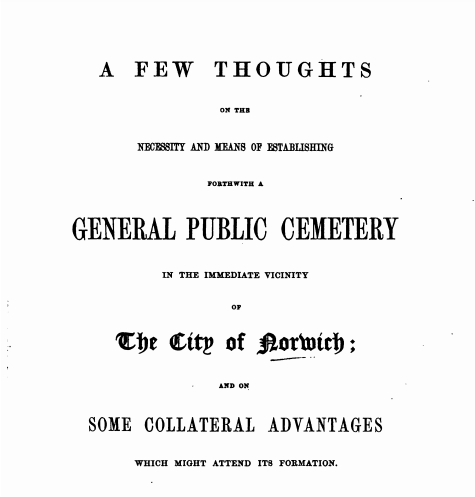
    Thanks to Google and archive.org, this short book from 1848 is available on-line. The book contains a proposal to turn land at Mousehold Heath into a cemetery, something which wasn’t enacted, although Earlham Cemetery opened in 1856 to deal with the issues raised in this book.

    The author of this book isn’t given, but it was addressed to the Lord Bishop of Norwich, who was then Edward Stanley. The author painted a clear picture of the situation in Norwich churchyards at the time:

    “In many of the Norwich churchyards the soil is now almost level with the windows; piled up four, five or six feet above the original surface with the ashes of the dead, which are allowed to lie undisturbed for a period far too short for total decay of the corpse and its tenement”.

    That’s not an ideal situation and nor was the outbreak of cholera in 1848, which strengthened the author’s case. Indeed, the Home Secretary actually forced the council’s hands, saying that churchyard burials in Norwich must stop by 1855 because of the cholera issue.

    The author of the book suggested:

    “There is lying, hardly beyond the precincts of Norwich, within half a mile of the Cathedral, a tract of land, which I can hardly be wrong in stating as comprising from 100 to 200 acres, not only uncultivated but wholly unproductive; bearing only thorns and briers; the stones and gravel extending to the very surface”.

    He added that the owners of the land, who were the Church of England, had granted permission for it to be used, but they wanted in recompense:

    “Funds to be appropriated towards the establishment and maintenance of a National School in the neglected, and wellnigh near heathen, district of Pockthorpe”.

    This is a slightly blunt way of describing the area of Pockthorpe…. (it’s around where Norwich Puppet Theatre is, Silver Road and the area at the base of Mousehold Heath).

    The author’s vision of how the new cemetery should turn out was modern and indeed the basis of how the new wave of burial grounds were built. The Rosary Cemetery had already opened by this time, with a chapel and plenty of space allocated for burials. The author noted though the necessity for two rooms to place the dead body before burial, saying a requirement was:

    “Two large rooms for the dead, to which a corpse may be removed shortly after death, till the time of interment; one being set apart for those who have died of a fever or other infectious disease. I would make this a very principal point. Nothing can be more distressing than the state of many a poor man’s family after a death has taken place, and before the body can be interred. I speak only from what I have myself seen in country parishes: often is a man and his wife and a large family of children – some perhaps nearly grown up – living in two rooms, or perhaps even in one, with the corpse of one of its members occupying one out of the two or perhaps three beds, and this perhaps in the hottest weather of summer”.

    There was also an interesting observation about the difference between English graveyards, which the author noted were “little else than a passage leading to it, or a large enclosure overgrown with weeds and rank grass”, compared to European graveyards which were more spacious and were destinations in their own right.

    The proposals for this cemetery were that it should be primarily for the Church of England, along the lines of Mill Road Cemetery in Cambridge where each parish received its own chunk of land. When Earlham Cemetery was opened, there was though much more room provided for dissenters. So, although the burial needs of the city of Norwich were resolved in the 1850s, this was an interesting proposal. There had been suggestions of using Mousehold Heath as a site for burials since the late eighteenth century, proposals which were never enacted.

  • South Elmham – St. Peter’s Church

    South Elmham – St. Peter’s Church

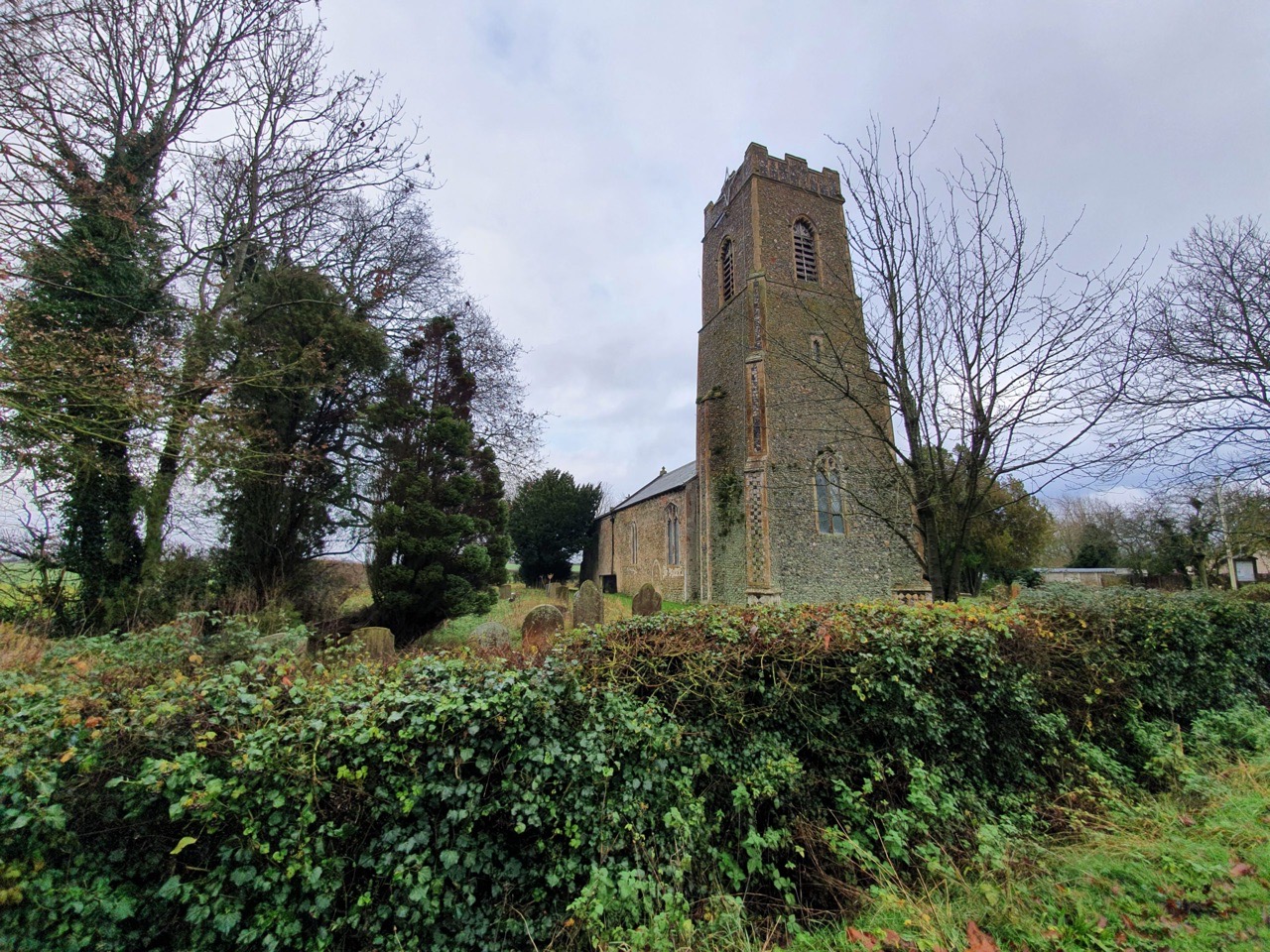
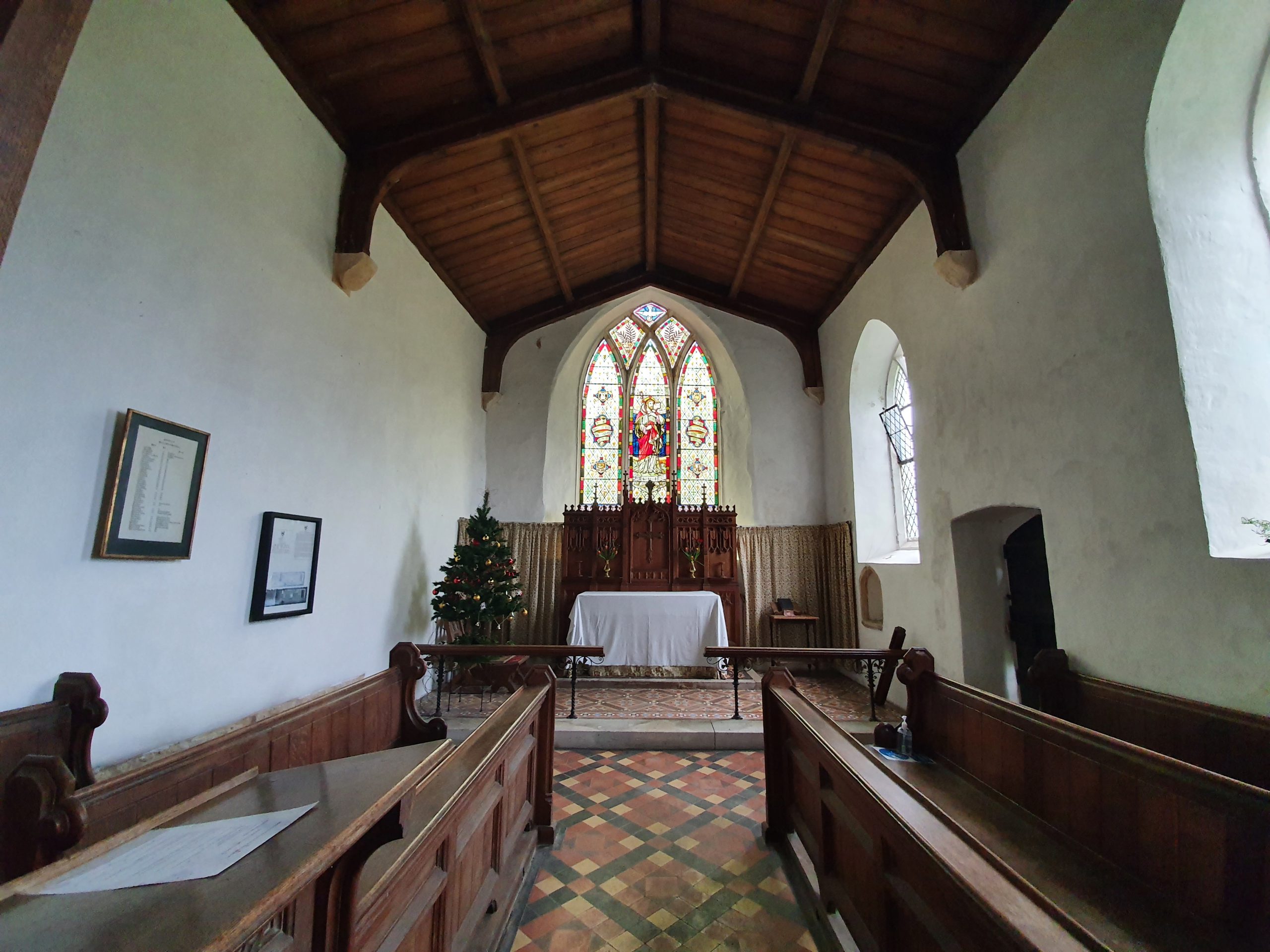
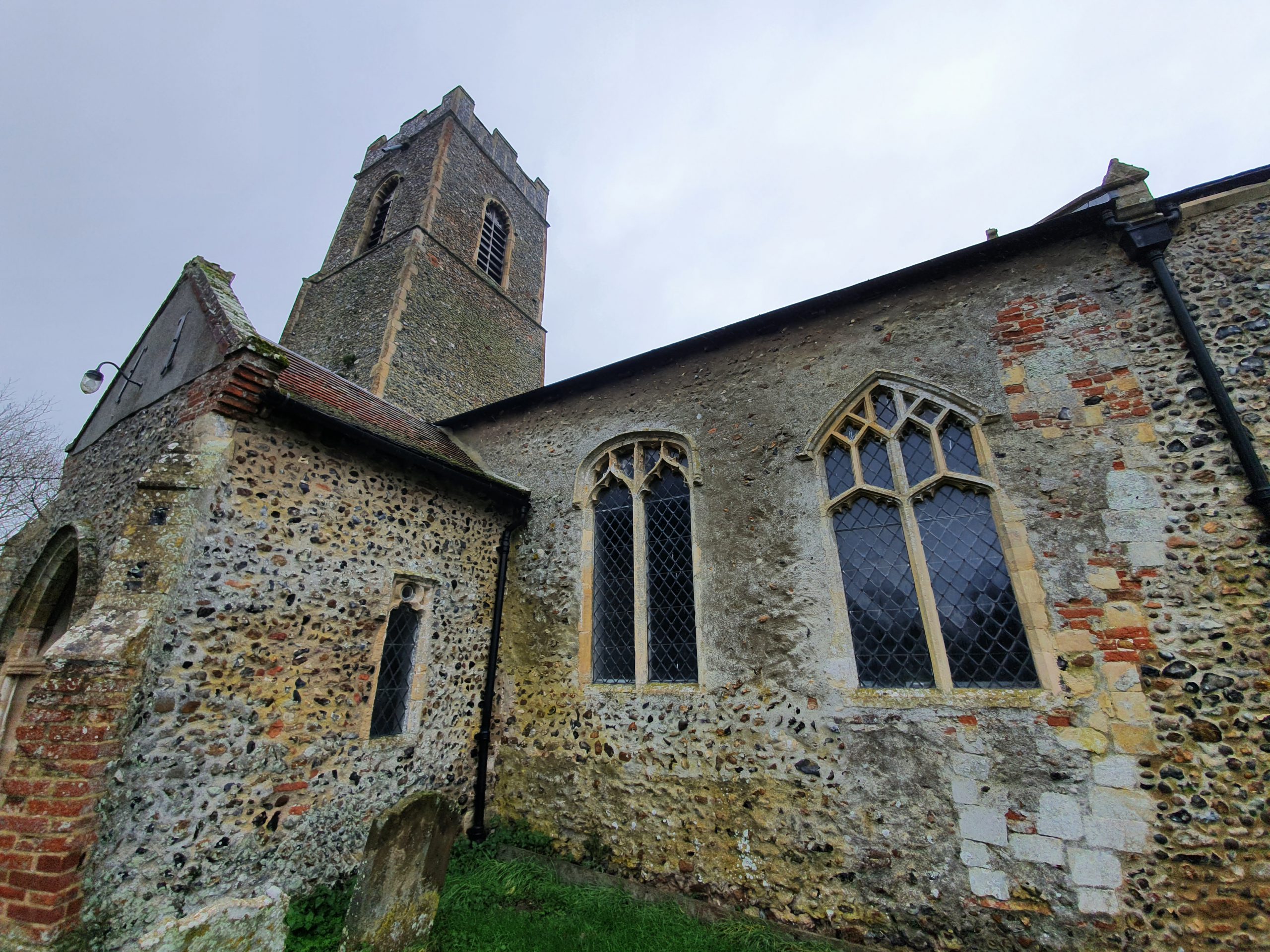
    The rain cleared a bit by the time that we got to St. Peter’s Church in South Elmham, a church where it’s hard to see how its small parish was ever able to support it.

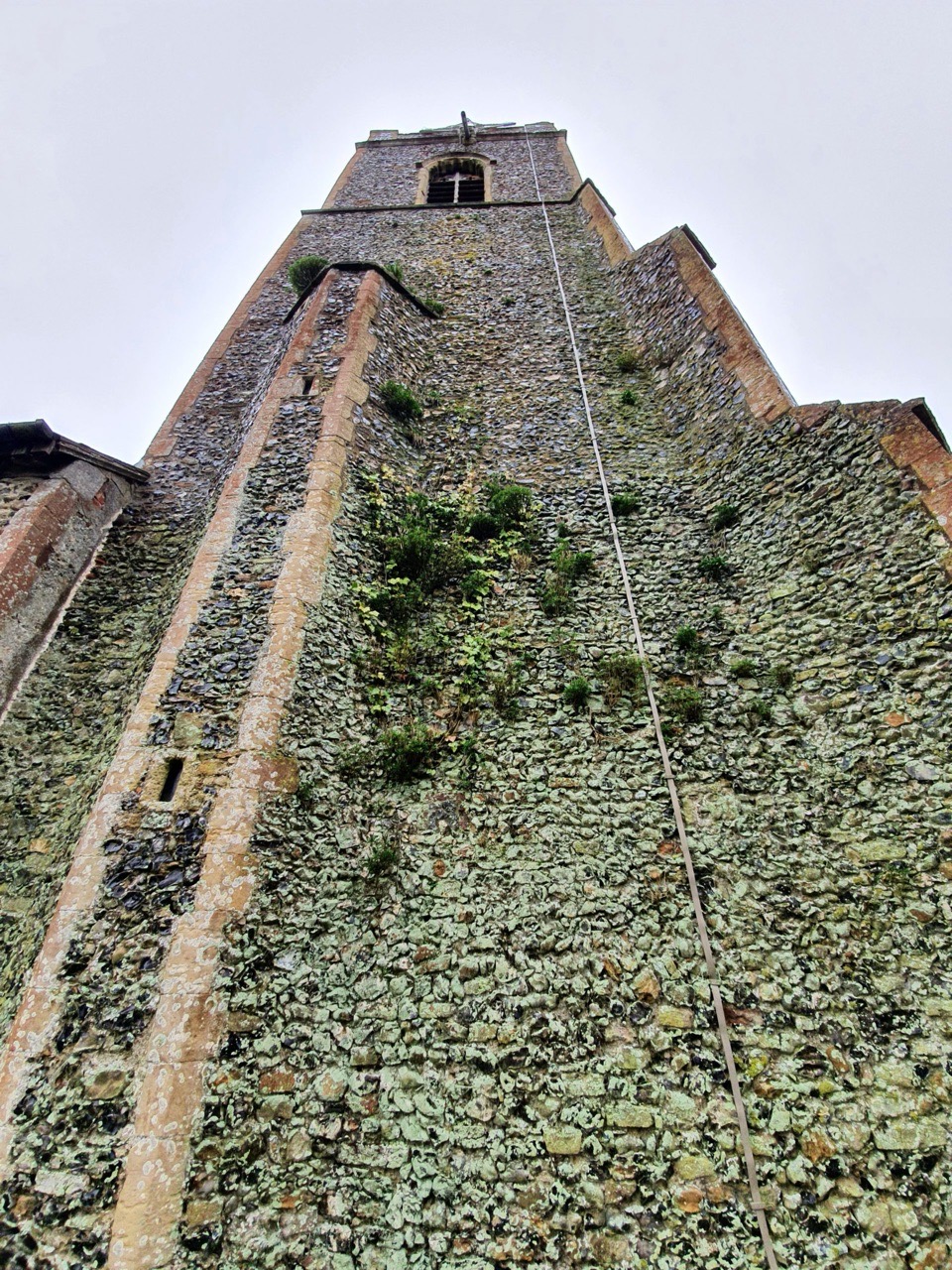
    The tower is in need of some attention, the foliage growing on it will eventually start to cause structural damage.

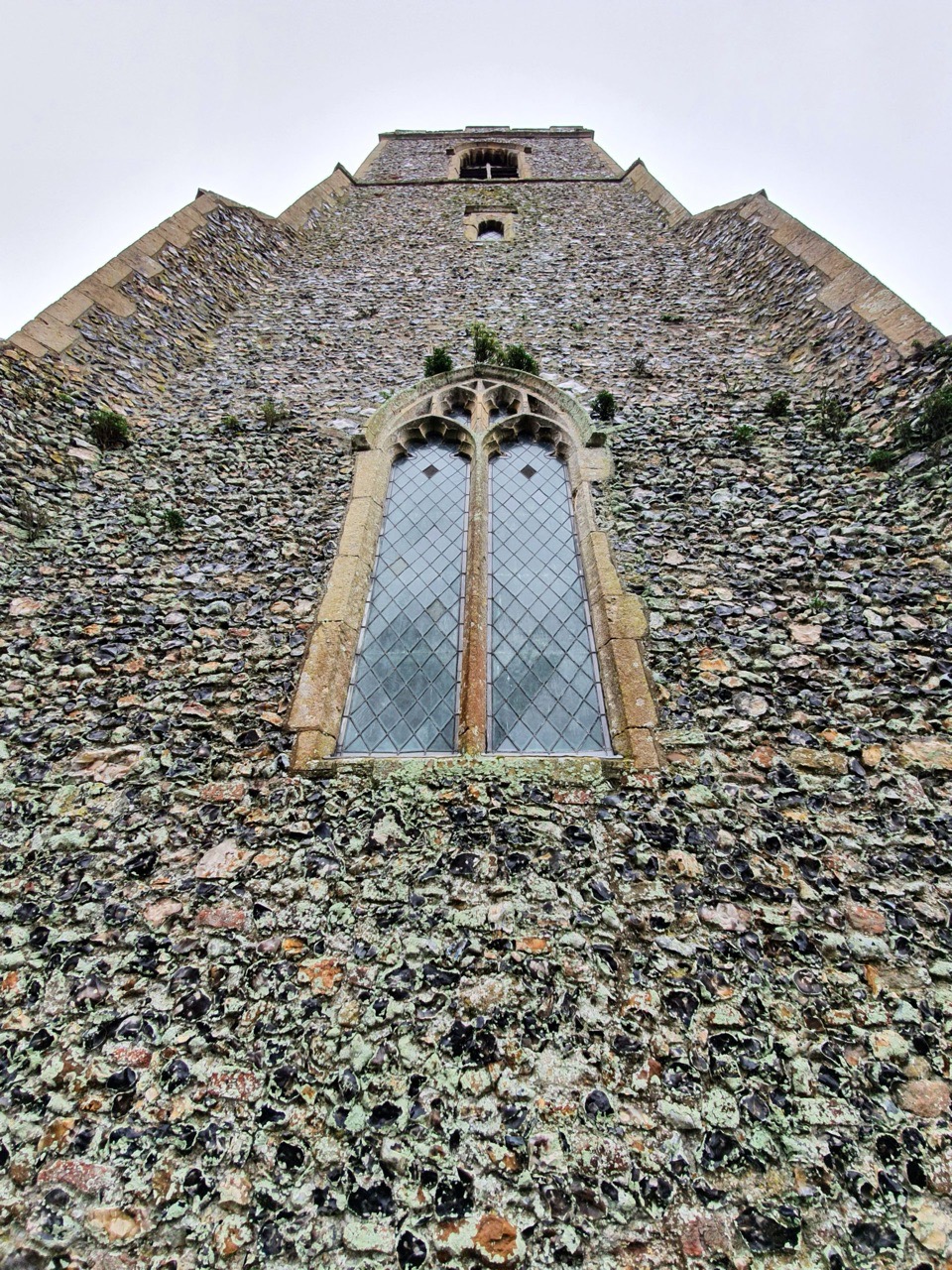
    The four-stage tower, likely from the late fourteenth century.

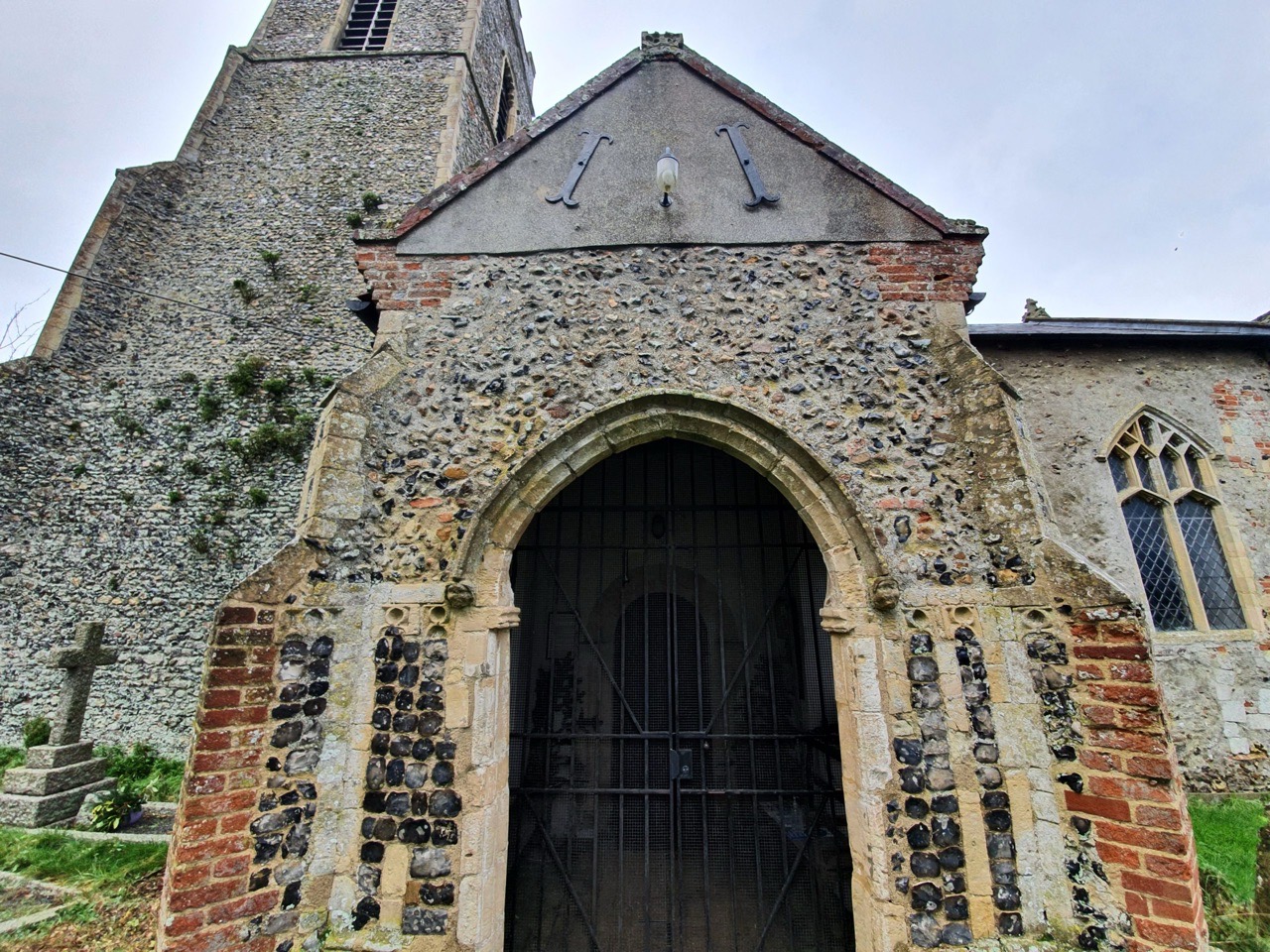
    The fourteenth century porchway, with the carved stone faces still visible.

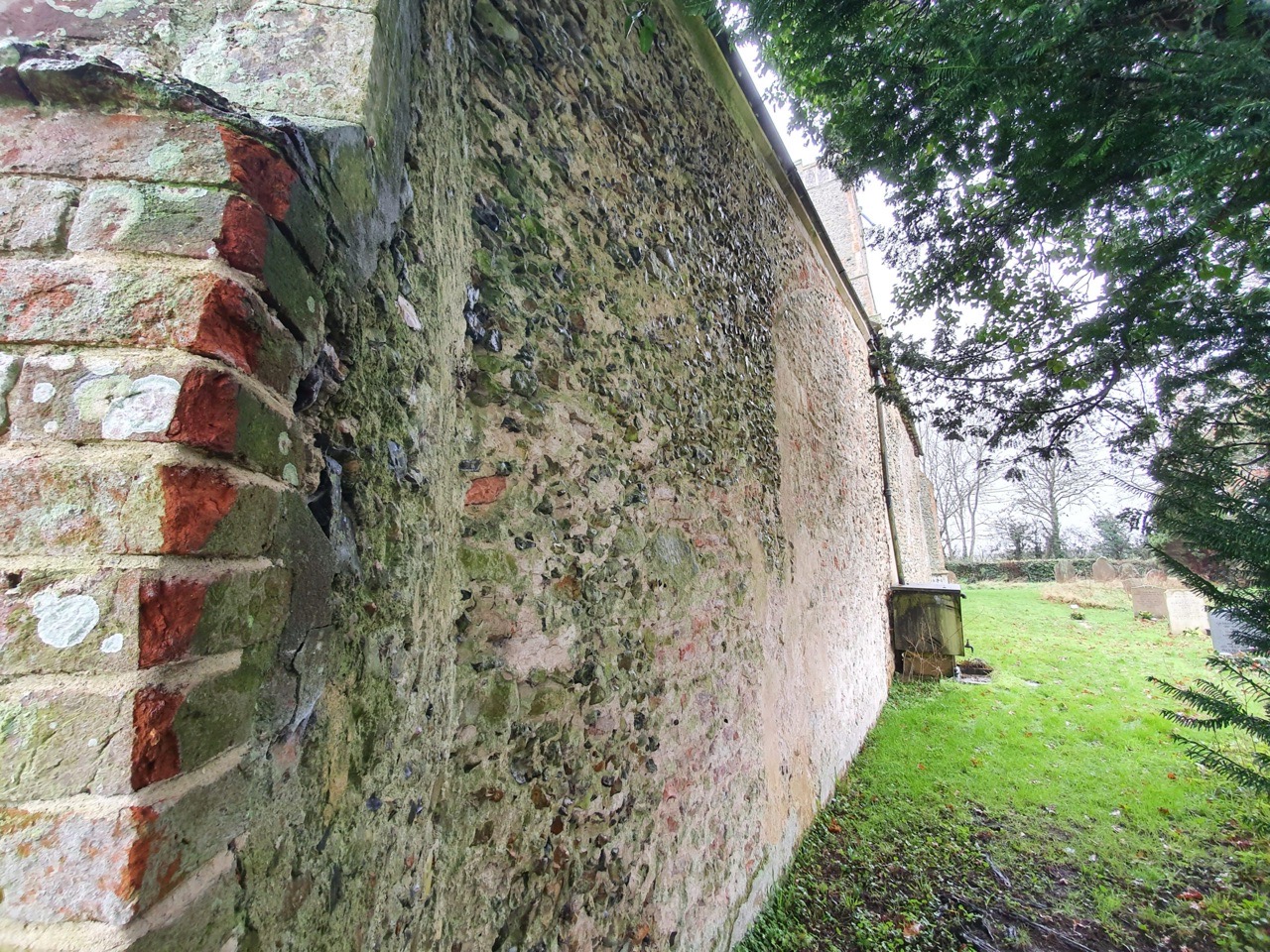
    There have been some rather crude repairs here over the years and I wonder whether they just rendered over that to hide the patchwork of stone. There have been some recent repairs to the end chancel wall, which have now been completed

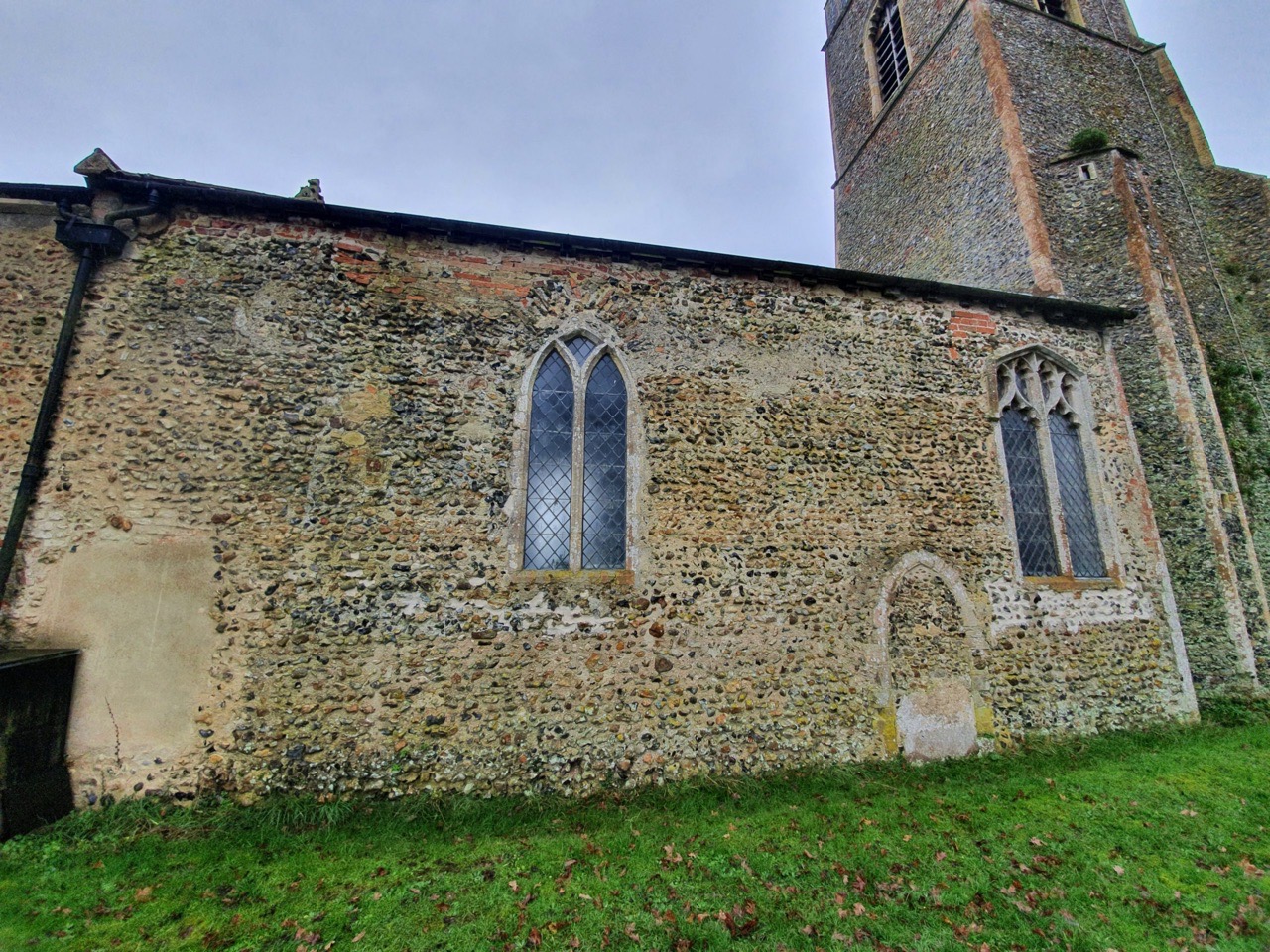
    This external chancel wall doesn’t look overly exciting perhaps, but it’s where the chantry was installed in the late fifteenth century and would have been located on this patch of greenery. There would have been a large opening in the wall here and it held the tombs of John Tasburgh and his wife, Margery Tasburgh. The chantry was damaged during the Commonwealth period and later became left open to the elements, with the tombs damaged. The structure was taken down in the 1830s, although the remains of the doorway are visible.

    The church has an interesting photo in the chancel which explains a little more about the history of this wall. To the left, out of shot, is the former chantry arch, but visible here is the coursed flint from the twelfth century forming most of the wall, with the higher thirteenth century wall visible at the top of the two windows when the building was heightened.

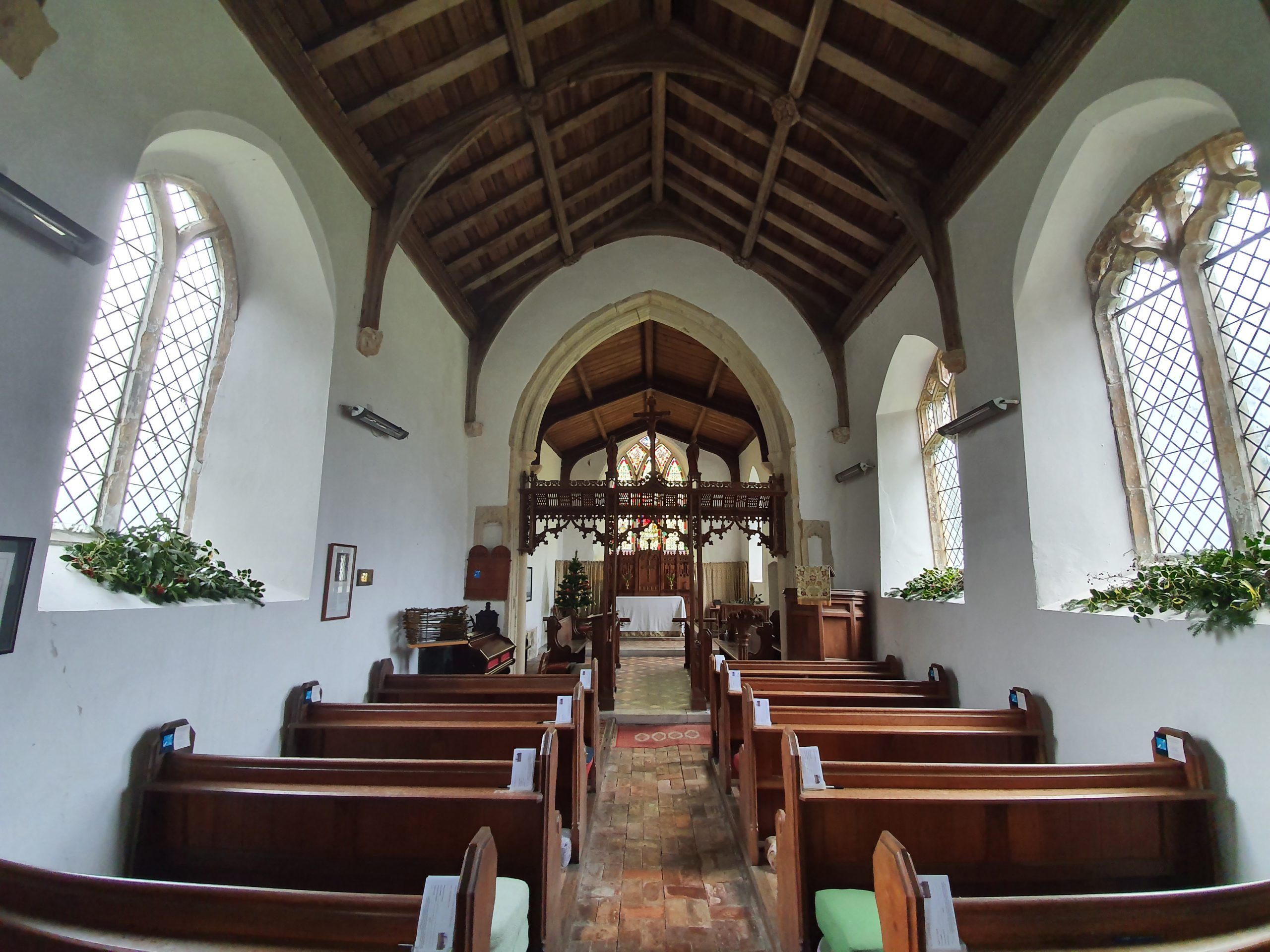
    Looking down the nave of the church, which has been heavily Victorianised inside.

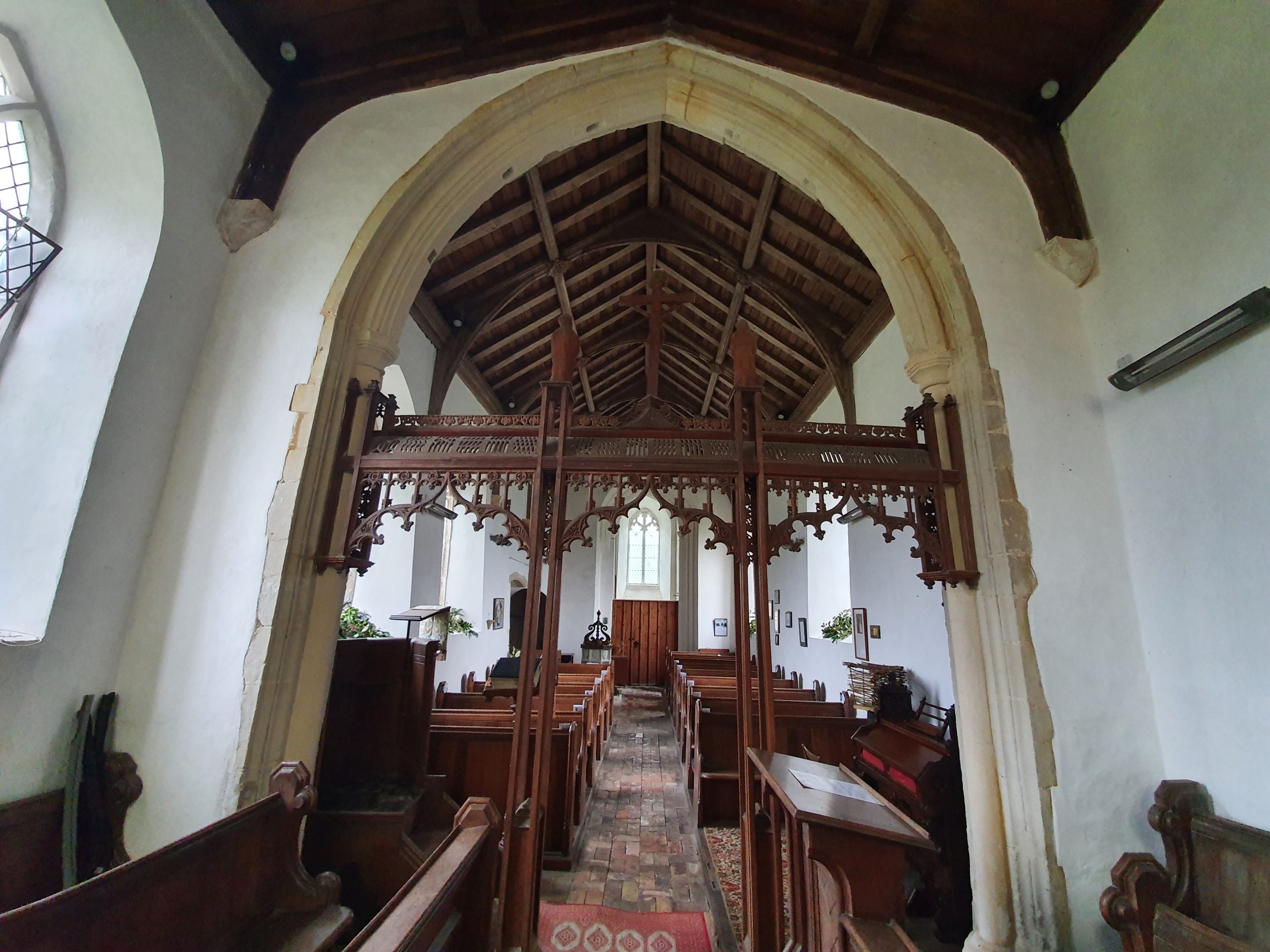
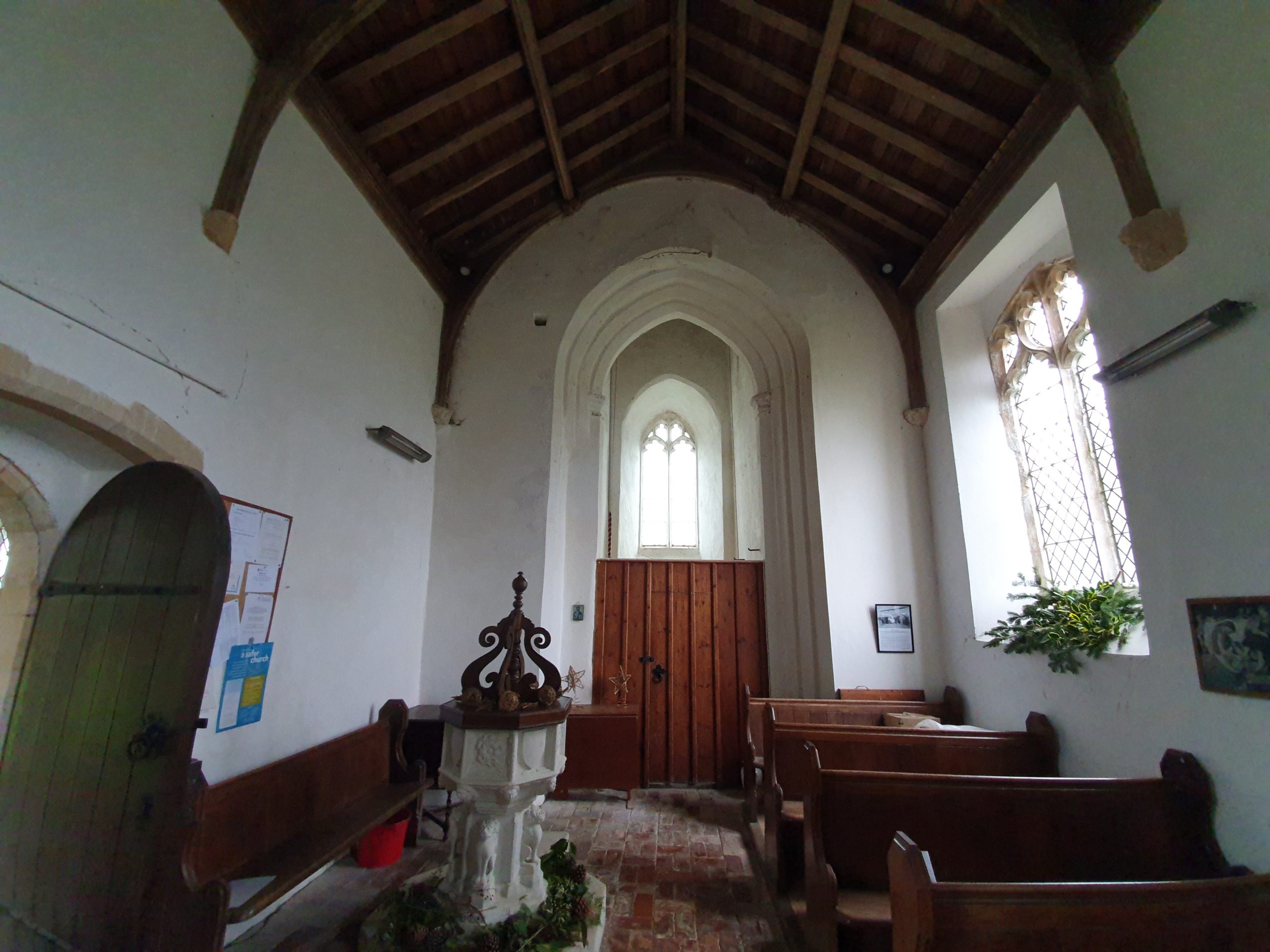
    The chancel arch is from the fourteenth century and fortunate that the rood screen is still in place.

    It’s a well proportioned chancel.

    The open base of the tower is visible at the rear and the font is from the fifteenth century.

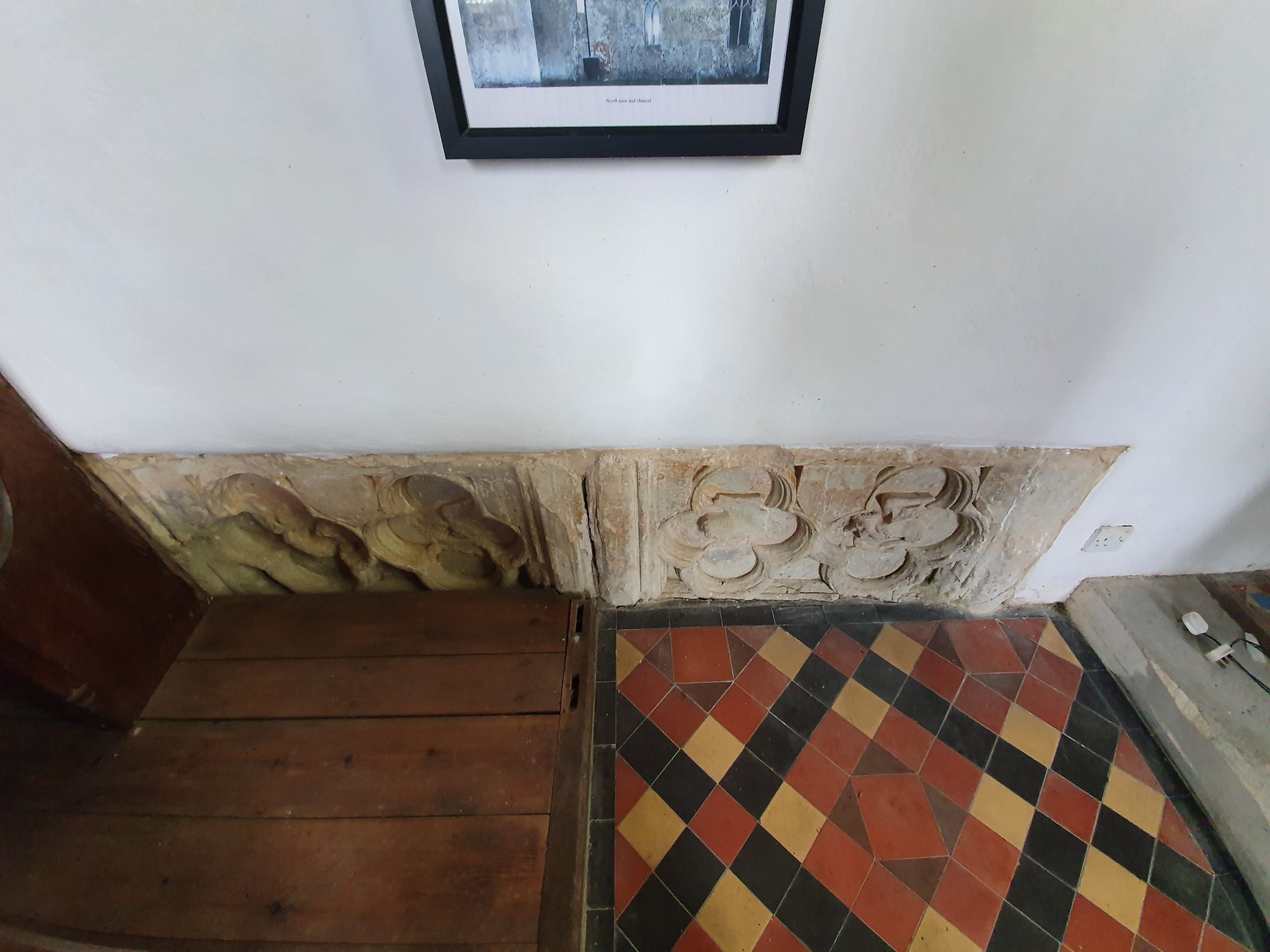
    Some decorative arrangement in the chancel, likely the base from the chantry tombs.

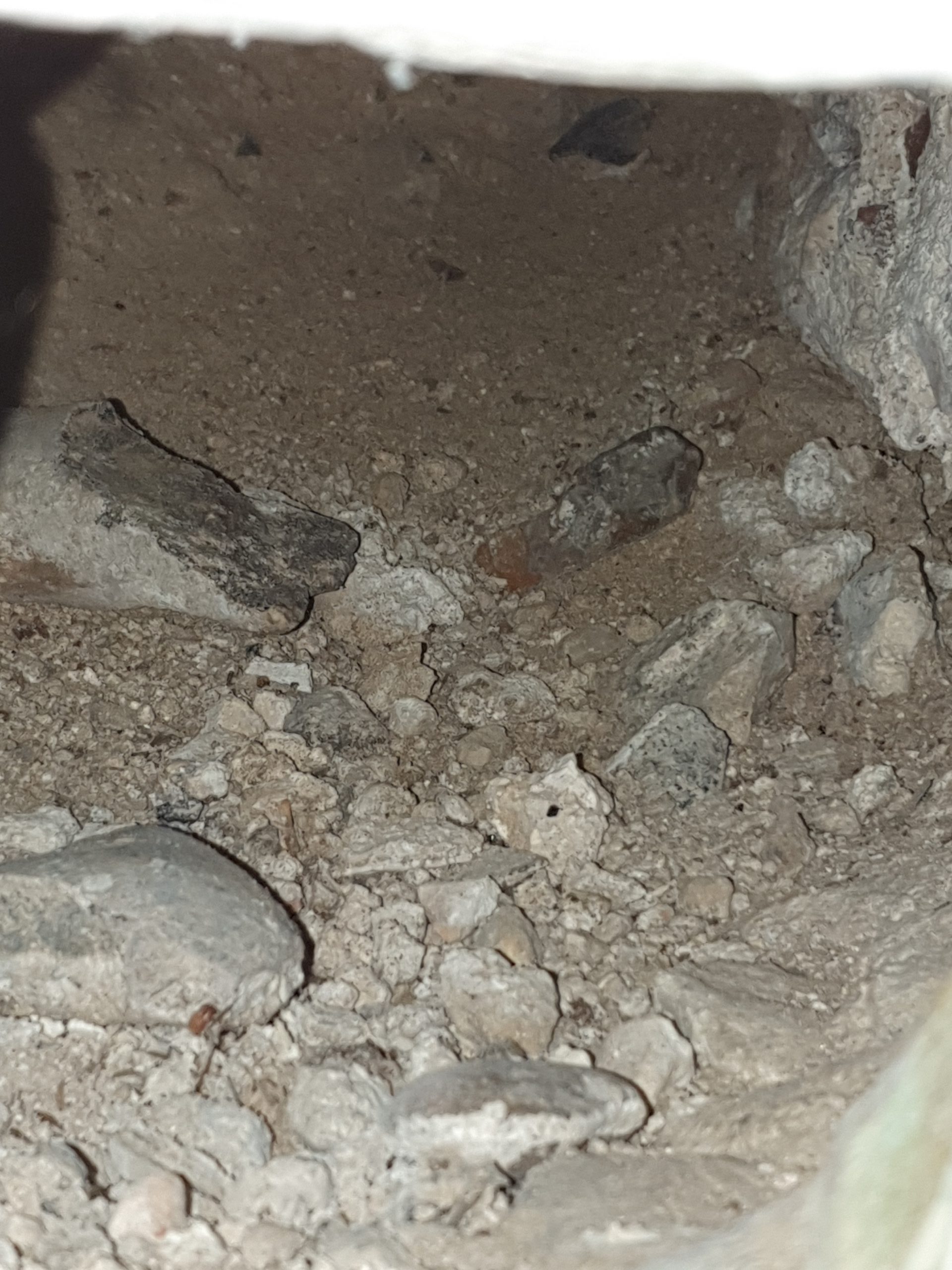
    I have no idea what this hole in the wall near to the door is doing…..

    Published in the 1840s, this text by the author of a history of Suffolk is a reminder that theft from churches is nothing new:

    “In the year 1819, while the writer was visiting this parish, collecting the materials which form the matter of the present notice, a person of gentlemanly address drove up to St. Peter’s Hall, tenanted by the late Mr. Alden, the then churchwarden, inquiring if the church contained any brass effigies, as he was travelling through the country collecting such records of ancient families, with a view to their cleaning and restoration, promising to return them shortly to their original places. St. Peter’s church afforded nothing to add to his collection, having been already stripped by some earlier iconoclast. The writer remembers that the applicant’s gig-box was half full of brass effigies, which it is vain to hope ever found again their respective matrices. The observation is simply recorded to expose a system of plunder once recklessly pursued, and to warn all churchwardens to repulse applications of a like nature.”

  • Norwich – The Norwich Plan for Downtown Restoration

    Norwich – The Norwich Plan for Downtown Restoration

    Norwich Plan for Downtown Restoration (in .pdf format)

    Back in the late 1950s, Magdalen Street in Norwich saw a piece of urban renewal that became known throughout the world. The above PDF document (courtesy of archive.org) is a short book of how that came about, with the publishing element of the project being backed by Norwich Union.

    It was quite an inspired project which received the support of nearly all the property owners along Magdalen Street. The street was tidied up in terms of signage and clutter, with shopkeepers and property owners smartening up their buildings as well. The Civic Trust did a fine job, also ensuring that historic buildings were protected and that people became proud of their local area. A new park was formed, buildings were painted and thought was given to the placement of noticeboards and electricity boxes.

    The document above was issued to inspire and encourage cities around the world to undertake similar projects. It showed that the Norwich project hadn’t cost that much money, but had seen many benefits. The book concluded that “this can make a community a better place in which to live and work”.

    Incidentally, the foot-note to this was that just over ten years later, Norwich City Council built a flyover through the middle of the project, knocked down several of the buildings and destroyed the character of Magdalen Street. The chaos that they caused is still problematic today, as no-one is quite sure what to do with Anglia Square. It wouldn’t perhaps be a bad idea for the council to look back at this project at what can be achieved when the community works together on a scheme.

  • Norwich – General Regulations of the Bethel Hospital in 1861

    Norwich – General Regulations of the Bethel Hospital in 1861

    Bethel Hospital Regulations (in .pdf format)

    The above PDF file (thanks to archive.org and the Wellcome Library) is the General Regulations of the Bethel Hospital in Norwich which were issued in 1861. They’re surprising forward looking to what I had expected, although still regimented as might be expected from a Victorian institution. It was noted that staff should not “strike the patients or speak harshly to them”, but should be “kind and indulgent”.

    On the last page of the document are the meals that were expected to be served to the patients, which weren’t ungenerous. Women were generally allowed the same menu as the men, although they weren’t to be given as much of it.

    The milk broth for breakfast was commonplace at the time, although it’s not something you see in many restaurants and hotels today. Or not the ones that I go to anyway. Wednesdays don’t sound too bad, the evening meal was either sausages, potatoes and beer, or, a sausage roll, potatoes and beer. Indeed, beer is provided on a regular basis, although not in large quantities, but extra was given to patients helping with the washing, laundry and in the workshop. I’m not sure that patients in the N&N get to do the washing and laundry today, although perhaps some would help if there was beer provided for their assistance.

    There was the bonus of roast beef and plum pudding on Christmas Day, although even then the plum pudding term was misleading and that would be what we call Christmas Pudding today. For that week there were also mince pies and cake, so perhaps not that much has changed over the last 160 years. On Shrove Tuesday, there was also coquilles, which were effectively Hot Cross Buns without the cross.

    Incidentally, I’m not quite sure what the male patients were encouraged to do during their recovery, but the document notes that the women should be “encouraged to occupy themselves in needle and household work”. Men and women were encouraged to take the air though, and to also read wholesome books and periodicals.

  • London – Kensington and Chelsea (Borough of) – Norland Square Railings

    London – Kensington and Chelsea (Borough of) – Norland Square Railings

    There are many things that annoy me. These include people being loud in libraries, Greggs running out of sausage rolls and people putting their feet on the seats of trains. There are other things as well of course (crime and corruption aren’t great either), but I’ll limit myself here. Historically there’s one particular decision which is annoying and it has wrecked many parks, gardens, buildings and churchyards across the country, which was when iron was collected for the war effort.

    It’s not the collection of the iron that’s the problem here, it’s that historians seem to agree that only around 25% of it was used. And the Government never stopped collecting it, despite it being clear that they didn’t need any more. Paperwork has been “lost” by Government departments and it’s widely thought much of the iron was just dumped after the end of the Second World War. Perhaps it was good for morale and making people feel involved, but it simply caused more anger later on when the truth started to out.

    Now that I don’t live in London, I’m no longer a member of the London Library at St. James’s Square, but I’m pleased to note that £500,000 has been spent restoring the railings there. There’s further information at https://www.stjamessquaretrust.co.uk/railings-project and it’s a worthwhile project. But, at least some railings had already been put back here, in so many other locations across the country all that remains eighty years on are the stumps of the railings. Churches suffered terribly from this, as well as many residential property owners. Although, as with many things, other wealthy property owners found reasons for their iron not to be taken in the first place, whilst those of more limited means were busy tearing up their front gates.

    Lord Hemingford in 1943 queried this whole arrangement, although he wasn’t give much succour when he said in the Lords:

    “To go a little lower down the social scale, I saw only the other day a row of very small cottages, I suppose cottages with not more than four rooms at the outside, with their small gardens in front of them, many of them tended with very great care, where the railings—which can have been of very little use to the Government, for they were not much more than wire made into an upright fence—have been taken away from the front of the gardens. I cannot but imagine that those railings were useless for the purpose for which they were taken, and must have been among those which have since been sold by the Ministry of Supply.”

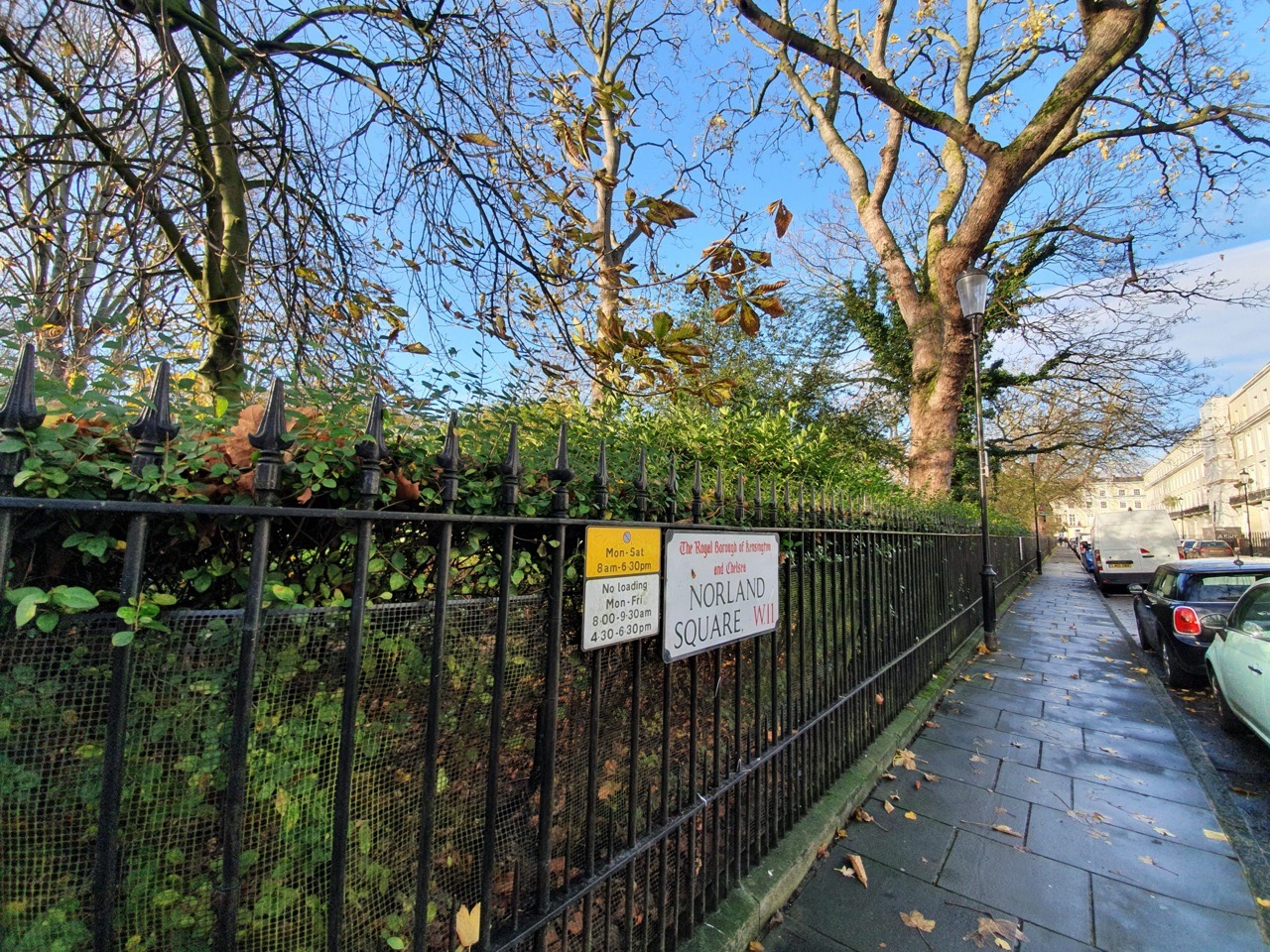
    And, the reason I mention all of this is that the photo at the top is of Norland Square Gardens, with their lovely iron railings. These date to 2007, when Susan Walkers Architects (who are engaged with the St. James’s Square project) and the Cast Iron Co. Ltd produced these new railings for the gardens, funded by the Norland Square Garden Committee. They’re not overly decorative, but they define the area much better than some generic chain-link fence or indeed nothing at all.

    There seems to have been a little bit of a wave of these transformations over recent years, but mostly they seem limited to wealthy areas of London or to property owners with some money. Perhaps it’s time to fund the restoration of iron railings back to churches, parks and many other locations where they were taken from, an apology from the Government that this scheme to collect iron wasn’t stopped when it was realised that it wasn’t productive.

    There’s a video of the patrotic need for this at https://www.britishpathe.com/video/park-railings-for-munitions.

  • Norfolk Regiment – October 1914 War Diary

    Norfolk Regiment – October 1914 War Diary

    Diary (in .pdf format – the war diary of the 1st Battalion of the Norfolk Regiment for October 1914)

    I’ve downloaded most of the war diaries of the Norfolk Regiment from the National Archives (currently free of charge whilst the reading rooms are closed) and have become endlessly fascinated by them. They’re a real snapshot of what life must have been like, even though much of the detail is quite short. I’m also reading up on the lives of those who fought in the First World War, so this adds a fair chunk of detail to my understanding of where they were. And, this is why I’m trying to get a better understanding of where the battalion was, so I can try to have an understanding of the journey that the men went on.

    Unfortunately, the August to September 1914 records for the 1st Battalion have got lost somewhere, so we have to start in October. I do know though that the battalion was fighting in Ireland when the First World War started, they mobilised on 4 August and then left Belfast on 14 August. From there, they arrived in Le Havre, France, a few days later. The diary for the month of October starts with the 1st Battalion marching to Droizy, with mention that it was cold.

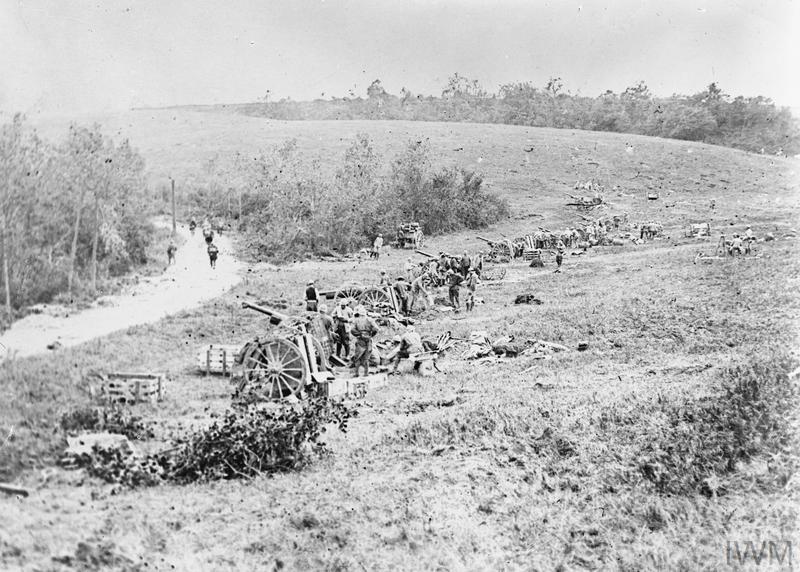
    On 3 October 1914, the battalion set off to Longpont (the photo above, © IWM Q 47947, is of Longpont, but shows the French defense in 1918, it was much quieter when the Norfolk Regiment arrived), which is around 15 kilometres away and it took them just over four hours. Longpont is only around 90 kilometres from Paris and this must have been something of an adventure for those there. The horrors of war weren’t yet perhaps quite obvious from this far away from the front line.

    Longpont is dominated by an abbey which was forcibly closed during the French Revolution, and the troops arrived at 22:00 and slept in the woods in the village. They stayed the next day, 4 October, in the village and I wonder whether they were involved in training or had chance to look around the small village. After spending a day in the village they then went on a night march to Pondron and it took them around four hours, arriving on the morning of 5 October.

    I like a night hike and find that there’s a sense of adventure in them, but I can’t quite imagine what it must have been like in wartime and in a military capacity. I’m assuming that the troops walked down the road and so looking at Google Street View, it’s possible to see what the men would have gone by. It’s not very built up now, so this would have likely been similar to walking in the Norfolk countryside in terms of the scenery. It was noted that the journey was inconvenienced with the number of French motors passing by, something I know from my walking can be a bloody nuisance (not French motors in particular, just cars in general). It would interesting to follow their journey, although they did later go by rail and road, although most of their route would be easy to walk (along with the occasional train journey).

    On the 6 October, they marched from Pondron to Bethisy, where they stayed overnight, before crossing the River Oise on 7 October. I’m unsure why that needed a specific mention in the diary, unless the road wasn’t available and so they had to cross on foot, which would have been quite notable…. From here they went overnight by train to Abbeville, which must now have felt much closer to the front line action, should the men have been aware of what faced them.

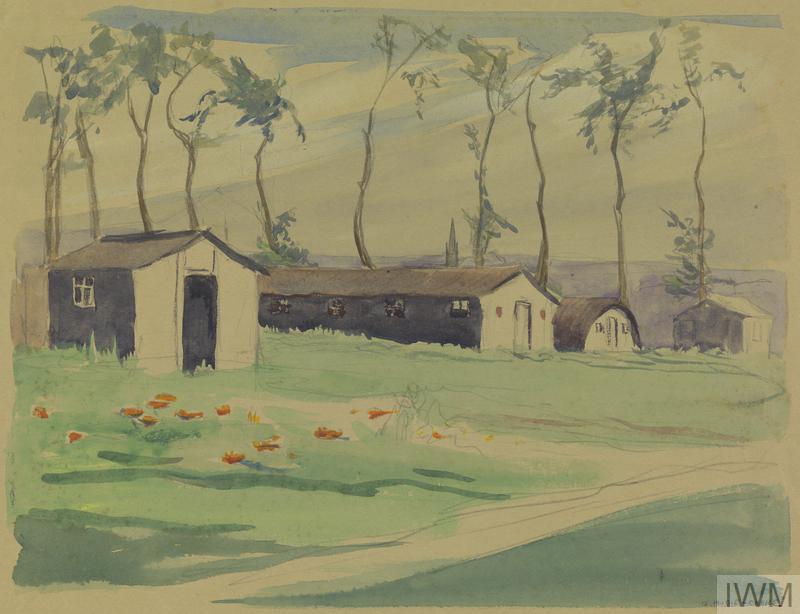
    After arriving in Abbeville (the painting above – © IWM Art.IWM ART 5394 – is by Olive Mudie-Cooke, an ambulance worker, painted in Abbeville in 1916/1917) at 04:00 on 8 October, the men then marched to Neuilly, where they arrived after seven hours of walking. They then had a period of rest before, later that same day, marching for over six hours to Boufflers. That couldn’t have been an easy day of walking, especially with the fear of the unknown that must have hung over them.

    On 9 October, the men were meant to be transported by road, but the vehicles didn’t arrive. Instead, on 10 October, the men were taken by car to La Thieuloye and on the following day, 11 October, they marched to Bethune. At the time, this location was becoming increasingly important as a military meeting area and it was here that the men helped reinforce a French Cavalry outpost. This might have been when the Norfolk battalion started to meet other French troops for what could have been one of the first times.

    The diaries note that the Germans took the nearby village of Vermelles on 12 October, with the Norfolk Regiment moving to Festubert that evening. Just to the south of this is the village of Givenchy and on 13 October, the Dorset and Bedford Regiments were attacked, with the Norfolk Regiment being ready to support, but the Germans didn’t pursue them.

    It’s clear now that the movements were going to be slower, with the troops remaining at Festubert until the 16 October before making a few minor travels, and then ultimately, spending the rest of the month at Festubert. Two of the men were injured on 20 October, with Lieutenant Foley killed on 25 October. This must have felt pivotal, as although things were clearly getting more dangerous, to see a colleague lose their life must have been hugely challenging.

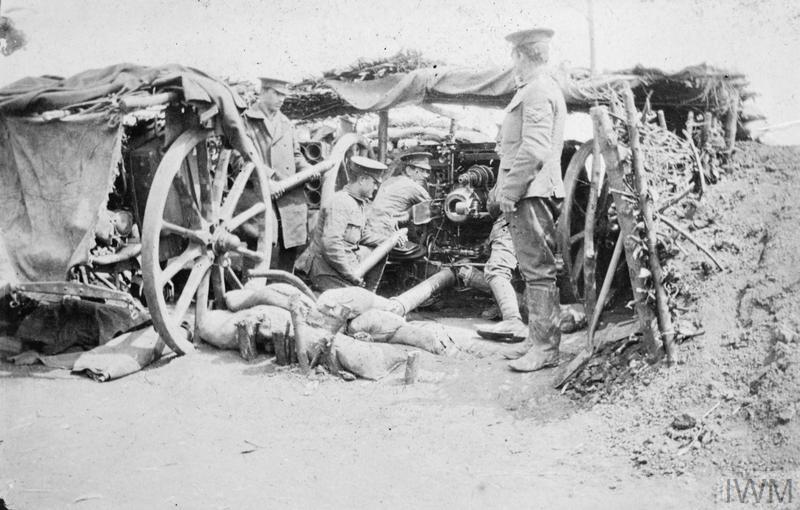
    I couldn’t find any photos of the 1st Battalion of the Norfolk Regiment at Festubert, but this photo (© IWM Q 90282) was taken in the village a few months later, showing the Royal Field Artillery.

  • Greater Anglia : London Liverpool Street to Norwich

    Greater Anglia : London Liverpool Street to Norwich

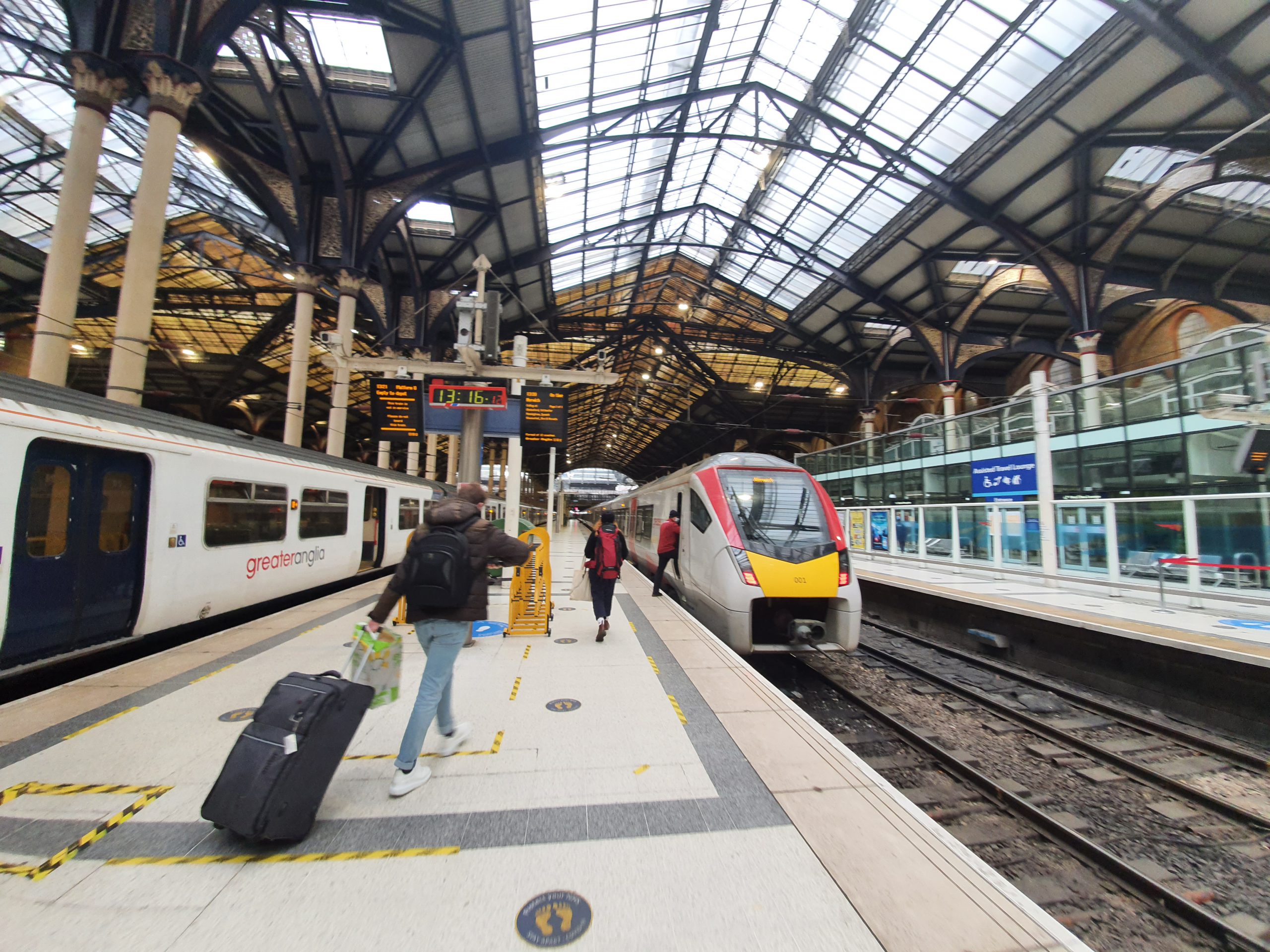
    The Prime Minister hadn’t quite made his latest announcement (or u-turn if you prefer) by the time that I was about to board the 13:30 Greater Anglia train back to Norwich from London Liverpool Street. But, when that statement was made, it was effectively saying that London was now entering Tier 4 and that from midnight the residents of the city shouldn’t leave the area. Things appear to have gotten worse with a new virulent strain of the virus, which is not ideal at all.

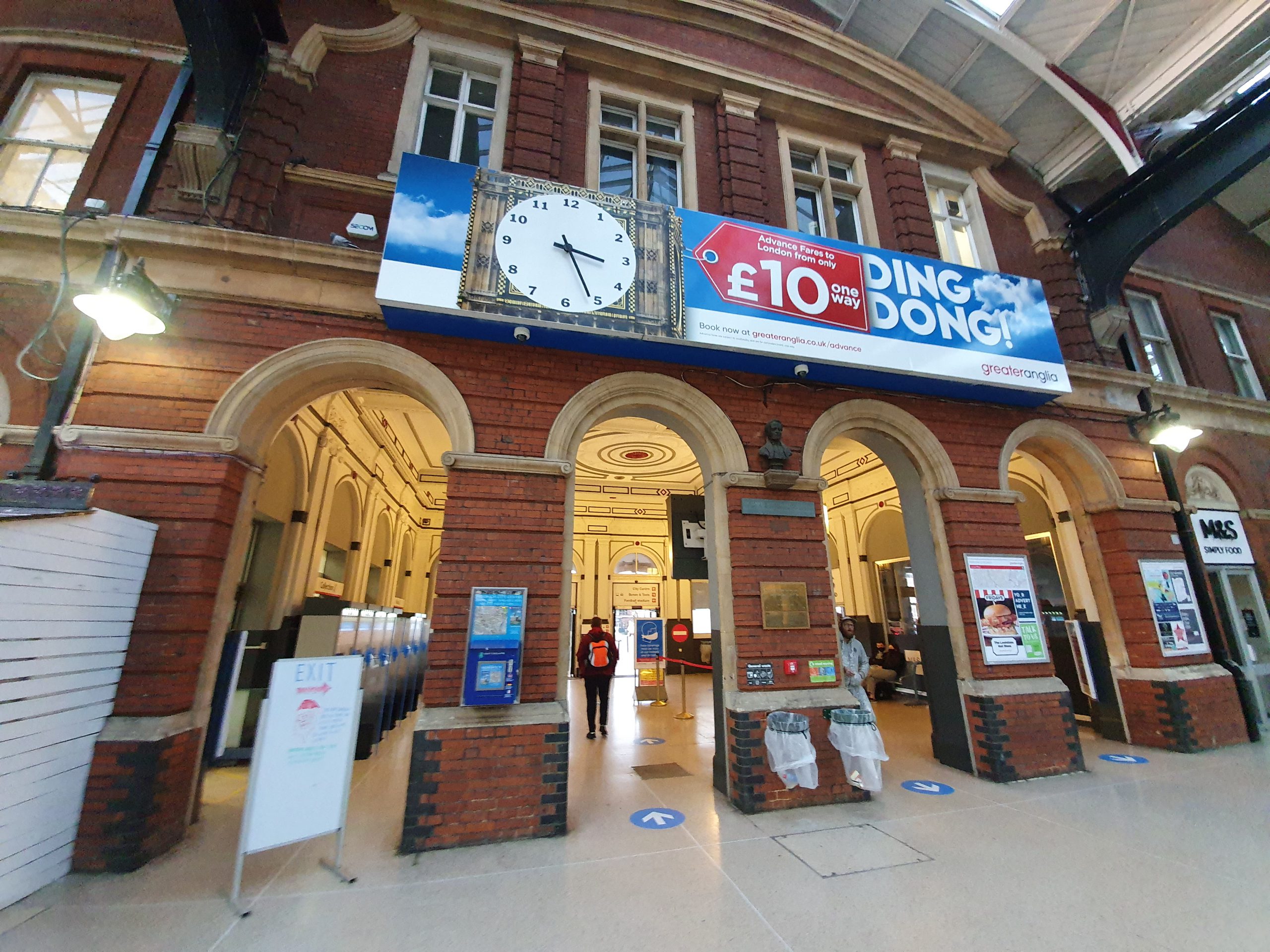
    There were reports in some elements of the media that there were huge flurries of Londoners rushing out to the countryside, although that appears to have been dismissed by the rail companies who said few trains were actually full. Either way, the train that I was on didn’t seem particularly busy, so I had a block of four seats around a table to myself for the journey. And, for those who note my annoyance on this matter when Stansted Express trains are pushed into service, this train did actually have tables. I bought my ticket over a week ago, another bargain priced £10 advance single fare.

    The most interesting part of the journey for me was annoyance at myself for either being asleep or not paying attention, I can’t remember which (and couldn’t at the time, so I was probably asleep) whilst pulling into what I think was Manningtree station. The driver made a furious announcement, although made professionally, that he had been forced to sound the train’s horn as he nearly hit a passenger’s bag which was being carried so near to the platform as to have actually been mostly off of it. The driver said several times, in excess of four, that the person responsible was a male, in carriage D and with a duffel bag. I was positively disappointed not to be in the carriage as otherwise I could have looked and tutted, to show my British displeasure, at this act of idiocy. I say idiocy, as that’s what the driver called it, along with other words.

    Anyway, I quite liked that the driver made his coffee order over the announcement system and that the refreshment team made one back, apologising for not having the biscuit he wanted. It was sufficiently light hearted to add some humanity back to the journey and I think it calmed the annoyed driver down.

    And here we are back in Norwich, on time and that really is the end of my travel for 2020. I didn’t think in early November that I’d be travelling again in 2020, but this twelve-night stay in London was worthwhile and interesting. What I’m more disappointed about now is that travel in early 2021 is looking effectively impossible. I’m likely to cancel my trip to Bilbao, whereas British Airways have already cancelled my trips to Lisbon and Dublin. I can’t imagine that I’ll be going to Inverness or Palma either, which are both in January, although haven’t yet been cancelled by British Airways.

  • London – Hackney (Borough of) – Hackney – Travelodge

    London – Hackney (Borough of) – Hackney – Travelodge

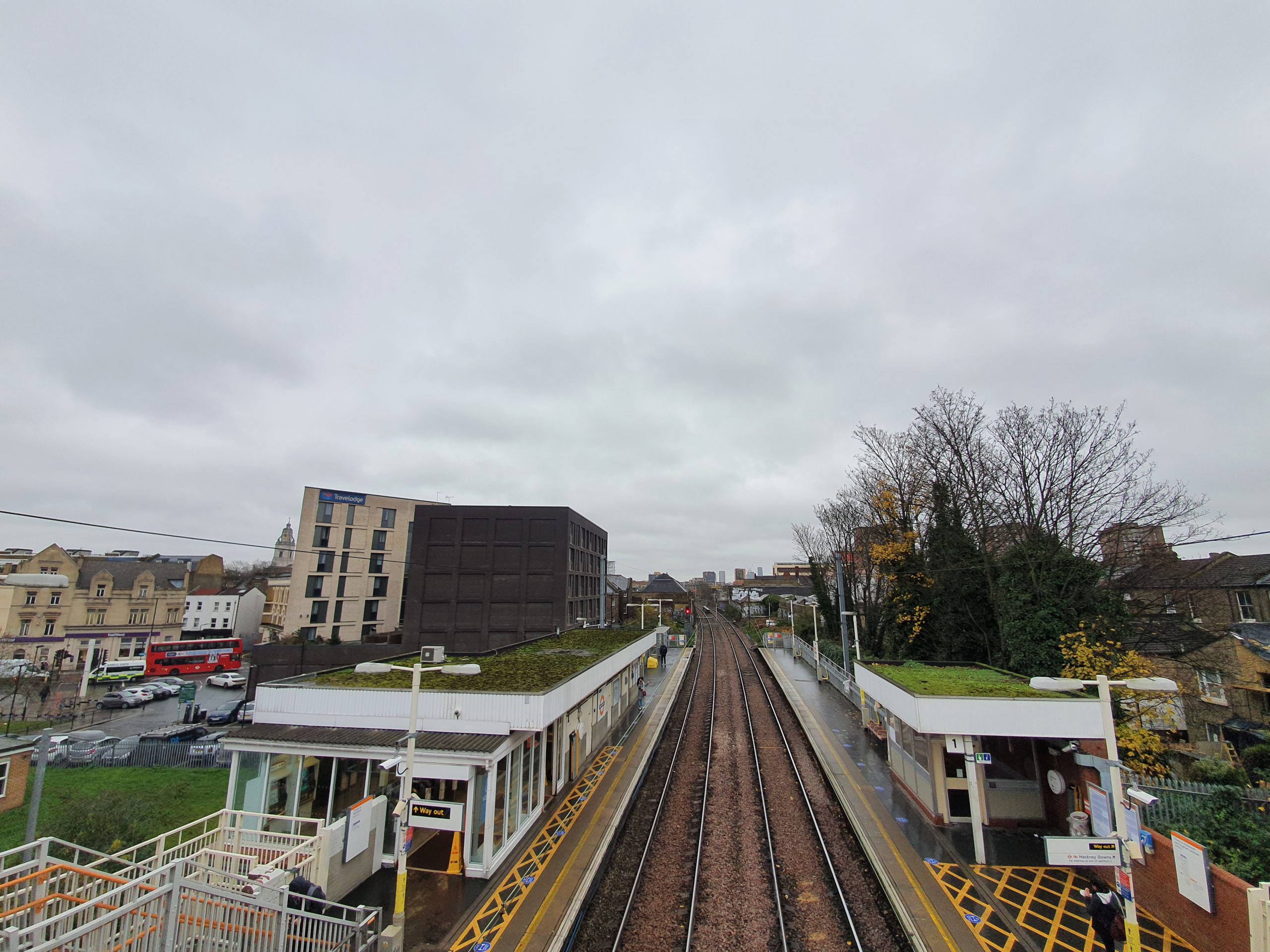
    The Travelodge in Hackney is on the left-hand side of this photo (in the building, not the railway station platform as even Travelodge haven’t got rooms that basic), easy to reach from the city centre by bus or London Overground. In terms of noise, I like the sound of trains overnight, but then again, I’ve long since decided that I like urban sounds (I mean in relation to the background noise of a city, not a type of music) such as this to feel the most rested. My tolerance of noise is less liked by some others though judging from their reviews about being kept awake.

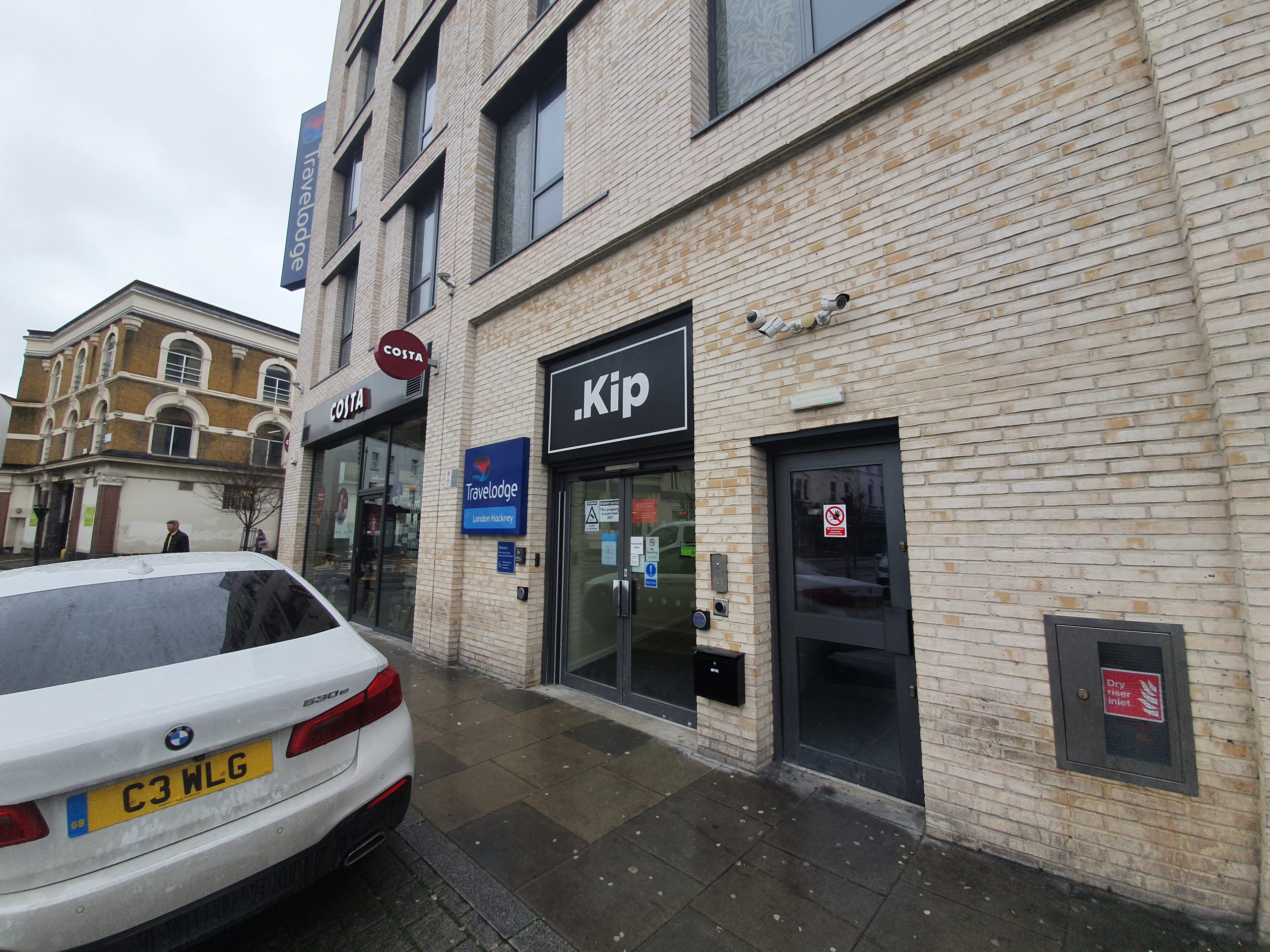
    There is a shared door with Kip Hotels to get into the building, a slightly unusual set-up of two rival hotels with one entrance.

    Anyway, let me at least try to paint some kind of picture of the scene on arrival. I entered the reception area and an alarm was going off throughout the building. The receptionist looked stressed, she now had two waiting guests and she didn’t know why the alarm was going off. She ran out of reception looking quite harassed by the situation and went to investigate why her hotel wasn’t working properly. It’s not an ideal welcome to be honest.

    Then a man with his two sons (or I assume they were his) came into reception and it’s fair to say that these children were not the quietest that I’ve ever encountered. The receptionist comes back at this point and apologises for the wait, but she says she needs to keep investigating as she can’t work out why an alarm is going off. At this point, the man explains that his two kids might have been the cause of the alarm due to a tripping incident near the lift. This was a relief for the receptionist, she now knew why her hotel was broken. She disappeared off to try and turn the alarm off, but she seemed pleased that she understood what had happened.

    Another staff member appeared, who was a sea of calm in a reception where two children were running around screaming and an alarm was going off. She dealt with the customer in front of me and ensured he was content, before trying to assist the man with his two children. I had by this point moved out of the queueing arrangement to stand near the wall, which stopped the two loud children running around me. The man kindly mentioned that I had been first, but I’m a helpful sort of person and I let him go ahead as he needed a new keycard. This altruistic behaviour of mine was, if I’m being honest, also useful to discover what part of the hotel the kids were located in so that I wasn’t near to them. I have a feeling that the receptionist guessed this, I was placed on the ground floor which was as far as possible to have been placed away from the kids.

    I’d add that the children weren’t bad, but they seemed to be quite loud and I like the noise of trains and traffic, I’m less good with the sound of exuberant children. Anyway, I digress.

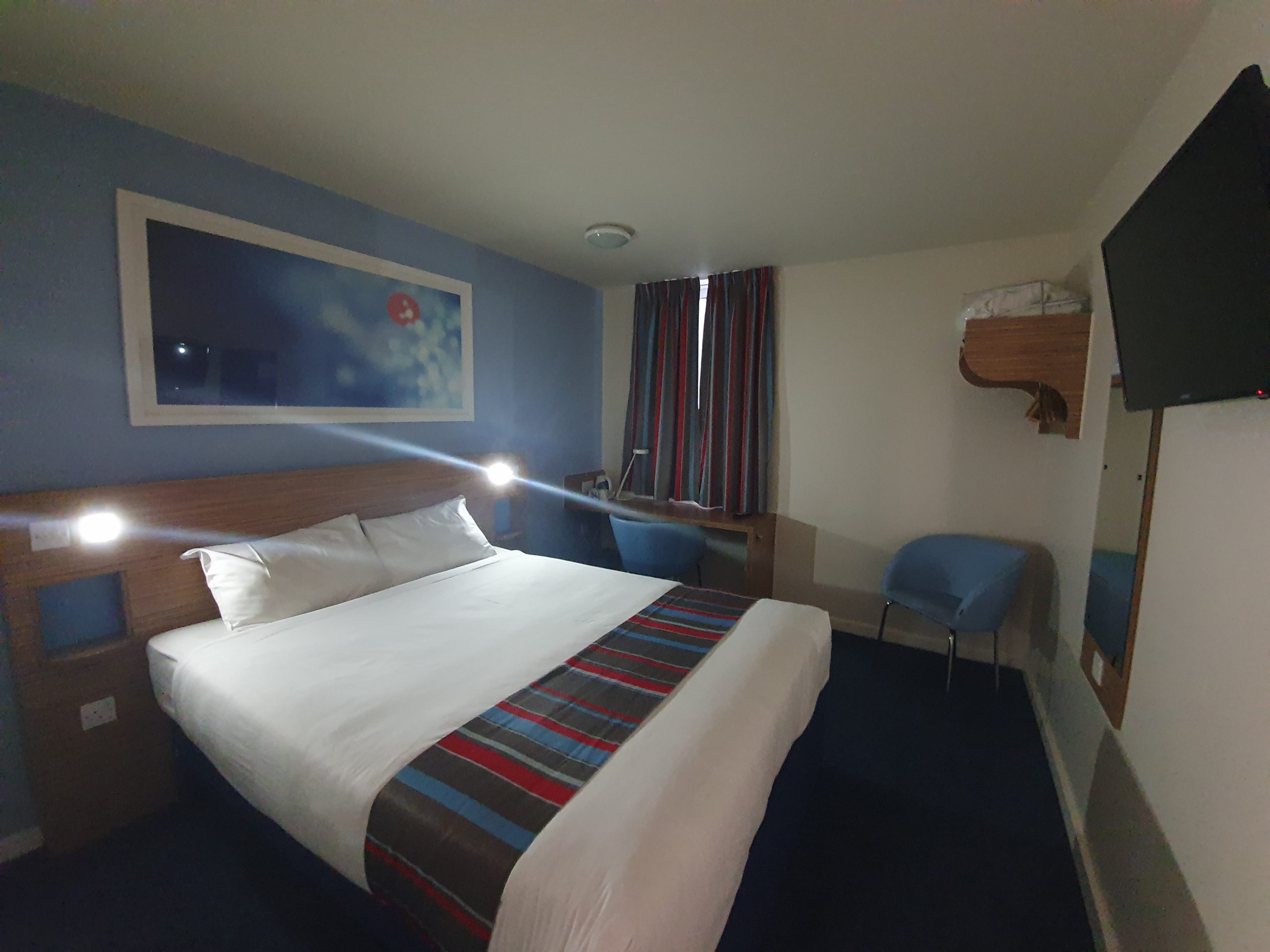
    The bedroom was fine, it’s not the largest Travelodge room that I’ve had, but it met my requirements. It had a door, a window that opened, a ceiling, walls, a bathroom, a carpet that didn’t stick, clean bedsheets, a desk, a bin, a kettle, towels and a light. There are quite a few requirements there, but I think that some of them are quite basic needs. And, I heard no more noise either internally or externally until I checked out, although I’m unsure how many guests there actually were in the rest of the building.

    I didn’t see any staff members when checking out and if it wasn’t for the excitement of check-in, I feel I might have found the whole experience just a little unnotable. This room cost under £20 for the night, which is ridiculous for a London hotel the week before Christmas. But, we live in interesting times….

  • LDWA 100 – Bad and Good News

    LDWA 100 – Bad and Good News

    This is another in my series of posts about walking the LDWA 100 in 2021.

    The bad news is that the LDWA 100 won’t be taking place in Wales, which is a great shame for the organisers who had already put back their event by one year due to the health crisis. At the time, it seemed almost implausible that things wouldn’t have returned to normal by a year later, but events have gone in a direction that couldn’t be expected. So much time spent by the organising committee, but hopefully members will experience the route suggested in the future as a walk across a few days (unless they want to go round it in 48 hours…).

    But, enough negativity as this is a positive event! It all means that there’s a Plan B, and this was the announcement from the LDWA:

    “Due to the continued uncertainty about the COVID-19 pandemic the organising committee of the Y 100 Sir Fynwy have reluctantly concluded that it is impossible to hold the original Y 100 Sir Fynwy with any confidence that it will be able to take place.

    To avoid a second year without a 100 mile event, with the agreement of the LDWA National Executive Committee, it has been decided to hold a Virtual Y 100 Sir Fynwy event. The main points are:

    To be held on the weekend of 29th to 31st May 2021
    Entrants to choose their own route of at least 100 miles
    The 100 mile route to be completed in 48 elapsed hours
    Open to all LDWA members
    No qualifying event required
    No limit on number of entrants
    Successful completion will count towards 10/20/30/40 Hundred awards
    Entry via SI Entries only, entry fee £20
    Entrants will be required to provide evidence that 100 miles has been covered
    Certificate and badge for successful completion
    Completion of at least 50 miles in 24 elapsed hours will qualify for the 2022 Trans Pennine 100″

    Virtual in this sense is being used to mean that people can follow their friends (or people who aren’t their friends) take part in their own personal 100-mile route. It still means that there will be a lot of brave people walking the 100 miles, that bit unfortunately isn’t virtual…. The plan that Nathan and I have is to walk Wherryman’s Way, meander around Whitlingham Lake a few times, go back home for a little rest (since we live nearby which is handy), then walk along some former railway lines. They’re handy these railway lines, flat and everything…. And there’s a lot of flat on this route, which makes things so much easier in my view. And our route will ensure that there are Greggs and pubs along the way, so we’ll have to time that carefully.

    Dave Morgan, the courageous and energetic national chair, has made clear that walking on flat for 100 miles is very difficult. Well, he’s right, anyone can walk up and down hills, this will be a true challenge for those of us completing it in Norfolk…. But we don’t go on about our bravery.

    So, this all means that our plan to complete the event will unfold during early 2021, including the route that we propose. I’m intending to see how many friends can line the route (to reward and comment on our bravery), becoming the new checkpoint crew and offering us food and drinks (and praise). I shall be spending a lot of time on ensuring that the food is nutritional and healthy, so there will be absolutely no junk. Indeed, this will require the bulk of our planning time, but food and drink is essential to finish a walk like this.

    Will we complete it? Who knows, but there are some advantages for us walking it like this. This is my first 100, and to be honest, maybe my last. Remember Adam Dawson’s 100 interview? I subscribe to that theory. But, maybe I’ll become all “I must do this every year, it’s so fun”. But I doubt it, because 100 miles is a long way….

    Anyway, I digress. Doing it this way means that we are unlikely (although I don’t put it past us) to get lost, since we’ll know the route. We can change the route to suit our needs and also, I understand, start a little earlier in the day than the usual fixed time. Home will be on the route, which helps in terms of having more socks, shoes and anything else to change into, giving that bit more flexibility than the actual event. I mentioned I hadn’t done a 100 before, and this is what will be useful here, I don’t have to carry everything ‘just in case’ I need it which is what I’d have done in Wales.

    Checkpoints are wonderful to get moral support on, but we’ll do our best to recreate that experience with friends and anyone who else who is nearby and bemused. I’ll be taking photos and making short videos around the event, so people can compare my efforts with that of Dave Morgan, who will be doing the same. He’ll be all inspirational and have videos of valleys and lakes (and rain, he’s doing it in Wales) whereas I will concentrate on food and drink, as well as being grumpy. But, as they say (I don’t know who they are here) everyone walks the 100 in their own way.

    Anyway, what can possibly go wrong?