Author: admin

  • LDWA 100 – Training Walk 15 (Wells and Fakenham Railway and Shut Pubs Meander)

    LDWA 100 – Training Walk 15 (Wells and Fakenham Railway and Shut Pubs Meander)

    This was our fifteenth walk in preparation for the 2021 LDWA 100.


    WALK NUMBER: 15 (Wells and Fakenham Railway and Shut Pubs Meander)

    DISTANCE COVERED: 19 miles

    NUMBER OF NATHAN’S FRIENDS WE “ACCIDENTALLY” BUMP INTO: 0

    SUFFICIENT BEER CONSUMED: No (but better than previous visits)

    PUBS VISITED: 2 that were open, 3 that were closed

    WEATHER CONDITIONS: Warm and too sunny

    ATTACKED BY ANIMALS: No

    NUMBER OF SNAKES SEEN: 0


    This was our last longer walk before the LDWA 100, we’ve got just one short walk to recce part of our 100 route left now. It’s getting really quite close, but more about that on this progress update of LDWA entrants.

    I arrived at the bus stop at Anglia Square nice and early, giving me chance to have a Greggs, have a little sit down and then calmly wait for the bus. Nathan turned up about eight seconds before the bus arrived. I don’t know how people don’t get stressed doing that, my friend Liam is the same.

    We had decided that we’d have a Wetherspoons meal to start the day off, which is a traditional breakfast and refillable coffee in The Limes in Fakenham. I was very annoyed that the egg wasn’t particularly good on my breakfast, primarily as Nathan’s egg was far better. But, life’s too short to dwell on such things and I’d calmed down within three hours which shows just how I’m able to put these things into perspective (although I’ve got post-annoyed now writing about it).

    Nathan was keen to get going after we’d finished our meals (his with a delicious egg and mine with a less delicious egg) so I didn’t even get a second coffee, but I didn’t say anything. Nathan of course had more energy than I did as he had been given a very delicious egg for breakfast. Incidentally, and of relevance to nearly no-one, you don’t get a tomato (or half a tomato as Dave Morgan would point out) on the traditional breakfasts anymore, unless you order the vegetarian option.

    The walk started by going through Fakenham and this little arrangement didn’t seem ideal near to the church.

    Robins, which I decided were a sign of something. I was hoping they were a sign at the spirit world’s annoyance that Nathan got a better egg than me at breakfast, but I think they were guiding us in a different way. Nathan mentioned that ideally I’d only take five photographs, and I thought he meant in any one spot. But he meant all day. Anyway, I ignored that as I’ve got a blog to write.

    I’m not entirely sure what delights this once held.

    We had some good fortune here, and perhaps that’s related to the robins. Komoot had failed us and tried to send us down some paths that weren’t public rights of way, and indeed, which had big signs saying that they were private. We wondered whether we could sneak through this gate, but thought we probably shouldn’t as it appeared it might be the garden of this former railway crossing building. By good fortune though, the property owner shouted over that we could walk down there, which meant that we got to see the delights of the former Wells to Fakenham railway line.

    And here it is, the track has been lifted, but the route is clear.

    This is a map from the 1920s (ignore the cursor) and Fakenham is in the south and Wighton (where we were heading) is towards the top of the map. Wells is just to the north and that stretch of the line is still in place to Walsingham, which is used by a heritage railway. The line had opened in 1857 and was closed to passenger traffic in 1964, although remained open to freight until the 1980s. If it had remained open as freight just a few years longer, then it might perhaps have had a chance of being returned to passenger usage, but that ship has most definitely sailed now.

    Some rather major construction work has taken place here to plough the line through one of Norfolk’s hills, I have a lot of respect for the speed in which the Victorians built these lines.

    The line carried on and we saw pretty much no-one all day walking down here. I can’t think that this line would ever be reinstated, but there are very few technical obstructions that would prevent it.

    This is the ford that crosses over to North Barsham, fortunately with a little footbridge option. There’s a short stretch of railway line that is inaccessible here, as Nathan discovered on the way back when he tried to walk down it. I didn’t bother trying, it looked too thorny for me.

    All Saints Church at North Barsham, which I wrote about separately.

    Some of the bridges along the former railway line were still in place, but this one has been removed.

    The Catholic Basilica of Our Lady of Walsingham.

    As noted on this sign, part of the former railway line has now been turned into the Pilgrim Way, a permissive footpath.

    This is the location of Walsingham railway station, which was in use between 1857 and 1964. There’s another railway station in Walsingham now, used by the heritage railway.

    The railway station was purchased by the Russian Orthodox Church in the 1960s and they still use it today for services.

    I had hoped that we could walk down a footpath by the side of this narrow gauge heritage railway, but there isn’t a footpath and the railway has locked the gate. But, this is the start of the heritage line that goes from Walsingham to Wells. That meant the section of the walk to Wighton was on the road, which wasn’t the most exciting stretch of the expedition. We had anticipated that the walk might be a little colder as there would be some wind from the North Sea, but there wasn’t and I thought it was too hot.

    Nathan had planned our walk to end at Wighton, and although we had wanted to walk further, we were confined by the times of the buses. This gave us time to look at All Saints Church in the village, which I’ll write about separately as there’s a lot I want to say. There was a little incident here when the tower fell down in 1965 and collapsing towers seemed a common theme of the churches we saw on this walk. The cost of repair was simply too high for the church, so the tower (or what was left of it) was made safe and normally that would have been that. However, a man named Leeds Richardson in Canada noticed what had happened as he had traced his ancestors to the church, and he decided (with ridiculous generosity) to fund the repairs.

    The interior of the church.

    We then popped into the Carpenters Arms in Wighton, where the service was friendly and the beer was refreshing. There’s perhaps more that can be done with the beer options, but they proved sufficient for our purposes. We were tempted by the food options, as they looked delicious judging from other tables, but we decided we’d see what was available in other pubs. That wasn’t perhaps our greatest ever choice.

    This is something of a remarkable survivor as a pub, so many are lost because they’re turned into residential properties. Even more surprisingly, the village had three pubs in 1910, but for a period in the early 1980s it didn’t have any. The Carpenters Arms then re-opened in the mid 1980s as the Sandpiper, but was renamed back again in 1997. The pub has shut for another two periods since then, but has been transferred from being an Adnams pub to being free trade.

    We then walked back along the road and I’m not sure when I last visited Walsingham, but it’s not in recent years, and it’s an attractive place. It’s a place of pilgrimage and I can imagine that it gets much busier in the summer months.

    The well at the The Shrine of Our Lady of Walsingham. I hadn’t particularly planned to go in here and I mentioned this to Nathan, who a little too sardonically for my liking said “but yet, here we are”. This doesn’t translate to text very well, but it was one of his better quotes if I’m being honest.

    The Bull Inn in Walsingham, which was closed.

    This was listed on the town’s map as a pump. It might well be a pump, but that’s a clearly lock-up for raucous locals (in the past, I think Walsingham is a bit too salubrious for that today).

    The Black Lion Hotel in Walsingham, which was closed.

    I didn’t say anything about Nathan’s sun protection device.

    This is the rather delightful, and entirely not understated, East Barsham Hall which is a Tudor mansion house that was ruined by the nineteenth century. Against the grain, as this was a period when country houses were being knocked down at a rate of one per week, this hall was fixed up again in the 1920s and has remained as a substantial residence since then. David Mitchell wrote a Guardian article about it, I can imagine it’s not the worst place to live, but the upkeep isn’t going to come cheap.

    This is the former Primitive Methodist chapel in East Barsham which opened in 1887 and I struggle to see how they managed to get enough people to attend given the limited number of people who lived in the village. The history of the Primitive Methodists, which I’ll drone on about another time, is intriguing and they did attract many agricultural workers, which is perhaps how this worked. Anyway, this chapel didn’t last into the second half of the twentieth century and it is being heavily reconstructed into what I assume is a residential property.

    The Barsham Arms, who decided not to open, but not update their web-site or correct their hours on Google as most other pubs have managed to do. I consider this a little unfortunate, it makes it hard for people to support the pub trade. Anyway, this caused a problem for our plans, although it gave us more time in Fakenham.

    The closure of the Barsham Arms also gave us more time to look around All Saints church in East Barsham, but more about that in another post as this was another church with some considerable history.

    Retracing our route along the former railway line, that meant we arrived back into Fakenham with a couple of hours to spare, and we wondered how busy the Wetherspoons would be on a Friday evening. Quite busy was the answer, but there were tables spare, so we decided that this was our best option. The fish & chips with a pint came in at £8 each, a price point that it’s hard to complain about and the food was perfectly acceptable. All rather lovely.

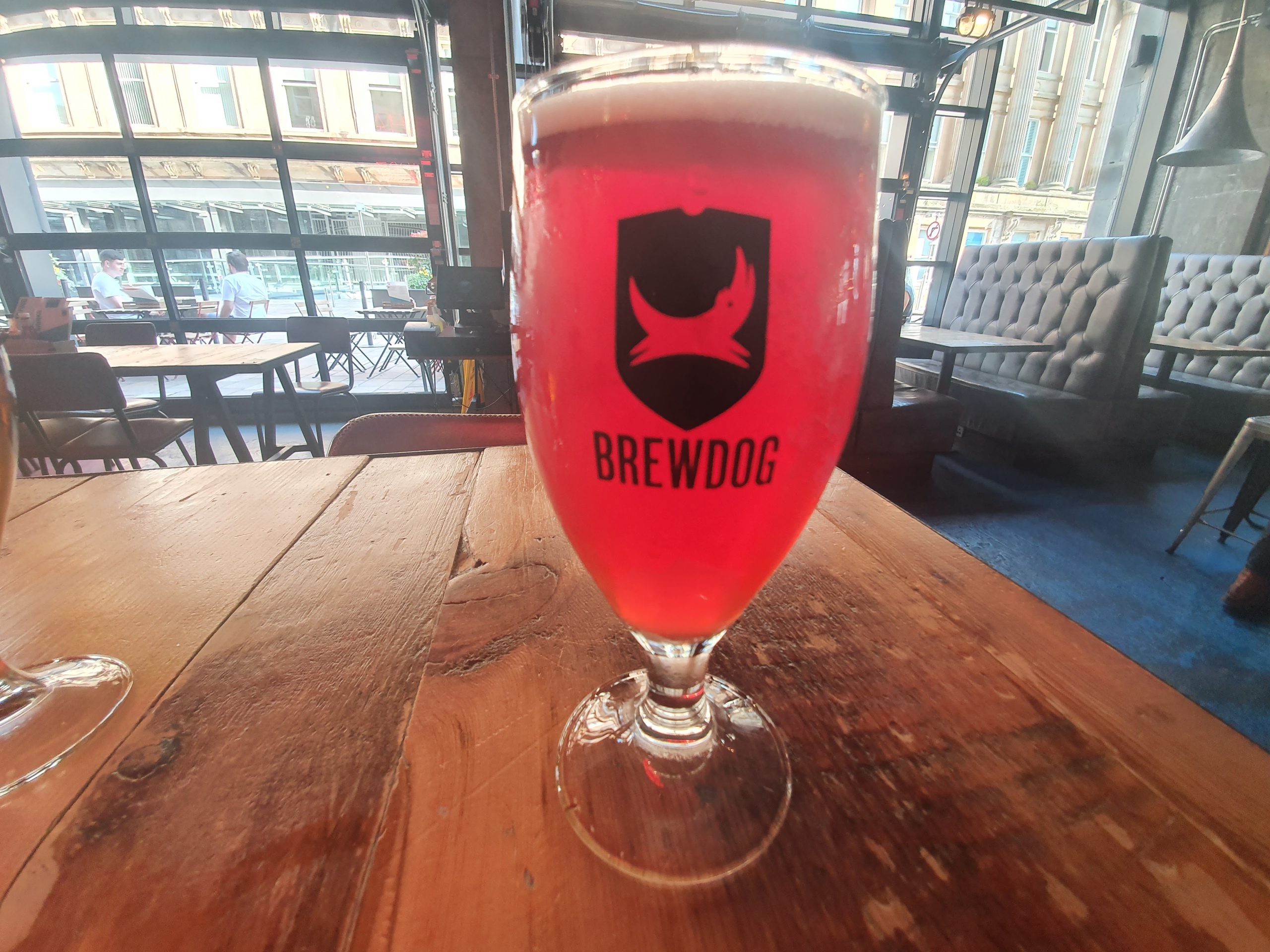
    Brewdog Punk IPA and this is quite a suitable drink after having walked 20 miles or so, refreshing and with some tropical fruit tastes.

    On another matter, there was then the exciting bus debacle on the way back, but I’m satisfied with First’s response on that so we won’t dwell on that.

    As mentioned earlier, this is the last long walk that Nathan and I are doing before our LDWA 100 effort on the first weekend in May. We’re trying not to think about it too much, but I wouldn’t say that we’re particularly excited about walking the bloody thing. We haven’t done any very long distances as training, as the lockdown made that too difficult to organise, so whether we can make the step up to 100 (excuse the pun) is perhaps unlikely. But we’ll try our best…..

  • Reepham – Three Churches in One Churchyard (Grave to Unknown Local Friends)

    Reepham – Three Churches in One Churchyard (Grave to Unknown Local Friends)

    This really is quite lovely, a beautiful gravestone located in a prominent part of the churchyard shared by the three churches in Reepham.

    The “unknown local friends” is a poignant phrase and it notes the site where 63 bodies were found when urgent storm drain repair work took place in 2007. The gravestone, which was funded by local donations, was designed by local stone carver Teucer Wilson and it reads:

    ‘Here lie unknown local friends from the 14th century, laid to rest by the people of Reepham in June 2010. Their souls are known by God.”

    I understand that the bodies were found near to where I’ve placed the cursor on the above map. The burials were in the St. Mary’s Church section of the churchyard and they were placed there in the fourteenth century. Analysis was done on the skeletons and it was discovered that many of the individuals had suffered from osteoarthritis issues.

  • Reepham – Three Churches in One Churchyard

    Reepham – Three Churches in One Churchyard

    This is the delightful churchyard in Reepham, home of St. Michael’s church of Whitwell parish, St. Mary’s church of Reepham parish and All Saints of Hackford parish. The first two are still standing and in the first photo there’s St. Michael’s on the left and St. Mary’s on the right, and in the second photo, there’s the remains of All Saints on the right and St. Michael’s is in the centre of the photo.

    It’s not entirely clear why three parish churches were all built in the same churchyard, but this all likely revolves around the very different way in which these buildings were once used. An information panel at the church notes that pews were introduced in the Tudor period as there was a fashion for longer services. I’m not entirely sure about that, I’d go for that it was less fashion and more a requirement of the new regime following the Restoration to ensure people actually went to church.

    But all of this is why these churches could be built next to each other, something that actually makes sense, as it’s a prominent location and land was available to build them on. There was probably some form of religious element to the location as well, perhaps some miracle had taken place on the site and it had a reputation for being a holy site. The churches are all on the very edge of their parishes, but they wouldn’t have necessarily competed as they would have been used more for private prayer, for meeting up or just for wealthier individuals to buy indulgences or have a private family chapel. Individuals weren’t required to go to the church, although there was more of a expectation to do something at Easter, and they would have been more of a community centre.

    All Saints was likely the first church to be built on this site as it’s the only one mentioned in the Domesday Book, probably in the late Saxon period, but it was destroyed by fire in 1543. The village of Hackford was already abandoned by then, so there was no great necessity for that parish to have a church given the small size of the congregation. The church stood in ruins until 1796, when it was decided to demolish nearly all that was remaining. The other two churches were likely constructed in the early Norman period and at some stage the two were touching for a distance of around of one metre. It wasn’t until 1935 when a door was finally knocked through the walls to connect the two churches together, which was also at the same time when the three parishes were combined. The Reverend Luscombe, who was taking over the combined parish, said in 1935 that:

    “Feuds between these various churches made it rather difficult for people to live together in the peace of Christian brotherhood we would like. They are going to be united. Think of me in the coming winter trying to run two churches and trying to settle a few feuds”.

    He wasn’t lying, there were huge arguments in May 1905 when one parish wanted to erect an organ in their church, but Reepham Church was furious that it might disturb their services. It was pointed out that Reepham Church had installed an organ and they didn’t seem to have thought about the impact on their neighbour, and this was one of a series of squabbles that the churches had over the decades.

    There’s a lot of church on this site, with the two remaining structures being quite large and it’s not entirely clear what they did with all that space. St. Mary’s was though a pilgrimage church in the medieval period, which would have brought in some considerable wealth to the entire town, but the three churches would have remained fiercely independent of each other. Back to the Reverend Luscombe, who said “feuds have occurred since Cromwellian days, almost to the present time. A troop of Cromwell’s cavalry came to be billeted at Hackford, but on their map, Hackford was Reepham, so the troopers went to Reepham church. That did not soothe injured feelings”.

    There is a long-standing rumour, that is mentioned in the Victorian period (although denied then as well) that the churches were built by three arguing sisters who couldn’t agree on anything. Unfortunately, the reality is rather more that the Lord of the Manors would have made those decisions for reasons that likely suited themselves. It could have been that the site was convenient for accessing Reepham, that the land was readily and cheaply available or that it was on holy ground, no-one is quite sure. I’m amused though that the Bishop of Norwich had to intervene in 1240 to stop the churchyard from being used as the town’s marketplace.

  • LDWA 100 April Update

    LDWA 100 April Update

    It’s now just two weeks until Nathan and I undertake our really very brave, and indeed some might say (including us) foolhardy, LDWA 100 effort. This will involve walking 55 miles (it’s actually 100, but we might not finish as we’ve seen how far 100 miles is) and then having a lie down whilst thinking of credible reasons to explain to Dave Morgan why we haven’t finished. Please do message me with any good suggestions, I was thinking I’d say that Nathan got hit on the head with a golf ball. The only thing is that we don’t walk by any golf courses and I just know Dave would check. For those who want to read more about the LDWA 100 and our previous training walks, there’s a heap of stuff and other interviews available.

    Nathan and I walked 20 miles on Friday, more about that separately tomorrow, but we managed rather well we thought. We’ve been in training for the eating and drinking element of the LDWA 100, and also the complaining side of stuff. So we’re fully up to speed there and we feel that other than the physical challenge and the mental challenge of the 100, we’ve covered all bases. We don’t really feel ready at all, we just keep walking and drinking and hoping that it all comes together. We’ve sorted out in our minds the route, the food, the support team and we’re going to get as far as we can. We’ve promised that we won’t give up easily, we’ll always try and go the extra mile (literally, that isn’t some customer service thing) and see what happens. To be honest, we think we’ll know what will happen, but we’re open minded. We’re also both expecting to retire from walking after this walk, as even the thought of it is exhausting us.

    Anyway, enough motivational messages from me,  I’ve also wanted to get an update from those in training for the 100, and here are some of their stories.

    Chelle, for reasons she suggests I shouldn’t ask about, was walking 18 miles a day in March (there’s no reason to do that distance, but there’s no telling Chelle that), which is just what I expect from our brave members in Norfolk & Suffolk. Unfortunately, she’s had problems with plantar fasciitis and she says “I have insoles, compression socks, ice socks, night splints and a pharmacy of supplements”. I’d add that this isn’t a rare problem in long distance walking, although I’ll likely just retire from walks if I had that problem as I’m not quite as brave and determined as Chelle. She is still though planning to complete the event in May, and I’m entirely confident she’ll just breeze through.

    In the above photo is Chelle and an impromptu checkpoint she set up for four others in Norfolk & Suffolk group who were walking fifty miles as part of their training. As Alan Partridge says, so ruddy, bloody brave.

    That leads me neatly onto Simon, as he was one of those 50-mile walkers and here’s his photo of that checkpoint that Chelle kindly set-up. Simon didn’t say in so many words that I am his walking inspiration, but he’s sort of vaguely hinted at that. He’s really got into camping recently, so I look forwards to hearing about those expeditions into the countryside with his very brave dog and the lovely Jane. He notes that he has been doing regular 18 to 20 mile walks, in addition to the 50 mile walk around the Suffolk coast. He completed the 30-mile Boudicca Way walk this weekend and then with a few more training walks he’ll be ready to complete his St Edmunds Way 100 at the end of May.

    Look at that determination in Simon’s eyes…..

    Tim has the added excitement of not knowing where his walk will be as his second grand-daughter is arriving soon and so his walk might not be the Exe 100 route, but a replacement route in Thirsk. There are some nice pubs in Thirsk, so I can think of worse places. Tim’s training is going well and he’s been following the monthly challenges run by Nicky and Julie, so that’s helped get his mileage up, along with Annette from Cornwall & Devon group who has put on anytime events.

    Some of Tim’s photos above from his training efforts. Between you and me, Tim seems really competent and organised…..

    That leads me straight onto Dave Morgan who is definitely competent and organised. He writes:

    “I have been out on a few walks where I have walked more than 30 miles. I’ve also backpacked in the Brecon Beacons and Carneddau with a full backpack which has been good for my strength. But, overall, I haven’t done anything more than I normally do. I simply walk every day and try to do at least a 20 miler ever weekend as I know that if I do this it will be enough. 99% of the 100 is a mental challenge and not a physical challenge. I’ve done 850 miles since January 1st and I know that this should be enough (as long as I avoid injury) to get me around the route I’m doing.”

    Just as a comment on this, it’s mid-April and he’s walked 850 miles. That’s just attention seeking if you ask me, if to show what a walking professional he is. I hope he remains calm and collected on the weekend of the 100 when he phones me up half-way round and I explain my reason for why we had to retire at about 8 miles. I might not tell him directly, I might just message his wife Gill, she can break it to him gently.

    Kathy has had a bit more drama in her efforts, the sort of thing that would happen to us if I’m being honest:

    “My training was going well – regular long walks, increasing distance. But, on 3rd April I set off on a 26 mile round trip around the Thames with my friend Ginika. In the woods on the Thames Path between Goring and Whitchurch I tripped over a tree root and fell heavily. My right arm felt funny. We walked to the road at whitchurch and Ginika phoned a taxi to take me to A and E. I’ve broken my right arm in an awkward place and I’m due to have it operated on on Friday, which I am assured is the quickest and best way for it to heal.”

    It’s not ideal, but she’s bravely restarting training soon.

    Caroline has achieved something I’ve never done, which is to be escorted on a walk by firemen……

    “Training is progressing well, and much more cheerfully now we can meet up in sixes! Over the last 2 weekends all 8 of us have had a bash at a 50 miler. The first weekend was blighted by an unexpected blizzard in the night and the second weekend we nearly had to divert around a vehicle fire, but Lancashire Firemen ushered us through when it was safe. I don’t think they were expecting 5 walkers with headtorches to appear out of the darkness!

    Lessons were learnt from doing the longer distance. For me it was not to put my hand down on stinging nettles. Laughter was definitely a great motivator and distractor from any aches or niggles. Having the support of the group, looking out for each other really helped, as did well timed cake! With 6 weeks to go, a mild panic is setting in. We still don’t know whether we will make it on the day, but our training continues. Even if we don’t finish, we will all have given it a jolly good try. And had some fun and giggles, pies and cake whilst preparing.”

    And last, but not least of course, is Julie, the national chair.

    Some of the ploughing through the undergrowth in Julie’s training for the 100 and she can’t be far behind Dave Morgan with her brave efforts. She walked nearly 30 miles today and much of that alone, which shows great resilience as I get distracted and pop into a pub if I am left alone on a walk…

    For anyone else who wants to enter the LDWA 100, there’s still time and it’d be great to get to 400 entrants as we’re currently at 397. The walk takes place on 29 to 31 May 2021, but Nathan and I, plus Dave, are walking on the first May Bank Holiday. That’s because Dave’s making a video of our walks to show to the other 395 entrants. His will show how to walk the 100 professionally, with energy and with determination. Our bit of the video will be full of edited out swearing, complaining, lying down, binge eating KFC and sulking. But, what could possibly go wrong?   🙂

  • Reepham – The Crown Pub

    Reepham – The Crown Pub

    This was a bit of a random visit, it was a pub that was open and had a beer garden, so we went for it. I normally have more exacting requirements for a pub, but we were just pleased to find somewhere that we could visit. It’s the Crown in Reepham and the owners saved it from being turned into a residential property a few years ago, and congratulations to the council for refusing that application. The plans are on the council’s web-site and it would have a been a huge loss for the community for the owners to have gotten away with turning a viable pub into a residential property.

    The beer garden was open and the pub had taken what I’m becoming sure is the right decision and that’s not to take reservations. Pubs offering those seem to have a lot of dead table time waiting for their customers, even assuming that they turned up. Anyway, we didn’t have a wait here. The pub has also at some stage turned two store rooms into clean external toilets, which makes this an ideal venue given the current lockdown situation.

    Nicely done, a list of the real ales is chalked up on the board outside. As I’m a bit inept, I missed this and the staff member had to tell me what the pub had, but it’s clearly visible for customers paying attention. The beer selection was fine, nothing exceptional maybe, but there was a choice and an effort to buy locally.

    The service was attentive throughout, it was timely and we were never left waiting. The servers were conversational, engaging and welcoming, so this felt a relaxed and comfortable environment. This pub feels like a venue for the local community and I know I use similar terminology to politely say that the pub looks like its locals are on the edge of starting a riot by the pool table, but here I mean that it is a location designed to be used by pub teams, diners, drinkers and indeed anyone. It had a laid-back atmosphere and I suspect that if someone was new to an area, they’d be able to find friends in a pub like this.

    The beer was well-kept, at the appropriate temperature and tasted crisp. All good. The glasses were plastic, hence the branding, with the pub looking to use disposable items for the moment to keep things clean and safe.

    As everything else was going well, we ordered food. Richard went for a lasagne and I went for fish and chips as I haven’t had them in nearly 48 hours. Again, all absolutely fine, the portion size is larger than in looks in the box and it was all cooked well. The batter had a pleasant taste, the chips were firm on the exterior and fluffy inside and the mushy peas had some texture to them. Individual sauce sachets were available and Covid-19 compliance was all excellent. The pub accepts cards, and I think encourages them, and we received a check back during the meal.

    This little series of pictures tells its own story. The poor dog kept getting called back by its owners and by the time she had actually reached our table the food had all gone.

    All told, I think this is a brilliant pub, it’s just got that vibe I like from a venue that serves its community. It’s rather delightful that this pub stayed opened a few years ago and wasn’t lost, and it’s the sort of pub I’d happily visit again. Although, when more normal times return, I’d say that a darker real ale choice such as a stout, mild or the like would be really lovely.

  • North Barsham – All Saints Church

    North Barsham – All Saints Church

    This peaceful country church, not far from Walsingham, looks a bit odd with its lack of tower and porch. Unfortunately, the tower fell down and it took the end part of the nave and the porch with it. Certainly not ideal.

    The church dates to the thirteenth century and it’s known that there was a chapel here in 1531, although the records don’t show whether it was inside or outside of the church. There was more to the village of North Barsham in the medieval period, but parts became deserted and the population decreased. There are remaining earthworks and ditches relating to this very close to the church, on the Walsingham Road as it goes towards the former railway bridge. This makes the survival of the church all the more meaningful, it must have survived on a relatively small congregation for some centuries. More recently, there has been a boost in visitor numbers due to the nearby Catholic shrine arrangement in Walsingham.

    Following the collapse of the tower, this is now the main door into the church, although unfortunately it was locked. Apparently it is usually open, so its closure seems to just be a temporary situation during these hopefully final few weeks of partial lockdown. The stone used in constructing this wall came from the old collapsed tower and an interesting decorative pattern has been made which looks quite unusual.

    These weren’t immediately obvious to me, but there are two stone gargoyles in the stonework. This is a nice reuse of the stone that was salvaged and they’re located just about the doorway.

    Window in the chancel end of the church, which didn’t seem to quite fit in, not least as it’s from a later period. The pretty graveyard had several burials from the late eighteenth century and also some iron grave markers.

  • X29 First Bus Minor Debacle – It’s Not Ideal…..

    X29 First Bus Minor Debacle – It’s Not Ideal…..

    We were sailing home back to Norwich on the last bus from Fakenham and were just a few miles outside of the city in Lenwade when this happened. And I’ll start this story by saying that the drama adds something to the day and I wasn’t personally troubled, but I do get annoyed when public transport companies treat customers in such an off-hand way. Apologies for the mostly self-serving overly long moaning, but I’m quite edgy about getting any of their later services.

    To cut a long story short, the road was closed for quite substantial road works to Lenwade bridge. I was hoping that the construction work was to build a new Greggs, but it seems that they’re just repairing the current structure. Not as exciting, but clearly necessary. There was a debate for a few minutes between the engineers and the bus driver, which was polite, but fruitless. The engineers were not letting the bus through and so our double decker bus was a bit stuck.

    The driver contacted someone, I assume at First, and the passengers downstairs (we were upstairs, but could hear) were told that the Norfolk County Council authorised works had started early and that the signage was inadequate. I don’t need to further investigate this, I checked the county council web-site, and the road works are authorised. It is regrettable that any representative of First should be saying this, as what the engineers were saying was correct, that First bus should not have been there. There were quite some allegations made about those engineers and I hope that First get in touch with Norfolk County Council to withdraw them. But that’s all a bit serious and not really relevant to this already seemingly never-ending story.

    Anyway, these things happen and I’m very placid as delays on public transport are hardly new to me. Someone hadn’t realised that there were road works this weekend and that the bus shouldn’t have been there. There was also confusion from many other road users, so it’s clear also that the road signage here was perhaps really not ideal from the County Council and their representatives. However, bus companies should probably have a better understanding of this, but, mistakes happen.

    The view from the front of the bus of the drama, which is about as much excitement as I get until we can travel further afield.

    We sat upstairs for thirty minutes (the situation was moderately entertaining at that point) and could hear what was going on downstairs. I was surprised when I heard the bus driver say that the passengers upstairs were just sitting there as I wasn’t sure what he expected us to do. We were rather waiting for instructions from him, although perhaps he wanted us to be more pro-active somehow.

    Anyway, there was another bus driver behind, on what I assume was the First bus service back from Fakenham to Norwich which didn’t have passengers, as it had terminated service back in Fakenham. There was some discussion between First, their two drivers and an off-duty driver. They got one passenger to go in a private car driven by an off-duty driver, which didn’t seem a usual way of dealing with things, but that’s perhaps not entirely relevant here.

    We were then told that the only option for us was to get back on the bus, and the bus would go from the outskirts of Norwich back to Fakenham, through to Swaffham and then to Norwich. That was a bit of a ridiculous journey (which the driver admitted was “very long”) and clearly a bad call. I asked what happened if passengers needed the toilet and why was there no contribution towards a taxi. The bus driver told me that passengers could urinate at the back of a house now, in partial view of other properties, and she said there were no other options as legally there was no way a bus could stop anywhere else. She told me to contact First if I didn’t want to take that option.

    It’s not entirely clear how I was expected to contact First in the highly limited amount of time offered to me and I’m not entirely sure it’s really the customer’s role to do that. So, in this exciting story (I accept I need to get out more), we have a passenger being driven back in an off-duty driver’s car, we’ve got passengers told to urinate in a semi-public place and a total disregard for what the five passengers actually wanted. No-one was asked if we needed water, if we were on a deadline and the taxi option clearly wasn’t happening. I accept the water option is a bit of a side point, but any welfare related questions would have been useful just to ascertain the situation. Disability awareness is important and was ignored here, although the details aren’t really relevant here with regards to that.

    As can be seen in the photos, it got dark during this meander around Norfolk. To keep the passengers awake, the driver sounded his horn on average once per minute. I didn’t understand what that was about. The bus managed a decent speed during this tour of Norfolk, but it still really wasn’t an ideal situation. I did vaguely hope that the driver would pop into the McDonald’s in Swaffham, but that didn’t happen. I quite fancied some Chicken McNuggets, but recognised that wasn’t really a likely scenario. This is a far cry from when I was in the United States and a bus driver needed to get out to use the toilet and he came back with snacks for me for the inconvenience (no pun intended), but that’s a different story.

    And back in Norwich, two hours late…..

    This was a far from ideal situation (as I may have mentioned) and it was entirely caused by First’s management, this wasn’t the fault of the drivers. Travelling what seems nearly constantly on public transport, the situation on the rail network is brilliant. Passengers would be given water, provided with a taxi, toilet facilities arranged and checks usually made to ensure there were no vulnerable, disabled or confused individuals. It’s also very easy to contact rail companies, or is in my experience, and although things have gone a bit askew, they’re nearly always on top of problems.

    These solutions were all available to First, the taxi journey would have been fifteen minutes, the bus could have stopped in Fakenham if a customer did urgently need the toilet or water and First could have checked that passengers were OK. There’s all manner of logistical questions here, but there were toilet facilities in Fakenham that could have been used if a passenger really needed to. I also don’t believe that the Norwich to Fakenham bus wouldn’t be allowed to stop in Fakenham as it was technically off-route, this seemed like incorrect information from First.

    In an ideal world, it’d be nice to think that the bus driver would be empowered to try and get customers back on a taxi as the journey would have been 15 minutes. Perhaps it wouldn’t have worked if there was no availability, but it would have been nice for them to try. And of course, I did have Nathan on board with me, who used to work for a bus company and it didn’t entirely warm my heart to know that his company wouldn’t have dealt with the situation like this.

    That all brings me to a problem that has been ongoing with First, which is that passengers have no way of contacting them after 19:00. Twitter is turned off, there’s no obvious support line and it’s clear that the drivers were struggling to know what to do. In this situation, it wasn’t entirely problematic as passengers were safe as they were still on the bus, but it’s clear the drivers have been given no authorisation to deal with issues and passengers have no way of gaining help.

    Compared to the rail network, this is a poor customer facility that First are offering, which is slightly annoying as First operate some of those rail services. Problems must happen all the time, and if you follow the link to First’s phone number, they ask that customers call between 09:00 to 17:00 and ideally between 11:00 and 15:00. That’s dead handy if your bus hasn’t turned up in the evening. Terminating phone calls at 17:00 on Friday evening and starting them against at 09:00 on Monday morning wasn’t ideal and it’d be lovely if that someone centrally who could have sanctioned a taxi or offered to pay a contribution towards it. Even if a national customer service team could do nothing practical due to circumstances, even the offer of a small voucher for future bus travel would have been useful.
    Anyway, that’s my overly long post finished. I’ll add again that I wasn’t personally much inconvenienced as I wasn’t in a rush for anything, but it puts me off getting any later bus services on First. I suspect that if we’d just got a taxi ourselves then we’d have been back nearly on time and First might well have just refunded it or made a token gesture. And if they’d offered everyone say £5 each towards a taxi, I’d have been entirely happy and would have praised their customer service instead of boring everyone moaning about it.

    On that note, moan over…. And, no, I didn’t need to post this….. But, what I would like at least is just for the bus drivers to be empowered to maybe offer a £10 taxi fare each without further recourse to First in limited situations such as this.

  • King’s Lynn – South Gate

    King’s Lynn – South Gate

    I’ve been under this archway many times, but I’m not sure that I’ve ever walked down to have a closer look. King’s Lynn’s South Gate, which is Grade I listed, was first constructed in 1437 by Robert Hertanger as part of the town defences, although it also served as a useful way of tolling anything that came into Lynn. The structure is built in brick with a stone facade and the two pedestrian walkways weren’t knocked through until 1817 (the eastern chamber) and 1841 (the western chamber, which also saw the western staircase being removed). Since then, the two walkways have now been closed off and since 1899, traffic only now goes one way through the gate as another lane was added to the side.

    The South Gate is at the top-right of this map (click on the image to make it larger), marked number 11, and shows that there was a different road system at the time. At this time, there was no London Road (that was constructed between 1800 and 1804), and the main access point was down Southgate Street and Friars Street, which is now gated off to prevent modern day motorists using it as a rat run.

    I managed to stand in the middle of the road (well, sort of, most drivers notice that there is a big gateway in the way, so tend to focus their minds here) to get this photo of the gate, which I thought was rather brave of me. The room above the gate was used by the gatekeeper from the early seventeenth century, and likely before, and was long used as a private residence. There were plans to build a drawbridge in front of the gate early on during the Civil War, but this was never constructed. King’s Lynn was besieged in 1643, but the gate remained undamaged during the period of trouble which the town had. The role of gatekeeper was abolished in 1741, with the tolls having already been removed in 1721. The wooden gates were removed in 1795 when the threat of attack seemed remote.

    The west side of the gate and this fifteenth century structure was located on the same site as an earlier medieval gate, with the footings of that remaining today. Although the design makes it look like there was a portcullis, there isn’t sufficient space inside for one to have been present. George Plunkett took a photo of the gate in 1935, when pedestrians still walked through the side tunnels.

    A sign on the gate and this isn’t entirely accurate, as it’s older and there were just some renovations to the structure in 1520.

    The east side of the gate. A new roof was added in 1966, but that didn’t last long as an archeological survey of the site in 1982 decided that the older medieval roof should be restored and some of the western stairway was put back.


    A photo of the gate from 1891. The gate is accessible to the public during the summer months (or at least it is in normal times….) and hopefully I’ll get to go and see inside at some stage.

  • Long Stratton – St. Michael’s Church (Cyril Edmund August Cheney)

    Long Stratton – St. Michael’s Church (Cyril Edmund August Cheney)

    This is the grave of Cyril Edmund August Cheney, one of the two men buried in this churchyard who died of their injuries during the First World War.

    Cyril was born in 1899, the only son of Edmund Cheney and Rosa Eva Cheney. Edmund worked as a farmer and they had three children, Olive Flossie Mabel (born in 1898), Cyril and Alma Beatrice (born in 1900). All of the three children were born in Denton, but they moved at around that time to Stratton St. Michael (now part of Long Stratton) and that’s where they are listed on the 1901 and 1911 censuses.

    Cyril joined the Royal Horse Artillery in June 1917 (the above photo was likely taken at a similar time), and the RHA is shown on his grave, which is a nicely sculpted stone. He was given service number 61367 and served in the U Battery of the RHA, something akin to a regiment.

    Cyril was wounded in France on 3 October 1918 and was taken to Rouen Hospital before then being brought back to the UK for treatment to his injuries. He was sent to the 4th London General Hospital at Denmark Hill (now known as King’s College Hospital), but he died on 26 October 1918, at the age of 20. His probate was completed in February 1919, with his entire wealth of £185 17s being transferred to his father, Edmund.

    Cyril’s parents are buried next to him on the same plot, with their stone noting that Edmund died on 11 April 1928 at the age of 62, whilst Eva died on 4 October 1955, at the age of 80. Following Edmund’s death, Eva had moved in with her daughter Olive, who had married the farmer James Brighton, and they all lived at Lime Kiln Farm in Newton Flotman. Olive remained living in Newton Flotman until her death in 1991, over 70 years after the death of her younger brother.

  • Long Stratton – Edge’s Lane

    Long Stratton – Edge’s Lane

    This is one of my more niche posts (although, to be honest, I’m not sure that any are particularly mainstream or useful), but I was interested walking along Edge’s Lane as the road clearly went a bit askew. It transpires that the end section into Long Stratton has been rerouted, with the old road now being used as a footpath.

    As an aside, I was walking down where that footpath is on the right-hand side of the above map and there was a dog trying desperately with all his might to take his owner over the field to explore. I stopped to chat for a short while (not for long, being British I can’t be doing social for that long) and she said her dog adored the field and she was taking him back that way later, but he didn’t seem at all convinced. I admired the dog’s persistence though, I get like that when stopped from going into a pub. Anyway, I digress.

    This felt a little odd, but was once the road into Long Stratton.

    A small section is still in use so that homeowners can park their cars, but it doesn’t go anywhere else (other than the road that gets the cars in, obviously).

    Where Edge’s Lane used to join the main road, with the white stop sign still being visible, even though the road has been closed off for well over a decade.