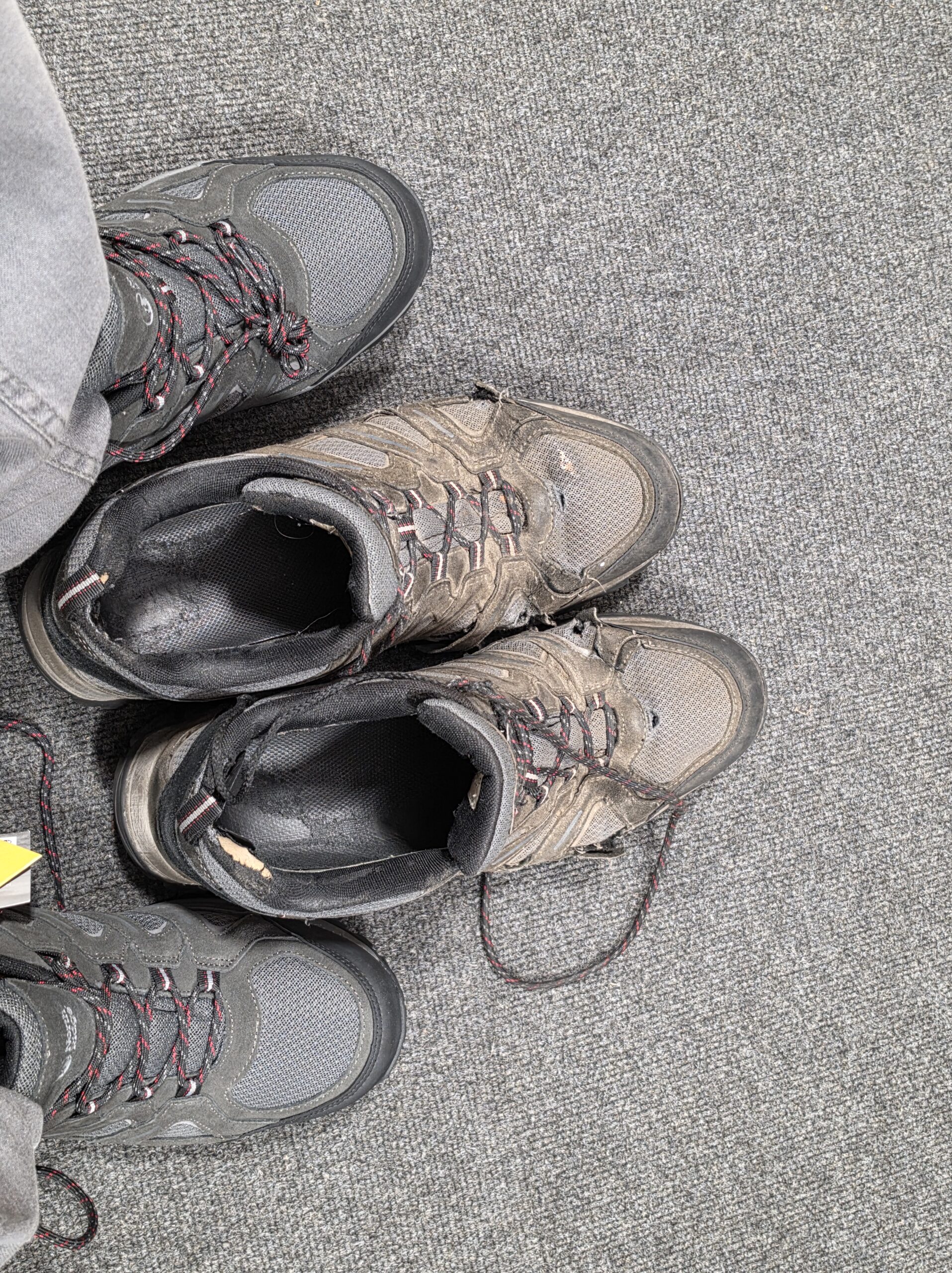
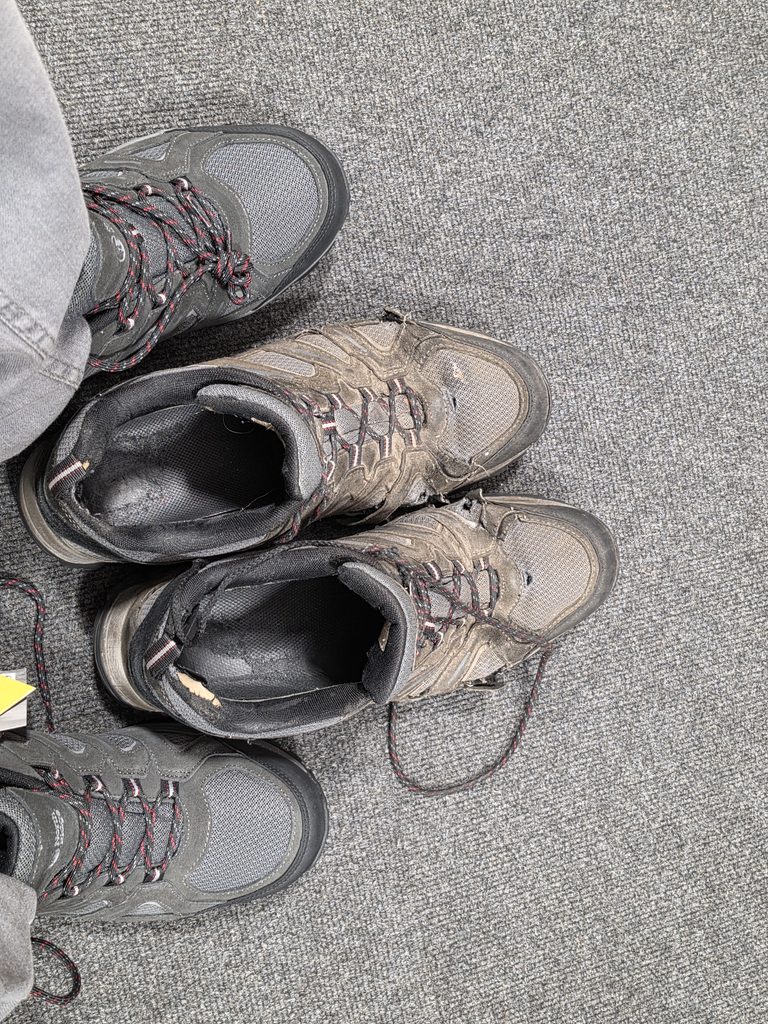
It has been mentioned that my walking shoes are slightly worn out, although I’m unclear why anyone would think that as they seem entirely fine to me. These are two pairs of the same model, with one pair new and the other used for what Samsung Health tells me amounts to around 2,900 miles of walking. Incidentally, the old shoes are the two that my feet aren’t in, as that might not be immediately obvious. I accept that the soles have developed a rather theoretical relationship with grip and some edges of the shoe have fallen off, but otherwise they have plenty of life left in them.
North Ridge is not necessarily regarded as a premium brand, as it is owned by JD Outdoors, which operates Go Outdoors, Blacks and Millets. However, this is the fourth pair of its shoes that I’ve bought because they have proved particularly durable. Walking footwear commonly lasts for around 500 to 1,000 miles, so I’m entirely content with a pair surviving for approximately 2,900 miles. Buying replacements therefore felt less like shopping and more like giving in to sustained external pressure. I’ll report back, hopefully in another two years, on how the new pair gets on.
For anyone concerned, I will still be using the old pair as I think they have around 1,100 miles left of walking. But I do have four LDWA challenge events coming up over the next few months and I feel the need for a little decadence, namely shoes that don’t have several holes in them. I appreciate that this sort of reckless consumerism may alarm anyone familiar with my usual approach to replacing things, but I’m sure I can reassure people that it won’t become a habit.
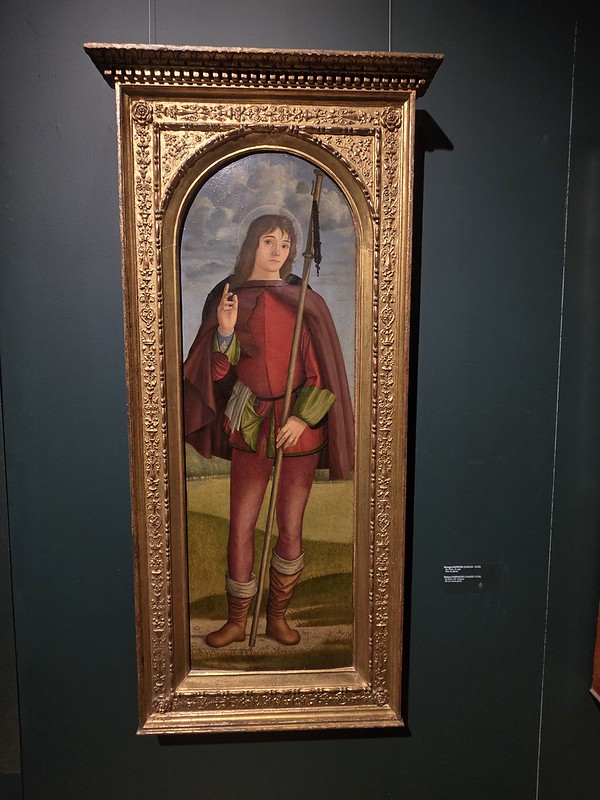
This is the second painting from Belgrade that I have sneaked into my current stream of piffle today, but that is the delight of this blog. It is not always full of excitement. This is Saint Roch, a sixteenth-century oil painting on a wooden panel by the Venetian artist Vittore Carpaccio. Roch is shown as a remarkably youthful pilgrim, holding his long staff and raising his other hand in what appears to be a blessing. According to tradition, he travelled through Italy caring for victims of the plague, contracted the disease himself and subsequently became a saint invoked for protection against it. It seems like quite a complex arrangement to me.
Saint Roch is usually depicted displaying the plague wound on his thigh and accompanied by the dog that brought him food, although neither is evident here, so perhaps the dog had been given the day off. I was quite reliant on the museum label to tell me who this was, as my knowledge of saints is not entirely impeccable.
Far more interesting to me, however, is that the artist’s name acquired an unexpected second life in 1950 when Giuseppe Cipriani of Harry’s Bar in Venice named his new dish of thinly sliced raw beef after him, as its red colouring reminded him of Carpaccio’s paintings. The vivid red clothing in this work makes that decision slightly easier to understand, although the saint himself looks unlikely to approve of becoming indirectly associated with an uncooked starter. Plague protection, a surviving panel from a Renaissance polyptych and culinary immortality seemed sufficient to justify sneaking another painting into the blog proceedings.
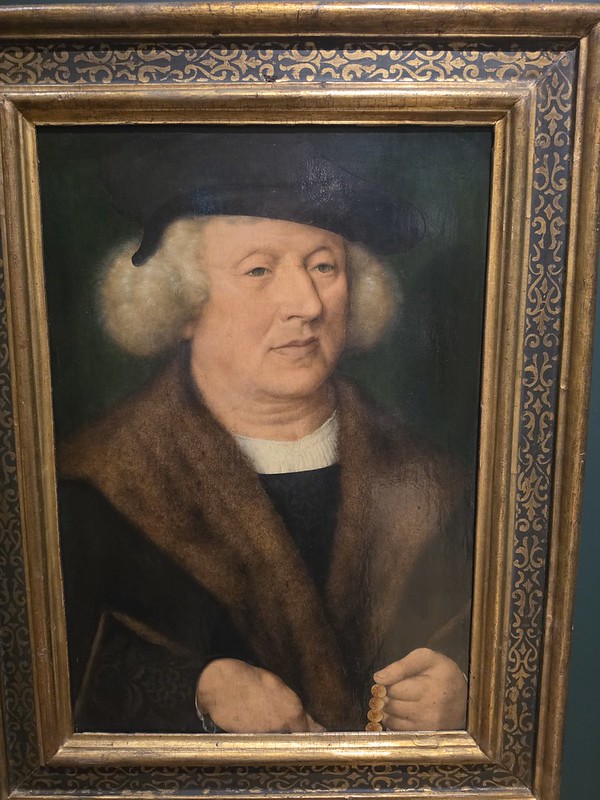
Sneaking back with another post from Belgrade, as I was intrigued by so many of the artworks in the National Museum of Serbia. This is Man with a Rosary, a sixteenth-century oil painting on a wooden panel by the Flemish artist Joos van Cleve. The sitter’s identity has been lost, but his expensive fur collar suggests that he was prosperous, while the rosary prominently displayed between his fingers presents him as a man of faith.
Van Cleve became a master in Antwerp in 1511, later held senior positions in the city’s painters’ guild and operated a substantial workshop. He was sufficiently well regarded as a portrait painter to work for the French court, where he painted Francis I. However, I found this unidentified man rather more intriguing than another formal portrait of a king, as there are already rather a lot of those.
I wonder whether the sitter would be pleased that his portrait has survived, although I imagine he would consider it sub-optimal that no-one now knows who he was. He evidently budgeted for the fur collar and a leading portrait painter, but not for a sufficiently durable name badge. Nearly five centuries later, we therefore know how he dressed, what he looked like and how he wanted to be remembered, but not the relatively fundamental detail of what he was called. It is an unexpectedly successful piece of personal branding apart from that minor omission. His name disappeared, but his face has survived in Belgrade and, after all this time, he still looks quietly pleased about the arrangement.
One of the reasons that I find Poland so agreeable is the country’s tendency to do things properly and efficiently, although this creates problems when the European Entry/Exit System has been handled differently elsewhere in the Schengen Area. Last year I had the excitement of being stuck at the border as there was confusion over how long I had been in the EU, officials eventually agreed that I had not overstayed.
This time there were quite long delays at the border and officers appeared to be conducting some detailed interviews. The very polite border control officer noted that there was a discrepancy at Bilbao Airport and this isn’t a surprise as I wrote about the confusion at the time. This meant that it looked like I hadn’t left the EU and so I had technically exceeded my number of days in the bloc.
A manager came over and she was efficient and helpful. I was pleased that Wizz Air stored all my boarding passes in one place, as this made it easy to show her the relevant flights. That evidence was sufficient to resolve the discrepancy. She mentioned that this was a failure by the Spanish border authorities and that it would be noted by the airport, although I’m not sure what they do with this information. I do like to imagine that somewhere in Katowice there is now a carefully maintained spreadsheet containing a sternly worded entry about Bilbao.
The delay wasn’t substantial, but it took me fifty minutes to get from airside to landside, meaning that I missed the bus by one minute. The border authorities had accepted that I was legally present, but the bus demonstrated rather less flexibility and departed without me. I’ll be glad when the EES is operating consistently across the Schengen Area.
After I discovered how cheap the fixed fare Bolt taxi was between Kutaisi airport and the city centre, I decided to do the same on the reverse trip. This was the only option I had if I wanted to get breakfast at the hotel, as the airport bus only runs once every couple of hours. The journey was therefore an easy one, with the taxi arriving only a couple of minutes after I booked it. This time, the driver didn’t feel the need to interrupt my plans to put my seat belt on and I was also pleased with his driving.
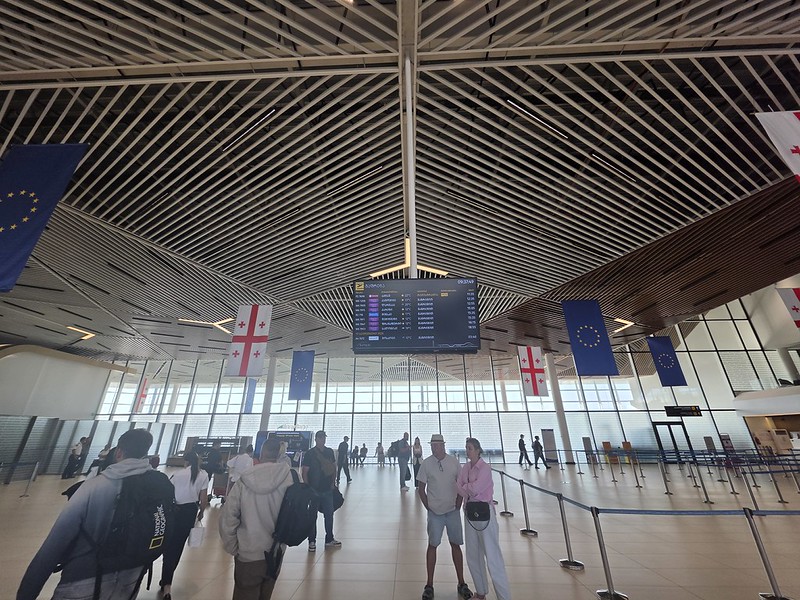
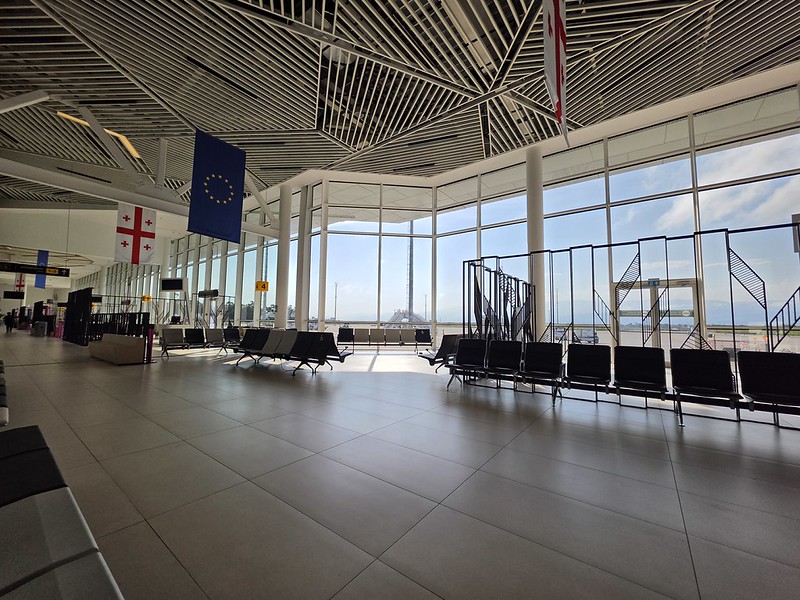
There are some subtle signs around the airport that this is a country looking towards the European Union and away from Russia. The political process of Georgia joining the EU has stalled at the moment, but opinion polls show that more 70% of residents support joining.
There is an airport lounge although it’s a paid one which doesn’t allow the various lounge cards access. I was aware of this in advance and so had ensured that my breakfast at the hotel was a substantial one.
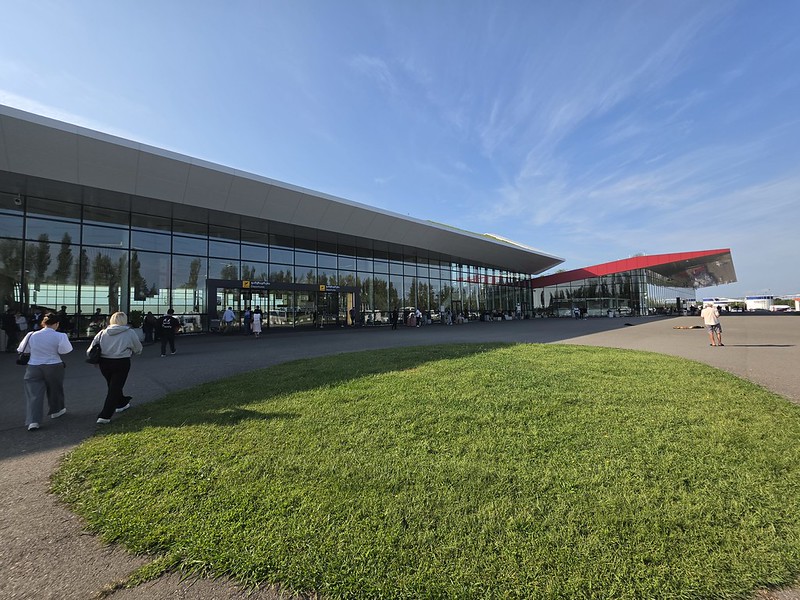
The airport itself was clean, bright, functional and there were plenty of power outlets, but despite what it might look like from the above photo, there wasn’t really enough seating. There were a couple of cafes, a shop and an external smoking area for those who felt the need.
When the redeveloped airport opened in 2012, it handled fewer than 200,000 passengers during the following year. Wizz Air’s enthusiasm for serving Kutaisi has since helped push that figure towards two million, while expansion plans would eventually enable the airport to handle around five million passengers annually.
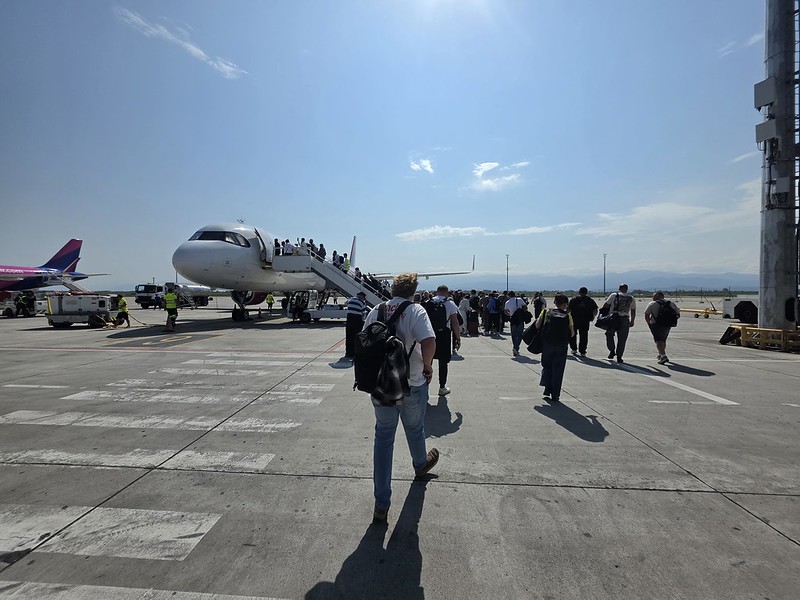
The walk to the aircraft confirmed that Georgia remained substantially warmer than my preferred operating temperature.
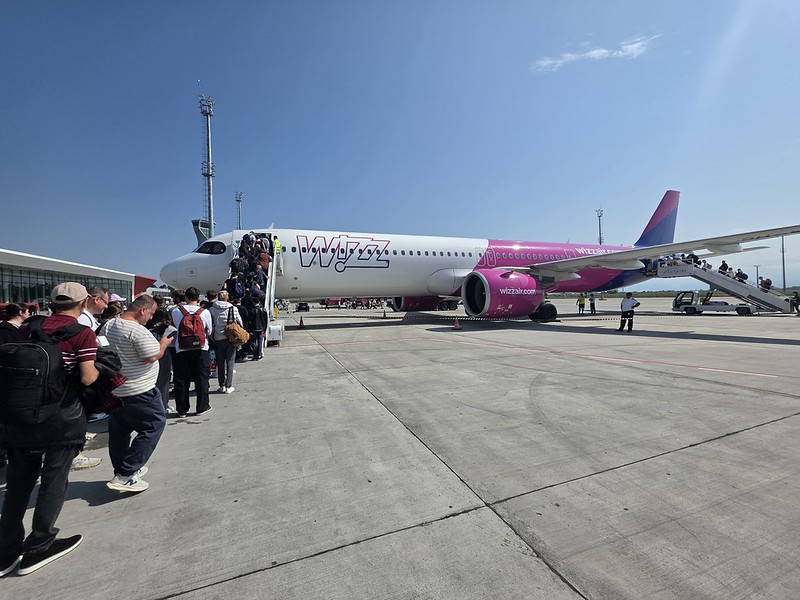
The aircraft was 9H-WDI, another new registration for me and therefore an important addition to records which nobody has yet requested to inspect.
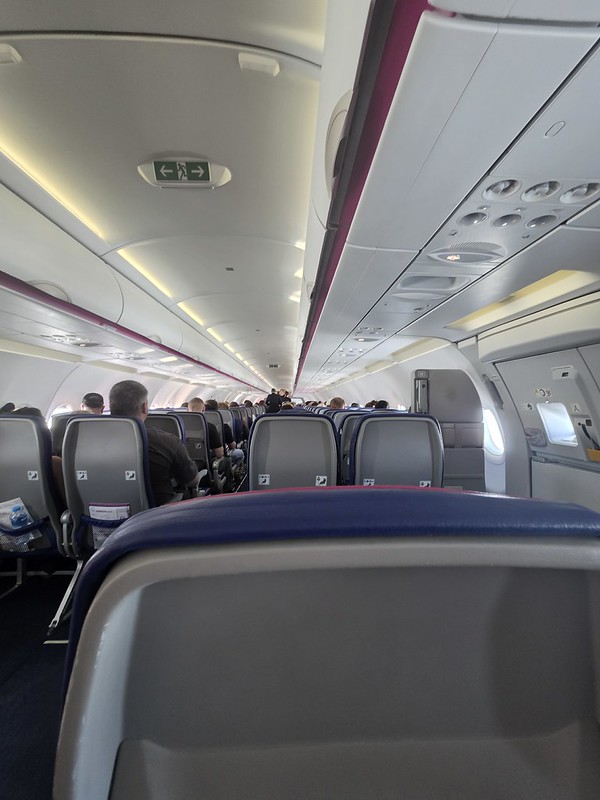
The seating gods gave me an aisle seat just behind the emergency exit row seats. As I’ve mentioned in previous posts, this led to the excitement of watching passengers attempt to upgrade themselves, before the Wizz Air cabin crew told them either to pay €20 or return to their allocated seats.
The flight itself was, yet again, uneventful which pleased me greatly. It was busy on board, but the service was efficient, the pilots were clear with their announcements and nothing fell off the aircraft.
And safely into Katowice Airport a little earlier than expected and with no incidents to report. All really rather lovely. Well, until there was a border issue, but more of that in the next post.
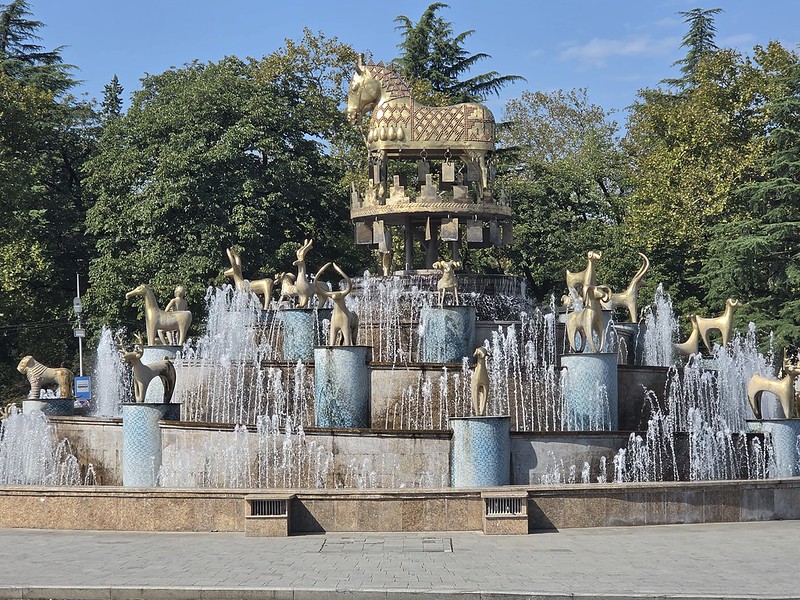
In the middle of one of Kutaisi’s busiest roundabouts is the Colchis Fountain, a suitably restrained arrangement involving cascading water and around thirty golden animals. This is, of course, entirely reasonable. Designed by Georgian architect David Gogichaishvili and unveiled in 2011, its figures are enlarged copies of jewellery and other objects discovered at archaeological sites associated with the ancient Kingdom of Colchis. The animals include deer, rams, goats and lions, while the horses at the top are linked to King Aeëtes, the legendary ruler encountered by Jason and the Argonauts during their search for the Golden Fleece.
It has become one of the most recognisable sights in Kutaisi, combining the city’s ancient past with something that looks unashamedly modern and theatrical. I rather liked it, although its position within a busy roundabout means that close inspection requires substantially more confidence in Georgian driving than I possessed. I therefore admired it from the pavement across the road, while wondering whether one day the city might pedestrianise the square and allow visitors to approach it without first demonstrating their commitment to Georgian road safety. Being flattened by Georgian traffic seemed an excessive price to pay for a closer photograph of a golden goat.
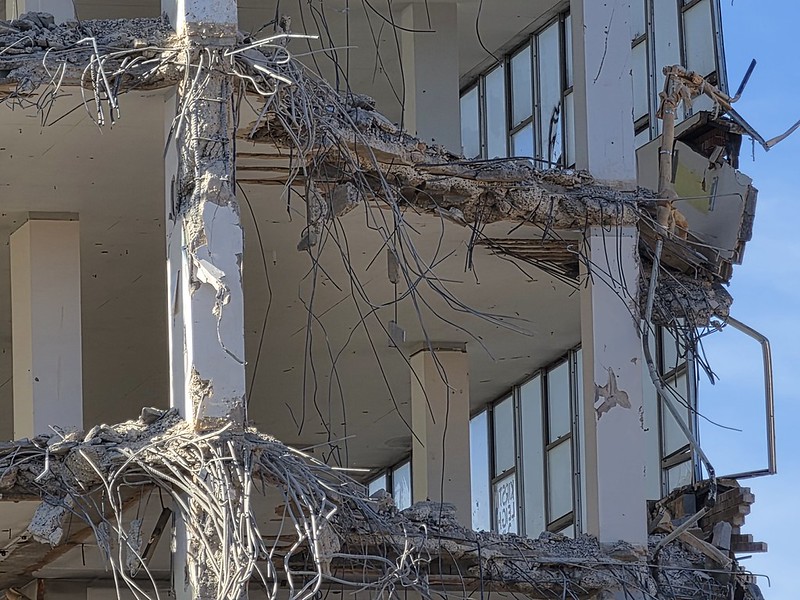
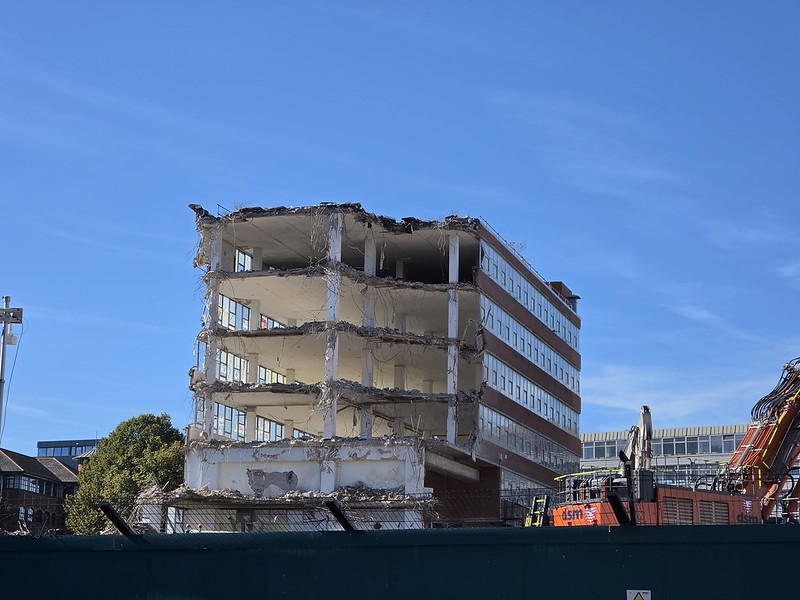
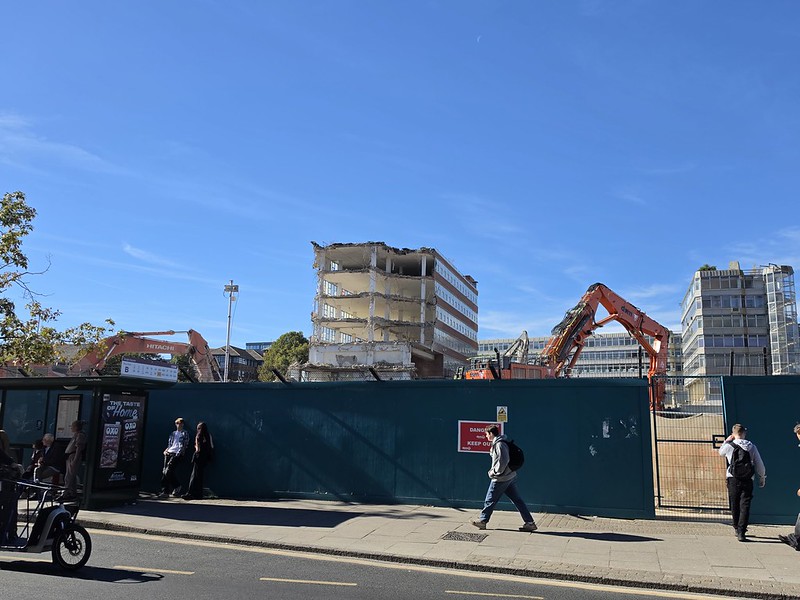
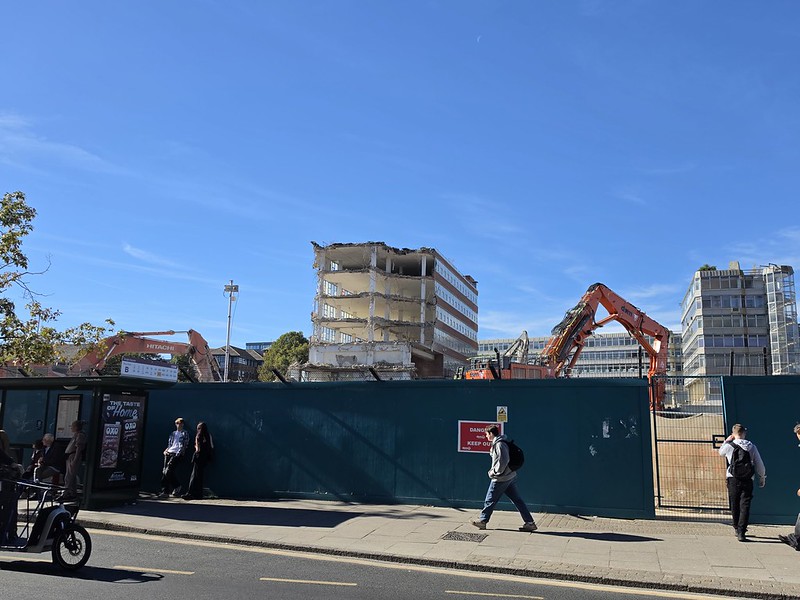
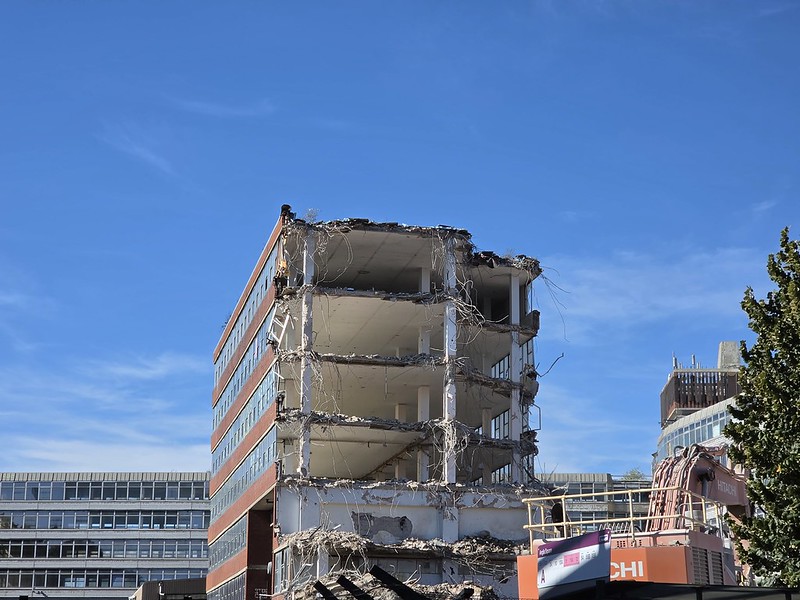
It still seems slightly strange to walk by the Anglia Square demolition site and see Gildengate House be taken apart bit by bit each day. There was a time in the 1990s that this was used to store the city archives after the central library caught fire, before they were moved to their current site at Norfolk County Hall. Anyway, some more photos……
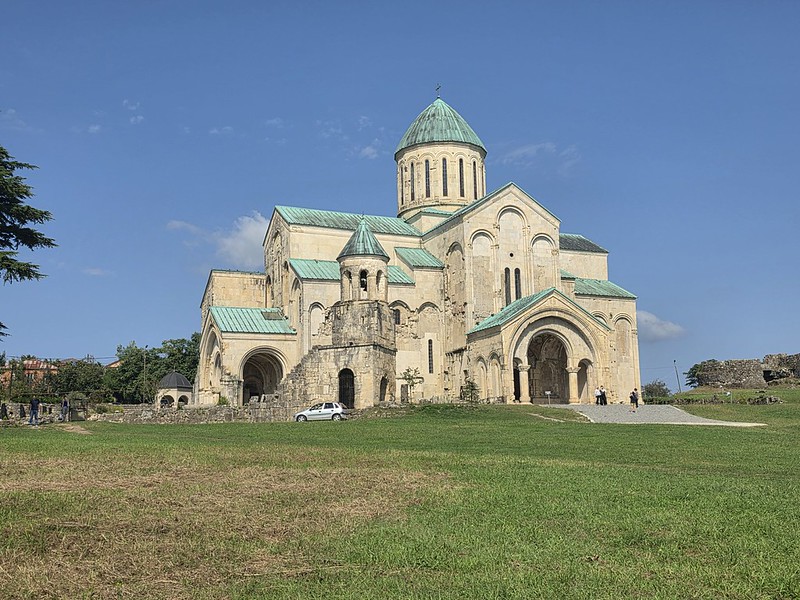
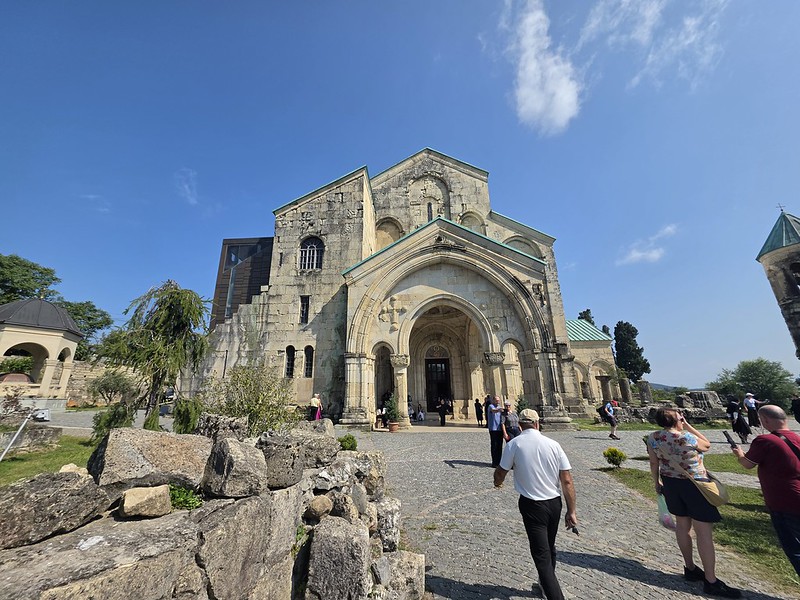
Standing prominently on Ukimerioni Hill above Kutaisi, Bagrati Cathedral is formally dedicated to the Dormition of the Mother of God and is one of the city’s most recognisable landmarks. The site was occupied as early as the second millennium BC and its first known Christian church was built during the fourth century, long before the medieval cathedral appeared. The elevation makes it visible from much of Kutaisi, although it also requires visitors to walk up a very big hill, which is presumably how medieval architects ensured that nobody arrived without having made some physical commitment to proceedings. Fortunately, my hotel was near the cathedral so I didn’t have to make a special expedition to come here.
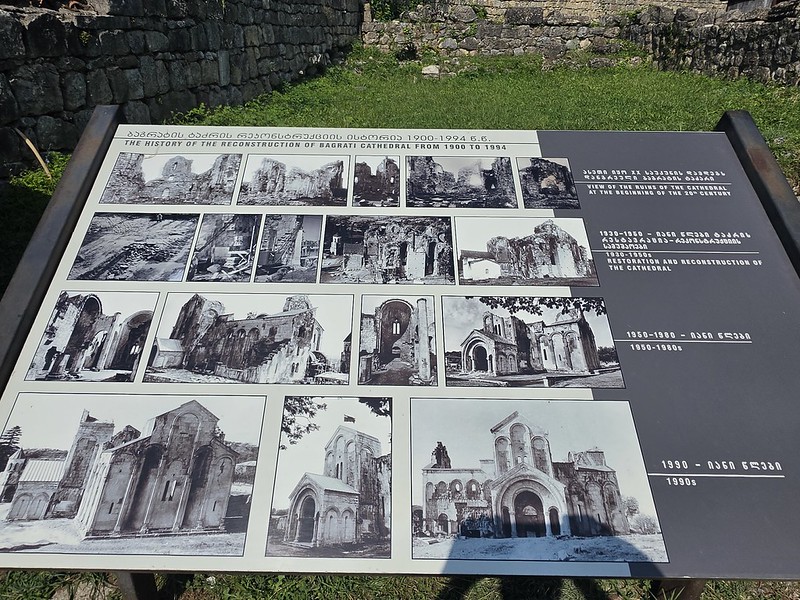
This display records the cathedral’s condition and the various attempts to preserve and reconstruct it during the twentieth century. Archaeological excavations in 1940 and 1941 helped establish the original plan, while architect Vakhtang Tsintsadze prepared a reconstruction scheme in 1952. Work continued in stages over several decades, followed by further archaeological and structural investigations around the cathedral’s thousandth anniversary in 2003.
The medieval cathedral was commissioned by King Bagrat III around the turn of the eleventh century and an inscription records that its floor was laid in 1003. Bagrat had brought most of Georgia under a single ruler, and the scale of the new episcopal church was intended to demonstrate the importance of that achievement. Representatives from across the country attended its consecration and the building subsequently became a lasting symbol of Georgian unity, which is quite a substantial burden for one collection of stonework to carry. There was a wedding taking place when I was there, so the relatively large number of tourists, as well as myself, didn’t get to see the interior.
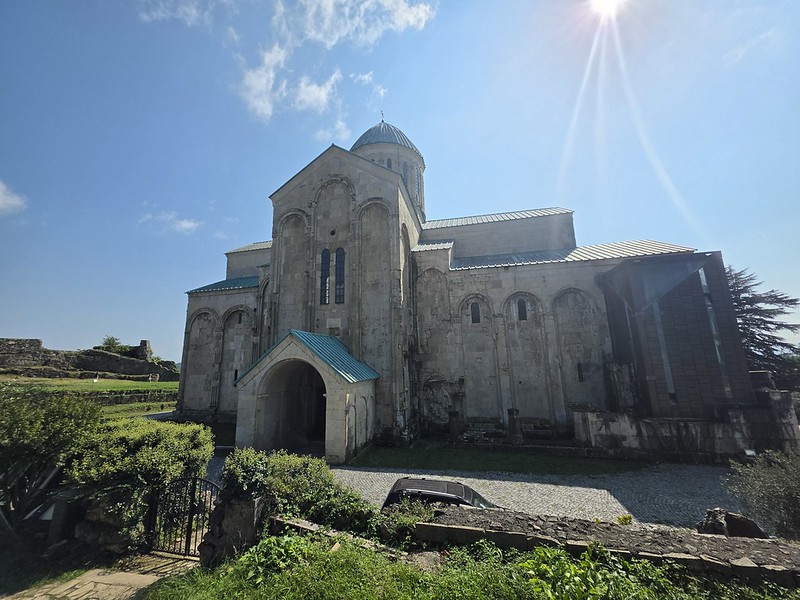
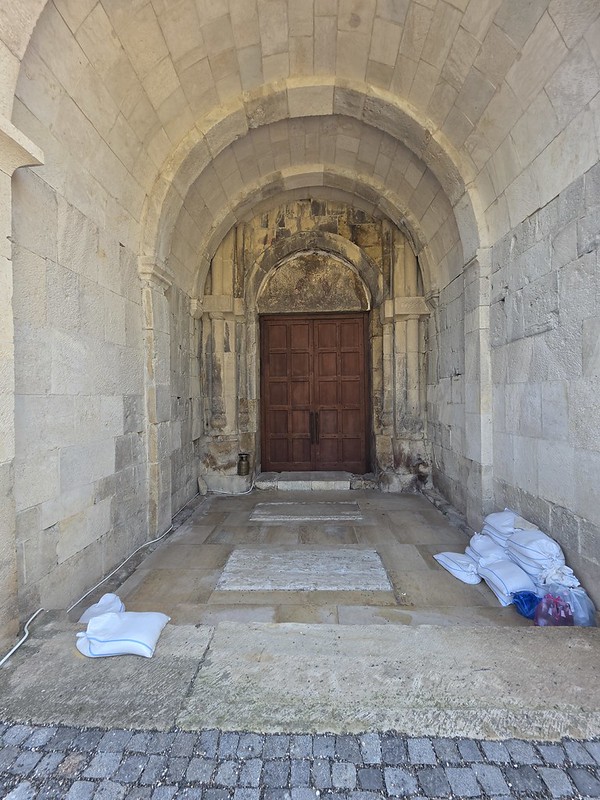
This side entrance is one of the quieter surviving parts of the complex. Its recessed stone arches and remaining decoration give some indication of how elaborate the medieval cathedral must have appeared before its partial destruction.
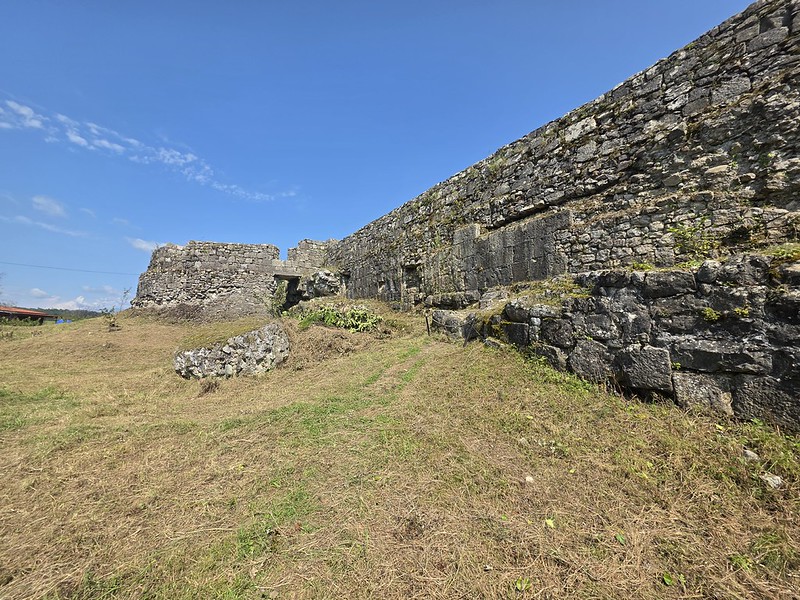
The cathedral once stood within Kutaisi Fortress, parts of whose walls and foundations remain around the site. Both the fortress and cathedral were attacked by Ottoman forces in 1692, when an explosion caused the dome and roof to collapse. The ruined building deteriorated further during the nineteenth century and some of its stone was removed for use elsewhere, which was all a little sub-optimal. For more than two centuries, Bagrati therefore remained a roofless ruin rather than the complete cathedral seen today.
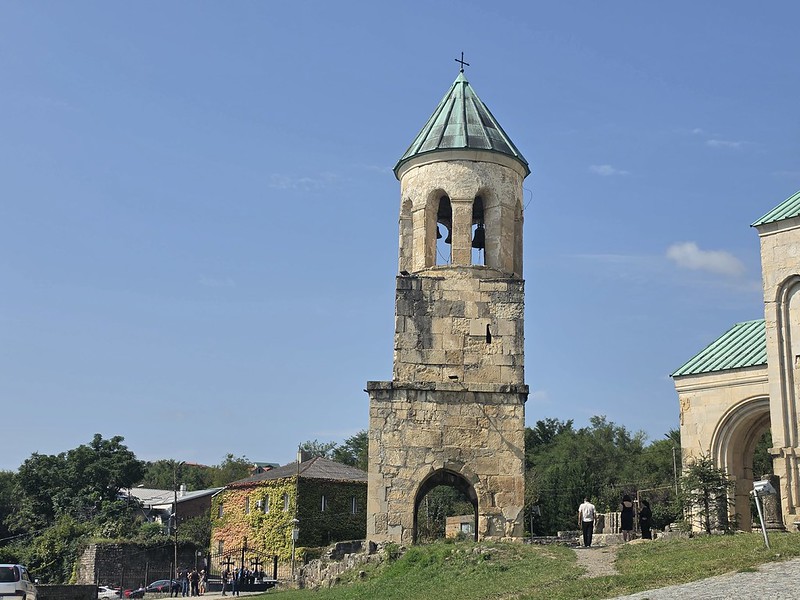
The separate bell tower stands alongside the cathedral and provides another vertical landmark on the hill, although this one is a little overshadowed by the cathedral. Together with the surviving walls, archaeological remains and religious buildings, it helps the site feel like an historic precinct rather than simply one very large church positioned above the city.
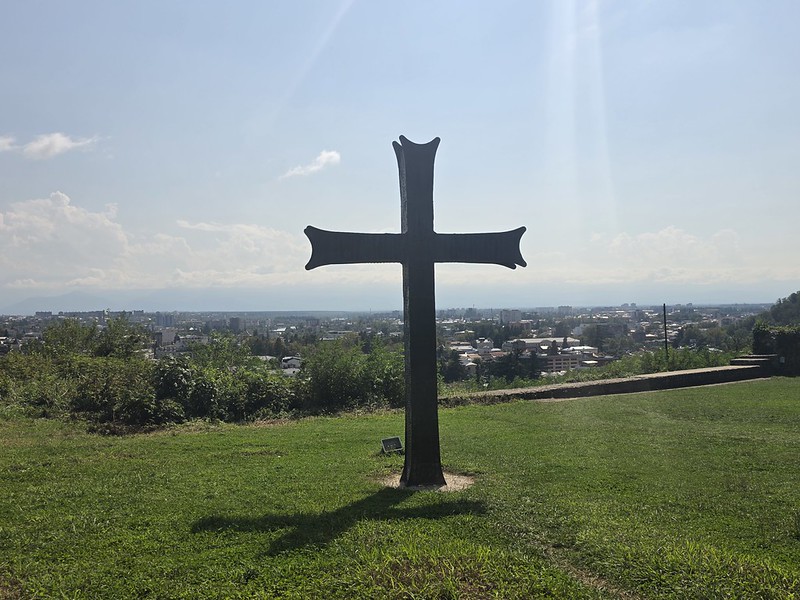
The cross stands near the edge of the hill and offers a suitably dramatic view across Kutaisi. The city became the capital of the unified Georgian kingdom and remained at the centre of political life until the royal capital moved to Tbilisi during the twelfth century. The view from the hill also helps explain why the site was chosen, offering visibility across the surrounding landscape and ensuring that the cathedral dominated the city both physically and symbolically. The panorama was impressive enough to justify the climb, which is not an assessment I make lightly by any means as I am absolutely not David Morgan. Incidentally, I’m making my friend David the new internationally recognised unit of willingness to climb hills. I’m at 2 out of 10 on the scale, my friend Richard is at -3 and David is at 10.
The completed cathedral is impressive, although its modern reconstruction produced an international heritage controversy. Bagrati and Gelati Monastery were jointly added to the UNESCO World Heritage List in 1994, but major rebuilding work begun in 2009 was judged to have damaged the cathedral’s historical authenticity. The property was placed on the World Heritage in Danger list in 2010 and Bagrati was ultimately removed from the designated site in 2017, while Gelati retained its status. This is therefore the unusual story of a cathedral losing its World Heritage recognition partly because it had been made substantially less ruined and I’m sure that there’s some logic in there somewhere.
Anyway, whatever the arguments about conservation, I thought that it remained a striking building and one of the most memorable sights in Kutaisi. It was all really rather lovely.
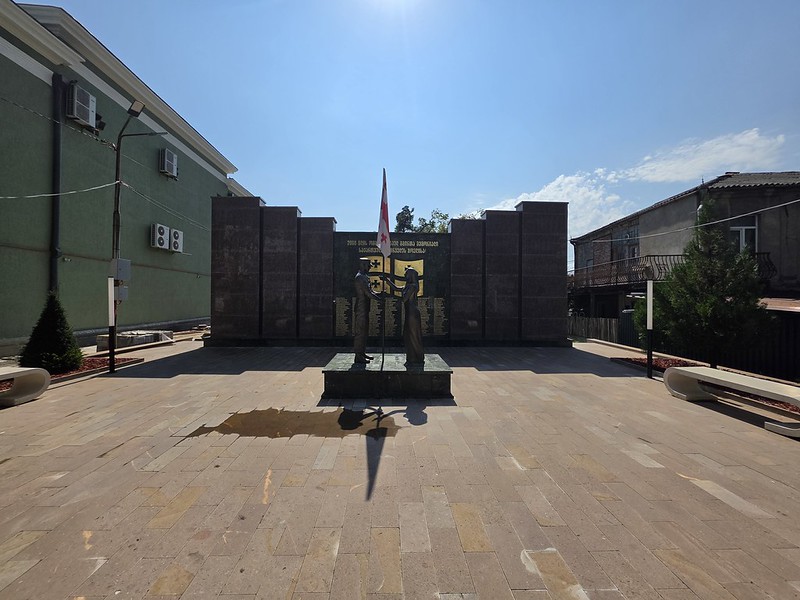
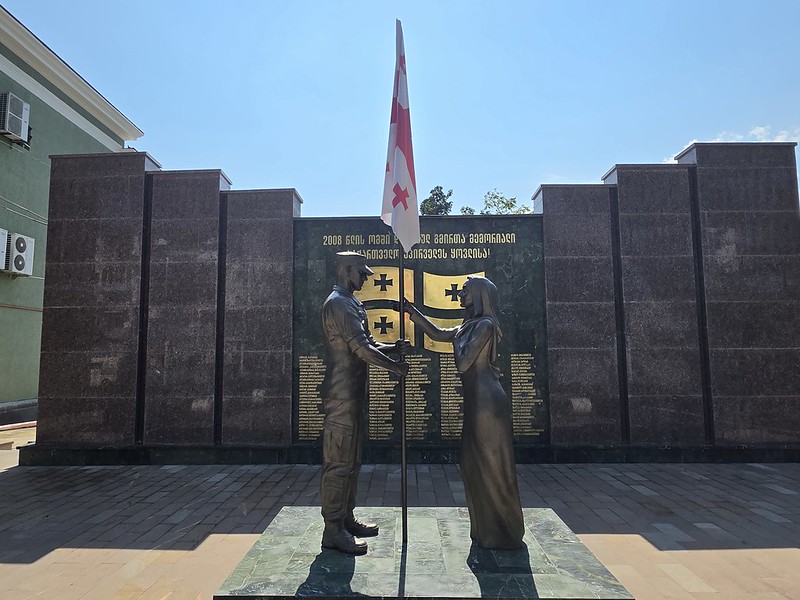
Near Kutaisi’s National Museum of Military Glory is this memorial to the Georgian servicemen killed during the Russo-Georgian War of August 2008. The conflict lasted only five days but caused substantial destruction, with fighting centred on South Ossetia before Russian forces advanced farther into Georgia. It marked a new phase in post-Soviet Russian foreign policy and has since been viewed as an early warning of Moscow’s willingness to use military force beyond its borders, most notably in Ukraine. The memorial was fully renovated in May 2026, when the composition was altered, a new sculpture installed and the surrounding square improved.
The new sculpture is the work of Giorgi Kikvadze and shows a soldier facing a woman in traditional dress, with the Georgian flag between them. I’m not sure whether the woman is intended to represent a mother, partner or Georgia itself, but it seemed more like a farewell or reunion than a celebration of war. Nine servicemen from Kutaisi were among the Georgians killed during the conflict.
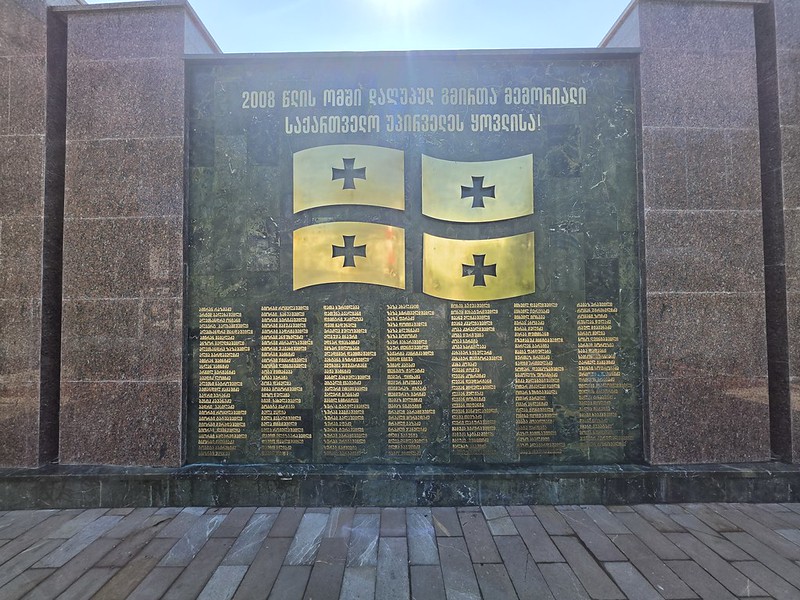
The central wall displays the five-cross Georgian flag above long columns of names. The inscription translates approximately as “Memorial to the heroes who died in the 2008 war. Georgia blossoms with heroes.” I couldn’t read that while I was there, which will surprise nobody familiar with my progress in Georgian, but I thought the whole memorial was simple and dignified.
We didn’t get much chance to have Asian food when we were travelling around the Balkans, so I was starting to crave that by the time I reached Kutaisi. This is the well-reviewed Siam Thai restaurant, located in the centre of the city near the White Bridge.
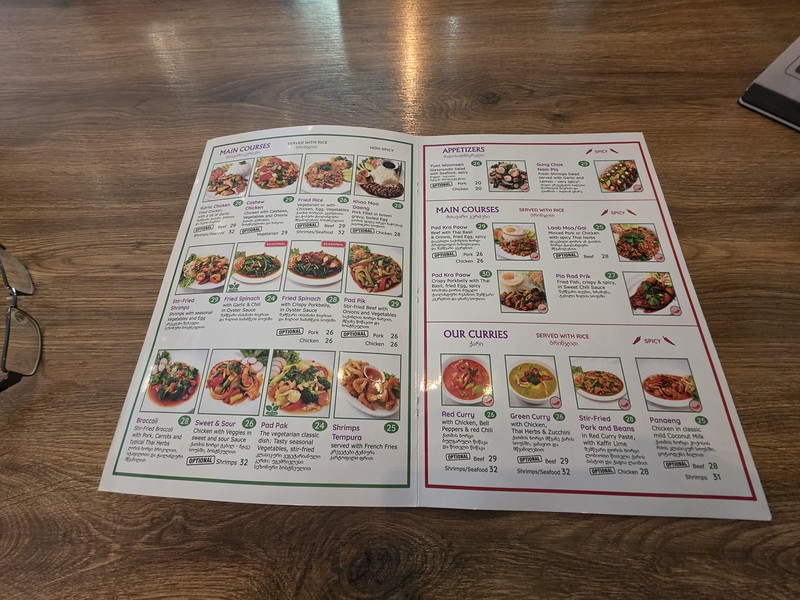
Some of the menu options. When I ordered, the team member asked if I wanted Western levels of spice or Thai levels of spice. I always want plenty of heat and depth of flavour, so I opted for the latter option and the team member did double-check that this was entirely wise.
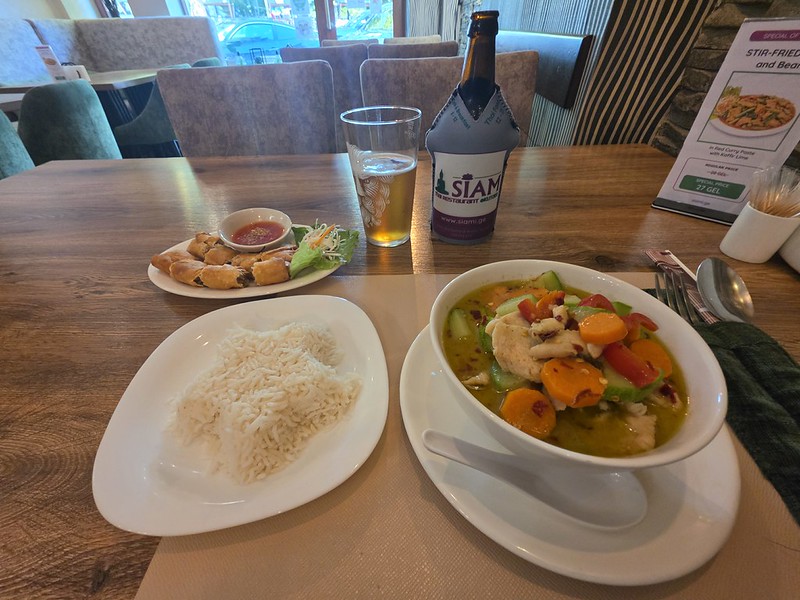
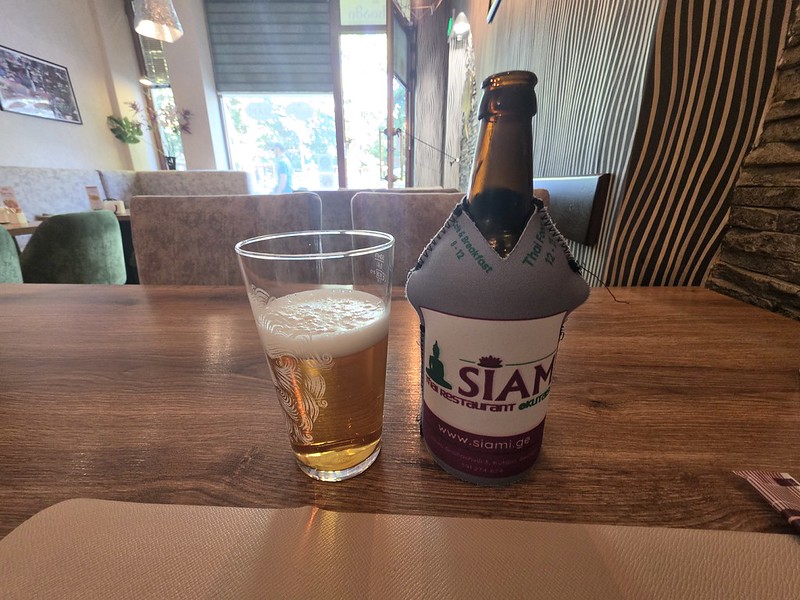
The beer was, I think, the Kazbegi but the restaurant’s cooler jacket has made it a little harder to identify and I didn’t put it on Untappd at the time as I didn’t have any signal. So, that one might just have to remain a mystery, but I remember it was entirely satisfactory. I doubt that I’ll become a professional beer reviewer any time soon.
I opted for the spring rolls, Thai green curry and steamed rice. The spring rolls appeared fresh and homemade and were well presented, although I would personally have preferred a firmer and slightly crisper exterior. The rice was cooked properly, while the curry delivered the promised heat and contained plenty of vegetables. However, the sauce was a little thin and the flavours became less distinctive as I worked my way through it. The chicken was tender, although it tasted as though it had been boiled separately rather than absorbing much of the curry’s flavour.
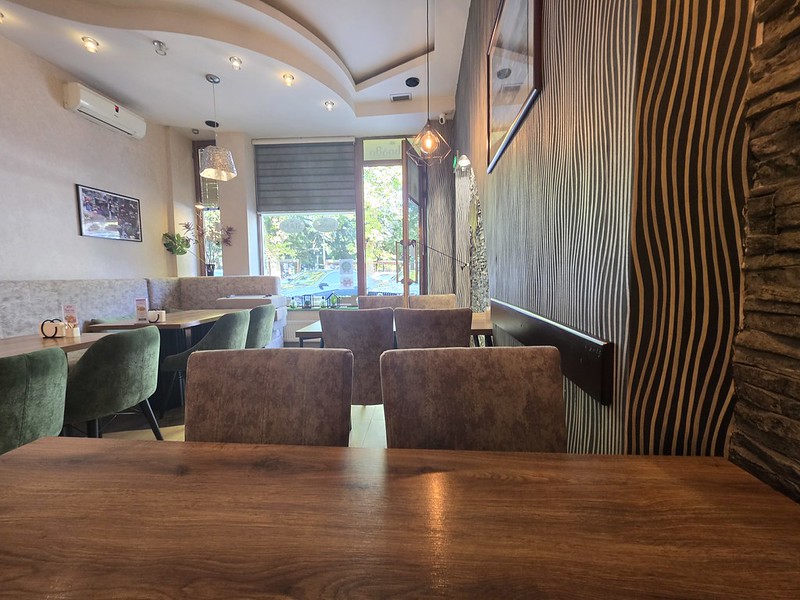
I was the only customer in the restaurant throughout my visit, but the service remained timely, friendly and unobtrusive. Everything was suitably clean and the décor looked contemporary. The curry was not quite as rich or aromatic as I had hoped, but it was still a pleasant lunch and successfully dealt with my increasingly urgent requirement for Thai food. I was pleased that I was able to manage the spice level and the cost was reasonable at around £11 for everything.