
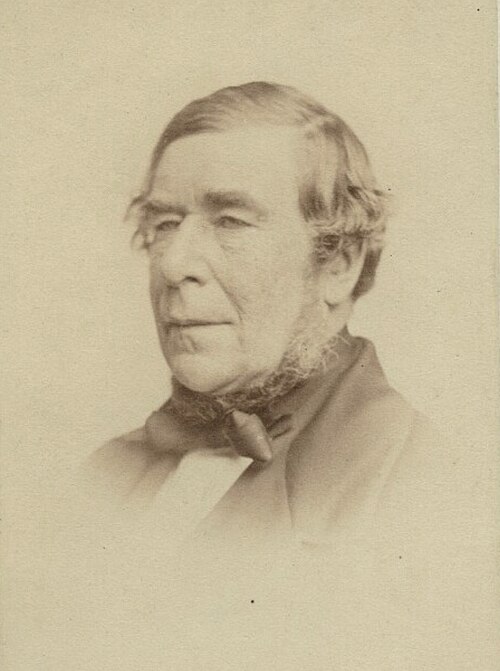
This is Jonathan Peel and 200 years ago this week he wrote to the Norwich Mercury to inform them that he intended to stand for Parliament in the constituency of Norwich.
“TO THE GENTLEMEN, CLERGY, FREEMEN, & FREEHOLDERS OF THE City and County of Norwich.
GENTLEMEN,
A most flattering and unexpected honour has been this day conferred upon me. I have received a requisition, to which names of the first respectability are attached, calling upon me to present myself at the approaching General Election as a Candidate for the high honour of representing the City of Norwich.
In the absence of all local connection, I certainly should not have presumed, without such a requisition, to aspire to that distinction; but understanding that one of your present Members has publicly notified his intention to retire from Parliament, and being assured that the public principles which I avow are in unison with those maintained by a very large portion of the body which I have now the honour to address, I will not hesitate in gratifying to my feelings, and made to me in a manner which acquits me, I trust, of the charge of presumptously offering myself to your notice.
As I shall solicit your suffrages on the ground of public principles alone, you will justly expect from me an explicit declaration of those principles.
I know not, Gentlemen, in what terms I can better describe my general opinions upon political subjects than by the simple assurance, that I am a true friend to the Constitution in Church and State.
I was taught, from my earliest infancy, to venerate those ancient institutions which constitute the Government of the Country in which we live—I was educated in those sentiments, and experience and reflection have only served to confirm the impressions which were first received from example and authority.
My voice shall be given, if I shall ever have a right to raise that voice in Parliament, for the maintenance in matters of Government, of that order of things which I find established.
I am opposed to Reform in Parliament. And in what is usually called Catholic Emancipation I feel it my duty to offer a firm and decided opposition, unmingled however with any feeling of rancour or hostility towards those of our fellow subjects more immediately interested in that question.
I have probably said enough to explain to you the general tenor of my political principles. If you should think me worthy of the distinction which I seek, I promise an unwavering attention to every thing connected with the local and peculiar concerns of the City of Norwich, with the promotion of its Manufacturing Interests, and the advancement of its general welfare.
I have the honour to be,
Gentlemen,
Your obedient humble Servant,
JONATHAN PEEL.
Marble Hill, Twickenham,
4th May, 1826.”
Jonathan was the younger brother of the Prime Minister, Robert Peel, which probably helped matters somewhat in terms of being found a constituency in which to stand. He had no links to Norwich though and he was against reform and Catholic emancipation so he was hardly the most radical of candidates. This didn’t stop the electors of Norwich voting him in, although the constituency had two MPs at the time and the other elected was William Smith who was a Radical and who wanted abolition and Parliamentary reform. I note his polite words, and still today it is more dignified to say “I have been asked to serve” than “I rather fancy becoming an MP”.
Jonathan, if I might call him that, lost the Norwich constituency in 1830, although he then moved to be the MP for Huntingdon between 1831 and 1868, later serving as the Secretary of State for War on two occasions. It all goes to show that actually being local was less important to electors back before the Great Reform Act, although it’s fair to say that there was a lot more corruption and backhanders going on back then compared to today (well, in theory anyway).