This newspaper article was in the Norwich Mercury 200 years ago this week, reporting that Mr Snasdell had died from drowning. Not only do I like the word se’nnight, meaning a seven day period, but I particularly like the “the vital spark had fled” to describe his death.
The individual was Thomas Snasdell and he was buried in Mundesley on 7 August 1826, although he lived in Norwich. He had been born in 1782 and although not mentioned in the article, he married Ann Clarke on 6 September 1824. I will have to work out how to put the phrase “the vital spark had fled” into this blog somehow, it’s a phrase that I feel needs to return.
This article appeared in the Norwich Mercury 200 years ago this week and relates to the court cases that had been heard in Walsingham. I can’t find out anything about Rose Crask, she doesn’t appear in any records that I can find.
As for the details of this case, this was a period of different moral values, although the court cases at the time show that breaches were not uncommon. At the time a woman described or charged as a “lewd woman” was usually being treated as sexually immoral, disorderly or involved in prostitution, although it can relate to any of them.
The label might be applied to a woman found soliciting, keeping company with known prostitutes or criminals, living outside accepted domestic arrangements, behaving indecently in public or repeatedly coming to the attention of parish officers and magistrates. It was a broad and highly moralistic description, reflecting a period when poor and unmarried women were closely policed and could be punished as much for their reputation and way of life as for any clearly identified criminal act. Indeed women in general at this time could be invisible, which has transpired to be the case for finding out anything more about Rose.
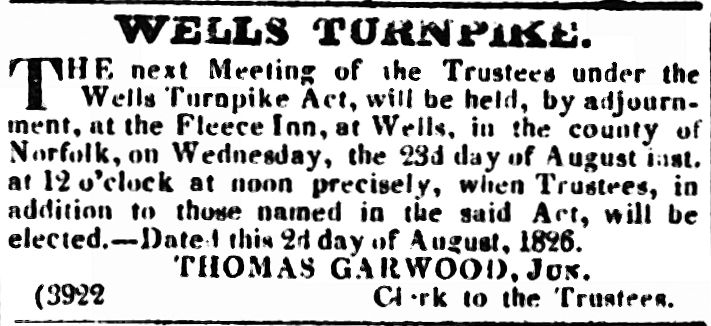
This notice was posted in the Norwich Mercury 200 years ago this week and it relates to the newly established turnpike road between Wells-next-the-Sea and Fakenham. This notice relates to a regular meeting of the trust, but the turnpike was new having been created by an Act of Parliament earlier in 1826, and this belonged to the final generation of turnpike trusts established in England. The period often described as ‘turnpike mania’ had largely taken place between the 1750s and the 1770s, while the last completely new English turnpike trusts would be authorised in the 1830s. In other words, Wells was something of a latecomer to a transport revolution that had already transformed much of the country, which perhaps seems fitting for this quieter corner of Norfolk.
The trust was more complicated than its name suggests. Rather than simply improving a single road between Wells and Fakenham, it administered a small network of connected highways. There were two principal routes from Fakenham to Wells, the western road passing through Egmere and the eastern route through Little Walsingham. A further branch ran from Walsingham through Great Snoring to Langor Bridge, where it joined the existing Norwich to Fakenham Turnpike. Early mapping also shows a branch westwards from Fakenham towards Hillington via Sculthorpe, although this appears never to have become an important part of the trust and later largely disappeared from its records. I’ve resisted vanishing completely down this rabbit hole, although I suspect there’s an entire series of blog posts waiting to be written about the trust.
Like every turnpike trust, its powers came from Parliament. The trustees could levy tolls, improve existing highways, acquire land where necessary and borrow money against future toll income. Unlike parish-maintained roads, which depended upon local labour obligations that varied enormously in quality, turnpikes introduced a more centralised and professional system of highway management. The trustees themselves were unpaid local gentlemen, merchants and landowners, but they appointed paid officers including surveyors, clerks and treasurers to administer the roads.
One particularly fascinating aspect of the Wells trust is that its minute books survive from the very first meeting. These reveal that deciding where to place tollgates proved surprisingly contentious. Bryant’s 1826 map shows the initial gates at Wells, Warham, Kettlestone and on the Sculthorpe road approaching Fakenham, broadly reflecting the trustees’ original decisions. However, almost as soon as toll collection began in the spring of 1827, travellers demonstrated an impressive enthusiasm for avoiding payment and that was considered most sub-optimal. By July the trustees were recording “very frequent evasions” and they were busy ordering additional gates across side roads to block alternative routes around the toll bars. Human ingenuity, it would appear, has always been remarkably effective when faced with paying road charges and judging by the repeated attempts to stop people avoiding the tolls, the trustees probably spent rather more time discussing human inventiveness than road engineering.
The arrival of the railways gradually undermined the economic justification for many turnpike trusts across Britain, and Wells was no exception. As traffic patterns changed during the second half of the nineteenth century, the toll system became increasingly difficult to justify. The Wells to Fakenham Turnpike Trust was finally wound up in 1881, ending fifty-five years of independent management. Responsibility for the roads returned to public authorities, while the tollgates disappeared into history.
Today, the milestones remain the easiest evidence that the trust ever existed and I wouldn’t at all be surprised if I decide that I need a friend to drive me to them to have a look. But they tell only a small part of the story. Behind them lay decades of meetings, arguments over gate locations, complaints about toll evasion, financial management and continual maintenance of roads that were vital to the economy of north west Norfolk. I’m fairly sure that these meetings would have been quite vibrant, but a bit of drama is good for the soul.
As an aside, I won’t say any more about the Fleece Inn in Wells, where the turnpike meeting was held, as it was one of the ten pubs that Roy, Jen and I visited a couple of weeks ago and those posts remain in the increasingly well-populated unwritten post blog queue.
I rather liked this advertisement which was placed in the Norwich Mercury 200 years ago this month. It reads:
“TO THE LOVERS OF THE FINE ARTS.
THE Nobility, Gentry, and Public of Norwich and Norfolk, are respectfully informed, that a
Splendid Collection of ANCIENT PICTURES
Will be opened for Exhibition during the Assize Week and a short time succeeding, at the Assembly Rooms, Norwich.
The Paintings are selected from the Works of the most esteemed Masters of the Italian, Dutch, and Flemish Schools. — Among the former will be found a splendid Picture by Titian, in his early style, with others by Caracci, Pietro da Cortona, Canaletti, &c. &c. The latter will include fine Specimens of the most pleasing character, and of Cabinet size, of the following Masters: — Rubens, Rembrandt, Both, Pynacker, Netscher, Cuyp, Decker, Zorg, Schweikhart, B. Gael, P. Potter, Poelemburg, Stoik, Snyers, De Vlieger, &c. &c.
The Exhibition will be opened from Ten in the morning till Four in the afternoon.
ADMITTANCE — ONE SHILLING.”
The exhibition was aimed at “the Nobility, Gentry, and Public of Norwich and Norfolk” and I think it’s evident that they were expecting really only people from what they might have called at the time the educated and wealthy classes. And even within that the nobility came first, the gentry were safely in the middle and the public were graciously permitted to bring up the rear, provided they had a shilling and behaved themselves near the Titian.
This feels like an early art gallery type set-up, there are some quite impressive artists in that list and the Assembly Rooms would have been quite the cultural hotspot that week. A shilling would have been approximately the equivalent of £7 today. I also went to look into the etymology of the word ‘ancient’ and have ascertained that in the art world of the time, it just meant ‘Old Masters‘ as the paintings weren’t that old at the time.
The Assembly Rooms are still there and they have long been part of the city’s cultural centres, so in that respect not much has changed. It’s a shame I can’t find a list of what artworks were displayed though, it all sounds rather decadent.
The below article appeared in the Norwich Mercury 200 years ago.
“Doctrines of the New Jerusalem Church.
ON Sunday, July 9th, THREE DISCOURSES will be delivered at Crook’s Place Chapel, by the Rev. W. Mason, in which it will be shewn what are the views of the New Church in regard to the Quality of that Faith which justifies, and the true nature of Justification — Who the Lord’s Sheep are, and the Goats contrasted with them — and The Nature of the Christian’s Conquest, and the Rewards promised to the Conqueror.
Service to commence in the morning at half-past Ten, Afternoon at half-past Two, and Evening at half-past Six o’clock.”
The New Jerusalem Church was the Swedenborgianism religion and some of this story links to the St Mary the Less church on Queen Street which I’ve written about before. In short, that church was closed during the Reformation, then given to the religious refugees from the Netherlands to use as a cloth hall, with the building being used for services given in French until 1832. It was then leased to the New Jerusalem church of Swedenborgians who remained here until 1852 and they then moved to Park Lane to a building constructed for them. The church was already though in decline at this stage which is rarely the ideal moment to embark on a new building project and in the 1920s they transferred the building to the Mormons and although it was used by another religious group, it was then sold to become a private residential building. It was never fully converted into a home but is no longer used for religious purposes.
This article from 200 years ago tells a little of the story before the Swedenborgians moved to St Mary the Less, it appears that they were using Crook’s Place Chapel. This is in an area of the city that was changed heavily following the Second World War, but Crook’s Place Chapel appears to have been demolished in the 1880s. And back to the article, it’s an interesting look back that there would have been three services held that day for those interested in finding out more about the church. Those attending would have been no doubt fascinated by the discussions about faith, sheep, goats and conquest, but they probably got to have a nice little sit down.
There were concerns nationally about the stability of the Church of England, with the Church Building Acts of 1818 and 1824 trying to fund new Anglican churches. The Norwich Mercury article captures quite nicely this period of religious competition and general anxiety about picking the right religion.
200 years ago this week the Norwich Mercury printed this article:
“On Monday, during the election, Samuel Chenery, a lad of 16, was detected in picking the pocket of a gentleman, in the market, and lodged in the Vagrant Room in the Hall, where he soon after cut his throat. He was conveyed to the Hospital, and died on Wednesday morning.—Verdict, insanity.”
I’ve written numerous times about how Norwich 200 years ago was a city troubled with crime, poverty and mental instability. I assume that he was taken to St. Andrew’s Hall, which was the city’s workhouse at this time, which is where Samuel Chenery killed himself.
The lad was Samuel Haywood Chenery who was born on 19 March 1810, the son of Thomas Chenery and Elizabeth Chenery (nee Haywood). He was baptised on 25 March 1810 at St. Paul’s church in the city, a war damaged building unnecessarily pulled down in the 1970s for the flyover.
Samuel was buried at St. Augustine’s Church in Norwich on 25 June 1826, although those who died through suicide often weren’t buried in Church of England graveyards. I’m not entirely sure that there would have been a grave to him if the family were poor, but if there was, it’s not there now. Samuel’s Dad, Thomas, died on 12 April 1821 at the age of just 49 and is also buried at St. Augustine’s Church. Samuel’s Mum, Elizabeth, died on 16 May 1852 at the age of 80 and is also buried at the same church.
I do wonder how many times Samuel has been thought of over the last 200 years, whether he has been included in other family trees or his memory has been recorded elsewhere. But it appears from the information available that he was desperate financially and was unable to cope with what life had given him. At 16 years old, he was just a child.
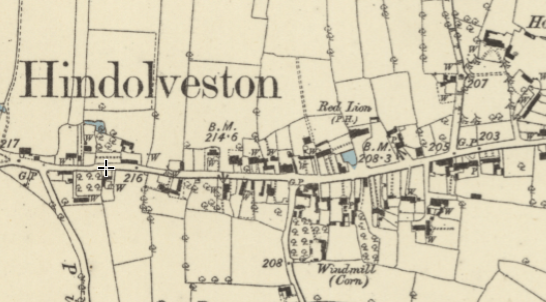
200 years ago this week in the Norwich Mercury, it was advertised that James Page and his brewery had financial troubles and so a number of pubs were put up for sale. One of them was the Red Lion in Hindolveston and the newspaper article for this venue read:
“LOT 3. A Public House, in Hindolveston, called the Red Lion, with Stable and other Out-buildings, Yard Garden, and Land belonging, containing three acres more or less, now in the occupation of Sarah Clifton widow.”
The building was purchased by the Fakenham Brewery and then later on that became part of Bullards and they operated this pub until 1963 when it was permanently closed down. I’m not sure when Bullards took over, but in 1871 there was an auction of 13 pubs and this was one of them, so it might have been then. One of the problems that so many country pubs have today is that their land has been reduced down, which stops them either renting land out, using it as a campsite or maybe constructing buildings which might help them finance their operations. I imagine that the three acres that this pub had in 1826 was sold off longer before the pub closed.
And this is it today, what is now a private rental property known as Carwood House. The frontage hasn’t much changed from when it was a pub, with an old photo visible at https://www.norfolkpubs.co.uk/norfolkh/hindolveston/hindorl.htm. This feels like a traditional country pub, it would be quite intriguing to see what it was like 200 years ago when it was sold…..
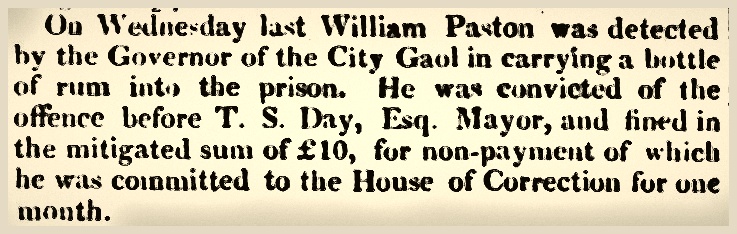
This was in the Norwich Mercury in June 1826 and that £10 is quite a fine, that’s something like £700 in today’s money and it appears that he didn’t pay it. The prison at that point was the House of Correction which closed in 1837 and is now the site of the Norwich Catholic Cathedral. The House of Correction was at the same site as the City Gaol but it was a different institution, albeit run by similar management and these were originally intended for the punishment and reform of people convicted of lesser offences such as vagrancy, disorder, petty theft, drunkenness, breach of local regulations and similar misdemeanours.
There were too many William Pastons in Norwich at this time to be able to find out more about him, but I’m guessing that he took rum in for a friend or family members. And the result of that little arrangement was that he ended up imprisoned with them.
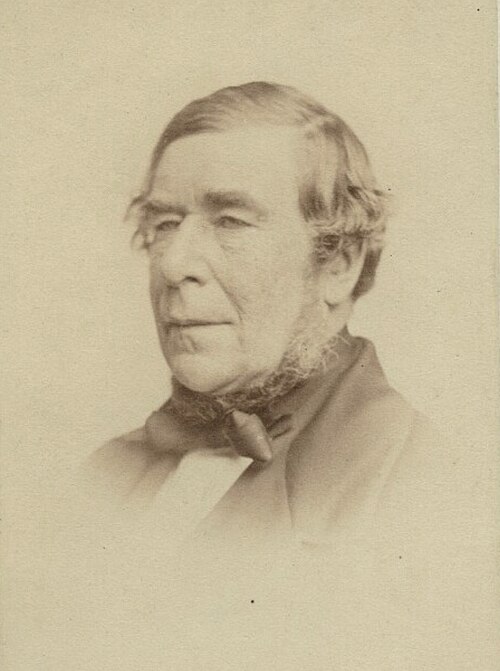
This is Jonathan Peel and 200 years ago this week he wrote to the Norwich Mercury to inform them that he intended to stand for Parliament in the constituency of Norwich.
“TO THE GENTLEMEN, CLERGY, FREEMEN, & FREEHOLDERS OF THE City and County of Norwich.
GENTLEMEN,
A most flattering and unexpected honour has been this day conferred upon me. I have received a requisition, to which names of the first respectability are attached, calling upon me to present myself at the approaching General Election as a Candidate for the high honour of representing the City of Norwich.
In the absence of all local connection, I certainly should not have presumed, without such a requisition, to aspire to that distinction; but understanding that one of your present Members has publicly notified his intention to retire from Parliament, and being assured that the public principles which I avow are in unison with those maintained by a very large portion of the body which I have now the honour to address, I will not hesitate in gratifying to my feelings, and made to me in a manner which acquits me, I trust, of the charge of presumptously offering myself to your notice.
As I shall solicit your suffrages on the ground of public principles alone, you will justly expect from me an explicit declaration of those principles.
I know not, Gentlemen, in what terms I can better describe my general opinions upon political subjects than by the simple assurance, that I am a true friend to the Constitution in Church and State.
I was taught, from my earliest infancy, to venerate those ancient institutions which constitute the Government of the Country in which we live—I was educated in those sentiments, and experience and reflection have only served to confirm the impressions which were first received from example and authority. My voice shall be given, if I shall ever have a right to raise that voice in Parliament, for the maintenance in matters of Government, of that order of things which I find established.
I am opposed to Reform in Parliament. And in what is usually called Catholic Emancipation I feel it my duty to offer a firm and decided opposition, unmingled however with any feeling of rancour or hostility towards those of our fellow subjects more immediately interested in that question.
I have probably said enough to explain to you the general tenor of my political principles. If you should think me worthy of the distinction which I seek, I promise an unwavering attention to every thing connected with the local and peculiar concerns of the City of Norwich, with the promotion of its Manufacturing Interests, and the advancement of its general welfare.
I have the honour to be,
Gentlemen,
Your obedient humble Servant, JONATHAN PEEL. Marble Hill, Twickenham, 4th May, 1826.”
Jonathan was the younger brother of the Prime Minister, Robert Peel, which probably helped matters somewhat in terms of being found a constituency in which to stand. He had no links to Norwich though and he was against reform and Catholic emancipation so he was hardly the most radical of candidates. This didn’t stop the electors of Norwich voting him in, although the constituency had two MPs at the time and the other elected was William Smith who was a Radical and who wanted abolition and Parliamentary reform. I note his polite words, and still today it is more dignified to say “I have been asked to serve” than “I rather fancy becoming an MP”.
Jonathan, if I might call him that, lost the Norwich constituency in 1830, although he then moved to be the MP for Huntingdon between 1831 and 1868, later serving as the Secretary of State for War on two occasions. It all goes to show that actually being local was less important to electors back before the Great Reform Act, although it’s fair to say that there was a lot more corruption and backhanders going on back then compared to today (well, in theory anyway).
200 years ago this week in the Theatre Royal Norwich there was a performance of the play Paul Pry on 20 May 1826. The theatre had reopened in late March 1826, so this performance advertised in the Norwich Mercury would have been one of the first in the new shiny building.
Paul Pry was a comedy that had become the theatrical sensation of the decade, so it’s not a surprising choice that Norwich Theatre Royal made to put it on. The play, written by John Poole and first performed in 1825, had become something of a public obsession, like an early day Inbetweeners. Well, maybe not quite like that and more like Ever Decreasing Circles, but the catchphrase “I hope I don’t intrude” became a popular refrain that lingered in the national vocabulary for some time. By the time this play was put on the audience knew at least what they were getting.
The character of Paul Pry is fundamentally unlikeable and a man without boundaries or self-awareness. For this performance, the provincial theatre here in Norwich was nicely on-trend, the cultural excitement had moved fast in the days before the railways had reached the city. There’s a pub called Paul Pry in Rayleigh in Essex which is a reminder of this piece of cultural excitement, although it’s operated by Greene King so I won’t add anything further on that. I can’t see that the play is performed any more, but perhaps there’s a need for a comeback at some point….