Tag: Wisbech

  • Wisbech – High Street Urban Renewal

    Wisbech – High Street Urban Renewal

    [I originally posted this in July 2018, but have reposted it to fix the broken image links]

    20180721_144501

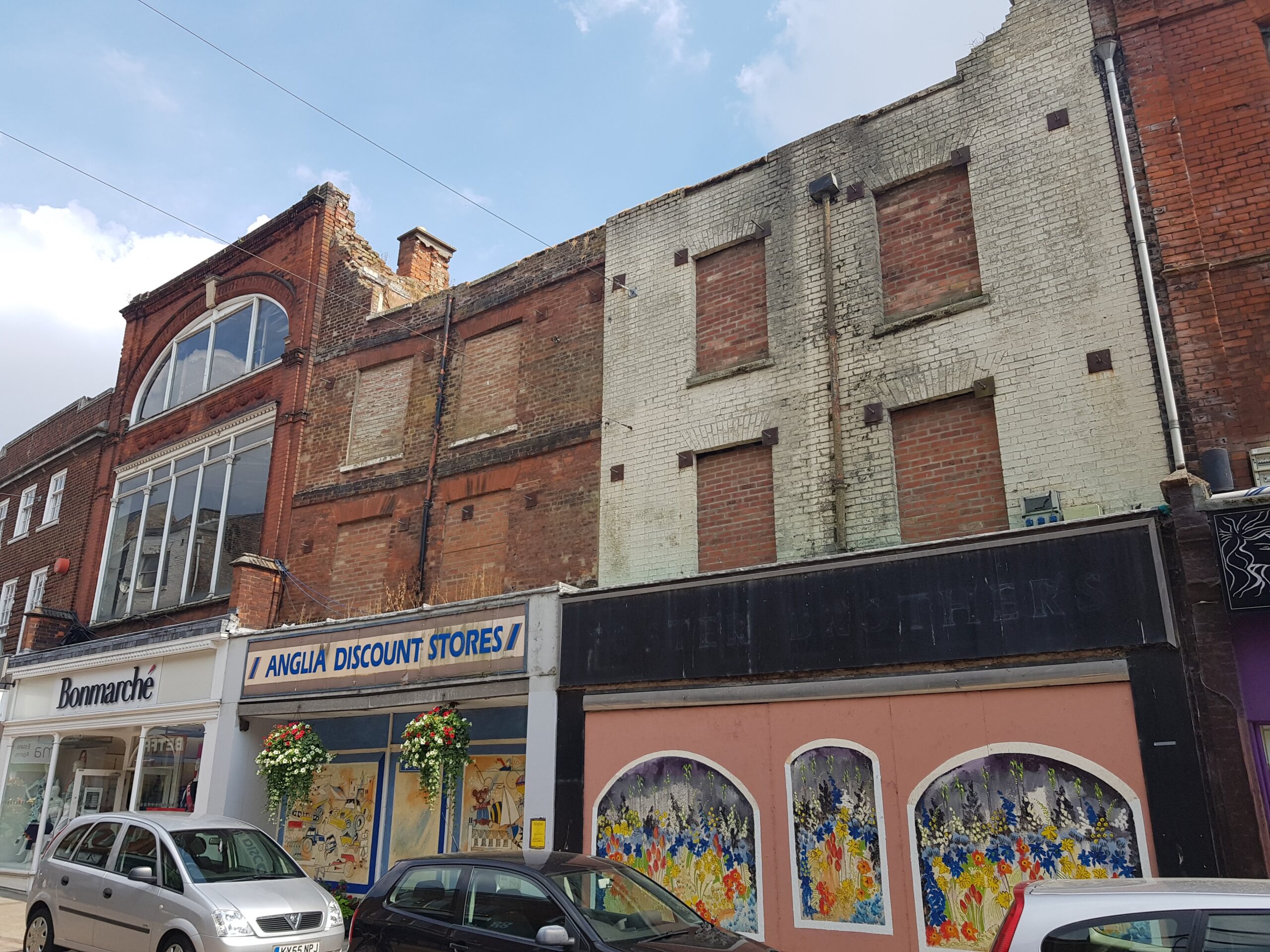
    It’s the first time that I’ve visited Wisbech for very many years, and some of the High Street is perhaps in need of some attention. Indeed, without that attention, there’s a risk bits of it might fall down.

    There has been some funding provided to the town to develop a strategy to restore some of the buildings on the High Street and also to appoint a Townscape Heritage Officer. The above signage notes that they’re not trying to do too much, primarily limited by the level of funding that they have.

    20180721_144508

    20180721_144506

    For buildings so close to the town’s central market, I was surprised to see these in such a poor state of repair. If the project to restore the High Street is successful, hopefully these can be restored and brought back into use for housing or retail.

    The ideal has to be that Wisbech becomes a town that is wealthy enough to support two Greggs. Then they’ll know that they’ve made it.

  • Wisbech – Dann’s Clock

    Wisbech – Dann’s Clock

    [I originally posted this in July 2018 and have reposted it to fix the broken image links]

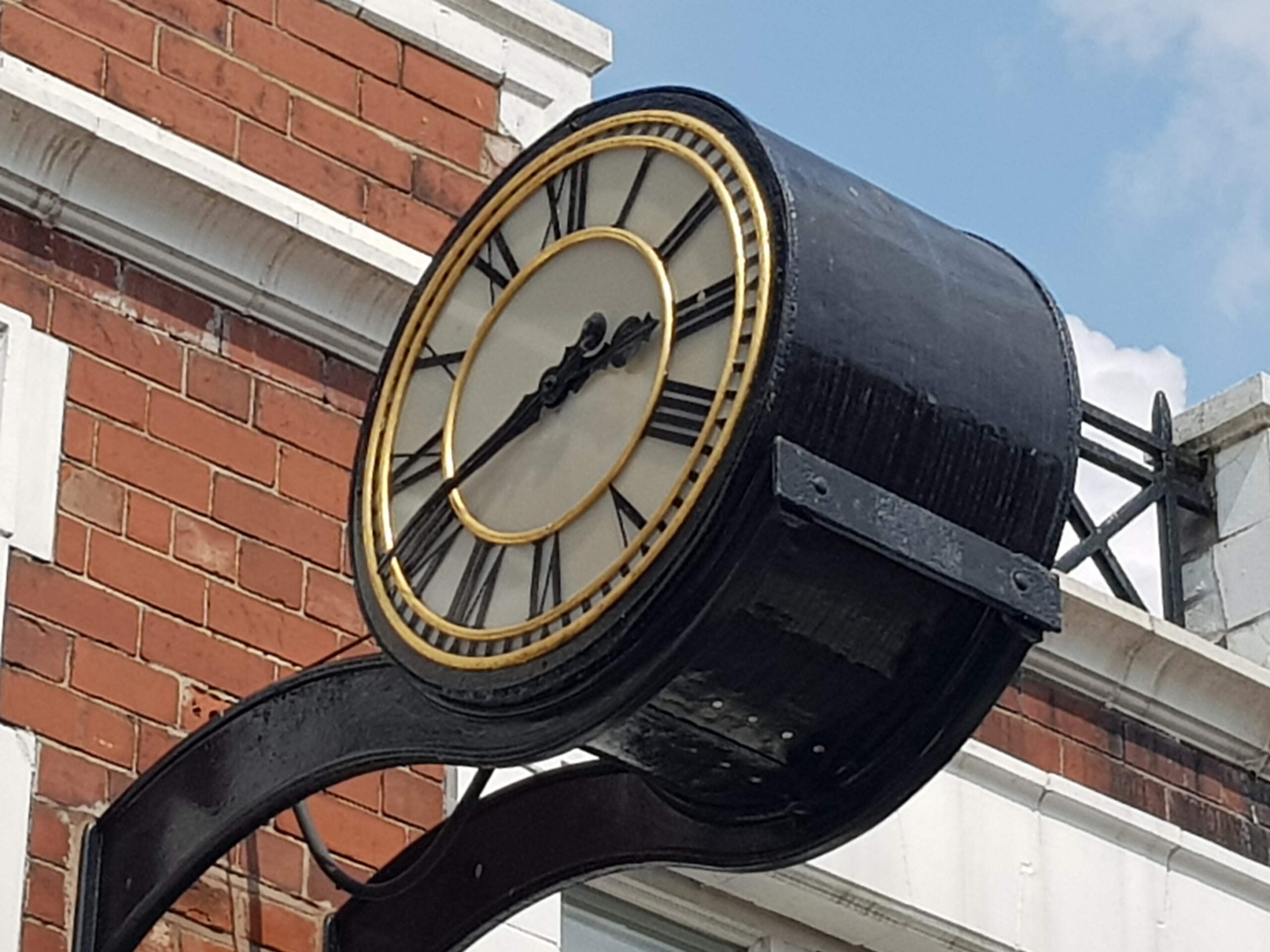
    20180721_144419

    The full story of Dann’s clock is far better told at http://www.wisbech-society.co.uk/bridge-street-clock.html and it’s an interesting story of how a piece of Wisbech’s history was so nearly lost. It was originally erected in the 1860s as a public service for those who didn’t have their own watch (or smartphone).

    It took its name from when James Dann owned his clock, watch-maker, optician and jeweller shop (he seems multi-talented) at 10, Bridge Street in the town. He was clearly proud of his illuminated clock as it was commented on in much of the advertising that he placed in the local media at the time.

    In 1869 the local press reported of the council meeting where the clock was discussed by the local elected representatives. The council had agreed to pay for one lamp’s worth of illuminating Mr Dann’s clock at night, because this was seen as a public service to avoid people being attacked when it was dark. Mr Dann was very pleased with this, but he discovered that his lamp was using 21,000 feet of gas (I’m entirely unclear what sort of measurement that is) and he wanted the council to pay for two lamps. I liked how the meeting reported that one alderman queried that they had paid for one, and he “didn’t know how that it was” that they now had to pay for two.

    20180721_144414

    Back in its rightful place, although if I’m being honest, I only noticed it was even there because of the sign on the wall. It cost over £2,000 to bring the clock back to Wisbech and that was donated by local people and businesses, and it feels like money that has been well-spent. The clock would have lost so much of its meaning in any other setting.

    20180721_144400

    The sign on the wall which brought my attention to the clock. I like reading signs relating to history, especially lengthy ones like this.

  • Wisbech – Wisbech Park

    Wisbech – Wisbech Park

    [I originally posted this in July 2018, but have reposted it to fix the broken image links]

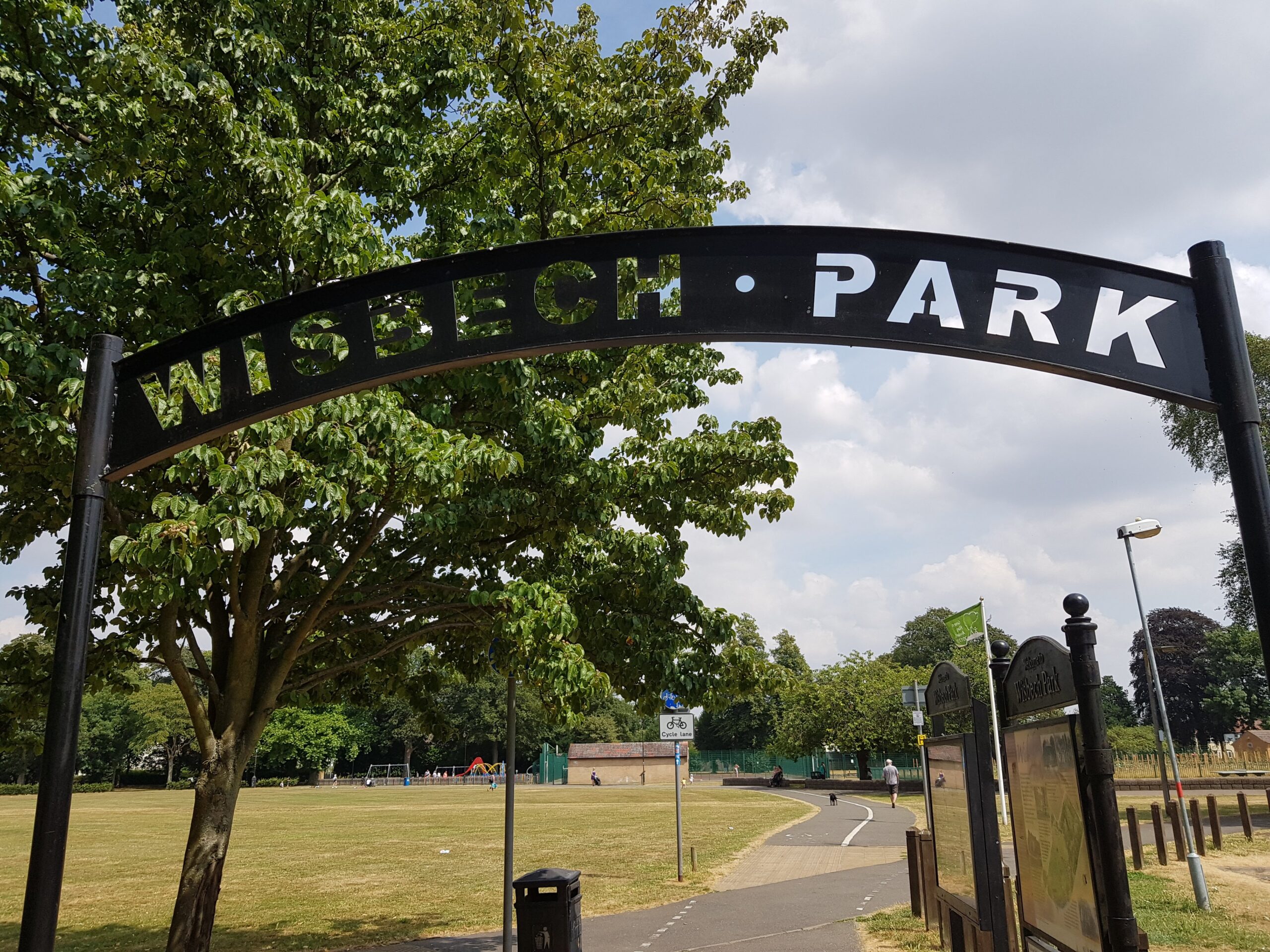
    20180721_140736

    The land on which the town’s main park now resides was originally owned by the Church Commissioners, who rented it for grazing and market gardening. I know this as the council has helpfully placed signs up around the park giving a history of the site.

    The park opened in 1869 and the Town Corporation purchased the land at a cost of £2,000. This thrilled the local population who had to pay a penny on their rates for thirty years to fund the purchase, and over 100 ratepayers complained about the cost.

    20180721_142115

    There was apparently a bowling green here, before they planted a grass maze on it. Note the size of the park is nineteen acres, but seemingly they couldn’t think where to put a grass maze other than on a bowling green. Bored by that idea, they’ve now turned the area into an orchard. The aim is that residents can wander through the apple trees and pick themselves an apple. It’s a shame Greggs can’t do something similar with chicken bakes…

    20180721_142114

    Further information about the apple project.

    20180721_142514

    This is the Richard Young memorial, which is at the northern end of the park. He was a Member of Parliament for Cambridgeshire between 1865 and 1868, and he was also the Mayor of the town from 1858 until 1863. Hansard reports that Richard Young made one verbal contribution during his time in the House of Commons. This is the report of his comments:

    “Richard Young, who had returned to the House, said, he had thought his presence unnecessary”.

    It’s not exactly Disraeli is it?

    20180721_142539

    Here’s the inscription on the memorial.

    20180721_142507

    The bandstand was opened in 1908 at a cost of just under £100. It was restored in 2017 at a cost of over £60,000, which sounds rather expensive to me, but some was spent on a new thief-proof roof. I’m not sure that anyone had pinched the previous one though.

    20180721_140924

    A view over the park.

    20180721_142717

    20180721_142713

    The sign notes that this area of the park was “a magnet for anti-social behaviour”, so work was completed by volunteers (and some perhaps slightly less than volunteering members of the community payback scheme) and it is a much nicer area now. They’ve also created an “insect hotel” which I hope doesn’t encourage any snakes to move in.

  • Wisbech – Wisbech and Fenland Museum

    Wisbech – Wisbech and Fenland Museum

    [I originally posted this in July 2018, but have reposted it to fix the broken image links]

    20180721_131118

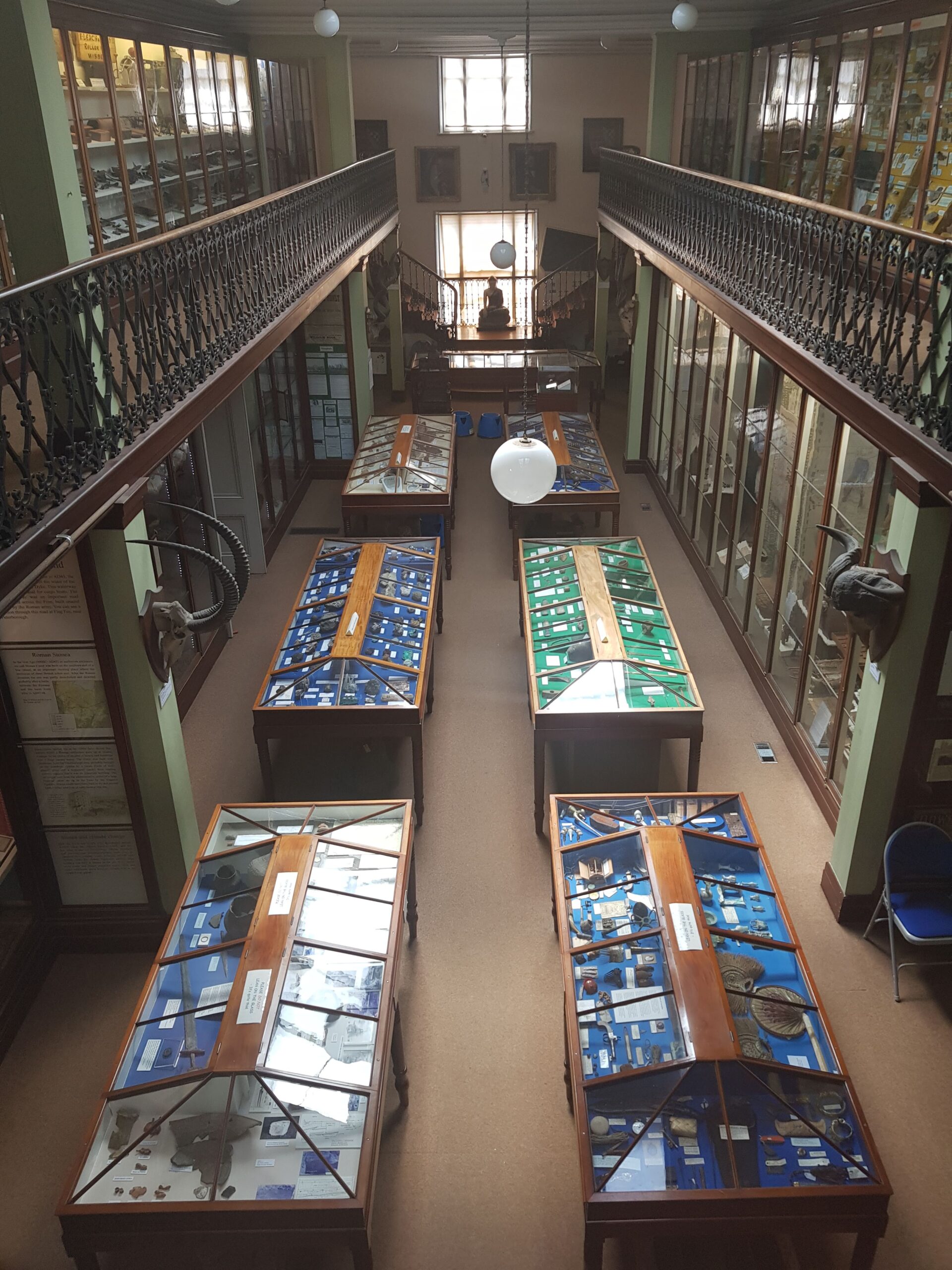
    This museum claims that they believe this is one of the oldest museums in the country which is still located within its original purpose-built building, and the Wisbech and Fenland Museum opened in 1847. Indeed, the museum seems overly large for the size of the town and it’s no doubt a testament to the volunteers that it has survived for over a century and a half.

    20180721_131311

    The museum was first founded in 1835 when 31 members of the local community came together to form a literary and antiquary society. It now has over 50,000 items in its collections, although I’m not entirely sure where they store them all.

    20180721_132227

    In an age where museums seem too willing to dispose of items, I was glad to read that the museum says “we do not have the resources to carry out a rationalisation project and consequently it is not a priority”. So, nothing will be flogged off. Sometimes having insufficient money can be for the best.

    20180721_132350

    There is an entrance room, which has a small shop, and then there is a room with various items of porcelain, postcards and information about different aspects of the history of the town. This room was formerly the museum’s lecture room, and then there is the two storey main gallery which has the bulk of the items on display. This is rather a tight space, but it feels authentic and they do fit a lot into the area. There must also be a library in the building, although I believe that this was closed on the day of my visit.

    What is left is a very Victorian feeling museum which offers a friendly welcome and a rather eclectic range of exhibits. Unfortunately, what I consider to be one of their most interesting exhibits, which is the original text of Great Expectations, wasn’t on display on the Saturday when I visited. The museum had been given the manuscript in 1868 by Reverend Chauncy Hare Townshend, a friend of Dickens.

    I mentioned above that it is fortunate that the museum isn’t currently to dispose of items. It hasn’t always been so though, as the museum trustees tried to flog off their most precious asset, the Dickens manuscript, in 1947. It results in an inquiry from the Charity Commissioners which the trustees tried to ignore, despite being told not to sell it. The will donating the item to the museum specifically said that the trustees couldn’t sell it, and it’s not clear why they ultimately didn’t, perhaps the legalities proved too much to bear. The sale would have raised around £10,000, but fortunately the trustees didn’t prevail in their plans.

    20180721_131452

    I’m sad to say that I hadn’t previously heard of Thomas Clarkson, who is another important part of the museum. Clarkson was an anti-slave campaigner who lived from 1760 until 1846 and he was a student of Wisbech Grammar School. The museum tells the story of Clarkson’s endeavours, including how he spoke to 20,000 sailors and travelled 35,000 miles to find out more about the slave trade.

    20180721_131602

    William Wilberforce is the much better known historical figure who fought against slavery, and there’s a fascinating museum dedicated to his life in Hull. However, the museum explains that it was Clarkson who provided Wilberforce with details and facts about the slave trade which became crucial to his speeches.

    20180721_132134

    A carved oak chair from the 1870s, sculpted by Marshall George Strapps. He took up carving when working as a toll-keeper, and later in his life he collected tolls on the town’s Leverington Road. He is also buried in the town, at Leverington Road Cemetery.

    20180721_132045

    My favourite exhibit in the museum was the 1657 manuscript map of Wisbech Hundred. The museum explains that the land had recently been carved up now that it was newly drained, and this map records that.

    20180721_132634

    Also in the museum is a collection of birds, or what Dylan would call “dead animals” (actually I think I called it that, but he’s used the term many times since). It’s a rather Victorian style of displaying wildlife, but now it has been created it would seem wrong to destroy it.

    20180721_131947

    20180721_131814

    Every provincial museum should have items which visitors can relate to, and this museum didn’t let me down. Lots of household items, although I’m obviously too young to remember any of them.

    20180721_132332

    Some bottles from Elgood’s Brewery, which is a local business which first opened in 1795, and is still based on the town.

    20180721_132007

    When Cadbury’s made proper chocolate….

    20180721_132544

    There is also a collection of coins, which is quite an interesting little exhibit, although they only had a limited amount of space to display them. They have numerous Roman and Greek coins, most of which have been found in the local area.

    20180721_131225

    Overall, I thought that this was a delightful little museum and it’s marvellous that it has survived for so long. There is no entrance charge, although donations are gratefully received, and there are numerous events which are put on by the museum.

  • Wisbech – Clarkson Memorial

    Wisbech – Clarkson Memorial

    [I originally posted this in July 2018, but have reposted it to fix some broken image links]

    20180721_144314

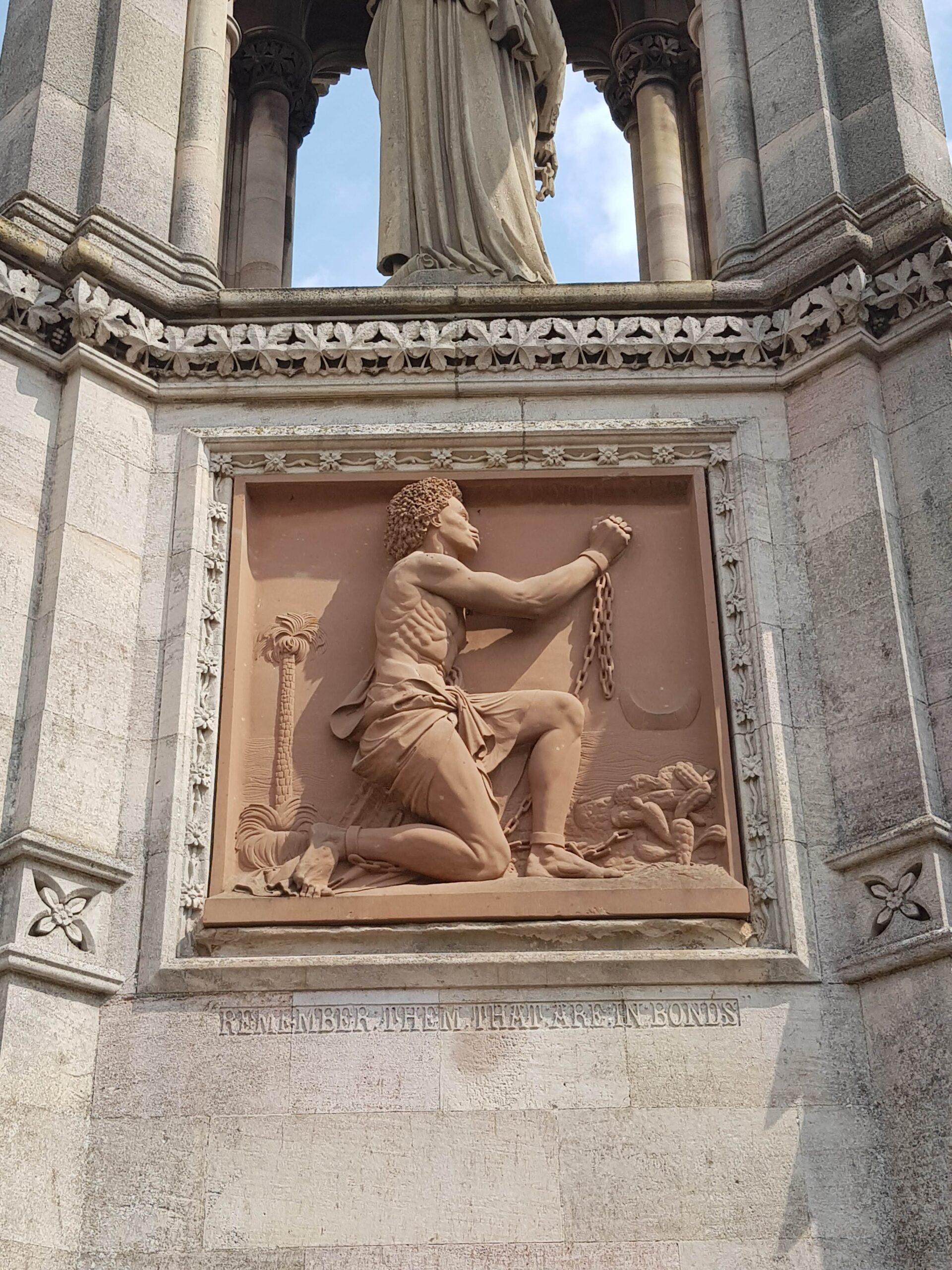
    The Clarkson Memorial was erected in 1881 to mark the life of Thomas Clarkson, the anti-slavery campaigner. There is more about his life in the town’s museum, which is well worth visiting.

    The memorial was designed by Sir George Gilbert Scott, the same man who mauled about so many British churches. I hadn’t realised that his talents extended to this sort of work, but it’s a visually interesting reminder of Clarkson and it’s in a prominent position. The site on which the memorial was placed was formerly the town’s Customs House, and before that it had been Wisbech’s Butter Market.

    20180721_144317

    There were some youngsters who had congregated at the base of the memorial to listen to loud music and shout, which made taking photos rather more difficult. I think they thought I was taking discreet photos of them, which added to the excitement about the whole event.

    20180721_143714

    There are motifs around the exterior of the statue which follow the theme of slavery, and the freedoms which that stole from so many. The memorial was funded by public subscription and from a large donation from the Peckover family, who were wealthy local residents.

  • Wisbech – Scrimshires Passage and the Wisbech Social Club & Institute

    Wisbech – Scrimshires Passage and the Wisbech Social Club & Institute

    [I originally posted this in July 2018, but have reposted it to fix some broken image links]

    20180721_143235

    I was intrigued as to what this tower was, since it dominated the skyline of the town, and it transpired it belongs to the Wisbech Social Club and Institute building.

    20180721_143250

    Much of the money to build the institute was provided by the Peckover family, and this foundation stone (which is rather hidden away) is testament to that generous donation. The institute is still going strong today and they have a history room to keep items of historic interest relating to their past.

    20180721_143229

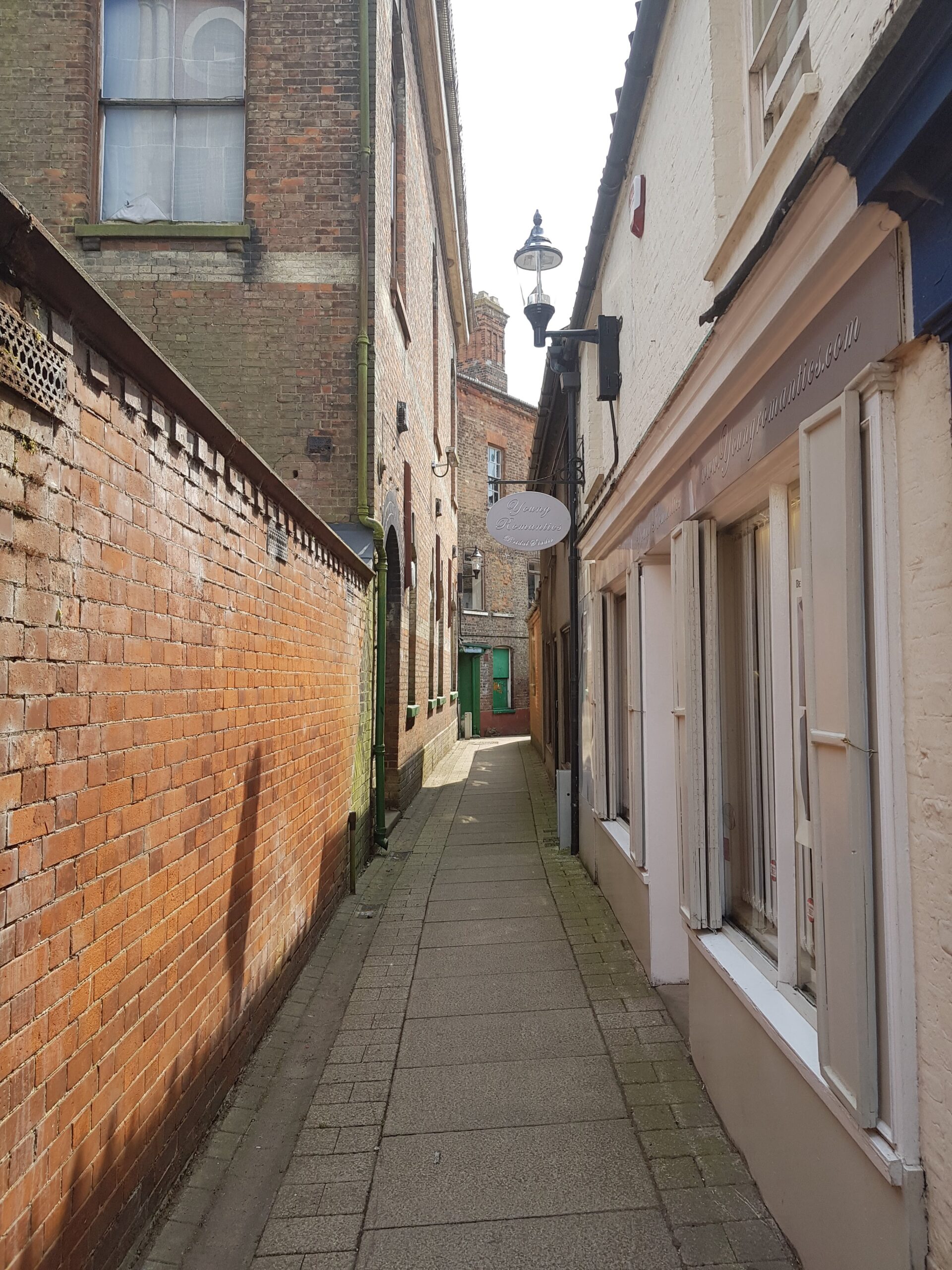
    The back of the institute is reached by walking down Scrimshires Passage, a rather dark back alley which was more reminiscent of a city such as York.

    20180721_143320

    I was reading the Cambridge Independent Press of 21 October 1854 (it’s a better read than the Daily Mail) and they reported that they wanted “to draw the attention of the proper authorities to the disgraceful state of the cesspool in Shrimshaw’s Passage (it had an apostrophe then, which it seems to have since lost). During the last few weeks it has emitted a most overpowering stench, which must prove not only detrimental to the health of the persons residing there, but to those who are compelled to go through the passage”.

    Anyway, I thought that was of marginal interest, but I particularly liked the story above it in the newspaper.

    20180721_143255

    There are different periods of architecture along the passage.

    20180721_143326

    The passage opens back out onto Nene Quay.

  • Wisbech – St. Peter and St. Paul Church (Joseph Medworth)

    Wisbech – St. Peter and St. Paul Church (Joseph Medworth)

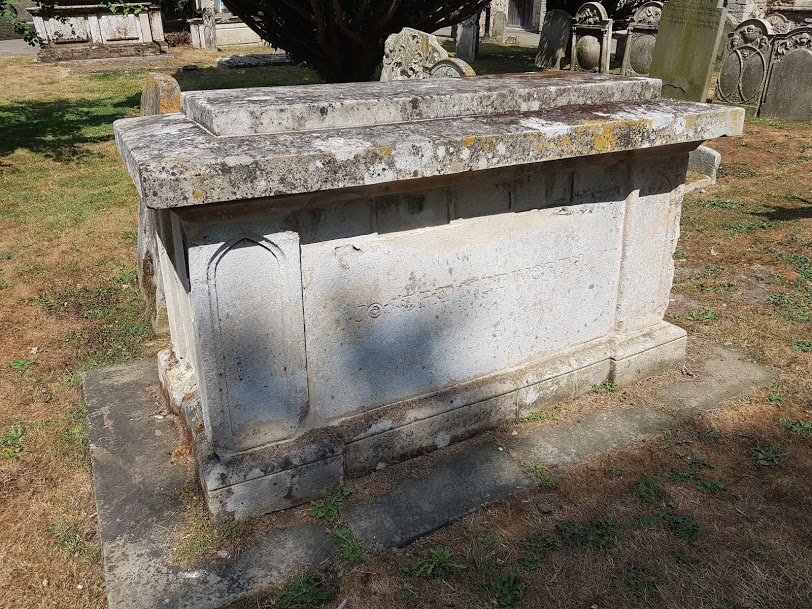
    Joseph Medworth was born in Wisbech in 1752, the son of Simon Medworth and Anna Medworth (nee Lampson). He moved to London after being educated in the town, initially becoming a bricklayer but then working his way up to becoming a master builder. Medworth made some money and he then became a bit of a property developer and he constructed some impressive buildings on the site of the former Bishop’s Palace and Wisbech Castle, although the loss of that is unfortunate. It wasn’t though always Medworth’s intention, he was going to renovate the castle building and turn it into a school, but the plans were thwarted by the local authorities. Instead, he ripped the castle down and let other parts of it fall into decay, at which point the local authorities became more sympathetic.

    I would have probably missed Medworth’s tomb if it wasn’t for the large information panel which was located nearby to it, a useful contribution. The properties which Medworth built though, such as The Crescent, Ely Place and York Row, are attractive and a town the size of Wisbech is fortunate to have such architectural delights. Medworth’s tomb is located near to the entrance of St. Peter and St. Paul Church, appropriate not just as his buildings are nearby, but because he was married in the church in 1775 and his funeral service was held here in 1827.

  • Wisbech – King John’s Treasure

    Wisbech – King John’s Treasure

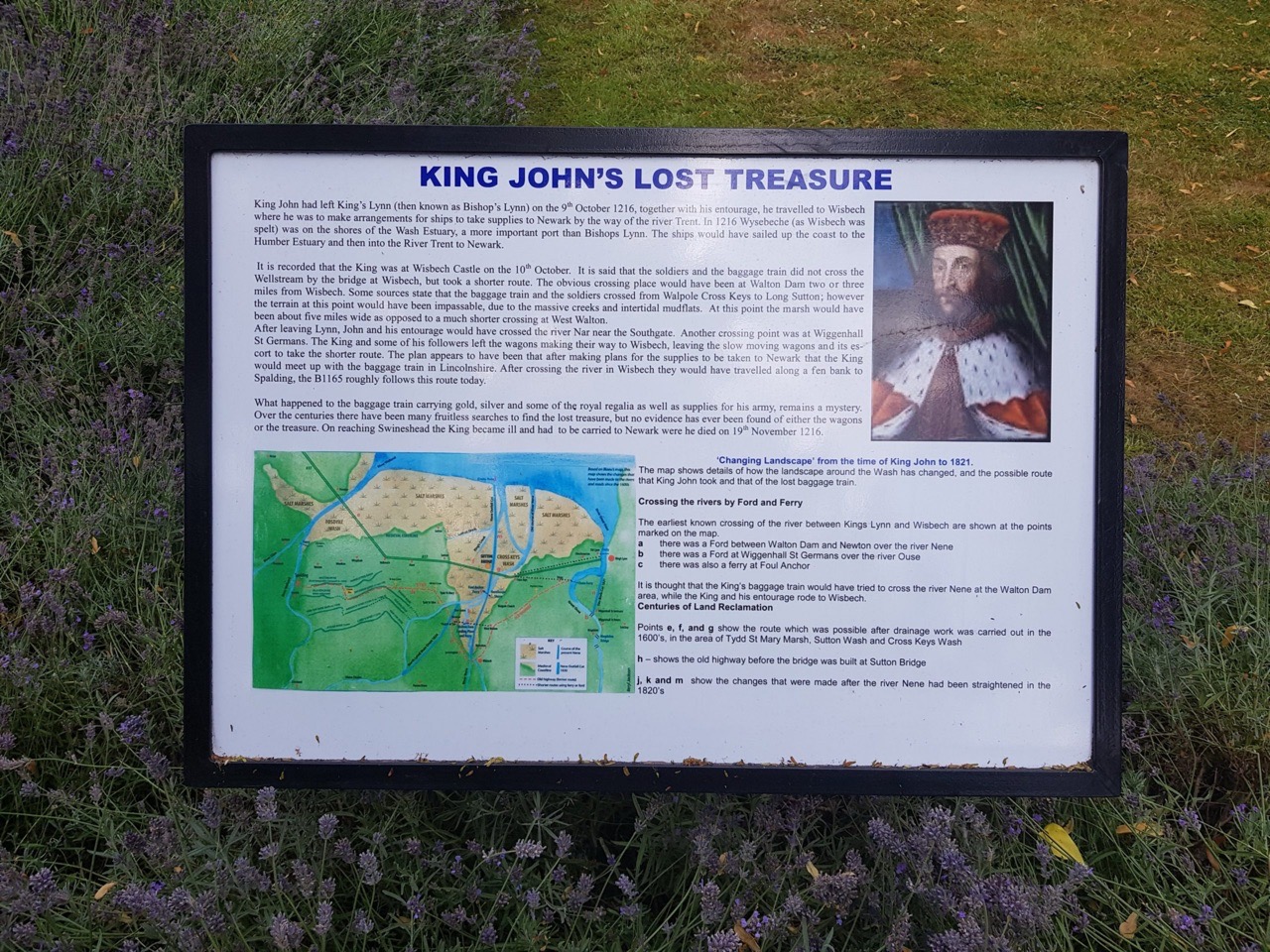
    The story of King John’s lost treasures is well known, they were allegedly lost when a baggage train led by an idiot misjudged the tides on a causeway. They’re relevant to Wisbech as this is where the King was staying whilst travelling from Spalding to King’s Lynn (albeit then Bishop’s Lynn) and I can imagine his irritation when it was discovered that his head of transportation had lost the Crown Jewels in The Wash.

    The reality is perhaps less exciting as the thought that these treasures may one day be found. It seems that numerous experts have claimed that most of King John’s treasures still existed after the date that they were meant to be lost, with the only true element about being the story being that some idiot sank most of the King’s baggage train. But, from experience of walk leading, it’s never easy to judge tides and I suppose that they couldn’t quickly Google them.

    There is more evidence that King John did lose a crown during this little debacle, although the chances of finding this seem remote now. But, that hasn’t stopped numerous people continuing to hunt for the treasures and the media has been littered with stories over the last few decades about some new project to find them. In 1906, a local and important antiquarian, William St John Hope, had spent hours establishing the tides which would have existed at Sutton Bridge at the time of King John and he was confident of finding the treasures and suggested digging shafts to begin that work. He, obviously, never found anything of note.

    Perhaps the finding of the lost Crown, and whatever associated treasures there are, might be a sign of something quite substantial. Like the advent of a new Monarch, a change in the future of the United Kingdom of Great Britain and Northern Ireland, or perhaps just the opening of a new Greggs in Sutton Bridge.

  • Wisbech – St. Peter and St. Paul Church

    Wisbech – St. Peter and St. Paul Church

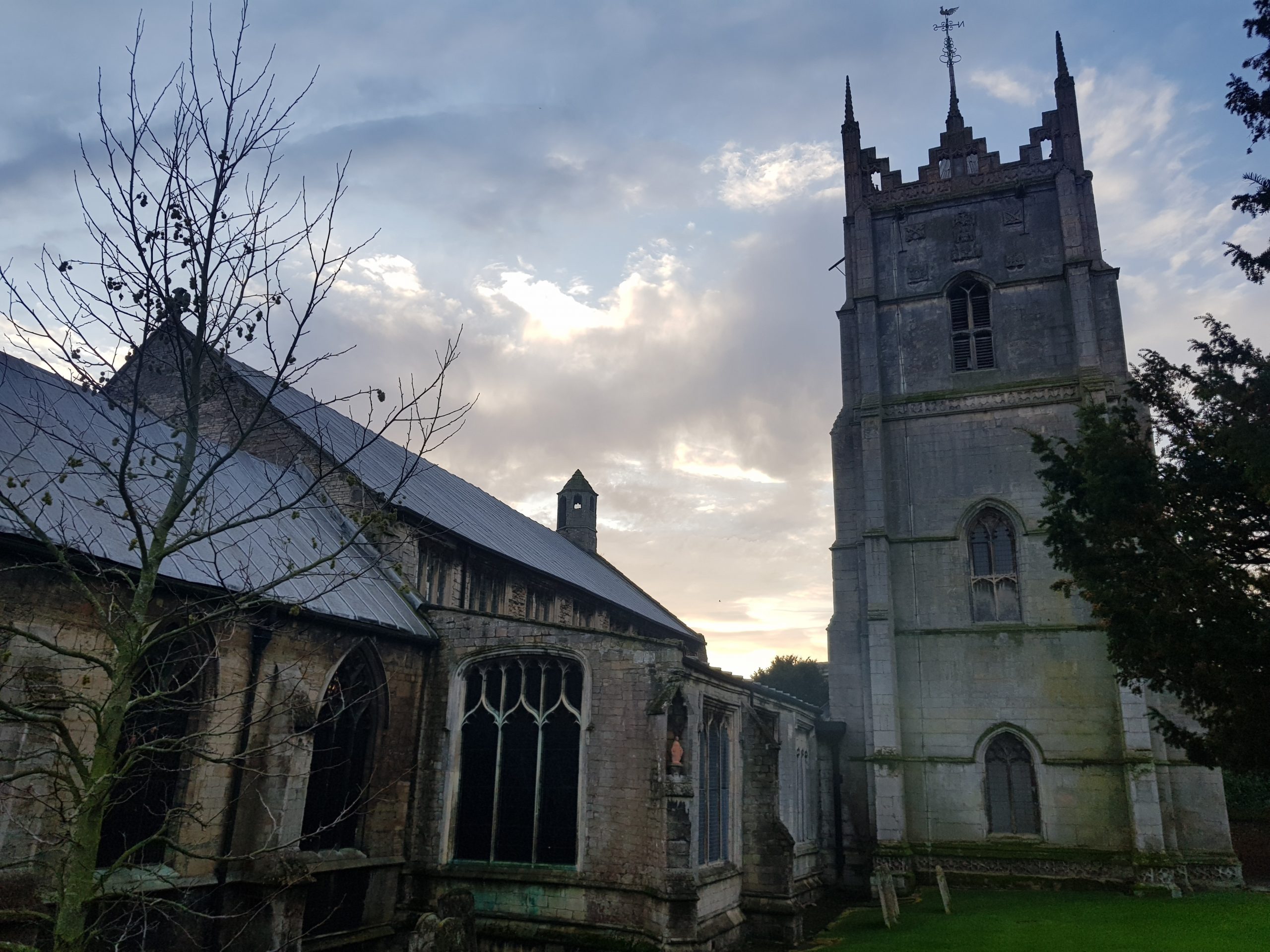
    This church dates back to the twelfth century, it’s thought around 1187, although there was a Saxon religious building at the same site which it replaced. Much of the current building is from the fourteenth century when the nave was enlarged and the chancel increased in size. Concerningly, the church has found itself on the Heritage at Risk register, but, fortunately, a National Lottery Heritage Fund project development grant has been made available to help to resolve the problems.

    The church tower dates from around 1525 and is separate from the main part of the building, fears of unstable ground dictated its placement.

    I like irregularities in church buildings, it helps to tell the story of how the structure has changed over the centuries, with some of this relating to the rebuilding of the chancel. The complications of the church continued when there was a little incident and the original tower fell down in around 1450. The structure of the church is confusing, as the central nave is narrower than the north aisle and there are two south aisles due to the positioning of the tower.

    The nave.

    The chancel, looking towards the altar, this is one of the most logical parts of the building in terms of its design.

    The marble pulpit, a relatively new addition which was placed here in 1904.

    The font, which dates to the fourteenth century.

  • Wisbech – Wheatsheaf Inn

    Wisbech – Wheatsheaf Inn

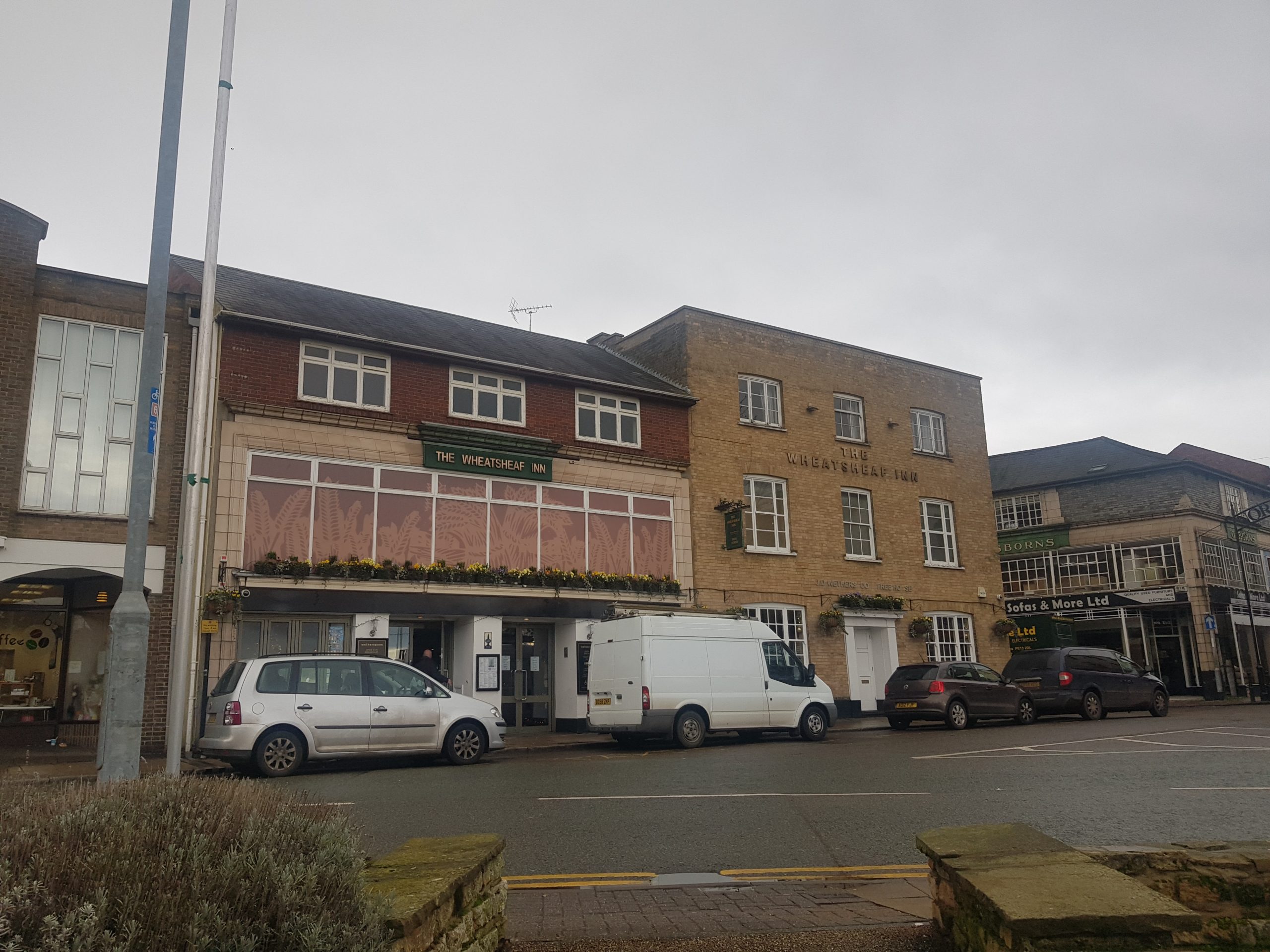
    The frontage of this building isn’t the most inspirational, but it houses a relatively large JD Wetherspoon outlet, probably the busiest pub in the town. The frontage used to have large advertising boards up, which I thought made the building look better than the new decoration of wheat sheafs, although I can’t deny that this is an appropriate image.

    The history of the building is told by Wetherspoons:

    “This pub comprises a former furniture and decorating store and the old Royal public house. Before 1869, The Royal was called The Wheatsheaf, recorded at this address since 1792.”

    CAMRA’s Whatpub tells an interesting story….Very cheery.

    “Murderers were once gibbeted on a close by common and it is said that the last man to be hanged in Wisbech ate his last meal in the pub. Said to be haunted.”

    Most of the stories I’ve found about this pub are sad, with the Huntingdon, Bedford & Peterborough Gazette reporting in August 1836 that the three-year old son of a poor man, working as a journeyman tailor, ran out into the road outside the pub and was killed after being hit by the shaft of a loaded waggon.

    The beer choice wasn’t fabulous, despite the pub offering seven different ales, with nothing particularly intriguing. I went for this, which was well kept and tasted fine. I couldn’t work out what tastes the beer had, likely because my palate isn’t quite sophisticated enough, but other reviewers tasted biscuit, breadcrust, berries, caramel and coffee. I got none of those, but the beer didn’t have an unpleasant or dull taste.

    The pub itself is largely open plan on a single floor, nothing inspirational, but perfectly functional.

    Reviews are broadly positive, although the recent poster on TripAdvisor didn’t seem to be a huge fan of the pub:

    “Vile. Absolutely disgusting, smackheads hitting up in toliets, feces all over walls staff not washing hands really would not recommend”

    There’s something about this which suggests to me that the reviewer wasn’t allowed in and decided to post angrily, but who knows….

    The review:

    “Food was cold staff rude all area place dirty tables asked for coke with no ice when it came with ice when I mentioned it she picked it out with her hands would avoid this place again”

    Isn’t great. I’m not sure the poorly presented response of “thank you for your comments” from the pub helps much either, it looks like someone from the pub has been responding on a phone as the other responses from management are littered with spelling and punctuation errors. My favourite are responses from Wetherspoon pub managers where the reply to grumpy customers is terse and passive aggressive, I have lots of respect for those.

    Anyway, I got distracted with being far too concerned about spelling mistakes from two years ago. It’s also hard to complain about a pub with a pint of beer which costs £2.09, and indeed, £1.59 with a CAMRA 50p off voucher.