Tag: Warsaw

  • Warsaw – Tram Seat Pattern

    Warsaw – Tram Seat Pattern

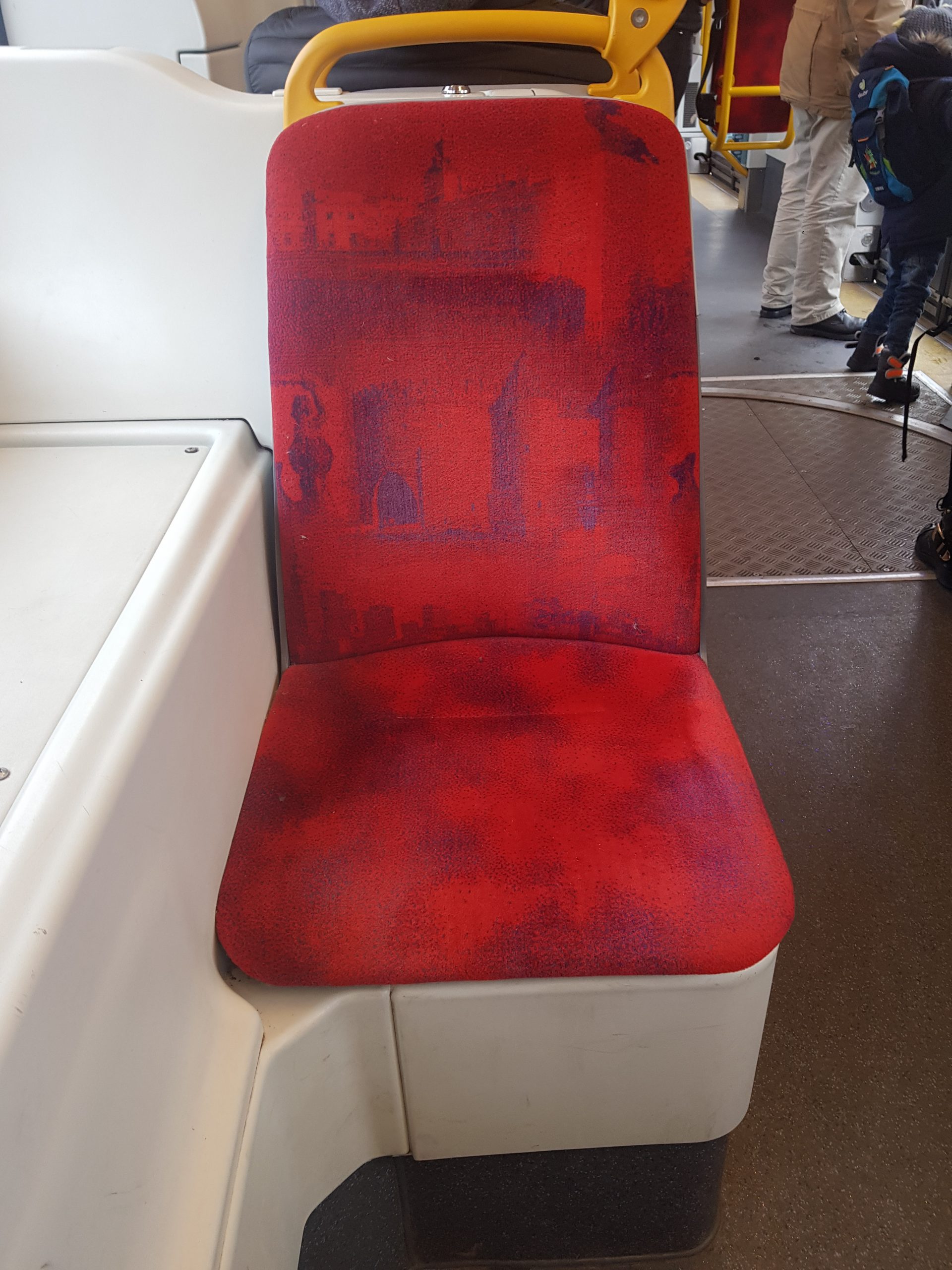
    It’s taken me several tram journeys to notice the pattern on the tram seats, scenes of historic Warsaw landmarks. Very nice.

  • Warsaw – Artezan

    Warsaw – Artezan

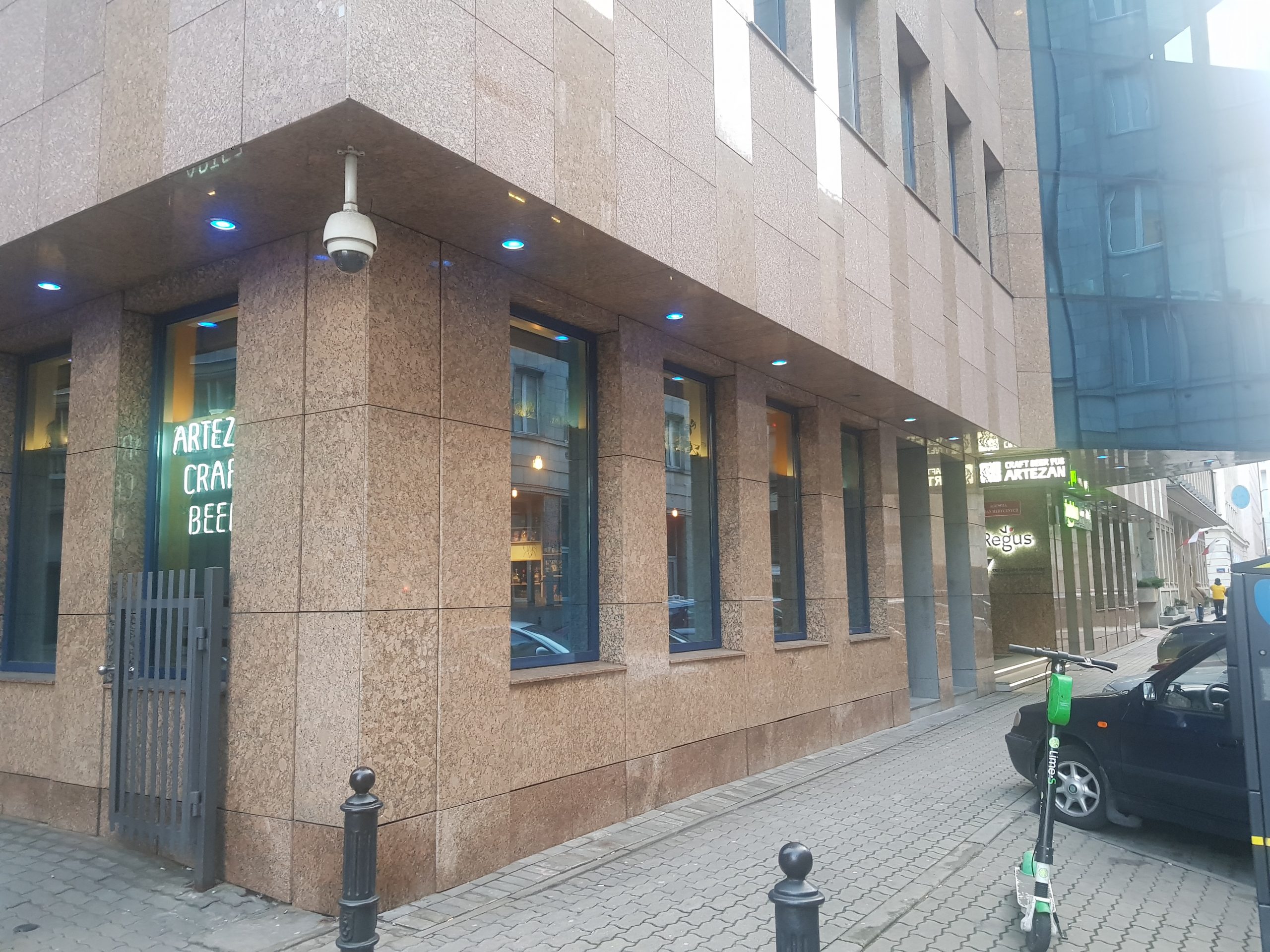
    Located in what is becoming the craft beer sector of Warsaw, this is a well reviewed bar which specialises in, well, craft beer. It wasn’t very busy when I went in, by which I mean that I was the first customer of the day. The member of staff was outside when I went in, I suspect he was slightly surprised to see a customer on a Sunday afternoon, but nonetheless he was friendly and helpful throughout.

    The range of beers, clearly displayed on a board behind the bar. I was pleased to see a couple of dark options, but the choice was wide and most beer styles were represented on the board. There were also bottles for those who weren’t satisfied and delighted with the options from the tap.

    The ‘One of Each’ from Browar Artezan, one of the beers which the bar makes themselves. Expensive by Polish standards, starting with an imperial stout is always a brave decision, but a strong burst of flavour seemed a sensible idea to me after visiting the Warsaw Uprising Museum. The beer was at the appropriate temperature and had a richness and depth of flavour, although it seemed limited to a quite chocolate flavour and not much else in terms of additional aftertastes. Still, it was refreshing, although ideally it needed just a little something else. I like a bit of subtlety.

    Another customer did come in whilst I was in the bar, which was spotlessly clean and organised. It apparently gets busy on weekend evenings and it’s the sort of contemporary style environment that I like. All very lovely.

  • Warsaw – Warsaw Uprising Museum

    Warsaw – Warsaw Uprising Museum

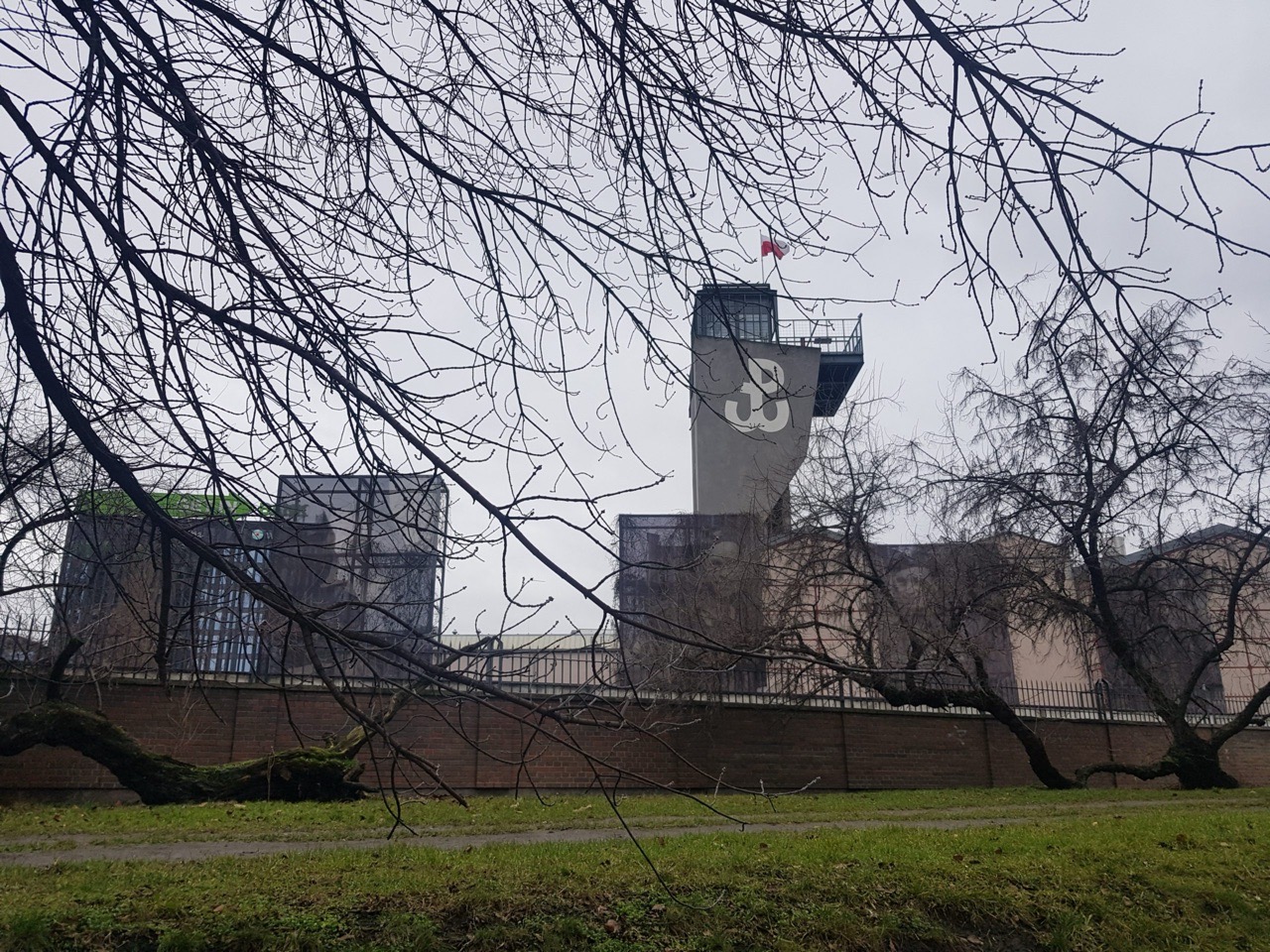
    I visited this museum before and I think it’s the first historic attraction that I went to in Poland. Here we are, several hundred Polish historical experiences and several years later, and I thought it’d be good to pop back to the museum. It was free entrance today, being Sunday, so I knew it’d be busy, but that also saved me 25zl (around £5). I went to collect my free ticket from the cash desk and there was a short queue, but it only took around 30 seconds to get my ticket. The staff member was friendly, although I imagine he got fed up with issuing bits of paper to people all day for free.

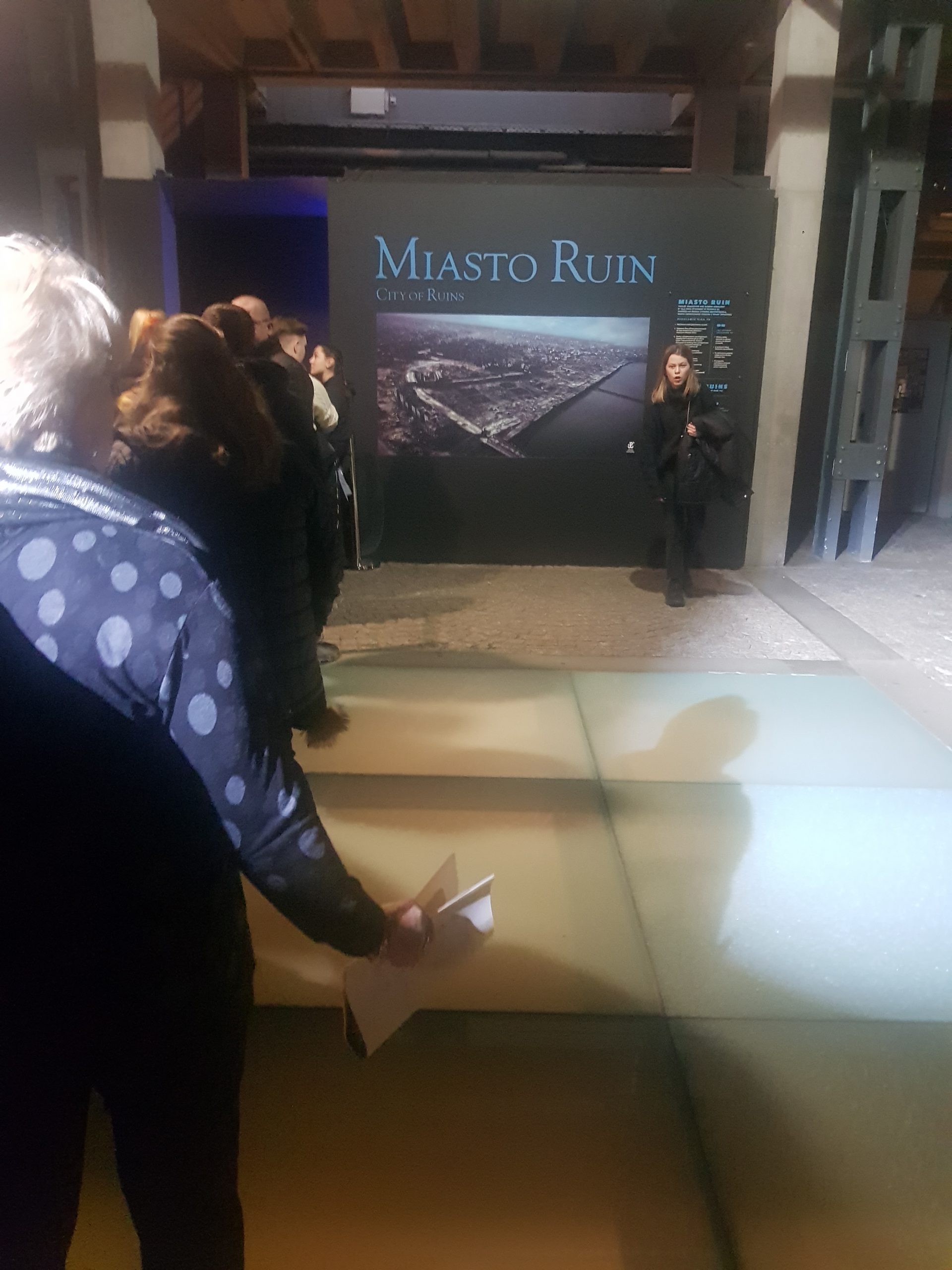
    I’ve also posted about the City of Ruins video and the Printing Press separately.

    This was the exhibit which I found the most though-provoking, a simple city telephone directory. By the end of the Second World War, there were only around 1,000 people living in the central part of Warsaw, out of the over 1 million who lived there before the war had started.

    The replica of the Liberator aircraft I mentioned in the City of Ruins post.

    There’s a large cinema screen in the museum, and there are smaller set-ups as well. This part of the museum is quite open plan and there’s lots of space, other parts are more hemmed in and cramped. At the base of the cinema screen there’s an underground exhibit, which it’s probably easy to miss for those not paying attention.

    On the large screen there was footage of the Warsaw Uprising, amazingly some of the film made by Poles was saved and was able to be made into a video. The Soviets apparently managed to lose, no doubt deliberately, the footage in 1946, but other copies were found.

    A recreation of the city’s sewer network, which is how members of the Warsaw Uprising were able to move about parts of the city. The recreation is dark, I used a flash to get this photo.

    By the time I left the museum, the queue to get in had got relatively sizeable. The brick building towards the back is the ticket desk, with the entrance to the museum area to the right of this photo. At this point there was likely around a 20 to 30 minute to get in, so I was pleased that I had arrived earlier on during the day.

    I found that the navigation around the museum was just a little confusing, I frequently found myself not entirely sure where I was going. Fortunately, nor did anyone else, so no-one really seemed to care or mind. But, I like going around the museum in vaguely the way that the curators intended. I stayed for just under two hours, but those who wanted to see everything would no doubt need longer than that.

    Overall, I really like this museum and it tells its story in a compelling manner. It was far too busy to enjoy properly though, which is no criticism of the museum, but for anyone wanting to look at the exhibits and read everything, it’s probably best to come on another day of the week which isn’t free admission Sunday. Despite the quite challenging nature of the material, the museum also seemed to engage children though and they liked collecting the bits of paper which told them what happened on each day.

  • Warsaw – Warsaw Uprising Museum (City of Ruins)

    Warsaw – Warsaw Uprising Museum (City of Ruins)

    For anyone who visits the Warsaw Uprising Museum, it’s worth hunting out the little theatre section near to the replica Liberator aircraft. The Liberator was a US military aircraft and was used in relief flights to try and assist the Poles engaged in the Warsaw Uprising. The video of the City of Ruins lasts for five minutes and it’s in 3D, with glasses provided by the staff, giving a view of the destroyed Warsaw that someone on a Liberator aircraft might have seen at the end of the Second World War.

    The video is twelve years old now, so perhaps they can now do more with effects, but it was a sobering reminder of how Warsaw looked in 1945 after it was nearly entirely destroyed by the Germans. The museum was busy when I visited, since it was free admission day, but I had a wait of only around ten minutes to see the video. They can only fit 25 people into the theatre screen at a time, so there can be a little of a wait sometimes.

    The museum director said a few years ago:

    “If you have not seen it with your own eyes, individual photos from the war will not show it. It is only by visualising the destruction of the film that you will get an idea of ​​what Warsaw really looked like right after the end of the war, and from which ruins it had to rise.”

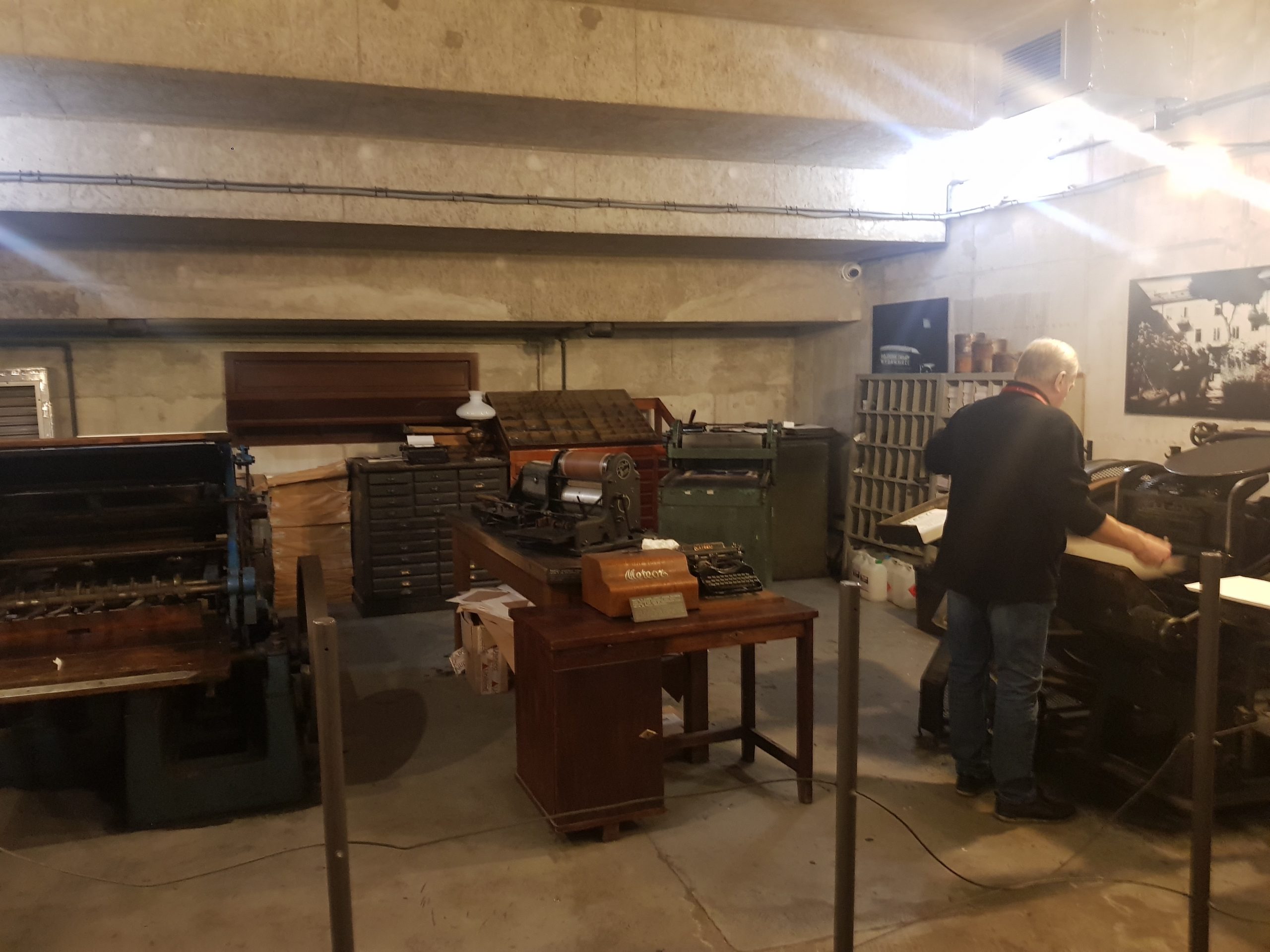
  • Warsaw – Warsaw Uprising Museum (Printing Press)

    Warsaw – Warsaw Uprising Museum (Printing Press)

    There’s a recreated printing press at the Warsaw Uprising Museum and they’ve got it going so that they can produce copies of genuine posters which were made by those courageous Poles fighting against the odds against the Germans during the Warsaw Uprising. There’s something amazing that even in a city which had been so overwhelmed that resourceful men and women could produce newspapers, posters and propaganda. It was also necessary to have a way of being able to call people to arms and to start a revolution against the occupiers.

    There were official Polish newspapers which were printed in Polish, but they were authorised by the Germans and were heavily censored. Their aim was to cause division and mistrust within the Polish community, so it was essential that this misinformation was countered by more authentic news. There were over 100 different titles produced during the war by the underground movement, which was a serious risk as the Germans would have likely killed anyone involved. And it wasn’t just the printing of this material, it was the distribution of it.

    I don’t normally take souvenirs back, but I liked this one, so I kept the poster that they gave to me from the printing press.

  • PKP Intercity : Bialystok to Warsaw

    PKP Intercity : Bialystok to Warsaw

    The entrance to Bialystok railway station.

    Standing on the footbridge over the platforms, the train on platform 3 is the one that I was boarding. There’s a story, albeit of limited interest to anyone, about that. I’m always moderately nervous about boarding the wrong train, so I was confused that there were quite a lot of people on the platform who weren’t getting on the train.

    I was confused as the yellow departures sheet suggested that there were no other trains departing, so the train that was on platform three should be the only one to get on. Not least that it also had the train number and Warsaw on it, but I pondered why not everyone was getting on it. So, I faffed around taking some photos before boarding.

    Here’s one of them. Anyway, at this stage, a shiny intercity train pulls in, seemingly quite delayed and that was the reason that people were waiting. So I decide it’s time to board the train that I’m meant to be getting on and head to my seat. There are no other passengers on the carriage other than the person sitting in the aisle seat, next to my seat and she has just that second sat down and made herself comfortable. I hate such situations, it would look ridiculous if I make her get up to let me in and then we’re the only two on the carriage for the journey. So I sit nearby, until someone hovers nearby to where I’m sitting and I guessed that I was in their seat (I wasn’t as it transpired) before then deciding I’d move to my originally allocated seat. There’s a Very British Problems post about just this sort of situation….

    Bialystok railway station, which is being heavily renovated at the moment, although they’ve still got another year to go before it’s all finished. The newly restored building looks excellent and they’re renovating stations along the railway line, so this arterial route from the city to Warsaw is likely heading for increases in passenger usage.

    Around half-way through the journey, the train stopped at Małkinia Górna railway station. I felt an urge to check Wikipedia about this station and I found out, although really should have known, that this was the connecting line to Treblinka concentration camp. If I’d thought about it in advance, I’d have got a train ticket to here and then walked to the site of the camp before getting a later train to Warsaw. There isn’t much at Treblinka, but I’ll like to see the memorial and I think there’s a small museum there.

    I had expected a compartment / corridor train, solely because that’s what the rail company used on the train to get me to Bialystok a few days before. But, it was a more traditional type of carriage, which was comfortable although lacked power and wi-fi.

    And safely back into Warszawa Centralna, exactly on time. The journey had again cost £6 and lasted for around two and a half hours. All very easy once again….

  • PKP Intercity : Warsaw to Bialystok

    PKP Intercity : Warsaw to Bialystok

    I’ve written about the train I took last week from Warsaw to Kielce, so I won’t repeat too much of the same information.

    I’ve been to Warszawa Centralna railway station many times before, although I realised that I’d never seen the waiting area. It’s not surprising on reflection, the platforms are on level -1 and the large waiting room area is on level 2, so three floors up.

    Nicely reassuring, I can see that my carriage will be at the front of the train. It’s quite a short train, with just five carriages. There are several stops en route, with the service taking just over two hours.

    Confirmation of the platform number, I do like it when they make it nice and easy.

    And here comes the train, arriving around fifteen minutes before its estimated departure time. There’s clear signage on the train where it’s going, which gives me lots of reassurance.

    Image result for very real british problems trains

    Brits at least need that reassurance….

    And it’s a compartment train (or corridor train, I’m never sure of the difference), something which I still see on mainland Europe, but they got rid of on UK trains decades ago. They seem to be on their way out in Poland though as well, all of the newer trains that I’ve seen have open carriages, so I imagine these will taken out of services over the coming years.

    I personally prefer open carriages, but there’s a slightly strange social dynamic that occurs with these compartments which is interesting. On an open train, where there is no division within the seating, I’ve never seen in Poland anyone say anything to someone in the nearby area when they leave the train. Here though, there seems to be some social etiquette of saying hello when entering the carriage and goodbye when leaving the carriage, which is of course a complete anathema to British people in terms of social engagement.

    Image result for very real british problems trains

    This is British social etiquette on trains.

    Image result for very real british problems trains

    Compartment trains also leads to this Very British Problem.

    Safely in Bialystok.

    Looking down on the train from the bridge, which terminated here (I mean the train terminated here, not the bridge). The train arrived into Bialystok on time and the entire process of boarding it and finding the seat was again very easy, almost idiot proof. The fare was £6, which was about the same as the Flixbus, which again seems rather good value for money to me.

  • Warsaw – Ibis Warszawa Stare Miasto

    Warsaw – Ibis Warszawa Stare Miasto

    This is the seventh Accor hotel in Warsaw that I’ve stayed in over the last couple of years, and the fifth this month, and it’s also the one I’ve liked the least and the only one that I wouldn’t stay at again. I posted separately about how Ibis are seemingly moving away from what I personally would like, with this hotel being the cause of that post.

    Irritatingly though, for an Ibis hotel, the breakfast, the welcome and the design of the public areas was well ahead of the curve for the brand. The public areas do have that community feel, although they need to go further, whether it’s by implementing some form of coffee shop or some form of specialism, such as my own favourite of craft beer. The first impressions for guests at this hotel is, I’d imagine, a really positive one as it’s airy, bright and contemporary in style.

    I’ve already posted that I don’t like the room, I think it looks dated, although it’s the lack of functionality that is primarily why I don’t like it. There used to be a lovely desk and chair under that window. Ibis used to be proud of that, in the booking confirmation for this stay it even mentions “a large desk”.

    Incidentally, the room does still have a door, this hasn’t been removed yet. In terms of cleanliness, it was spotless, with the bathroom feeling modern and contemporary. This also isn’t the brand standard for the new room that Accor sent to me last year, all three of their room designs had desks in, albeit not as large as I’d personally like, so I’m not sure why at this stage they’ve changed.

    The room’s climbing frame and play area. As an aside, the bed was very comfortable. Although since there’s no chair now, I suppose it has to be.

    Just as my opinion, this is a really poor design, I’m conscious that a couple of airport lounges introduced these, then had to take them back out again. Anyone with an adapter, so the USA, the UK, much of Asia and the like, may struggle as they’re recessed. That leaves one power point in the room. I don’t understand why they can’t just keep things simple and have a power socket on the wall that everyone can use. Design improvements are meant to make things easier, not present the guest with more difficulties.

    I digress slightly, but a few years ago, Marriott hotels had this marvellous idea that they’d take the desk out of hotel rooms. They claimed this was what the younger generation wanted, that guests didn’t want formal desks, they wanted informality and they could always sit on their bed with their laptop or just use public spaces. It was a little bit of a PR nightmare for the company and the policy was scrapped during the fit-out process, it had misunderstood the needs of millennials, let alone everyone else. I’m also pretty confident that in a year’s time that Accor will be doing the same, saying that they’re evolving the room design by re-implementing larger desks.

    Anyway, back to my normal drivel, this is the welcome drink voucher. The check-in process was seamless, the staff member particularly engaging and everything felt clean and modern. I’m pleased to note that this hotel still has a check-in desk, although Ibis are apparently ditching them so that customers have to queue up at the bar. I have no idea how Accor have come to the impression that this is a great idea, although they have access to far more customer data than I ever will, so I’m sure they’ve got good reason. Although, I still think customers want to be receive a proper welcome from a staff member at the check-in desk, they often don’t want to check-in at a computer, or by trying to find a member of bar staff padding around with a device to check them in.

    This is the standard beer offered by Ibis as a free gift, all acceptable if not particularly exciting.

    And a lovely touch, very much appreciated.

    For a few seconds I wondered what was going on here, but it’s just the floor being protected whilst they go through ruining the rooms with the new design.

    Breakfast was much better than the standard Ibis fare, I’m not sure why they’re going further than the brand standard. My Polish friends know what I think of smalec, but it’s a delicacy which it’s good to see for those who want to try it. The range of cold meats isn’t the usual Ibis standard either, it’s much better, which I very much approve of, with a wider selection of breads.

    All told, and excluding what I personally consider to be a dysfunctional room, this is one of the best Ibis hotels that I’ve been to. The cleanliness, staff friendliness and attempt at localisation at breakfast are all really positive, although I’m always easy to please by giving me free chocolate. But, a desk and chair in the room is essential for me, if not for others, so this is a hotel I won’t be revisiting.

  • PKP Intercity : Kielce to Warsaw

    PKP Intercity : Kielce to Warsaw

    Back at Kielce railway station, which had a light dusting of snow on the ground, getting the early afternoon train back to Warszawa Centralna. The service starts down in Krakow and ends in Olsztyn, with my ticket purchased on-line a couple of days ago.

    Artwork at the end of the subway at Kielce railway station.

    Kielce railway station waiting hall and ticket desks. The railway station was first constructed in the 1880s, but this is a much more modern building, albeit now quite dated.

    The old style split-flap boards, I miss these from London Liverpool Street.

    Lots of information boards, so it was clear from where the train was departing from.

    More platform, track and sector boards, which fortunately do make sense for those passengers paying attention.

    A busier service than I had anticipated, with the train being one of the older Stadler rolling stock, but it was all clean and well maintained.

    Boarding the train in Kielce. The journey was all smooth and on-time, with the train being nearly full. The seat reservation system works well, with the signage being relatively clear, although not perfect. The staff member performing the ticket check was helpful and polite, although I didn’t see any refreshment trolley working its way up and down the aisles on this service.

    The service starts from Kielce (where the 9hr 19 min) is above, then goes to Radom and then Warsaw. I noticed the very strange rail routing today on my map, although there is a line which goes directly from Radom to Warsaw without looping around. I assume it’s not a mainline, but there are no stops between Radom and Warsaw, so it’s an erratic route in geographic terms, which doesn’t make for the quickest of services.

    And safely into Warsaw…. There was a little problem here as the staff couldn’t open the doors, which led to the guard who was standing near me phoning someone. There was a good 60 second wait for the doors to open, which is fine when you are near the guard and can see what’s happening, but it’s nervy for those further down who just assume only their doors weren’t opening.

    It’s warmer in Warsaw and the air quality is better, I still have a sore throat that I’m putting down to air pollution in Kielce. Anyway, the train journey represented good value for money, around £6 for the three-hour long service.

  • PKP Intercity : Warsaw to Kielce

    PKP Intercity : Warsaw to Kielce

    Although I’ve been pleased with how good the services from Flixbus have been recently in Poland, I’m also conscious that I do prefer rail travel. The fare to get from Warsaw to Kielce was around £6 with both Flixbus and PKP Intercity, so on this occasion, I went for the rail option.

    The ticket purchasing process is all very easy with PKP and it can be done on-line and the ticket is sent as a PDF file which can be saved to the phone. Although international tickets and berth tickets need to be printed, there’s no such need for intercity services within Poland. I completed the purchase on PKP’s Polish site, but they do have an English version.

    Everything was very clear, this is platform 3 at Warszawa Centralna, with the yellow printed timetables visible, as well as on displays in numerous places. Like nearly everything else in Poland, the platform and railway station were clean and tidy.

    This tells passengers where to wait on the platform depending on which carriage their reservation is at, with mine being the 14:25 service to Krakow.

    The European way of presenting track information isn’t always obvious at first, this is platform 3, track 2.

    And the sector of the platform I have to wait at. So, platform 3, track 2, sector 3.

    Here comes the train, dead on time. I used my phone to take this and so it’s a bit blurry, but the signage along the train makes things nice and clear for passengers who want to check that this is the correct service. I appreciate this, I hate confusion when using public transport, especially when it’s avoidable. Also, trains across much of mainland Europe, and indeed the United States, have a number on, which makes it much easier to see which service is which. The UK don’t have this and perhaps they should….

    It’s not the most luxurious, but second class is sufficiently comfortable. There is wi-fi and power at every seat, both of which worked fine. The passenger next to me had an argument with the conductor for about three minutes, which seemed very exciting. It was more of a complaint than an argument and I was disappointed that I couldn’t follow exactly what was going on and what was being said. It was something to do with the out of order toilet, but I’m not sure exactly what, nor why the discussion went on for so long. But, little dramas like this are exciting.

    Disembarking at Kielce, the train arrived on time. I was surprised that the bulk of passengers got off here, I thought most would be going from Warsaw to Krakow.

    And Kielce railway station. All was well with this journey, the staff were polite and the ticketing purchasing was easy to understand. There is a catering carriage on board, but a staff member also pushes a trolley through selling hot and cold drinks, as well as snacks.