Tag: St. Peter and St. Paul Church

  • Wisbech – St. Peter and St. Paul Church (Joseph Medworth)

    Wisbech – St. Peter and St. Paul Church (Joseph Medworth)

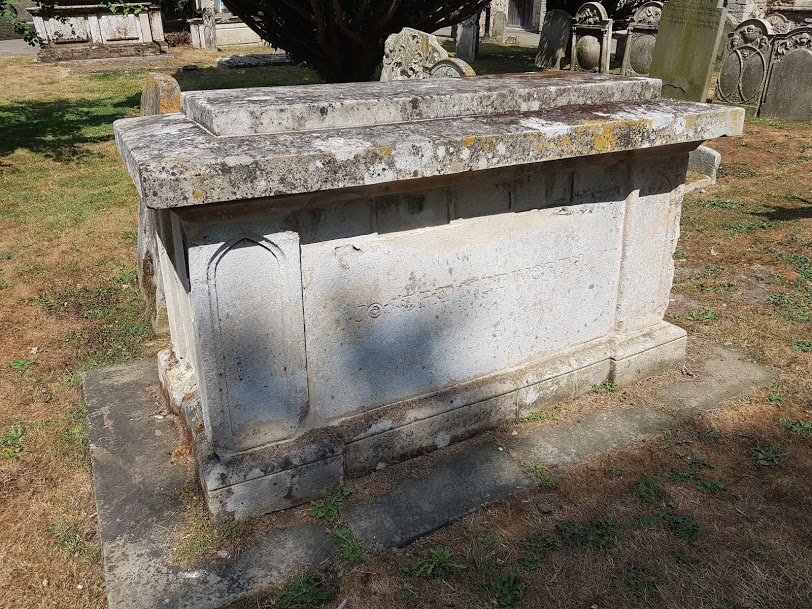
    Joseph Medworth was born in Wisbech in 1752, the son of Simon Medworth and Anna Medworth (nee Lampson). He moved to London after being educated in the town, initially becoming a bricklayer but then working his way up to becoming a master builder. Medworth made some money and he then became a bit of a property developer and he constructed some impressive buildings on the site of the former Bishop’s Palace and Wisbech Castle, although the loss of that is unfortunate. It wasn’t though always Medworth’s intention, he was going to renovate the castle building and turn it into a school, but the plans were thwarted by the local authorities. Instead, he ripped the castle down and let other parts of it fall into decay, at which point the local authorities became more sympathetic.

    I would have probably missed Medworth’s tomb if it wasn’t for the large information panel which was located nearby to it, a useful contribution. The properties which Medworth built though, such as The Crescent, Ely Place and York Row, are attractive and a town the size of Wisbech is fortunate to have such architectural delights. Medworth’s tomb is located near to the entrance of St. Peter and St. Paul Church, appropriate not just as his buildings are nearby, but because he was married in the church in 1775 and his funeral service was held here in 1827.

  • Wisbech – St. Peter and St. Paul Church

    Wisbech – St. Peter and St. Paul Church

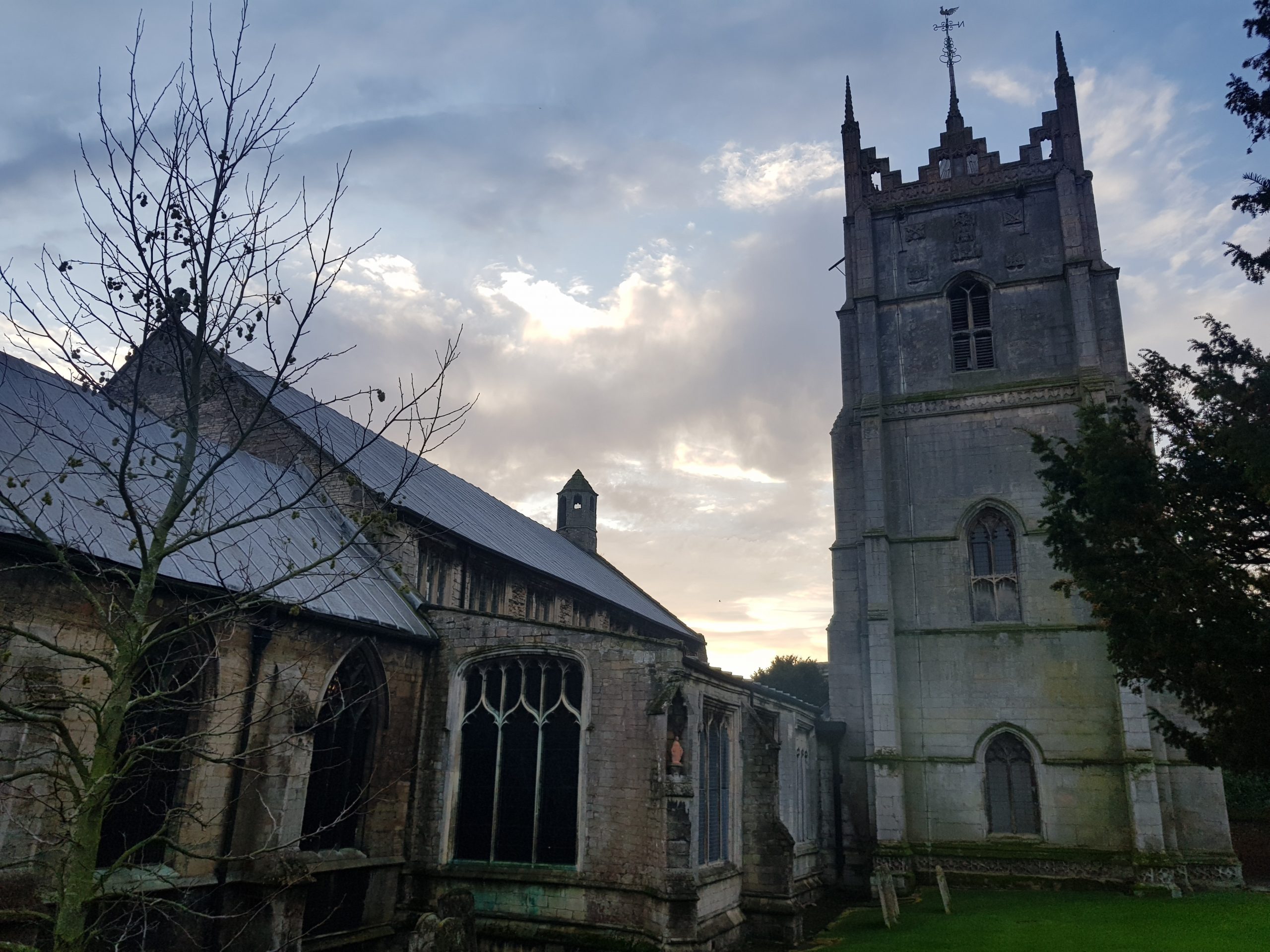
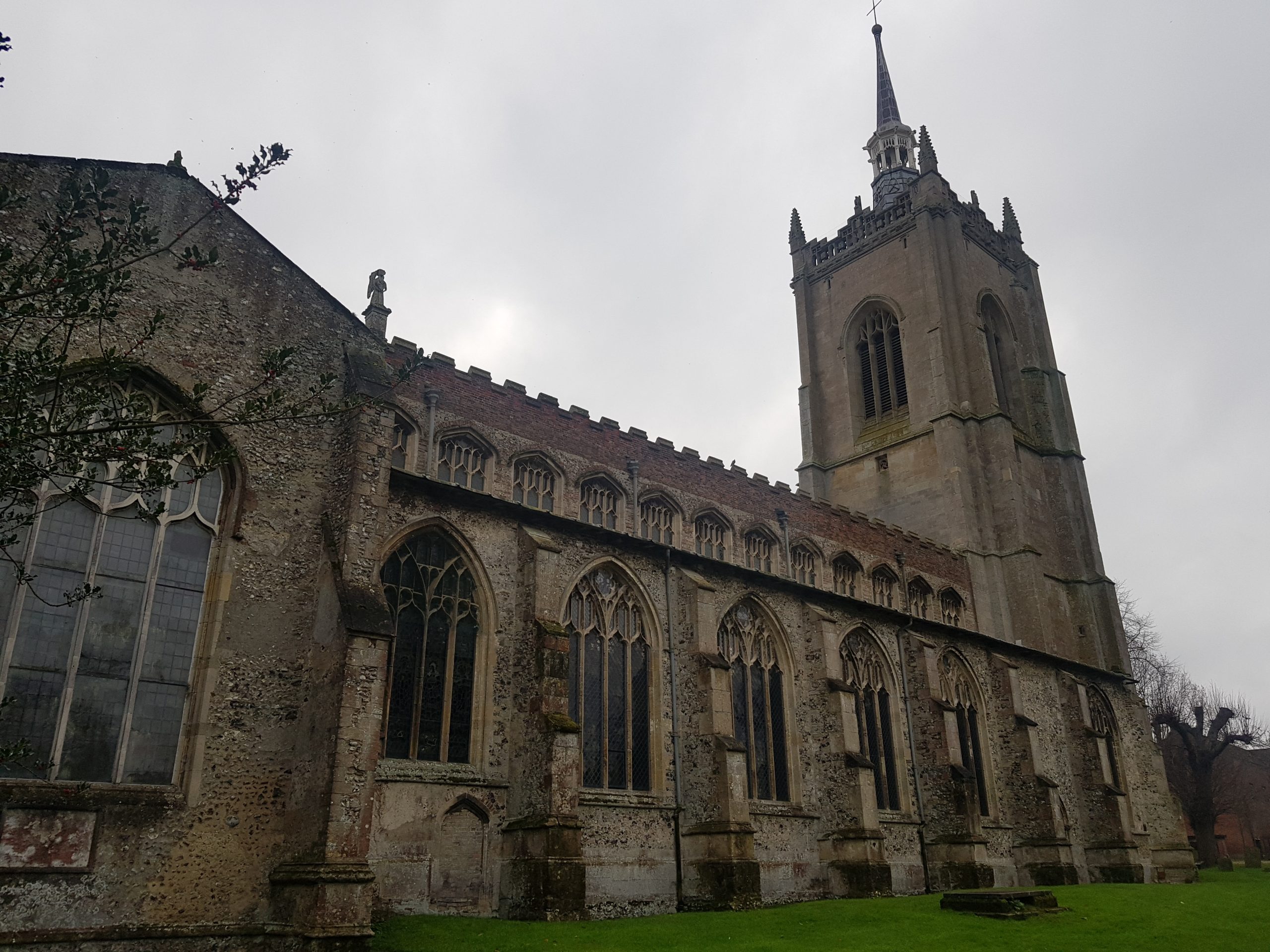
    This church dates back to the twelfth century, it’s thought around 1187, although there was a Saxon religious building at the same site which it replaced. Much of the current building is from the fourteenth century when the nave was enlarged and the chancel increased in size. Concerningly, the church has found itself on the Heritage at Risk register, but, fortunately, a National Lottery Heritage Fund project development grant has been made available to help to resolve the problems.

    The church tower dates from around 1525 and is separate from the main part of the building, fears of unstable ground dictated its placement.

    I like irregularities in church buildings, it helps to tell the story of how the structure has changed over the centuries, with some of this relating to the rebuilding of the chancel. The complications of the church continued when there was a little incident and the original tower fell down in around 1450. The structure of the church is confusing, as the central nave is narrower than the north aisle and there are two south aisles due to the positioning of the tower.

    The nave.

    The chancel, looking towards the altar, this is one of the most logical parts of the building in terms of its design.

    The marble pulpit, a relatively new addition which was placed here in 1904.

    The font, which dates to the fourteenth century.

  • Swaffham – St. Peter and St. Paul Church (Elizabeth Hainesworth)

    Swaffham – St. Peter and St. Paul Church (Elizabeth Hainesworth)

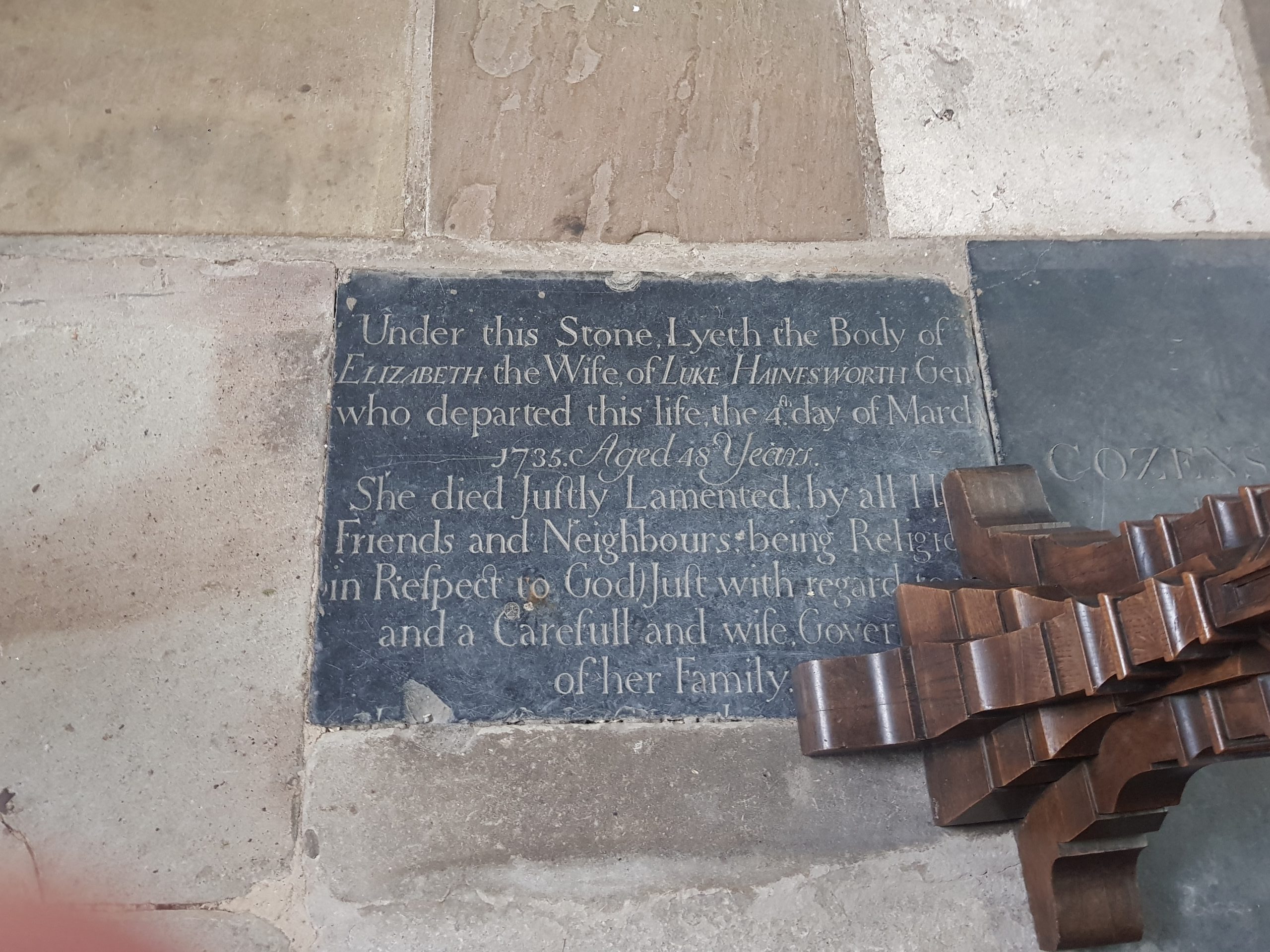
    Judging from the furniture placed on it and the rearrangement of stones, the church interior at Swaffham Church has no doubt changed somewhat since Elizabeth Hainesworth was buried here in 1735. There’s not much of a story here that I can tell, as there isn’t much information that I can find out. As the stone says, Elizabeth died on 4 March 1735, aged 48 years old.

    Her husband Luke does appear in a few registers from the early eighteenth century from when he employed apprentices. He was a grocer and a mercer (dealer of fabrics) in Swaffham and there’s little doubt that he would have been comfortably off. They had at least one child between them, John Hainesworth, who was baptised on 25 May 1726. But, other than that, the on-line databases are producing nothing more. But I liked the stone, in a rather good state of repair for its age.

  • Swaffham – St. Peter and St. Paul Church (Robert Huson)

    Swaffham – St. Peter and St. Paul Church (Robert Huson)

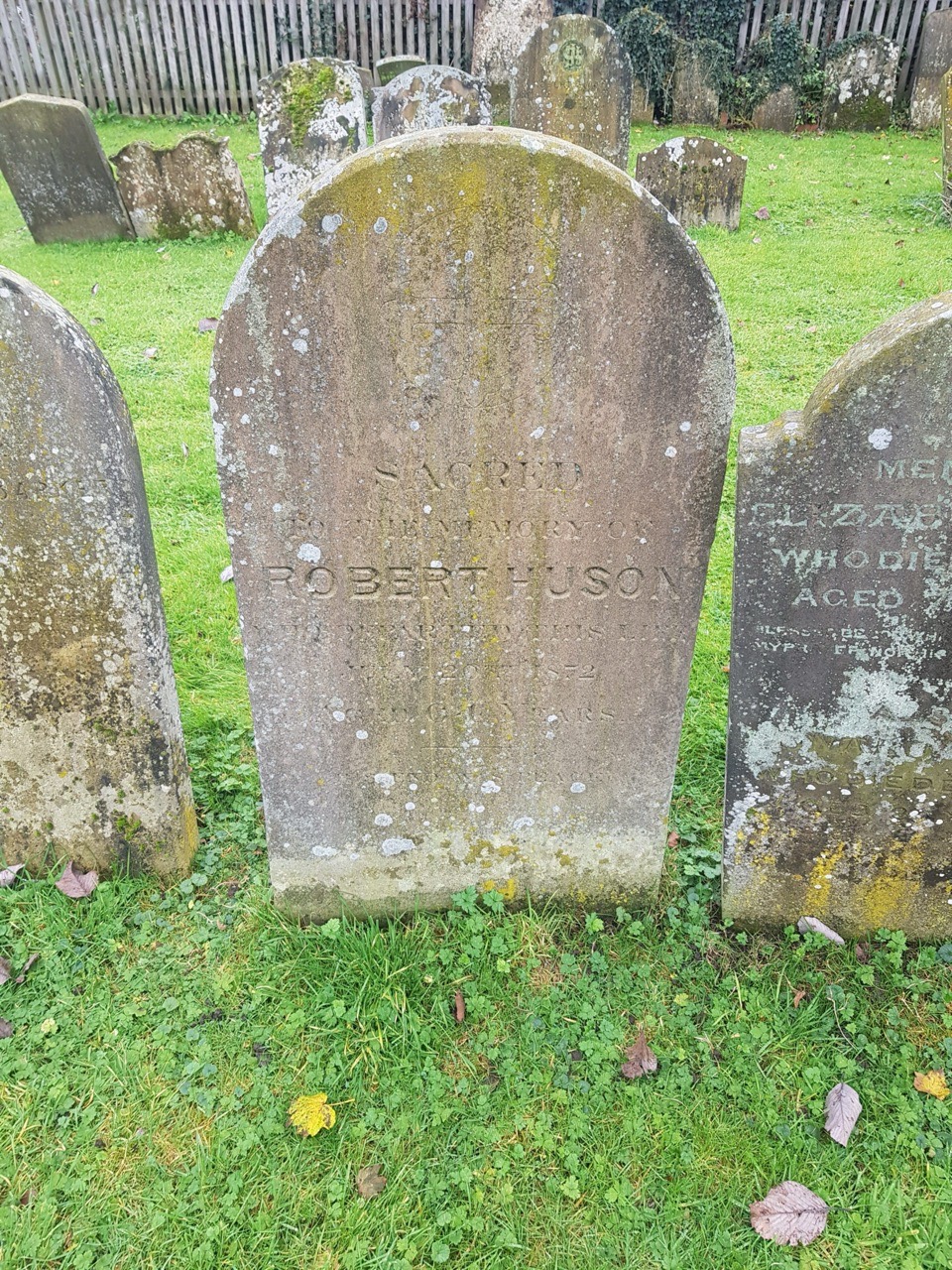
    There’s no logic to these posts, just some graves of people at St. Peter and St. Paul Church in Swaffham which seemed intriguing.

    Robert Huson was born on 26 July 1808 and was baptised on 14 August 1808 in Swaffham, the son of Robert Hudson and Susan Allen. He married Mary Huson, who was 14 years younger than him, and he worked as a carpenter. He had a son, Arthur Huson, when he was aged 50 and by the 1871 census he was living with his wife and Arthur on Lynn Street in the town. He died in 1872 at the age of 64, with his son Arthur becoming a grocer, going bankrupt and starting over again. Relatives of Robert and Arthur still live today, but unfortunately, I can’t find out anything more about Robert Huson’s life. He rather disappeared off the radar, or at least the radar visible to me, for some decades and I can’t make out what he did with his life. One day I’ll solve some of these random little mysteries….

  • Swaffham – St. Peter and St. Paul Church (Guy Dennis Buckeridge)

    Swaffham – St. Peter and St. Paul Church (Guy Dennis Buckeridge)

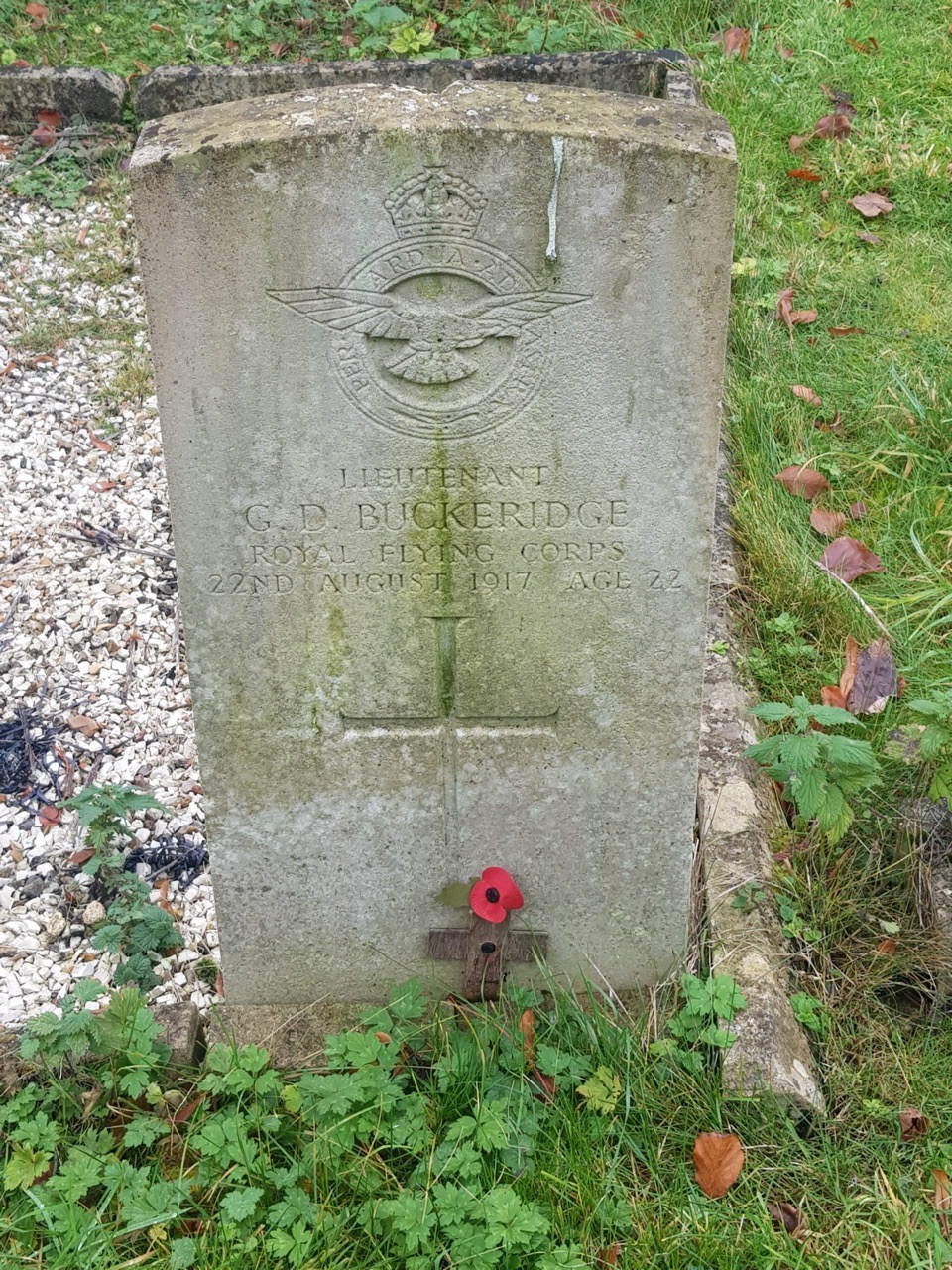
    This grave is located within the churchyard of St. Peter and St. Paul Church in Swaffham.

    Guy Dennis Buckeridge was born in Johannesburg in 1895, the son of Alfred Dennis Buckeridge and Amy Buckeridge, but they moved to the UK at some stage and lived at 8, Cardigan Road in Richmond-on-Thames. He appears on numerous passenger lists though, returning to South Africa frequently. He joined an air force unit in Reading in 1916 and in early 1917, he began training as a night-time pilot.

    Lieutenant Buckeridge flew his last sortie on 21 August 1917 when he flew from RAF Marham in Norfolk. During his flight his aircraft got trapped in a spinning nose dive and he died the following day, at the age of 22. His next of kin, which was his wife, was duly informed and he was buried at Swaffham, which was near to where the aircraft had crashed and not far from RAF Marham.

    Norman Frank Dennis, who was Guy’s older brother, died on 26 April 1940, killed whilst serving in the Royal Air Force during the Second World War.

  • Swaffham – St. Peter and St. Paul Church

    Swaffham – St. Peter and St. Paul Church

    The bulk of Swaffham’s main church was constructed between 1454 and 1490 and was built on the site of the previous church, of which nothing now remains.

    The main entrance to the church is at the west door. The tower took longer to build, not being completed until 1510.

    Looking towards the altar.

    And looking back towards the west end.

    The impressive hammer-beam roof, which dates to when the church was built.

    The war memorial window, which was designed by William Morris & Co.

    The pews in the main part of the nave date from the nineteenth century, having replaced the earlier box pews. These pew ends in the choir area are survivals from the earlier period, somewhere around the sixteenth century.

    The Pedlar of Swaffham and his dog, which are from an old folkstory, the details of which I’ve pinched from Wikipedia:

    “At last it happened that a shopkeeper there, hard by, having noted his fruitless standing, seeing that he neither sold any wares nor asked any almes, went to him and most earnestly begged to know what he wanted there, or what his business was; to which the pedlar honestly answered that he had dreamed that if he came to London and stood there upon the bridge he should hear good newse; at which the shop-keeper laught heartily, asking him if he was such a fool as to take a journey on such a silly errand, adding: “I’ll tell thee, country fellow, last night I dreamed that I was at Sopham, in Norfolk, a place utterly unknown to me, where methought behind a pedlar’s house in a certain orchard, and under a great oak tree, if I dug I should find a vast treasure! Now think you,” says he, “that I am such a fool to take such a long journey upon me upon the instigation of a silly dream? No, no, I’m wiser. Therefore, good fellow, learn wit from me, and get you home, and mind your business.”

    The pedlar observing his words, what he had say’d he dream’d, and knowing they concentred in him, glad of such joyfull newse, went speedily home, and digged and found a prodigious great treasure, with which he grew exceeding rich; and Soffham (Church) being for the most part fallen down, he set on workmen and rectified it most sumptuously, at his own charges; and to this day there is his statue therein, but in stone, with his pack at his back and his dogg at his heels; and his memory is also preserved by the same form or picture in most of the old glass windows, taverns, and alehouses of that town unto this day.”

    This brass was part of the memorial to Sir John Audley of Swaffham and it was moved to the wall to protect it from damage, although the brass dedicated to his wife had gone missing by 1781.

    I hadn’t realised that there was a connection to Oliver Cromwell in Swaffham, but this is the memorial to Catherine Steward, his maternal grandmother. Steward was born at Castle Acre in 1545 and died in 1590. The Scotsman reported in 1911 that Queen Mary, Prince Albert and Princess Mary had come to visit the church, and spent some time looking at this memorial. Not that the Parliamentarian troops of Cromwell showed the church much mercy in the seventeenth century, they fired guns at the wooden angels in the roof, smashed windows and destroyed some statues.

    On the subject of the local media, there was an announcement in the Bury and Norwich Post which has an interesting turn of phrase:

    “The banns were published in Swaffham Church between Robert Savage and Mary Avey, but two days later the young woman was attacked with a cold and inflammation and on the following Saturday she was a corpse”.

    I didn’t see anyone else whilst visiting the church and I can’t imagine it gets a lot of visitors at this time of the year, so it’s marvellous that they’ve kept it open during the day. The door is also an automatic one, which makes it more accessible than the arrangement (albeit a necessary one, as automatic doors don’t come cheap and often don’t exactly fit into the decor) in some churches.

    All rather lovely.

  • GeoGuessr – St. Osyth (St. Peter and St. Paul Church)

    This is part of the GEOGUESSR 1 series of posts.

    Unfortunately, we weren’t able to enter the town’s main church although it later transpired we visited during the church’s opening times. It’s a shame, it’s one of the most complex buildings that I’ve seen in terms of trying to understand it from its exterior.

    I have a lot of unanswered questions about this church and I have no idea why they’ve locked and blocked off part of the graveyard (I poked my camera through the gate to take this photo).

    That’s the south chapel on the left, the nave in the centre and the chancel on the right. The south chapel is thirteenth century, but something has clearly gone wrong with the structure as there are buttresses propping it up on the left hand side which are from the fourteenth century. I’ll make no comment about civil engineers as Liam will see this.

    I didn’t pay much attention to this at the time, but the chancel isn’t level with the nave, it’s off-centre and located to the northern end of the nave. This is apparently due to the Reformation interfering with the plans of the church, although it’s given it a quirky appearance.

    A better view of the buttresses against the side of the church, as well as a door built into a window (could they really not have put that door anywhere else?).

    I don’t understand this, this is a nineteenth century chimney and it’s out of place and seems a bizarre addition to have made. Or at least the top is a chimney, the middle bit could almost be rood stairs, but they’re in the wrong place as they’re now where the chancel meets the nave (and there are three naves anyway, as well as the brickwork looking too late for rood stairs). Unfortunately, the church’s web-site says that the comprehensive history of the building is “coming soon”, so I can’t glean much from that at the moment.

    I can’t explain what’s going on here.

    I also have no idea why what appears to be a set of stairs to the top of the tower have been added on quite so late in the church’s history.

    The northern side of the north chapel.

    I found one story about this church which I did find amusing. In 1865, a marriage was taking place which was officiated by a vicar from Clacton who was standing in for the local vicar. The marriage ceremony was proceeding all very well and the vicar read out the “to have and to hold, from this day forward, for better, for worse” section of the vows. The groom, who must have considered himself something of a wit, said “I’ll take her for better, but not for worse”. The vicar decided this wasn’t in keeping with the standards that he expected, so he slammed his book shut and walked out of the church, leaving a confused bride and groom to be at the altar. Marvellous.

    Anyway, as I’m not a church historian, I can’t shed a great deal of light on this church. It’s a shame I’m not likely to come this way again soon, as I’d have liked to see inside, and also inside the churchyard. I don’t like the way that they’ve locked half of it off, although I’m sure that they must have a reason to have done that. But, it’s a magnificent church and I like that its history hasn’t been whitewashed away.