Tag: Split

  • Split – Booking.com Resolves an Accommodation Problem

    Split – Booking.com Resolves an Accommodation Problem

    It’s fair to say that I’m not entirely convinced by apartments when travelling overseas. In many cities they’re doing some damage to the local housing market so that locals can’t afford to live in their community which feels entirely sub-optimal. I always prefer hotels where I can check in without some complex sequence of messages, access instructions and attempts to locate the entrance. However, as Jonathan correctly pointed out, for much of Bosnia and Herzegovina there was a shortage of hotels and so apartments were our only real option. That also proved to be the case in Croatia, where again the number of hotels was often relatively low.

    In the main, it all went OK for us, with Jonathan in charge of getting in touch with the property owners. We had a wait or two to get in some places, and one we couldn’t initially find, but it did work out. It was also inexpensive, with an entire apartment often costing less than £30 for the night between us.

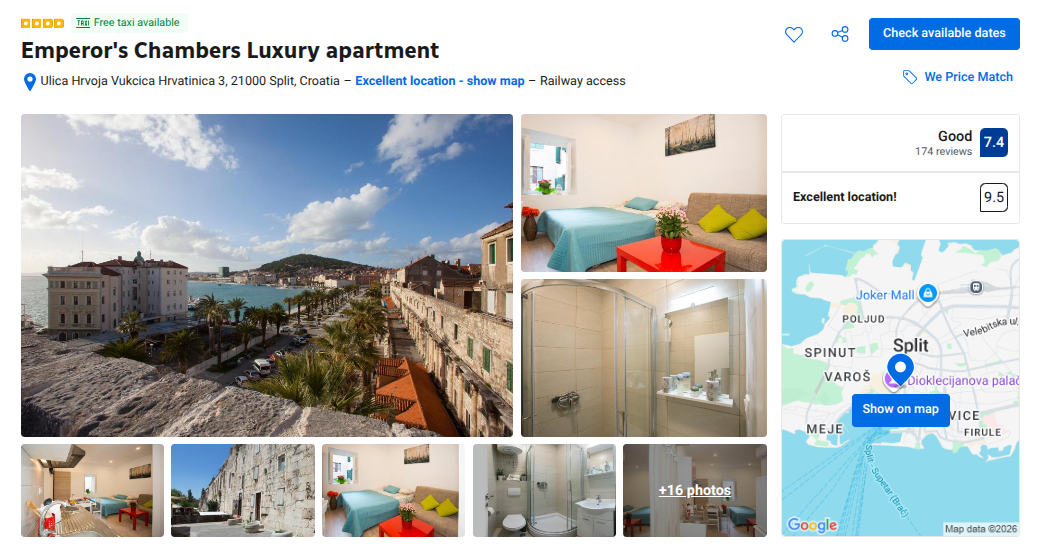
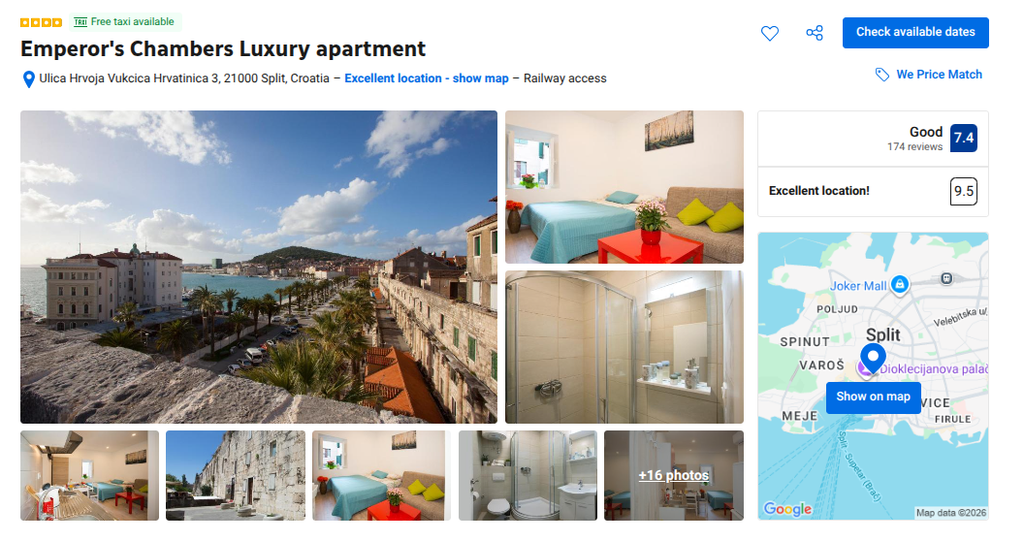
    Matters did not go well in Split, where we were already short on time because we had only one evening in the city. We had deliberately booked centrally, paid more for the convenience and found the property relatively easily. On arrival, however, we were given a tiny alternative which did not match the more expensive accommodation shown in our reservation. When we raised the discrepancy, the owners refused to provide the accommodation we had booked or offer an acceptable solution, despite having the opportunity to do so. It felt very much like a bait and switch, and I was not prepared to stay there and simply accept the situation.

    Booking.com handled the situation very positively. Its customer service team agreed that the accommodation did not match the reservation, arranged a full refund and helped us secure an alternative at short notice. The replacement was not entirely flawless, but it was a substantial improvement and allowed us to continue with our evening in Split rather than spending it engaged in increasingly detailed accommodation negotiations. Indeed, there were nearly no hotels available in the city, so we were quite dependent on Booking.com coming up with some solution.

    I subsequently found reviews from other guests describing similar experiences, which suggested that this was not an isolated mistake. The moral of this little story is to reject inadequate accommodation immediately and raise the discrepancy with Booking.com. In my experience, the company has traditionally been effective at protecting customers and its platform when a property does not match the listing. On this occasion, the owners refused to provide what we had paid for, but Booking.com ensured that they did not benefit financially from doing so. With the problem finally resolved, we were able to explore Diocletian’s Palace and enjoy the delights of Split rather than spending our only evening arguing about accommodation.

    As for me, I switched to hotels for the rest of my trip and I’m pleased to say that there were no disasters.
  • Balkans Trip Day 16 – Coach Journey from Split to Zadar

    Balkans Trip Day 16 – Coach Journey from Split to Zadar

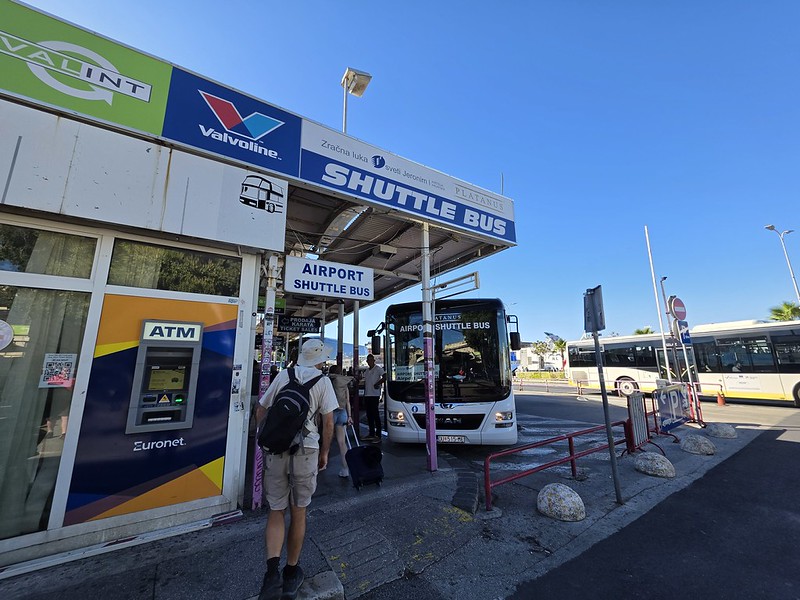
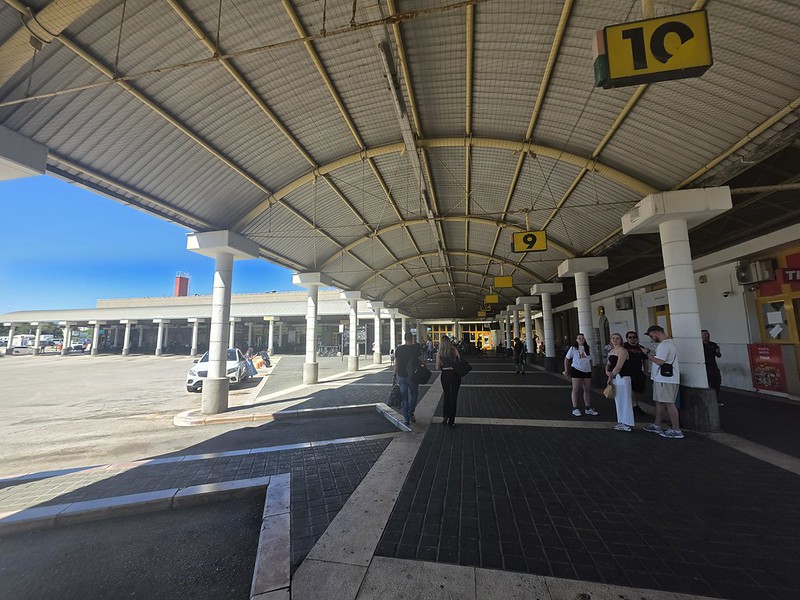
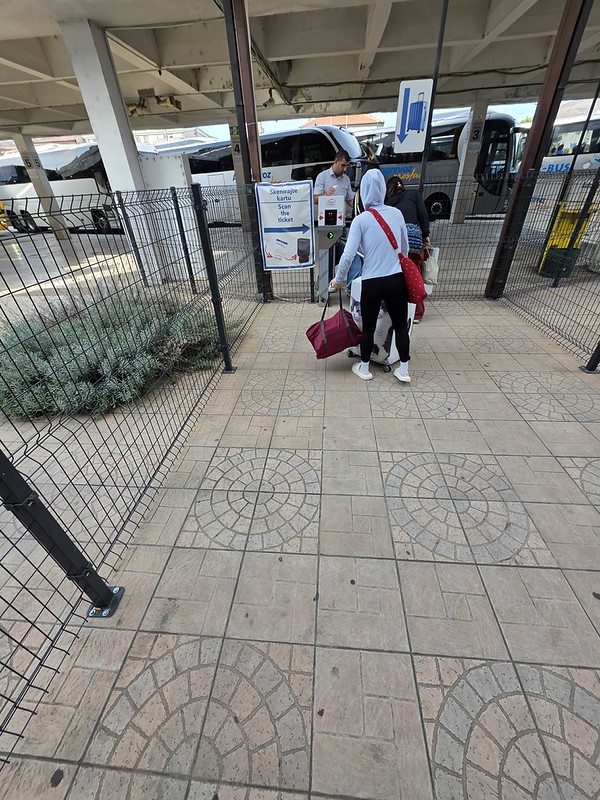
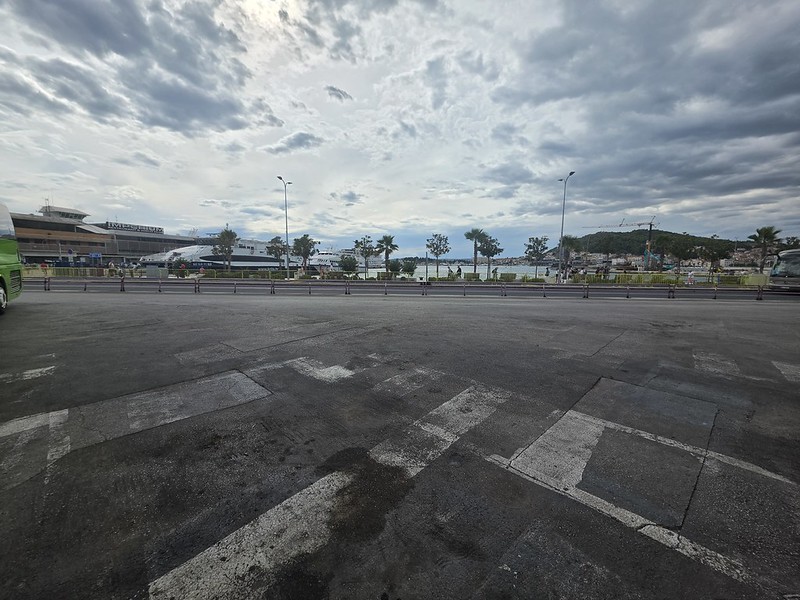
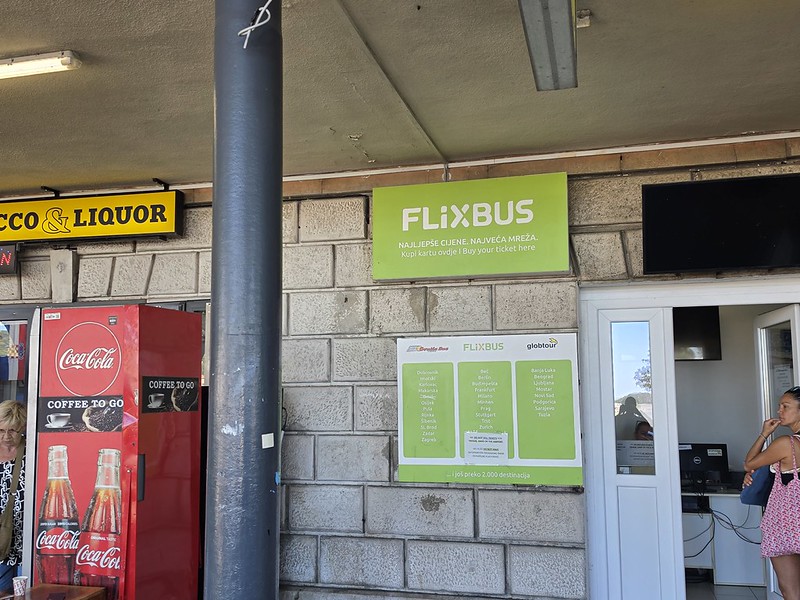
    This was the final day of the Balkans trip, with Jonathan getting a later coach to Zadar and flying out the next day, whilst I had an evening flight to Warsaw. This is the coach station at Split and the ticket office here makes clear that they can’t help with locating the coaches and although it’s fair that it’s not something they can help with, perhaps the coach station management might want to improve matters here.

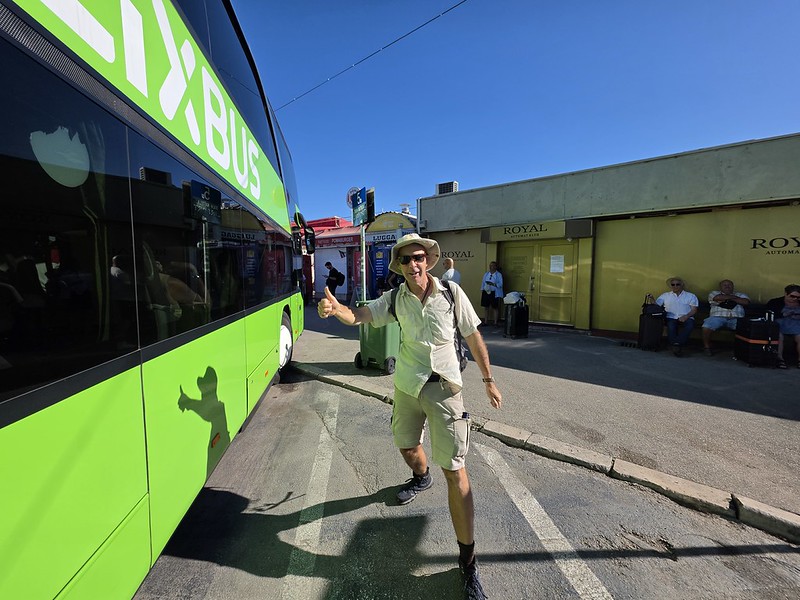
    Jonathan had come with me to ensure that I got the right coach, or, more precisely, to check that I had gone.

    Although I had booked a FlixBus, it noted that it was operated by a third party and wouldn’t have their branding. It transpired that it did and after checking with the upbeat and helpful driver that I was boarding the right coach, I was ready to board marking the end of another memorable trip.

    Jonathan waved me off, his thoughts presumably already turning towards his return to Norwich the following day. He was perhaps also relieved that responsibility for my geographical whereabouts had finally passed to somebody else. Although I didn’t know this at the time due to my last-minute booking habit, I was still to visit Warsaw, Kutaisi, Katowice and Barcelona before I got back to the UK. No point in keeping things simple and that means my loyal blog readers still have plenty more posts to wade through.

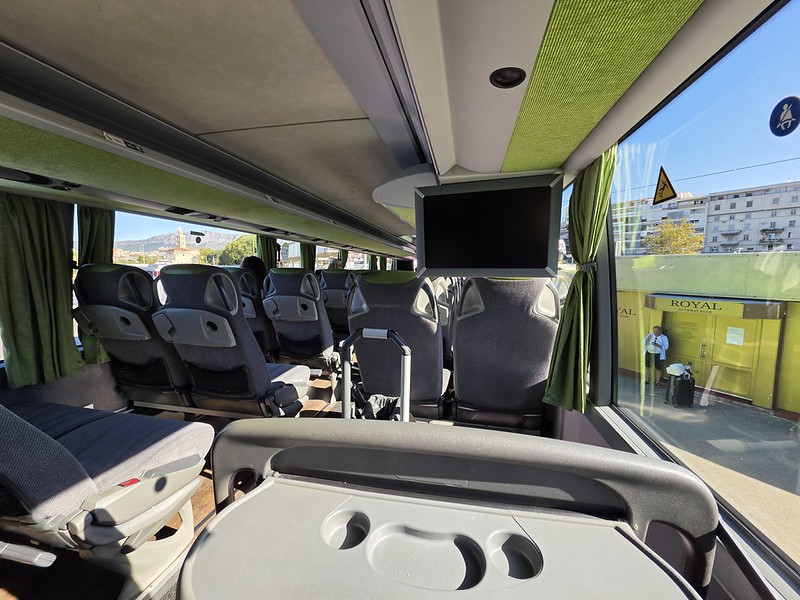
    Although the coach was at capacity, boarding early meant that I got a decent seat on the upper deck. The coach was clean, although the power sockets didn’t work and the air conditioning was struggling to do much useful, but it was a cheap and cheerful way of moving along the Croatian coastline with the ticket costing £11. There are also regular services in case something goes a bit wrong with the whole arrangement.

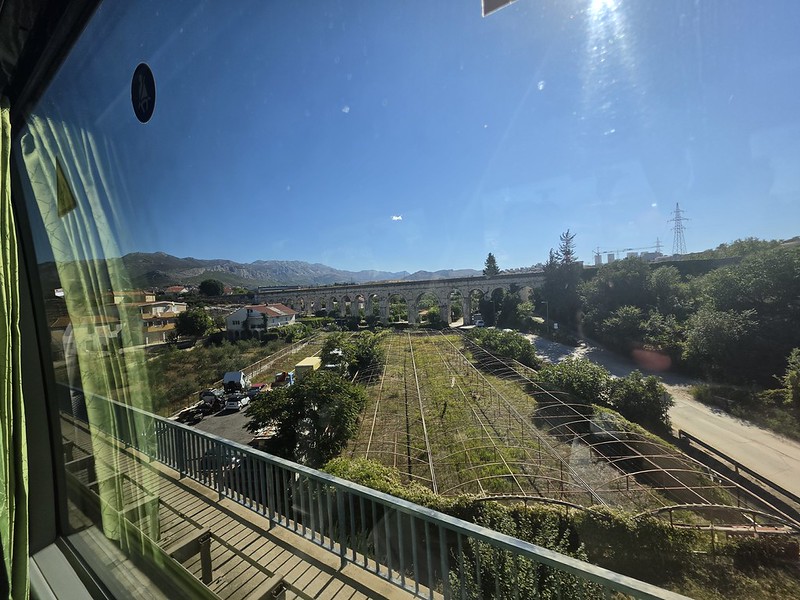
    Leaving Split I got to see Diocletian’s Aqueduct which was constructed in the early part of the fourth century, at the same time as Diocletian’s Palace that we had looked around the previous evening.

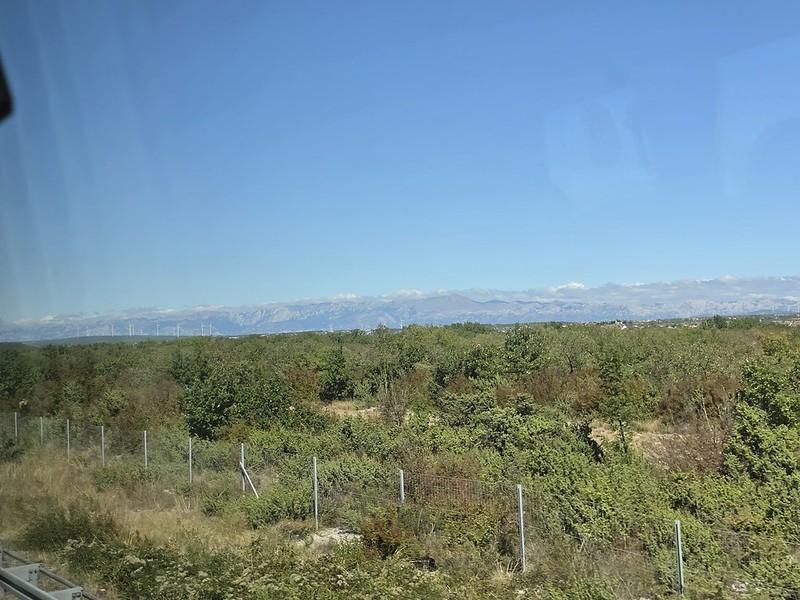
    The countryside near Pristeg, with the Velebit Mountains visible in the distance. After several days beside the Adriatic, the route now felt noticeably drier and more rural, although I felt that I had enough photos of the countryside through the window to last me for a while.

    Safely into Zadar coach station on time and with a thirty-minute walk to the historic heart of the city, slightly longer than I had been hoping for in the hot weather. I’m not sure whether I’ve actually mentioned in recent posts that it was getting a bit hot again on the Croatian coastline.

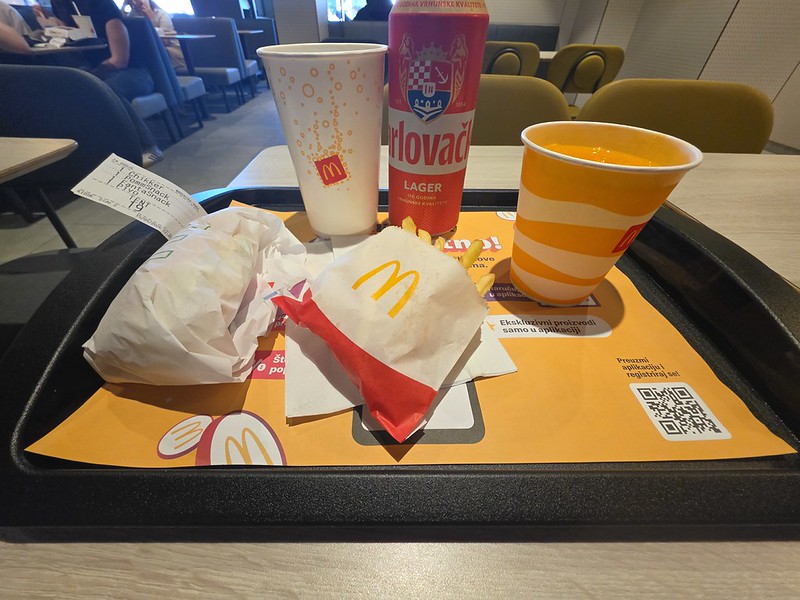
    Since there was a McDonald’s at the coach station, I used the opportunity to charge my devices and ordered a cooling Fanta and a beer. McDonald’s providing electricity, air conditioning and alcohol (of sorts) immediately made it one of Zadar’s more useful cultural institutions.

  • Balkans Trip Day 15 – Split – The Vestibule of Diocletian’s Palace

    Balkans Trip Day 15 – Split – The Vestibule of Diocletian’s Palace

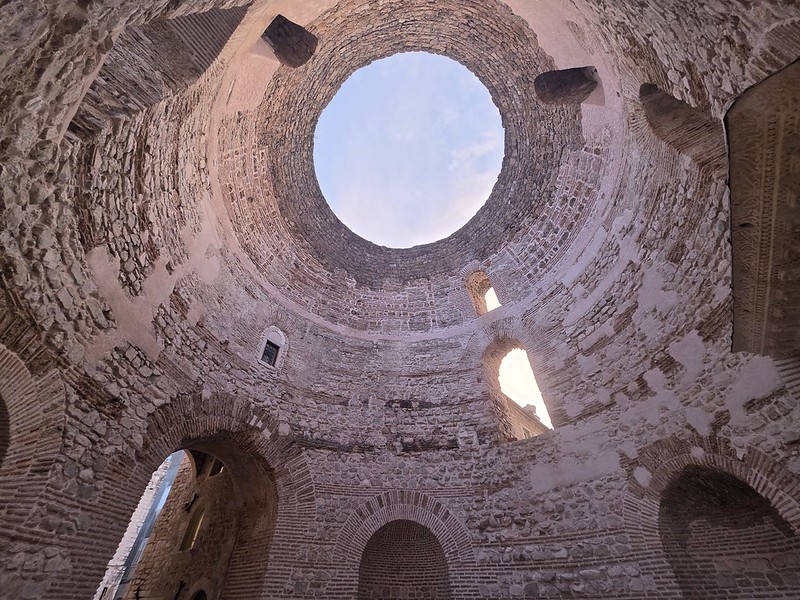
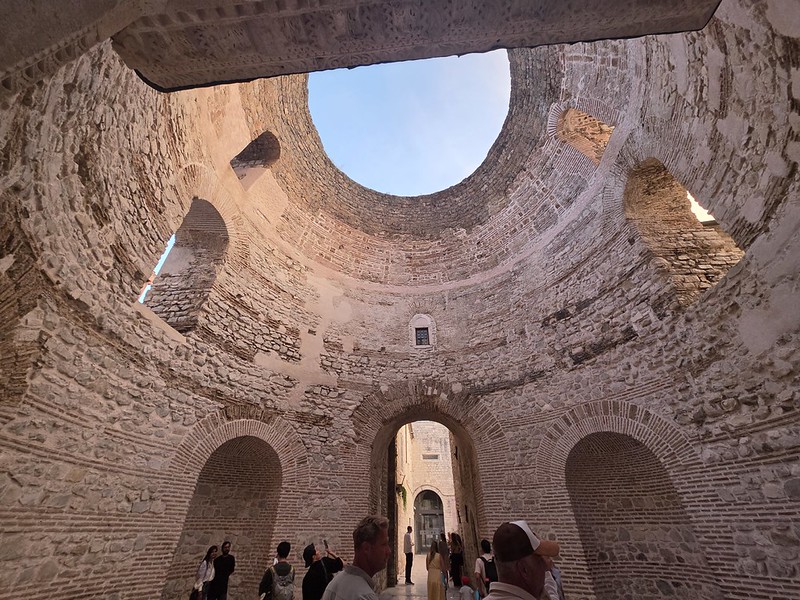
    Continuing our rapid exploration of Diocletian’s Palace, Jonathan and I entered the Vestibule, the monumental antechamber which once connected the public Peristyle with the emperor’s private apartments. Constructed around the beginning of the fourth century, the building appears rectangular from outside but contains this imposing circular interior. Its dome has long since disappeared, leaving the large opening, which is slightly sub-optimal when it’s raining.

    Beside the Vestibule is the Ethnographic Museum, which also provides access to more of the historic complex and a terrace overlooking the remains of the former cupola. We had only one evening in Split, though, and choices had to be made before Jonathan discovered that I had scheduled seventeen hours of sightseeing into approximately three. It also gives me a reason to go back in the future, although my list of cities I need to return to is growing ever longer.

    The original interior would have been considerably more decadent than the exposed stone surviving today. Niches once contained statues, the circular walls were whitened and the great cupola was decorated with colourful mosaics which reflected the light. The Vestibule formed part of the carefully controlled ceremonial route towards the imperial residence, ensuring that anyone granted an audience had been suitably pre-impressed before Diocletian had even appeared. It appears that Roman emperors understood the need for a dramatic entrance to surprise and delight visitors without troubling themselves too much with the associated decorating costs.

    The chamber remains impressive despite losing nearly all its decoration, helped by the height of the walls and the acoustics created by its circular form. Like most other parts of the Palace that were free to visit, it was rather packed with visitors, nearly all attempting variations of the same photograph directly upwards. Despite the crowds, this was one of the most memorable surviving spaces within the Palace and gave a sense of the scale of the building.

  • Balkans Trip Day 15 – Split – The Silver Gate of Diocletian’s Palace

    Balkans Trip Day 15 – Split – The Silver Gate of Diocletian’s Palace

    Jonathan and I only had one evening in Split and so we started at its most important site, namely Diocletian’s Palace. This was constructed around the beginning of the fourth century as a fortified retirement residence for Diocletian, although the buildings and streets within its walls gradually became the centre of Split itself.

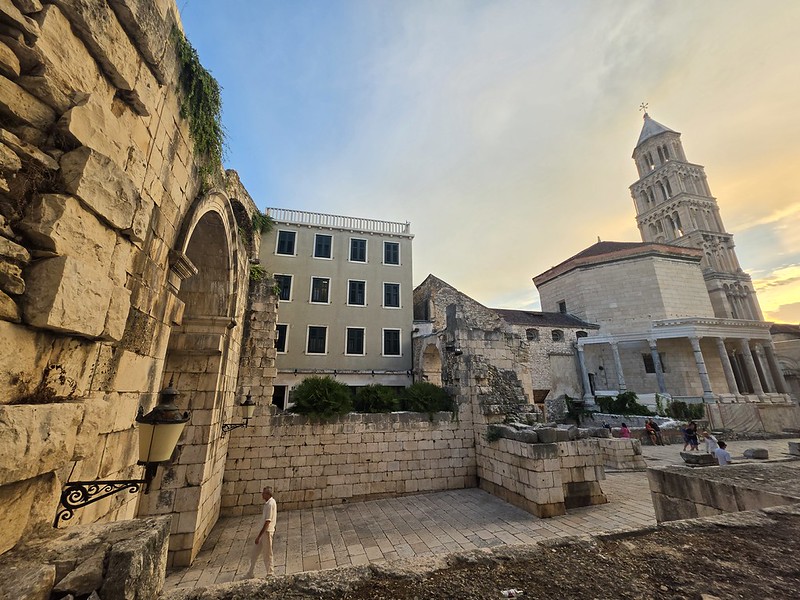
    This photograph shows the Silver Gate, the eastern entrance to the complex, alongside the former imperial mausoleum which was later converted into the Cathedral of Saint Domnius. Known to the Romans as the Porta Orientalis, the gate opened onto the decumanus, the principal street running east to west through the palace towards the Iron Gate.

    Today, it’s very much a busy part of the city and the heart of its historic centre. It was a pleasant time of day to visit with the colourful sky, although lots of other people had a similar thought so there was some battling through the crowds to get around. Unlike during much of our time travelling around the Balkans, this felt like a city dominated by tourism and the vibe was very different.

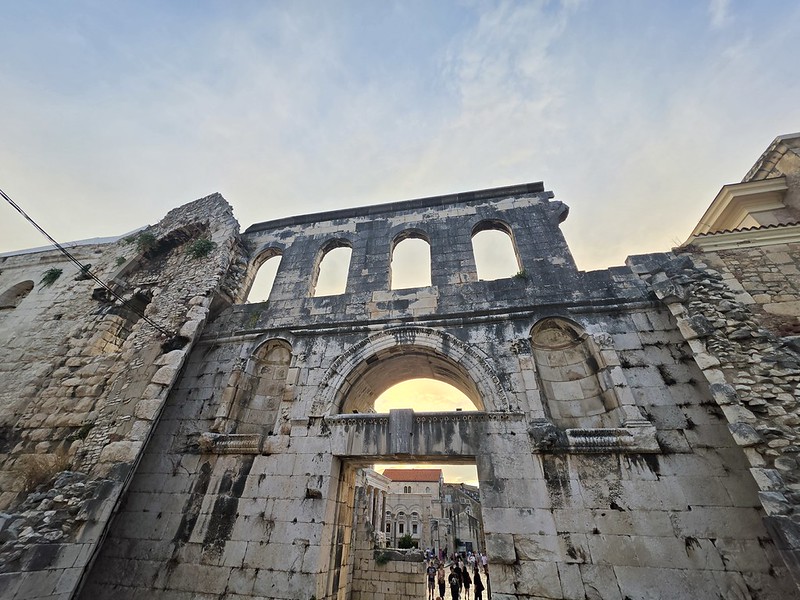
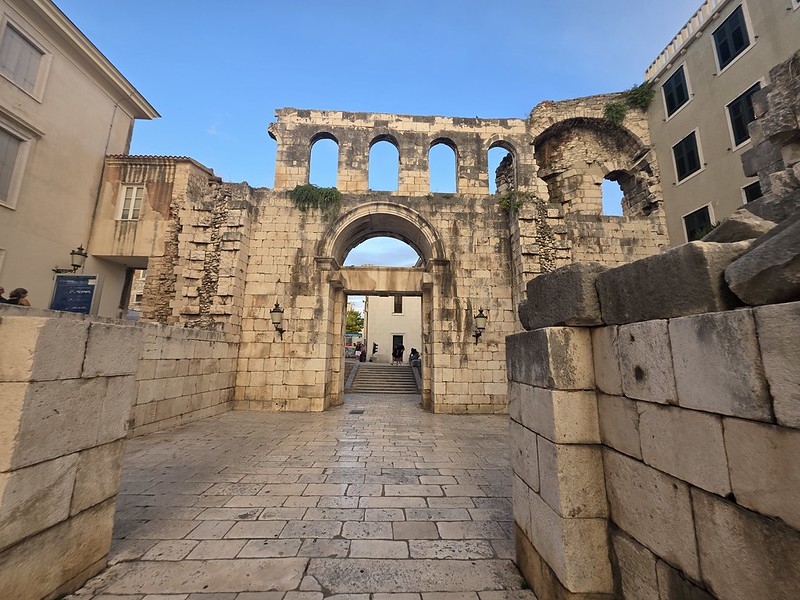
    Seen directly from the front, the Silver Gate reveals rather more of its Roman design. Despite the name, it was built from limestone rather than an unexpectedly extravagant quantity of silver and was more modestly decorated than the Golden Gate on the northern side of the palace. It originally formed part of a more complex and decadent two-stage entrance, with outer and inner gateways creating a controlled defensive passage into the complex.

    The two recessed niches on either side of the main arch probably once contained statues, long since lost, while the row of openings above belonged to the upper level used by the palace guards. It still felt like a proper defensive entrance, and enough survived for me to imagine how imposing it must have appeared to anyone approaching the palace without the correct authorisation.

    The gate’s present appearance is partly the result of a substantial twentieth-century reconstruction. It had been blocked from the Middle Ages and remained closed until 1952, when the war-damaged Baroque church known as Dušica was demolished and the ancient entrance was reopened. The work exposed the Roman gateway and lowered the surrounding ground to reveal sections of the original paved route.

    A photograph displayed at the site showed how the gate looked before the surrounding ground was lowered. It had been considerably less imposing, so I was pleased that the work had brought its appearance closer to the original Roman arrangement. The Silver Gate was used ceremonially in 2000 when Pope John Paul II passed through it on his way to the Cathedral of Saint Domnius. My own passage attracted less attention, although this made it substantially easier to take photographs.

  • Balkans Trip Day 15 – Split – Tunaholic

    Balkans Trip Day 15 – Split – Tunaholic

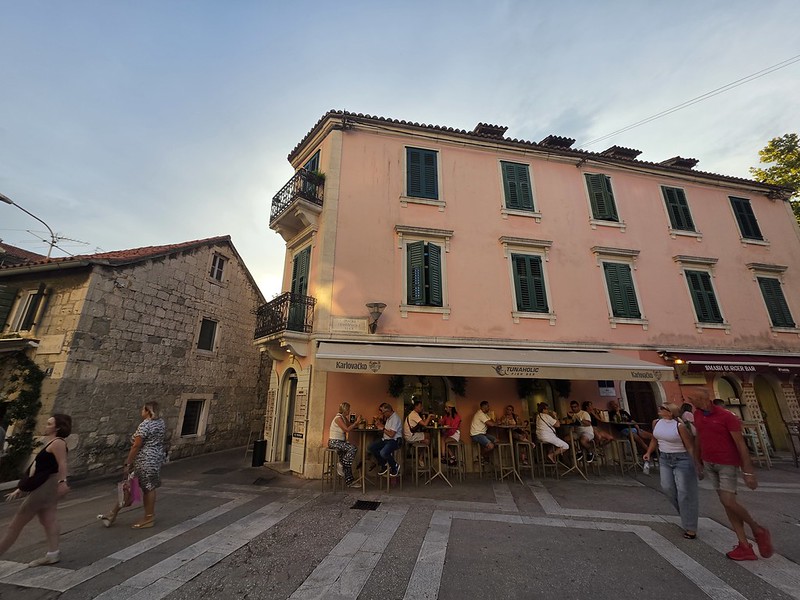
    Our evening meal in Split was at Tunaholic, a centrally located fish restaurant which has picked up plenty of positive online reviews.

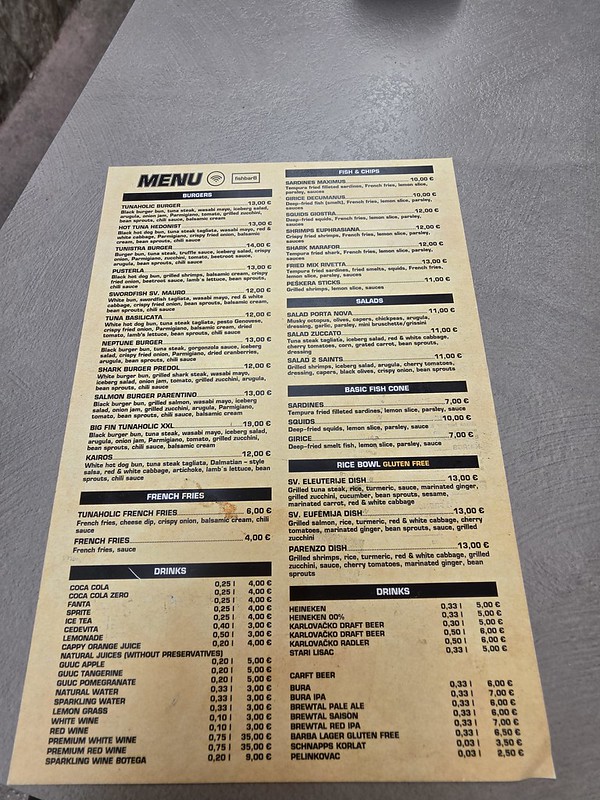
    The menu wasn’t overly large, which seemed a positive sign in terms of freshness, but there was still a reasonable range of dishes to choose from.

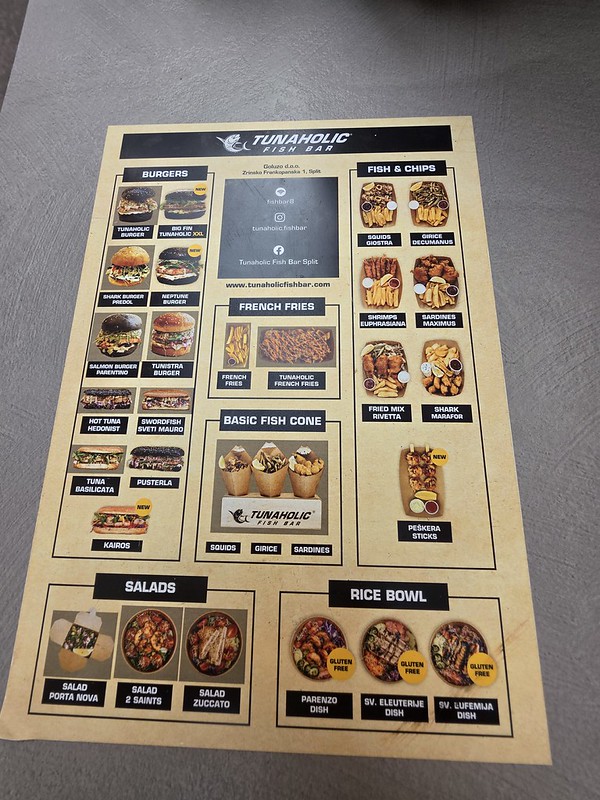
    The menu also included photographs, removing the dangerous possibility that either of us might have to order entirely on trust. I must have been in an exceptionally good mood because I also agreed to sit outside voluntarily.

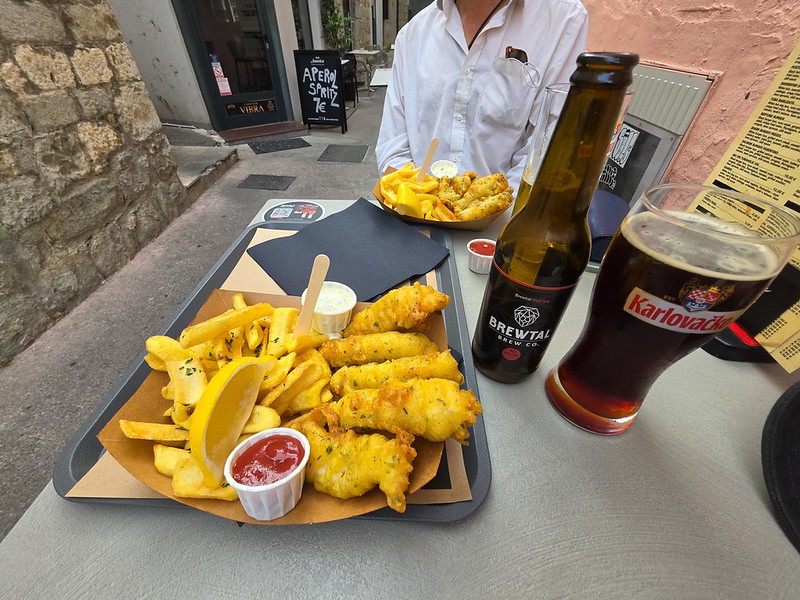
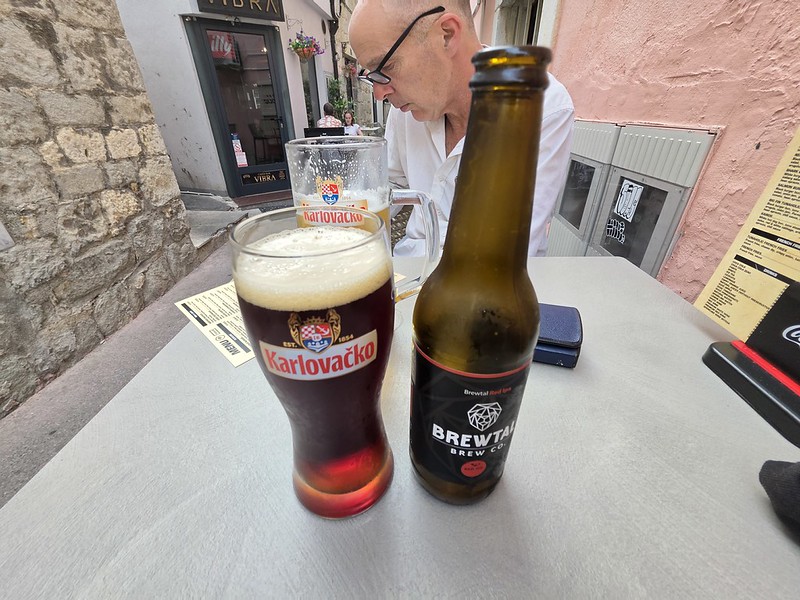
    They had craft beer alongside some draft options and although they didn’t have the one I ordered, I was content with their recommendation of the Brewtal Red Ipa from Brewtal Brew Co. It was malty with a taste of toffee and I thought that it went well with the fish.

    Jonathan ordered the Sardines Maximus, while I selected the Shark Marafor. I’m not sure that I had ever eaten shark before, but it was tender and full of flavour, while the tempura batter was crisp and well seasoned. The chips were crisp outside and fluffy inside, and the portion was generous.

    This was one of my favourite dining experiences of the entire Balkans trip, which was particularly apt since it was the final night of our trip before we parted ways. I was certainly surprised and delighted by this one and even sitting outside had failed to cause a crisis. Tunaholic had substantially exceeded my expectations and what more could I ask for? I even left a tip at the end when paying…..

  • Balkans Trip Day 15 – Coach Journey from Mostar to Split

    Balkans Trip Day 15 – Coach Journey from Mostar to Split

    Another day and another coach trip, so we went to the supermarket to buy some snacks for the journey and I got my usual chilled coffee to start proceedings with. This had by now become an essential part of my transport infrastructure plans.

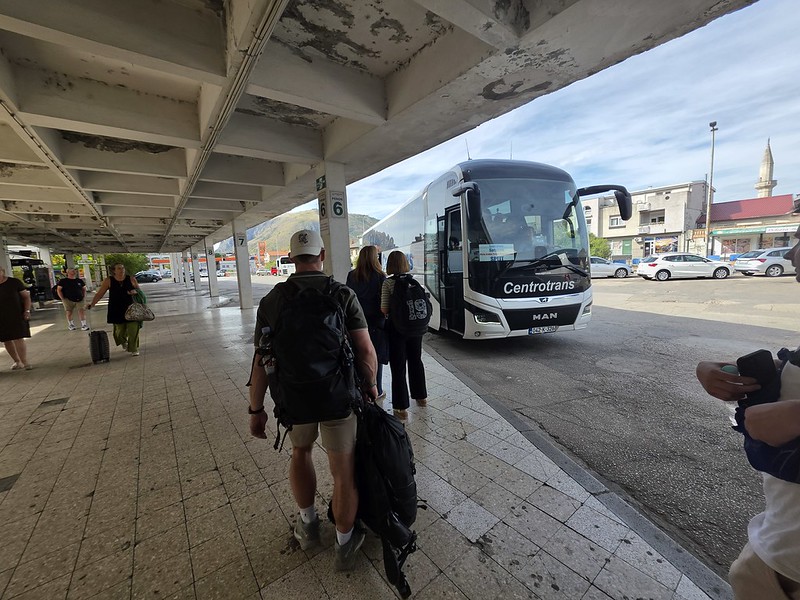
    It was around a twenty-minute walk from our accommodation to the coach station and, as usual, we arrived in good time.

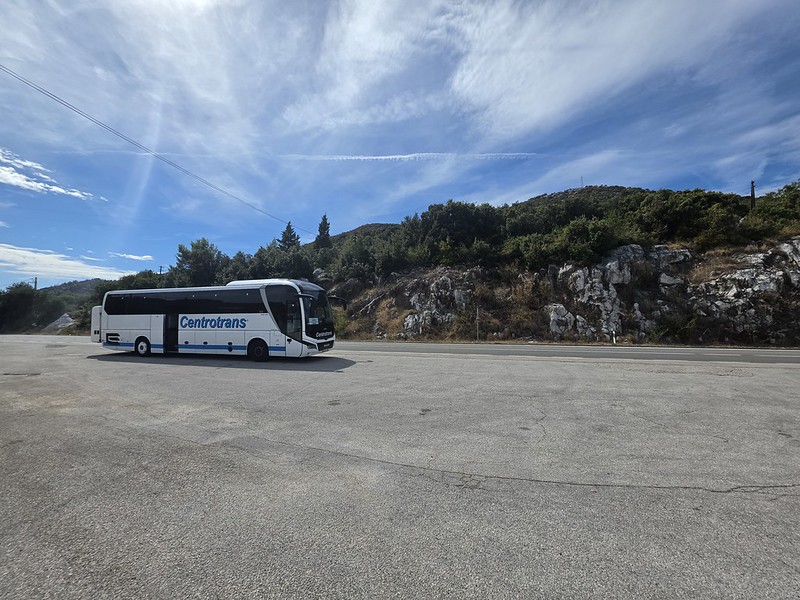
    I was relieved to see that it was a proper coach that pulled up to take us to Split, which was going to take over three hours and I felt I’d enjoyed enough minibus journeys on this trip. It was unclear where we were supposed to sit on the coach and we were shuffled about until taking up the rear five seats between us.

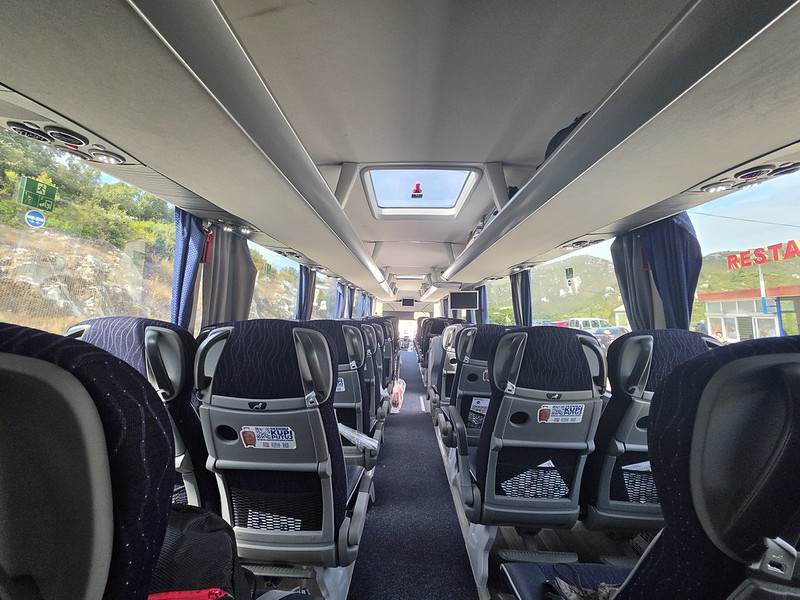
    The coach swept out of Mostar and I was pleased to discover that it had both air conditioning and Wi-Fi of sorts. I didn’t have roaming in Bosnia, but I did in Croatia, so this meant that I was able to breathe easily.

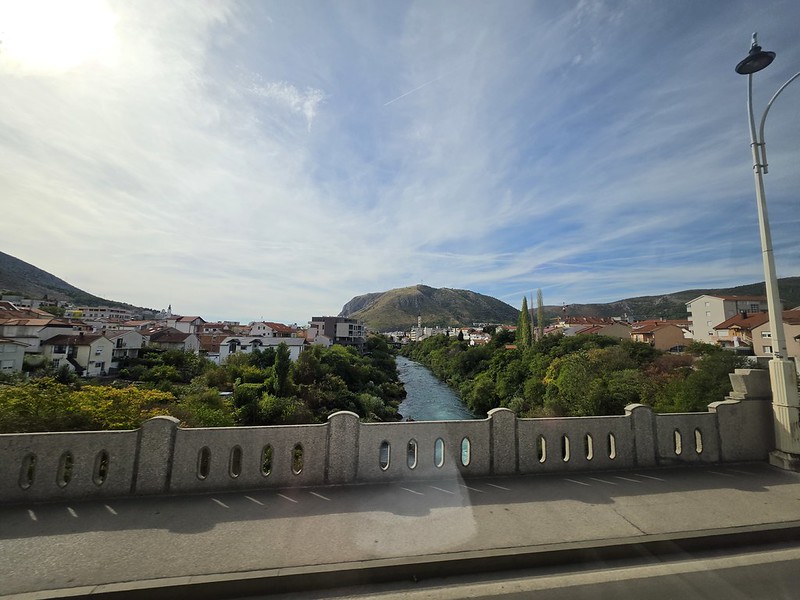
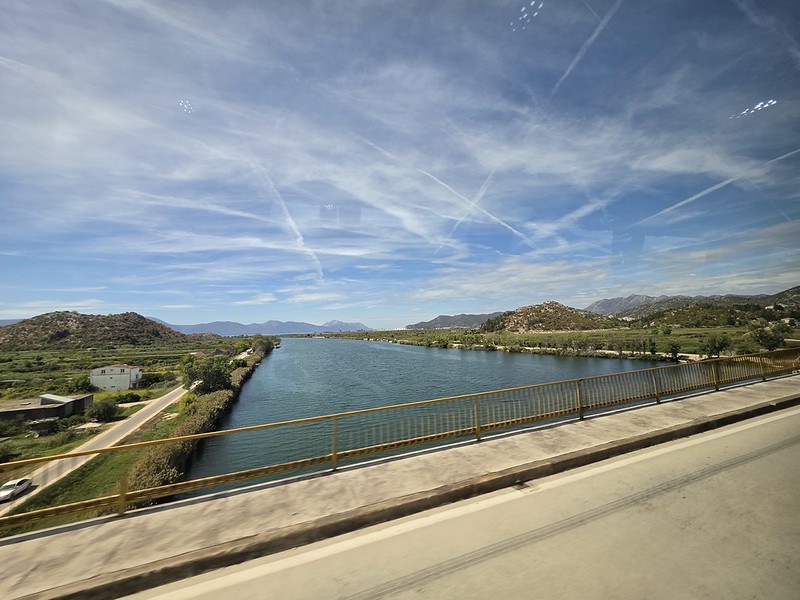
    This is the border town of Čapljina in Bosnia and that’s the River Neretva. I didn’t take photos of the border crossing into Croatia, but the sedate arrangements in Bosnia were informal whilst it was very much Fortress EU when arriving into Croatia. Everyone’s passport was checked in person, the Entry/Exit System was in operation and it felt secure and well managed.

    Many passengers seemed delighted when we stopped for half an hour. I’m not fond of these breaks, which usually appear designed to extract money from a captive audience through an overpriced café while making the journey longer. The driver presumably needed a rest, however, so I confined my protest to buying nothing and returning to the coach to sit by myself. This was unlikely to bring the business model crashing down, but my principles had been maintained.

    Here I am back on the coach enjoying my alone time.

    We then passed the Baćina Lakes, a group of remarkably beautiful freshwater lakes near Ploče. Taking photographs through a moving coach window did not entirely capture the scenery, although it did produce an extensive record of reflections, roadside barriers and occasional sections of lake.

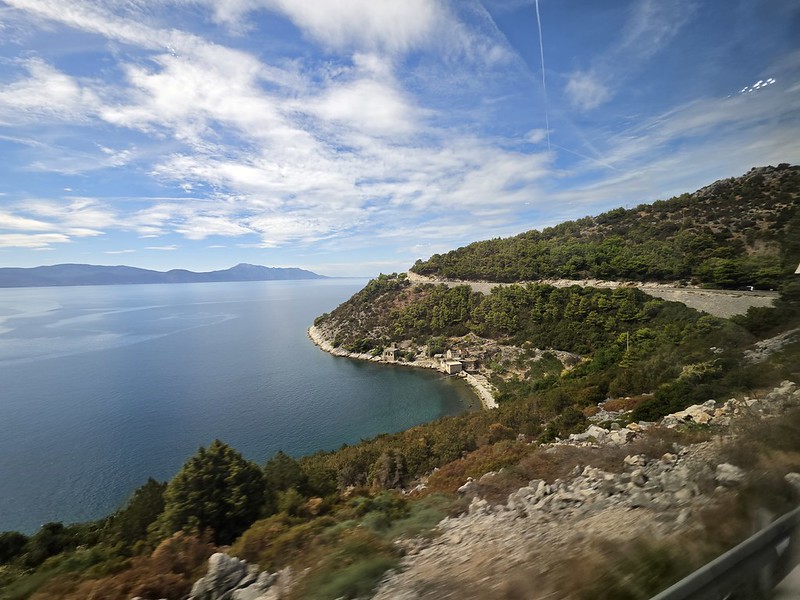
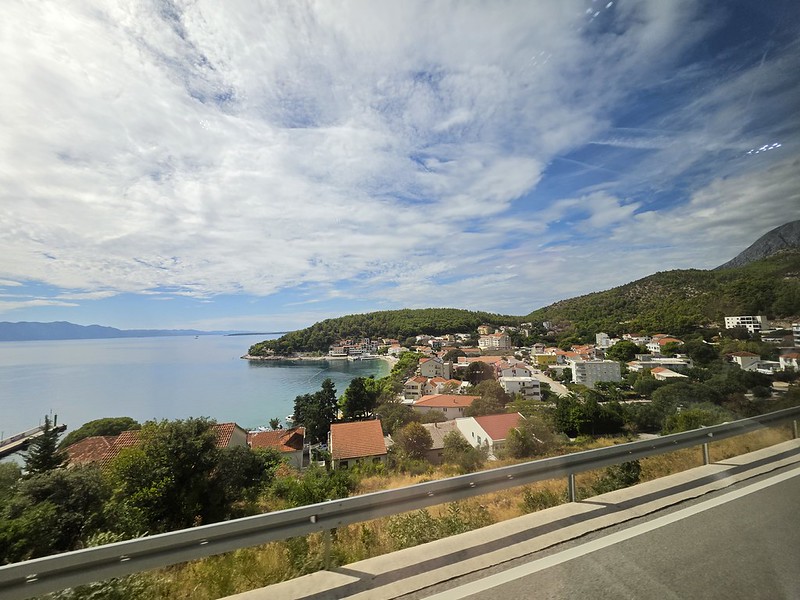
    This is Drvenik and the Adriatic was looking rather lovely. I’ve been to Dubrovnik many years ago, as well as Zagreb many years ago, but this was my first time travelling along the Croatian coastline.

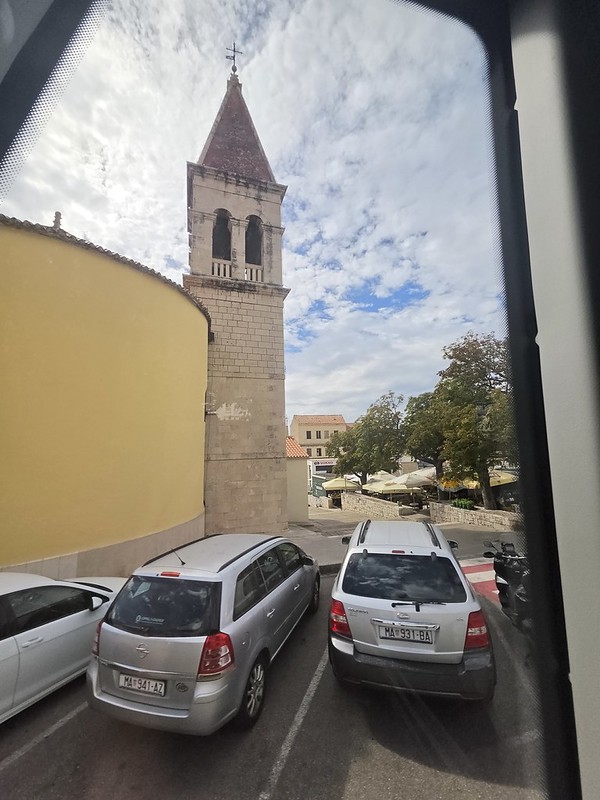
    The church in Makarska, photographed during one of the relatively brief moments when the coach, the building and my camera were all pointing in compatible directions without me appearing in the reflection of the window.

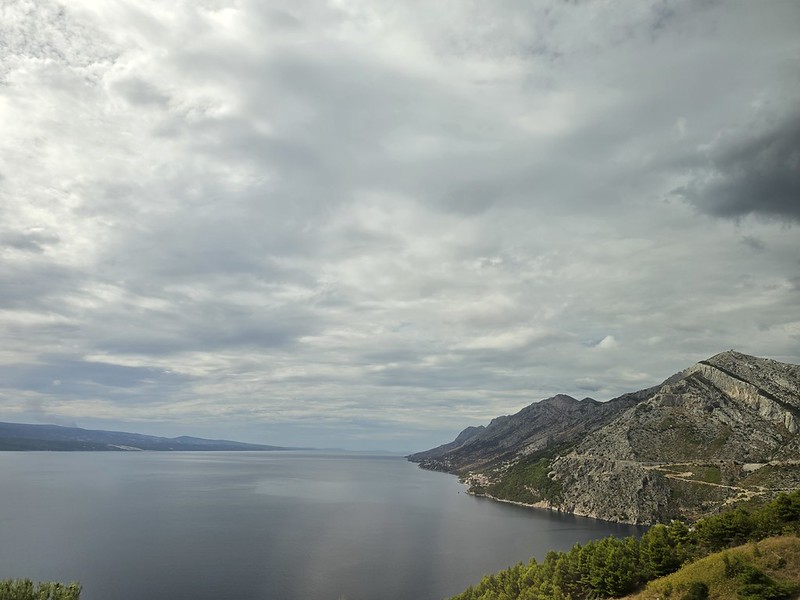
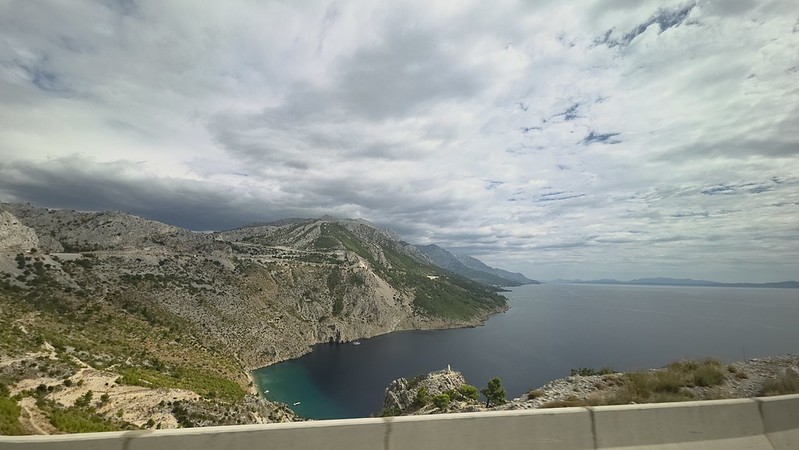
    Located near the village of Dubci, the glorious views continued and I took several videos, which will make an appearance on this blog at some point.

    I remember this coach trip fondly. The route delivered one coastal view after another and, unusually for a long coach journey, I was in no particular hurry for it to end.

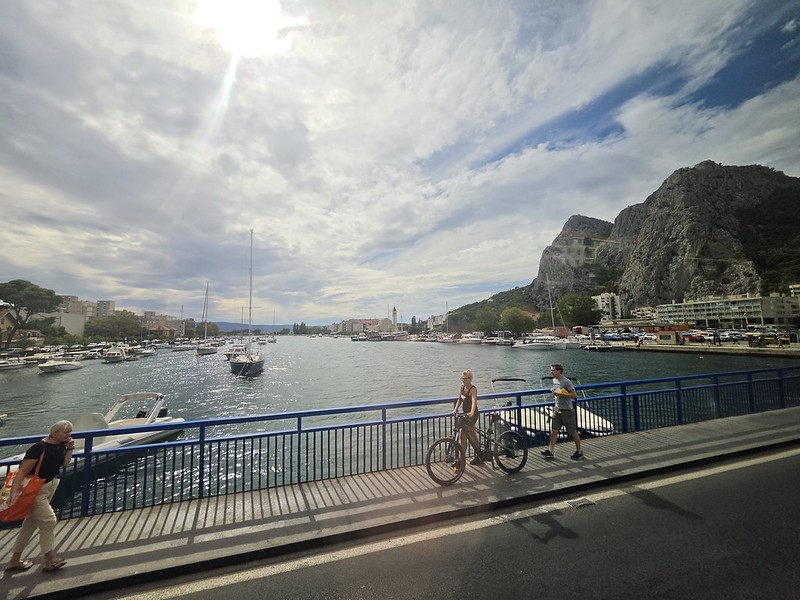
    This is Omiš and this stretch of coastline was more built-up and was evidently popular with tourists.

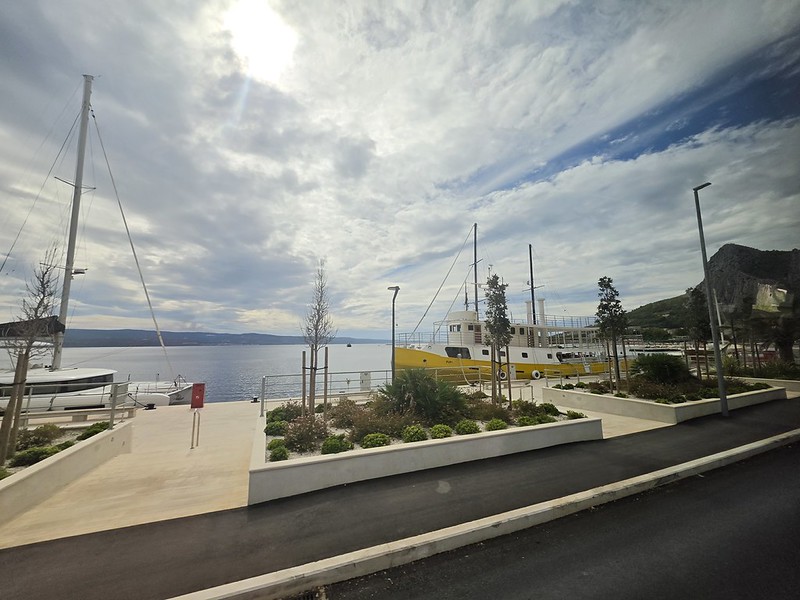
    The harbour a couple of miles further along the coastline.

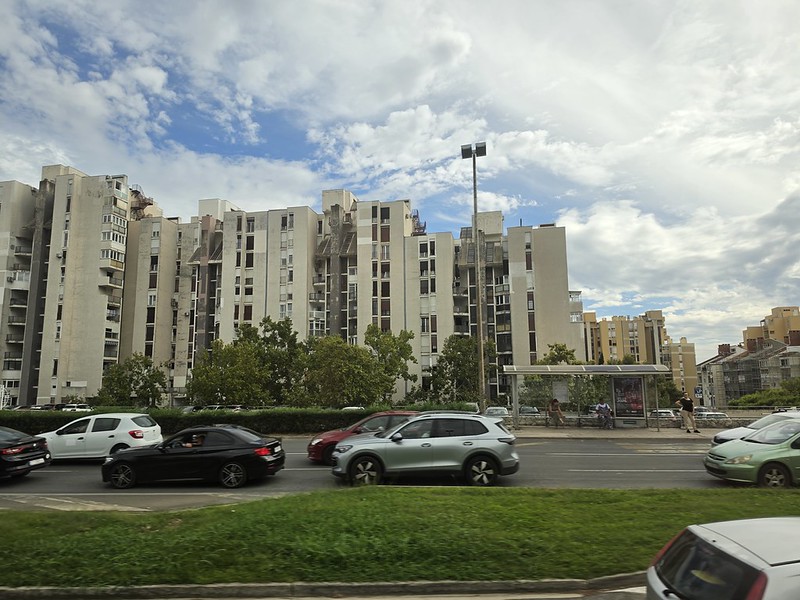
    Then into the outskirts of Split and I liked the architecture of these buildings whilst noting that we had arrived on-time. We only had one evening in Split and I was keen to see what I could of the city.

    This had been one of my favourite coach journeys, as it is rare to enjoy such consistently beautiful views for so much of a route. The proper coach, functioning air conditioning and absence of collapsing seats had also established an exceptionally high standard by this stage of the trip.