Tag: Reading

  • Reading – Reading Abbey (Burial Place of King Henry I)

    Reading – Reading Abbey (Burial Place of King Henry I)

    Monarchs have had a variety of outcomes with their burial surroundings, as many found themselves buried in buildings that were torn down following the Dissolution of the Monasteries. Several are buried in France, such as William I, and some such as William II were fortunate that their burial location in Winchester Cathedral has been left relatively intact. Richard III ended up under a car park before his recent move to Leicester Cathedral and some such as Richard II got lucky and are at Westminster Abbey.

    King Henry I, the son of King William I, died in France and was brought back to Reading Abbey, which he himself had funded. He died on 2 December 1135 and it’s said that this was because he ate too many lampreys, which isn’t an ideal way to go. His body took some time to be brought back to Reading, but the grand funeral took place on 3 January 1136. The great and the good turned up for this, including the Archbishop of Canterbury, the Bishop of Winchester and the Bishop of Salisbury to name just a few. And he would have remained buried here with some grandeur if it wasn’t for the Dissolution of the Monasteries and the ultimate destruction of the abbey buildings.

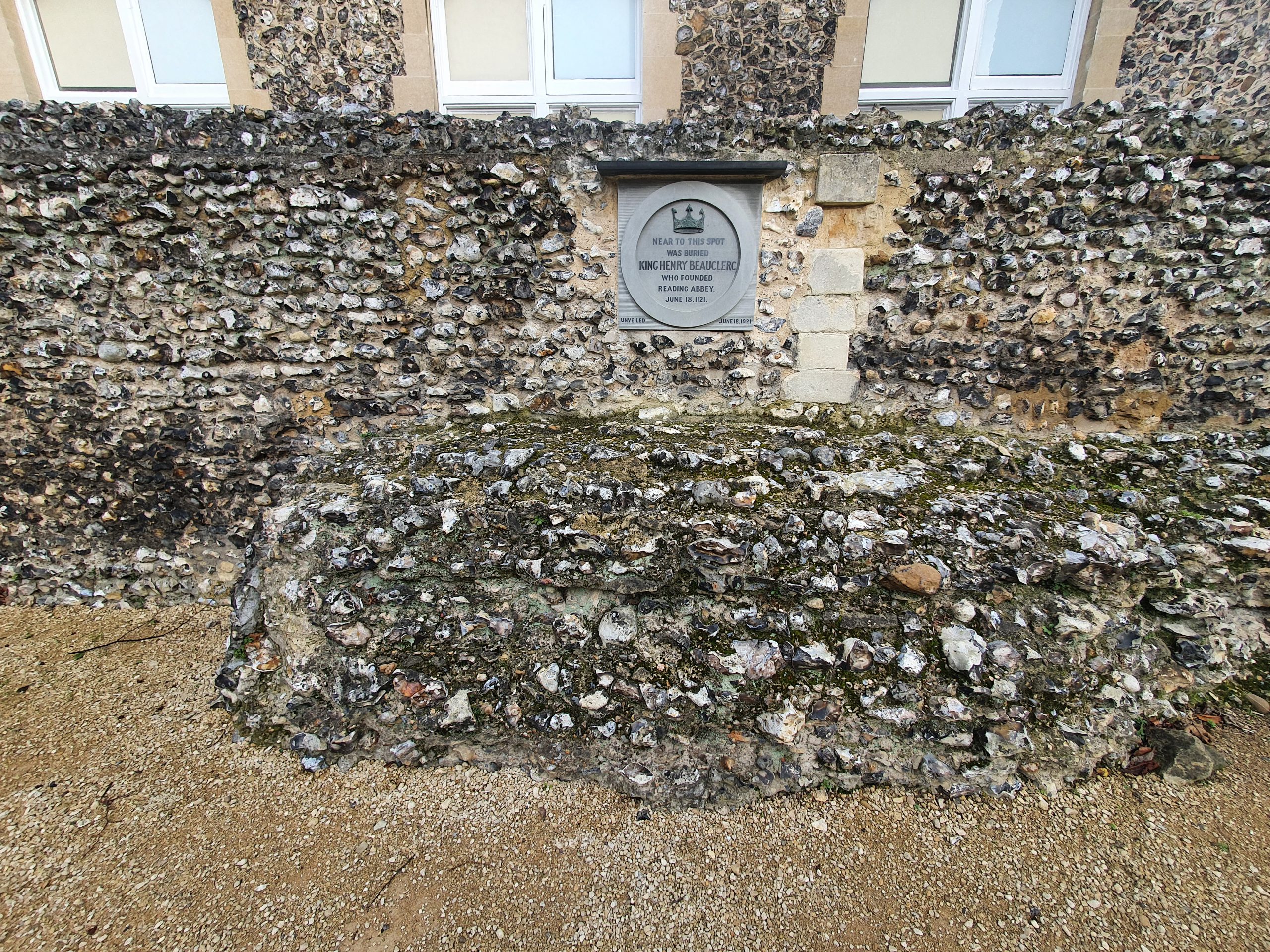
    And there’s no happy story here about finding King Henry’s remains in a car park, although that’s actually potentially where he is. His burial site is now used by a school and there is a car park, so stranger things have happened. People have looked for his grave, but it’s likely long gone, probably shattered soon after the Dissolution from pesky locals wanting to have a peer into what remained. There’s a stone plaque here now which is dated 1921, although was heavily restored recently so it looks modern. During the recent restoration work the archaeologists did think they might have found the former Monarch’s grave, but it transpired to be a religious burial that was from a later period. There’s a chance that King Henry is under the Victorian school, but it feels excessive to take the school down to have a quick look, although I suspect some historians would think it was a sacrifice worth making.

    If King Henry could look down on the current arrangements, I think he’d be annoyed. He financed one of the grandest abbeys going, bigger than some cathedrals today. His grave would have been pride of place if the building had survived, something of a tourist attraction and it would have likely been given a lovely big slab of some expensive marble to put him under. But, history went another way, and his remains are lost, but at least not forgotten. But I don’t think that he’d think that the situation is ideal.
  • Reading – Weather Station

    Reading – Weather Station

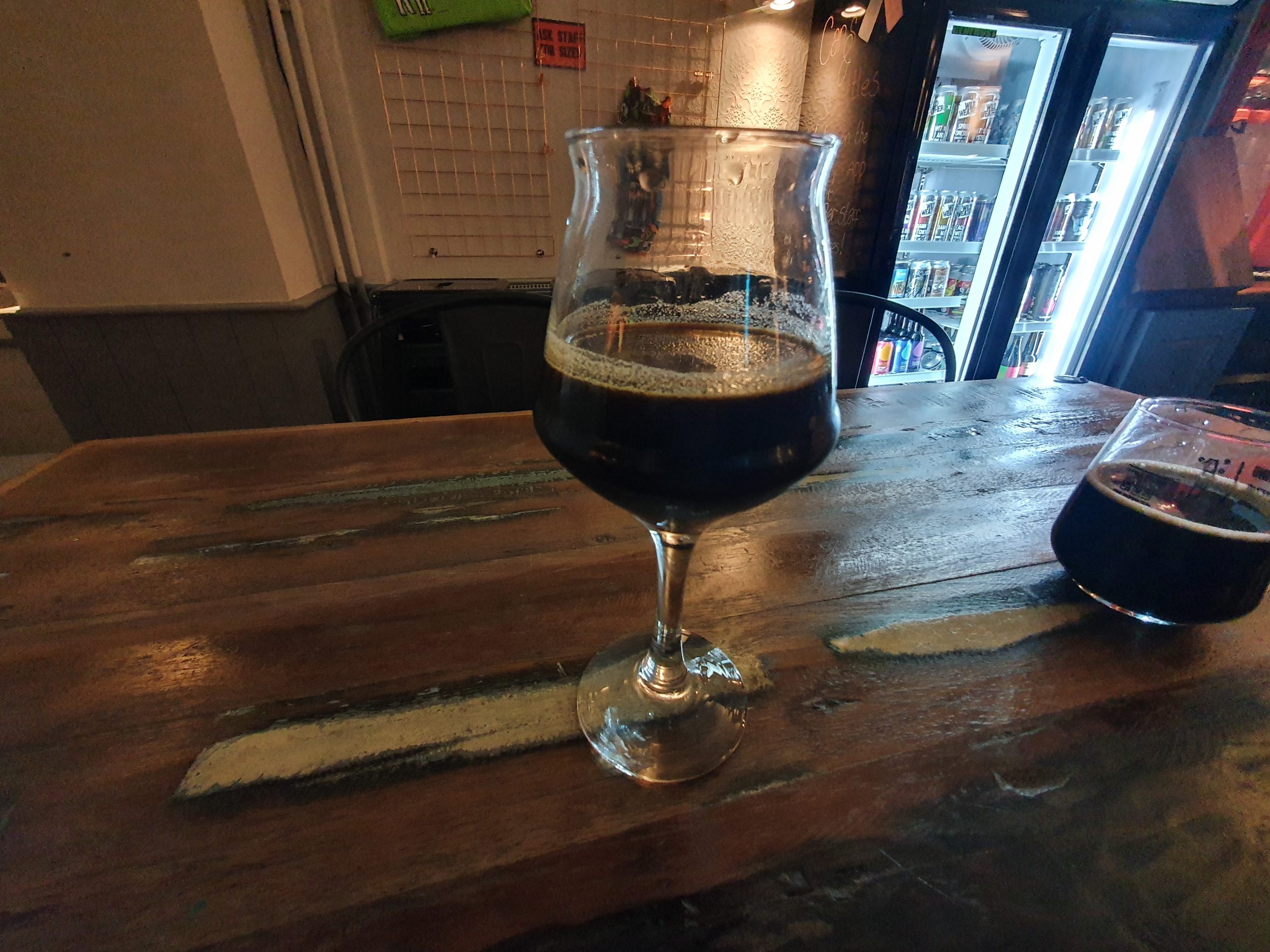
    Formerly the Eldon Arms, this pub was renamed in 2019 after being taken over by the Wild Weather Ales brewery. It’s listed in the Good Beer Guide, although primarily for its relatively small collection of real ales, rather than for its very decadent selection of keg beers.

    There are some really quite exciting options there, with the member of bar staff being knowledgeable about their venue’s offerings, which inevitably had lots of Wild Weather Ales, but also a fair few Omnipollo beers although these were mostly in cans. This felt a grown-up sort of pub, entirely informal and actually a bit rough around the edges, but the quality of the drinks available had a maturity that I decided made it instantly deserve respect.

    Two things here, there was a decent selection of beers in the fridges, and that leads me to moan once again about how non-tied licensed premises should nearly always try and offer something similar. Secondly, I wasn’t a fan of the big chunky table that I was sitting at, as the surfaces weren’t entirely flat. With decadent beers, I don’t want to risk of a spillage.

    The star of this expensive show was the Mammut Barrel Aged from Omnipollo and this was a quite beautiful beer. There were flavours that would hit the palate at different times, giving tastes of bourbon, vanilla, Oreos (not sure I was meant to get that, but there we go) and some nuttiness to the whole arrangement. A complex and beautiful beer, this is really a dessert substitute that saves people having to eat cake.

    I was so excited to try the Mammut that I had it first, before the Maple Latte from Wild Weather, and that was evidently the wrong way to enjoy these. But like Theresa May running recklessly through a field, it’s time sometimes to throw caution to the wind. This beer was smooth with some pleasant honey flavours, although perhaps it was just very slightly artificial, but it was still a delight. It was like a little cup of really quite smooth coffee after the most luxurious and full of desserts. I think I’m one of my flights of fancy again here though, but it’s fair to say that I really could get into this beer thing…..

    Back to the pub, other from a very loud barking dog that I was pleased was moved to the other end of the bar quite promptly, the surroundings were peaceful. I browsed yet another book on my phone, which is all to the good as I’m making rapid progress through my little backlog of reading. The staff members were unobtrusive, but always helpful, and it was surprisingly not busy inside for a Friday evening, although my visit was on the day of the gales.

    The pub reviews are all as positive as a venue could really hope for, with no 1/5 feedback on Google Reviews at least. They did pick up this:

    “Would be good but loud metal music will mean this place won’t survive… unfortunately.”

    as a 2/5 shortly after opening, but I think that the reviewer has already been proved wrong. I can’t remember the music and that often is something that I fail to notice, but that means that it didn’t annoy me. If it was loud metal music then I would certainly be muttering about the place (well, to myself), so perhaps they’ve moderated the noise since this review. Someone complained that they were “too hipster for cash”, which is a sneer that tells me more about the reviewer, but it’s certainly an on-trend venue because of the quality of the surroundings. This is an unusual pub to be in the Good Beer Guide, but I’m very pleased that it is, this is the sort of venue that the book must include to ensure that it remains relevant, which means CAMRA needs to ensure it has members who visit pubs like this.

  • Reading – Phantom Brewery Tap (The Haunt)

    Reading – Phantom Brewery Tap (The Haunt)

    I thought that this brewery tap was closed when I walked by, so was just about to meander off before I noticed some people leaving the building to get some snacks from the street food vendor parked at the front. It’s about a ten-minute walk from Reading railway station and in the rather unattractive setting of an industrial park, but it’s worth coming to visit. There’s no cask beer served here and so it isn’t listed in the Good Beer Guide, and if I can start off with a slight moan about this whole set-up of the book (which is nonetheless one that I adore), this is the sort of location that should be listed in the guide. Modernisation must come…..

    The beers are listed on Untappd, but those who prefer they’re also chalked up on the board behind the bar. The service was friendly and engaging, there was a relaxed vibe to the entire industrial arrangement. Actually, it was a bit too relaxed, I could well have spent several hours here and there were some flavours of crisps that I hadn’t had before, let alone even touching on the beers. Sometimes, there’s just too much choice in the world.

    A shuffleboard, arcade machines and plenty of seating, and I think there’s another hall next door as well. The vast open set-up more suits itself to groups perhaps, and that seemed to form the main audience during my Saturday afternoon visit, and youngish groups as well in the main.

    The beer production area and I think this is all quite new, set-up in the last three years. Everything is clean, there’s an air of this being a well managed venue, but it’s all quite understated. Indeed, so understated I thought it was shut, and perhaps there’s a charm in that level of confidence of not needing to shout too loudly. Customers will find this bar because it’s different and quirky, they don’t need to indulge in unnecessary self aggrandisement and they don’t. Anyway, I digress.

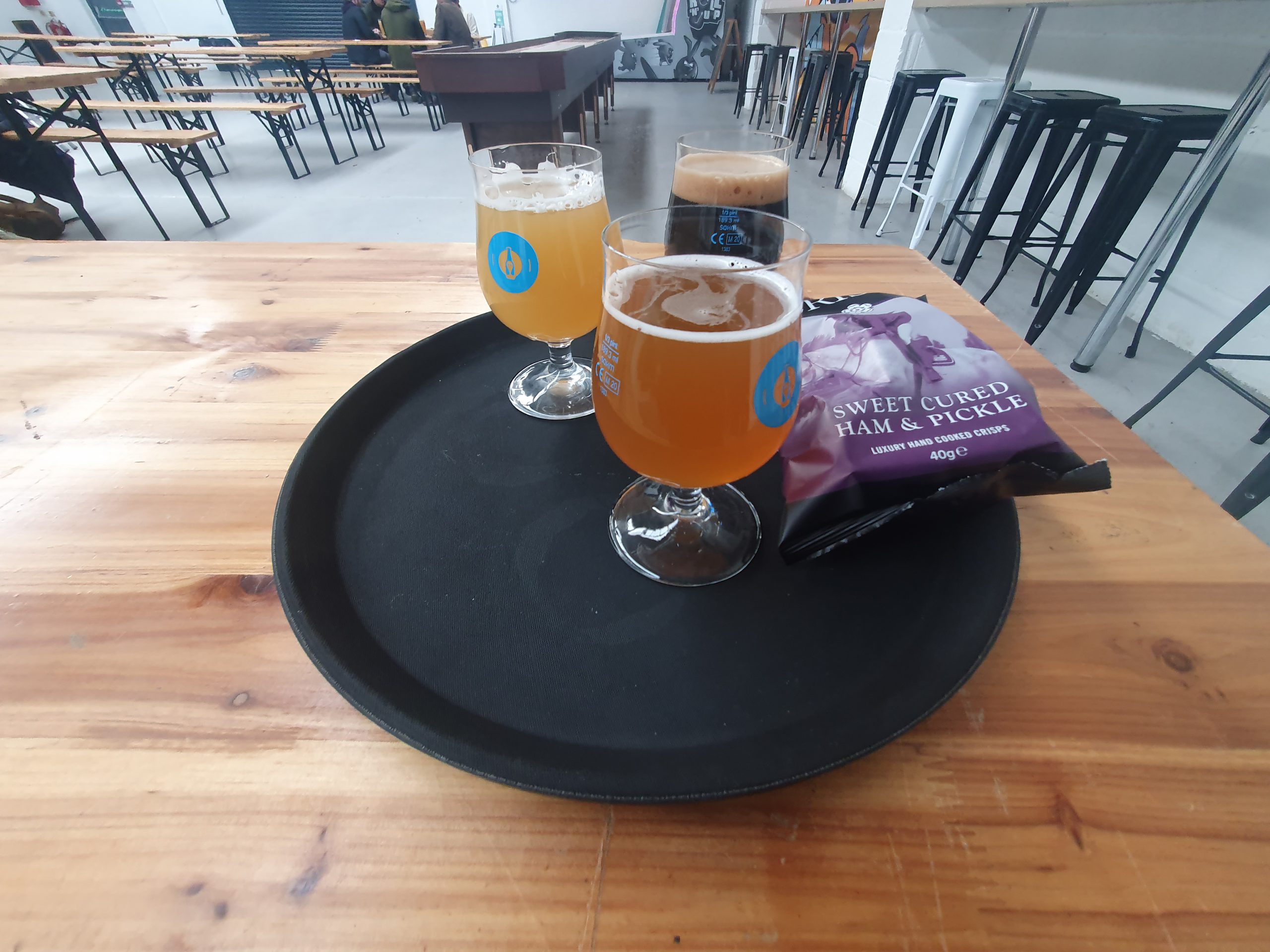
    I went for three different thirds and a pack of ham & pickle crisps, as I felt that this would complement my little selection of beers. It was also at this time that I thought I should make plans to work out how to leave Reading by train given that most services were being cancelled, a legacy of yesterday’s gales.

    But train distraction aside and back to the beers. From left to right, there’s the Faked Alaska milkshake IPA, the Foamy Banana Milkshake Pale Ale and then the Just Deserts pastry stout (and I mispronounced that as Desserts before correcting myself, as they politely didn’t say anything), the latter of which is the only one of my choices which is brewed by Phantom. They were all very decent beers, but I had quite a fondness for the Foamy Banana, which the staff member had suggested smelling, drinking and then smelling again to get the full effect. This is how bananas should be consumed and I don’t care if it is a bit artificial or sugary, banana in beer is a very underused flavour and is mostly seen with Eagle Brewery’s Banana Bread Beer. It was a very memorable beer from the Play Brew Company from Middlesbrough who I’ve noted have some very intriguing options (marshmallow and peanut milk stout, or raspberry and milk sticky lolly pale ale anyone?) and also a taproom to try them in. I must go, I’ve decided.

    The environment was all on-trend and they’ve done as much as they can perhaps do in what is effectively a big shed (which fortunately didn’t blow away yesterday). The bar set-up to the side and the games add extra character to the arrangement, but this is just an interesting and fun brewery tap which looks like it is quite creative in its offerings. I liked it, but for anyone who thinks that it’s shut, try the door anyway as a joyous experience might still be available inside….. I hope to come back another time, not least because I’ve got more crisps to work through.

  • Reading – Reading Museum (Boar’s Head)

    Reading – Reading Museum (Boar’s Head)

    The delightful Reading Museum, and this will be the start of a short series of posts about exhibits which I found quite intriguing.

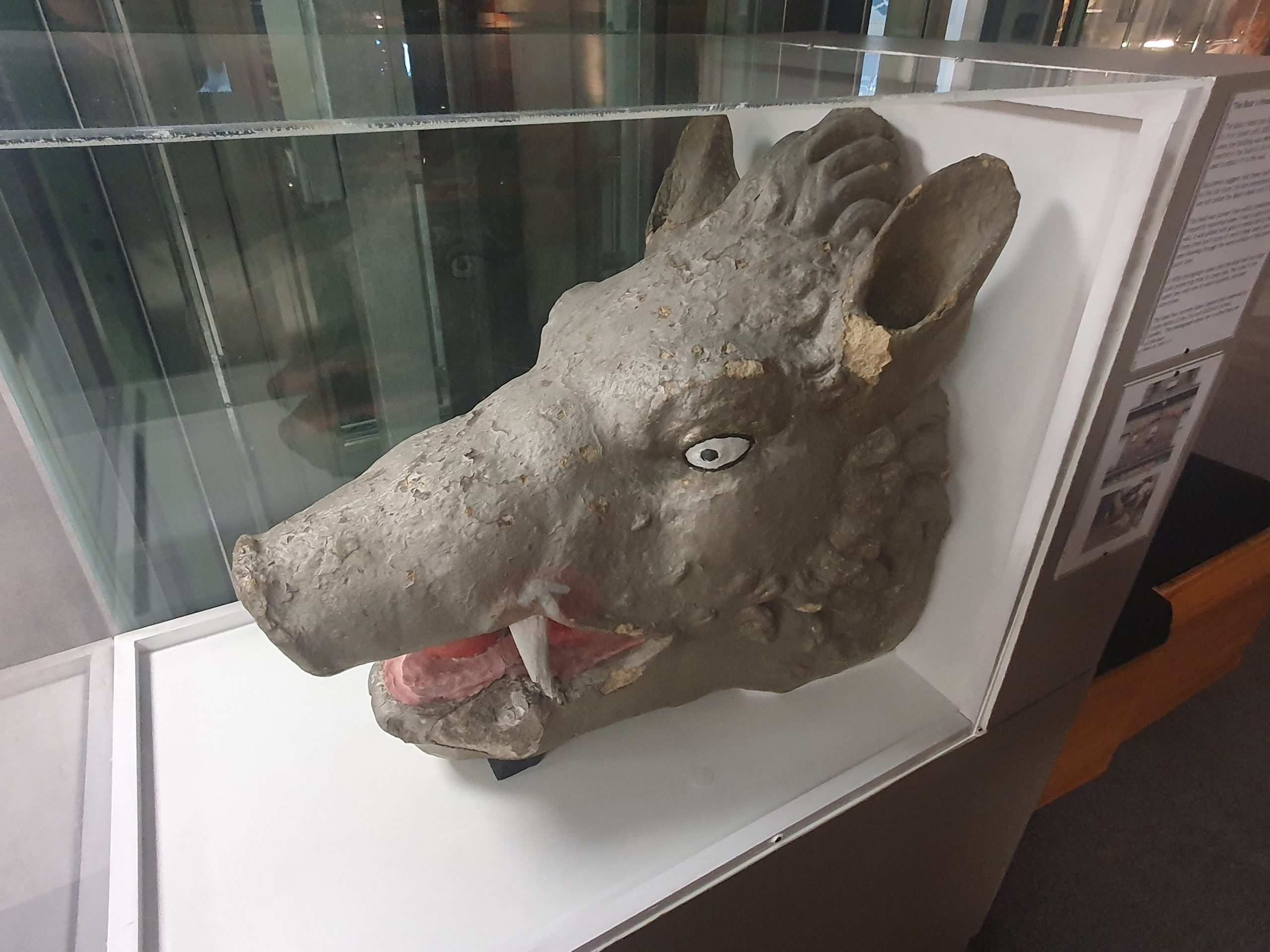
    I very much like that this has been saved, it’s the Boar’s Head from the pub of the same name which was a licensed premises from the late seventeenth century until it was demolished in 2003. Once attached to its own brewery, there are some photos of how it looked at http://www.closedpubs.co.uk/berkshire/reading_boarshead.html. English Heritage refused to list the structure in 2002 and looking at it, I can see why, it does appear to be much knocked about and lacking any obvious historical charm. And I can’t much complain about the building that replaced it, as it’s the Novotel and Ibis that I stayed at earlier on this week.

    Back to the head though, it’s made from limestone and it’s unclear when it was made, but it has several layers of paint on it and it was gilded on at least three occasions. That it was made of limestone was a surprise, which suggests that it might be from the nineteenth century. It was removed in October 2003 and then sent for repair as it wasn’t in the best condition by the time of the building’s demolition, then brought to Reading Museum.

  • Reading – Reading Abbey (Chapter House)

    Reading – Reading Abbey (Chapter House)

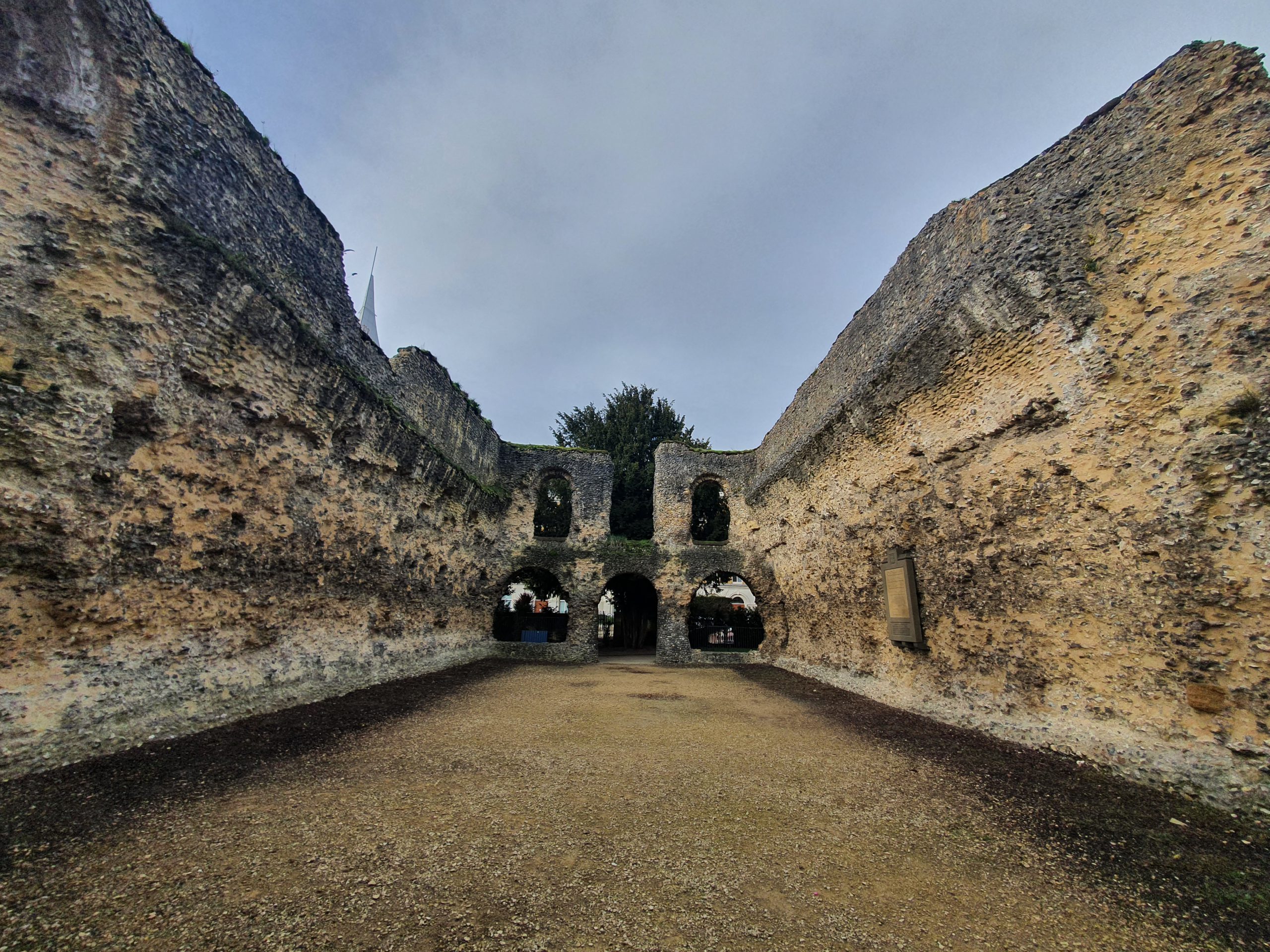
    I was disappointed yesterday when Storm Eunice meant that the abbey ruins were closed, but relieved that they had reopened today, with this being my favourite part of the remaining structures. It is perhaps somewhat unnecessary to have a favourite part of a ruined building, but the history that is encapsulated in just this relatively small area is substantial. It was once the chapter house of Reading Abbey, and this is a sizeable space which was once around twelve metres in height. Norwich Cathedral, which I use to compare sizes, has lost its original chapter house, but the footprint wasn’t anywhere near as large as this.

    Within this space the House of Commons met on more than one occasion when the Royal Court was in Reading and that alone makes it feel quite a special area. I accept politics has changed somewhat, but when the King was here and the Commons and Lords met at the Abbey, this was the centre of all power in the country. The remains of the vaulted ceiling is visible towards the top of the wall, it must have all looked quite grand when it was standing.

    And if that wasn’t enough, this is also where King Henry II met Heraclius of Jerusalem in 1185. By this time the religious institutions had pretty much forgiven Henry for his role in the execution of Thomas Becket, and Henry had apologised for going to Canterbury Cathedral and letting the monks hit him (I wonder if that’s a precedent for rogue political figures, but I won’t stray further into politics and I doubt that the Archbishop of Canterbury would fancy getting involved in that). However, Heraclius wanted Henry to send an army to Jerusalem, preferably led by himself, but the Monarch wasn’t having any of that. And that decision, likely a very sensible one, was announced in this space. I like that.

    This stone represents the ‘Sumer is icumen in’, a thirteenth century tune (although I think it’s called a round, but medieval music isn’t one of my strong points). The document with the musical score is in the British Library and comes from Reading Abbey, although it likely wasn’t originally written here. The modern English version of this little ditty is:

    “Summer has arrived,
    Loudly sing, cuckoo!
    The seed is growing
    And the meadow is blooming,
    And the wood is coming into leaf now,
    Sing, cuckoo!

    The ewe is bleating after her lamb,
    The cow is lowing after her calf;
    The bullock is prancing,
    The billy-goat farting,
    Sing merrily, cuckoo!

    Cuckoo, cuckoo,
    You sing well, cuckoo,
    Never stop now.

    Sing, cuckoo, now; sing, cuckoo;
    Sing, cuckoo; sing, cuckoo, now!”

    Lots of cuckoos, apparently this is a very important tune though.

    This relief marks the appointment of Hugh of Amiens as the first Abbot of Reading Abbey, a role which he held from 1123 until 1130, when he went off to be the Archbishop of Rouen until his death in 1164.

    Since the first Abbot is commemorated, it’s only right to do the same for the last, Hugh Cook of Faringdon, who refused to surrender his Abbey. He was taken to the Tower of London for annoying King Henry VIII, but was brought back to Reading for a show trial and he was executed at gallows near to the abbey’s gateway.

  • Reading – The Alehouse

    Reading – The Alehouse

    The centre of Reading was returning to normal after the winds of yesterday had rearranged the litter quite comprehensively around the streets of the town. The wind had nearly entirely dissipated, back to the more usual pouring rain that I’m used to in this country. As a lunchtime trip beckoned, I opted for the generally well reviewed Alehouse, but it was a little difficult to know what to expect as their web-site is down and they haven’t been engaging with their social media accounts for some time. I accept there’s more to life than social media (such as crisps), but it is useful to know a little about a venue in advance.

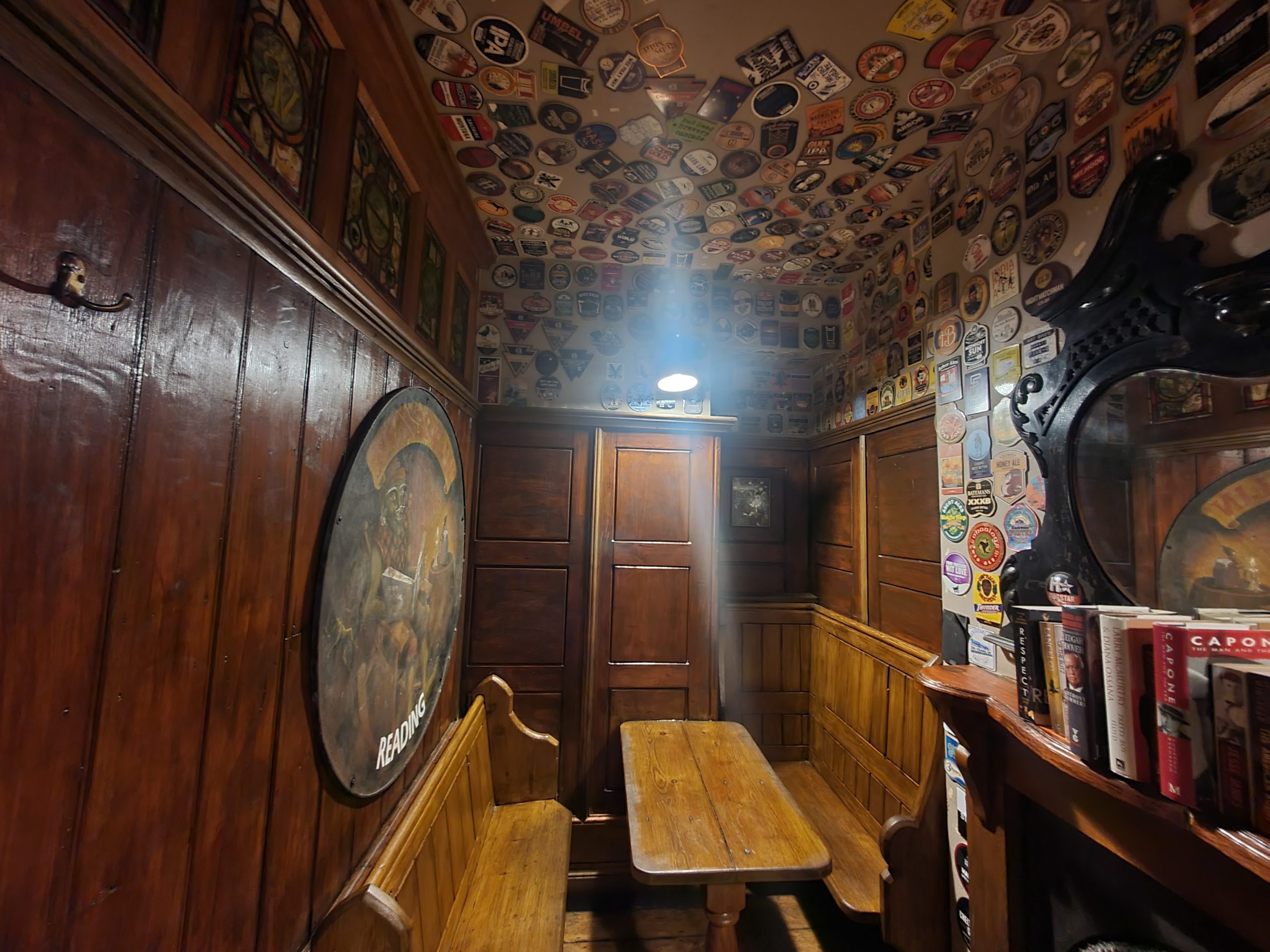
    The bar was quite busy and so I didn’t get any photos of the arrangements there, but it had quite a unique charm with pump clips positively raining down from the ceiling. It was all friendly enough, another customer made conversation with me, so my little tick box of a welcoming vibe was on offer here. The pub is listed in the Good Beer Guide, which is what drew me there in the first place, and there were five or so different real ales available. The choices weren’t immediately obvious to me, but the member of bar staff was happy to engage and find me a suitable dark beer.

    As the front bar was full I decided to go and investigate the back rooms and these are full of charm, with several nooks and crannies.

    Now that’s quirky, I like it. Some interesting books on the shelf and some effort with the decoration on the ceiling in here as well. Absolutely no phone signal, but plenty of charm. The toilets at the back of the pub feel quite old-school and they require some slight manoeuvring around some beer barrels, but that all adds to the character.

    I went for half a pint of the Black Crow from Longdog Brewery which is a microbrewery located a short distance away in Basingstoke. This was well-kept and what I would call a session dark beer (I think that’s a thing, although others might disagree), even if it is 4.5%, although it lacked the richness and decadence that I’d ideally like.

    As a pub though, this is the sort of quirky and interesting venue that the Good Beer Guide is really very reliable at pointing me towards. A comfortable and authentically welcoming pub, although this is another location that I imagine is quite hard to find a table at even slightly busy times. I very much liked my little booth arrangement at the rear of the pub and I was undisturbed during my lunchtime visit, ploughing through another book on my phone. I don’t know much about Belgian beers, but there were several of these available, and indeed I’d say there was a suitably broad range of drinks for most customers. All told, I’d recommend this place, but bring a book as this is the sort of pub that just lends itself to reading and conversation.

  • Reading – Nag’s Head

    Reading – Nag’s Head

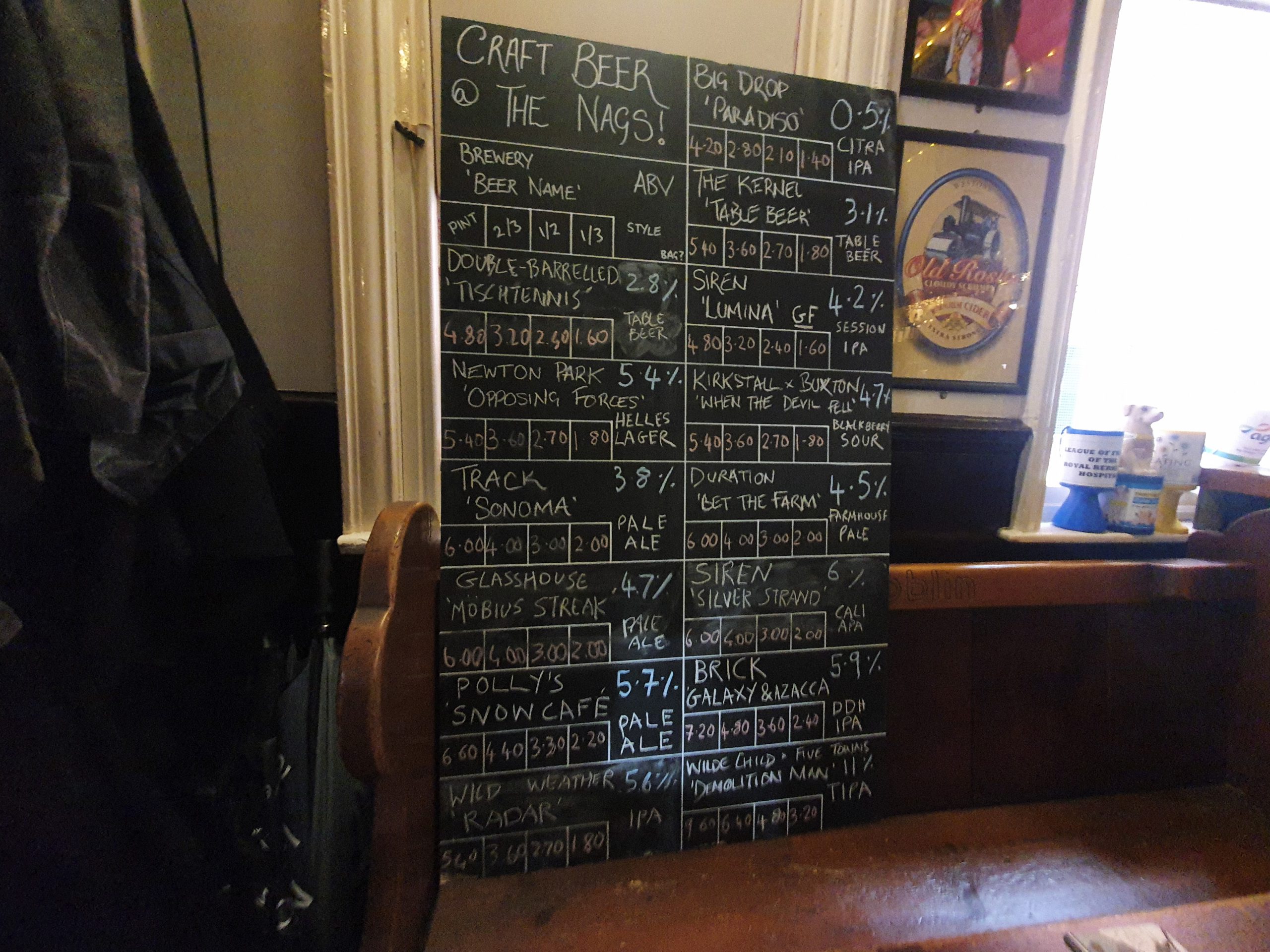
    This Good Beer Guide listed pub looks fairly ordinary from the outside, but I was moderately surprised on entering to note that it was nearly full on a Friday afternoon. It’s clearly a destination pub that serves a community beyond its immediate surroundings, with one of the best web-site arrangements that I’ve seen, giving every bit of information I can think any customer would need before a visit. I was also once again pleased to note that the beer options were listed on Untappd, which saved me some time on arrival.

    The bar, with an impressive selection of bar snacks just out of shot to the right. It’s certainly quite a colourful arrangement. The service was polite and friendly, it felt like an welcoming and inviting atmosphere. It’s not the largest of pubs either, but they make use of the space well, which I imagine is essential given they must be at capacity for a fair chunk of the week judging by the number of customers on a Friday afternoon. They’ve also made space for darts as well in one corner and there are numerous board games dotted around the place.

    The keg list is sitting by a table a little out of the way, but I decided to then sit at that table so it became very accessible to me. More as an observation than a complaint, but there’s not a great range of beer styles here, with a fair chunk of duplication. There are no dark beers and they only had one dark beer on cask, which was a decent one, but which I’ve had numerous times before. The beer choices were of course much wider than most pubs, but I couldn’t see a beer that I thought would be standout, although I checked the list when writing this and they’ve rolled out four beers (including darker options) overnight and those choices look really very intriguing and include Siren’s Dark & Perilous Nights. I nearly went back today just to have that, but I have a limited time left in Reading.

    There’s a snacks menu and they sell sausage rolls, which is something that in an ideal world every single pub would sell. They seem to acquire them from a local butcher I understand, so I imagine that the quality is high. I had already eaten so didn’t partake, although as usual I was quite tempted.

    I went for two halves, the Snow Cafe from Polly’s Brewing and the Silver Strand from Siren, both very acceptable beers and the prices were moderate. The atmosphere was comfortable (and the beers were nicely comforting) and I only slightly lost track of time reading a book on my phone.

    The pub is well reviewed online, with the only real negative being a worrying one since it’s about the sausage rolls:

    “Don’t order the sausage roll, it’s just a joke. The size was like 10cm sausage roll. If you are starving it’s not the better place to eat. The most important…£4.. they actually went to coop, got the left over of the day and sold it to me.. absolutely ridiculous! When I mentioned this to one of the waitress, she laughed and said ahah oOK, and left.. service is also a big joke”

    I suspect that might be something of an exaggeration, although they did upset an American who had sat there for twenty minutes without buying a drink. Some reviews note how good the pies are in the pub as well, although they seem to have stopped selling them.

    Anyway, a perfectly decent pub, and although it was quite hard to see what they sold when standing at the bar, I’ll forgive that as it’s all clearly listed on Untappd. The choices veer across ciders, real ales and keg beers, although I’d definitely have preferred rather more dark beer options in an ideal world (although, to be fair, that ideal world appears to have arrived today), but at least there were numerous other interesting selections to opt for. This is another pub which is on-trend, but solely because it has a modern and well curated choice of beers, not because it’s trying to be formulaic or pretend to be something that it’s not.

  • Reading – The Retreat

    Reading – The Retreat

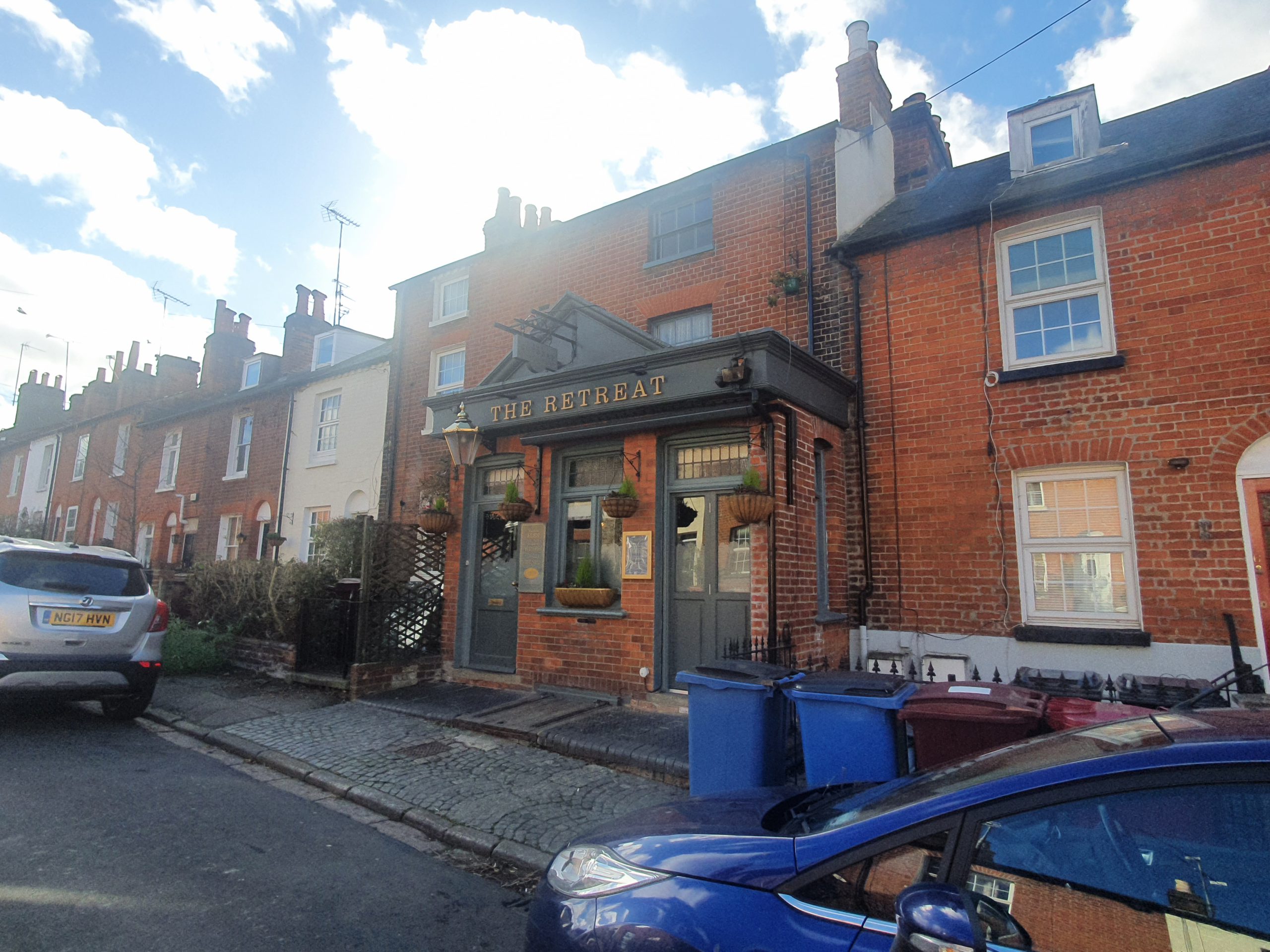
    On my little tour of Good Beer Guide listed pubs in Reading (and any others recommended to me en route) I popped into The Retreat after dodging the flying wheelie bins in the area. I had been stopped a few minutes before by a woman who told me that a chunk of a tree had fallen off in the gales, although I’m not sure what she expected me to do about it. She asked me if she could have this lump of wood, but I didn’t feel that it was really my place to decide that either way. I couldn’t work out whether she wanted half a tree for some purpose at her house or whether she was worried that it would fly off and hit a car or pedestrian. Anyway, she walked off looking happy with her tree acquisition, but I’m not sure that I aided much.

    As is evident from my never ending posts about pubs, I nearly always decide that the service in them is friendly and welcoming, and that was indeed the case here. But, it’s much more rarely that I decide that a pub goes further and that the customers are also keen to engage with anyone coming in. I’m always heartened when this happens, as it’s apparent to me that if someone had just moved into the area and come in here, then they’d be made to feel comfortable and keen to become a local. As is likely evident from where I’m going here, this is true of this pub. Indeed, it reminded me of the welcome offered by the Hop & Vine in Hull a few years ago, which has seen me divert to the city on numerous occasions to go back.

    This pub is not just listed in this year’s Good Beer Guide, it was first listed in the book in 1974, showing some considerable beer heritage. And, as another one of my flights of fancy, I noted the owners have made the effort to write a comprehensive history of the pub, something which I always think is a delight and done far too infrequently. Pubs so often have a long heritage and so often there is nothing mentioned by the owners about their history. Anyway, I digress.

    I went for half a pint of Harvest Pale from Castle Rock Brewery, which was well-kept and tasted as it should do. There were several real ales available, all reasonably priced. I didn’t opt for Woodforde’s Wherry, although it reminded me of my visit to their brewery a few months ago. I needed to eat elsewhere, but I was tempted by the bar snacks here, but that’s often the case.

    The recommendations of pubs that I asked for from a nearby customer transpired to be excellent suggestions, although I’ve still got a few more to go. Thanks to one of the pub’s customers, I’ve also discovered how to get rid of pigeons, although I won’t go into that too much. I very much liked the inviting atmosphere that they had going on here and if I had more time I would have likely lingered for hours.

    Doing some work on mental health for another organisation, I’m reminded by pubs such as this just how much they serve the communities in which they are based. I am convinced that anyone lonely, unsure or in need of company would be made entirely welcome here, and that’s the best praise I think that I can give The Retreat. So very lovely and an outstanding pub that I suspect I’ll be diverting back to come and visit again, perhaps on the day of the Pickled Onion Contest…..

  • Reading – Abbey Gateway

    Reading – Abbey Gateway

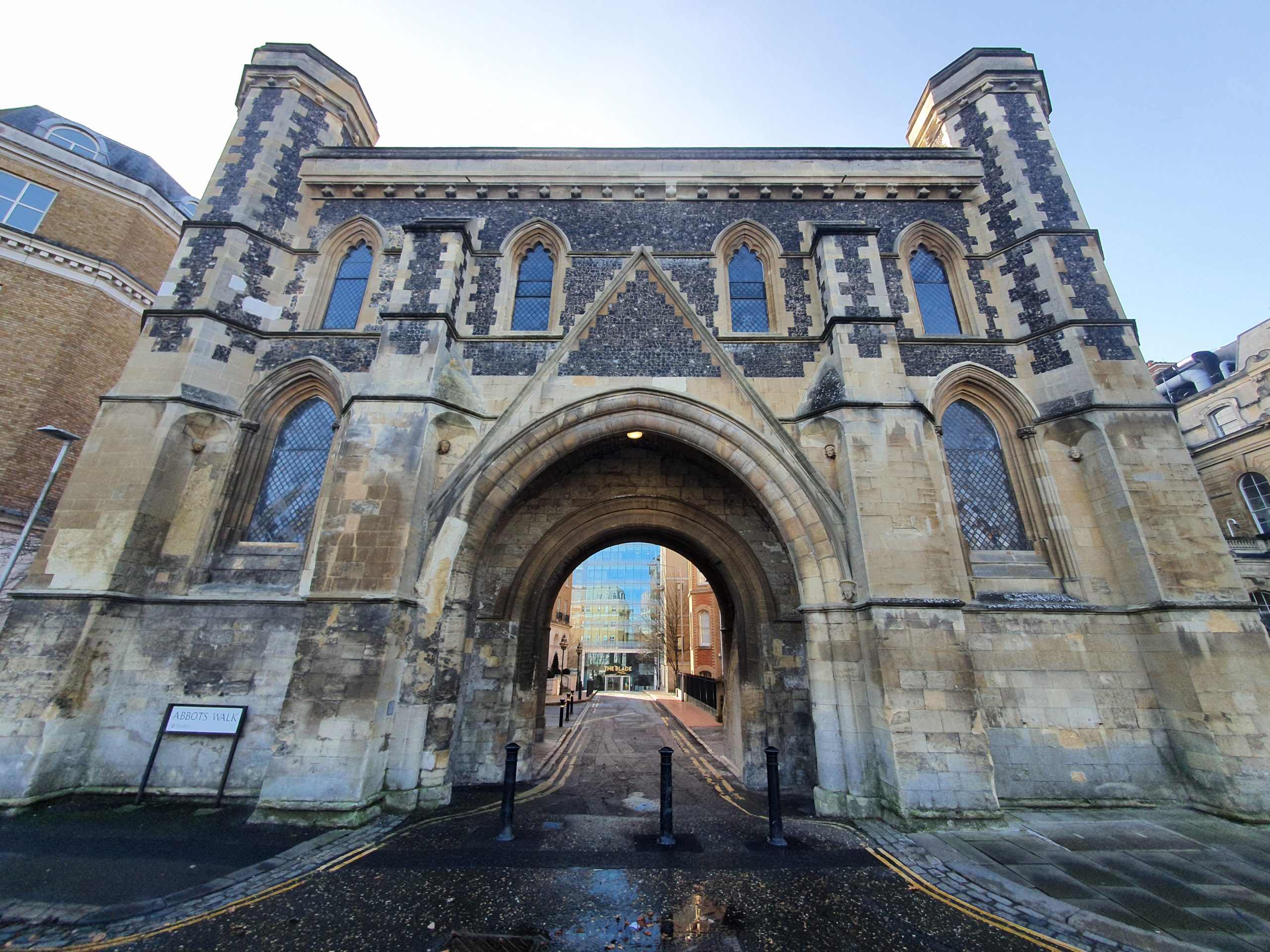
    This gateway is one of only two buildings that have remained intact from the vast complex that was Reading Abbey, with the other survivor being the Hospitium of St John the Baptist. This is what was once the inner gateway, separating the area that was used by the public from that section which was used by the monks.

    Following the Dissolution of the Monasteries, the structure was used as the gateway to the new Royal residence as the Monarchy had taken over the abbey buildings. It was also where Hugh Faringdon, the last Abbot of Reading Abbey, was executed on the charge of high treason as he didn’t accept the terms demanded of him by Henry VIII and his new order.

    The Reading Mercury had reported in 1860:

    “For several years this fine specimen of medieval architecture has been rapidly falling to decay. With the view of staying its further progress, some time since the Reading Local Board of Health entered upon negotiations with the owners for its purchase.”

    Then there was a little incident. The gateway fell down in a storm in February 1861 (fitting since I’m writing this on one of the country’s largest storms in recent years, also in February) and it was agreed locally that this wasn’t ideal.

    The repairs and restoration were led by Sir George Gilbert Scott, who already had plans on how to repair the gateway. There has been another restoration over the last few years to the gateway and the rooms above the arch are used by Reading Museum for school visits. I’m not sure that there’s any access to the general public, although I suspect that the most interesting bits architecturally are all external anyway since it had to be rebuilt.

  • Reading – St. Laurence’s Church

    Reading – St. Laurence’s Church

    I’ve left this defective photo in without editing it as it was so windy in Reading that my finger being there was required to avoid my phone being blown away. Most public buildings, but nearly no pubs, are closed today due to the Red Weather Warning, but St. Laurence’s Church isn’t open to the public anyway, so I couldn’t have visited. It’s still used by the Church of England, but they don’t accept visitors for safeguarding reasons due to their work here with children.

    Anyway, that issue aside, there has been a church here since the 1120s, although it was rebuilt in 1196 and the Hospital of St. John was founded at that time. There was a further rebuilding in the fifteenth century after the structure had fallen into a state of disrepair and the current tower was reconstructed at that point. It became an important church following the Dissolution of the Monasteries and Queen Elizabeth I had her own private pew here as she was a frequent visitor.

    The church take an odd view here of heritage, entirely ignoring the history of the building on their web-site and making clear they are “unapologetically” closed to the public as they are focused on young people. They don’t bother making very limited provision for those interested in the heritage of the building, which is clearly odd as this is Grade I listed, is one of the most important historic churches in the county and is of national importance. I fail to see why the church couldn’t have at least carefully taken photos of the interior for those interested or even made a virtual tour, if they’re adamant the public can’t visit the building itself. The Victorian fittings have apparently been stripped out due to the new usage of the church, but the memorials are apparently all still there and are mostly visible.

    There are numerous interesting graves and tombs on the exterior of the church, some in a state of disrepair and unloved. Inside is the font where Archbishop Laud was baptised and there’s also the memorial to the Tudor mathematician John Blagrave.

    One of the benefits of visiting a town lived in by the photography pioneer William Fox Talbot is that there are some very early photos available, this one dating to 1845. And he managed not to get his finger in the front of his photo…..

    This plan of the church’s interior was drawn by Joseph Morris, the architect in charge of the restoration and refitting which took place in 1867. It could fit 850 people in and the pews were made free of charge, although they were allocated by the church wardens, so it was necessary to stay in with them for those who wanted a good seat.

    Visible on the top-right of this plan is St. John’s Chapel.

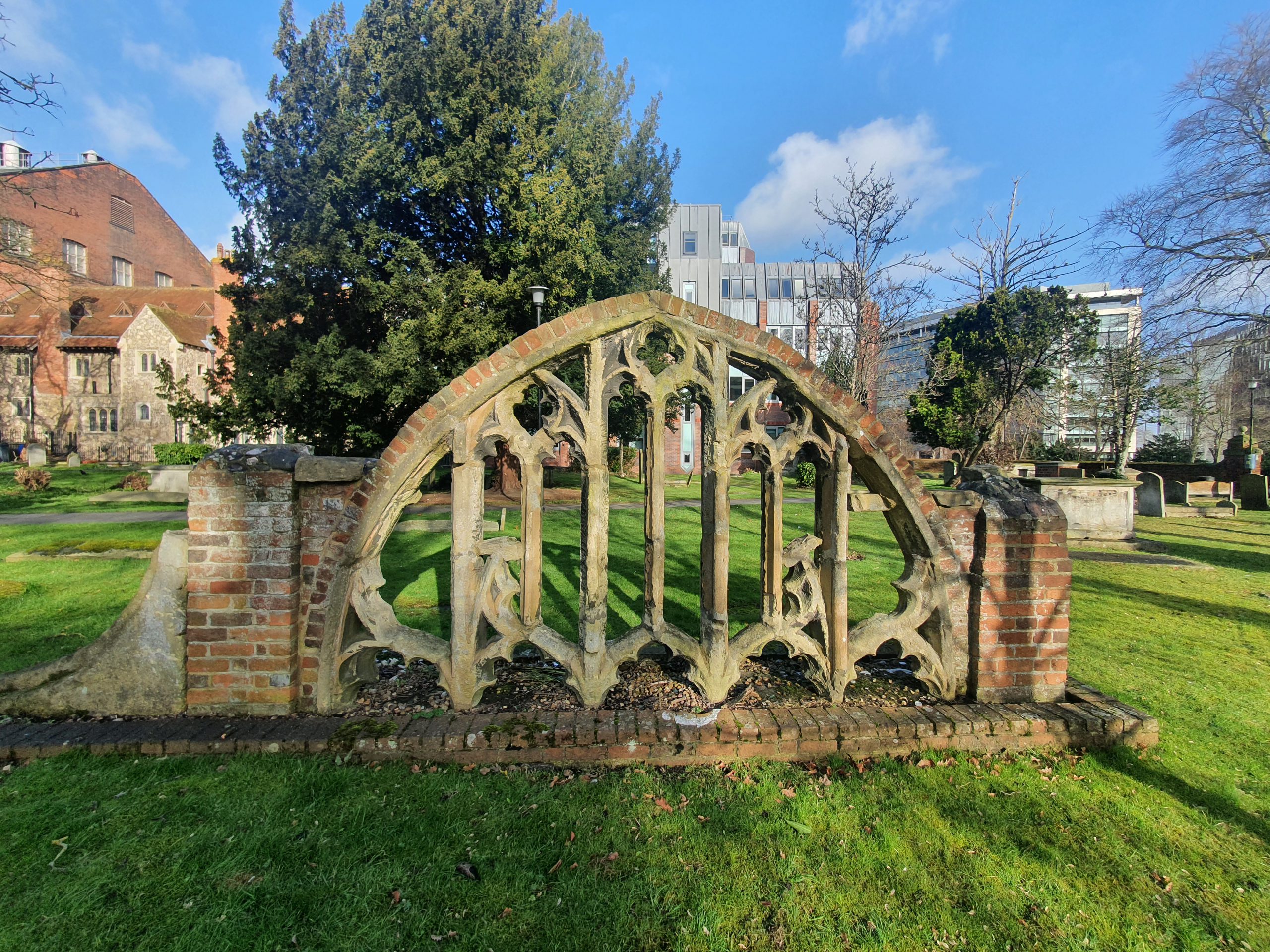
    The graveyard was given to the church in 1557 by Mary Tudor, as it was previously part of the land owned by Reading Abbey, which was closed following the Dissolution of the Monasteries. This tracery is from the church repairs undertaken following the Second World War damage, which destroyed nearly all of the stained glass in the windows.
    I rather like how nature has protected this grave.

    It’s a shame that the church has made this building so entirely inaccessible and there’s no excuse as to why they couldn’t have created a virtual tour at least to show off the heritage that they have. There’s a fascinating history to this building which is far beyond what the average church might have.