Tag: Norwich

  • LDWA 100 – Training Walk 10 (Finding the Source of the River Yare Part 2)

    LDWA 100 – Training Walk 10 (Finding the Source of the River Yare Part 2)

    This was our tenth walk in preparation for the 2021 LDWA 100.


    WALK NUMBER: 10 (Finding the Source of the River Yare Part 2)

    DISTANCE COVERED: 14.7 miles

    NUMBER OF NATHAN’S FRIENDS WE “ACCIDENTALLY” BUMP INTO: 1 (might have been someone I knew)

    SUFFICIENT BEER CONSUMED: No (all the pubs are shut)

    PUBS VISITED: 0 (not through choice)

    WEATHER CONDITIONS: Dry

    ATTACKED BY ANIMALS: No

    NUMBER OF SNAKES SEEN: 0


    The eagle eyed reader will note that the 14.7 miles has been split across two posts. Some might suspect that this was because I couldn’t be bothered to post about the entire walk in one go, but I repeat that it was to add suspense. Or something like that….. Anyway, the first post ended with Nathan faffing about crossing a puddle.
    At the moment, we’re on the right of the above map (moving left) and we were able to track the river for the first stretch.

    A frosty scene….

    We were able to continue by the river, although there were stretches that were particularly muddy. Slightly amazingly, neither of us fell over during the day. There weren’t that many other walkers along this little stretch, but that’s probably because they didn’t feel that sludging through this was ideal entertainment.

    Long before this health predicament I had been planning to be in Las Vegas at this time, accidentally ordering a sack of burgers at White Castle. As an aside, this is why the United States is so exciting, where else can you buy a sack of burgers? And yes, this is a real thing, anyone interested can Google it. I could have been playing video poker in Excalibur, getting free beer and popping into Banger Brewing later in the day after a ride on the Deuce (not Douce). Instead, I was walking on mud, but I think I was still enjoying it.

    Here we came across a little problem. That’s the path.

    The Yare had entirely burst its banks at this point and the footpath wasn’t even visible, let alone walkable. It’s evident in the map image, we could no longer walk by the river and instead had to head back inland (not sure that’s the right word there, but it sounds more exotic) towards Eaton Golf Course.

    Instead and so no-one feels that they’re missing out, here’s a photo of that exact stretch of flooded route that we walked last June. It was less moist then.

    Don’t fear, I didn’t linger on the railway line.

    On the above map, the blocked footpath meant we couldn’t track the river, but we did walk back down to it (on the left-hand side) to try and explore it a little bit. This was always a closed loop we’d have to go back up from, but it was part of our policy of walking by all the bits of river that we could. I got a bit muddled up here and tried to walk the wrong way along a path that looked interesting, and I’ll have to credit Nathan for noticing that I was trying to go back in the same direction we’d just walked from. He can be quite observant.

    For anyone who wants to see the map click on the above image (and to read about how one child said this area was “very wild”) to see where the footpath was meant to be.

    Nathan set off to explore the area and I pretended that I was Stewart Ainsworth from Time Team. For those who never watched that, Stewart is the guy who looked at the wider environment, often looking for evidence of raised land where historically people would have walked so that they didn’t get their feet wet. To cut a long story short, all the terrain was flat, I forgot that I was in Norfolk. So whilst Nathan was sinking into mud, I concluded this strategy of mine was failing. It wasn’t possible to get to the river here. Well, not without sinking anyway and although I wondered what Nathan would look like if he sank three feet into the ground, I thought it would all be too much hassle to fix. And that kid was right (not Nathan who is nearly 30, I meant the one who was featured on the sign), it was very wild around here.

    After spending some time helpfully smashing the ice to help the local wildlife (I’m not sure we worked out what help we actually were, but there’s something satisfying about making a hole in ice), we decided we’d seen enough of this meadow.

    We (well Nathan did, I was looking for a big stick to break the ice with) did spot the river and although it’s hard to see, it’s the water course at the back of this photo. We only knew it was the river as we could see it flowing at some speed.

    So, we retraced our steps (visible on the right of the above map) and then walked into the wealthy Norwich suburb of Eaton. We lost sight of the river at this stage, but it was nice to see civilisation again after our time in the wilderness. OK, I accept we had hardly been walking in the Amazon, but it’s all relative and I have to try and make a walk around Norwich sound as exotic as possible.

    This is St. Andrew’s Church in Eaton and it’s rare to see a thatched church in the area around Norwich. The bulk of the church dates from the thirteenth century and there are some wall paintings inside which I’ve looked at before and had no idea what they were portraying.

    I think I annoyed Nathan by applauding an extension they had put on the back as meeting my design requirements (where the old meets the new….), whereas I didn’t like the one at the church where he got married. He’s getting very protective of that church….

    We might have seen someone we knew at this stage, as we saw someone waving and calling out. Then they looked grumpy and walked off before we worked out who it was. Hopefully it was one of Nathan’s friends who was annoyed and not someone that I might know. If it was someone I knew calling over, then hello   🙂

    We thought at this stage that we’d pop into Waitrose. Now, given that Nathan and I are hardened walkers ready to take on the 100 in a few months, we feel that we’re competent navigators who are experienced and confident. We then couldn’t find our way into Waitrose and got entirely muddled up, which frankly wasn’t ideal. As an aside, and without being rude, whoever is in charge of signage at this Waitrose is a bloody idiot. Right, moan over.

    The true measure of a shop is the quality of their craft beer selection. Although not world class and lagging behind Morrison’s, this wasn’t a bad effort. Anyway, Nathan and I decided that Waitrose was too decadent for us (I still feel I’m an imposter going into M&S, let alone Waitrose) and so we continued on our walking expedition.

    This was the path at the rear of Waitrose and there is a path which leads from here to the UEA. We were a little concerned at first as this was not an ideal situation in terms of the mud, but it transpired that this was the only problematic stretch.

    This is the stretch to the A11 and it hadn’t flooded at all, which was rather lovely.

    I’m not a bike expert, but this could have done with a service, perhaps using the scheme promoted by the Government which nearly no-one was able to get.

    The bridge looks quite ugly here with the graffiti and rickety metal structure shoved on the side.

    It’s more pleasant from the other side and this is Cringleford Bridge which was built in 1520 and extended in 1780. The previous bridge had been lost to floods in 1519, which probably annoyed the locals at the time. This was once on the main road, but there’s a new road bridge on the nearby A11 to relieve the traffic on this one. Of relevance to our walk, the listed building records notes that “the southern bank of the river Yare is now the boundary of the City of Norwich”.

    A previous flood level marker on the bridge. Fortunately, the water wasn’t quite that high when we meandered along the route.

    The bench didn’t seem correctly proportioned to me.

    This is the next stretch of the path, which sticks by the river and leads into the University of East Anglia (UEA).

    This was our final stretch on this walk, and that stretch from the bridge to the lake is visible on the above map. The big lump of water is the UEA lake, with the university buildings just above it towards the top of the map.

    I’ve never seen a dog entry point into a river, but it didn’t seem like a bad idea. I thought at first it was something that snakes had created for themselves, so I was pleased it was a less dangerous type of animal (although knowing someone that has been bitten by a dog recently, she might not agree).

    I noticed there was a little stretch off the main path which stuck close to the river. We went down there, but didn’t get far as there was a tree in the way further down.

    A little pier on the lake with the UEA buildings behind. As one of the university’s leading alumni, I didn’t note Nathan gazing longingly at the buildings, but perhaps he was inwardly excited to be back.

    This is the ‘Man of Stones’ bronze sculpture designed by Laurence Edwards and installed here in 2019.

    We didn’t need to cross over here for the purposes of our walk, although we might have had a little meander on the other side if it had been open.

    I was quite glad that it was shut, as it’s called the Mathematical Bridge and this might have over-excited Nathan given his maths degree. I can imagine him walking over 25 times to celebrate just how mathematical it was.

    It is called the Mathematical Bridge due to its construction being comprised of only straight lines and this mathematical structure is meant to surprise and delight people as the average person might think from its design that it would collapse. Anyway, it’s closed as it’s collapsing, but once they’ve fixed the foundations it’ll be open again. I hope the bridge that my civil engineer friend Liam is currently building doesn’t suffer from the same fate, but I’m sure he’s got that under control.

    I wanted to carry on by the river, but it was getting muddier.

    At this point, we’re on the left-hand side of the lake. The path that was too muddy to follow would have allowed us to carry on by the river, but instead we took a parallel route (well, sort of parallel) route towards Earlham.

    This was too difficult to cross as the water was deeper that it looks in the photo. I know this as I tried to walk across it. Nathan, who can sometimes be more sensible than me, held back looking concerned. He was right (hopefully he won’t notice me writing that).

    A bushy tree. Anyway, at this point we had gone off track and so we’ll be back soon to try and carry on along the path that we couldn’t walk this time. And then we’ll walk further down the River Yare and I can imagine how excited everyone must be to read about that……

  • Norwich History by Parish : St. Helen’s

    Norwich History by Parish : St. Helen’s

    And a new little project that Jonathan and I are undertaking because this lockdown is clearly here for at least a few more weeks. It’s a bit niche (our project I mean, not the lockdown), I’ll accept that, but there we go. Effectively, it’s walking around Norwich, ancient parish by ancient parish and seeing what is there now compared to a map from the 1880s (the map above is from 1789, but the one from the 1880s is more detailed, which is why we used that). There’s a PDF of these boundaries to provide some extra background to this whole project.

    So, starting our expedition, this is Bishopgate Bridge and three parish boundaries (St. Helen’s, St Mary in the Marsh and Thorpe) merge on this structure. Work on the bridge started in 1340 and a gate was added to protect the city soon afterwards, although that part of the structure was removed in 1790. Originally the bridge was owned and managed by the priory, but it became the responsibility of the city from 1393. The above photo looks down Bishopgate, the parish we were interested in today covers only the right hand side of this road.

    The Red Lion pub, which closed in January 2020, but which is expected to open again under a new leaseholder when the current lockdown is over. This building is from the 1870s, but there was a previous pub on this site called the Green Dragon.

    This is now the car park of the Red Lion, but it once had a number of houses on, some of which were near to the river.

    This part of the river bank of the Wensum doesn’t appear to have been built on, although that metal structure to the right is likely the supporting part of the bank from the houses that once stood there.

    The next stretch of the riverside path was once used as some form of allotments or vegetable gardens by the Great Hospital. It’s unlikely that there were ever any buildings here, it’s just a little higher than other sections of the riverbank, so might have been less liable to flood.

    This area, which is partly flooded now, was used for grazing livestock and was probably useless for most other purposes.

    And here is Cow Tower, and its name is from the cows which once grazed here. There have been some structural issues from the moist land that it sits on, but I think it’s done pretty well to have survived several centuries.

    The tower was built between 1398 and 1399, used to defend against foreign invasion and local troublemakers. The latter caused the city some problems during Kett’s Rebellion in 1549, and the structure was damaged during that time.

    The stairs that go up to the higher parts of the tower, which is all inaccessible now since the floors have collapsed. Much was demolished during the late eighteenth century, including many city walls and towers, but this survived. This was perhaps as it came under the care of the Great Hospital, who had no real need to demolish it. The building was patched up in the nineteenth century, but this was done by sloppy civil engineers and they caused large cracks to appear by their use of modern cement.

    I had never noticed this art project by London Fieldworks before, designed to be occupied by birds and insects, it was installed here in 2011.

    The next stretch of the River Wensum, again, this has never been built on and has likely only ever been used for grazing. All of this land was in the care of the Great Hospital, so nothing in this section got developed in the way that it might otherwise have done.

    This is the entrance to the swan pit, which isn’t accessible to the general public at the moment. The whole situation here seems complex, and a member of the public added some comments as I was reading out what it said on Wikipedia (spoiler, the woman disagreed a bit with Wikipedia). I’m not a swan expert, but there appear to be two elements to all of this.

    Cygnets (baby swans) were in Norwich owned by a number of different people, so they would be nicked on their beak to identify who owned which one. It seems that this meant that when they were older, and more grown up swans, the owner of the swan could be identified (swan upping is a tradition that still exists). Also, at the same time, the swan pit allowed swans to grow whilst being fed grain and not dirty muddy water, so they were forced into staying in a small area. When the swan was all grown up, it was killed and eaten (more information on this at https://en.wikipedia.org/wiki/Swan_pit). But, Joe Mason has much about this at https://joemasonspage.wordpress.com/2013/01/10/the-swan-pit/.

    A hole has been punched through this wall more recently, but this was the end of the Great Hospital’s estate, which went down to the river.

    The next section of land is now a car park (and it does seem that it could perhaps be better used for something else), but this was used in the nineteenth and early twentieth centuries as a timber yard. The wall on the right hand side (which contained a religious building that Jonathan and I didn’t realise was there – but more on this in another post as it’s outside the parish boundary) is now the courts complex.

    The Adam and Eve pub is one of two licensed premises within the parish, although there were in the 1880s four pubs in St Helen’s. This might be the oldest pub in the city and would have been frequented by those who were building and maintaining Norwich Cathedral. It was certainly in existence in the 1240s, but is likely older. The current structure dates to the seventeenth century, although there is a Saxon well under one of the bars.

    The new main entrance to the Great Hospital.

    And this is the former entrance, which was on a blind corner and so not strategically useful in more modern times. The evidence of the old entrance drive isn’t hard to spot…….

    This is the main part of the Great Hospital, with the former vicarage on the left and St. Helen’s Church on the right. George Plunkett (is there anything this remarkable man didn’t do for Norwich’s history?) has drawn a map of the complex.

    Going back a bit, this whole walk today was effectively on land owned by the Great Hospital, it was a powerful and wealthy institution. It had been founded in 1249 by Walter de Suffield and it helped retired priests and also local paupers. There’s a comprehensive history about the Great Hospital at http://www.thegreathospital.co.uk/, but one element is interesting and it’s the wait that the residents would have had at the Dissolution of the Monasteries to hear what would happen to them. They were lucky, not a great deal changed, just that the religious element of the institution became less important, but the charitable element remained.

    St. Helen’s Church, a Grade I listed building of some considerable history, although this isn’t the first religious building on the site. When the Great Hospital was given the land and church in 1270, they decided to start planning a bigger structure, so the new and larger church was opened in the late fourteenth century and updated in the fifteenth century.

    The main part of the nave is still used for worship, and is one of the few churches in Norwich that I haven’t been able to visit yet. The chancel end was turned into accommodation that was only closed in the 1970s, but the photos at the Norfolk Churches web-site better tell the story.

    There’s a close-up of the text of that stone tablet at https://www.flickr.com/photos/norfolkodyssey/3788676616/.

    And the final picture for this parish. As mentioned earlier, ignore everything on the left hand side of the road, that’s in a different parish….. The right-hand side has changed enormously, with two pubs having been swept away, the Marquis of Granby and the Rose and Crown.

    So, this whole project is rather niche, although Jonathan and myself were rather engaged by this first attempt of ours. There’s an amazing amount of history which I’d managed to never notice before, although some has to be hunted for a little bit. Future parishes are larger, so will have more to challenge us…..

  • Norwich – Rosary Cemetery (James Arthur Lake)

    Norwich – Rosary Cemetery (James Arthur Lake)

    This is the grave of James Arthur Lake, located in Norwich’s Rosary Cemetery. James was baptised on 1 October 1861 in Poringland and he was the son of Nevil, a labourer, and Ellen, who had also had their daughter Louisa baptised the week before.

    The 21-year old James married Eliza Gray, aged 20, at St. Mark’s Church in Lakenham on 27 November 1882. Eliza was the daughter of the shoemaker Thomas Gray, and they lived at Queens Road in the city. At the 1891 census, James and Eliza lived at 18 Cherry Street in Lakenham and they also had a four year old daughter.

    Tragedy then hit the couple, and this is also mentioned on the gravestone itself, when there here was a train crash on 24 December 1891. It was reported in the local press on 28 December 1891 that three men had been killed, Walter Forster Mallett (aged 21, an engine fitter from Lowestoft), Harry John Reed (aged 26, a fireman from Lowestoft) and James Arthur Lake (aged 28, a guard from Norwich). There were over thirty other people injured and the inquest was adjourned until early January 1892.

    The preliminary inquest at Lowestoft Police Court in January 1892 was well attended, and Eliza went along to hear the enquiry. Representatives from the Great Eastern railway company were also present and their representative, Mr. Moore, expressed their deep regret at the incident and offered their full co-operation. The coroner explained why he had arranged for the three bodies to be taken to Lowestoft, as although he said it was unusual to move the bodies five miles or so from the incident, he felt it had been the most appropriate course of action.

    The members of the inquest jury were taken to the town’s mortuary, which was described by the coroner as “a disgrace to the Lowestoft”, before noting that it was “a happy fact” that the Great Eastern railway company were having it demolished for the expansion of the Trawl Basin. I’m not entirely sure that the relatives of the dead were heartened by this fact. The jury then went to look at the bodies and it was reported that “the corpses of the guard and the firemen were very repulsive, the nature of the injuries which each had sustained being such as to render their features well nigh unrecognisable”. The Victorian press certainly liked some graphic descriptions…..

    There was a little confusion over the bodies and the coroner made some efforts to ensure that the bodies were identified correctly, although there was a delay when one witness refused to swear the oath. George A Howes, of 70, The Wilderness in Norwich swore that the body in the mortuary was James Arthur Lake. It was noted that James’s widow was in the court, but I assume that she didn’t look at the body.

    There were a few more meetings of the coroner’s court to look into what happened, although the Great Eastern railway company admitted liability immediately and so there was no need to pursue this element. The Board of Trade then issued their summary of proceedings in March 1892, in a bid to ensure that there was no repeat of the catastrophe.

    The report found that “the very serious collision was primarily caused by the driver of the up train, Alexander Boag, having completely miscalculated his position when approaching Barnby passing loop, where he was perfectly aware he had to stop”. Boag said that he overran the location that the Carlton Colville bridgeman should get on the train and then confused the bridgeman’s light for a signal to go. Boag then proceeded to Carlton Colville railway station (this is today known as Oulton Broad South station) without the bridgeman, “though there is an absolute rule to the contrary”. The thick fog meant that visibility was near zero and Boag said that there should have been fog signalmen in place to assist the train driver.

    William Borrytt, the driver of the train going in the other direction, was seriously injured and had to give his evidence from bed at his home. He said that he had no time to apply his brake when he saw the train coming in the other direction, and the two engines collided. They didn’t hit each other full on due to the positioning of the engines, but it was clear immediately how bad an accident this was. It was mentioned with regards to James Arthur Lake that “the guard, who was in the third class brake carriage next the engine, which carriage was nearly destroyed, was killed on the spot, the deceased passenger being in the same carriage.”

    The report concluded saying that it was the 26-year old Boag whose actions were the primary reason for the accident, but it noted that he was sober on the journey and was experienced with the route. Although he had only been a train driver for nine months, he had worked for the company for twelve years and had been a fireman for seven years. It was concluded that there was no blame at all attached to James Arthur Lake, although some other individuals were mentioned as being partly responsible.

    Eliza, the wife of James, died on 20 April 1937 at the age of 73 and she is buried with her husband. The husband and wife were buried not far short of 50 years apart, and I can imagine her in her later years going to visit James’s grave and remembering him only as a young man in his 20s.

  • LDWA 100 – Training Walk 9 (Finding the Source of the River Yare Part 1)

    LDWA 100 – Training Walk 9 (Finding the Source of the River Yare Part 1)

    This was our ninth walk in preparation for the 2021 LDWA 100.


    WALK NUMBER: 9 (Finding the Source of the River Yare Part 1)

    DISTANCE COVERED: 14.7 miles

    NUMBER OF NATHAN’S FRIENDS WE “ACCIDENTALLY” BUMP INTO: 1 (might have been someone I knew)

    SUFFICIENT BEER CONSUMED: No (all the pubs are shut)

    PUBS VISITED: 0 (not through choice)

    WEATHER CONDITIONS: Dry

    ATTACKED BY ANIMALS: No

    NUMBER OF SNAKES SEEN: 0


    Above is a photo of the railway lines in Norwich. I had tried to get a photo of a train in, but the bloody thing moved too quickly. I don’t think a career in photography is really for me, unless I specialise in taking photos of train lines.

    Anyway, an explanation of our plan. A couple of weeks ago we started our walk to find the source of the River Wensum. The lockdown means that we can’t use public transport or really walk that far from Norwich, so later parts of that expedition (I say expedition as we’ll likely make it one, everyone else would call it a walk) are for the future. Today, we decided to start a similar project to follow the route of the River Yare to its source somewhere near Dereham.

    I’ve split the walk from today into two parts, mainly to increase the suspense of the whole thing for anyone reading. As a spoiler, don’t get too excited for part two. Nathan refused to investigate a seemingly mystical water feature which was bubbling (I thought if he put his head in it then he might find a solution to the problem) and neither of us fell over. We did have a couple of incidents in Waitrose (including a moderately embarrassing navigational error), but that might be as exciting as the second part gets. Anyway, let’s focus on the first part of today for now.

    For anyone wanting to follow along, we started walking along the river just past Redwell Brewing’s Taproom.

    It was a frosty morning and this is the Yare near to where Bev lives (not that near, I don’t want to encourage sightseers to her property) which is in a rather decadent part of Norwich. If anyone does want to know where Bev lives, she’s got a reputation in the village, so just knock on a random door and ask.

    This stretch of the River Yare is by Mill House, at Trowse Millgate.

    I took a lot of photos today of river scenes, probably too many if I’m being completely honest. Here are some of the frosty ground as I thought that it might look a little mystical. Our policy for the day was to stick as near to the river where we could, although in places that was obviously impossible. We don’t try and stick by the river if there’s a chance of falling into it or being arrested for trespass.

    The river splits before Old Lakenham, the River Tas goes off south and the Yare cuts through the village. Above is Mill House on Mansfield Lane in Old Lakenham.

    The Cock pub is still abandoned and there have clearly been intrusions inside, so I wonder whether the building can ever re-open as a licensed premises.

    This was a stretch of the river where we struggled to stay near to, as buildings in Lakenham are built to the river’s frontage. We went down Sandy Lane and Cooper Lane to try and see a bit of river, but we were conscious that a railway line meant we’d have to backtrack.

    We didn’t expect such a long stretch of boardwalk, which was slightly worn in places, but it is clearly still being repaired. Breaking the ice never loses its appeal, probably the sign of a feeble mind or something, but there we go. I presented some rather fascinating bits of ice to Nathan, who carried them about for a bit before throwing them away. We discovered some interesting mini piers that jutted out into the River Yare, and pretended that one was Great Yarmouth Pier. It was a little pathetic, but imagination is the key as they always say.

    This stretch took us from Asda (well, the Greggs next to Asda) and down Hall Road. It’s evident from the above map how far we strayed from the river at this point.

    Nathan’s doing his vegan thing so he made do with a vegan sausage roll and a vegan steak bake. I went for a chicken bake with chicken, as it seemed wrong to pass by Greggs and not to quickly pop in. Service was quick, the food was delicious and the chicken bake was hot. All rather lovely.

    The route of Hall Road has changed slightly as the railway bridge can’t support the volume of traffic that today is rushing hurriedly towards Greggs. So, they changed that bit of the road to be called “Old Hall Road”. Clever thinking…..

    This photo was taken from the Ipswich Road, near to the Marsh Harrier pub. It looks scenic, but behind me was a road that seemed to have more cars on than the M25. I exaggerate slightly, but this wasn’t quite the rural idyll it might appear.

    I like the language used here. “If the cows become a bit lively”…. By this, they mean the bloody things are charging towards you at some considerable pace. Fortunately, the cows were hibernating so they didn’t cause us a problem.


    These photos are all of Marston Marsh and some of the paths here were inaccessible, so we got pushed back from the river a little in places.

    Good job that Clive wasn’t here. He’s still annoyed at the swan that knocked him out of a canoe about five years ago and that story still lives on in Hike Norfolk. Not least because people keep writing about it.

    Marston Marsh is a floodplain that covers 26 hectares, which is also used as grazing land in the summer.

    I had a look at what the city council said about this site, which included:

    “Also included in the site are some small areas of damp woodland.”

    I can confirm that there were small areas of damp woodland. Indeed, there were large areas of damp everything.

    “There are five wildlife ponds.”

    To be honest, there was one big huge pond.

    “Species of interest include: water voles, otters (probable), orchids, as well as general good marsh flora, dragonflies. Geese use site in winter and a snipe was also recorded this winter.”

    And what you can expect to see….. Nathan has found some binoculars at his house, but forgot to bring them. I don’t know what he was expecting to see through them anyway other than a flood. There were some people looking like they were bird spotters and although that’s an admirable interest no doubt, it’s not one which overly intrigues me. Unless they’re penguins or something in the marshes, that would have attracted my interest. Anyway, I digress. I’m still pondering what this “probable otter” is, he sounds challenging.

    Here comes Bear Grylls.

    Nathan lifted his arms up so they didn’t get wet in the water. I didn’t say anything, I didn’t want to sound judgemental. The observant reader will note how moist the whole area was.

    Anyway, on this bombshell, I shall save the second half of the walk for another post.

  • Norwich – Norwich War Memorial (Wilfred Edwards)

    Norwich – Norwich War Memorial (Wilfred Edwards)

    Located in front of Norwich’s war memorial are a few stone commemorative slabs that I only noticed for the first time last week.

    This is one of them, for Private Wilfred Edwards, from the King’s Own Yorkshire Light Infantry, and it was placed here in August 2017. The date isn’t Wilfred’s death, but is from the event when his actions won him the Victoria Cross on 16 August 1917. This award was issued 628 times in the First World War, the most of any conflict as there have only ever been 1,355 recipients.

    His Victoria Cross award reads:

    “For most conspicuous bravery when under heavy machine gun and rifle fire from a strong concrete fort. Having lost all his company officers, without hesitation he dashed forwards at great personal risk, bombed through the loopholes, surmounted the fort and waved to his company to advance. By his splendid example he saved a most critical situation at a time when the whole battalion was held up and a leader urgently needed. Three officers and thirty other ranks were taken prisoner by him in the fort. Later Private Edwards did most valuable work as a runner and eventually guided most of the battalion out through very difficult ground. Throughout he set a splendid example and was utterly regardless of danger.”

    And the reason that this is commemorated in Norwich is that this is the city in which Wilfred was born, on 16 February 1893 at 76 Vauxhall Street in Heigham. I’ll leave it a Victoria Cross web-site to tell the bulk of the story, as they have far more detail than I would have collected. I like the letter sent by Wilfred’s commanding officer which he sent to his wife after Wilfred’s award was given, noting “men in my battalion keep getting honours, but I have not heard a word about mine”.

    Wilfred became a second lieutenant in December 1917 and left the military in 1919. At the time of the 1939 register, he was living at 33 Greenhill Crescent in Leeds, with his wife Belinda (born on 21 December 1892). He served again during the Second World War, this time he reached the rank of major. He died at the age of 78 on 4 January 1972 and is buried at Upper and Lower Wortley Cemetery in Leeds.

  • Norwich – St. Miles Bridge

    Norwich – St. Miles Bridge

    St Miles Bridge is the oldest iron bridge in the city (and according to the Institute of Civil Engineers – and I hope Liam is pleased that I mention them) it’s also the oldest in the area. I will quote the ICE as their explanation sounds a bit technical for me:

    “This bridge was constructed only 25 years after the world’s first at Ironbridge in Shropshire. Its construction owes much to carpentry. Designed by James Frost, it is built of iron plates and ribs which were cast in a foundry next to the bridge. These were joined together with mortise and tenon joints which were “glued” with molten lead. During construction, this “new” technology may not have been trusted. The cast iron arch ribs were reinforced with a hidden brick arch which was
    discovered during refurbishment works in the 1990s.”

    The bridge on a map from the 1870s, the iron works is the large building to the top right and at the bottom right is Bullards Brewery. As can be seen on the photo at the top of this page, there are flood markers visible which indicate just how high the water has come. George Plunkett took a photo from nearly the same spot in 1934.

    A view from the bridge of the River Wensum and what is now much less of an industrial landscape than it was once was.

    This is used by the fire service if they need to get water from the river.

    This fine looking structure, which is now a residential property, was part of the large Bullards Anchor Brewery.

    There’s another reminder of that nearby.

    This information plaque is located on the bridge, giving a brief history of the origins of the Coslany name. This is also relevant here as the bridge has often been known as Coslany Bridge. The first bridge on this spot was a wooden structure that was constructed at the end of the twelfth century (making it one of the oldest bridged river crossings in Norwich), which was replaced by a stone structure in 1521. It must have been quite a brave decision to use iron to replace that stone, especially given what ICE mentioned about how new the technology was, but it seems to have lasted rather well.

  • Norwich – Gybson’s Conduit

    Norwich – Gybson’s Conduit

    This isn’t exactly a professional looking photo, but there are cars parked in front of this rather lovely structure. That’s the excuse I’m using, and this piece of history is something I hadn’t known about before until following one of the city’s heritage trails. It’s Gybson’s Conduit (or Gibson’s Conduit), which was erected in 1578 by Robert Gybson to allow people to have access to water. This wasn’t entirely a philanthropic gesture, he wanted to take over the land on which an ancient well was sited and used at St. Lawrence’s Lane, so he needed to offer this pump/conduit if he wanted to build his new properties. Gybson was a wealthy man, as well as being Sheriff of the city, so I don’t imagine that he had many issues in securing that permission.

    In all fairness to Gybson though, he didn’t scrimp and save on his new conduit. Part of it is a little bit of an advertising hoarding for Gybson’s life and generosity, but it is also respectful to the Crown. Having noted that, Gybson seemed to be quite a controversial figure and he was later rude to some Mayors of the city, eventually finding himself stripped of his freedoms and liberties, which I suspect he was most annoyed about.

    The panels read:

    Left: THIS WATER HERE CAUGHT/IN SORTE AS YOU MAY SEE/FROM A SPRING IS BROUGHTE/THREESKORE FOOT AND THREE

    Centre: GYBSON HATH IT SOUGHTE/FROM SAYNT LAWRENS WELL/AND HIS CHARGE THIS WROWTETH/WHO NOW HERE DO DWELL

    Right: THY EAS WAS HIS COSTE NOT SMAL/VOUCHSAFIED WEL OF THOSE/WHICH THANKFUL [BE] HIS WORK TO SE/AND THERE BE NO FOES

    The conduit wasn’t originally sited here, it was moved from a nearby location into the side of the wall of the new Bullard’s Brewery in the 1860s. At least it was saved at that point, although it’s not known exactly where it was originally located. It was moved again more recently when the Bullard’s site was turned into housing and it was moved to the other side of the wall on Westwick Street (George Plunkett has a photo) to face inwards to the new residential development. Although things are often moved for the convenience of property developers, here the structure feels much safer and away from the vandalism which it suffered from before. The Norwich Preservation Trust have overseen a fine restoration effort which was completed in 2011 and they have restored the stone and added colour back to the conduit.

  • Norwich – Pykerell’s House

    Norwich – Pykerell’s House

    I’ve managed to walk by this building on Rosemary Road, off St. Mary’s Plain, on probably hundreds of occasions and I’ve failed to realise that it’s one of the oldest inhabited residences in Norwich. It’s also one of only six thatched buildings still remaining in Norwich and much more lies behind this frontage that might initially be thought.

    A plaque on the wall, placed there by the Norfolk Archaeological Trust. It reads:

    “In this 15th century house, Pilgrim’s Hall and latterly Old Rosemary Tavern, lived Thomas Pykerell, mercer and thrice Mayor of Norwich in 1525, 1533 and 1538”.

    I’d add that there’s a comprehensive set of old photos and a plan of the building that was prepared by George Plunkett and it’s in the Rosemary Lane section of that web-page. He quotes the Rev JF Williams who wrote in the Archaeological Journal in 1949:

    “This is the southern part of a late 15th century merchant’s house, which seems originally to have had a further extension to the north. In the centre of what remains is a small open hall (20 feet by 16 feet) with a fine open roof of tie-beam and queen-post construction. There was a bay-window recess on either side, the moulded rear arch of that on the north side still intact, while considerable indications of that on the south side remain. In the spandrels of the arches were four shields, now blank, but which once bore (Kirkpatrick’s Notes) the arms of Pykerell with his merchant’s mark, together with the arms of Norwich City and of the Mercers’ Company. At the lower (eastern) end of the hall is the original stud-partition wall, which still retains the framework of three doors, leading to pantry, buttery and cellar. The kitchen (now no longer in existence) was probably further to the north, on the site now covered by a later building, and reached from the hall by passing through a courtyard. Early in the 16th century this end of the house seems to have been reconditioned. At the further west end is the former parlour with its large fire-place having moulded brick jambs. This room seems to have been reached by a lobby off the northern bay-window recess, in the west wall of which the top of a door-frame survives. Over this parlour is a large upper room originally reached by a separate staircase. Early in the 17th century a floor was inserted in the hall, and windows to light the upper part were made in the south wall.

    The house was apparently first known as Pilgrims’ Hall, but it seems undoubtedly to have been built and inhabited by Thomas Pykerell, mercer, who was three times Mayor of Norwich, in 1525, 1533 and 1538. In the 19th century it became a licensed house and was known as the Rosemary Tavern. It so continued until 1931, when it was included in a slum-clearance scheme, but being bought by the Norfolk Archaeological Trust, its present owners, it was reconditioned and so saved from destruction. In the 1942 blitz the thatch was entirely burnt off and much damage was done to the building. It was saved by the Ancient Monuments Division of the Ministry of Works, who prevented demolition and did such first-aid repairs as were possible at the time, but for six years it remained empty and in a semi-ruinous condition. It has lately again been reconditioned and is now one of the oldest inhabited houses in Norwich.”

    In the 1880s, the building was in use as the Rosemary Tavern and it had been a licensed premises since the 1830s and was also in use as a shop. During the attempt to reduce the number of licensed premises in the city in the early twentieth century, the Tavern’s license was lost and it closed as a pub in 1908.

    As suggested by Williams, this building is indeed a remarkable survivor, although it does feel a little out of place given the buildings around it today. That it nearly fell to slum clearance is testament to how many historic structures in Norwich were lost at that time, and ironically some would today be considered as quite desirable residences with a little (well, quite a lot of) repair.

    The damage done to the structure in the 1942 Blitz was substantial, the thatch went and most of the roof structure was very badly damaged. There must have been moments when the building, having just survived slum clearance, was seriously threatened. So, as the heritage record notes, there is much modern about this building because of the war damage that needed repairing, but it still retains its historic core. It’s a shame it’s not a pub still though, I imagine it might have looked a little like the Lattice House in King’s Lynn which shares a similar construction date and original usage.

  • Norwich – Grosvenor Fish Bar

    Norwich – Grosvenor Fish Bar

    It’s a little bit of an omission that I haven’t written about this award winning chip shop before, since I’ve been coming here since 1997. Back then it was a very well run fish and chip shop, with a takeaway on the ground floor and a sit-down table service area downstairs which felt a little tired in terms of the decor. Then it modernised and the downstairs shut with the steps down closed off, although there was then limited seating available. As the popularity increased, Christian and Dwayne opened up the downstairs again and updated the look, and since then there have been two expansions in size to the cellar eating area. And a couple of years ago a new eat-in section was opened in the shop next door, along with customers being able to get their food brought over to the Bird Cage pub opposite if they wanted a drink with their chips.

    In terms of customer service, this is continually way above average, and the location became really rather on-trend. There was talk of selling it, but that got put to one side and so the owners are staying put. For many years higher prices were resisted, although I have to say that the price of some items was starting to creep up before lockdown. Nonetheless the service, the product and the location remained excellent and so I’ve continued to visit when I can.

    So, back to today. Obviously the talk of increased seating areas and sitting in the pub are a thing of the past, or at least, just for the moment. It’s a take-away service only, although the full menu is still being served. There were a queue of around seven people in front of me and a steady number of delivery orders were being processed.

    I have to say, with no disrespect to this wonderful place, that the ordering process is a little muddled at the moment. Customers have to order at the counter area, then stand to one side, collect their food from the delivery area and then go back to the counter area to get condiments to put on the food (well they do if they want access to the full range of condiments). And of course, I got confused, because if anything isn’t made very clear to me I tend to get muddled up. Anyway, the service was as friendly as ever and everything seemed clean and tidy to meet the current requirements.

    I would normally have something to accompany the chips, but it’s a cold day and I thought that chips would suffice. Medium chips come in at £2 which is towards the higher end of the scale compared to other chip shops in the city, but still seems entirely reasonable to me given the location and quality. I was pleased that the chipotle Tabasco sauce was available, although I didn’t have any today (not least because I tend to use quite a lot of it and that might have been obvious to the staff member, so I’ll wait until Dwayne is there and ask permission first) as I sufficed with that spice stuff (I can’t remember what it’s called, possibly Classic American Chip Spice). The chips were delicious as ever, no complaints there. They are cooked in beef dripping which is a problem for some customers, although if that’s what is required to make the food taste this good, I can see why they do it…..

    Anyway, I will be back soon no doubt. All very lovely.

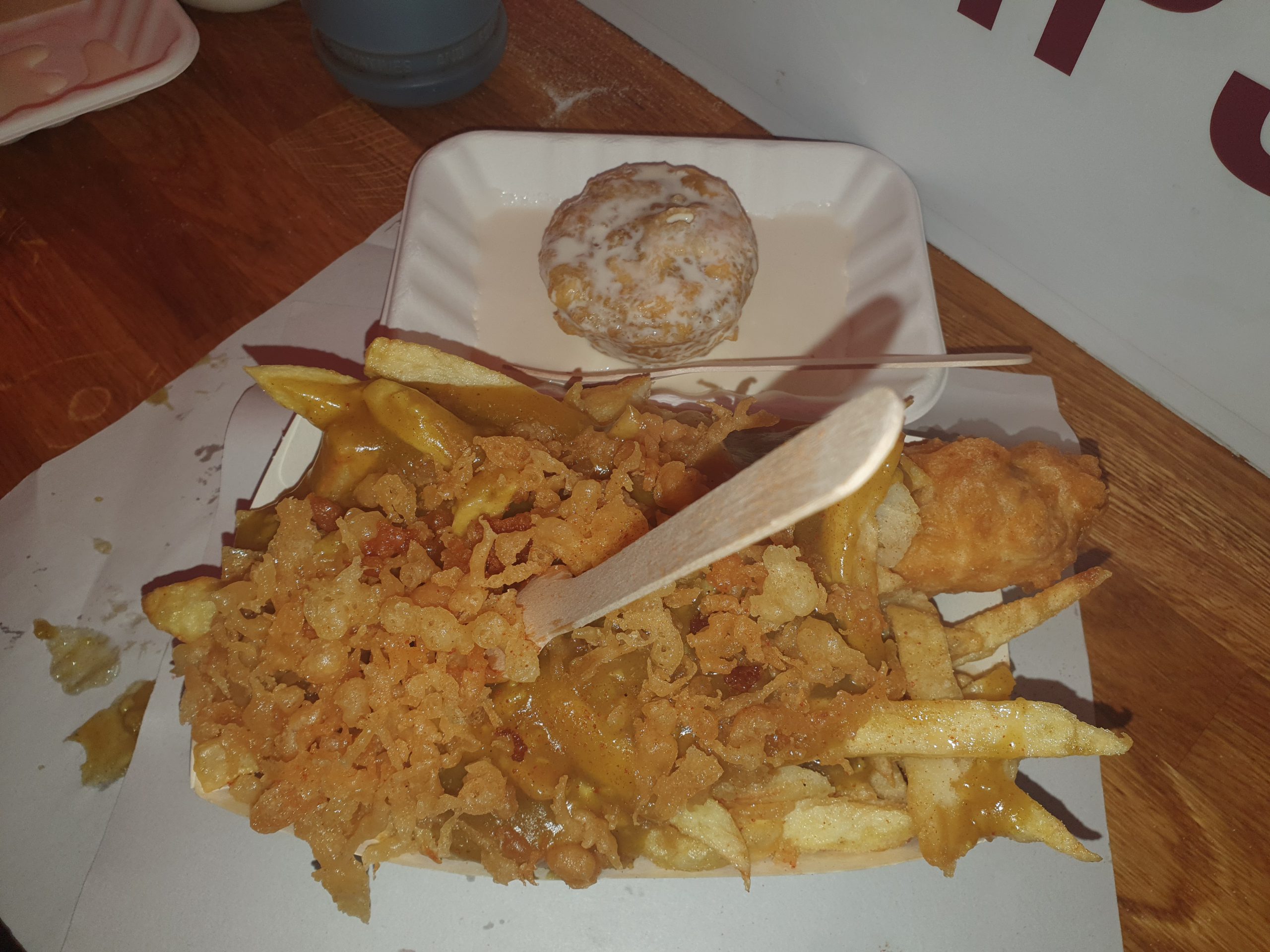
    And a photo from September 2020, when it was warmer and we could sit outside. Battered sausage, chips and curry sauce, all equally lovely.

  • Norwich – Earlham Cemetery (Richard Badcock Mayes)

    Norwich – Earlham Cemetery (Richard Badcock Mayes)

    This is the grave of Richardson Badcock Mayes (along with Eleanor and Richard) and is located at Earlham Cemetery in Norwich. The first mystery here is why the grave has the name Richardson, as this wasn’t his name, which was the more simple Richard. I can only assume that it’s a nickname or similar, although the probate record gave his name as Richardson.

    Richardson (and I’ll call him that on the basis that it’s what his wife put on his gravestone) was born in around 1840, but I can’t find any records of this birth. I know that he was born in Norfolk, but despite trying all manner of differing spellings of his name, I can’t find him. Nor can I find his marriage to Eleanor that would have taken place in around 1860 and nor where they were living in 1861. It’s fair to say that this isn’t ideal….

    The children were both baptised at the same time, at St. Martin’s Church in Norwich, which is located opposite to the entrance to the modern gateway to the Bishop’s Palace. I’m not sure why baptisms were done as a job lot like this, but this happened to other families as well. Anyway, the children were baptised on 21 August 1864 and Richardson’s profession was noted as being a stonemason. Richardson at last appears on the official record, by way of the electoral registers, in 1868 when he lived at Barn Road.

    At the 1871 census, the family lived at Barn Road although this street has been substantially altered since then. It was once a relatively quiet road which led up to the railway station, but the road is now part of the inner ring-road and the station has been demolished. George Plunkett has several photos of what Barn Road once looked like and the type of house that the Mayes would have lived in. At this census, Richardson was 31, Eleanor was 28, Richard was 9 and Arthur was 7.

    Richardson died on 16 May 1878 at the age of 38. Unusually, the gravestone mentions his employers and how he worked for them as a foreman for 17 years. Such a mention would usually suggest that the employer paid for the stone and this is especially likely as Richardson worked for Mr JB Childs stonemasons. It certainly wouldn’t be bad advertising for a stonemason to get his name on the grave, although since his occupation isn’t mentioned, I can’t imagine that there was any commercial imperative here.

    As for the other members of the family, Eleanor lived until 21 June 1918, when she died at the age of 78. Their son Richard had been living alone at 54 Lothian Street in Norwich following a career as a general labourer and he died on 18 March 1948, at the age of 81. As an aside, Lothian Street is located just off of Barn Road, and is visible on the map above. And as for Arthur, he had married Phoebe and had two children.

    There’s not much of a story here since the first half seems to be missing, but I do wonder what it must have been like for Richard to have stood at the grave of his mother in 1918, just over 40 years since he stood there to bury his father. Richard was about 16 when he stood there for the first time and it must have been a strange situation to be there again after such a long time delay.