Tag: London

  • London – Newham (Borough of) – Stratford – Tap East

    London – Newham (Borough of) – Stratford – Tap East

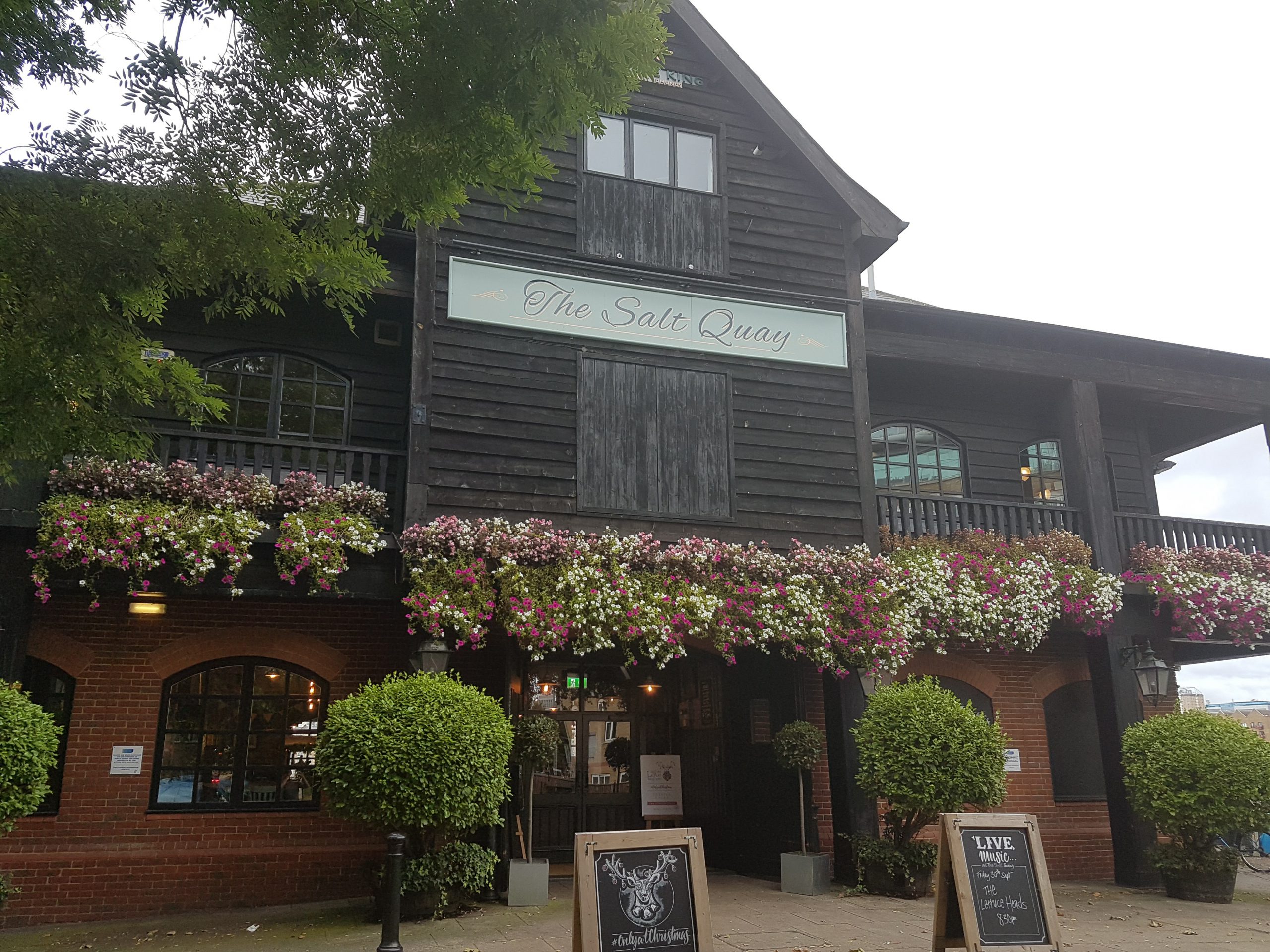
    This is the only Good Beer Guide listed pub in the Westfield Centre at Stratford, with the only other in the area being JD Wetherspoon’s Goldengrove in the town centre. It’s bright, open and slightly hard to find for those who aren’t used to Westfield. I’d add that I visited just before the second lockdown, they haven’t found some exemption to stay open.

    The beer list with a suitably interesting range of beer types. It’s not the cheapest, but it’s also not unreasonable and the unit that they’re located in can’t be the lowest priced either.

    A moderately decadent choice, this is the Export Stout Raspberry from the Kernel Brewery. This was rich, beautifully fruity and slightly bitter, but very moreish. Given the price, I limited myself to half a pint, but it was smooth enough to last for some time. This is the second beer I’ve had from this brewery, I had the Dry Stout Centennial Mosaic when I visited Mikkeller Bar. I preferred this one, the raspberry gave it that extra edge.

    Service was timely, friendly and welcoming, so this was a relaxed environment. It’s not the largest location and I’m sure that this must get busy at times, but there were sufficient tables inside and outside when I visited. They have a fair few bottles and cans in the fridges as well for those who want more choice. There’s a food menu, which looked quite tempting, with hot dogs and the like available.

    It’s all slightly quirky as outlets like this aren’t normally available in shopping centres, not withstanding the Craft Beer Co outlet at the Broadway Centre in Hammersmith. But, they’ve been going for a few years and have won several awards, not least being mentioned in the Good Beer Guide. Since it’s at the side of the shopping centre, it’s not too loud, it’s a helpful hideaway for anyone who needs to escape the retail demands of the rest of the site….

  • London – Hammersmith and Fulham (Borough of) – Margravine Cemetery (Thomas Austin)

    London – Hammersmith and Fulham (Borough of) – Margravine Cemetery (Thomas Austin)

    This is the grave of Thomas Austin, located at Margravine Cemetery in London, which looked interesting due to the mention of Queen Victoria.

    He was born in 1816 and joined the army, although there’s lots more information about him (and a photo) at https://www.soldiersofthequeen.com/OldSoldiers-YeomanoftheGuardThomasAustin.html which it’s easier for me to just link to….. But, in short, since his army records are on-line, he served in the Coldstream Regiment of Guards, joining on 16 September 1833 and being given military service number 1666.

    Thomas died at the age of 79 on 17 February 1895, with his wife Frances Ann being buried at the same spot on 17 December 1903.

  • London – Hammersmith and Fulham (Borough of) – Margravine Cemetery

    London – Hammersmith and Fulham (Borough of) – Margravine Cemetery

    This London cemetery was laid out in 1868, designed to relieve pressure on churchyards in the area, and the first burial took place here on 3 November 1869. It has also been known as Hammersmith Cemetery and there was an area for Church of England burials and another area for non-conformists.

    Burials continued here until 1951 and at this point the site was taken over by the council who termed it as a ‘garden of rest’. What this really meant is that the council took down a large number of gravestones and buried them, leaving what I think looks like a slightly disjointed and confused cemetery, albeit it in beautiful surroundings.

    The friends of the cemetery seem quite active and their web-site has an interesting take on the history of the site. They mention how sluggish the borough were in opening their burial ground, but an outbreak of cholera in the area speeded things up somewhat. The friends also note that the cemetery saw:

    “A superintendent’s drunken foul mouthed wife upsetting visitors and creating “a crowd” on Christmas Day 1879, belligerent gravediggers demanding higher wages and having fist-fights in the tool house, the nonconformists’ objections, the battle with Sir William Palliser and a fair amount of wheeling and dealing when acquiring or exchanging land”.

    Although I didn’t find his grave, George Wimpey of construction fame is buried at the cemetery. There are 83,000 burials at the site, although when it opened the cemetery was only designed to hold 12,000.

    This squirrel followed me for quite some time, but annoyingly was unwilling to pose for photos.

    There were a large number of dog walkers using the cemetery when I was there, but there’s plenty of space and it looked generally well cared for. Well, other than for the empty beer cans dotted about the site.

    The cemetery’s chapel, which was designed by the local architect George Saunders, who was also responsible for pretty much everything at the site. There was a second chapel at the cemetery, but this was demolished in 1939.

    I visited shortly before the cemetery was due to close, so my meandering was limited and I missed the “ghoulish” Victorian reception house. This building, where bodies were laid to rest, has now been listed and is the only one of its kind left in London. I’m not sure why Historic England thought it was ghoulish, it’s a place to store bodies in a cemetery before they were buried, but there we go….

  • London – Kensington and Chelsea (Borough of) – Brompton Cemetery (Alfred George Auger)

    London – Kensington and Chelsea (Borough of) – Brompton Cemetery (Alfred George Auger)

    Sapper Alfred George Auger was born in 1924 and was the son of Joseph Auger and Ellen Gertrude Auger. Alfred joined the Royal Engineers and was part of the Bomb Disposal Company, not a role that was ever going to be anything other than risky. He died on 18 April 1945, alongside Sappers George Raymond Lewis and Mark Pierce, although I’m not sure what this incident was.

    The inscription on his grave is “gone from my home but never from my heart, mother” which is one of the more personal that I’ve seen. Alfred’s mother lived until 1981, when she died in London at the age of 95.

  • London – Newham (Borough of) – Stratford – Holiday Inn Express

    London – Newham (Borough of) – Stratford – Holiday Inn Express

    I booked this hotel as there was a 5,000 points IHG rewards bonus on it, which is pretty generous as 10,000 points can get a free room. It was the cheapest IHG hotel in London, coming in at just under £40 for the night, including breakfast. That’s a bit more expensive than the endless Accor hotels that I’ve been booking, but it’s a modern and clean hotel.

    The dining and bar area of the hotel. It was never particularly busy, but it’s a pleasant environment for guests who want somewhere to sit.

    A water feature. How decadent.

    The room, which I’d booked as a family room to myself, as it was the same price as the other rooms. All bright, clean and comfortable. The television was meant to allow casting from my phone, but it didn’t work and I couldn’t be bothered to make it work. The remote control was also wrapped up in a little bag which was very thoughtful in terms of the health issues.

    The rewards voucher. I’ve never lost the key folder before, but I managed to last night, I have no idea where it went. Luckily the keycard wasn’t in it and I remembered what room number I was in. In the morning, a cleaner came into the room (well, she didn’t, she couldn’t get past the key chain thing), just as I was leaving it. She looked horrified but said she thought the room was meant to be empty. Her timing was fortunate though since I was leaving, but it would have been annoying if I was having a lie-in.

    The welcome drink, this was the best I could find. It’s something a little different, although I found it a bit drab. Anyway, it was free, so I won’t complain. Well, not much.

    The breakfast arrangement.

    The hot food was served by a staff member, who was very generous on the beans front. The ingredients were of a decent quality and if it was self-serve then there might have been a lot more bacon on the plate. There was only one other hot option, which was scrambled egg, but I’m not much of a fan of that. The croissants and muffins were a bit drab, but at least the hotel had made an effort with putting some sort of breakfast on.

    And this is my final hotel of 2020. I have a trip to Bilbao booked on 3 January 2021, although given everything I’m really not sure that this will actually happen. Anyway, I’d stay here again, although I’m not sure why I’d be in the Stratford area of London….

  • London – Kensington and Chelsea (Borough of) – Strawberry Tree

    London – Kensington and Chelsea (Borough of) – Strawberry Tree

    I have very little knowledge about trees and flowers, but I quite liked this one at Brompton Cemetery. I obviously didn’t know what the tree was without assistance, but the cemetery had helpfully included a sign mentioning what it was.

    The Latin name is Arbutus unedo and the fruit of this tree is apparently edible, although I didn’t try. Wikipedia notes that it’s often used in jams and I don’t disbelieve them on this occasion.

    And the tree, quite a handsome addition to the cemetery.

  • London – Kensington and Chelsea (Borough of) – Brompton Cemetery (Alfred John Weston)

    London – Kensington and Chelsea (Borough of) – Brompton Cemetery (Alfred John Weston)

    This grave at Brompton Cemetery commemorates the life of Alfred John Weston. He was born in 1896 and he joined the Royal Fusiliers and was a private in the First Battalion. Alfred died on 2 February 1915 at the age of 19, being buried on 6 February 1915. His address was given as St Mark’s College Hospital, Chelsea, which was being used as the Second London General Hospital.

    There’s no next of kin mentioned on the Commonwealth War Graves Commission web-site, but if I’ve got the right person, at the 1911 census Alfred lived at 53, The Broadway, Ealing, along with his parents Edward Bradley and Elizabeth Bradley, although I’m unsure why the surname differs. His father, a naval pensioner, was thirteen years older than his mother, so I can only assume he remarried.

    And there another story ends, the usual places don’t mention what happen to him and his service records aren’t available. Unfortunately, 60% of these service records from the First World War were lost during air raids in the Second World War, so I assume that’s what has happened here. Alfred has also been given a new gravestone recently, although I don’t know the back story to that.

    Hopefully one day I’ll find out more about Alfred, it’s sad that a 19-year old died from his injuries likely incurred on a foreign battlefield and there’s little known about him. At least his body was buried in a local cemetery though, something which many families didn’t get.

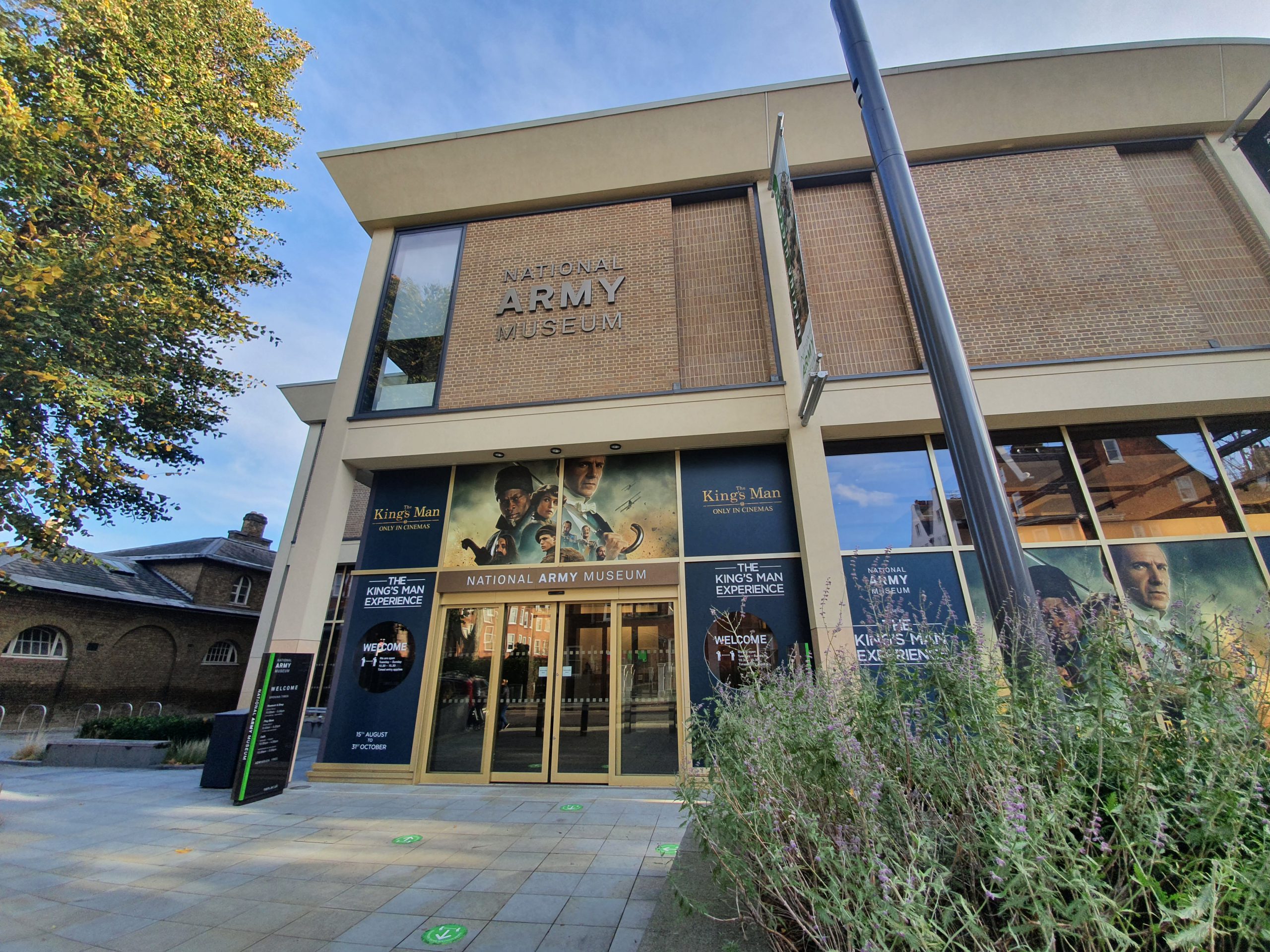
  • London – Kensington and Chelsea (Borough of) – National Army Museum

    London – Kensington and Chelsea (Borough of) – National Army Museum

    I had read some reviews of the National Army Museum that their relatively recent expensive (nearly £24 million) refurbishment had dumbed down the museum and removed many of the interesting displays. So, I had made myself pre-annoyed at the museum before I had even visited. That’s the starting point of this expedition….

    The welcome at the museum was though friendly and the staff were helpful. Although, without jumping ahead, the only negative was a staff member merrily criticising a customer who had complained as someone who probably wrote in green ink. He proceeded to loudly say how he was proud to ignore the complaint to other staff members, which didn’t exactly give a great impression to visitors. I suspect he could have waited until no other visitors could hear before starting off on his rant. I don’t know what the complaint was, I think I would have liked to though, nothing beats some exciting drama like that (other than chicken bakes).

    The displays in the museum were bright, clearly displayed and there were numerous interactive elements. However, the interactive elements hadn’t negatively impacted on the experience and there were plenty to read, see and do. The museum is incidentally free of charge, although pre-booking is required at the moment.

    Most of the displays were uncluttered, although I didn’t like how the museum has changed the display of Napoleon’s horse from a dignified display case to shoved in with a load of other items. But, there are bigger things to worry about than a dead horse.

    I know that some visitors didn’t like this sort of approach, but I think that the museum is right in that war shouldn’t be glorified. That doesn’t detract from the bravery of the armed forces, but I imagine that most soldiers would rather they didn’t get involved in war zones and having to kill other people. So, questioning whether people could be a soldier seems a sensible approach, it can’t be that easy.

    Some interesting statistics.

    I’ve written separately about some individual exhibits, not least:

    Arm Severing Shrapnel

    Leg Bones of John Fraser

    Child’s Shoe from Siege of Cawnpore

    Earl of Uxbridge Loses his Leg

    Ruhleben Fighting City

    Captain Sir Tom Moore Painting

    The King’s Man Film Set

    Note Written in Blood

    Wellington’s Despatch Case

    Napoleon’s Horse Marengo

    REME

    There’s enough here for a visit to last at least two hours, with a cafe on-site for those who want that. Some displays really aren’t entirely suitable for children, but I suppose they can be ushered by quickly. There are elements that should engage children though, particularly the display where visitors can take part in a drill with some sergeant major (or whatever he is) shouting from a video screen.

    The museum was founded in 1961 and it’s in a brutalist designed building next to the Royal Hospital at Chelsea. The rebuilding and redesign was substantial, shutting the museum between 2014 and 2017, when it was reopened by HM Queen Elizabeth II.

    So, I left not being annoyed, which is always a bonus, as the museum seems quite thoughtfully laid out. It wasn’t particularly busy, so it all felt safe and secure given the current challenging environment. And as for those reviews which said that it apologised for war, I’m not entirely sure that it did, it was more just trying to make people think about what war meant and I’m not sure that’s the same.

  • London – Kensington and Chelsea (Borough of) – National Army Museum (Arm Severing Shrapnel)

    London – Kensington and Chelsea (Borough of) – National Army Museum (Arm Severing Shrapnel)

    More agonies of war at the National Army Museum, this is the shrapnel that severed Serjeant Major Andrew Stockton’s arm in 2006. The museum helpfully note that “pieces of his uniform are still stuck to the distorted metal”. Stockton gave Channel 4’s Alternative Christmas Message a few years ago where he talked about his experiences of being in the military and losing his arm. Not nice, but a reminder of what war is about.