Tag: Hull

  • Hull – Social

    Hull – Social

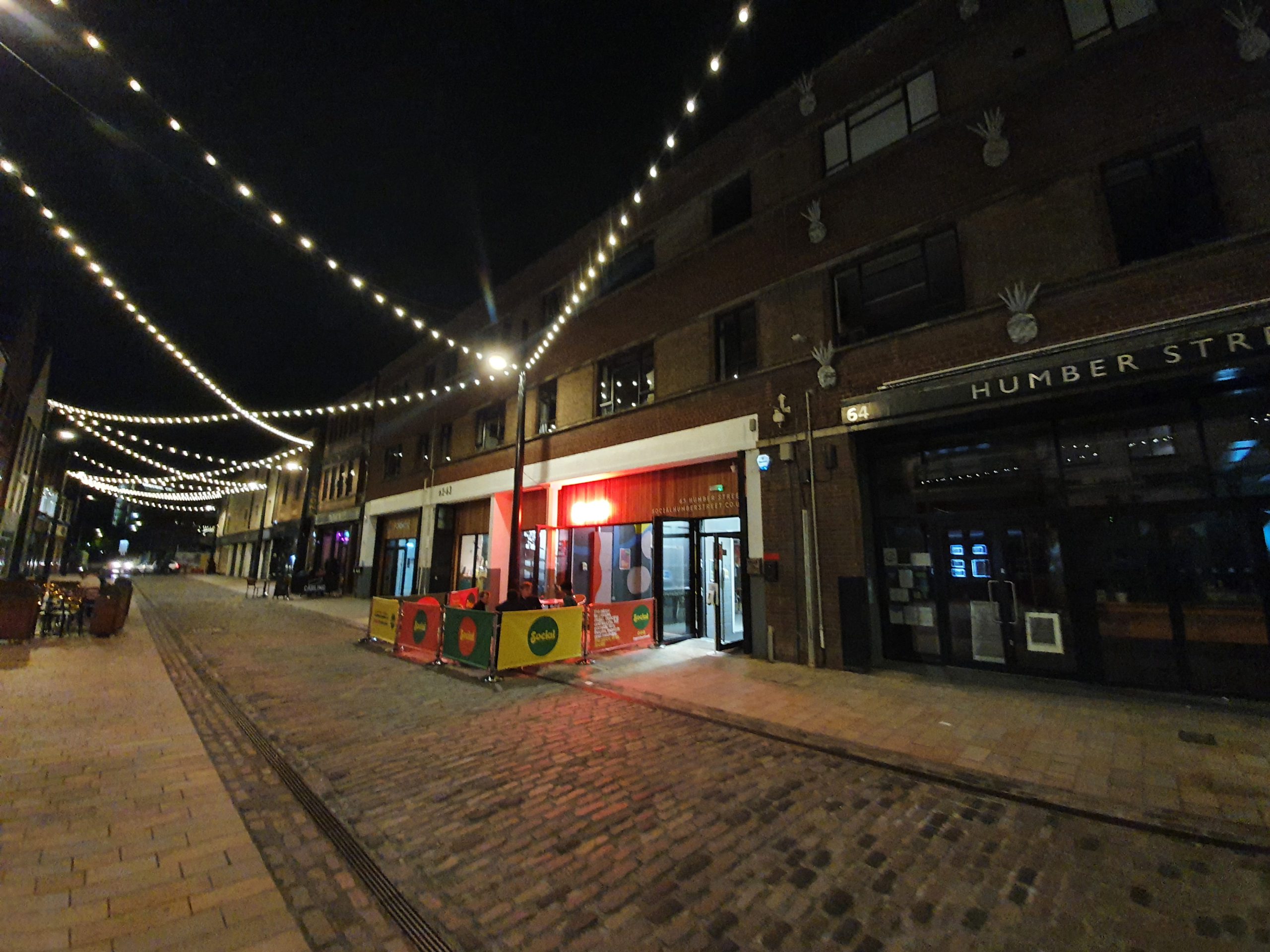
    Unfortunately, the nearby Taphouse was full (which is moderately disappointing, as I think I would have liked to write some things about Bone Machine Brewery now I’ve seen how innovative they are, but I’ll go next year instead) but the helpful staff member pointed us towards Social.

    The service was friendly and welcoming, although the only seats available were outside when we arrived. This transpired to be a good thing given the music inside (I can’t be doing with too much loud noise at my age…..) and the service was attentive given that three different staff tried to take our drinks order. But, best to be too attentive than not bothered enough, so it felt a sufficiently comfortable environment.

    I think it’s fair to say that the bar wasn’t entirely aimed at customers like me, but the drinks menu had a decent stab at trying to cater for everyone. Seeing Camden Hells was acceptable to me, and the appearance of Brewdog Punk IPA and Schofferhofer are to the bar’s credit. So, perhaps nothing inspirational, but it’ll do. The bar is located in what is becoming the on-trend area of Hull, the fruit market district, which seems very much on an upward curve with much to be positive about.

    Back to Social though, where the prices were slightly towards the higher end of the scale, but it felt safe and at least had some space for customers, which was useful. It’s probably a decent option for larger groups (well, under normal circumstances) although they don’t seem to do any food (although they do cashew nuts which didn’t surprise and delight Richard when he counted how many he got). I went for the Camden Hells and it was sufficiently adequate for me, but that’s about as far as I’d go there.

  • Hull – Hop and Vine (July 2020 Interview)

    Hull – Hop and Vine (July 2020 Interview)

    Of all the pubs that I visited in 2019, I’ve written before about how much I liked the welcome offered by the Hop and Vine in Hull. I compiled my favourite pubs of the year, and the Hop and Vine was the one that stood out for me and I’ve merrily told many people about it. And, I’m looking forwards to returning to Hull in September with a small group of people. If social distancing requires, we’ll take it in turns to go in, quality is worth waiting for. The pub didn’t open immediately when it could have done at the beginning of July, but took a little longer to get things right and re-opened this week.

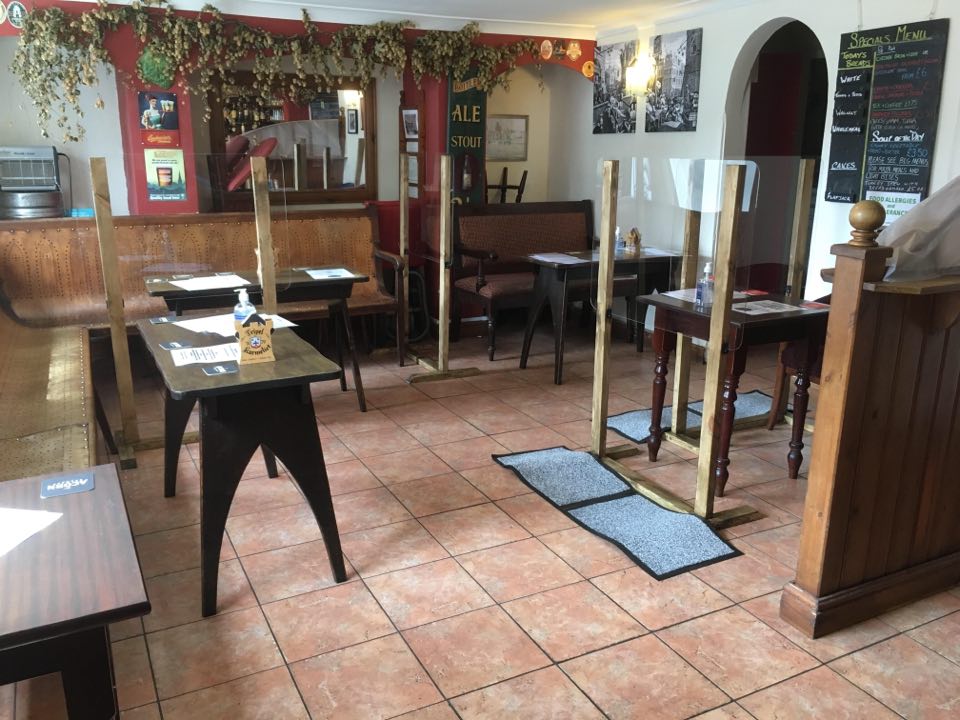
    I asked Tony from the pub (with the new social distancing measures visible here) if he’d be willing to answer a few questions about how things are going with the current situation and he kindly agreed. I’m very grateful for the depth of his answers and incidentally, I too am disappointed and have written about several times when a pub offers six pints of the same style, so I’m glad that this was addressed here. But that’s just a little gripe of mine and there’s no fear of having that problem here. Anyway, before I digress too far, onto the questions and Tony’s positive way of looking at the situation.


    You’re back open again, was it a successful re-opening for you?

    Not bad, considering the restrictions. I managed to develop a collection and delivery service with continental bottled beers during lockdown and so I now have a wider selection of bottles alongside the ales and ciders. The footfall outside is far more limited than usual, so whereas I should have been turning lots of people away on Saturday, only one person did not fit into our restricted space. We have screens between tables less than 2 metres away from each other and our capacity is down from 35 to between 6 and 15 depending on the size of individual groups. Where there is beer, there is hope!

    How easy has it been to implement social distancing and have customers been prepared to come back?

    We are not the easiest bar to distance in, but the government’s allowance of 1 metre plus mitigating measures has enabled me to open. We now have table service only and screens between the closest of tables, one in; one out for the toilets and hand sanitiser everywhere. It is more difficult to notice when someone requires a further drink when it is “busy” (under the new normal), but customers are patient and generally very accommodating to the new arrangements. As expected, when people have drunk a bit, I have to reiterate the new rules to keep people distanced, but again no problems with compliance and people are sympathetic to my situation.

    I was surprised just how accepting people were of giving their contact details to me. Most customers so far have been regulars who are pleased to be back, but I have new customers who live in the same block, who discovered our collection service during lockdown (the leafleting worked!) which is good. Although some regulars have returned, we have a number of regulars who are older or who have health conditions and I am sure some of them are still protecting themselves at home and that seems totally the right thing to do. I look forward to seeing them back when some sort of normality has returned.

    What do you see the future being for pubs in Hull, is there cause for optimism?

    It is really difficult to know at the moment what the future is. I know of a couple nearby that have closed down due to landlords leaving, but there are others that were due to open during lockdown and have now opened. For me the jury is still out on whether to be optimistic or pessimistic for the time being.

    From my past visit, it was clear that you have a real community feel. Were the community and your regulars supportive during the period of closure?

    Yes. I had a lot of contact with regulars through social media and texts during lockdown. Some of them were making their own arrangements for home deliveries and some were using it as a time to detox, but all were keen to see the Hop and Vine open again. When I started collection and home deliveries, I had a good response from customers old and new, but this definitely died down a bit when pubs reopened (I didn’t open till the 16th July). This was understandable as many people want to drink in a bar rather than at home.

    On the same theme, just how have you managed to deliver such a friendly welcome and atmosphere, something missing from many pubs?

    Now, that is an interesting question. Firstly, I am pleased that you found us friendly and welcoming. That has always been my aim and those that have worked for me have always seen a smile and a welcome to be important. I have always taken the view that my main aim is for customers to leave wanting to return. So a smile and “hello” at the beginning and a farewell greeting have always been important – sometimes difficult when very busy – and keeping the place clean and the drinks in good condition are a priority. Esther, Dave, Erika, Erica and John have been integral to keeping the convivial atmosphere at the Hop and Vine as they have worked behind the bar and special mention has to go to Esther who trained me up and still knows everything there is to know about the bar.

    Sometimes we get things wrong or maybe a beer turns. In these situations, I always try to ensure the problem is remedied and that the customer leaves happy. Sometimes it is only small things that make the difference and I try to include these in the service. Overall, I try to keep smiling and to engage customers during their visit as much as they wish. Some people just want to sit quietly on their own and it is equally important to recognise this.

    Of the cakes that you sell, which is your personal favourite?

    We no longer have the cakes, but they may return. Personally, I enjoyed the citrus ones, but I don’t have a sweet tooth and I am sure others might have chosen something like the sticky toffee cake.

    Your beer selection, if I may say, seems well balanced and thought through for a small venue. How do you go about choosing new beers, are you guided by wholesalers or customers?

    Firstly, my aim is to provide a light/golden ale, a best bitter style and a dark beer at all times (occasionally I have been caught out, when I have misjudged a style!!). I have always been frustrated to enter some pubs and find 6 handpulls of basically one style. We have a good number of drinkers of all styles so it does work well. Most of my purchases are directly from brewers, either of their own beers or of swaps they have received from elsewhere, so it is then the delicate balance of buying a reasonable amount from an individual brewer, but mixing the styles as well. I also generally try to keep 3 separate brewers on the bar at any time, so with my orders, I am often planning several weeks ahead. This caught me out at lockdown and I had more full casks left than I would have liked and sadly had to cancel orders that I expected when lockdown looked likely. This will have had a knock-on effect for the brewers who had orders cancelled, but they understood. The good news is that some of the pre-lockdown untapped beers are ok – strong and dark beers tend to last well, but I don’t expect them all to be in good form and am now ordering in pins rather than firkins as I don’t expect the flow of ale to be as fast as it was previously. As for who guides me on my choice, I have responded to contacts from brewers, I have tried to order beers that customers have requested and also gone back to old favourites that customers have clearly enjoyed. I am a Shropshire lad and I will get Shropshire ales in every so often to showcase God’s own county (oh dear there go all my Yorkshire customers).

    Last year, I was down in my home county and popped into Ludlow brewery to collect a couple of pints. There were no complaints and generally you don’t see Ludlow beers in the area. Another time, a customer was in Dorset and brought back a couple of casks of beers he had enjoyed down there (Drop the Anchor brewery I think), while I sorted payment with the brewery (the wonders of the internet). Again, customers lapped up these delicious beers. Obviously price plays its part and I have to consider what the brewer is charging so that I can keep prices reasonable for my customers and occasionally will go above my usual budget to bring in something a bit different.

    Would you be willing to name your other favourite pubs, whether in Hull or further afield?

    There are pubs in Hull that I would recommend in Hull, but I think it would be unfair on those I don’t name to include them here. Further afield, I do like the atmosphere and beers at Monk’s Walk in Beverley, particularly when they have had a small cave like bar open. A lot of history to see there. Chequers is also my style as I tend to enjoy smaller pubs with a good selection of styles. In Goole, I like the Tom Pudding, named after a type of boat that used to be used in the area. Down in London, I used to make the Bree Louise a must visit pub, but sadly HS2 has required its demolition. There are a lot of great pubs down there to enjoy a pint in. In Shrewsbury, I would make particular note of the Three Fishes and Admiral Benbow. Beyond these shores, I would also mention my particular favourites in Amsterdam of Cafe Belgique and Arendsnest. I could go on, but I will leave you with these select few.

    And, finally, do you have a favourite beer or cider?

    Now then, now then! That is always a difficult one with so many good ales around. I have rather enjoyed the Top Rope coffee porter (A little press conversation) that we have on the bar at the moment. However, historically I would put Isaac Poad’s Piccadilly Porter and Exit 33’s oatmeal stout as beers that I have particularly enjoyed over my tenure. On a personal level, I favour darker beers, but on the lighter side, Hop Studio’s Mosaic has excellent flavour and body to it. Sometimes my favourite beer just happens to be the one I am drinking at the time!!

    Oh, and I did really enjoy Rooster’s Capability Brown on 4th July at our local Head of Steam. We will have to wait and see if that becomes a regular favourite of mine. As for cider, I tend towards the medium Dry and Dry ones. Circle Cider Cats tongue was a favourite of mine, but I think the company is no more. Over the last year or so, I have really enjoyed Mahorall’s medium from Shropshire and Coleman’s Quince Cider from East Yorkshire. At the Hop and Vine, I don’t sell ciders with added fruit, but with quince being from the pear family and being fermented in the process, I was happy to serve it at one of our cider festivals and it was firm favourite with a number of our customers. The quince gave it a slightly different flavour but a very pleasing one, with a slight astringency.

    On a final note, thank you for giving me the opportunity to talk about the Hop and Vine’s response to the current situation. It has given me the opportunity to review my own thoughts and obviously, if any of your readers are in the area, they will be very welcome to join us. If travelling some distance though, it may be worth a phone call in advance on a Friday and Saturday (07507 719259) to ensure space is available. Not necessary when normal service is resumed.

  • Hull – William de la Pole Statue

    Hull – William de la Pole Statue

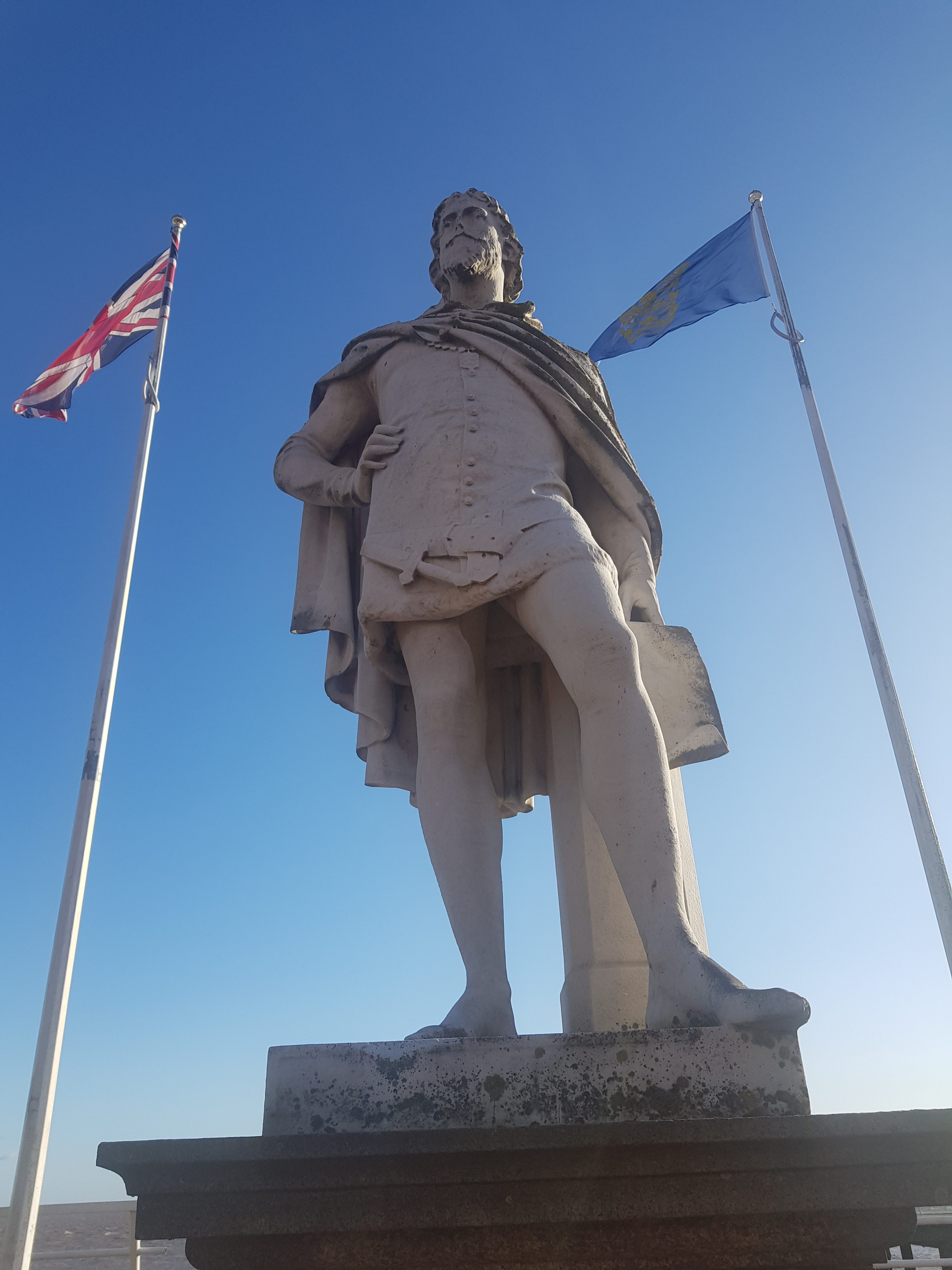
    The statue of Sir William de la Pole, who served as the city’s first Mayor between 1332 (or 1331, history is often a bit vague) until 1335. He was very friendly with King Edward II, something which certainly did his political career no harm at all. He was equally helpful to King Edward III, who had managed to use his royal crown as collateral in a loan from the Archbishop of Trier, but de la Pole paid that debt off to prevent embarrassment. He might be buried in Hull Minster, but no-one is quite sure, but there’s a tomb there for him anyway, just in case.

    The base of the statue, designed by William D Keyworth Jnr, which was paid for and presented to the city by Alderman Robert Jameson. The statue was initially placed at the Town Hall, but that got demolished by the council, so the city authorities moved the statue around the city for a while. One of the locations was when it was moved to a prominent location at the junction of King Edward Street and Jameson Street in 1901 and it then came to its current location on Nelson Street in 1920.

  • Hull – A Potted History to Kingston upon Hull

    Hull – A Potted History to Kingston upon Hull

    And so, this is my (very) potted history to the lovely city of Hull.

    Other than for some pesky raiding parties from the Vikings, there wasn’t a great deal of pre-Norman activity in what is now the city of Kingston upon Hull. But, I feel I’m friends with the city, so I’m just going to call it Hull.

    The foundation of Hull was really down to the monks at Meaux Abbey. They fancied a port so that they could do some trading with mainland Europe, so they built themselves one. They called it Wyke on Hull and it was quite successful. As an aside, when the Dissolution of the Monasteries took place a few centuries later, the King had their abbey demolished and used it to strengthen Hull’s fortifications. There’s gratitude for you…

    In 1278, the city was allowed to hold a fair and a market, and they’ve been holding the fair ever since. And a market come to that. Then King Edward I fancied the port town as he had an eye on attacking Scotland. So he bought it and after some consideration, he demanded that it was called King’s Town. Seems fair since he bought it, with the monks being pleased with the money that they received. The eagle eye reader will now know that King’s Town became Kingston, and then when that became too long to bother to say, it became Hull.

    Hull was a forward thinker when it came to fresh water and the city authorities spent no end of money on building a fancy new system of pipes. They were very proud of that, but then the War of the Roses came along and the city ran out of money. So they dug the pipes up and flogged the lead off, but the initial idea was a good one.

    The Dissolution of the Monasteries was a bit of a challenge in Hull, as many of the locals didn’t like it. Fearing that some of the church’s wealth would be stolen and sent to London, the local authorities quickly sold off what they could and spent the money on improvements to their city. Good plan.

    The denizens of Hull were still a bit unconvinced by the Monarchy and this was shown in 1642 when Sir John Hotham, the city’s Governor, left King Charles I standing at the Beverley Gate. He was refused access to the city, so he tried to besiege Hull, although that didn’t work. His forces tried again the next year, under the leadership of the Earl of Newcastle. That failed too, so there was some resilience to these Hull folk.

    William Wilberforce was a major player in politics during the late eighteenth and early nineteenth centuries, primarily with his campaigns to end slavery. Initially this looked like an unwinnable campaign and in 1791 he led a debate in the Commons to get Parliamentary support for his plans, but he failed by quite a majority. He battled on and in 1833, the Slavery Prohibition Act was eventually passed, with nearly 50 years of campaigning led by Wilberforce to get there. Unfortunately, he died three days before the vote took place. Irritating….

    The railway came to the city in 1840, connecting Hull to Selby, and there was a brand new railway station opened in 1847. That railway station, now knowingly as Hull Paragon Interchange, is still standing, although I’d rather it was just called Hull Station to avoid confusion. But it’s a bus and coach station too, a rare piece of joined up thinking from a city.

    The twentieth century saw some bad times for Hull, it was attacked by zeppelins during the First World War and then suffered economically during the great depression following the end of the conflict. But, disaster was to hit the city during the Second World War, with half of Hull’s residents ending up homeless and only around 6% of housing remained undamaged. Reporting restrictions during the war meant that the rest of the nation didn’t realise the damage that was being caused, but few other cities suffered as badly. Incidentally, there is still one building, the National Picture Theatre which was bombed and never repaired. To this day, the burnt out remains stand on Beverley Road and relatively recently a decision has been made to keep them in that state.

    Patrick Abercrombie came up with a plan, alongside Edwin Lutyens, to transform Hull and this planning work was started during the Second World War. Fortunately the residents and businesses of the time rejected the plans, which shunned history and heritage to try and make way for the motor car. The city is fortunate that the plans weren’t implemented, as much of what did remain of Hull would have been lost.

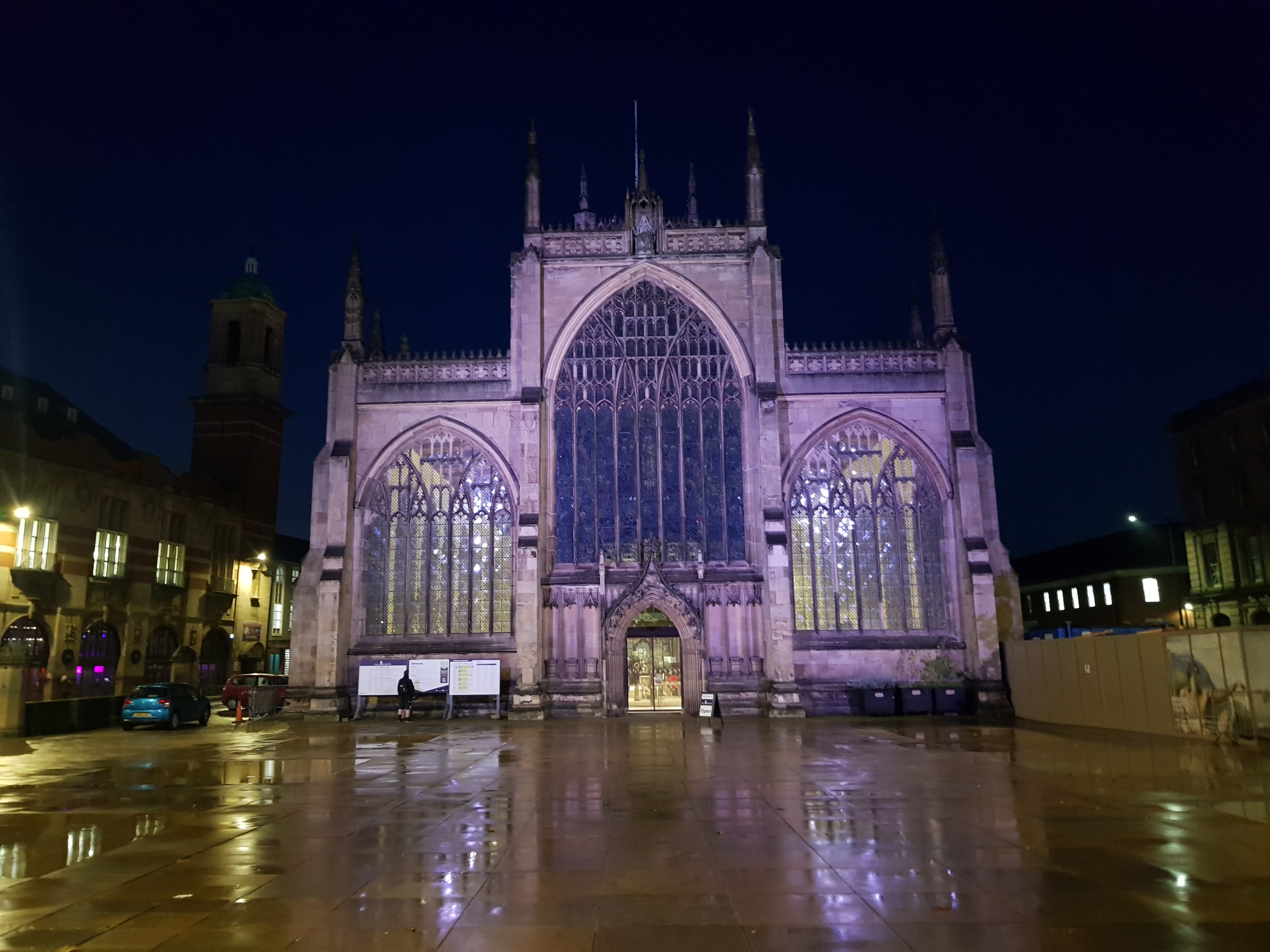
    More recently, Hull has been doing a bit better, although it is under some pressure financially as so many other cities also are. The city’s main church, Holy Trinity, has been transformed into a Minster and it still has the honour of being the largest parish church in the country. The city is also perhaps more respected now following its designation as the UK City of Culture, which it pulled off with some success. It has numerous free museums and a strong cultural scene, with plans announced in October 2019 for a new sector to the city, the £1.5 billion Lagoon Hull project. It’s all very exciting…

  • Hull – CAMRA Good Beer Guide Pubs

    Hull – CAMRA Good Beer Guide Pubs

    There are fourteen pubs in Hull which are listed in the 2020 Good Beer Guide, which is my go to guide for exploring pubs in a new town or city. I didn’t reach all of them unfortunately during my visit to Hull, but I did get to some of them and I’ve linked to those below. My favourite was the Hop and Vine…..

    Admiral of the Humber

    Chilli Devils

    Furley & Co

    George Hotel

    Head of Steam

    Hop and Vine

    Larkins (didn’t visit)

    Minerva

    Pave (didn’t visit)

    St. Johns (didn’t visit)

    Three John Scotts

    Whalebone (didn’t visit)

    White Hart (didn’t visit)

    Ye Olde White Harte

  • Hull – Philip Larkin Statue

    Hull – Philip Larkin Statue

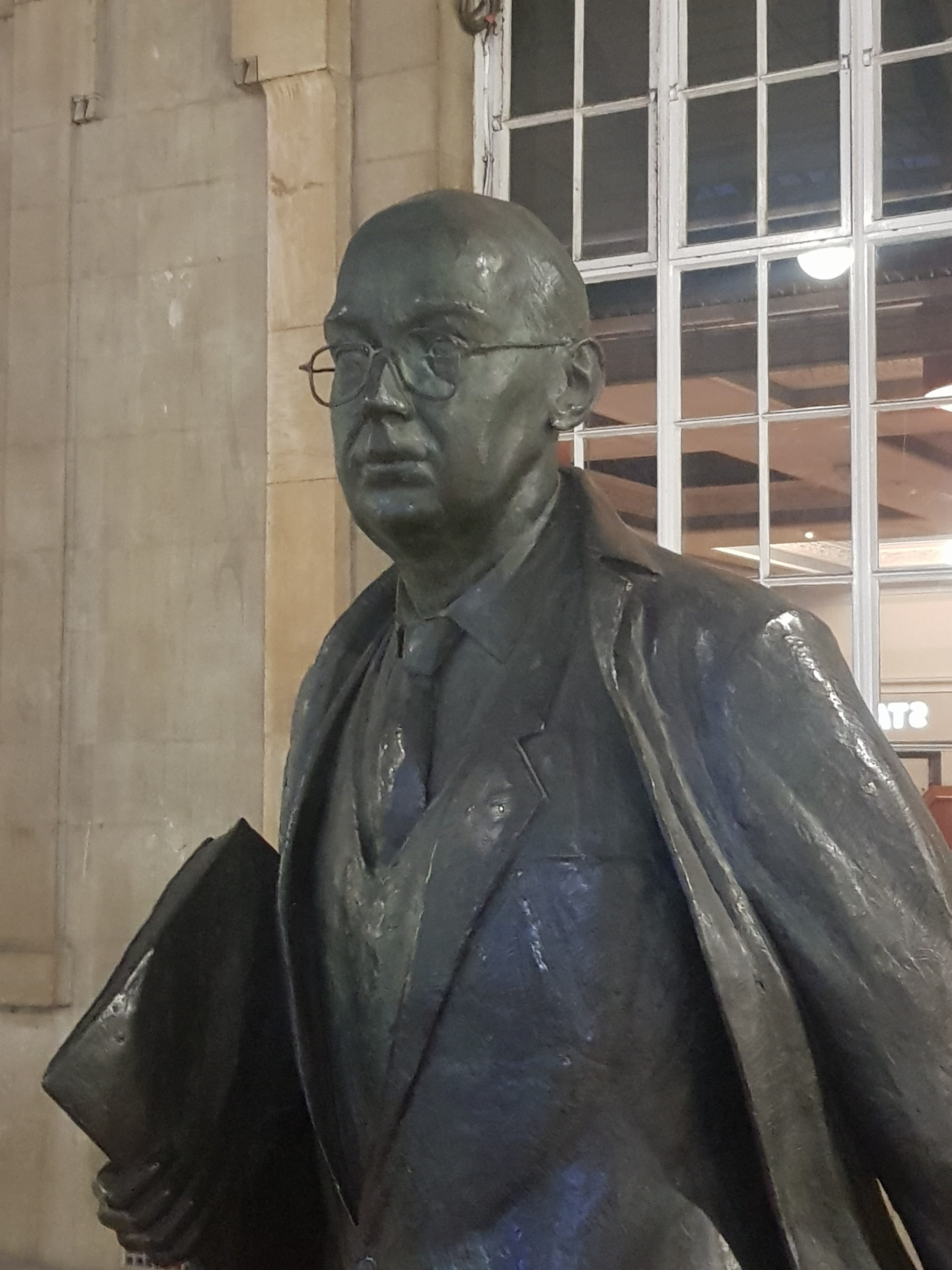
    This fine looking bronze statue (well it was fine looking when it was installed) is of Philip Larkin, a local poet and librarian, and was unveiled in 2010. It stands 2.1 metres tall and the project was supported by the Philip Larkin Society.

    Unfortunately, the statue has been vandalised (the glasses were bent out of shape by a drunk swinging off them and now an arm has been damaged, I assume in the same way) and this is the current reality of it. It’s really not quite the impressive representation of Larkin that was intended, nor does it look particularly welcoming to see it barricaded off like this. The local press said that TransPennine Express and Hull City Council have both denied being responsible for the statue, so I imagine it’ll look like this for some time to come.

  • Hull – Ferens Art Gallery

    Hull – Ferens Art Gallery

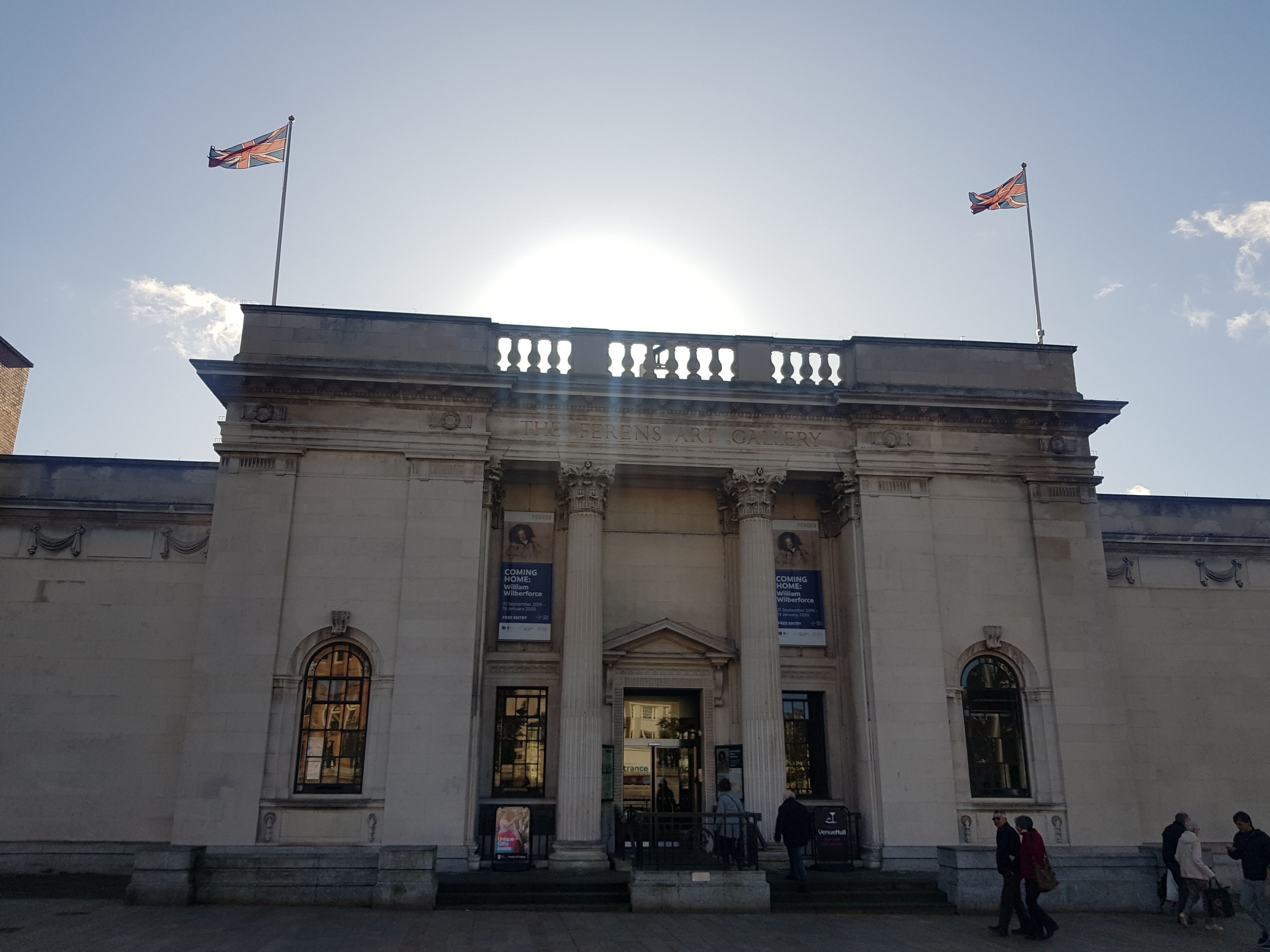
    The Ferens Art gallery was opened in 1927 with funding from Thomas Ferens, a wealthy and generous local businessman who operated the manufacturing business of Reckitt and Sons. St. John’s Church was demolished to allow for its construction and it replaced another smaller existing art gallery in the city.

    Soon after the Second World War began, the gallery was used to hold an exhibition of Polish artworks that had been saved during the Nazi occupation of Poland. As the threat of air raids increased, the gallery’s contents were then placed into storage throughout the war, although the building remained relatively undamaged. It was though used by the city’s civil defence casualty service during the latter part of the conflict, a rather different usage to what had been intended for the premises.

    The Hull Daily Mail published an article in 1938 which referred to a temporary exhibition upstairs at the Ferens, with works loaned from the collection of the late Earl of Lindsey. The newspaper mentioned that “shut away in the long gallery of many an old English country house are paintings of immense artistic value. They come into the public eye only when some picturesque and erudite thief shows a practical resentment of this seclusion”. I liked the quality of this prose, but it’s also a reason why the Ferens came into being in the first place, to try and make art more accessible.

    The gallery’s main central atrium. For a provincial art gallery, this is an impressive effort with some paintings by artists that I’ve actually heard of, which is always a bonus. The gallery is also relatively large and there are some temporary exhibitions on, of which the William Wilberforce was particularly interesting. Entrance to the permanent and temporary collections are free of charge, with the gallery being busy, so it all seemed a worthwhile investment for the city.

    My other posts about artworks in the gallery:

    A View on the Grand Canal by Antonio Canaletto

    William Wilberforce by Sir Thomas Lawrence

    1791 Debate of Motions Book

    The Press Gang by Alexander Johnston

    Straitjacket Chairs by Nina Saunders

    Julian, the Artist’s Son by Roger Eliot Fry

    The Batsman by William Day Keyworth

    In the Cinema by Malcolm Drummond

    Fun Bag by Victoria Sin

  • Hull – Ferens Art Gallery (A View on the Grand Canal by Antonio Canaletto)

    Hull – Ferens Art Gallery (A View on the Grand Canal by Antonio Canaletto)

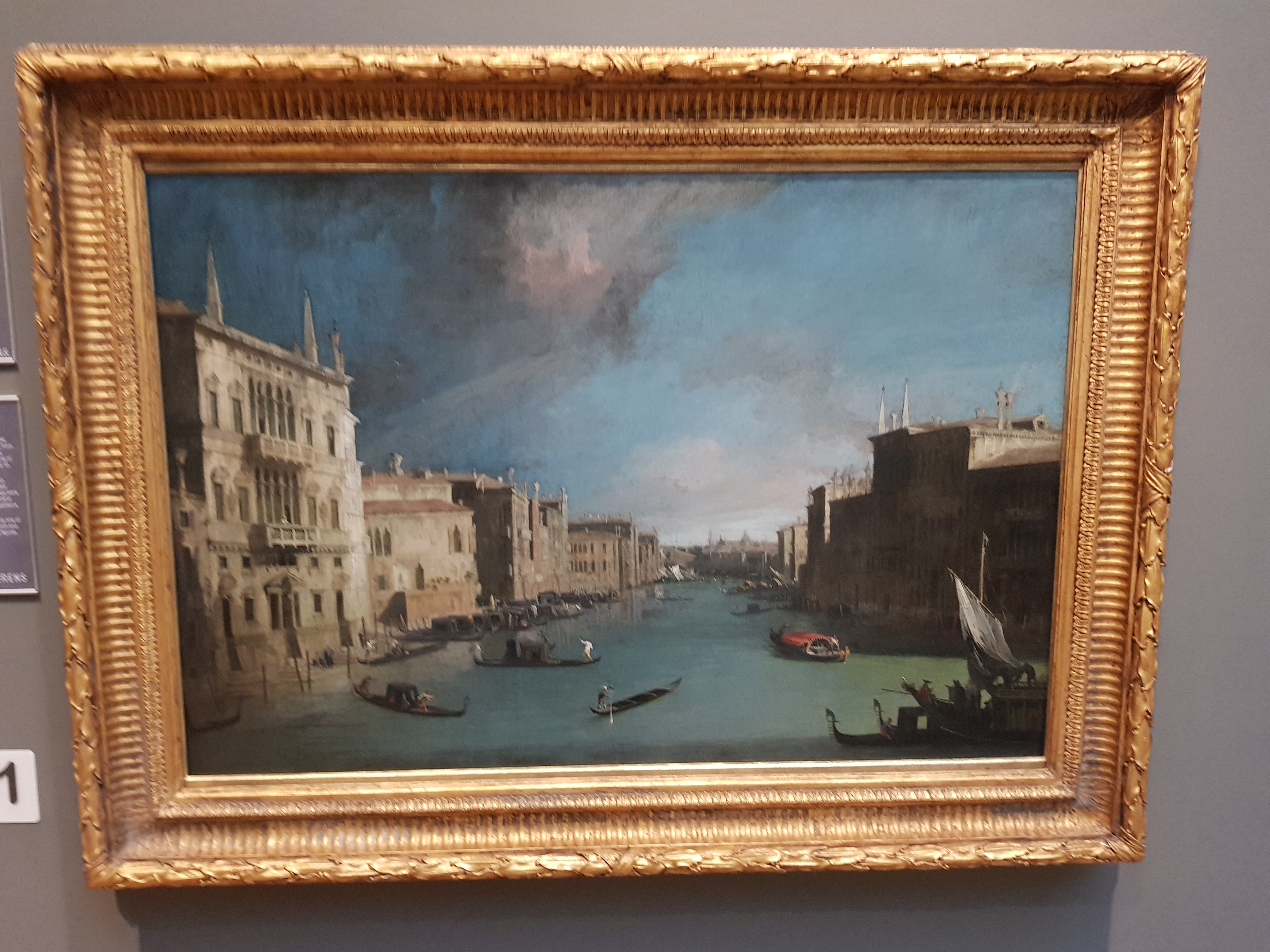
    I looked across one of the gallery rooms and thought how much clarity this painting had and how much like a Canaletto it was, one of my favourite painters. I didn’t think the Ferens would have an artwork by this artist, so this was all rather lovely when I realised it looked like a Canaletto because it was painted by Canaletto….. It’s of the Grand Canal in Venice, one of many artworks painted of this stretch of canal by Canaletto.

    The painting was gifted to the gallery by Muriel Thetis Warde in 1964, the youngest daughter of a Hull shipping magnate, and was originally painted between 1725 and 1730. The gallery says that this is “one of the few undoubted Canaletto’s in an English municipal collection”, although it was previously thought to be by Francesco Guardi, so that lack of doubt is a relatively recent thing. Anyway, very lovely and my favourite artwork in the gallery.

  • Hull – Ferens Art Gallery (William Wilberforce by Sir Thomas Lawrence)

    Hull – Ferens Art Gallery (William Wilberforce by Sir Thomas Lawrence)

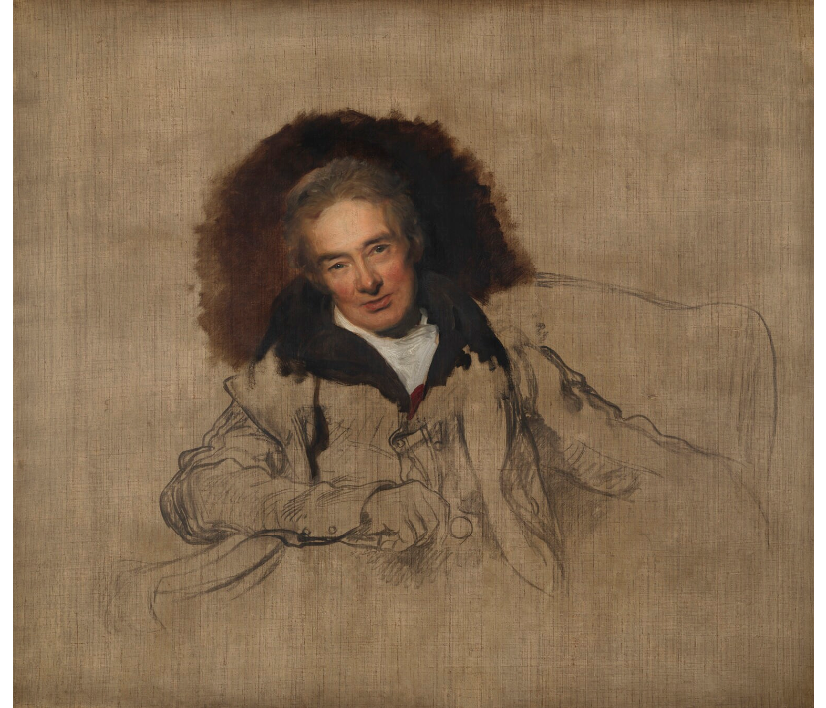
    This painting is on loan to the Ferens from the National Portrait Gallery and I’ve used their photo since their licensing allows for me to do that. And it’s nicer than my photo. I hadn’t realised that Wilberforce suffered badly from a curvature of the spine, which meant he had to wear a metal support. This illness is why the artwork is painted in the way that it was by Sir Thomas Lawrence, a popular portrait artist.

    The artwork was painted in 1825 and was funded by Sir Robert Inglis, a friend of Wilberforce, to mark his retirement from Parliament. However, there was only one sitting and so the painting was never completed, with Lawrence dying in 1830. Inglis wouldn’t let anyone else finish the work, so it remained uncompleted. Inglis kept the painting and following his death it was given to the National Portrait Gallery in 1857, one of the earliest artworks in their collection which had only opened the previous year.

    It’s a marvellous painting, or what there is of it is, lots of character and emotion in Wilberforce’s face.

    The painting, and many other items relating to Wilberforce, are part of a temporary exhibition at the gallery, which was really well put together. Above is a photo taken from the opening of the William Wilberforce museum in the city, with the painting visible in the room in which he was born. I assume that this is the original painting that was once again on loan to the city.

    Just for completeness, this was my photo of the painting.

  • Hull – Ferens Art Gallery (1791 Debate of Motions Book)

    Hull – Ferens Art Gallery (1791 Debate of Motions Book)

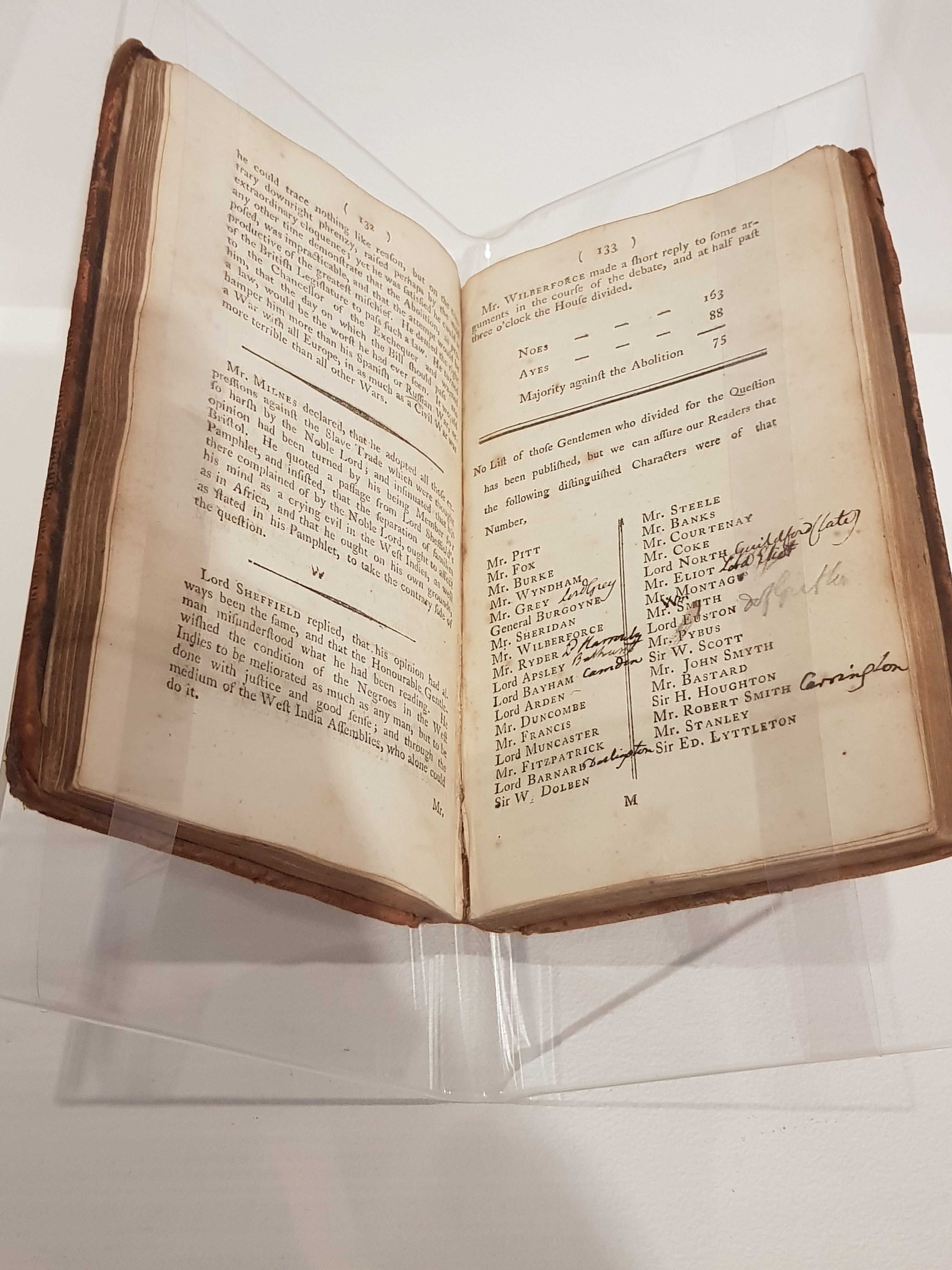
    This beautiful book is part of the William Wilberforce Coming Home temporary exhibition at the Ferens Art Gallery, a debate of the motions which took place in the House of Commons. The book belonged to Wilberforce himself and some of the notations in it are by him. The whole debate, which is available on Google Books, is a fascinating read, including some rather ridiculous notions that MPs had who were defending the slave trade. Wilberforce’s arguments were strong, coherent and passionate, although he lost the 1791 debate with 88 votes supporting him and 163 opposing him. It was another 42 years before slavery was finally abolished in the UK with the 1833 Slavery Abolition Act, but sadly Wilberforce died just three days before that vote took place.