Tag: Brompton Cemetery

  • London – Kensington and Chelsea (Borough of) – Brompton Cemetery (Ernest Wedgwood Harper)

    London – Kensington and Chelsea (Borough of) – Brompton Cemetery (Ernest Wedgwood Harper)

    This is the grave of Ernest Wedgwood Harper, located at Brompton Cemetery in London.

    Ernest was born in Burslem on 21 May 1898, the son of Ernest (born on 11/04/1865) and Florence Mary Harper (born on 16/09/1872). He went to Middleport Council School and Longport Council School between 1911 and 1912 and he then went to Hanley Municipal Secondary School between 10 January 1912 and 15 July 1916. He took the Oxford Local Seniors Honours Exam (a system of external grading) where he received a third class award.

    At the 1901 census, the family were living at 179 Newport Lane in Burslem, an area of the city which has now been heavily changed and most of the residential properties demolished. At this point, he was aged two years old and he had a little sister who had just been born, Dorothy May.

    At the 1911 census, the family had moved to Grove Pit, Green Lane in Wolstanton, with the older Ernest working as a school teacher. There was a new addition to the family, Byron, who was aged 2 at the time of the census.

    Leaving school at 18 in Burslem, Ernest might have felt a long way from the military action when signing up. He joined the third battalion of the Grenadier Guards as a guardsman, service number 28840. It appears he did see some service in France in 1916, but there were medical problems with his heart and he was sent back to London and was admitted to Tooting Hospital. He was readmitted to his unit, but instead took on clerical duties and wasn’t going to be sent back to the front line.

    The story becomes endlessly sadder here, on 24 July 1918 Ernest shot and killed himself at his rifle barracks. An inquest found that he feared that he had spotted fever, but the doctors had told him that he hadn’t despite numerous tests. Florence, his mother, went to the inquest and told them how Ernest had been a clever boy and the family were very proud of him. The verdict was announced by the inquest of “suicide during temporary insanity in consequence of valvular disease of the heart”.

    One can only speculate about the mental challenges that Ernest went through, clearly scarred by the conflict and perhaps having no other way of dealing with the worries about his own medical condition. I’m not sure that his service records survive, but perhaps he experienced significant trauma in France and he would be one of many who did.

    At the time of his death, Ernest was part of no.8 company, 5th reserve battalion of the Grenadier Guards, with his parents living at The Grove, Wolstanton, Stoke-on-Trent. It must have been a traumatic event for his mother to travel to Westminster to attend the inquest. Ernest’s family didn’t have any connection with the area, but he was buried at Brompton Cemetery because he had died at the nearby Chelsea Barracks.

    As an aside, Ernest’s little brother Byron was married in 1934 and their parents were there at the marriage ceremony. As was Ernest’s sister Dorothy May, who was the bridesmaid to the bride, and I wonder how much they thought about the one member of the family who hadn’t made it. Byron lived until 1988, remaining in the Stoke-on-Trent area.

  • London – Kensington and Chelsea (Borough of) – Brompton Cemetery (Alfred George Auger)

    London – Kensington and Chelsea (Borough of) – Brompton Cemetery (Alfred George Auger)

    Sapper Alfred George Auger was born in 1924 and was the son of Joseph Auger and Ellen Gertrude Auger. Alfred joined the Royal Engineers and was part of the Bomb Disposal Company, not a role that was ever going to be anything other than risky. He died on 18 April 1945, alongside Sappers George Raymond Lewis and Mark Pierce, although I’m not sure what this incident was.

    The inscription on his grave is “gone from my home but never from my heart, mother” which is one of the more personal that I’ve seen. Alfred’s mother lived until 1981, when she died in London at the age of 95.

  • London – Kensington and Chelsea (Borough of) – Strawberry Tree

    London – Kensington and Chelsea (Borough of) – Strawberry Tree

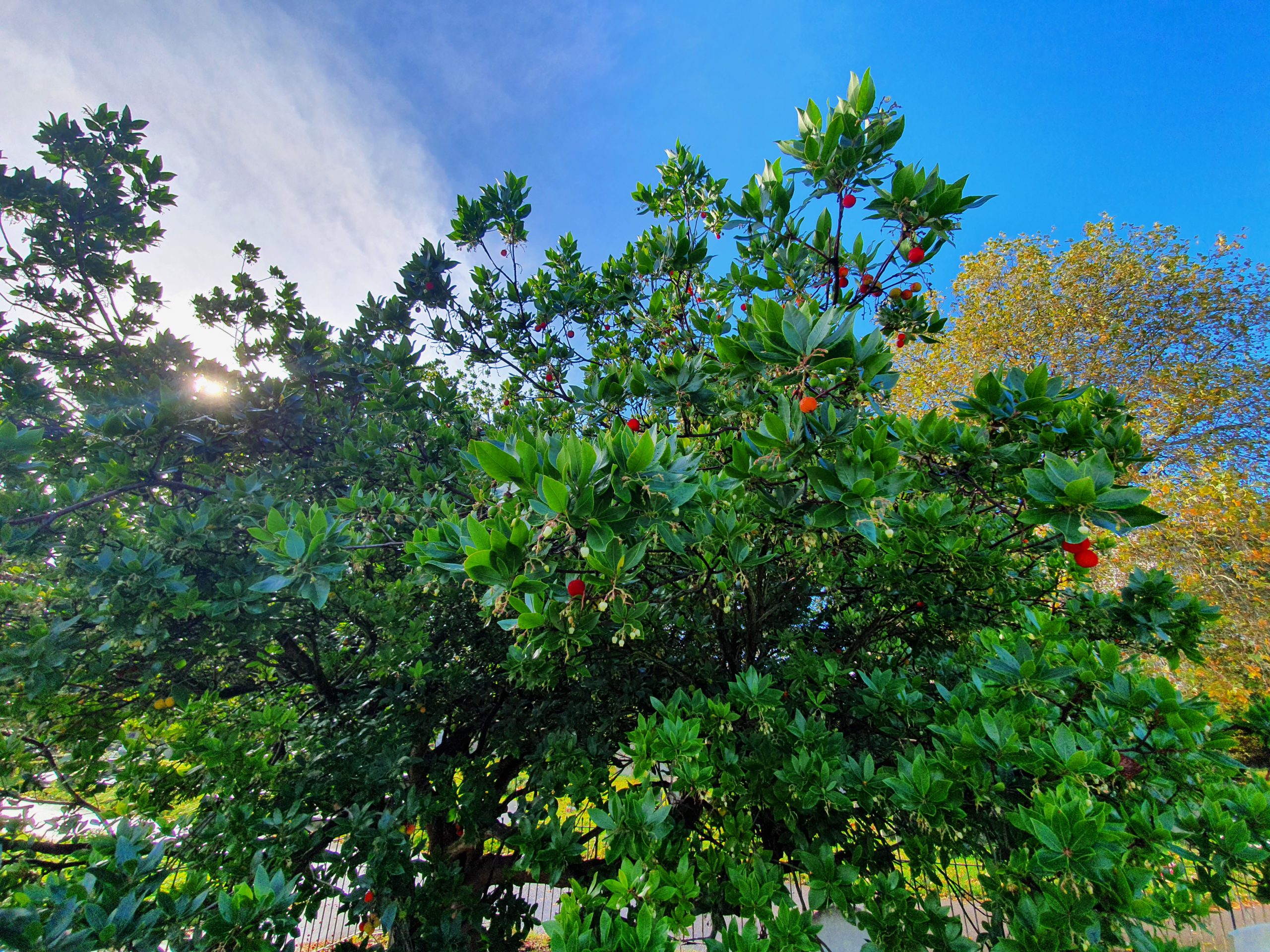
    I have very little knowledge about trees and flowers, but I quite liked this one at Brompton Cemetery. I obviously didn’t know what the tree was without assistance, but the cemetery had helpfully included a sign mentioning what it was.

    The Latin name is Arbutus unedo and the fruit of this tree is apparently edible, although I didn’t try. Wikipedia notes that it’s often used in jams and I don’t disbelieve them on this occasion.

    And the tree, quite a handsome addition to the cemetery.

  • London – Kensington and Chelsea (Borough of) – Brompton Cemetery (Alfred John Weston)

    London – Kensington and Chelsea (Borough of) – Brompton Cemetery (Alfred John Weston)

    This grave at Brompton Cemetery commemorates the life of Alfred John Weston. He was born in 1896 and he joined the Royal Fusiliers and was a private in the First Battalion. Alfred died on 2 February 1915 at the age of 19, being buried on 6 February 1915. His address was given as St Mark’s College Hospital, Chelsea, which was being used as the Second London General Hospital.

    There’s no next of kin mentioned on the Commonwealth War Graves Commission web-site, but if I’ve got the right person, at the 1911 census Alfred lived at 53, The Broadway, Ealing, along with his parents Edward Bradley and Elizabeth Bradley, although I’m unsure why the surname differs. His father, a naval pensioner, was thirteen years older than his mother, so I can only assume he remarried.

    And there another story ends, the usual places don’t mention what happen to him and his service records aren’t available. Unfortunately, 60% of these service records from the First World War were lost during air raids in the Second World War, so I assume that’s what has happened here. Alfred has also been given a new gravestone recently, although I don’t know the back story to that.

    Hopefully one day I’ll find out more about Alfred, it’s sad that a 19-year old died from his injuries likely incurred on a foreign battlefield and there’s little known about him. At least his body was buried in a local cemetery though, something which many families didn’t get.

  • London – Kensington and Chelsea (Borough of) – Beatrix Potter

    London – Kensington and Chelsea (Borough of) – Beatrix Potter

    This plaque marks the site of where Beatrix Potter lived in West Brompton, from when she was born in 1866 until she was married in 1913. The house, at 2 Bolton Gardens, was unfortunately destroyed during bombings in the Second World War. What is perhaps most intriguing is that Potter lived just a short distance from Brompton Cemetery and graves have been discovered there with the same names as some characters from Peter Rabbit. These include names such as Nutkins, McGregor and Jeremiah Fisher, so it’s entirely possible that she named the characters in her books after graves which she had seen.

  • London – Kensington and Chelsea (Borough of) – Brompton Cemetery (Joseph Thomas Bowskill)

    London – Kensington and Chelsea (Borough of) – Brompton Cemetery (Joseph Thomas Bowskill)

    This grave at Brompton Cemetery commemorates the life of Joseph Thomas Bowskill, born in 1923, the son of Joseph and Alice Bowskill. He was married to Marjorie Ruth Bowskill and they lived in Brighton.

    He was part of the Royal Air Force Volunteer Reserve and was a leading aircraftman, service number 1385868, working from RAF Weston-on-the-Green. Joseph died at the age of 22 on 1 April 1945 when his aircraft crashed shortly after take-off near to his airbase, also killing his two fellow crew members, William Callander and Harry Norman Skelton. He was buried on 7 April 1945, just a few weeks before VE Day and the cessation of military action in Europe. Marjorie, his wife, died in the Westminster area in 1973 at the age of 51.

  • London – Kensington and Chelsea (Borough of) – Brompton Cemetery (Richard William Shimes)

    London – Kensington and Chelsea (Borough of) – Brompton Cemetery (Richard William Shimes)

    This grave in Brompton Cemetery commemorates the life of Richard William Shimes, the son of William and Edith Elizabeth Shimes (nee Green), who lived in Chelsea, London. Richard was born in the final quarter of 1918. The 1921 census won’t be released until the beginning of 1922 and Richard doesn’t appear on the 1939 register, perhaps because he was already in the military. Edith appears as a housewife, living at 297 Guinness Buildings in Chelsea with her son Charles who was a gas-fitter and another person whose details have been redacted.

    Richard joined the RAF as an aircraftman and his service number was 534975. He died on 20 March 1941 at the age of 22 and was buried on 28 March 1941.

    And there’s little more story I can find to tell on this one, he’s even listed on one site as one of the few airmen that further information isn’t available on. Until his military records are released, this grave feels just that bit anonymous. Unless I’ve missed something obvious (which is always highly likely).

  • London – Kensington and Chelsea (Borough of) – Brompton Cemetery (Geoffrey Donovan Hadley)

    London – Kensington and Chelsea (Borough of) – Brompton Cemetery (Geoffrey Donovan Hadley)

    Located at Brompton Cemetery, this is the grave of Geoffrey Donovan Hadley. Geoffrey was born in Brixton (then in Surrey) in 1893 and he served in the 4th Dragoon Guards (Royal Irish), with service number D/7987. His sign-up papers have survived, he was working as a clerk when he volunteered to join the army, but this was before the First World War, on 19 March 1913 having completed his medical on 17 March 1913 and he went to Seaforth Barracks near Liverpool on 20 March 1913.

    The records give lots of information about what he looked like, he was 5″7′ tall, he was 11.6 stone in weight, his waist was 35 inches, he had blue eyes and brown hair. He was Church of England, he had a pulse of 100 and he had a linear scar on his face, on the left-side of his forehead.

    He died on 12 November 1914 at the age of 21 at the First London General Hospital in Camberwell, so he must have been injured on the battlefield and transported home although the records don’t give information about this. He was in the military for a total of one year and 249 days, which was carefully worked out by the authorities. His next of kin was listed as his father Edwin James Hadley and his step-mother, Mary J Hadley, who lived at 37 Comyn Road in Clapham, a residential property which is still there today.

  • London – Kensington and Chelsea (Borough of) – Brompton Cemetery (John Wisden)

    London – Kensington and Chelsea (Borough of) – Brompton Cemetery (John Wisden)

    This is the grave at Brompton Cemetery of John Wisden (1826-1884) who was a world class cricketer, but is perhaps best known for Wisden’s Almanack. The headstone was changed in 1984 to reflect his cricketing life and who some said was arguably the best all-rounder of his day.

    I find this photograph slightly amazing, as it looks quite recent in terms of its quality, but it dates to 1859 when the English team were touring North America. Wisden is in the centre row, the person sitting down on the left-hand side. Their tour caused much interest, but unfortunately the American Civil War prevented any return matches and during that time baseball rather took over as a national sport.

  • London – Kensington and Chelsea (Borough of) – Brompton Cemetery (Henry Breakspear)

    London – Kensington and Chelsea (Borough of) – Brompton Cemetery (Henry Breakspear)

    This grave is located at Brompton Cemetery in London and commemorates the life of Henry Breakspear. There’s not a lot of information at the Commonwealth War Graves web-site, but as is noted on the grave, his service number was 2273 and he was a trooper in the 1st Life Guards of the Household Cavalry. He was born in Handborough in Oxfordshire and enlisted at Oxford.

    He was married to Mary Breakspear on 26 October 1903 and they had two children, Olive Mary (born 22 December 1903) and Stella Elizabeth (born 5 May 1907). For some reason they were with their uncle and aunt’s on the day of the 1911 census, at Tamworth Street in Fulham. The family though usually lived in West Brompton, hence why he’s buried here.

    His military records remain and it notes that he had served as a soldier before, signing up on 13 September 1900. He served in France between 15 August 1914 and 23 May 1915, then again between 17 March 1916 and 8 August 1916 when he received injuries on the battlefield.

    Henry returned to the UK and was admitted to the London General Hospital on Denmark Hill, which was also known as the Fourth London General Military Hospital or King’s College Hospital. His medical notes record that he died of septicemia from his wounds, which the doctor confirmed was related to his injuries.