Category: Suffolk

  • Barham – Sorrel Horse Inn

    Barham – Sorrel Horse Inn

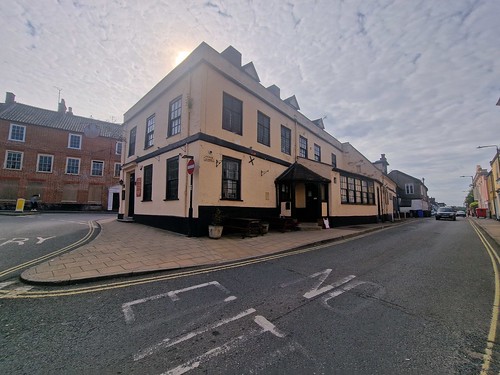
    We popped into the Sorrel Horse (a pub name that I’ve never heard of, but there’s another similarly named location near Woodbridge which apparently has a bar billiards table) whilst marshalling the LDWA 100 near to Ipswich. I had a vision of some sort of gastropub so I was already slightly pre-annoyed as it sounded decadent, but it soon became apparent this is a properly welcoming and accessible pub.

    The pub history seems a little complex, but CAMRA suggest that this building dates from the late fifteenth or early sixteenth century, located on the old Norwich road. There has also been a Sorrel Horse Inn for at least a few centuries, but it only moved into this building in the early nineteenth century. That’s not entirely rare as pub licences and names often moved about a bit, but either way, there’s a long heritage here. There’s also still accommodation offered at the Sorrel Horse, which is fairly near to Ipswich, but still in a countryside location not far from the River Gipping.

    We sat outside as it was warm and there were no wasps visible, and there’s plenty of space. They probably needed to clear the tables away a bit faster, but it was one of those environments that was welcoming and comfortable. There was a kids play area at the pub, but that was kept separate and there are numerous other outdoors areas located away from it for those who don’t want to sit next to screaming and over-excited children. But it’s a useful facility for parents who want to try and visit the pub and have children in tow.

    The food menu and I was tempted by a few options, but I couldn’t order any given that we only had about 30 minutes before we needed to go and marshal nearby. The pub uses The Round app which worked well and it was easy to order, with the staff members being visible and personable. Judging from photos on reviews, the food appears to be home-made and perhaps a little rustic in its appearance, but the prices are reasonable.

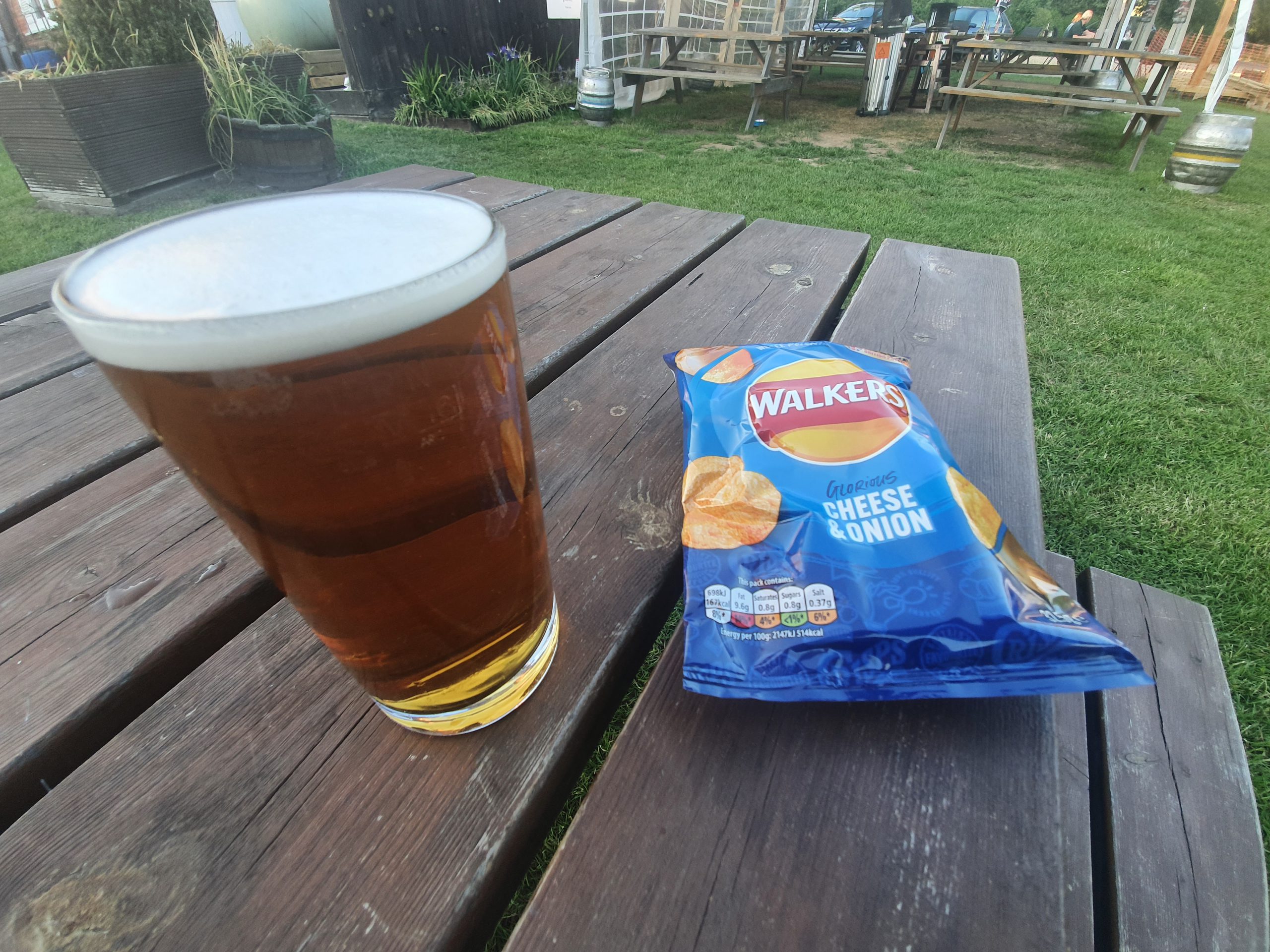
    There were three real ales available, all of which were perhaps a little routine and not overly exciting to me, but I went for the Young’s London Original and it tasted fine, was well-kept and at the appropriate temperature. Prices were moderate and the crisps were suitably delicious.

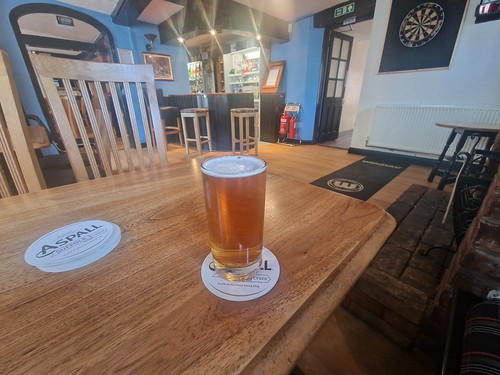
    I popped inside the pub to use the toilet and it had a relaxed and traditional feel to it (the pub, not the male toilets), and somewhere that I’d rather fancy coming back to (again, I mean the pub, not specifically the male toilets). I like under-stated and comfortable pubs and I can cope with having Young’s London Original…… Nice.

  • Corton – St. Bartholomew’s Church

    Corton – St. Bartholomew’s Church

    The signage perhaps tells its own story, but this is the Church of St. Bartholomew in Corton.

    From the corner of the churchyard, it’s not entirely obvious that this church was mostly abandoned for many centuries, having been a victim of the Dissolution of the Monasteries. It was ruined by the seventeenth century, although repairs have been made in the eighteenth, nineteenth and twentieth centuries, as some of the building has remained in use for religious purposes.

    When approaching the church it becomes apparent that the tower is derelict and only part of the structure is in use.

    This section lies between the tower and the nave, creating a peaceful little sitting area where the section of the nave that joined onto the tower once stood. A more modern community centre type addition has been made within the nave, which has been incorporated with sensitivity.

    One of the former windows has ironwork in to prevent access, but at least it’s decorative. Crowell’s 1846 history of Suffolk notes about the church:

    “At Corton, dedicated to St. Bartholomew, was once a noble structure, of which the chancel only is now used for divine worship, the body of the church having long been a roofless ruin. The walls are mantled with ivy, and the windows robbed of their tracery; yet the interior, with all its desolation, is still effective from its ample and just proportions. The nave, which never had aisles, appears to have been constructed in the decorated style of architecture, though the chancel presents a large east window, of perpendicular character. A noble square tower, about ninety feet high, stands at the west end of the nave. A singular tradition is related respecting the foundation of this edifice. In 1810, as the sexton, Thomas Soames, was employed in the church-yard, he was accosted by a stranger, who inquired of him the name of the building, and that of its founder. To the latter question the sexton was unable to reply; and the stranger then stated that he had been in Italy during the revolution, when the French armies were overrunning the country and rifling the monasteries. Employing himself one day with examining the records of a religious house there, he discovered a manuscript, purporting to have been written by Francis Cecelia, a monk of the Premonstratensian order, who stated himself to have been Abbot of Leiston, in Suffolk, and founder of St. Bartholomew’s church at Corton. The sexton having little antiquarian curiosity, no further conversation occurred, and the stranger left him without making known the date, his name, or any further particulars.”

    The tower didn’t remain in use for long, as it was constructed in the fifteenth century and it once had a rather grander window arrangement than the bricked up remains that exist today. The bricks here are falling out, I wonder whether it would be possible to remove them and put some stained glass back in.

    There were fears at the end of the nineteenth century that the ivy-covered tower might fall down, which led to a restoration fund being set up in 1890 to secure funds to ensure its survival. Looking at old newspaper reports though, these restoration funds didn’t seem to be rare, there was another set up twenty years later and securing the building appears to have been a challenge for generations of congregations.

    There are scars all over the building of previous doorways and windows, with this perhaps being the entrance to a side chapel.

    Another blocked window.

    I’m not a flint expert, but that’s some neat flintwork on the base of the wall.

    I’d say that the repair work here is a little cruder.

    It’s an intriguing church, although unfortunately it was locked up when I visited. Apparently the church does usually make an effort to either be open or have keyholder information available, so hopefully I’ll be able to see inside on a future visit.

  • Bungay – Green Dragon

    Bungay – Green Dragon

    I’ve been to the Green Dragon a few times before, usually after canoeing along the nearby river. Well, until there were continual problems with the campsite overcharging for canoe hire, but that’s a story that’s probably best not retelling. I’ve always thought that the Green Dragon is a very good pub, but I’ve now come to the conclusion that it’s actually one of the best pubs that I’ve visited in Suffolk. Located on a corner site a short walk from the town centre, the pub was called the Horse and Groom, but they’ve changed the name to match the on-site Green Dragon micro-brewery.

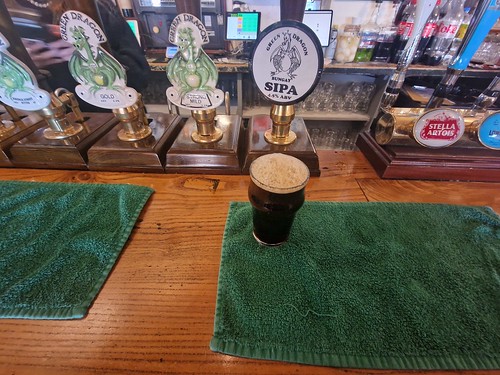
    I was welcomed immediately and was shown that the beers were listed on a printed menu, a basic feature that makes things much easier for everyone concerned I think. There’s a choice of cask beers which are brewed on-site and I’ve tried their strong mild before and been entirely pleased with it. It was a slight shame that they had run out of the Bone Machine beer as I’ve been meaning to try more of their output, but there was still a decent choice. I liked the engagement from the staff, this very much feels like a community pub and one which is still happy to welcome newcomers.

    I went for the Brew By Numbers 11, and I don’t care that some people comment that Citra hops have been overdone, because I still very much like them.  This was a refreshing IPA with a crisp favour, and what I also like is that beers such as this are available in a pub in a relatively small town such as Bungay.

    The pub was all clean and felt Covid-19 secure, and there was a relaxing feel to the whole arrangement. I was slightly disappointed that I had to leave to go and get a bus, as I would have quite contently stayed for longer. They weren’t serving food when I visited, but I’ve heard before that their curries are recommended, so that might be an excuse to come back in the future….

  • Southwold – The Little Fish and Chip Shop

    Southwold – The Little Fish and Chip Shop

    This looked to me like the best reviewed chip shop in Southwold and apparently there’s nearly always a queue. A queue is usually a positive sign (although occasionally a sign of complete incompetence of course), but it all looked tempting enough for me to visit.

    What I like about this is that they’ve made it idiot proof, so that not even I could get confused where to go. Customers go in the door marked ‘in’ when there’s space, they then order and then wait outside. The customer in front of me ordered what I think was four lobsters and chips, which is very much a Southwold thing to do I think, I doubt that happens much in somewhere like Long Stratton. Since that came to over £80, I was starting to be slightly nervous about how much my order of just chips would come to and even whether you’re supposed to just order chips at a decadent place like this.

    I nervously ordered just chips and was pleased when the server didn’t say “yes, and?” and he was polite and helpful. Fortunately, my portion of chips came to what I felt was a reasonable £2.50 and I didn’t have to wait, they served my order immediately. All very efficient, friendly and I thought really quite organised.

    This photo doesn’t do the portion of chips much justice, and I’m not sure I’ve had chips presented like this recently in a bag. In reality, the portion size was nearly too much for me, although I bravely did finish them as I’m very much against food wastage. The chips were chunky and were fluffy on the interior and firm on the exterior, and they’re cooked in beef dripping, which is the only option. I don’t have any issues with this, but it will of course restrict vegetarians from going. I thought they tasted fine (the chips, not vegetarians) and they were quite moreish, complemented by the sachets of ketchup I had brought with me (the pots of ketchup at the shop were at decadent prices).

    That’s Southwold beach in the background of the photo, it was a pleasant day and reasonably warm with not much breeze. Fortunately, there are lots of benches along the seafront as many other visitors were enjoying fish and chips, and some had acquired beer from the pub. All rather lovely.

  • Southwold – Lord Nelson

    Southwold – Lord Nelson

    I wanted to visit the Lord Nelson in Southwold as it’s the only pub in the town which is listed in the Good Beer Guide. I had half suspected a queue, as it was around 12:15, but I loitered outside the pub and a staff member came to welcome me in. For the first time, my phone really didn’t like the QR code for the NHS login, and despite some considerable efforts on my behalf to get it to work, we resorted to pen and paper in the end. I then nearly broke the hand sanitiser as it was a bit complex, so I concluded the pub must be used to more decadent and intellectual guests.

    The drinks menu, inevitably biased towards Adnams as they own the pub and their brewery is around the corner. The service was all timely and friendly, with the order taken at the table and there was an option to set up a tab.

    There are only six tables outside in the pub’s beer garden and I managed to get the second, meaning that there were four free. I decided, to be fair to the pub, that I’d leave when the tables all got filled, as they all seated four people and the pub might lose four lunches if I blocked their table. I liked that they never rushed me, never made me feel unwelcome and it all worked out perfectly timewise. I left after around 45 minutes and a couple tried to get a table for food just as I left, so everyone was a winner there.

    The Blackshore Stout from Adnams, which I rate reasonably highly as it’s creamy and chocolatey. And, just so Nathan is pleased, it was served at the appropriate slightly chilled temperature.

    The pub is well reviewed and the pricing is a little towards the higher end for food, but nothing dramatic. As Basil Fawlty says, “you’re a bit stuck if you don’t like Adnams” (well, he said duck, but Adnams fits better here) on the beer front, but there was a range of different styles of beer and cider. It’s got a bit of atmosphere to it, even when empty, and the service was all sufficiently engaging. Quite a decent place, and certainly not a bad recommendation from the Good Beer Guide.

  • Homersfield – Homersfield Bridge

    Homersfield – Homersfield Bridge

    This is the path up to Homersfield Bridge, where there has been a crossing for centuries, but the current structure was constructed in 1869. And for those who like concrete (I’m sure that it has a niche following), this is one of the earliest concrete bridges in the country. This is also the county border, so this side is in Suffolk and the other end is in Norfolk.

    Clicking on this image will make it appear in a larger size and it shows where Church Lane crosses the river (this older bridge) and where the new B1062 bypasses Homersfield.

    The bridge was designed by Ipswich architect Henry Eyton and was installed by Messrs W & T Phillips of London, under the supervision of Sir Shafto Adair. Adair was the Baronet of the Flixton Estate and the coat of arms of his family is attached to the bridge. Since he paid for it, it seems only fair that he gets to put his family crest on the side. Adair also ensured his initials of SA were placed on the balusters and Eyton also added a panel with his name on it (he added several, perhaps he thought some would fall off).

    The bridge could support a weight of around 200 tons, although it seems that this was a bit made up as they had no way of testing it. Before the bridge opened to the public they put a heavy roller with four horses on the structure, as well as a waggon with flour sacks and two more horses. They were delighted that the bridge didn’t fall down, but their test involved just 5 tons of weight, somewhat off their maximum.

    There was a toll for vehicles to use the bridge, to recover at least some of the costs, but it has always been free for pedestrians to walk across. There was a slight problem with this though insomuch there is a passable ford that can be driven through near to the bridge, as long as the water isn’t too high. The local press reported in 1933 that some vehicles were getting stuck in the water in order to save paying the toll to use the bridge. Slight disaster also hit the bridge in that year when someone drove off rather too quickly after paying the toll and they managed to take part of the bridge with them, which it’s fair to say isn’t ideal. The estate worker got the details of the car’s registration plate, but the driver did a bit of a hit and run and cleared off before his name could be taken.

    The bridge crosses the River Waveney and it was part of a restoration effort in the 1980s after it had rather fallen into disuse since the construction of a new bridge. An excellent job was done, although proving ownership of the bridge was difficult and a compulsory purchase order was required in the end.

    A little dirty, but this is a rather useful and informative sign about the bridge.

  • Bungay – Bungay Well

    Bungay – Bungay Well

    This is the town well in Bungay, which was used from Roman times until 1923 to get fresh water. It was possible until recently to get the key to go and have a closer look in, but I expect someone fell in or something as it’s guided tours only now. I’m sold on the story that this has been in use for hundreds of years, with Romans getting water before their big chicken supper (I’m not entirely sure what Romans ate, but I’m sure they ate chickens). When the well was drained there was some Roman pottery found in it to help the dating process.

    I’ve marked the location with a little crosshair thing, although I accept that this is akin to something out of Puzzler magazine to see it (it’s near to where the arrow pointing to the Wesleyan Methodist Chapel is).

    Clicking the above image makes it more readable…. In short, there was a new brick surround added in the Tudor period and repairs have been the responsibility of the Town Reeve (a Saxon word for magistrate). A lovely shiny new pump was placed in the market place in 1812, but it wasn’t until 1923 that a new pumping station at Outney Common saw this well become redundant.

  • Walk Around Bungay and South Elmham

    Walk Around Bungay and South Elmham

    This walk was from a couple of days ago with my friend Rob, starting in Earsham and then going to see the new bridge that has been installed, before walking around The Saints and then returning to the bridge. It wasn’t the dryest of days, but Bungay is in the national press today due to flooding, so it could have perhaps been worse.

    Earsham was the start and end point of the walk, wet at the beginning and the rain started to pour down just as we arrived back. There’s been a church here since the Saxon period, although the current structure is from the twelfth century with bits added on and restored since.

    My trip to get the day’s lunch was delayed slightly as they couldn’t get the till to turn on. I don’t think the Bungay Shopper themselves would claim that they have a range of high quality artisan food and drink, but it was convenient and cheap.

    I’ve never seen Bungay Castle, I hadn’t realised it was visible from the footpath. It was financed by Roger Bigod of Norfolk and was constructed just after the Norman Conquest. It fell out of use many centuries ago, being owned by the Dukes of Norfolk from 1483, but the family gave it to the town in 1987.

    Flixton Road Mill, built in 1830 and now converted into residential accommodation.

    The temperature was quite warm, although there were occasional showers.

    A rainbow appeared between the rain showers.

    We visited three churches on the walk, all of which were open to go inside. This is St Margaret’s Church in Ilketshall St Margaret and more of this in another post. But, the highlights here are what I think is a Saxon window in the tower and the completely ridiculous decision made by English Heritage to render the tower. They accepted this was in error and it is neither historically accurate nor particularly beautiful. But, it’s there now, part of the church’s story.

    I rather liked the path in the above photos, I think from the width it’s a former drovers’ road. One of those routes which could have easily have become a road.

    Fortunately, the mud in Suffolk isn’t generally too clay-like (unless certain parts of Essex…..), otherwise this could have been an annoying walk across a field with mud welding to my boots.

    Part of my lunch from the Bungay Shopper….. Very decadent.

    Streams and ponds that are often low in water certainly aren’t at the moment.

    Some aggressive looking sheep.

    I’m not sure of the age, but this road bridge looks to have some history to it. A nice feature to have in the garden as well.

    St. Peter’s Church in South Elmham.

    St. Peter’s Brewery, which was founded in 1996, and occupies a site which includes an ancient thatched barn and St. Peter’s Hall. The brewery own one just pub in the country, which I have meant to go to, it’s located in Farringdon in London.

    Norfolk and Suffolk can be hilly. Well, relatively hilly.


    One of the reasons we went on this walk was to see the new bridge which has been installed here on the Angles Way. This map (in .pdf format) shows the temporary route which the broken bridge caused. It took six years for this bridge to be replaced and numerous local politicians were involved, and the Ramblers really engaged with the process.

    The area was a little more moist than was ideal, perhaps the bridge set-up wasn’t ideal, but the main thing is that the Angles Way route has now been restored. Fortunately, that water wasn’t too deep.

    This is Rob’s route of the walk, I like the colours showing when we were walked a little quicker.

  • South Elmham – St. Michael’s Church

    South Elmham – St. Michael’s Church

    Perhaps the best known fact about the parish of St. Michael in South Elmham is that it’s one of the Thankful Villages, as it lost none of its men during the First World War. And, on top of that, it lost none during the Second World War, one of only 14 villages in the country to be this fortunate.

    I was walking in the area with my friend Rob, who mentioned he saw that they were putting new render on the church last year. It is unusual to see a church with such a modern render, as the Victorians frequently stripped it off as part of their modernisations. I do prefer seeing the stone behind the render, but it was a protective layer against water ingress and so churches are a little vulnerable without it.

    I’m not a rendering expert, but this looks neat and clean. It’s not quite visible from this photo, although it is from the one below, that the church used to have a thatched roof.

    This is the other side of the church, where there is no render, with the wall looking faintly ridiculous and more like something constructed for a shed.

    There are no windows on this chancel wall, some of that brickwork at the top looks alarmingly modern and it’s all a bit botched. But, such is the necessity to patch up buildings that have structural issues, although some render here might make the whole edifice look much more appealing. The process of restoration must be frustrating, the church received some extensive work in the early part of the twentieth century, which was much damaged during the storms of February 1906.

    The end of the chancel and it’s evident visually that the current building is leaning somewhat in places. And, it’s possible to see the buttressing efforts from previous generations, in their attempt to protect the church.

    I found this a rather pretty chancel, despite having no windows on the side walls. Unlike some of the quite sterile designs of some Victorian chancels, the history here is evident.

    The chancel wall is leaning, but has been repaired to some extent recently. I’m unclear what that larger bricked up door is, I can only assume that it led to some sort of chantry chapel arrangement.

    I do like brick flooring, I think it adds to the atmosphere of the church. There’s one prominent tombstone in the nave, with the bodies of Henry Lone who died in 1727, and his wife Rebecca, who died in 1735. The glass in the windows is quite plain, although that’s because much was lost during the Second World War, but that has meant that the interior is brighter.

    The ladder to the top of the tower.

    The church’s font dates to the fifteenth century.

    This is one of the most beautiful church arches that I’ve seen recently, an original Norman decorated surround which is probably from the twelfth century. The door itself is modern, but the eye is drawn to the arch. Well, mine was.

    And a slightly quirky sundial on the exterior of the church.

    I thought that this was a quite beautiful church, even ignoring some of the patched walls and that part of the building was leaning. That all adds to the historical attraction of the church, it hasn’t been overly mauled about by the Victorians (although they did replace the seating and boarded up some of the roof) and it still feels medieval. The churchyard is moated, which is an historic quirk by nature of being next to a common, and the church itself is Grade I listed.

    The first child to be baptised in the church’s fifteenth century font would have been a Catholic and the religious set-up would have been different. But yet, there’s that reassuring feeling that really not much has changed in this church since then. If the parents of that child being baptised looked up and down the church as it is today, I suspect they wouldn’t have been much surprised at the changes. Well, unless someone got a phone out and took a photo, but otherwise, this is a little piece of what England was once like.

  • South Elmham – St. Peter’s Church

    South Elmham – St. Peter’s Church

    The rain cleared a bit by the time that we got to St. Peter’s Church in South Elmham, a church where it’s hard to see how its small parish was ever able to support it.

    The tower is in need of some attention, the foliage growing on it will eventually start to cause structural damage.

    The four-stage tower, likely from the late fourteenth century.

    The fourteenth century porchway, with the carved stone faces still visible.

    There have been some rather crude repairs here over the years and I wonder whether they just rendered over that to hide the patchwork of stone. There have been some recent repairs to the end chancel wall, which have now been completed

    This external chancel wall doesn’t look overly exciting perhaps, but it’s where the chantry was installed in the late fifteenth century and would have been located on this patch of greenery. There would have been a large opening in the wall here and it held the tombs of John Tasburgh and his wife, Margery Tasburgh. The chantry was damaged during the Commonwealth period and later became left open to the elements, with the tombs damaged. The structure was taken down in the 1830s, although the remains of the doorway are visible.

    The church has an interesting photo in the chancel which explains a little more about the history of this wall. To the left, out of shot, is the former chantry arch, but visible here is the coursed flint from the twelfth century forming most of the wall, with the higher thirteenth century wall visible at the top of the two windows when the building was heightened.

    Looking down the nave of the church, which has been heavily Victorianised inside.

    The chancel arch is from the fourteenth century and fortunate that the rood screen is still in place.

    It’s a well proportioned chancel.

    The open base of the tower is visible at the rear and the font is from the fifteenth century.

    Some decorative arrangement in the chancel, likely the base from the chantry tombs.

    I have no idea what this hole in the wall near to the door is doing…..

    Published in the 1840s, this text by the author of a history of Suffolk is a reminder that theft from churches is nothing new:

    “In the year 1819, while the writer was visiting this parish, collecting the materials which form the matter of the present notice, a person of gentlemanly address drove up to St. Peter’s Hall, tenanted by the late Mr. Alden, the then churchwarden, inquiring if the church contained any brass effigies, as he was travelling through the country collecting such records of ancient families, with a view to their cleaning and restoration, promising to return them shortly to their original places. St. Peter’s church afforded nothing to add to his collection, having been already stripped by some earlier iconoclast. The writer remembers that the applicant’s gig-box was half full of brass effigies, which it is vain to hope ever found again their respective matrices. The observation is simply recorded to expose a system of plunder once recklessly pursued, and to warn all churchwardens to repulse applications of a like nature.”