Category: UK

  • Belgrade Trip – Luton Airport and Big Smoke Restaurant

    Belgrade Trip – Luton Airport and Big Smoke Restaurant

    20240909_130115

    I mentioned in my last post about my new acquisition of an unlimited Priority Pass card, so my first usage of it was at Big Smoke Restaurant. The deal is that they give you £18 to spend as a dining credit at the restaurant on anything that you want. It’s not a huge amount, so it’s not going to get any traveller a three course meal and a smorgasbord of drinks, but it’s a decent snack. The service element was a bit fiddly, but it didn’t help that I asked to sit at the bar as there were power points and I didn’t want any of my devices low on battery. This meant that they didn’t have any waiter service to take my order, which might have made the process smoother. I tried to order at the bar and I was told they needed to find a staff member from the restaurant area to pre-scan my Priority Pass card, which they did.

    20240909_112404

    I then tried again to order and this was going brilliantly until they realised that had left some breakfast menus out, and I needed to order from the lunchtime menu which started at 11:00. Again, it was sorted quickly enough and everyone was helpful, although this is a slightly fiddly arrangement all round. Here’s the main menu and it’s evident how far the £18 will go, or not go as the case may be.

    20240909_114637

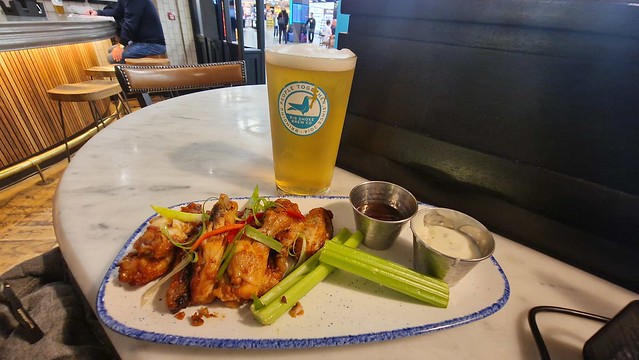
    I went for Smoky Chicken Wings and a pint of Electric Eye. The food took 12 minutes to arrive, it was neatly presented and the chicken was tender and fell off the bone easily. I decided I’d eat the celery for some variety in my life, which was particularly healthy of me. Would it have been worth the £17.20 that it would have normally cost? Probably not to be honest, I’d have likely gone to Boots next door and got three meal deals for less money. However, the dining environment was clean and comfortable, the service was polite and I was able to charge all my devices up which ensured that I wasn’t overly stressed for the rest of the day. I’ve got a new battery pack to avoid issues, but I try and remain fully charged when about to travel somewhere new, just in case something goes a bit wrong.

    For an airport location, the prices aren’t unreasonable and I merrily listened in to other customers to see if they were happy. In general, they seemed to be and given the absence of a Wetherspoons here, it’s likely one of the better pre-flight options. As for the Priority Pass, it’s a handy option for those on unlimited passes, but it’s poor value for those on limited visit pass as it’d be cheaper to just pay at the restaurant.

  • Belgrade Trip – Luton Centre to Luton Airport

    Belgrade Trip – Luton Centre to Luton Airport

    20240909_102442

    Before I start this, I accept that this post is, well, rather niche and a bit prosaic. But, I quite like reading back on the connecting parts of trips and since it’s my blog, I might as well write the stuff I want to remember. I’ve walked from the centre of Luton to the airport on numerous occasions and I have to say, it’s rarely an inspirational meandering through beautiful landscape and undulating hills. I’m quite proud of myself for this photo, which I think is the most beautiful spot along the route. Although, if truth be told, it’s actually in a traffic island (the underpass is visible at the rear of the photo), but it does show the little river that weaves its way through the town. It’s the River Lea, which becomes much bigger by the time it hits London and is also the origin of the town’s place name (Luton I mean, not London).

    20240909_103720

    Last time I walked by here, the Luton DART hadn’t been completed. It’s a ludicrous fare of £4.90 to get to the airport from here, which is a minor walk (for me, I don’t speak for anyone else). When I get a train ticket that includes Luton Airport station, it does though include the DART ride. Not that I’ve had a situation where I’ve needed to buy such a ticket, but maybe one day.

    20240909_104148

    I walked over these steps once before realising it was much less hassle just to cross the road. This is always my sign that I’ve reached Luton Airport. Other major airports have an old plane or something similar on display, but I like this little bridge. One point of this post is that if anyone does want to just walk to the airport, it’s only a thirty minute expedition from the town centre and so for anyone with a backpack and no walking issues, it’s some free exercise before the flight.

    20240909_105633

    And here we are, London Luton Airport. Does travel get more decadent than this?

  • Belgrade Trip – Dragonfly Bus 610 from Hatfield to Luton

    Belgrade Trip – Dragonfly Bus 610 from Hatfield to Luton

    20240909_092048

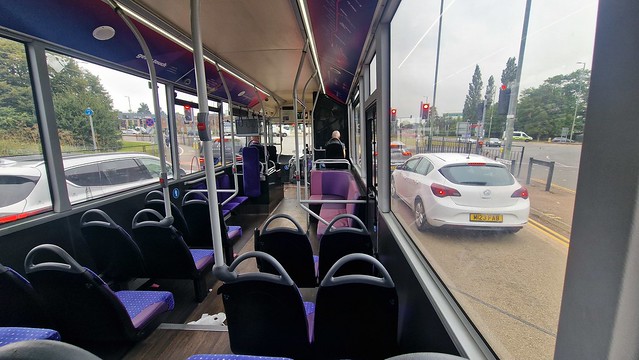
    It was easier than I expected to get from Hatfield to Luton, it’s a short walk from the Travelodge to the Galleria and the bus stop is just opposite the front of the shopping centre. Some sensible urban planning.

    20240909_092854

    As usual, I got to the bus stop 25 minutes early for my bus. Fortunately, the previous 610 bus was delayed by 20 minutes and so I was able to board the bus after just a couple of minutes of standing at the bus stop. Sometimes the bus Gods smile nicely…. The cost for this journey was just £2, many thanks to the bus cap which I still think is one of the best policies that the last Government managed to think of. The current Government are refusing to extend the cap, which otherwise runs out at the end of 2024, but it would be a serious blow for public transport if they fail to do so. I checked what the bus fare would have been before the price cap and back in 2019 I would have had to pay £9 to use the service.

    This whole arrangement meant that I was in Luton around 60 minutes after setting off from Hatfield. My entertainment was boosted by two separate passengers asking the bus driver if she knew that her bus was late. It transpired that she did realise that the bus was late, but it was nice of the passengers to check.

  • Belgrade Trip – Journey to Travelodge

    Belgrade Trip – Journey to Travelodge

    20240909_001525

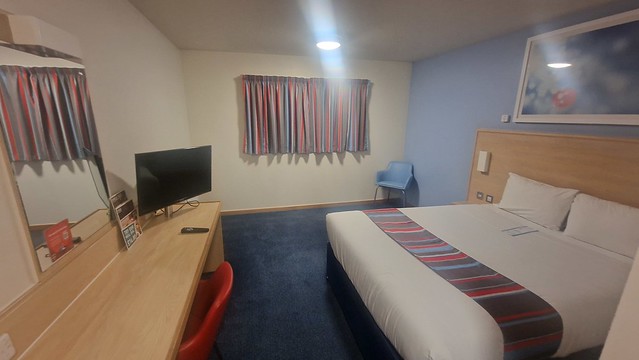
    Woooo, a little adventure this week as I’m going to Belgrade which is my first visit to Serbia. I had a little issue that I had to work out how to get to Luton Airport for my flight, but where there’s a will, there’s a Liam and his car. He kindly picked me up just before midnight to take me to the delights of Hatfield. I had established that I could get from Hatfield to Luton Airport relatively easily, although I didn’t realise at the time how easily, and the Travelodge was only £30 for the night. It’s not the easiest hotel to find the entrance to, but I was dropped off in good time. The staff seemed startled at someone trying to get in, but the check-in process was quick and easy. The room is the old style Travelodge lay-out, but it was clean and entirely functional. For the money, it was really rather good and was suitably convenient.

    20240909_001551

    Liam patiently waited outside to check that I had managed to check-in. This is the confirmation photo that he wanted before he could safely drive off without me messaging him 20 minutes later saying I’ve had a crisis.

    20240909_090729

    The room was very cold and I think that’s the state of the art temperature control on the left. I like very cold rooms, but I suspect some guests might not have been surprised and delighted by the arrangement. If only all hotel rooms were chilled like this one then I’d be very pleased.

    20240909_091028

    It was all very peaceful inside, although there are a fair few number of reviews complaining about both internal and external noise. I noted a customer review which reads:

    “Horrific. Stayed in room 226, all I could hear all night was the banging from the loud music coming from a restaurant across the road. Went to reception and told them and they said they have had lots of complaints because of it but nothing has been done to resolve it. I literally ended up sleeping in the bath till half 2 in the morning when the music stopped. Worse nights sleep I’ve ever had.”

    I’m really not sure that sleeping in a bath was ever going to work as a plan, but there we go…. I quite like the buzz of external noise, but another customer noted:

    “There was a man asleep in the disabled toilet after drinking to much. The area around it was terrible. There was rubbish everywhere, bed linen that someone had thrown out of bedroom window was just left.”

    Sounds an entertaining evening…..

    “Awful ! Truly horrendous.

    We started to worry when we tried to park behind the hotel – men openly selling drugs , drug paraphernalia on the floor .

    Reception staff lovely but the hotel have an agreement with the local council . Apparently their residents are “well behaved” but on finding one hotel guest on the floor of the corridor so drunk or drugged he could not get up . With another lady guest hanging out the hotel corridor window smoking drugs we decided that due to feeling unsafe we would leave .

    The bottles of urine outside the front of the hotel were just disgusting. The hotel surroundings are full of groups of men hanging around . We felt really uncomfortable.

    The hotel have refunded my two nights but I am still out of pocket for the two hotels we had to find as we did not stay in Hatfield Central .

    I would not like anyone to feel how we did , this in my opinion is not a hotel for a lone female .

    I have since found out that another business stopped using this hotel as female staff felt so uncomfortable

    Avoid!”

    They sound like a satisfied customer.

    20240909_091137

    It is an odd design though, as there’s an open car park under the building and it’s probably quite a protected area for someone some poor sod who sleeps rough to stay dry. There’s a JD Wetherspoon pub about three doors down, one I’ve visited before and I can’t say that I thought I’d be back in Hatfield any time soon.

    But, lovely as the stay was, I had to work out to get from Hatfield to Luton Airport….

  • London – Greenwich (Borough of) – National Maritime Museum (Kangaroo Painting from 1772)

    London – Greenwich (Borough of) – National Maritime Museum (Kangaroo Painting from 1772)

    20240902_132834

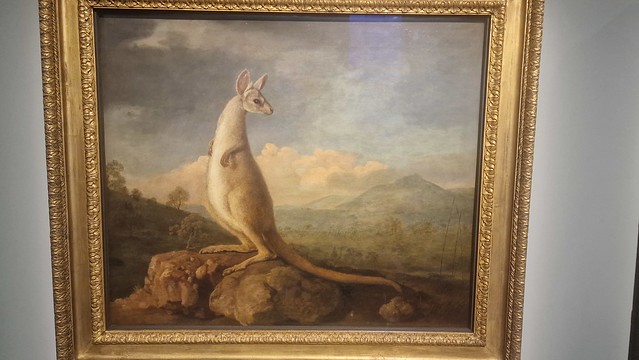
    This artwork was originally known as ‘The Kongouro from New Holland’, and it’s notable as the first painting of a kangaroo (or at least in terms of western artwork). It was painted by George Stubbs, alongside a similar one of a dingo (more of which in a later post, as if this blog’s excitement couldn’t already be topped), in 1772 and they were the only two artworks he completed that weren’t based on actually seeing the full animal. Instead, he had just skin and skull bits of a dead kangaroo which had been collected whilst the good ship Endeavour was being repaired after a little incident when it ran aground and nearly sank on the Great Barrier Reef. Goodness knows what the public would have made of this kangaroo thing, they wouldn’t have seen anything like it before. Indeed, it just looks like a big rodent.

    The artwork was first presented at the Society of Artists in London in 1773 and it, alongside the dingo painting were sold to an Australian buyer in 2012 for 9.3 million Australian dollars. An export ban was promptly put in place by the Government and Sir David Attenborough led a campaign to keep them in the UK. Although the National Gallery of Australia really wanted the artworks, a large donation from the Eyal Ofer Family Foundation (alongside donations from the Heritage Lottery Fund, the Monument Trust, the Art Fund and the general public) meant that they were able to remain in the country. The National Gallery of Australia’s loss was the gain of the National Maritime Museum, which is where both artworks now reside. The artworks had been in private hands since they were painted and were on display at Parham House for some time before their auction sale, with both paintings always being displayed together. It’s quite an achievement that these works are now on public display at a location with no admission charge, successfully saved for the nation.

    Incidentally, I like the old spelling of the word, namely ‘kongouro’, although it actually started off as ‘gangurru’.

  • London – Greenwich (Borough of) – National Maritime Museum (Percy the Penguin)

    London – Greenwich (Borough of) – National Maritime Museum (Percy the Penguin)

    20240902_133819

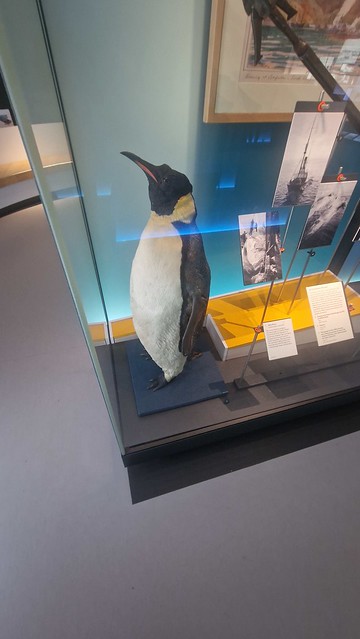
    I went back to the National Maritime Museum earlier this week and I felt the need to post about Percy the Penguin. It’s a stuffed penguin, although that is likely fairly evident to even the most casual observer of the photo, dating back to 1904 (the penguin, not the photo). It was caught on Captain Robert Scott’s first expedition to Antarctica, between 1901 and 1904, and the label reads that this fascinated scientists at the time as they thought penguins were the link between birds and dinosaurs. I’m unsure where it spent the last 120 years, but there’s a note on the museum’s web-site that a label said “PRESENTED BY THE CAPTAIN, OFFICERS AND CADETS, HMS WORCESTER, 1950.”. This is also known as the Thames Nautical Training College, so it likely was looked at by cadets for many a year before finding it’s way to the permanent collection of a national museum.

    Bristol Museums also have their own penguin, collected on Scott’s ill-fated expedition between 1910 and 1913. And, if that’s not enough, there was recently a dead penguin flogged off at auction. I’m not sure what they intended to do with all these penguins that they were collecting, I assume surprise and delight relatives back home with them as I would have thought the scientists didn’t need a whole job lot of them to study them.

    And, the Maritime Museum clearly likes Percy as well, they’ve got a section on their web-site on how to make your own penguin. I likely won’t to be honest, but it seems a sound idea.

    Anyway, I’ve digressed. All these wonderful exhibits at the museum and I get engaged by a penguin.

  • London – Greenwich (Borough of) – National Maritime Museum (John Hawkins Painting)

    London – Greenwich (Borough of) – National Maritime Museum (John Hawkins Painting)

    [I’ve reposted this post from February 2021 to fix broken image links and also because I have more ‘riveting’ content coming about the National Maritime Museum.]

    20201214_112904-scaled-e1612639933624

    When I visited the National Maritime Museum a few weeks ago, there were numerous signs on how they were modernising the displays to be more representative and inclusive. This is an interesting interview (in.doc format) which took place last year with Daniel Martin, the Head of Collection Services at the museum and they seem to be pragmatic and forward thinking.

    20201214_112424

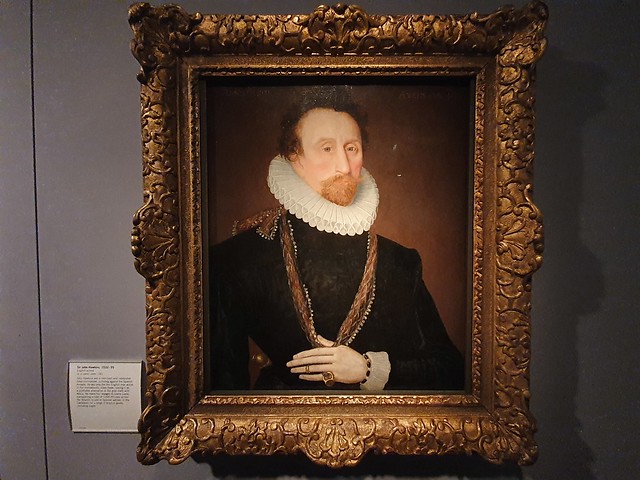
    This painting of John Hawkins (1532-1595), in the gallery which is being reviewed, is going to present the museum some problems in terms of its interpretation. Depending on your viewpoint, this is either one of the greatest English naval commandeers that there has been, or he’s one of the men most responsible for starting the slave trade. Which doesn’t even cover that it’s Hawkins and his crew who brought tobacco back, thereby causing no end of addiction issues over the centuries.

    There was a Royal Navy cruiser between 1919 and 1947 which was named after Hawkins, which does reflect that his naval prowess likely enabled England to fight off the Spanish Armada. The town of Chatham was so proud of Hawkins that they named a flyover after him, which has only recently been demolished. I’m not sure that flyovers actually need to be named after anyone, but there we go.

    There was a book, Devon Seadog, published about John Hawkins in 1907 written by Robert Alfred John Walling and this condemned Hawkins for his involvement in the slave trade (although it made passing note that this often benefited the slave in some ways, which isn’t necessarily an argument that might be pursued today with such vigour) so there has long been condemnation of some of his actions.

    Martin mentions in the above interview that it’s not possible to put every viewpoint in 150 words or so, which is challenging with individuals like this. The museum has though made an attempt on its web-site, where it has more space, to tell the story of Hawkins from different perspectives. I’m not sure I envy though the museum in its attempt to tell the story of Hawkins, as it can’t just ignore him as he’s an important naval figure and they’re a maritime museum, but they need to add context as well as to the impact that he had on the world.

  • Birmingham – Back to Backs National Trust Property

    Birmingham – Back to Backs National Trust Property

    20240904_144229

    All the previous times that I’ve stumbled my way into Birmingham, I’ve promptly remembered that I should have booked in advance to visit this National Trust property, the ‘Backs to Backs’. It requires some forward planning, and in a bid to surprise and delight myself, I actually managed last week to book to visit this week. I’m a National Trust member as I aspire to be at least lower middle class, although I sometimes wonder whether I shall reach such pinnacles of sophistication any time soon. Anyway, this tour is one of the best rated in the city and it’s one of the best reviewed National Trust sites in the country. I’m very slightly nervous to write that I didn’t feel entirely engaged with proceedings, but that feels a rather pompous thing to say given the keen and generous volunteers who support this venue. I had better fall back on Jay Rayner’s line of “if someone wants to call me pompous or condescending, they can go right ahead” here…..

    20240904_135435

    I can’t illustrate this riveting post with many photographs as they were banned inside the buildings, although that seemed to be the policy of the guide today rather than a general policy. Having noted that, our tour was quite busy and it’s not an unreasonable request from the guide. The tour is ninety minutes long, which did rather stretch my interest somewhat. I have to add a rider here that I’m generally boring, I read everything possible in museums, spend hours in them and frequently find myself on Google searching something new that I’ve learned during my meanderings. There was a lot of entering rooms, which in the case of the residences, were full of items that weren’t original to the properties, then listening to stories from other people on the tour about their mangles from the 1950s. Now, I have no complaint here, this is exactly the visitor that the National Trust gets and it’s the engagement that they want. I’m a life member of the National Trust (I drop that in for the reasons mentioned earlier about being aspirational), it would be ridiculous for me to be disappointed at that and it was rather pleasant to be by far the youngest on the tour. I like being the youngest, so a special award to the National Trust here for arranging this for me and also for the other tour participants for sharing their stories of how they had baths in tins around 70 years ago. One of the beauties of the tours is that over half the attendees stated that they had been brought up in houses similar to these, so of course they wanted to share their memories.

    I’ll have to phrase this carefully, but I haven’t quite reached the higher levels of being ‘woke’ yet, but the tour guide did meander into discussion areas, shall we say, that the National Trust themselves might not have been entirely happy with. It’s too easy to be critical, but I suspect there’s quite a difference in style between the different tour guides, so experiences will likely differ. Anyway, back to the very many positives and that was the enthusiasm of the guide, but there was also one standout room which was on the top floor and was left in an unrestored condition. This clever idea showed more architectural history, which is very much my thing, such as the divide which was put in during the nineteenth century when the house was split, the staircase that was added and the layers of paint on the walls. I thought, just for my interest levels, that most of the other rooms were a little over-restored and stripped of some of their architectural relevance, although one room did contain an interesting photo of how it looked before restoration. I would have quite liked that to have been the case for all of the rooms, just to see how they ended up before they were tidied up. There were a few original traces though, such as stencilling on the walls and some original wallpaper.

    20240904_143939

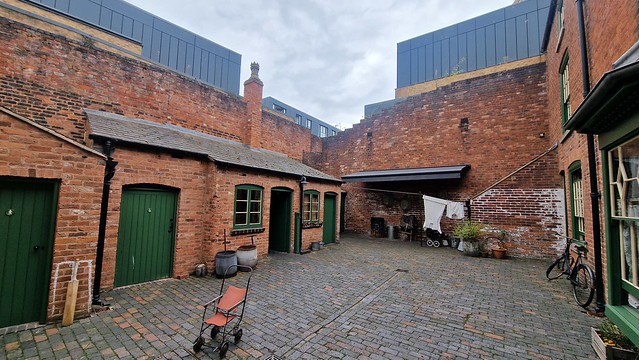
    Photos of the toilets were permitted. Here’s an early toilet before sanitation was added, they were only connected to the sewerage network in the early twentieth century and none of the properties ever had bathrooms fitted.

    I’m pleased that I went on this tour, not least because more urban sites such as these are exactly what the National Trust need to reach out to a new audience. The story of working class people is often overlooked and the National Trust of course inevitably have to focus on their country houses. They’ve ensured that these properties survive, some of the very few ‘back to back’ houses to still be standing, so they tell an important story. I also understand why the National Trust have restored the rooms to three different periods of history and they’ve certainly spent a lot of money making these structures accessible to visitors. The awkward nature of the buildings is why they can’t easily allow visitors to walk around on their own, although they’ve got a lot of space that’s closed off at the moment (they were holiday lets for a long time, but it seems they closed during Covid) and there’s no access to any of the cellars. The old sweet shop on the corner has also closed, although has been turned into a little waiting area for visitors.

    Being pre-prepared, I had read the visitor guide book in advance of my visit, and that is very well written and provides the sort of architectural information that I was interested in. As an observation rather than as a complaint, there were numerous slight inconsistencies with the guide book and the tour guide, the former notes that, unusually, there was a gas lamp in the courtyard that ensured it wasn’t dreary, whereas the tour guide mentioned that there was minimal light entering the properties. The guide book says that there were four toilets, the guide said that there were three, the guide book says that this wasn’t a Jewish court, the tour guide said it was.  It’s all minor, but I sort of like a little bit of accuracy in the story telling and so I did rather glazed over some of the guide’s little facts that seemed quite odd to me. It’s thought that there were over 500 different families who lived in the houses during their 200 years of occupancy, although the National Trust have strongly focused on three families and that’s what the guide spoke about.

    The guide book goes into plenty of detail about the slum clearances and the almost random nature of why these properties weren’t demolished in the 1960s. It appears that it’s simply because the ground floors were being used as shops and the council never quite got around to demolishing them. They were listed in the 1980s and then thanks to funding from the Heritage Lottery Fund and the European Regional Development Fund they were saved and then placed in the hands of the National Trust.

    This is a fascinating location to visit for anyone and I’d merrily recommend it, it’s a piece of history that could have easily been lost. There isn’t actually anything particularly special about these houses and their yard in terms of saving them, it’s just that they represent where tens of thousands of people once lived. Many former residents of yards such as this were never that impressed about the tower blocks that they were moved to, but the survival of these units is a credit to the National Trust and those who funded their restoration, including many members of the public who sent their own donations in to help. The volunteers are doing a marvellous job in their story telling and it’s clear that their efforts are resonating positively with the vast majority of visitors. So, they don’t really need to change anything, although speaking just personally, there was a bit too much social history here for me and not enough architectural and building history. But, different things for different people and it’s clear that the National Trust have got the balance right judging by the reviews. All rather lovely and it’s just over £10 for the tour, or free for National Trust members. They don’t advertise it, but apparently it’s always worth wandering in when the tours are meant to start just in case they have any no shows.

  • 200 Years Ago in Norwich : Vine Destroyer in King’s Lynn

    200 Years Ago in Norwich : Vine Destroyer in King’s Lynn

    This article was published in the Norfolk Chronicle and Norwich Gazette 200 years ago, in late July 1824. The text reads:

    “The Sessions for this borough commenced on Monday last, before J. M. ALLEN, Esq. Mayor, M. J. WEST, Esq. Recorder, and other Justices. Anthony Blackster was indicted for maliciously destroying two vines in the hot-house, and several shrubs and trees in the garden, of Edm. Elsden, Esq. during the night of Wednesday, the 7th inst. The prisoner had entered the garden by scaling a wall which separated it from a yard at the back of Mr. Elsden’s premises. The vines had been trained with much care, and were loaded with the finest fruit, but the prisoner had broken and destroyed them so effectually as to prevent the possibility of their ever being restored to their previously flourishing state. He was sentenced to seven years’ transportation. There was no other business of public interest.”

    It’s not clear to me whether this destruction was wanton vandalism, which wasn’t rare at the time, or whether it was someone so hungry that they were seeking food. The punishment was a sign of the times though, a seven year transportation sentence, it’s just a little fierce. Despite these sentences being handed out regularly, they didn’t seem to be much of a deterrent to people.

    One benefit about being a criminal in the early nineteenth century, or at least if you could call it a benefit, is that you continue to exist in records. So many people lived a quiet life and they have entirely disappeared from the record, nothing known about their lives. It’s known that Anthony Blackster was held at the ship Justilla moored at Woolwich until he could be sent to Australia. The transportation record remains for Anthony, who had been born in King’s Lynn in 1797, he was put on the Royal Charlotte which sailed to New South Wales and which arrived on 29 April 1825. As an aside, the Royal Charlotte had been used from 1819 for transportation and it ran aground in Frederick Reefs, near to Australia, on 11 June 1825. Around ten years ago, the wreck was found, so the ship that transported Anthony is still in existence, albeit slightly wet and dented.

    He remained in Australia when his sentence had been completed, he married and had one child, Marian Blackster. Unfortunately, what else happened to Anthony I don’t know, that information will be held by Australian archives and I’m not particularly well versed in their archive history. But, it’s a moment of interest to me that someone’s life could change so much just because of the vandalism that they did one night back on 7 July 1824…..

  • Gainsborough – Town Centre and Slightly Down at Heel Market Square

    Gainsborough – Town Centre and Slightly Down at Heel Market Square

    20240717_144415

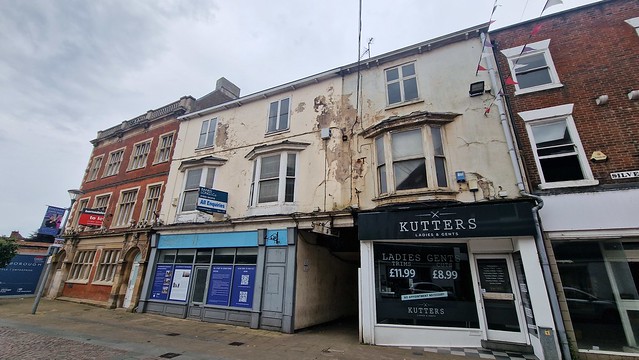
    I was a little surprised at the state of the main market square in Gainsborough, it looked a bit sub-optimal with the closed and derelict buildings dotted all around. It was also surprising quiet during the evening, not a bustling hub of activity, it more harked back to the period of Covid when town and city centres felt oddly empty.

    20240717_131810

    This is a listed building, so seeing it like this doesn’t seem ideal.

    20240715_184144

    The closure of some former grand bank buildings, like the one on the left, certainly hasn’t helped matters. There are numerous grand structures once owned by the banks, but they’re falling into disrepair and it’s not entirely clear who will rent them at the moment.

    20240715_184055

    There is hope though, with the Townscape Heritage Initiative having been set up to help with the economic development of the heart of Gainsborough. There has been a market held here since 1281 and since the eighteenth century, it’s taken place twice a week.

    20240715_184110

    The Savoy cinema is coming soon, part of a £9 million investment project. Not only will there be a four screen cinema, but there will also be a restaurant, retail units and yet another car park.

    If improved somewhat, this is a really quite grand town centre market place, so maybe the future is bright.